Sejin
Hong is an artist who paints the sensory experience of traversing between the
material and immaterial, the real and the virtual. Drawing from her own
experiences, she edits and reprocesses the subjectivity of auditory perception
into visual outcomes. Through this process, she translates information
accumulated through perception into phenomena that cannot otherwise be
experienced, manifesting them on canvas and within space. She fills the blank
spaces of auditory perception with images of simple shapes, lines, concrete
spaces, and planes.
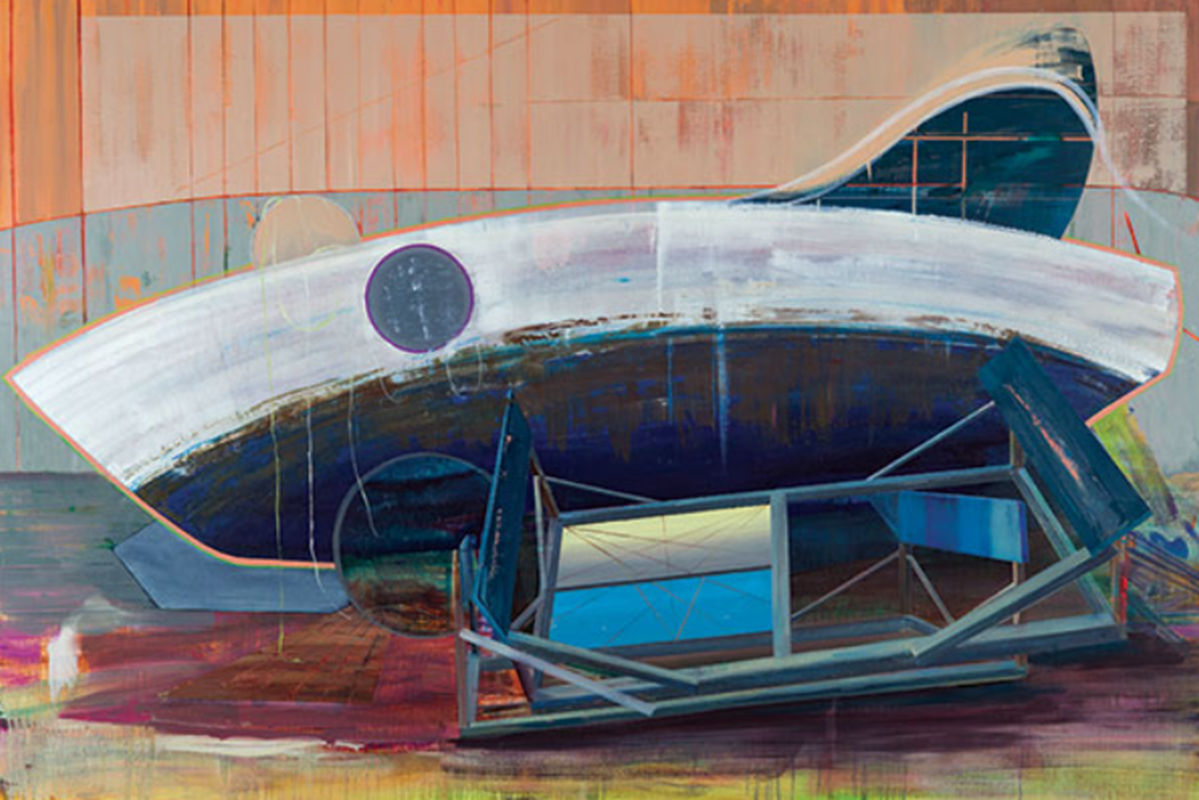
Her
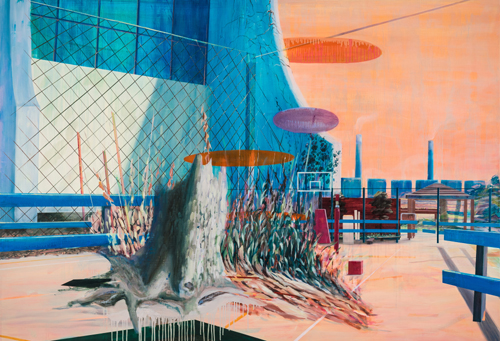
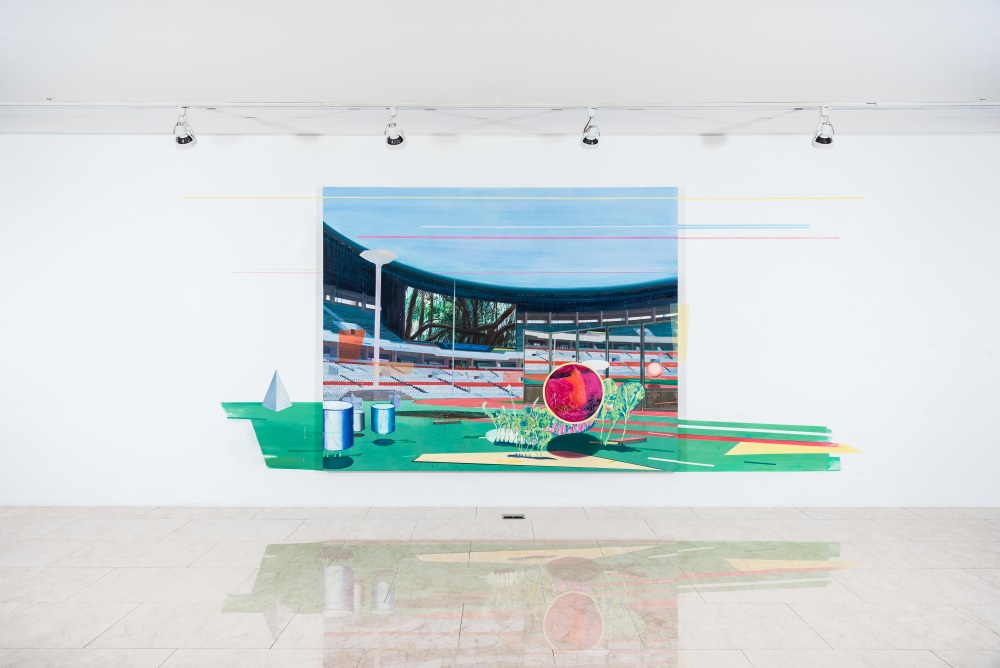
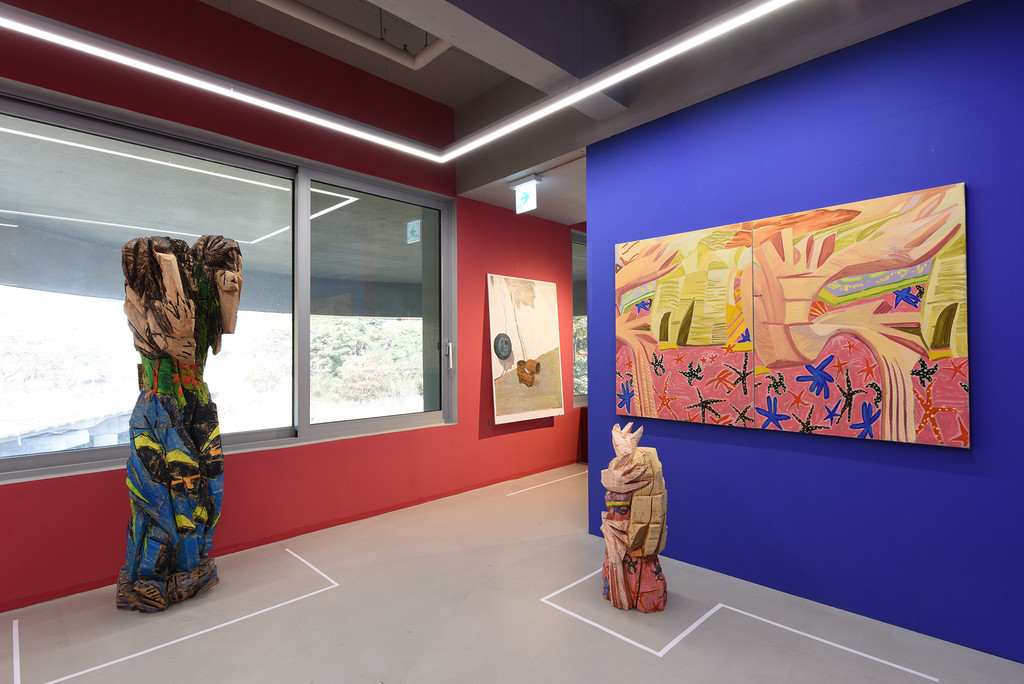
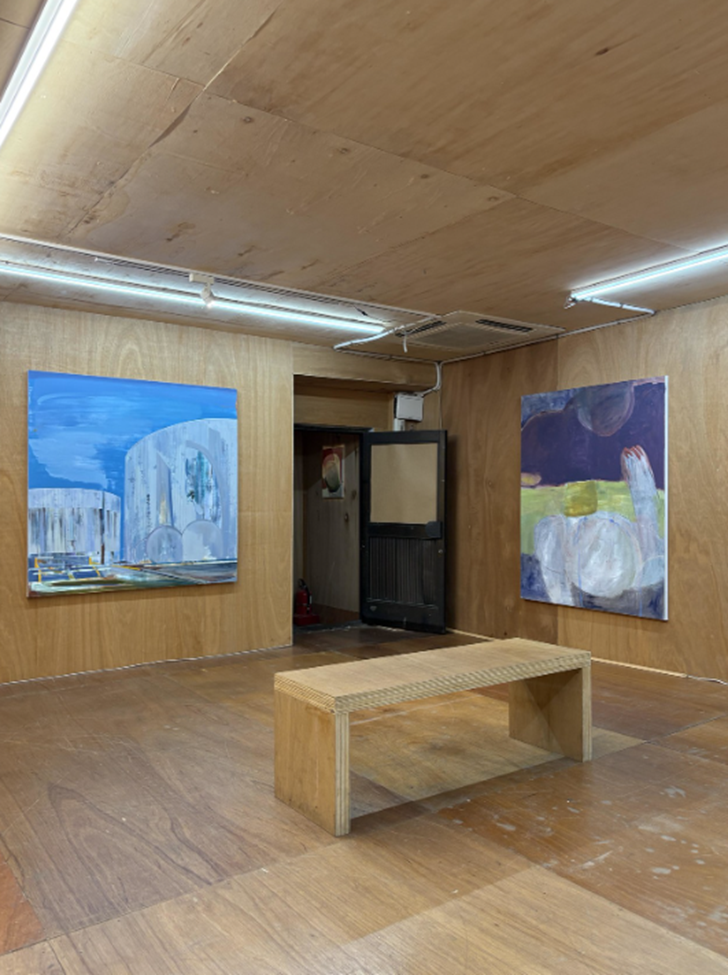
early works are set in familiar spatial contexts such as playgrounds, stadiums,
and factories. These paintings present hybrid realities that juxtapose
artificial spaces and objects with natural elements, emphasizing a sense of
three-dimensionality and perspective. Consequently, the representational images
within her paintings carry symbols that feel familiar to the viewer. Natural
forms resembling living cells or fractals mingle with mechanical and artificial
objects, producing an uncanny sense of strangeness. Hong’s interest also
extends beyond painting to include drawing and installation, reflecting a
certain “mechanical curiosity.”
This
bodily sensitivity, augmented through mechanical or instrumental devices,
presents an intriguing posthuman theme. The artist examines the transformation
of natural sound as it is mediated through assistive technologies such as
cochlear implants and hearing aids, seeking to express an understanding of
these altered forms and properties. In this context, installation becomes an
effective medium for articulating her anatomical curiosity toward the sensory
mechanisms and internal workings of machines.
One example, Apple Pine(2021),
metaphorically represents such devices through circular forms and monitors of
various materials and textures. These colorful, differently sized spheres
visualize the immateriality of sound in physical form, capturing ephemeral
sensations and information as fixed entities. The monitors display video
imagery of pineapples in different shapes—similar yet distinct—suggesting the
relative diversity of sensory experiences shaped by the mechanical
characteristics of auditory devices. This can also be interpreted as the
artist’s extended inquiry into perception, tracing its origins and processes.
Over
the past few years, Hong’s solo exhibitions have revealed a distinct evolution
in her practice and conceptual concerns. Her first solo exhibition, 《Clear Noise》, captured expansive spaces
where sound resonates. The paintings from this period evoke the transference of
sensations as one experiences familiar vibrations and reverberations. The
accompanying installation Tip of the Needle(2019) imagined
the internal structure of a 3D printer used to produce hearing prosthetics,
marking an early articulation of the artist’s core interests. Her next
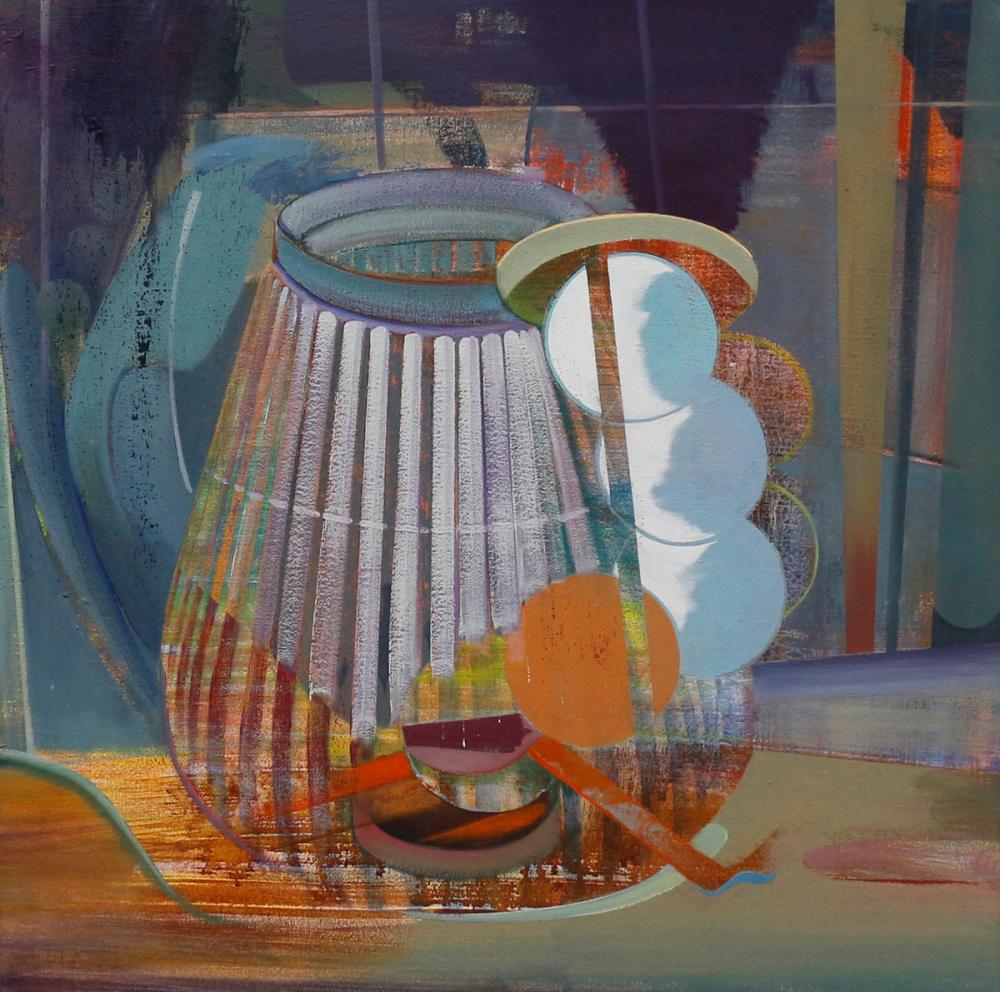
exhibition, 《Replacing the Battery of a Vase》, presented compositions combining natural forms and artificial
objects in reconstructed visual arrangements.
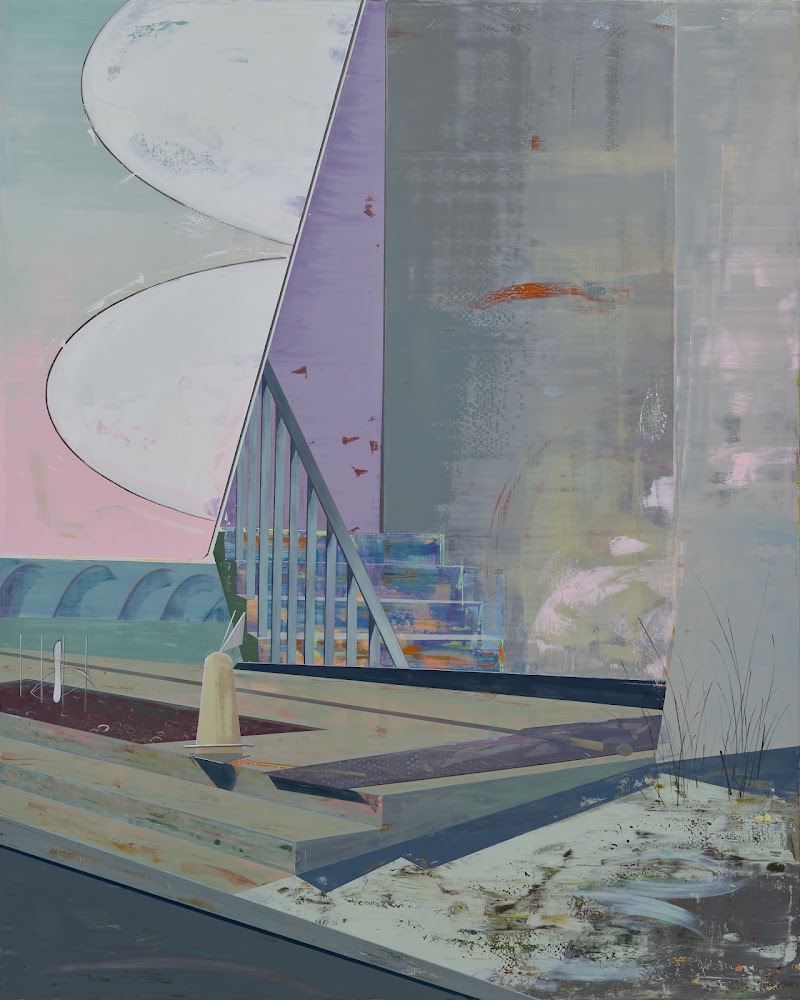
From
this point onward, her paintings and installations began to actively explore
the simplicity, internal structure, and perceptual ambiguity of geometry and
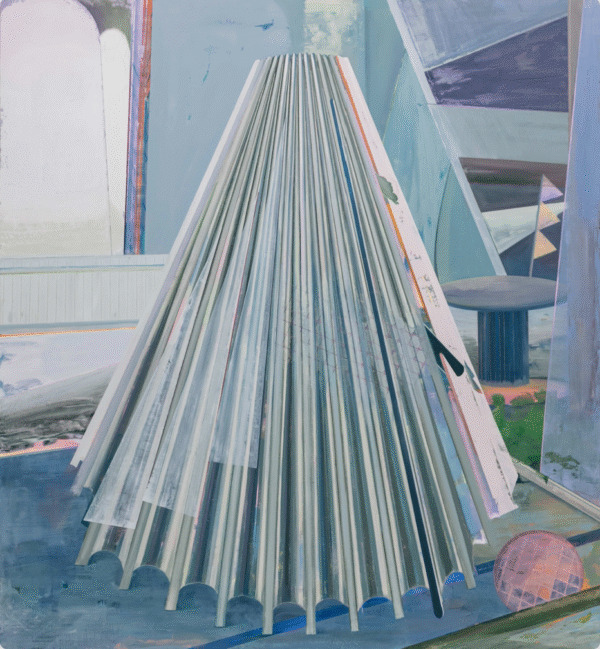
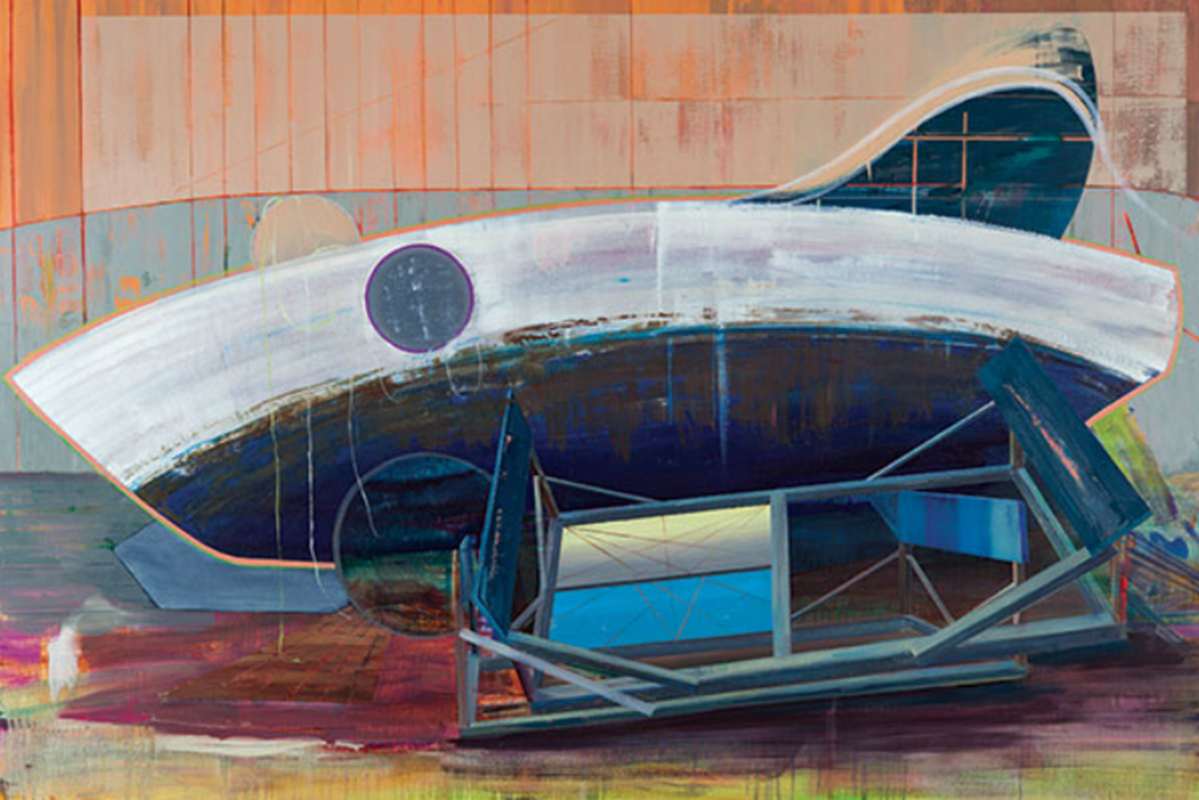
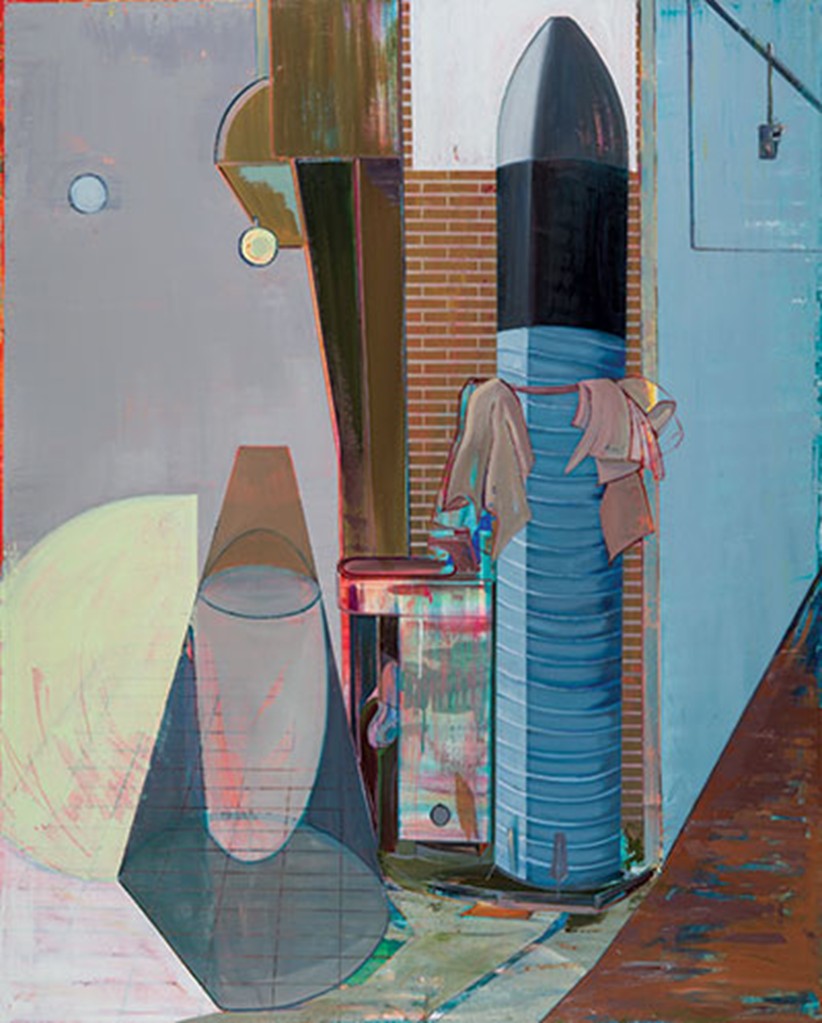
machinery. This direction became clearer in her 2021 solo exhibition 《Hidden Languages》, featuring her “Geometric
Landscape Series,” where distinctive features of objects were deliberately
omitted and reduced to minimal geometric forms. Here, Hong not only focused on
composition but also on the materiality of paint itself—the textures of dripping,
covering, and scraping acted as sensory bridges in the process of visualizing
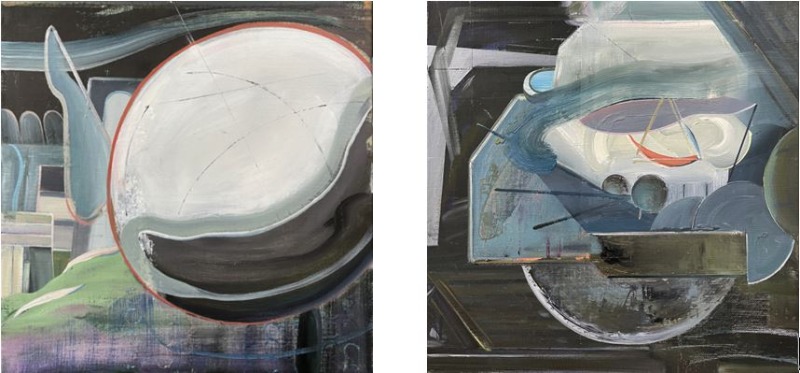
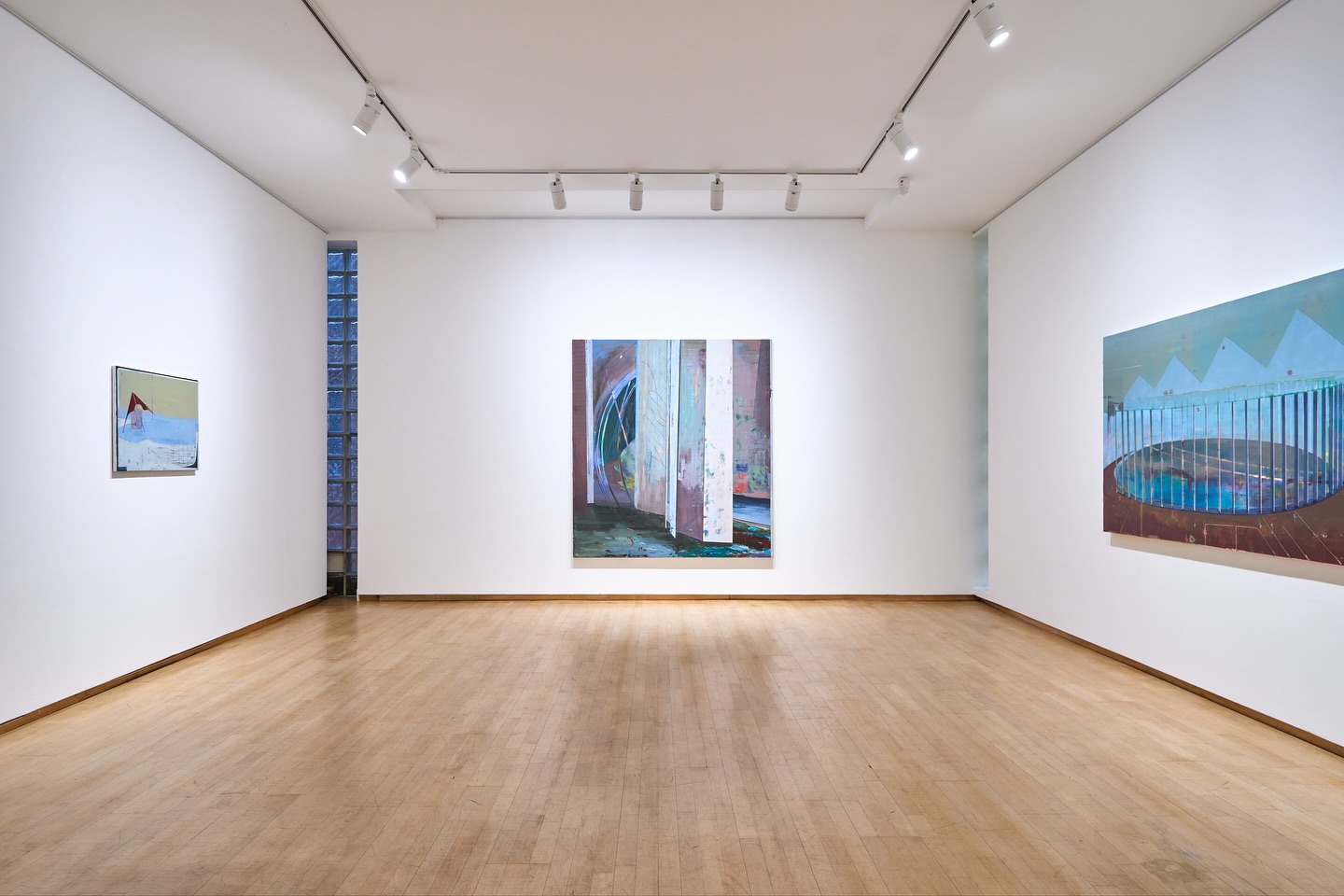
sound. Her pursuit of simplicity became even more pronounced in her recent
exhibition 《Almost Within Reach》, which the artist describes as “a process of projecting sensation
onto the subject to discover a pictorial language.”
In
her recent works, Hong emphasizes flatness more than ever before. This tendency
reflects her desire to more candidly reveal the uncertainty of her own sensory
experiences, which previously served as the basis for her spatial compositions.
Using hearing aids and cochlear implants, she continues to explore the gap
between the sensory information she receives and the actual auditory
input—painting as a way to bridge this divide.
As hearing-assistive
technologies evolve, this once-clear distance has become blurred, leading her
to further question the nature of what she depicts. The space between the two
types of information is not a void but a fold—filled with vanished or omitted
“languages”—which she captures through simplified forms and linear imagery. Each
functions as a kind of monad, containing fragments of memory and information,
unfolding the folds of perception into a spectrum.