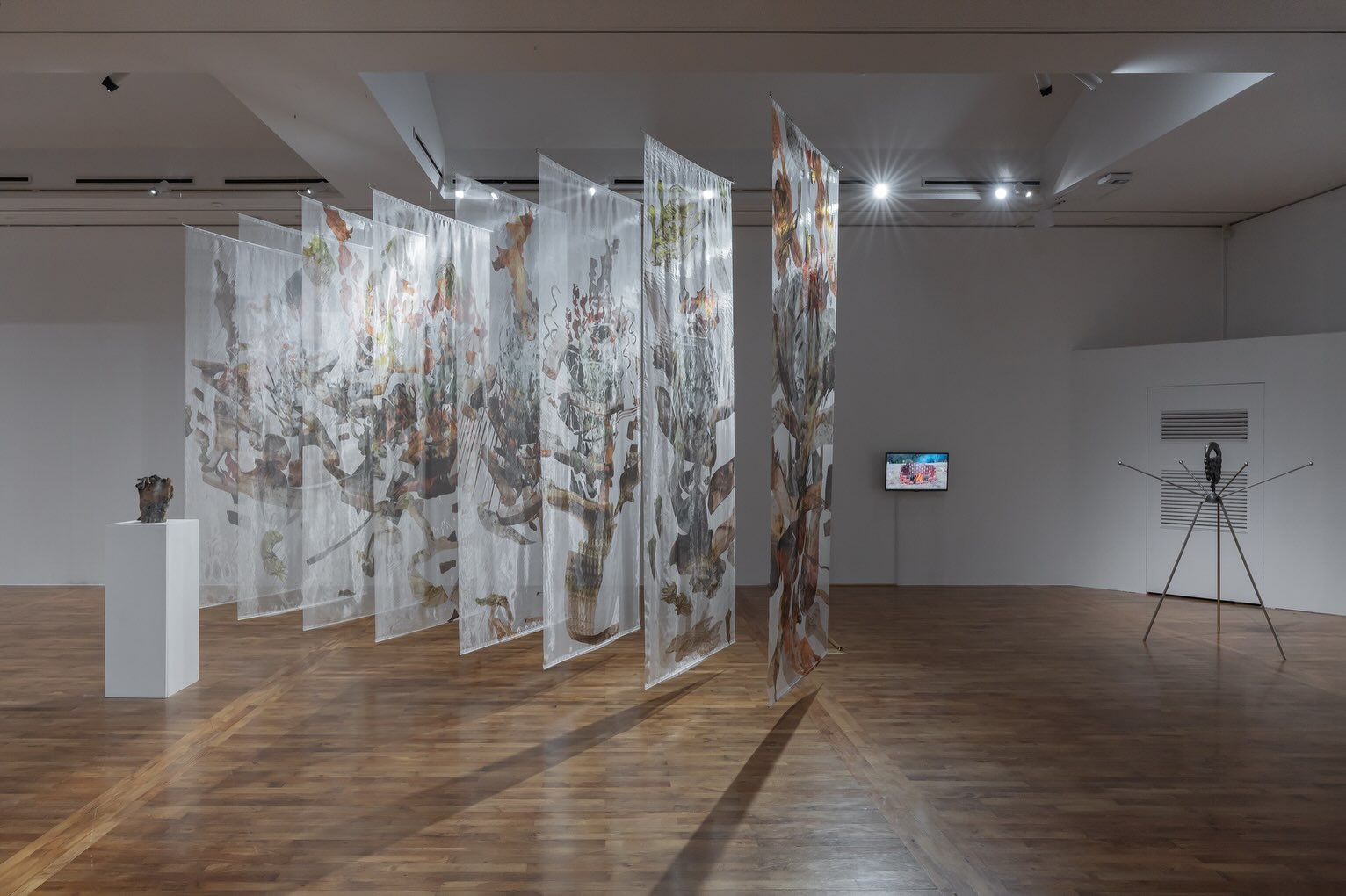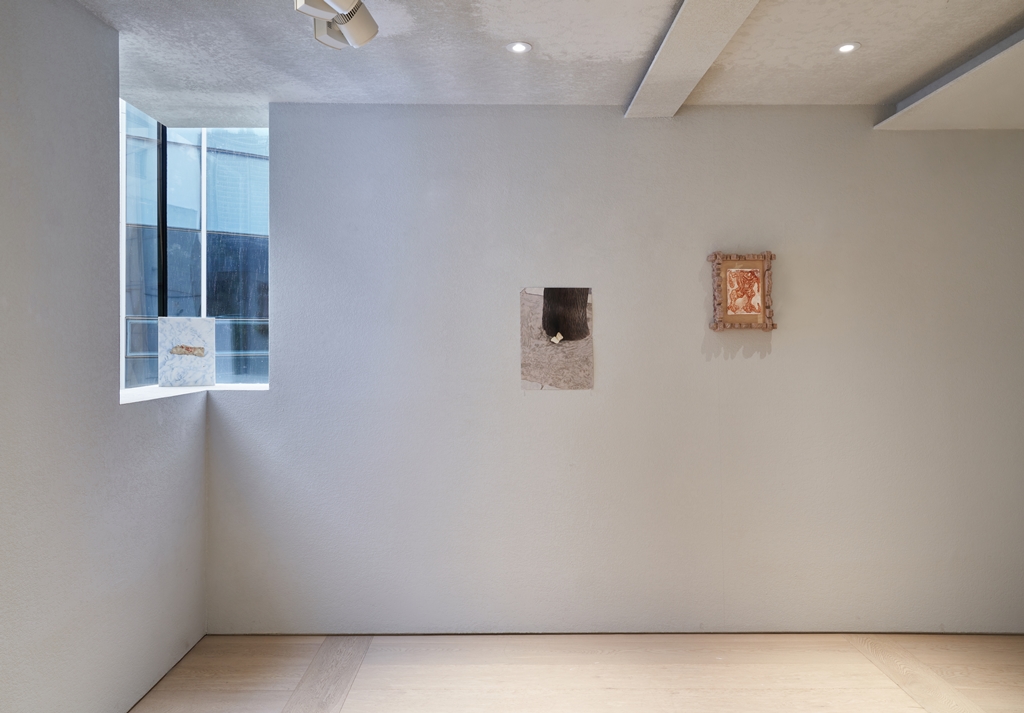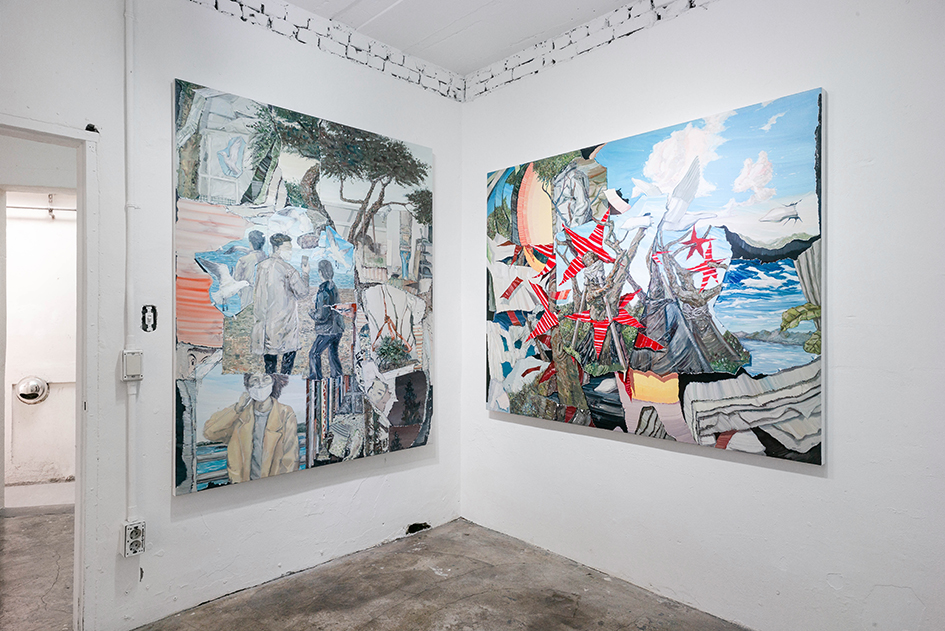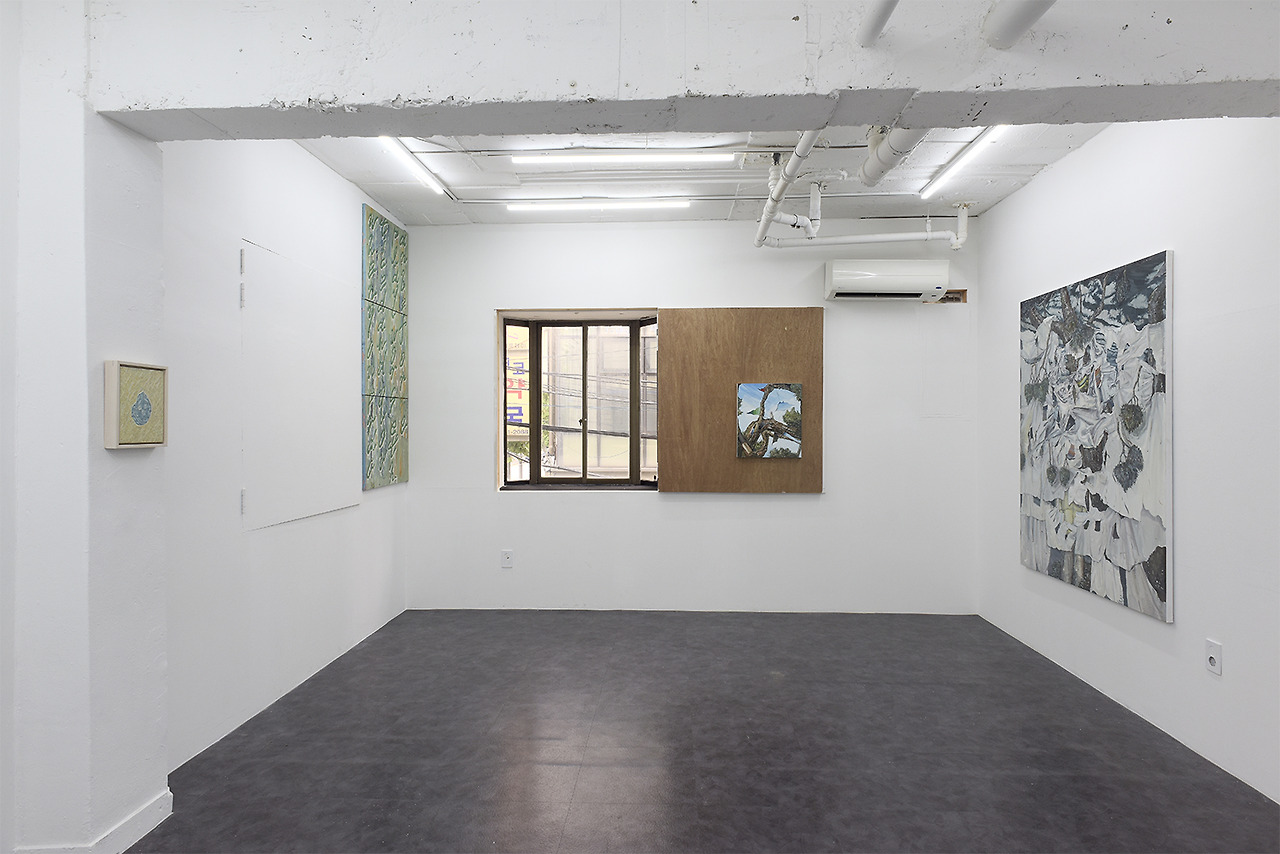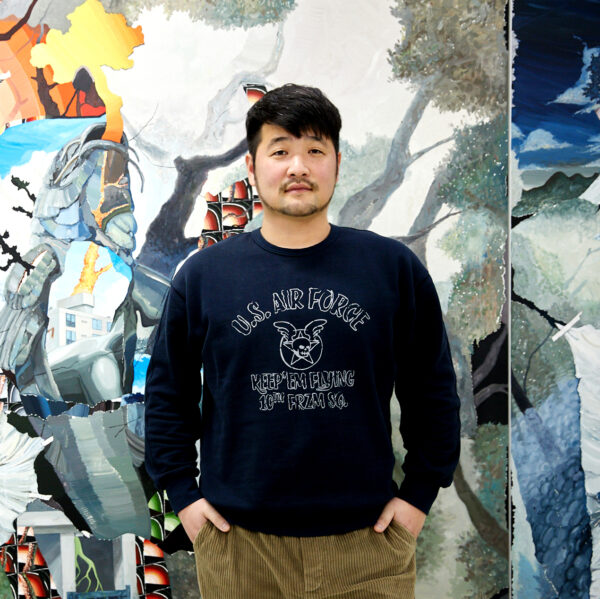


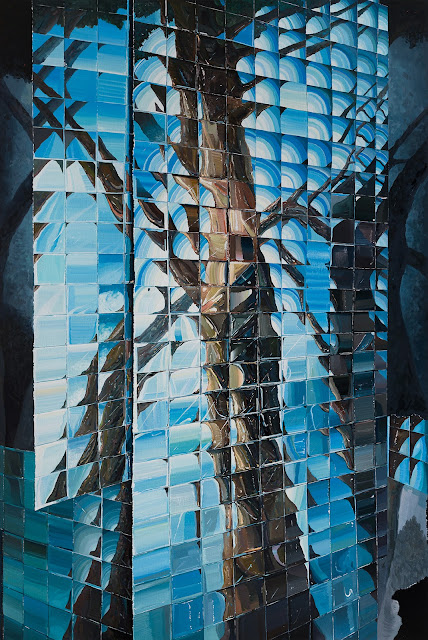
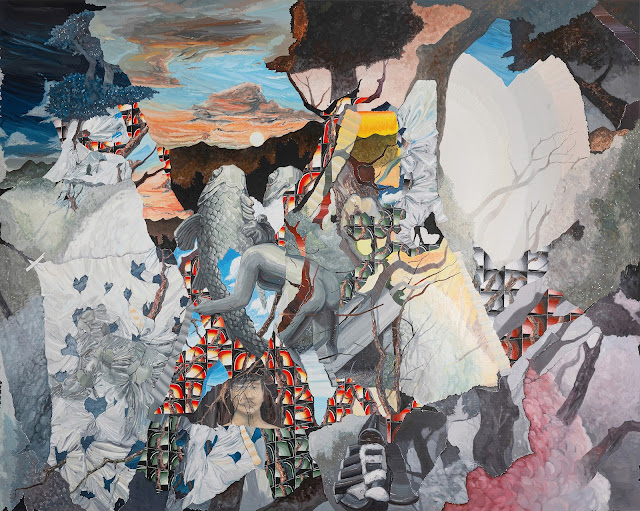
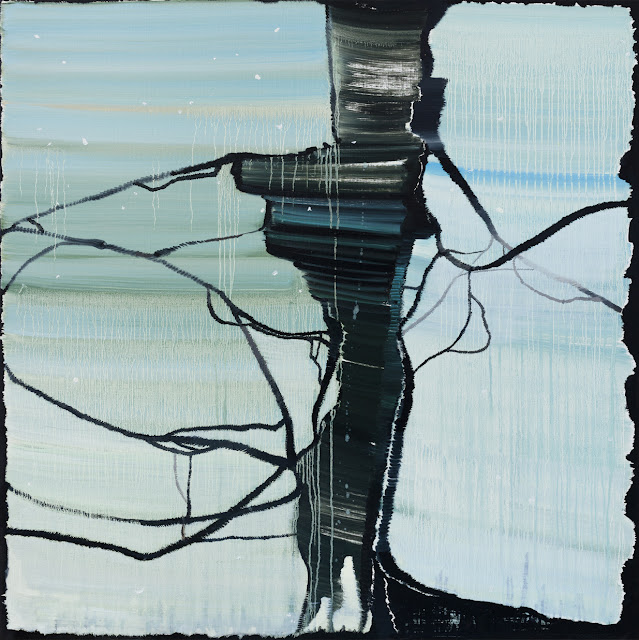
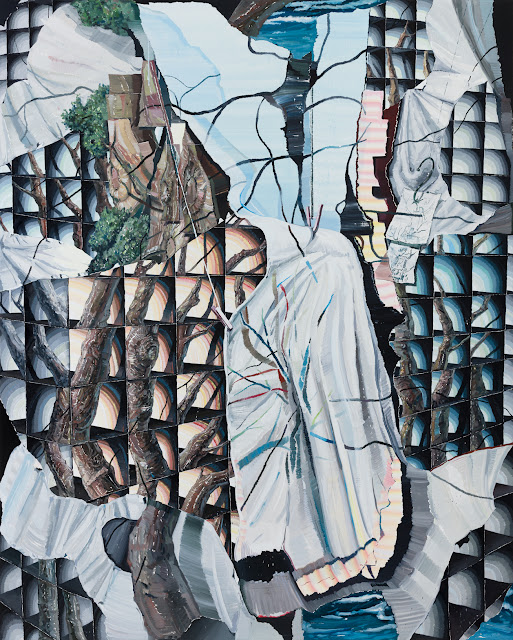
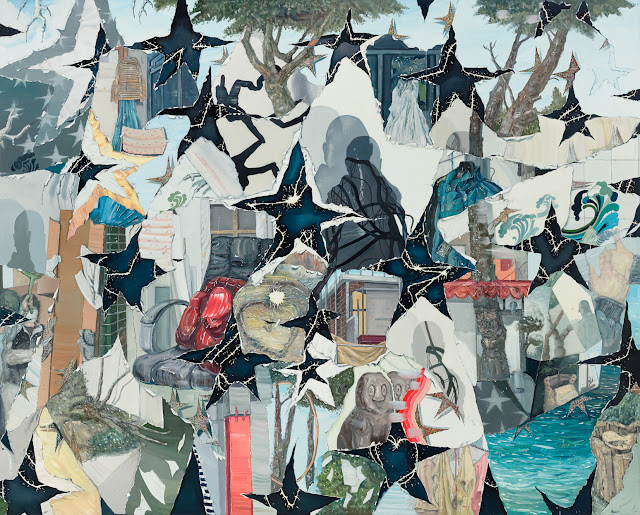
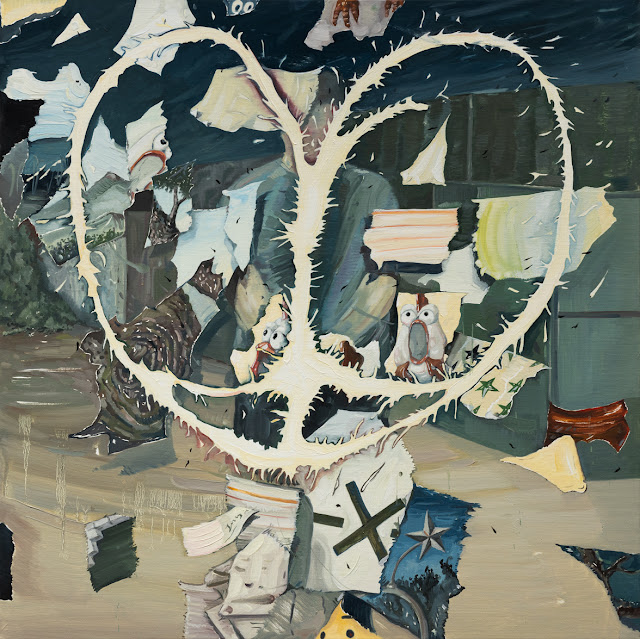
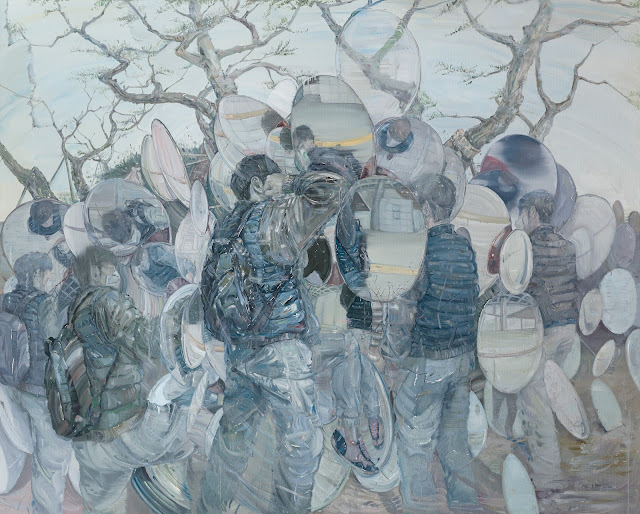
Installation view of 《Pixel Memory》 (Laheen Gallery, 2023) ©Laheen Gallery

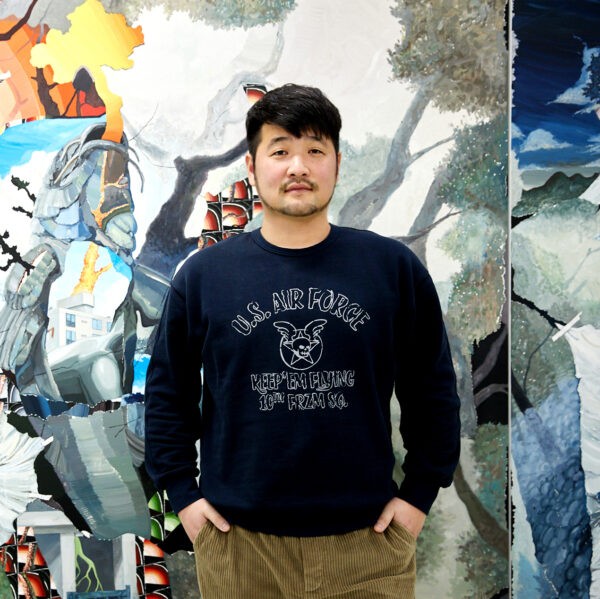
The solo exhibition 《Pixel Memory》 by Jungin Kim opens at Laheen Gallery on Thursday, November 9. Kim has continued to explore and construct networks of meaning by grafting together fragmentary images that are presumed to belong to the individual, reflecting on rapidly changing social phenomena through his painterly practice.

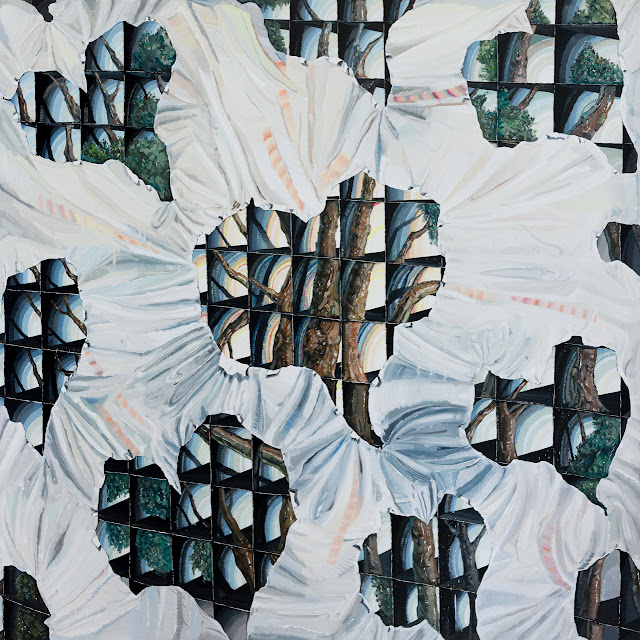
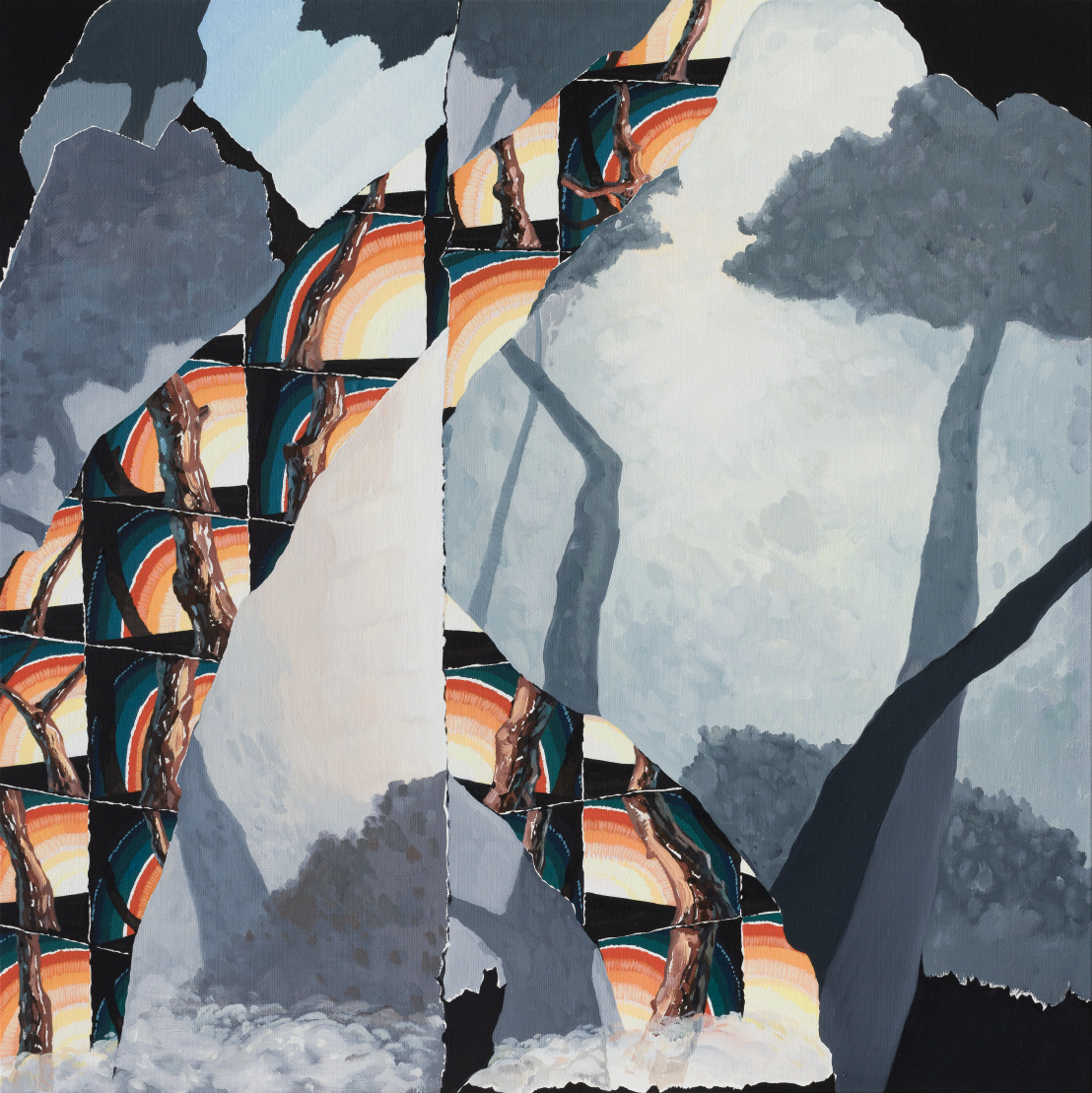
In this exhibition, the artist expresses geometric and dimensional forms by repeating fragments he remembers—such as trees, figures, gaps, fabrics, and sketches—in square “pixel” patterns. Whereas he previously used to stack images flatly upon the surface, this time his multilayered experiences accumulate in a more spatial dimension, weaving images in which the temporality of perception has been dismantled.


Jungin Kim, Pixel Memory 2, 2023, oil on canvas, 130.3 x 130.3cm © Jungin Kim

In this way, the artist disassembles the images of memory and reassembles them through painting by endlessly arranging them into the unit of the “pixel.” Rather than excluding human “forgetfulness,” he seeks to visualize it—attempting through this process to resist, in painterly terms, the velocity that accelerates oblivion. A key motif symbolizing the artist’s faded memories is the “tree,” which appears as the central subject of the exhibition. This motif also represents Kim’s own gesture of resistance—his way of enduring the pressures of a world that demands constant change.

Kim’s paintings concretize dimensional imagery through the repetition of cubic modules within the square grid, yet these outcomes do not converge into a single unified form. Instead, they resemble ambiguous chains of connection. The artist constructs his canvases so that multiple visual data and complex temporalities oscillate between two and three dimensions upon a single plane, thus forming a network of pictorial time.

Through this process, Kim expresses not only the manner in which paintings are woven with an ongoing sense of temporality but also the transformations that arise in accordance with physical time. In doing so, he speaks of the static modality of images that can exist only within the slow flow of time, while simultaneously resisting the speed that erases memory—capturing within his painting the present reality of time that only this medium can contain.

References