Articles
[Critique] Up-and-Coming Artist SANGHEE: The Journey of a Storyteller
2024
Jaemin Noh | Monthly Art Editor
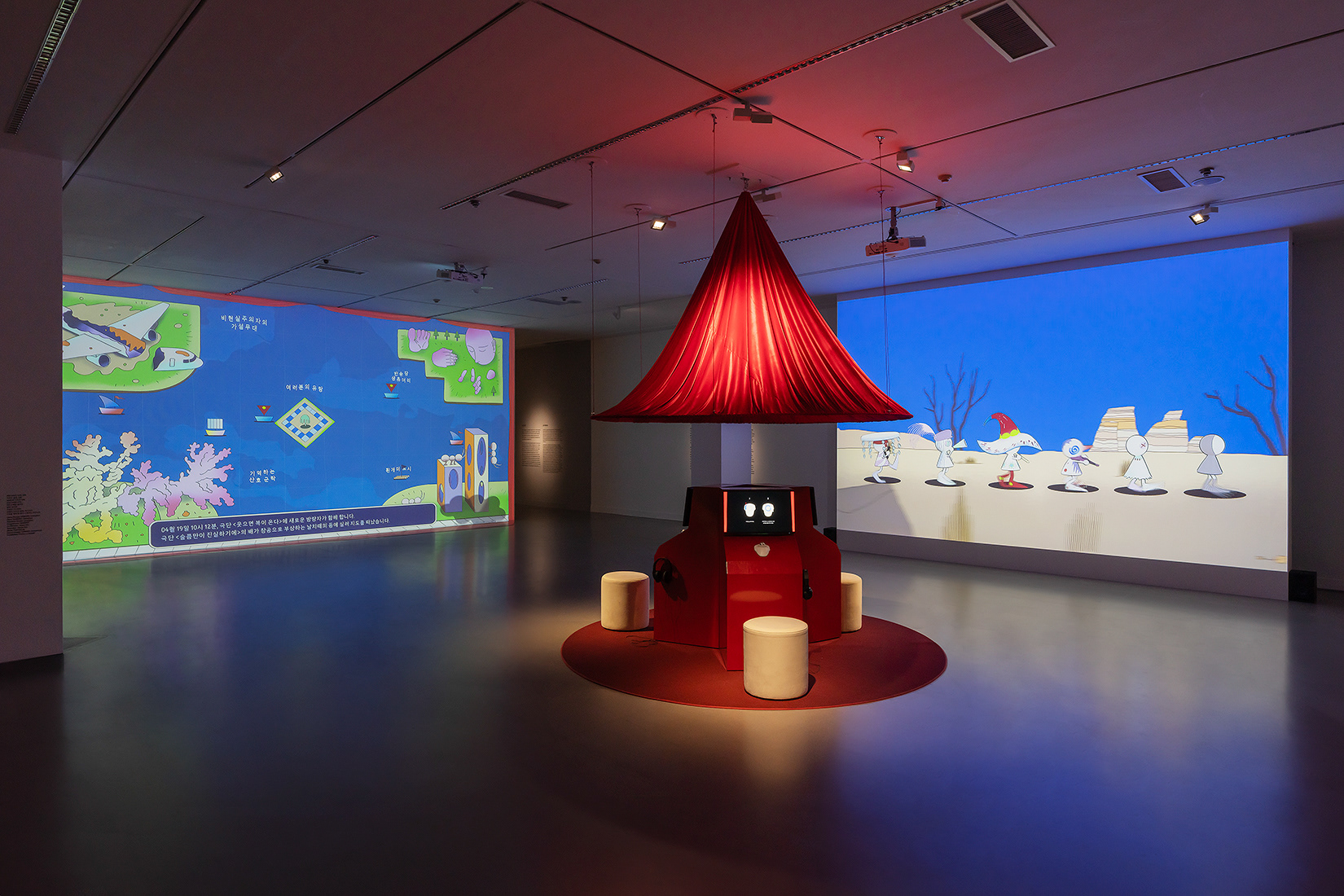
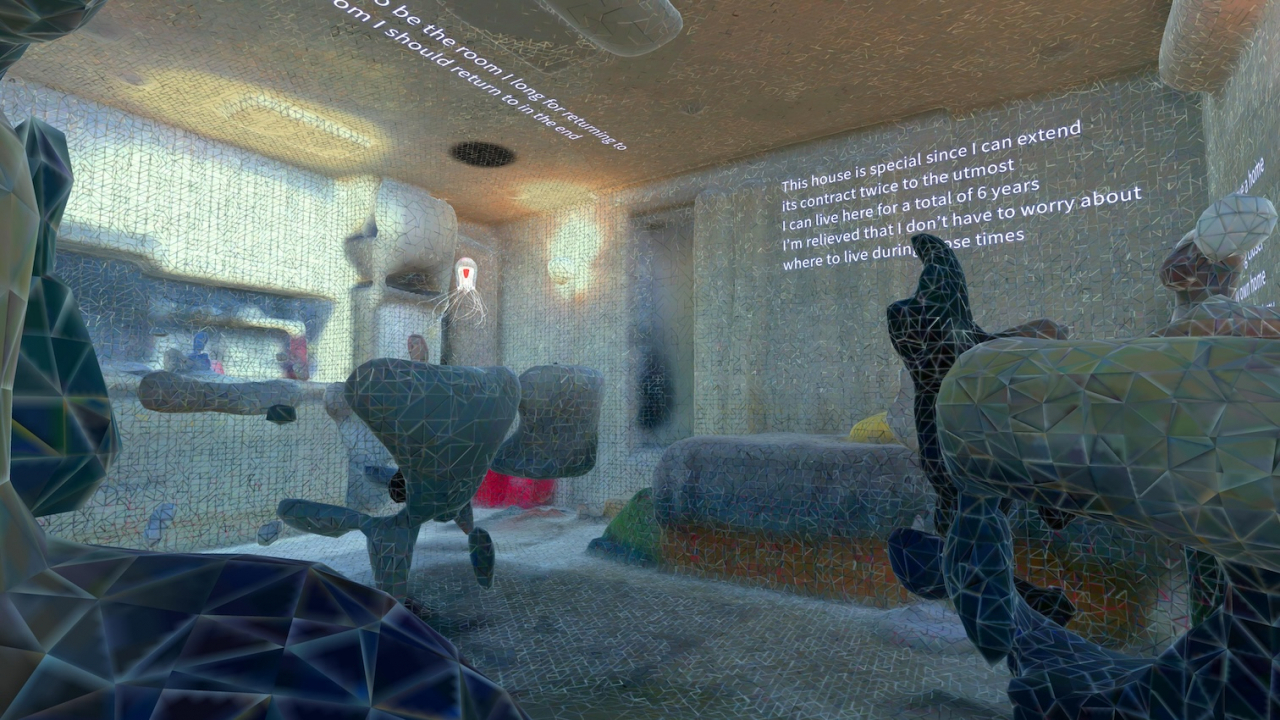
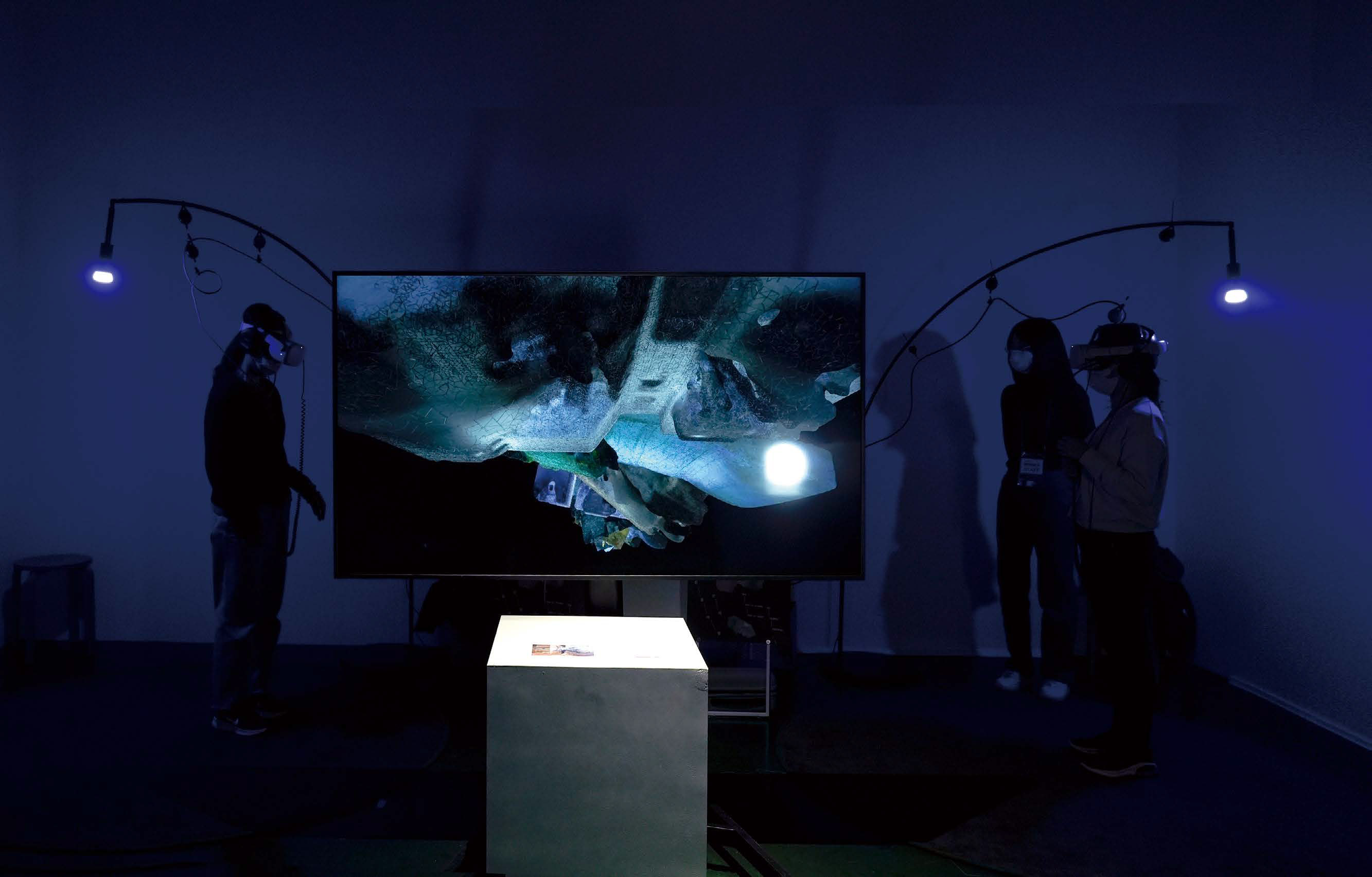
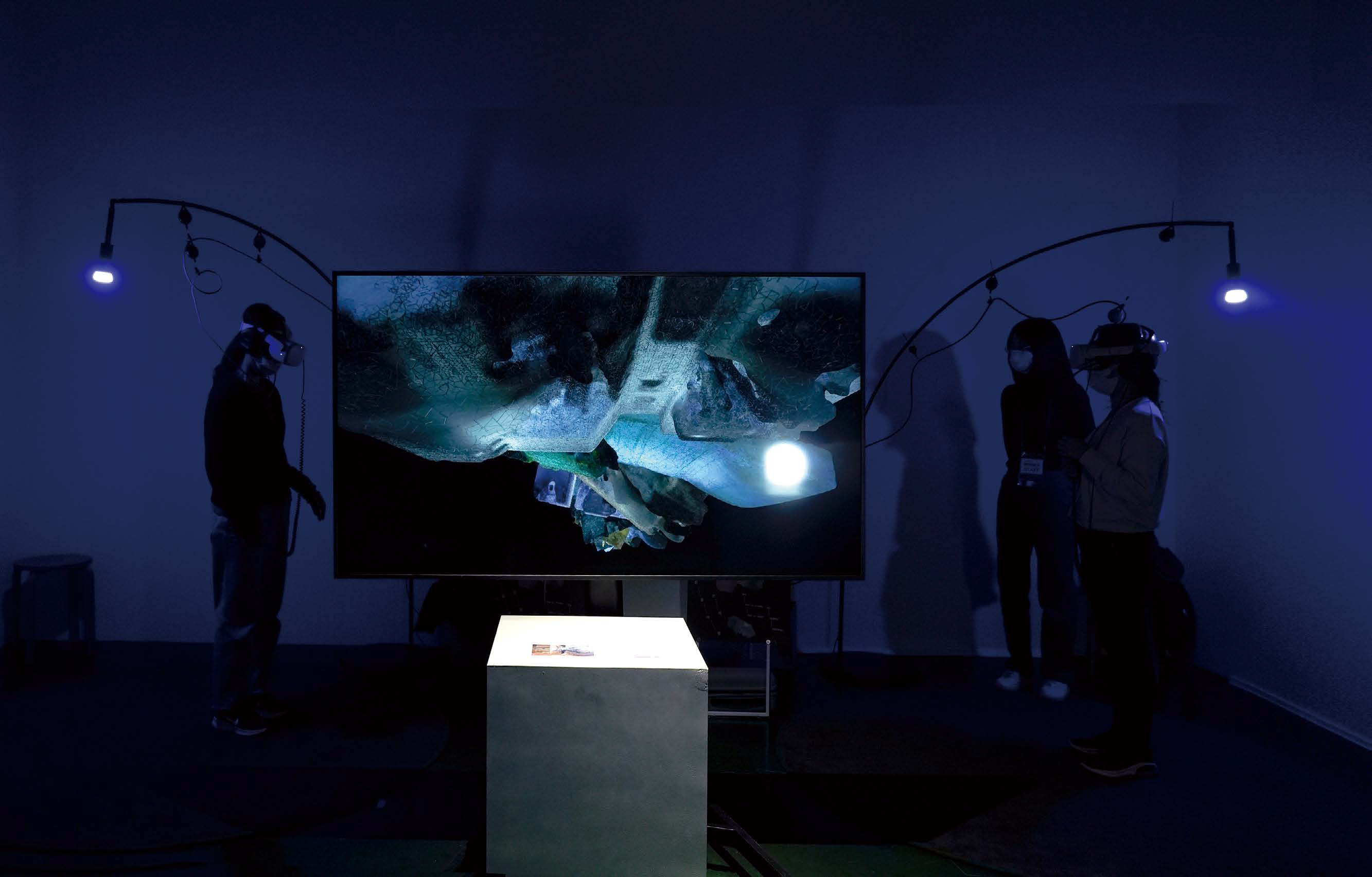 SANGHEE, Oneroom-Barbel,
2022, Interactive VR, single-play, 15min ©SANGHEE
SANGHEE, Oneroom-Barbel,
2022, Interactive VR, single-play, 15min ©SANGHEE
At a moment when the term “media art” is
overused in a world where anything can become media, I encountered someone who
truly seems a media artist.
SANGHEE drew attention with the VR work Oneroom-Barbel (2022–2023).
In it, each time a player finds a jellyfish, they hear stories from people who
once lived in one-room apartments (studios). The work reminds us that memories
of one-room life do not evaporate; instead, they remain, and are amassed as the
“Babel” of memory—culminating in a tower at the end. Beyond the process and
meticulous setup, a notable point is the artist’s recognition of VR’s built-in
assumptions about “normal” body metrics.
Learning that VR malfunctions when
users’ bodies are too large or too small, SANGHEE created a barrier-free
version of Oneroom-Barbel to embrace more
audiences—designed so wheelchair users can enjoy the work by gazing at
jellyfish without physical movement.
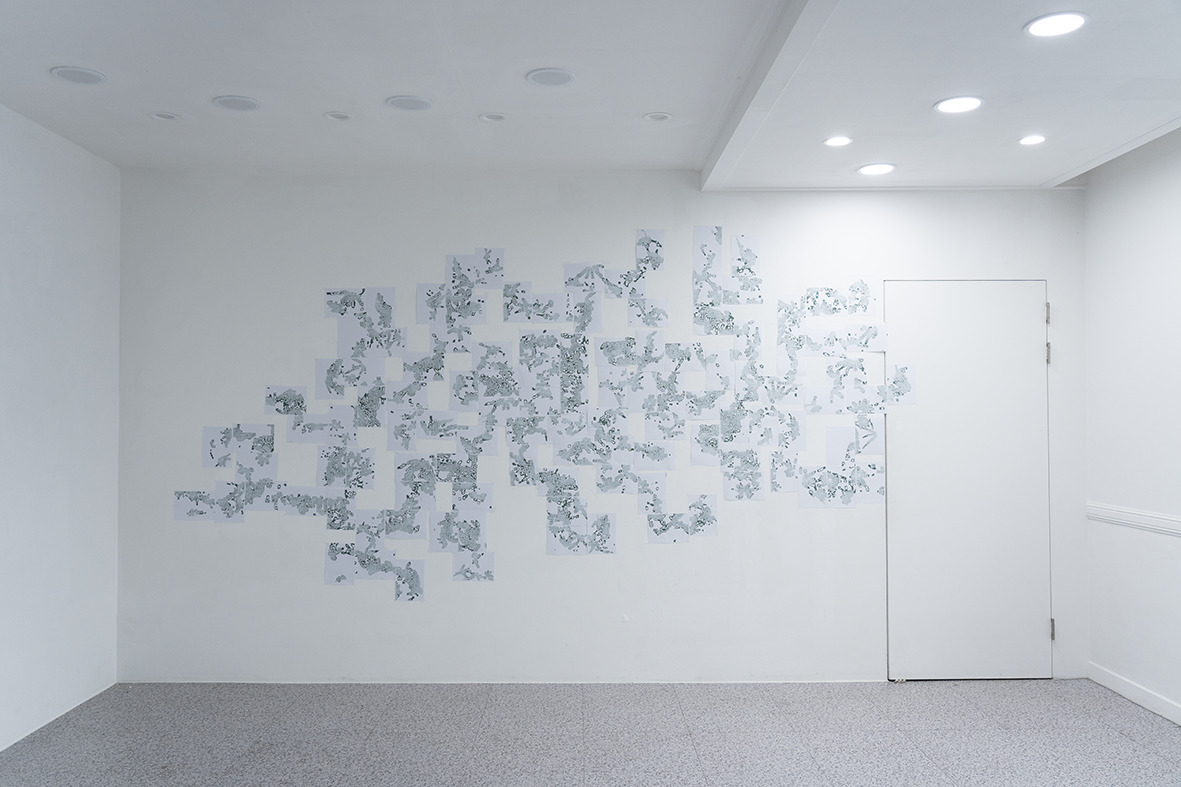
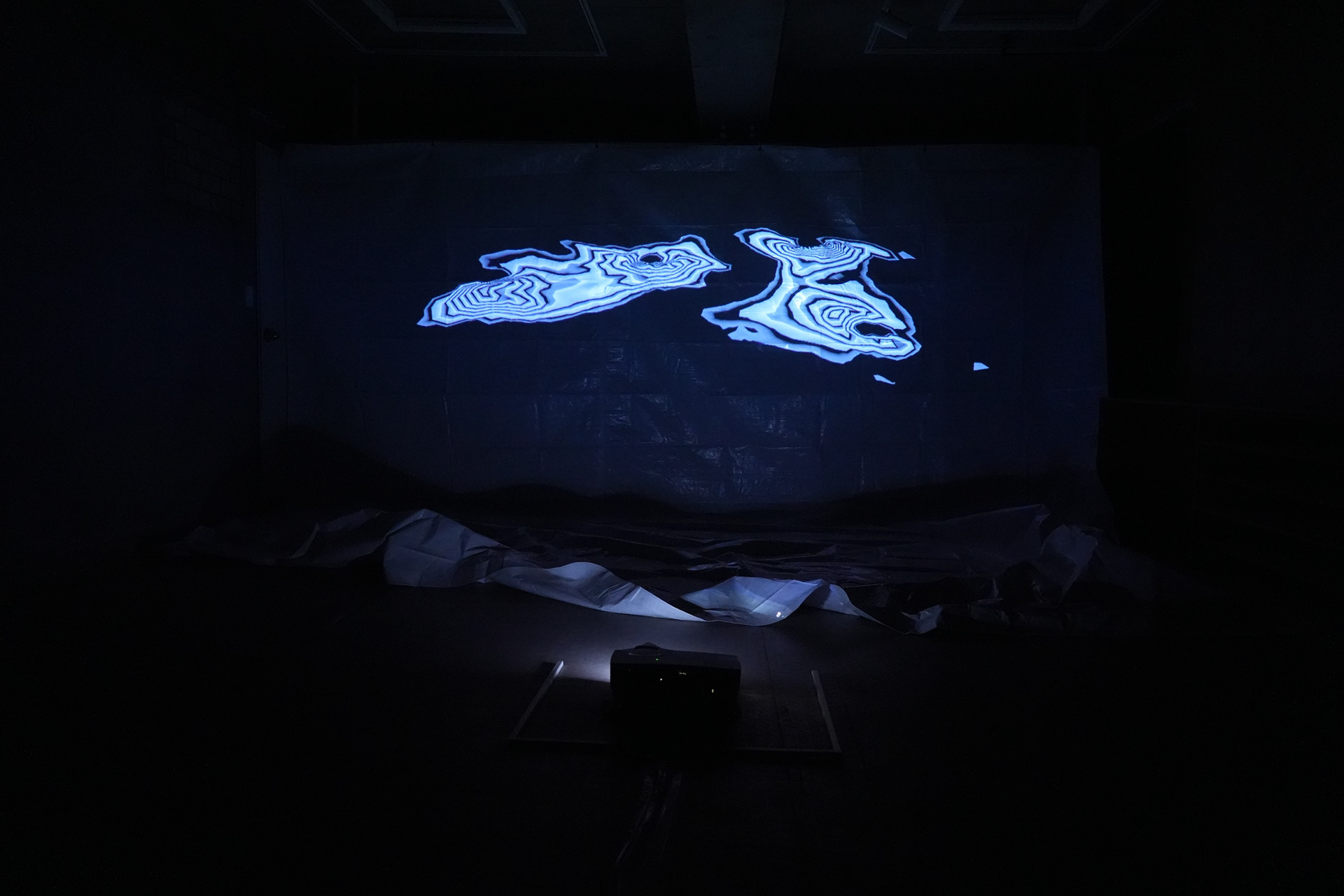
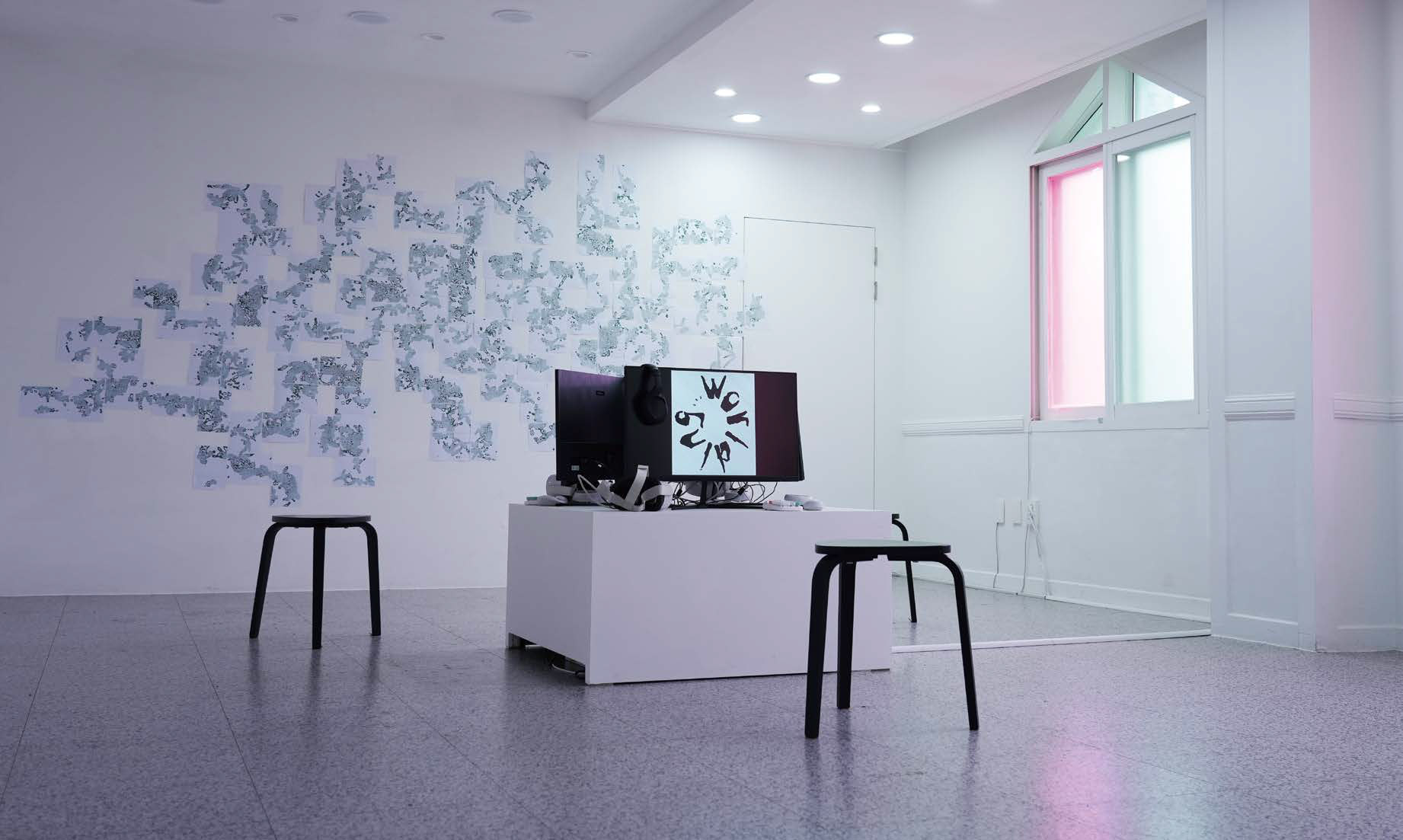 SANGHEE, Worlding···,
2023-2024, Interactive VR, Single-Play based on a local network, 20min ©SANGHEE
SANGHEE, Worlding···,
2023-2024, Interactive VR, Single-Play based on a local network, 20min ©SANGHEE
Among the frustrations of VR, the artist
cites how stories vanish the moment the headset comes off—its ephemerality.
This led to conceiving an asynchronous online game in which prior users’ data
mingles with that of current users. Worlding··· (2023)
uploads a map image to a server when a viewer finishes playing. On the first
floor, the printout of each visitor’s VR result (a map image) is produced; in
the basement, all of those data merge into a single terrain. All elements are
networked, so through an asynchronous system the virtual play accumulates
tangibly within the exhibition.
At the same time, the artist does not naively
“fix” VR’s shortcomings. The industry holds a powerful desire to connect
people’s senses and a belief that VR will deliver superior experiential states
(though it repeatedly fails, clumsily mimicking reality). The only medium that
fully fuses a user’s bodily sense in VR with a wholly tactile experience is
cinema. Real VR remains uncomfortable and nauseating; the supposedly
“fantastic” experience struggles to reach the actual player. For SANGHEE, VR’s
incompleteness is not to be hidden but highlighted. Describing VR as “a world
like a shell from which tactile sense has vanished,” the artist juxtaposes the
aging hands in the world of Worlding··· with
glimpses of the real player’s hands through gaps—accentuating the disjunction.
Most recently, the artist adopted the format
of a Table Talk Role-Playing Game (TRPG) for Conversational Map
for Encounters (2024). Eschewing win-lose structures, the work
centers on dialogue. Together with collaborator Seonghun, SANGHEE appears as a
performer acting as Game Master to lead a conversational game-play performance.
Pre-registered audience members join as players through dialogue with the GM,
transforming into co-authors who fill in a blank map. In other words, players
articulate the choices of their assigned characters and collectively build the
story. A TRPG GM does not dictate unilaterally; instead, narratives are formed
competitively and collaboratively through exchange.
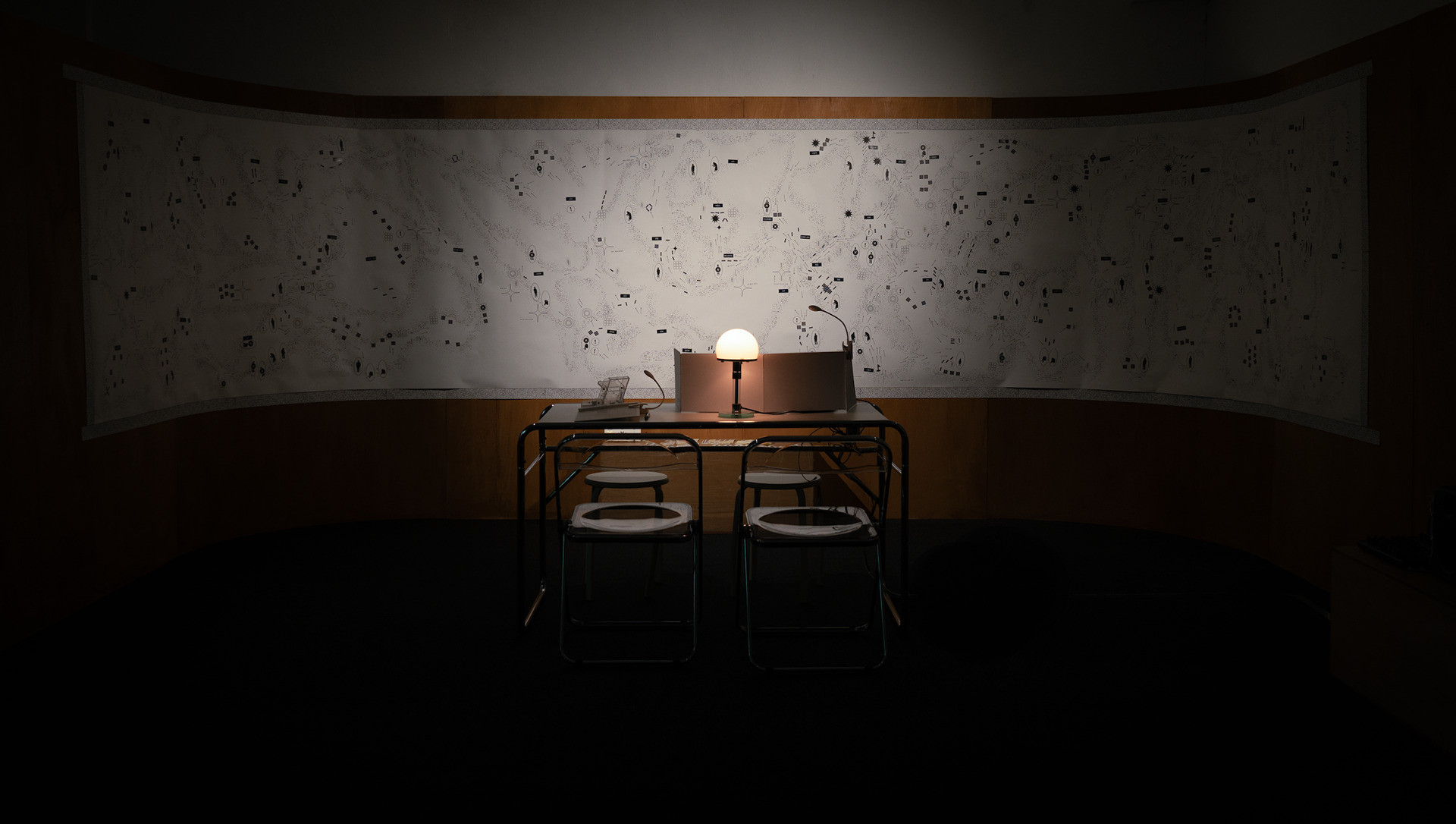
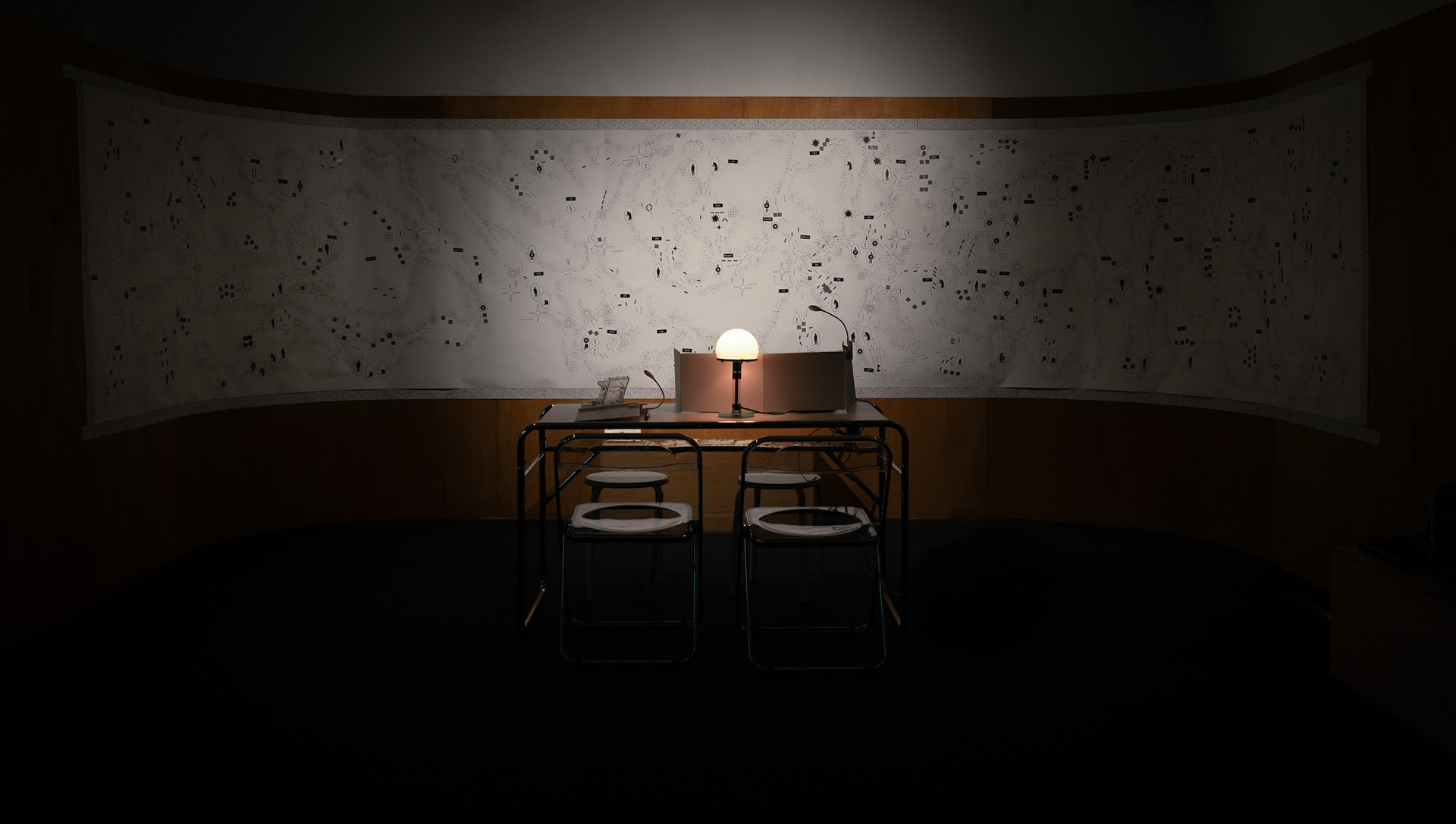
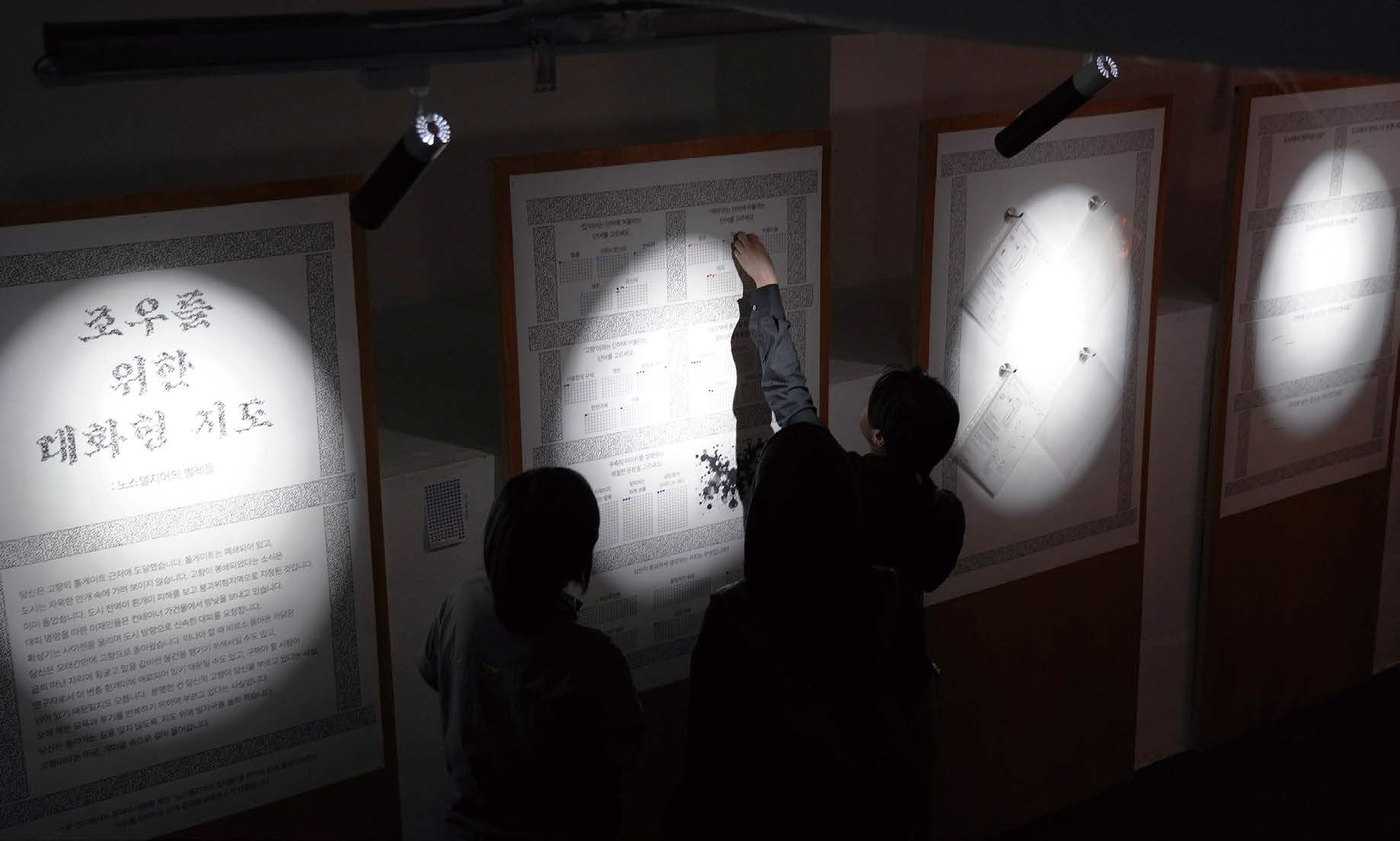 SANGHEE, Conversational
Map for Encounters, 2024, Roll paper attached to plywood structure,
Stickers, dimension variable ©SANGHEE
SANGHEE, Conversational
Map for Encounters, 2024, Roll paper attached to plywood structure,
Stickers, dimension variable ©SANGHEE
In Conversational
Map for Encounters, previous players’ data strongly shape the work.
If a prior player drops an item, the next can find it—indeed, they can read the
previous player’s sheet and even pull out items that person possessed. Sharing
the same world means everything left behind carries forward. In this sense, the
piece also functions as interactive art completed through audience
participation.
While
gaming is the through-line of SANGHEE’s practice, it intersects with
performance and interactive art—and, pushed further, recalls strategies of
photography. If photography “captures,” then the artist’s work shares with it a
will to hold on to what readily dissipates. Across shifting media, the
consistent essence is encountering audiences through story. As a media artist
who chooses media appropriate to the tale at hand, SANGHEE’s practice can be
likened to a storyteller’s journey.
1.
Visualization by designer Jiyeon Kim.