

SANGHEE (b. 1995) has explored the concrete sensations of temporality—marked by generations or eras—and the collective narratives entangled with those sensations through interactive media activated by viewer participation. Employing VR, performance, real-time simulation, and photographic media, SANGHEE’s works engage audiences as players, prompting them to embody the given game-like rules and thereby transforming the exhibition space into a shared allegory of reality.


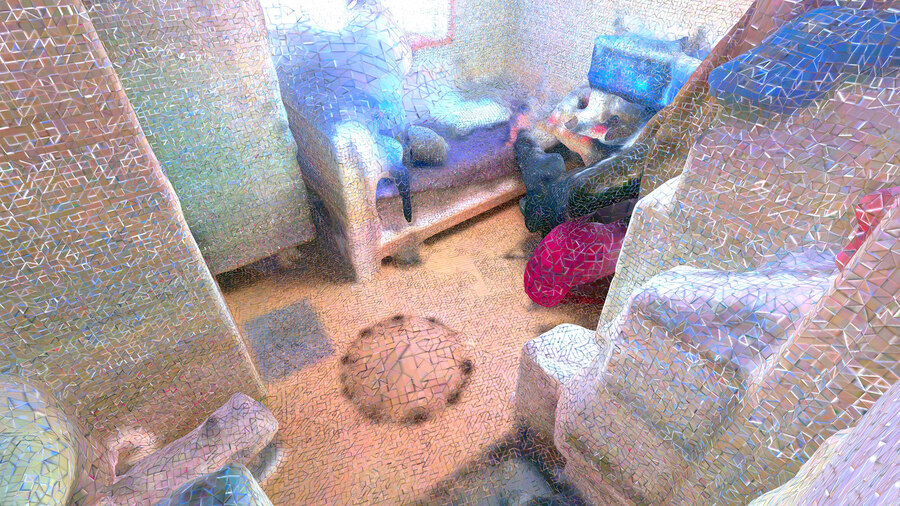
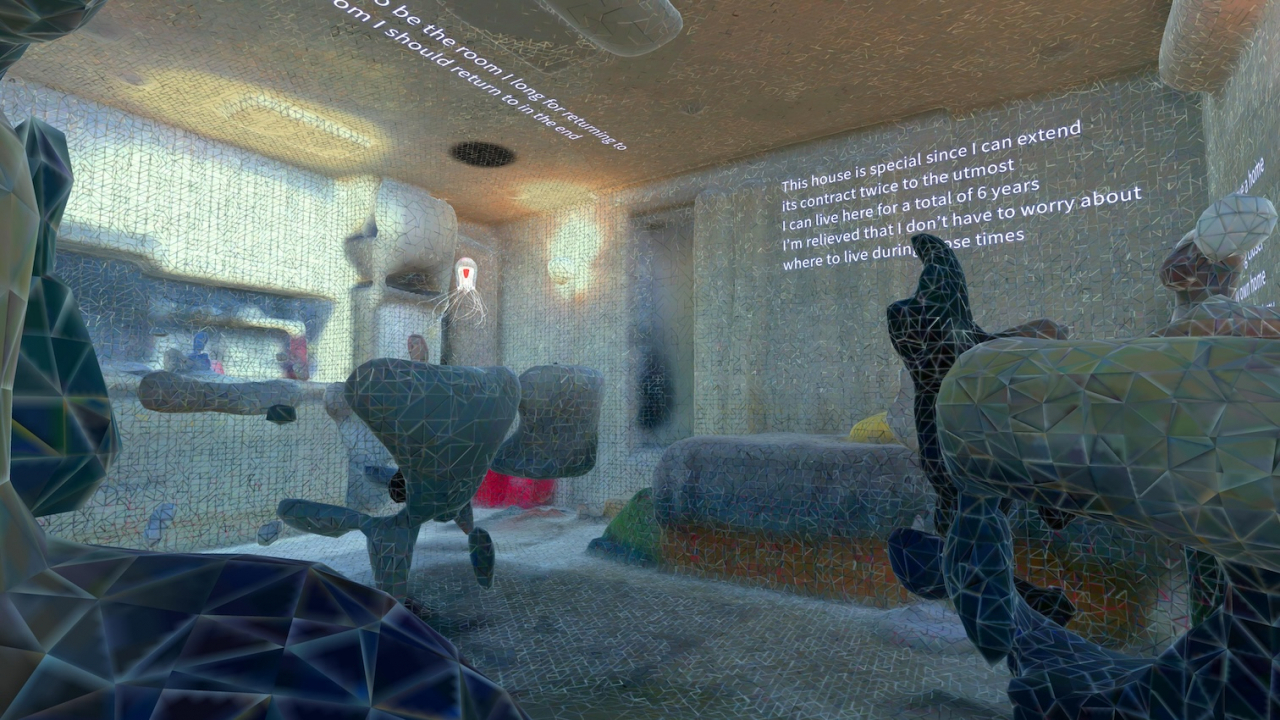
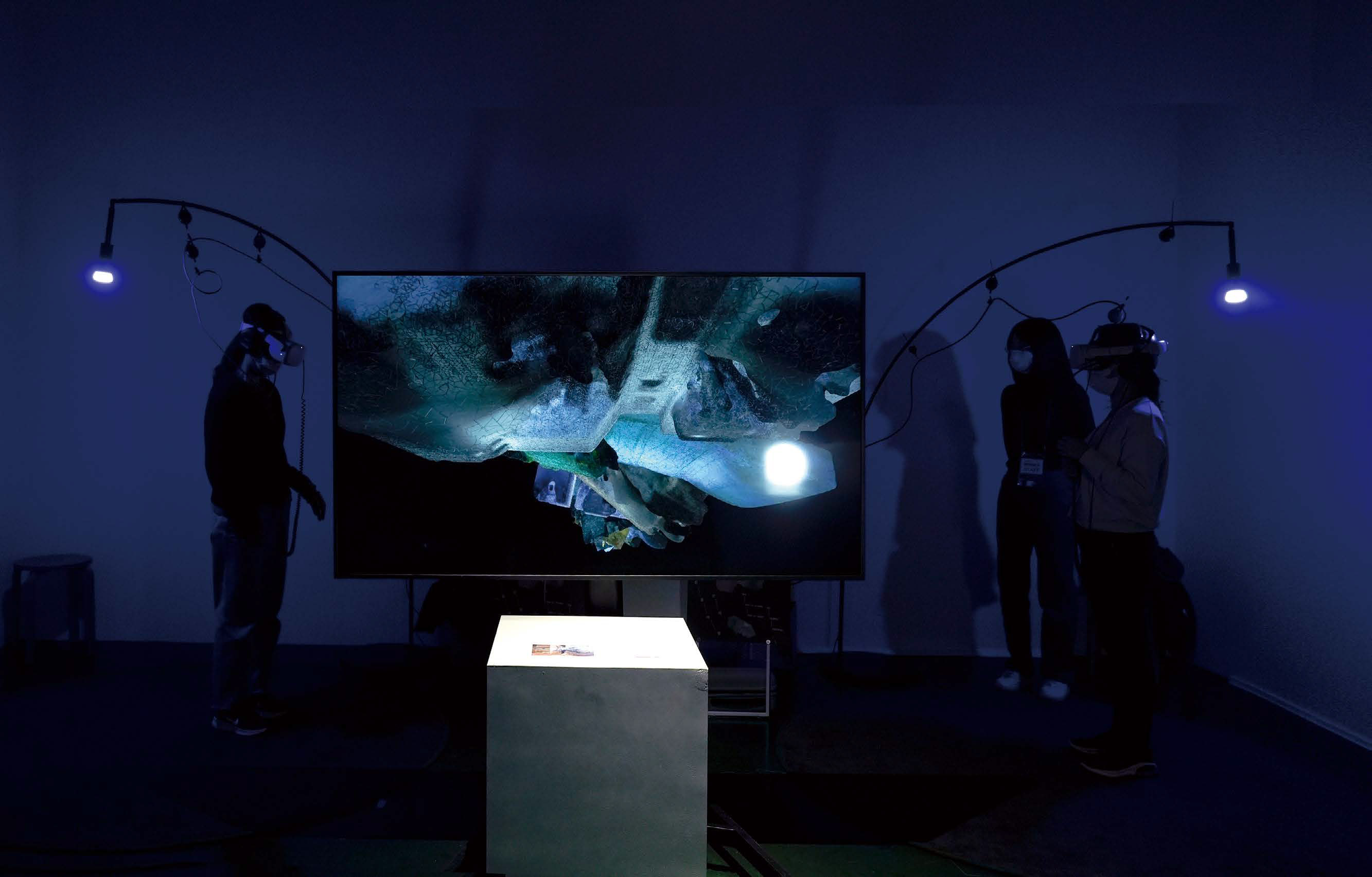
SANGHEE, Oneroom-Barbel, 2022, Interactive VR, single-play, 15min ©SANGHEE

SANGHEE has explored various media suited to encountering audiences and developing stories together, creating and expanding new worldviews. One representative example is the interactive VR work Oneroom-Barbel (2022), which invites viewers (players) to dive and explore an underwater architectural structure.
 
The virtual space of the work is built from scanned data of the living spaces of people in their 20s and 30s residing in Seoul. Through texts, sounds, and events encountered within this fantastical virtual environment, players experience the “one-room” space in a multidimensional way.


SANGHEE, Oneroom-Barbel, 2022, Interactive VR, single-play, 15min ©SANGHEE

At the same time, the experience of Oneroom-Barbel encompasses aspects of trauma that resist sensory codification. In the work, the living experience of the “one-room life”—an apartment in which the bedroom, kitchen, and living room are not separated but integrated into one space—constructs a collective memory of “living away from home” for young people who have come to Seoul from other regions or have become independent from their parents.
 
SANGHEE sought to address the sensations produced by these paradoxes, intertwined with economic conditions, through the medium specificity of VR. The work received an Award of Distinction in the New Animation category at the Prix Ars Electronica (2023) and was also invited to compete in the Venice Immersive international competition section at the Venice International Film Festival the same year. In 2023, it was additionally produced in a barrier-free version, enabling audiences with limited mobility to experience it without discomfort.


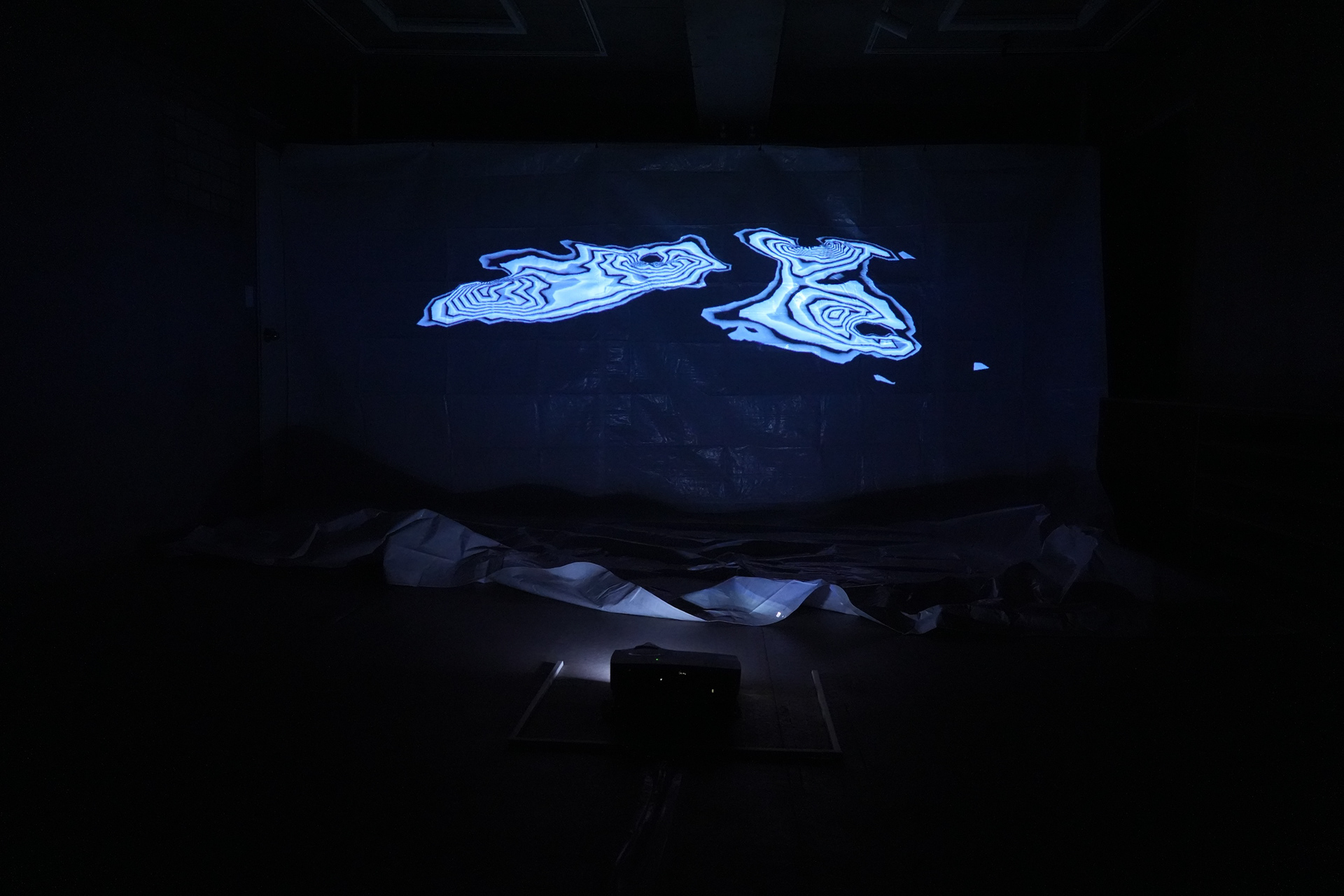
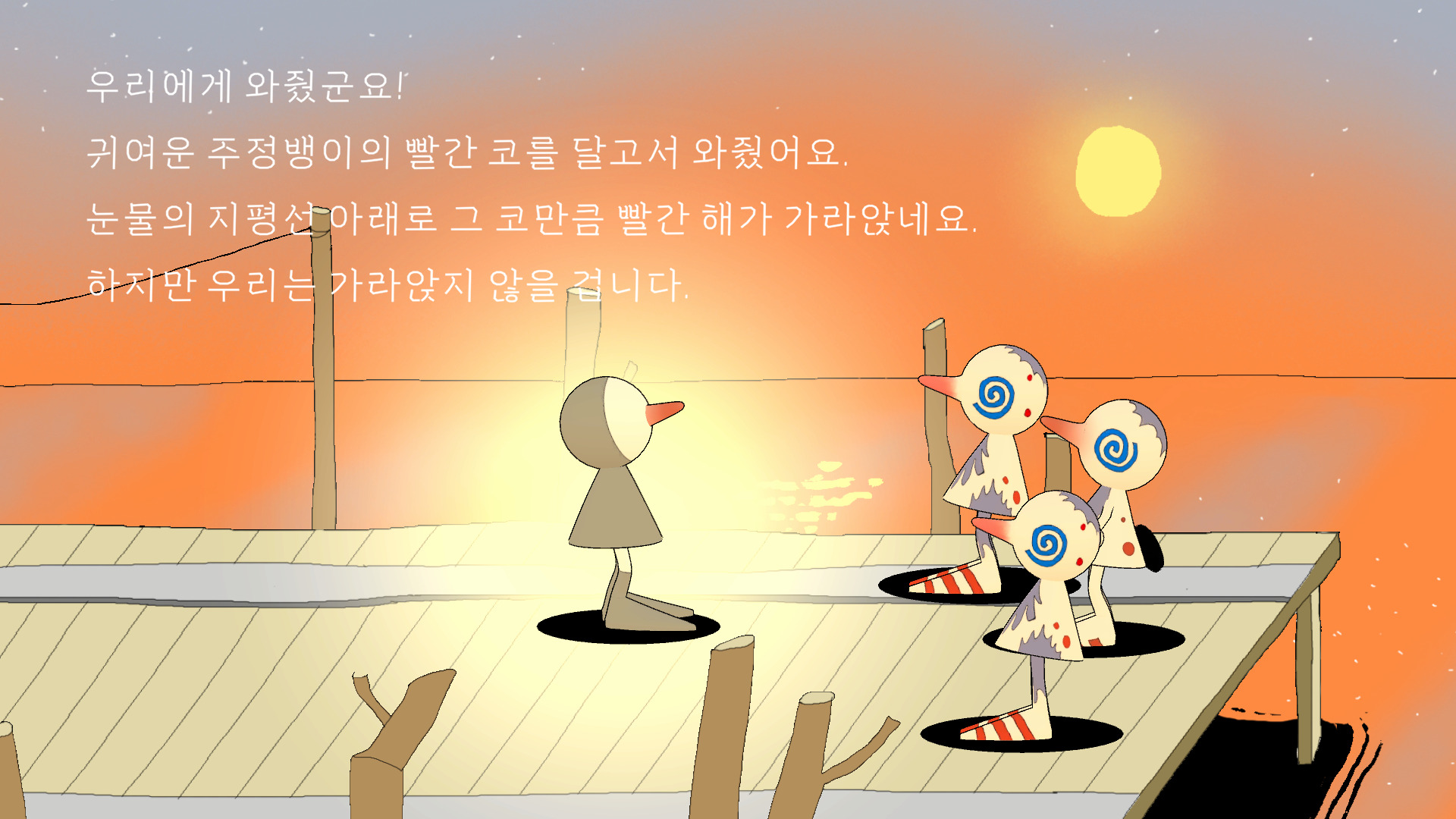
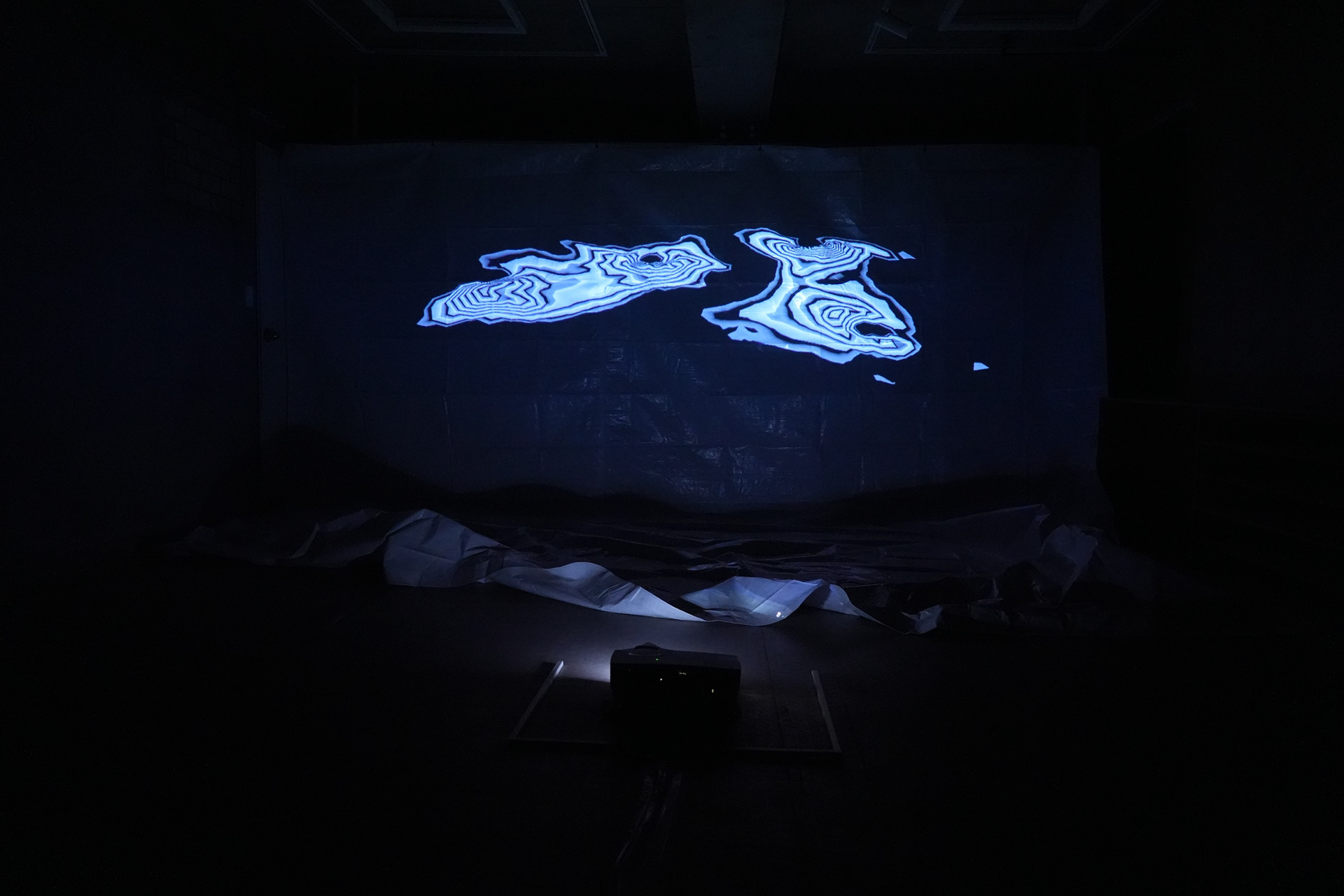
SANGHEE, Worlding···, 2023-2024, Interactive VR, Single-Play based on a local network, 20min ©SANGHEE

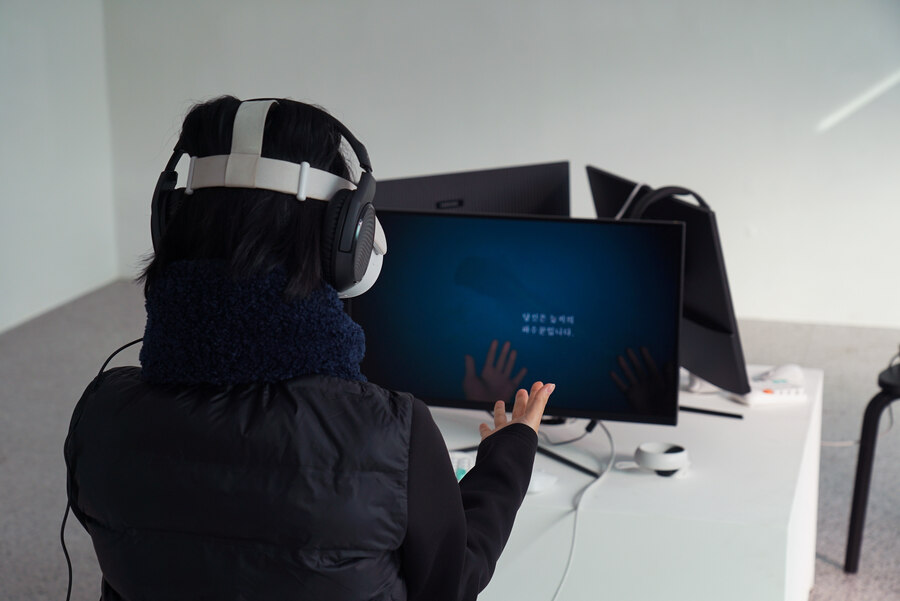
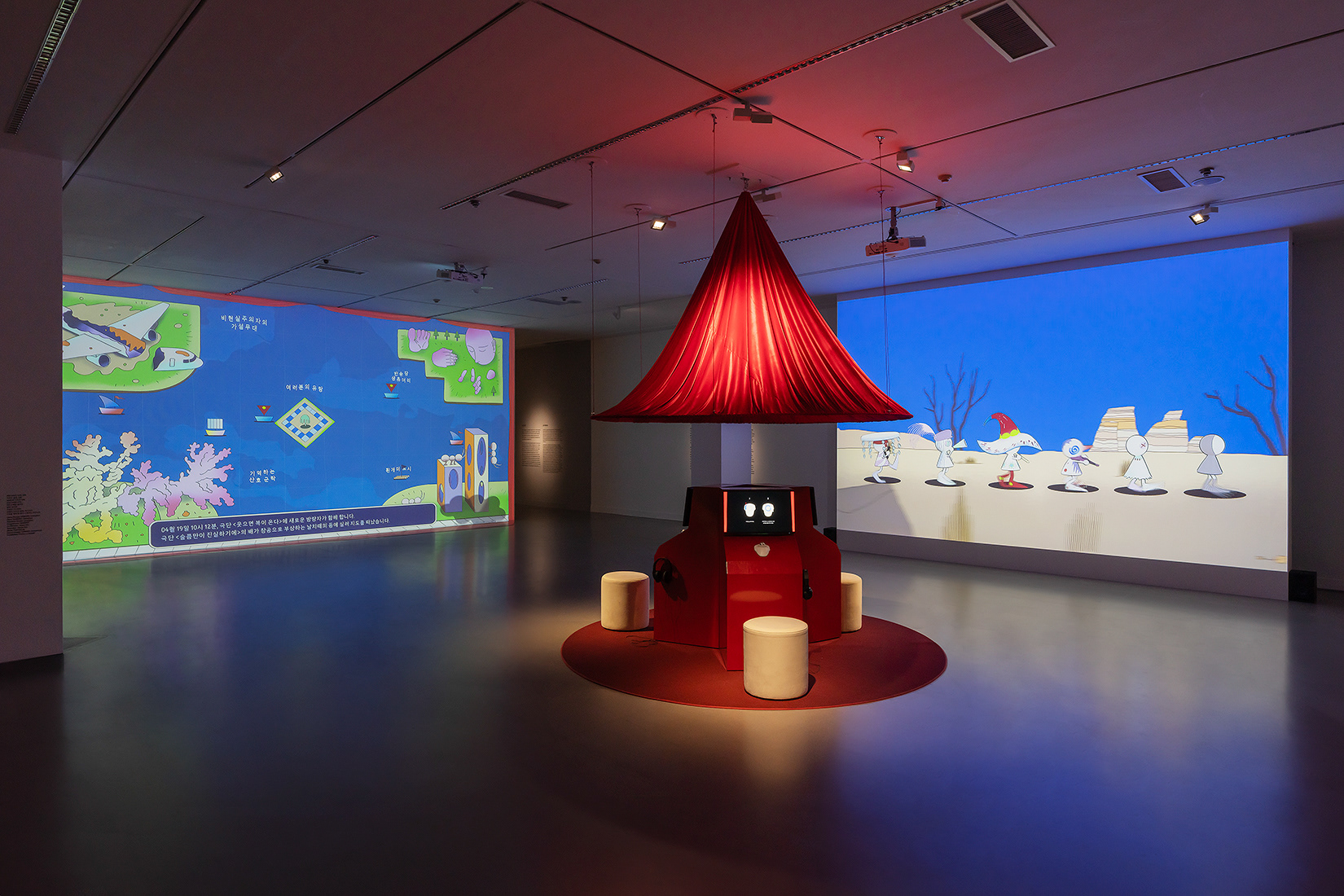
Another interactive VR work, Worlding··· (2023-2024), presented the following year, is a participatory work of art that revisits VR’s bodily surface and the style of a stateless online game. It consists of VR work and a physical setup for the output of VR play.


SANGHEE, Worlding···, 2023-2024, Interactive VR, Single-Play based on a local network, 20min ©SANGHEE

Wearing VR headsets applying hand-tracking technology, Players are encouraged to alter the terrain in virtual reality with their bare hands. Topographical distortion accumulates after each participation. During the exhibition period, visitors to the exhibition hall are invited to take part in forming a shared terrain through VR play.
 
In this work, SANGHEE not only records the behavioral data of each individual player, but also outputs that data as a topographic map accumulating on the floor and as a moving image projected onto a screen.


SANGHEE, Worlding···, 2023-2024, Interactive VR, Single-Play based on a local network, 20min ©SANGHEE

In the VR work, the players take on the role of a watchman who should bury an enormous corpse floating in a swamp. The players perform this task using their own hands. In this process, they experience physical fatigue and witness the aging and exhaustion of the VR body.
 
Their labor does not immediately refer to the topographical map within the exhibition hall. It accompanies a time lag caused by stateless online connections. Through this work, SANGHEE states that she sought “to critically reconsider the superiority of simultaneity assumed by real-time media,” while at the same time “bringing to the fore the shell-like nature of the VR body by relating to the image of the body being exhausted.”


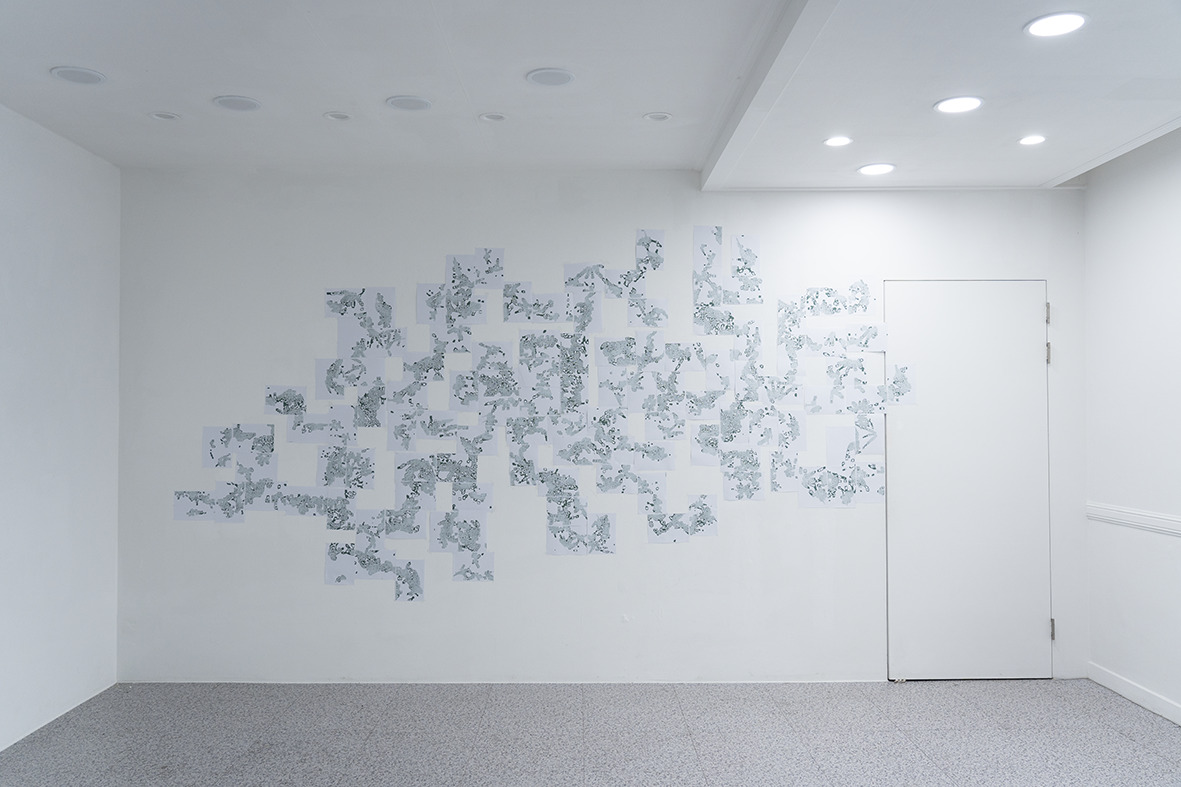
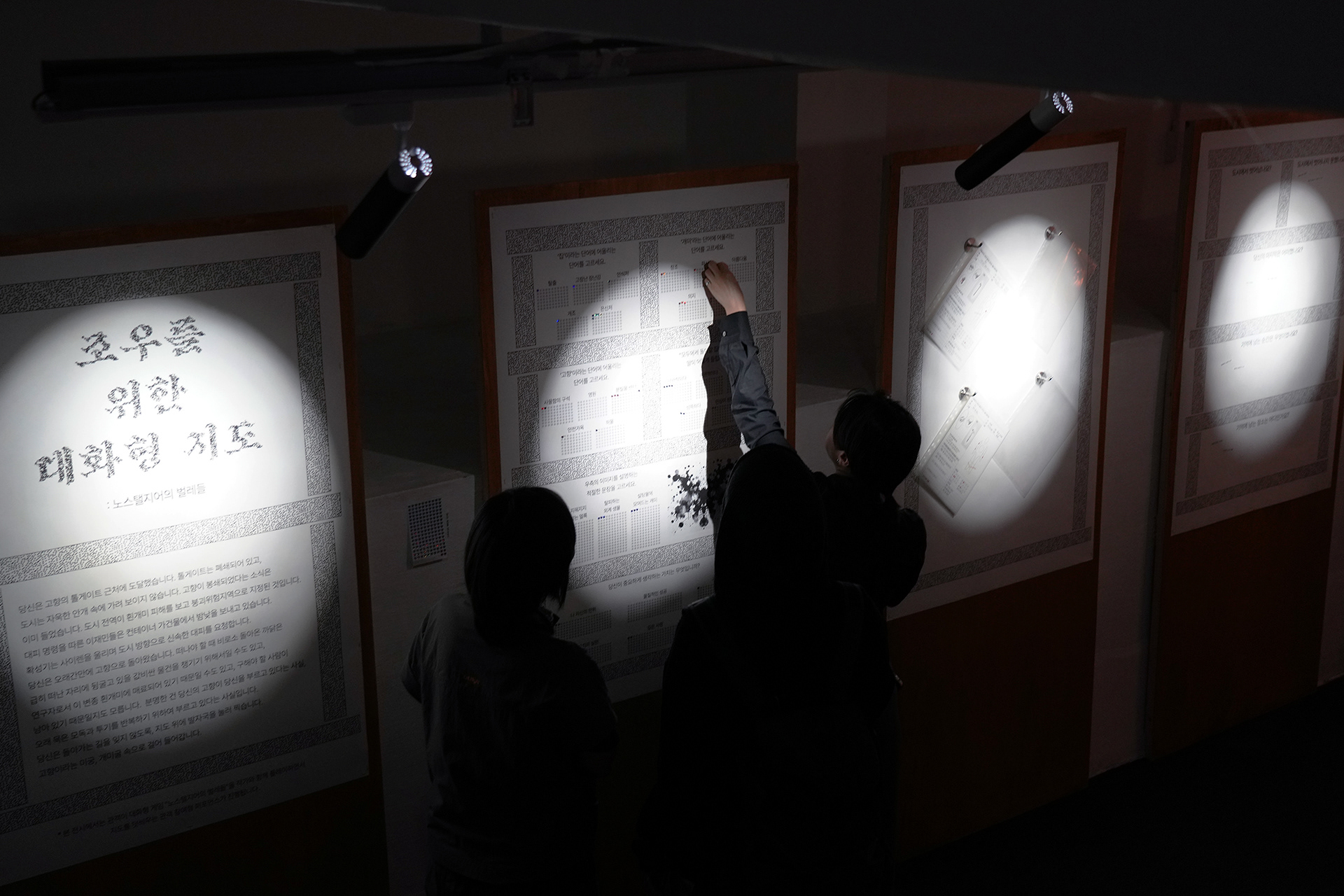
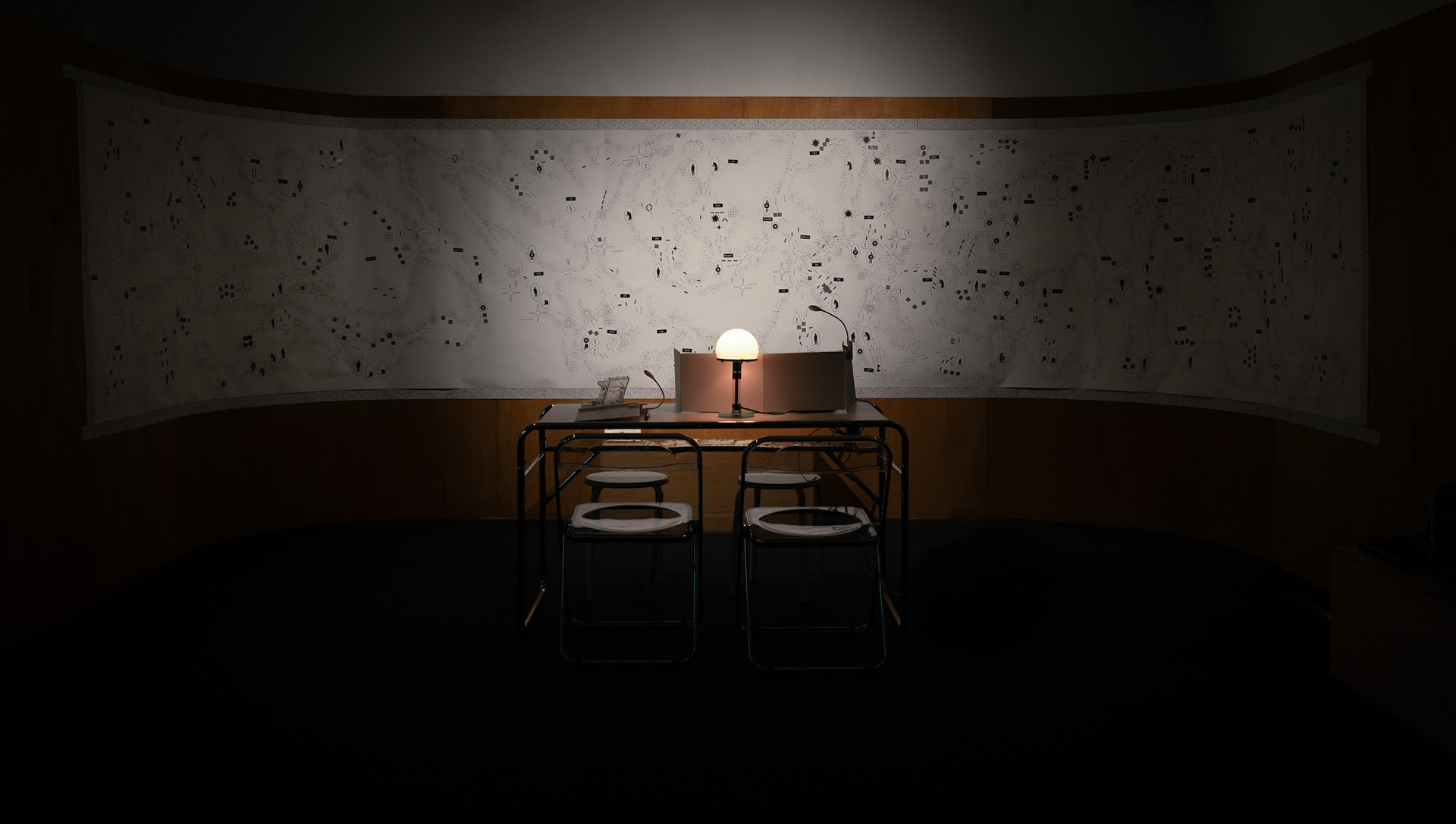
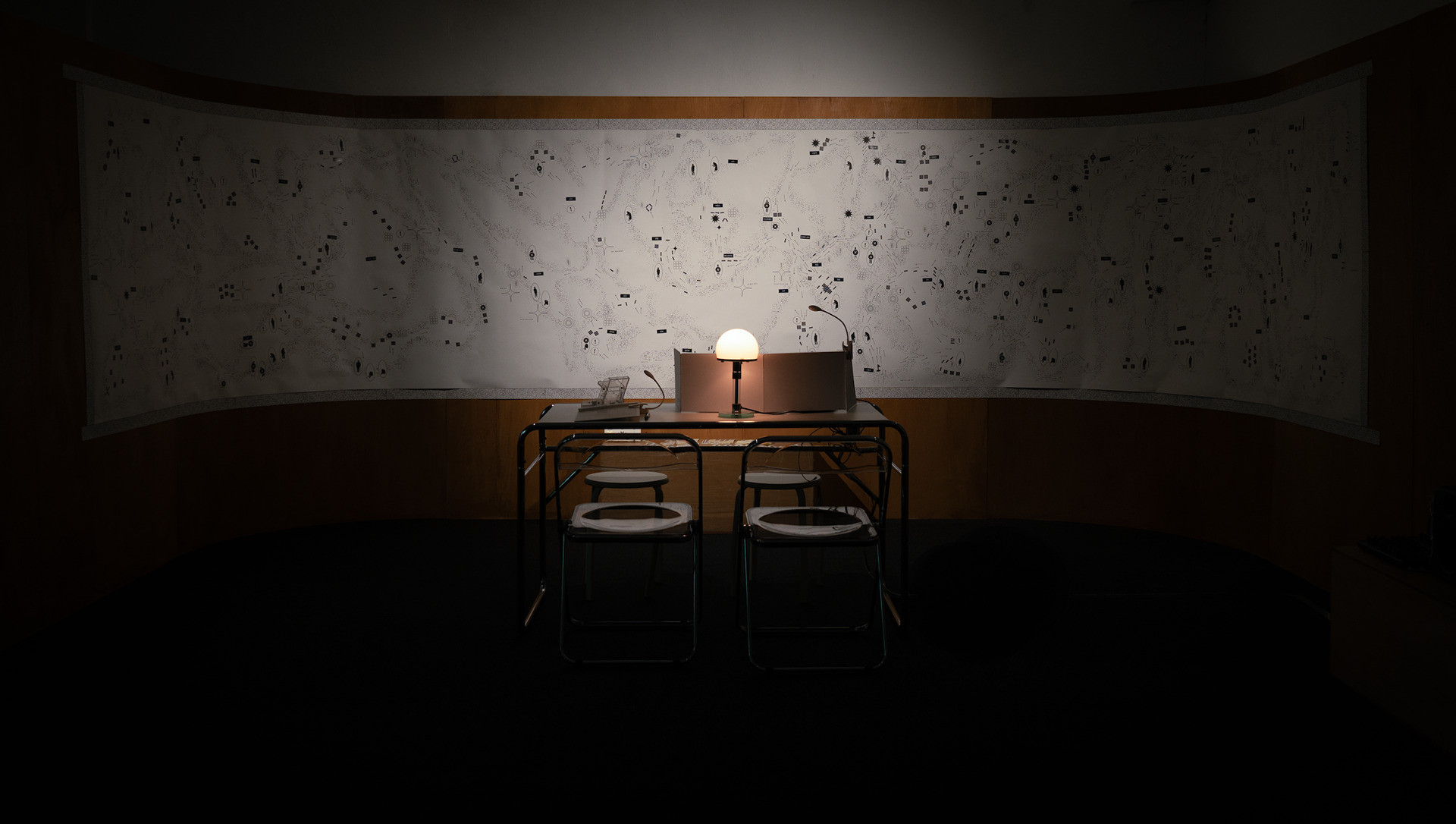
SANGHEE, Conversational Map for Encounters, 2024, Roll paper attached to plywood structure, Stickers, dimension variable ©SANGHEE

Meanwhile, in her 2024 solo exhibition 《Conversational Map for Encounters: Bugs of Nostalgia》 at Faction, SANGHEE and performers played one-on-one sessions of her interactive game Bugs of Nostalgia with visitors, drawing heavily on the format of TRPGs (Table Talk Role Playing Games).
 
As its title suggests, the interactive game unfolds as a conversation governed by game-like rules. During the roughly 90-minute performance, the visitor—taking on the role of a player—can move their character freely, propose new settings and stories, and loosely perform them.


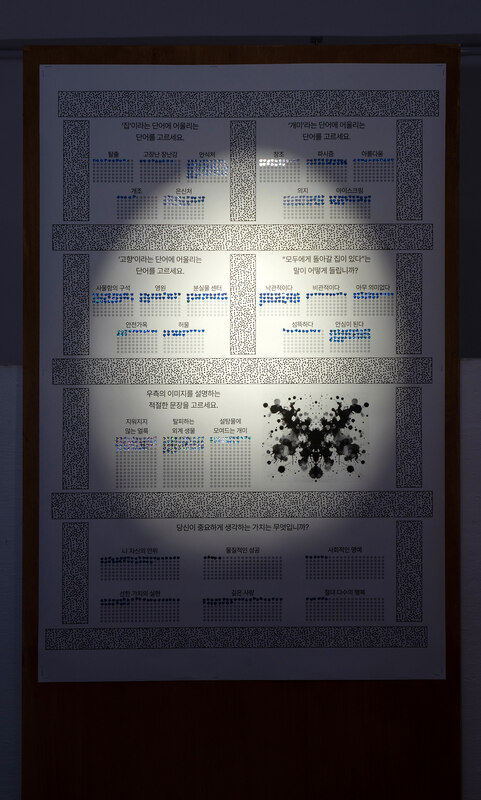
SANGHEE, Conversational Map for Encounters, 2024, Roll paper attached to plywood structure, Stickers, dimension variable ©SANGHEE

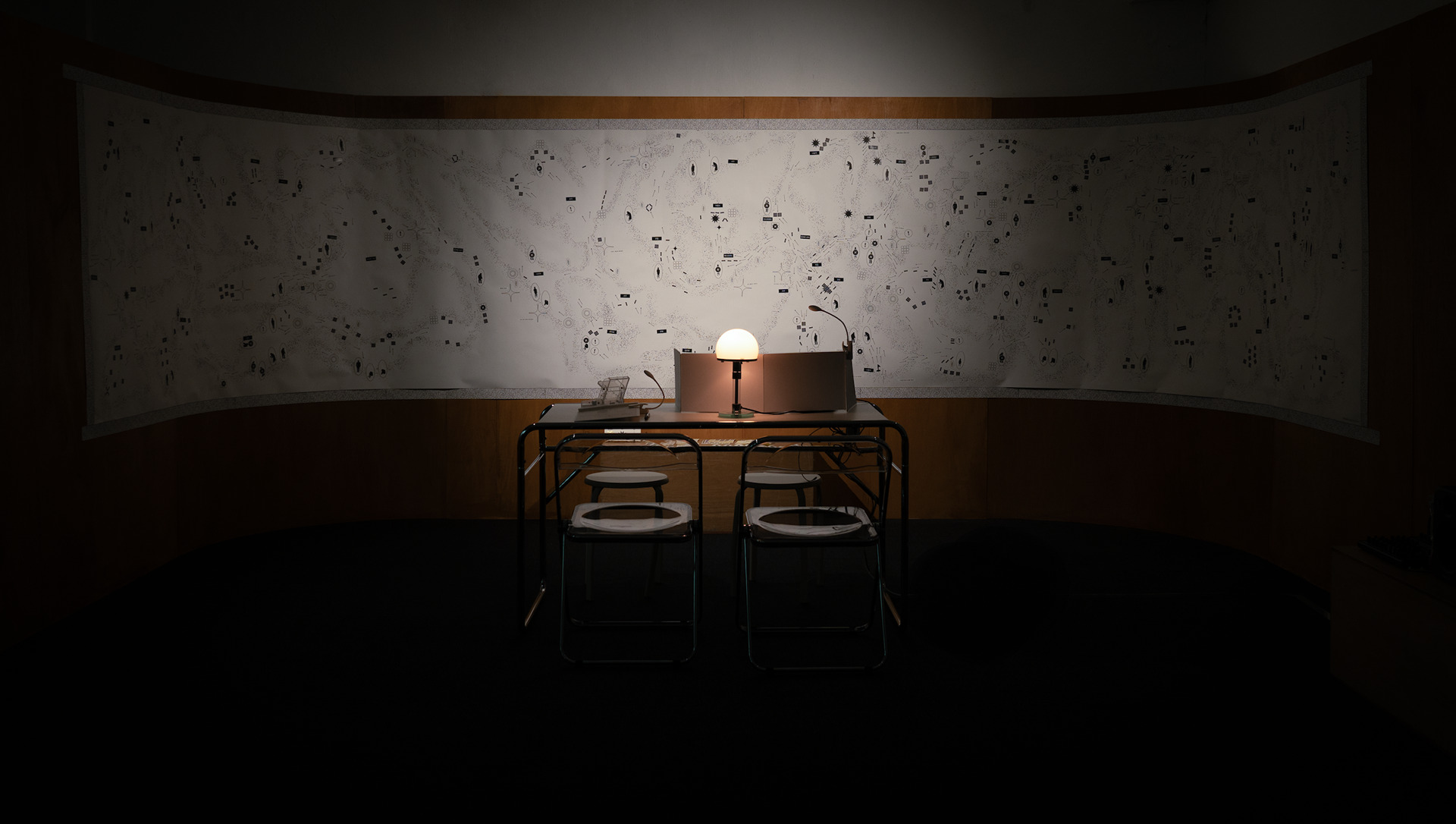
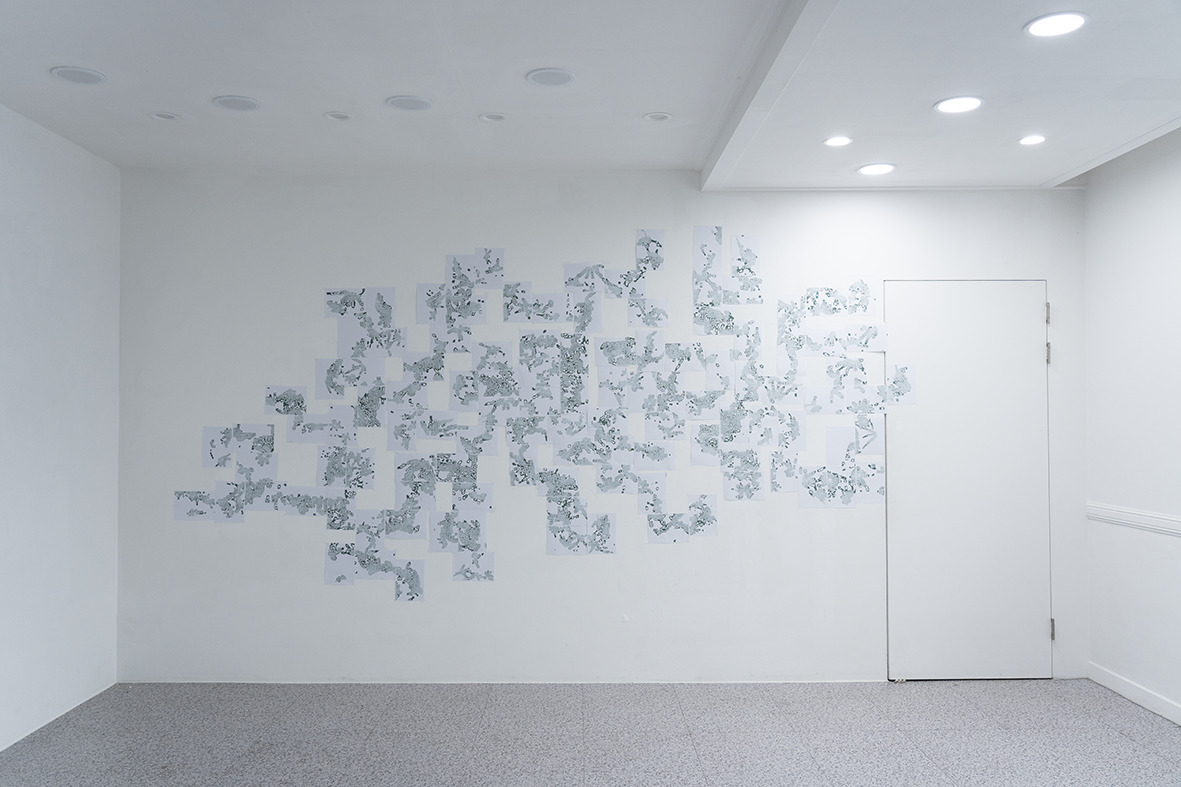
The game is set in a fictional hometown where the walls, bridge piers, and floors collapse due to perilous termites invading the city. The characters made by players explore the hometown, which is illustrated schematically in a visual map. The audience marks their steps or adds stickers to the map installed along the walls of the exhibition hall. The revised map then turns into the background for the next player, creating a stratum of overlapped multiple stories.


SANGHEE, Conversational Map for Encounters, 2024, Roll paper attached to plywood structure, Stickers, dimension variable ©SANGHEE

The map used in this game may resemble an ordinary map, but rather than simply indicating the player’s location, it invites them to imagine potential dangers, the possibility of new encounters, actions based on such predictions, and emotional responses or interventions. In other words, the map functions as a shared ground for creating a collective fiction.
 
The work focuses on the stories generated through this map and turns the very process of producing the map itself into an aesthetic experience.


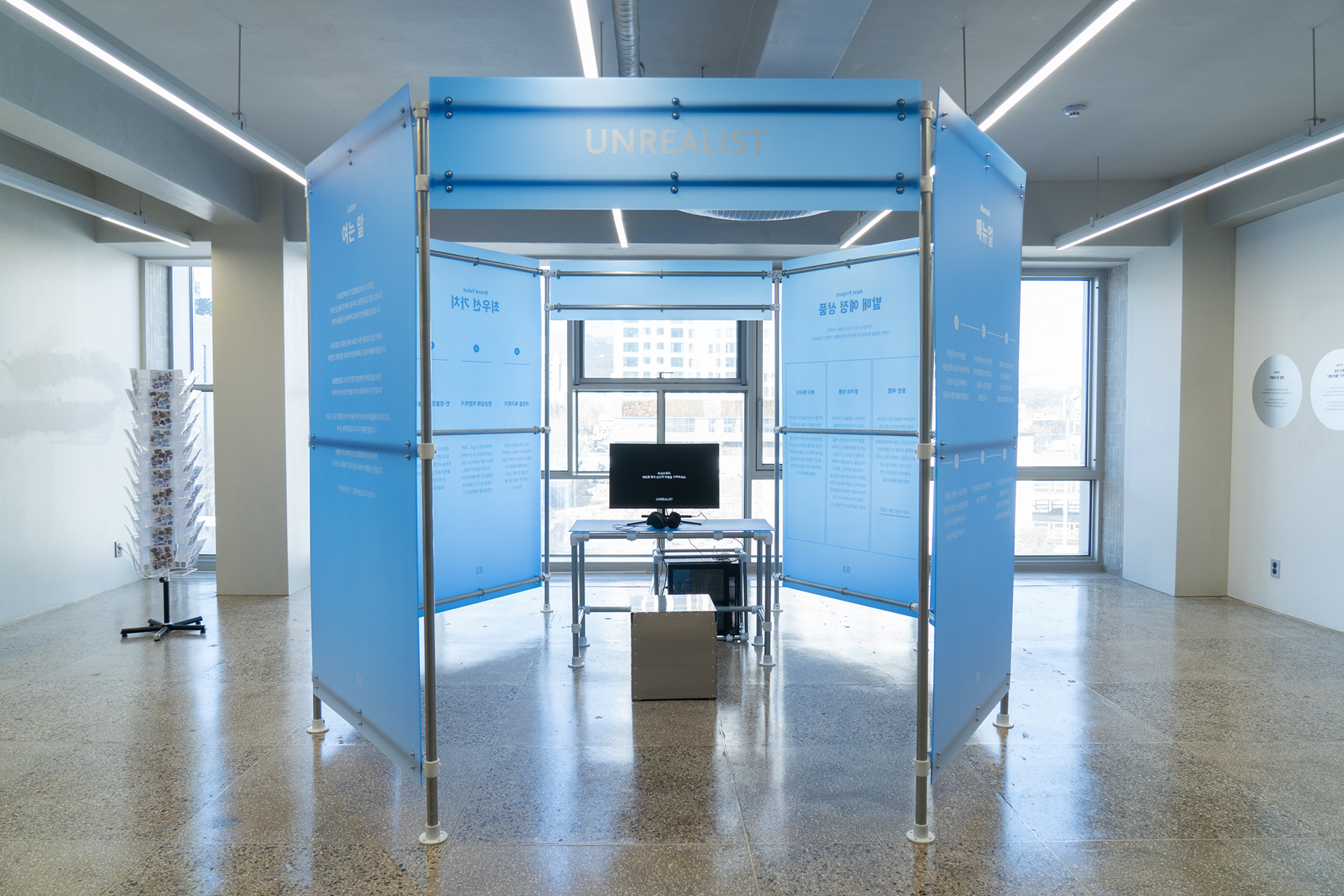
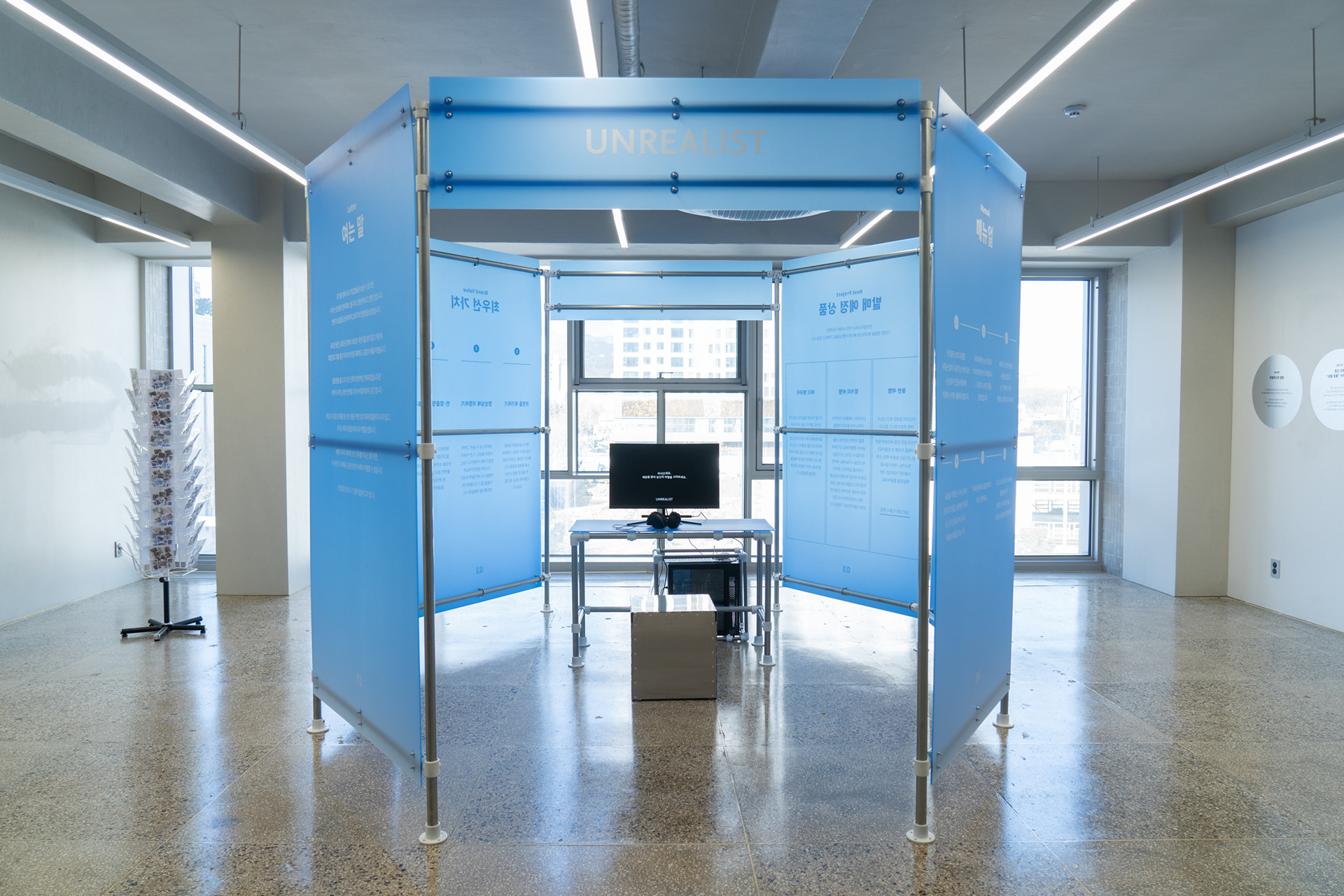
SANGHEE, Unrealist's Europe, 2024, Real-time simulation utilizing eye-tracking device, Single-play ©SANGHEE

In the same year, SANGHEE presented Unrealist’s Europe (2024), a work based on a real-time simulation that uses eye-tracking technology. Imagining a future in which overseas travel has become virtually impossible due to pandemics and climate crises, SANGHEE conceived a metaverse travel product called “Unrealist’s Europe.”
 
“Unrealist” is a fictional company that advertises this product as a faithfully reconstructed and adapted version of 21st-century tourism—an experience shaped by time pressure and financial constraints—relocated into the metaverse. Sitting in front of a screen, the viewer moves rapidly through the blurred streets of Europe, pedaling to capture images of whatever their gaze lands upon.


SANGHEE, Unrealist's Europe, 2024, Real-time simulation utilizing eye-tracking device, Single-play ©SANGHEE

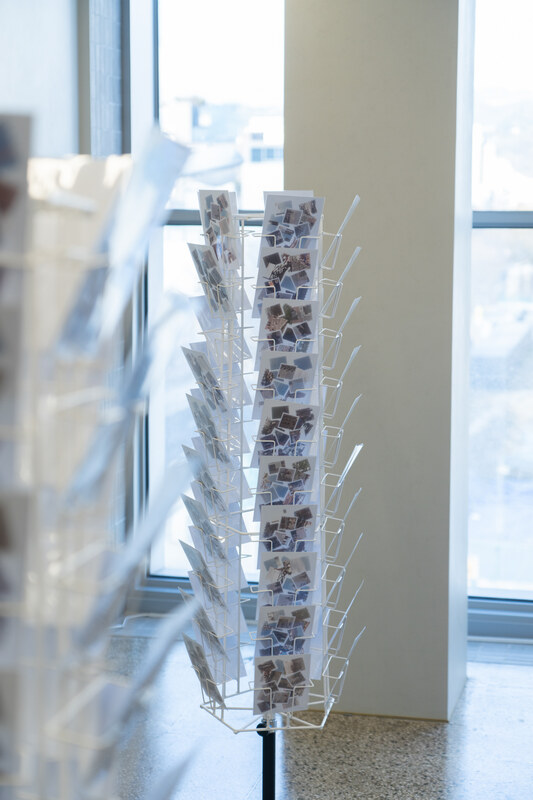
The eye-tracker indicates where the viewer is looking, yet interacting with it reveals the difficulty of consciously controlling one’s gaze to focus on a specific point. Viewers follow the shifting images of Europe—alternating between clarity and blur—embarking on a visual journey to discover their own version of Europe. The images they capture along the way are printed as postcards, gradually filling the exhibition space.


SANGHEE, Unrealist's Europe, 2024, Real-time simulation utilizing eye-tracking device, Single-play ©SANGHEE

In Korea, overseas travel, especially travel to Europe, has been represented as an irreplaceable and desirable experience. Tourists traveling with such expectations make gestures to capture the blurrily flowing scenery as an experience. The artist explains that this work was an attempt “to dissect such gestures on the dimension of social and bodily 'act' that mediates between the physical interface and the audience.”


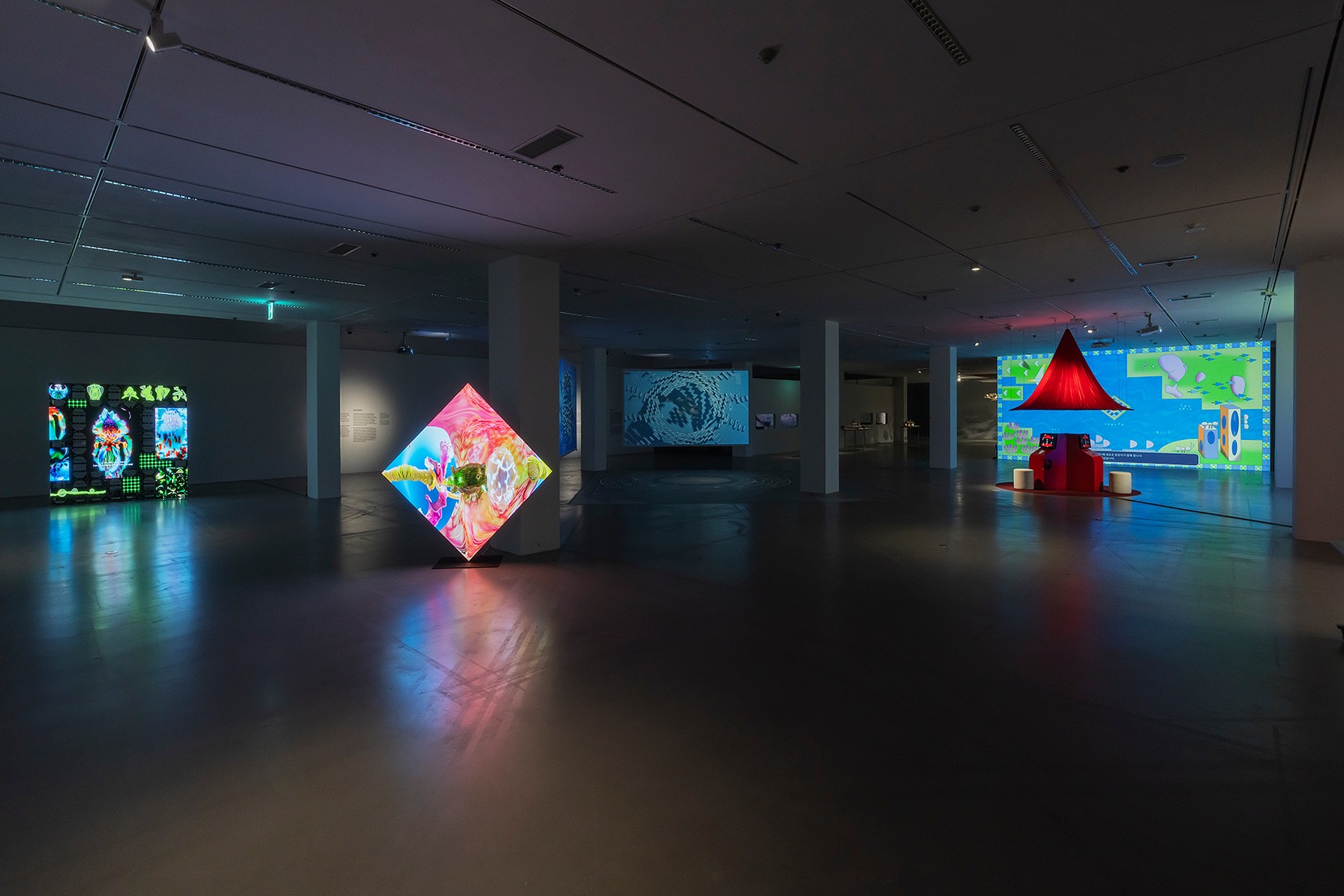
SANGHEE, Keep Pace with Me, Wanderer, 2025, Interactive Real-time simulation, play based on a local network, Pavilion and Controller, Dimension variables ©SANGHEE

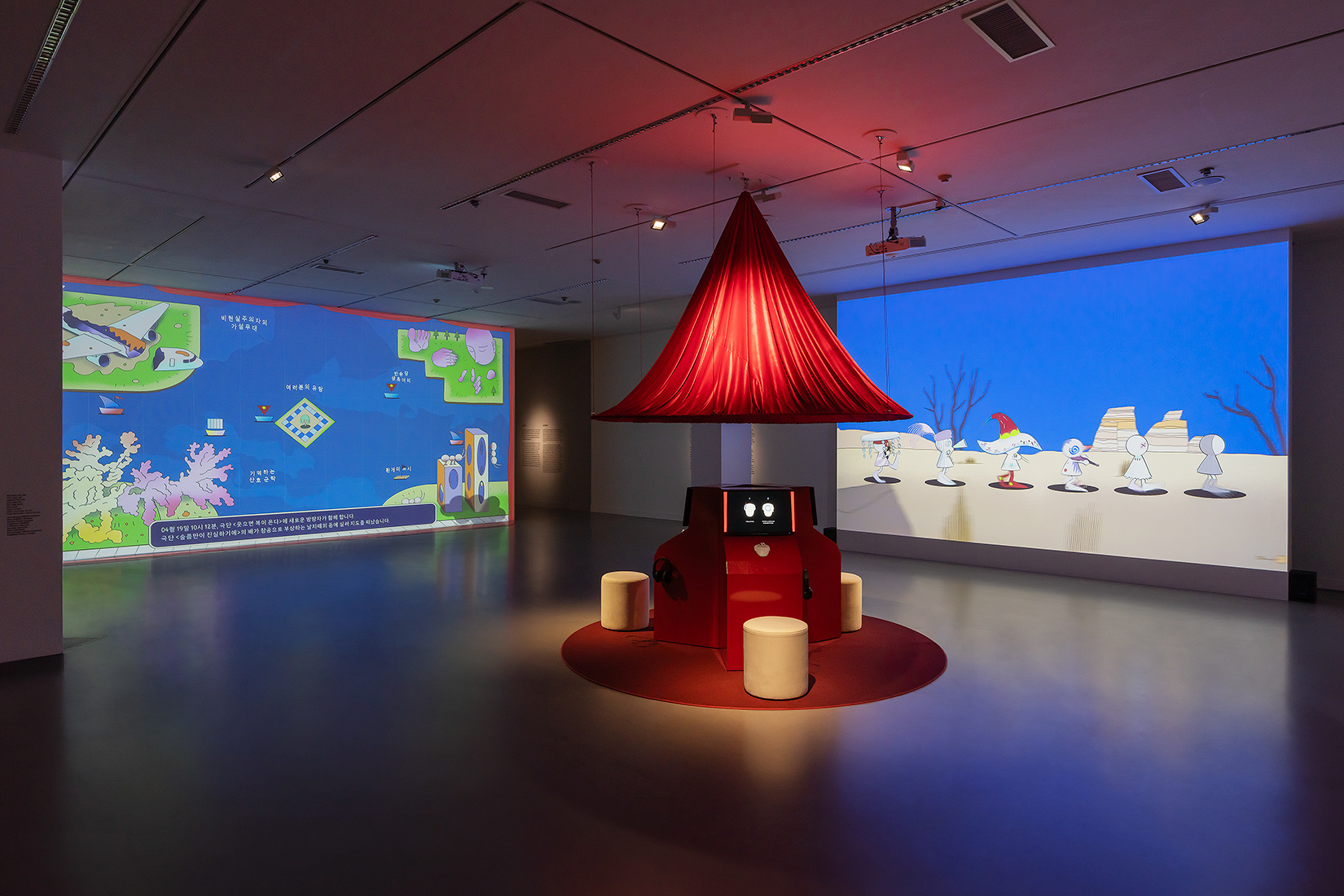
In 2025, SANGHEE participated in the 《Young Korean Artists 2025: Here and Now》 exhibition at the National Museum of Modern and Contemporary Art, Korea (MMCA), where she presented a new interactive work, Keep Pace with Me, Wanderer (2025). In the new work Keep Pace with Me, Wanderer, which expands the concept of VR, viewers experience the sensation of “movement (marching)” through the format of a walking simulation game.
 
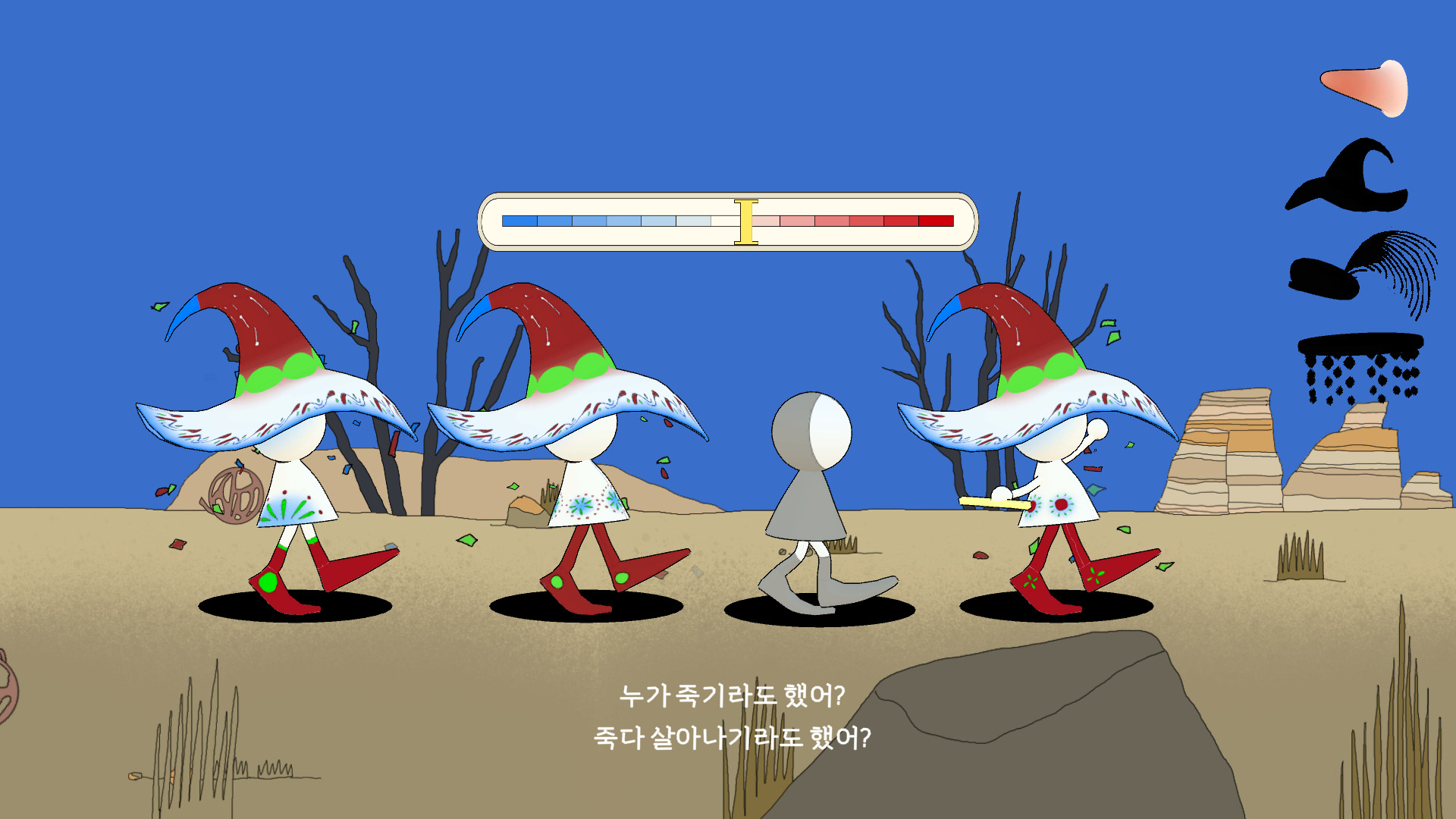
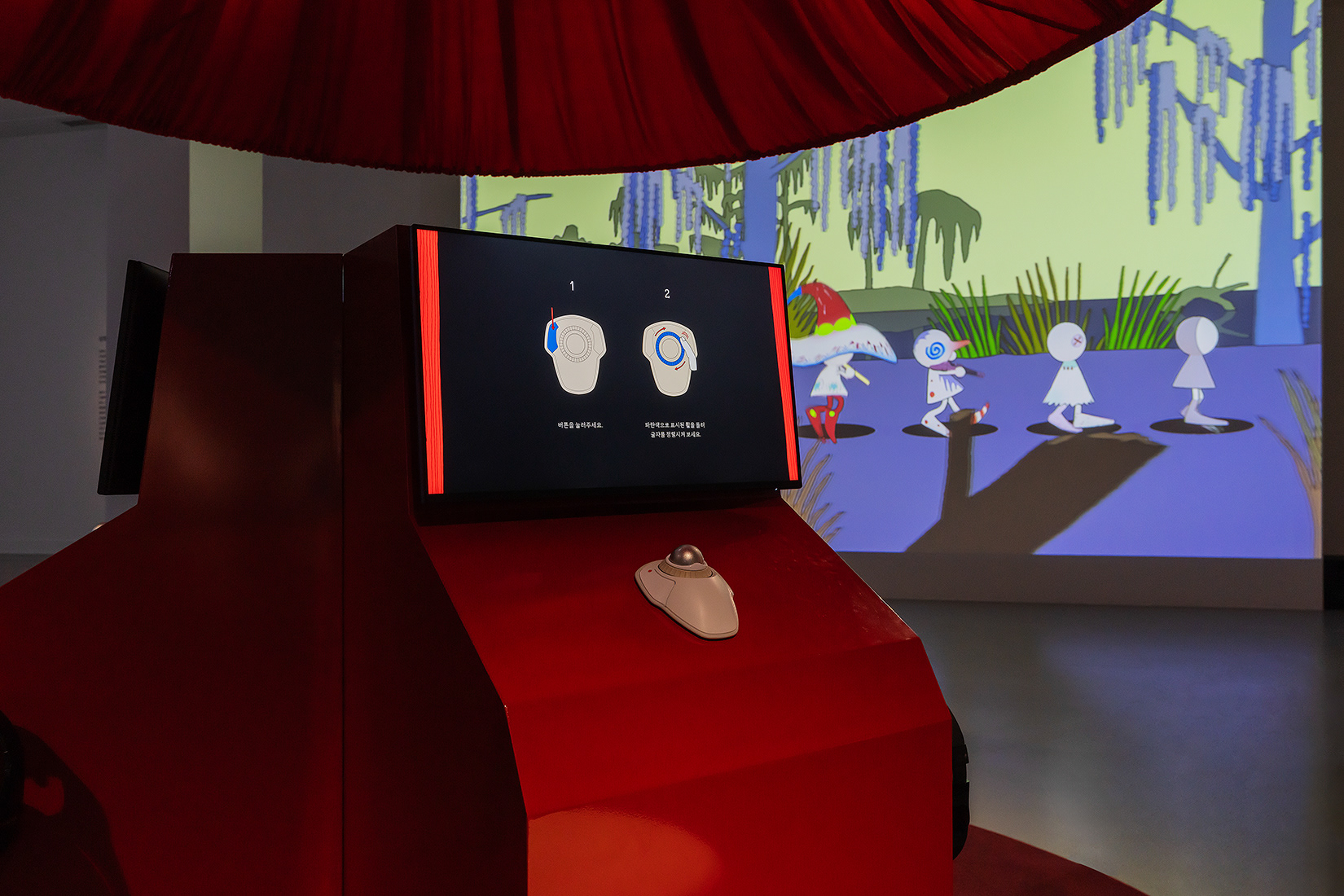
It invites the viewers to attune themselves to the relative speeds of themselves and others. As viewers become players, they select their own nomadic character and adjust the character’s walking speed using a physical interface.


SANGHEE, Keep Pace with Me, Wanderer, 2025, Interactive Real-time simulation, play based on a local network, Pavilion and Controller, Dimension variables ©SANGHEE

To continue conversations with other in-game characters, players must regulate their pace and synchronize their steps. Instead of presenting players with a binary choice of whether to accompany someone or not, the work allows them to make a more fluid decision about which character to walk in step with, using the concept of speed as the guiding parameter.
 
After the game, players can see whom they walked with and at what pace via an updated leaderboard. Through this journey, viewers come to encounter the various layers of the experience of moving with others, whether as companions, fellow travelers, or in a collective march.


SANGHEE, Keep Pace with Me, Wanderer, 2025, Interactive Real-time simulation, play based on a local network, Pavilion and Controller, Dimension variables ©SANGHEE

In this way, SANGHEE has been experimenting with various interactive works to explore what constitutes a shared emotion that can be co-created and experienced through interfaces, and how corporeality can be sensed within virtual worlds.
 
In her practice, the communal experiences formed through audience participation do not remain isolated events; they accumulate like strata within the physical exhibition space. Even in moments when visitors are not fully aware, they remain entangled in multiple layers of experience, fostering a sense of co-creation that extends beyond the self.
 
Her work revives the awareness that, even in contemporary conditions where connections with others are increasingly tenuous and personal boundaries more defined, we still live in step with others and share perspectives, moving together through space and experience.


SANGHEE, Keep Pace with Me, Wanderer, 2025, Interactive Real-time simulation, play based on a local network, Pavilion and Controller, Dimension variables ©SANGHEE

 “Along the course of an adventure, unexpected outcomes may open up new paths. The route you take will vary depending on the choices you make. I cannot know what result I will create without embarking on the adventure, nor can I know the texture or contours of that result without completing it. That is both the pleasure and the challenge of the work, and it constitutes an emotional response to encounters that are unfamiliar and formidable.”   (SANGHEE, excerpted from the essay “The Joy of Losing One’s Way,” K-Arts No. 46) 


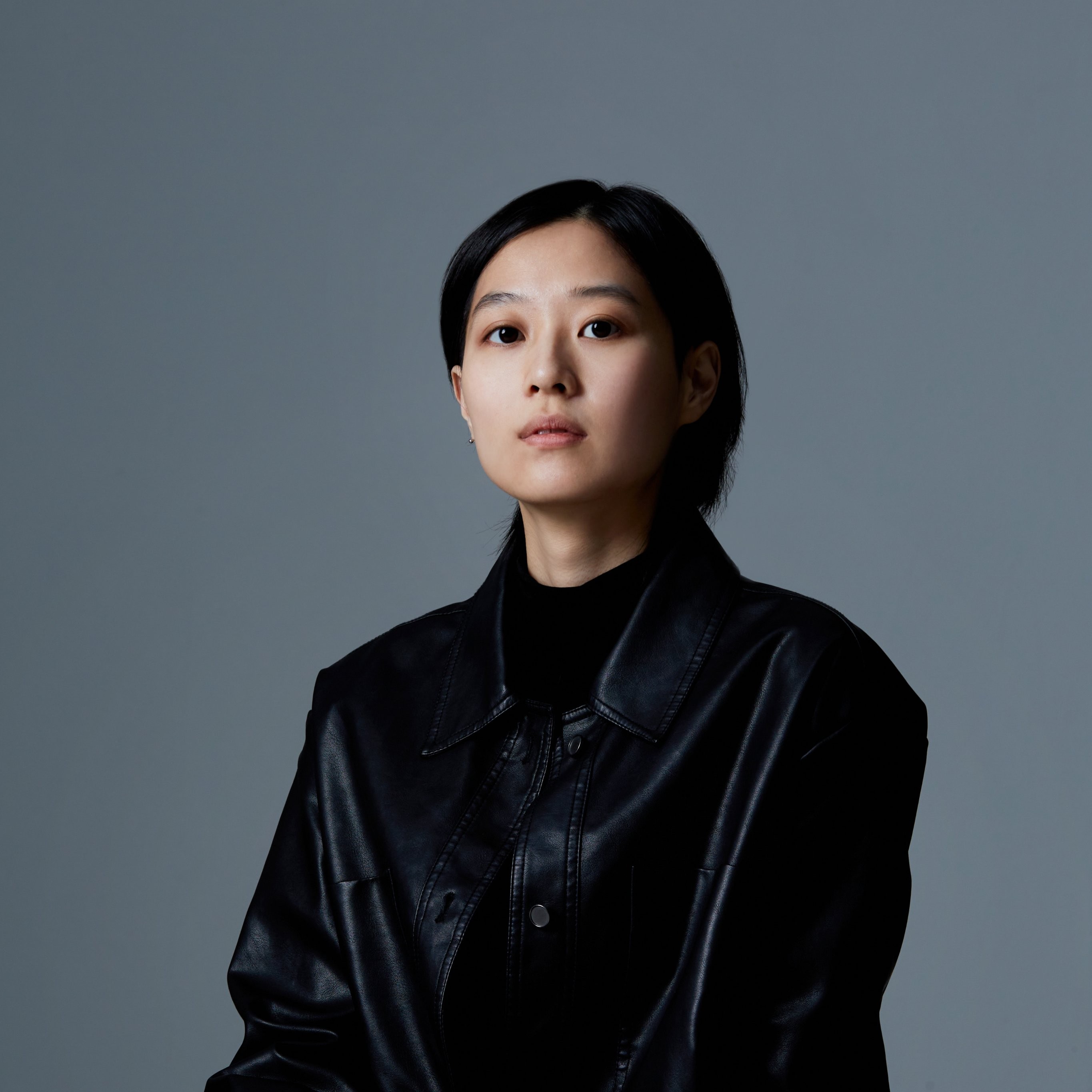
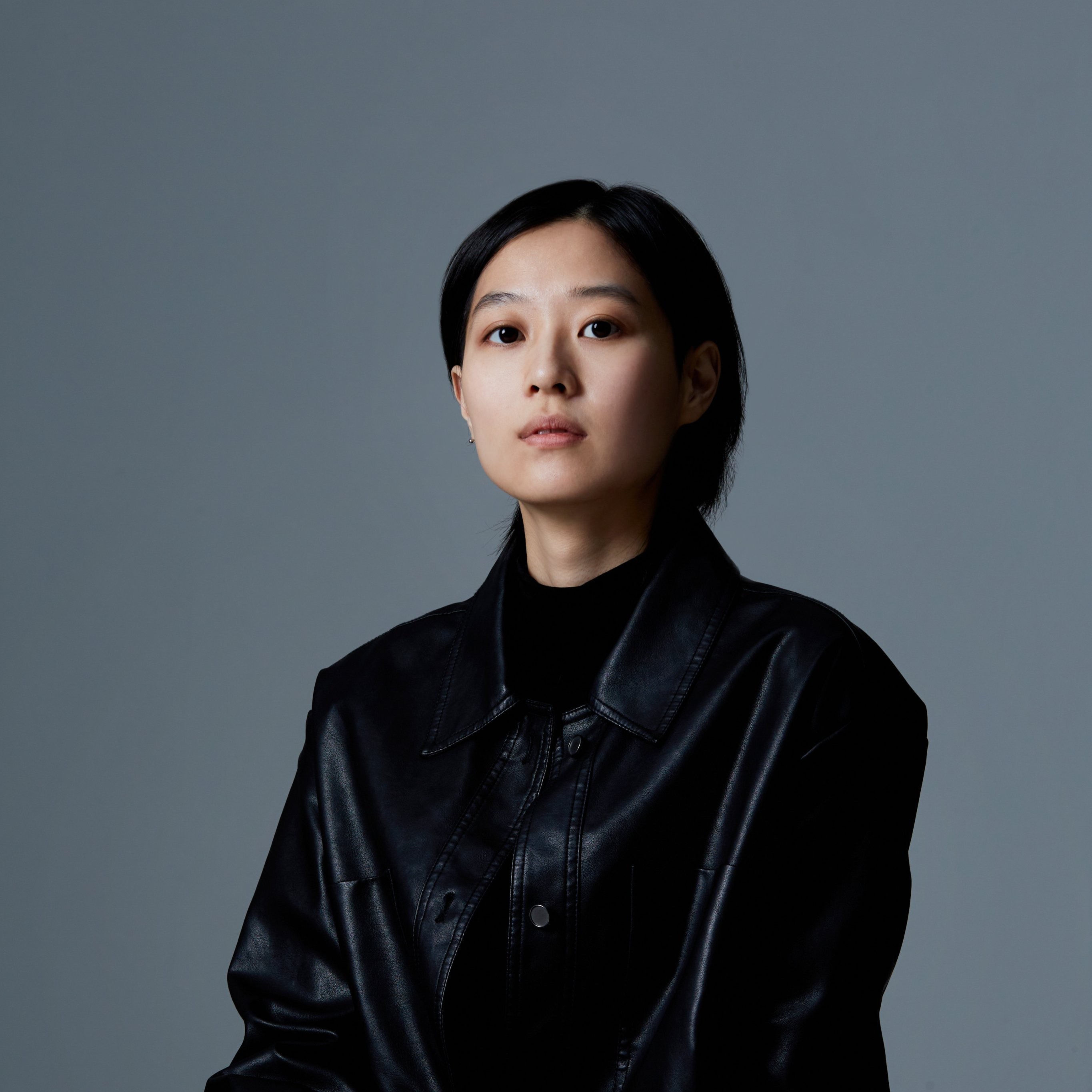
Artist SANGHEE ©MMCA

SANGHEE graduated from the Department of Sociology at Sungkyunkwan University and completed her Master’s in the Film, TV & Multimedia at Korea National University of Arts. Her solo exhibitions include 《Unrealist’s Europe》 (Artspace HYEONG7, Seoul, 2024), 《Conversational Map for Encounters: Bugs of Nostalgia》 (Faction, Seoul, 2024), and 《Worlding···》 (AVP Lab, Seoul, 2023).
 
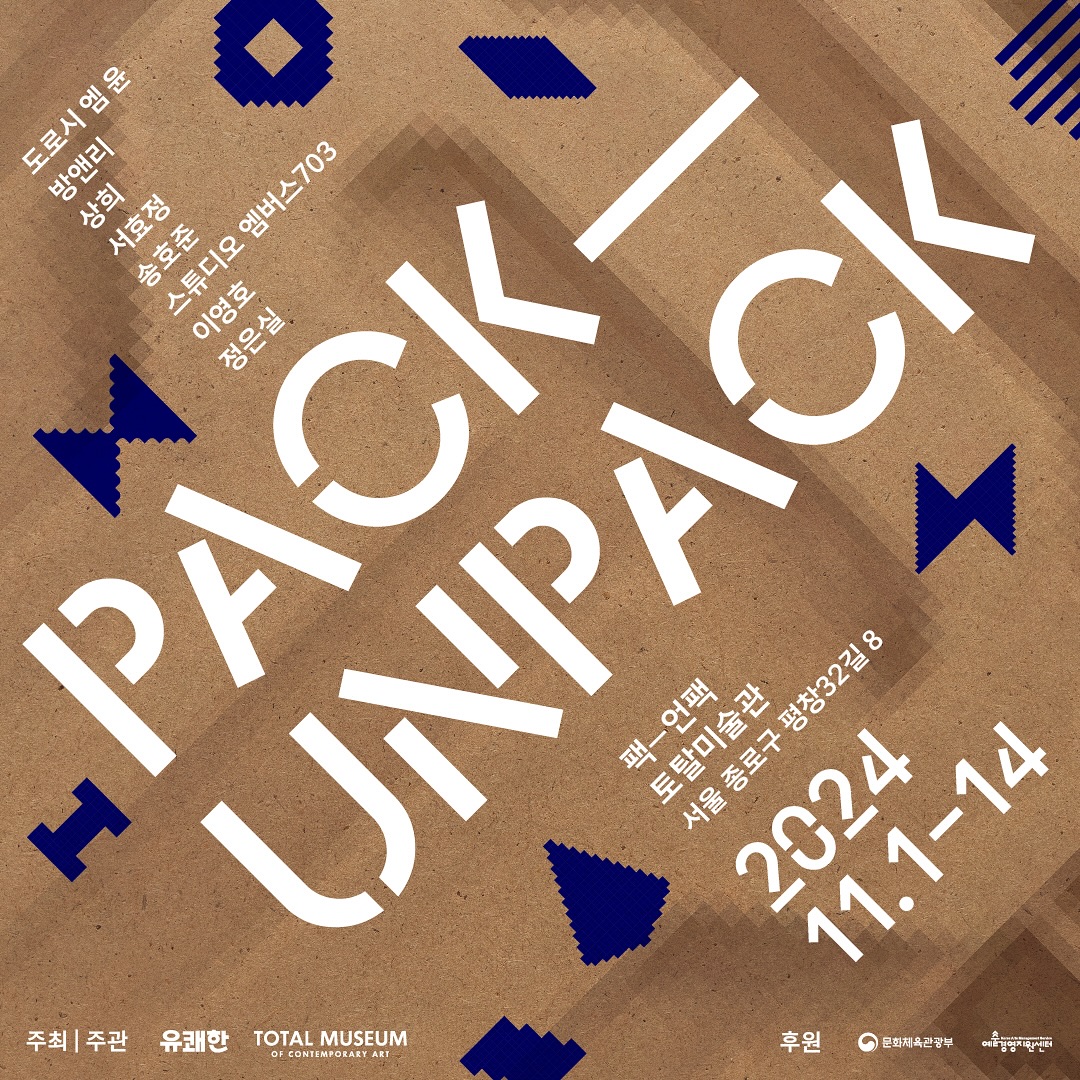
She has also participated in numerous group exhibitions, including 《ISEA 2025》 (Hangaram Design Museum, Seoul Arts Center, Seoul, 2025), 《Young Korean Artists 2025: Here and Now》 (MMCA, Gwacheon, 2025), 《Pack-Unpack》 (Total Museum of Contemporary Art, Seoul, 2024), 《Heterophony: A Decade of Song》 (Gwangju Media Art Platform, Gwangju, 2024), 《Big Brother Blockchain》 (Nam June Paik Art Center, Yongin, 2024), and 《Who Owns the Truth? 》 (POSTCITY, Linz, Austria, 2023).
 
In 2023, she received the Award of Distinction in the New Animation category at Prix Ars Electronica. Since 2023, SANGHEE has co-led the artist collective Line of Piers with narrative designer Seonghun, and in 2024, the collective participated in the ACC (Asia Culture Center) Residency Program.

References