1. Paintings Lost: The Meaning of Absence
《Paintings Lost》 is the title of Kim Jipyeong’s solo show held at INDIPRESS Gallery in
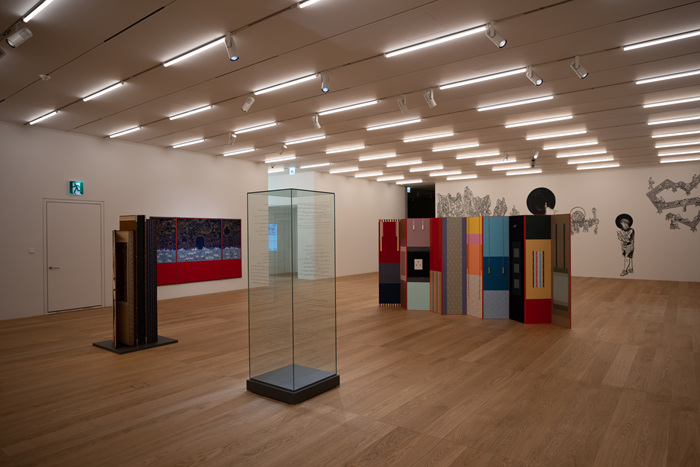
2023. It is also the title of Kim’s work featured in the 23rd Songeun Art Award
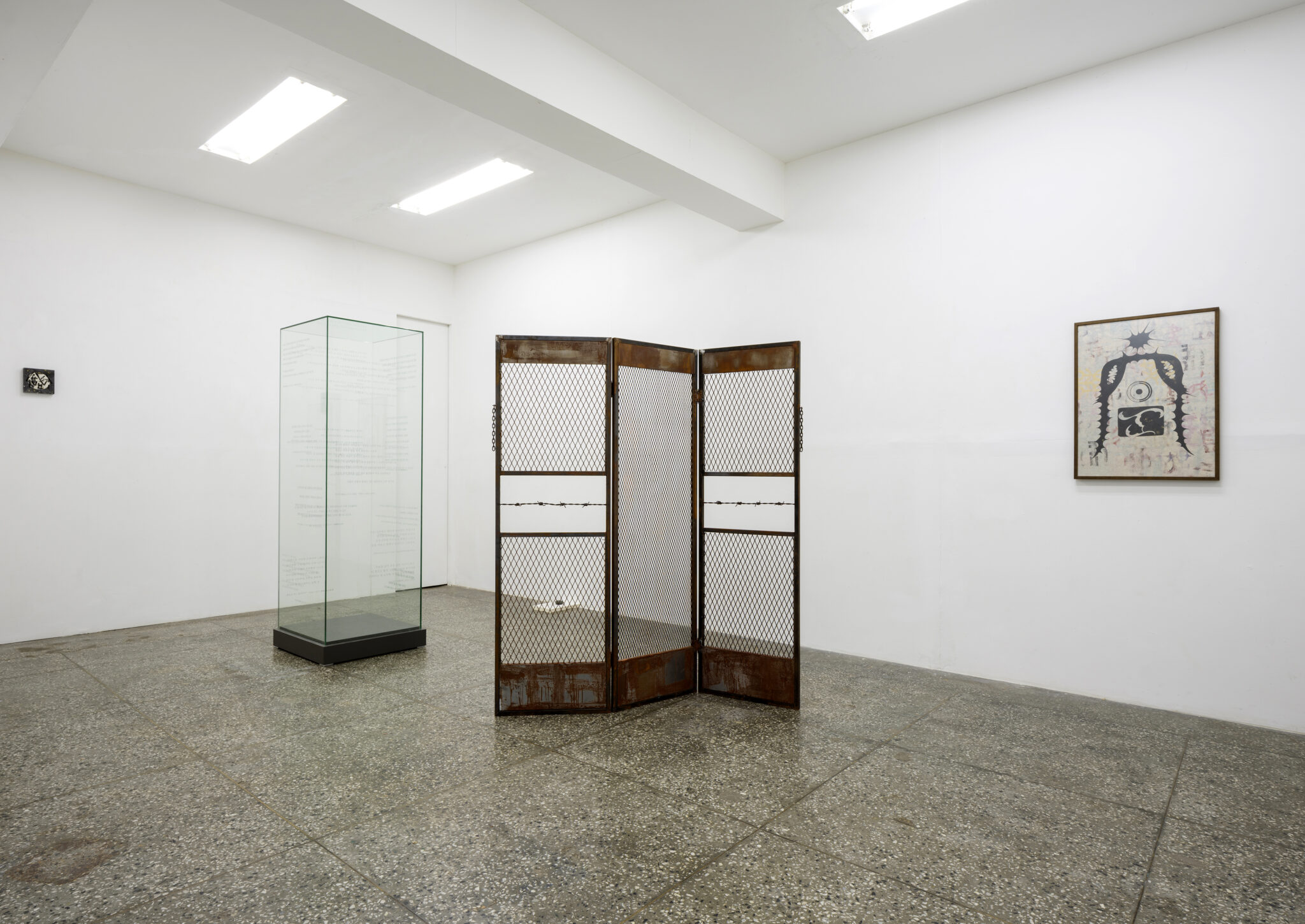
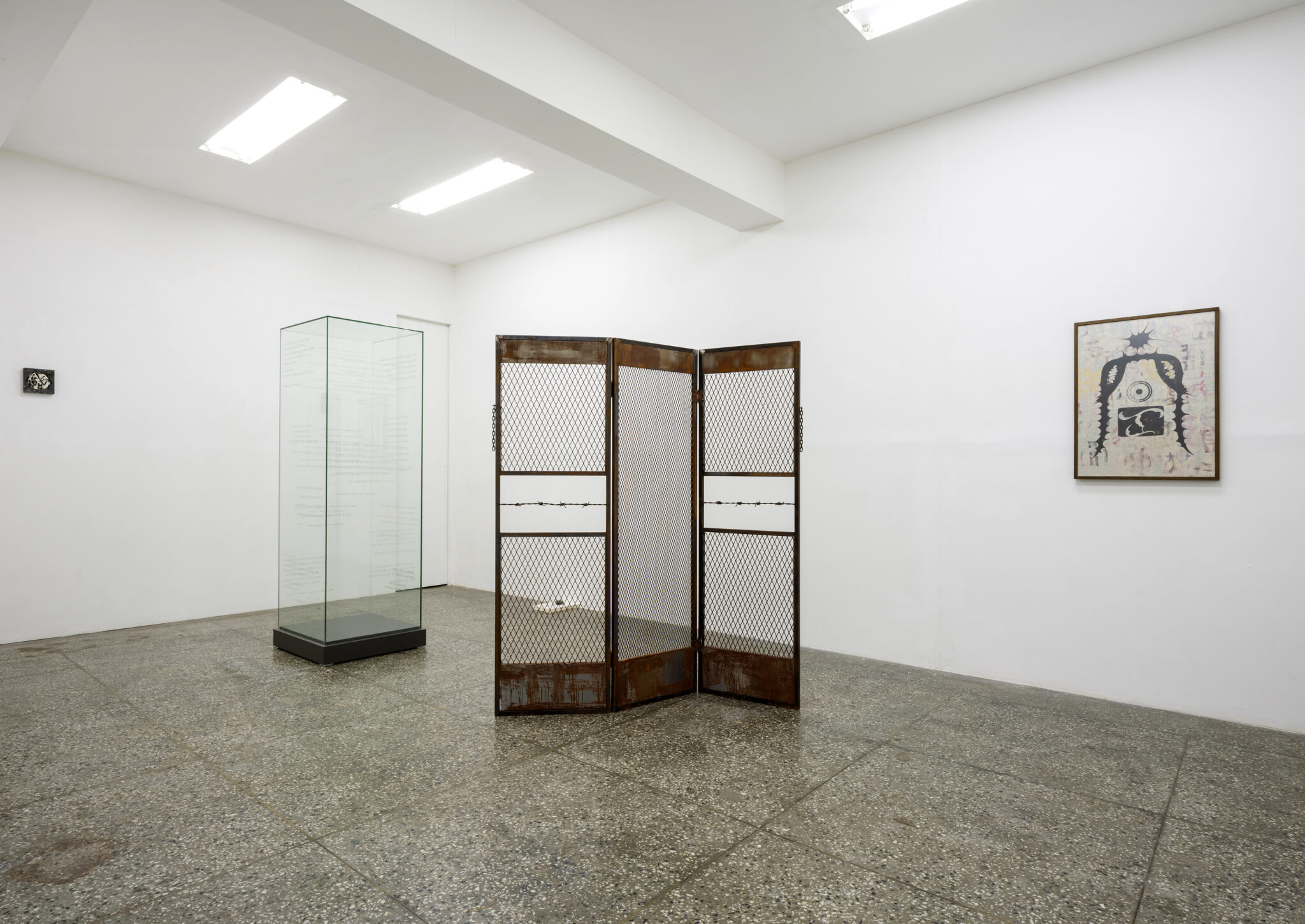
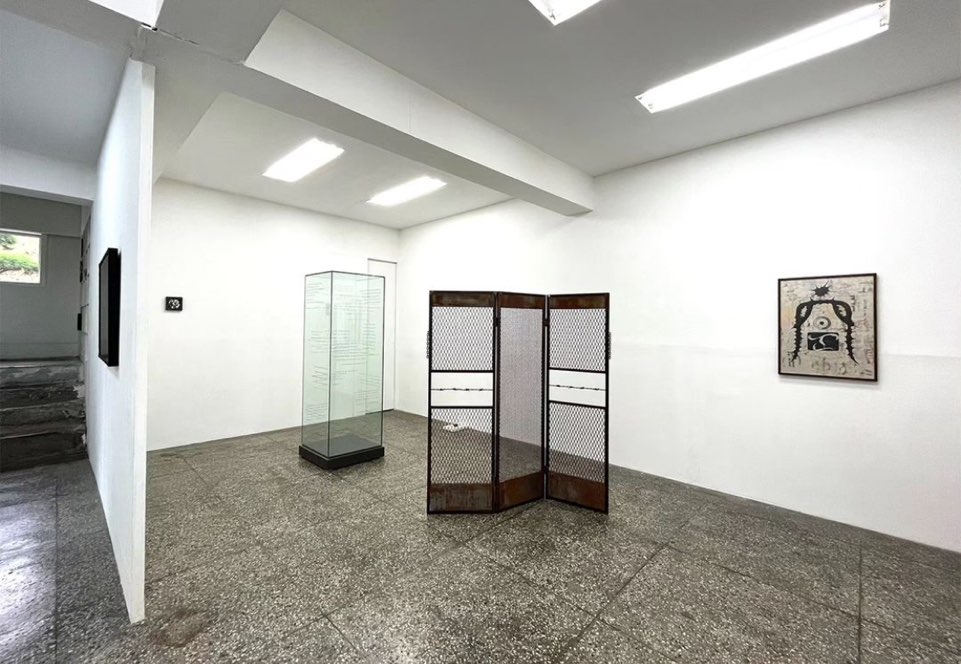
Exhibition in 2021. At a glance it looks like a glass display cabinet one would
find in a museum, but there is nothing inside. In contrast, the glass on the
outside is covered with some twenty excerpts curated by the artist, discussing
old paintings that exist only as referenced in writing.
These texts include a
verse composed by So Seyang, a Joseon Dynasty poet, praising the landscape
painting by the artist Shin Saimdang. Another is an early 17c letter sent by
the writer Heo Gyun asking his friend and painter Lee Jeong to paint a scenery
that he had envisioned in his mind. Then there is a vignette penned by the art
historian Lee Yeo-Sung in 1939 about Solgu’s mural of a life-like pine tree,
which according to historical texts, had once graced the walls of Hwangnyongsa
Temple.
These citations hint at the paradox embodied by Paintings Lost of paintings
that exist only in words. Yet, save for the titular work, Kim Jipyeong deals
with concrete images in all of her other pieces in the Paintings Lost
exhibition. Obviously, ‘lost paintings’ do not imply an absence of an image to
be seen. Then what does the state of being ‘lost’ or ‘absence’ mean for Kim
Jipyeong?
To explore this question, let us take a
closer look at the works presented in the artist’s 2023 solo show.
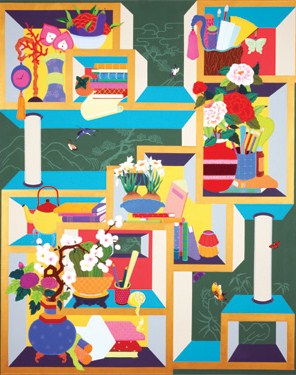
Munbangsawu: The Four Precious Things of Scholars and
Painters, for example, features a broken inkstone and ink stick, torn
paper and frayed brush accompanied by a eulogy honoring the spirits of the four
implements dear to the person of letters.
In this painting and other works in
the exhibition, Kim takes the ‘broken’, ‘forgotten’ and ‘discarded’ relics of
the past and gives them new life in the contemporary space and time. This is
also true of ‘Mun-Ja Do’ series which illustrates characters that signify void
or emptiness, such as ‘heo (虛)’ and ‘gong (空).’
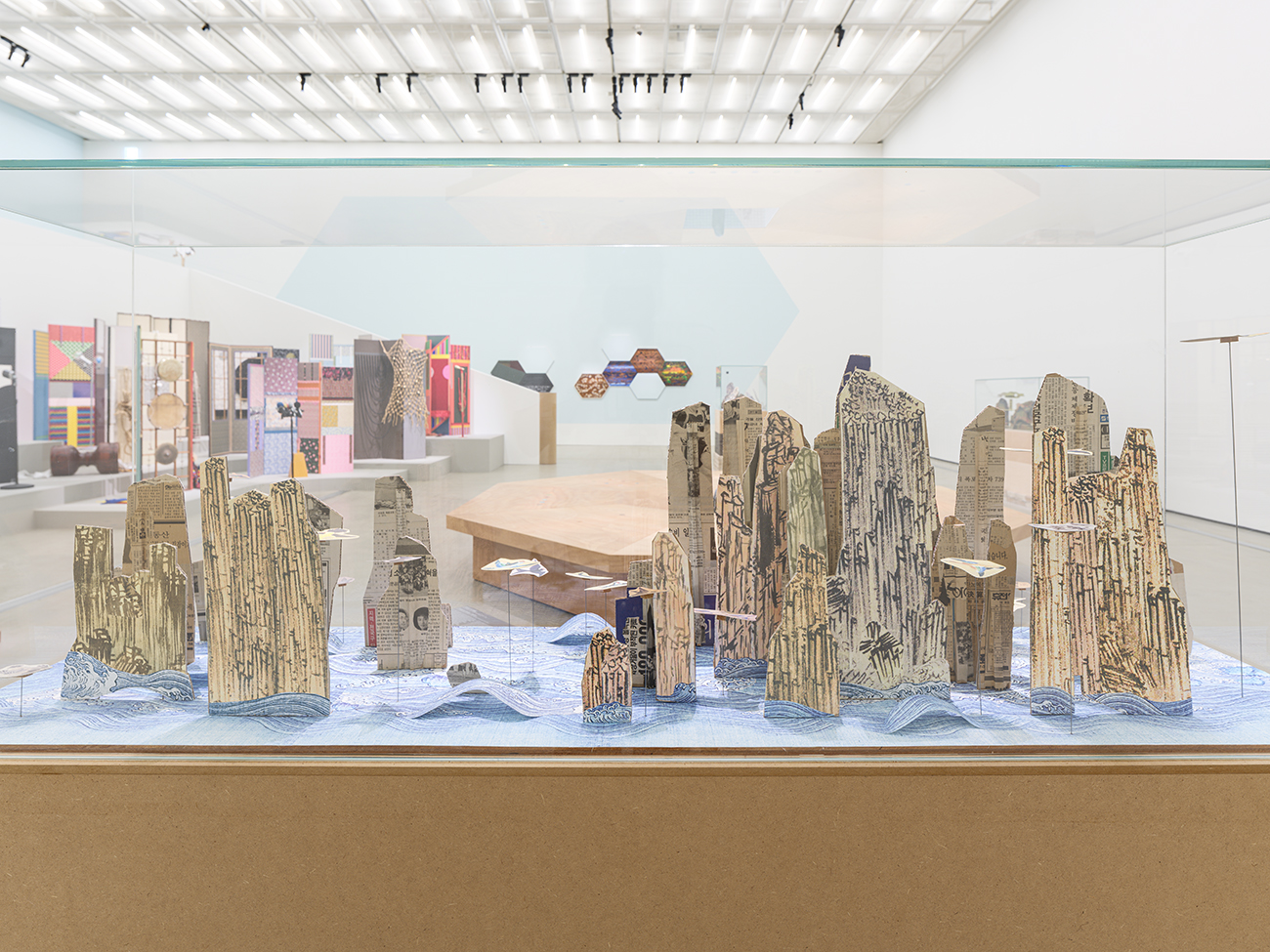
It is also evident in Pop-up Sansu, where Kim
put together cut-outs from discarded prints of traditional sansuhwa into a
pop-up book format. It appears that the notion of ‘artworks lost’ is not simply
about the absence of an image to be seen, but refers to the things that were
thrown away for being pre-modern, outdated and damaged, as well as the sense of
loss they evoke.
Further investigation of her works reveals
that Kim is dealing with an absence far richer in meaning. Poem and
Powder, for instance, is composed of So Seyang’s poetic praise of
sansu painting by Shin Saimdang in the center, flanked on both sides by Kim’s
own landscapes. What makes this piece unique is her use of charcoal powder,
taking advantage of the way the weightless particles flitter across the paper
upon application.
Notably, the expressive brushstrokes, a crucial element in
East Asian tradition of landscape painting, are ‘absent’ here. The artist even
went on to explicitly declare the use of powder in the work’s title, deftly
circumventing any association with philosophical connotations customarily
attached to the sansu genre. By stripping the formal conventions, Kim achieves
a ‘fleeting sansu’ form that dovetails nicely with the notion of ‘paintings
lost.’
The development of ‘absence’ into new
possibilities is also evident in Sobyeong (素屛, Folding Screen without Paintings). The term ‘sobyeong’
refers to a traditional folding screen plastered with white blank sheets of
paper that is often used in ancestral rites to demarcate the boundary between
the realm of the dead and the living. The character ‘so(素)’
means both ‘white’ and ‘fundamental essence.’ Stripped of the white paper and
silk, Kim’s Sobyeong
stands bare exposing its very bones, its fundamental essence.
This format was
previously explored in Kim’s 2017 piece Enshrined, which
similarly involved deconstructing an old ritual screen by cutting away the
painted or inscribed sections and preserving only the wooden lattice frame. The
artist’s intent was to create a void for ancestors and spirits to inhabit and
to engage with the living in the present. While Enshrined
presents a more humorous interpretation of the blank folding screen, the 2023
work Sobyeong sets a very different tone.
Kim maintained the
format of a pictureless screen, but made several alterations. For example, she
replaced the bottom section—which is often referred to as the ‘skirt’ of the
screen and typically consists of a wooden lattice frame with edges covered in
silk—with discolored steel plates evocative of bloodstains. She also added
barbed wires which, in the Korean context, are loaded with narratives and
symbolism.
Entangled wires allow glimpses into what lies on the other side and
triggers a desire to traverse them, while simultaneously engendering a
pervading sense of oppression and fear. It is unclear whether the prohibition
imposed by the screen represents the constraints women suffered in the Joseon
Dynasty—the artist frequently uses the folding screen and hanging scrolls as an
analogy for the female body—or an obstacle preventing foreign elements from
crossing the boundary.
Whatever the case may be, the absence of the painted
surface unveils a frightful sense of reality, transforming what was once a
space connecting the living and the dead into one where taboo and transgression
collide.
Absence, as exemplified in
Enshrined and Sobyeong, lends itself to
divergent approaches. For one, a ‘space of absence’ can become a realm of
infinite possibilities, and this is precisely because of its emptiness. By inviting
various entities and flows to come together and intermingle, absence serves as
an optimal locus for all sorts of big bangs to occur.
However, it is also this
plurality of possibilities that often gets labeled as ‘chaos’ or ‘crisis’ and
subjected to enforcement of order and control, quite often manifested as modern
forms of repression. Kim Jipyeong’s exhibition Paintings Lost opens up a rich
variety of potentialities and interpretations inherent in absence.
It should be noted that the concept of ‘absence’ has long been a
critical element in Kim Jipyeong’s works. Her 2015 solo exhibition 《Pyeong-an Do》, often regarded as a significant
turning point in her artistic journey, marked the beginning of her exploration
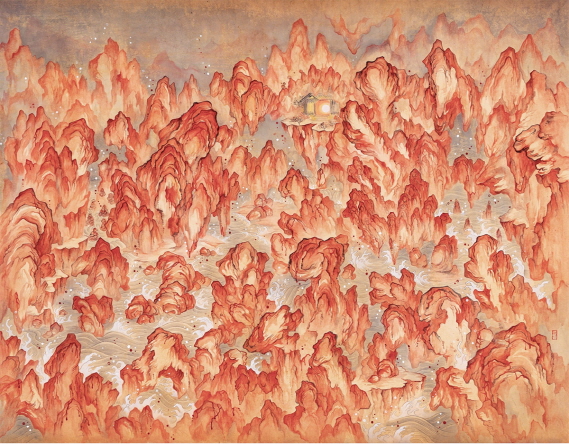
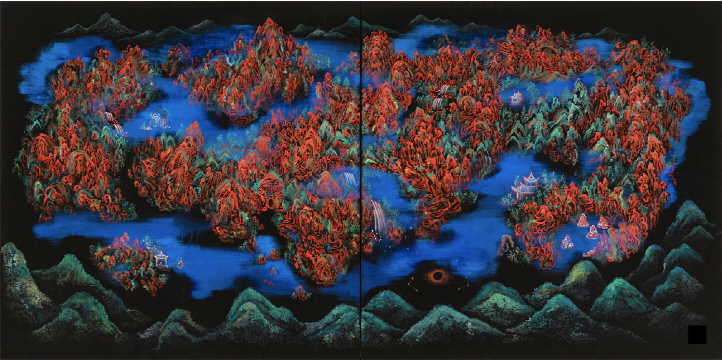
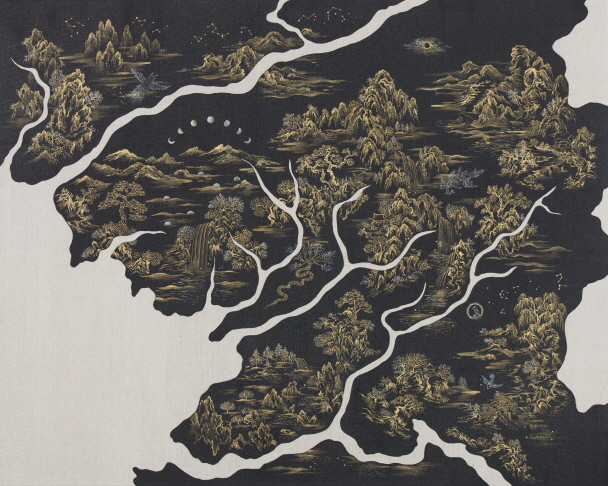
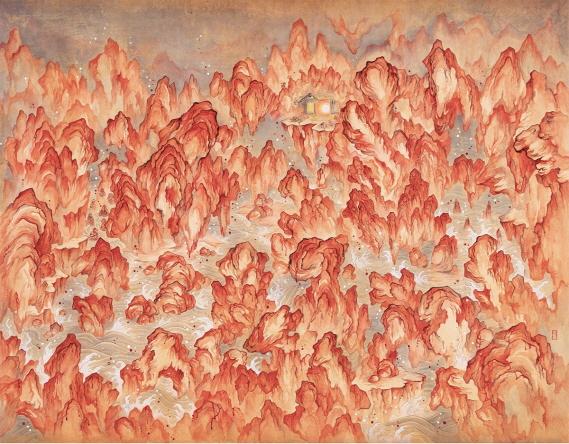
of ‘absence’. The highlight of the seminal exhibition was Eight
Sceneries of Gwanseo, for which Kim reinterpreted the few extant
paintings of the landscapes of Pyeong-an Province by bringing together
extensive research and her own imagination. The works showcased in the Pyeng-an
Do exhibition foretold that absence in Kim Jipyeong’s art entails exciting
discoveries of new forms, intertwined with both taboo and transgression.
While the solo exhibition 《Pyeong-an Do》 explored the notion of absence based on an indirect experience, 《Sungnyemun》 and 《The Stars
Below》 both held in 2019 at Sansumunhwa, a space run by
the artist herself, dealt with an unfortunate fire incident that damaged the
beloved Sungnyemun Gate and traumatized the Korean populace. To be precise, Kim
Jipyeong and the eight other artists who took part in the two group
exhibitions, focused not on the incident itself but the decade-long debate that
ensued over the nature of the reconstruction effort.
Views were divided between
whether to aim for a ‘recovery’ or a ‘restoration,’ which naturally led to the
question of whether the rebuilt Sungnyemun Gate could truly retain its value as
a National Treasure. The official decision by the Korea Heritage Service to opt
for a ‘recovery’ project—aiming for a repair of the damages—and not a
‘restoration’ project—to revive to its original state—seemed to put the debate
to rest.
However, fresh controversies erupted over the pigments and the
so-called ‘traditional method’ used to refurbish the dancheong (traditional
decorative coloring on wooden buildings) with little success. Through their
exhibitions, Kim and her collaborators sought to highlight how the ethics of
preservation and restoration evolve over time. Kim, in particular, stressed
that the restoration or preservation of cultural heritage is “fundamentally a
site where tradition and the contemporary collide and negotiate a compromise.”
She raised critical questions about the “birth of a cultural heritage,” and the
notion of ‘the archetype’ of lost artifacts. She expressed her doubts as to the
feasibility of restoration using “traditional methods” given that the materials
constituting artifacts are vulnerable to change over time. This inquiry into
the restoration of lost cultural heritage has evolved, culminating in
Paintings Lost—both the exhibition and the artwork.
2. Traditional and Dongyanghwa (East Asian
Painting)
The ‘paintings lost’ as presented by Kim
Jipyeong evokes the notions of ‘damage, disconnection, archetype, recovery and
continuation [of tradition],’ which always come up in any discussion on the
topic of tradition in Korea. As a matter of fact, ‘paintings lost’ in the
context of Kim’s art is interchangeable with ‘traditions lost.’ It may be quite
obvious by now that ‘paintings lost’ is a world built and developed on the
foundations of the artist’s view of tradition.
Kim Jipyeong makes a point of identifying
herself as an artist who works on dongyanghwa—or East Asian painting—as a
subject of inquiry. Based on such description many would expect Kim to
investigate and explore tradition as a matter of course. Kim, though, has
emphasized that dongyanghwa should not be tied to the notion of tradition.[5]
In fact, she uses the two terms in very distinct contexts.
For example, when
she refers to dongyanghwa as a subject of her inquiry, the concept includes
East Asian art theories, techniques and materials as well as binary discourses
on the identity of dongyanghwa as opposed to western or contemporary art. In
this regard Kim is concerned with ‘dongyanghwa as an institution,’ which in her
view is a legacy of colonial history, artificially constructed and sustained in
disconnect from real lives.
Possibly due to the way dongyanghwa has identified
itself based on dichotomies, there are several binary pairs under its umbrella,
such as muninhwa (literati painting) vs. minhwa (folk painting or people’s
painting), sumukhwa (ink wash painting) vs. chaesaekhwa (color painting), and
gamsanghwa (painting for appreciation) vs. jangshikhwa (decorative painting).
Then, what is the nature of ‘tradition’
that is distinct from dongyanghwa? According to the artist, a defining
attribute of tradition is that it is rich in diversity across multiple layers.
Kim Jipyeong’s view runs counter to the post-colonial debate to define
dongyanghwa as a genre, an effort closely connected to the discourse on
identifying a unique and homogeneous essence of local culture that we can claim
as distinctly Korean.
She argues that tradition is found at the site cohabited
by different values that the dominant discourse on dongyanghwa had excluded.
Tradition, in her view, includes undocumented desires, practices considered
unsettling because they resist interpretation under conventional frame of
reference, and liminal entities that do not neatly fit into one or the other
category.
Kim argues that, if by revealing these entities and their values, we
can relativize certain aspects of contemporary art, it is irrelevant whether we
call the genre ‘dongyanghwa,’ ‘hangukhwa (Korean painting),’ ‘chaemukhwa
(colored ink painting)’ or ‘East Asian painting.’
Therefore, Kim Jipyeong finds a sense of
freedom in the notion of ‘tradition lost.’ Her search for new possibilities in
tradition begins precisely at the point, which supporters of institutionalized
dongyanghwa criticize as a “disruption of tradition.” Let us then revisit the
Paintings Lost exhibition and the ‘Mun-ja Do’ series, Emptiness (空), Voidness (虛) and
Nothingness (無).
Since the 1970s, the
folk artpainting of characters has been reevaluated as ‘the most
quintessentially Korean tradition,’ inspiring numerous variations and
experiments. Among them, Kim Jipyeong actively incorporated the format of the
talisman, producing works reminiscent of modern typography. The artist
described the Mun-ja Do series as “characters painted as pictures and pictures
written as characters.”
Kim developed a unique style of character painting
by making the unlikely connection between the ‘theory of the unity of painting
and calligraphy,’—which had a dominant influence on literati-painting in Joseon
era—and talismans, which were considered taboo in Neo-Confucianist views.
Let us now consider another work,
Munbangsawu: The Four Precious Things of Scholars and
Painters. Inspired by Seojae Yahoe-rok (A Story of a
Late-Night Gathering in the Study), a short story written in the
Joseon dynasty, the painting shows the “four treasures” of a scholar’s study
all broken and tattered on a worn black sheet of paper accompanied by a eulogy
for each.
The original story tells of a scholar who, upon hearing his
implements lament all night of how they are being neglected due to their
decrepit state, writes a eulogy to console them. In this 16th-century narrative
of old objects that have grown out of use reflecting on their past lives, Kim
discovered the shadow of ideology cast by the yardstick with which we rule
something as anachronistic. Here, she questions the integrity of our age when
certain histories and traditions are dismissed as anachronistic simply because
they are old.
The torn paper, broken inkstick and
inkstone—once essential tools for Joseon-era scholars—seem to symbolize the
degeneration of traditional muninhwa, or the literati painting. In the 20th
century Korea, muninhwa had its fair share of ups and downs. At the dawn of the
modern era, it was criticized as an irrelevant remnant of bygone feudalism.
After Korea’s liberation from Japanese colonial rule, it was reinstated as a
canonical form of Korean art, revalued as carrying formal and aesthetic
concepts that resonate with modern abstract art. Fueled in part by a resistance
to this canonization, the muninhwa, once again, is facing rejection as
something to be overcome.
It is a well-known fact that the rise and fall of
muninhwa stemmed from an obsessive pursuit of “modernity” or “contemporaneity”
of Korean modern art in relation to Western art. Kim Jipyeong views the history
of modern muninhwa as a process shaped by identity politics, and proposes that
we break away from fetishizing the genre and respect it as an “alternative
approach or value.”
In the throes of colonial rule and rapid
westernization, a sense of crisis spread driven by the belief that the nation’s
traditions had become adulterated and disrupted. This perceived absence, of
traditions was feared as a state of cultural confusion and instability, and
gave rise to an Orientalist art discourse that sought to fill the void with
“traditional muninhwa.”
However, this approach only distorted the muninhwa
while trapping the broader Korean dongyanghwa in a restrictive
self-consciousness, which Kim potently demonstrated in
Sobyeong. So she proposes that we joyfully reconceptualize
muninhwa, which is now spurned as outdated. In A Story of a Late-Night
Gathering in the Study¸ the scholar’s old tools were moved by the
eulogy their master had penned in their honor and returned his kindness by
adding more years to his life.
It is the murmuring voices of these aged objects
and not the rigid metaphysical muninhwa that Kim sees as tradition. Within them
she searches for a new vitality, which can become a value that sustains
contemporary art. Ultimately, for Kim Jipyeong, the “absence of tradition” is
merely the absence of an “officially recognized” tradition, and this absence
opens up a space for what is undervalued and banished as anachronistic can be
freely named and reclaimed.
3. The Folding Screens
In addition to
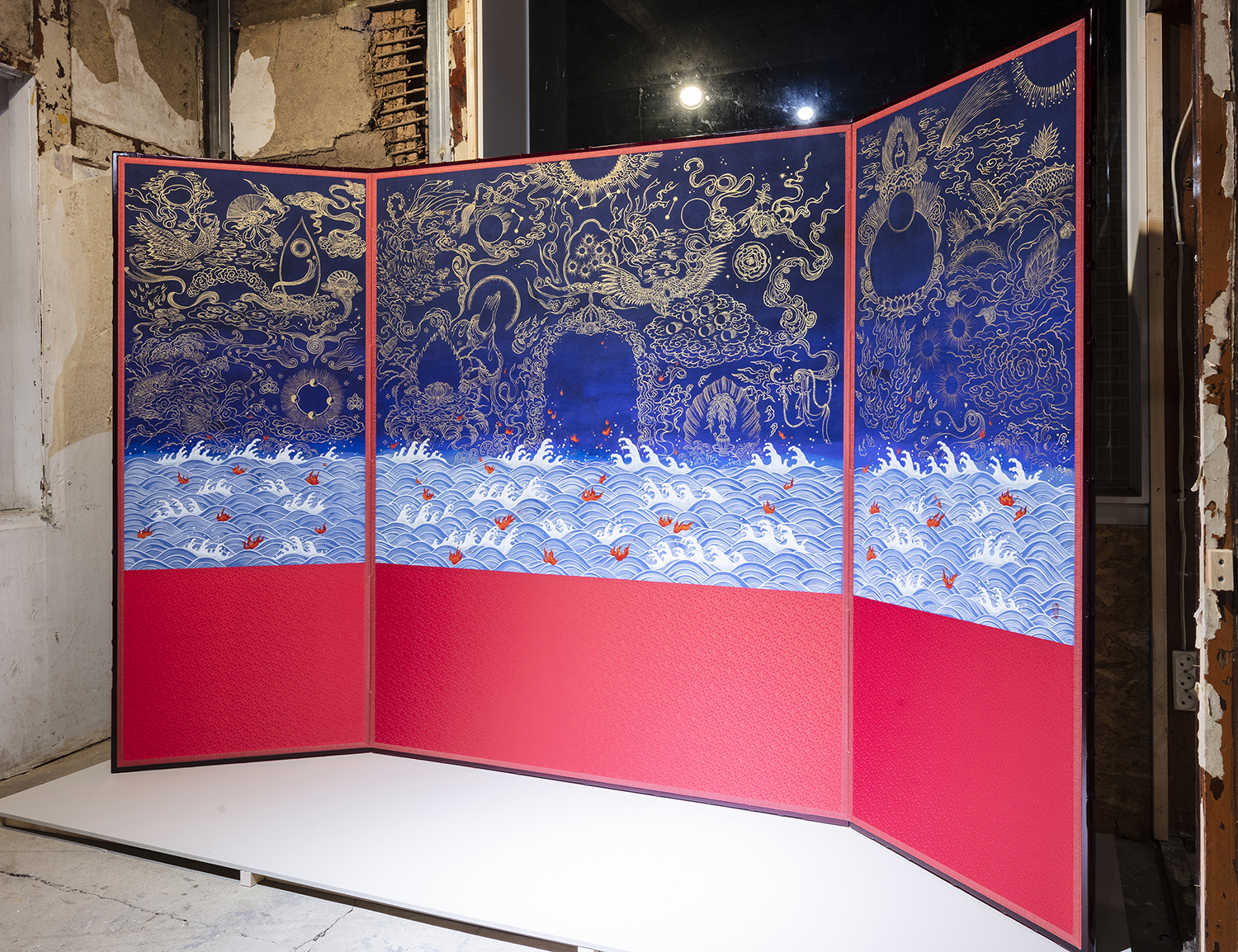
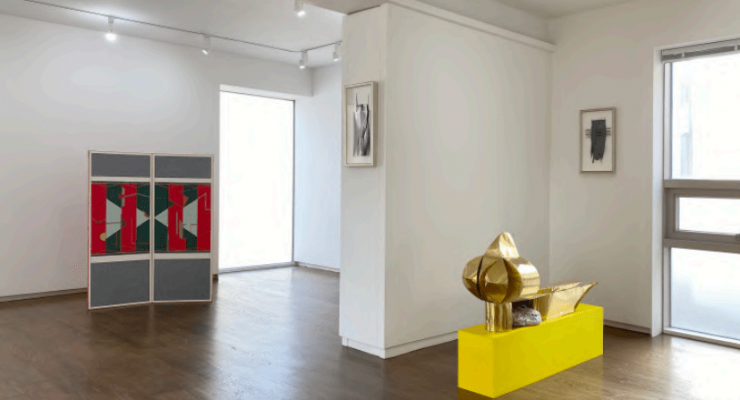
Sobyeong, the 《Paintings Lost》 exhibition featured other works in the folding screen format, namely
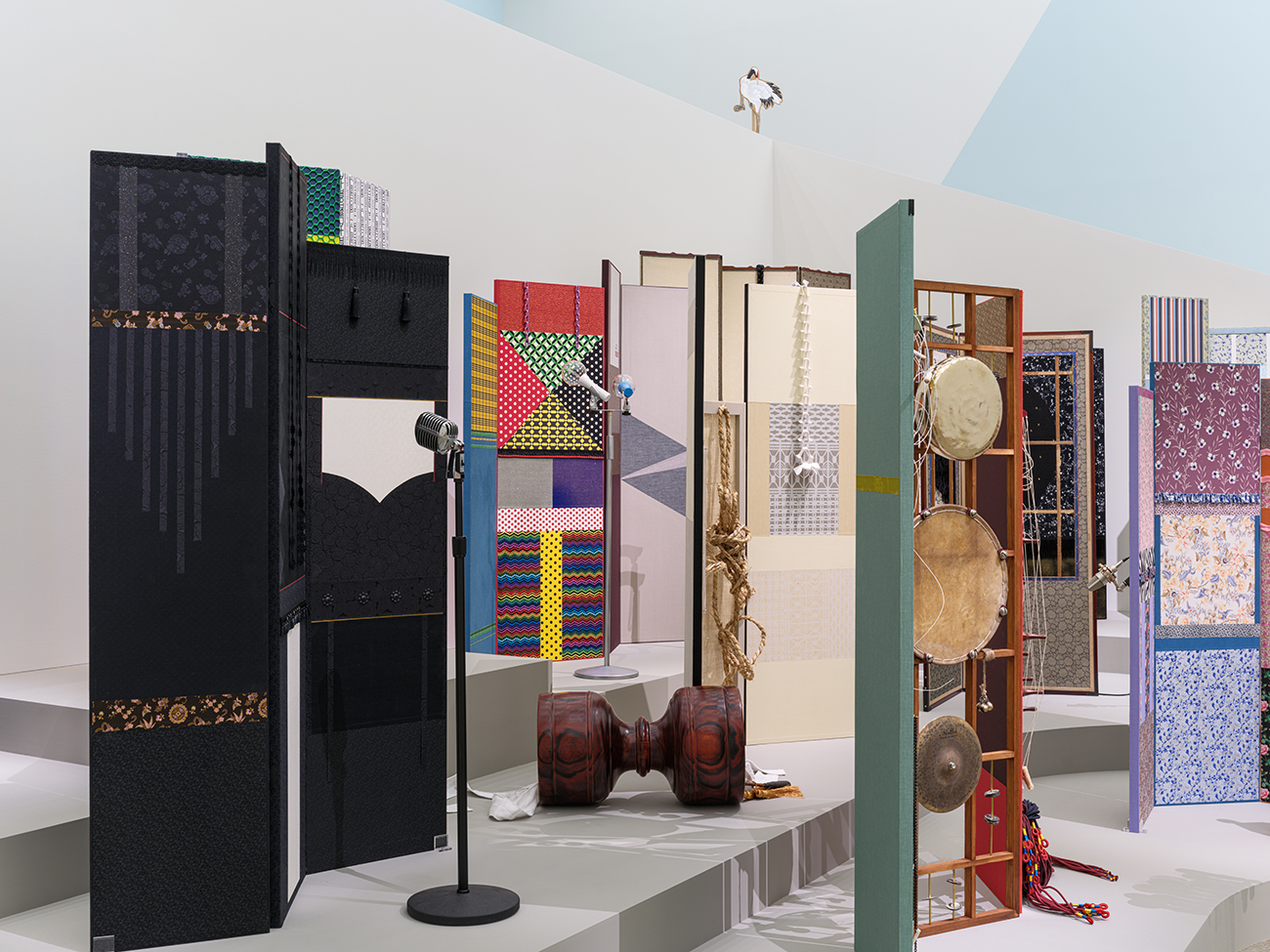
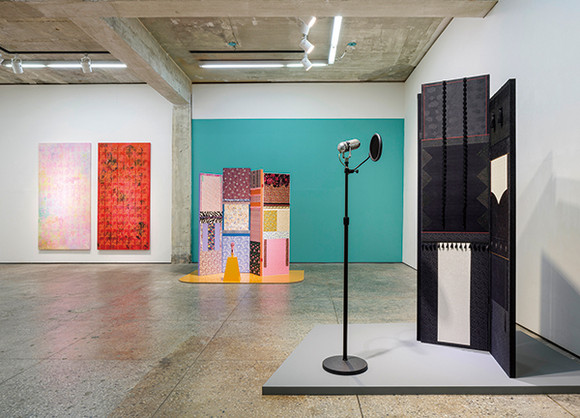
the ‘Diva’ series: Diva-Goth Singers,
Diva-Grandmothers and Diva-Shamans. The
folding screens in these works are lavishly adorned with various materials such
as silks, tassels, lace and hanji—the traditional Korean paper—in a splash of
colors, including saekdong—a polychromatic stripe pattern used in traditional
Korean textiles.
As the titles suggest, the folding screens represent women,
who are singers, shamans or grandmothers. The connection between folding
screens and women is drawn from the terminology used to refer to parts of the
screen, which are likened to elements of women’s clothing. For instance, the
silk-covered bottom is called chima, or skirt.
The upper section is referred to
as the jeogori, meaning a ‘blouse,’ and the side bands framing the painting and
calligraphy as somae, the word for sleeves. This inspired the artist to
reinterpret the folding screen as an extension of the female body. The women
Kim chose for the ‘Diva’ series have one thing in common. Their voices —whether
they were singing gothic rock songs or shamanistic chants—were often ignored
and marginalized.
The gothic rock musicians sang of the despair and nihilism of
their era. Shamans sought connection with the dead and the supernatural and
were distrusted and considered transgressive. Grandmothers have always been
like folding screens, standing in the background like a stage prop.
Kim placed
a microphone in front of each Diva motivated by the desire to give these women,
often treated as non-existent, a chance to take center stage and let their
voices heard. Personified as the women who were at odds with their times, the
folding screens serve as a compelling device to tell the story of the search
for traditions erased and exiled, a narrative rooted in the exhibition’s theme
‘paintings lost.’
Kim Jipyeong sees the folding screen as a
multifaceted medium. She enjoys projecting its attributes unto her
interpretation of tradition, and merging the two. The way she employs the
folding screen in her art can be broadly categorized into three approaches,
which are, as one can expect, interconnected.
First, Kim leverages the folding screen as
an exhibition medium, demonstrating its original function and using it to
visualize tradition. In pre-modern East Asia, folding screens were the
preferred means of preserving and appreciating artworks. However, with the
introduction of modern exhibition systems, the novel medium of the picture
frame gradually replaced the folding screen.
As folding screens were
upholstered periodically to preserve artworks, there was often no record of the
screen’s earlier state, which undermined their potential for recognition as
historical artifacts. Kim Jipyeong interprets this shift in the status of
folding screens as analogous to that of tradition within Korean society.
She
chose the folding screen as a medium for exhibiting works informed by
traditional forms, such as ancient maps, minhwa (folk painting), and
gold-pigment sansuhwa (landscapepainting), in order to raise questions about
the way forgotten art traditions exist in Korea’s contemporary art scene.
Her
aim is to use the folding screen to foster public discourse on the physical
conditions under which pre-modern paintings were created, appreciated and
circulated. Examples of this approach are found mostly around 2015, the year of
Kim Jipyeong’s solo exhibition 《Pyeong-An Do》 and group exhibition 《REAL DMZ PROJECT》.
What captured the artist’s attention next
were the physical attributes of the folding screen, which is both movable and
flexible. It can be collapsed or opened, shifting its shape from a flat surface
to a zigzag formation and may even stand in a circle, allowing the user to
partition space at will. It can be set up to reveal only a portion of the art,
and the panels may be adjusted at different angles to create disruptions and
continuities of the viewer’s gaze.
The folding screen is a versatile medium which
supports both painting and installation art at the same time. The artist
harnesses this potential in Passing By (2017) and
Wonmu: Dance (2021), which consists of a low folding screen
arranged in a circular formation. In both these works, the artist used only the
lower section of the folding screen referred to as ‘the skirt’ to display
images of traditional skirts and socks worn by Korean women.
The upper parts of
the screens have been cut away, prompting viewers to imagine the missing
portions of the composition. As Park Chan-kyong noted, Kim Jipyeong stages an
absence, thereby creating an open space that can be filled freely by numerous
women. Kim also covered the back side of the folding screen, which is rarely
meant to be seen, with silks of striking primary colors, thus reinforcing the
work’s three-dimensional sculptural quality.
Last but not least, Kim Jipyeong presents
the folding screen as a representation of women, whom she feels share the same
fate of marginalized existence. In practice, she builds a connection between
the folding screen and the female body, as shown in the ‘Diva’ series. She
began to actively explore this approach around 2020 with her solo exhibition 《Friends from Afar》.
One of the works exhibited
there was Neungpamibo: Ten Women Walking on the Wave, which
was a 10-panel folding screen with each panel dedicated to one of ten women
writers from the Joseon dynasty. The artist reimagines these women—who were
underappreciated due to the constraints of their time—not through traditional
portraits but as abstract compositions of color fields, using rectangular
silks, traditional multicolored stripes, ornamental strings and papers of
vibrant shades.
This work aligns women excluded from historical narratives with
folding screens, never recognized as a part of art history. The artist’s recent
works on folding screens appear to focus on this final approach, imagining the
folding screen as a personification of women.
What drives this shift from exploring the
physical attributes of the folding screen as a medium to weaving an imagined
women’s narrative? It may have something to do with the artist’s motivation to
represent an “art history from the margins,” a concept that evolved from Kim’s
view of tradition. It is a history that seeks to reconnect with and recognize
the value of traditions that have been disregarded in the biased perspective of
institutionalized art history.
These include techniques, materials, styles, and
iconographies, anything excluded from the approved traditions. Kim has once
explained that “working on dongyanghwa (East Asian painting) as a subject of
inquiry” entails “questioning the history and institution of dongyanghwa and
the broader unique conditions surrounding it in the context of Korean art.”
An
art history from the margins could serve as one response to this expansive
inquiry, and to tell it, one must first unearth links to various traditions
that may disrupt established art history. This shift in focus from exploring
the folding screen’s attributes as a medium, to connecting the silenced voices
of women and the marginalized status of folding screens in art history, may be
a deliberate strategy of the artist to subvert conventional art history.
4. In Closing: A New Archetype
Kim Jipyeong strives to rewrite the
neglected side of dongyanghwa’s history by presenting “absent traditions.” She
uses traditions as a means of overturning the genre, a strategy of critiquing
dongyanghwa using the very characteristics that define it. It is a strategy, I
must say, that is very emblematic of dongyanghwa at its core.
What is the
central mechanism that sustains the genre of dongyanghwa? It seems to lie in
its reliance on the ‘archetype’ as the basis for defining itself. Dongyanghwa,
or East Asian painting, emerged through its encounter with Western painting,
defining itself as the converse of its Western counterpart. Consequently, the
notion of a pure archetype unsullied by Western or external influences is
intrinsically tied to the identity of dongyanghwa.
Tradition, therefore, has
been a collection of practices and elements connected to this archetype, and it
excluded those deemed to be foreign or originating from external sources. Kim
Jipyeong’s project seeks to explore these with the aim of discovering an
alternative archetype. She creates a primordial space—where this world and the
other world are connected and the living engage with the dead, as in
Enshrined and Diva-Shamans—for the erased
to reclaim their voices and entities of all variations to celebrate
co-existence. In doing so, she presents a new archetype, with which she
attempts to overthrow the established archetype.
Kim’s pursuit of a new archetype involves
an extensive research of archived materials. and this has been the case for
every exhibition and artwork. Some of the texts and iconographies discovered in
the process engage directly with a work as in Paintings
Lost. Carefully curated and reinterpreted, these gems unearthed from
vast archives merged with images to create a fantasy of sorts.
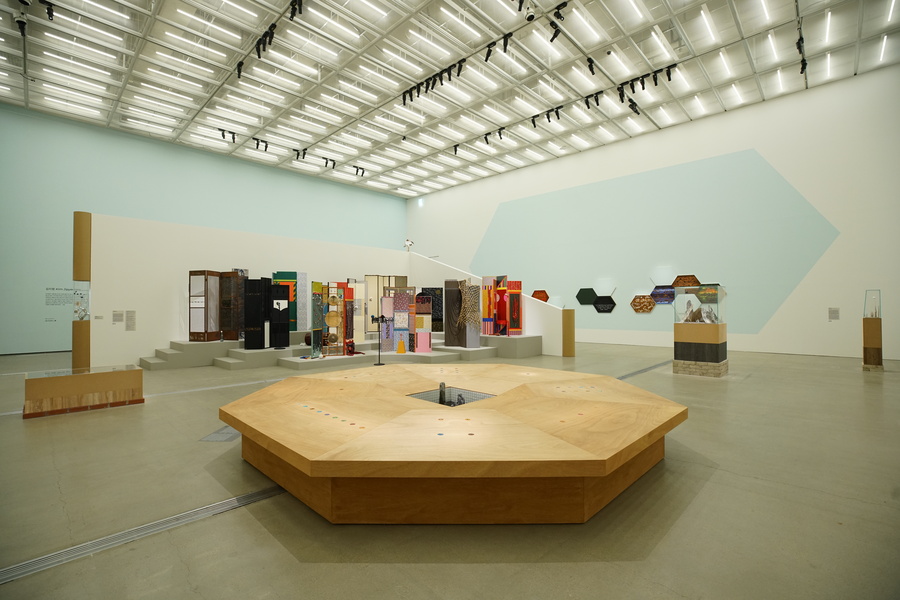
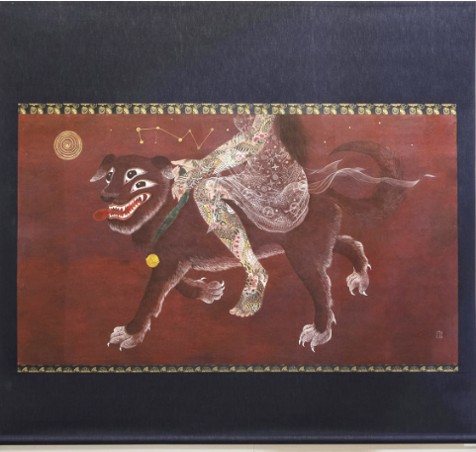
The exhibition
space furnished with shamanistic talismans and jakdu—the straw cutter blades on
which shamans stand barefoot—is a mythical realm and a place of preternatural
rituals. The exhibition opens with Sun Gi Hyun Al Hui Baek Hwan Jo
(The Celestial Sphere Turns and the Obscured Moon Shines Again), a
decorative painting depicting the moon’s cycle of waning and returning to
fullness, as a symbol of cosmic eternity as well as of the rebirth of what had
been erased.
What the artist is really trying to convey here is, perhaps, the
power of the archetype, the primal vitality. By visualizing the liminal
beings—such as ghosts and shamans who are at once nothing and can become
anything—Kim Jipyeong sought to connect with a rare sort of energy, and this
perhaps is the ultimate aim of Paintings Lost.