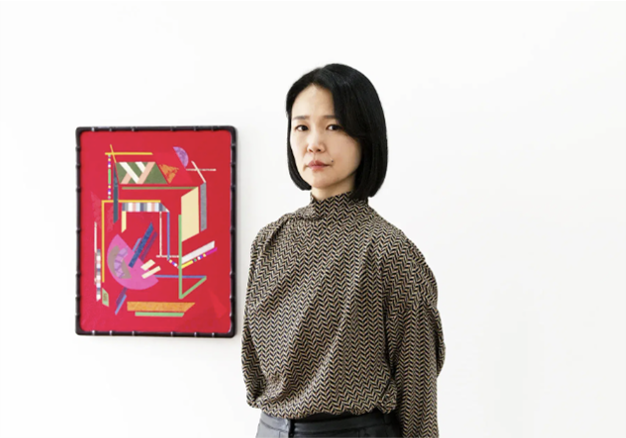
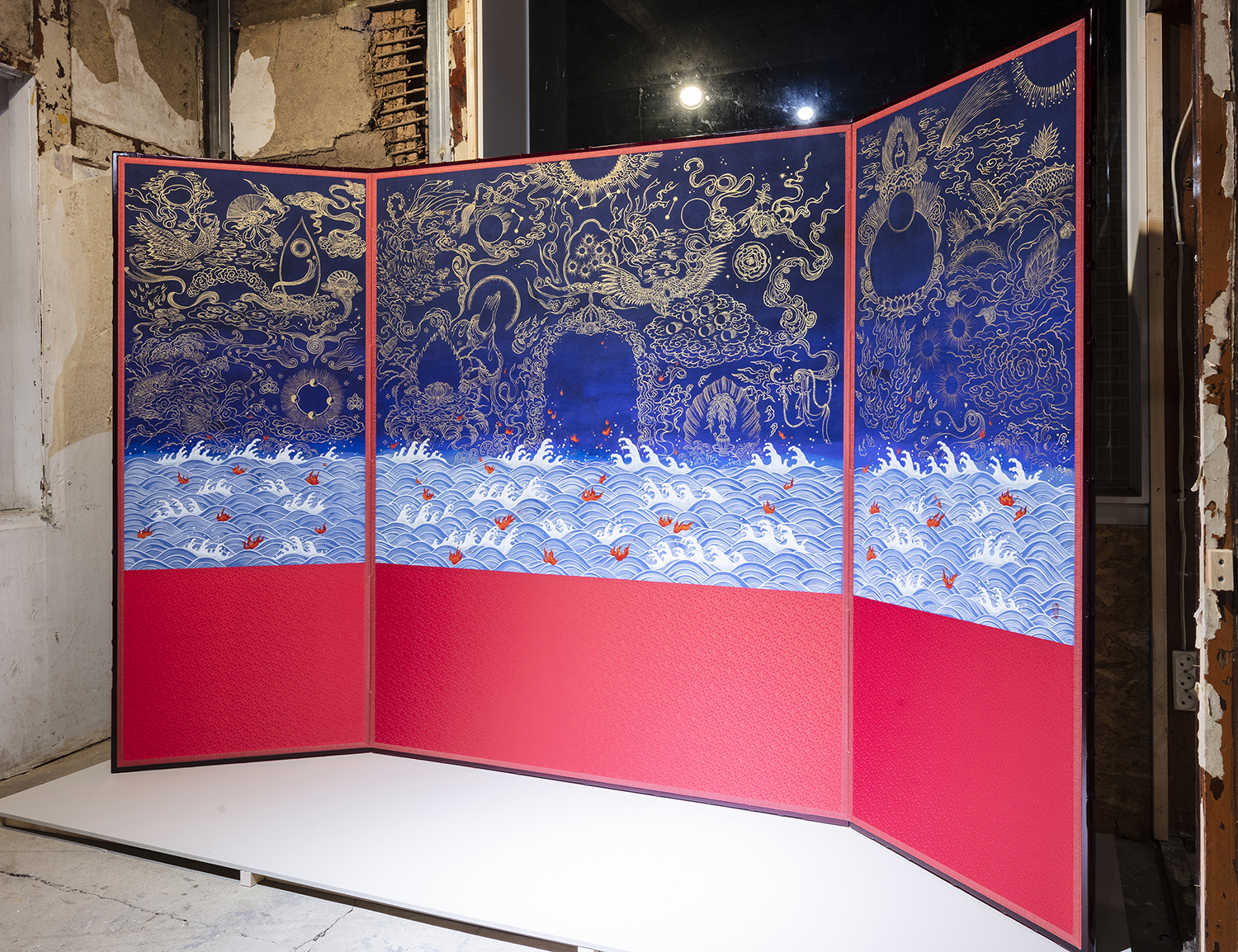
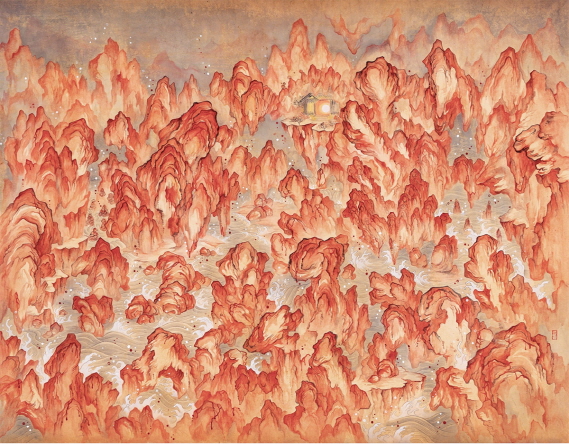
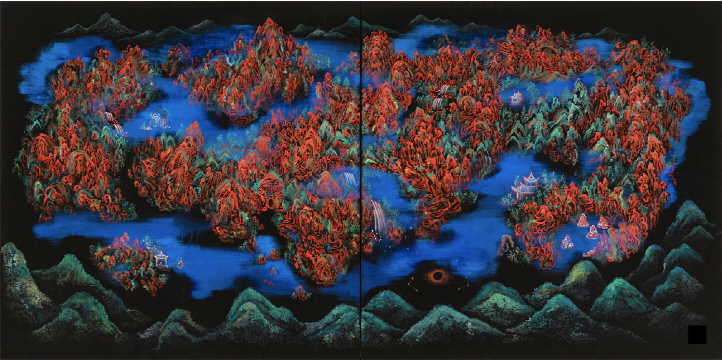
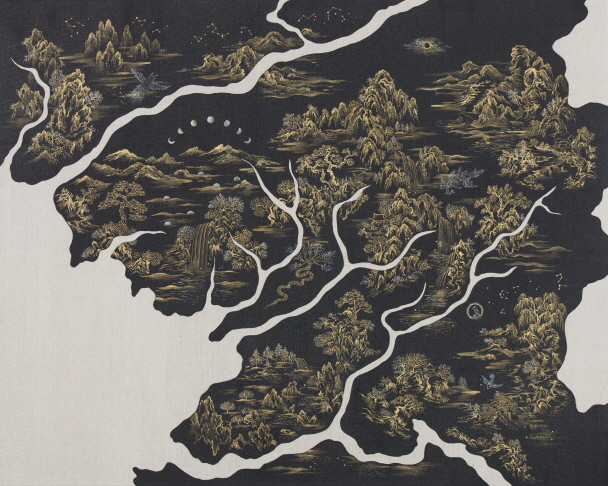
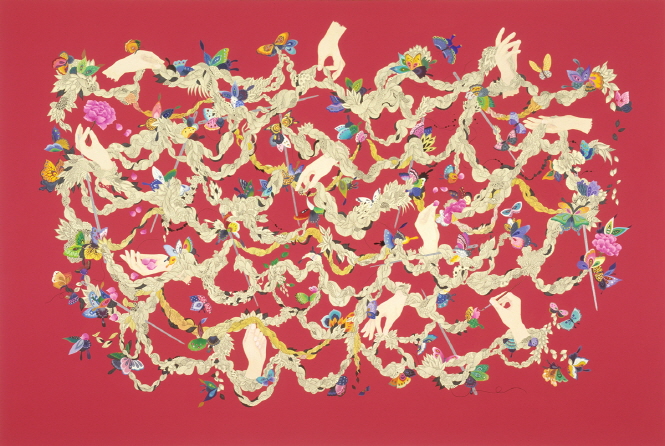
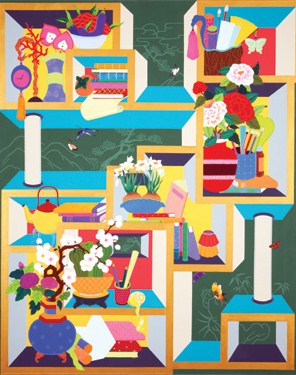
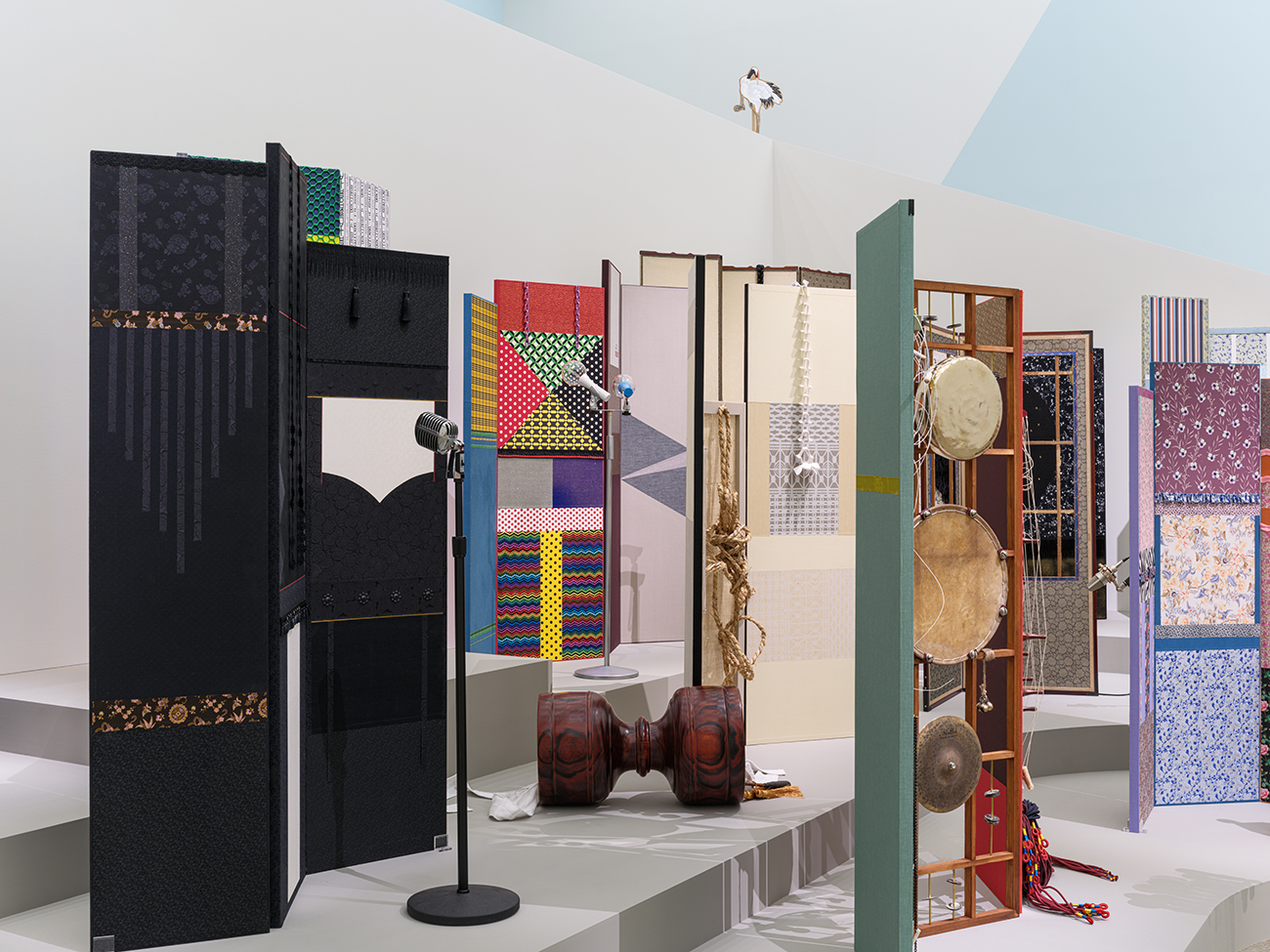
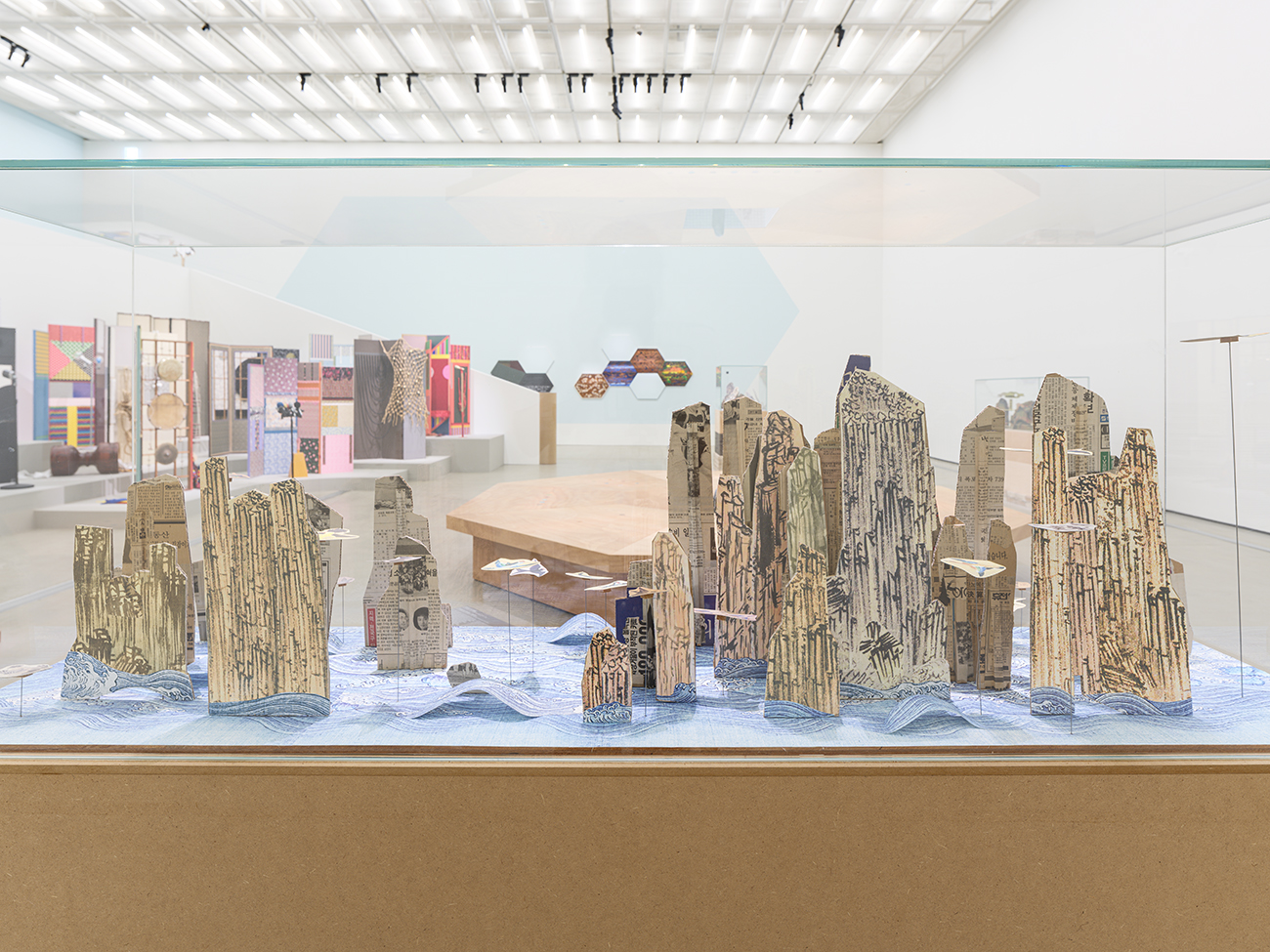
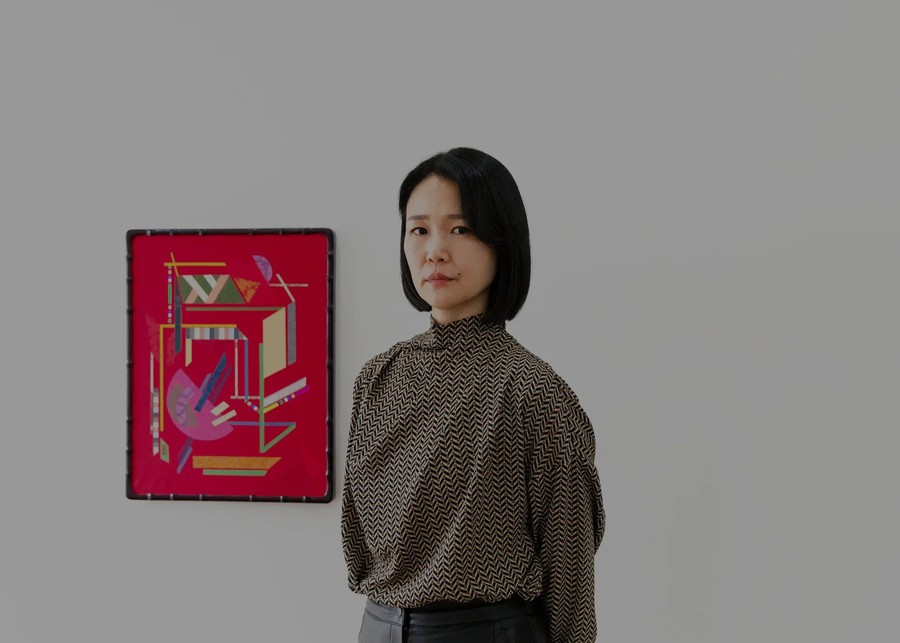
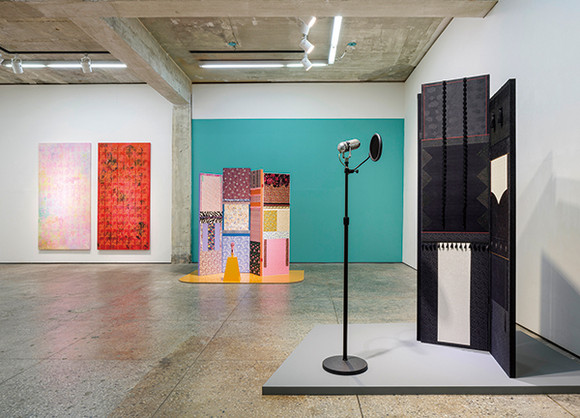
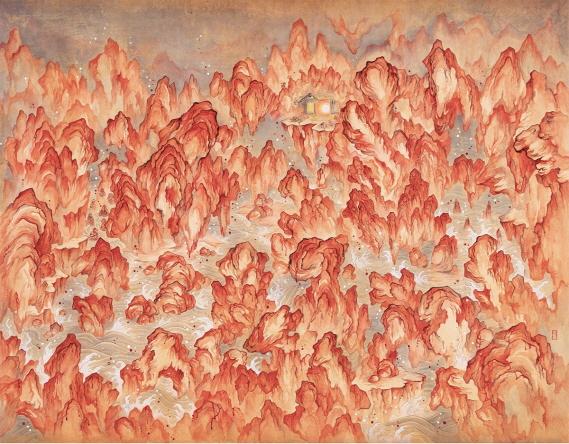
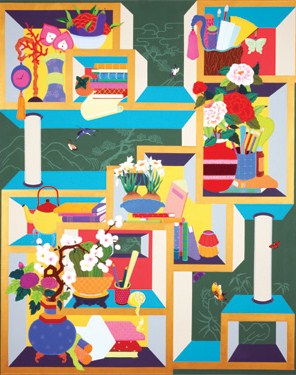
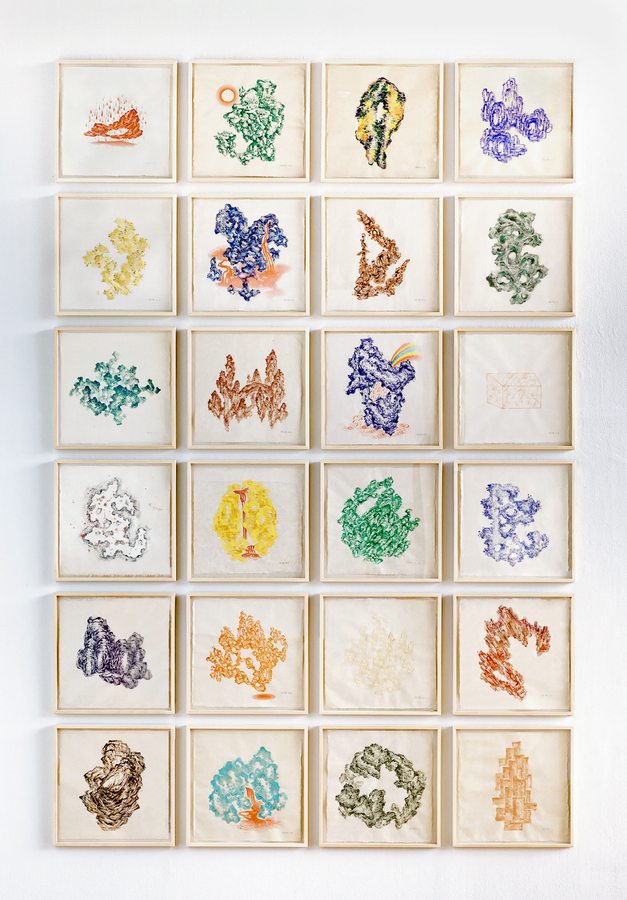
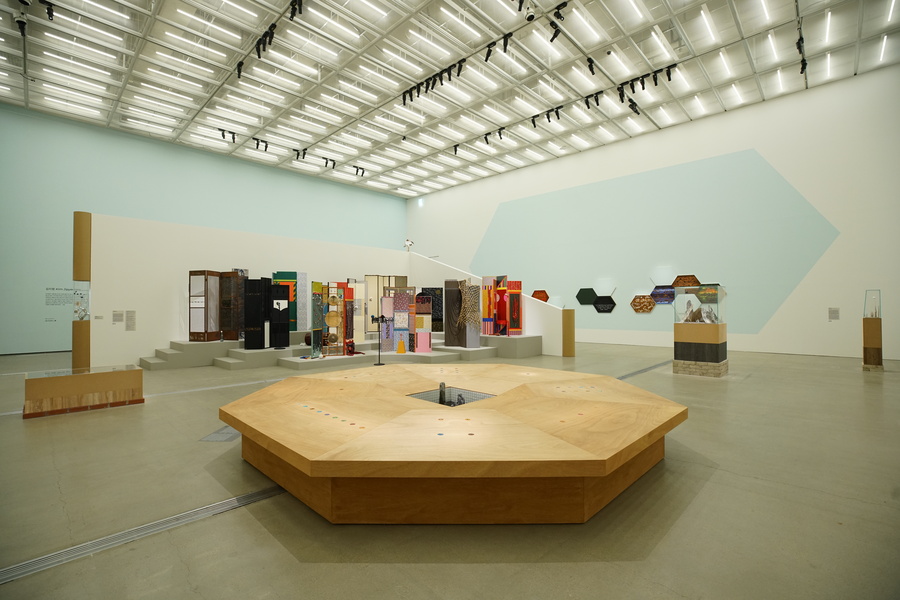
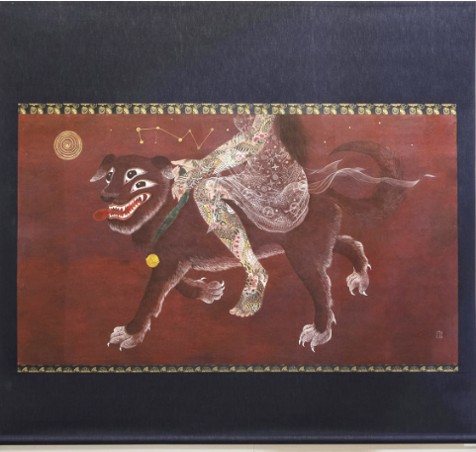
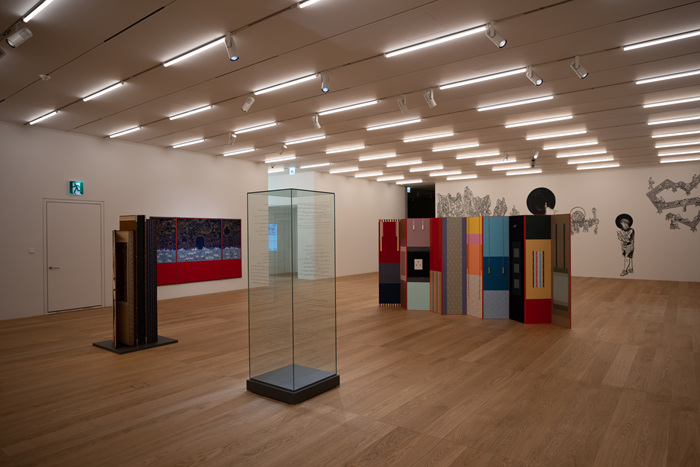
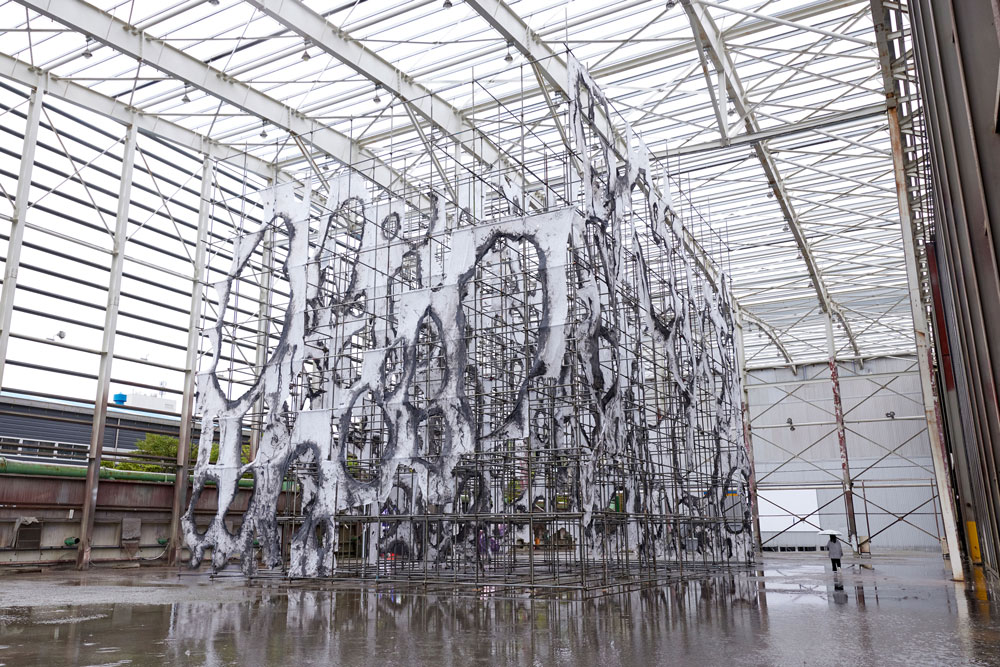
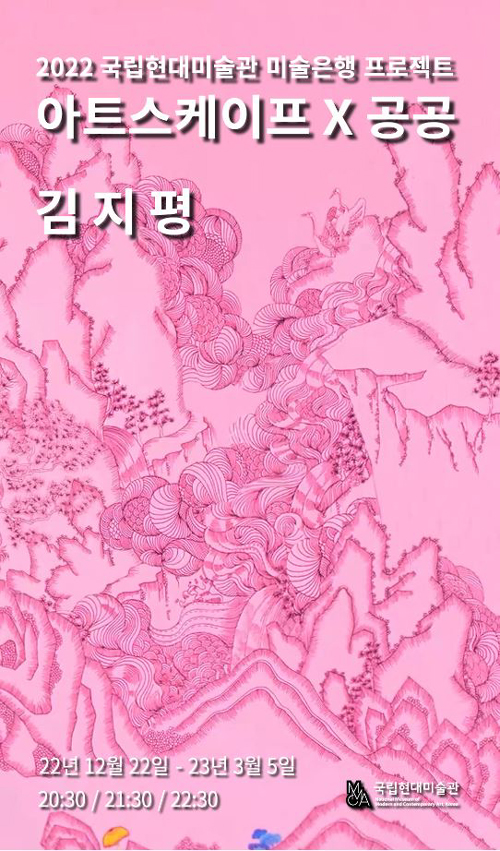
The artist Kim Jipyeong has talked about the modern worldview through the techniques and styles of oriental Korean painting. She doubts “the old inertia of contemporary art to translate oriental painting into ‘modernization of tradition’ and excessive emphasis on the concept of ‘contemporaneous’ era.” She instead carries out an ‘intentional anachronism’ that reverts to the past.
The artist borrowed features and materials from traditional art but also renewed the meaning latent in traditions in her own differentiated way. Also, new meanings are created by combining things that have been excluded from the historical and social history of art.
The artist Kim Jipyeong continued her art activities under the name ‘Ji-Hye KIM’ from 2001 to 2012. At this time, she mainly developed the work of reconstructing the style of folktales, such as book maps, character paintings, bird and flower paintings, or the decorativeness of ‘dancheong’ (A Korean traditional painting pattern used for wooden buildings), from a modern perspective.
This was an expression of her great attention to the interplay between folk art elements and contemporary art, and her interest in ‘traditional-modern culture,’ namely, her hybridity had brought earlier.
In 2013, she started to present works that newly interpret the narration and materials of oriental painting, taking the opportunities of her solo exhibition 《Brilliant Texture (찬란한 결)》 (Gana Art Contemporary, Seoul).
This change is the result of a series of ‘Michaesansu’ in which today’s Korean realities (military facilities or apartment buildings) are adopted into the conceptual landscapes shown in the 2007 solo exhibition 《The Border Life》 (Insa Art Centre, 2007). Moreover, the oriental myths around 2010, the tales, and the trials to bring the narratives of history into works have already shown foreboding.
“The state of not belonging to anything has a connection to the infinite possibilities of having belongings everywhere.”
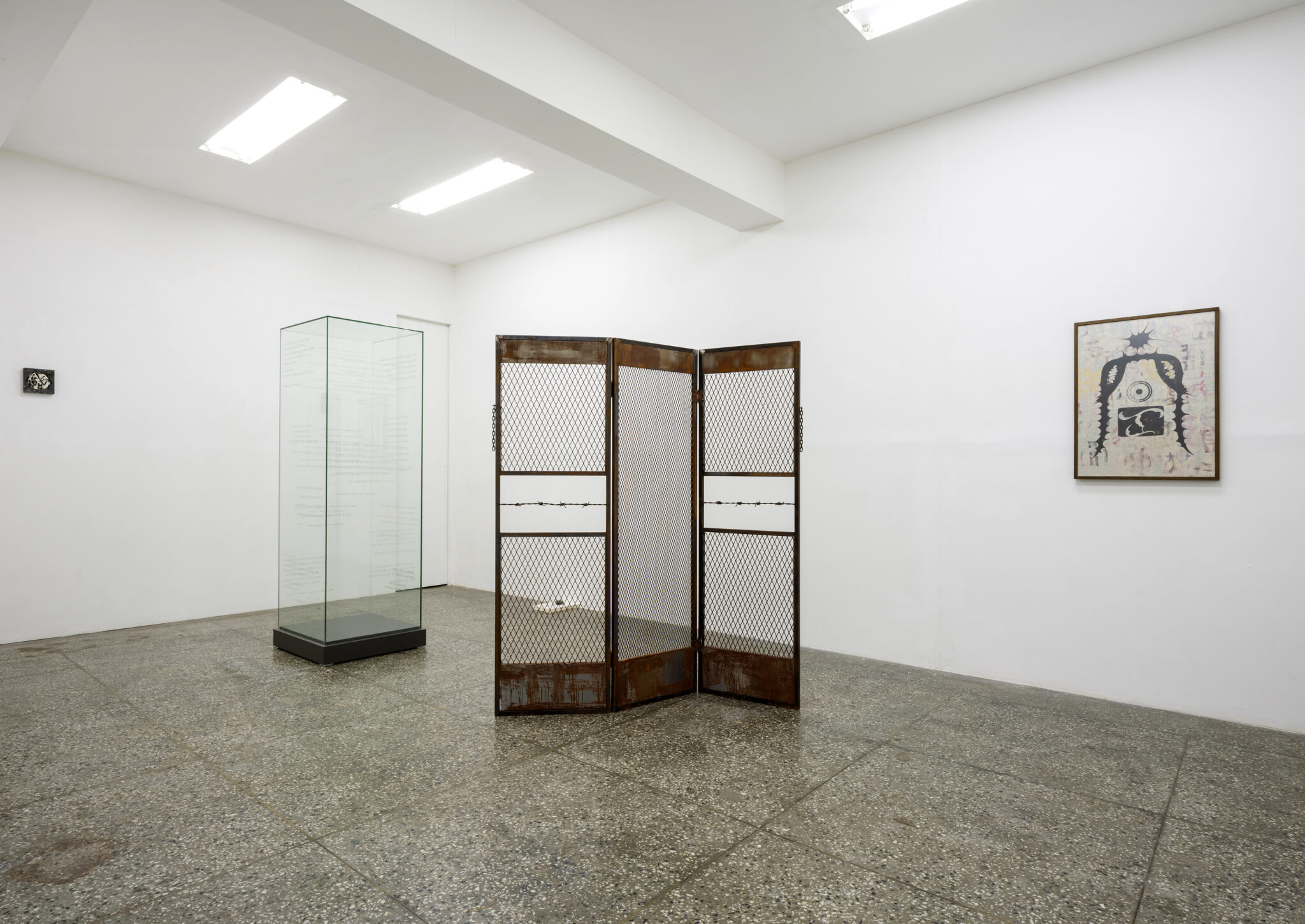
Since then, through solo exhibitions 《Pyeongando》 (2015, Art Company Geek, Seoul), 《Jaenyeo Deokgo》 (2017, Hapjeong-go district, Seoul), 《Giam Yeoljeon》(2019, Gallery Meme, Seoul) and numerous group exhibitions, the artist’s popularity began by connecting her works into one ‘storytelling’ and each exhibition creates an independent literary space with infinite possibilities. She extensively researches and references folk tales and ancient literature, and brings traditions such as amulets, shaman paintings, and Buddhist paintings that were excluded from mainstream art history to the center of her art.
Additionally, the issue of ‘the female and the alienation and exclusion of the female perspective’ which has been a major theme since the artist’s early works, is more actively addressed in these solo exhibitions. Recently, in her solo exhibition, 《Friends from far aways》 (2020, Boan Inn, Seoul), a woman who has risen to the position of the subject of desire and pleasure in the artist’s previous work is more important as a medium expanding the imagination of our past and art at the same time.
She showed a wide range of artistic horizons by showing the artist’s interest in art history, the nature view of East Asian visual culture, and post-colonial imagination as well.