The
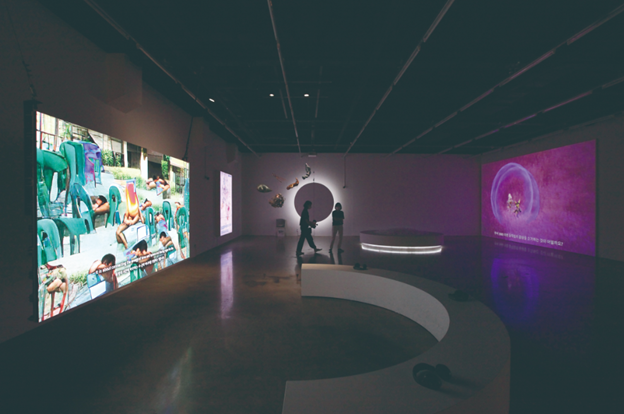
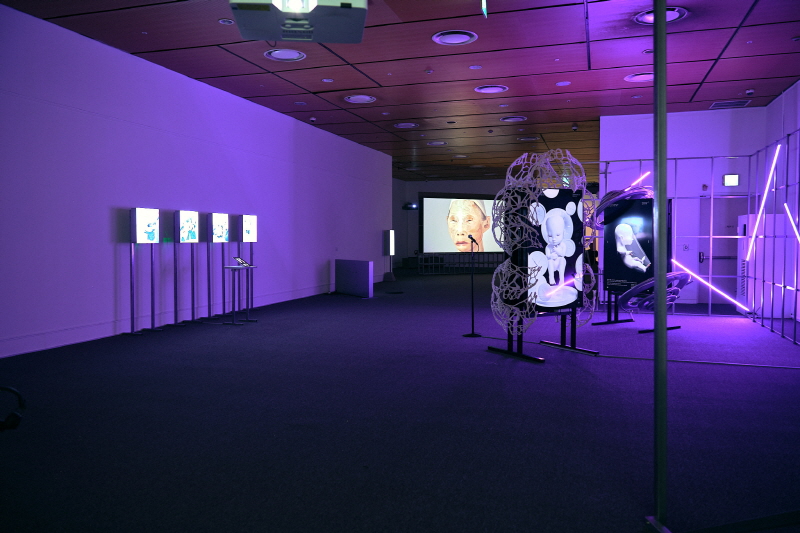
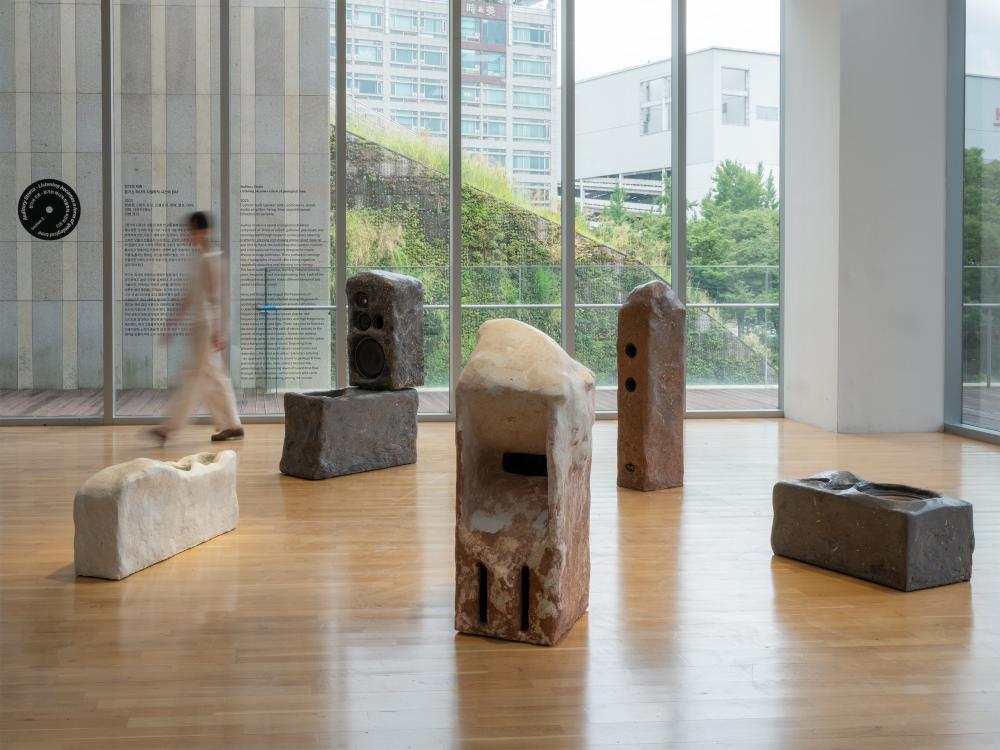
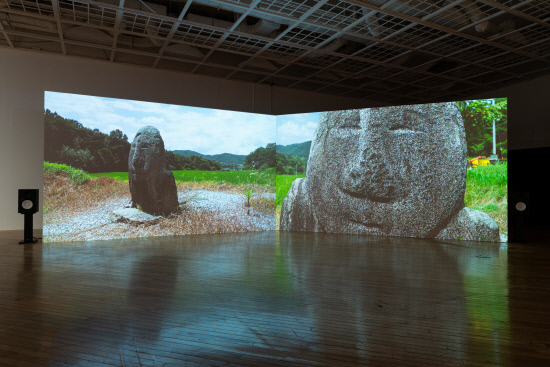
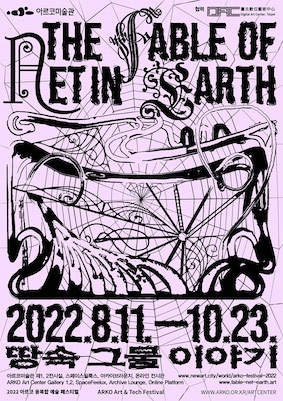
convergence-arts festival 《The Fable of
Net in Earth》 at Arko Art Center unfolds both online
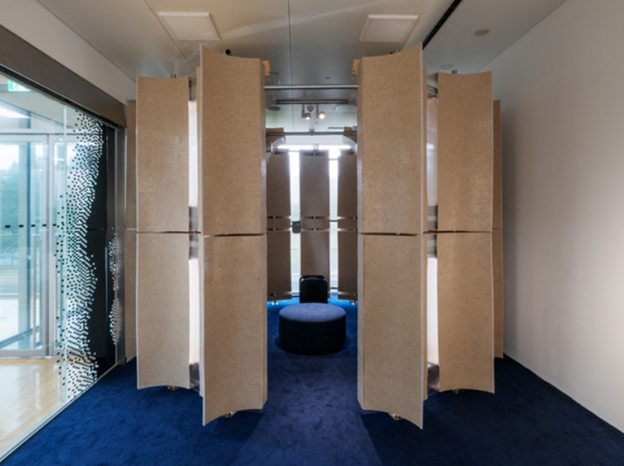
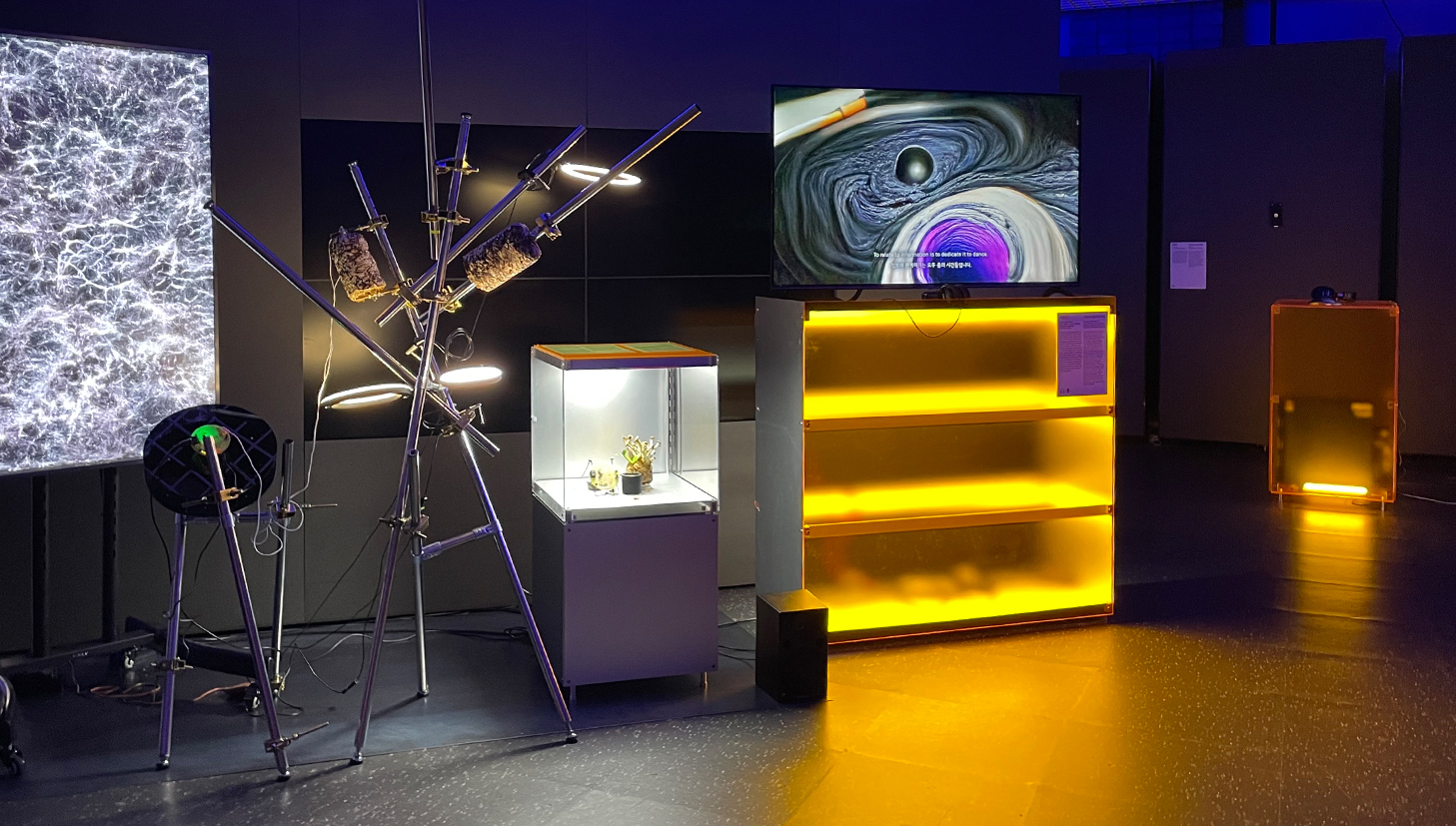
and offline. Entering the physical exhibition space, I had the sense that
themes frequently addressed over the past two to three years were
comprehensively arrayed, and that the curator intended to further deepen related
discourses.
Recent efforts—attending to environment, ecosystems, and the non-human;
dismantling binary boundaries; following multiple cosmologies; and moving
beyond anthropocentrism—have been articulated via theorists such as Bruno
Latour, Donna Haraway, and Rosi Braidotti; this exhibition likewise keeps these
discourses in view. In particular, it rests on a Haraway-inspired conception.
As
Arko planned, the galleries are rendered as spaces of free imagination. Through
speculative storytelling, a practice of “worlding” is staged that calls for a
shift in our grasp of reality and in our methods of artistic practice.
Especially in “The Unknown and the Wild,” the first gallery section, there are
echoes of the 2021 Gwangju Biennale: spiritual elements of the technological
age that seem, at first glance, unrelated are narrated, or incidents plausibly
arising in the wild past are drawn into the present, or stories of spirits
transcending temporality are told.
Living
amid both visibility and invisibility, we sometimes seek to render the
invisible visible—for belief, for proof, and for sensation. Users of
digital-technology systems composed of immaterial elements produce visibility
through screens—monitors and displays. In this world, Gallery 2’s section
“Mutating Worlds” appears to argue for values we should pursue. The speculative
act of thinking the invisible beneath the visible rests on the idea that there
is that-which-exists beyond reality, and on that basis we can attend to beings
other than the human.
In
this sense, the choice of the title “Underground Web” may aim to speak about
what we cannot see—vast, unpredictable expanses entangled like nets beneath the
ground that cannot be summed up merely as “connections.” Our only response may
be to apprehend a complexly connected world through new acts of imagination.
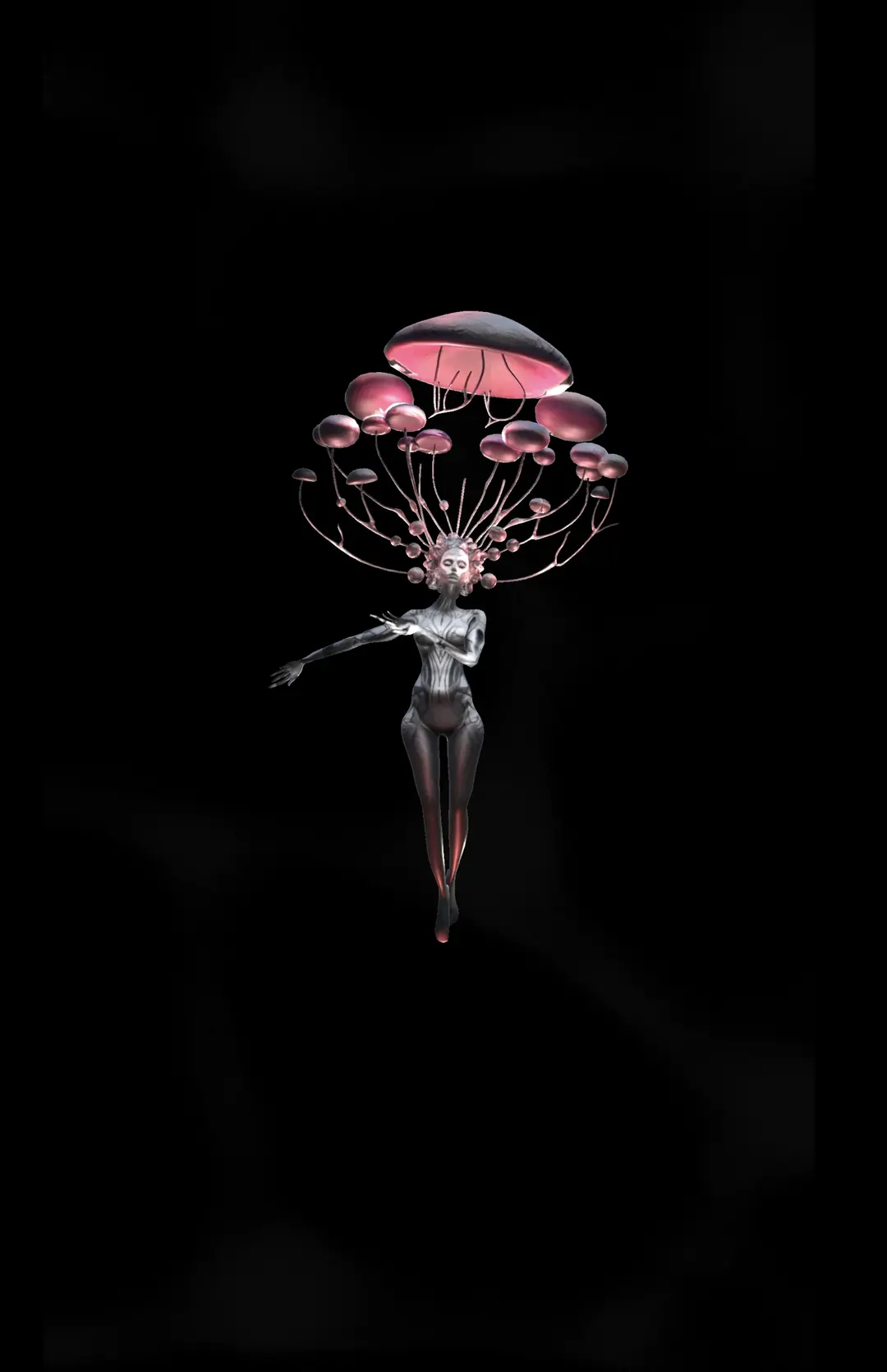
This seems to be the message of the online virtual exhibition 《Garden of Mycelium》.
The
online exhibition presents a virtual micro-world. The premise is that I,
exploring underground, travel through a virtual space. Digital technology has
brought many things, but one to note is the capacity to create what we had only
imagined, in a manner that builds another reality. There, not only our
imagination but the sensory experience of its elements matters.
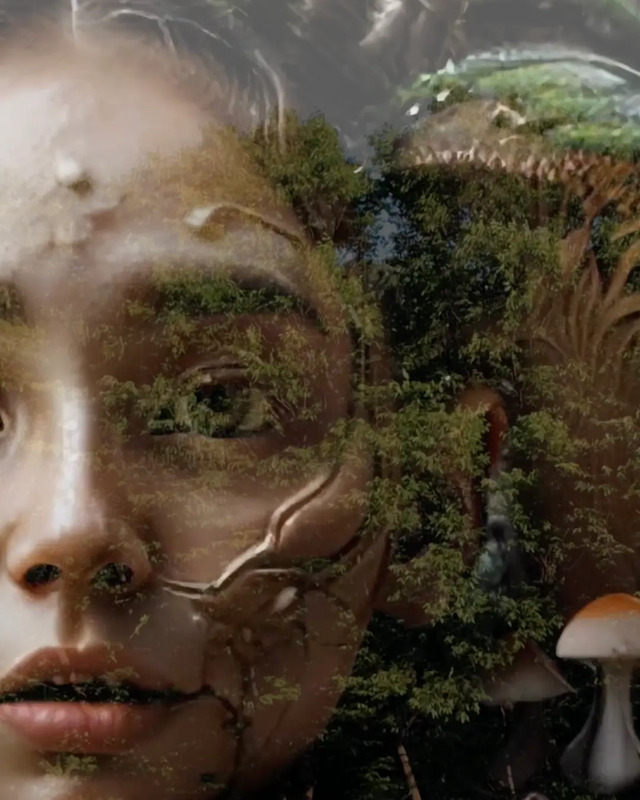
《Garden of Mycelium》 consists of three
gardens: 《Garden of Zygomycota》,
《Garden of Ascomycota》, and 《Garden of Basidiomycota》. Rather than
magnifying something via a microscope, the premise is that as one goes inward,
innumerable worlds exist—suggesting the possibility of other worlds. And these
worlds do not exist separate from the human world; rather, they may react just
beneath the strata’s surface. Those reactions may remain as minute actions
deeper underground, but even the smallest response would be connected
somewhere. This is not about enlarging small things, but about imagining that
even the small is already composed of yet smaller worlds conjoined.
Such
an interpretation resembles the “oligopticon.”¹ Coined by Bruno Latour and
Émilie Hermant from the Greek oligo (few, very small)
and opticon (seeing), the oligopticon stands in contrast to
the panopticon—which surveys the whole—by proposing a way of seeing that
considers the very minute.² It focuses on how actors entangled within a
structure form networks of connection. The world is not made of simple
structures; amid many mutations, every entity possesses variability that
changes from moment to moment.
In
2004, Latour produced the web project “Paris: Invisible City,” arguing that
while we typically picture Paris via postcard images—the Eiffel Tower
shining—the actual city exists by virtue of what is hidden behind those images.
A city made through innumerable interactions reminds us of the entities we
forget. His project distinguishes what is visible above ground from what is
invisible below, likening the underground to a subway map. He describes a
complex structure of roots sending out fine rootlets and branching anew.³
The
virtual space of the online exhibition does not materialize the invisible
differently in the offline galleries; rather, it virtualizes what exists in
imagination. One might call it the virtualizing of imagination. What we imagine
is visualized and made experiential through virtualization. If we proceed on
the premise that this virtual is not unreal, then through the very act of
experience we come to understand a world and, in that moment, to make that
world.
1.
The oligopticon appears in Bruno Latour and Émilie Hermant, 《Paris: Ville Invisible》 (Paris: Les
Empêcheurs de penser en rond et Le Seuil, 1998), to describe a non-panoptic way
of seeing.
2.
Kim Joo-ok, “Oligopticon and Actor: Focusing on the Experience of Urban Space,”
《Journal of Contemporary Art History》 42 (Dec. 2017), pp. 7–8.
3.
Ibid., pp. 13–15.