

GRAYCODE, jiiiiin © Monthly Art

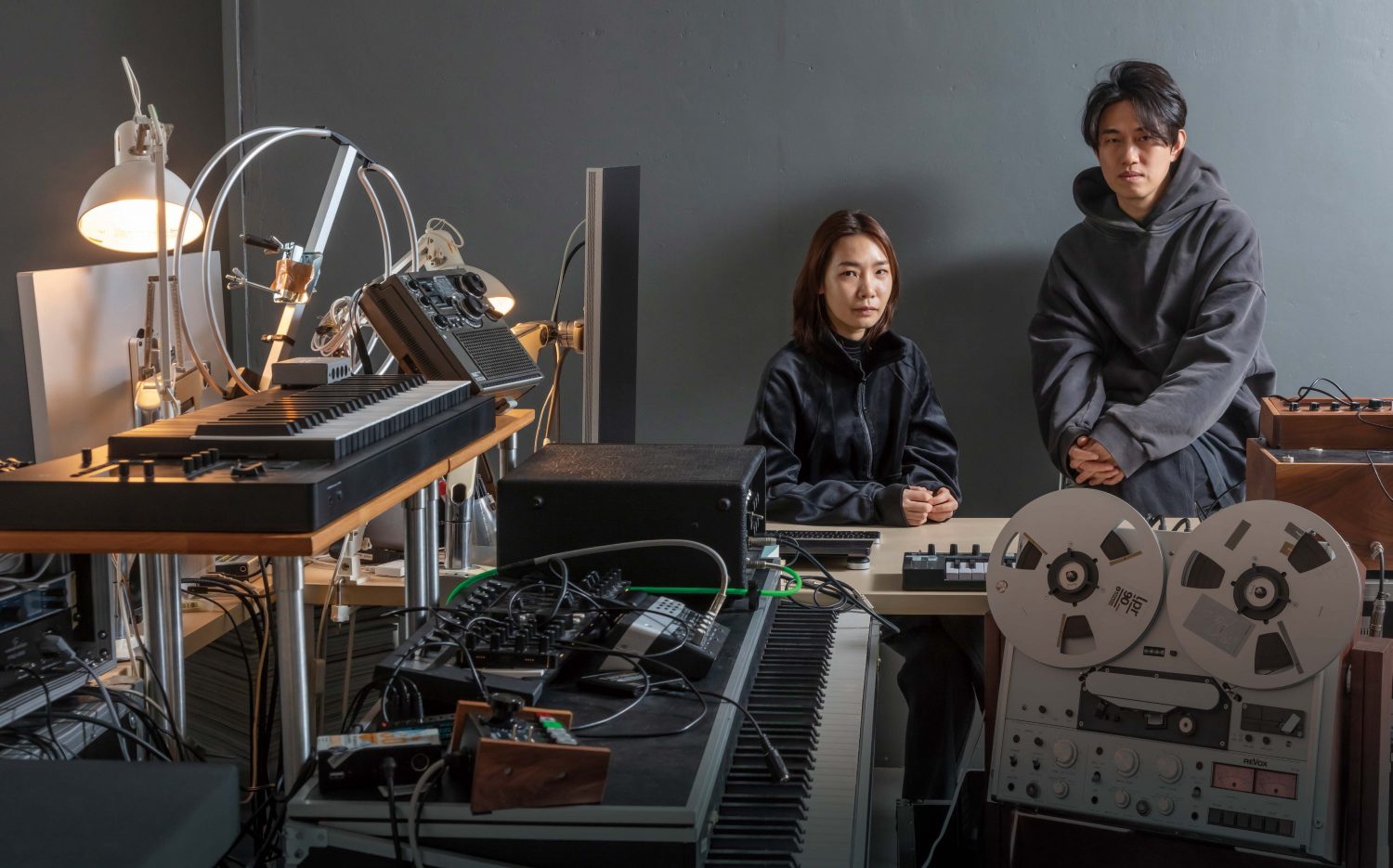
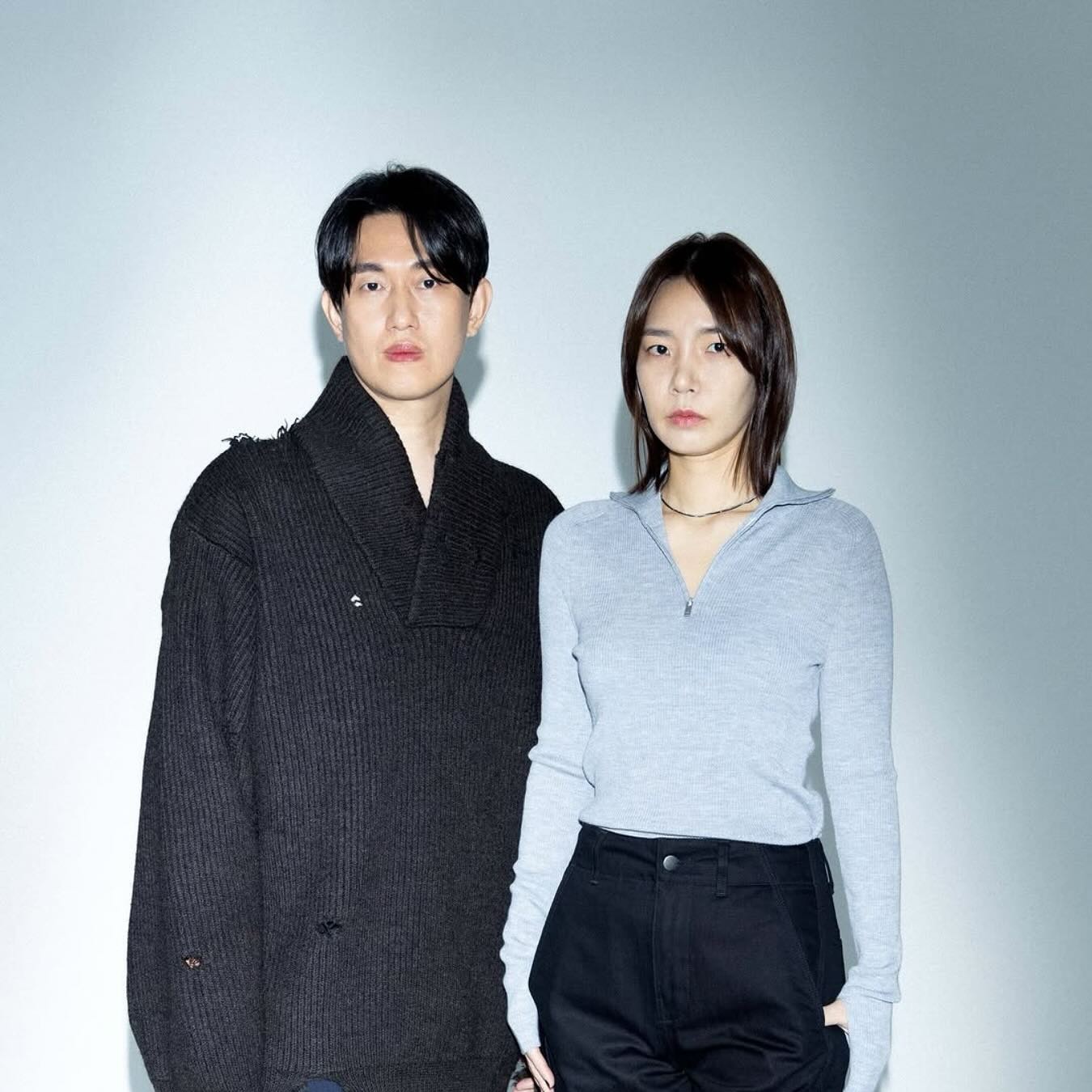
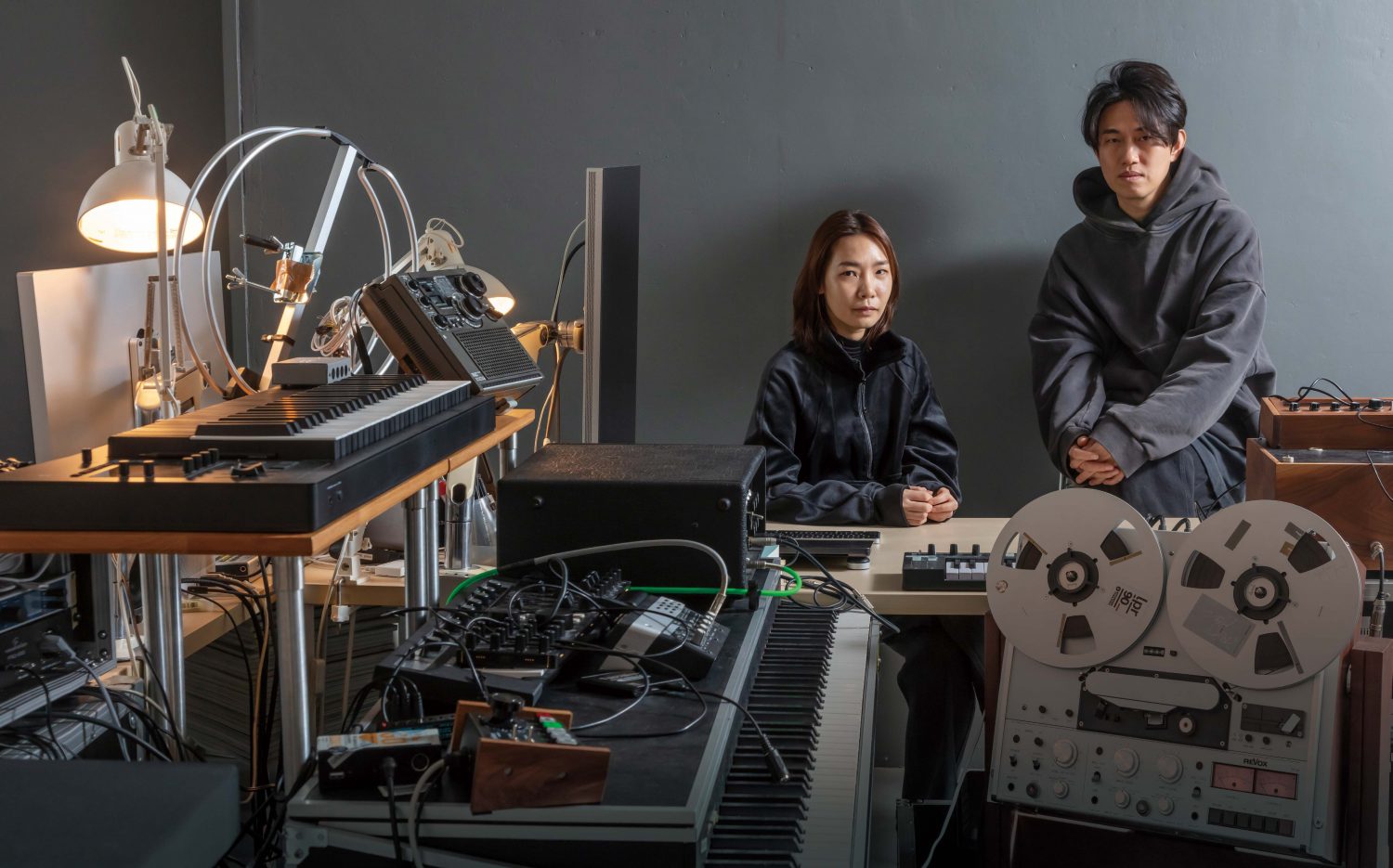
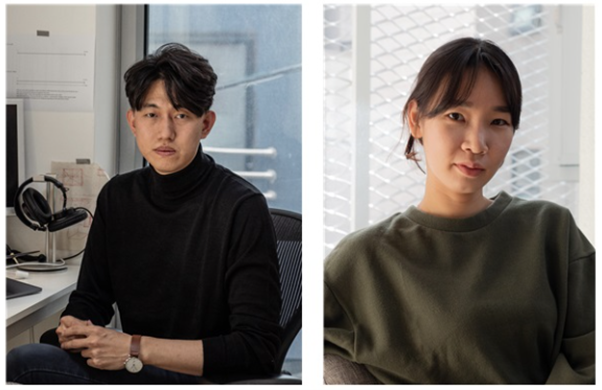
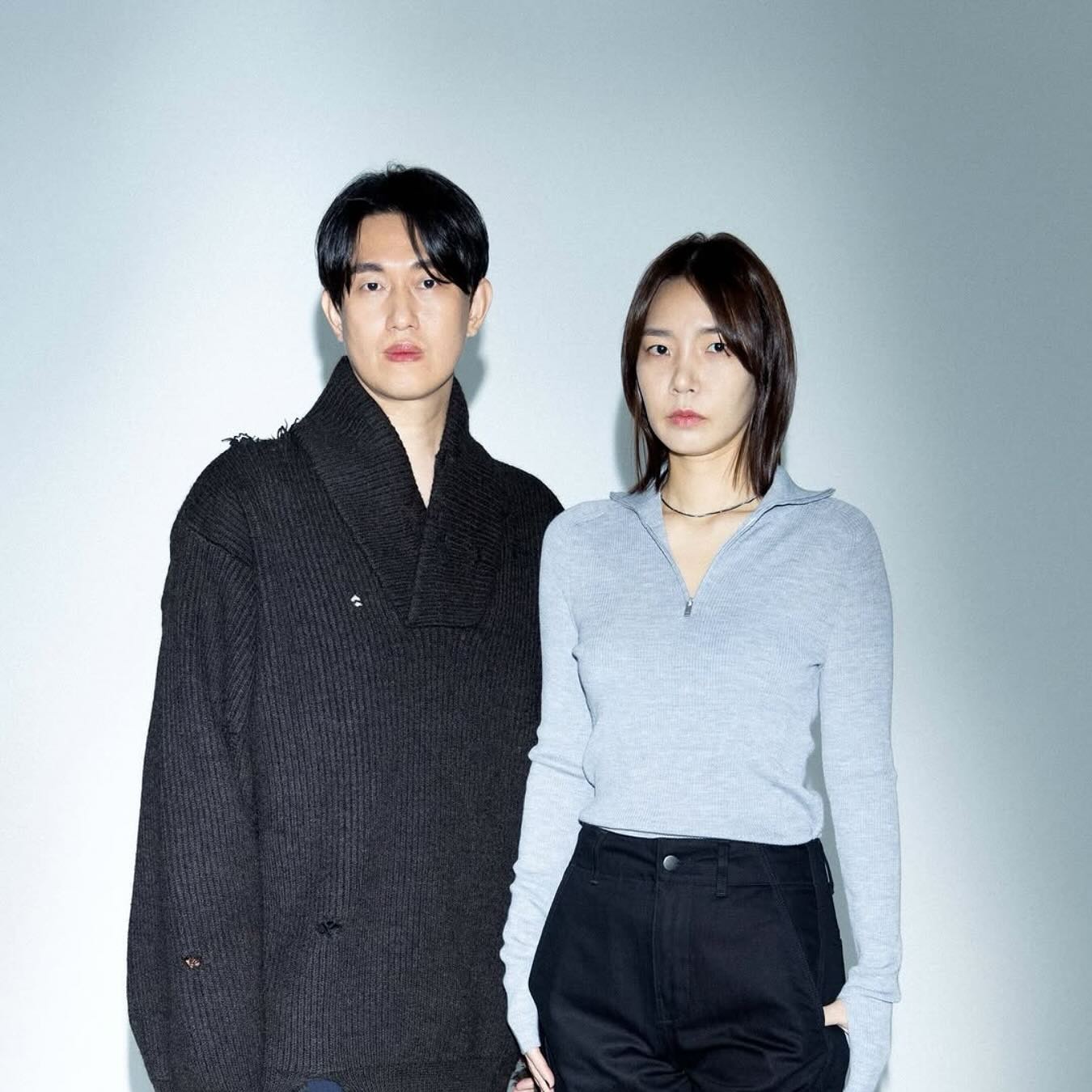
The artist duo GRAYCODE, jiiiiin (Taebok Cho, Jinhee Jung) are electronic music composers and media artists who have continued a practice of “architecting time” through sound and music. Their primary materials—speakers and hardware systems—function not merely as acoustic devices but as instruments that resonate with the elements of a space. Harnessing air vibrations, sound pressure, and musical tension and release, they reveal, through sound, phenomena that are invisible yet real. They explore how elements such as the wavelength of visible light, vibration, and reverberation engage not only hearing but also vision and bodily experience, prompting the audience to reconsider the very act of “listening.”

They also lead conversations on contemporary concepts by addressing socio-physical themes such as AI, data, energy, and the cosmos. Their book published for the 2021 solo exhibition 〈Data Composition〉 was selected as one of the “Most Beautiful Books in Korea” by the Korean Publishers Association, and in 2018 they received the Work Prize of the “Giga-Hertz Award” hosted by the ZKM | Center for Art and Media Karlsruhe (Hertz Lab) and Südwestrundfunk (SWR). They were invited as collaboration artists by Moncler and Gentle Monster (2021) and by Tamburins (2022) to present exhibitions and performances, and they have shown exhibitions and performances at institutions including the Sejong Center for the Performing Arts (2021), Nam June Paik Art Center (2022), SONGEUN (2023), and Art Sonje Center.


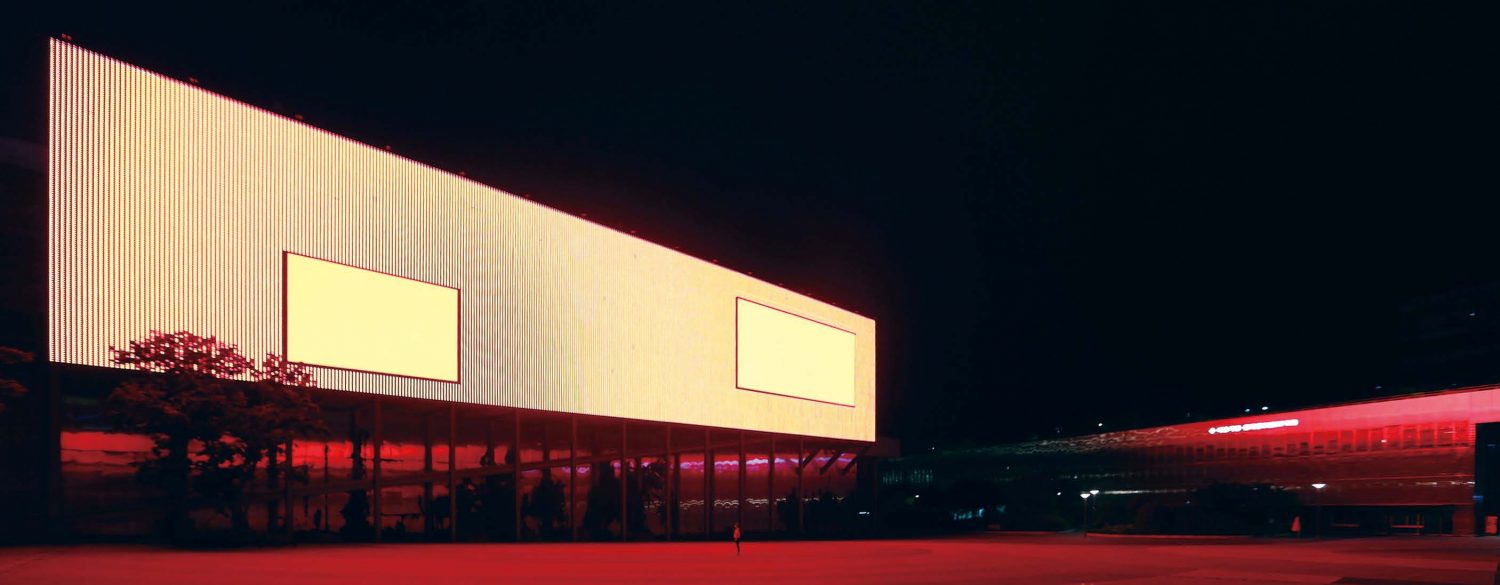
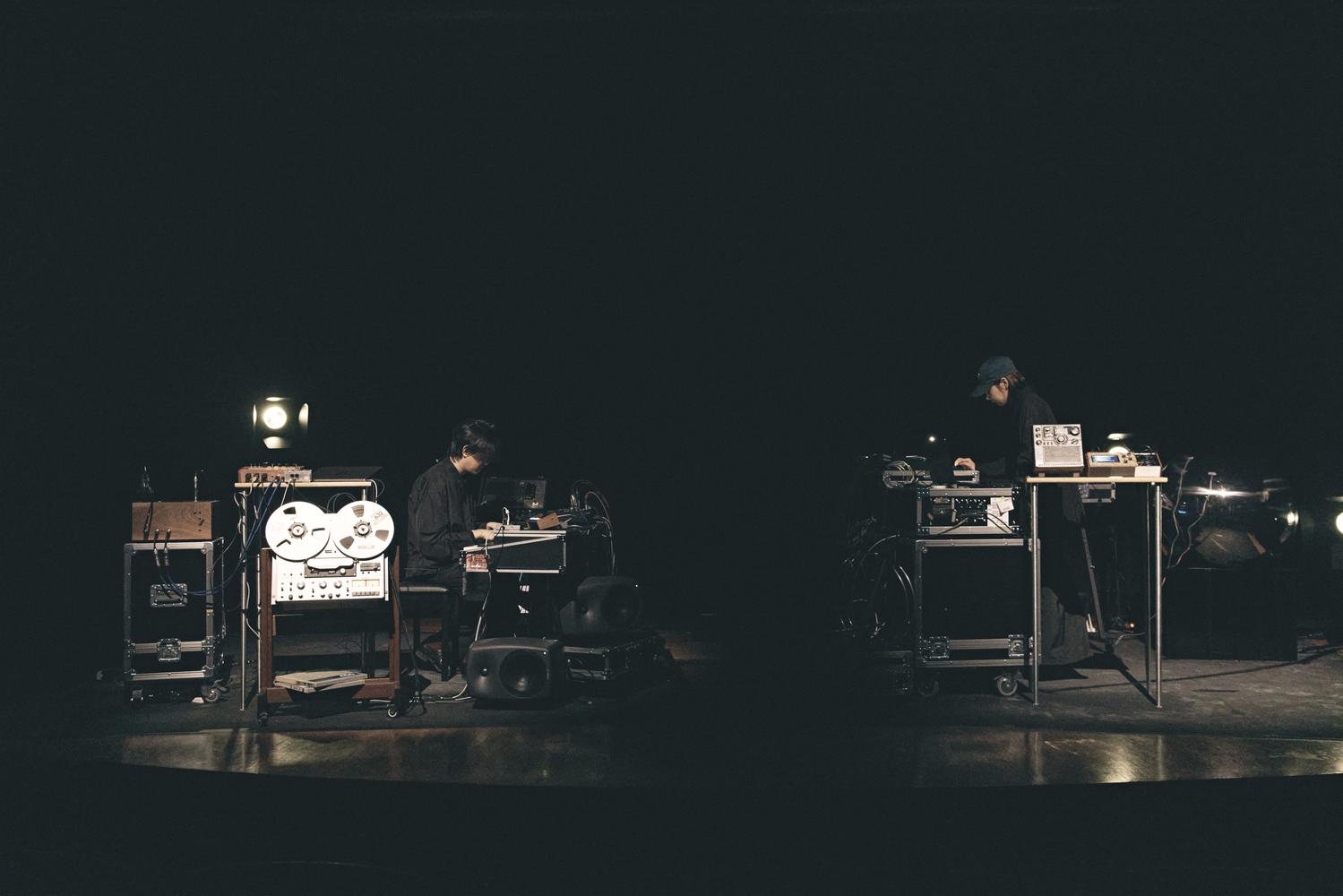
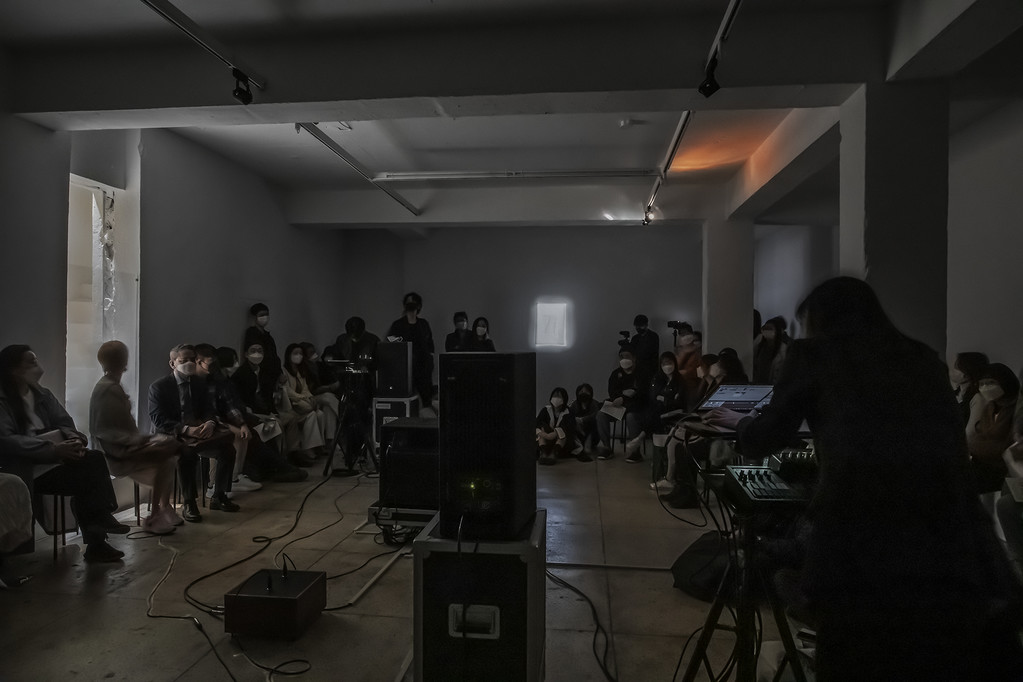
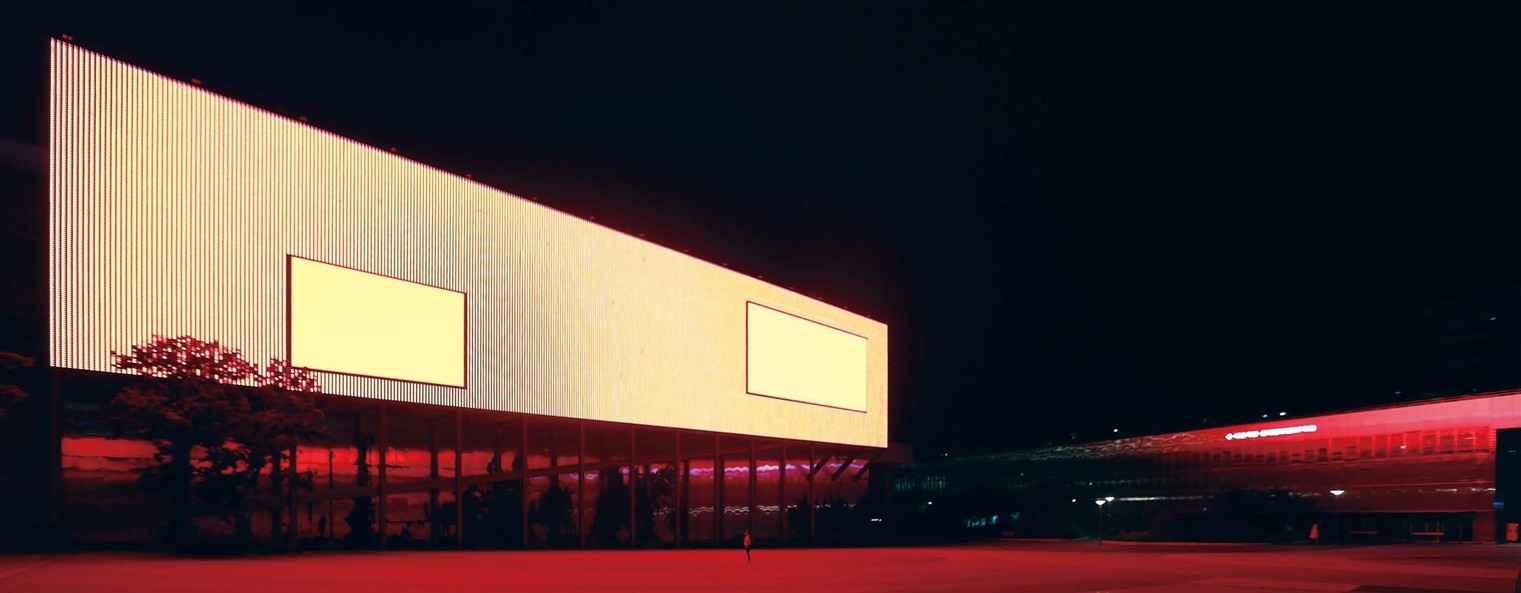
#include red, ACC performance view, 2018 © GRAYCODE, jiiiiin


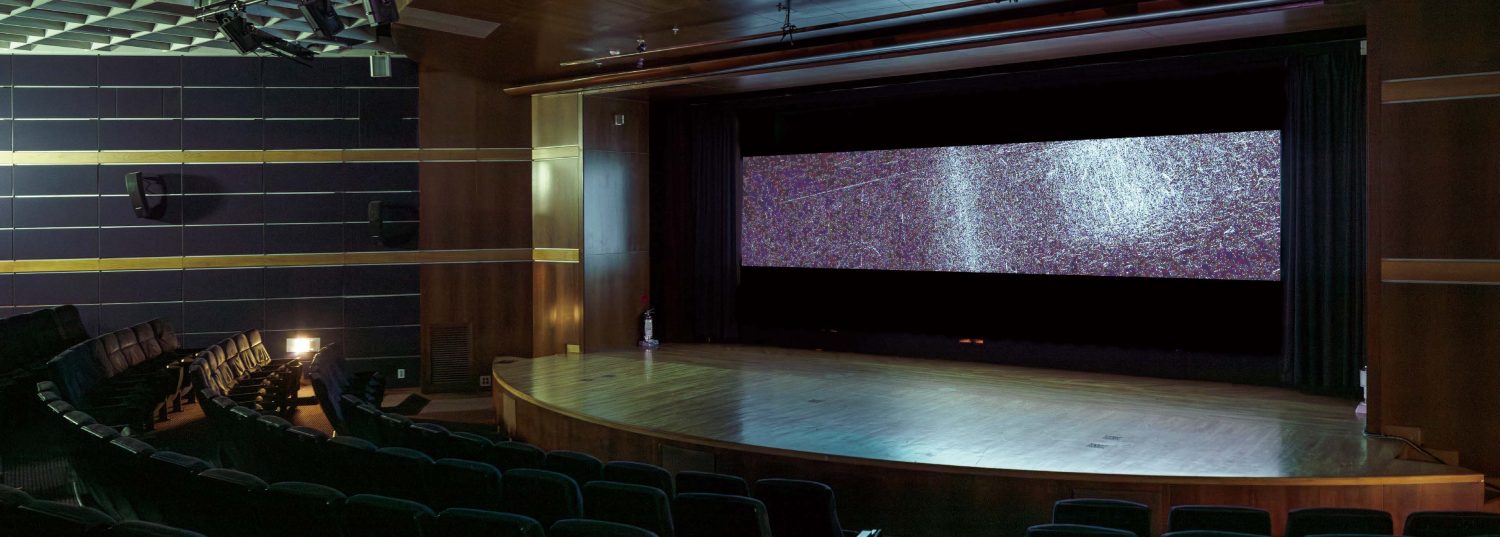
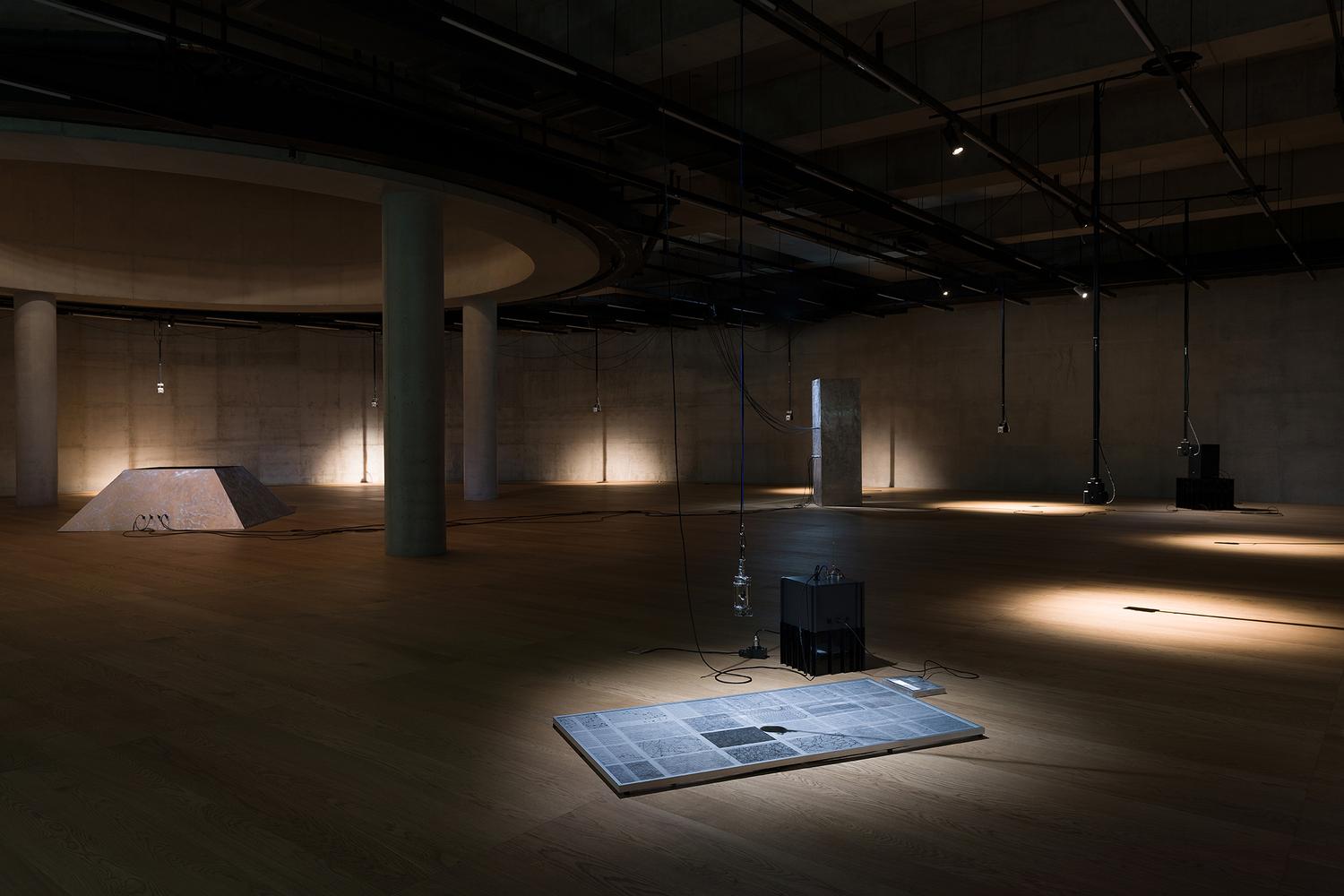
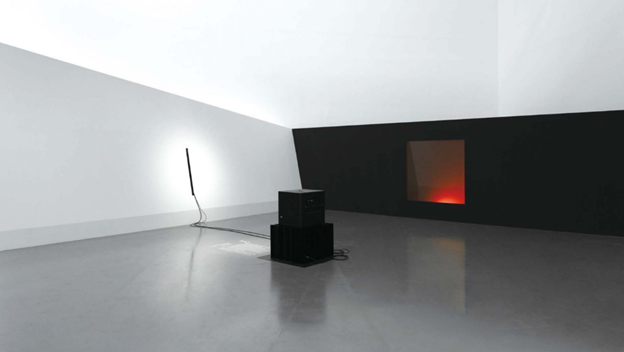
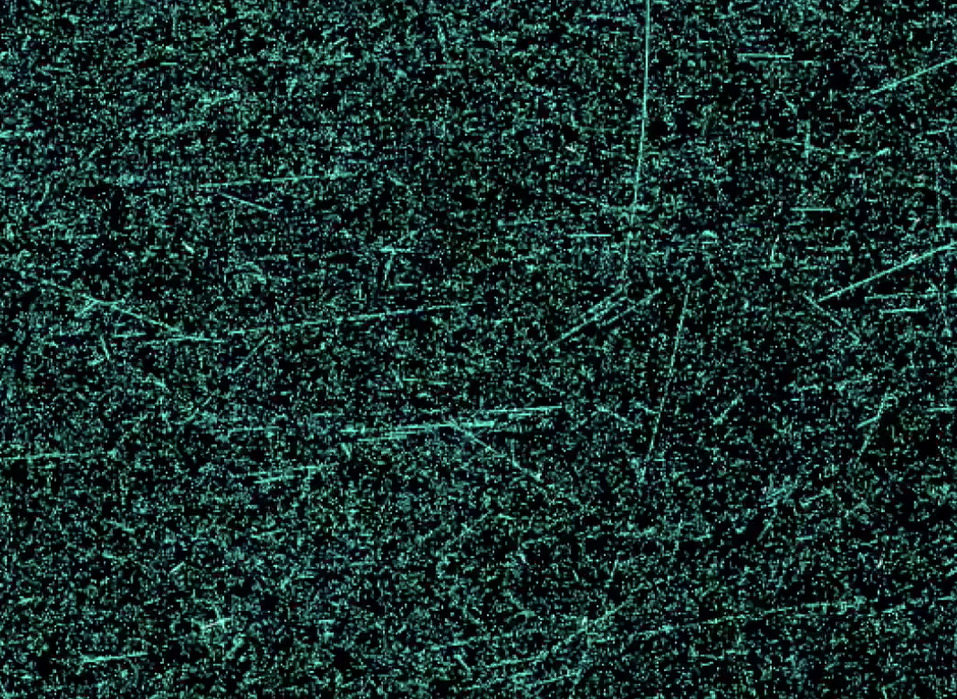
Works combining +3×10^8, beyond the light velocity and 35 to 20,000, installation view from 《Off Site》 at Art Sonje Center, 2023 © GRAYCODE, jiiiiin

Having majored in electronic music composition, GRAYCODE, jiiiiin began their collaborative work at Incheon Art Platform in 2016. The project #include red was their first to probe the modes, interrelations, and points of intersection by which vision and hearing are perceived. Based on the fact that—when sound is understood as vibration—red has the lowest frequency (approximately 430 THz) among visible wavelengths, they stage live performances that use red as a primary element of visual expression. Through images and sound transmitted on a large media façade, they propose that audiences “listen to” red. “As the biblical phrase ‘Let there be light’ describes the first stage of creation, perhaps the first color humans ever beheld was red,” they say. Conceptualizing an order between the religious temporality of the origin of planets and the real temporality of their own work, they build a structural system of their own and realize the relationality of durations as rhythm.

In 1913, the Futurist painter Luigi Russolo declared in The Art of Noises that “ancient life was all silence; in the nineteenth century, with the invention of machines, Noise was born,” constructing devices that imitated non-musical noise and realizing them within the genre of art. In 1937, John Cage, in his lecture The Future of Music: Credo, anticipated that composers—newly confronting the concept of time—would increasingly employ noise through technology, and moreover he musicalized all sounds. In this context, the role of the composer is to devise rules that can explore the link between periodic waveforms and noise and thereby generate sound. The compositional method of GRAYCODE, jiiiiin aligns with this tradition: within the space of computer simulation, they compose by configuring systems or algorithms.

+3×10^8m/s, beyond the light velocity is a 465-second animation, introduced as the award-winning work of the 2018 ZKM Giga-Hertz Production Award. It features “sudden silences that follow sinusoidal floating sounds, brief flows of finely segmented sounds, and sonorities ranging from clicks to water-droplet-like tones.” In the video, clusters of intensely fluorescent green dots disperse and regroup repeatedly, while changes in volume and movement form rhythmic combinations. Here, the temporal coupling of vision and hearing goes beyond being a mere object of manipulation to become, in itself, the spatial field of performance. In such moments, the audience is invited to participate either in the actual space where the performance unfolds or within the virtual space of the video circuit.


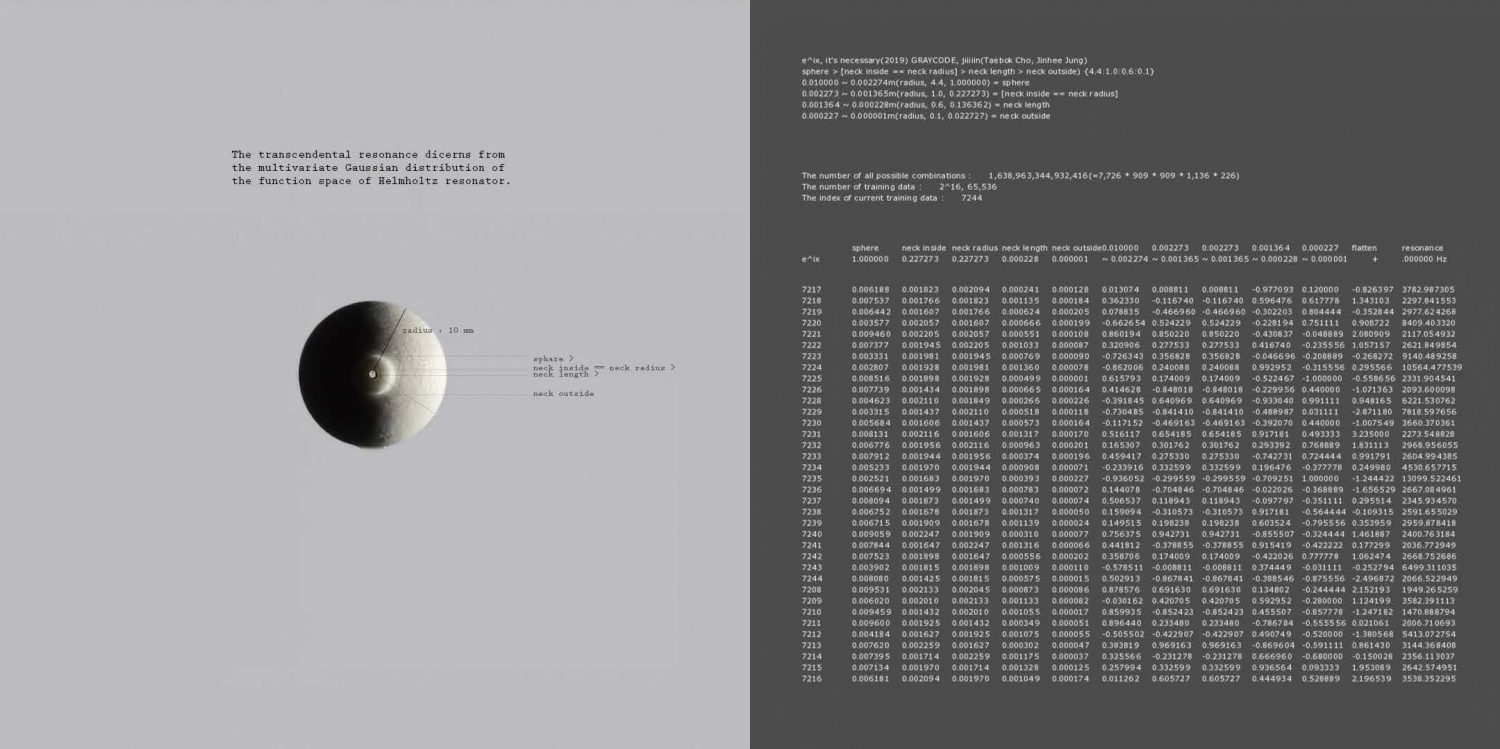
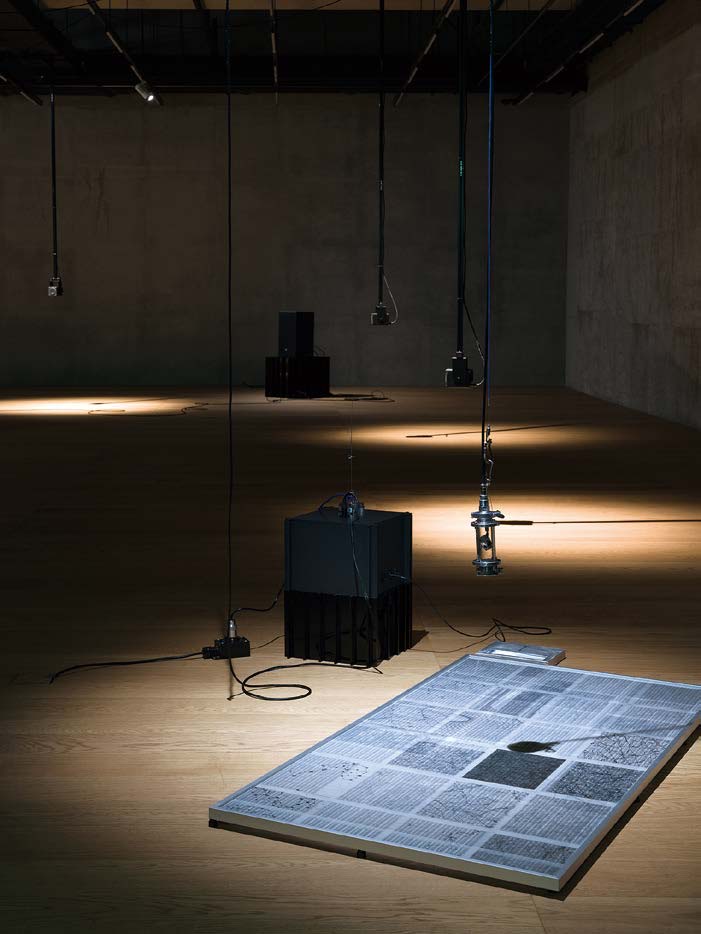
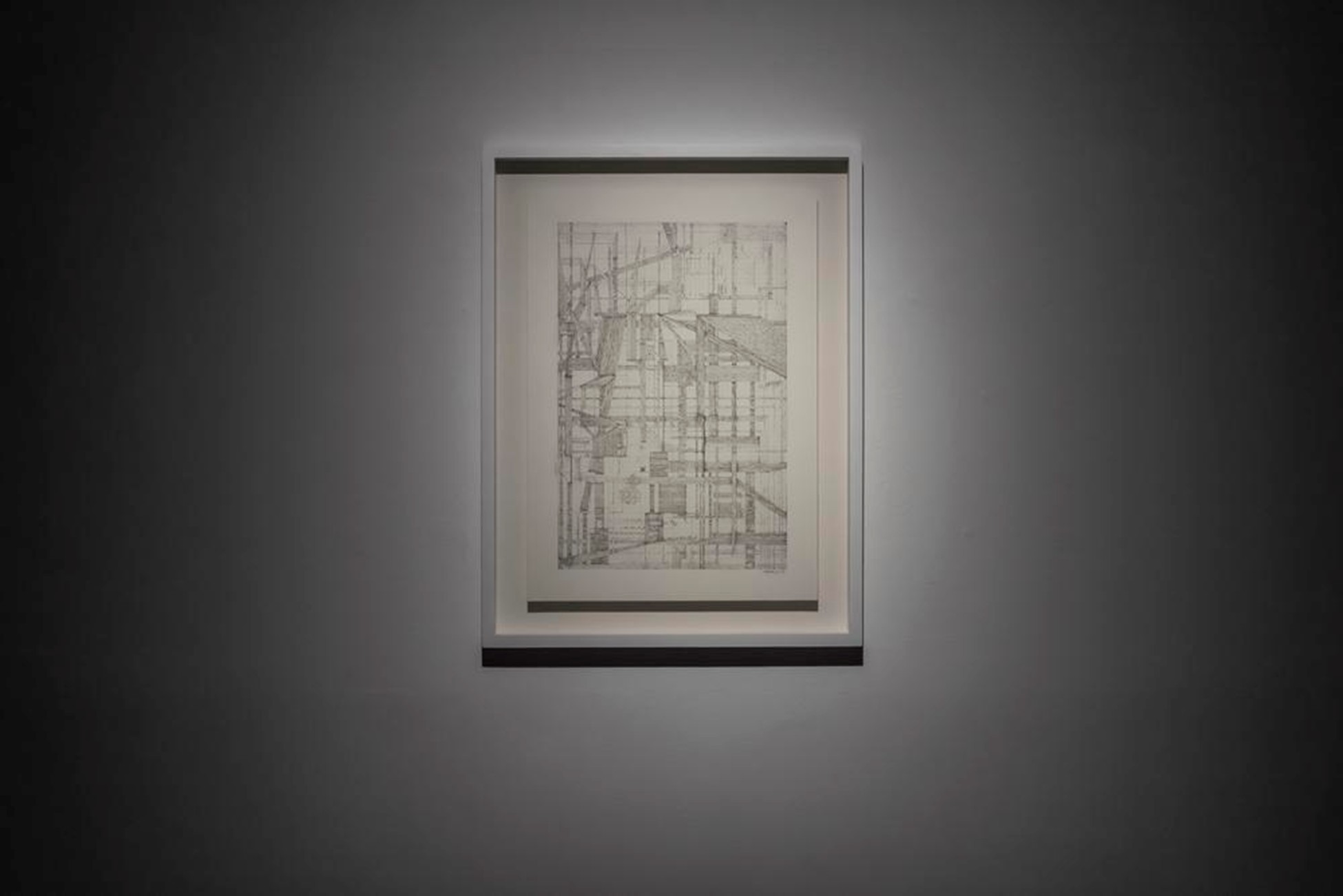
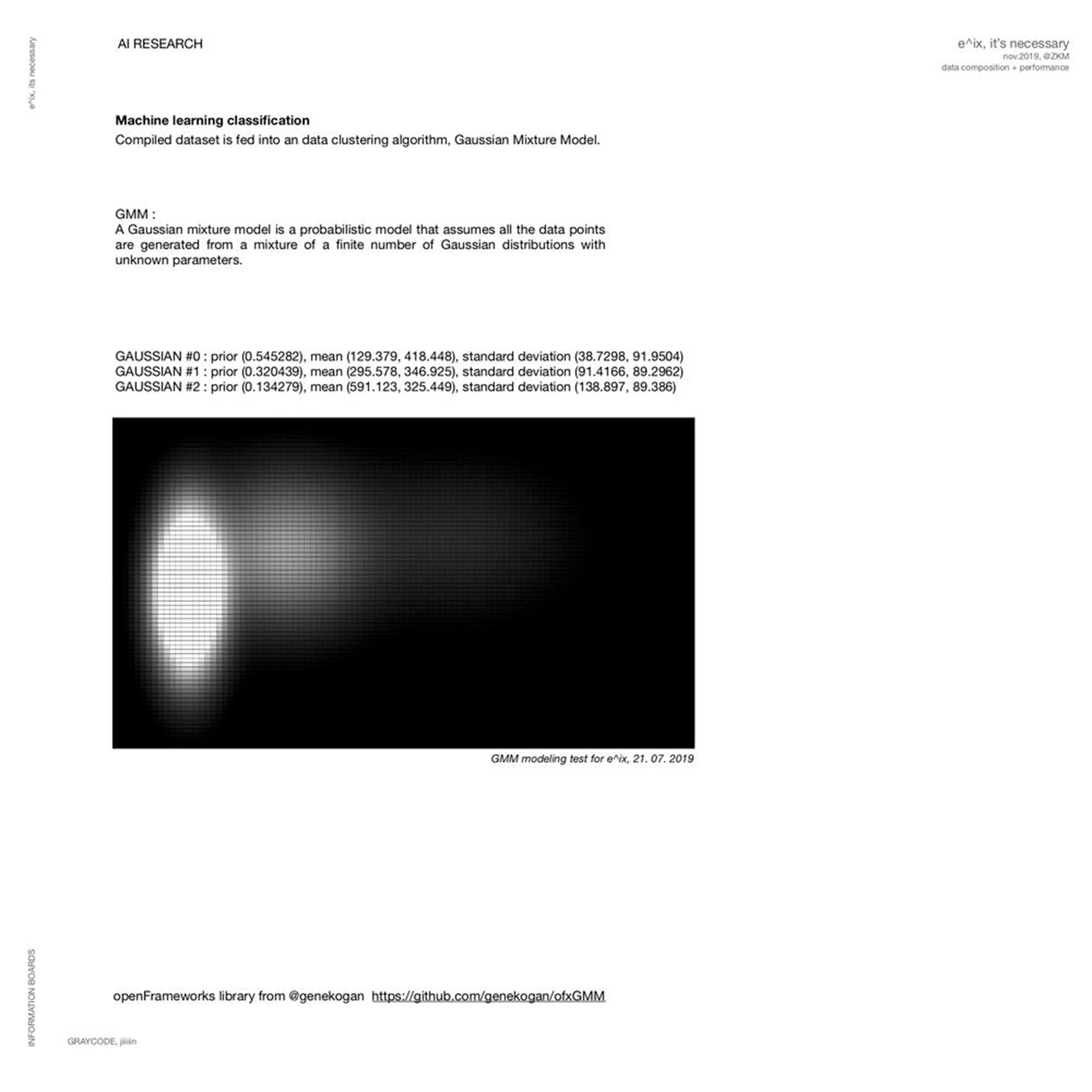
e^ix, it’s necessary research archive, 2019 © GRAYCODE, jiiiiin

The exhibition 《10^-33cm》 at the Korean Cultural Center in Berlin is a project dedicated solely to sound. The artists created eleven sound tracks of varying lengths—from the shortest, Track 10 at 0.012 seconds, to Track 11 at 41 minutes 39 seconds. They also produced and exhibited a score that maps duration to length (a 1 minute : 1 cm ratio) across a 4-meter span. They prepare a position for an audiovisual experience concerning the ends of what is visible and invisible, and of what is audible and inaudible; it is a narrative as well. The work’s title, 《10^-33cm》, refers to the Planck length—the minimal spatial scale at which quantum gravity may manifest—below which ordinary notions of space cease to exist. Although experimental access is currently near impossible, it is predicted to be a regime where quantum-gravitational effects become significant. GRAYCODE, jiiiiin take the tiniest conceivable scale of the cosmos as a motif to imagine sound that could be heard.

The 2019 performance e^ix, it’s necessary at ZKM is a roughly ten-minute composition created via machine learning on the theme of AI. The German physicist Hermann von Helmholtz found that while greater sound-wave amplitude is perceived as louder and smaller amplitude as softer, perceived loudness relates to amplitude not linearly but exponentially. The Helmholtz resonator (THR), named after him, is a device that absorbs sound at specific frequencies; such resonance arises when air is forced into and out of a cavity, causing the enclosed air to vibrate at a particular natural frequency. By modeling a THR resonator in a virtual space, the artists extracted 1,683,963,344,932,416 data points; using machine-learning algorithms, they proceeded with sound design and project construction through data clustering based on that dataset.

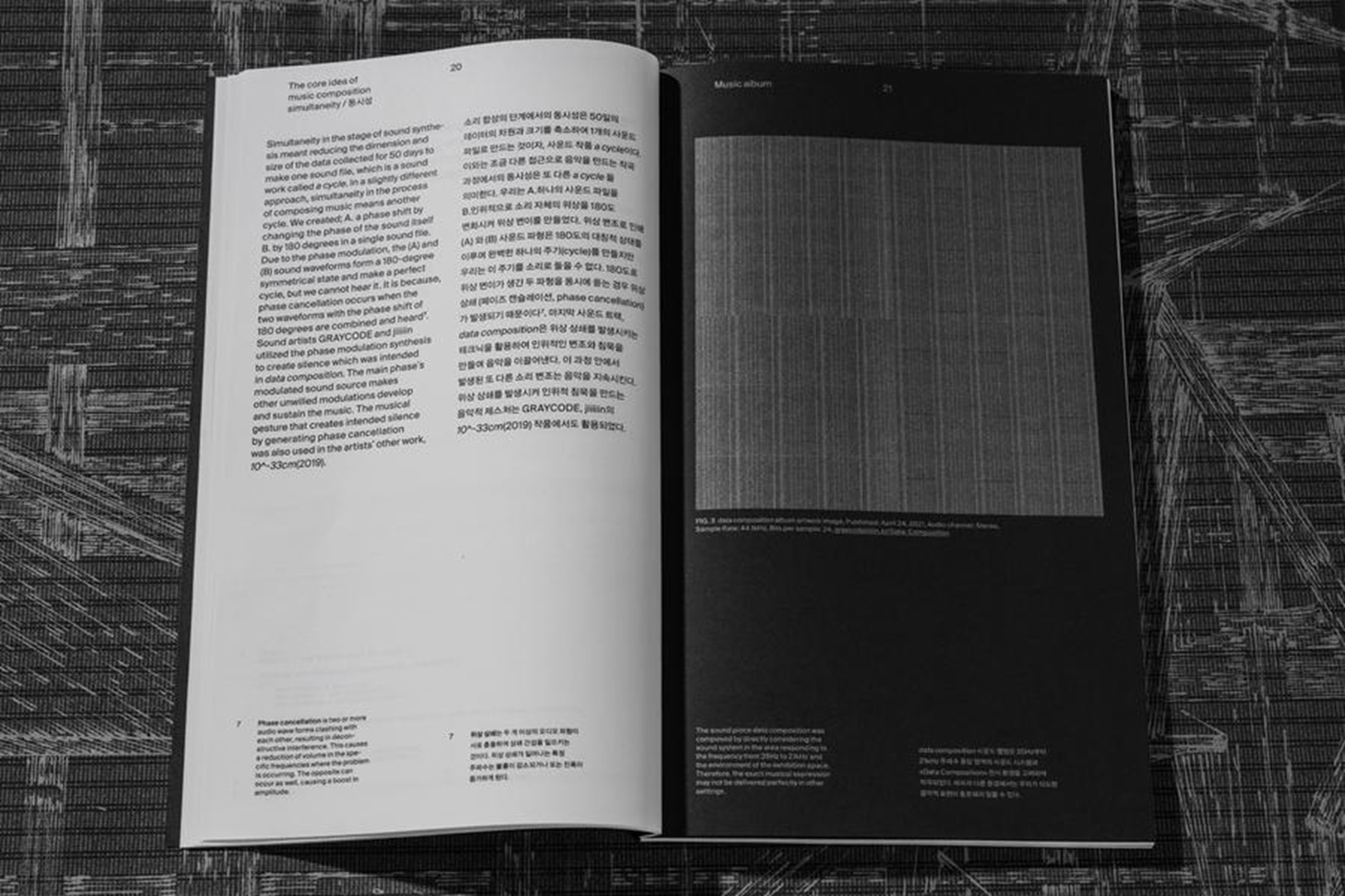
Their exhibition 《Time In Ignorance, ∆T≤720》 at Sarubia Dabang in 2020 was a project that translated the month-long exhibition period into the time-based medium of sound art. In the title, Δ (delta) denotes, in physics, the amount of change in a variable. Adopting this sign as both a compositional concept and an exhibition title, the artists quantify uncertainty about time through sound works. Setting the exhibition’s 30 days—720 hours—as a parameter, they play the generated sounds from a web cloud, enabling visitors to experience the amount of change produced by sound during open hours. In their artist note, they write:

“Through the opening performance, a state of disequilibrium—namely a moment of chaos characterized by ‘chaoplexity’—is generated. Disequilibrium is an absolute condition in nature that can drive change; over the ensuing 30-day exhibition period, the sound work initiates movements that depart from this initial disequilibrium. All spontaneous changes arising in this process are irreversible states, and within those changes we experience time. With this time-specific sound work presented here, our doubts about ‘reality’ will continue into the future.”


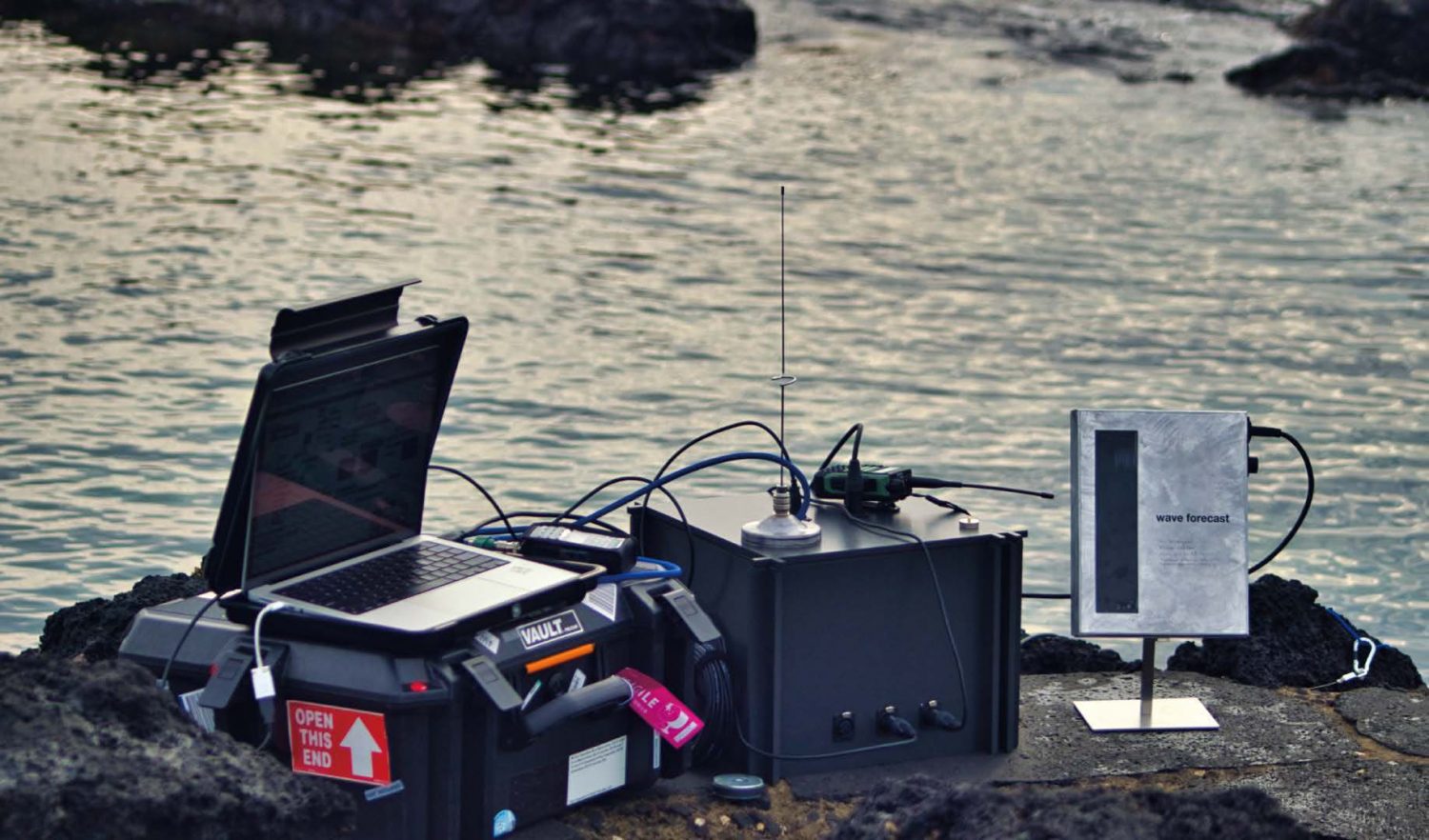
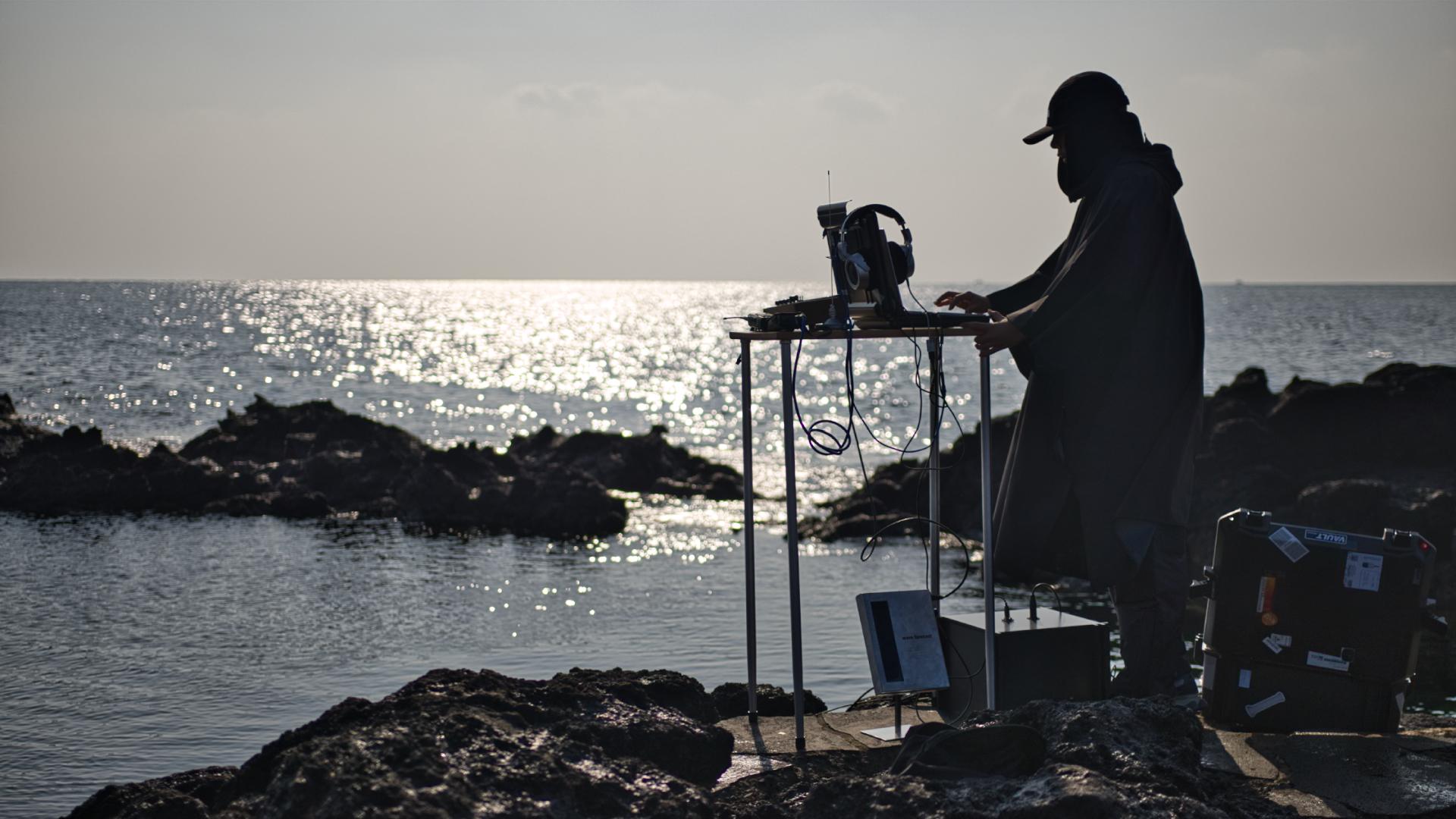
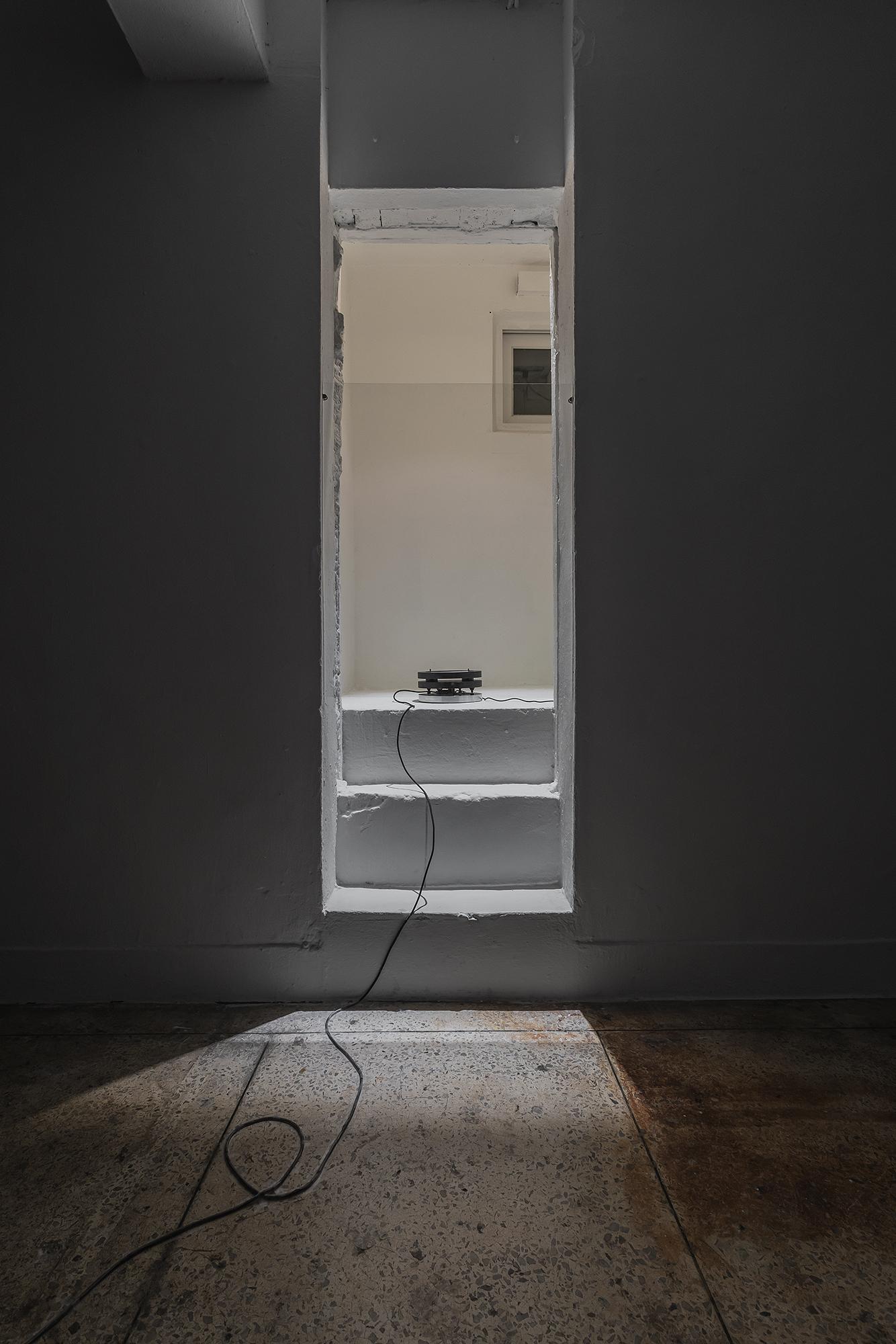
wave forecast outdoor installation view, Beophwan Port, Seogwipo, 2022 © GRAYCODE, jiiiiin


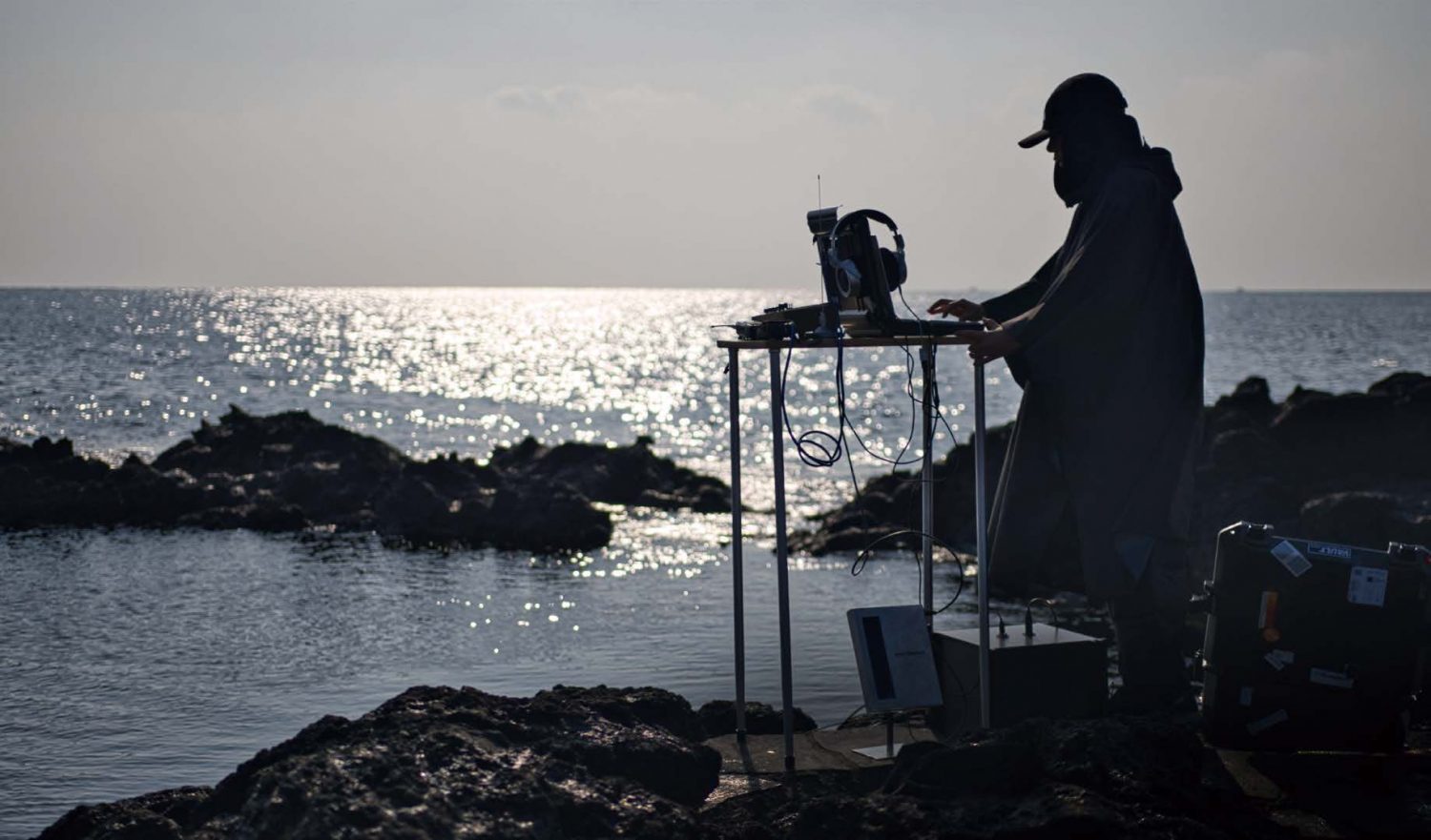
wave forecast outdoor installation view, Beophwan Port, Seogwipo, 2022 © GRAYCODE, jiiiiin

Perceiving minute changes within an exhibition space is impossible. The materiality of sound art is as difficult to verbalize as a low hum of noise, and its formal language is equally resistant to definition. Yet this work calls to mind the “process art” of Lucy Lippard’s conceptual art discourse. Rather than presenting only finalized results in an exhibition, it treats the temporal genesis and transformation of the work as paramount, emphasizing the environmental conditions surrounding it. Artists dissatisfied with customary divisions between vision and hearing or with medium-specific definitions embark on an intention to make a more direct and present, expanded conception of art. In the case of sound art—dependent on time—viewing is made deliberately non-transparent instead of being immediate or direct in the audience’s experience.

The artists add: “The time we experience is like the finite world of the retina. A day quantified as twenty-four hours, or three to five minutes of music, are times that exist within our visual range. Then what if we were to suspect, from a slightly different angle, the time beyond that range? Can we sensorially experience the time outside the visible range as reality? Or do we instead apprehend it as numbers and information?” The sound that captures the temporal change called the exhibition period becomes, simultaneously, a visual datum while transforming the movements of invisible energy.

To imitate, in real space, phenomena generated according to specific rules within a computer space is also to imitate, inside the real world, something that in fact never existed. The act of exposing the impossibility that a living human body cannot reach the magnitude of computation carried out by AI or computers paradoxically becomes an artistic practice by which humans living within information technology can continue to exist as human.


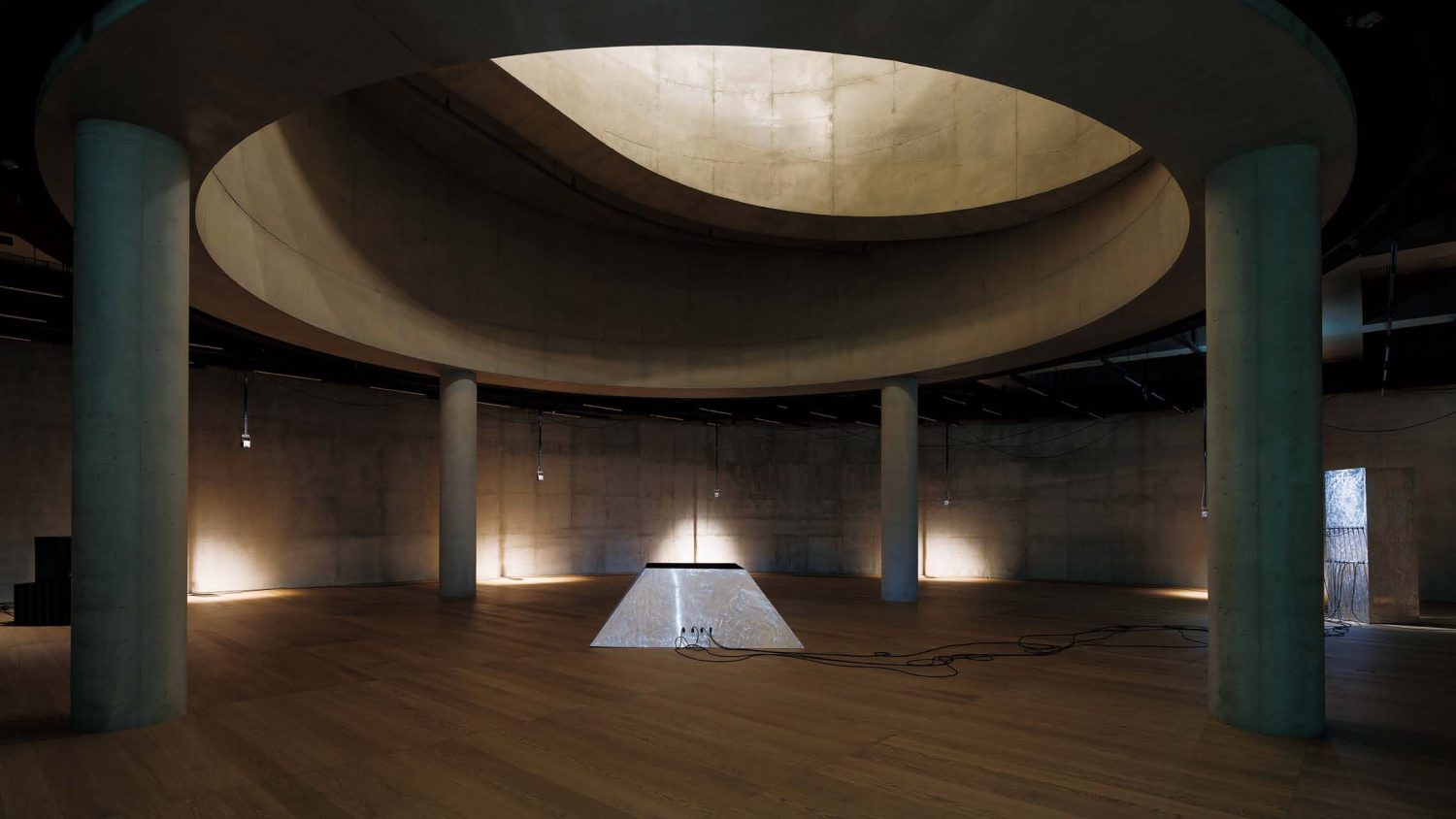
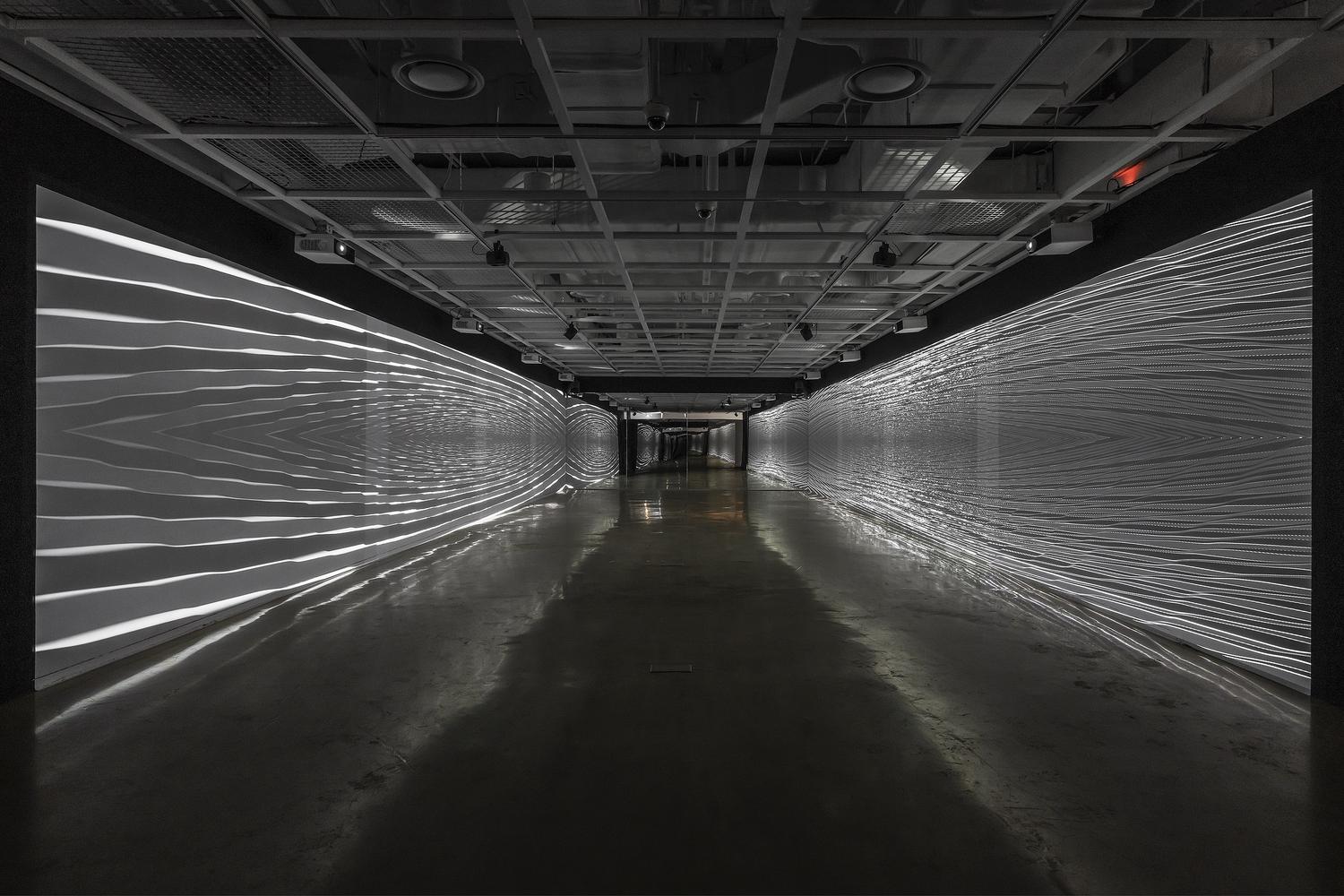
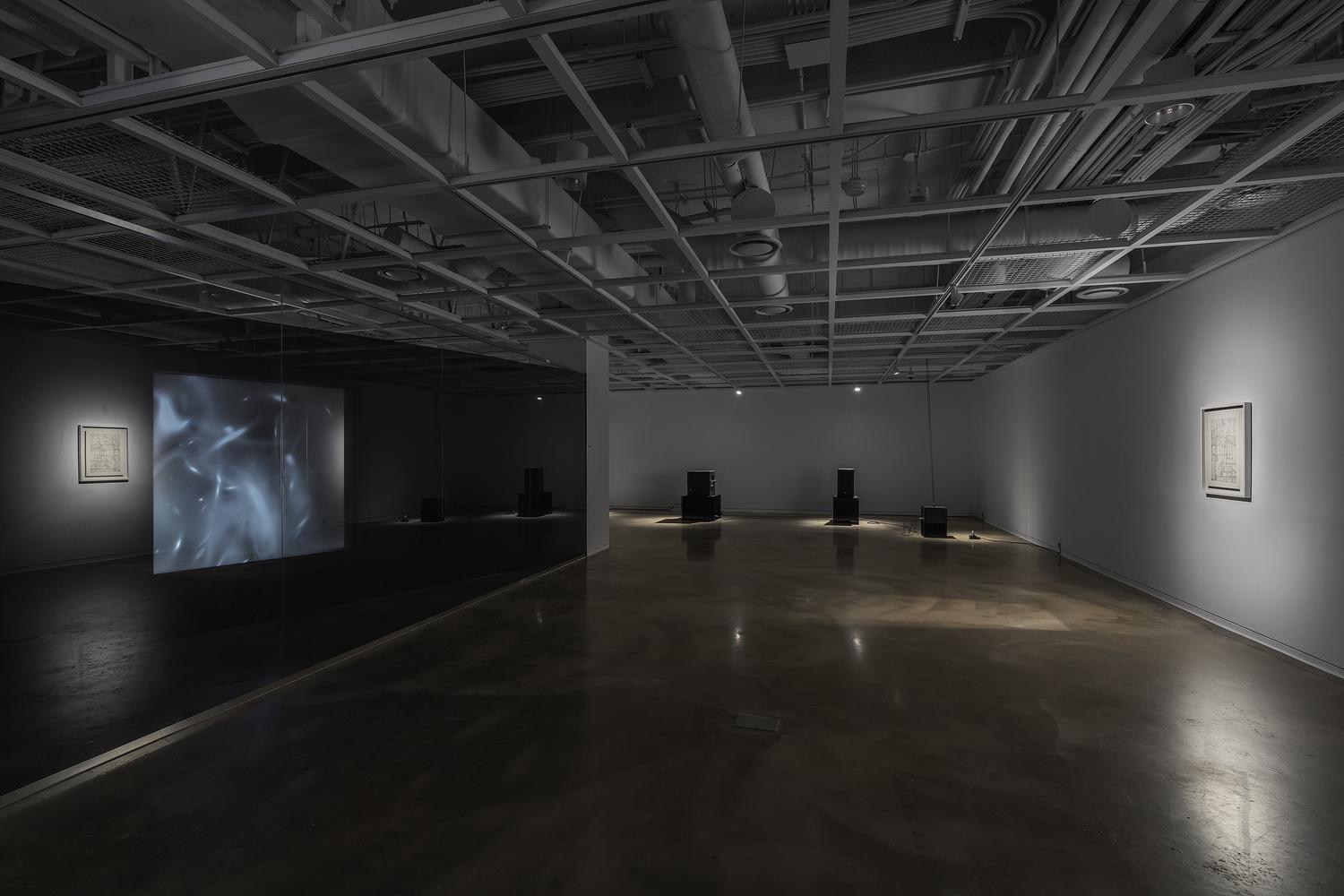
《∆W》 SONGEUN installation view, 2023 © GRAYCODE, jiiiiin


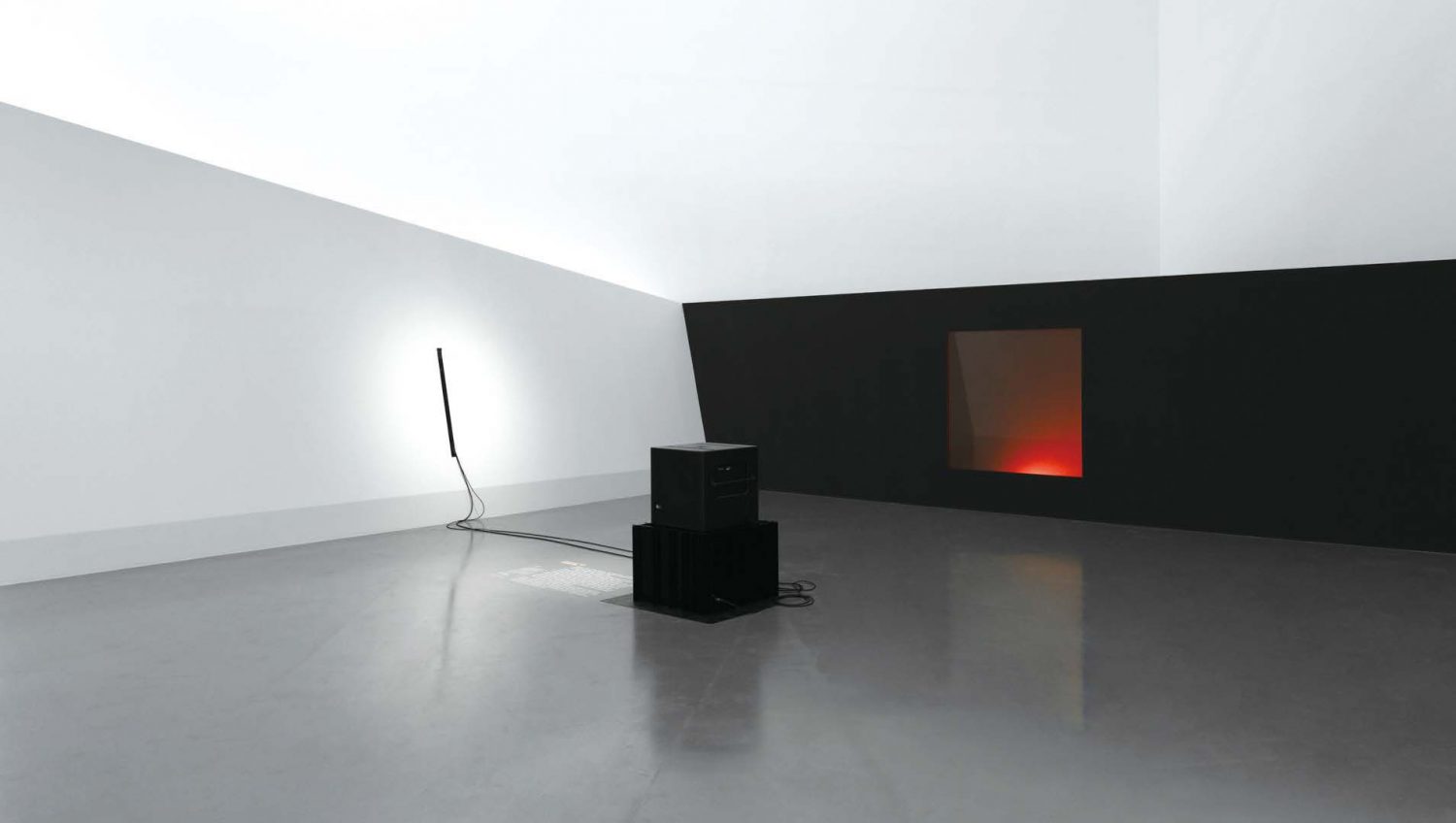
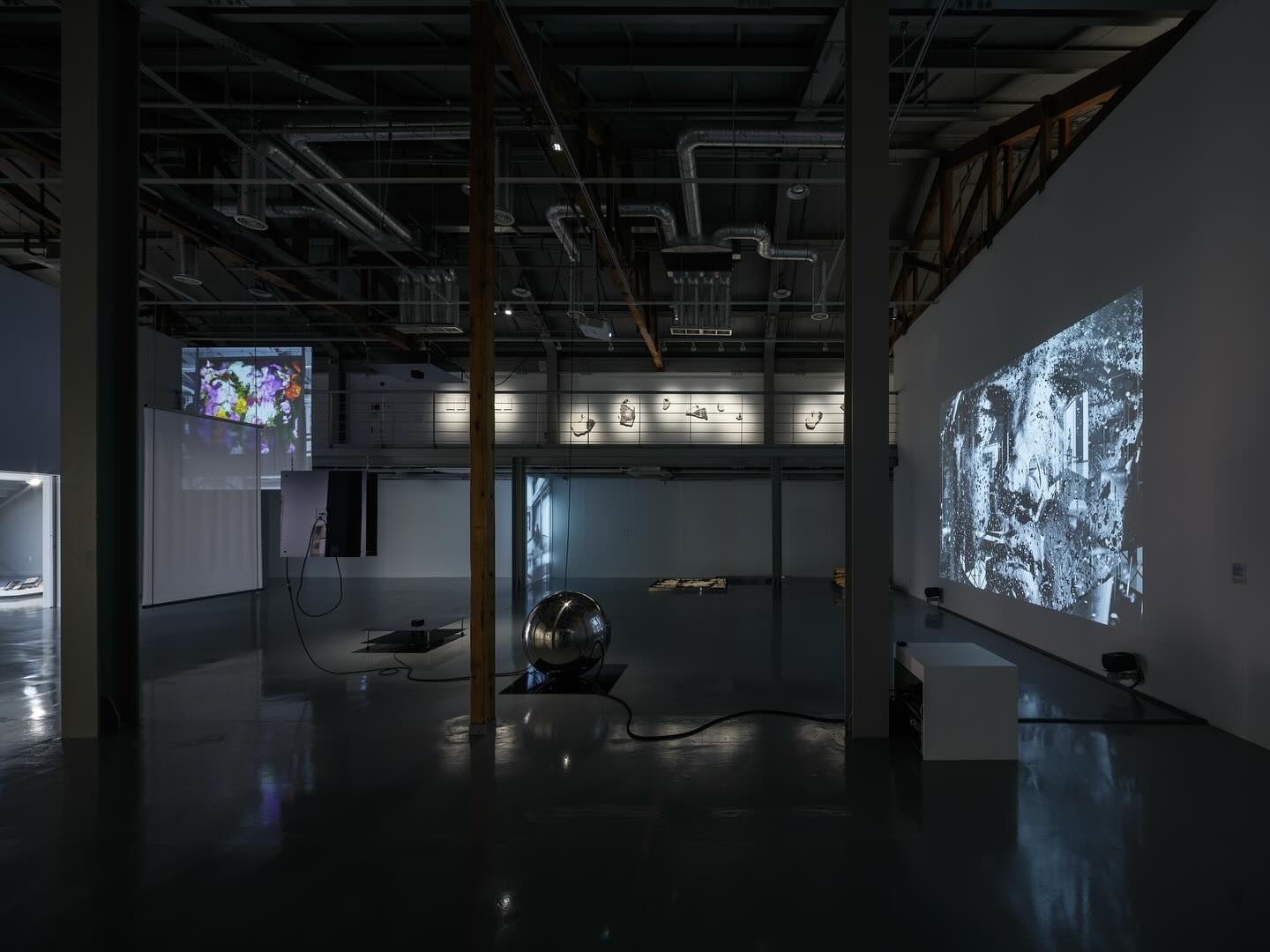
phyper, from 《Disappearing and Appearing》, Gyeonggi Museum of Modern Art installation view, 2024 © GRAYCODE, jiiiiin

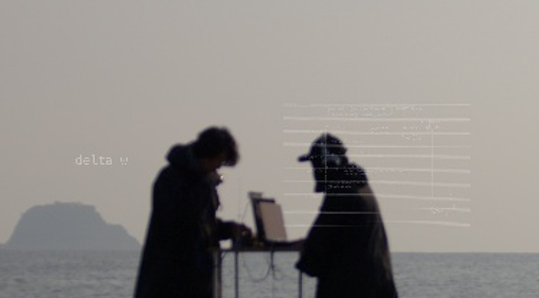
Beginning with wave forecast in 2022, GRAYCODE, jiiiiin began experimenting with a different approach to production. At Beophwan Port in Seogwipo—on land revealed at the far edge as the sea recedes—they track data generated by nature. Taking 0.05 seconds as a base unit, they record as numerical data the variations in vibration produced at the moment when swells, driven by fierce winds, crest and strike the black basalt rocks. To attempt an installation that is possible without electricity, the artists transmit this change-data as an analog radio frequency signal.

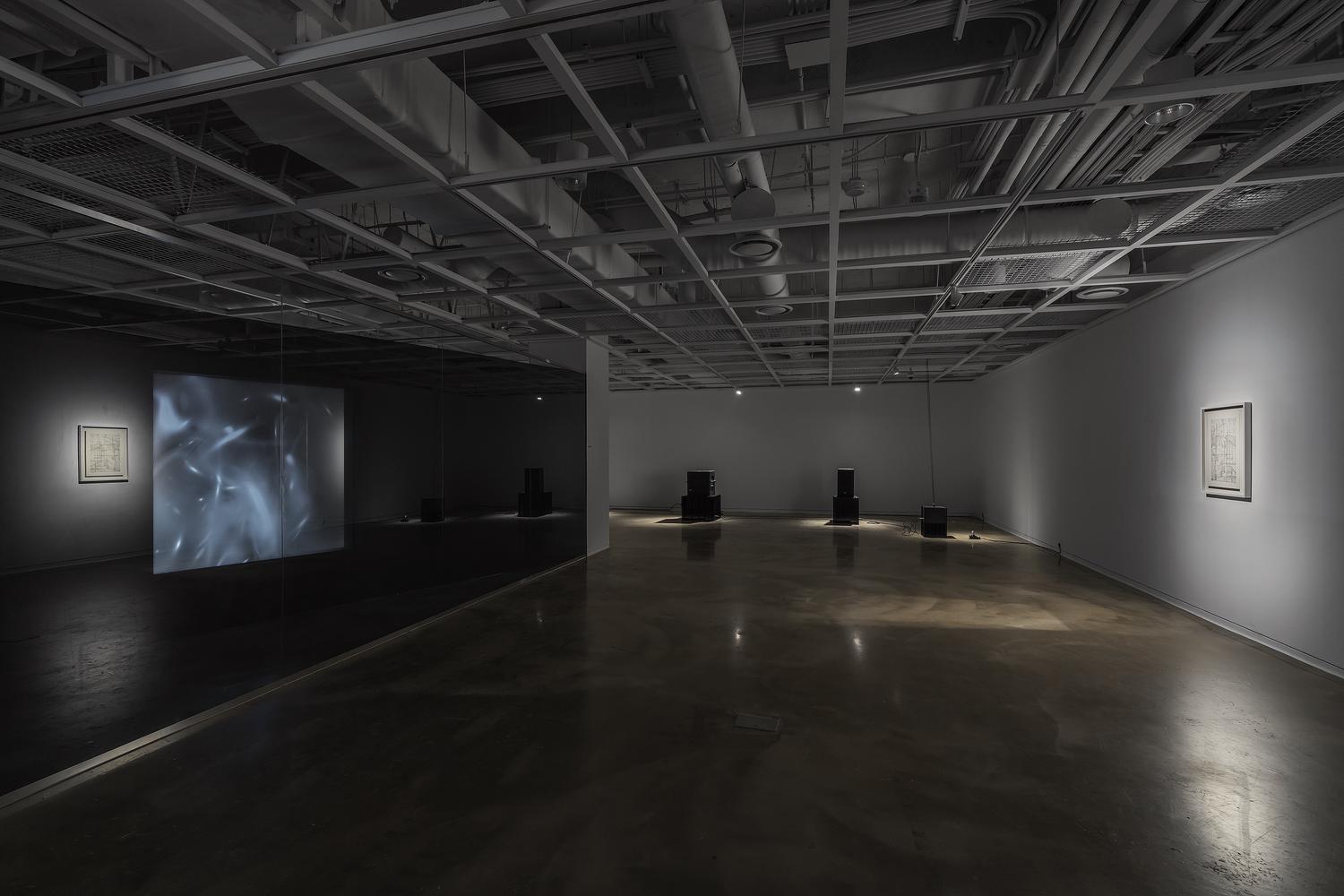
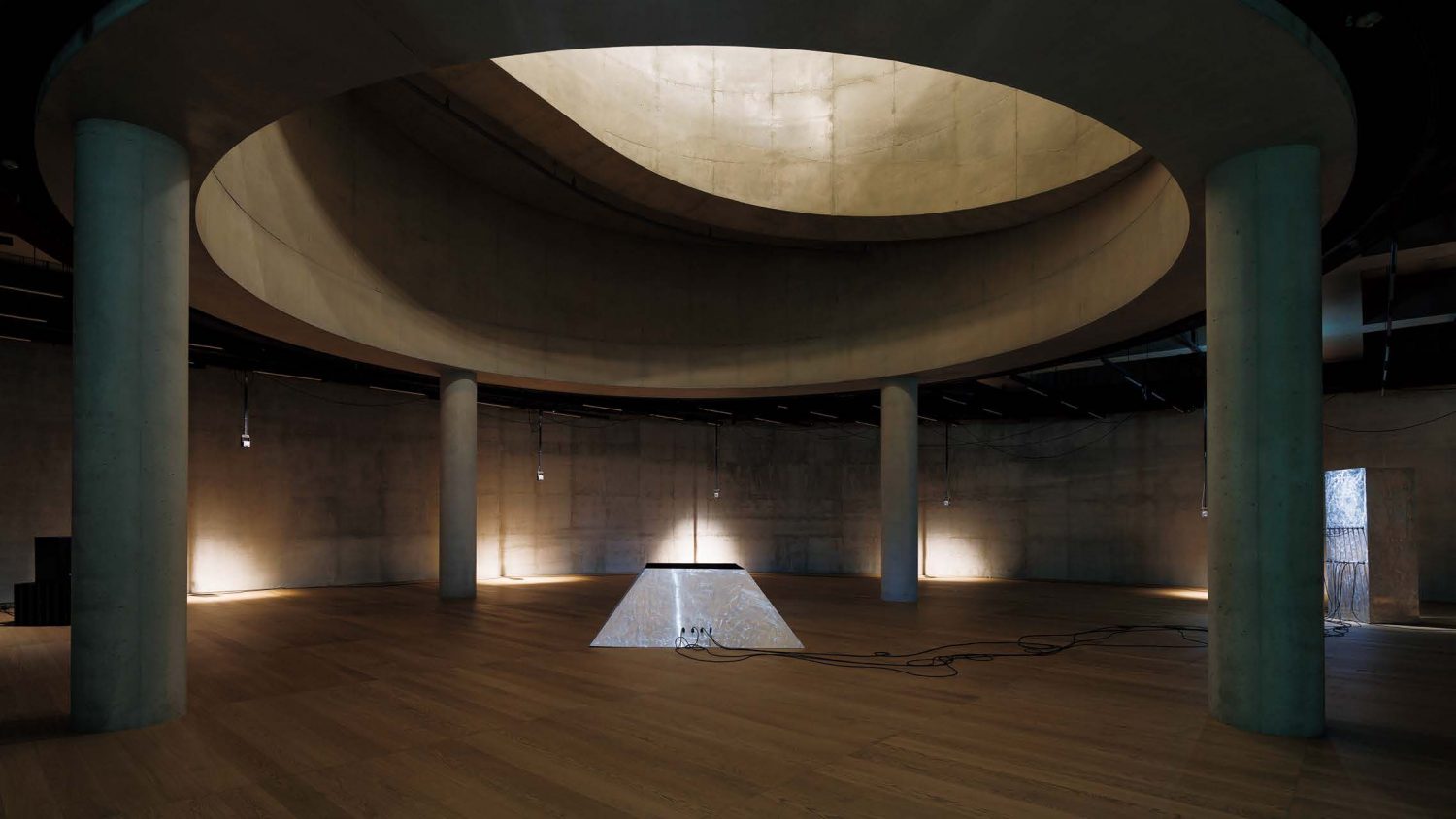
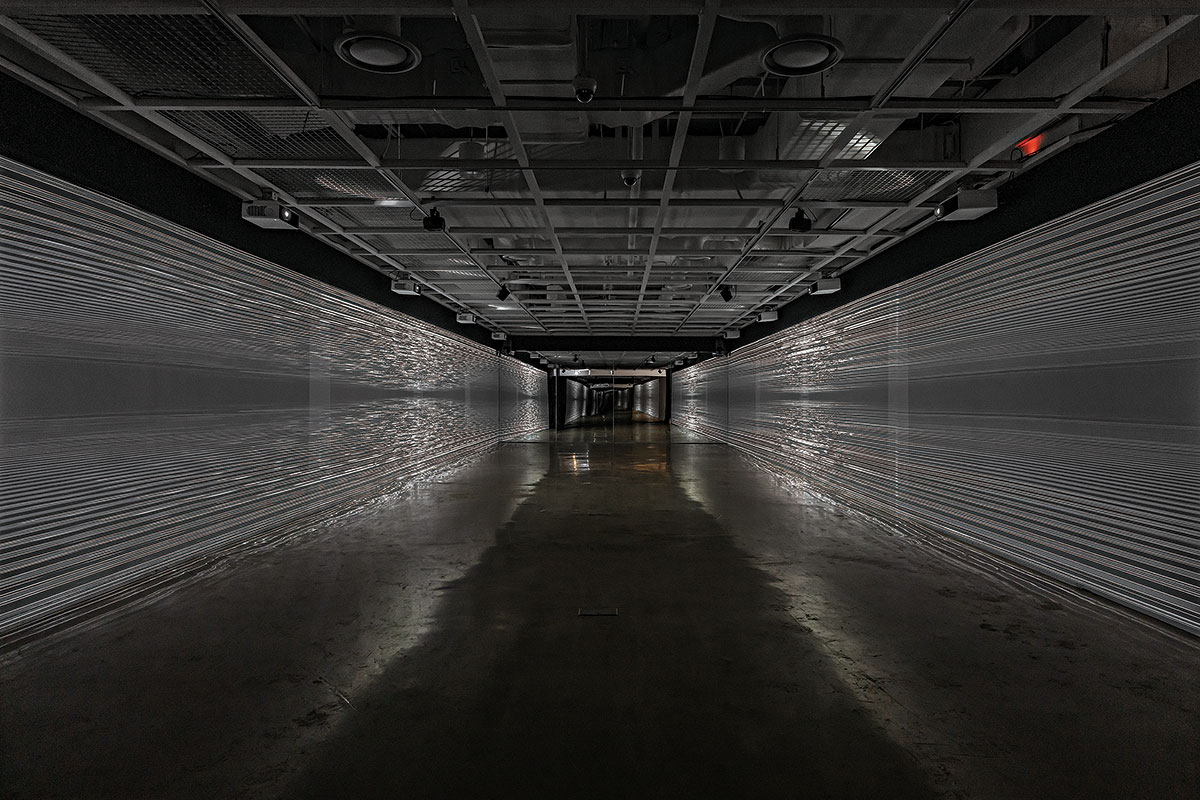
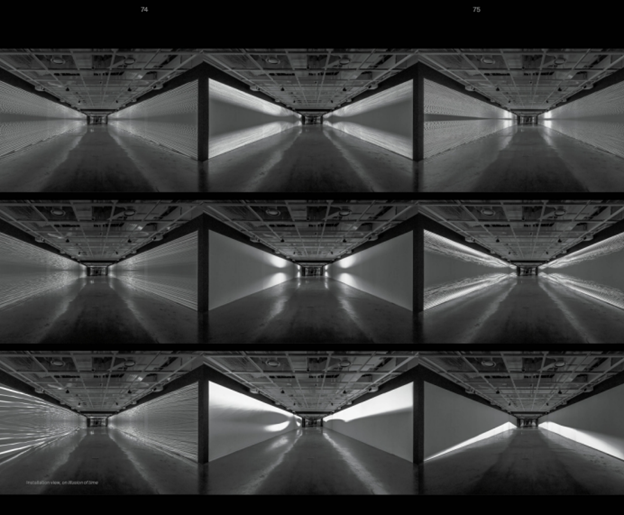
This work then continued in 2023 as the SONGEUN exhibition 《∆w (delta w)》. In physics, Δ (delta) denotes the amount of change in a variable; Δw signifies the amount of change in a wave. It is a project that re-enacts, through the architectural characteristics of the exhibition space, data collected eleven months earlier at Beophwan Port. As sound waves vibrate the concrete walls, the sea of Jeju is summoned once more to touch the audience’s bodies. Within the normative ideology of the museum and the given physical architecture, the artists re-quantify nature’s irregular, random phenomena into numbers and reprocess them into an artistic form, proposing an experience that returns to the viewer.

If the duo’s first work #include red understood vision and hearing as vibration and expressed the lowest frequencies of sound and light perceptible to humans, then in 2024 the work phyper develops red—the mediating element—more delicately. In the exhibition space, reds of varying saturation emit light across 150-cm-scale glass panes, ranging from lower-wavelength reds to longer-wavelength reds. The differing vibrations of sound waves and visible light are installed together, linked by audio cables and optical fiber. Analog sound data are again converted into digital data and output through fiber-optic cable. It becomes “a state in which light and sound as vibration, and light and sound as signal, are gathered into a single unit.”

The artists say that red recalled their experiences diving in the sea. The deeper one dives, the less the sun’s light reaches, and red is lost. The disappearance of red prompts them to reconsider the experience of red touching the body. This returns us to the sea of wave forecast. Vibration mediated by water comes, within the exhibition space, to be felt as an experience that touches the viewer’s body.


《∆W》 SONGEUN installation view, 2023 © GRAYCODE, jiiiiin
References