In
this day and age, it remains rare to find an exhibition that focuses on sounds,
the concept of sound, and auditory experiences. Despite a torrent of new genres
and media with names attached to prefixes such as “multi-” or “hybrid-,” most
ultimately produce visual works. In artwork created for exhibitions, sound is
often regarded as a kind of a supplementary effect that aids the visual experience or entirely sidelined to meaningless background music echoing in the
exhibition space; even within the domain of art, many of us are unaware of the
existence and depth of the canyon
that has formed between the two grand plateaus of music and art.
This
is reminiscent of the early history of photography, when it was often
misinterpreted through the language of paintings; in the same vein, sound art
can be misinterpreted through the lens of other genres of art, namely music and
performing arts. At Expo 58, held in Brussels in 1958, the Philips Pavilion
was presented by architect
Le Corbusier and composers Iannis Xenakis and Edgard Varèse, who attempted the
spatialization of sound into an audio space, while David Tudor sought to
transform the exhibition space into a completely new concept of space through
music in his ‘Rainforest’ series. Although these attempts date back to more
than half a century ago, we remain unfamiliar with such forms of art.
Meanwhile,
immersive art, which is based on creating an immersive environment, is rising
towards its zenith due to the recent development and popularization of display
and graphics technology, staging works that present intense audiovisual
experiences that traverse between reality and the virtual world to overload the
body and senses of viewers with stimulation. This excess of spectacle, however,
presents a slippery descent towards the vanishing point in one-point
perspective that makes us forget the sense of ourselves as individuals placed in hic et nunc (the here
and now), or in other words, existence in time and space.
This anemic
appreciation of sound art as a genre
and the burnout caused by overexposure to extravagant
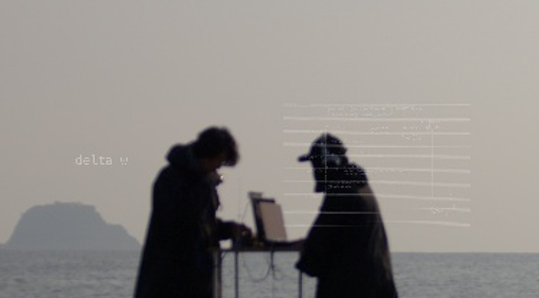
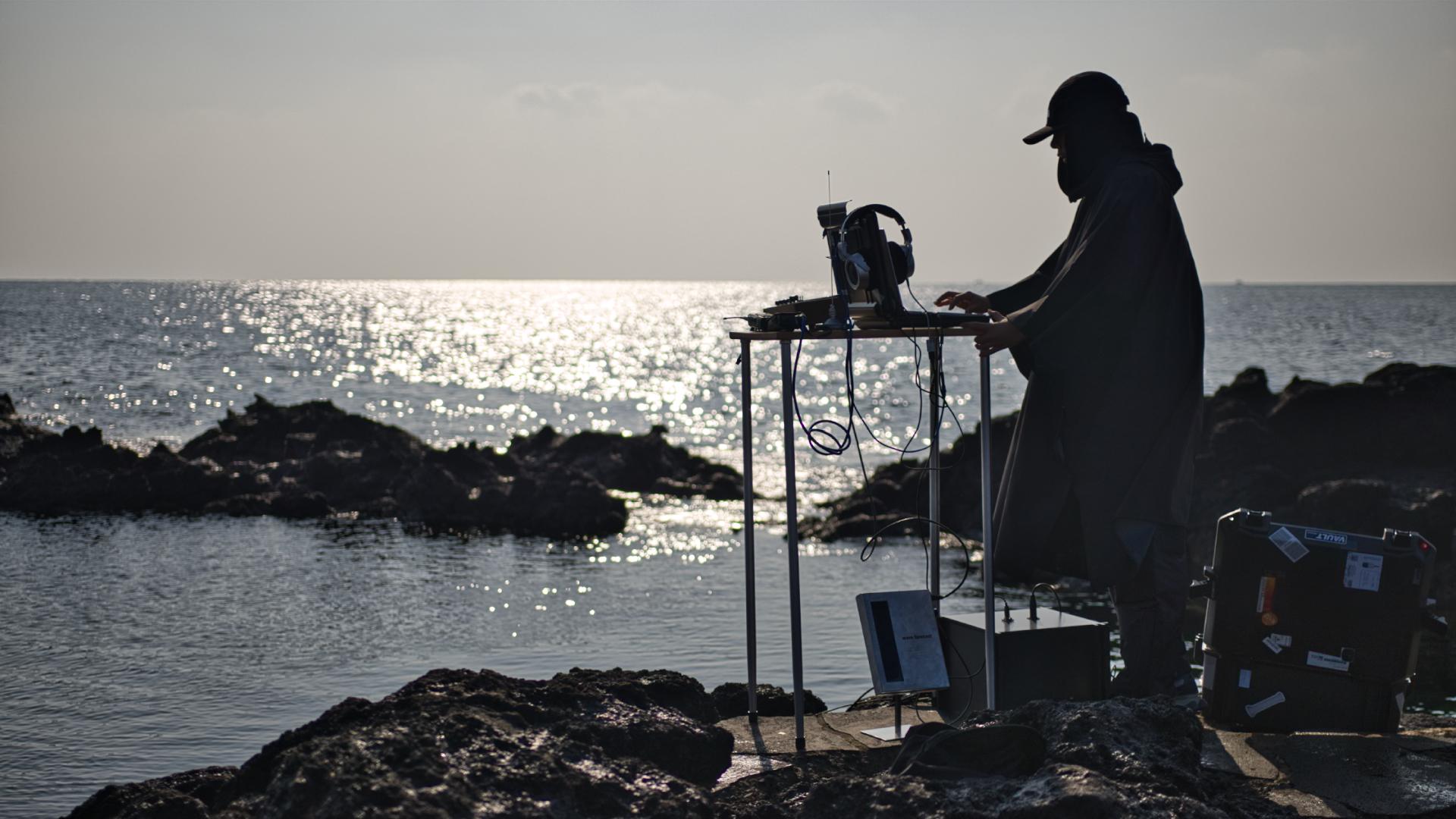
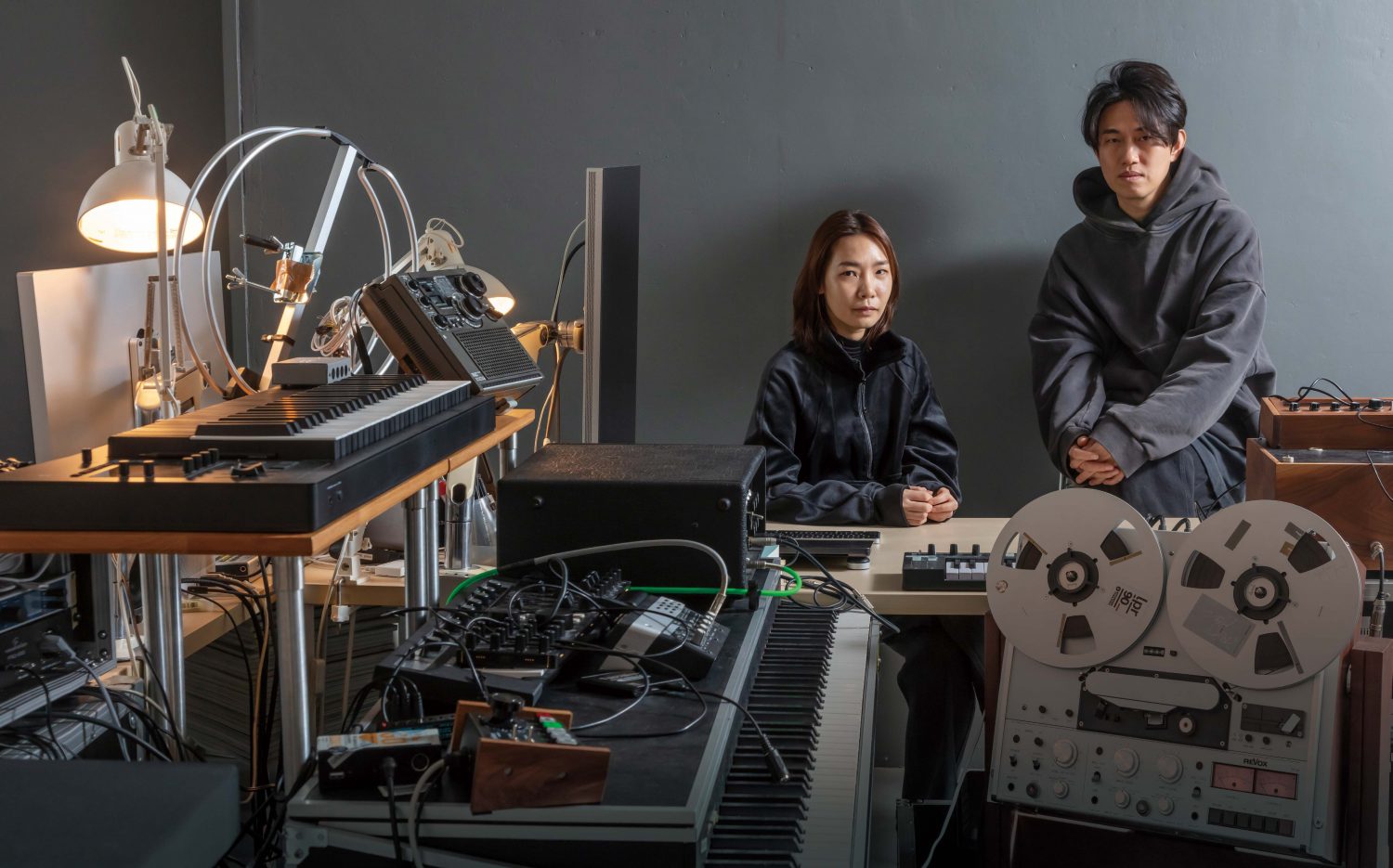
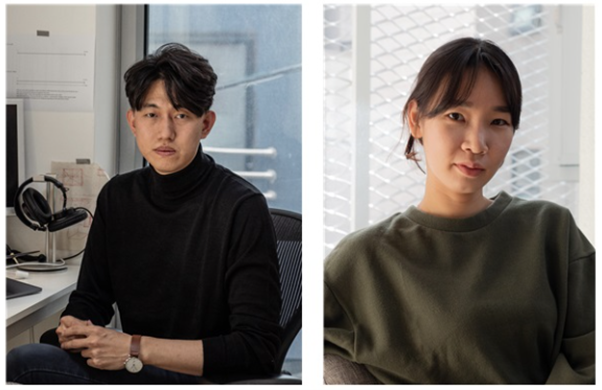
spectacles unsurprisingly contribute to our unfamiliarity with the space created by GRAYCODE and
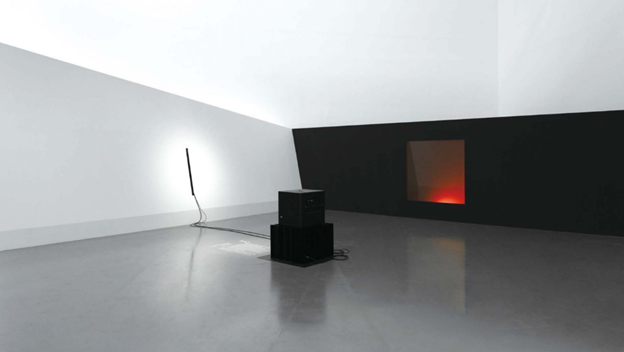
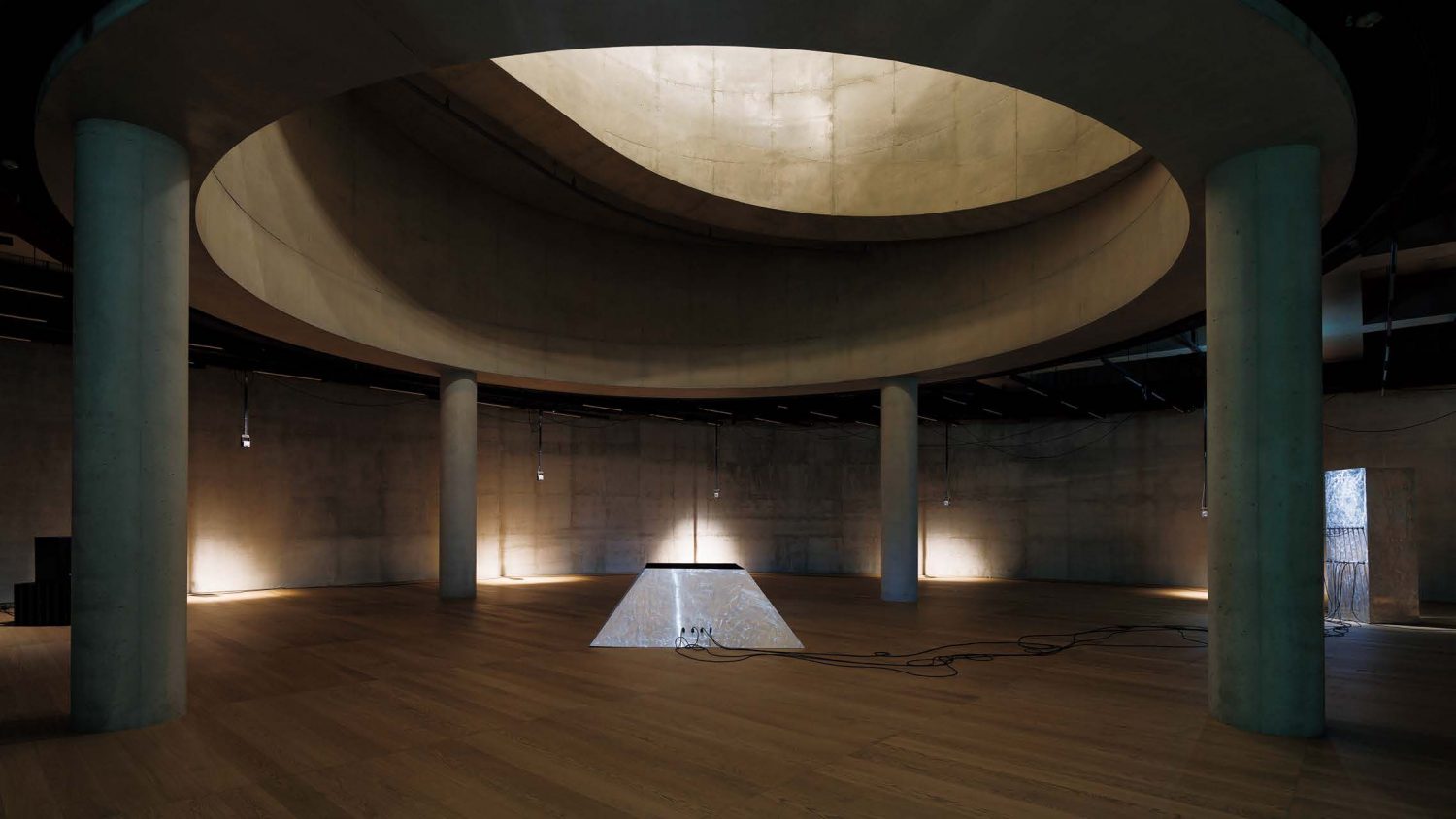
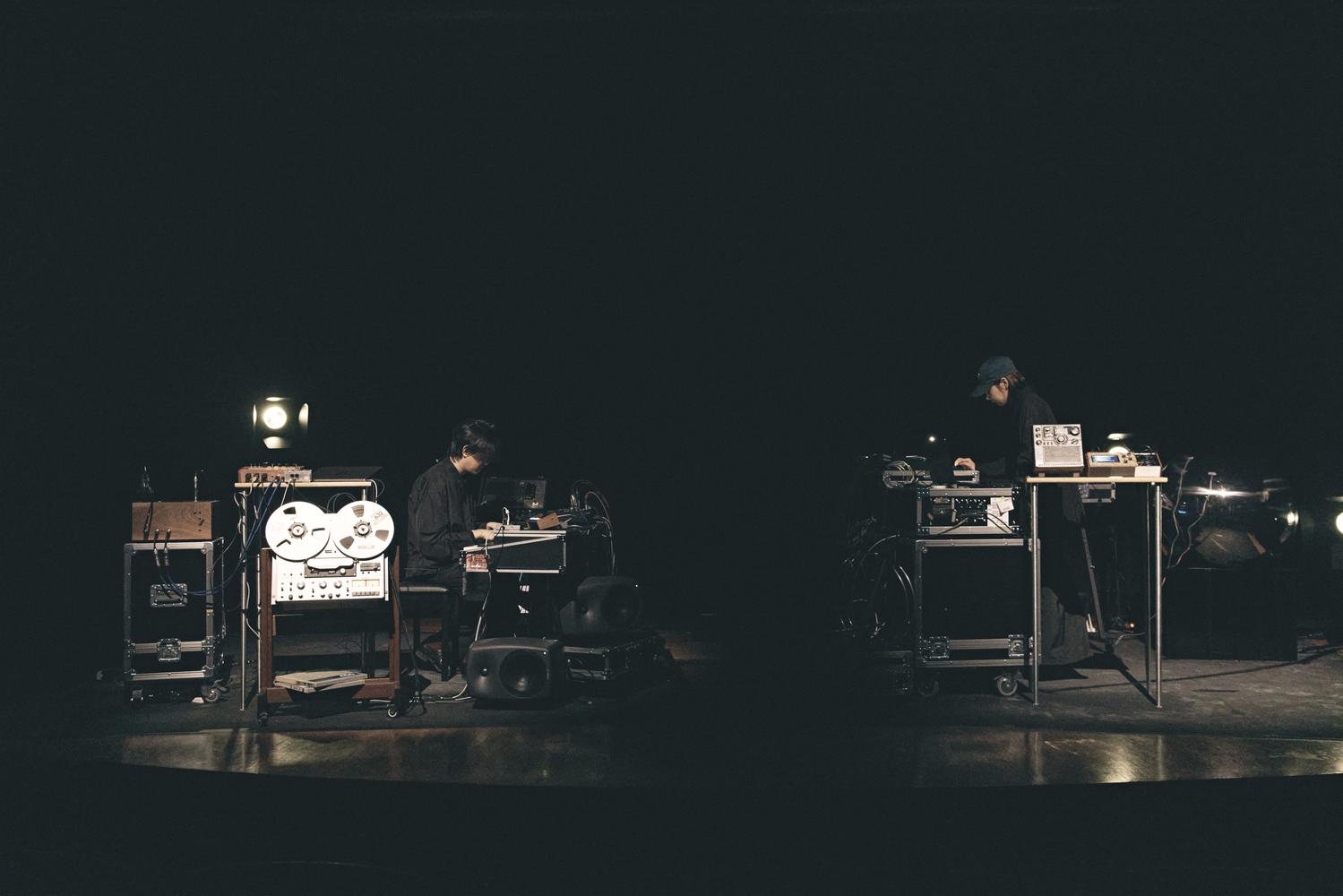
jiiiiin in 《Data Composition》, which is filled with sounds that physically react
to each other and invite us to sense such sounds
with our own body. Aside
from such obstacles, however, this unfamiliarity may also be rooted in
the essence of the creative practice undertaken by the artists. It is at this point that I would like to discuss the
said essence using three major concepts: abstractness, non- objectivity, and
affectivity.
In
monochrome paintings, we perceive depth through the plane of the canvas, which
seems to contain nothing, by experiencing pure colors— colors freed from form
and style. In the same way, the sound
in GRAYCODE and jiiiiin’s works—the oscillation of low sine waves without overtones—allows us to engage in the act of
listening in the meta sense, thereby “listening to the sound by sensing the
sound in its purest state,” which
represents the abstractness of their art. Here, listening is not simply the
perception of the mere process of sounds assisting a certain narrative or musical form, but rather the
experience of pure time and space that locates the audience at the venue of the
manifestation of the event of listening
with the body, which evokes the
sense of hic et nunc.
Such place is revealed by the abstract and
geometrical waves in the graph of y=sin(x) that results in the reverberation of
the air within the time and space, and corresponds to a world where abstract
digital information is converted into physical
matter and manifests itself as analogue physical vibrations, where what is given
(datum1)
becomes a piece of fact (factum). This world includes complex entanglements
involving noise and entropy, as non-matter is converted and transmitted as a physical sign. It
also creates countless overlaps between the linear and the non-linear and the
outside and the inside, causing the irreproducible illusion of time internally
through the circuits of an oscillator, externally through the vibrations of the
viewer’s eardrums, and the air, humidity, temperature, and properties of the
walls at the place where the transmission is taking place. Through this radical
method, GRAYCODE and jiiiiin construct the space of listening in an overlap
with the exhibition space within the
body and the space through the utilization of sound. Ultimately, the space
envisioned by the artists paradoxically appear to be empty.
Just
as viewers perceive the work of James Turrell as an empty space filled with light through
the act of seeing the light, the space of GRAYCODE and jiiiiin’s exhibition
is filled with invisible waves. This represents non-objectivity,
one of the core elements of their creative work. Here, non-objectivity
indicates not the non- objective characteristic of the works, but the state of
existing as objects that are separate from the viewers, and not physical
objects existing under the premise that they would always remain there, but the
concept of volatile time that expresses a certain sense of perpetuity. In this
regard, while our gaze remains static within the exhibition place, our minds
become filled with numerous images and sounds.
The paradoxically non-objective sense of
perpetuity and the concept of volatile time are also linked to the affectivity of the works in communicating
with our body. Unlike emotion, which is focused on shifting moods, affectivity
concerns affection, the qualitative changes of our body. In this sense, the
sound of Data Composition presents us with the bodily
experience of direct,
physical, and tactile
sounds through the lack of contact with the works. This
does not refer to the obvious innate properties of sound but rather a sonic
actant through which the sound in the exhibition communicates with our body as
the subject of an act. Here lies the reason why GRAYCODE and jiiiiin pursue the
method of exhibitions rather than performances.
The encounter between
vibrations of 30 Hz and 40 Hz results in
sounds whose constructive and destructive interference among each
other generates waves. The amplification
and diminution of these waves,
in turn, create beats whose wavelength extends over the distance of
approximately 34 meters, depending on the conditions of the space such as
temperature and humidity. This is because two exceedingly simple oscillations composed
of two sine waves create an
unfathomably complex sound event through changes in linear and exponential
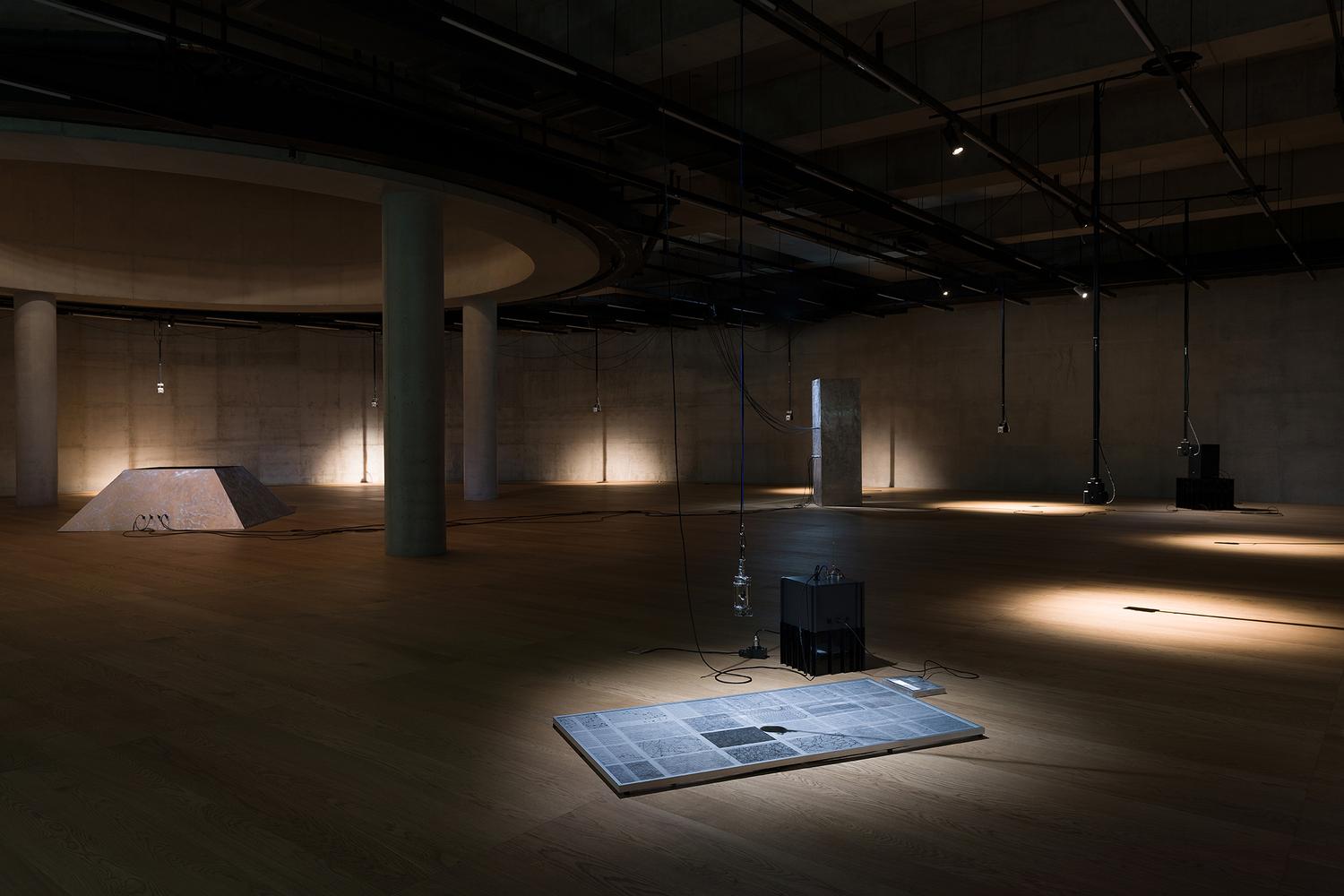
frequencies. In addition to this, the reverberations off the walls of the
gallery, according to the artists’ plan accounting for the position
of viewers and the structure of the venue, allow viewers to walk
through or stand still at a certain point amidst the long waves and actually
sense the sound with their body as
though feeling the radiation of heat.
This phenomenon does not simply involve
listening to the sound through our ears, but with our entire body— through the
interior organs and the skin. In this process, the artists guide us to perceive the illusion of time and space without
the illusion of extravagant spectacles, striving to create a catalyst of
change in our body for us to feel as if we are submerged deep underwater or in
the weightlessness of space through an abstract sonic scape that exists as a
landscape of sound that we cannot
hear with headphones or speakers in our everyday lives. Such experience of
being placed in the soundscape, which feels unfamiliar and even unpleasant at
times, is perhaps the intended result of the aesthetic practice of these young
emerging artists whose work originates from the deep canyon between the realms
of music and art. As such, we must be especially careful while entering the terrain to which they
invite us.
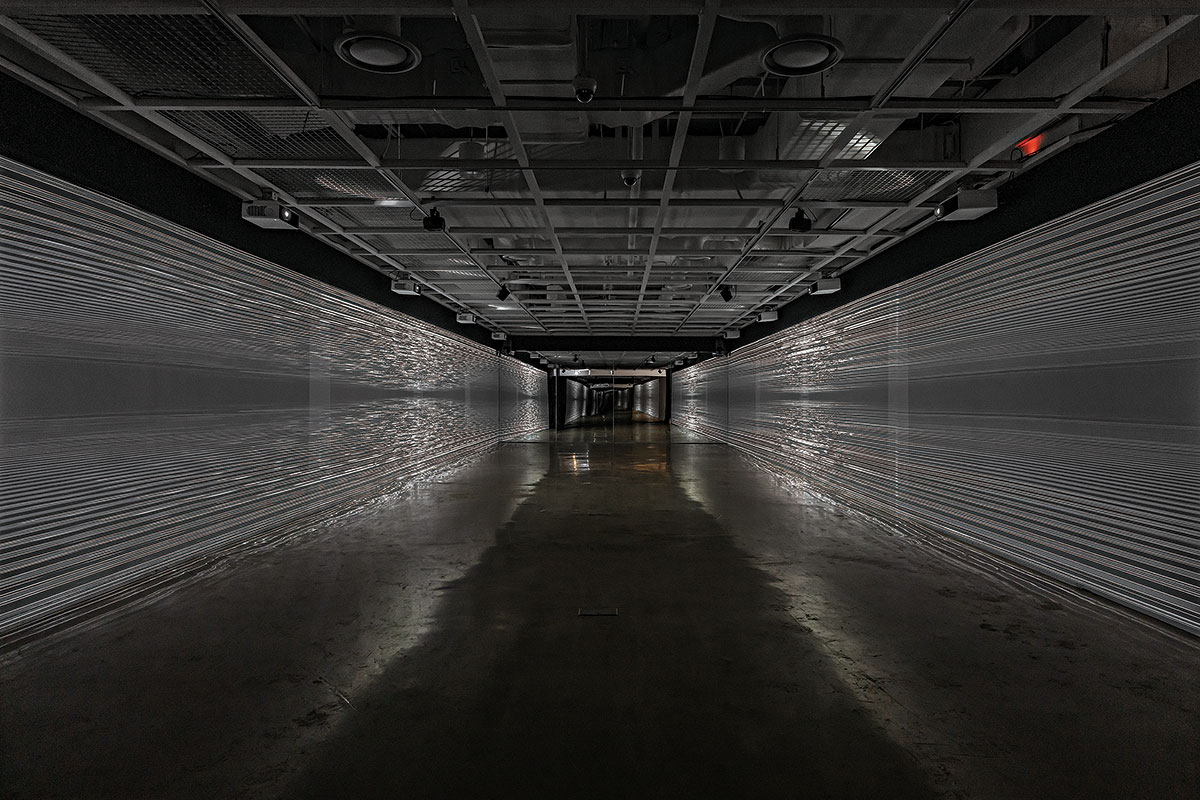
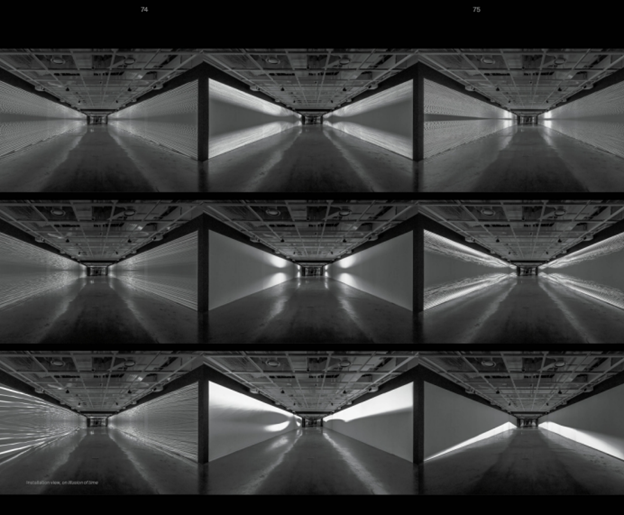
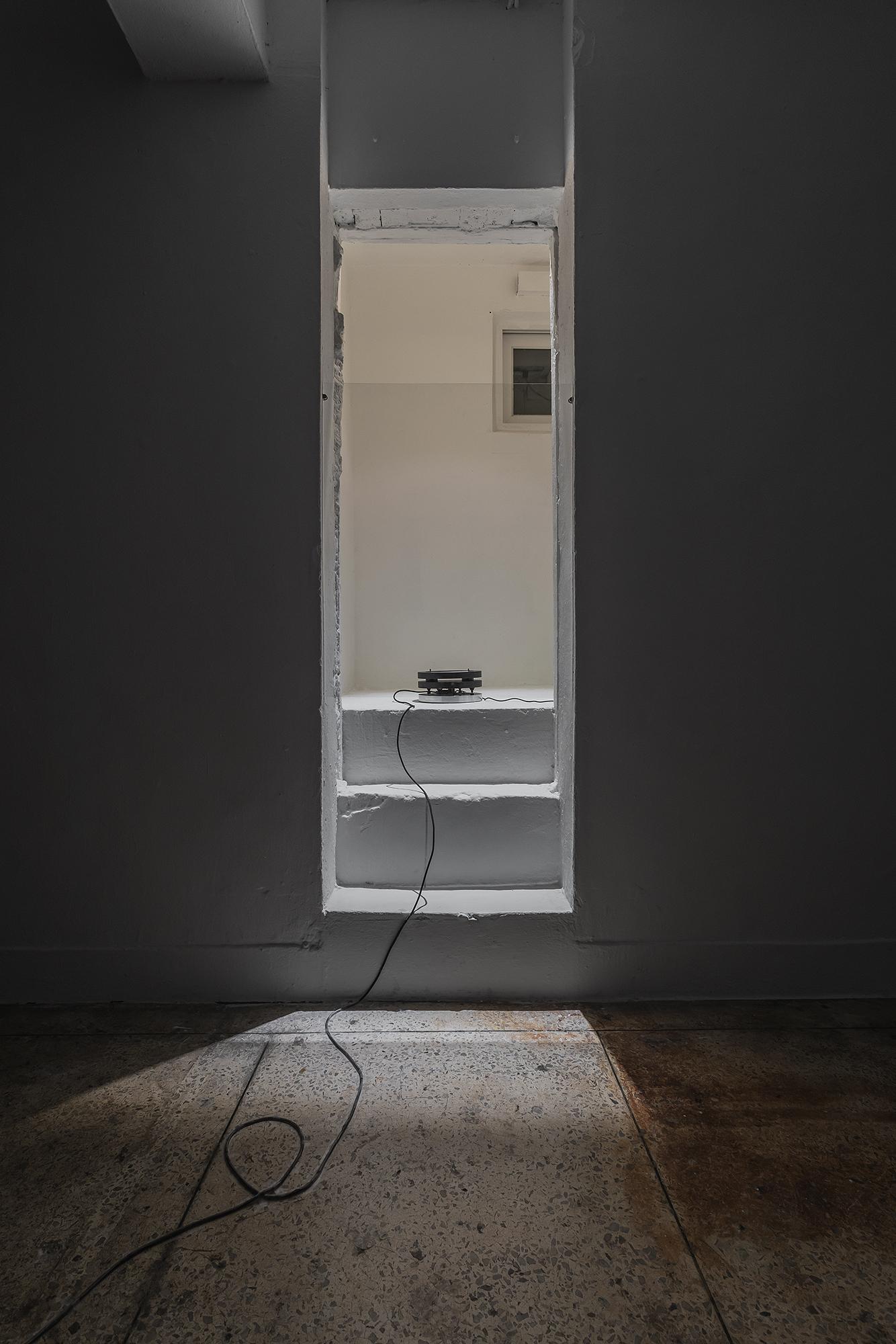
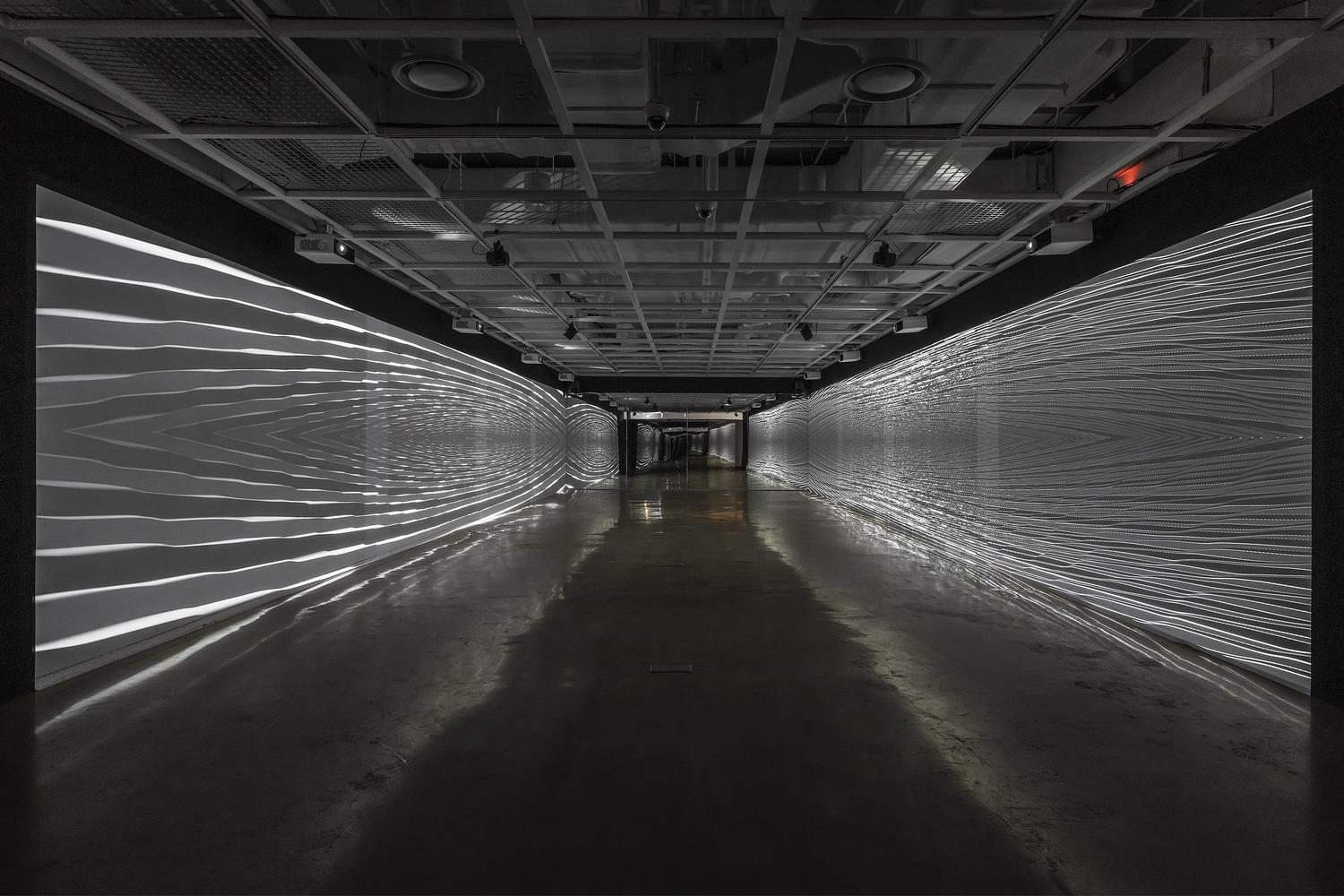
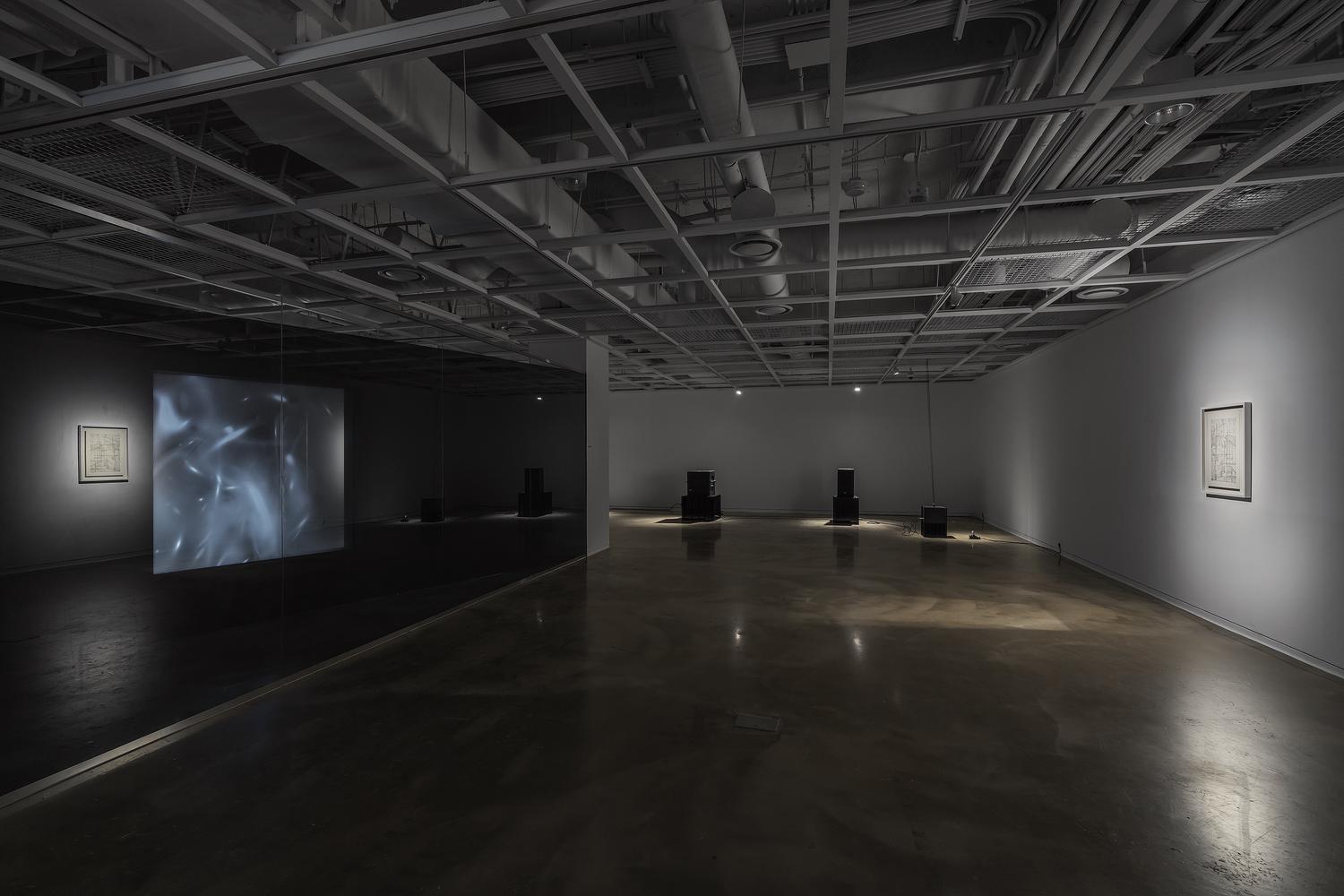
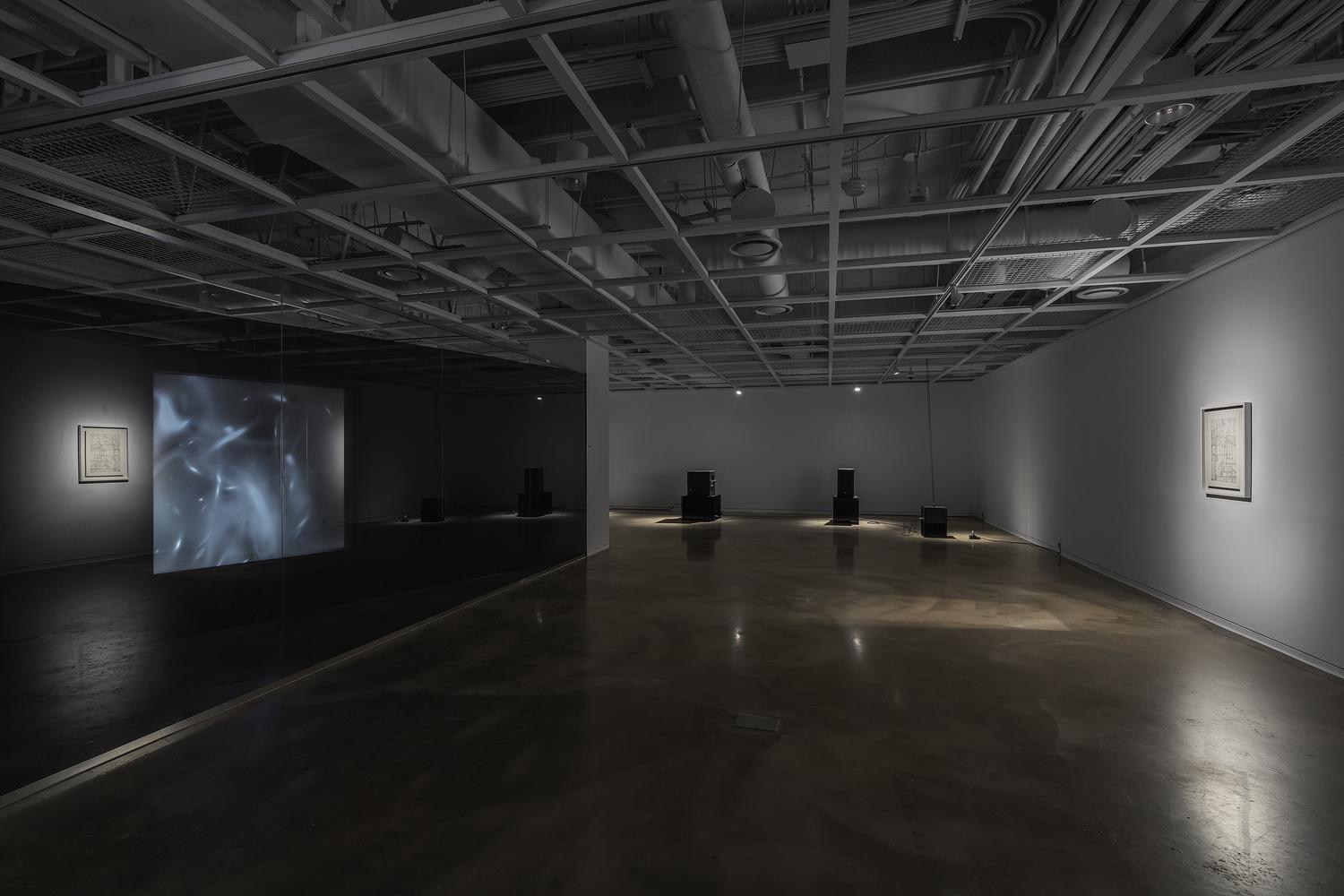
Two
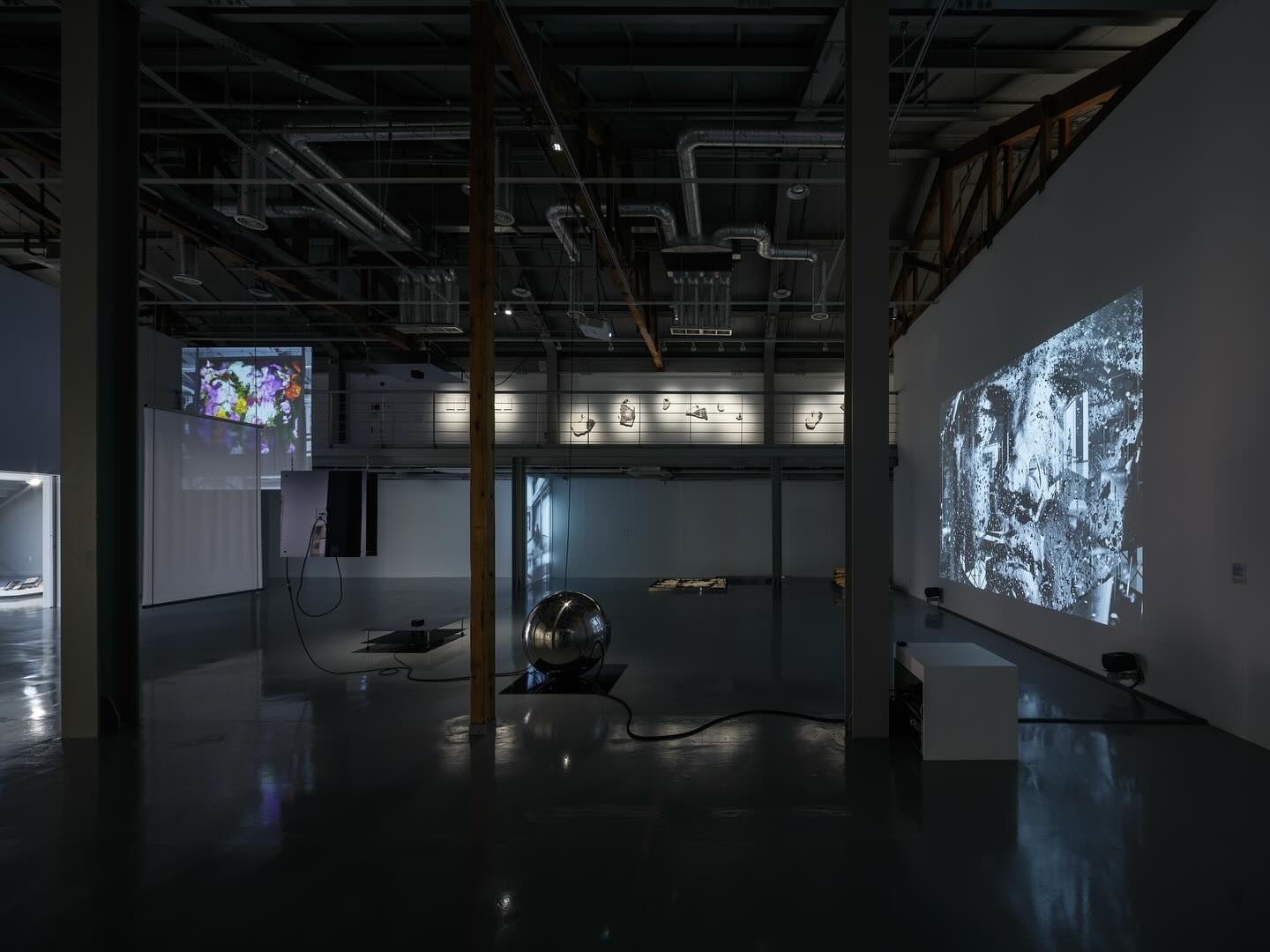
works stand out in the exhibition: sound
for on illusion of time,
where a speaker system is set up in a hallway-like space filled with sound, and
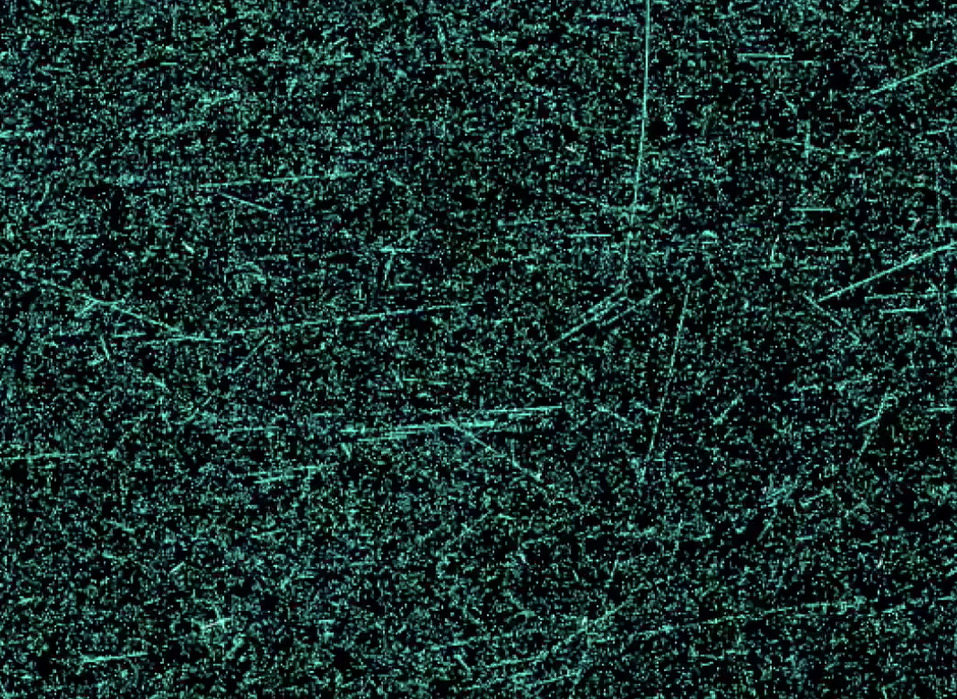
on illusion of time, where eight projections are simultaneously displayed in sync
with the aforementioned sound piece to create Moiré patterns of countless black
and white lines resembling the beats of a sound and to present a virtual
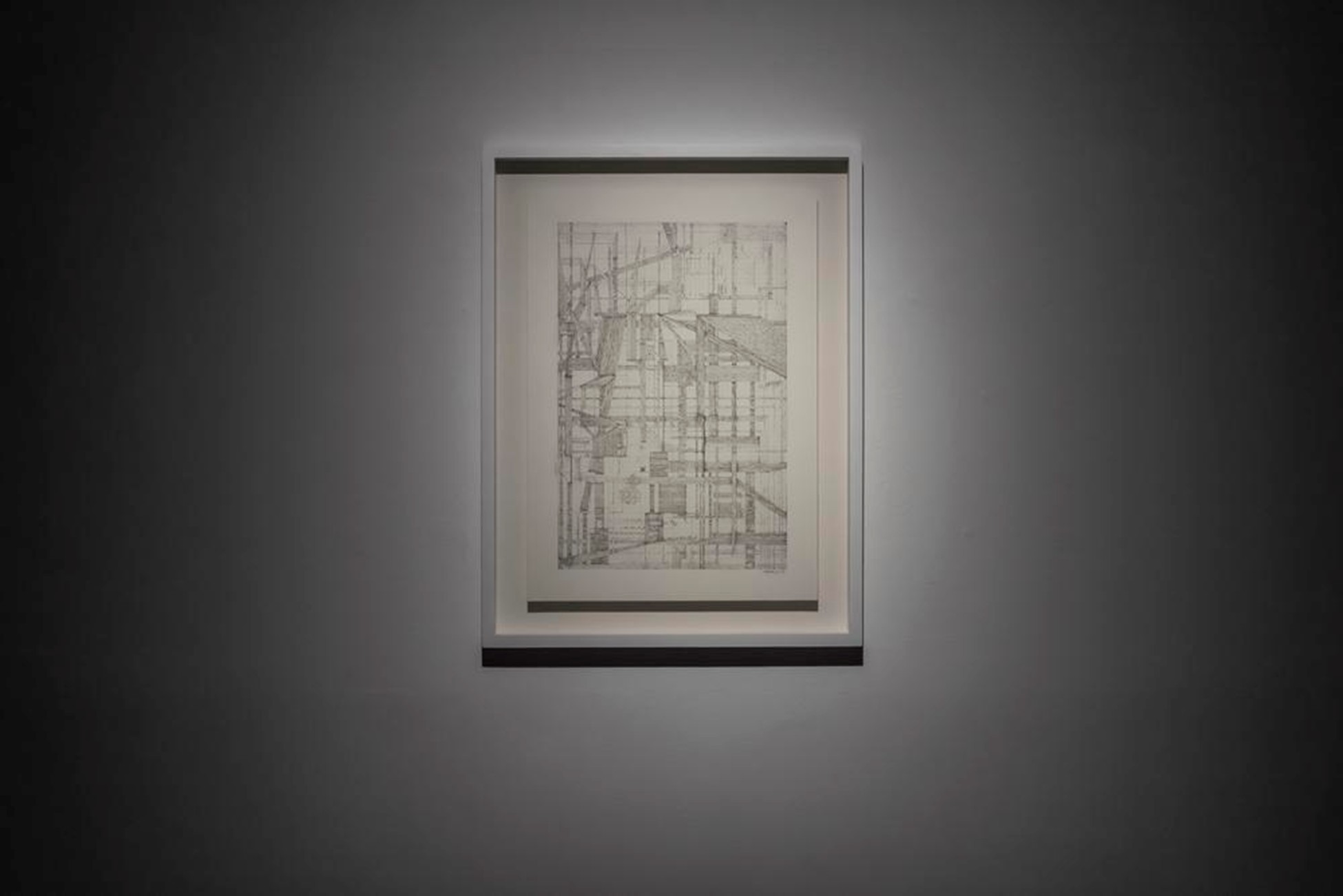
horizon comprised by data. Further demonstrating the artists’ attempt to create
abstract sound art, the other works on display include drawings and a work consisting
of images on multiple layers of transparent acrylic plates that is reminiscent of Fontana Mix
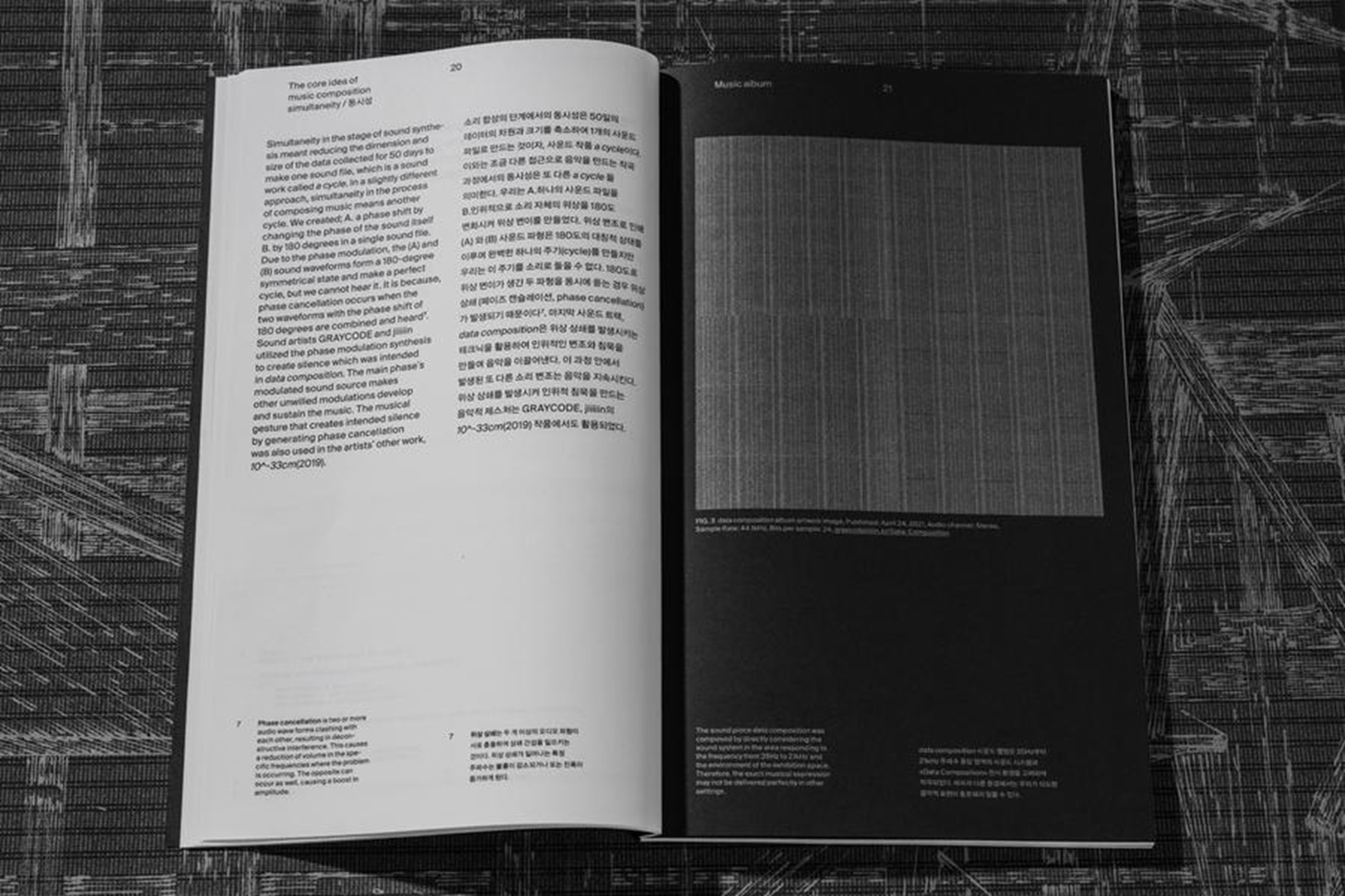
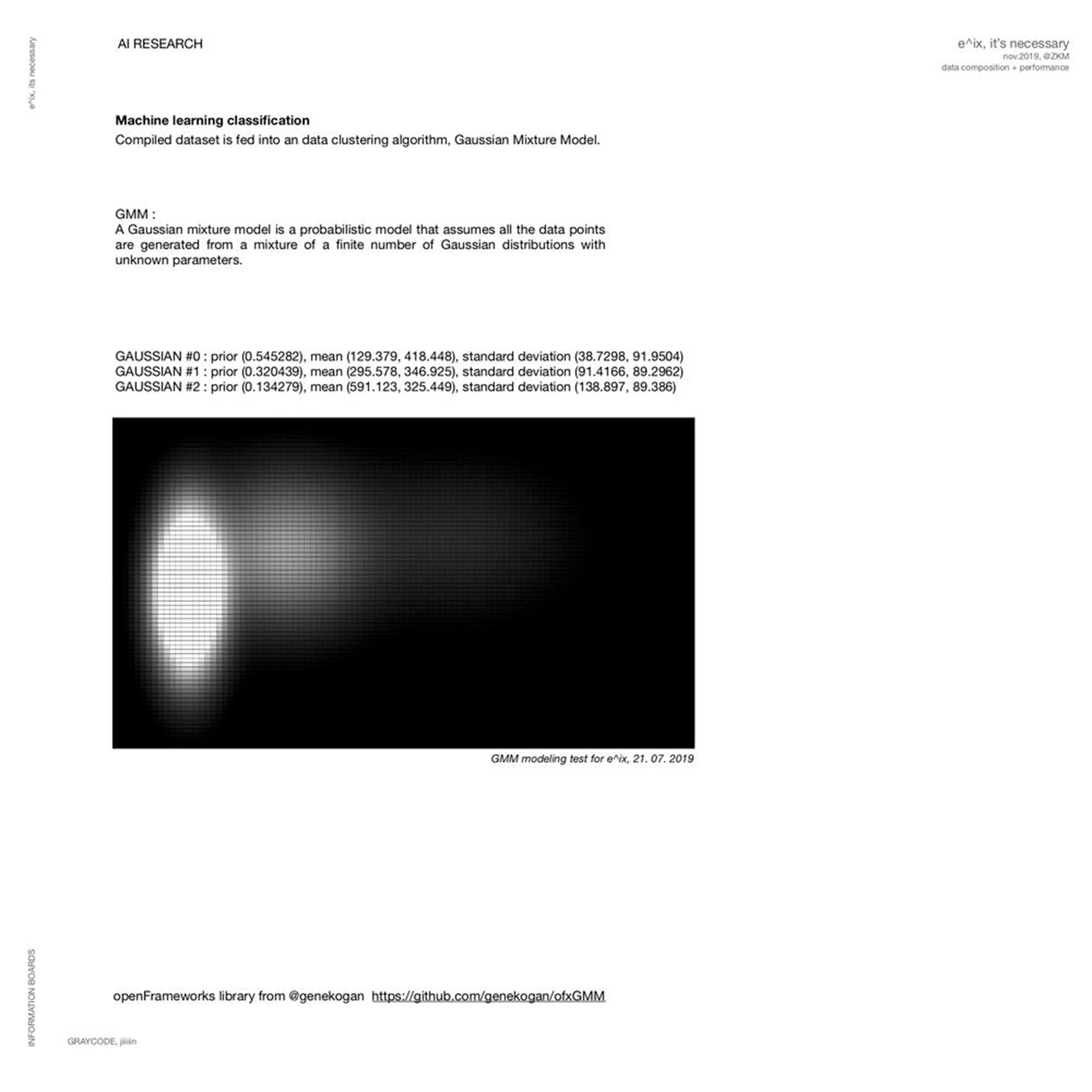
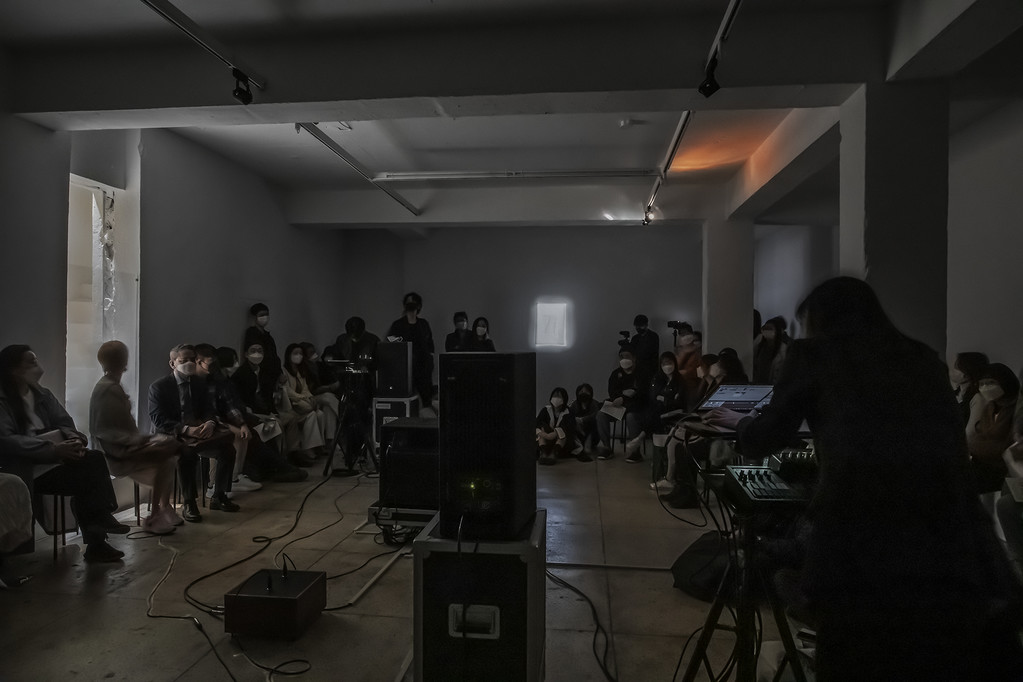
by John Cage. Almost notably, the exhibition is followed by the release of a
new sound piece (Data Composition) that will be created using the time data collected
from the timestamps of visitors to the online and offline exhibition spaces. In this respect,《Data Composition》 constitutes a space of active detection as well a space where
data from multiple open dimensions are collected and
saved.