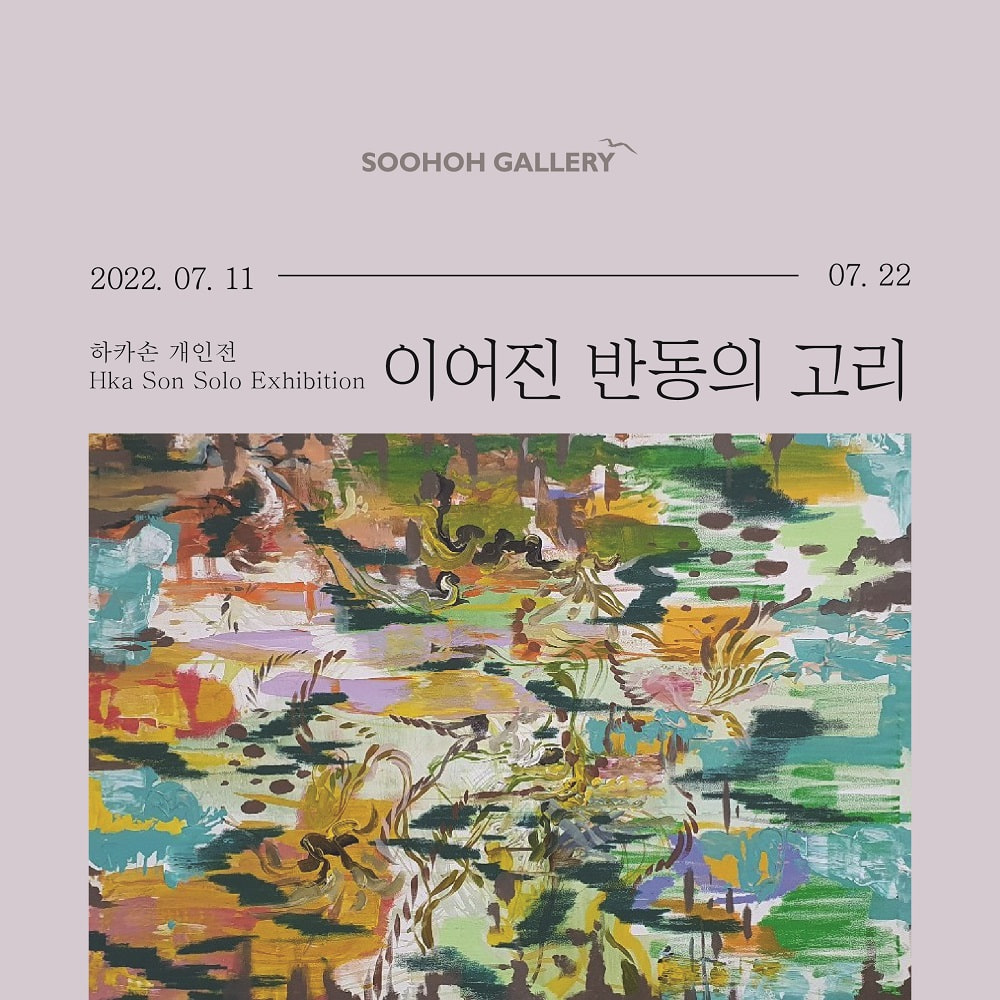
It
seems impossible to describe Hkason's work in clear language. In fact, a clear
interpretation might be at odds with the intent of his work. The artist, who
studied painting in the United States, film and media arts in Germany, and
fashion in Belgium, is said to have become interested in the evolution and
expansion of the human body after being drawn to Lao Tzu's nothingness and
Bergson's theory of repetition/continuity.(Artist's note) The artist's work,
which crosses various media, is strongly characterized by its transdisciplinary
and transmedia nature, crossing the boundaries between art and non-art. For
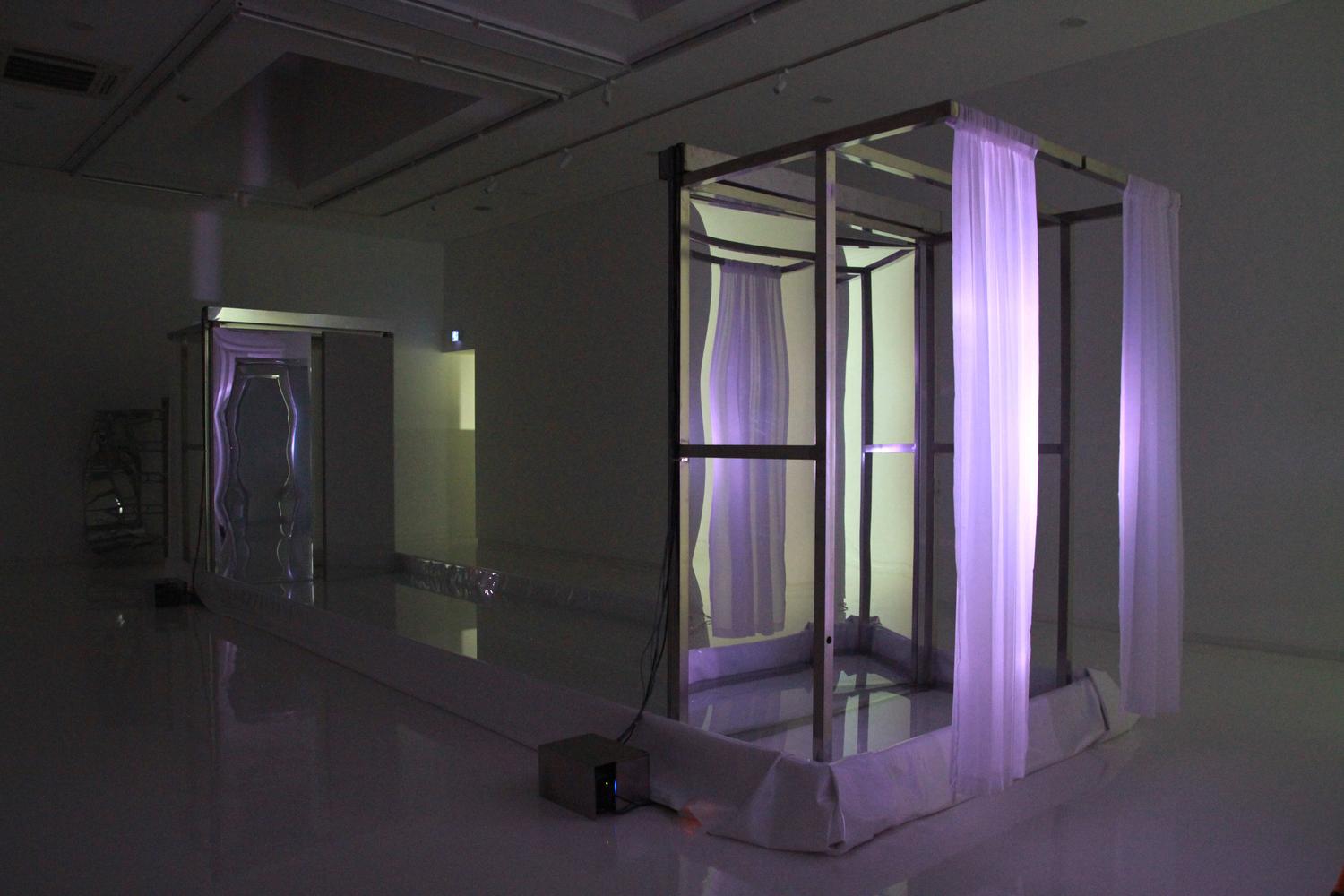
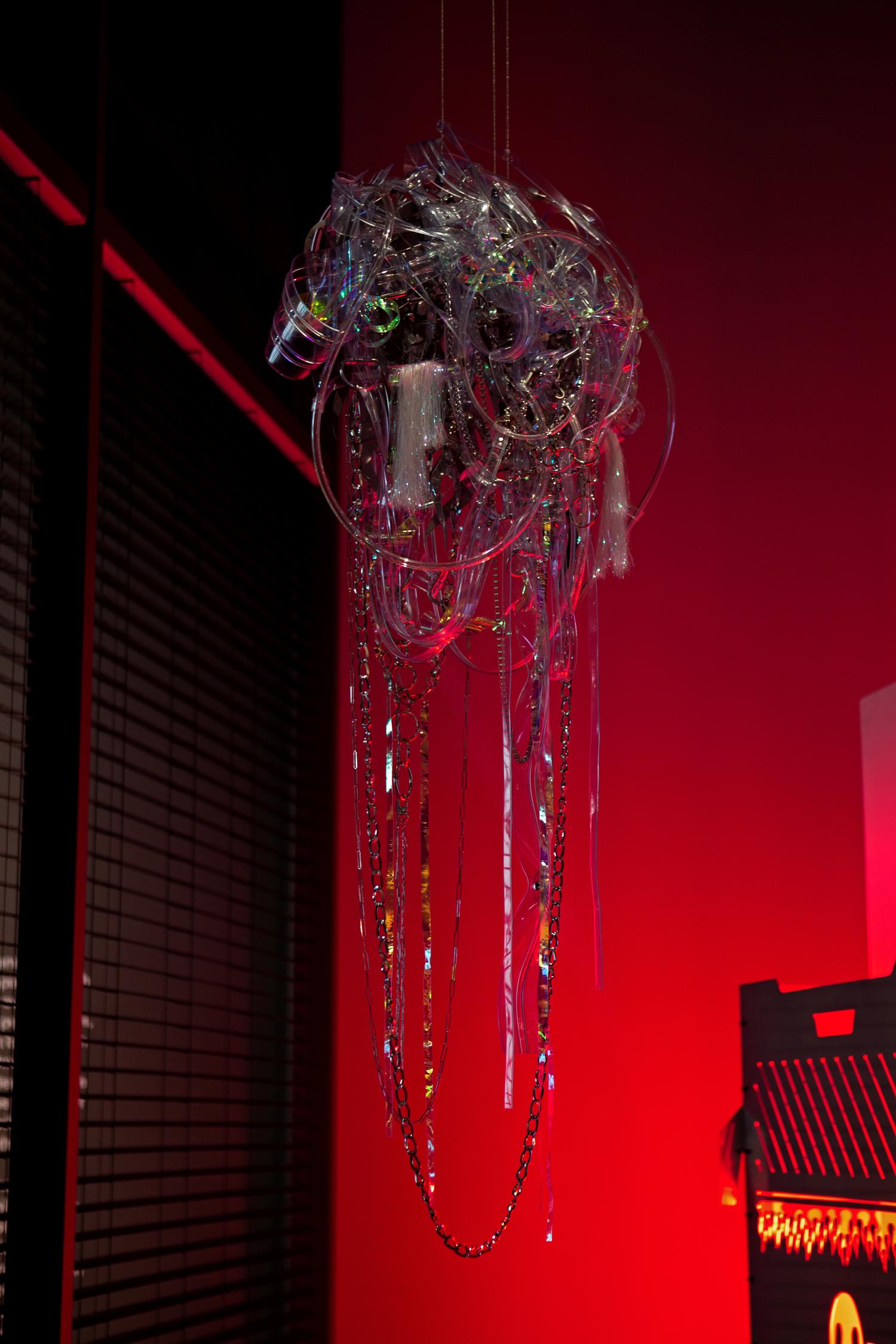
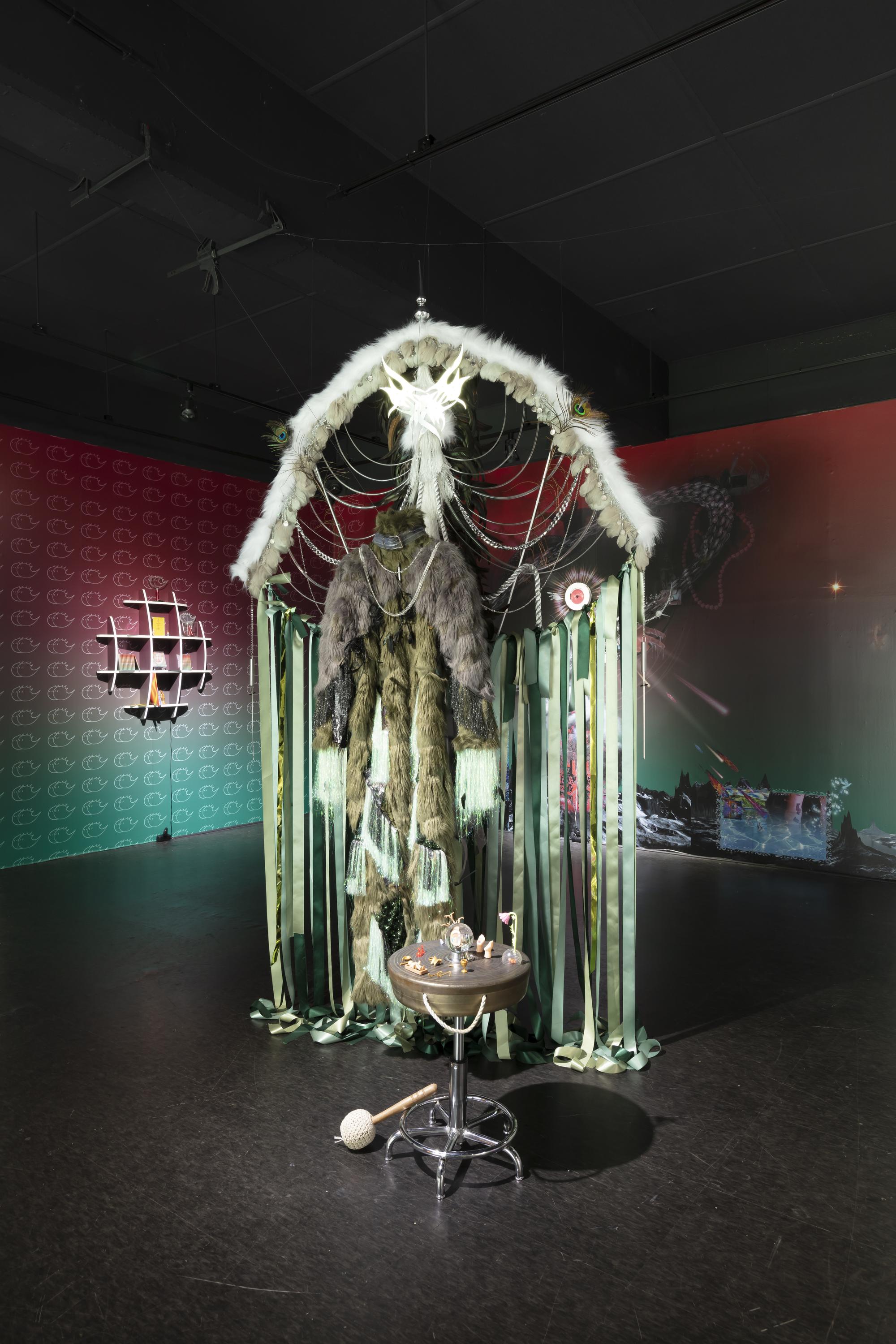
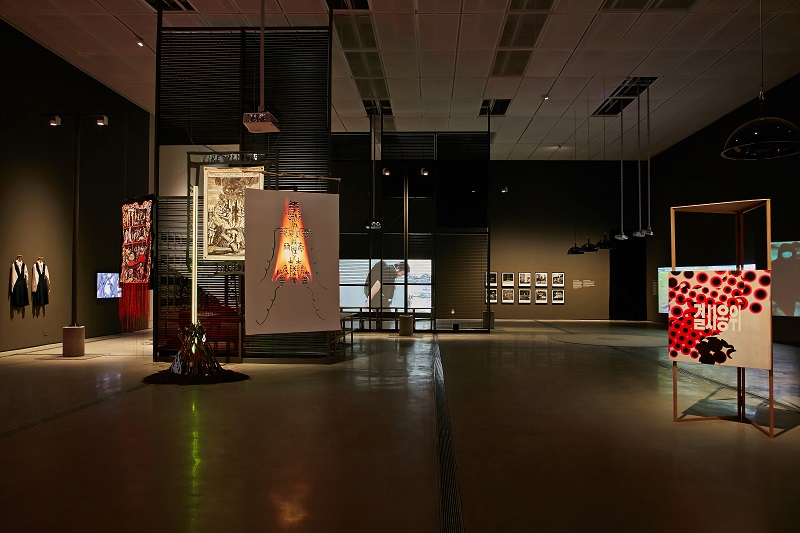
example, in Ring of Water (2022), the artist deconstructs
and reassembles objects such as PVC pipes, car bumpers, stretch film, rubber
boats, and belts to create something completely different from their original
context.
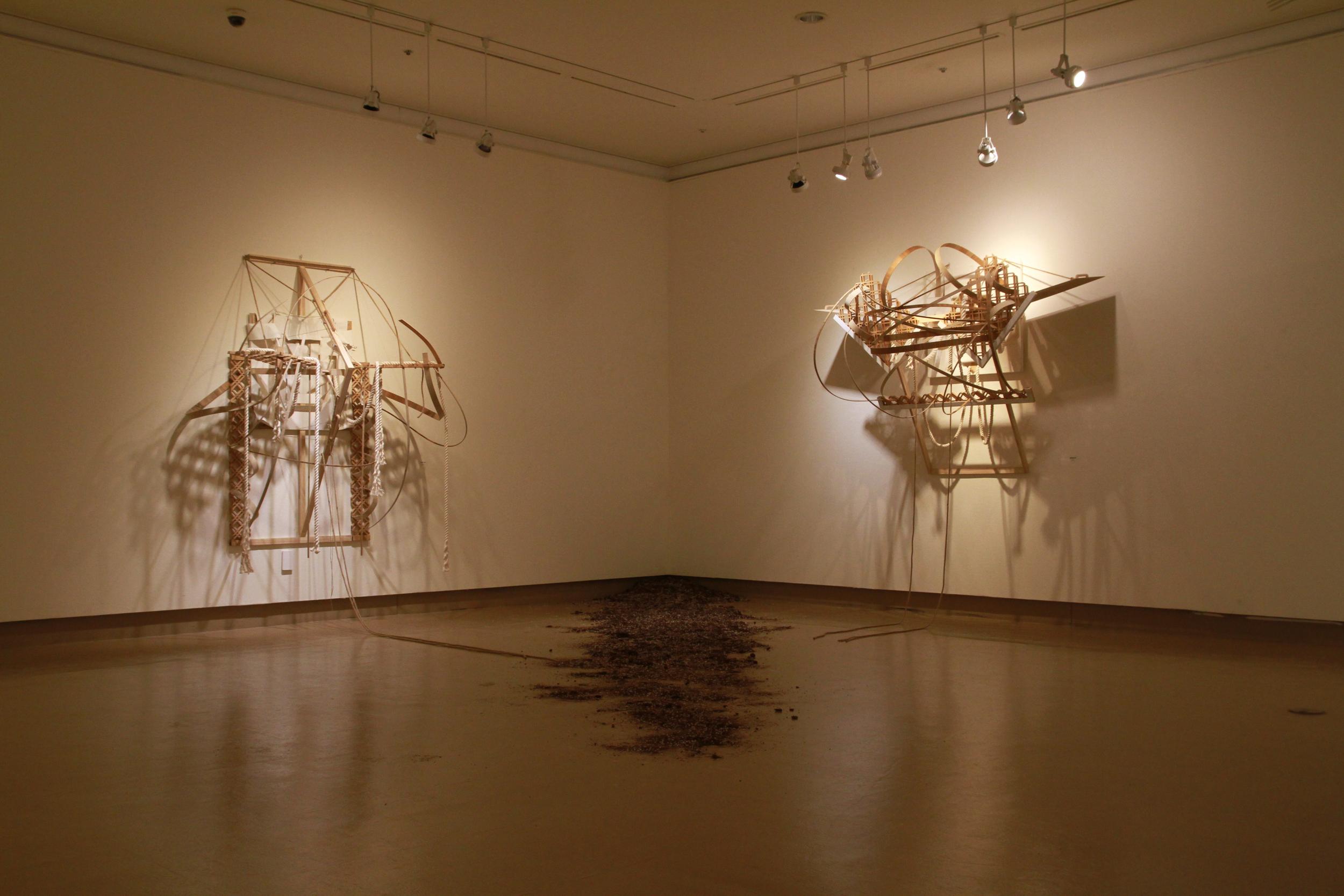
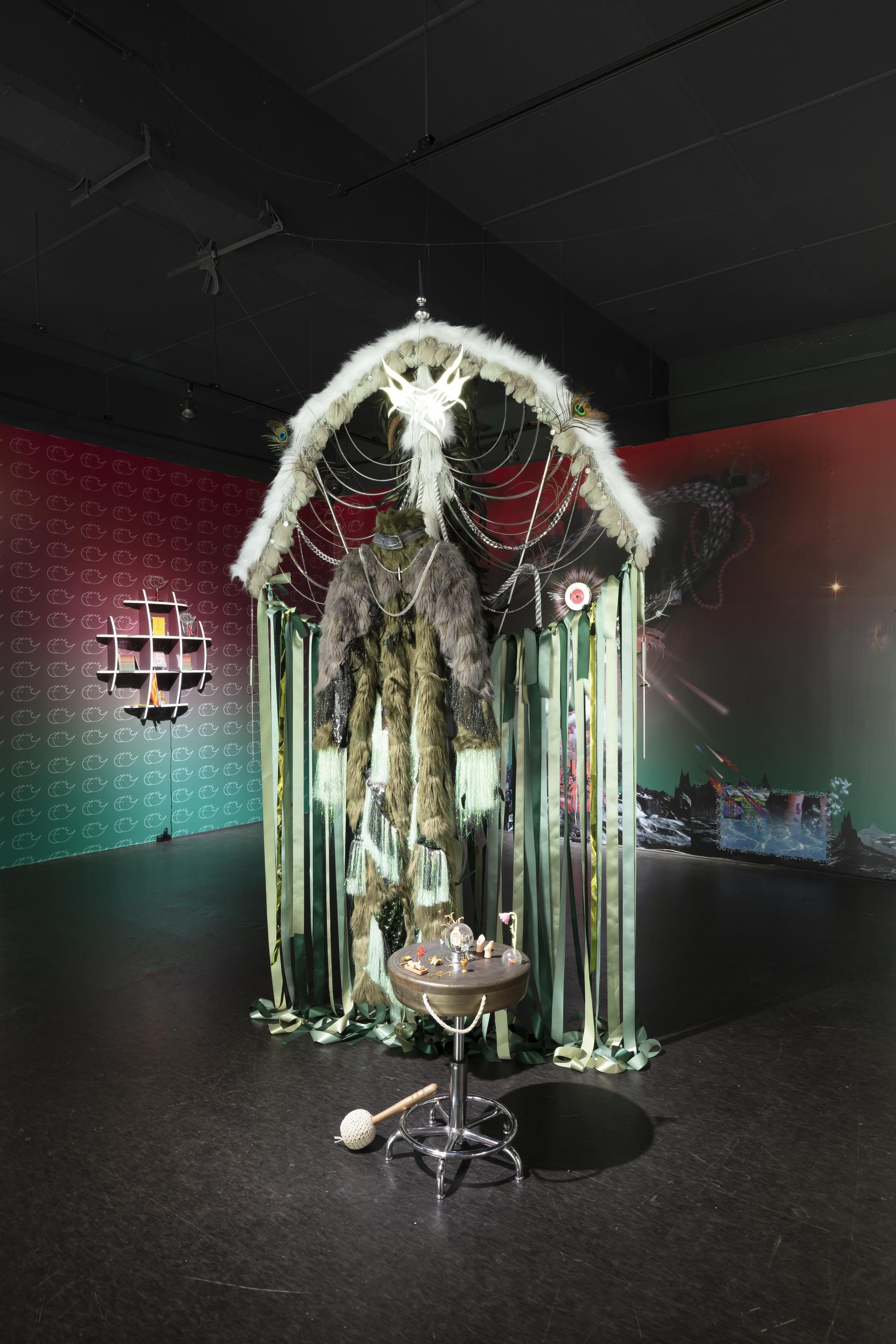
In Overman exuviates 1 (2021), which
combines lattice windows of korean traditional house “hanok” and various
materials, the artist presents strange shapes and states of matter that evoke
the convergence and dispersal of different worlds. Crouching flat, parasitizing
somewhere, or struggling to open themselves up, the above works are all
three-dimensional and linear at the same time. Moving between two and three
dimensions, multiple substances and shapes, and disjointed time, the work
creates a form of deconstruction and recombination that is completely
undecipherable, not only through the use of the aforementioned material(s) but
also through the multiplicity of visual and media representations it produces.
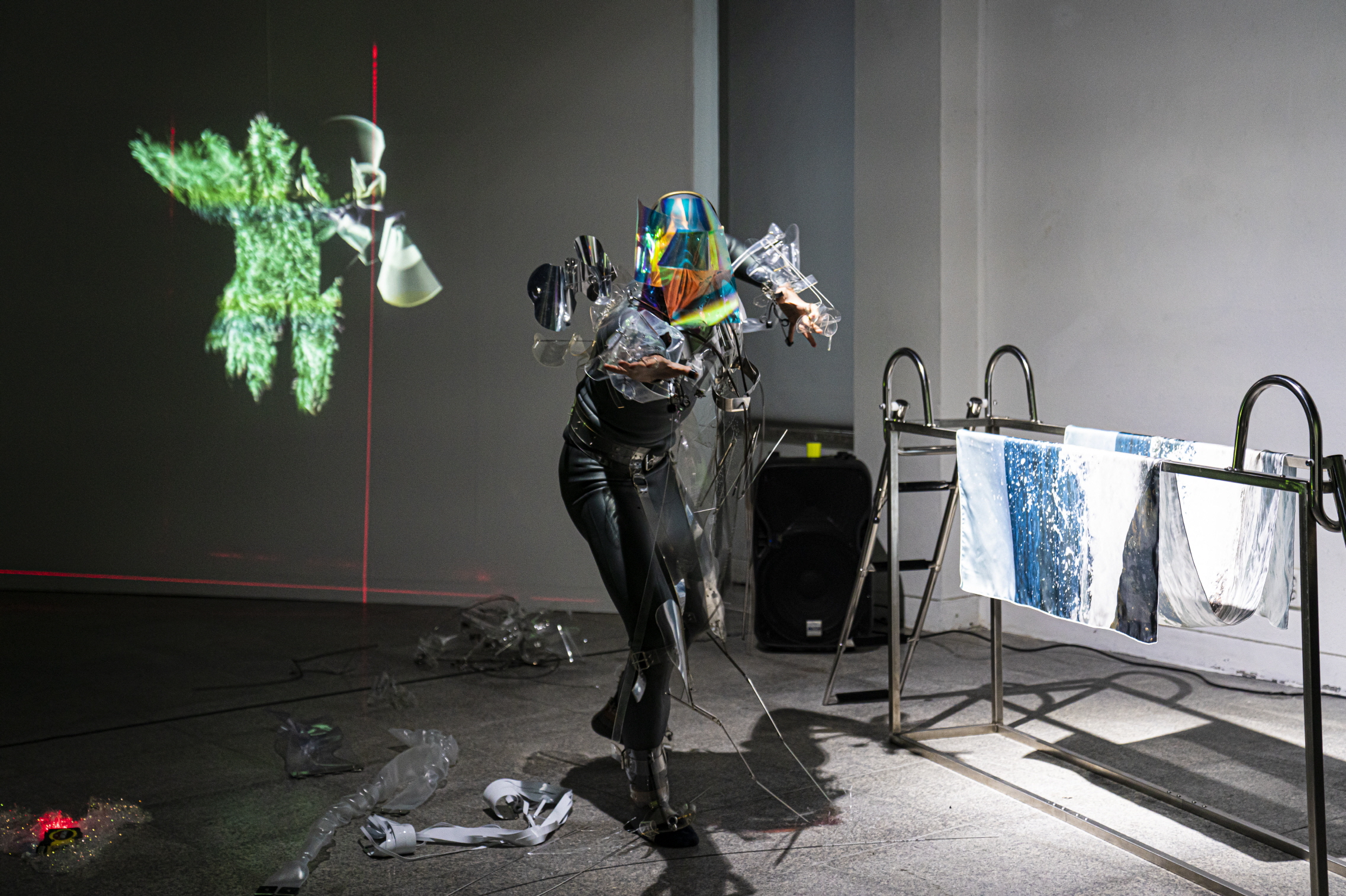
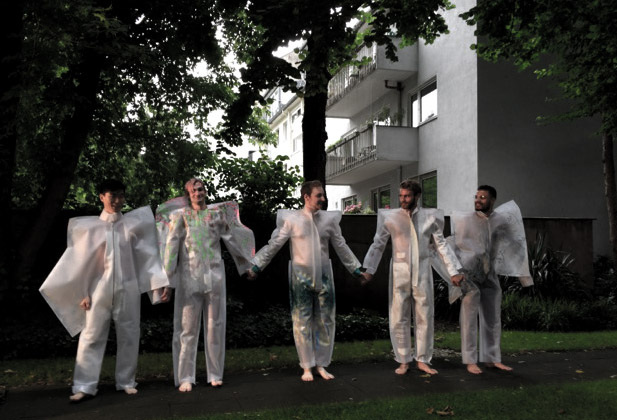
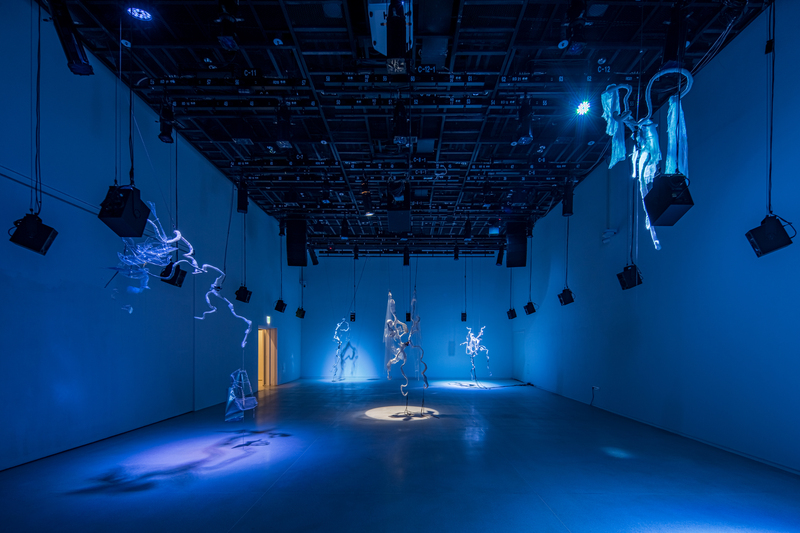
Furthermore, works such as Overman exuviates 1 (2021) and Dancing
In The Night of Kiss (2020, 2021) are completed works that are not
exhibited as a single narrative, but are actually worn/applied to the bodies of
the viewers and performers, and unfold as unpredictable events and processes
that break away from the media categories of painting, sculpture, fashion
(show), and performance.
Nevertheless,
the use of assemblage and ready-made materials found in the artist's work
evokes associations with several works in art history. In particular, works
such as Armored Evolver (2020, 2021) and Twins
(2021) recall a series of experiments in the late 1960s that sought to break
away from the traditional art materials and hierarchical order found in art,
especially sculpture. One might also mention the faintest touch with the work
of Robert Morris, who, in a 1968 Artforum article, described his practice as
accidental and incidental, indeterminate and process-driven, with the concept
of "anti-form". Robert Morris's 'anti-form', which included large
rectangular carpets that were cut up and stacked on the floor or hung on the wall,
can be seen as a concept that describes a trend in post-minimalist art and
sculpture in the late 1960s, a trend that shares similarities with the
experiments of contemporaries such as Eva Hesse and Bruce Nauman. Hkason's work
certainly shares some of the characteristics of the aforementioned artworks,
using materials such as plastic, cloth, rubber, and belts to demonstrate the
ephemerality and amorphousness of sculpture. In the same vein, the work is free
from rigid and dehumanizing structures.
What,
then, is the other intention of the atypicality that Hkason's work reveals?
What does it mean to be formless in the artist's work? In this contradictory
question of trying to figure out the intention of the unclear, the methodology
of the work provides a vague point of interpretation. In his work, we find a
recurring methodology of winding, knotting, and connecting. This methodology
can be connected to the aforementioned manifestations of fluidity,
transcendence, and unconstrained sensations that have been described in many
artistic examples, as well as to the concept of "wearing sculpture"
that describes his work.
The acts of winding, knotting, and wearing support and
complement each other. They all seek to transform a distant, disconnected, and
excluded object into a very present object that has a direct impact. In the act
of knotting and wearing, the distant other is summoned to the here and now, to
my body, and freed from existing separation. In this way, we move away from
ignorance and unconditional hatred to think and experience difference as a more
positive difference. By naturally recognizing that they are not the same in the
real world, they attempt to redefine reality by reviving entities that have
been excluded for no reason. In other words, the iterative methodology of the
work affirms difference as a more explicit presence in the world, instead of
reducing it to a principle of self-identity.
In the methodology
described above, the fact that the individual's flesh/body becomes a primary
medium in the process of recognizing difference reiterates the amorphousness
found in the artist's work. In the work, the body presents a point where the
boundaries of different worlds are mutually recognized. Taking the worn
sculptures as an example, the bodies in Overman exuviates 1 (2021)
and Dancing In The Night of Kiss (2020, 2021) can be seen as
simultaneously referring to the bodies of the viewers or performers who wear
the works and the bodies of the works that resemble them, but do not fully
match them. In other words, the bodies revealed in the works are presented as a
device for renewing and remodeling their own boundaries. This is where the
usual boundaries between disability and non-disability, human and non-human,
life and death, which have been discussed alongside the artist's work, are
reconsidered.
The body in the work thus appears as a figure that questions the
familiar world, and as a stranger that remodels and renews the given world.
Just as Georges Bataille identifies the intrinsic impulse to dissolve the
boundaries between the real and the supernatural, life and death, as a kind of
eroticism, the body in the work reveals the possibility of both illusion and
self-renewal through sexual metaphors. The construction of atypicality and
fantasy of the body that will transcend form here is neither the body/gender of
othered race, class, or gender, nor the body/gender of power that follows the
existing order. It may ultimately be intended as a dehumanized, cybernetic
body, a body of mutation and hybridity. The artist is constantly researching
post-body, dehumanized bodies, and envisions a body that liberates various
oppressions beyond reality.
In collaboration with automata technologists, he
develops and prototypes devices such as prosthetic limbs and braces, and
continues his research on rituals and ceremonies that bring together two
different worlds, a topic that has interested him since the beginning of his
career. In the process, the artist expands her thinking about materiality,
exploring the use of more diverse objects, their effects and behaviors.
Hkason's work overlaps and unfolds these different worlds. Through his
indulgence in evolution and change, he explores the undefined human figure, the
posthuman, and even the dehumanized coevolution.