Today’s
generation seems to have a lot to say about the rapidly unfolding trend of
digitalization and definitions of contemporary identity. Yet friction and
clashes always come from the formation of the relationships between all things.
The problem stems from the attempt to advance ideas while keeping those aspects
isolated. The concept of difference as a representation of the distance between
two things is immediately invoked as part of this formulation process.
What I
mean to say here is that we find ourselves once again relying on an attempt to
incorporate several sequences of what comes before or after—in other words, our
conventional instinct to spatially distinguish things between those toward the
center and others out on the periphery. If we are unable to properly illuminate
the new structural definitions that digitalization has brought about in the
society, the distinctions of identity that those trends seek to reorder, and
the new subjects triggering this overall process and the formation of our aim,
it may put everyone into the direction of greater misunderstanding.
Thus, we
must recognize how truly complex and multifarious the present situation is, as
calls for redefinitions have been witnessed in regard to nearly everything
under the current conditions of digitalization. It is fortunate at least that
there have been ongoing efforts by certain actors to provide an identity that
is uniquely redefined for the era. Changes in the physical environment
underpinning the societal systems have called for the necessary
re-establishment of the zeitgeist of the generation predominating that era,
which we can see from our experiences. The confusion of today’s multilayered
structures—brought about by simultaneous deconstruction and construction—is
taken as something more or less preordained. But understanding the difficulties
that arise in a process of reciprocal change does not mean that the level or
scope of such reorganizations can be adjusted and made into something mutually
acceptable.
As
a result, extreme confrontations and collisions inevitably create spaces and
times that are in between; certain distances serve as buffer zones that allow
phenomena to occur within reason and prevent the spontaneous combustion that
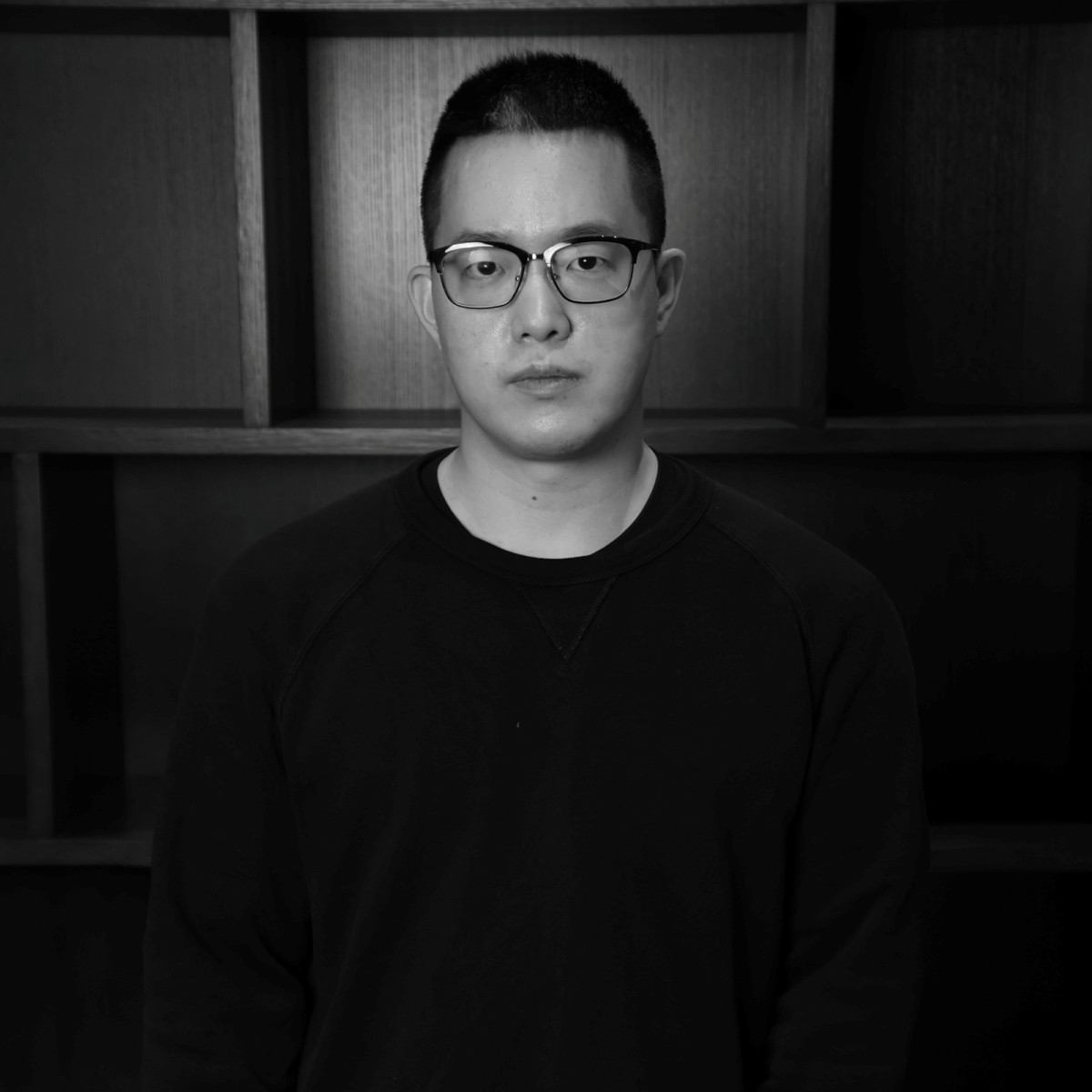
might otherwise occur. Artist Kwanwoo Park seems to situate his work within
this special category that we might refer to as the “spacetime in between.”
Taking as his chief aesthetic medium and theme the sense of self-perception
within the performativity of the body, Park reaches for a particular stage of
consciousness that combines the conflicting perspectives of “subject” and
“other.” The act of accessing the fundamental self-consciousness or other
consciousness possessed by humans offers proof that the artist harbors doubts
about the very distinction between these two concepts.
Can “I” or “you” be
capable of distinguishing “me” or “you”—in other words, ourselves? If so, can
we be sure that the selves we distinguish are truly what we call “me” or “you?”
The artist’s primordial self-doubt toward our systems of perception has led him
to survey the times and spaces of the past, present, and future, while
organically connecting each in some way or another. The fact that the chief
objective of Park’s work lies in examining the part of human identity that
seeks to discover a suitable “self” rests upon a historical moment that demands
the redefinition of identity—or the contemporary zeitgeist that has given rise
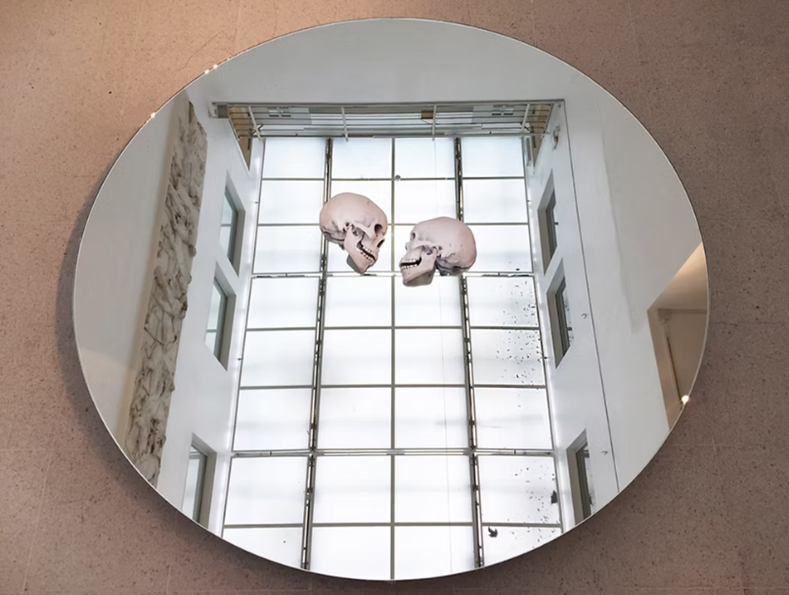
to such situation. By projecting dual mirror structures that cause one to reflect
on oneself, or by creating special situations that mix the position of the
“other” with that of the “self,” the artist forces the viewer to confront their
identity in a rather direct way.
This is Park’s trademark staging, allowing
“you” and “I” to access the consciousness of a human who is both the object and
the subject of perception, as Park deliberately subverts or reconfigures the
existing systems through which human beings structure things. His aesthetic
practice has broadened into subjects and objects within the concept of the
post-human that has emerged with the transcendence of the categories of
physical human bodies and metaphysical interior lives: here, he tries to
construct various forms of relationships among the individual members of society
who will occupy spaces and times that have not yet existed.
Among
Park’s works are Familiar Stranger (2019), in which he uses
a webcam and a projector to blur the positions of the camera and the viewing
subject; Tomorrow (2014), which similarly draws on filming
and projection to transpose first- and third-person perspectives; and Stranger
(2017), which mixes the active and passive subject according to the principle
of the viewing periscope. These works share the common theme of the
self-becoming the object of a gaze while also being the viewer. This recursive
structure of visual representation evokes one’s own ordinary perception of
identity.
The instant we are confronted unexpectedly with our own image, Park’s
work suddenly blurs the boundary in our perception between the subjective
“self” who is viewing and the objectified “other” self who is being viewed.
While the aforementioned works either cause viewers to visually experience the
self as an “other” or lead them to indirectly imagine themselves as seen by
another, other works by Park—namely his ‘Tell me that I’m here’(2019) series
and Do Androids ‘feel’ like dancing? (2019)—can be seen as
overlaying the vector contemporaneity inherent to the digitalization process
upon the artist’s aim of defining identity. In both of these works, the artist
actively incorporates perceptions achievable through cutting-edge devices such
as drones and virtual reality into the preparatory process for reformulation of
identity, which is arrived at through a pathway of recursive self-examination.
Characteristically, the artworks posit the changes in perceptual systems
brought about by our current technology-based media environment as being an
obvious truth. The final axis to be found in Park’s body of work is exemplified
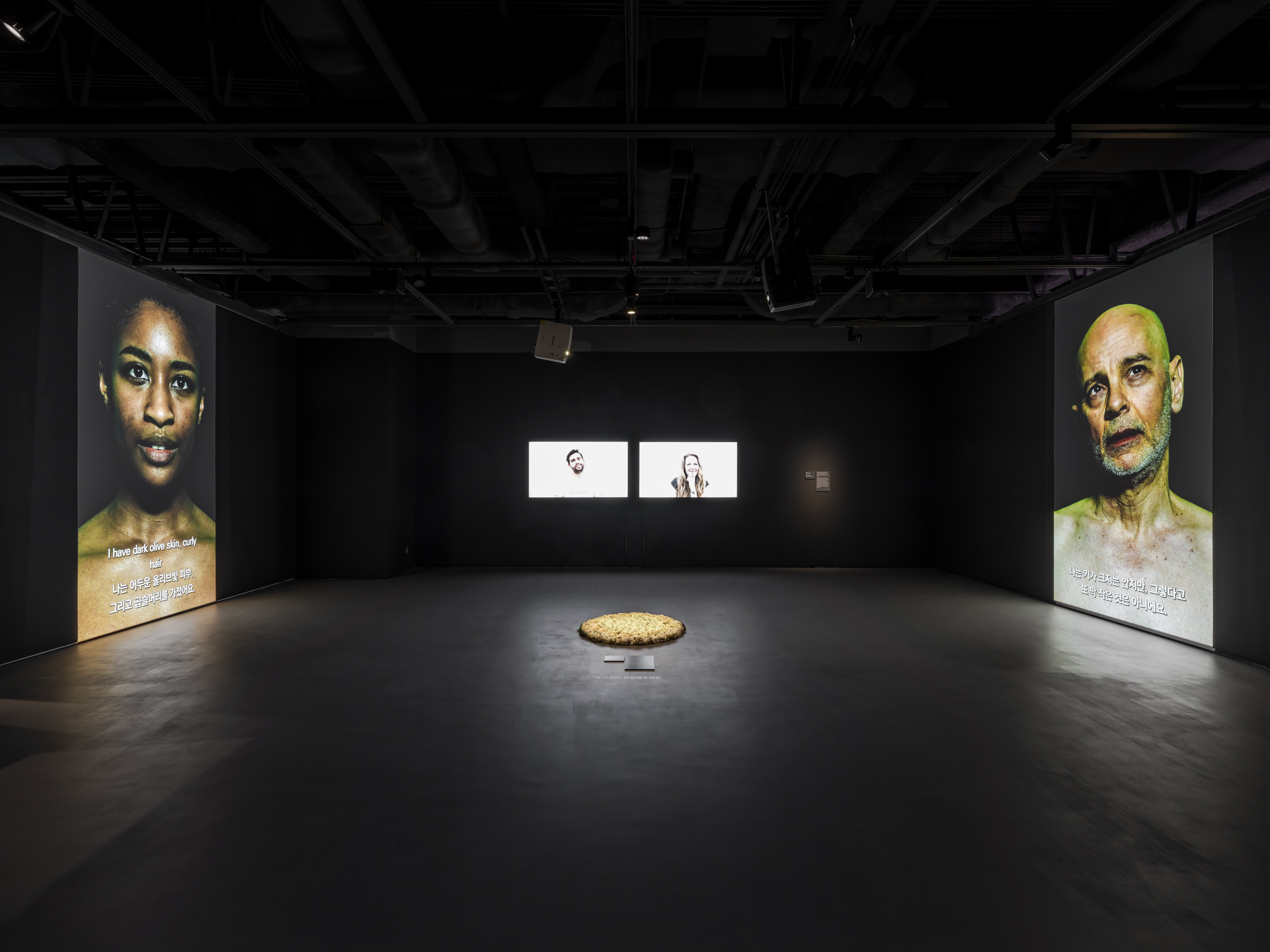
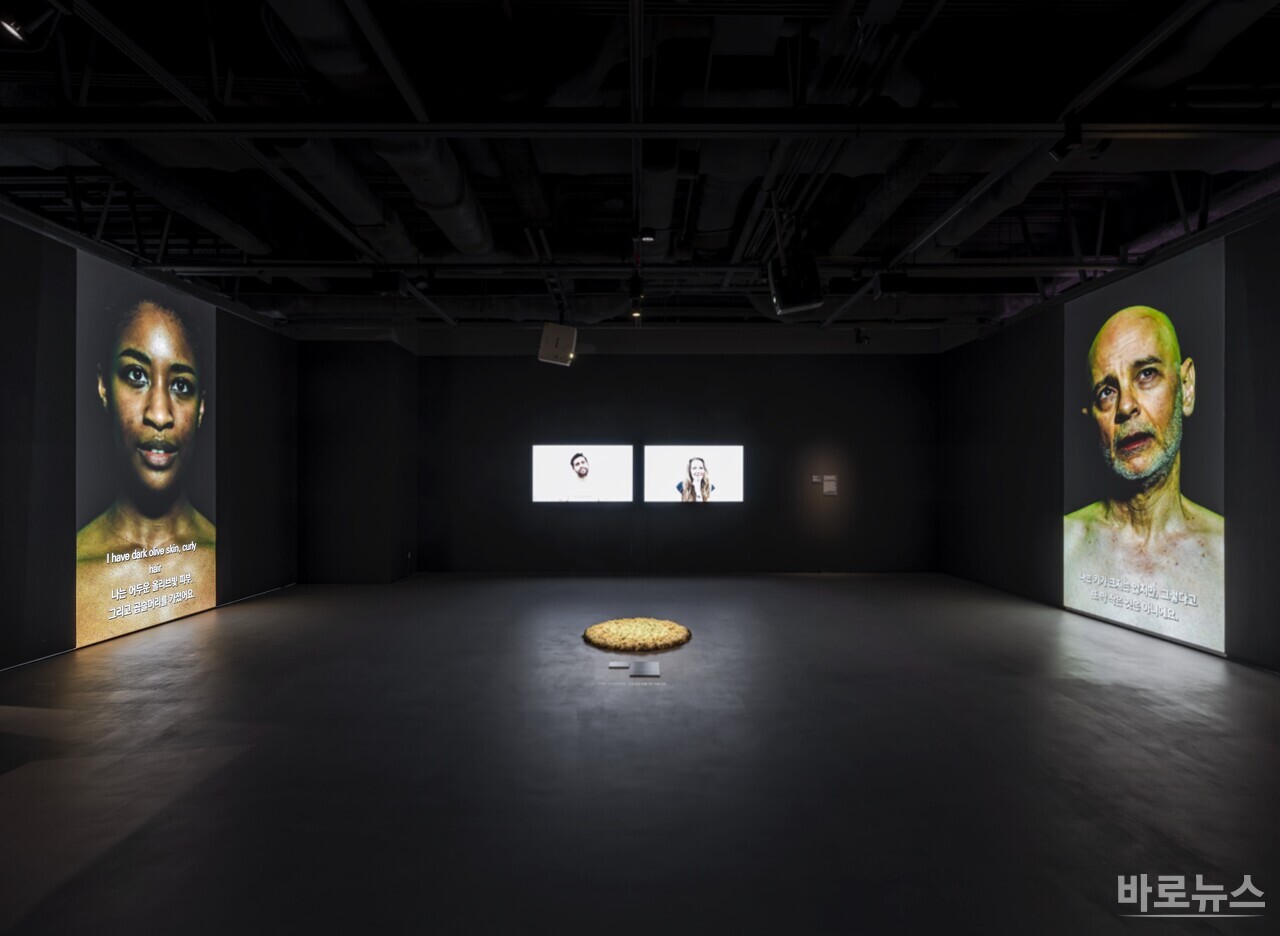
by Human Conversation 1 (2018). Whereas other works by Park
adopt methods of deduction to demonstrate identity, Human Conversation 1 uses
inductive methods to reach expansive conclusions from individual facts (works).
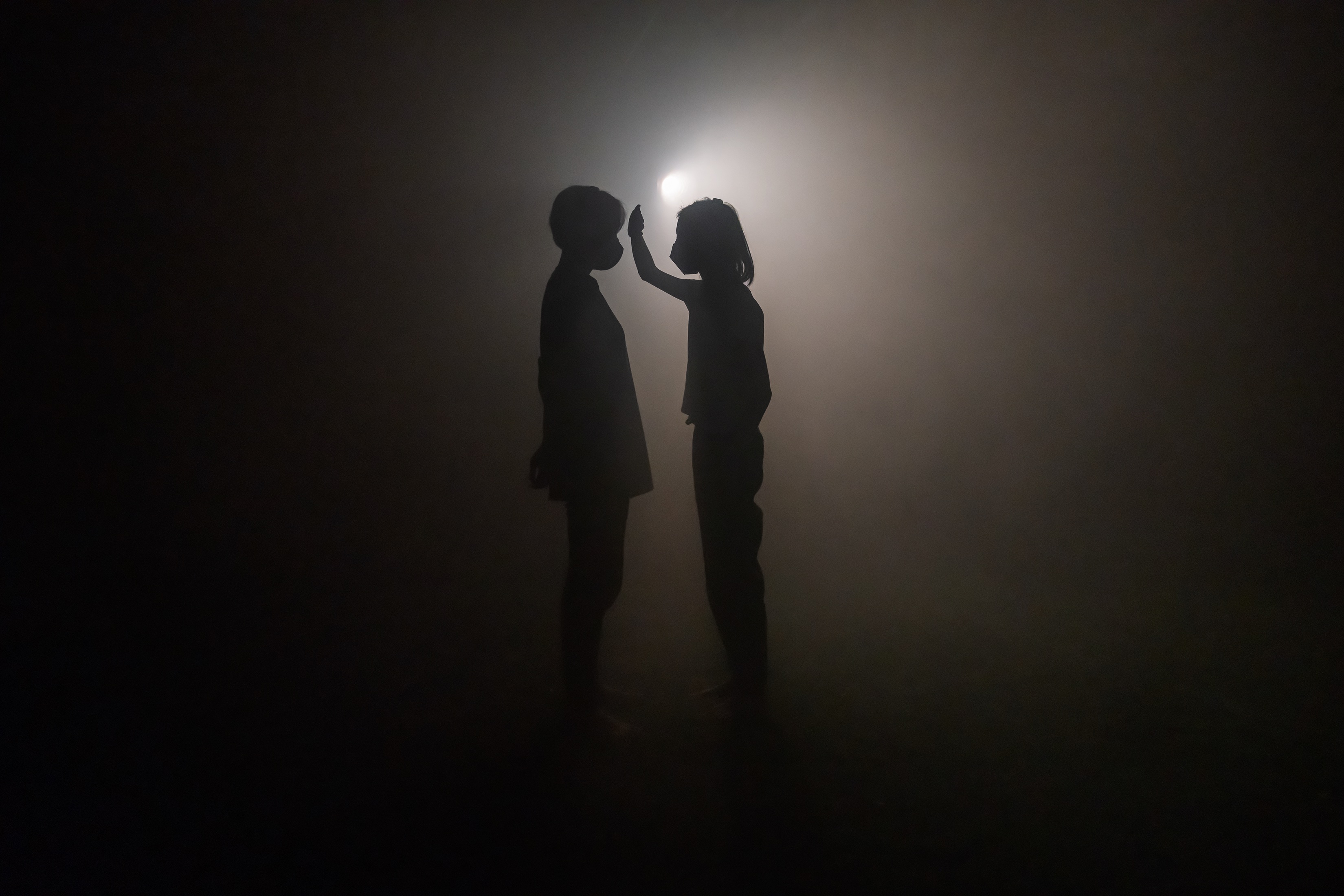
The conversation, performed by two actors, is based on a script derived from a
dialogue between AI chatbots designed to make it impossible to distinguish
which of the sentences are artificial and which of them are human. In addition
to raising issues of identity within the single category of “humanity,” this
work is distinct from Park’s other works in the sense that he does not limit
himself to focus on the particular time and space of the “here and now”:
instead, the “before” and “after” of a situation are synchronized to the
present.
With
artwork that chases the concept of “identity,” Park seems to seek something
clear. However, perhaps it is not so much about finding something clear as it
is about finding his own clear standard with which to answer the question,
“What might be unclear?” What the artist intends through his process is closer
to preparing some kind of groundwork. As transformations have resulted in
complex entanglements in processes of structural subversion and the
construction of systems across society, discussions about the existence of
humanity as both the most important subject and object in society have become
relatively upended and blurred.
In this difficult situation of redefinition—one
that must encompass a variety of groups and relationships among innumerable individuals—Park
is clearly attempting to exercise his right in a determinant way as a member of
the subjective generation. However, he does so not do this through division and
separation; instead, he proceeds under the premise that it is possible to create
a relation among different eras and generations.