Since
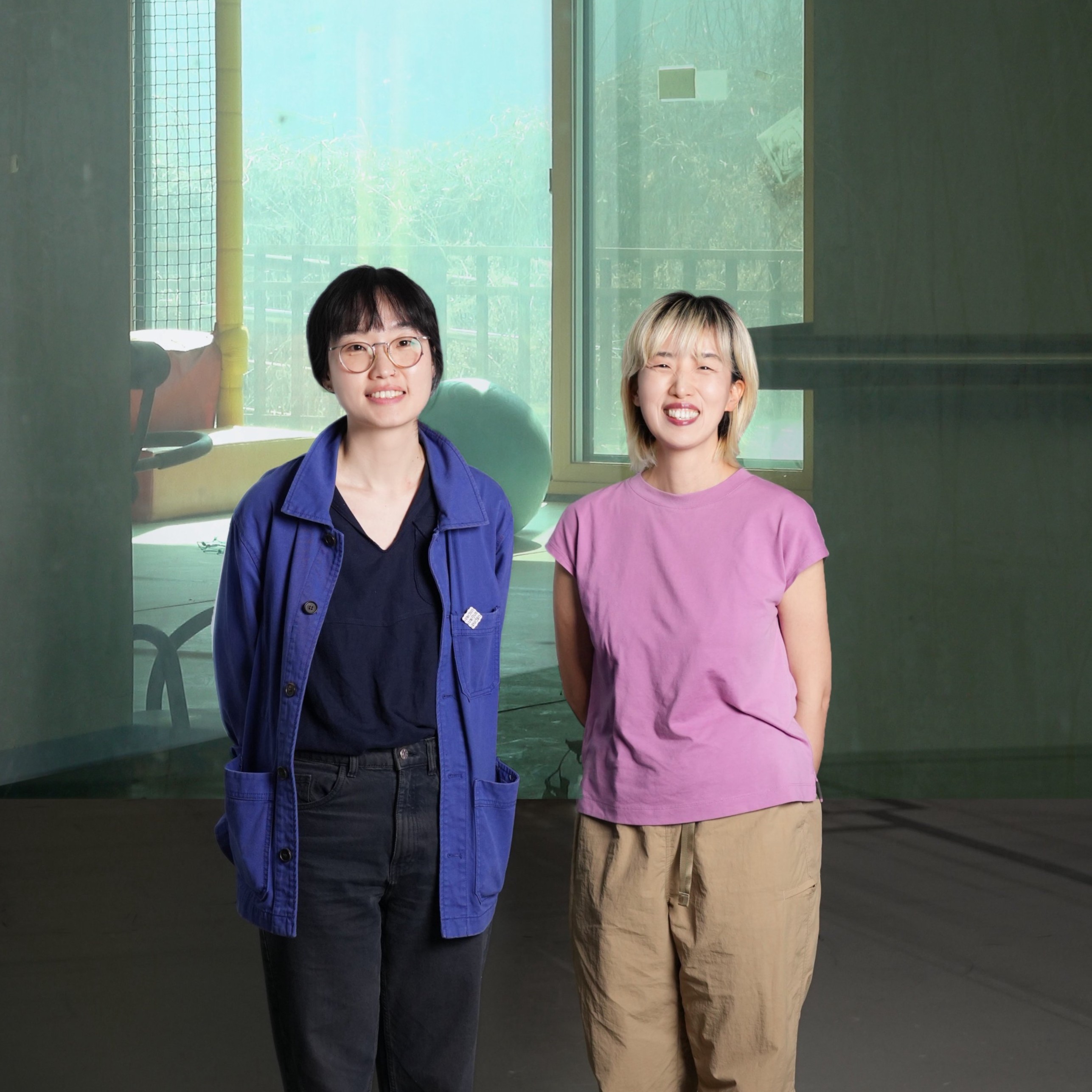
this is our first column, perhaps it is best to begin with an introduction to
the group “dianalab.” There have been many discussions within the group about
how to present dianalab to the outside world, and although it may not be
immediately obvious, we have been continuously revising this introduction
little by little. As with anyone, introducing oneself to a stranger in just a
few short sentences is always difficult and always insufficient.
Whenever we
think about what words we should use to describe ourselves, we inevitably run
into walls. We often end up frustrated and making compromises in the face of
questions like, “Do we really have to use this word to describe ourselves?”
In
the beginning, we used the phrase “expressions with people with severe
disabilities.” Most of us at dianalab have lived for a long time as nondisabled
people who meet and work with those socially categorized as “disabled.” Some of
us have spent many years teaching art classes at welfare centers for the
disabled, or at night schools for disabled persons (though we hesitate to call
them “art classes,” that is often how they are perceived). We were also once
active in an artist group, now defunct, that included many artists with
developmental disabilities. At the time, they introduced themselves in this
way: “Those who have not received formal art education.” They did not use the
word “disabled” at all, but when we saw them speak about something that only those
without formal art education could do, we felt a kind of small exhilaration.
The
phrase “those who have not received formal art education” does not mean that
the group was made up 100% of such people and that no one else could join.
Somehow, it felt like it wasn’t so rigid. Instead, it gave the impression that
“those who have not, or could not, or even if they did, did not fit with it”—in
other words, whether they wanted to but couldn’t, or did not want to—anyone who
was somewhat outside society’s standard criteria could belong. Of course, such
impressions and reality inevitably diverge, but still.
Presenting
a point of departure that differs from the world of formal art education is
crucial not only when talking about disability culture and art, but also when
speaking about other forms of minority art. The issue is one of orientation:
where is the goal, what is it we are to become? Is the model of life one in
which you study hard, get into a good university, meet good mentors and
teachers, become a successful artist, and, if life goes well, make a lot of
money and become famous? Can we present such a path to people with disabilities
in a society that has been created and maintained for thousands of years
centered on nondisabled people? Who presents it, and who has the right to? Even
if someone presents it, should they? These are the kinds of questions we face.
This
may be similar to the expressions “in a hetero-centered society” or “in a
male-centered patriarchal society.” As women ourselves, when we see women break
through the glass ceiling and succeed in a male-centered society, we feel joy
and want to applaud. At the same time, however, we feel ambivalent: we cannot
do that, and we do not want to. As poor young people, as women, and as queers
who have never once lived as regular employees, success often feels like a very
distant story. How hard would we have to work to become like that? Our lives
are already doomed in this lifetime—so what should we do? Surely we are not the
only ones to have such thoughts.
Returning
to the subject of introductions: when we live avoiding this word and that word,
in the end we become beings that no one can quite figure out. We actually like
that about ourselves. We have long heard people say, “I really don’t know what
they’re doing.” And because we are artists and planners, and also people
constantly thinking about when to reveal “woman” as part of our identity, we
find ourselves hesitant to utter certain words—especially in contexts where
they could place us in a position of power (rare though that is, but it does
occasionally happen), or in contexts where they would only harden stereotypes.
This is particularly so if, as nondisabled people, we are to speak about
“disability.”
The
mere utterance of the word “severe disability” immediately elicits reactions
like, “Ah, so you’re working with people with disabilities,” or, “What a good
thing you’re doing. How admirable.” These kinds of responses come back all too
easily.
What
we most want to avoid is the interpretation of “nondisabled teachers helping
people with disabilities.” We ourselves identify as social minorities, and our
identities and desires—our thoughts on minorities and the practices arising
from them—have drawn us strongly to work with those socially categorized as
“disabled.” That is how we have arrived here. While working as dianalab, we
naturally stopped eating meat. Meat, disability, women, queerness, art… what do
they have to do with one another? They are in fact very closely connected. At
least for us, they are. And that is why we cannot help but do the work of
“meticulously shaping everything—from the physical space, to the moment, to
even the invisible air.”
For
the people called dianalab, for their friends, and for all those who may not
know us but think in similar ways, we have no choice but to think of the
“whole.” That is why our work may appear to stand aside from the keyword
“disability,” and why one might wonder, “What on earth are they saying?” In the
next column, we will explain what kinds of work we have done with this
orientation.