Exhibitions
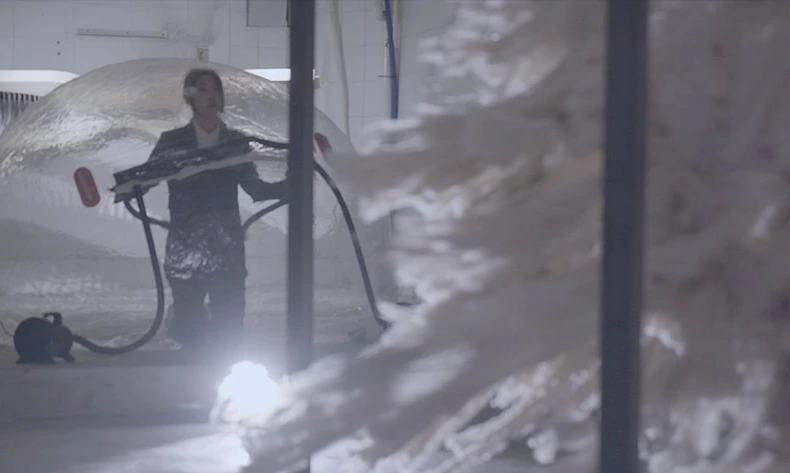
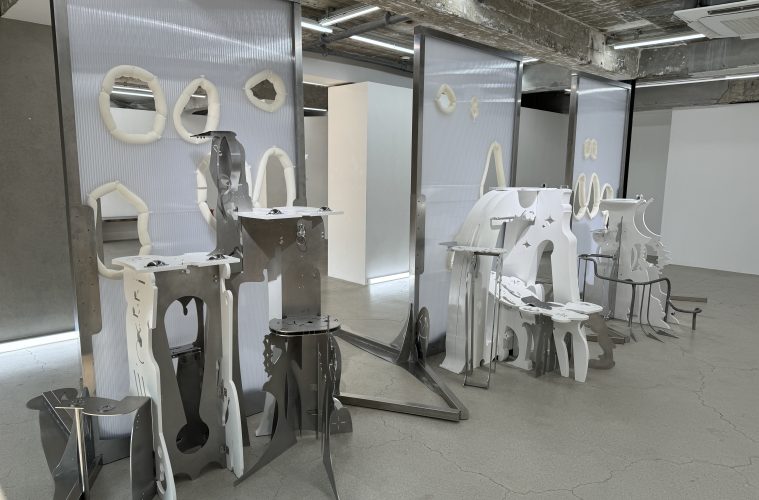
《White Mirror: Prequel Version》, 2020.03.25 – 2020.04.05, WWW Space
March 23, 2023
WWW Space

Ahyeon Ryu, White
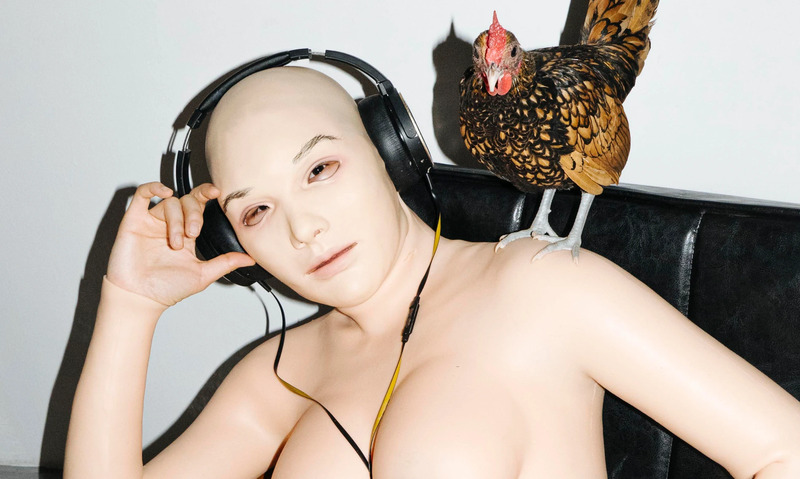
Mirror: Prequel Version, 2020, Performance, rooster, silicon body
suit, CCTVs, beam projector, wire mesh, cloth,, Dimensions variable ©Ahyeon Ryu
Ahyeon Ryu explores how an individual within
post-Internet society moves and transforms in physical space according to
certain rituals. That is, rather than producing a static artwork, he attempts
to visualize political forces through the fluid images of a “portal,” moving
across individual “units.” This can be understood as the materialization of
Internet platforms closely tied to capitalism, through which the artist expects
viewers to perceive with their skin what had previously been measured only by the
hair’s breadth.
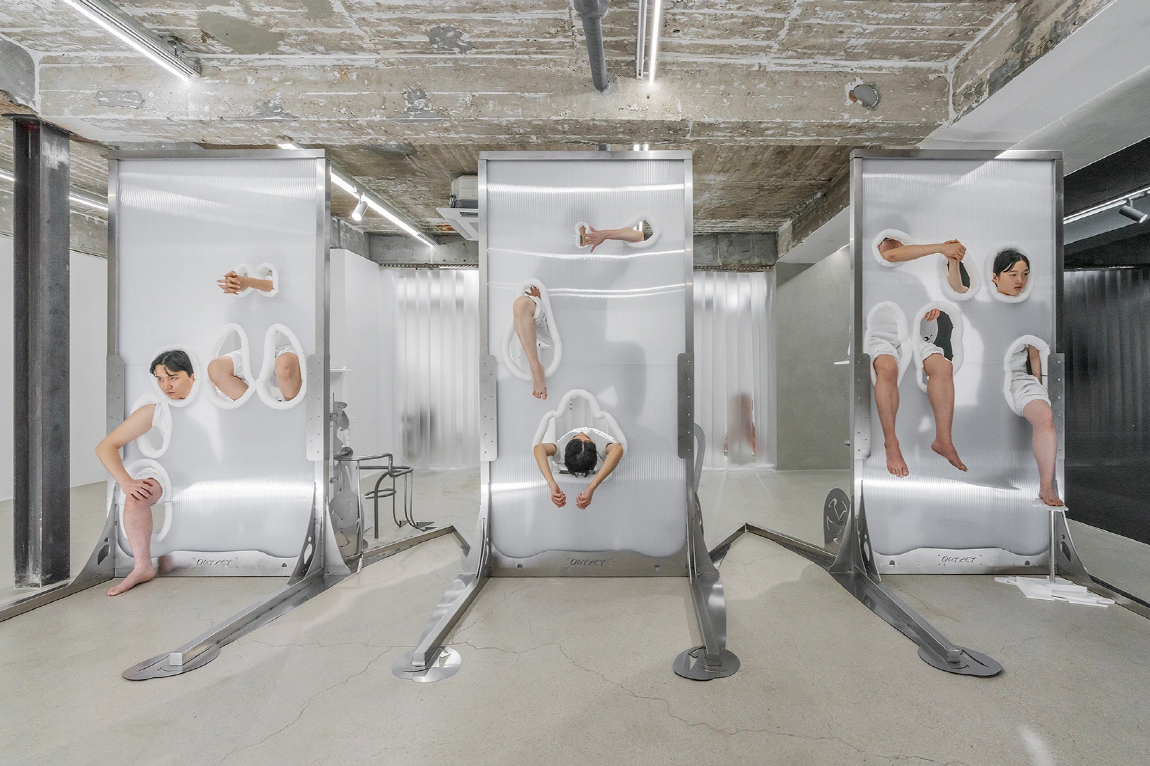
White Mirror is
composed of two levels. The first begins as the audience encounters a
four-dimensional space unfairly flattened into unconscious pixels. From the
outset, they have organized their stance toward four-dimensional virtual space
through various online video platforms. Their position, therefore, presupposes
voyeurism and situates them in a so-called “masculine” vantage point. This
stage is so naturalized and effortless that it seduces them into believing they
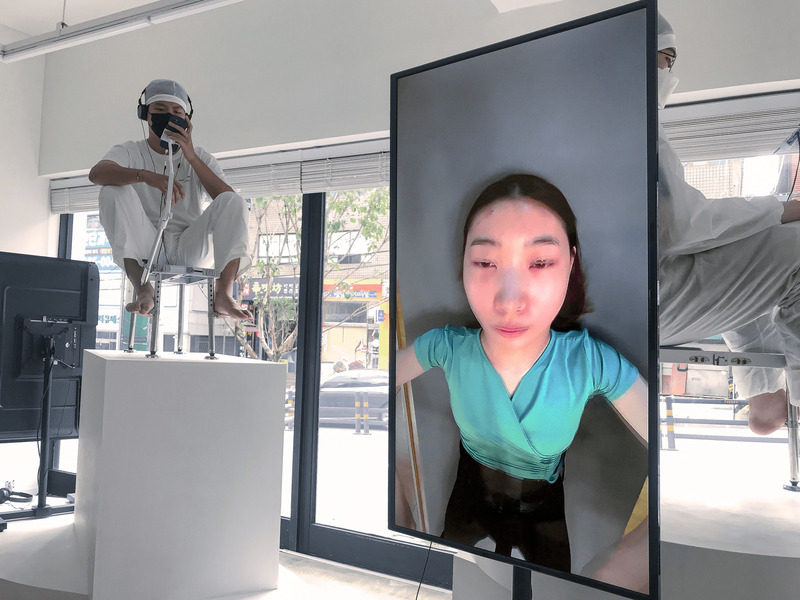
themselves have chosen it. Yet the virtual image on the screen, breathing
directly before their eyes, will mercilessly strip them of the control they
thought they possessed as uncanny authority. When they realize that the monitor
image is a real presence, sharing the same space with them, they will grope to
confirm again with their eyes what their senses had already perceived as aura.
This entire process can be seen as the analogization (materialization) of the
political forces of the portal that had previously eluded capture.
The second level unfolds within the “virtual
space” that has been named—the facing white cube. This white cube is a virtual
space driven entirely by capital and can be likened to the studio of a streamer
or creator. Within this space, the individual is thoroughly memefied, becoming
an avatar for the real world beyond the camera and screen. This avatar takes
the form of a voluntarily exposed object, with the exterior and interior of a
“real doll” overturned and laid bare.

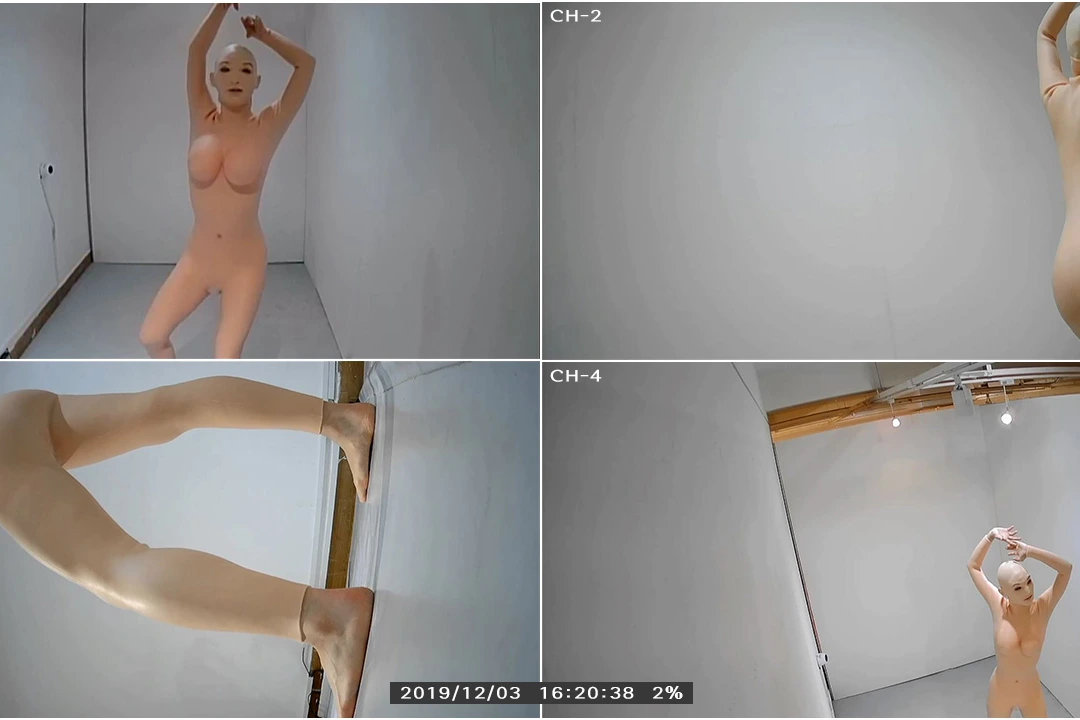
Ahyeon Ryu, White
Mirror, 2019, Performance, silicon body suit, CCTVs, monitors, fake
walls, Dimensions variable ©Ahyeon Ryu
White Mirror: Prequel
Version becomes an expanded experiment on this second level.
Whereas in the earlier work White Mirror(2019), the
avatar secretly observed the audience and moved according to their commands in
the form of an Internet streaming broadcast, the new work adopts a somewhat
static four-dimensional platform where gaze and information flow entirely in
one direction. In this piece, the audience is bound so completely that they can
no longer rationalize their actions by pretending they were never the agents of
objectification in the first place.
The avatar is positioned “prior” to the state
of having already become an object through interaction with the audience; in
this way, it enacts various painterly gestures before losing subjectivity both
self-imposed and externally imposed. With its closed-circuit
gaze, White Mirror: Prequel Version visualizes the
spaces in between these multiple personal layers. Through this platform, the
audience observes the amorphous movements of a single independent unit in a
unilateral, “hidden camera” perspective.
The pet, separated from the avatar, functions
as the subset of consciousness inherent in the avatar. It stitches together the
layers by marking empty spaces with dots. The pet presents interaction with the
avatar and itself stands as a stolen view of an individual, positioned also as
a spokesperson for the core. To those who will infiltrate the body like a
virus, the artist hopes they will successfully perceive the Informel “dance” of
these two entities through the transmission of image-saliva.