In her
early works, Hong used industrial materials such as jesmonite, wood, and PVC to
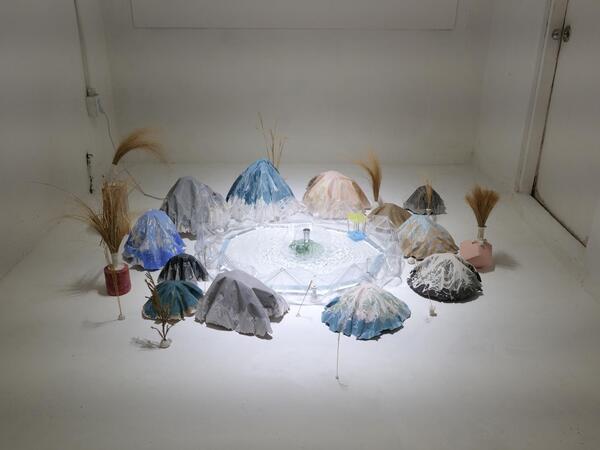
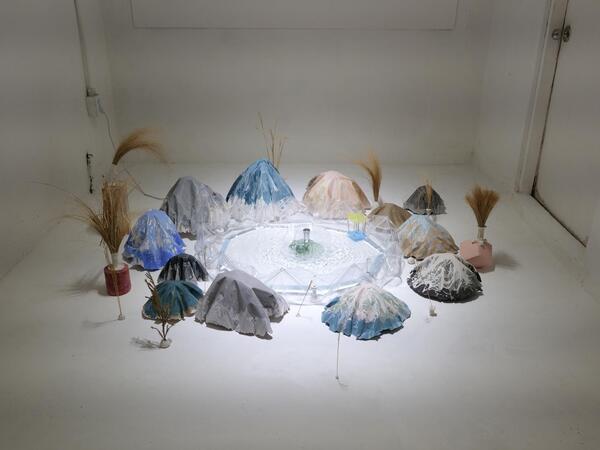
construct artificial landscapes. In 12 Mountains 9 Stones 6
Liters of Water, variable media such as water, grass, pipes, and
pumps were combined to reveal sculpture as a structure that embodies flow and
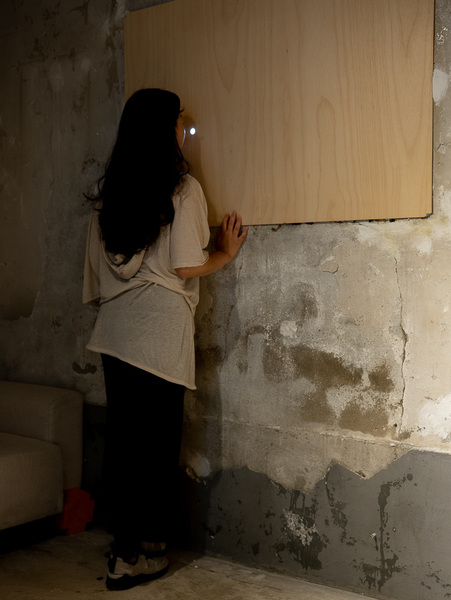
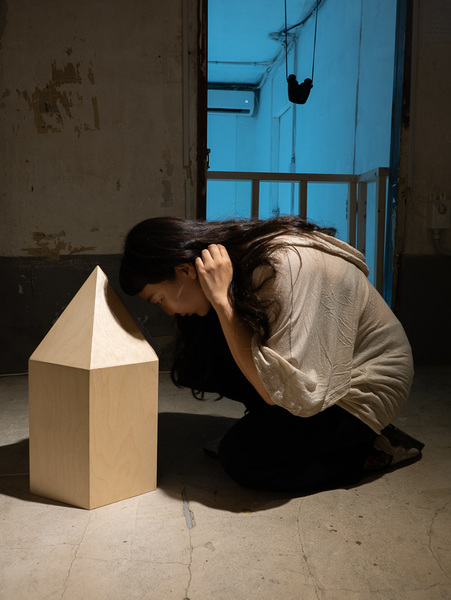
movement rather than a fixed object. The series Peepject: Two
Holes for Eyes × 3 employed wood and resin structures to guide
viewers to peer through apertures, integrating bodily engagement as part of the
exhibition format.
She later
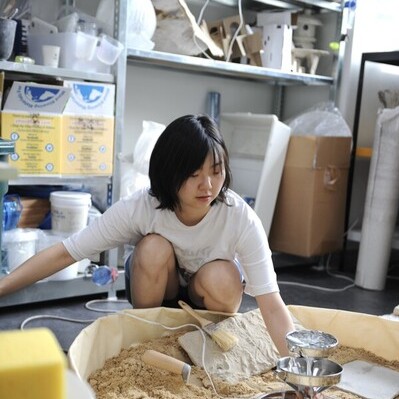
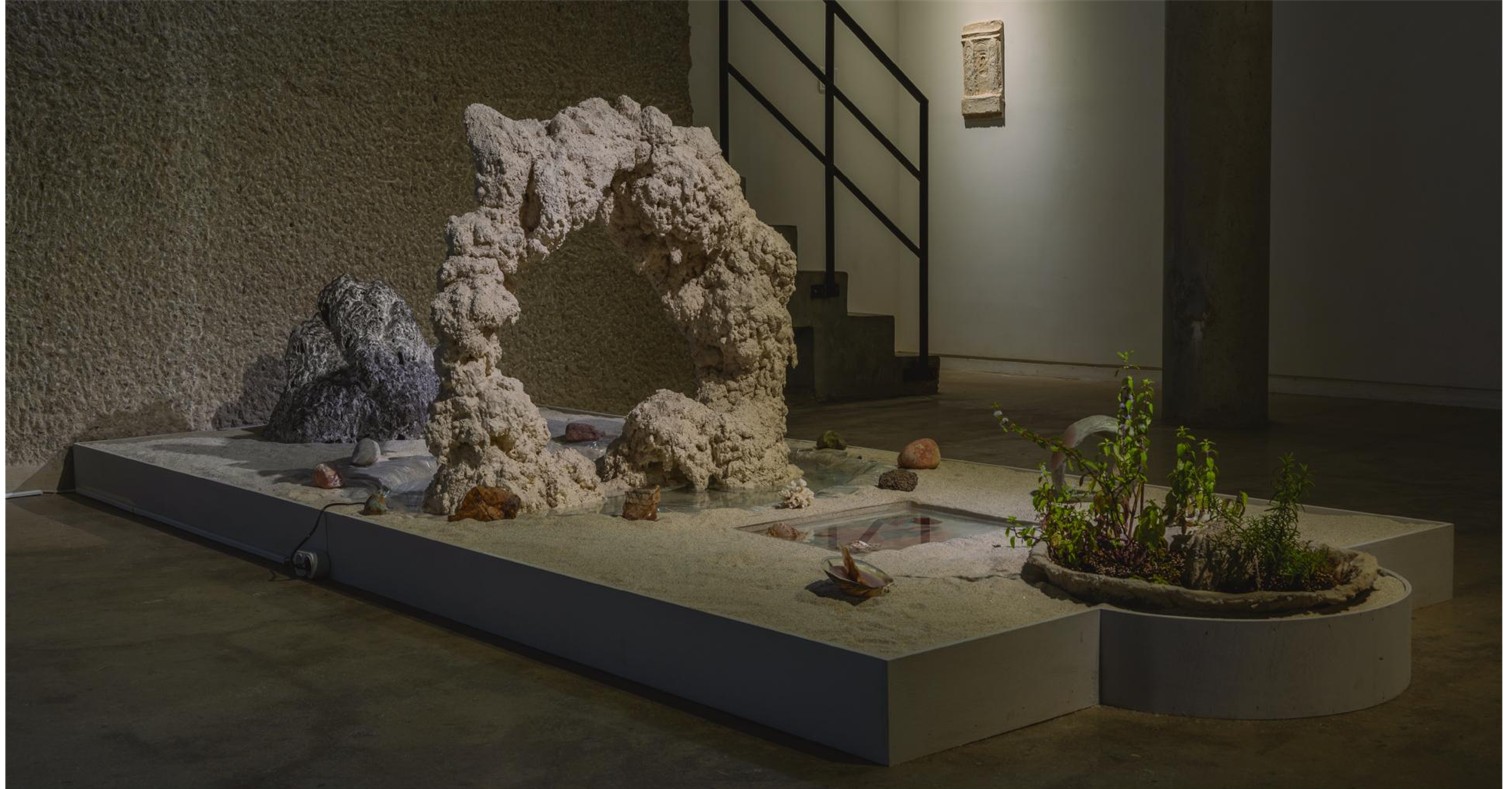
employed fluid and unstable materials such as water, sand, and wax to merge
visual perception with tactile experience. For instance, Wall
Fountain(2022) and Buried Temple(2022)
utilized flowing water and the textures of wax to endow static objects with
temporality and movement. In these works, the properties of the materials
themselves served as devices that transformed the meaning of sculpture,
illuminating the interplay between matter and landscape.
Sansu
Sculpture and Octagonal Rock Pedestal
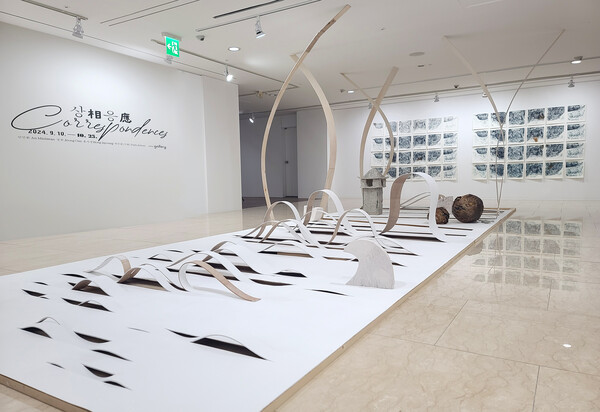
transposed sand—a fluid medium—into 3D-scanned and printed objects, combining
the spirit of traditional landscape painting with digital technology. Through
this process, Hong imagined and constructed unseen surfaces and contours, while
incorporating water and mist to make the sculpture’s body unfold into
constantly changing landscapes. The hybridity of natural elements, technology,
and industrial materials became a key formal characteristic of this period.
From 2023
onward, she began producing structures with internal spaces, drawing on the
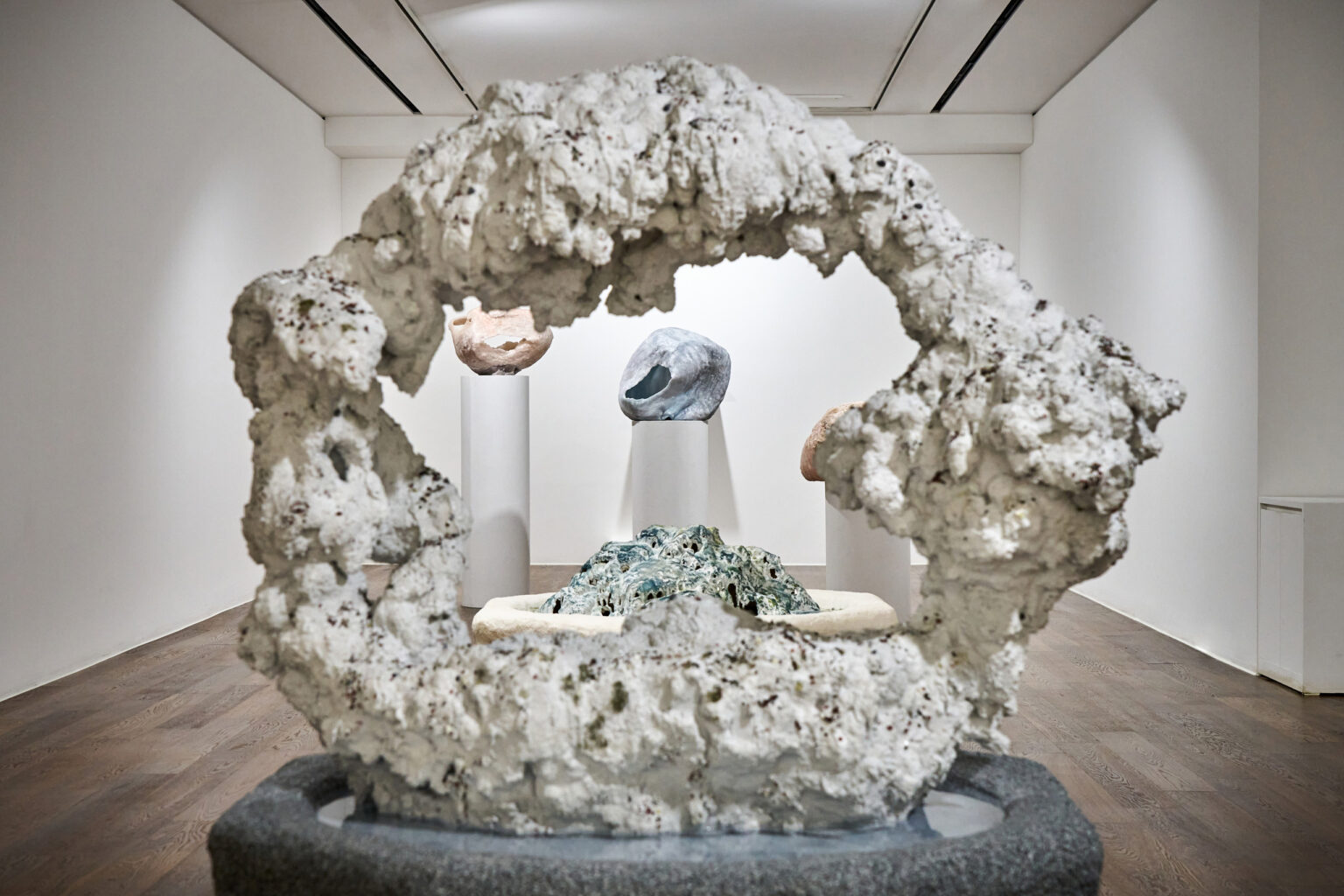
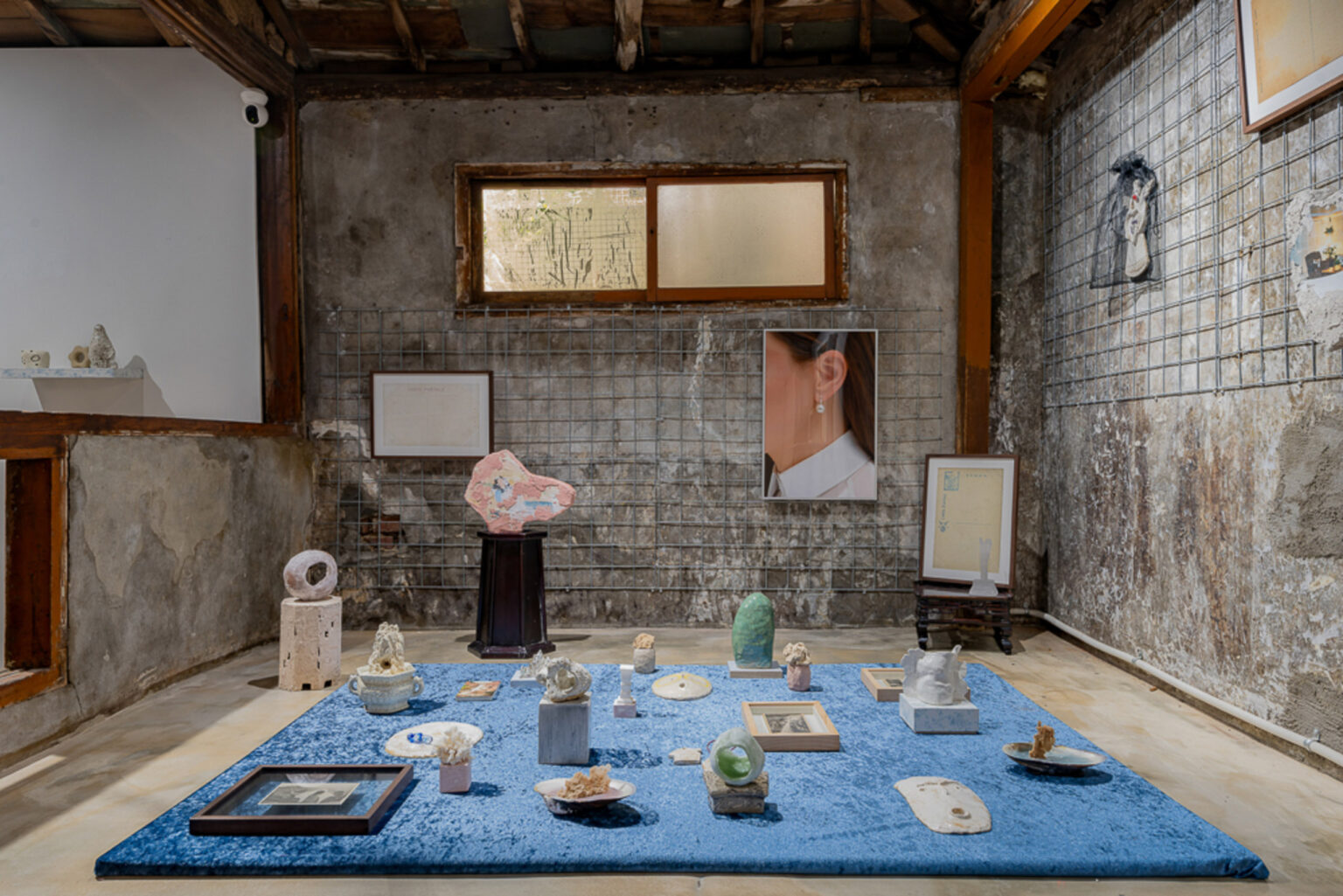
concept of “architectural sculpture.” Statue of Goddess from
Water combined seashells, stones, and cuttlebone to form a
mountain-like goddess figure with an interior void. The ‘Layers Tunnel’(2024) series
introduced tunnel-shaped structures that allowed viewers to simultaneously gaze
into the interior and out toward external landscapes, offering a complex
perceptual experience. Most recently, Bonfire Dance
Floor integrated acrylic, cement, found objects, and even past works
into a large-scale installation, transforming the exhibition space into a
sculptural garden and opening up an experimental field where materiality and
installation converge. In this way, Hong has expanded sculpture into a
multi-layered site of media experimentation, moving fluidly between plane and
volume, nature and artifice, interior and exterior.