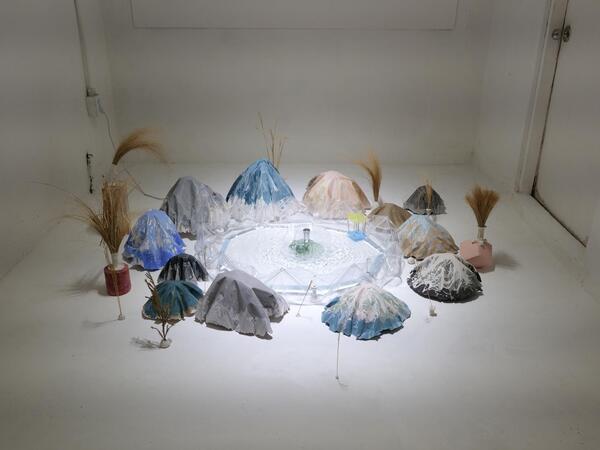
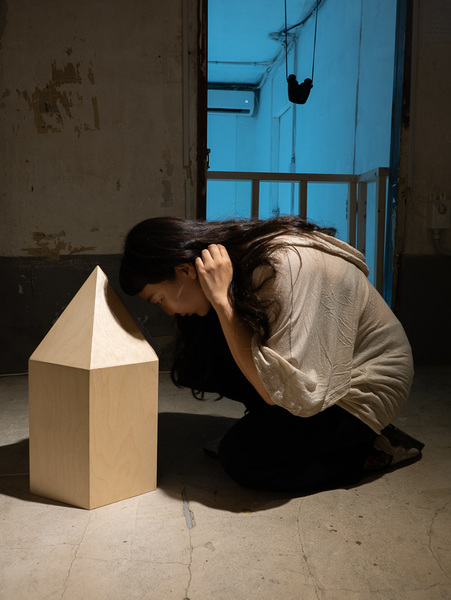
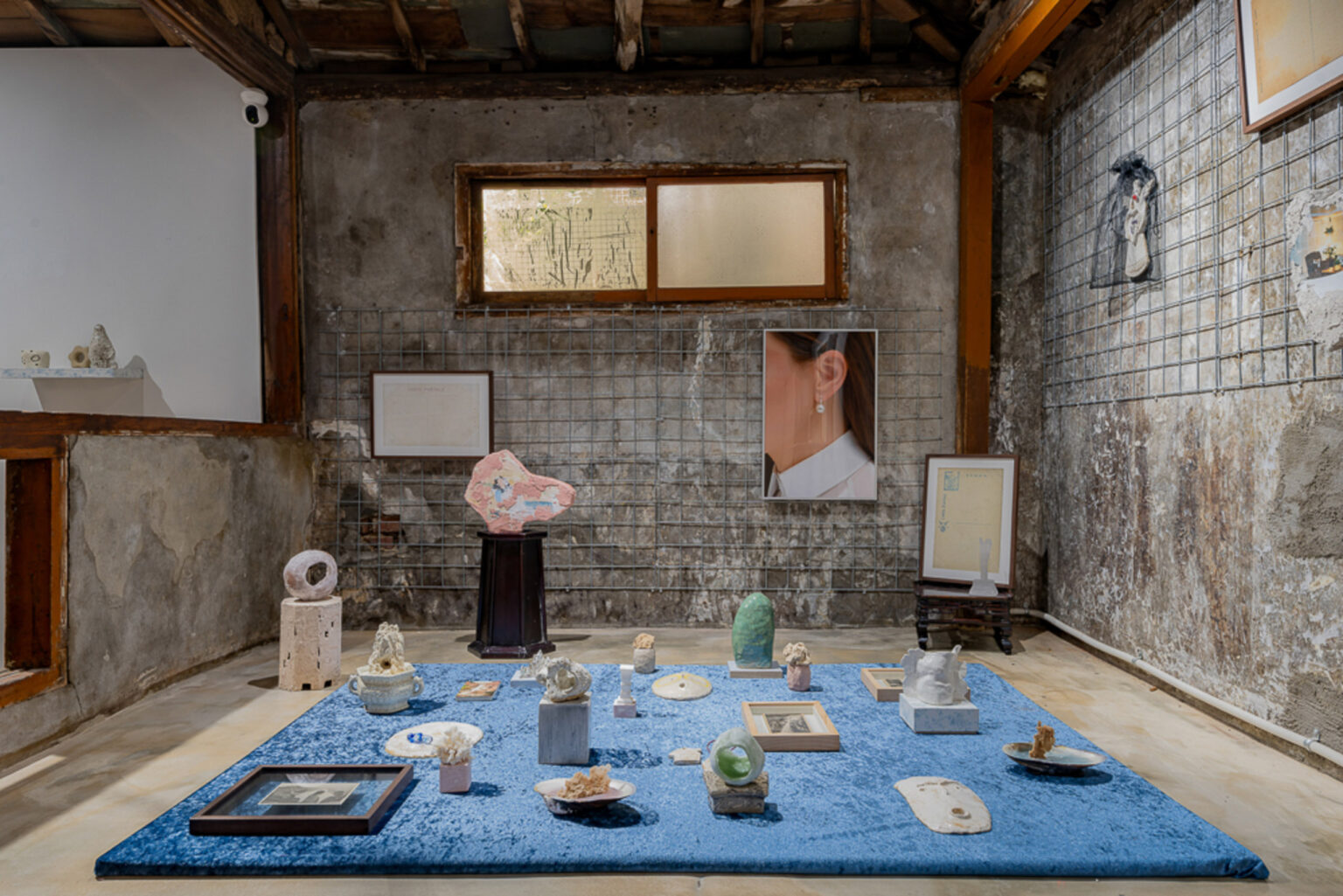
Installation view of 《Winter Sculpture with Warming Vegetables》 (Gallery2, 2025) ©Gallery2

On the land imbued with a chilly air, things that have ceased to grow create a quiet landscape. The vacancy called emptiness paradoxically fills the present scenery. If the space for unseen things has already been designated, the central question may not be what is needed, but rather how to discover that place. 《Winter Sculpture with Warming Vegetables》 evokes the temporality of the season in which the exhibition unfolds, uncovering multiple perspectives through the arrangement of sculpture. Just as one recalls the warmth of soup while facing the cold wind, the exhibition naturally overlaps tangible reality with images extended through imagination, exposing endlessly circulating viewpoints.


Installation view of 《Winter Sculpture with Warming Vegetables》 (Gallery2, 2025) ©Gallery2

Depending on the exhibition period that coincides with “Daehan,” the coldest day of the year, and “Jeongwol Daeboreum,” the first full moon of the lunar new year, Jayoung Hong invokes the properties of harsh winter and the wishes embedded in new beginnings. For him, landscape is not governed by either nature or the self alone; rather, both infiltrate one another, affecting and reshaping the scene as a fluid entity. Recognizing that there are aspects not immediately visible in the present moment, he brings sculpture into the act of repeatedly filling and emptying these vacant spaces, constructing new landscapes each time. In this manner, 《Winter Sculpture with Warming Vegetables》 gathers resonances of transition from coldness to warmth, the formal similarities between fire and water, the play embedded in the mind of wishing, and the expansion of vertical and horizontal planes of indoor and outdoor space, presenting an ambiguous and shifting panorama.

Installation view of 《Winter Sculpture with Warming Vegetables》 (Gallery2, 2025) ©Gallery2

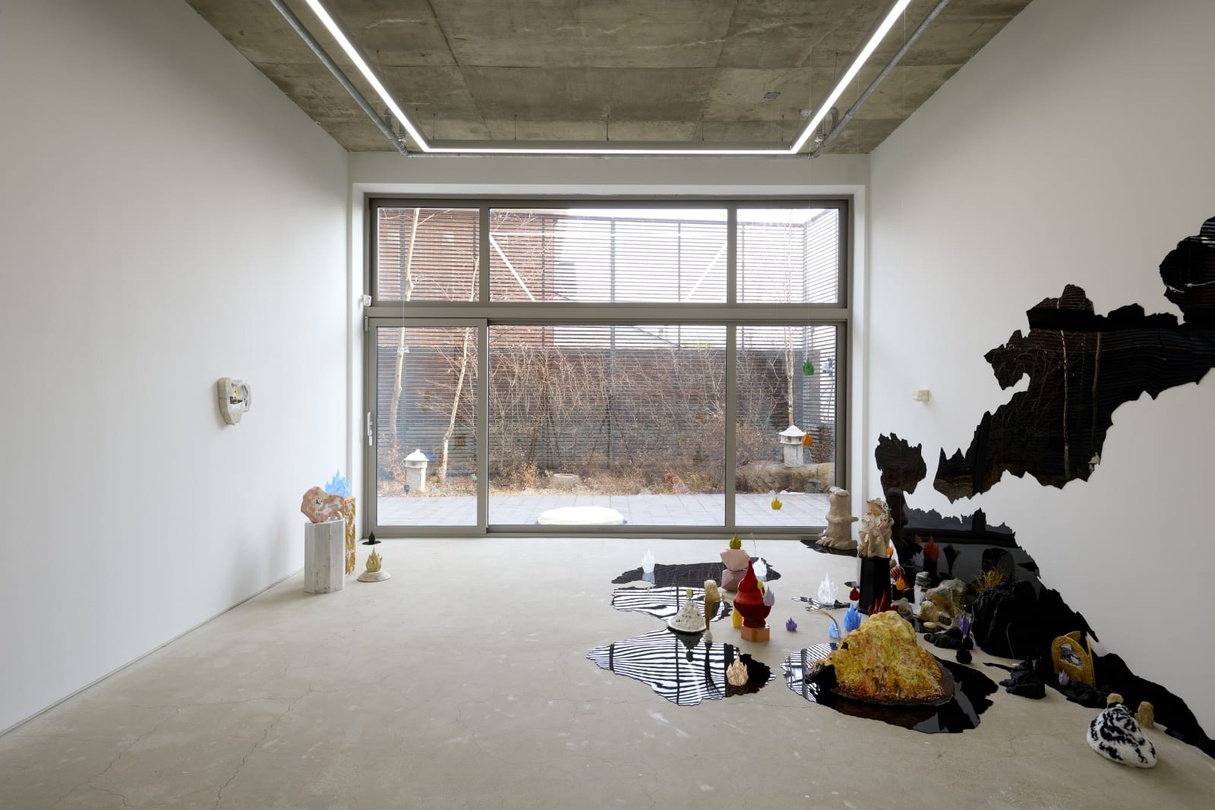
Dance Floor of the Flames(2025) creates a landscape like a hypothesis, fusing sculptures that appear to dance at the heart of winter with perspectives dispersed in nonlinear ways. Using a black acrylic plate stretching from wall to floor as a guide, the installation brings together columns composed only of capitals from Western architecture, 3D-printed flames, soil, sand, cement, paint, wood, souvenirs, as well as past works by Hong—all intermingling. The acrylic sculpture here is modeled after the remnants of water marks and burn traces: a brush soaked in water leaves a mark on paper, then the dried space is singed to preserve its outline, revealing the resemblance and play between water paths and fire marks.

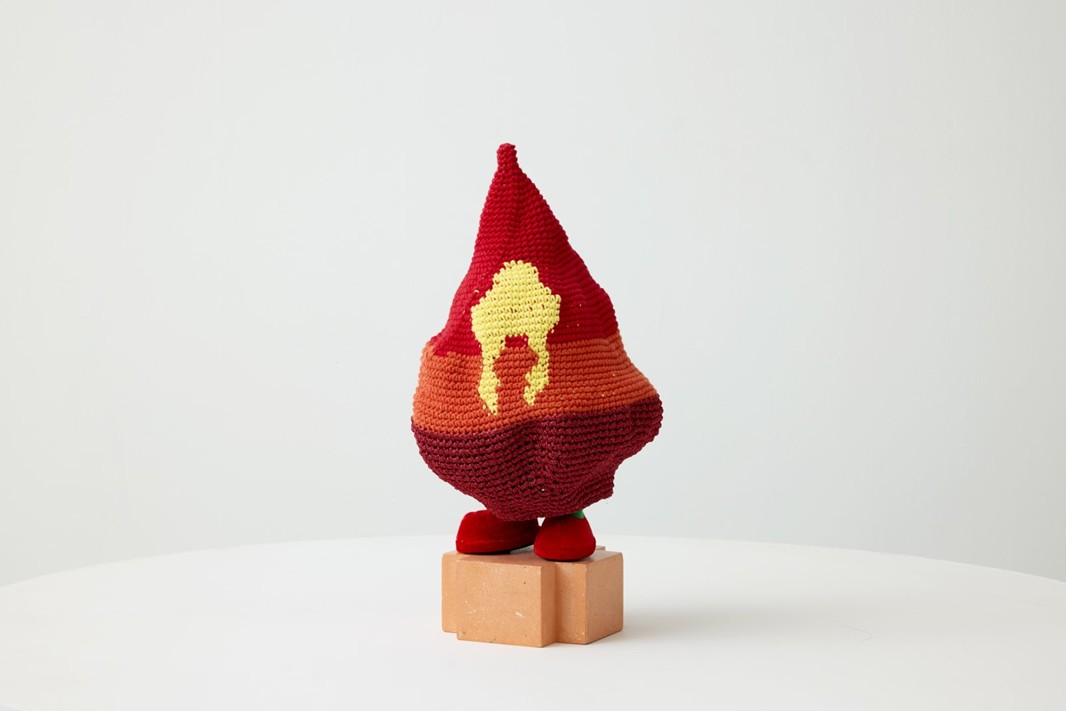
On top of this, sculptures either produced or summoned through the tenuous, exaggerated connection between winter and warmth are entangled to create a multiplicity of viewpoints. Angels endlessly tending to fire outside the window, hands striving to strike a drum with anchored beats, small figures shaking their heads as they beat drums with forceful energy, dancing knitted dolls mobilizing movement, protruding horns, and rounded bases reinterpreted as flames of varying colors and forms—all gather like reckless dancing and the floor for it, composing a landscape of unspecified continuities where nothing is predetermined.

Installation view of 《Winter Sculpture with Warming Vegetables》 (Gallery2, 2025) ©Gallery2

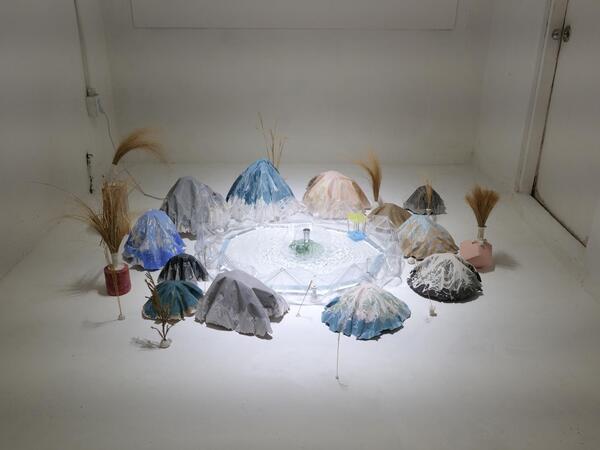
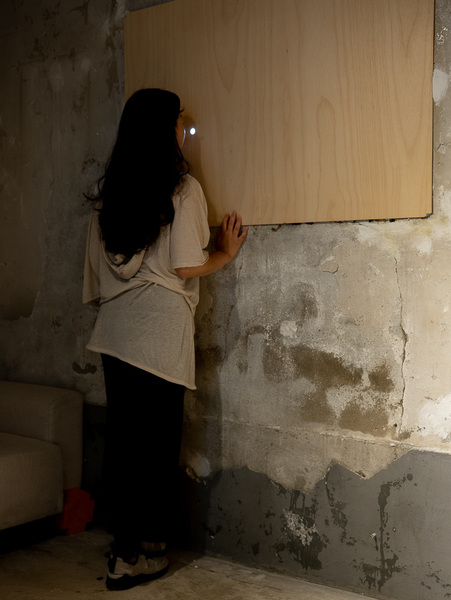
Meanwhile, reflective mediums such as glass and acrylic allow the exhibition space’s interior and exterior to interpenetrate, amplifying layers of complexity. Outdoor sculptures like Stone Lantern (yin&yang)(2024), The Lake 2022(2022–2025), and Grotto (in the Woods)(2025) intervene through transparent windows, merging into the interior. Indoors, Dance Floor of the Flames incorporates acrylic structures that reflect sculptures placed around it, as well as natural objects outside, producing fragmented reflections. Works such as Personal Hallows #SK(2024), Personal Hallows #MJ(2024), and Goddess Mural (on the ceiling)(2024) originate from the imagination of a recumbent figure blending into the environment as part of the landscape. Within this reflective environment, they acquire fragmented yet proliferating viewpoints. In this way, the exhibition repeatedly overturns and reestablishes unified landscapes, retrieving hidden perspectives.
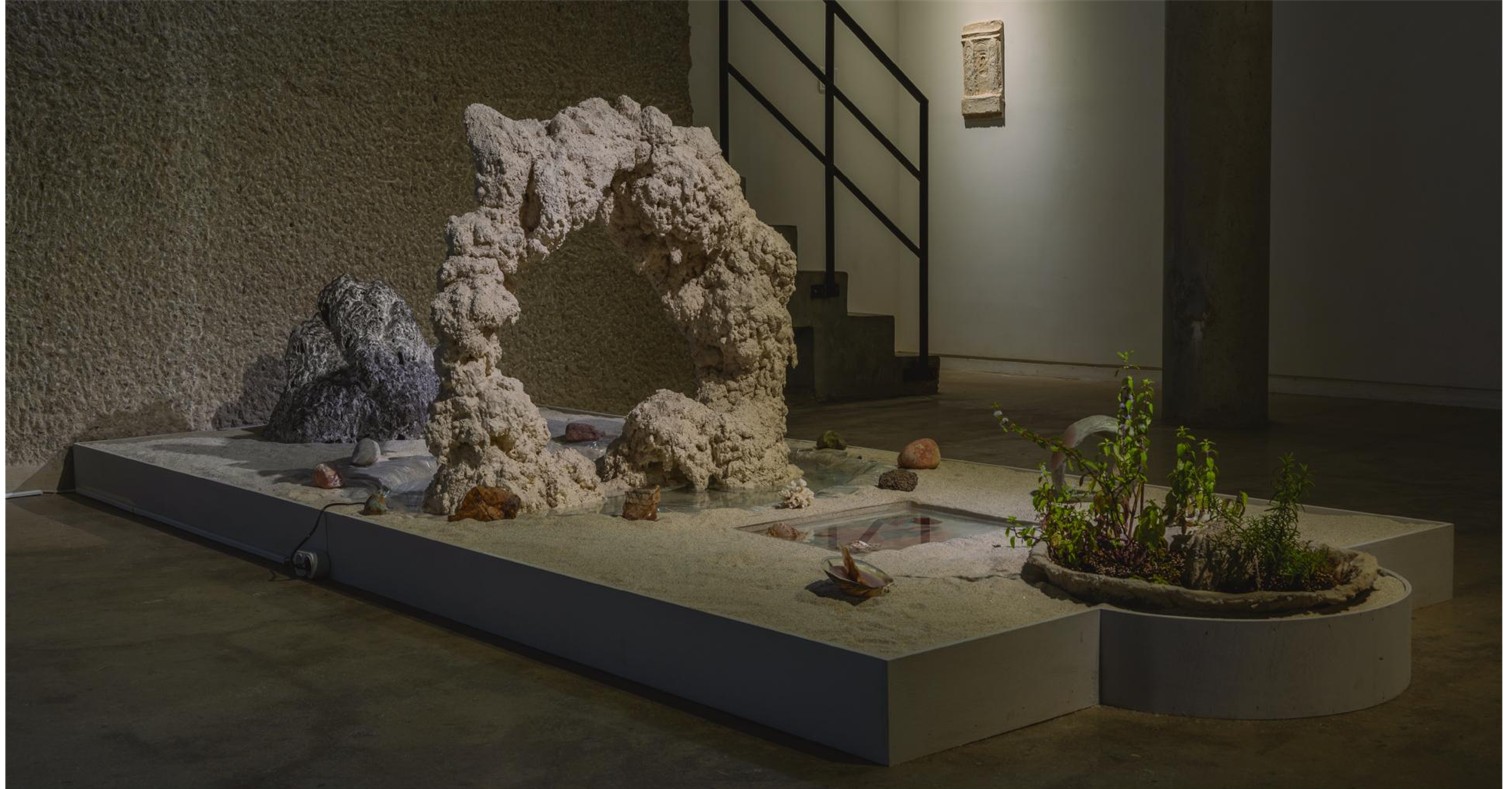
Installation view of 《Winter Sculpture with Warming Vegetables》 (Gallery2, 2025) ©Gallery2

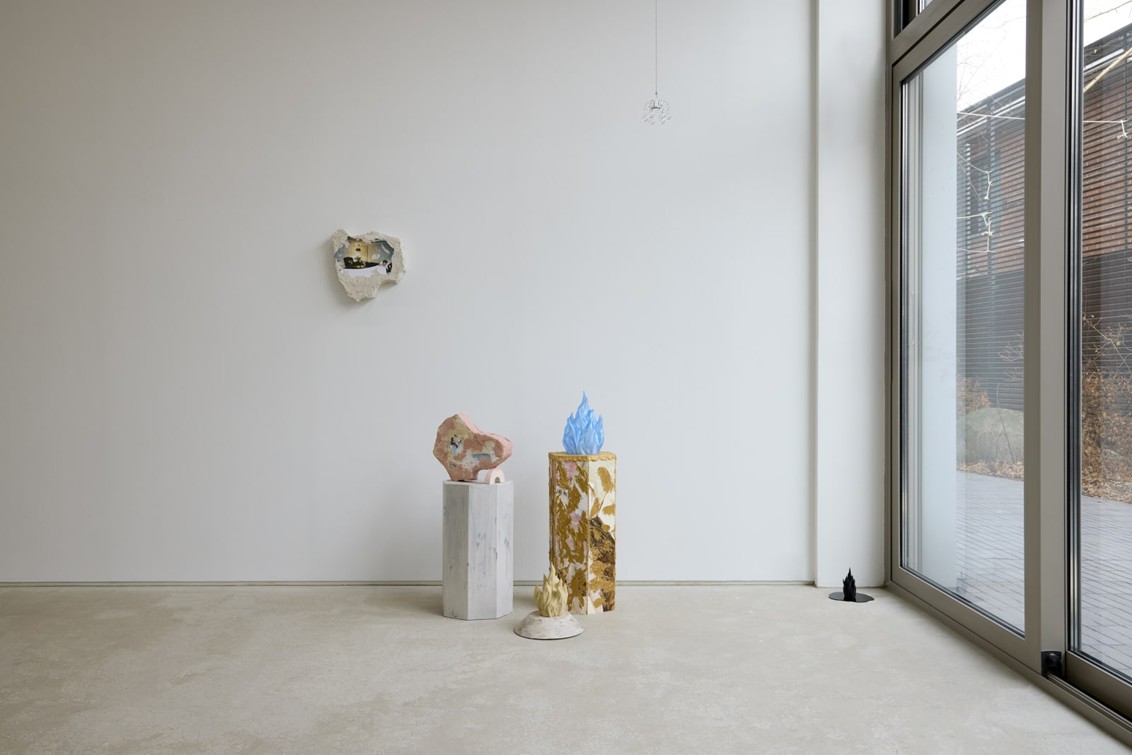
In the interior, Hwabyeong (Fire Flower Vase)(2025) and Yeongchun Jeokbok Hwagichisang(2025, English title forthcoming) are positioned as welcoming gestures to those entering. The former embodies the playful dual meaning of the word “hwa”—both fire and flower—while the latter, created with the amateurish attitude of rubbing a stone rubbing, lightheartedly expresses a wish for prosperity. These two works precede Dance Floor of the Flames, highlighting the interplay between interior and exterior while abstractly evoking the temporality of the season grounding the exhibition. They overlap with the imagery of the 22 solar terms circling back from “Ipchun” (the beginning of spring) to “Daehan” and “Jeongwol Daeboreum” in the distant future. Across the exhibition, 《Winter Sculpture with Warming Vegetables》 persistently uncovers the unseen positions within landscapes, tracing them through continuously unfolding viewpoints.

References