Kwak
Intan’s formal approach has consistently unfolded by dismantling the boundaries
between media. In his early works, he used traditional materials such as
plaster and resin to embody psychological states, but soon expanded to steel,
cement, stainless steel, and acrylic, layering material strata. In 《Unique Form》, he dismantled and
reconstructed earlier busts and juxtaposed them with historically referenced
works, resulting in a formal hybridity where sculpture and painting, fragments
and completions, past and present were intermingled.
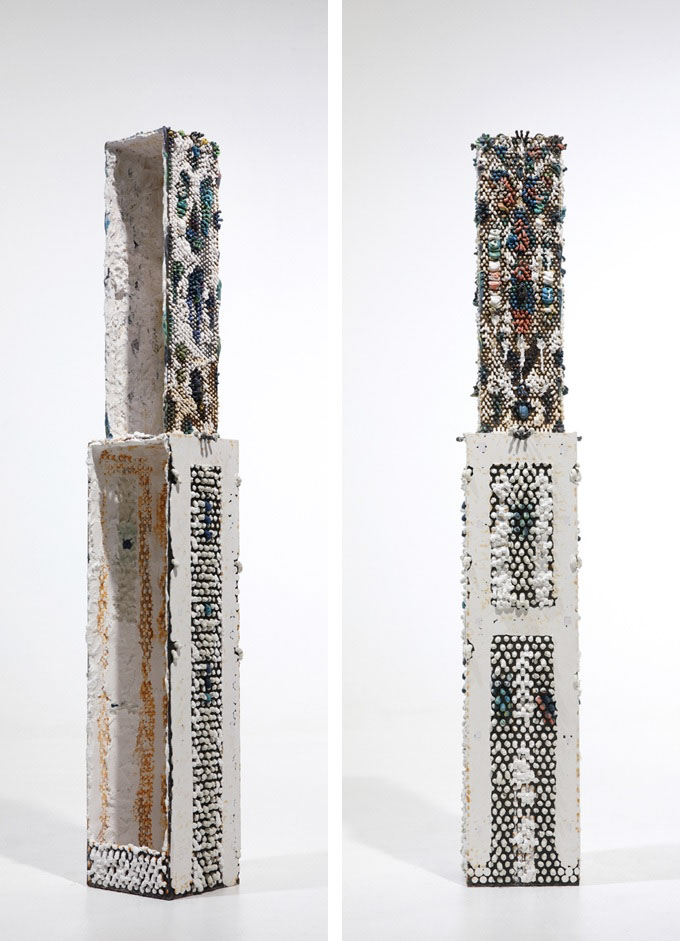
In works
such as Sculpture Gate: Development of the Head(2020),
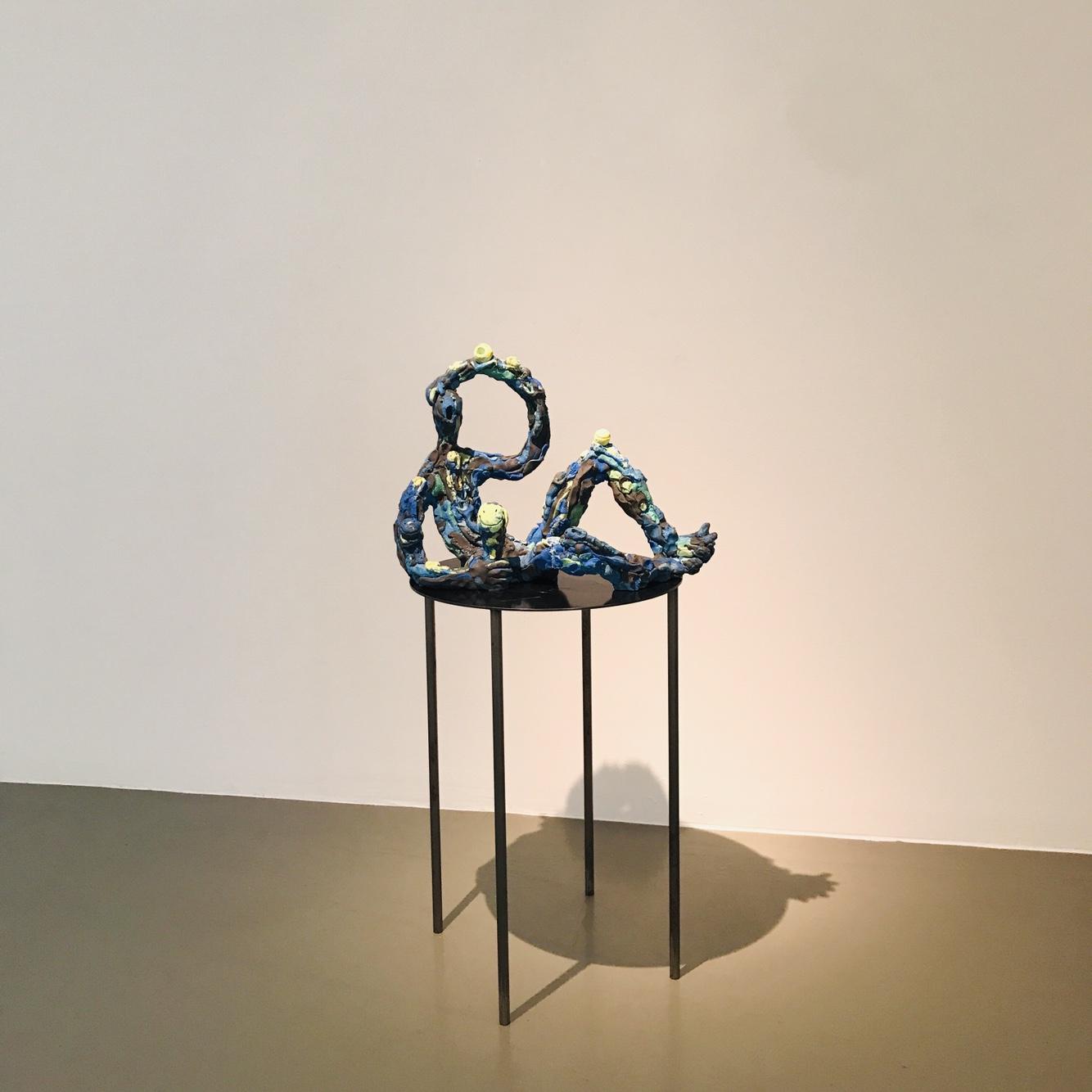
the boundaries between pedestal and sculpture themselves are blurred. Sculpture
is no longer a fixed object placed on a base, but a fluid presence in which
fragments and structures exchange positions. This strategy dismantles the
hierarchical order of sculpture and repositions even peripheral elements as
integral to the work.
In the
‘Movement’ series, the illusion of motion becomes
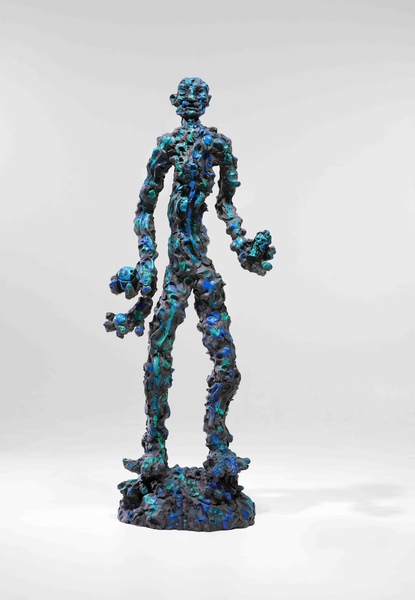
central. Movement 21-1(2021), composed of resin,
acrylic, and steel, transforms the otherwise static medium into a dynamic event
through its tactile surfaces of vigorous flow. Rather than smoothing material
surfaces, Kwak reconfigures fragmentation and reassembly to sculpturally embody
traces of movement.
Since
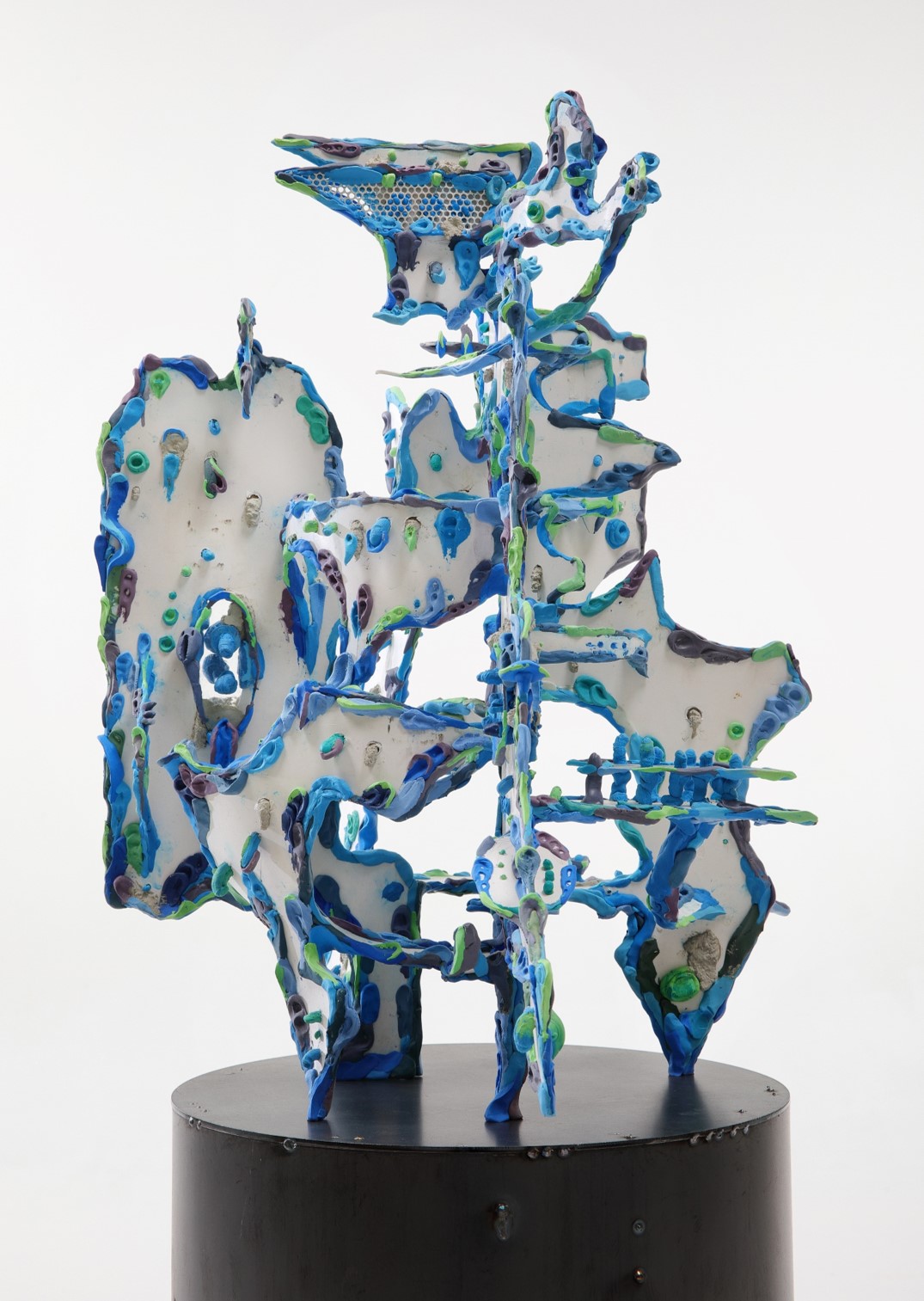
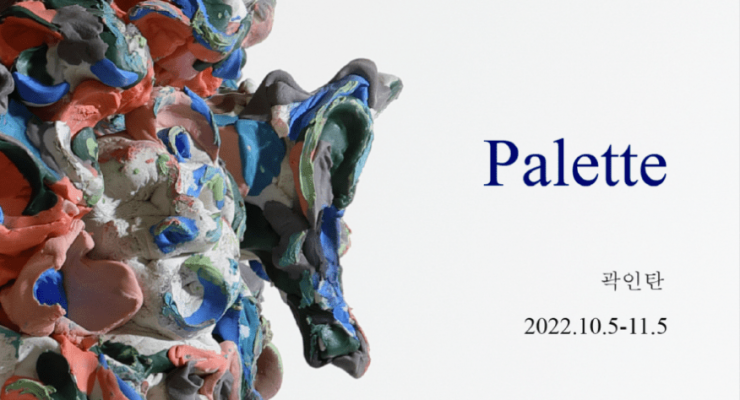
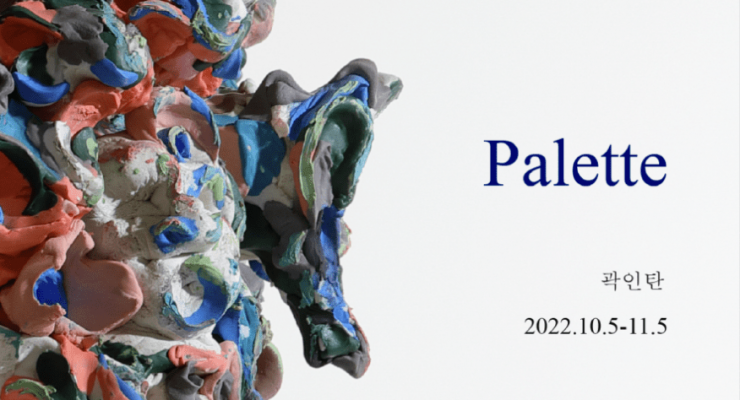
2022, painterly elements and digital techniques have been added. The ‘Palette’
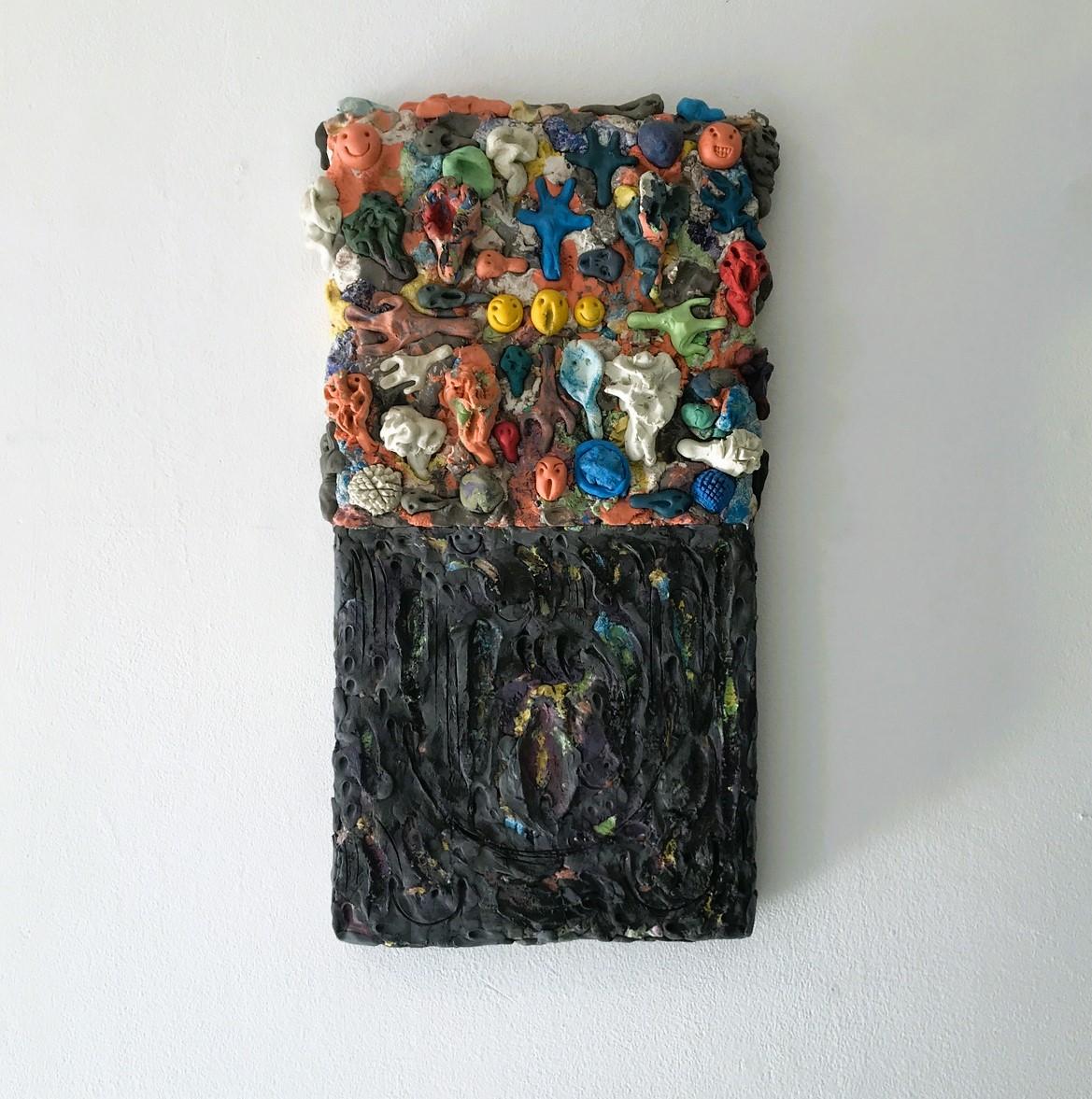
series layers clay, resin, and acrylic to create painterly surfaces; in
particular, Palette 2(2022) merges references to Kim
Whanki’s blue stars, Rodin’s busts, and emoticons.
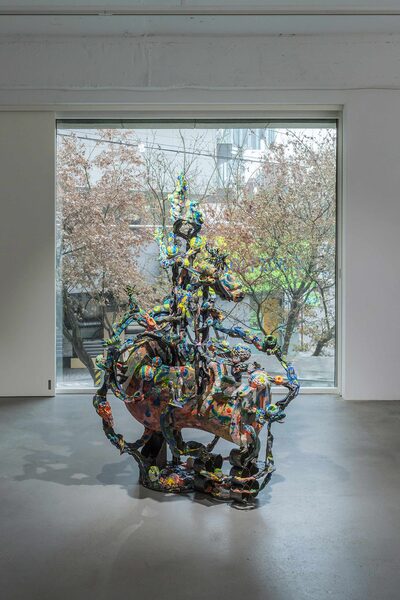
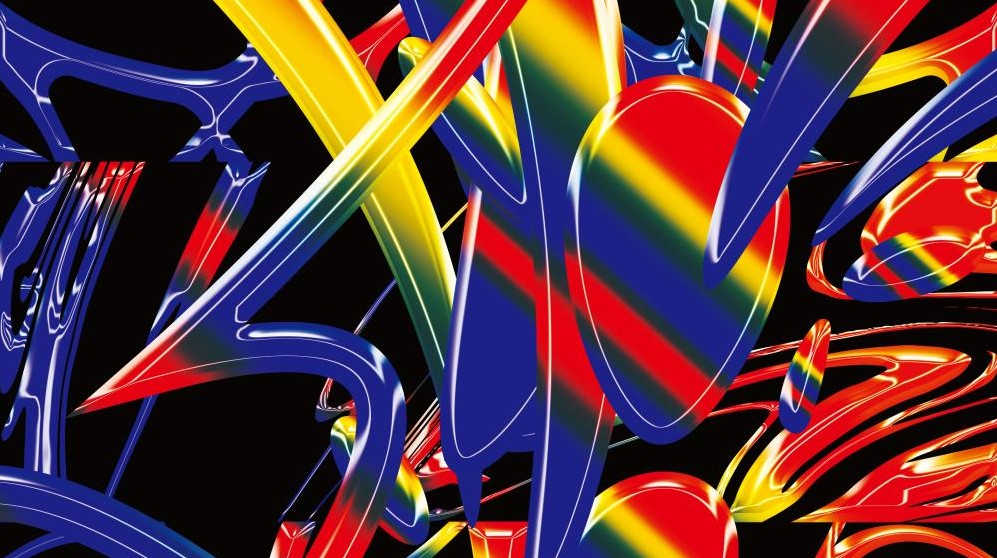
In Intersection of Sculptures 1(2023), hand-formed
fragments intermingle with 3D-printed elements, positioned atop the lines of a
traffic intersection. Here, the real and virtual intersect to form an organic
space. His formal language no longer remains within traditional sculpture, but
expands into an experimental arena where painting, digital media, and playful
signs collide.