〈Frame Type〉
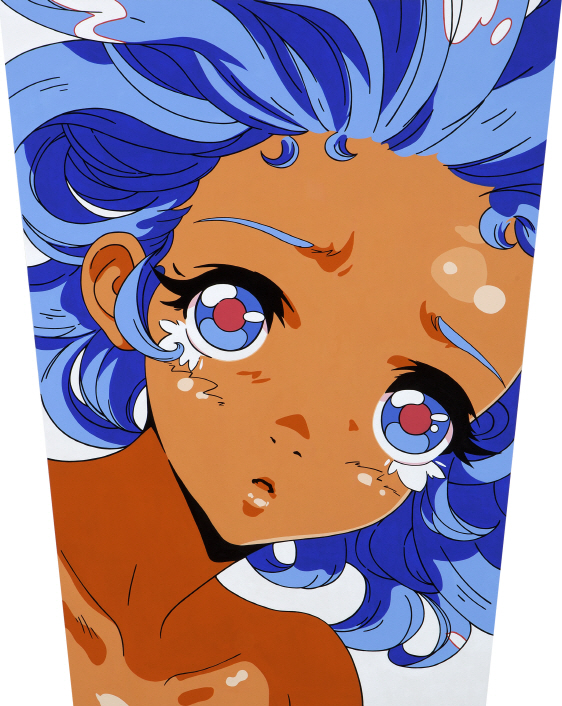
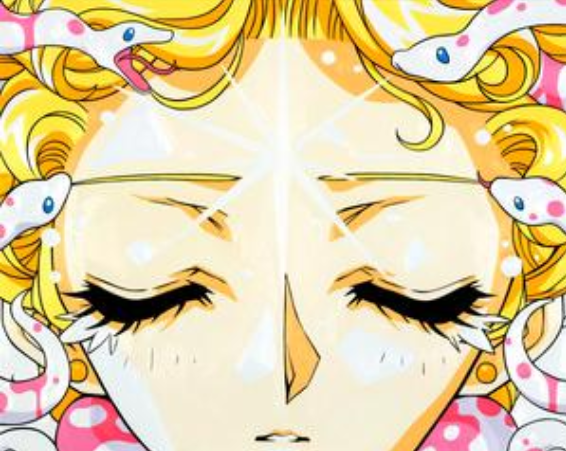
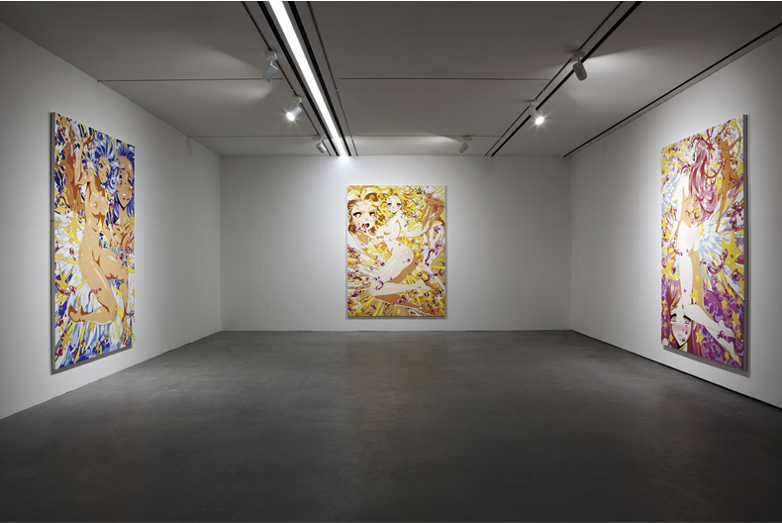
The exhibition 《Nu-Frame》 displays 6 original sketches,6 oil paintings and 12 acryl paintings by Yunsung Lee. Although the material and icons used in the works are different, what they share in common are various forms of rectangular frames. While Lee explored conceptual aspects of transposing Western mythological images into an Asian subculture image type (anime, manga, game) in his previous exhibition Nu-Type in 2014, the focus of this exhibition was to experiment with the form of the frame which holds such concept.
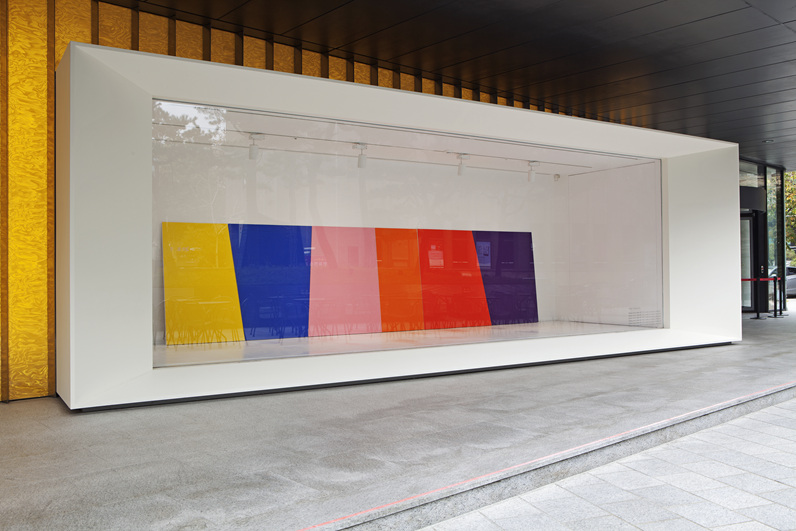
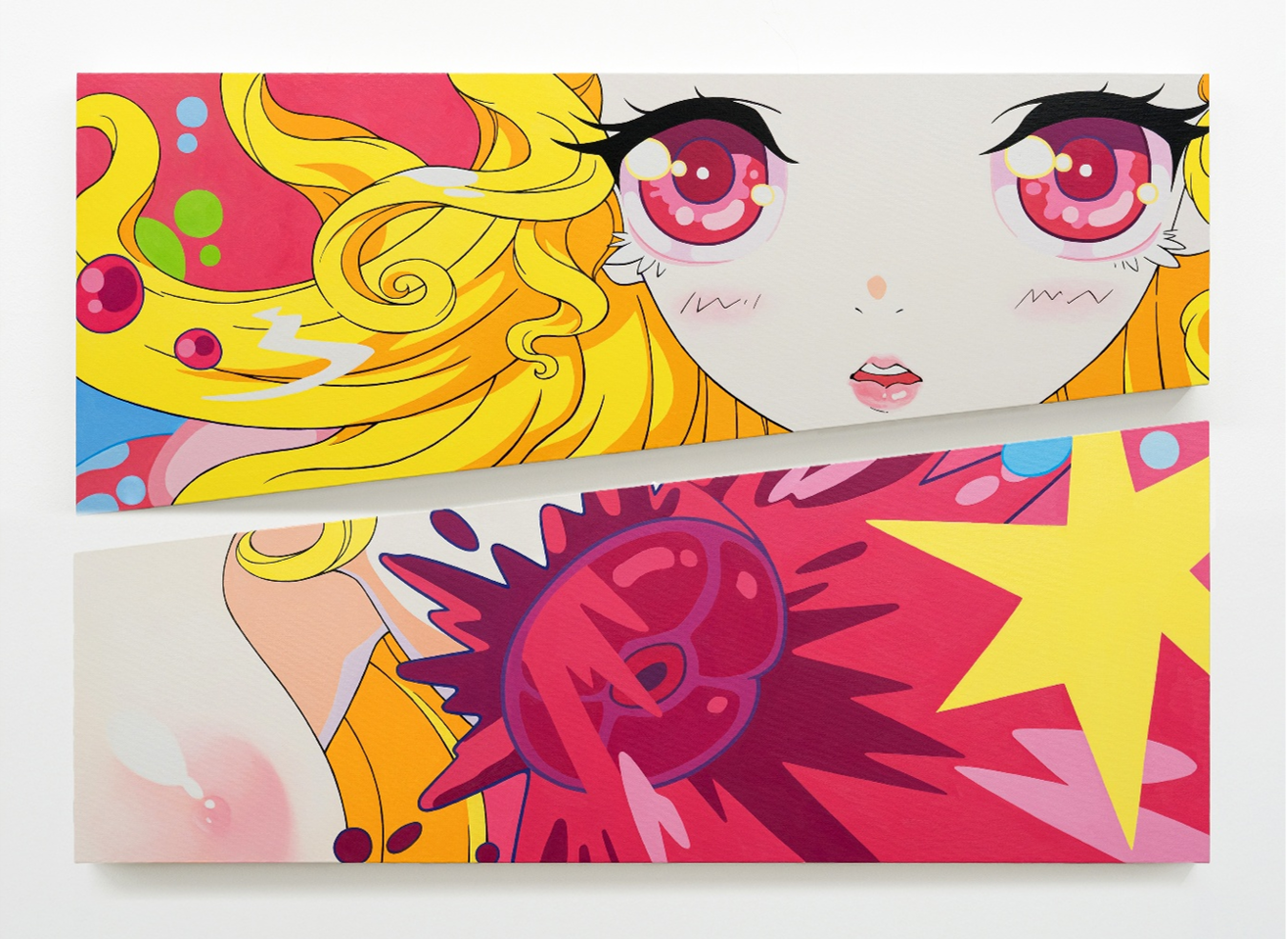
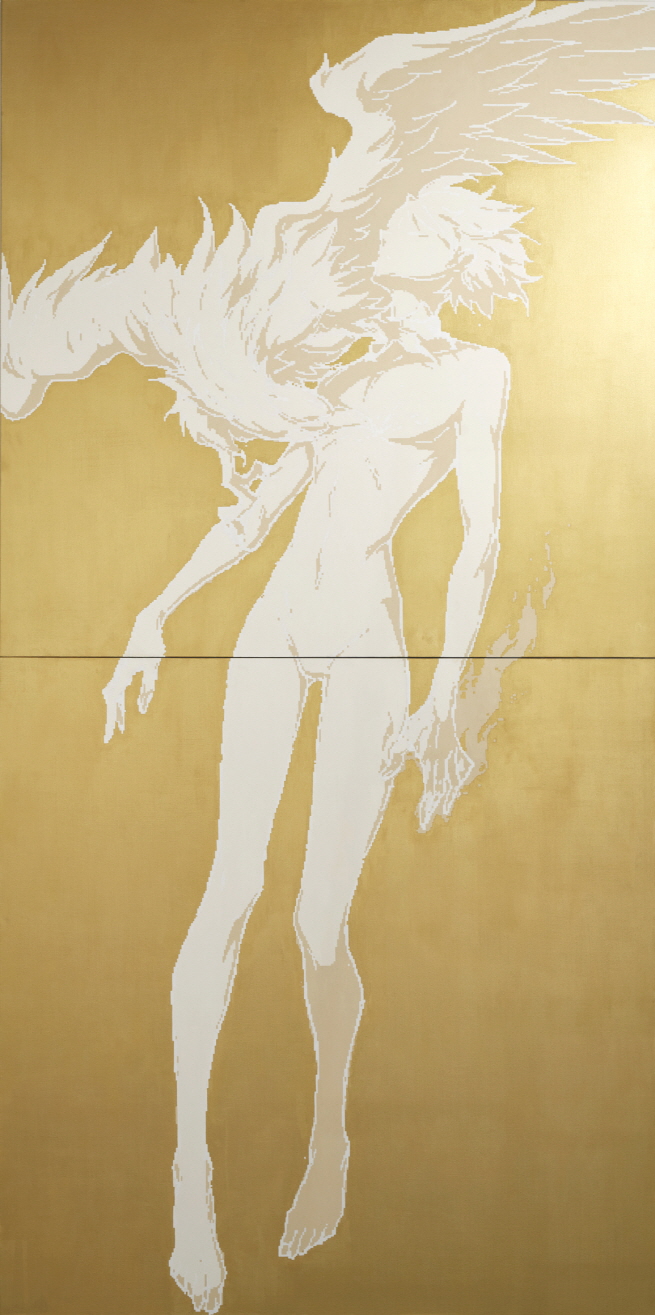
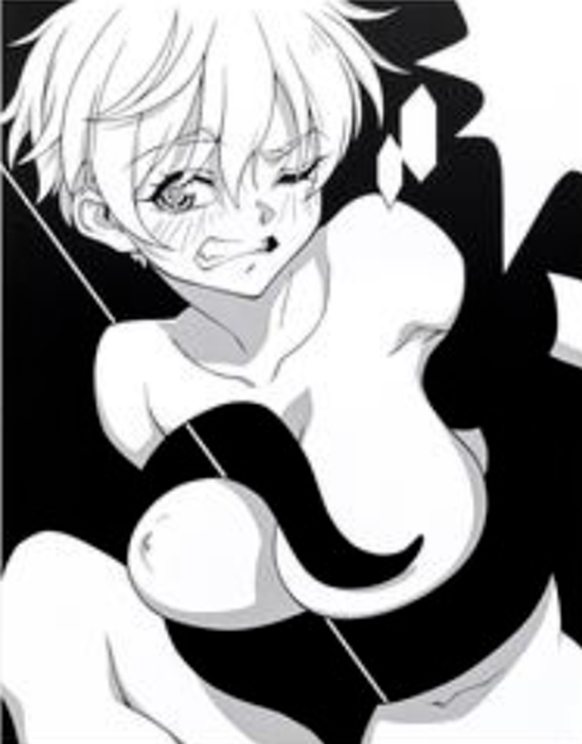
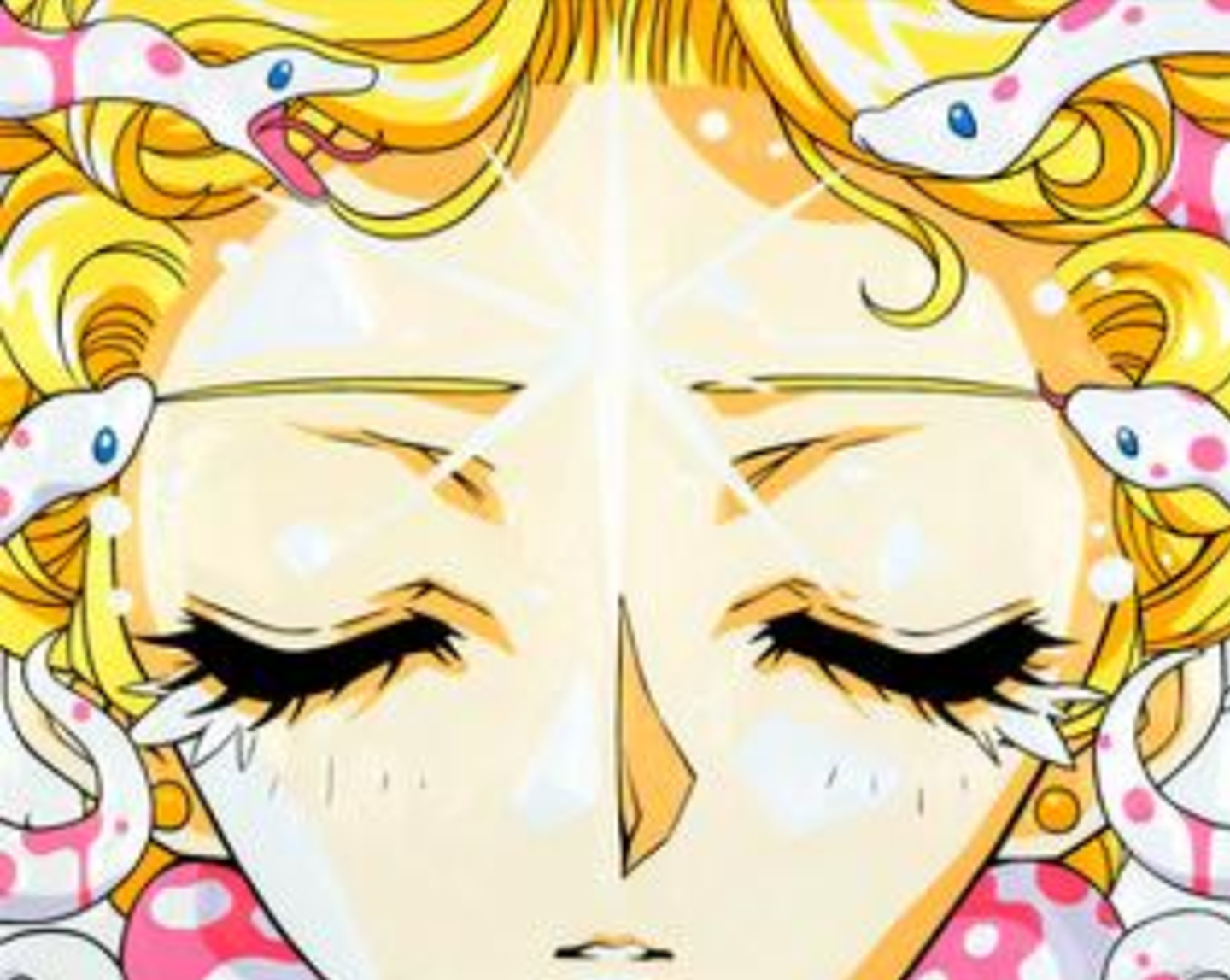
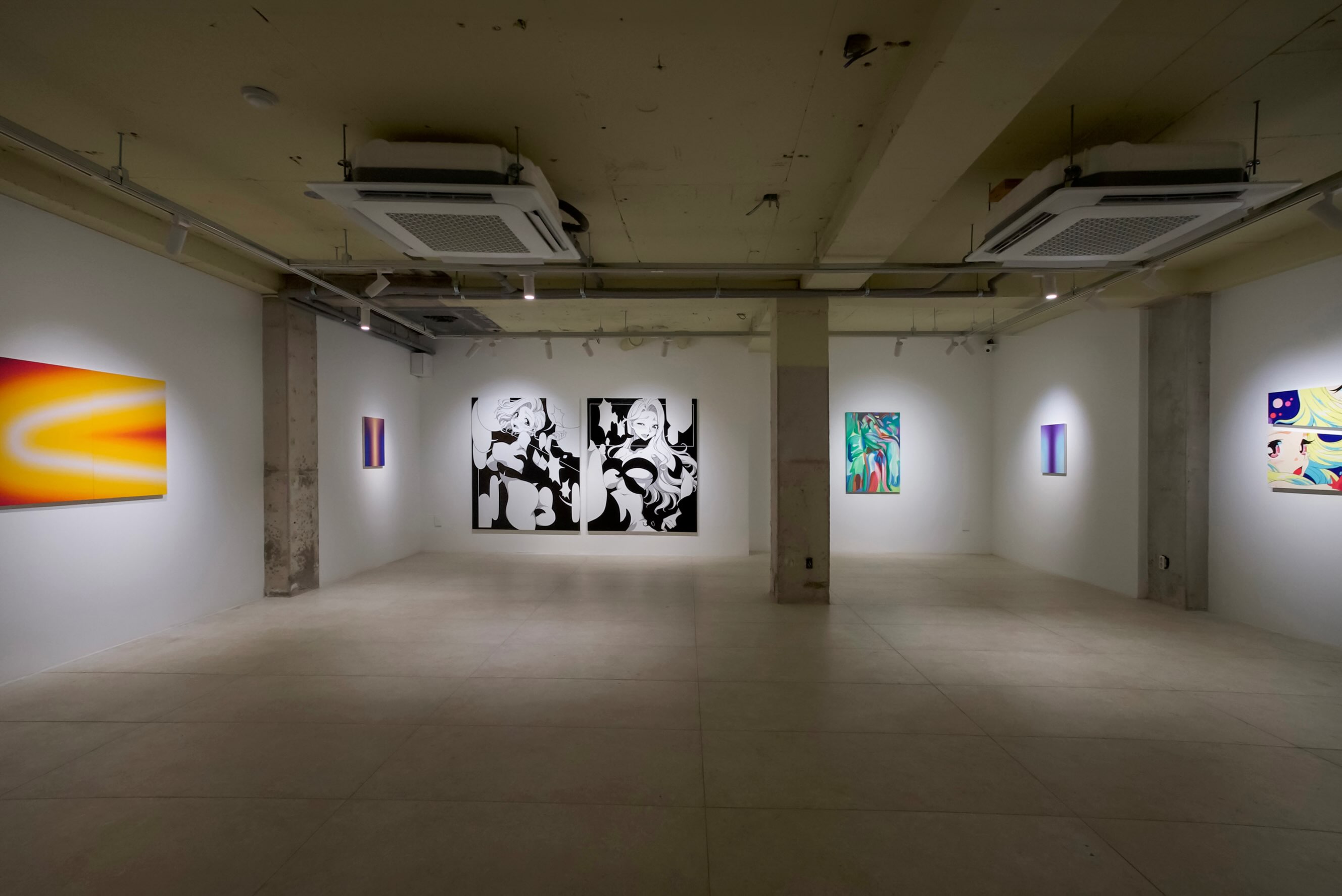
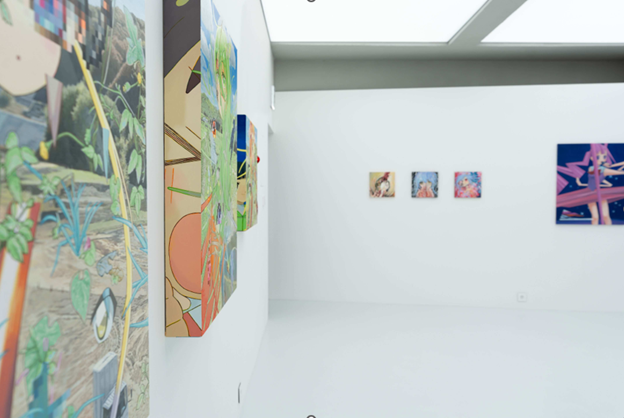
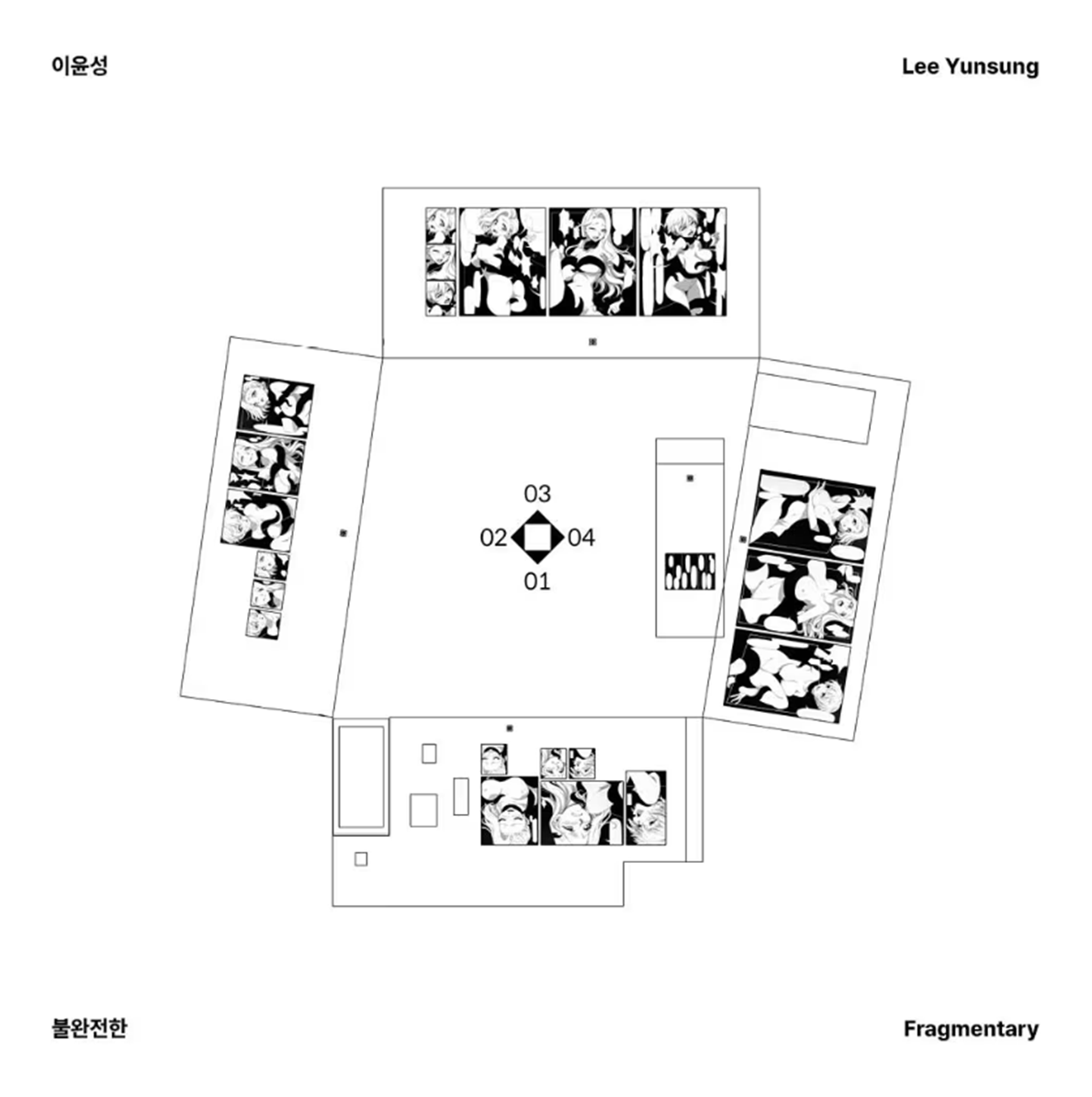
The subject of the exhibited works is Danaë from Greek mythology. However, displayed in the window gallery at the front entrance of gallery are various monochromatic paintings in blue, yellow and pink, overlapped to produce a long rectangular works. As one enters the gallery, the viewer confronts six black and white nude sketches of Danaë, measuring 16 x 22cm each, and on either side, works measuring 117 x 73 cm, with abstract patterns in blue, yellow and pink.
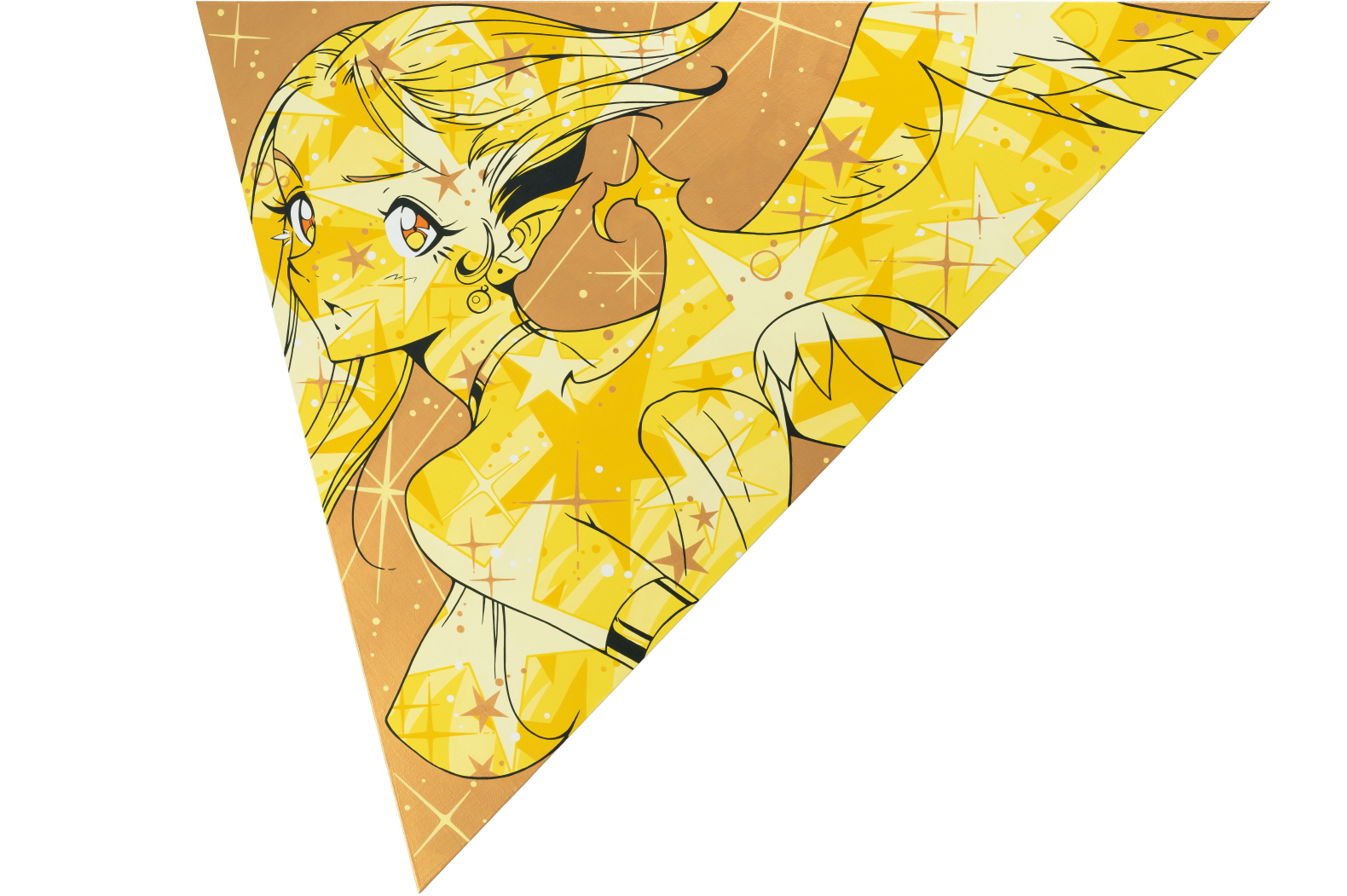
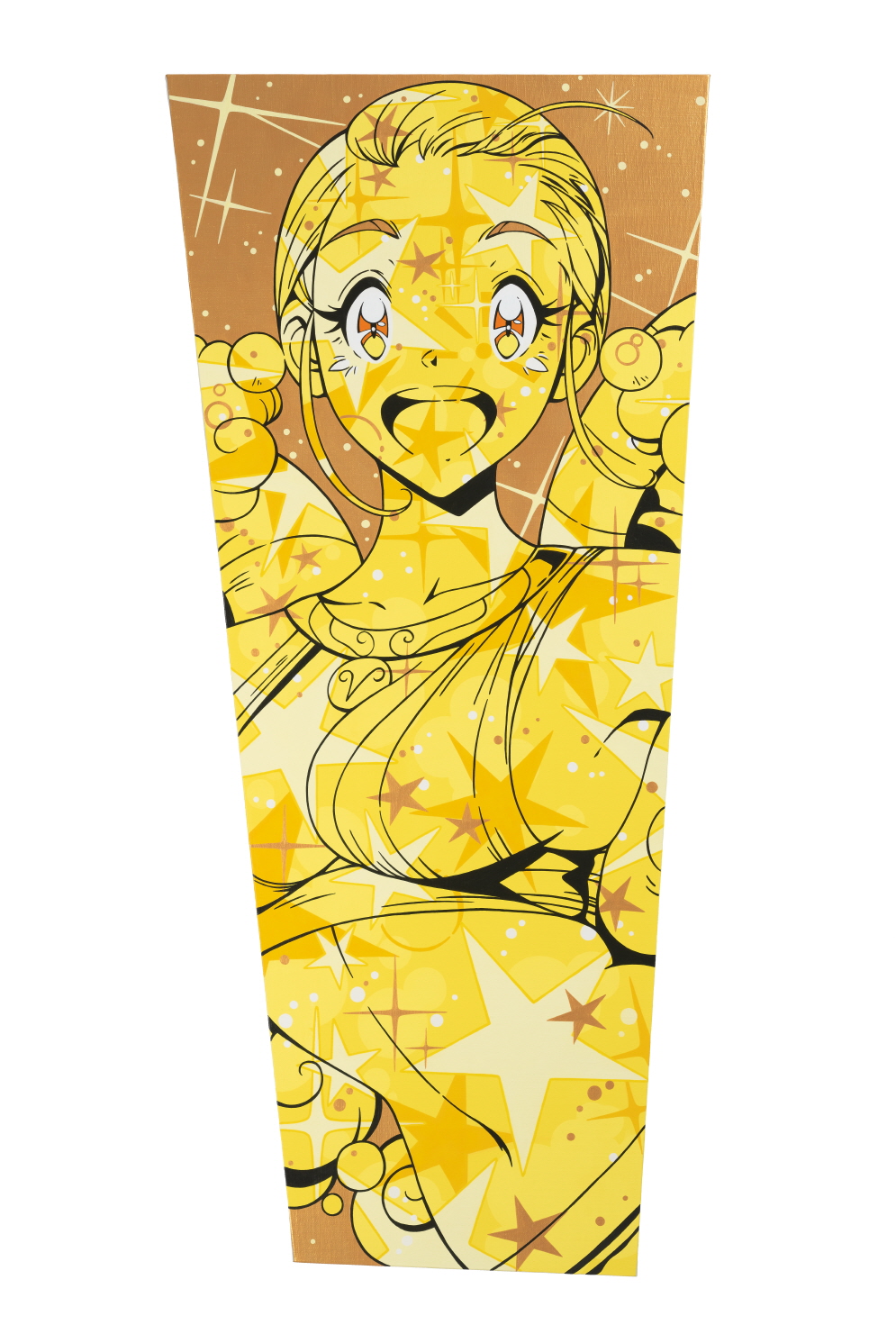
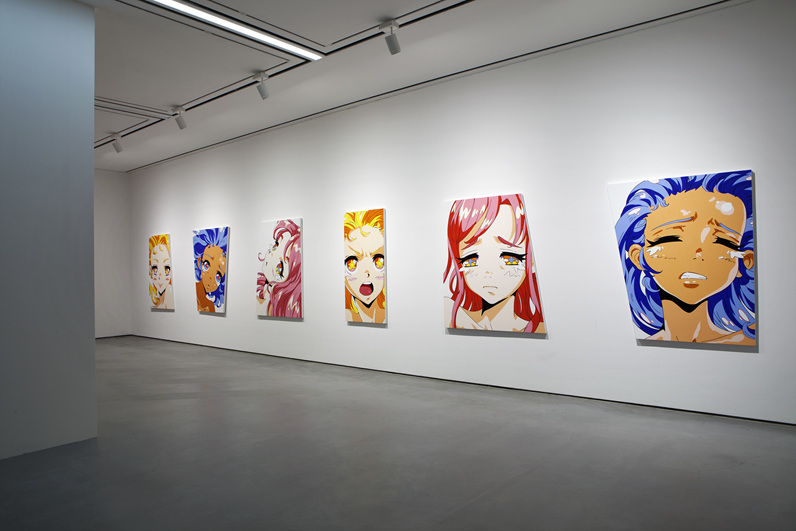
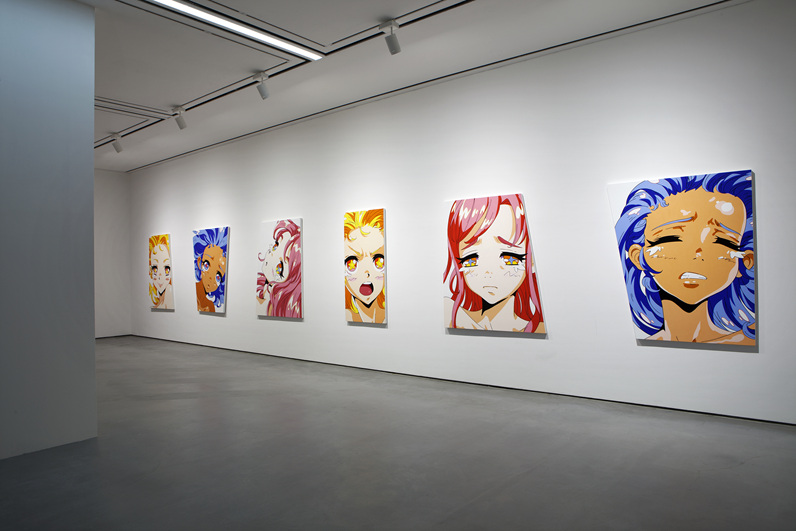
After seeing the works that seem to be squeezed in the space, the viewer turns around and faces an empty corridor towards the inside of the gallery. Half hidden behind the wall that cuts across the gallery, the six expressions of Danaëon tetragon, trapezoid and rectangular forms on the wall at the end of the corridor allure the viewer along the viewer’s movement. Here, considering that the canvases are the same form and size as the monochrome paintings at the window gallery, we realize that the image, color, emotions and effects can be interchanged and integrated on the fixed polygonal frames.
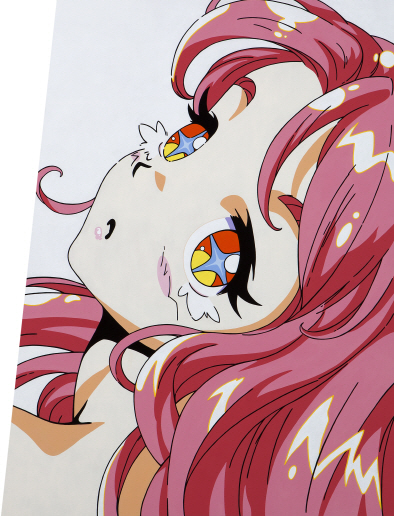
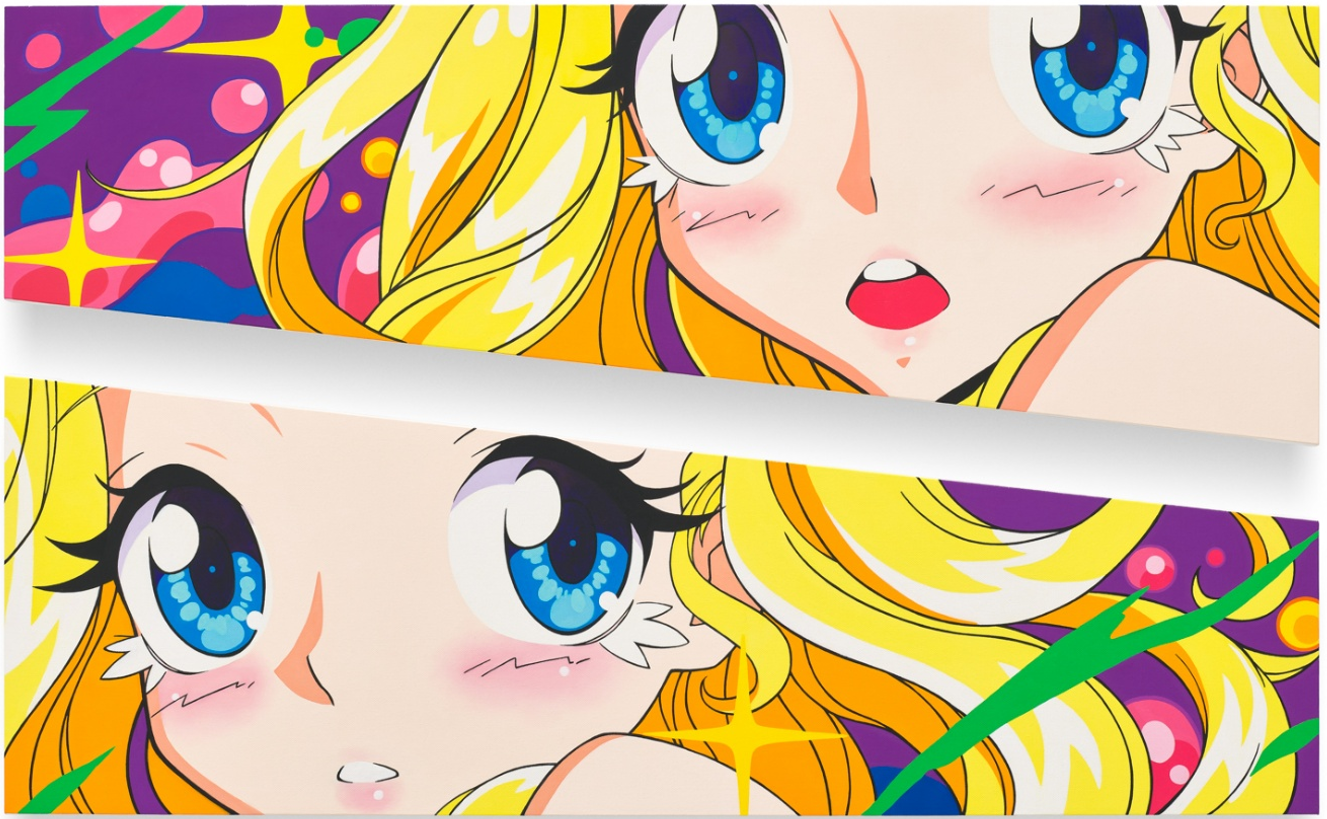
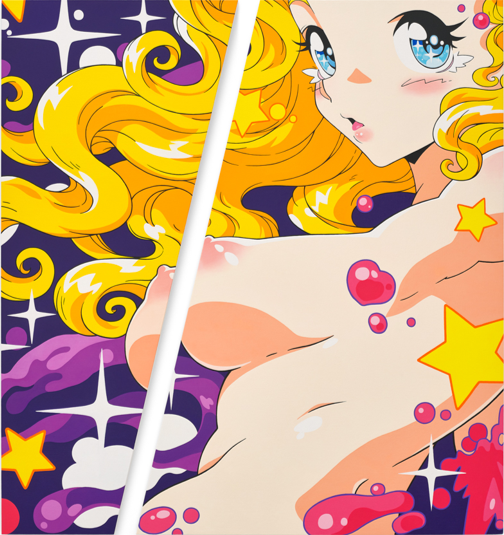
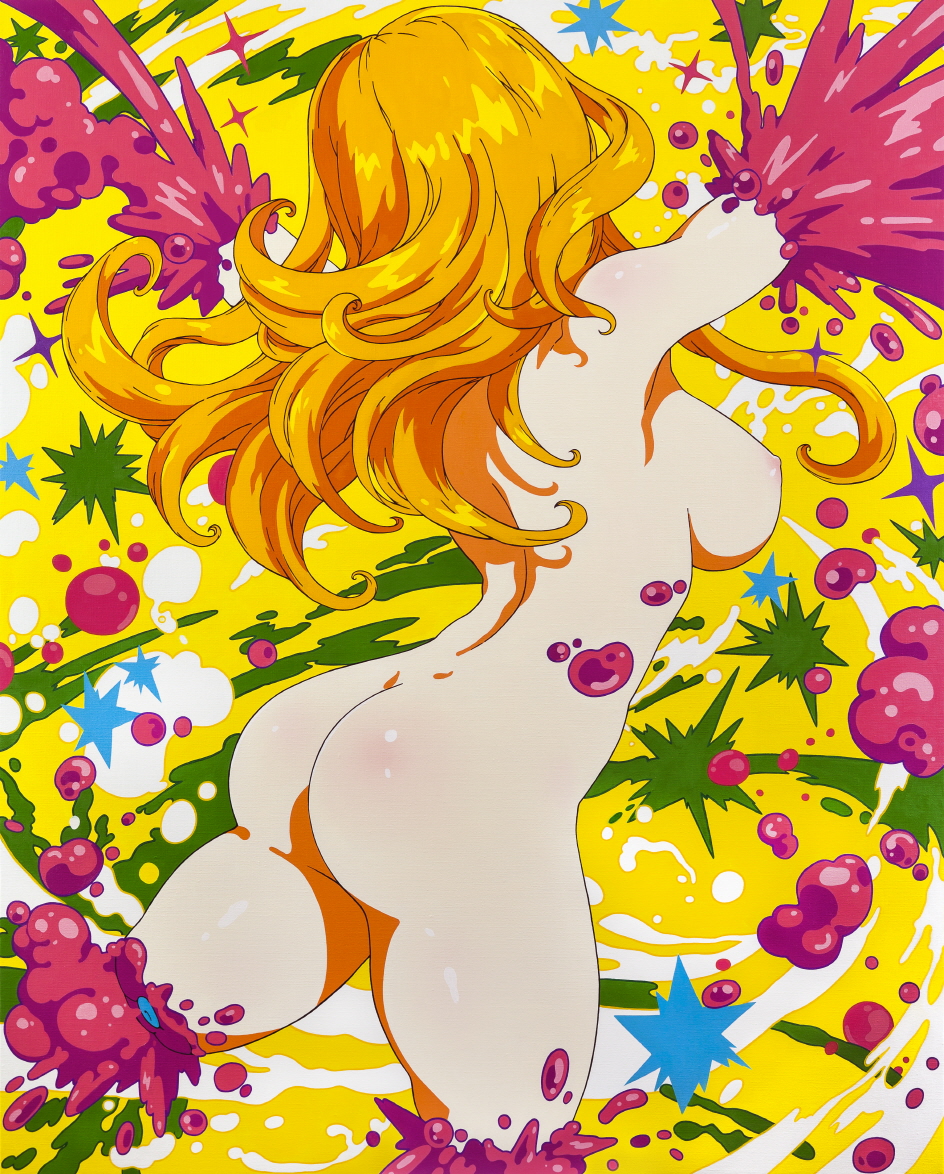
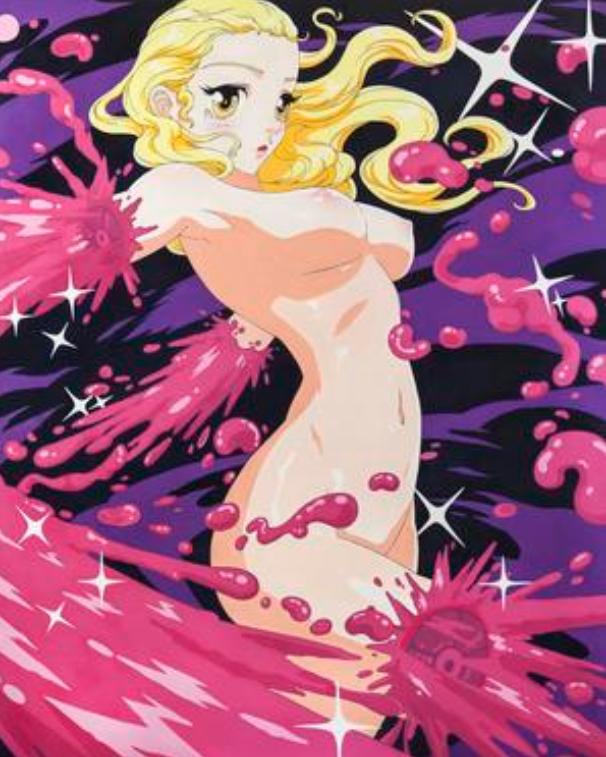
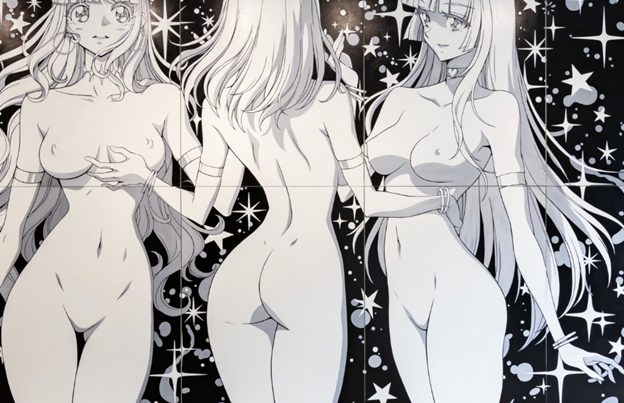
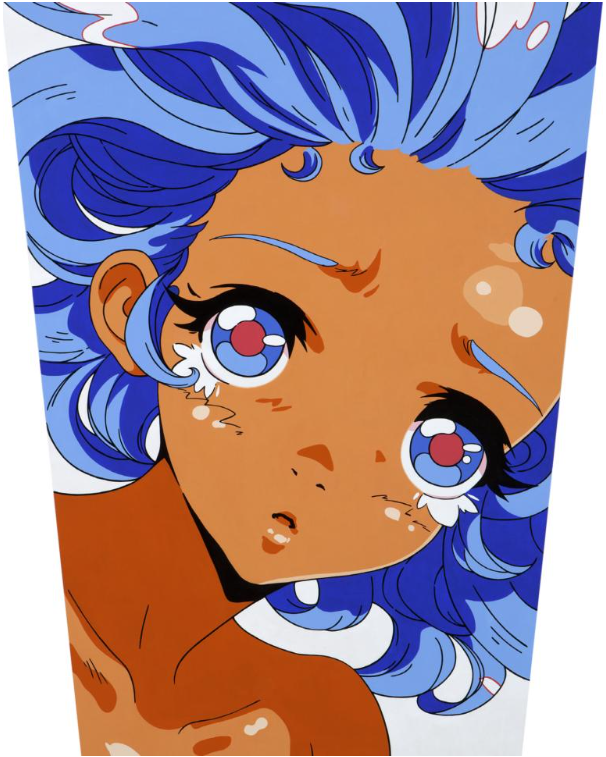
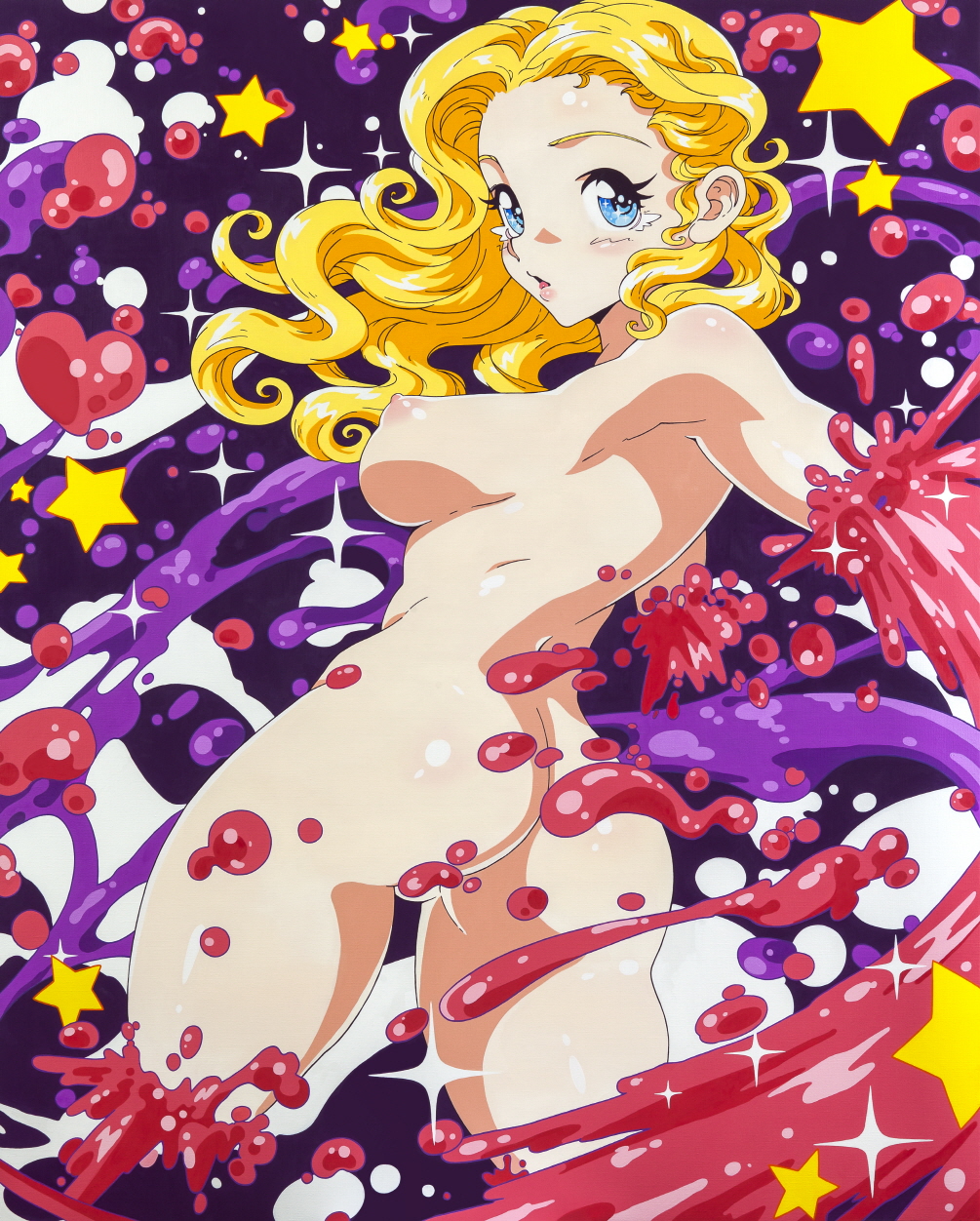
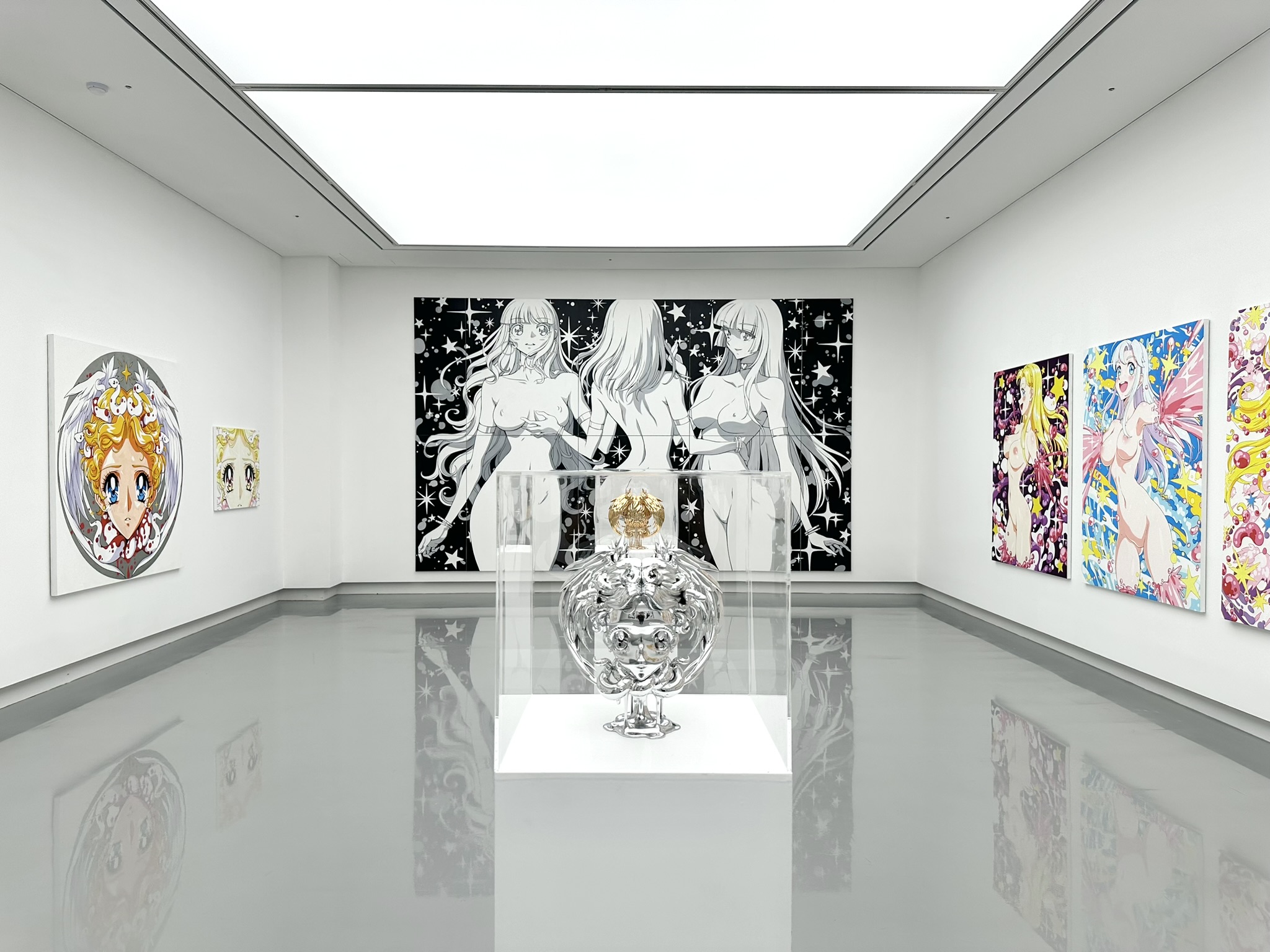
Deep inside the gallery space are three figures of Danaë on three canvases put together, each measuring 194 x 261 cm. While the 9 canvases that make up the three Danaës can be broken down or put together, they are not to be seen as puzzle images that are assembled to produce a whole image or disassembled to break down a completed image, because the image in each canvas can stand independently on its own. Therefore, while the viewer might think the original sketches at the entrance of the gallery have been divided from the three Danaës, they also each depict their own world.
Each of the body of the three Danaës is put together by a trapezoid and two tetragons, or by three trapezoids[1].In the context of manga, it seems that the shape of the canvas is an enlargement of the frame in the manga book form, with some differences: the canvases are fused together, not allowing any kind of space in between them. The inside and outside of the frame are put together and images are continued or cut as if the inside image is not differentiated from the outside. In context to manga, it’s closer to frame composition in Shouju (girl) manga rather than the common Shonen (boy) manga which are drawn for males: the consumers of sexual objectification.
The frame-boundary in manga is originally a visual index which divides the image and time space. It promises that fragments of various spaces (image and time) stays within the frames, and that time can intervene in the empty space between the frames. While the Japanese manga — which developed out ofWestern comics — captures the image in the frames from multiple layers of vanishing points, Shouju manga, a trajectory of Manga, employs extremely flat composition like text arrangement in literary work or magazines. The “outside of the frame” in Shouju Manga is deemed as another frame surrounded by other boundaries as the medium.
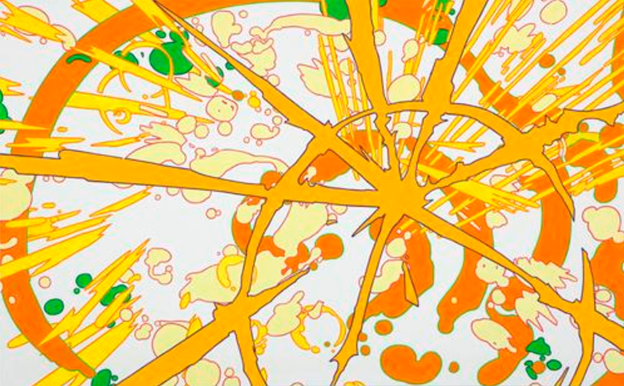
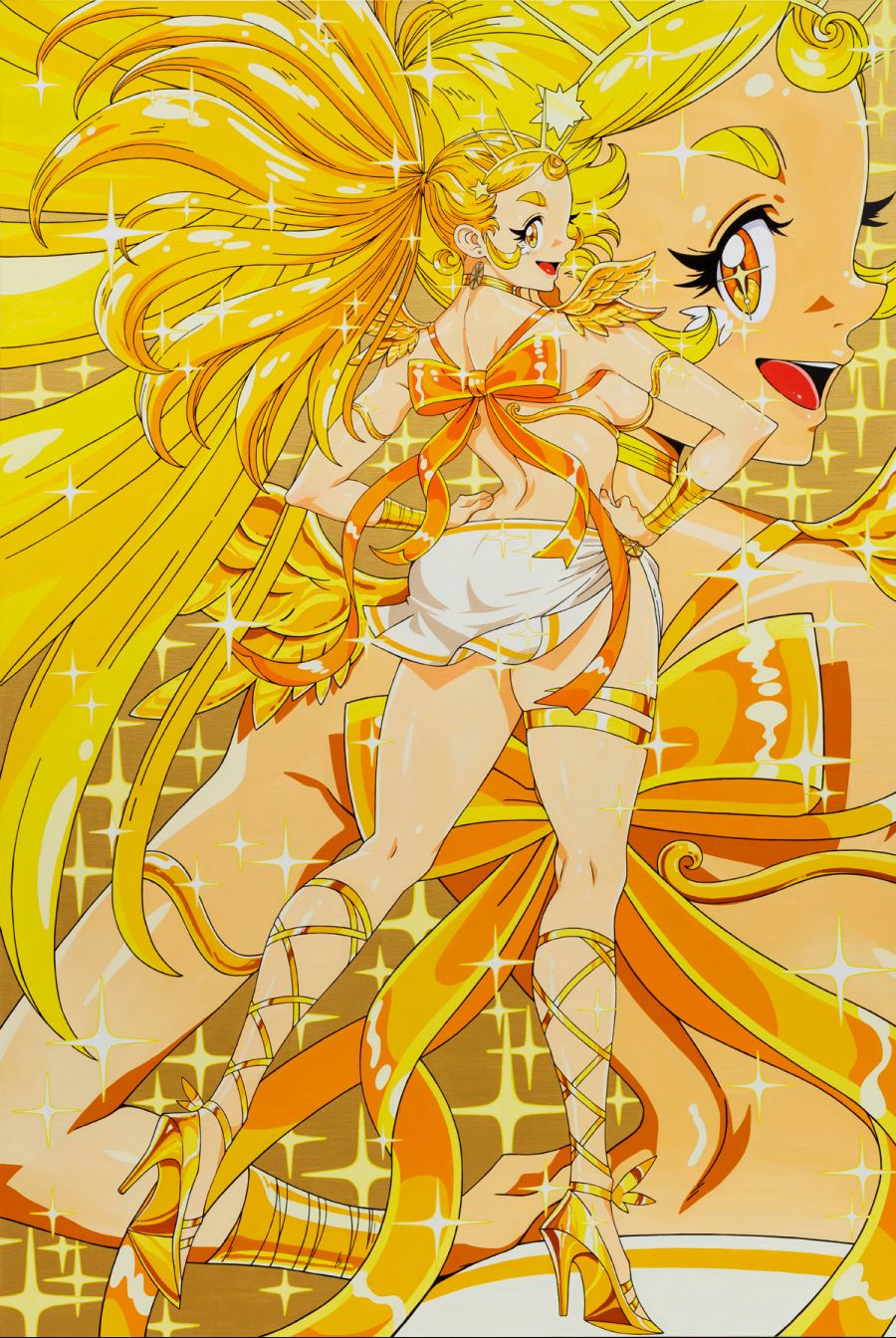
On the outside of the frames, symbolic elements — with emotional effect or a sense of movement like water bubbles, light and plants — float around the image inside of the frame, juxtaposed with the closed-up faces. This is not only just limited to the frame as a signifier. As all lines in the painting — like Danaë’s face and hair — become the boundary which divides the background or is charged with effects, the objects outside of the boundaries move in and out of the frames, interweaving the inside and outside.
While such boundary/diagonal lines emphasize the extreme composition, they are also read as compressed 3-dimensional coordinates. For example, in the game Dragon Ball Z: Extreme Butoden[2], the diagonal lines rotate in the frame, expanding and contracting the depth and distance of the space between characters, and also changing the direction of the axis. The diagonal line — rotating, expanding and contracting — is similar to a segment of an inner line connecting the two lines on the surface of a sphere being projected on 2-dimensional world. The continuous surface of the sphere is divided into lines, capturing a segmented image as if it’s been filmed by a number of different cameras at once.
The configuration of the figure’s expression and body, as well as effects, divides and assembles the boundaries in the center. Although confusing, such “absence of context” visualizes intangible emotions. The body and expressions are subtly, or at times excessively distorted. The distorted body of Danaë, drawn in Shonen manga style, is pushed around in and out of the space in Shoujumanga style. In the Shouju Manga space, the effect-giving-objects between the characters and background define the space in front and behind of the figure, assisting in the meticulous composition of one single event in which Danaë jumps up, erupting with a particular emotion.
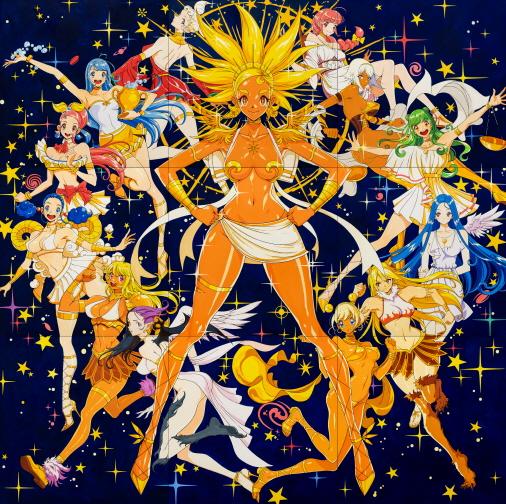
The collision of two disparate archetypes — Western mythology and subculture manga/anime/game — which Lee demonstrated in his last exhibition is happening again, this time with meditation on the form of the medium. The female character, which is a condensation of male desires, is completed through female desires, and the completed flat surface transcends the perspective viewpoint and demands to be re-defined. The transmuted chimera of the white cube’s vantage point and the diagonal lines that traverse across the elements of flat and 3-dimensional in the painting, has been titled “Nu-Frame”, which breaks down and recombines the parts and assembled whole of the frame form in “Nu-Type”.
〈View, Material, Tectonic Simulation〉
Like generators of subculture, Lee’s work begins in the digital space, but his work always moves outside of the monitor, actualized intoa work of painting with concrete scale placed in the white cube. Even in the digital environment, however, the artist must keep on questioning the method of construction and envisioning the exhibition space as 3-dimensional coordinates.
This text was written before the actual exhibition, but as it’s easy to virtually construct a 3-dimensional exhibition on the monitor by entering the exhibition space floor plan and digital data of the works, the elaborately-visualized exhibition space helped me to trace some issues the artist might have questioned before the actual exhibition.
a. Unlike in reality where the canvases must individually be produced, the figures can be drawn on the final rectangular frames right away in the digital environment. The artist places another simple layer on top of the image, and draws in hypothetical borders to cut out.
b. This border is actually a conceptual line without any depth or width. The artist would have arranged the objects by turning the layers of the lines on and off and zooming the image in and out.
c. Now, the images and the borders demand to be actualized in 3-dimensional space. Z point is added to the X-Y outline of the canvas. Producing the actual relationship between black line and the canvas in 3-dimensional program is similar to the process of transformation fromthe architectural blue print in the virtual world to the actual building in reality.
d. However, the boundaries do not top down nor bottom up like the grids of skyscrapers in Manhattan or suburban housing in the outskirts of the city.
e. Rather, boundaries flow following the surface of the painting, and have a value of negative depth which sinks in and thus elevates what borders it.
f. Minute gaps must be put on the contact plane in order for perfect simulation. Chamfer angle must be put on the canvas, and 0.x~2mm gap must be put in between the canvases, because the canvas in reality can never make a seamless bonding with each other.
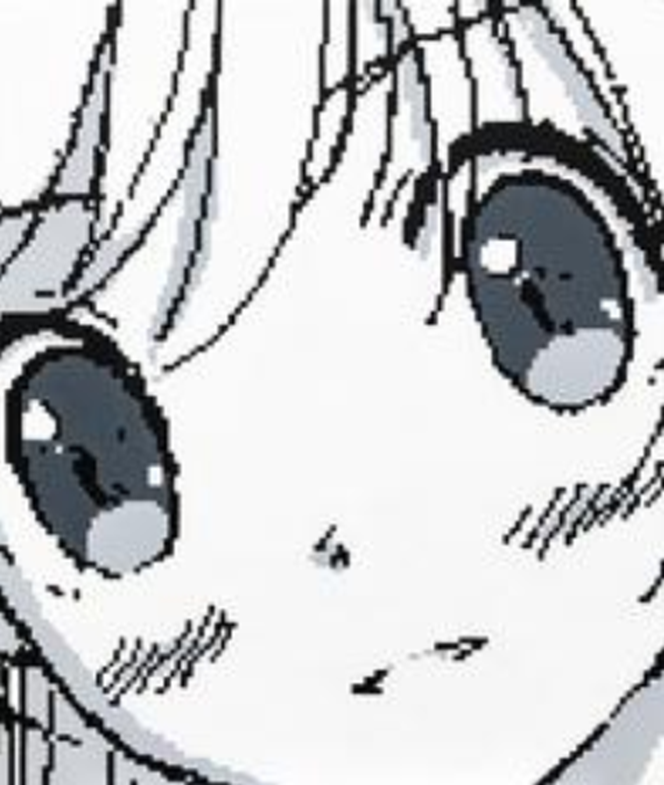
g. Ray tracing rendering[3] renders the virtual black line on the 2-dimensional image into shade. The shade is not clear and lucid likein the early sketches; when the pixel image is magnified, it looks like land art in which terrains of paint has been dug up.
The virtual exhibition in the 3D program demonstrates the translation process in which borders are translated into the essentially indispensable material of paint and canvas in painting. While translation suggests failure in many cases, translating border — which divides medium and not the figure itself — can give us the assurance that it can organize chaotic reality and perception, rather than produce anxiety for failure.
First of all, the new boundary of matter which organizes the image is defined as the frame, which is an indispensible element of painting. This isn’t just like layers in Photoshop; the material, paint, color and physical depth are all different and interweaved three-dimensionally, because it transcends the manga signifier and has become something that can be constructed into a boundary made of material and form. The negative wall or the boundary, indestructible by any force, can now be separated regardless of the image. On the other hand, however, the gap between the frames must remain even if they are put together.
The thin border line in the rendered image which only measures about 1 pixel in width does not only expand and become the empty space which measures a few millimeters in between the frames in the manga, but allows us to imagine a new scale. It’s analogous to two directions from which to capture the inner surface of the world, one from outside and one from the center. The viewpoint from outside of the world is geometric pattern which cuts through the faults and landscape of the paint.
For example, it reminds us of infrastructures like dams, roads and train tracks observed through satellite, or the miniature model of Michael Heizer’s Double Negative. On the other hand, the viewpoint from the center of the world transports the 3D space, or the inner perspective of virtual world, into reality. In other words, 2-dimensional HDR surrounding image[4]is placed on top of the spherical world in the digital world, and the observer has the experience of looking from the center of the spherical body to the vanishing points in a flat way.
The various ways of looking at the separation of elements takes the canvas from being simply read as a window into an image. As an abstract model with 1:1 or 1:Xproportion, the canvas demonstrates the simple yet exquisite tectonic traces on the broken surface. The image inside the frame does not resist completion, and the traces of painterly techniques steer away from fixation on materiality.
Therefore, it’s hard to see 《Nu-Frame》 as a process of completion where material and color is put over sketches. Rather, the viewer repeatedly sees the construction and deconstruction ofthe fragments of a world that’s completed too quickly. What we may be seeing is the cross section of the warped structure-type that penetrates the column, or the elements, of the new but uncertain composite figure.
[1] The classification of the rectangular figure as is follows: rectangular 〉 trapezoid (isosceles trapezoid) 〉 parallelogram 〉 rectangle (diamond) 〉 square. The artist combined the parts of quadrangles and trapezoids, to create a rectangle, which is a subclass of this category.
[2] One of the best-known games based on the cartoon Dragon Ball Z. Some of them recorded 1 million in sales. In this fighting game, screen dividing system which compresses time and distance was adopted in order to reproduce the world view and physical law of Dragon Ball world.
[3] Ray tracing rendering is a technology which illuminates light on the surface of the object in virtual space, and makes pixel image based on the calculations of the reflected light path. A rendering method similar to in reality, and thus producing a high quality reproduction, it requires very specific computer technology and its conditions are finicky to produce effective results.
[4] High Dynamic Range Imaging (HDRI) is a digital imaging technology which can produce a much higher dynamic range than ordinary photograph. First developed to improve the quality of computer rendering image, it was later improved to produce photographs of high dynamic ranges from photographs of different exposures. It reproduces phenomena of changes in the light.