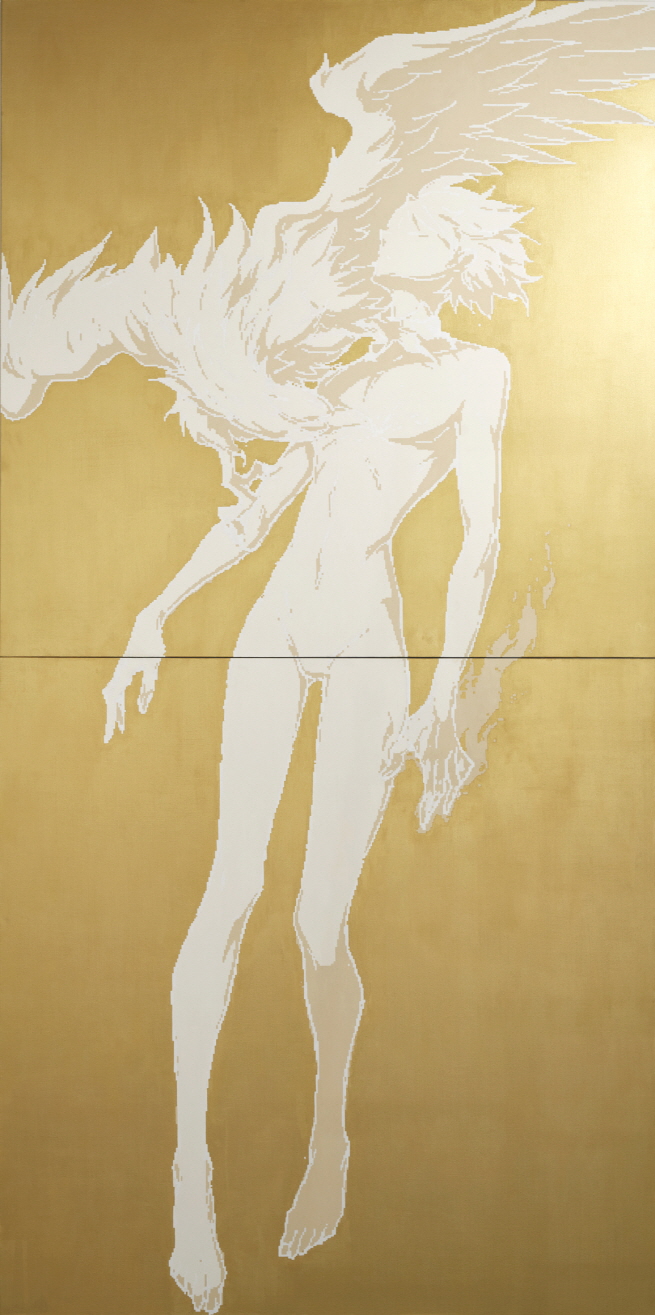
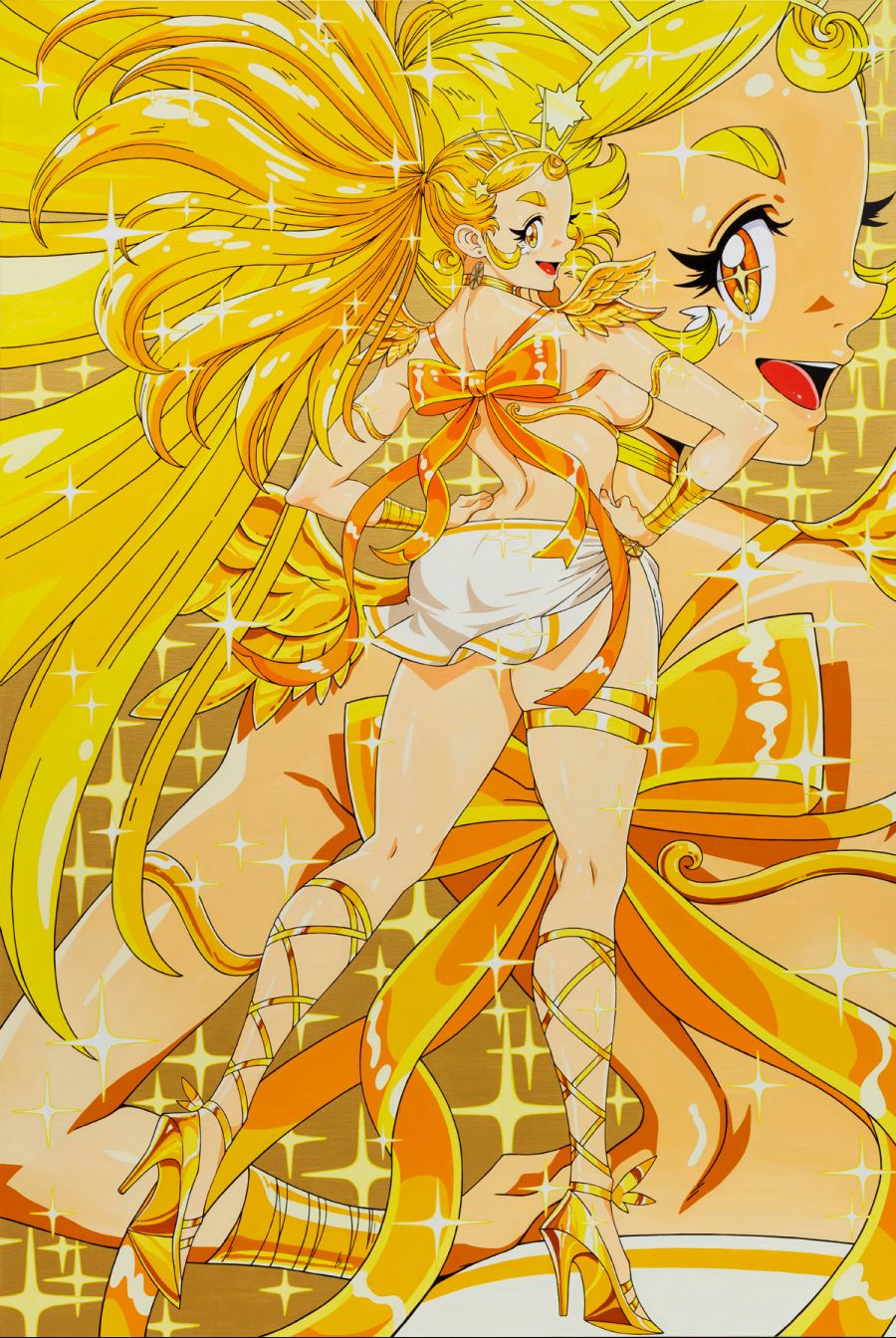
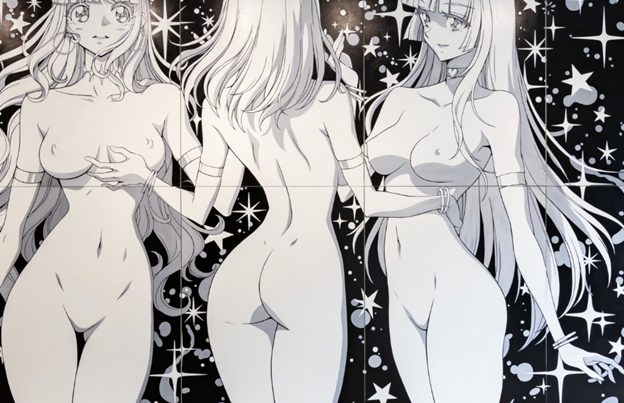
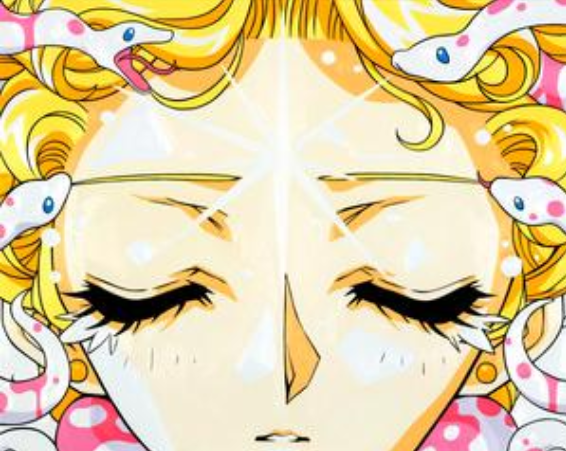
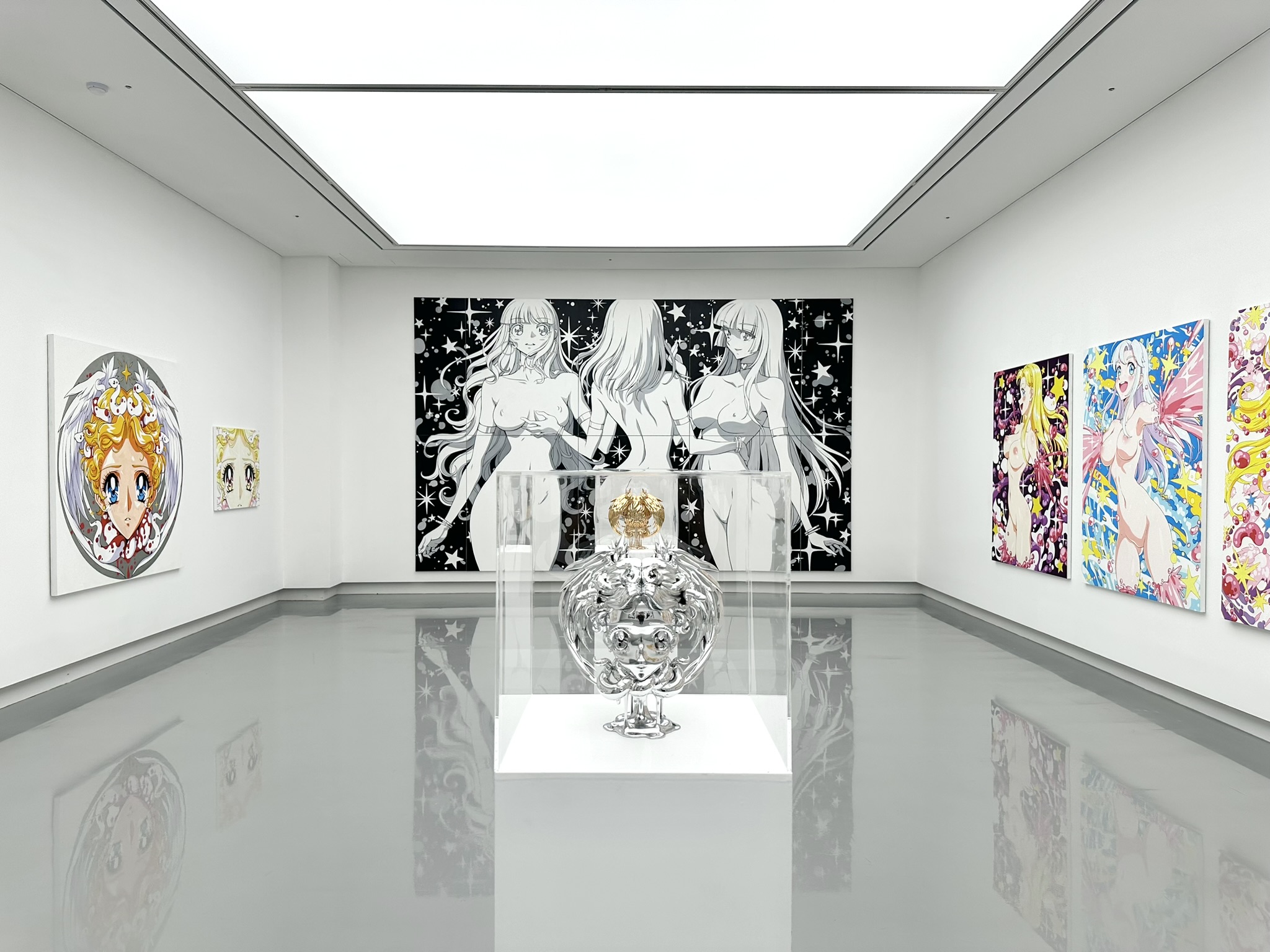
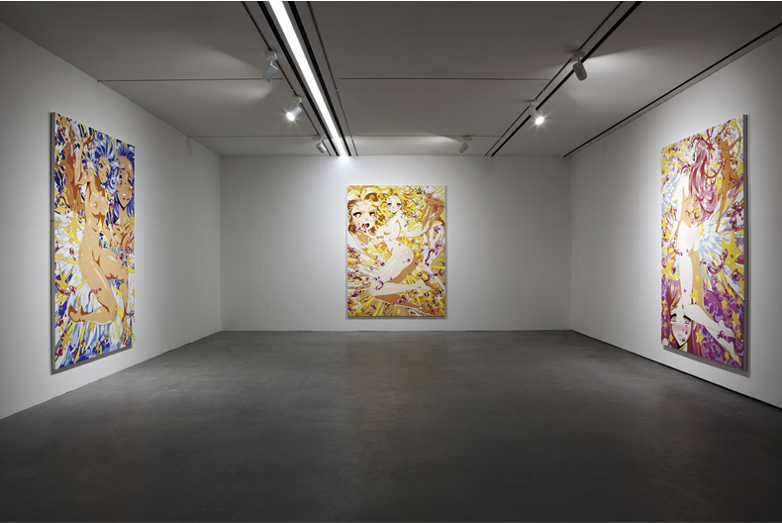
0. The artist Yunsung Lee employs particular traits of the manga/anime culture as a filter/skin to explore subjects of Western classical paintings.
1-1. For his graduating work from the Department of Painting at Chung Ang University, Lee presented a painting entitled At The Last Jujilment(2010). Measuring 380cm in height and 290cm in width, this impressive work transformed Michelangelo Buonarroti’s masterpiece The Last Judgment, Il Giudizio Universale (1536-1541) into digital painting in Japanese manga/anime style.
1-2. While the basic structure of the image follows the original painting, one can observe completely different elements from the original painting upon closer inspection of the work. The most evident difference is the heat/smoke of pleasure over the fires of hell, the incarnation of Jesus Christ and the erupting secretions, and that the main figures in the work have been changed of their gender, from male to female.
For example, Saint Bartholomew who stands with a serious expression with his own skin in his hand in the original painting is replaced by a blonde bombshell who is holding onto her own skin with an expression of jubilation in Lee’s painting. Also, St. Peter who stands with eyes open and key of heaven in his hands — golden key and silver key each symbolizing the authority to lock and open — is replaced by a beauty with beautiful hair and immature expression who is riding the golden key like a banana boat with the silver key in her hand.
An army of beauties replace the host of angels, including the archangel Michael who is holding the list of souls to be saved (small book), and others who are holding the list of the damned (large book) with the names of sinners who will go to hell, blowing the trumpet to wake the dead and open their graves, and proclaiming the last judgment. The book of souls to be saved is substituted with iPad-sized tablets with pink monitors (book of sexual life?), and the book of the condemned is replaced by a small TV-sized tablet with a blue monitor (book of abstinent life?).
Meanwhile, Jesus Christ is left in his male form in the work. Seemingly in a fluster and surprised as he puts his foot forward, he looks like a boy who has just had his sexual awakening, and Maria, who is kneeling next to him and praying with her hands together, is more like Venus (voluptuous, with purple-hued hair which turns into cloud and fills the image) as the embodiment of sexual love and physical beauty, rather than Virgin Mary.
1-3. In his work statement “Manga Re-composition of Michelangelo’s The Last Judgment” in 2011, Lee stated that “while the appropriation of Western classical painting in my work might have just began an act of rebellion at first, I gradually started to see the artistic will of the master painters of the past, and to delve into them individually’. (Meaning Lee pursued quite an ambitious creative practice of reference, which is a wholly different realm from parody or homage.)
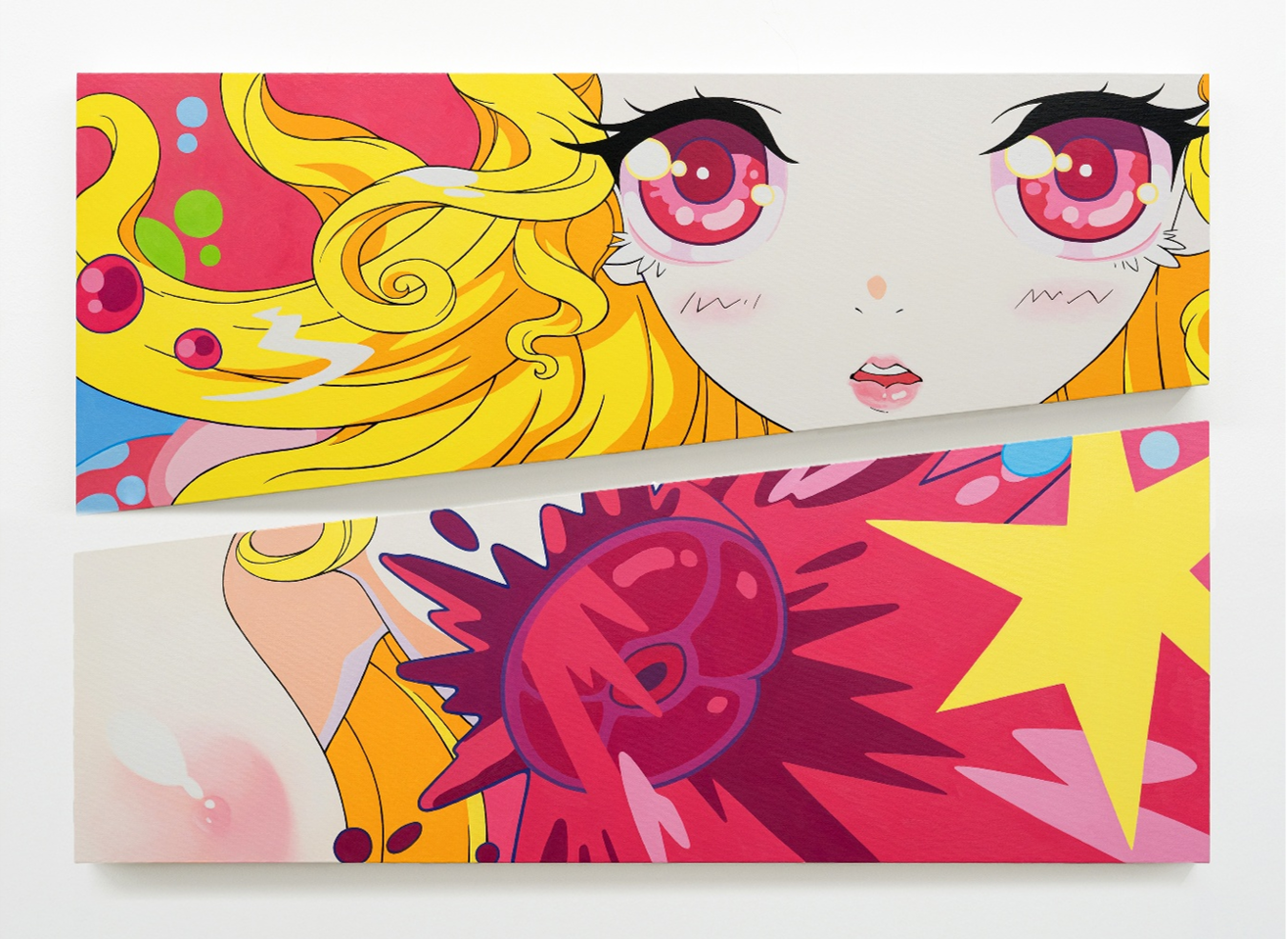
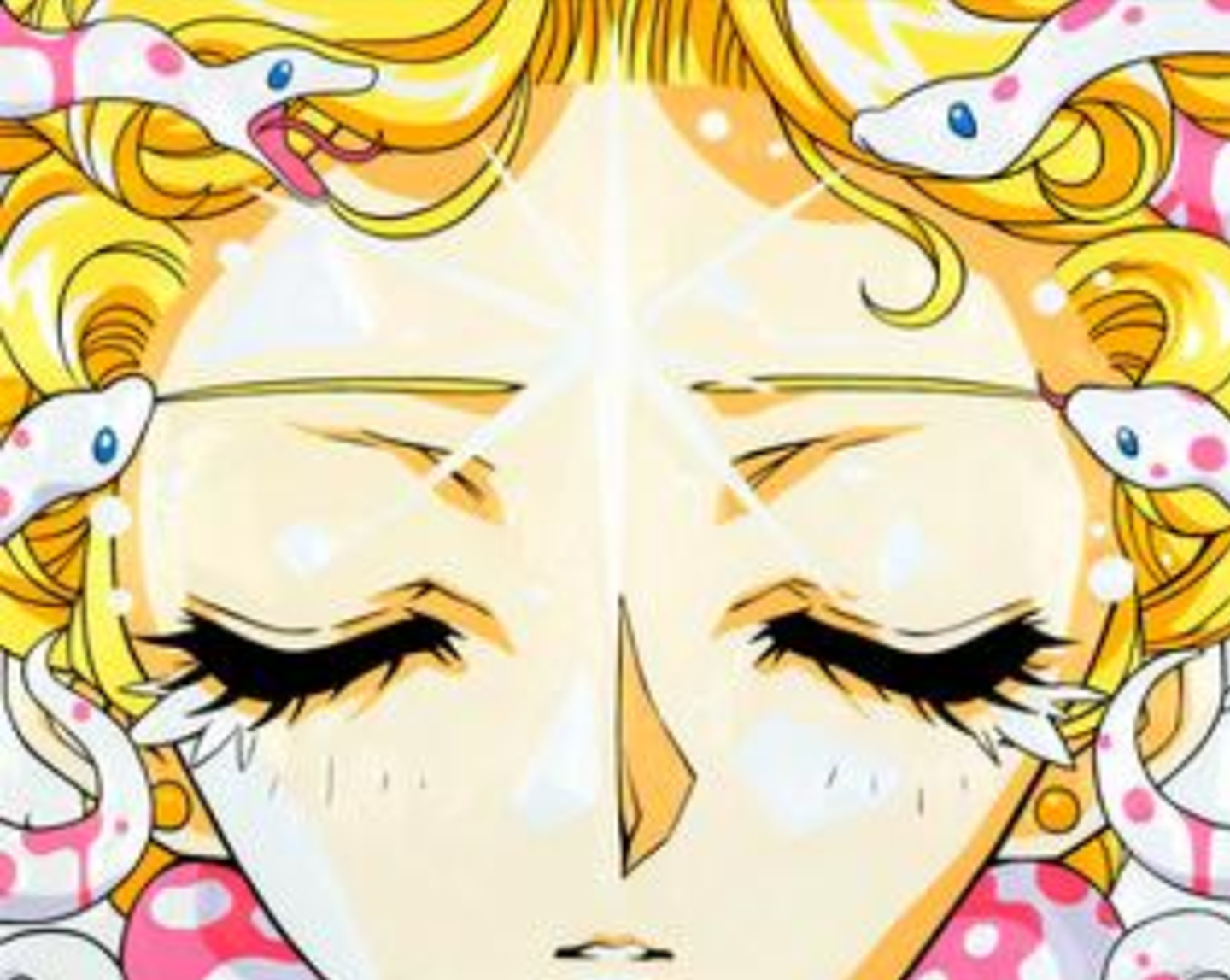
2-0. Lee executed Laocoon, Judith, Torso, Kronos, Pieta and Medusa in 2011. Except for the decapitated man in Judith, all the figures are ‘pretty girls’. Let’s look at ‘Kronosas’ an example of the reasons for such condition, and the context of such signification.
2-1. In Lee’s Kronos, also manga/anime in style, the god of time Kronos (Saturn in Roman) is devouring Eros, the god of love. Francisco de Goya’s Saturn Devouring His Son (1821-1823) is the source of inspiration for this work, in which the god of time is eating one of his own sons in the fear of being killed by his sons. (The basic structure of the image will be discussed here as the subject is the only element of similarity between the two works.)
Kronos, or Saturn, is the son of Uranus and Gaia, the god of the sky and the goddess of earth, and also the father of Zeus. Kronos is aptly symbolized by a sand clock, but also as a frightening sickle because he castrated and killed his father with a sickle and threw his father’s penis in the ocean.
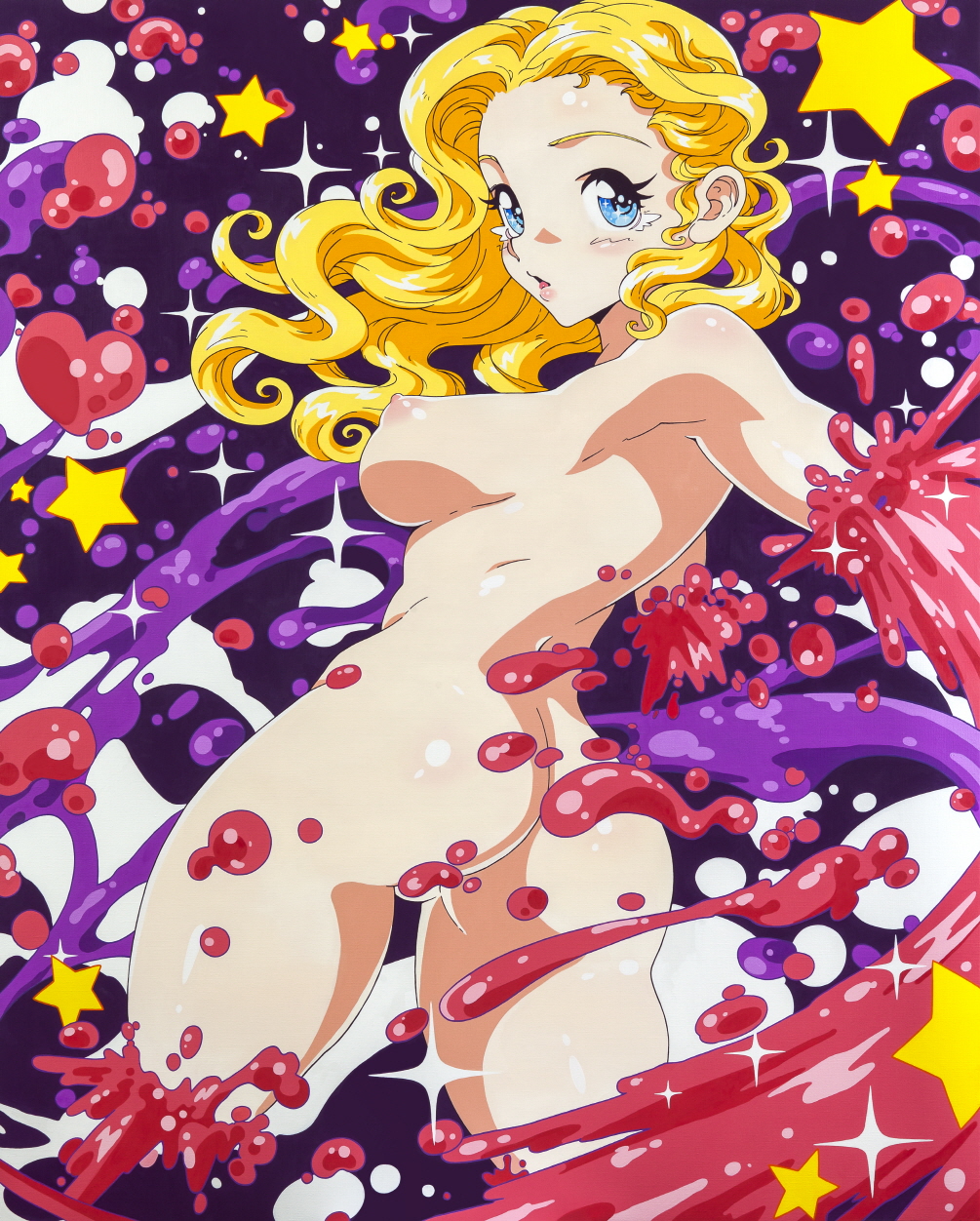
Therefore, Lee’s painting in which Kronos flies into a world of imagination filled with blood, guts and stars, holding a large sickle which operates as a windup watch in his right hand, and the head of dead mutilated Eros in his left hand, is an allegorical work which laments the transient flow of time that disappoints even the most passionate hearts in love.
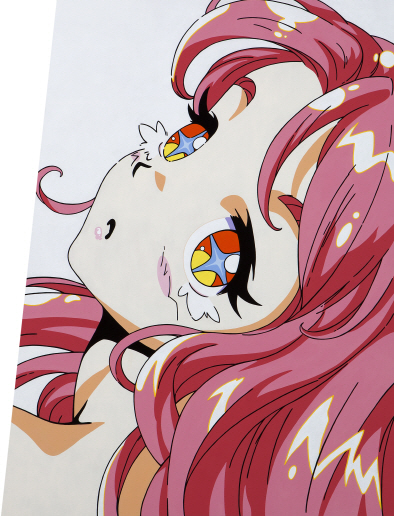
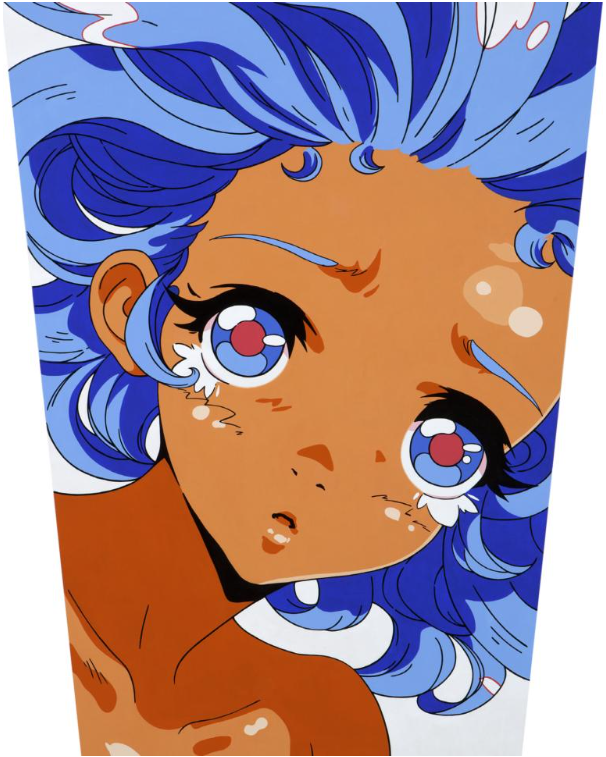
2-2. However, Kronos in Lee’s work is a beautiful girl. And the scene of her act of murder is peaceful, cute and even lovely, because Lee’s works are charged with ‘Moe (萌え化)’, or ‘deep feelings of affection, adoration, devotion and excitement felt towards characters in manga/anime’.
‘Moe’, a new word in Otaku (people excessively obsessed with manga/anime) culture, means ‘budding’, and primarily describes ‘deep feelings of pleasure when looking at a pretty character’. However, the meaning of ‘Moe’ has evolved repeatedly, and now means more than simple taste of sexual fetish: ‘Moe’ characters are everywhere, including even subway lines or convenience store brands what have been symbolized by beautiful characters charged with ‘Moe’.
The fact that Lee’s Kronos follows the general characteristics of beautiful girls reverenced in Otaku culture demonstrates the artist’s will to newly reinvent Greek and Roman mythology into contemporary youth subculture (Since he turned Kronos into a female, the artist has in a way castrated the god of time). Such aspects are not only evident in Lee’s expression of main figures in his work; the cute and lovely expression of flesh, blood and guts also reflect the Otaku obsession for ‘cuteness’.
According to manga researcher Nakho Kim who defined ‘Moe’ as “raking in all fragments of original elements and finding and completing one’s own ideal world”, Lee’s Kronos recombines certain elements and dimensions of Western classical paintings of Greek and Roman mythology through the cultural language of ‘Moe’ and arrives at a new ideal world.”
2-3. In Lee’s work, however, there are no aspects of excessive fixation on the original, or devotion to the Otaku circle. Therefore, how he arrives at the ‘Database consumption’ in which is culture becomes simply a database of plots and characters, is quite different from usual Otaku product. Although Lee is a young person who grew up watching Japanese manga and anime, the idea of ‘Moe’ is none more significant than a filter through which he reinterprets the classical in contemporary way. More importantly, the ultimate theme that’s always repeated in his past works is the pleasure which reveals itself in the moment of life and death, or delight that transcends limited desires.
2-4. The general opinion of Otaku critics is that the ‘pretty girl charged with Moe’ is equivalent to the phallus because it’s nothing more than sexual desires manifest into female form in Otaku world of symbols. Therefore, Murakami Dakasi’s excessively magnified and embodied Miss ko², which reminds one of a sex doll because it’s a life-sized doll, and Second Mission Project ko² (aka S·M·P ko²) which is transforms into the phallic combat plane evoked strong opposition by the Otaku. (Note: Without a taste for ‘Moe’, Murakami Takashi introduced himself to the public as Otaku, but he was never accepted by the Otaku circle.)
On the other hand, the beautiful innocent-looking girls depicted by the genuine Otaku artist Mr. are nothing more than the artist’s phallus-centric sexual desires, which make the viewer feel a sense of shame, repulsion and violation of their morals and ethics, and guilt as if he or she has become an accomplish. (Note: The aspect of antinomy, or the problematic incongruity which occurs in the dimension of beauty and ethics is the core issue in the art by Mr. ) On the other hand, although it’s clearly evident that Lee’s work definitely has sexual code in it, it’s hard to feel the kind of shame and repugnancy when looking at Lee’s pretty girls.
While it’s easy to misunderstand Lee’s work as a derivative of manga/anime culture (a secondary creation in form of contemporary art) and is true that it has a particular ‘Moe element’, his work is most importantly beautiful as it fundamentally pursues the beauty of composition and proportion like western classical paintings. (Let’s remember that it’s rare to see paintings that pursue formal beauty these days.) Not only does Lee pursue formal beauty, he strives for mimesis of religious delight incarnated by Western classical paintings.
There’s a sense of placidity or peace in the whirlwind of spurting blood and bodily secretions. In his earlier artist statement, Lee mentioned that the theme of the image of spurting blood and secretion was influenced by the repetitive explosions in Akira by Katsuhiro Otomo, and the fountain of blood in Rurouni Kenshin by Nobuhiro Watsuki. However, the sublime proposed in the original source and in Lee’s paintings are different in quality: While the sublime of the former is that of hysteria and terribilita, the sublime of the latter is of ataraxia of someone who knows what he is doing.
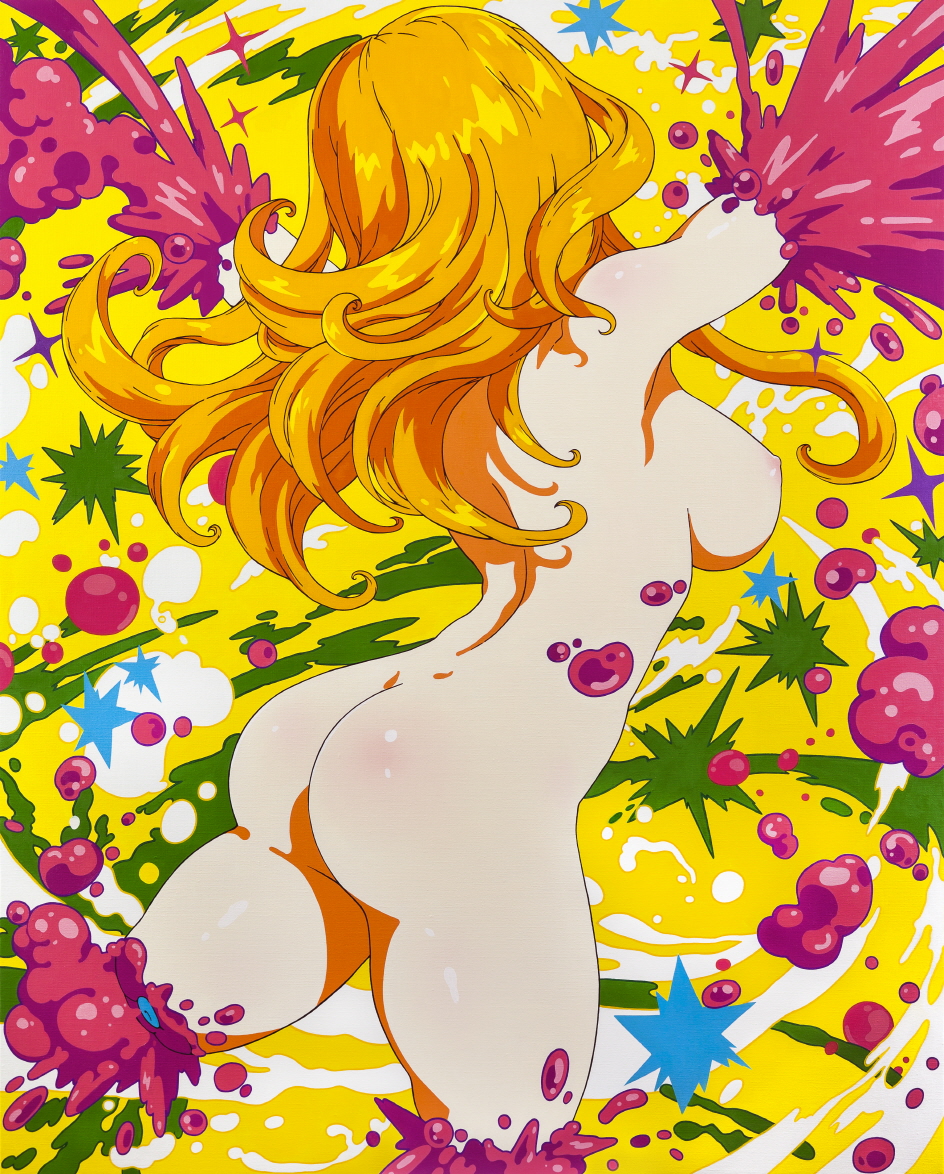
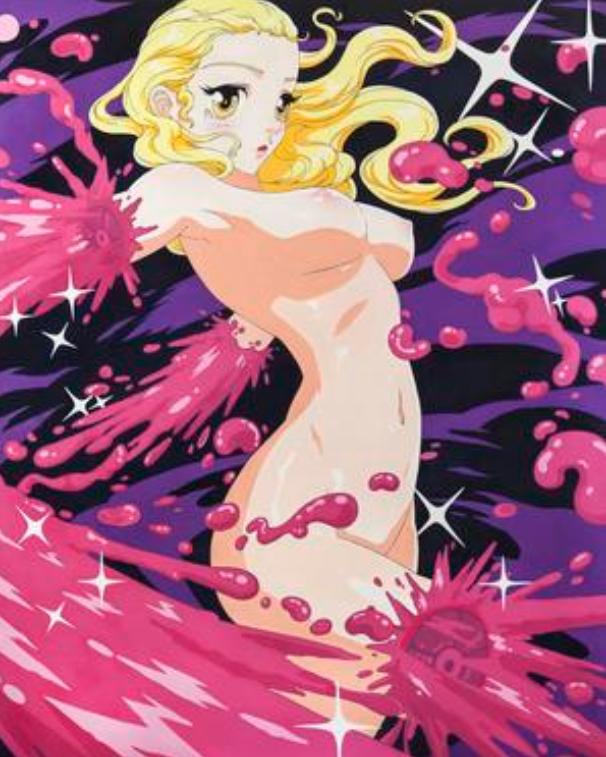
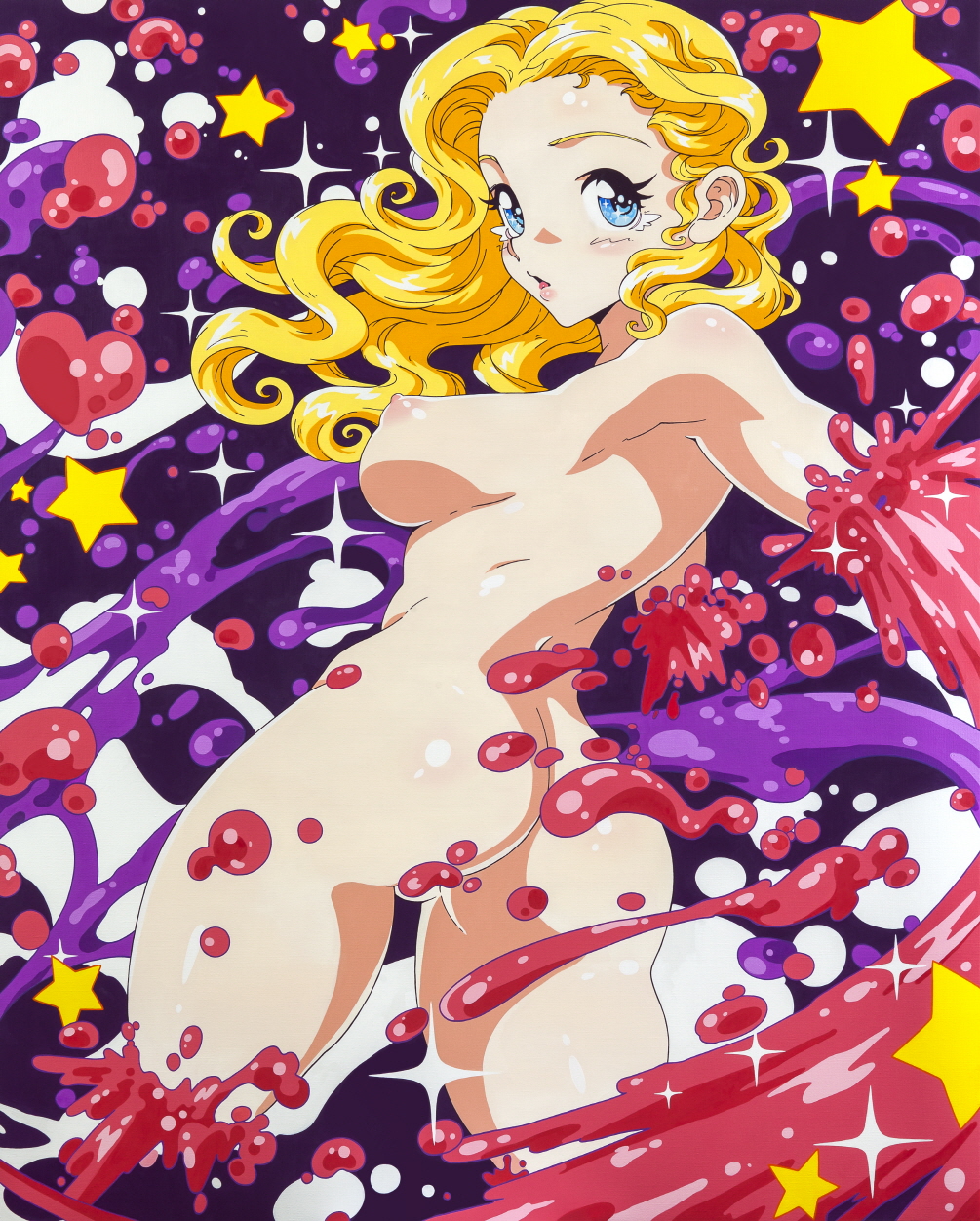
3-1. In 2012-2013, Lee produced the diverse ‘Torso’ series. Unlike his early works, they were rendered in oil paint on canvas, and demanded a transition process which transformed a digital idiom faithful to manga/anime language to painterly language at an appropriate level.
3-2. While the works claim to observe the torsos of pretty girls, who are deemed to have ideal body in manga/anime language, the torsos in Lee’s paintings have just the heads and all the limbs cut off.
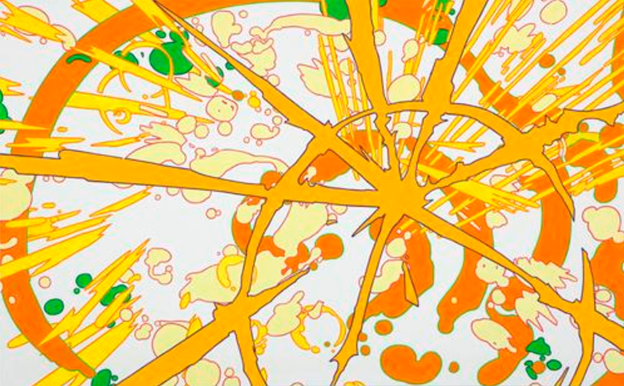
The whirlpool of spurting blood and body fluids accompanied by the sparkles and stars characteristic of manga/anime becomes the focus of this series which contemplates on the limbless torso forms of ‘Moepretty girls’, and this creates a particular painterly time space, interconnected with the poise and movement of the body.
While there is no original work which Lee’s ‘Torso’ series makes reference to, it for some reason reminds one of Michelangelo’s ‘Unfinished Slaves: Schiavo morente, Schiavo giovane, Schiavo barbuto, Atlante, Schiavochesiridesta’, which was planned to be completed into 12 works but were left as 5 works in unfinished states. While Michelangelo’s works claim to depict suffering slaves but actually seems to deal with sexual pleasure, Lee’s work seems to deal with pleasure at a religious level although it claims to portray hard core sexual pleasure involving mutilation.
Lee’s ‘Moepretty girls’ might be nothing more than symbol of sexual desires transformed into girls; however, it’s difficult to feel the sense of shame, displeasure or anxiety particular to ‘Moe pretty girls’ in his painting.
My reasoning is that Lee’s ‘Moegirls’ do not cater to the artist’s sexual viewpoint, and that Lee has decided not to take the ‘Moe girls’ as an incarnation of sexual love perhaps because Lee has the eye for seeing ‘Moe’ as merely an important element to adapt into his worn work.
(Perhaps then Lee’s work is about the process of materializing the male sexual gaze through the otherized female body — the nudes of classical painting and ‘Moe girls’ of manga/anime culture — and other traditions of iconography such as the conventional image composition language of Western classical painting and manga/anime culture. )
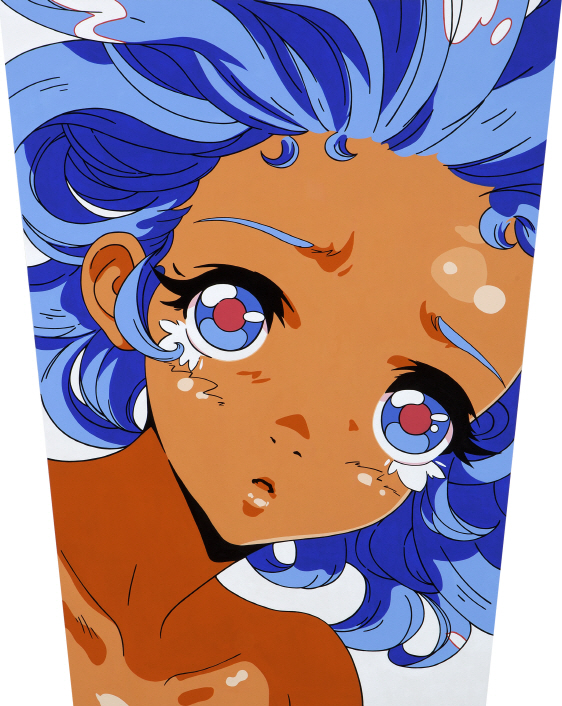
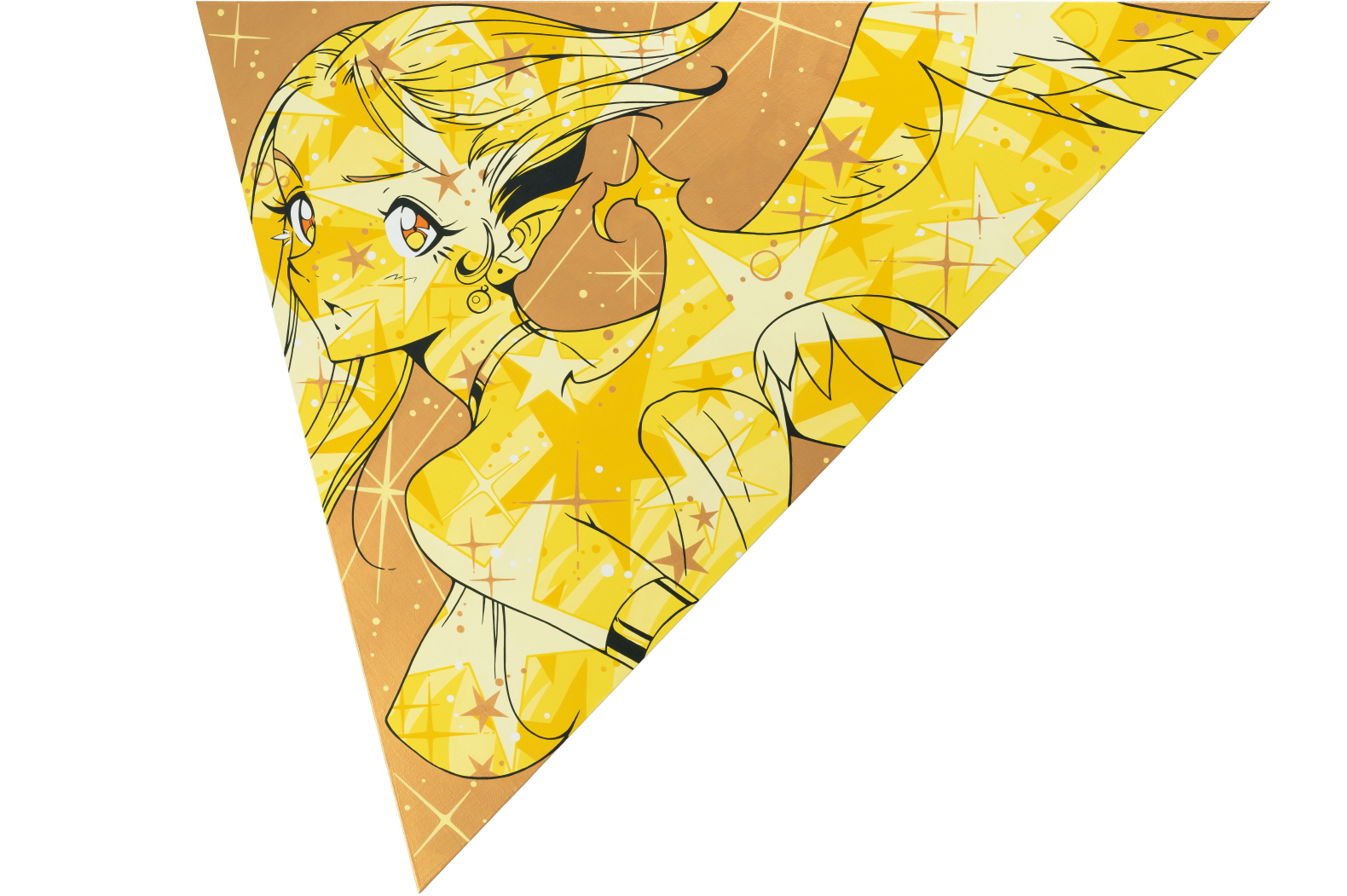
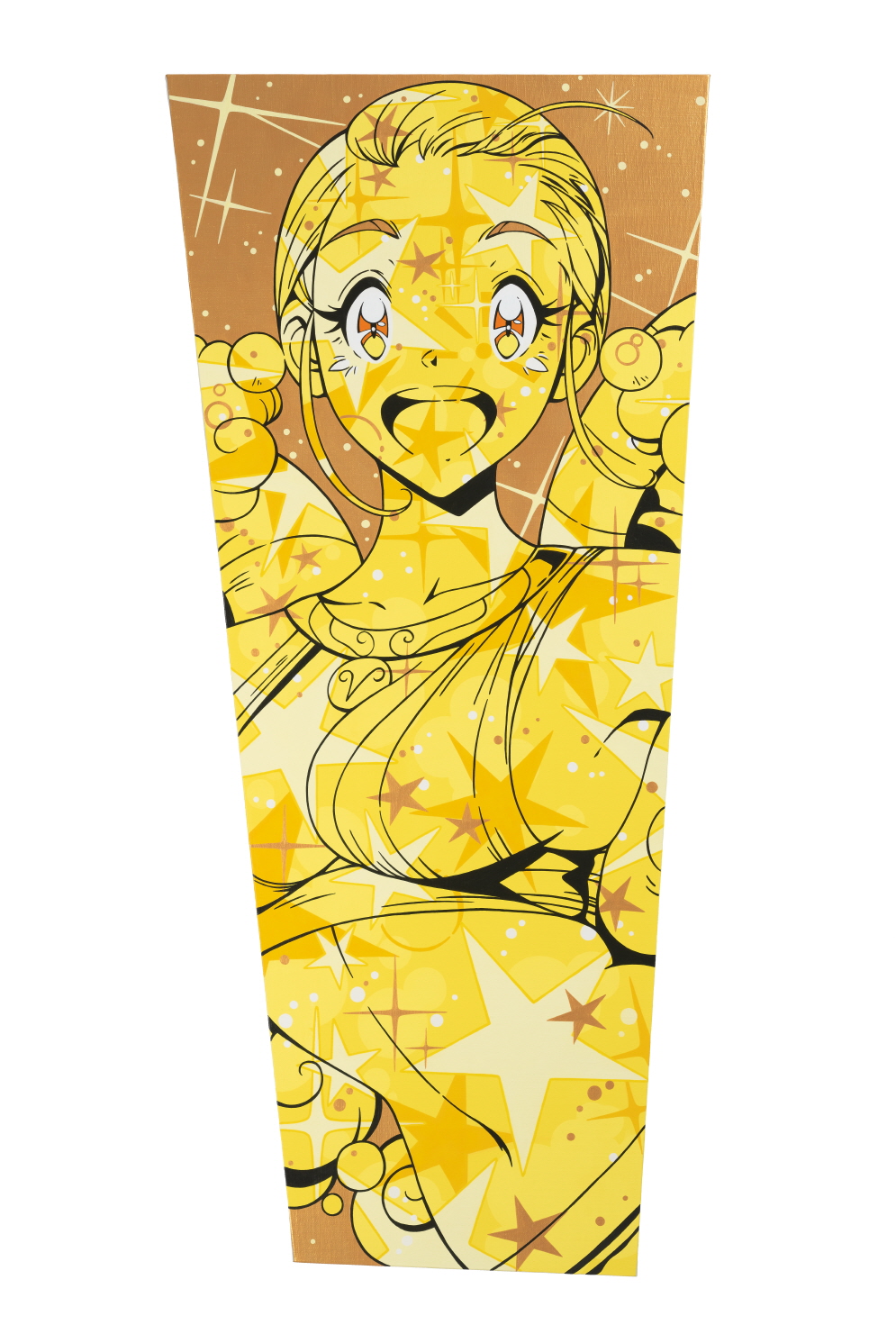
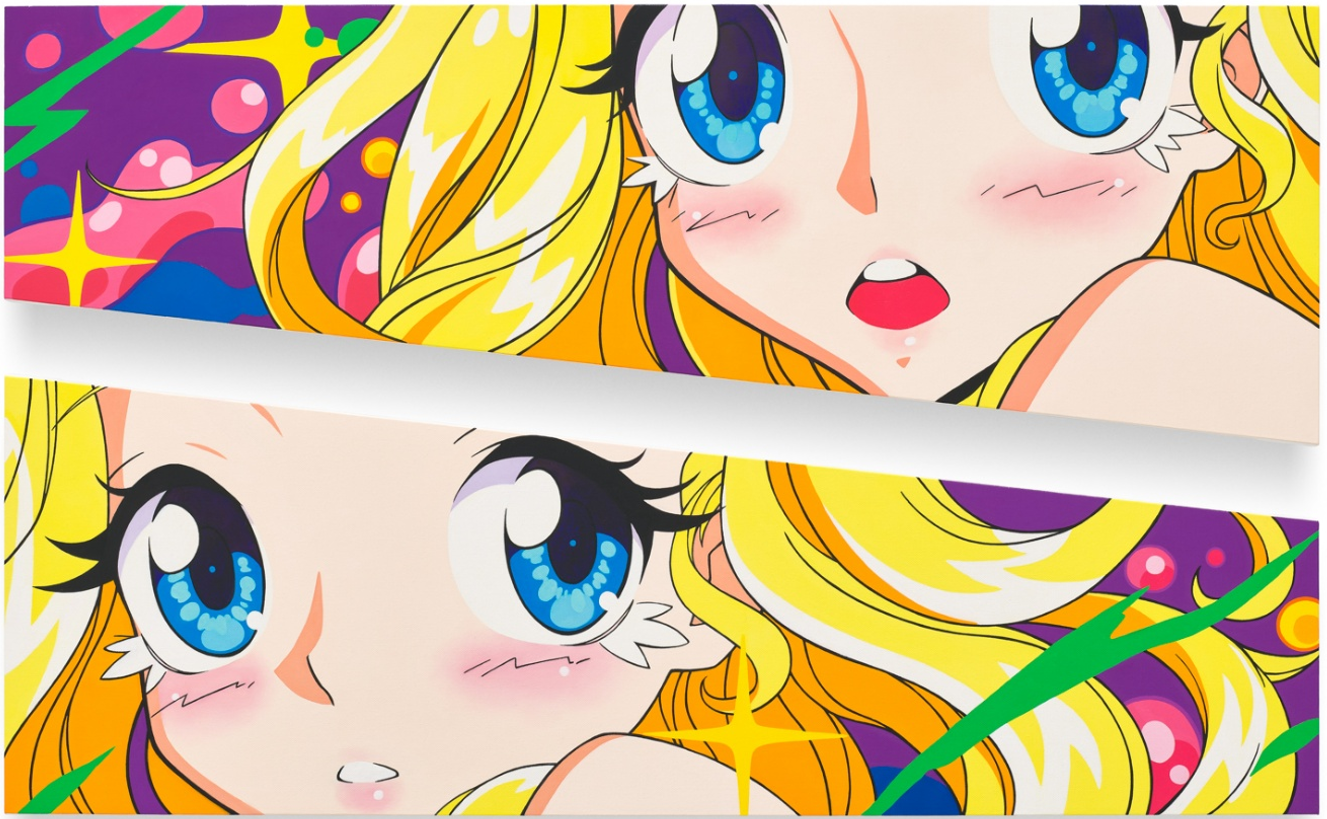
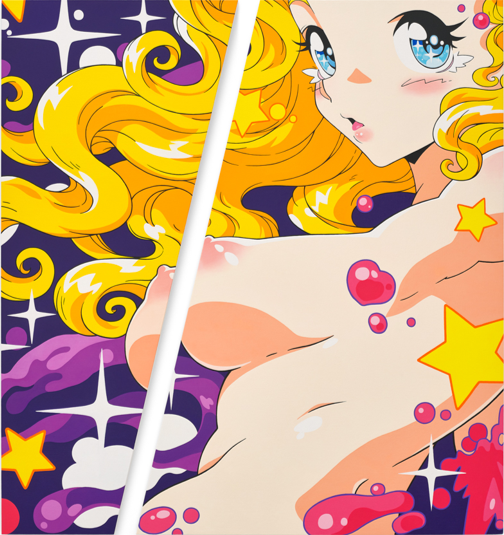
4. Lee’s 2014 work The Annunciation centers on the diptych of Gabriel and Virgin Mary, with two small canvases of baby angels on either side, composing a quadriptych.
In the painting, Gabriel and Virgin Mary have lost both of their arms and legs (baby angels are missing just their arms). However, the main figures of this pseudo-religious painting are a phenomenon itself of bodies, blood and flowers swirling in a whirlpool. The Annunciation uses the whirlpool composition, which is conventionally repeated in major dramatic scenes in manga/anime, and therefore balances with the ‘Torso’ series. So then, what is being conceived in Mary? The next work? A turning point? Whatever it is, The Annunciation seems to herald the next chapter of Lee’s creative oeuvre.
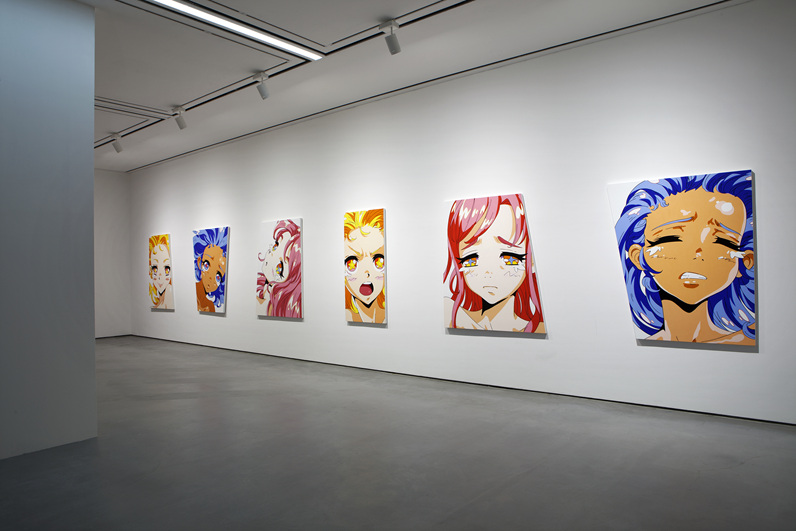
5. Lee’s first solo exhibition opens at Paju Make Shop Art Space at 6pm, Friday, May 16th, 2014.