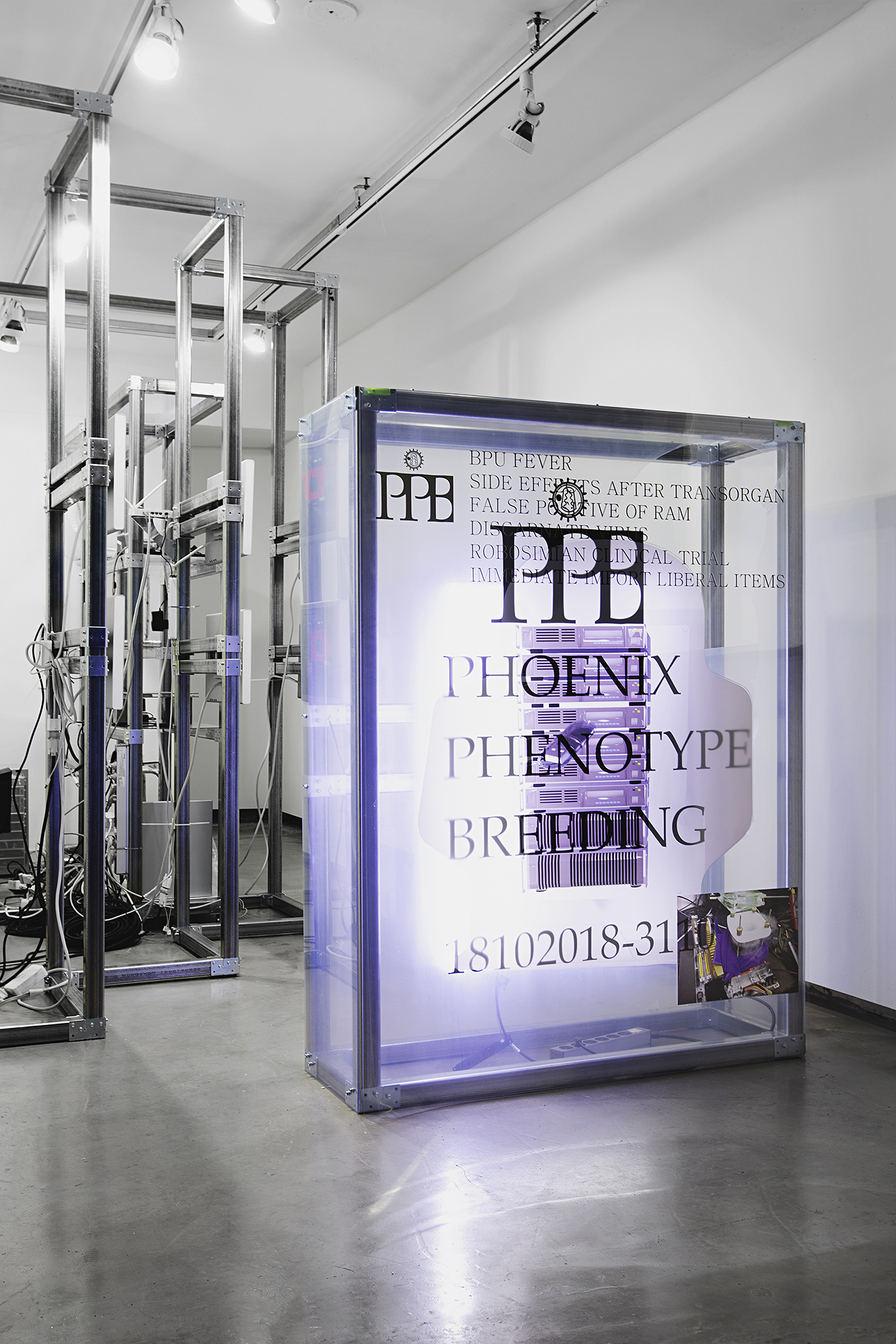
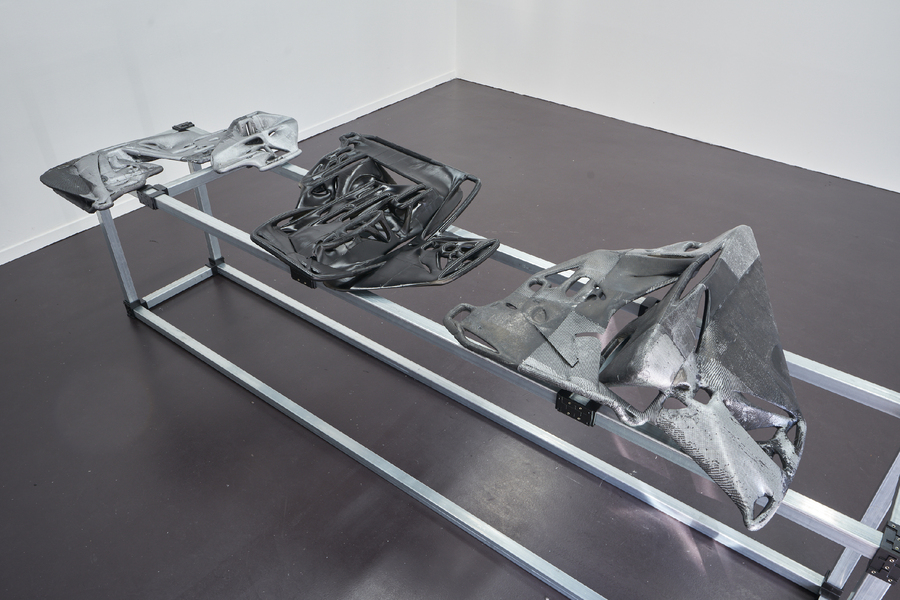
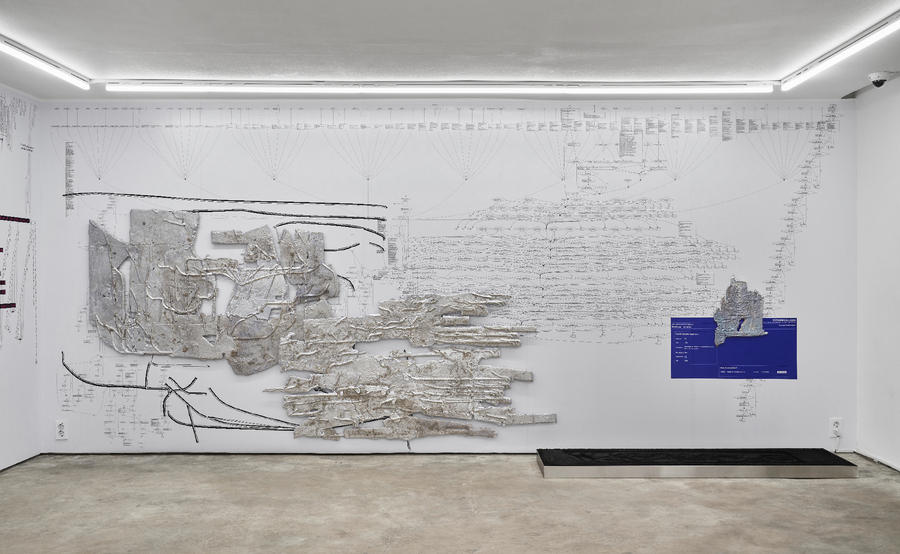
Jamyoung
Koo’s work, which generates bodies of software through the logic of genetics,
verges on science fiction. Attempting to grant software the status of a
quasi-organism, he approaches genes as a kind of software. To juxtapose the two
requires extending the idea that software is a program of life endowed with a
body, and conversely, that the human being — grounded in genetics — can be
regarded as the sum of software. Pushing this logic further compels us to
reconsider the artist’s subjectivity. In a sense, he is a mediator between
software and genes, a hacker and translator who selects, disturbs, and
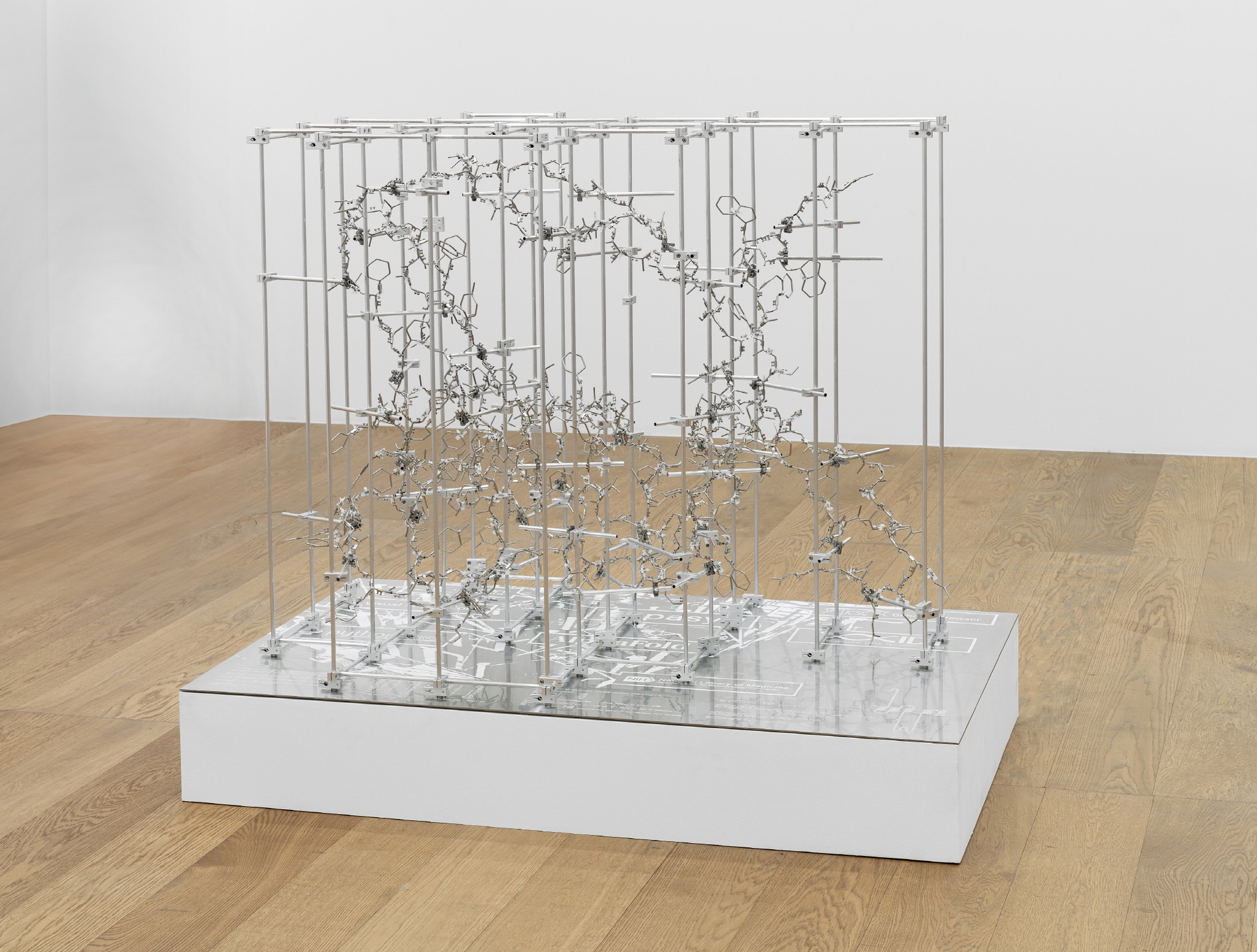
crossbreeds disparate programs. His pursuit of sculptural DNA through the
blueprints of genetics and software recalls the autonomous creative
subjectivity celebrated since the Renaissance. Yet what must not be forgotten
is his original sense of helplessness toward software.
He
cannot escape software: he appropriates it as subject matter, employs it to
confer form, and relies on its coded metaphors of natural elements as the
source of meaning-making. Thus, he remains tethered to software programs. His
stance of appropriation, of treating software as both methodological object and
tool, recalls Nicolas Bourriaud’s notion of the artist in the “postproduction”
era — one whose labor is based on cultural reference and appropriation,
remixing the oversaturation and circulation of information into personal logic,
much like DJing. But considering the helplessness rooted in contemporary
artists’ dependency on diverse tools and materials, one might instead emphasize
the struggle to regain agency from an inverted position where subject and
object have been reversed. Could his sense of helplessness toward completed
programs not itself have functioned as the motif for dismantling, designing,
and visualizing their bodies?
Thus,
to see his equating of program blueprints with DNA sequences and adopting them
as sculptural grammar merely as a tool for formal experimentation would be too
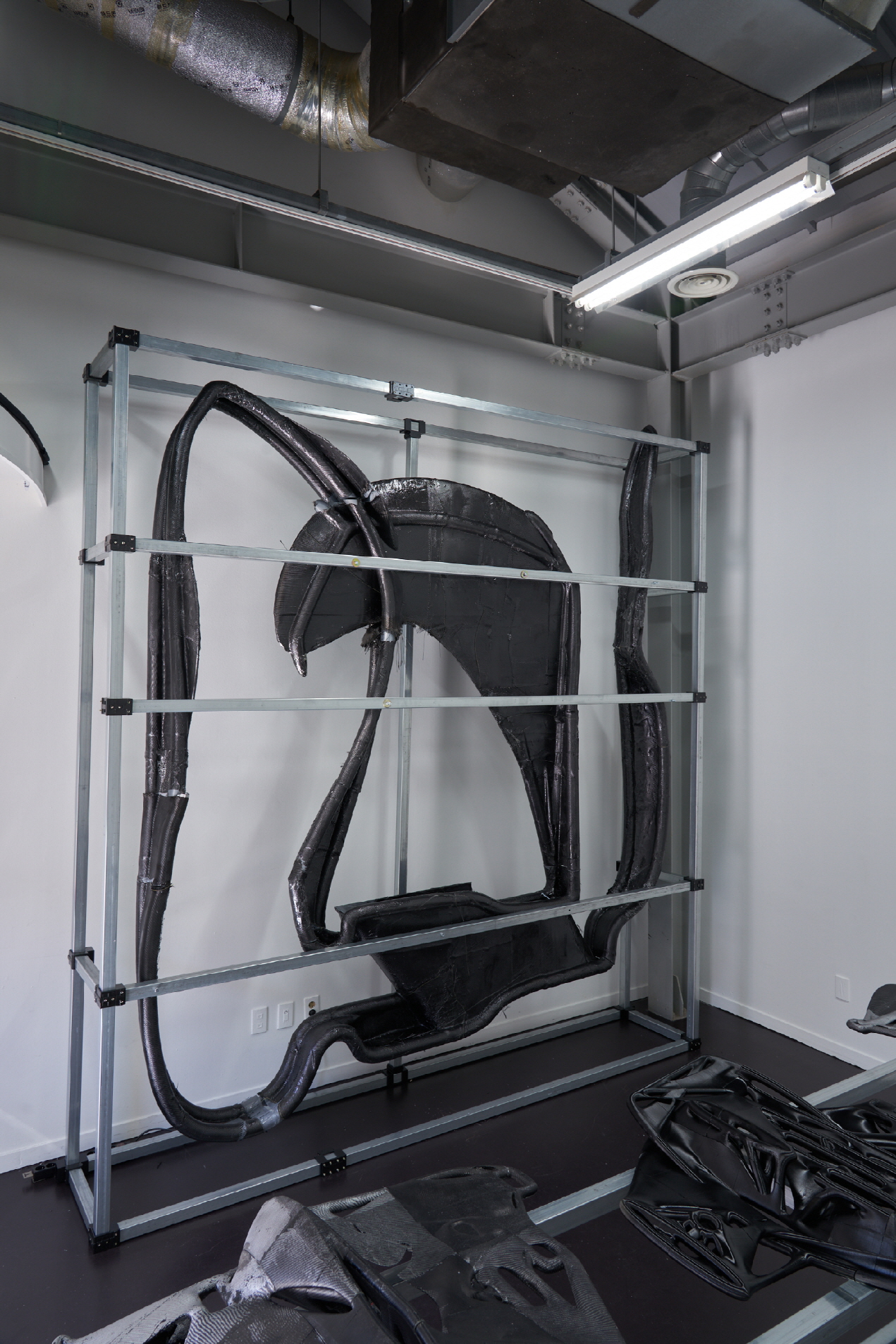
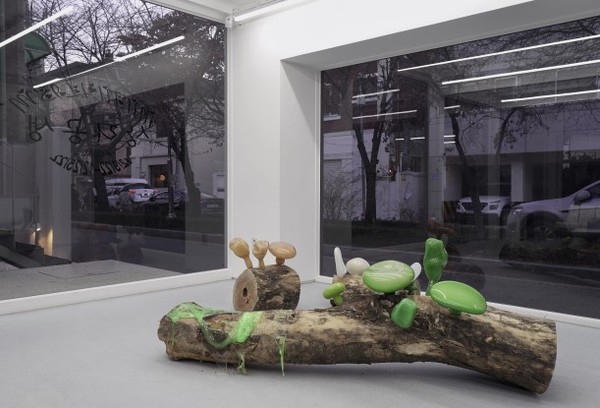
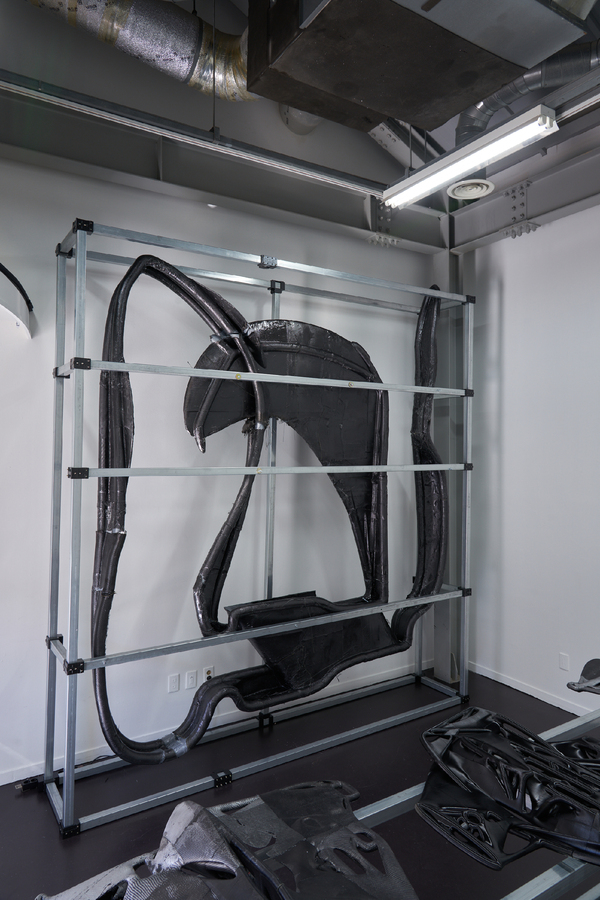
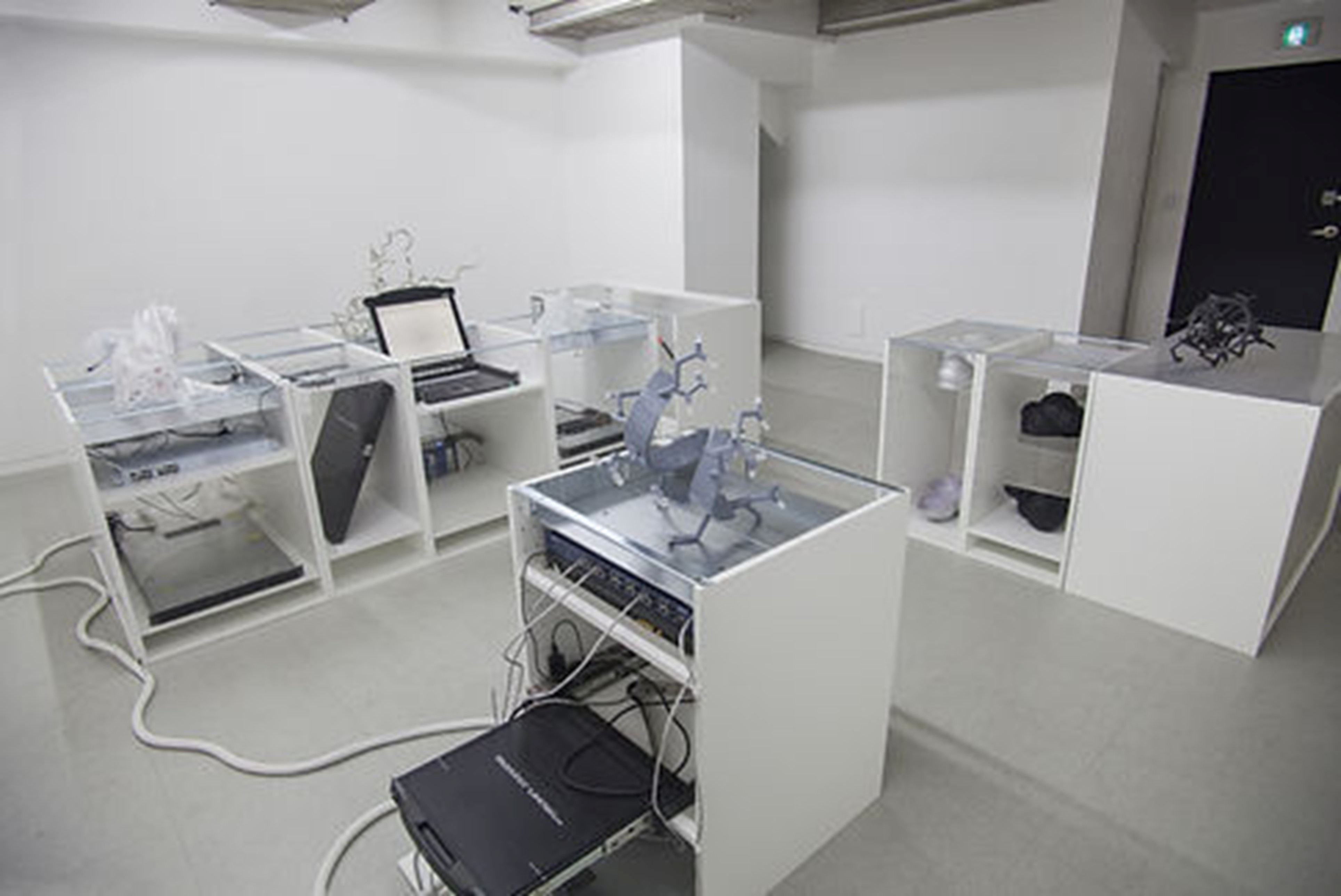
narrow a reading. While the objects may appear as outcomes cross-produced from
software, they are in fact hybrid fleshes rooted in program-dependent
subjectivity. The artist acknowledges his alienated, dependent, marginal, and
secondary status, while nonetheless exercising agency by selecting and layering
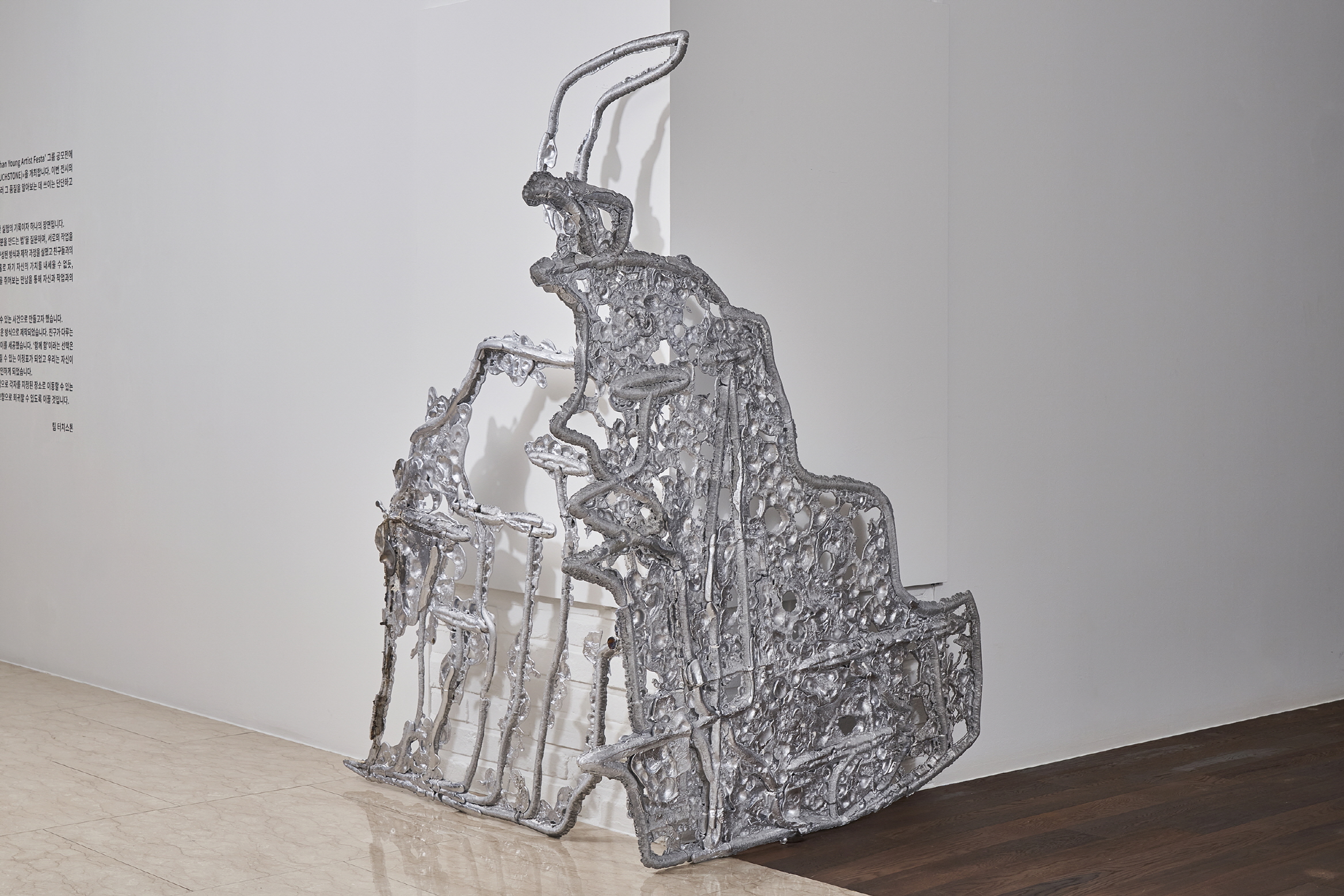
disparate programs. The casted fleshes, too, are results produced through the
very programs that alienate him. Even if he remains bound to and dependent upon
software, he continues to attempt a reverse transcription of objecthood —
striving ceaselessly to enact subjectivity as an object.
Obscene Evolution of Form
His
methodology evolves from aligning program code with molecular genetics to
expanding across e-commerce industries and archaic atomism, staging an obscene
evolution of form. Recently, his experiments have extended to hacking North
Korean websites, sequencing their page structures into genetic-like orders, and
sculpting them. These websites, though officially inaccessible in South Korea,
can be reached via VPN — but visiting them, even through circumvention, risks
drawing the scrutiny of state intelligence. Here, the relationship between two
antagonistic blocs emerges: antagonism as a means of mutual exploitation and
maintenance. His work overlays such relations of reciprocal expropriation and
collaboration. The question then becomes: what skeletal frames and fleshes will
the artist attach to this entrenched antagonistic dependence? His sculptural
experiments, operating at the scale of micro-engineering, inevitably bear
political undertones.
However,
one must note that by reducing programs to code values as units, his method
excludes program functions, contexts, and uses. Thus, to directly link the
visual attributes of his objects with the functions or applications of the
original programs would be an arbitrary interpretation. His forms, produced
solely from code values stripped of context, take on the status of grotesque
entities with no direct correspondence between content and appearance. These
alien forms, born of programs’ obscene cross-breeding, possess a kind of
reproductive sculpturality without bearing relevance to the programs’ functions
or meanings. At the very least, one can say that arbitrary applications — such
as natural material arrangements recalling archaic atomism — cannot yield full
coherence. If his method inevitably embraces the arbitrariness and chance of
assemblage, then what new material demands or deviant leaps will his next
objects attempt?
Another
perspective is also possible: his method of deconstructively appropriating
heterogeneous software could itself be regarded as a meta-software. If so, how
might his methodology, as software, achieve critical form through
self-appropriation? Would not such a supposition risk reducing his obscene
updates through translation into mere asexual reproduction, rather than hybrid
renewal? Where, then, can mutation and chance — the dislocations that disrupt
the grammar of form — intervene? Could this not become a variable in the unruly
relationality between program and artist, exceeding their dyadic relation even
as it remains within it?
Footnote (1)
His
experiments with aberrant arrangements, juxtapositions, and translations,
recalling viral reverse transcription in molecular biology, are not forced
analogies. For example, RNA transcribes DNA’s information outward to synthesize
proteins, sustaining life. In the case of the HIV virus, however, RNA enters
cells and reverse-transcribes into DNA, multiplying within the host. As Susan
Sontag has noted, metaphors of infection — rife with images of destruction and
damage — have proliferated into militaristic language about viruses invading
and devastating the human body. Yet shifting the perspective, one may see the
body as always open, not merely an object or victim of viruses. Rather, it
welcomes them, undergoing transformation and evolution through mutual affect.
As anthropologist Bokyeong Suh suggests, the body is not simply invaded and
destroyed but experiences resonance, transformation, and repeated evolution
alongside viruses. In this light, Koo’s work resonates with RNA’s reverse
transcription — transcribing DNA to sustain life and reproduction. For
more on DNA, RNA, viruses, and the body, see Bokyeong Suh, Entangled Days
– Building Futures with HIV, Infection, and Illness (Banbi, 2024).