In
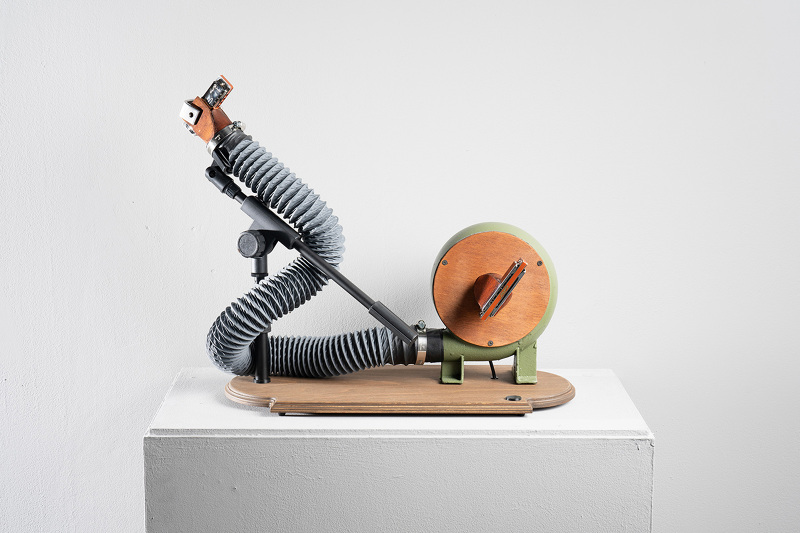
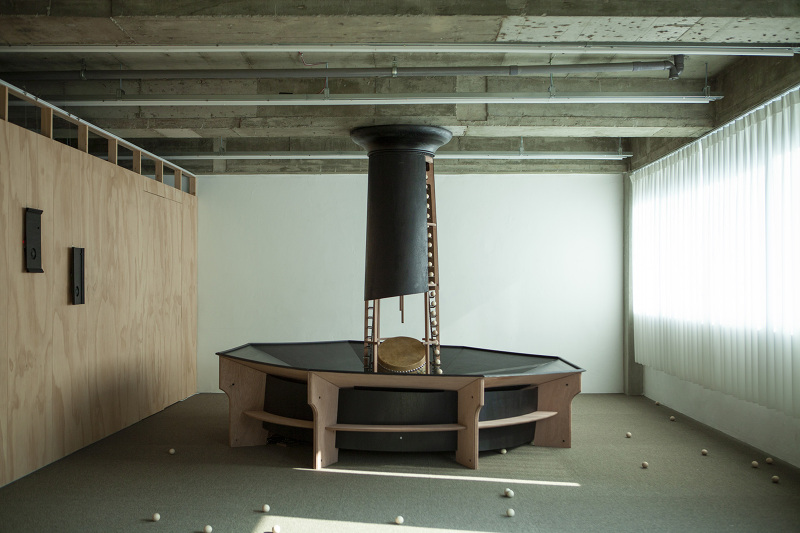
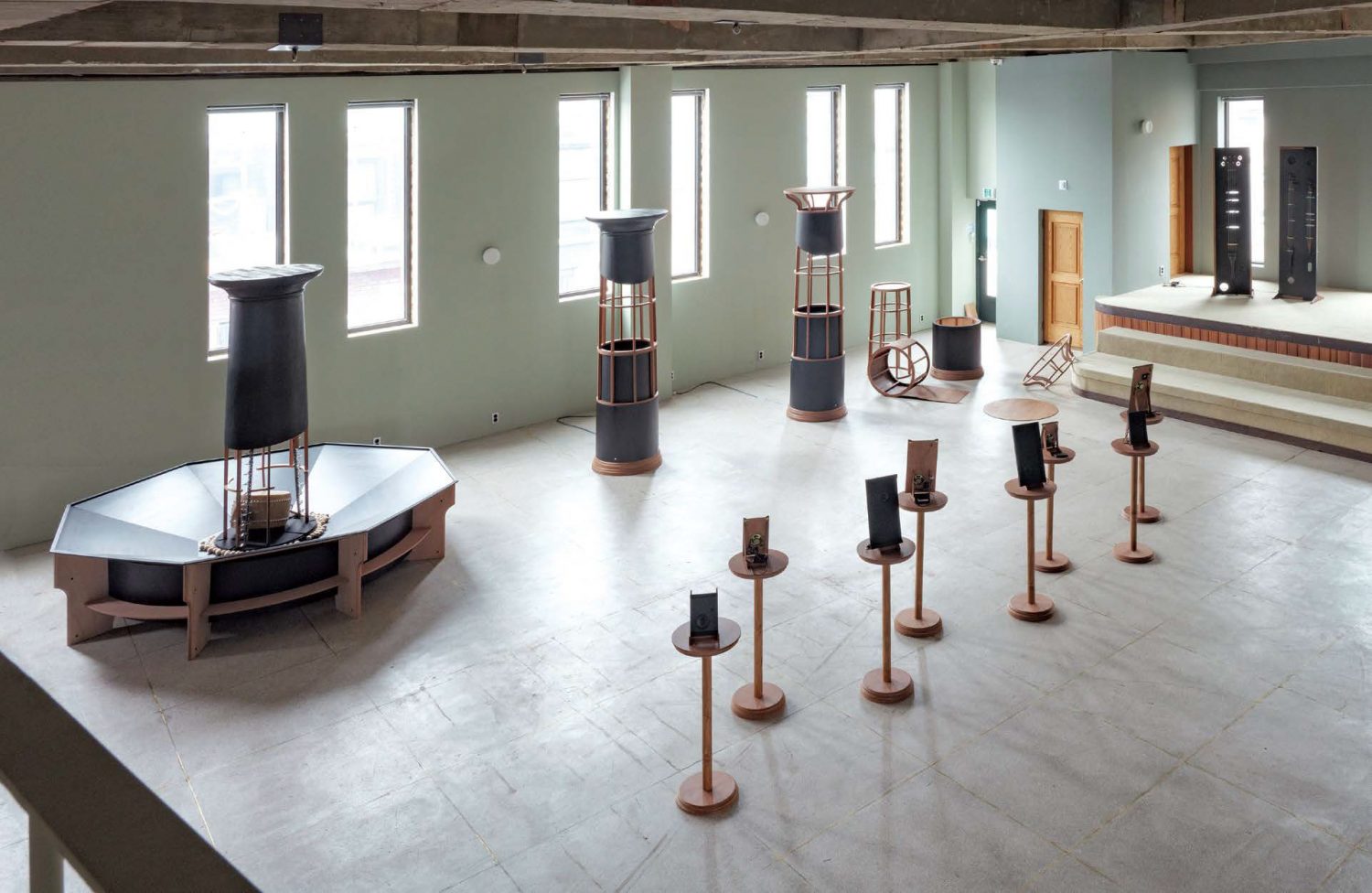
2021, Sunghyeop Seo presented the exhibition 《Performance for Topological Sense》. The
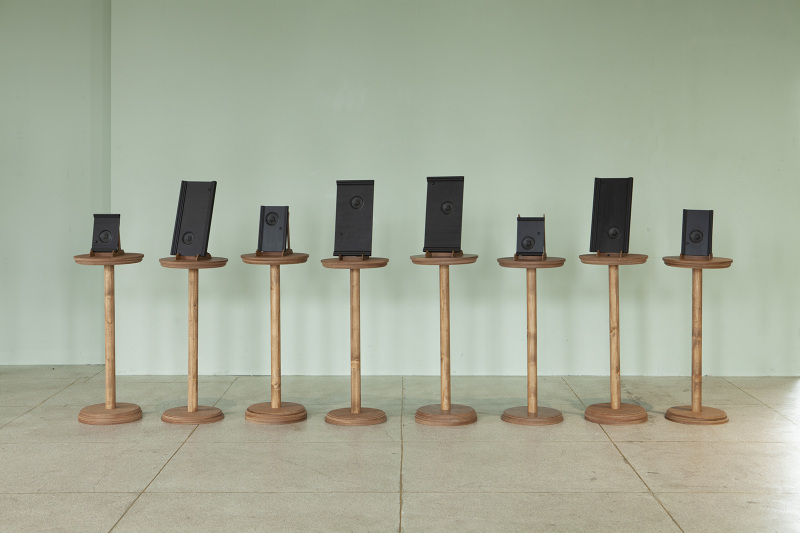
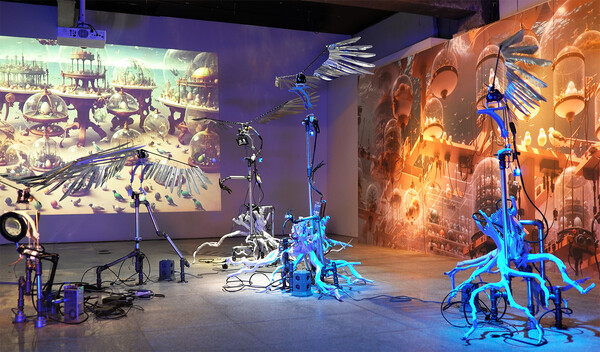
exhibition consisted of machines built to generate sound autonomously:
paravan-like forms made of wood, architectural columns reminiscent of Western
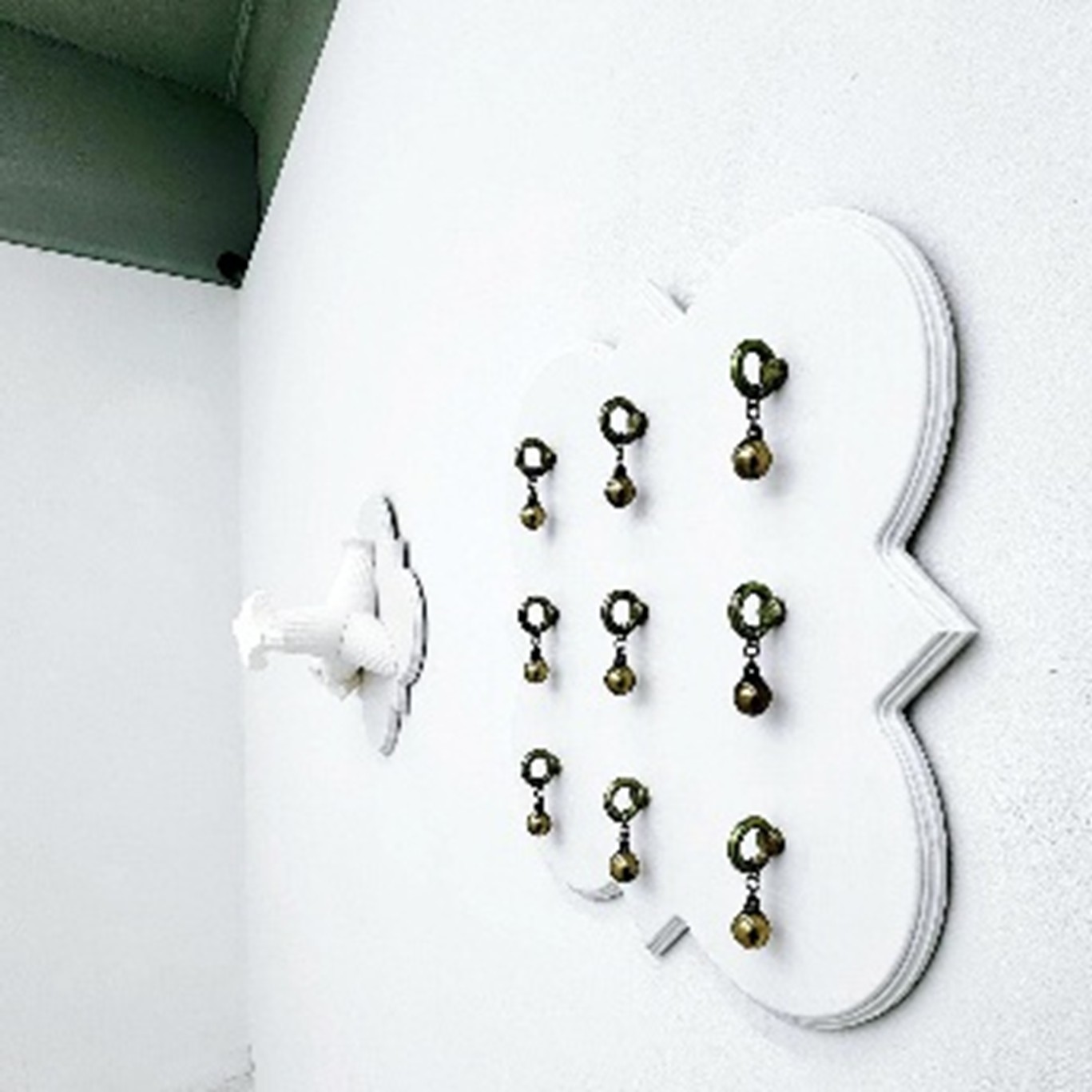
antiquity, combined with components such as the Korean traditional percussion
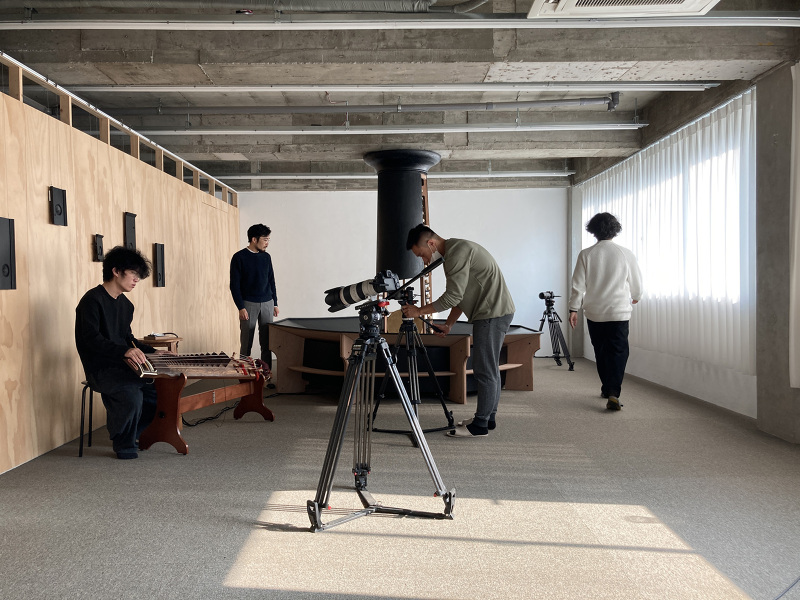
instrument sogo or the strings of Western string instruments. A performance
followed, in which Korean traditional musicians joined to produce sound
together.
Understanding the World through Topological Sense
Let
us first consider the word “topology” from the exhibition’s title. More
precisely called “topology” in the mathematical sense, the term derives from
the Greek topos (place) and logos (study). Defined as “the branch of
mathematics that studies the laws of forms or spatial relations of points,
lines, and planes,” it is rooted in geometry. Yet while geometry concerns
itself with measurable aspects such as length, area, and angle, topology
instead addresses “geographic” relationships— adjacency, connection,
containment—between points, lines, and planes. Topology, then, is the attempt
to define an object by its relations with its surroundings. Seo appended to
this the term “sense.” Sense relates to how humans perceive external stimuli
through the body. We listen with our ears, smell with our nose, touch with our
fingertips—we sense external objects, and this sensory information constitutes
our cognition. Thus, topological sense can be understood as Seo’s attempt to
speak about how we perceive the world and construct cognition relationally.
Crossing the Categories of Understanding
This
problem of sensation and cognition was concretized in the performance that
combined sound-producing machines programmed by Seo with traditional Korean
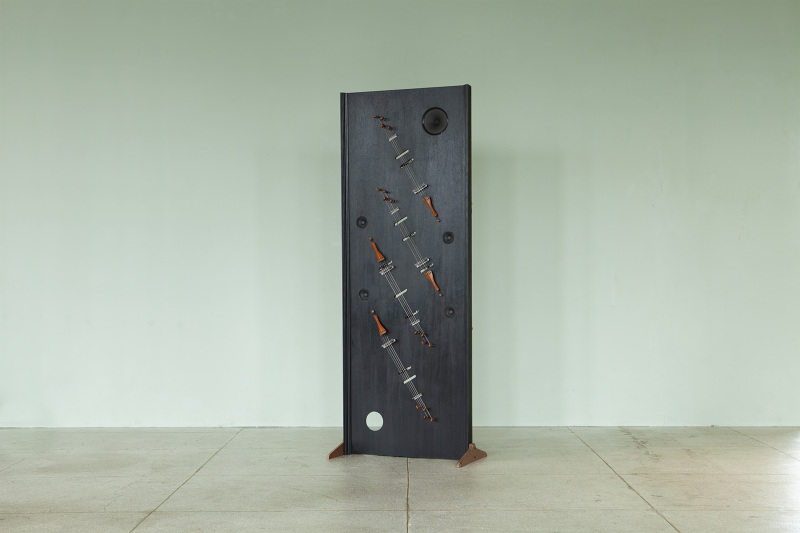
musicians. The Sound Paravan pieces, which grafted
violin, viola, cello, and contrabass strings onto paravans, looked somewhat
like upright geomungo; the combination of sogo and paravan resembled a
mysterious instrument from an unfamiliar country. These machines also performed
together with players of Korean traditional instruments such as gayageum,
geomungo, and sogo. In their appearance, these machines combined the Eastern
form of the paravan with Western string instruments, while the performers being
Korean musicians also meant the work traversed the grand dichotomy of East and
West that has shaped our modernity. The dichotomies of East and West, reason
and emotion, human and non-human (as Bruno Latour has argued) were long taken
for granted, but in fact served to establish hierarchies and justify violence
against the other.
In
terms of performance, the musicians only learned on the day of the show that
they would be improvising with these programmed, sound-producing machines. The
human musicians, listening and responding to the machines’ output, created a
new event of relationship between human and non-human through sound. The
exhibition also traversed genres: it was an “exhibition” containing a
“performance” by musicians, and the improvisatory nature of playing with
machines never before encountered underscored this. The machines’ visual
subversion of boundaries was complemented by sound performance, which resonated
through the exhibition hall as auditory stimuli resisting definition by our
existing categories. In this sense, Seo can be seen as traversing not only
genre, but also the categories of world, perception, and art itself. What is
crucial is that the events occurred not at the level of cognition but at the
level of sensation. Early in his experiments, Seo allowed performers to
manipulate the machines themselves.
Yet more important than the production of
intentional, composed music was the topological field of sound created by the
overlapping of individual sounds. He did not seek musical results. Music is a
convention, thus human, thus cognitive. Its long history of forms, scales,
rhythm, and harmony all reflect human rules. But in Seo’s works, the sounds of
the machines, the responsive sounds of the musicians, and especially the
vocalizations of Minwang Hwang (guh-eum, vocal soundings of Korean tradition)
together produced sounds that were equally non-human and sensory rather than
cognitive. As co-equal sound-producing agents, the machines and humans refused
hierarchy. The sounds that emerged between notes and tones created new
topologies and networks of relation at the level of sensation.
A New World Brought by Coming Relations
Seo
majored in design. This training seems to have enabled him to treat objects
with different methodologies, producing almost magical effects of perception.
Design and art, despite often being grouped under the umbrella of “art,” are in
fact opposing fields. Above all, their purposes differ: artworks exist for
appreciation, while design objects exist to be used. Differing purposes mean
differing fundamental goals for creators. Art speaks to the world, while design
responds to clients. Yet both converge in that they are creative practices and
both must listen to the medium—the material—through which they are produced.
Seo excels at listening to the stories of objects as media, and at translating
these into effects. His works and the effects they produce not only deepen
understanding of objects themselves but also allegorize the world through the
relationships objects create.
If
his earlier works were experiments with media that traversed perception, his
more recent works add narrative. In his upcoming solo exhibition, the new
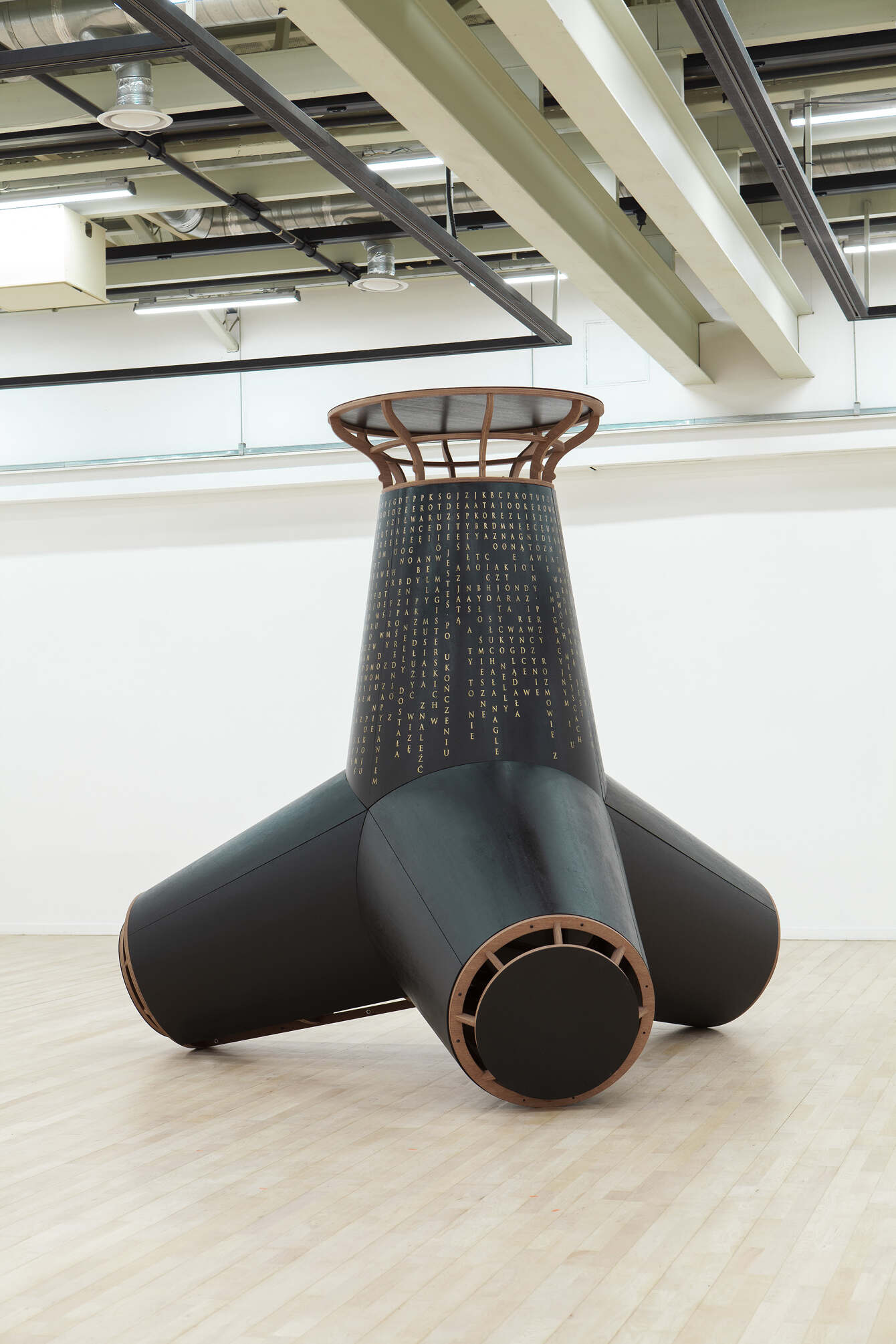
objects will carry stories, detached from their original functions. Monument (2022),
for instance, consists of a tetrapod from a breakwater, topped with a Doric
capital and inscribed in Polish (Seo is married to a Polish artist with whom he
often collaborates). A single tetrapod has no function; only in groups does it
block waves. In this, it demonstrates relational rather than hierarchical
structures.
The stories written and spoken in Polish are, for Korean audiences,
inaccessible as language, persuading the audience instead through metaphor and
sensory effect, just as in his previous works. The fact that Seo’s hometown is
Jeju, an island defined by its border between land and sea, resonates with his
treatment of tetrapods as new sites of relationality. The contemporary efforts
toward reconciliation between human and non-human, toward treating all beings
on equal terms, seem closely aligned with island life, where human and
non-human were always more closely bound.
If
geometry exists to define the size of objects, topology finds its virtue in
articulating difference through relations beyond physical form. The topology
that Seo seeks to sense—and urges us to sense—strives to recognize difference
in a world where boundaries become restrictions and distinctions become
violence. Beyond exclusivist purity, acknowledging that we are all hybrids and
exploring the potentialities that lie within this condition: the multi-species
world that makes new relations possible is precisely the one Seo proposes when
he praises hybridity.