The
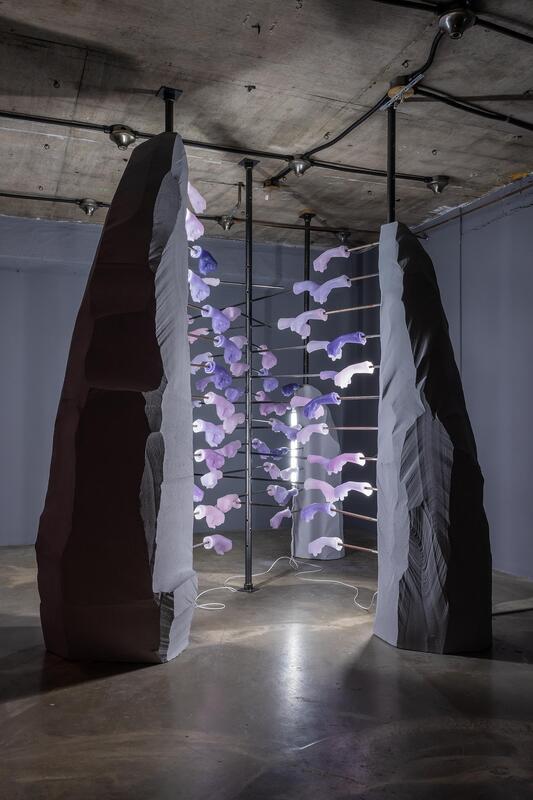
mode of faith required by reality is only a bizarre sight of numerous stone
towers made of hope standing in lines, and the deep intention of those that
tried to build towers with irregular stones had never been fathomed. As if
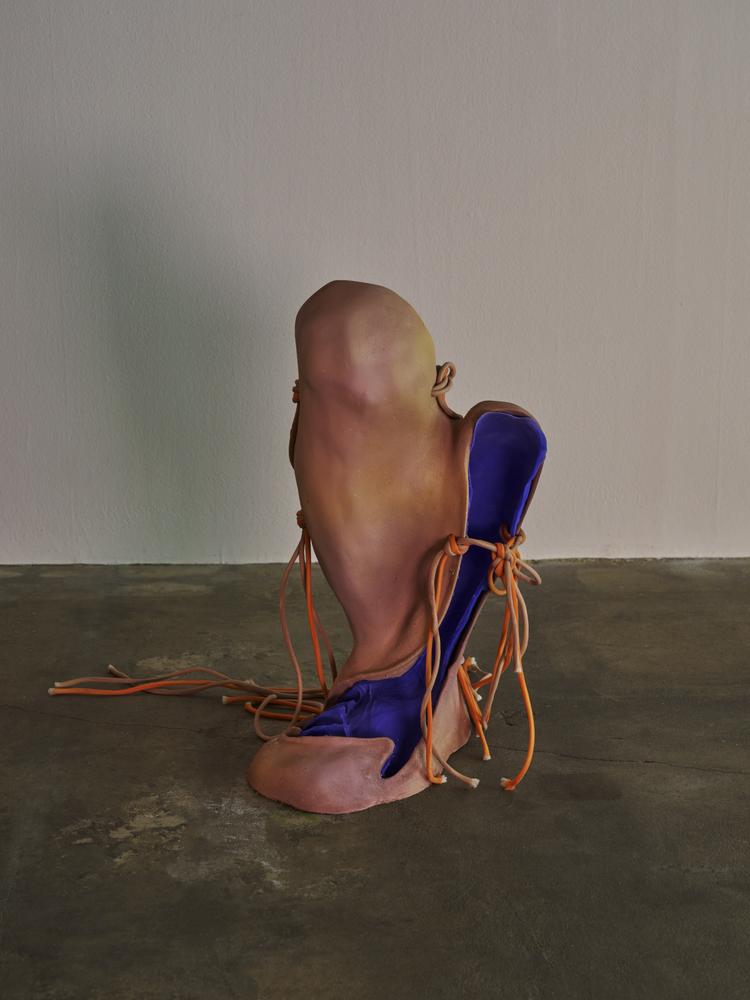
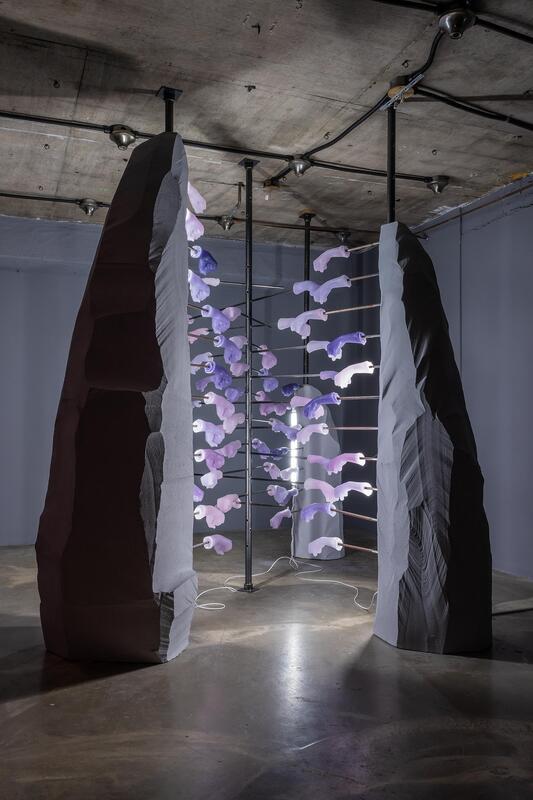
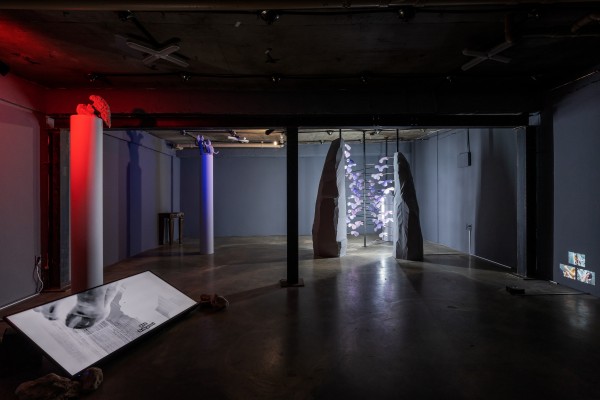
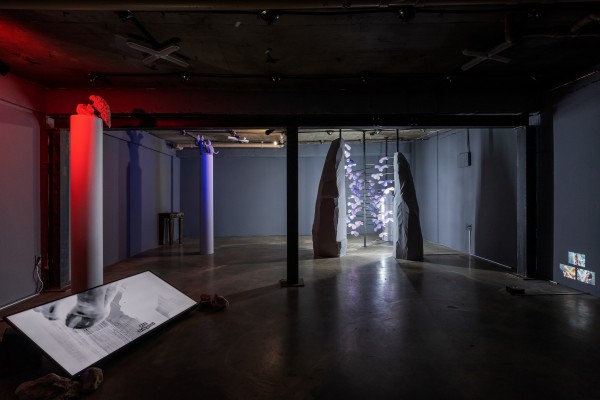
reacting to such a reality, the purple fists that cross the air from the bottom
of the half-basement to its highest point each keep their place, slanting,
nearly touching, or in a shape where the fists are not perfectly aligned.
(Nayeong Kang, For the fist bump) What effort must be put in
so that they fit perfectly against each other? Attempts could be made to reduce
the gaps, to adjust the angles to minimize the unevenness. But if things fit in
one direction, what was close in another direction becomes far again. After
trying to make as many parts fit as possible, it is decided that it should be
left as it is despite the inevitable gaps. Unlike the expectation that it may
be pure and straightway forward, faith has always also been filled with subtle
doubts. If this state of mind had occurred within the tense conflict between
endless doubt and persuasion, a faith that seemed to be steadfast chooses an
unstable immersion to ignore its precarious condition.
At
the edge of a cliff, there is someone comforting and telling that everything
will be okay, while taking steps, holding onto the tail of an old memory and
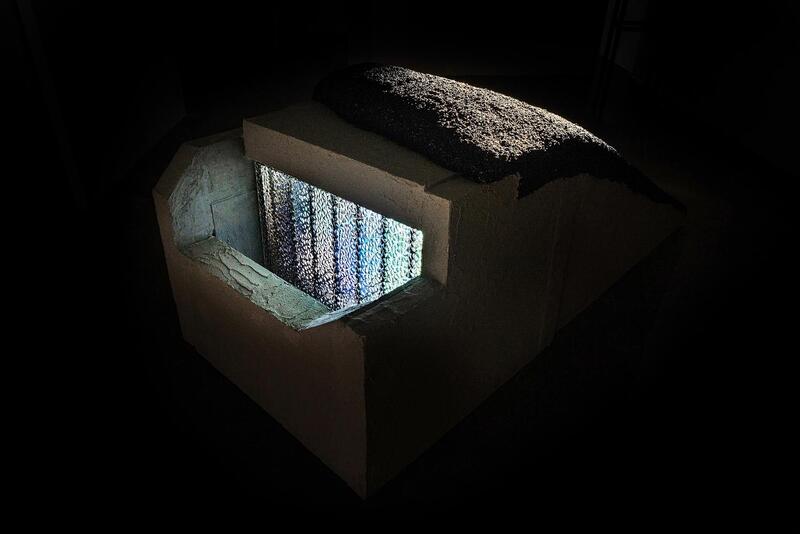
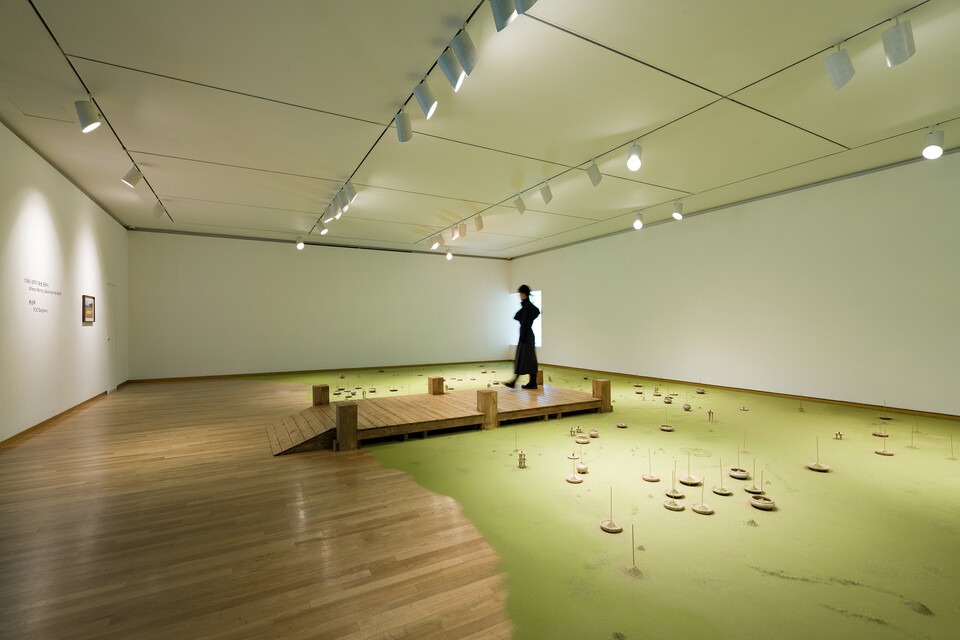
story which may or may not be true. Jieun Um's Song of the Storm Surge
begins with the story of salt swept away by the storm that has been left by a
storyteller who has lost words. The memory of an old person that remained as
clear as the white and sparkling salt even with the passage of time is merely a
voice dispersing in the air, but one decides to hold onto it. One sets out to
find this unknown place, despite the doubt that it may be gone or that the
memory may not be accurate. However, it is uncertain whether that place
existing beyond the old person's memory and that somewhere in the memory of the
artist who had kept the words of the old person are pointing to similar
coordinates. Even if the place is one that is now gone, the times in which one
looked for traces of that place made it exist. Instead of going through the old
person's memories to capture the truth, one decides to embrace all the things
on earth with the love of god.
The start of the song that comes from afar and
the sound of the song that follows drive stakes with their voices and leave
invisible traces. The storm's high waves have swept away the white and
sparkling salt that filled the storage, but where the seawater dries, there
gathers salt again, and the lost words of the storyteller take form in
another's mouth and memory. As such, the state of believing something resembles
a miracle which makes something non-existent exist. However, there are plenty
of things that cannot be explained with this state of mind. How much effort is
needed to prove something that cannot be seen, and accept this? Even with the
research paper from a prestigious institute and the verification of an expert,
we look for an even more prestigious institute, and we are not satisfied with a
single review, only feeling at ease after examining a reliable comment that
testifies it. But at the same time, we cannot ignore the doubt that it may just
be pleasant to the ear. When we become conscious of the fortune of the day or
jinxes, when the tragicomedy in our imagination eats away at our day, we arrive
at the truth that the precarious coexistence between contrasting aspects in the
state of believing something, such as anxiety and relief, fear and
anticipation, allows us to live through the present.
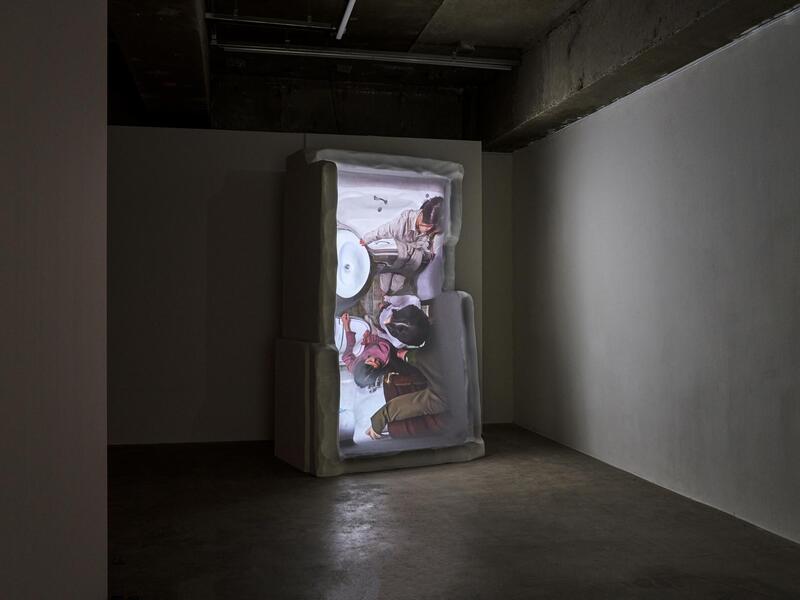
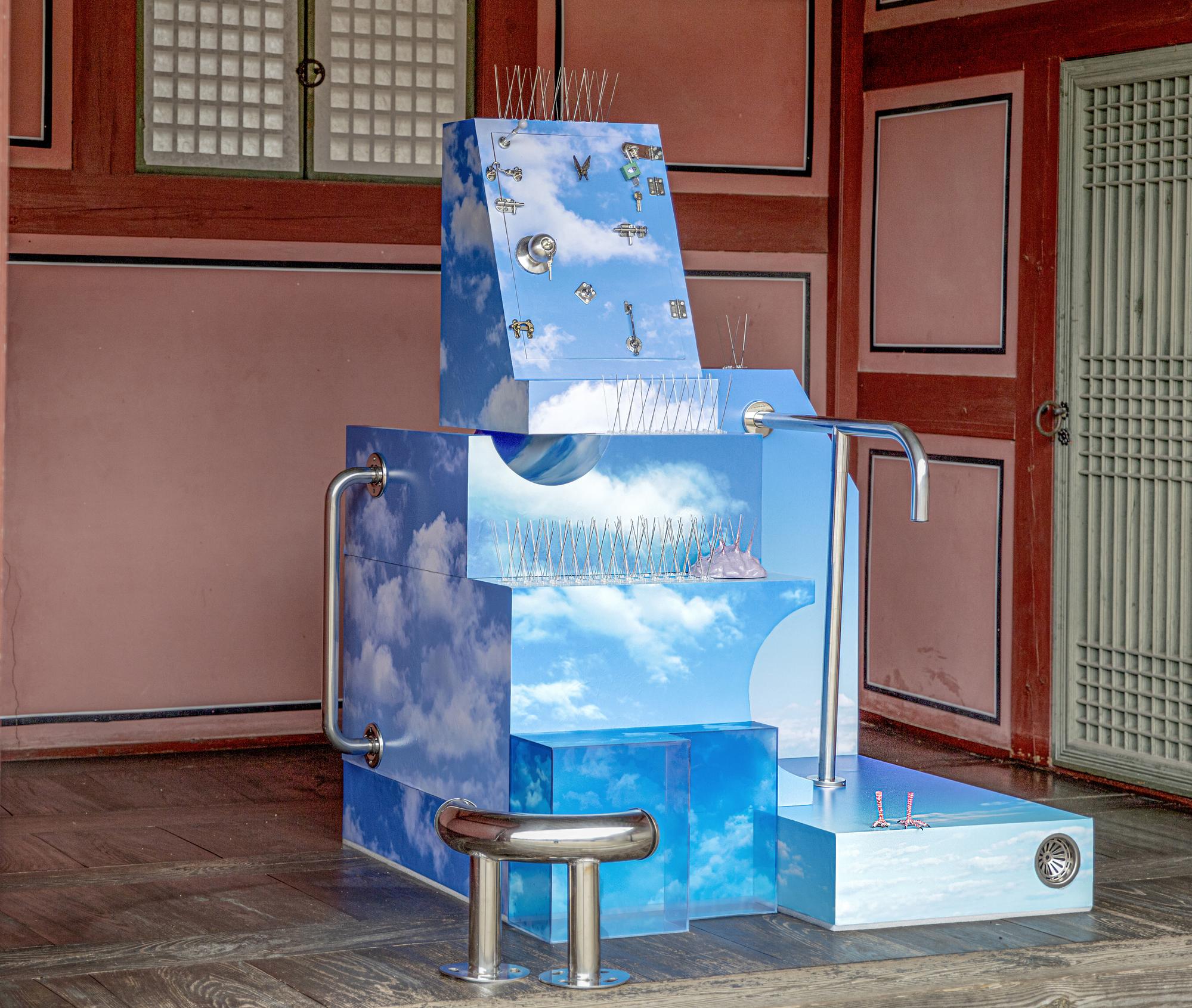
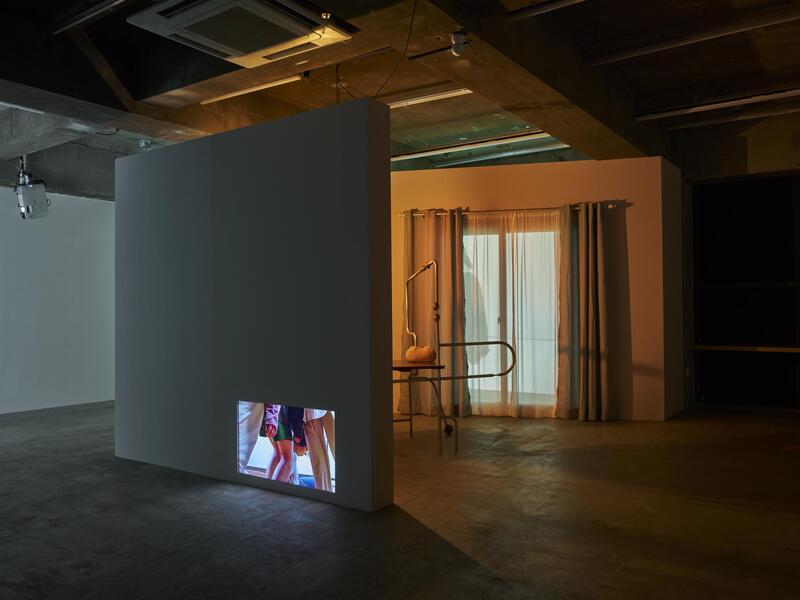
In
Matoto's house, which has entered the half-basement, there is a penguin. We
don't know who Matoto is, and we've never been to his/her house, but in that
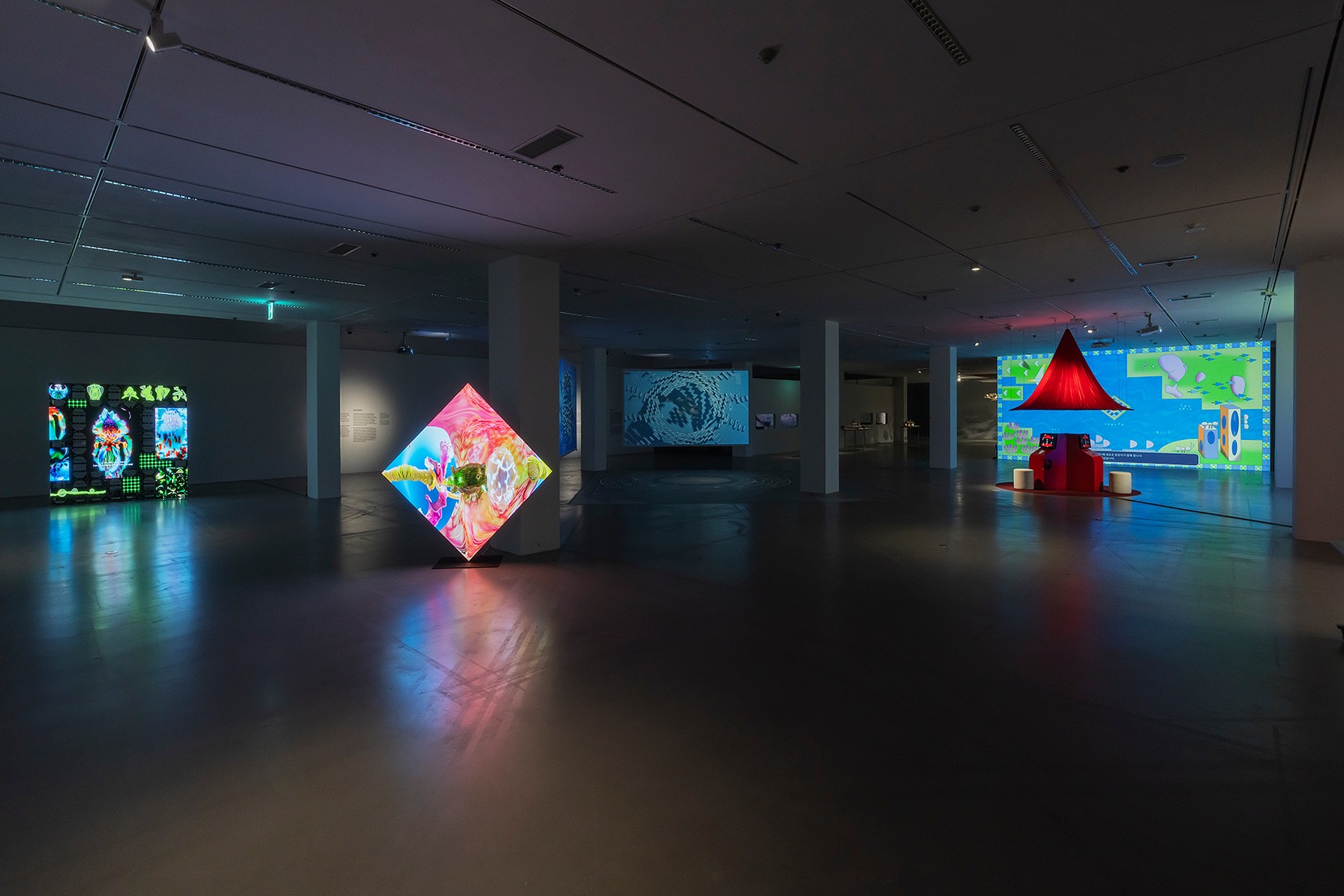
house lives a penguin (Yunhwa Yang, There is a penguin living in the
Matoto's house). People with their faces covered pat the penguin on
the phone screen and when the sound "ah-choo" is heard, the screen
turns to show the direction the sound has come from. Then people busily moving
again, and again with the sound of the cough the heads of these people whose
expressions we don't know turn at once. Outside of the screen, we cannot know
the truth of the cough sound, but if you are along in the exhibition space
looking at Matoto's house, it can be assumed that one of the people with their
faces covered has made the sound. We feel the lingering of an existence before
us even if we can't see or touch it. Our feelings that fluctuate with a curve
of a graph which falls to the ground or soars straight up are as such. And to
people who have nothing to lean on but desperateness, if superstition allows
them to hold onto life, it is no longer superstition to them. What draws the
line between truth and falsehood is not the presence of objectivity. It rather
depends on what makes one feel that something is true or not.
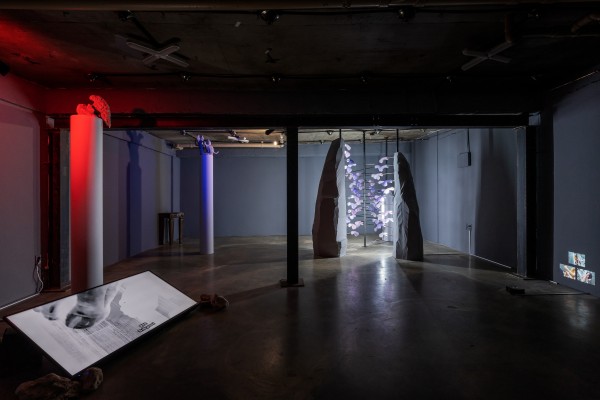
Returning
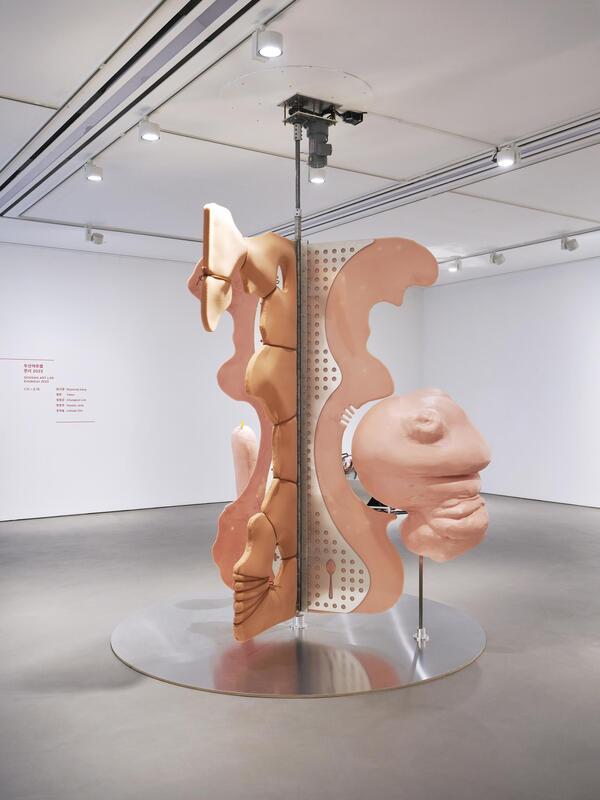
to the exhibition space, let's look at the two pillars that rise to the ceiling
from the bottom of the half-basement. What do you see on that tall grey pillar?
It looks like something that roams the streets but this figure named Jacob,
depending on how it is called, can be Jacob (Ya-Gob) who desperately clung to
God or Jacob (Jay-Cob) as it is(Jieun Um, Jacob). The
supernatural power that makes those who could not stand get up on their feet
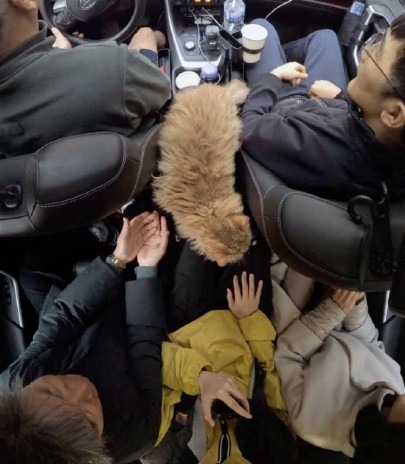
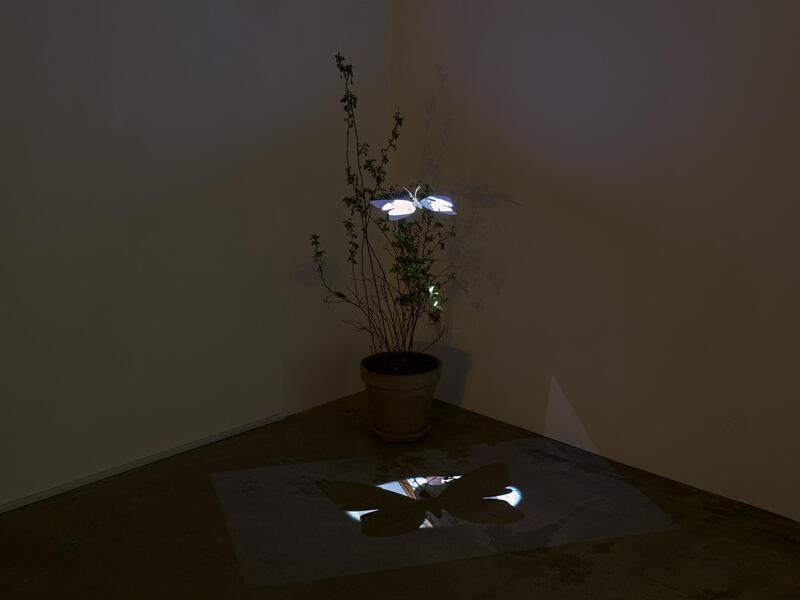
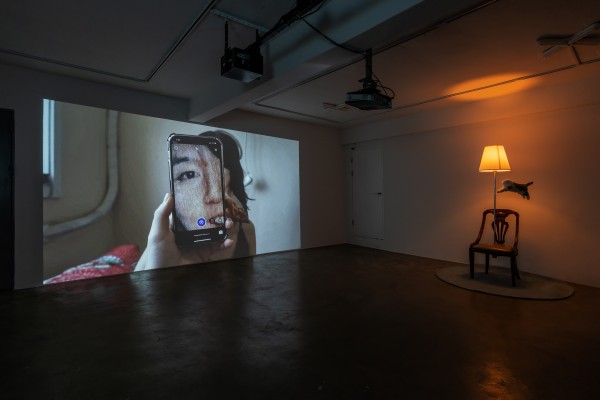
has continued to be referred to as a miracle, but the cat that floats around
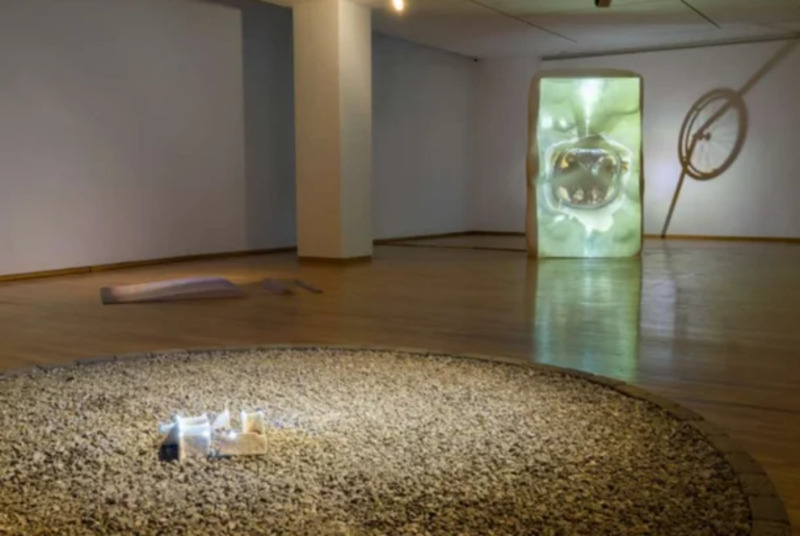
under the dim lamplight in a round trajectory is also called a miracle (Nayoung
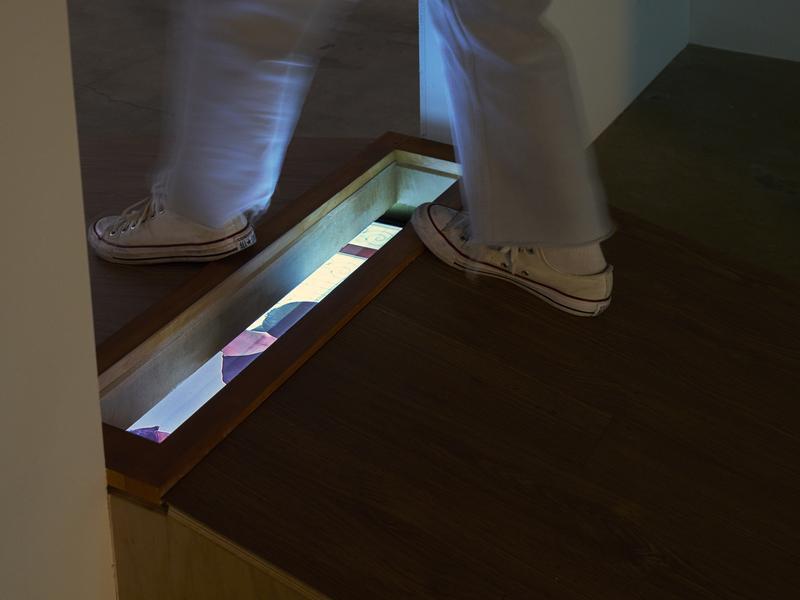
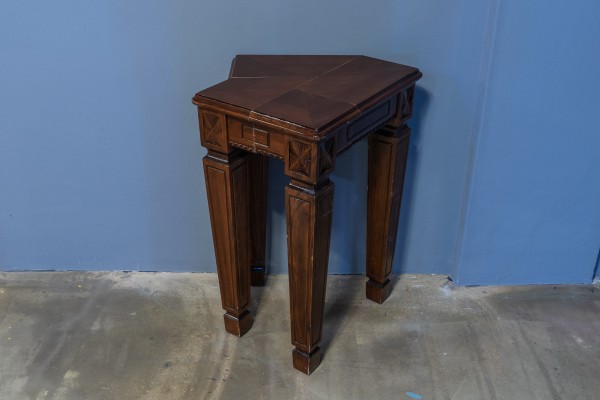
Kang Like a Miracle). Nayoung Kang assembled the fragments
of the warmest things in her memory under the name of miracle. The main
contexts of faith have presented this state of believing in something as a
submissive and perfect tool, but the four corners that used to support the
place for everyone is quietly waiting for a miracle after gathering incomplete
things in the hopes that a deficiency will be filled, instead of leaving the
empty spaces unfilled.
The
form of faith visualized by Nayeong Kang, Yunhwa Yang, and Jieun Um has a
different texture from the forms that we normally call faith, such as a strong
will, obsessive immersion, or a deep dependence on a certain sacred power. The
artists approach the reverse side rather than the common outer layer. If the
so-called faith compresses and visualizes that long, long inner state occurring
due to believing, what these three people represent would be understood as a
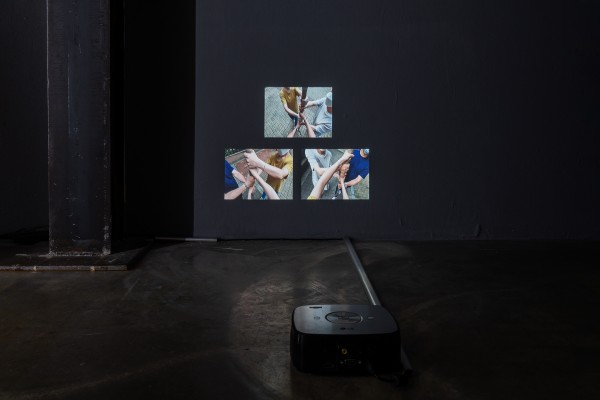
partly confused state, rejecting that compression and completeness. It is seen
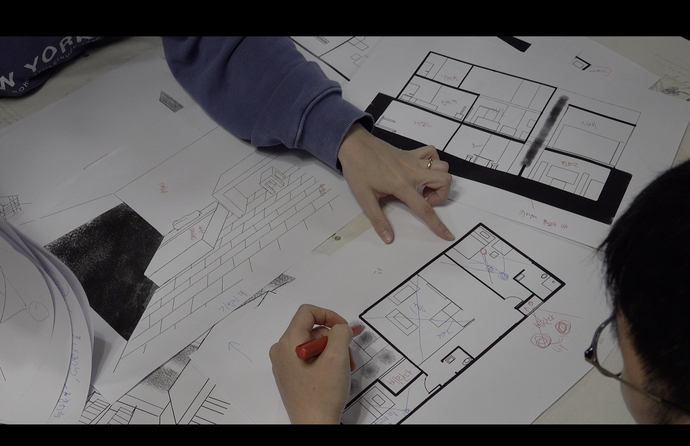
in the image of the three people who synchronize their different strides and
rhythms using their common desperateness as the fixed axis (Nayoung Kang How
four people walk together); while the busy pace relying solely on the
memory of the old person, seeking for the place that could possibly be a mere
illusion (Jieun Um (Song of the Storm Surge) and the series
of processes revealing the existence of something that cannot be seen (There
is a penguin living in the Matoto's house() also shows it in forms of
continued movement - the confusion of push and pull between what is hoped an
what is doubted -, rather than in an organized state.
The
images of faith visualized by these three artists tell the visitors of the
exhibition that they may or may not believe as they wish. They do not force
anything, as they have only aimed to take a closer look at it within their
daily lives. However, we suggest imagining in what forms the state of believing
(as something flexible, rather than the hard and certain language of faith)
would appear in our daily lives. Now we cross our fingers to send our hopes for
those who have visited the exhibition space. And we don't mind getting glances
of doubt about it. We are grateful to those of you who would believe it, and we
wish you good luck today.