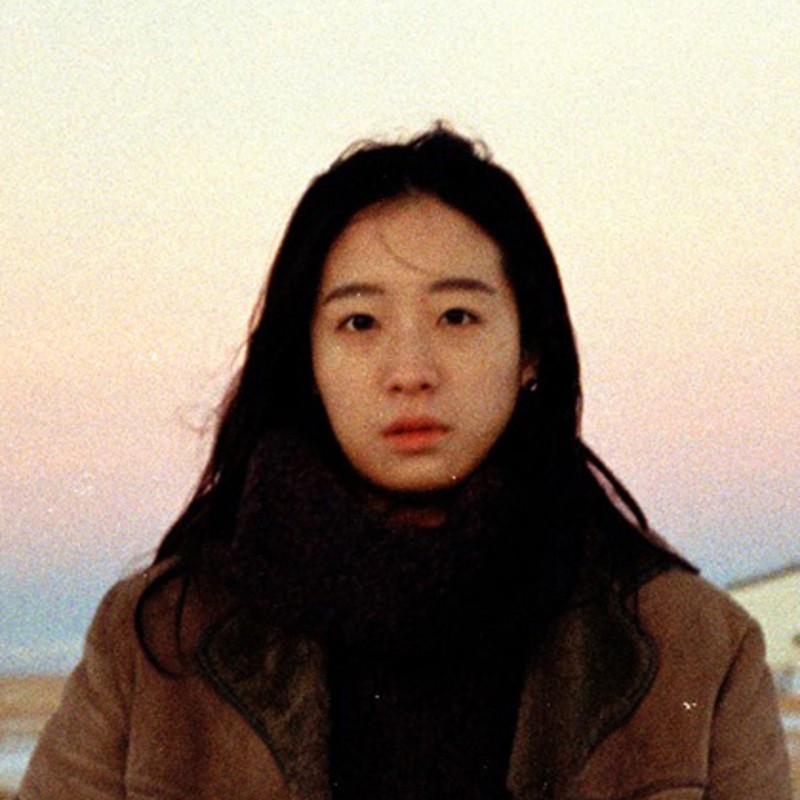
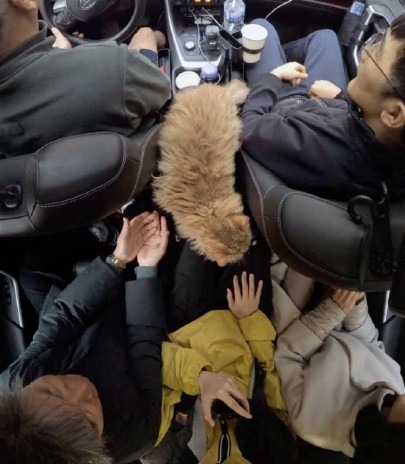
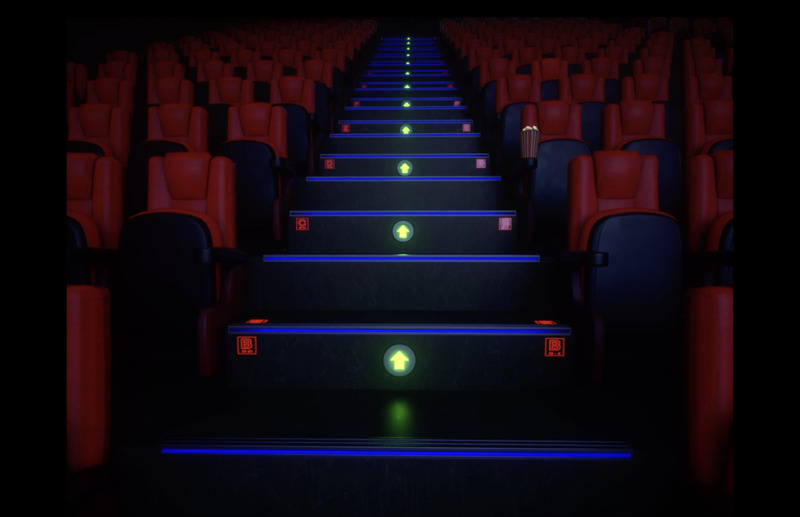
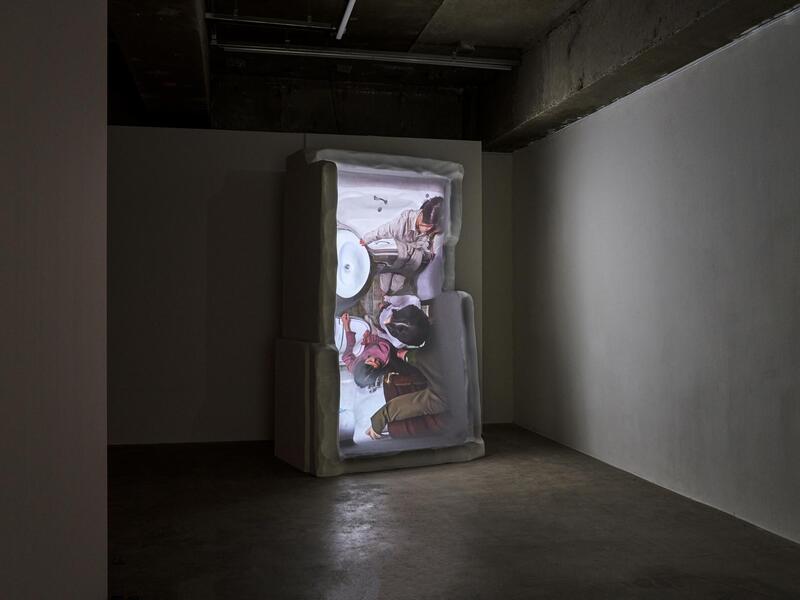
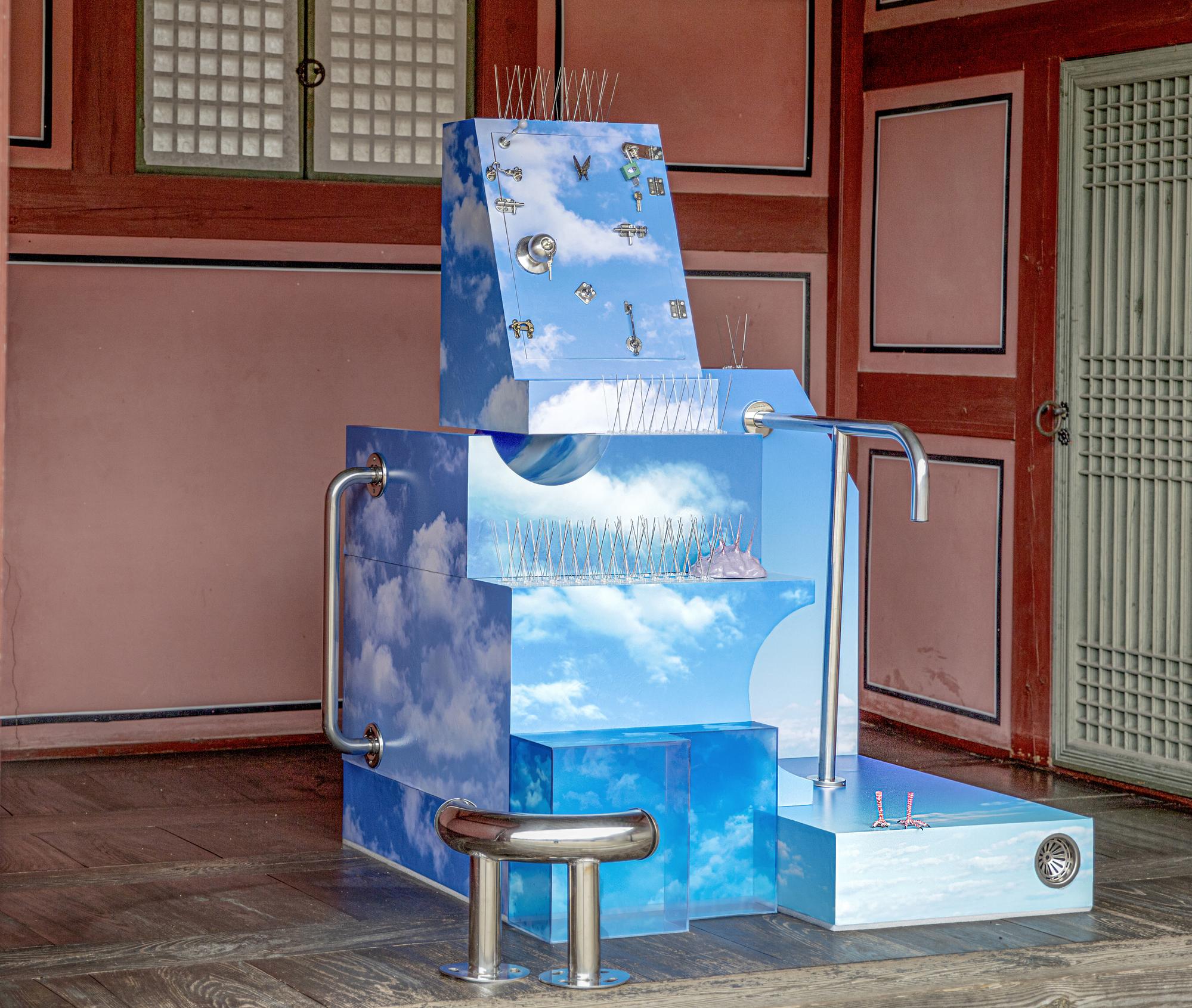
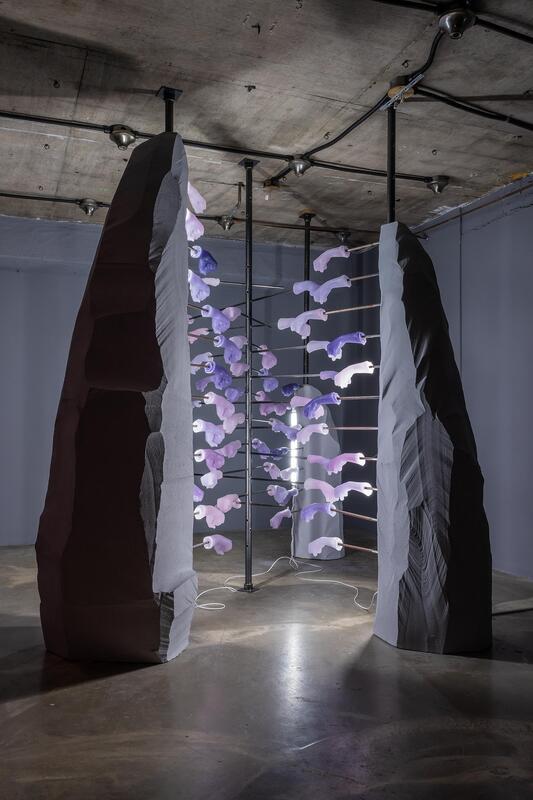
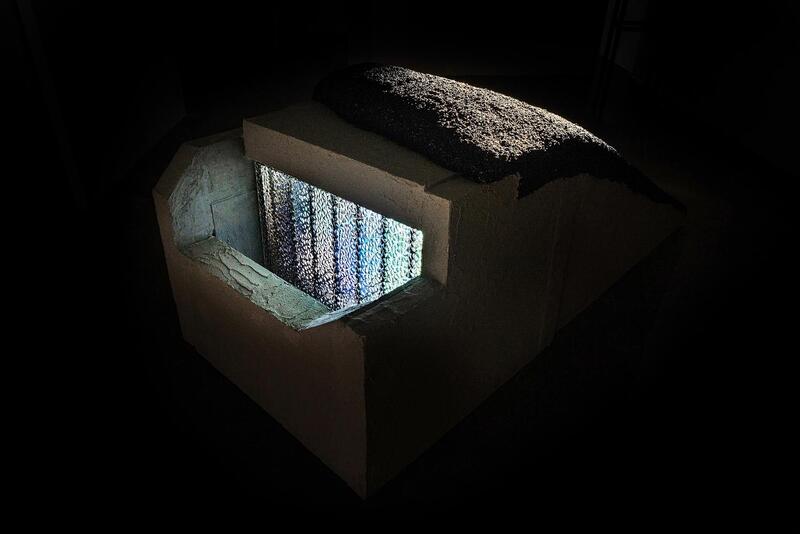
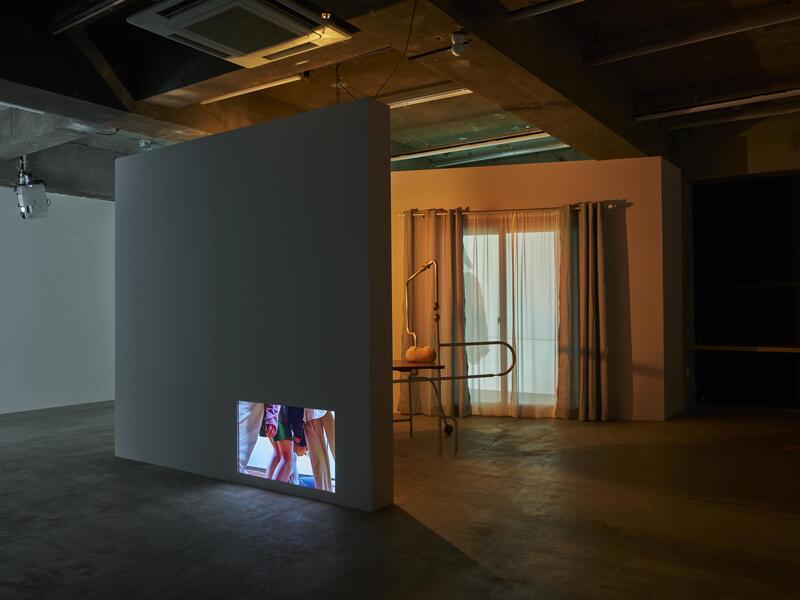
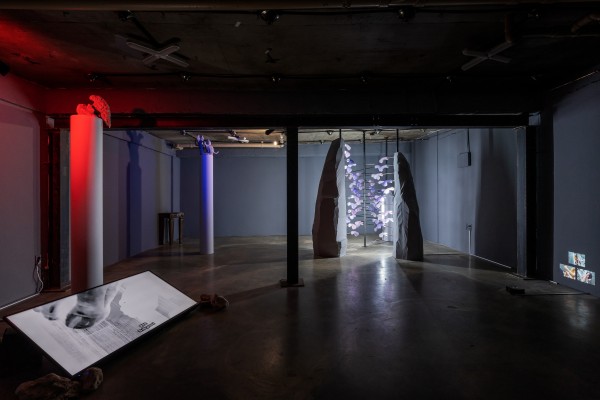
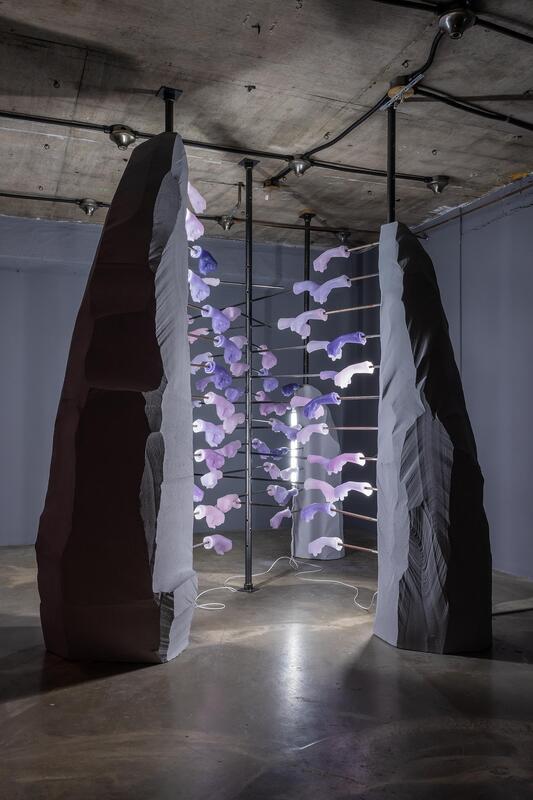
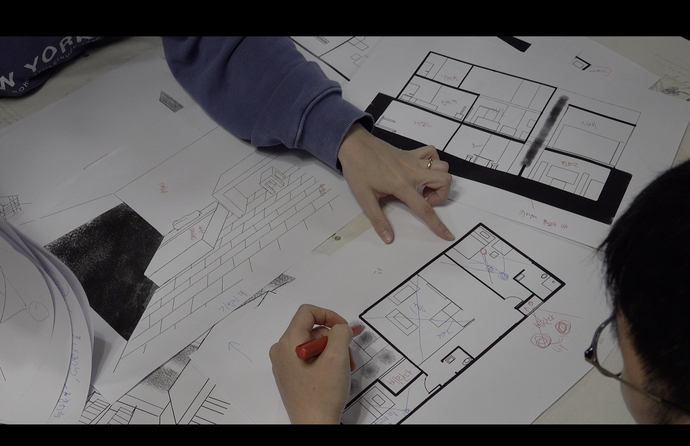
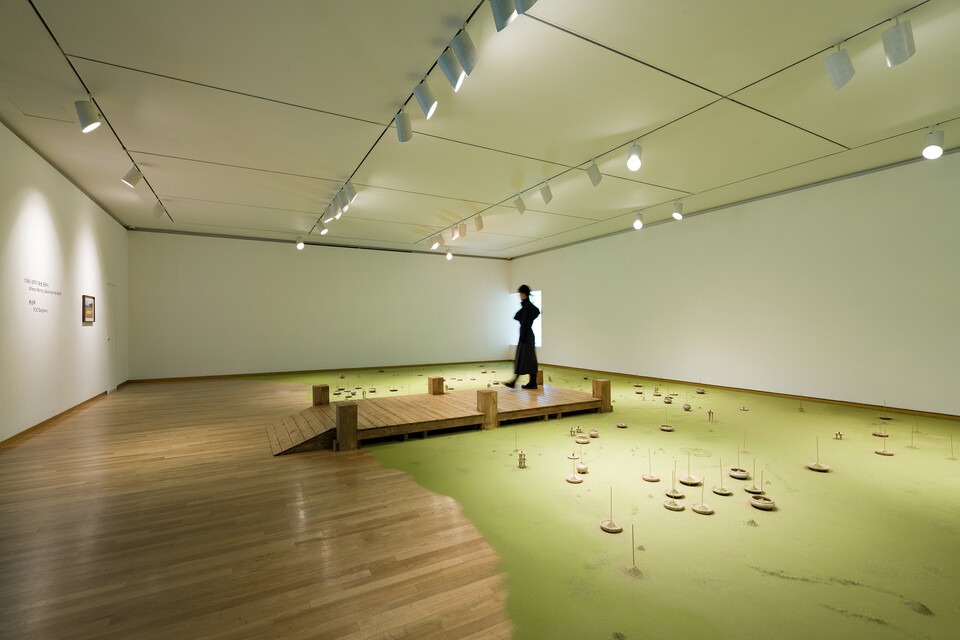
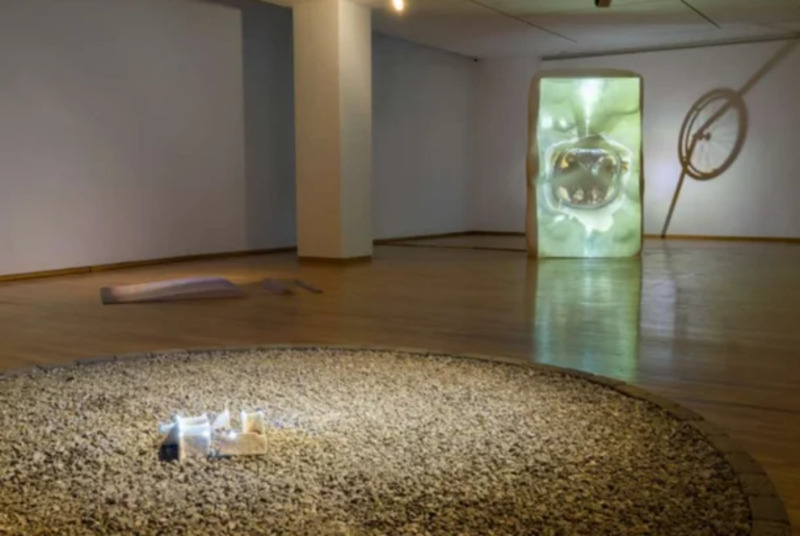
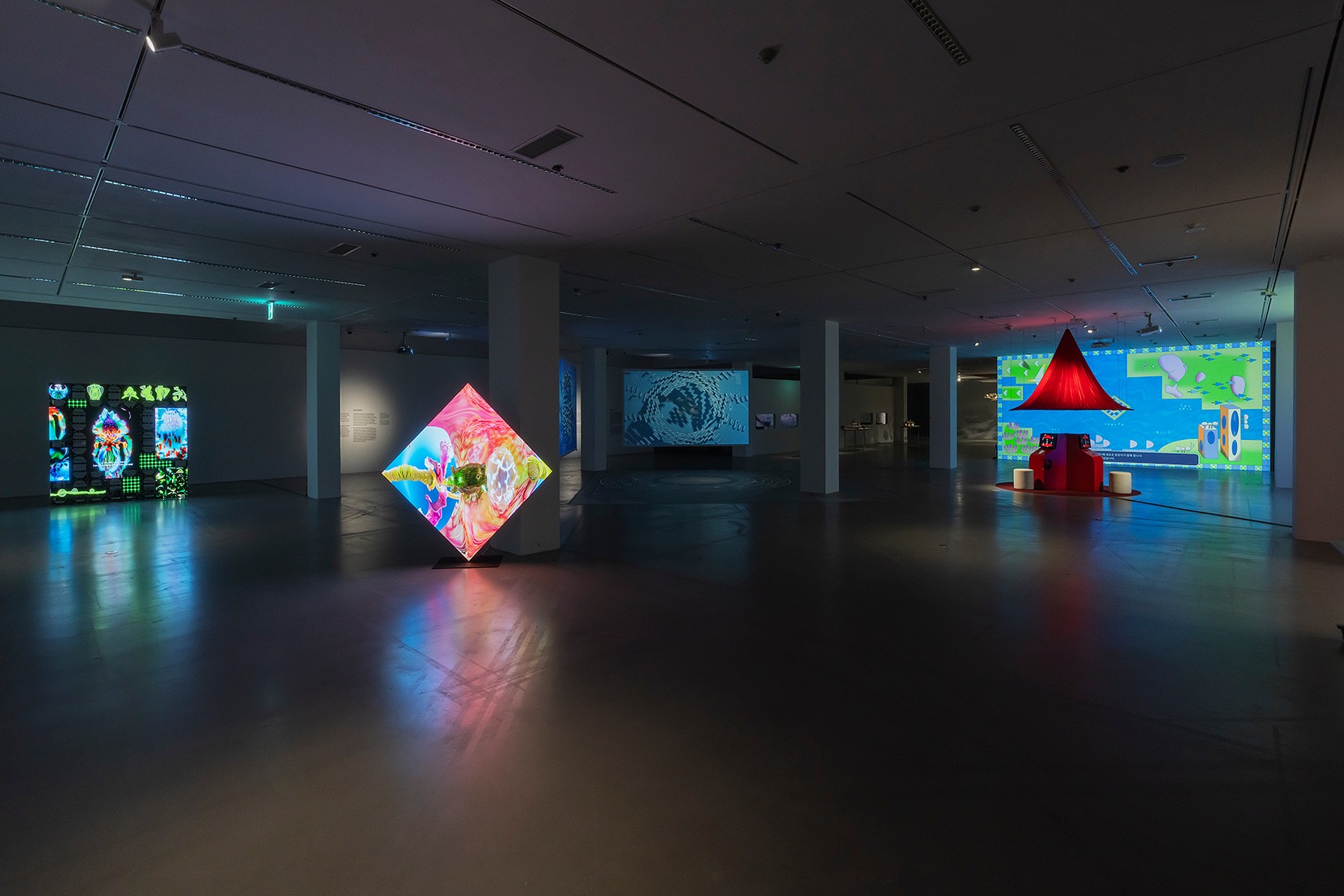
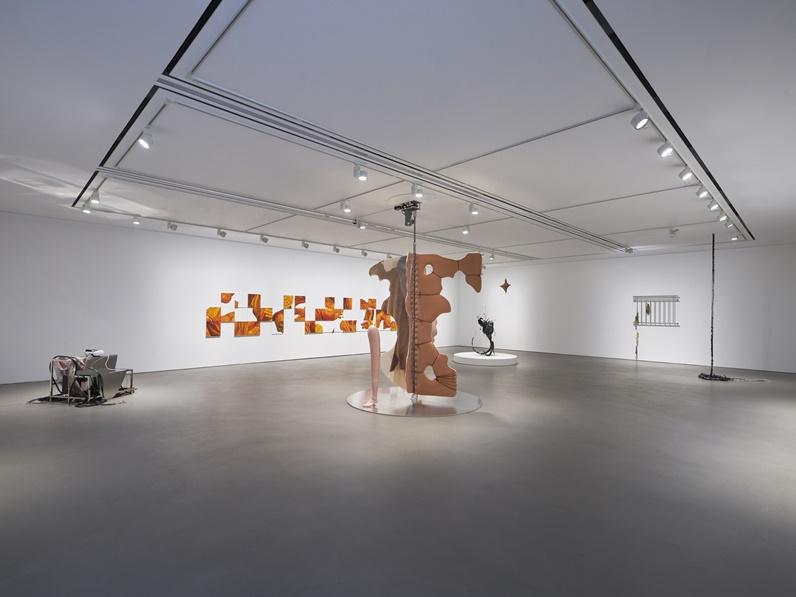
Installation view of 《Heavy-Duty》 (CR Collective, 2024) ©Nayoung Kang

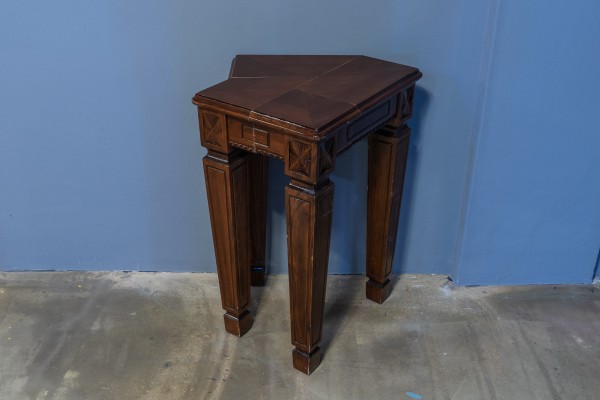
Before stepping into the dim exhibition space, I never imagined it would take the form of a house. Any expectation of comfort and warmth one might associate with the home dissipates into a stark, cold atmosphere. A door lies flat against the floor, and a structure resembling a dining table sprouts a pillar. The bathroom stands upright, while a chair with part of its legs cut off is perched atop a semicircular frame, stirring an indefinable sense of unease. The strange house that 《Heavy-Duty》 presents is a kind of training ground, one imbued with arduous movement, friction, and latent danger. Nayoung Kang willingly draws the viewer into an intimate yet intense space.

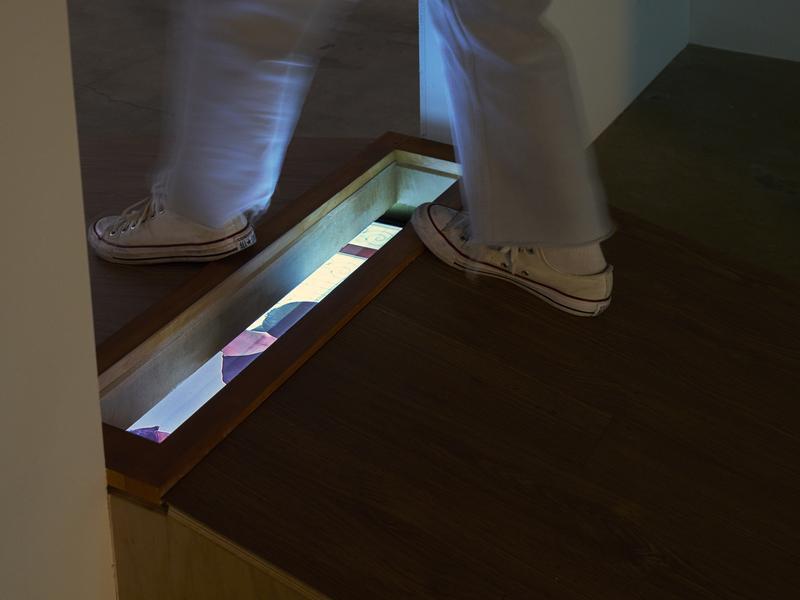
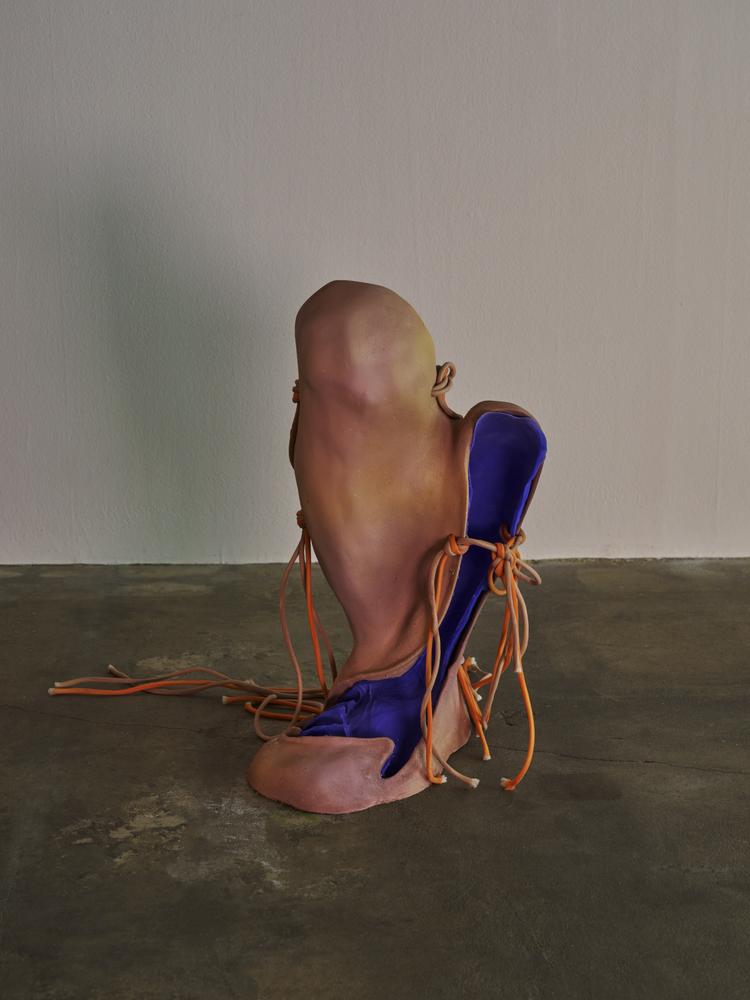
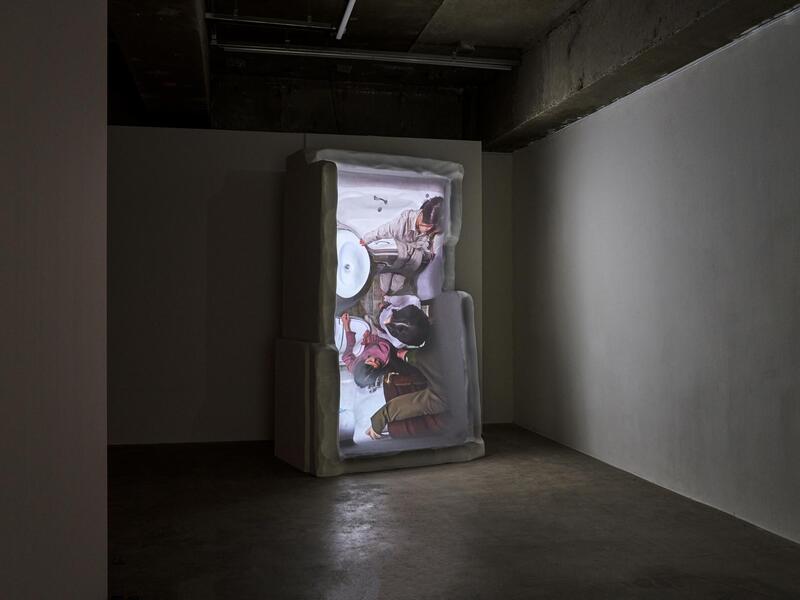
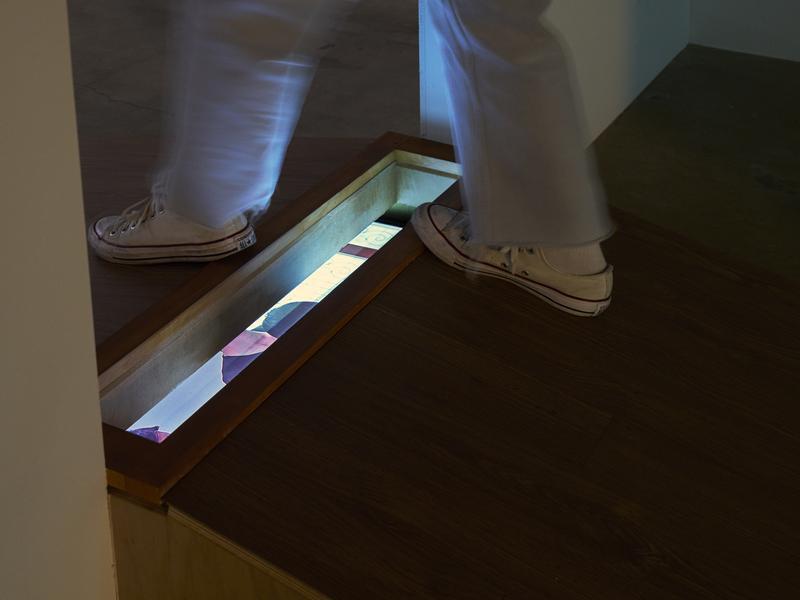
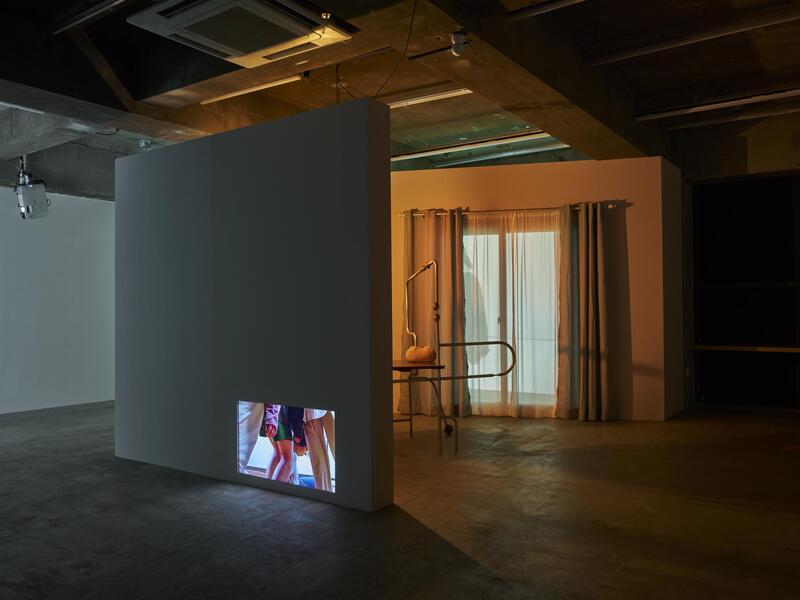
The large door that first comes into view stages a scene of well-drilled movement in the entryway. Local Rule: Preparation depicts the daily routine of those performing care work. Shoes scattered in disarray lose their original function of aiding movement and instead become obstacles to mobility. The performances in the videos Local Rule: Bathroom and Local Rule: Mind the Gap highlight the dangers embedded in domestic facilities. The viewer’s act of moving through the front gate, hallway, living room, bathroom, and study stands in contrast to the strenuous walking practice shown on screen. For some, the everyday acts of moving around the house, washing, and preparing to go out are contingent upon multiple falls.

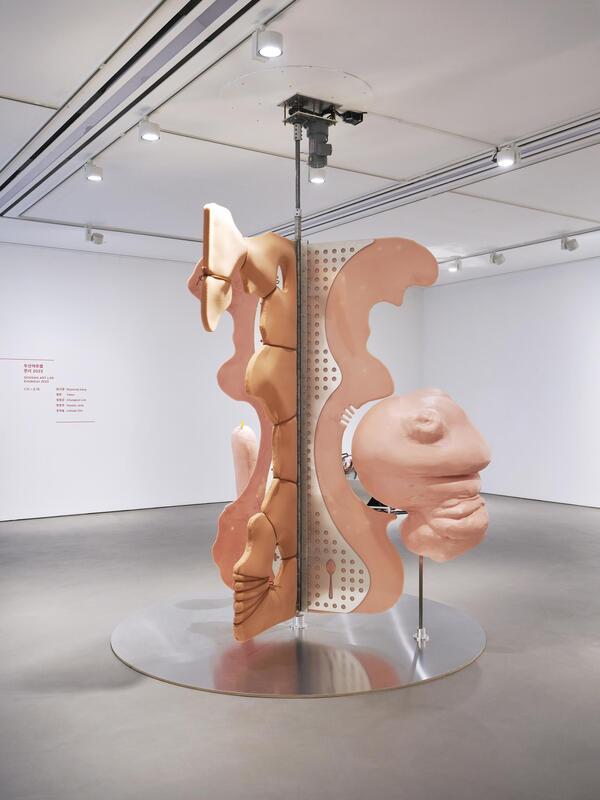
Nayoung Kang, Local Rule: Bathroom, 2024, single channel video (colour / 2-channel sound, 5”27’, loop), polystyrene block, expanding foam, putty, soap, toothbrush, 130x78x220(h)cm, Installation view of 《Heavy-Duty》 (CR Collective, 2024) ©Nayoung Kang

A total of five video performances capture the process of training. Likely undertaken daily, this sequence of movements appears to follow a certain set of rules, and in the uncanny atmosphere of the exhibition, the viewer can physically sense the force of these unfamiliar rules at work. In fact, the series title “Local Rule” is borrowed from the term used by Asa Ito to refer to rules humans acquire through experience. Each body gains uniqueness through rules that align with its belonging to a particular group. The chant uttered at the doorway to avoid tripping, the walking practice reflected in the living room’s glass window, and the friction of supporting and being supported to stand up are all repeated through the body of a household member, becoming rules in their own right.

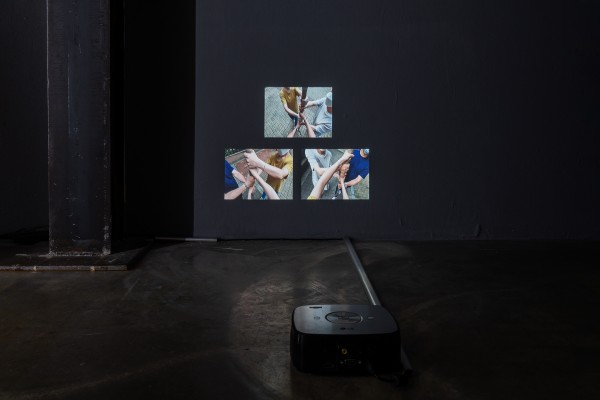
Nayoung Kang, Local Rule: Mind the Gap, 2024, single channel video (colour, 2”14’, loop), mixed media, 180x83x18(h)cm, Installation view of 《Heavy-Duty》 (CR Collective, 2024) ©Nayoung Kang

In this exhibition, I want to speak about certain functions that a house as a space can possess. For the artist, the space serves as a tool to maintain an appropriate distance when reconstructing autobiographical experience into her work. Having spent years caring for a family member, she has incorporated into her practice the efforts made to navigate and resolve immediate circumstances and tasks. In previous works, she created assistive devices and alternative facilities, conducting research related to disability and rehabilitation and presenting the results through her art. This exhibition, however, offers the space itself as a site of preparation for the outside world, where all training and assignments take place.
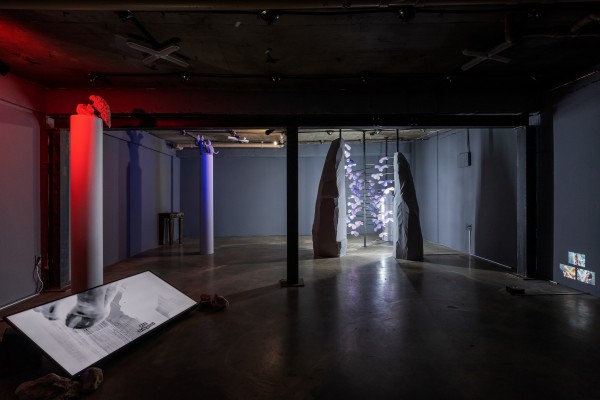
Efforts to supplement the limits of the body are revealed through the space of the home, and this approach can be seen as evidence that she has taken a more observational stance toward the practical work of confronting challenges. From the perspective of the viewer, this is a place governed by unfamiliar rules. Rather than functioning as a voyeuristic window into a private domain, as is often expected from works dealing with personal spaces, it serves as a place for understanding the “local rules” of a household.

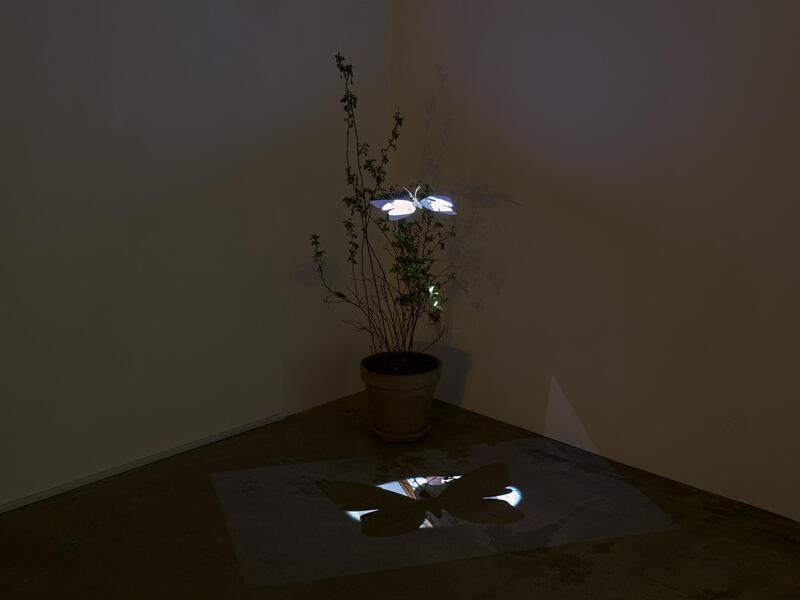
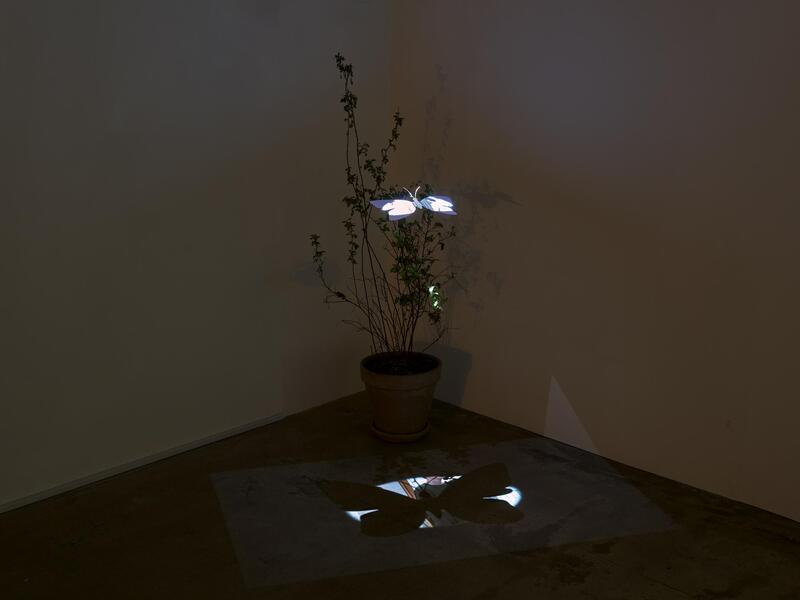
Nayoung Kang, Balancing Butterfly, 2024, single channel video (colour, 2”17’, loop), pot, paper, dimensions variable, Installation view of 《Heavy-Duty》 (CR Collective, 2024) ©Nayoung Kang

A careful viewing of the videos will reveal that the performers alternate between the roles of care provider and care recipient. The artist deliberately refuses fixed roles in caregiving to highlight the fact that, in reality, these positions often circulate within the care environment. The words “recipient” and “provider,” so often invoked in discussions of care, deserve more critical examination. Anyone who has cared for another person or lived with an animal will know: there is no fixed direction to care—our roles turn in a loop.

“Heavy-duty” is an idiom implying great sturdiness, often used to describe products that can withstand harsh weather or immense force. In contrast to the robust shelving installed in the archive space, images of butterflies appear throughout the exhibition. It is said that only humans, with their skin, can perform the delicate task of holding a butterfly’s wings. Beneath the physical and mental weight borne by those who provide care, there exists both steadfast will and responsibility, as well as a delicate sensibility.

We live in an age of unimaginably fast technological advancement, yet caregiving remains, for now, a human responsibility. Ultimately, however, it is humans who determine the direction of technological development—and behind that decision lie perception, environment, and institutional frameworks. If something is tilted to the point where it cannot function, the answer is to level the ground beneath it. Think about it: inevitably, we will all become beings in need of care.

References