The Rationality of the Coca-Cola Goddess Ritual and the
Imagination of a Subjective Future
“What
distinguishes fiction from everyday experience is not a lack of reality but an
excess of rationality.”
The
birth of a Coca-Cola goddess in the context of Korean traditional shamanism and
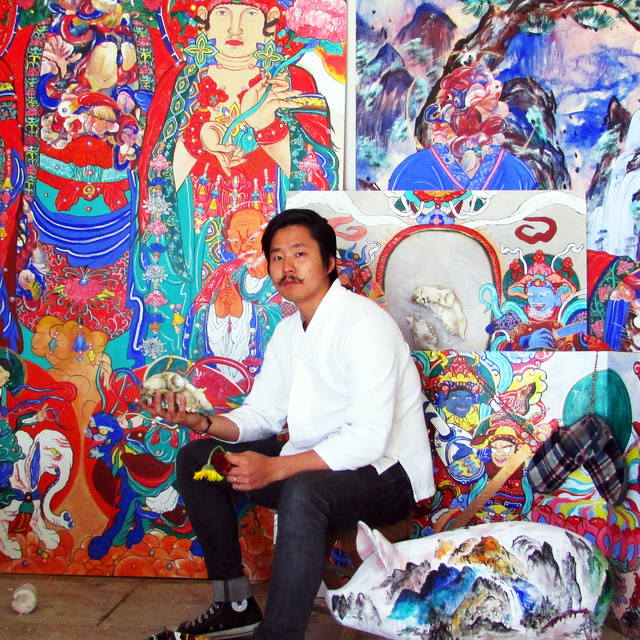
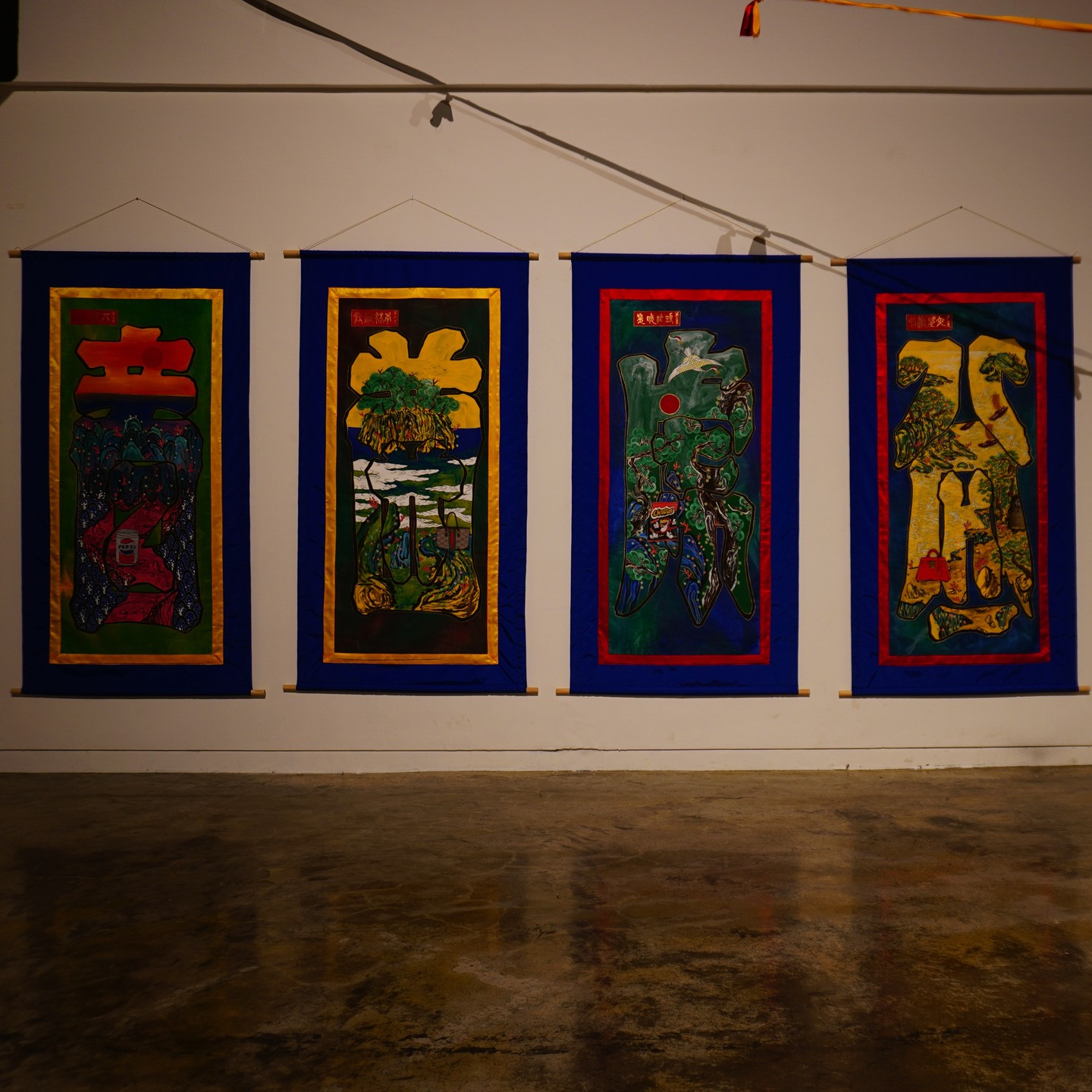
religion—if this isn’t the most outrageous fiction, what is? Minseok Chi has
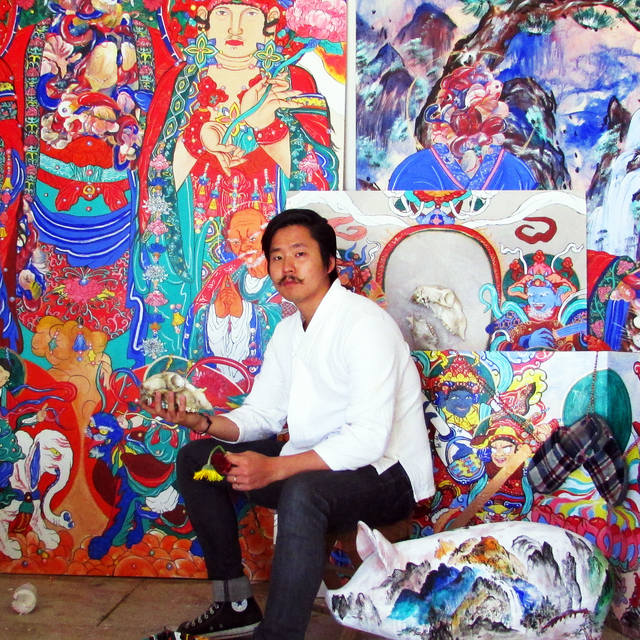
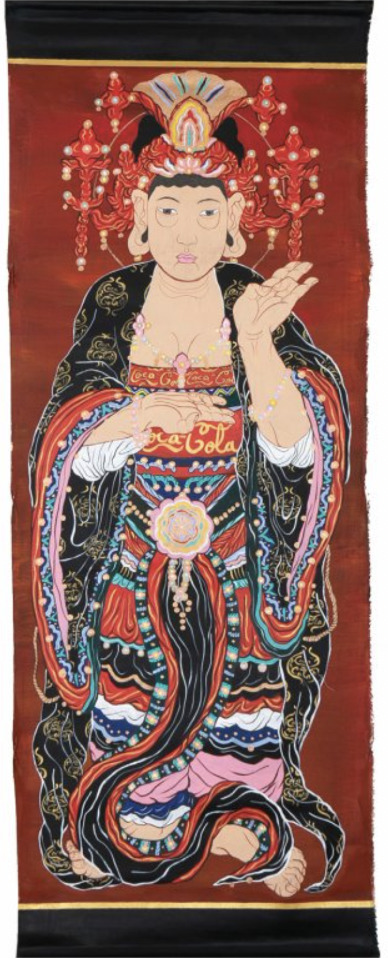
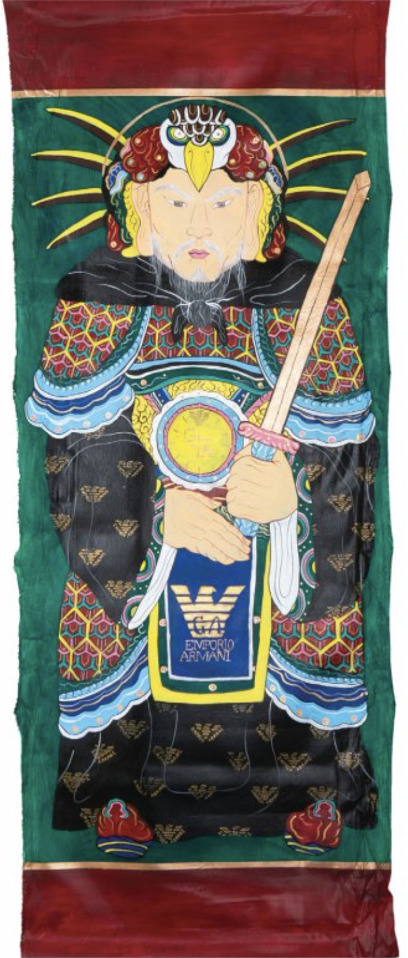
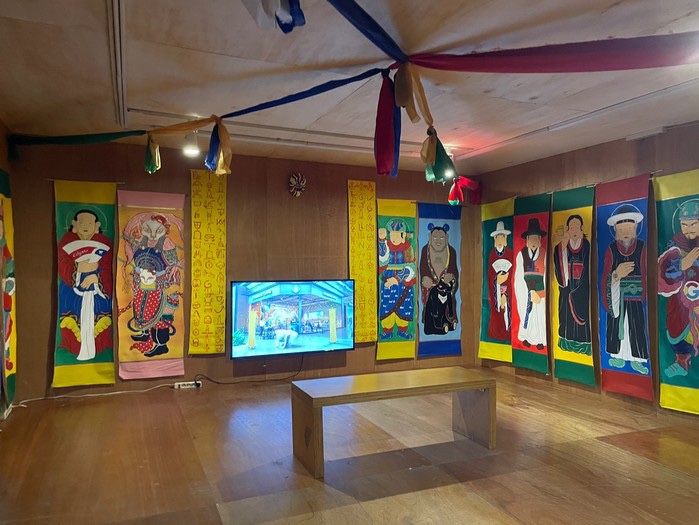
been shaping 108 brands symbolizing contemporary consumer culture into
traditional Korean deities. He invents new characters for each god, and these
deities are expressed through inscribing metaphors onto symbolic terrains that
determine the visibility of states of objects. Among these invented deities,
the Coca-Cola goddess goes beyond myth to form a religion, with the concretized
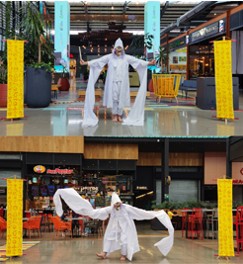
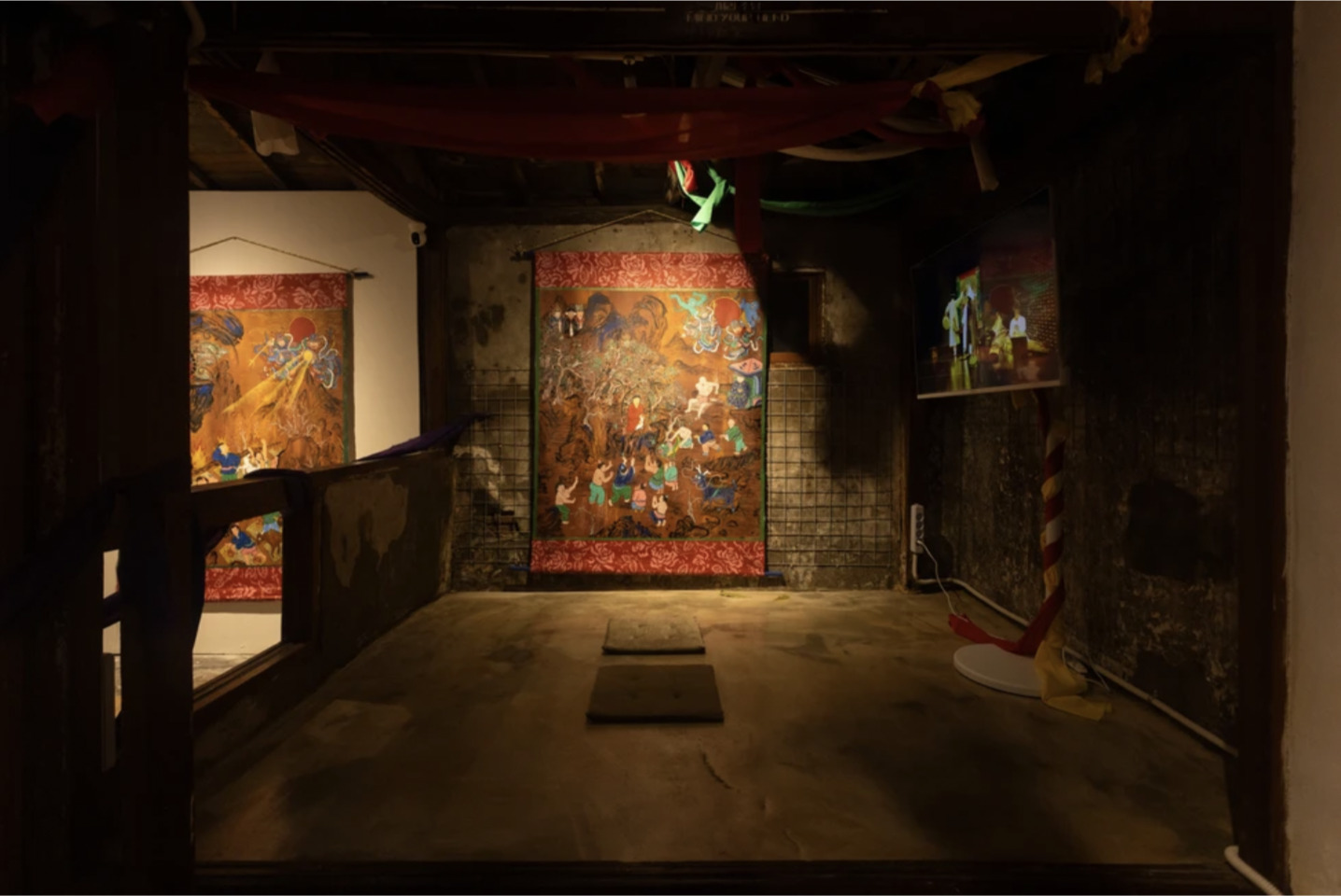
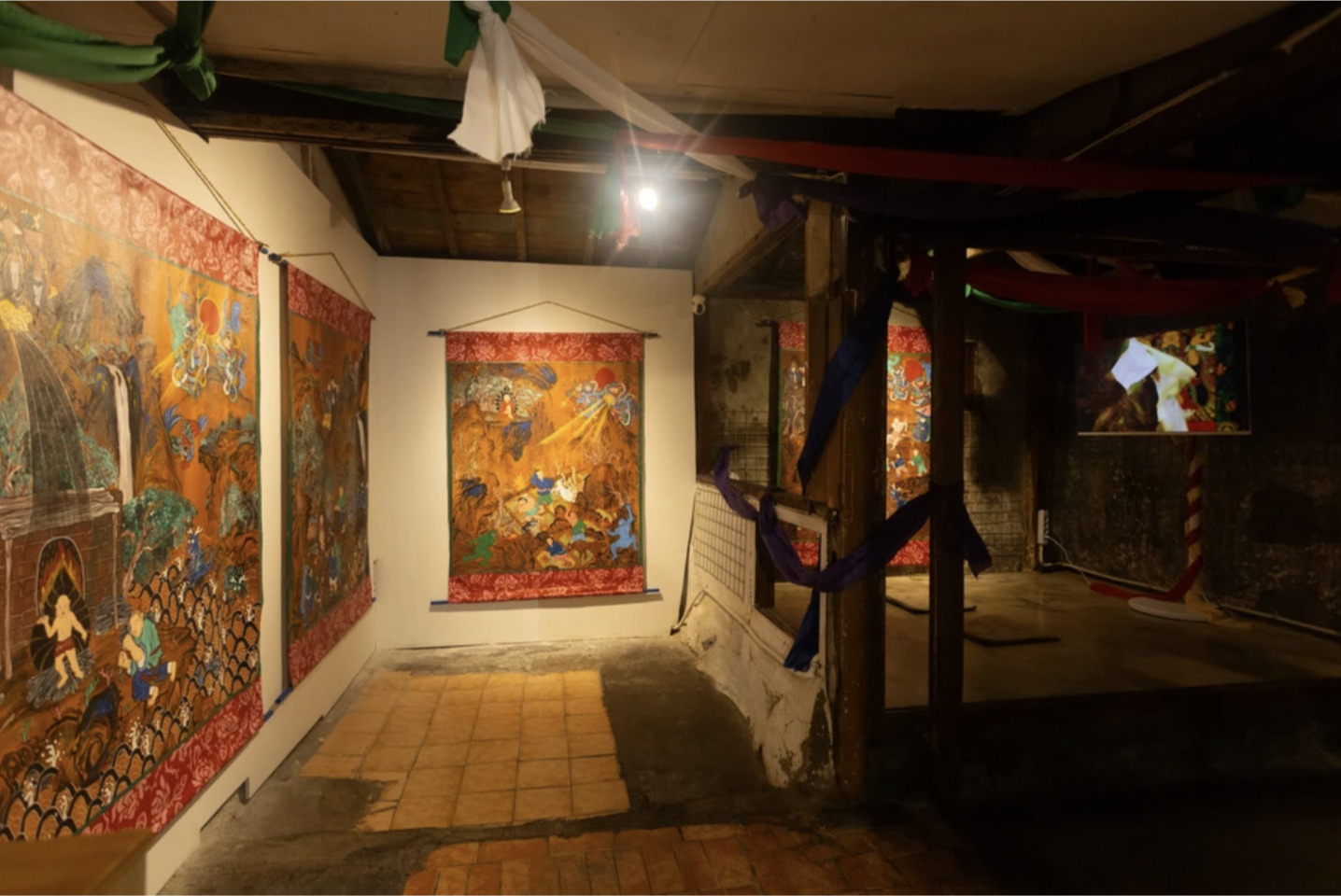
ritual 〈Ritual en honor a la Diosa
Coca-Cola〉 listing the philosophy of community
through “mediation.” Chi orchestrates a gut (shamanic ritual) that filters
incompatible agents—Coca-Cola and Korean shamanism—diagnoses the hypothetical
context (event) they belong to, and assesses the coexistence and continuity of
heterogeneity, identifying aspects of validity and alterity. He then invites us
into a form that is both perceptible and thinkable within visual art.
Chi’s
incompatible agents are at once sacred by necessity and commercial and secular,
and also sacred beyond the commercial and secular—they represent a laborious
process of erasing differences situated at their margins. This derives from the
artist’s core value of mediation. The fictive world of Minseok Chi, 〈Ritual en honor a la Diosa Coca-Cola〉, is
not a space revealing fiction’s lack of reality within mythological context,
but rather a stage exposing the excessive rationality underlying the world we
perceive. Through the fictive Coca-Cola goddess myth, I trace both the inside
and outside edges of history’s margins in order to examine the meanings and
forms of alternative futurism taken by the Coca-Cola myth.
The
Coca-Cola goddess is born from charcoal during an era when the sun has grown so
enormous that the world burns and people can no longer open their eyes. She
offers her black shadow to the blind, allowing humanity to see and find its
path. That the goddess is born from charcoal—a substance that shares attributes
with the sun she opposes—ties into the “identification phenomenon” found
frequently in myths. This phenomenon occurs when a mythological character
possesses the same attributes or shape as the adversary. Athena of Greek
mythology, for example, bore Medusa’s severed head on her shield; in the Indian
epic Mahabharata, the hero Arjuna and his archrival Karna were born of the
same mother and both excelled at archery; even in the Harry Potter series,
the protagonist shares a soul connection with Voldemort and both speak
Parseltongue. Such stories reveal the mythical logic that humans, in their
unconscious, are drawn to continuously gaze upon the object of their hatred.
In
the Coca-Cola goddess myth, we also find interpretations of the number 3, which
carries significant weight in mythology. According to Georges Dumézil’s
“trifunctional hypothesis,” society is upheld by three hierarchical functions:
“sacredness” (magic and ruling power), “combativeness” (physical force and
victory in war), and “abundance” (wealth, beauty, and love). The myth includes
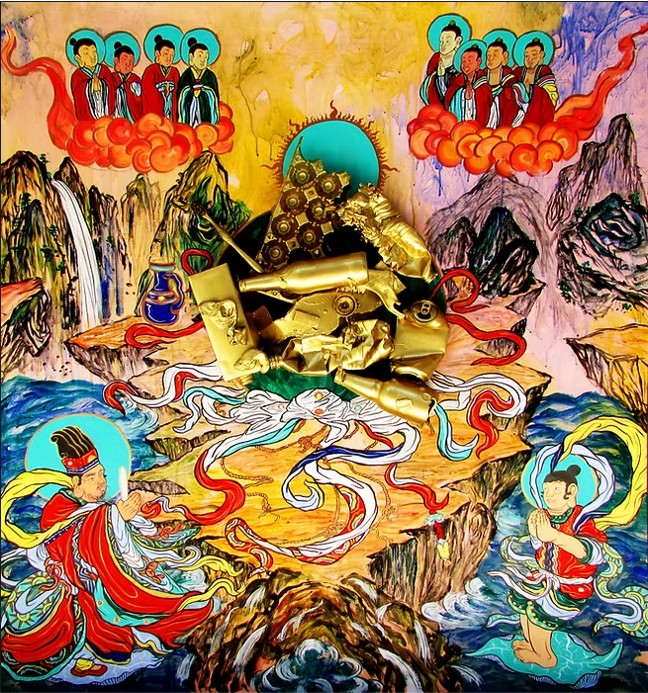
three key elements: “charcoal,” a “gourd bottle,” and a “herring with
legs”—each aligning with these functions. The dual nature of the charcoal, from
which the goddess is born, represents sacredness. The gourd bottle, filled with
a dark energy opposing the sun, represents combativeness. The herring with
legs, always at the goddess’s side, represents abundance as it travels between
water and land, and like charcoal, carries sacredness, while also referencing
its abundance as a major food source.
Charcoal
possesses the dual nature of emitting light and heat like the sun while
retaining a cold materiality. This duality mediates between heat and cold,
serving as a bridge between divine and human realms, yin and yang, light and
darkness. In mythology, an image missing one foot is often used to signify
mediation. Likewise, the fact that the Coca-Cola goddess, born from charcoal,
becomes lame after being struck by stones thrown by people further emphasizes
her mediating role. Such motifs of mediation appear in many fictions:
Cinderella, who cleaned ashes from the hearth; the Polyjuice Potion or Ministry
of Magic fireplaces in Harry Potter—these symbols all reflect
transformation via marginal substances.
Eventually,
the Coca-Cola goddess, who had shared her cooling aura with humans, sacrifices
herself to block the ever-intensifying sun. She ascends to the heavens,
scattering the dark energy from her gourd bottle across the sky. The sun and
the war-god who opposed her encounter new mediation, resulting in a cycle where
they appear in the sky only once a day. When people saw the darkened sky, they
exclaimed, “Look!”—and thus, night was born. This linguistic magic reflects
sympathetic magic through language. “To see” is “to know.” As is well-known,
the English word “see” and the French word “savoir” (to know) derive from
“voir” (to see) and “avoir” (to have). Seeing is possessing, is knowing, is
power. In the myth, humanity reclaims subjectivity by seeing, owning, and
understanding the night.
Minseok
Chi’s world is not a singular one. For him, the world is not defined by values
decided through majority rule or shaped by colossal agents like capital or
power. The world he observes is one of polarized value bias, capitalist
inversion of meaning, forgetfulness, and alienation. That’s why he calls for
mediation and for the subjective comprehension of the world. In his mythology,
the recovery of subjectivity through mediation is central and recurrent.
The
colossal sun symbolizes both the essential element for life and absolute power.
In the Coca-Cola goddess myth, the endlessly growing sun becomes a condition
leading humanity toward suffering. This expanding sun symbolizes the Western
metaphysical ideal of purity and clarity of consciousness without distractions.
In contrast, Coca-Cola—resisting this great sun—embodies a duality that
includes Western reason and capitalism. By drawing this symbol of capitalism
into the realm of Korean shamanism, Chi subverts the Western universal
appropriation of Korean culture—the gaze that sees Korea as a mysterious and
exotic small Eastern nation to be studied or solved.
Minseok
Chi states, “Art is a new kind of play that can dismantle the serious play
surrounding us.” He becomes the master of a fictive play that entangles
contradictory and heterogeneous concepts, dismantling binary oppositions. He
fully appropriates and interprets enormous systems—economic and cultural—that
surround him. He challenges the dominant gaze toward Korean traditions and
reclaims them through his own lens. In other words, his act of absorbing
Coca-Cola into traditional culture is both humorous and serious: drinking a
refreshing Coke under a massive sun and contemplating the remaining Coke bottle
shaped like a gourd. Through this, Chi asks: What is our real life? How should
we live? His alternative imagination, born of self-reflective questioning,
becomes a subjective act of creation by someone who lives in a hybrid culture
between East and West.