Standing
with brush, ink, and paper—the traditional media of East Asian painting—Cha
Hyeonwook may appear to stand apart from the dazzling visual combativeness that
defines the forefront of contemporary art, with its emphasis on speed and
competitiveness. For Cha, still in his twenties, the long-debated and
unresolved discourse surrounding the “identity of Korean painting” is more a
tiresome and alien landscape than a burning issue; a controversy that has been
repeating itself for decades without resolution. At the center of this aged
debate lie strong criticisms of the formulaic repetition of ink painting
traditions and the complacency of art education at universities, both of which
have failed to respond adequately to contemporary realities and sensibilities.
Meanwhile,
generational shifts in the art scene and changes in the broader artistic
environment—such as the fostering of emerging artists and the art market boom
since around 2007—have led to the abandonment of brush-and-ink traditions. Many
artists now pursue formal experimentation through various new media, or attempt
to adapt traditional East Asian painting to contemporary sensibilities. Such
efforts are no longer new.
Cha
Hyeonwook began within the framework of ink landscape painting, but now seeks
to transcend that framework to reveal landscape as a perceptual emergence.
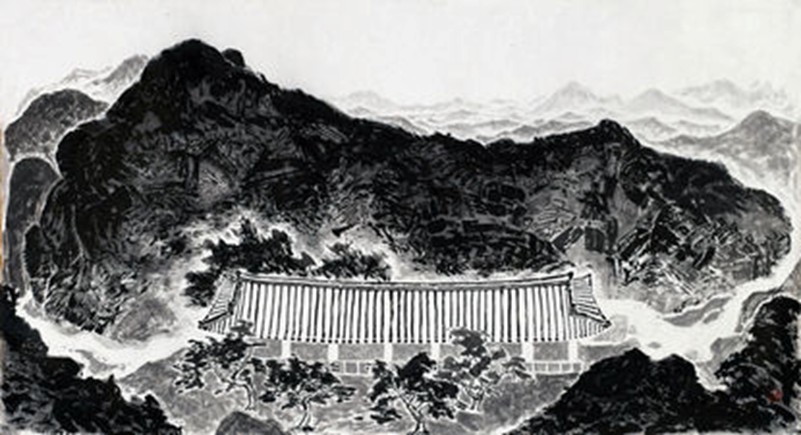
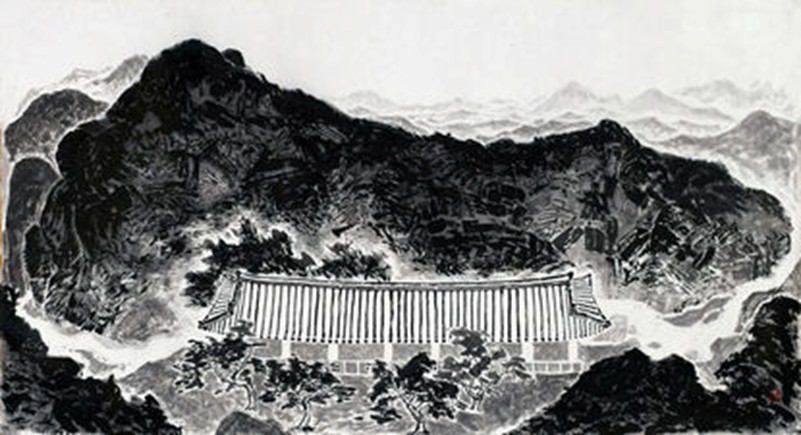
Comparing his 2011 series Drawn and Carved: The Story of
Byeongsan with the 2013 series Drawn and Carved
Stories offers insight into how and where he began to break away
from the conventions of true-view landscape painting. In the
earlier Byeongsan works, he continued the spatial
composition typical of traditional landscape, prominently employing bird’s-eye
perspective and partially integrating level-distance perspective. Peaks viewed
from a high vantage point opposite Byeongsan, distant ridges behind the main
peak devoid of realism, lower foreground ridges, and the flatness of the
watchtower columns seen from the front—all form dramatic contrasts with the
sharply sloped roof of the pavilion and ornamental trees in the courtyard, as
well as with the river, now stripped of its physical force and reduced to
symbolic presence. These works combine elements of traditional style with
subtle experimental attempts.
In
the subsequent works of the Byeongsan series that
he continued over time, the viewer’s attention is drawn more toward the diverse
depictions of the landscapes surrounding Byeongsan, seen across from the stably
rendered Mandaeru pavilion. Although the symbolic tone has been removed, the
deliberately meandering river encircles Byeongsan like an island, forming a
self-contained world, separate from its surrounding scenery. Here, Byeongsan no
longer appears as a singular, unified space fixed from one perspective;
instead, disparate scenes acquired through shifting viewpoints coexist without
tension or conflict, together forming a harmonious vision of the mountain.
Perhaps
what unfolds is not one continuous image, but a kind of pictorial folding
screen, composed of glimpses of the actual mountain observed from various
points in Mandaeru, interwoven with the artist’s unconscious, memories, and
learned mental image of the mountain. In the
final Byeongsan work, the physical vantage point
of Mandaeru disappears completely, and what emerges is a mountain not inside
nor outside—a perceptual construct whose subject matter and viewpoint are both
ambiguous. The act of gazing upon Byeongsan, and the temporal specificity that
once surrounded it, vanish. What remains is a point of engagement between the
present object and the perceiving body.
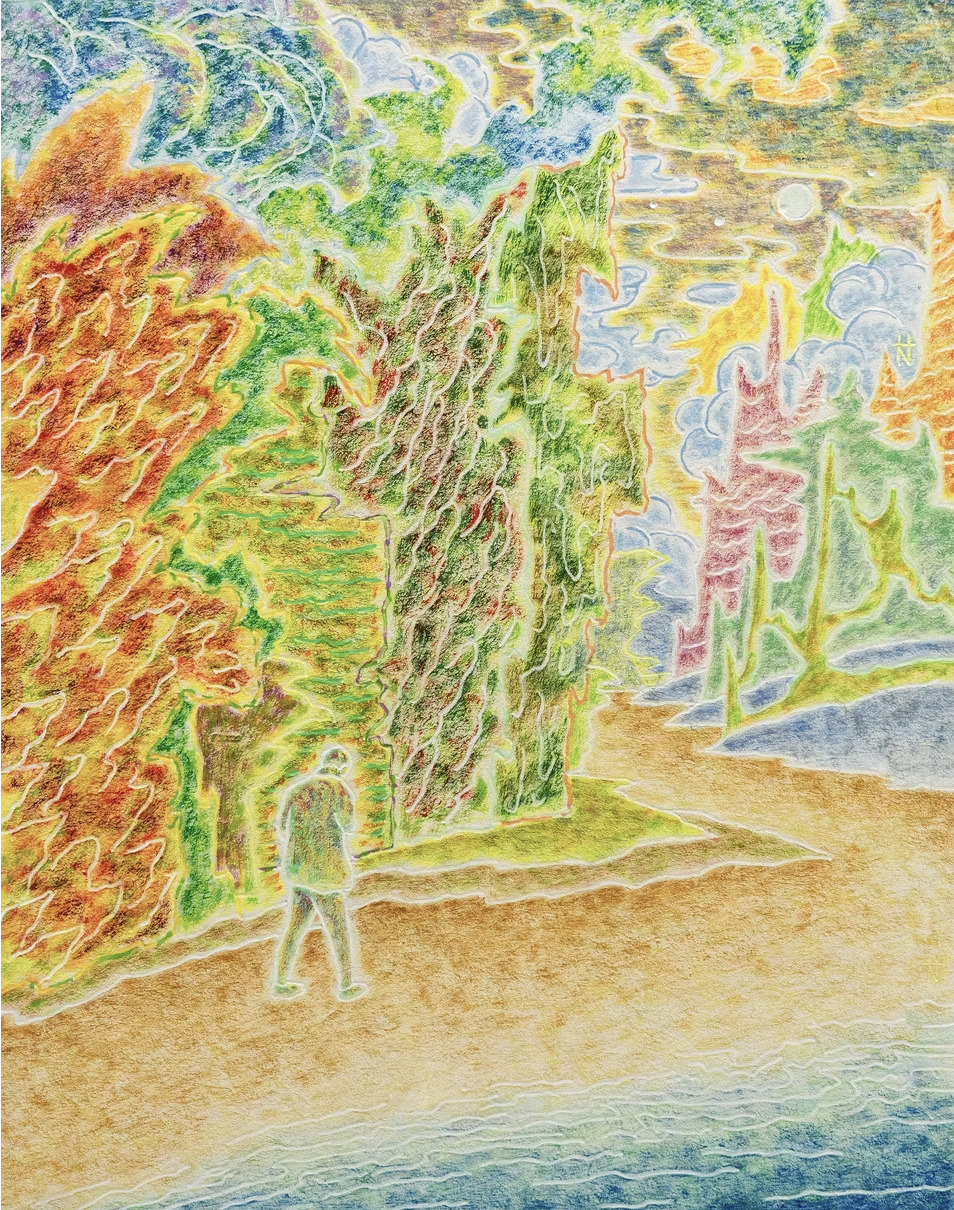
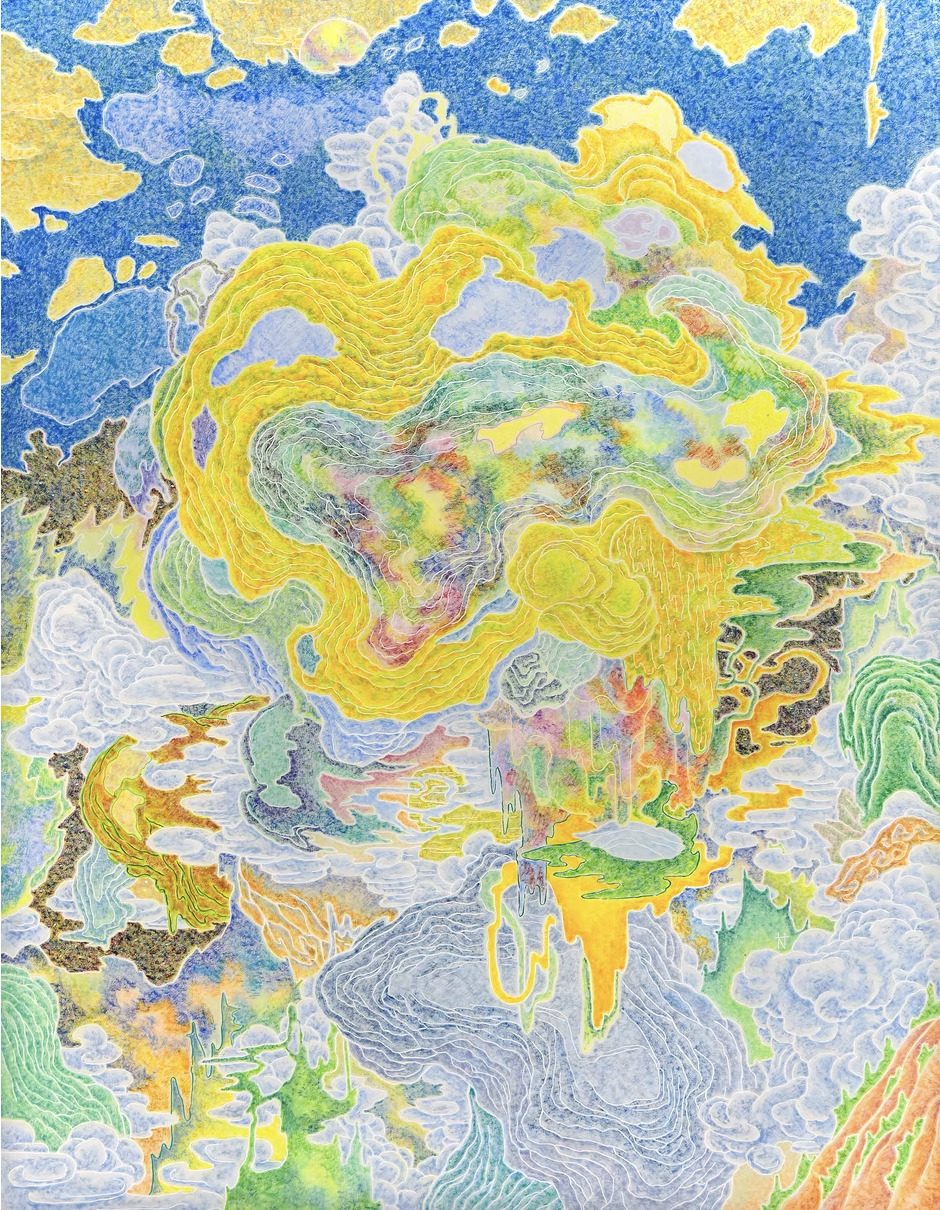
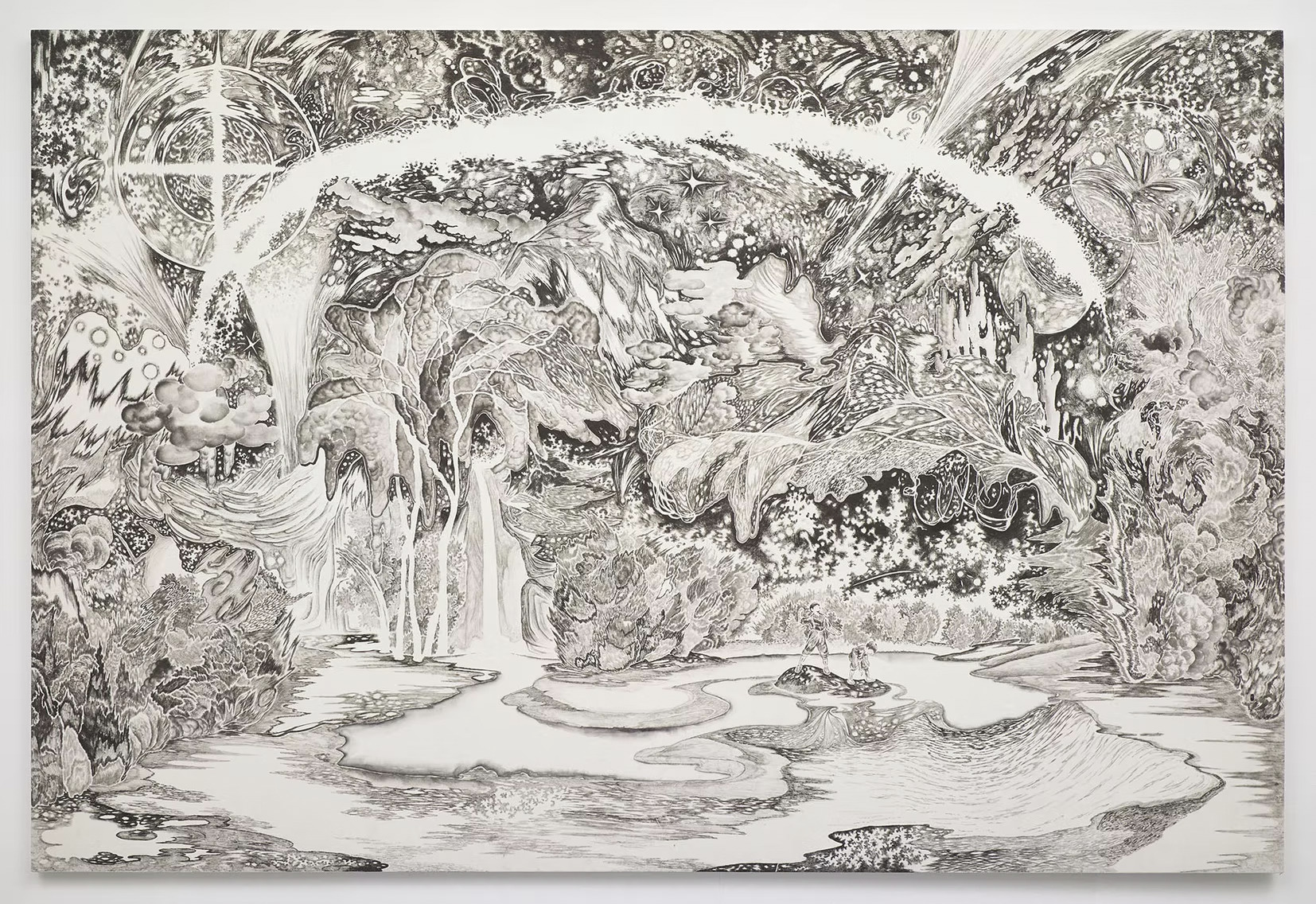
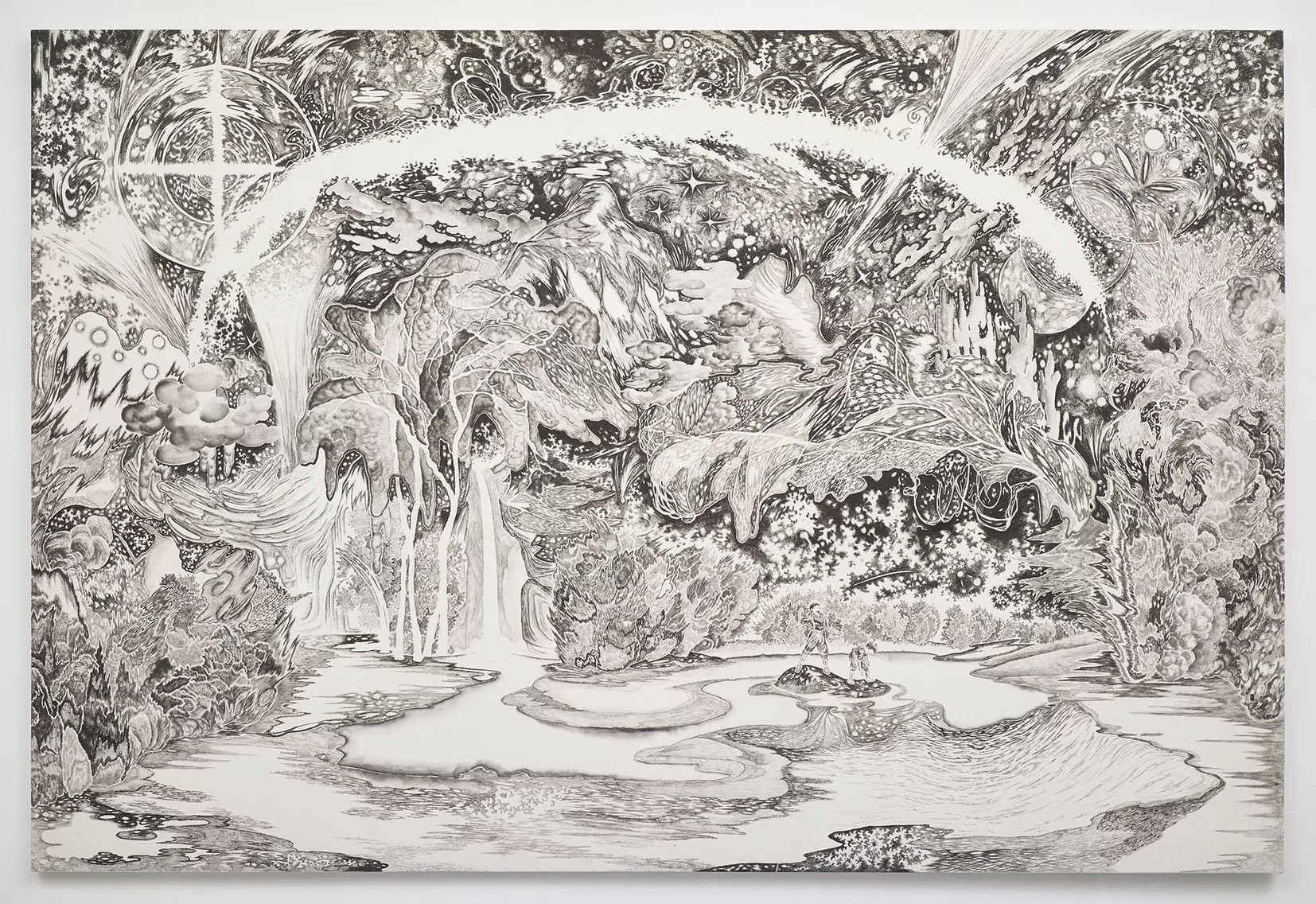
In
his 2013 Eye & Mind series, although the works
do not fully abandon depiction, they can be considered non-representational in
the sense that they visualize the process of the artist’s bodily engagement and
reaction to the object. Maurice Merleau-Ponty stated that perceptual experience
becomes possible when the subject halts their everyday way of looking. The
vision he calls "embodied vision" arises only after suspending or
pausing the traditional and habitual gaze shaped by science and knowledge. Accordingly,
Cha Hyeonwook attempts to convey a process in which a world not easily visible
through visual perception surfaces on the plane of perception as it intersects
with the body’s sensitivity—what he calls "resonance."
From
him, we do not see realism rooted in retinal recognition, but rather a realism
of attitude—of one who seeks to reveal what cannot be seen. His is a gaze and
observation that conveys patience, memory of the body, and the desire to make
the invisible visible.
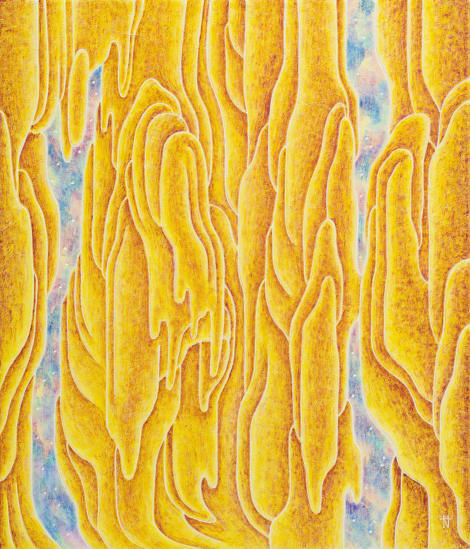
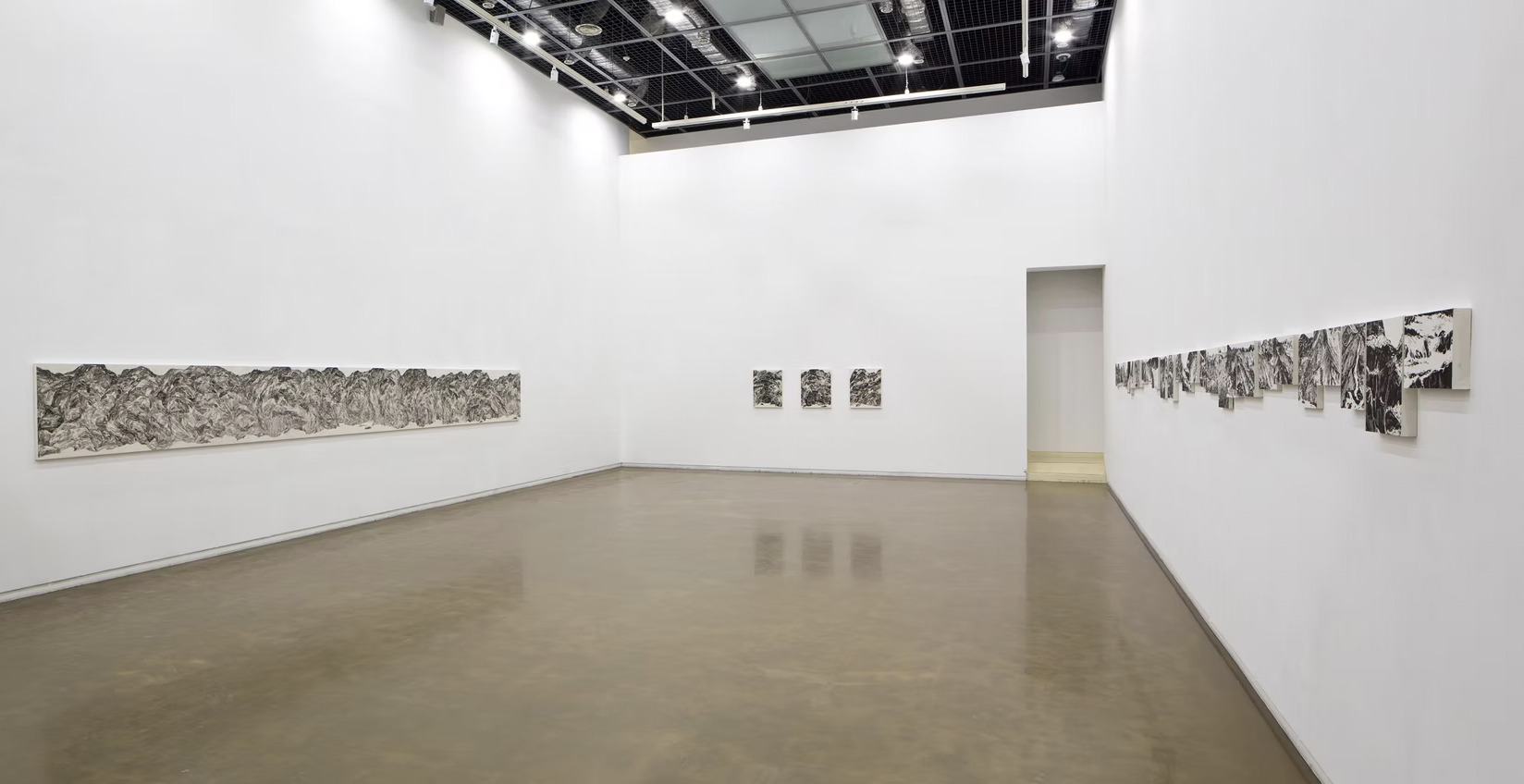
Wherever
the brush passes, lines and areas of unpainted white emerge, and the various
flows of brushstrokes and irregular traces that fill these white spaces seem to
be projections and imprints of “resonance” and “reverberation” for the
artist—guiding the viewer into an open realm of visual perception. The subject
Cha observes and investigates is nature in its imperfect state: one in which
the boundary between the seer and the seen can intersect, reverse, consume each
other, or even reject one another. In this sense, his works invite the viewer
into an ambiguous state—where it is unclear whether the object is perceiving
him, or he is perceiving the object.
The
viewer, too, may fluidly participate in the experience, depending on their own
circumstances. The gaze of the Other is free to enter and exit at will, from
any point. The world he describes does not present objects directly before the
audience, but instead becomes a repository of rich experience, offering a
glimpse of a reality that does not exhaust itself. This gives the impression
that the process and depth of cognitive perception and expression are
ceaselessly ongoing.
Cha
Hyeonwook’s aspirations are twofold. One is to explore and realize the
universal potential of painting using brush, ink, and paper—the medium he
cherishes and wishes to handle most effectively. The other is to have his
paintings seen simply as "paintings," free from the prejudices tied
to traditional media. These wishes stem from a dual crisis: both the pressure
on painting’s position within contemporary art and the general indifference and
lack of understanding toward traditional media. Like many of his predecessors
in art history, he is likely to continue wandering and swaying along the
boundary between optimism and skepticism.
Even
so, we cannot reject the subtle allure, the healing and subversive power held
within the mystery of the pictorial rectangle. Within that rectangle, we always
expect the silent contemplation and unrestrained interpretation of a
first-person narrator.