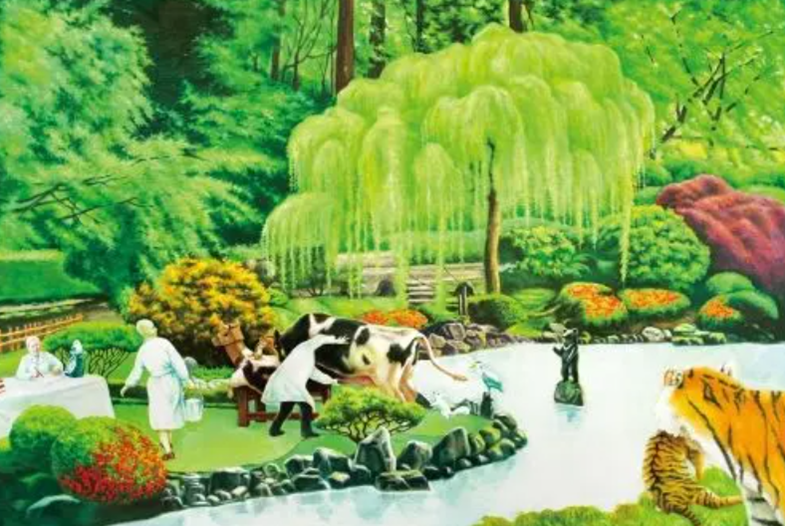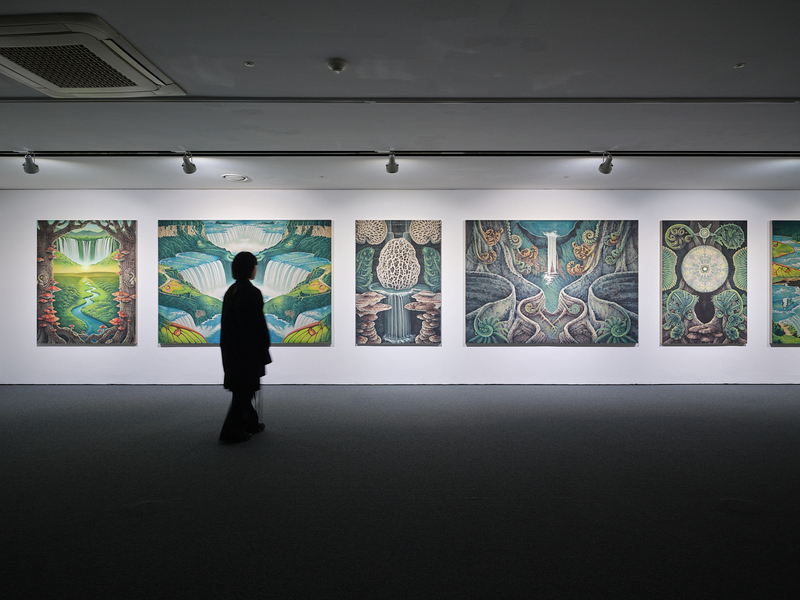


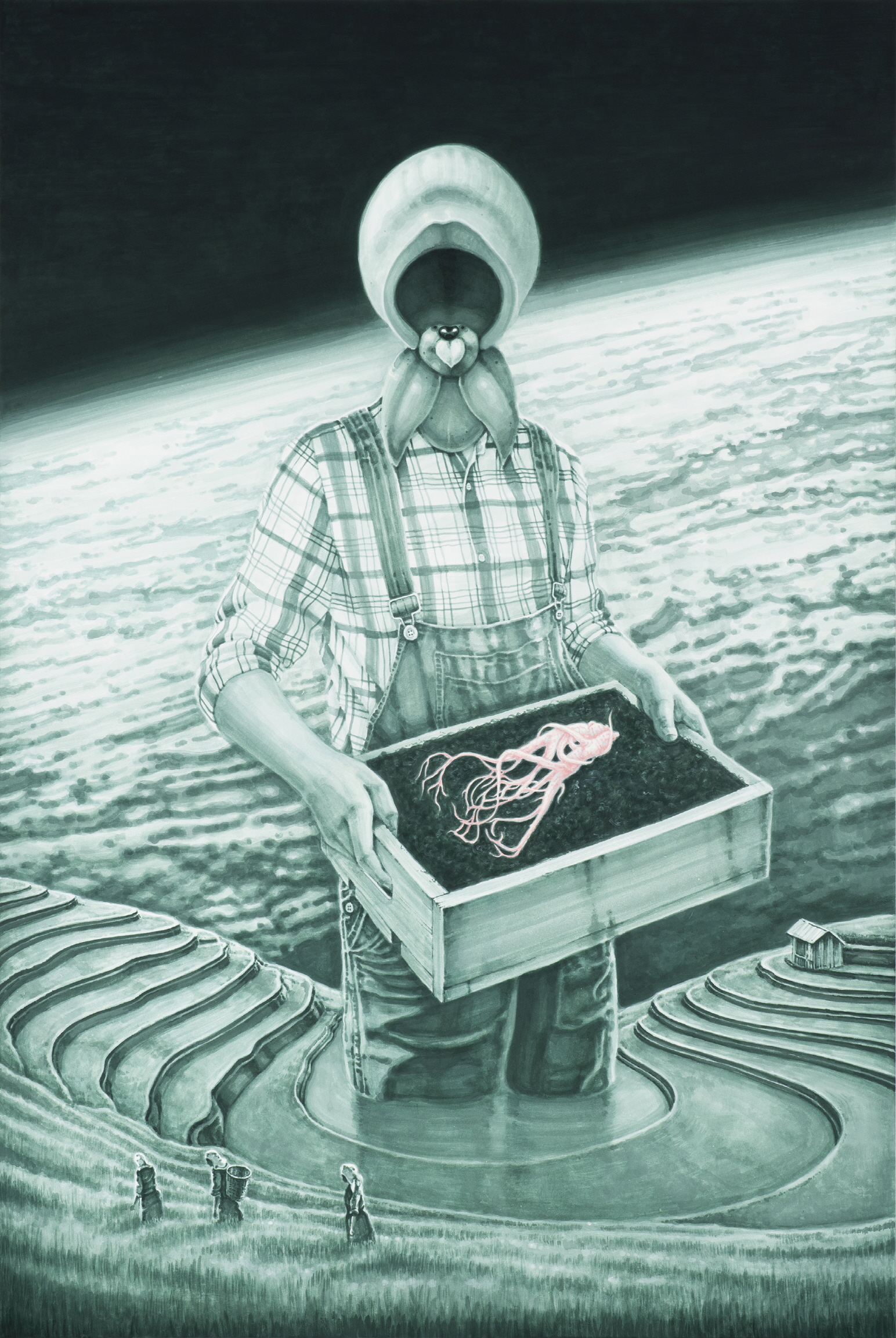
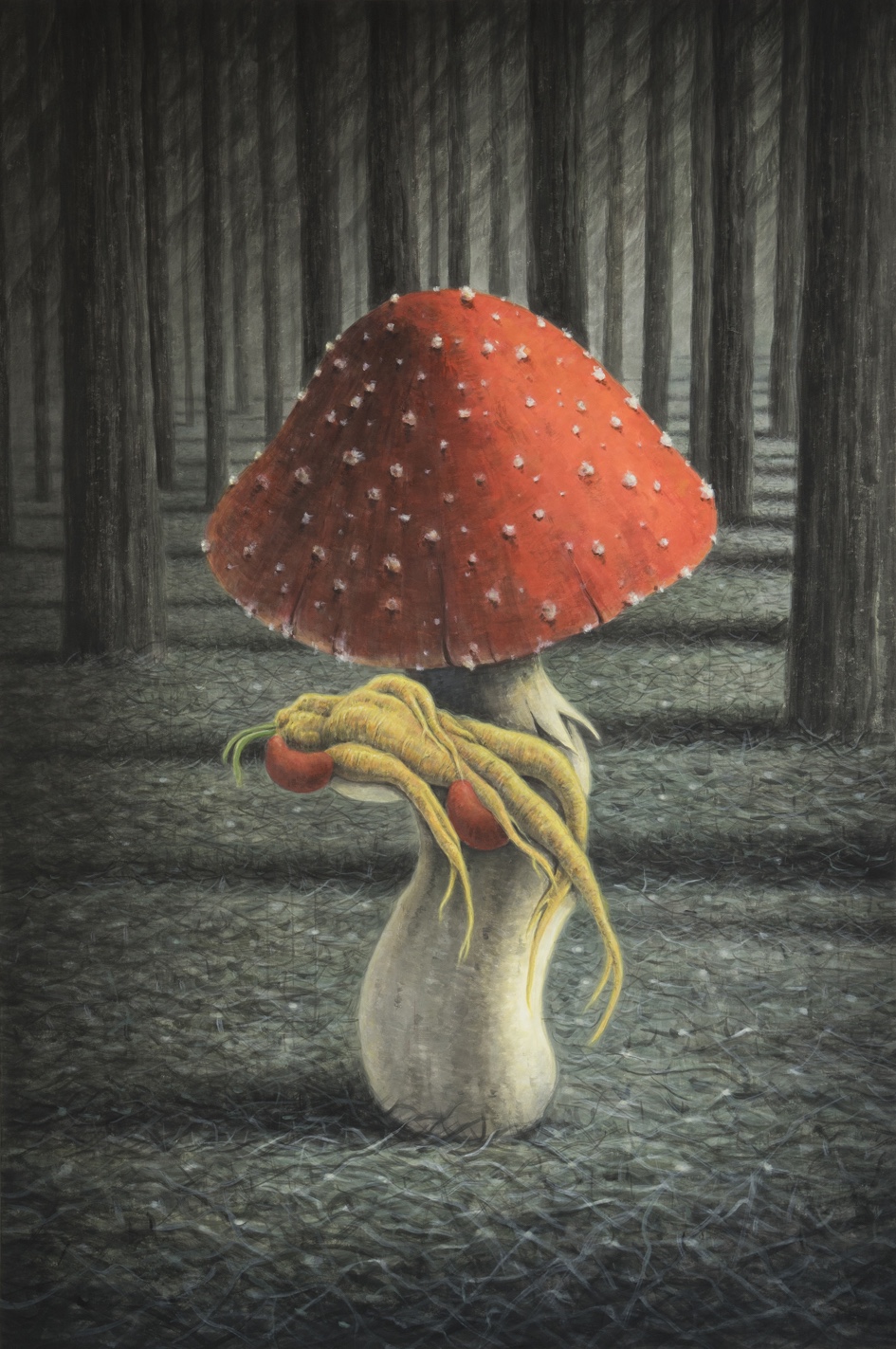
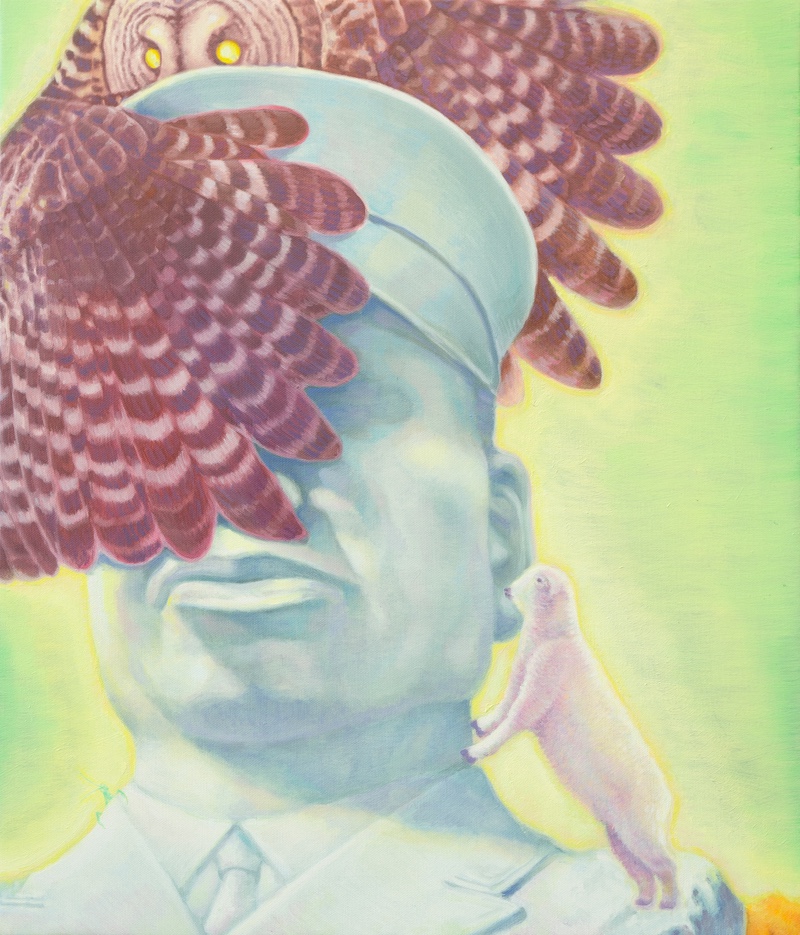
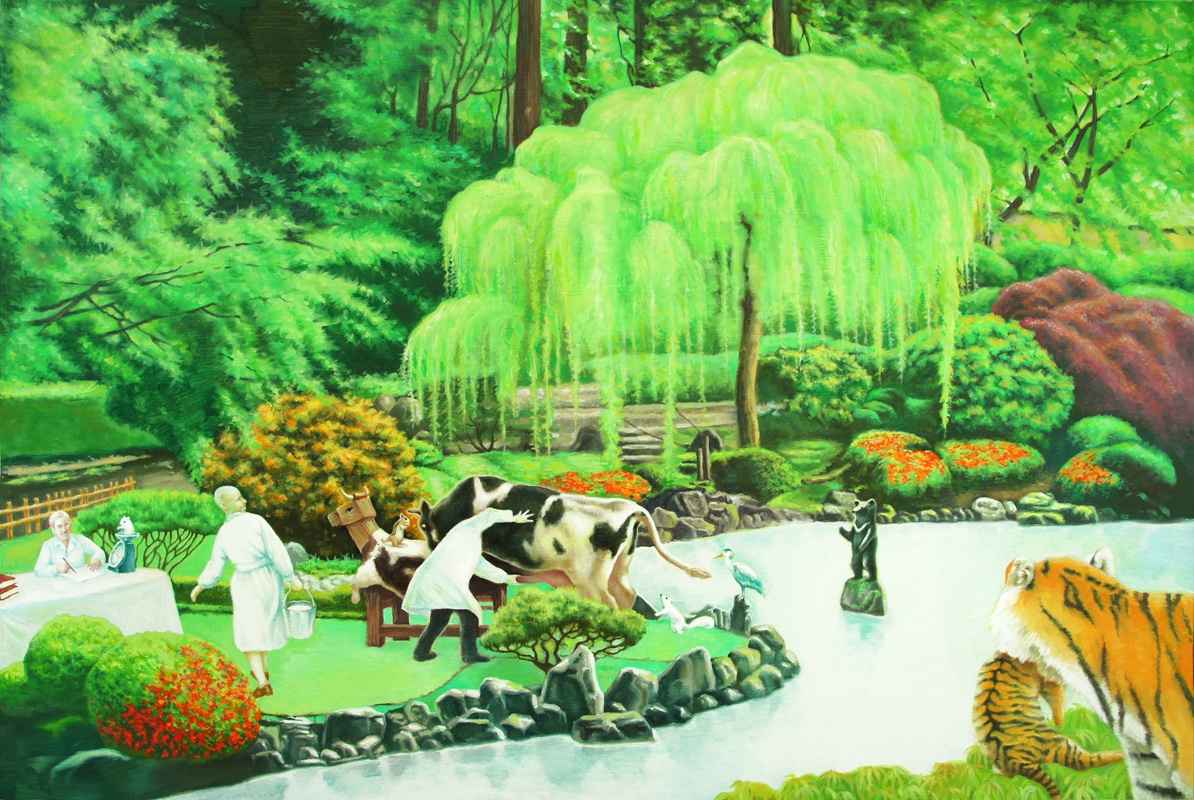
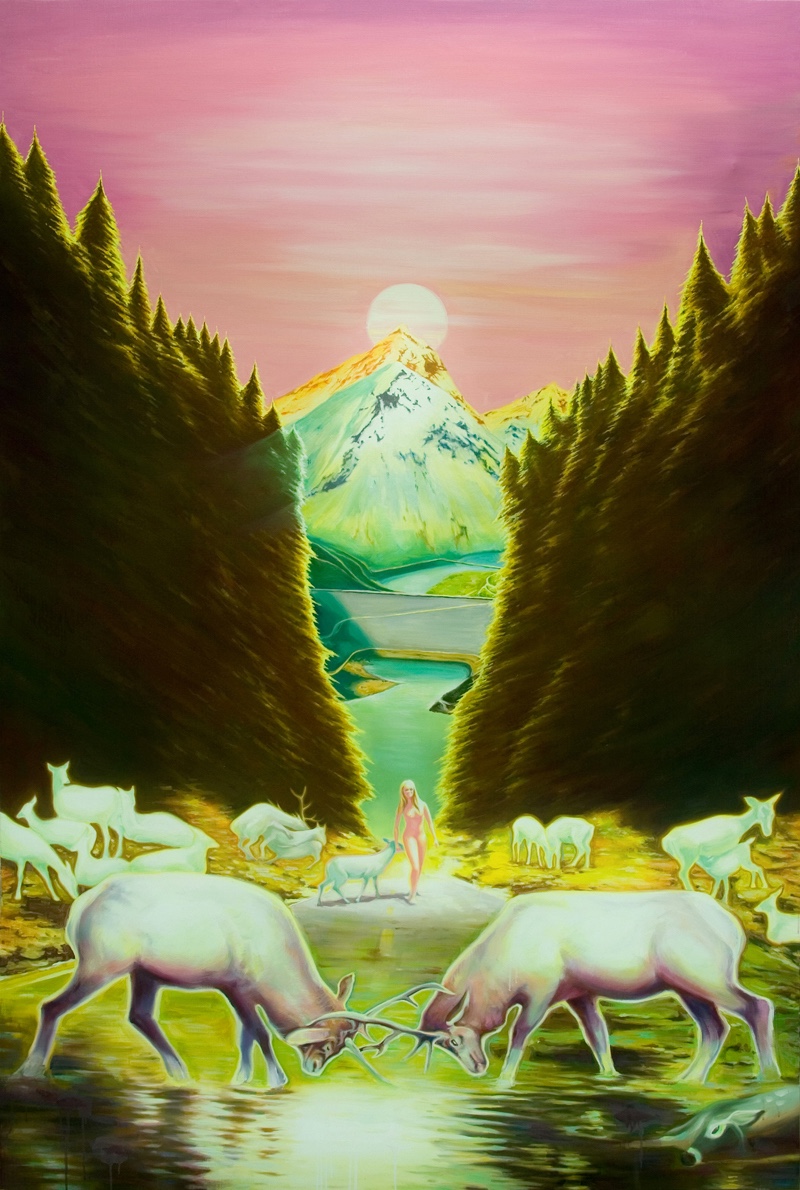
Jongwan Jang, Weird garden, 2013, oil on canvas, 91×61cm © Jongwan Jang

What kind of ideal world do we dream of? Will that future ever arrive? Or perhaps—do people still even fantasize about such a utopia? While we seem to be inching toward a future in which diverse races, genders, religions, cultures, and histories can coexist in harmony, we are often confronted with a reality that feels regressive, leaving us disheartened.

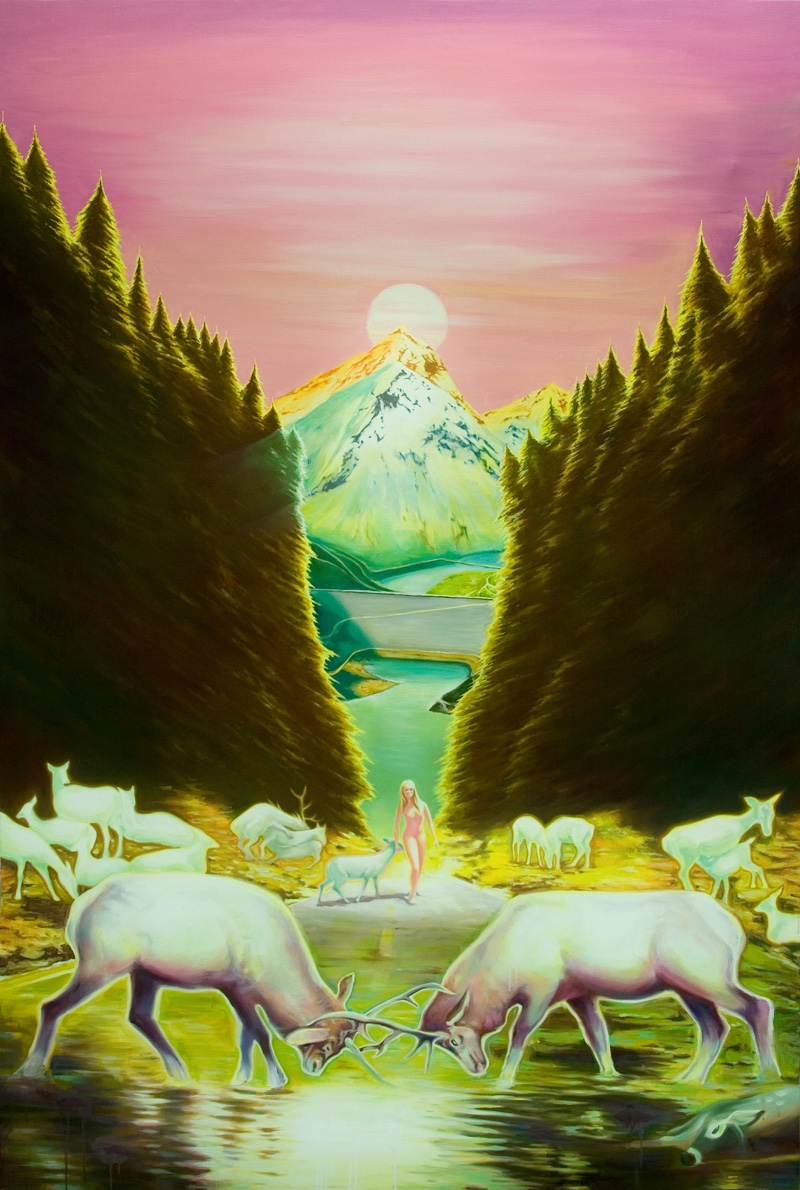
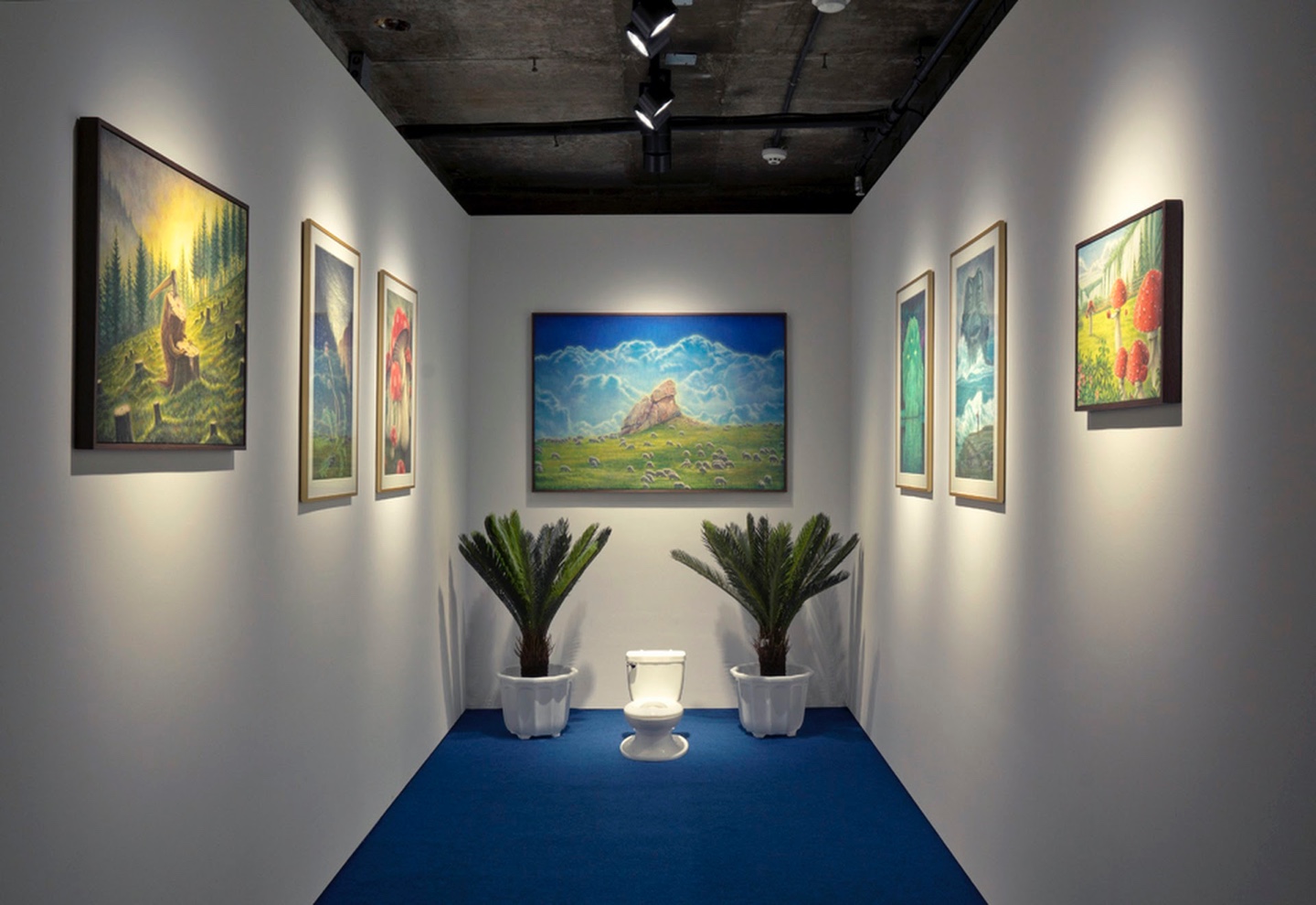
To the modern viewer, accustomed to news filled with accidents, conflicts, and disputes, the canvases of artist Jongwan Jang brim with an almost unnaturally positive energy. The dreamy and surreal hues that cover his pastel-toned pencil drawings and psychedelic oil paintings act as the first portal guiding the viewer into a mysterious, unknown world. Within these scenes, people of various races, genders, and ages—alongside all kinds of animals—coexist in magical natural landscapes. This “awkward harmony,” vaguely familiar, seems extracted from religious pamphlets handed out by evangelists knocking on doors on lazy Sunday mornings, propaganda posters from socialist regimes urging comrades to build the perfect nation, or so-called “calendar paintings” composed to please everyone’s eyes with universally agreeable beauty.

The artist developed his work from the discomfort that arises when viewing images depicting supposedly happiest moments. Having spent his childhood in Ulsan, a cutting-edge industrial city, he became fascinated by the duality of the place—where foreigners from around the world lived together, and giant corporations seemed to dominate the city like dictators. Rather than criticizing social contradictions directly, Jang chooses to “record” them, stating that he “draws documentaries in [his] own way.” A fan of the word “paradise,” the artist has been collecting various religious images. To him, religions—each pursuing its own version of the ideal through unique gods and doctrines—are just as sanctified and kitschy as the comical sculptures he photographed during his travels through provincial towns: the “Ginseng Mascot Statue” in Jeungpyeong, the “Sweet Potato Statue” in Dobong Village, or the “Mushroom Lighthouse” at Yangyang Beach. Perhaps due to the increasing harshness of reality, the ease with which people believe in and follow idols becomes a subject of satire in his work.

Jongwan Jang, Corner of the Earth, 2013, oil on canvas, 193×130cm © Jongwan Jang

In the early work The End of Pain (2009), a Black boy and woman, and a white man sit smiling at a dining table, while a lion and tiger mate behind them, and a giant cross looms in the mountain peak in the distance—all surrounded by radiant halos, as if they might vanish at any moment. After producing the animation Weird Stone (2012), which tells the story of a magical stone that seduces forest animals into interbreeding, evolving, and going extinct, Jang shifted from his earlier “collaged paradise” style toward more narrative and theatrical works—what he now calls “bizarre fables.”

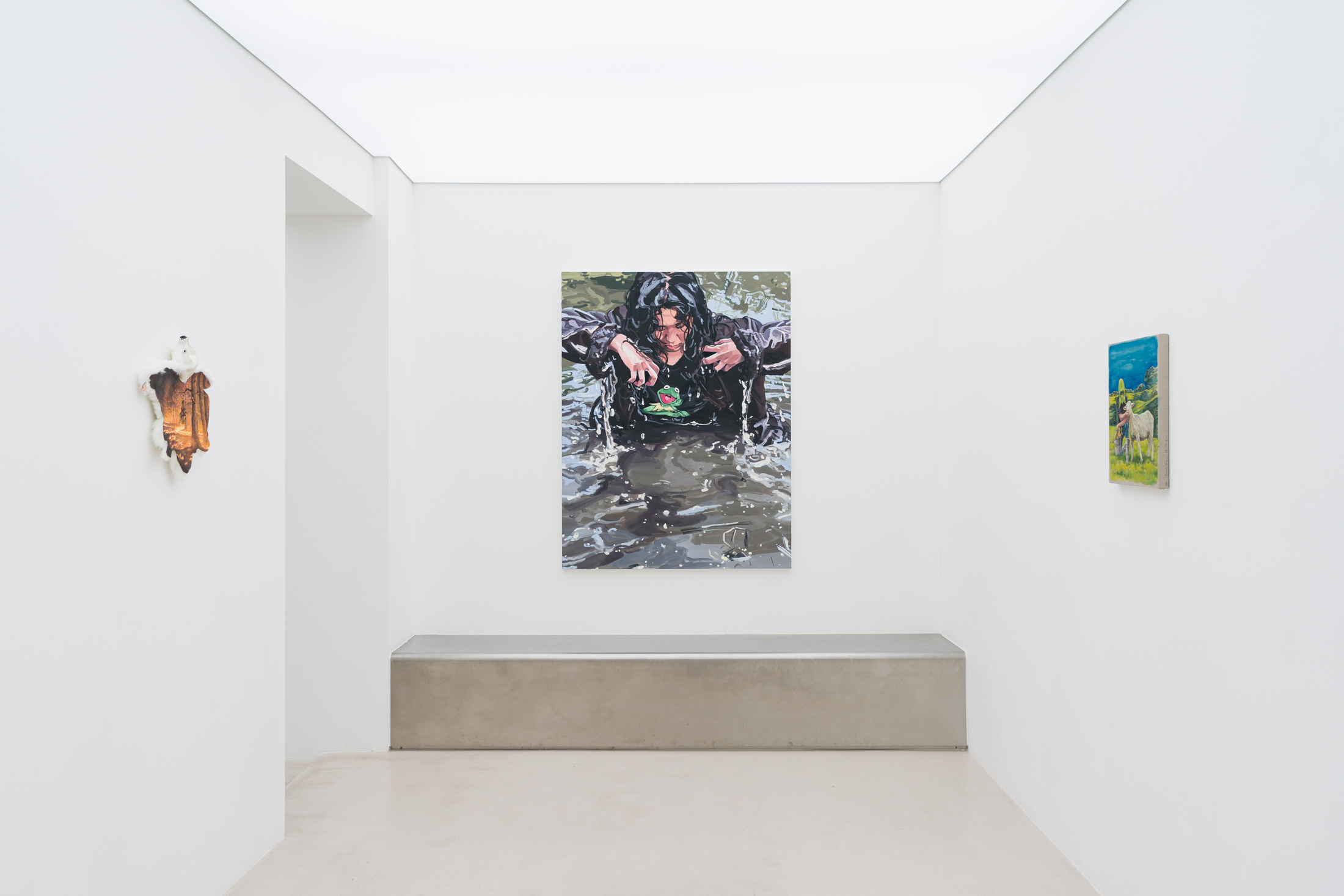
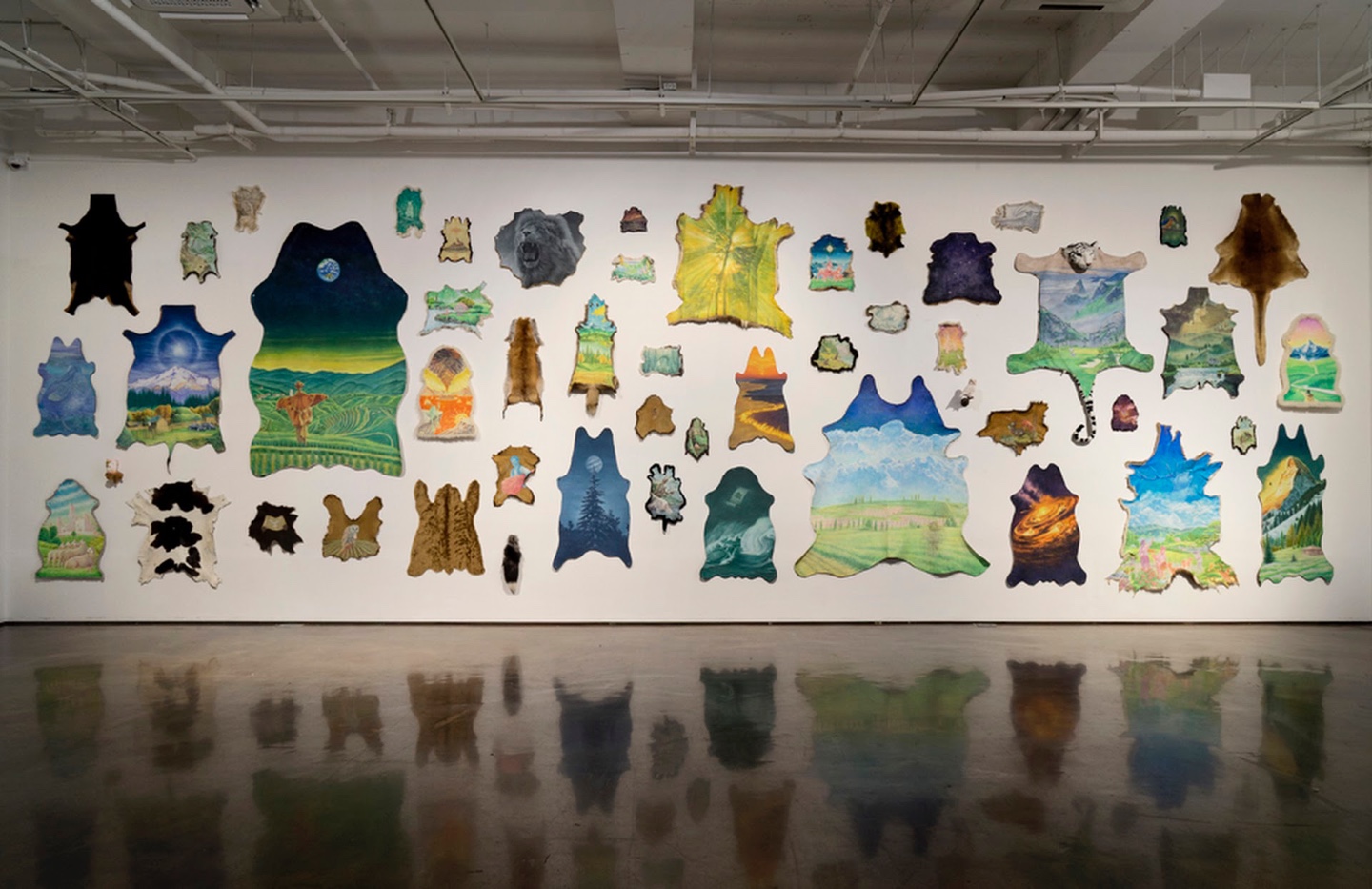
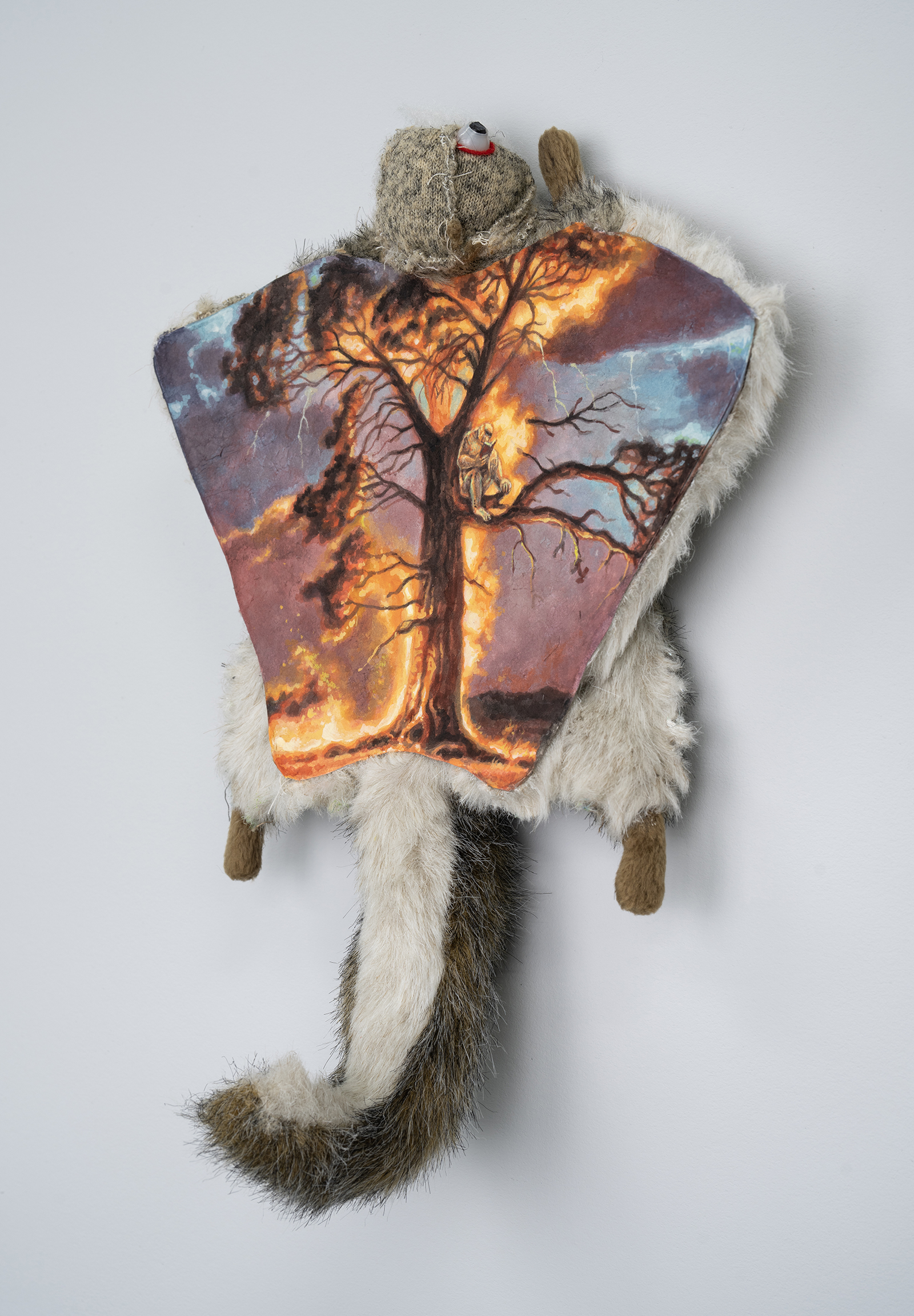
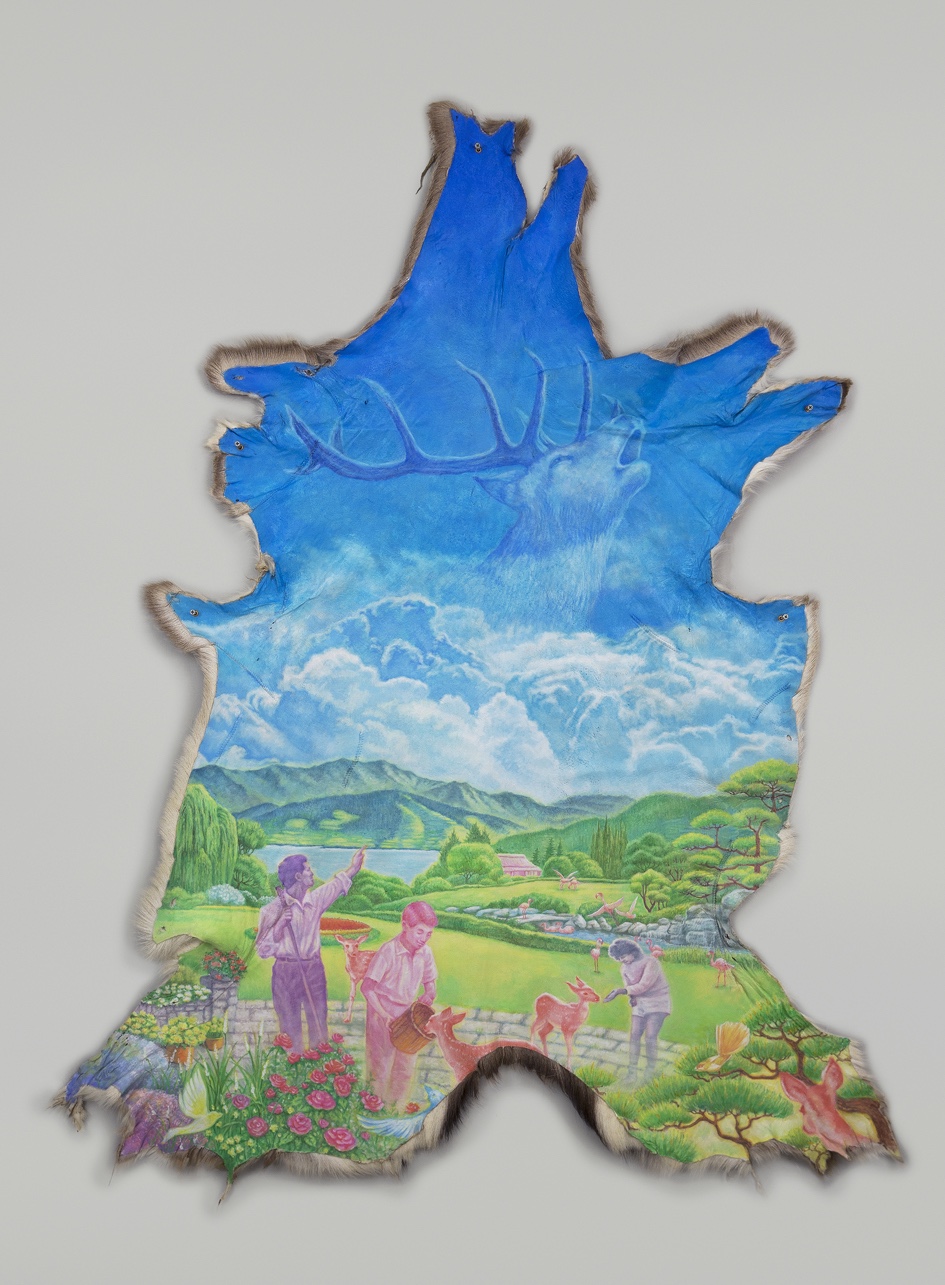
Currently, the artist plans to showcase a series of animal hide paintings, created on the insides of real animal skins he received or purchased at flea markets. Imagining the animals’ “happiest moments,” he paints their memories onto these once-living surfaces. This absurd concept, tinged with satirical humor, may in fact be our only real driving force for surviving in the present day.

References