Articles
[Critique] Jongwan Jang in Wonderland
November 24, 2023
Yihyun Parek | Editor of Noblesse
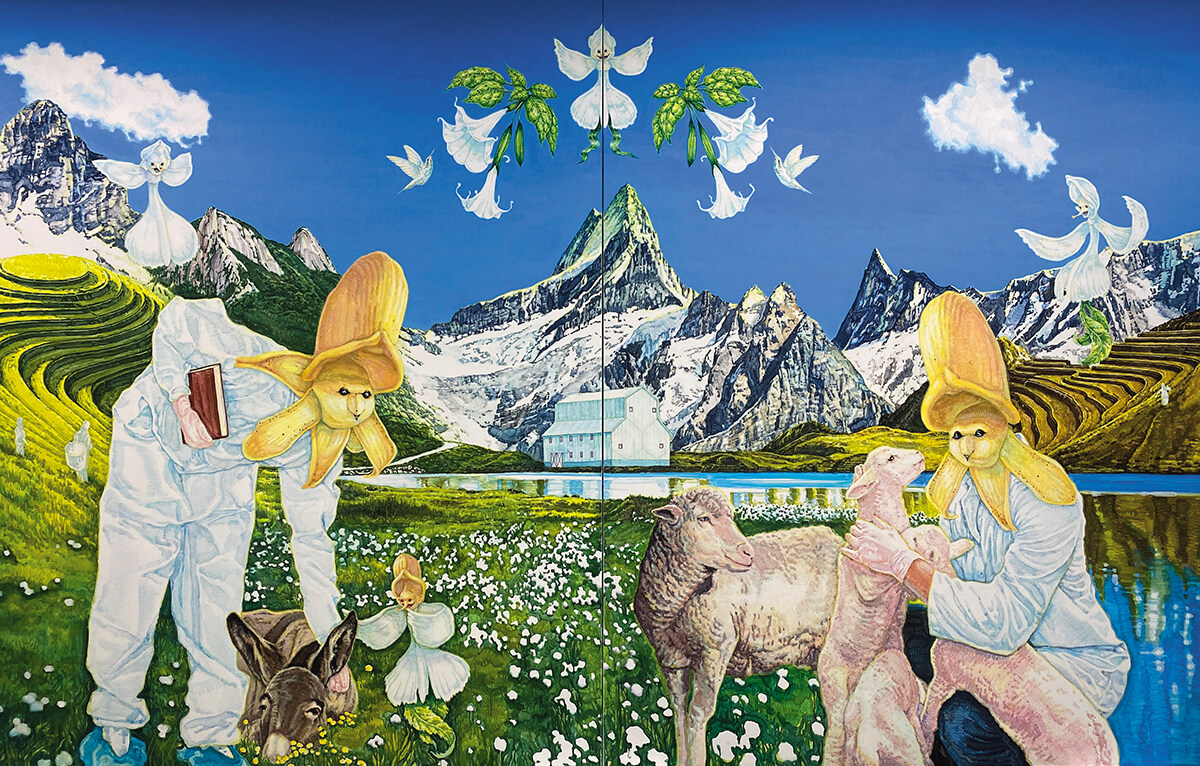 Jongwan
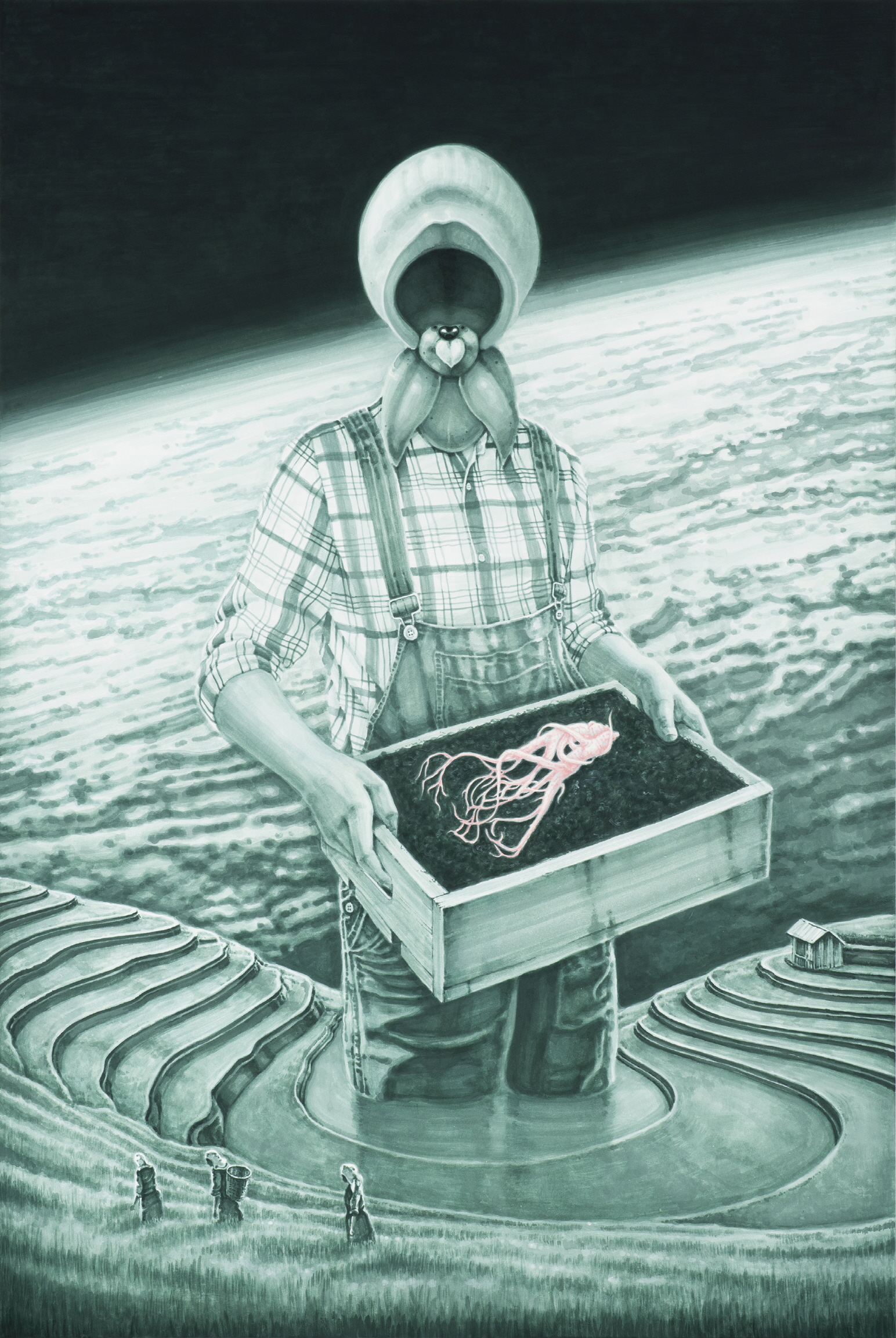
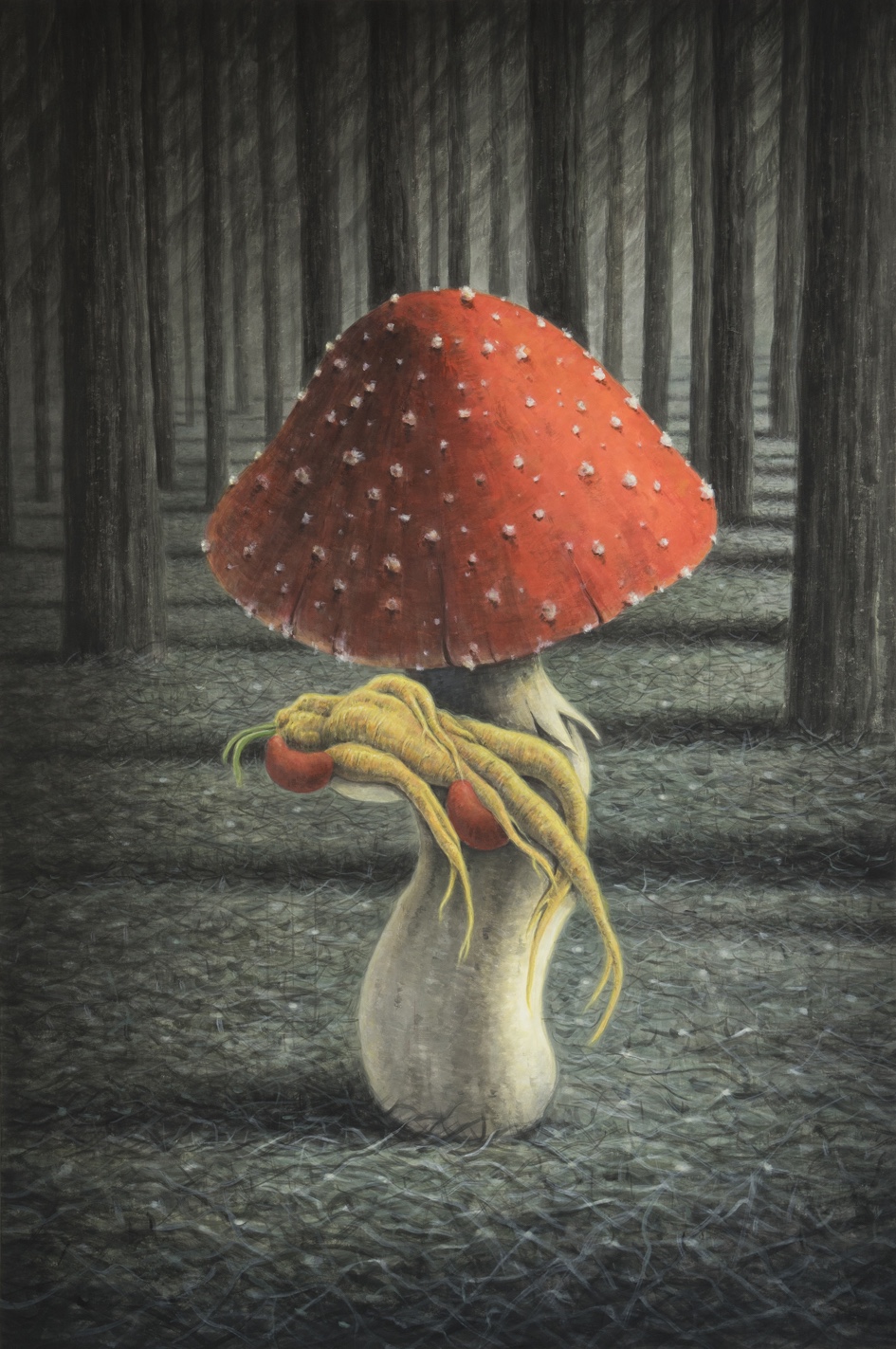
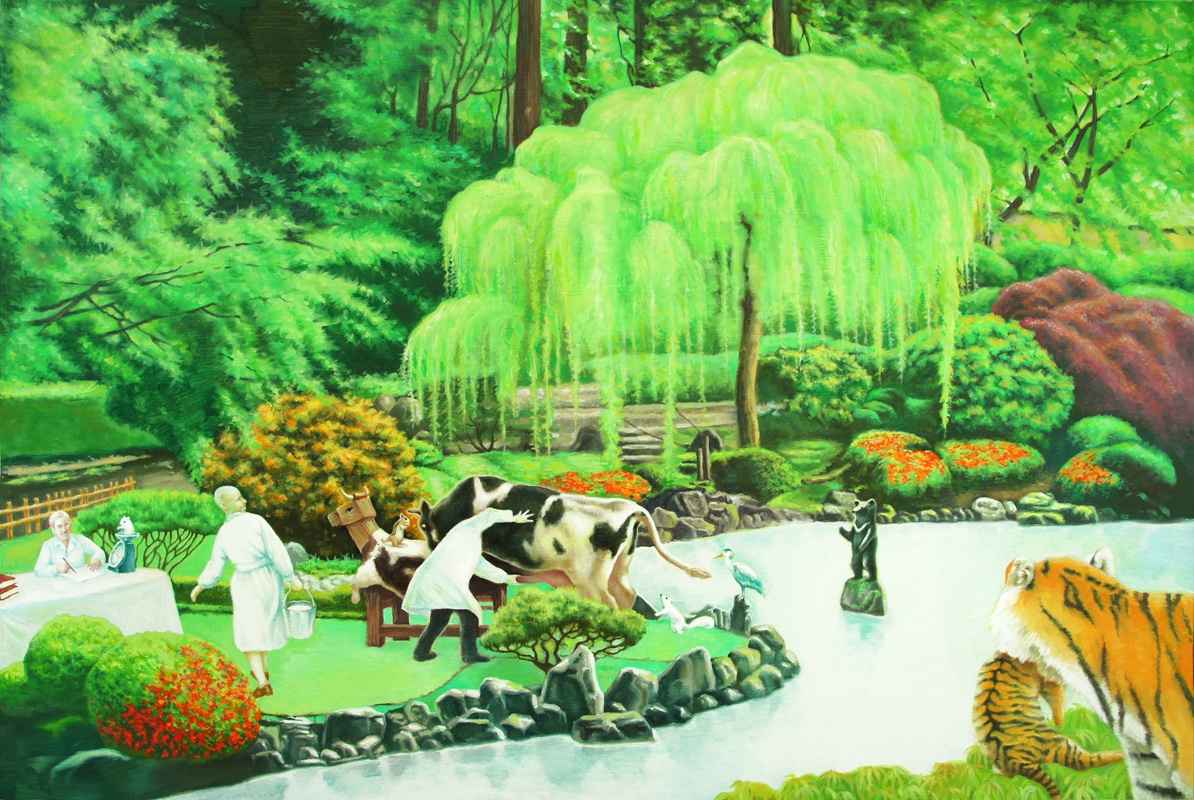
Jang, Mt.Melona, 2023, 227.5×364.3cm © FOUNDRY SEOUL
Jongwan
Jang, Mt.Melona, 2023, 227.5×364.3cm © FOUNDRY SEOUL
The
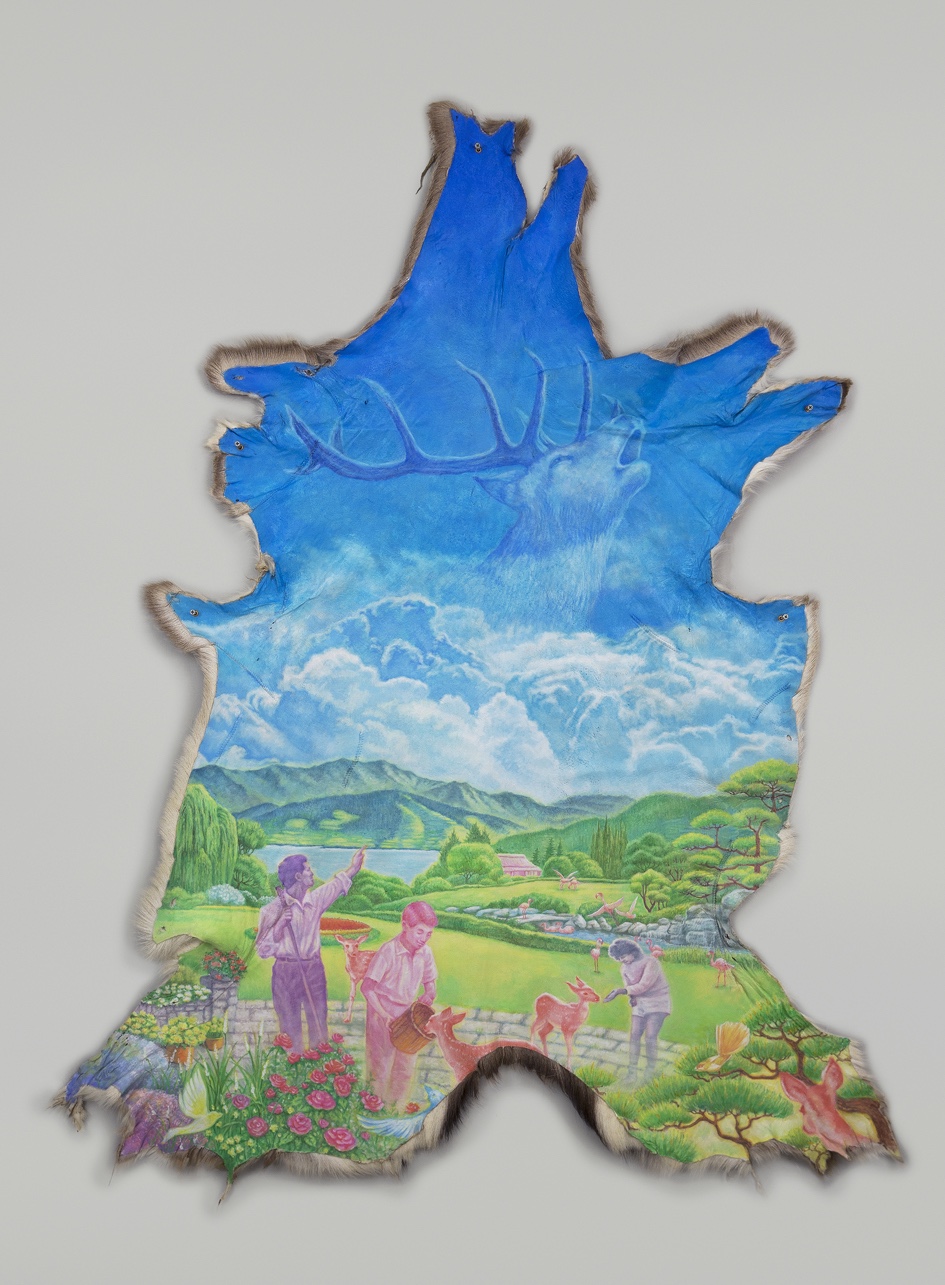
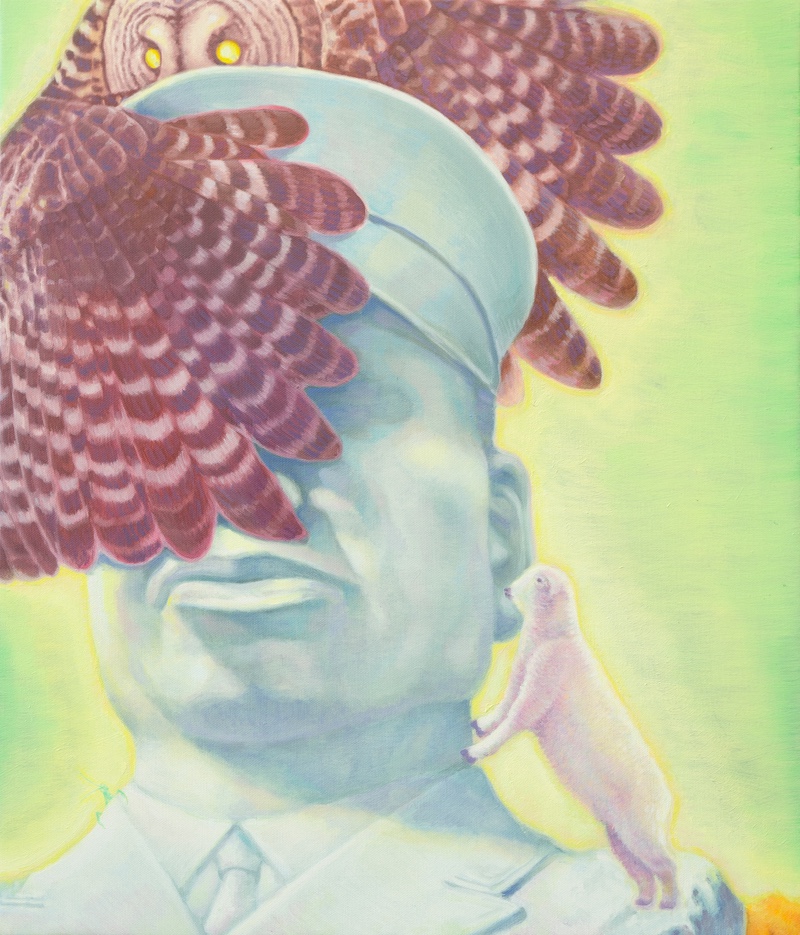
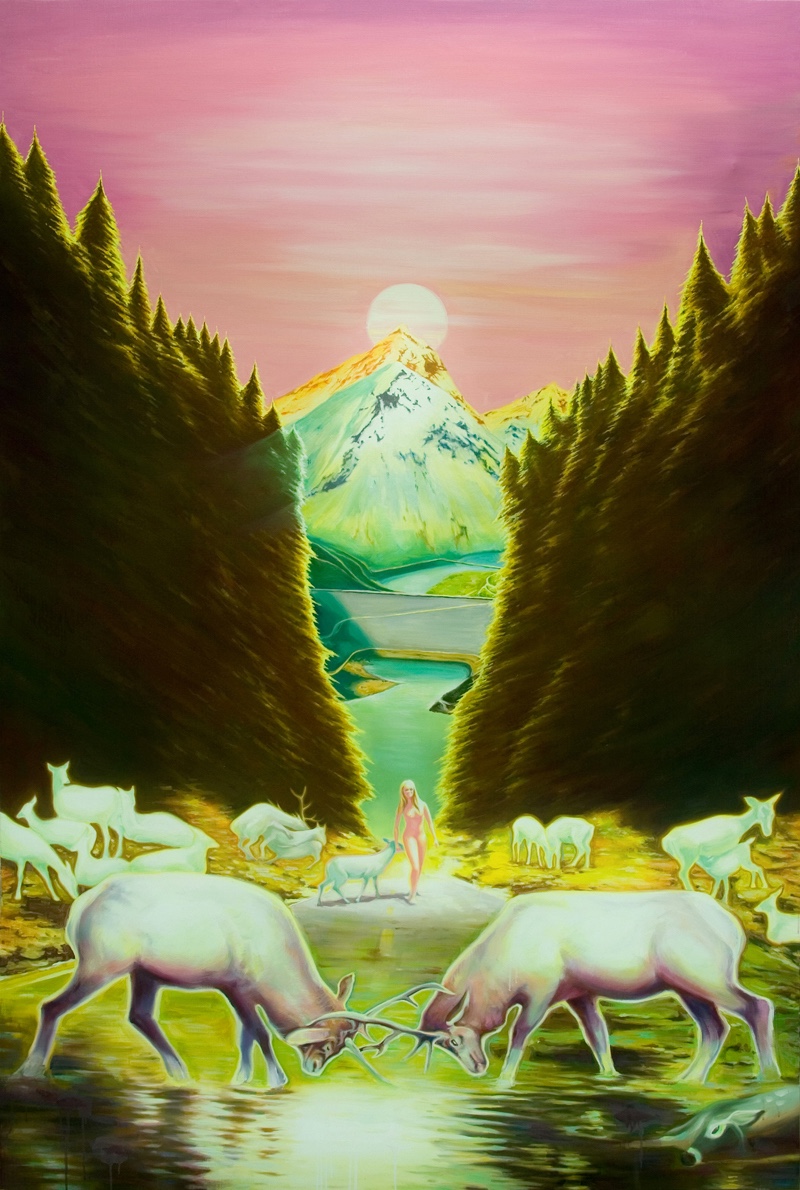
country Jongwan Jang builds on his canvas is a strange one. According to the
artist, he deals with faith and anxiety toward an ideal world by depicting
scenes of paradise and utopia, but it’s far removed from what one typically
imagines as ideal. It’s more like a strange world that one might fantasize
about when lying in bed, unable to fall asleep. At times, it resembles a sacred
illustration found in a leaflet handed to you by a stranger on the street
saying “Be saved.” It even brings to mind the secular, kitschy paintings often
seen in old barbershops. That’s why it’s hard to immediately grasp the true
identity of Jang’s work.
Take Go
West (2023), presented in this solo exhibition, for example.
Sprouts fall from the sky, and everything that lives on the land flowing with
milk and honey appears peaceful. In front of the text “서로 (Together),” otters and bees are seen enjoying dance and music. The
ironic twist is that the word “서로 (Together)”
simultaneously contains “Together” and “Go West.” As is well known, in the
Bible, the west symbolizes the secular and the impure. So what is this work
really trying to convey? I suddenly recall something the artist once said: “I
prefer comedy to tragedy, and absurdist plays to comedy. I believe in the
theory of original evil.”
Jongwan
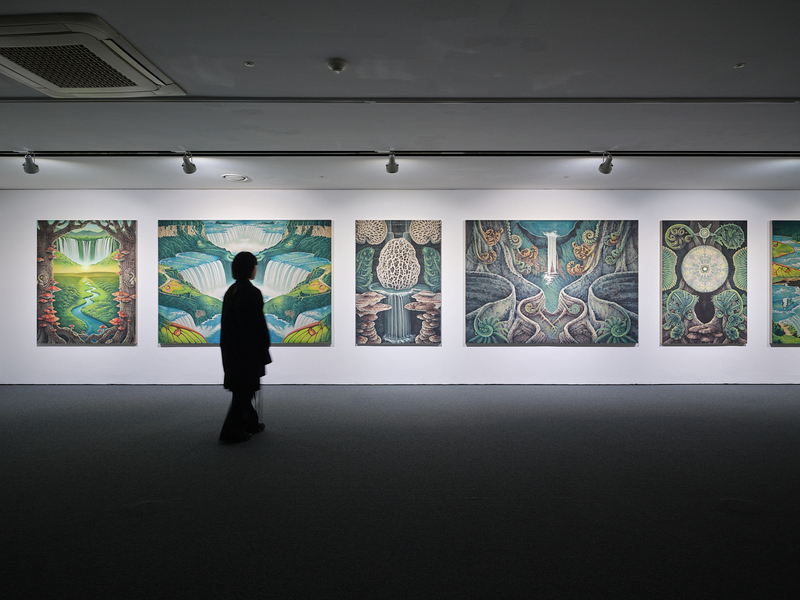
Jang’s solo exhibition at Foundry Seoul is significant in that it presents a
cosmic landscape combining agriculture and futurism (which rejects tradition
and expresses the dynamism of machine civilization as a new beauty). The 30 new
works that make up the exhibition begin with a curiosity: “Is it possible to
evoke a cosmic and futuristic atmosphere not through high-tech objects, but
through pastoral motifs commonly found in rural areas?”
First,
the characters’ distinctive hairstyles reference the shape and texture of
Western orchids. Like flowers that have been selectively bred to suit consumer
demands, this allegorically expresses the human form as it might change under
the Fourth Industrial Revolution and climate change. Plants, typically
perceived as fragile beings, now symbolize the current state of affairs where
the term “plant-based” has quietly infiltrated our lives. In addition, the
artist reveals a bizarre sense of dread that arises when looking at
geometrically cultivated land through agriculture, and flowers and fruits that
have been bred to be more beautiful and delicious.
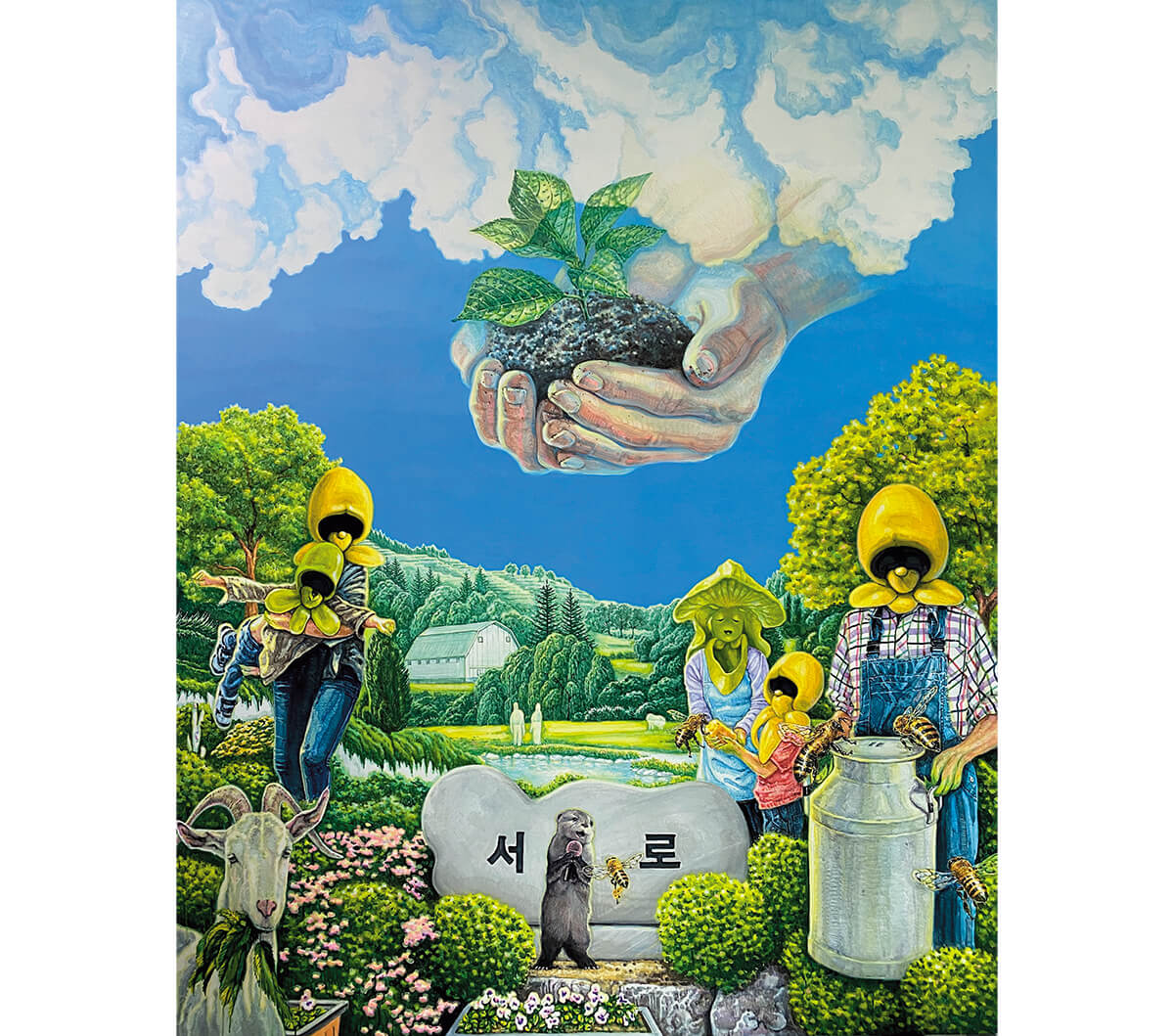 Jongwan
Jang, Go West, 2023, 227.3×181.8cm © FOUNDRY SEOUL
Jongwan
Jang, Go West, 2023, 227.3×181.8cm © FOUNDRY SEOUL
The
overall green tone of the work is also intriguing. Like the aforementioned
hairstyles, plants, and agriculture, green has ambivalent qualities. Wassily
Kandinsky once criticized green, saying “It can become tiresome after it
soothes the soul,” and Piet Mondrian said “The disorderliness of nature is
unpleasant.” Though green is often seen as a symbol of healing and comfort,
here it creates an eerie mood—no wonder Jang’s world feels strange. Yet the
artist doesn’t lay these messages bare on the surface.
Instead, he composes
peculiarly crafted images that provoke curiosity. They may seem tranquil at
first glance, but upon closer inspection, they are far from ideal. Therefore,
viewers visiting Foundry Seoul to engage with Jang’s work should not be lulled
by the “Goldilocks zone” (an environment that is neither too much nor too
little), but instead consider the discomfort that lurks behind the beauty—in
other words, the bare face of the underside.