In
this exhibition, the artist focuses on the units of time, selecting fragmentary
memories of scattered time, and sensing the smallest particles of recollection.
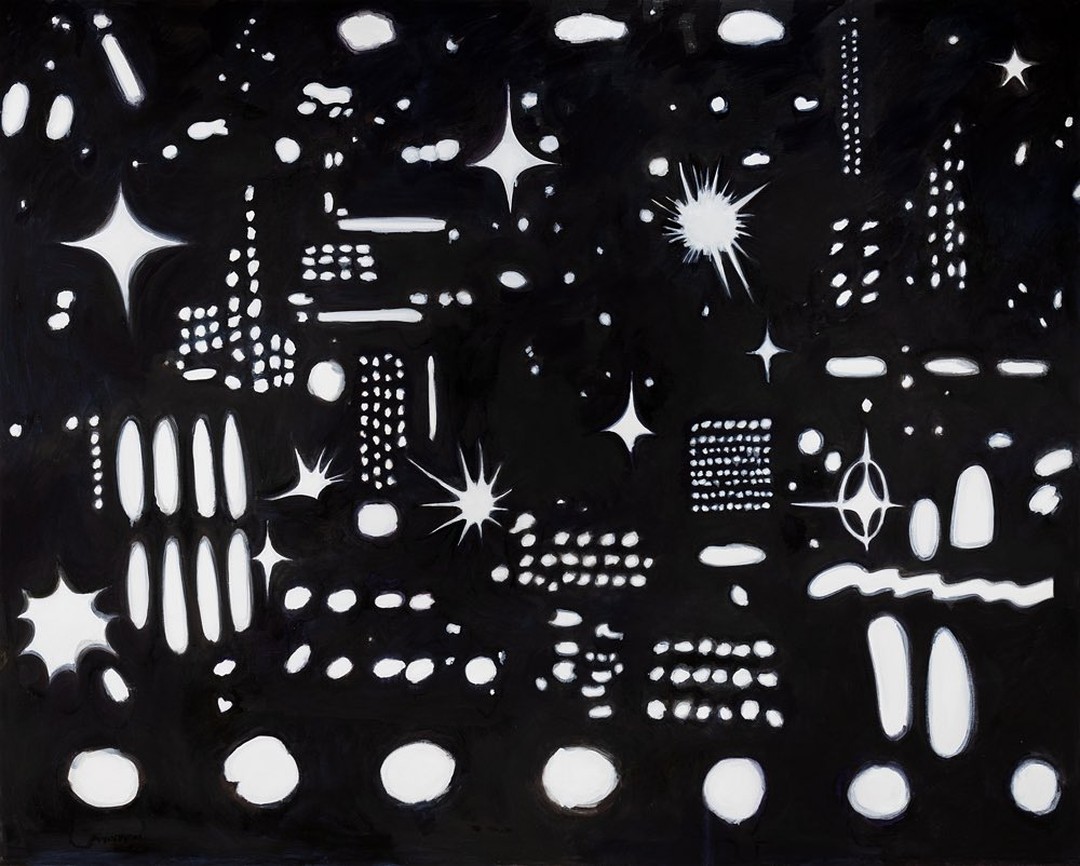
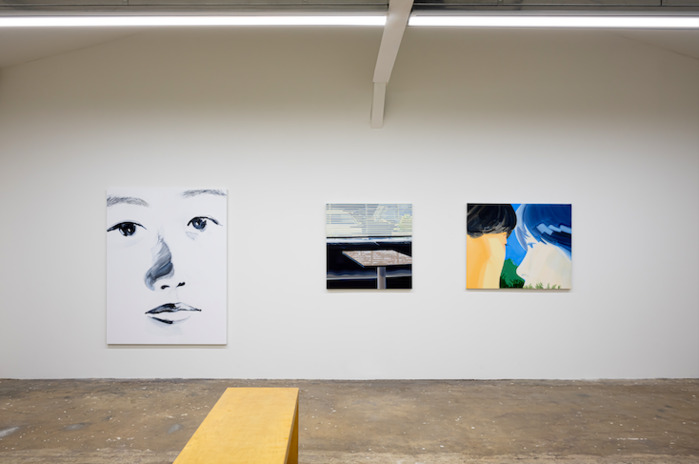
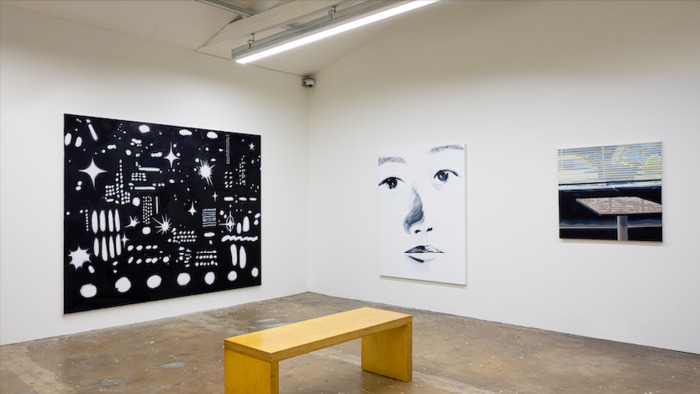
The key works of the exhibition, the black-and-white paintings Looking
at the Universe (2021) and From a Grain of Sand (2021),
are presented as a pair, reflecting the artist’s approach to viewing objects as
particles of time through the scale of the canvases and the titles
themselves.
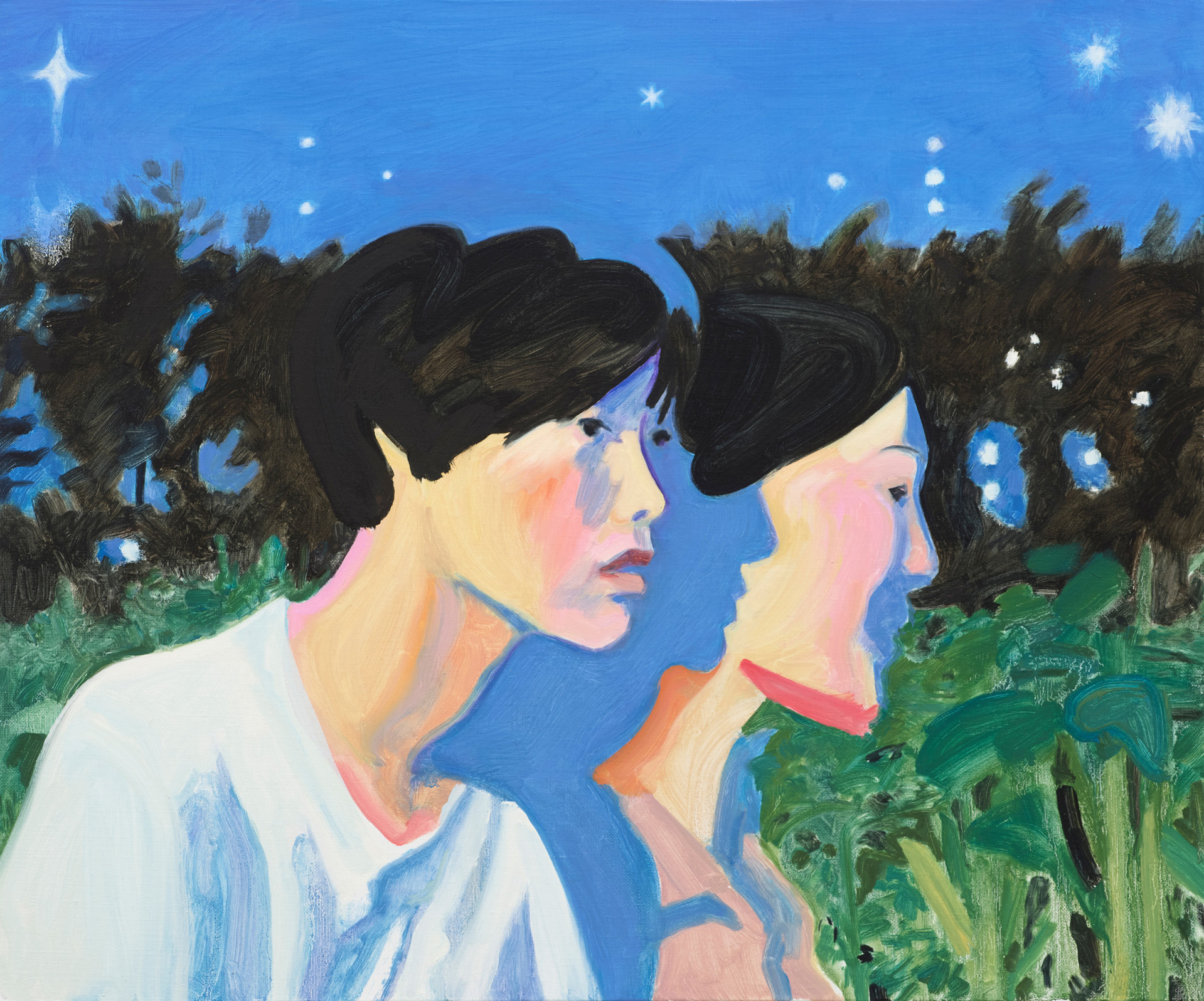
From a Grain of Sand, inspired by the first
line of William Blake’s Auguries of Innocence (1863)—“To see a World
in a Grain of Sand”—serves as a metaphor for the accumulation of time within a
single grain of sand, as the artist projects herself into seemingly trivial,
ordinary moments. The two works, which intertwine the nighttime setting with
landscapes and portraits rendered in black-and-white, are relatively restrained
and concise, with their subjects loosely zoomed in.
In Looking
at the Universe, originating from small pencil sketches, the forms of
light spreading across the nightscape differ from Jeong’s previous landscape
paintings by emphasizing the intense sensory contrast of immaterial
forms—darkness and light. Unlike her earlier works, which documented landscapes
realistically, the elements that once depicted the scene are eliminated,
leaving only shadows and light. The dark tones of indigo, sepia, and Payne’s
gray—applied thinly across the canvas surface—create silhouettes of scenes as
the landscape expands and becomes abstract. The juxtaposition of rough
brushstrokes and blended colors constructs nightscapes and portraits with
enigmatic expressions, amplifying tension and inviting viewers to imagine what
lies beneath through the enlarged, close-up compositions.
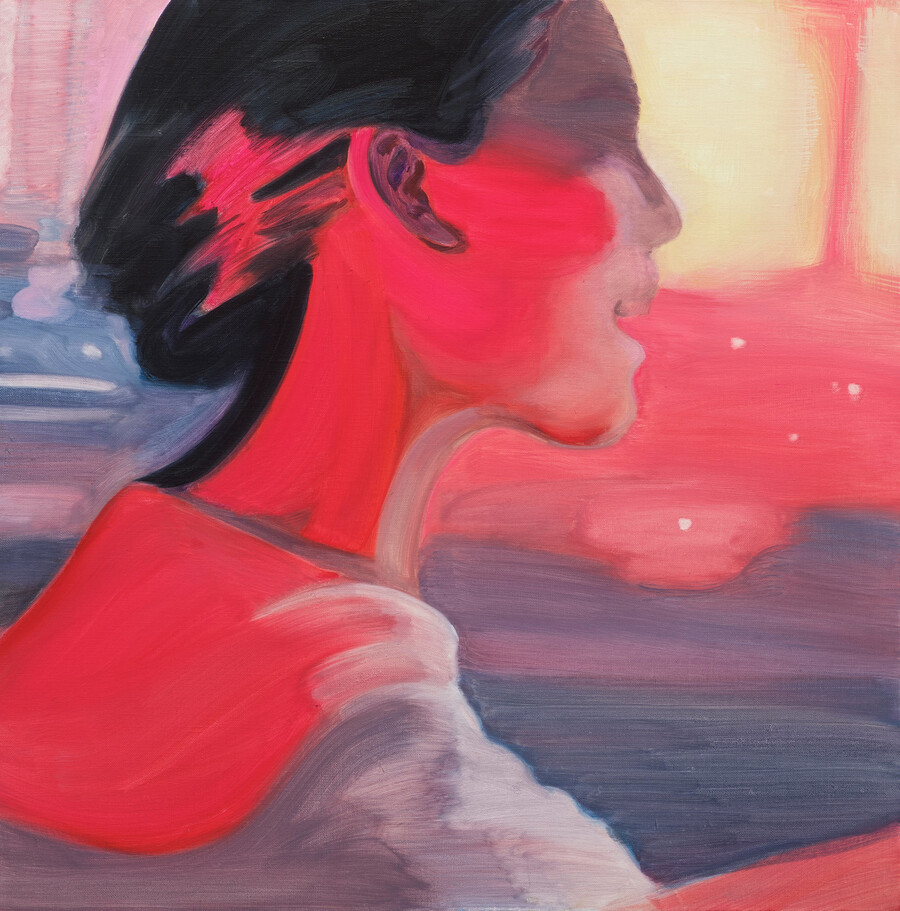
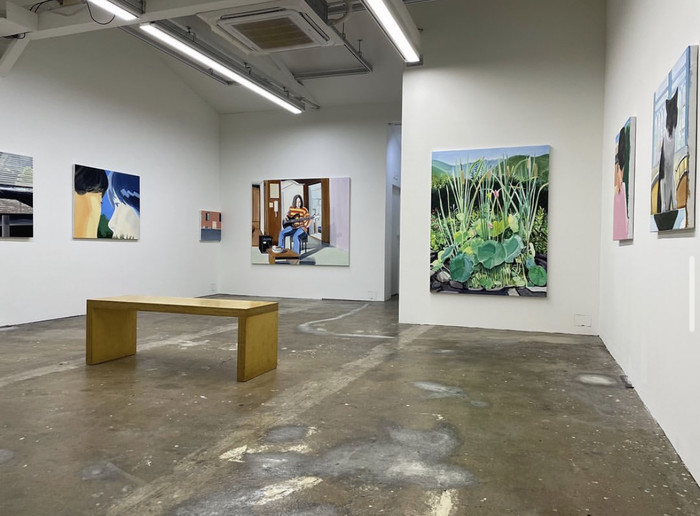
The
figures in Yiji Jeong’s paintings seem to reside there, indifferent yet
present. Each moment the artist chooses how much of the time spent with the
figure and the surrounding space to depict on the canvas. Sometimes the focus
rests on the figure itself; at other times, the viewer’s gaze expands to the
unique structure and atmosphere of the place, as in works like Bass
Lesson (2021). Accordingly, Jeong internalizes her subjects,
leaving their interpretations open to viewers or emphasizing the work’s
character as a personal record, restructuring each piece with subtle
differences in direction.
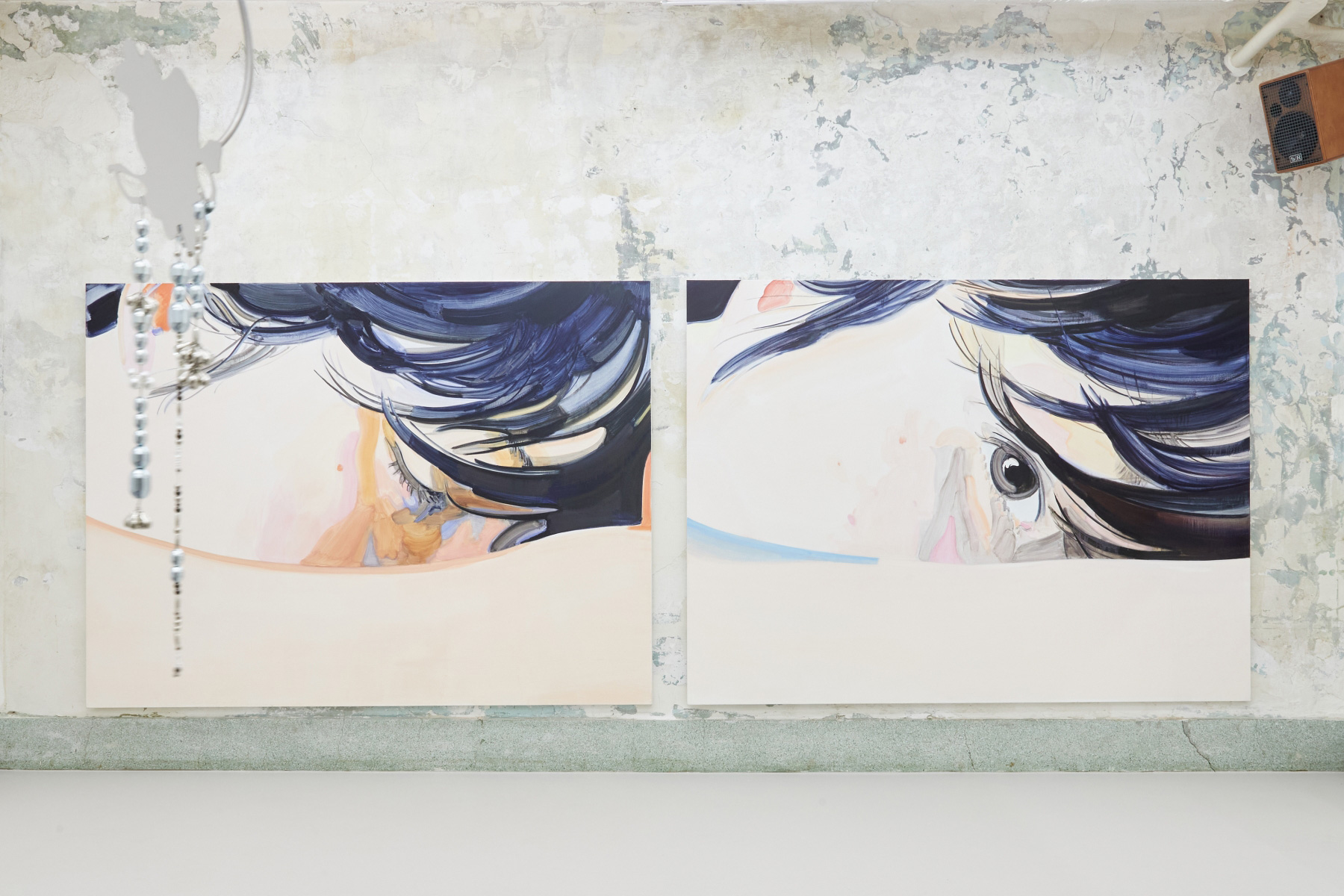
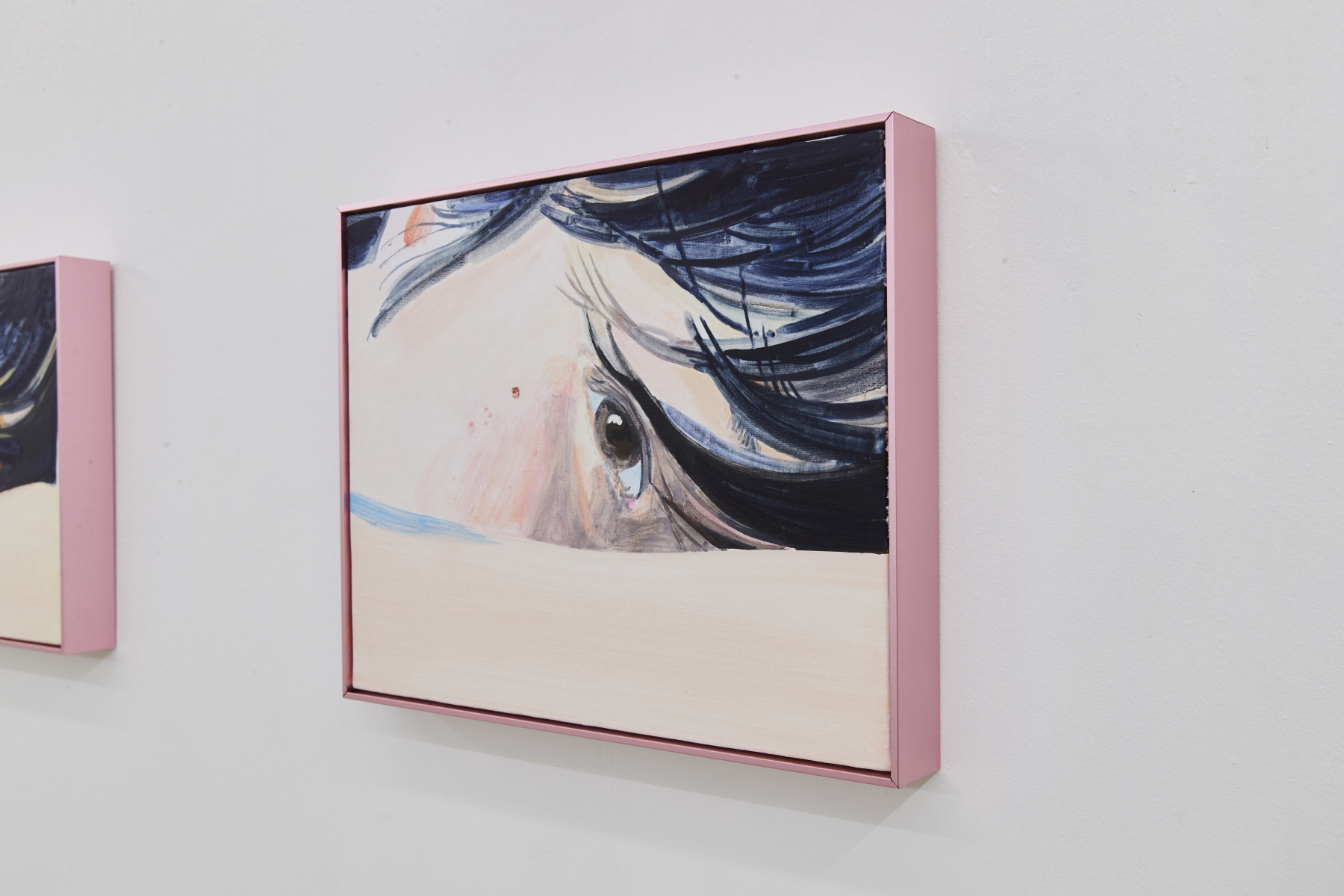
Such
concerns about how subjects and environments are framed on canvas permeate
Jeong’s overall practice. As observers, we tend to focus on her use of color
and subject matter, yet what matters more is her treatment of each scene as a
distinct “cut,” akin to a frame in comics. If we consider the canvas as one of
many sequential frames connecting the story, we can infer that the artist’s
storytelling method and freedom play a significant role in her painterly
language. Drawing from comic techniques that capture scenes within frames,
Jeong selects and presents compressed, refined moments—easily understood and
striking—amid the omissions and gaps of time.
The
fragmented delivery of these “cuts” within disassembled time encapsulates
transient states of existence, memory, and anticipated futures. Fascinated by
this quality, Jeong steers her painting practice toward a mode of
documentation. Much like the literary “cut-up” technique, where fragments of
text are rearranged to form new compositions, Jeong translates images of memory
into painting without rigid boundaries. Unlike the safe, defined borders
surrounding cartoon frames, the artist removes outlines, leaving the canvas
exposed so that viewers may freely imagine the emotions and sensations of those
moments before and after what is shown.
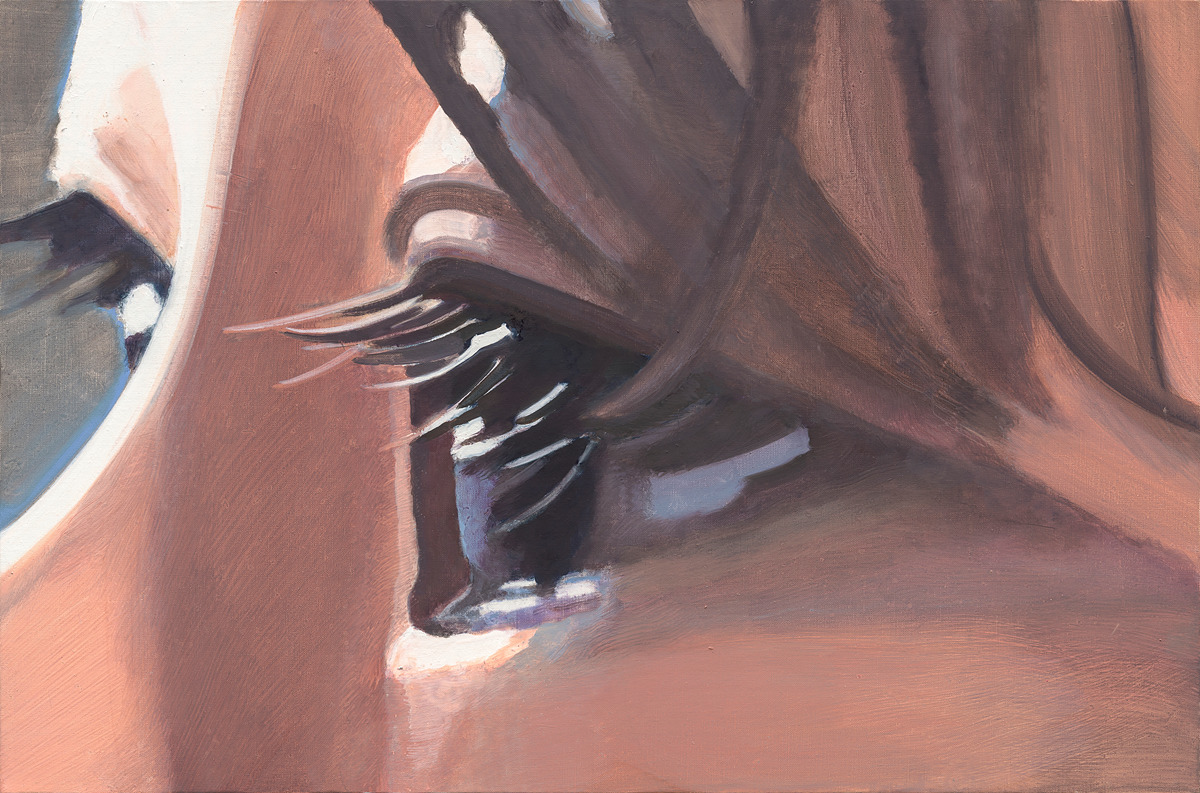
In
seeking ways to convey the emotions that certain moments evoked in her, Jeong
adopts the unapologetic, amateurish methods of raw comics. Rather than
mastering perfectly polished comic grammar, she chooses the cut-based approach
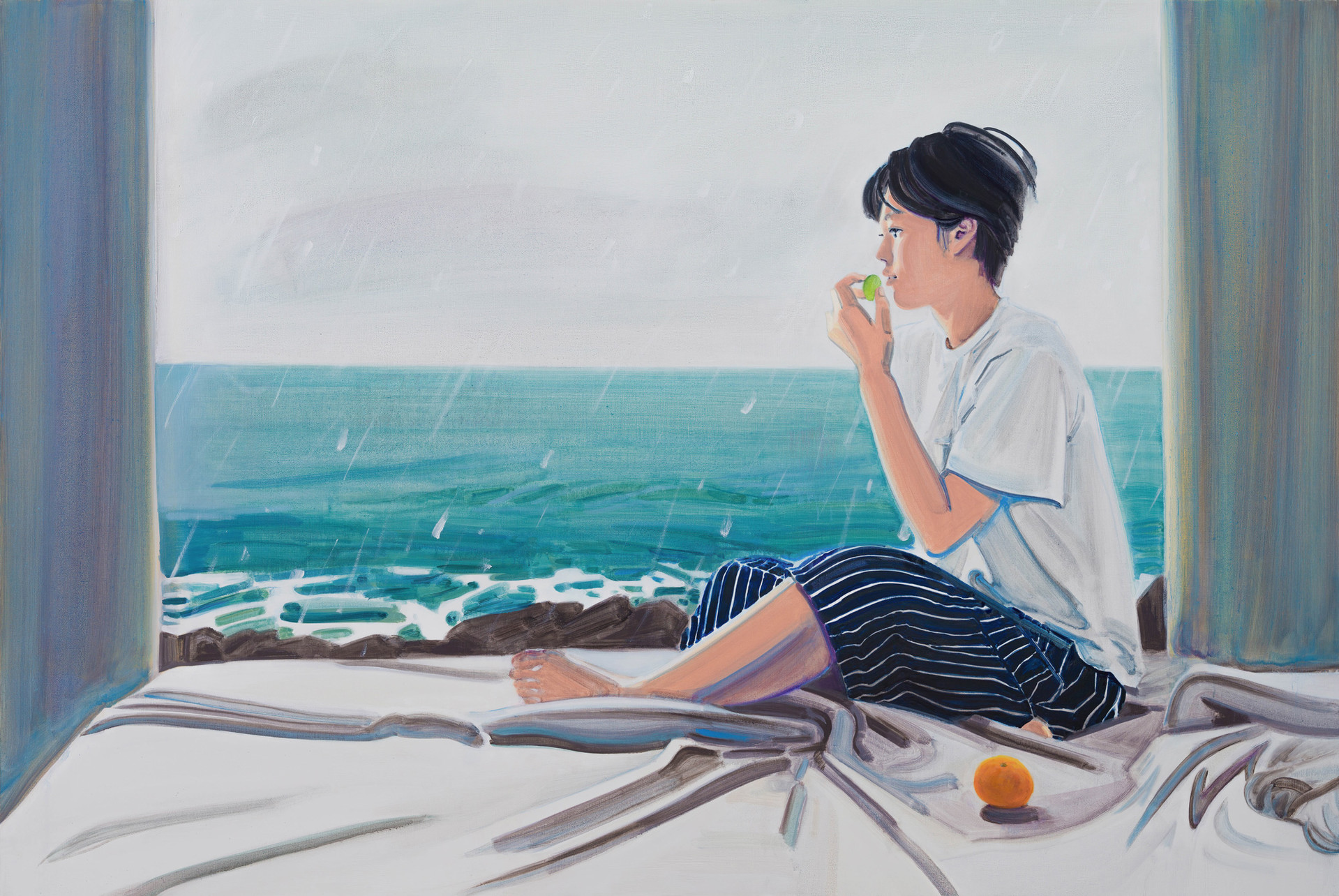
available to the inexperienced. Consequently, figures in her paintings are
emphasized with bold outlines, while backgrounds such as landscapes and still
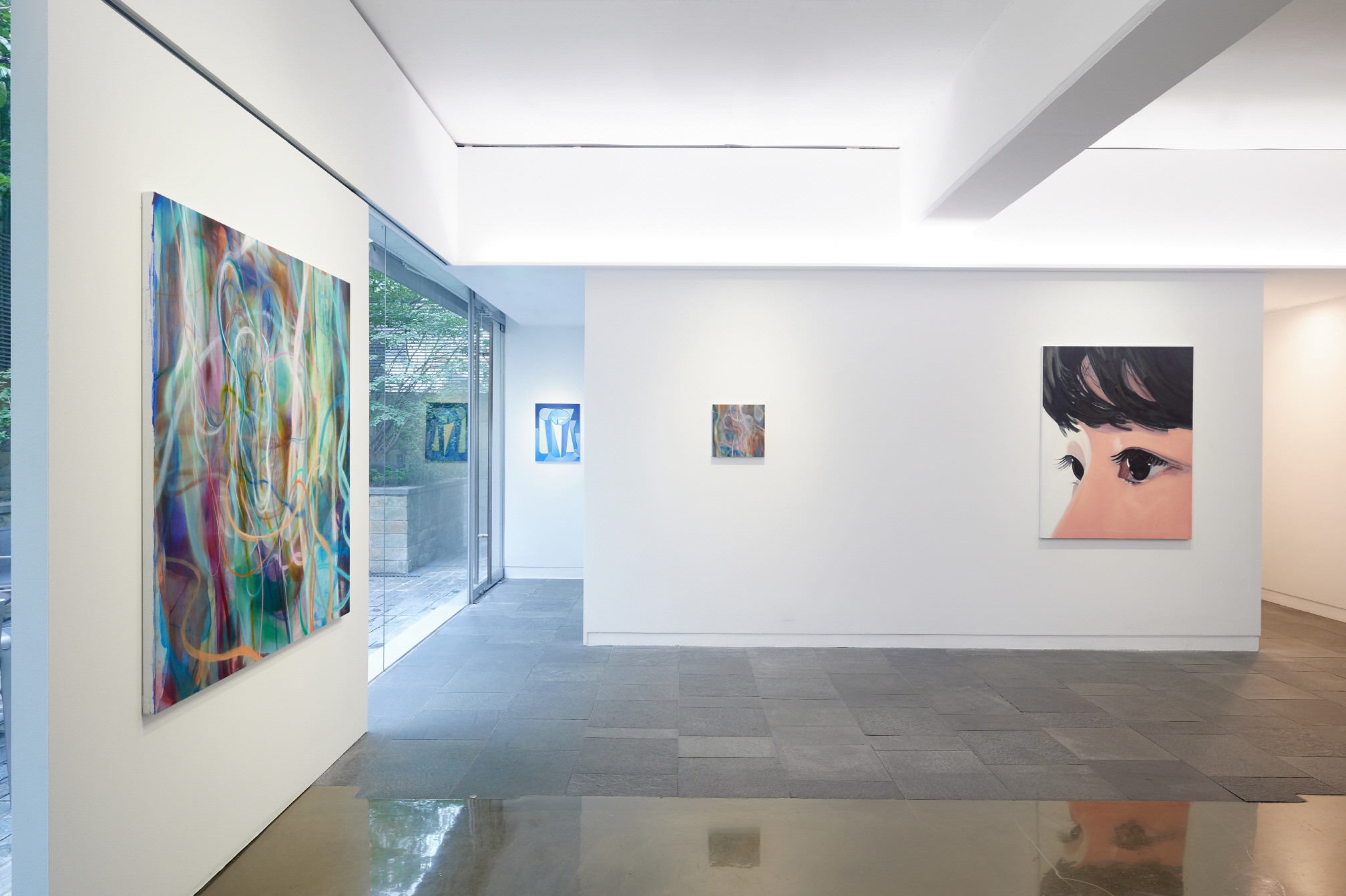
lifes—seen in works like Poetry Book and Taxi, Your
Name, Greeting with Eyes, and Terrace (2021)—are
rendered more realistically with tonal shading, lacking outlines. This
comic-like discrepancy paradoxically draws viewers deeper into the figures
themselves, filling the composition with a contradictory sense of immersion.
In
Yiji Jeong’s paintings, bold cuts recall personal memories and experiences,
while simultaneously determining the viewer’s position beyond the frame. The
trivial yet enduring moments we remember often linger with the density of the
air, the scent of someone nearby, the weather, objects in the space, the
surrounding landscape, and the people who were present. Thus, contemplating
these fleeting instances becomes a means of recording the most peaceful moments
amidst the bittersweet whirlwind of youth—its regrets, preciousness, futility,
and longing.
Though
her hollow feelings may seem to conclude neatly within a single frame, the
artist leaves lingering gaps to imagine the next line between frames, soothing
an unfilled sense of emptiness. The fleeting moments in life where one
confronts oneself amid repetitive daily routines are easily lost. To grasp
these vanishing sensations, Jeong assembles her memories like the varied stones
of a wish tower in The Shape of a Wish (2021),
loosely yet earnestly leaving behind echoes of her expectations and determination
for the next chapter.