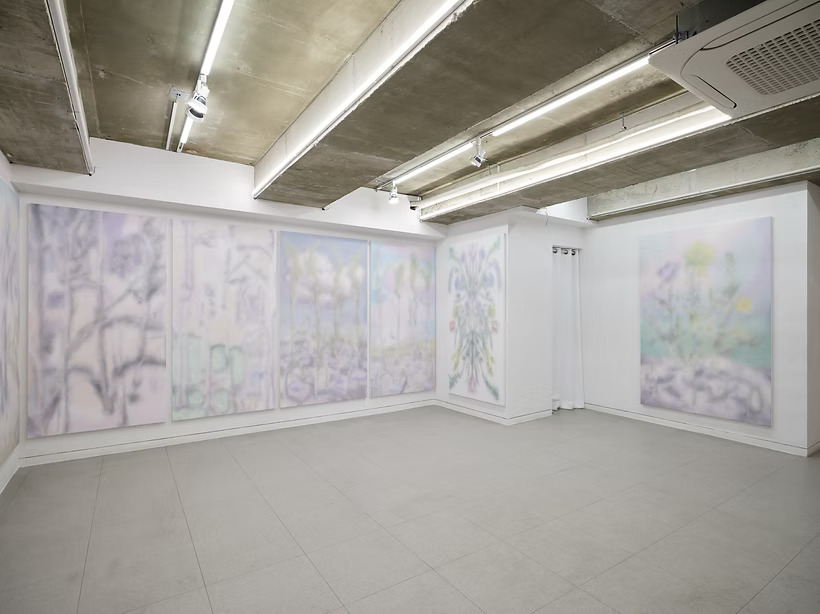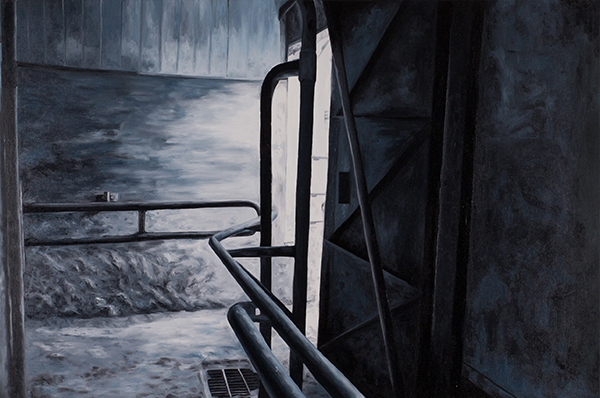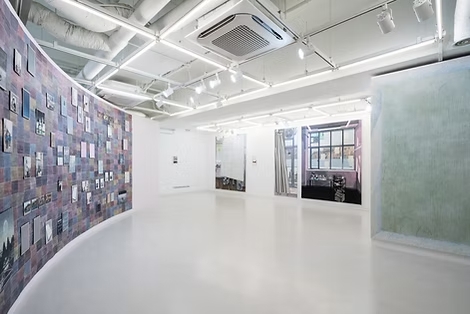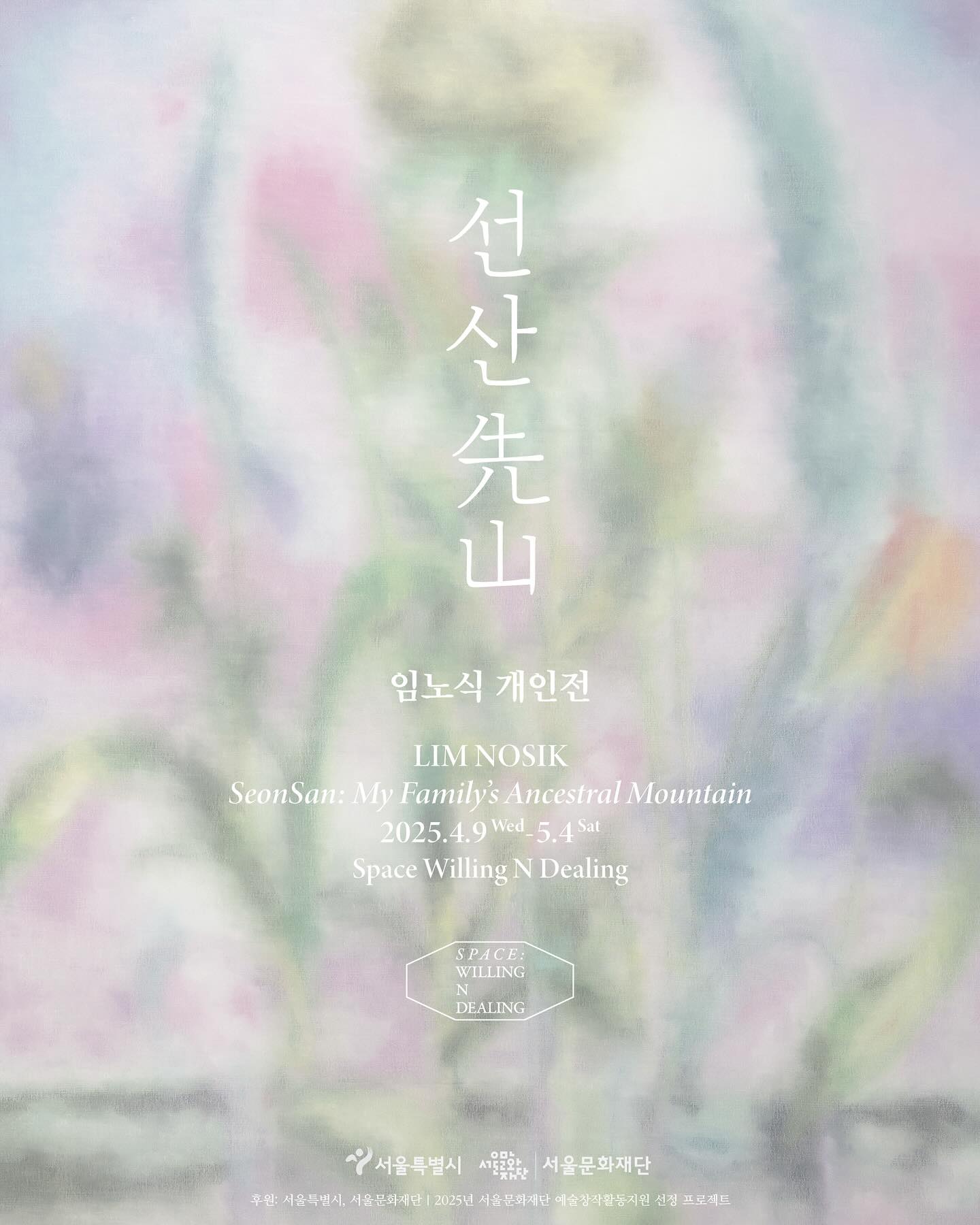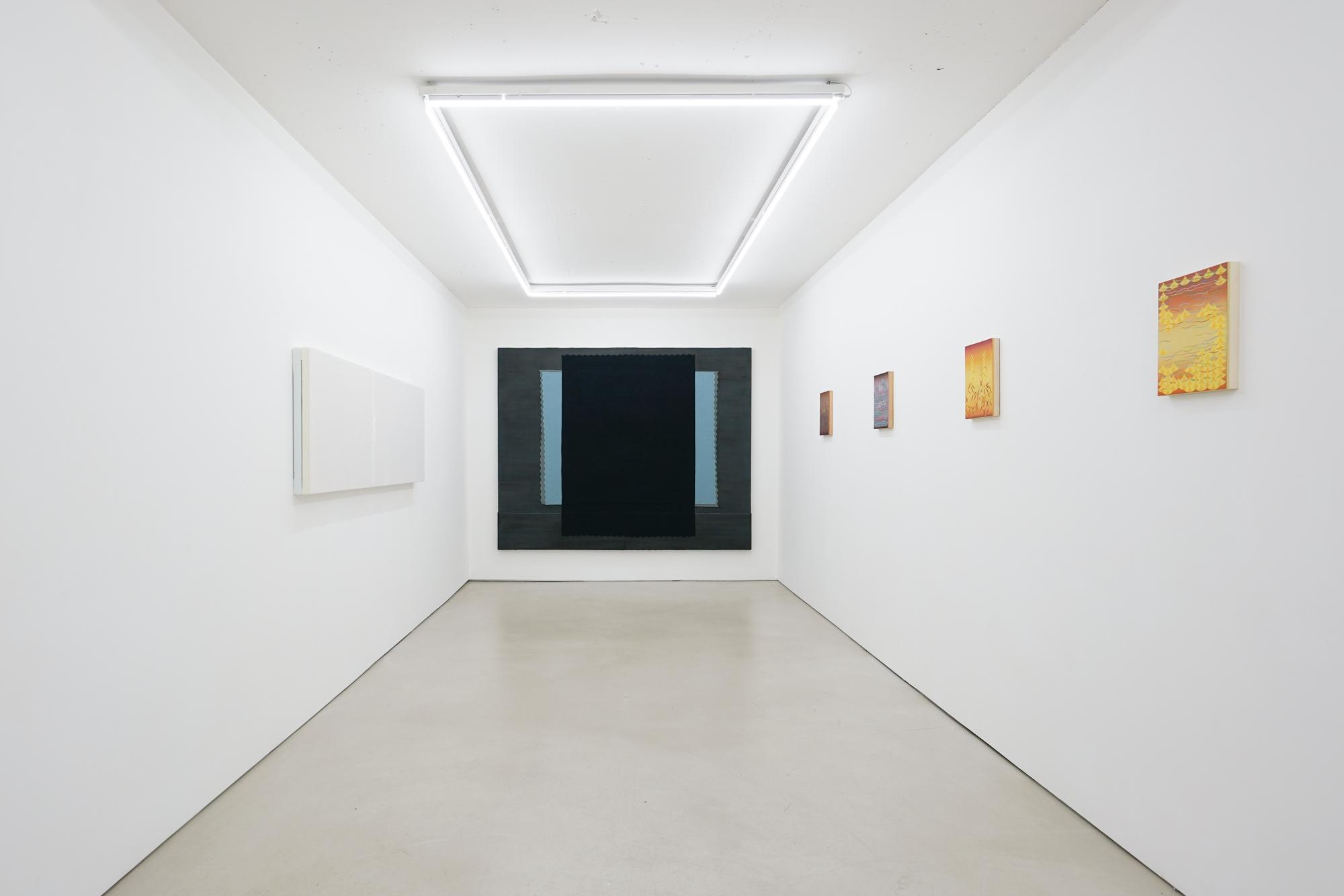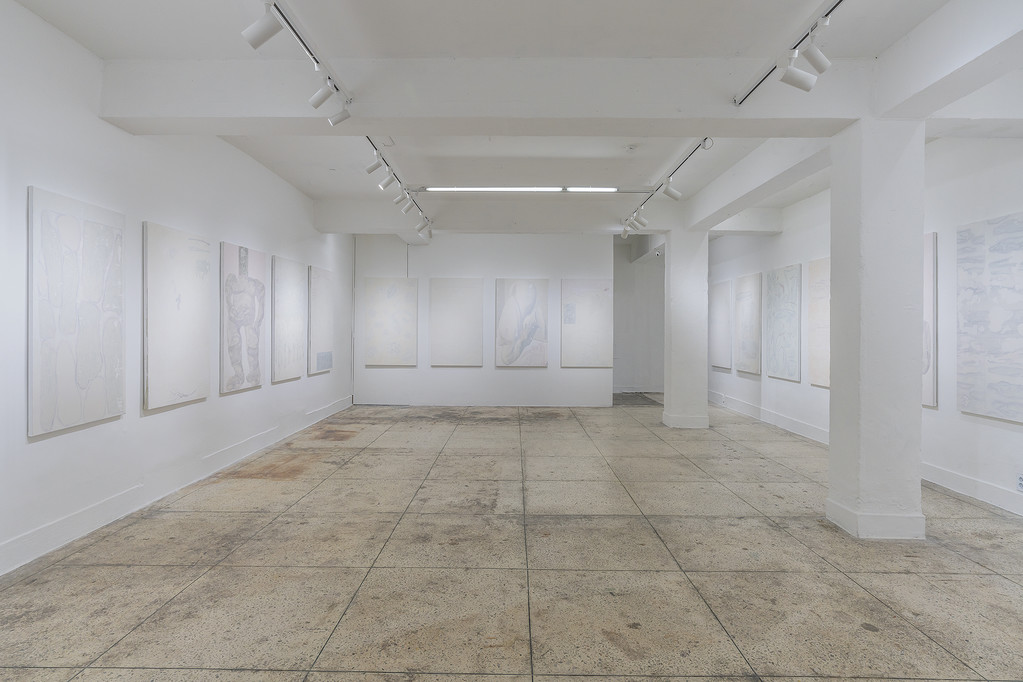


Installation view of 《Pebble Skipping》 (Artspace Boan 2, 2020) ©Nosik Lim

For an artist working with images, the phrase “to capture something with the eyes” inevitably goes beyond a mere expression. The sequence of capturing an image, remembering it, and translating it into one’s medium is undoubtedly a familiar process for artists, even before a work materializes. It reminds us of the origin of painting itself—when someone first transferred what they saw onto a canvas. And all that remains on that canvas is but a trace of reality.

Nosik Lim repeatedly observes landscapes outside his studio and transposes them onto canvas back in his workspace. Yet, his observation of landscapes hardly resembles an intentional watching but rather aligns with an unfiltered seeing—a gaze devoid of preconceived purposes. Through this process, the artist unconsciously discovers images captured by his eyes, impressions that surface unexpectedly like a pop-up moment when daily time and space overlap. The image detaches from the outside world and migrates onto the woven fabric of the canvas.

Like sand slipping through one’s fingers, something is inevitably lost in this mechanism. All that remains is the lingering sensation etched between the fingers—the faint impressions giving rise to fragmented images that start small within the artist’s mind but ultimately leave growing traces.

Thus, one might ask whether the image remaining on the canvas has been deliberately lifted from reality or whether it represents something lost along the way. In pondering this, we recall the ripple patterns that emerge on water when a pebble plunges beneath the surface.


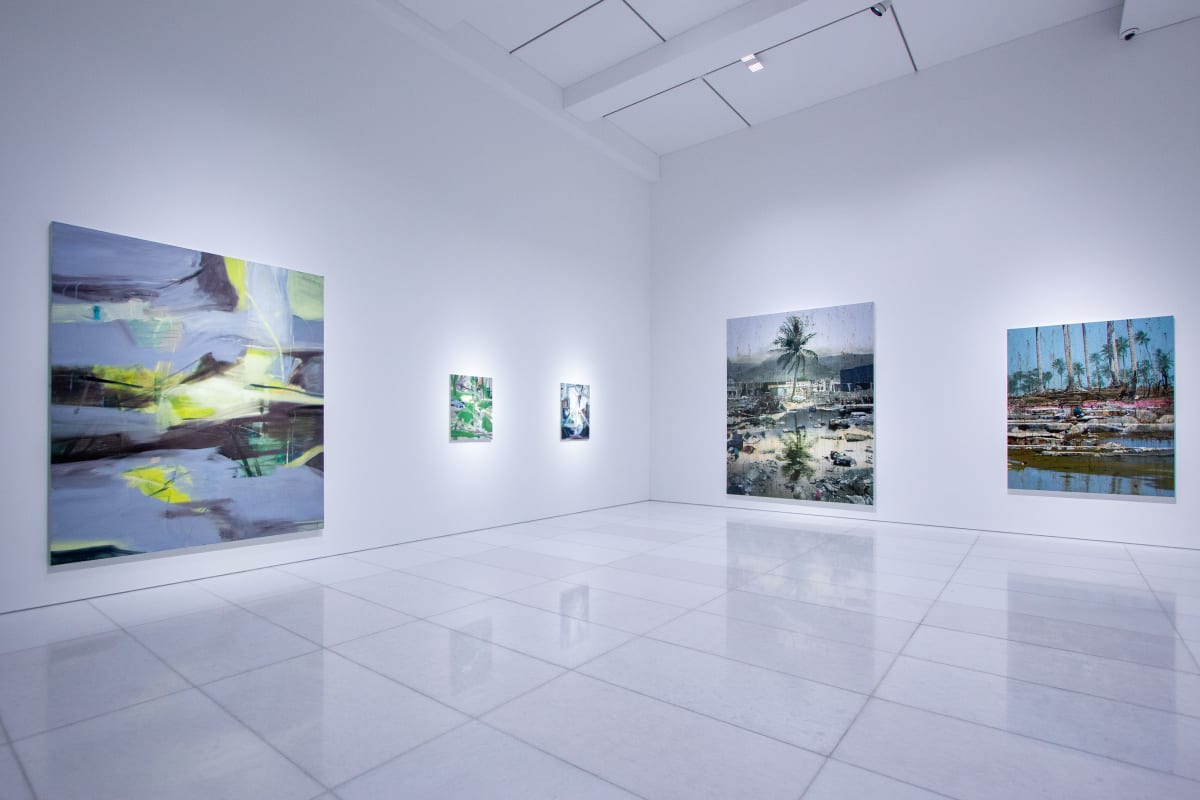
Installation view of 《Pebble Skipping》 (Artspace Boan 2, 2020) ©Nosik Lim

Pebble Skipping, as the title suggests, refers to the act of throwing a flat stone across the surface of water, counting how many times it skips. Interestingly, the number of skips is often not observed directly but is inferred by watching the ripples left in the wake of the pebble’s motion. As the pebble leaps in an arcing trajectory, it creates ripples while simultaneously carving small indentations into the water’s surface—the starting points of each concentric ring.

The works Nosik Lim presents in this exhibition are similarly remnants of images that have traveled along the trajectory from landscape to studio to gallery space. Much like how each ripple in pebble skipping intersects with the next to generate layered waves, these images overlap, blend, and accumulate on canvas. From the white base of the canvas to the application of pigment and varnish, the accumulated colors form thin, transparent layers, interweaving traces that create friction—preventing the painting from easily slipping into the realm of mere representation.

Lim focuses on how images move through the spaces of landscape, studio, and exhibition, questioning how they are contained within the canvas, and furthermore, how they can be manifested within the exhibition space. While maintaining the rectangular frame of painting, he investigates how this rectangle encounters and integrates with the exhibition space—or more precisely, whether painting itself can occupy and become the space. His paintings extend along arcs, walls, and columns, becoming spatial forms in their own right. In doing so, architectural elements commonly regarded as part of the neutral "white cube"—windows, ceiling beams, doorways—are reframed as integral parts of the artwork’s structure.


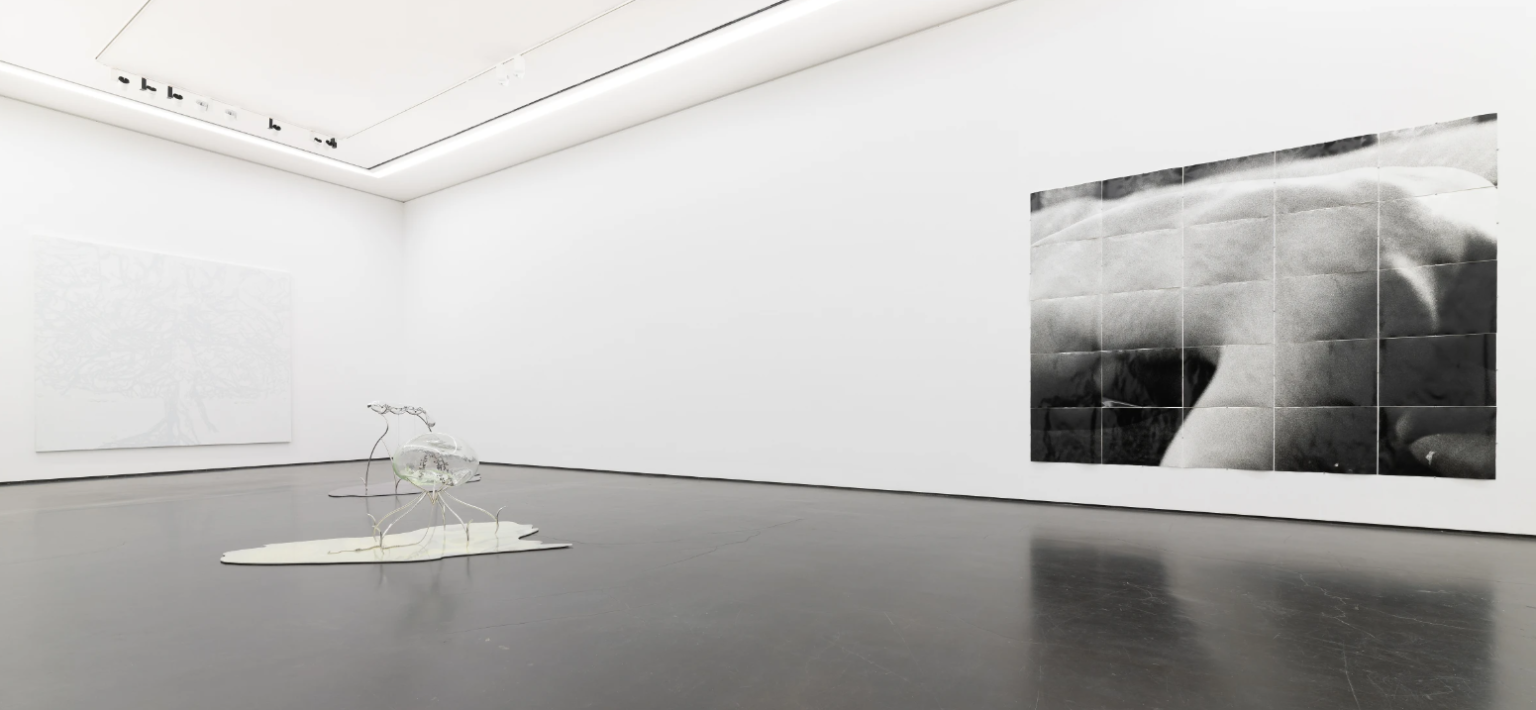
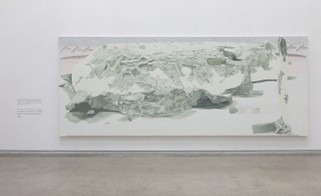
Nosik Lim, Branch 630, 2020, Installation view of 《Pebble Skipping》 (Artspace Boan 2, 2020) ©Nosik Lim

The following phrase from Lim's artist notes transforms these frames into a unified trajectory: “Painting is not merely an act of seeing—it can lead us toward what we imagine; a landscape becomes someone’s life, or a total representation of an individual’s inner and outer worlds.”

Rather than distinguishing whether the image on canvas has been lifted from reality or lost along the way, the more pertinent question lies in tracing the trajectory by which the image traveled to arrive at the present exhibition space. One returns to the starting point of this trajectory—the moment the pebble is skipped across the water.

We select a stone of suitable size and thickness, toss it toward the water, and in that instant of contact with the surface, no one can predict how many ripples will appear. The endpoint of how many is marked by the pebble's final plunge into the water. Most consider that moment the conclusion of pebble skipping. Yet, we dare to imagine otherwise.

Beneath the surface, that moment may signal the beginning of a new pebble skip. And so, even when the pebble vanishes from sight, its ripples never entirely leave us.

References