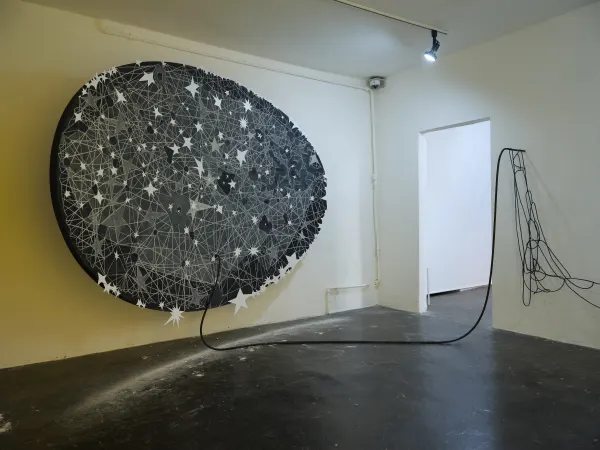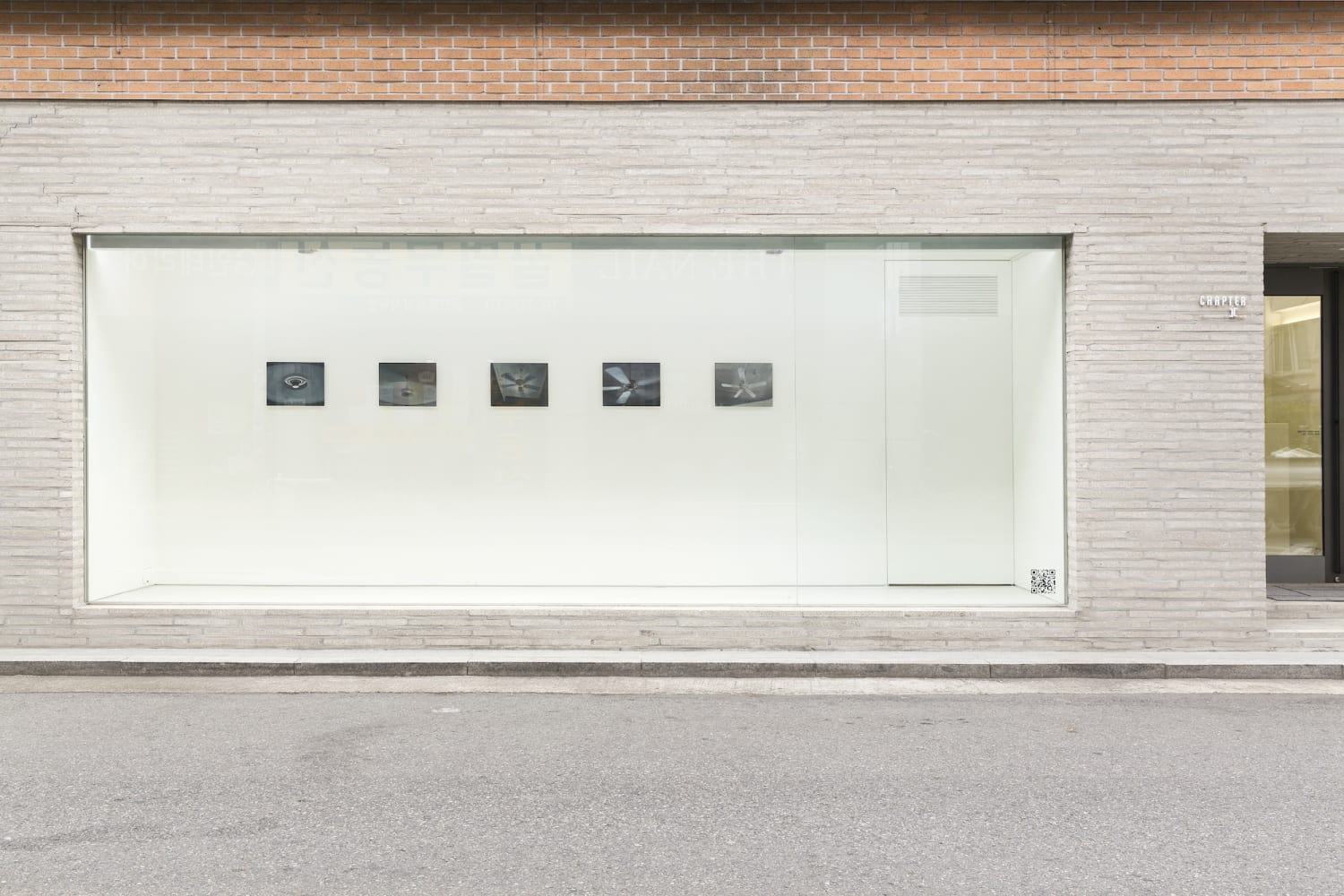

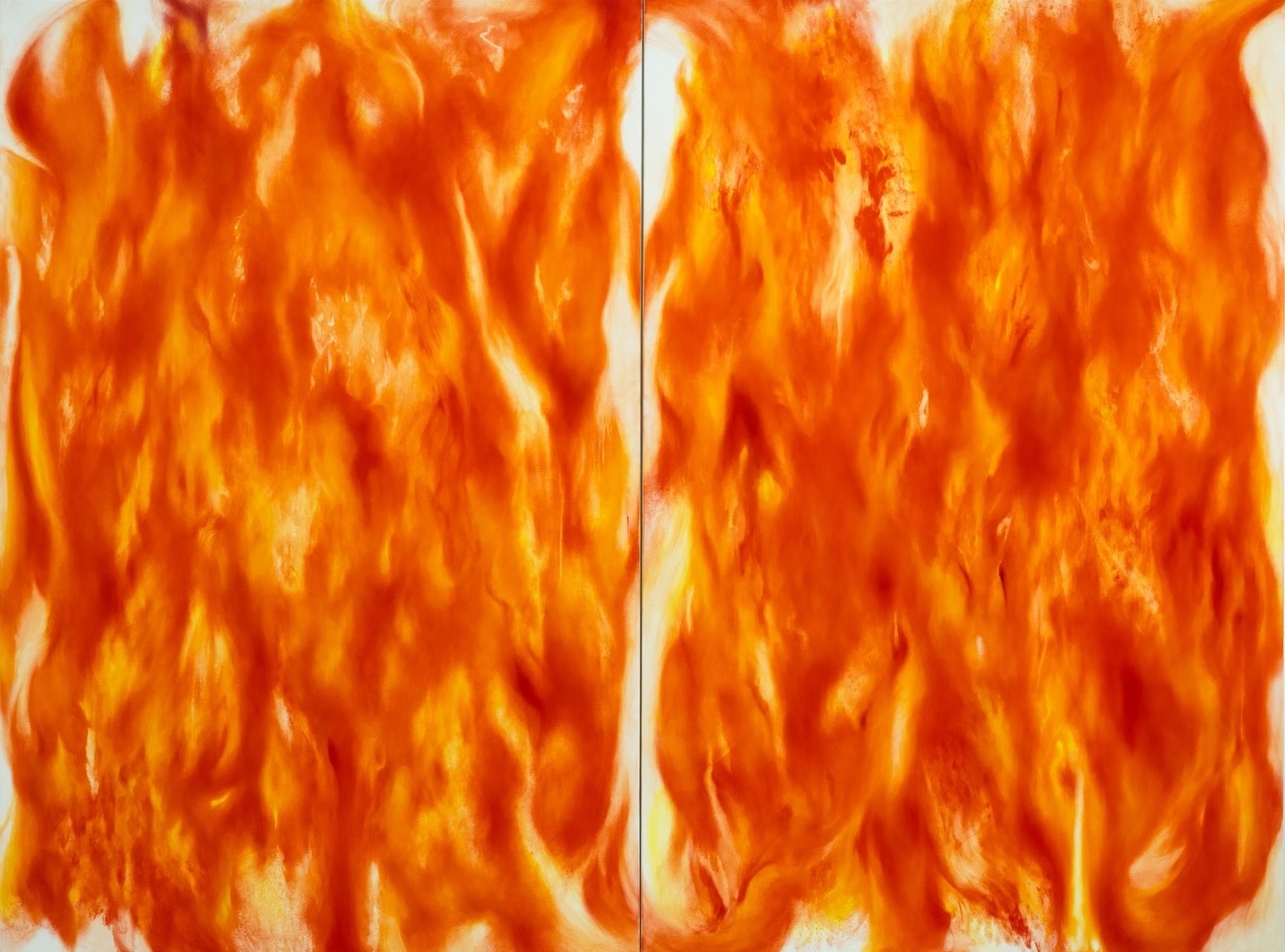
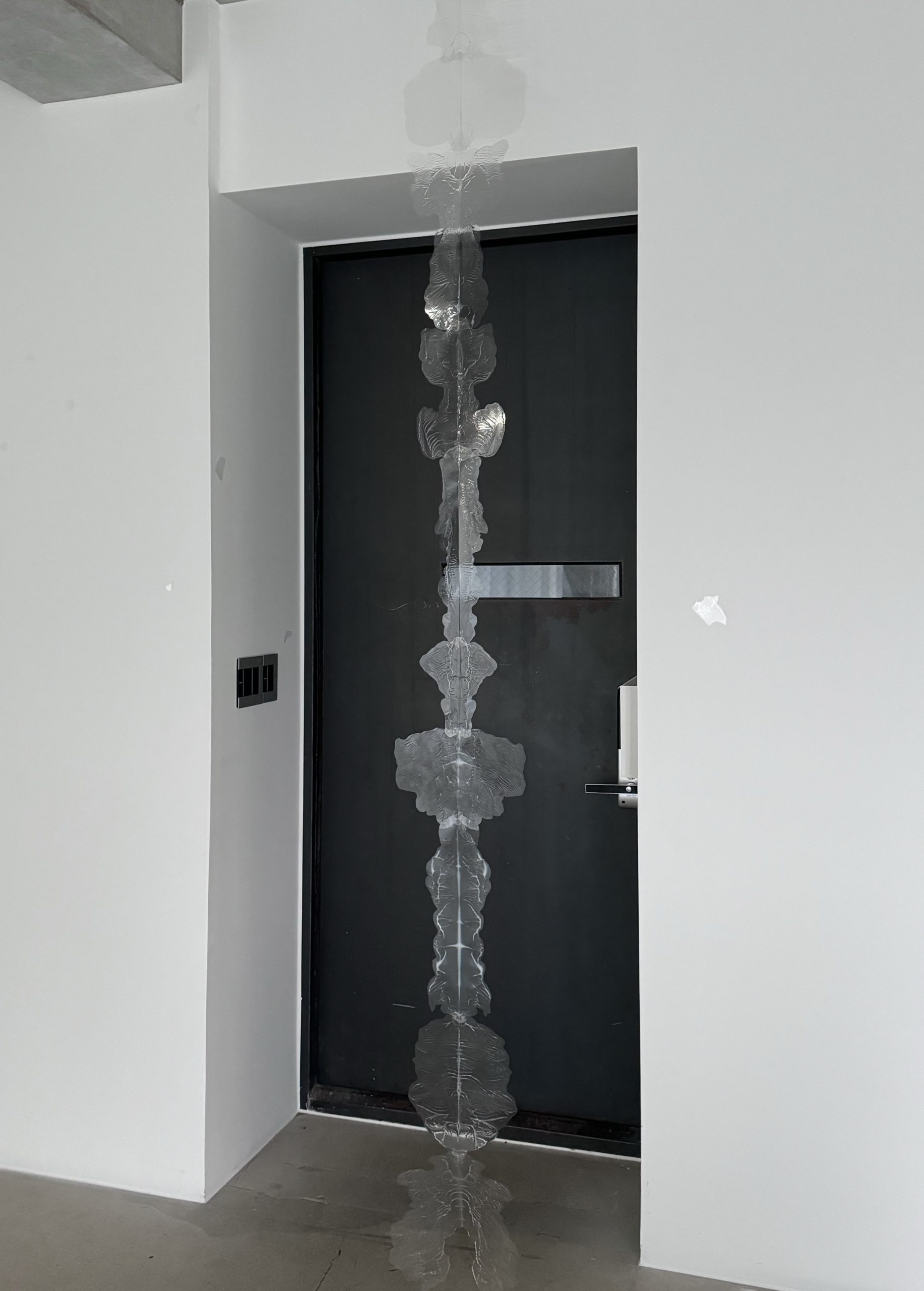
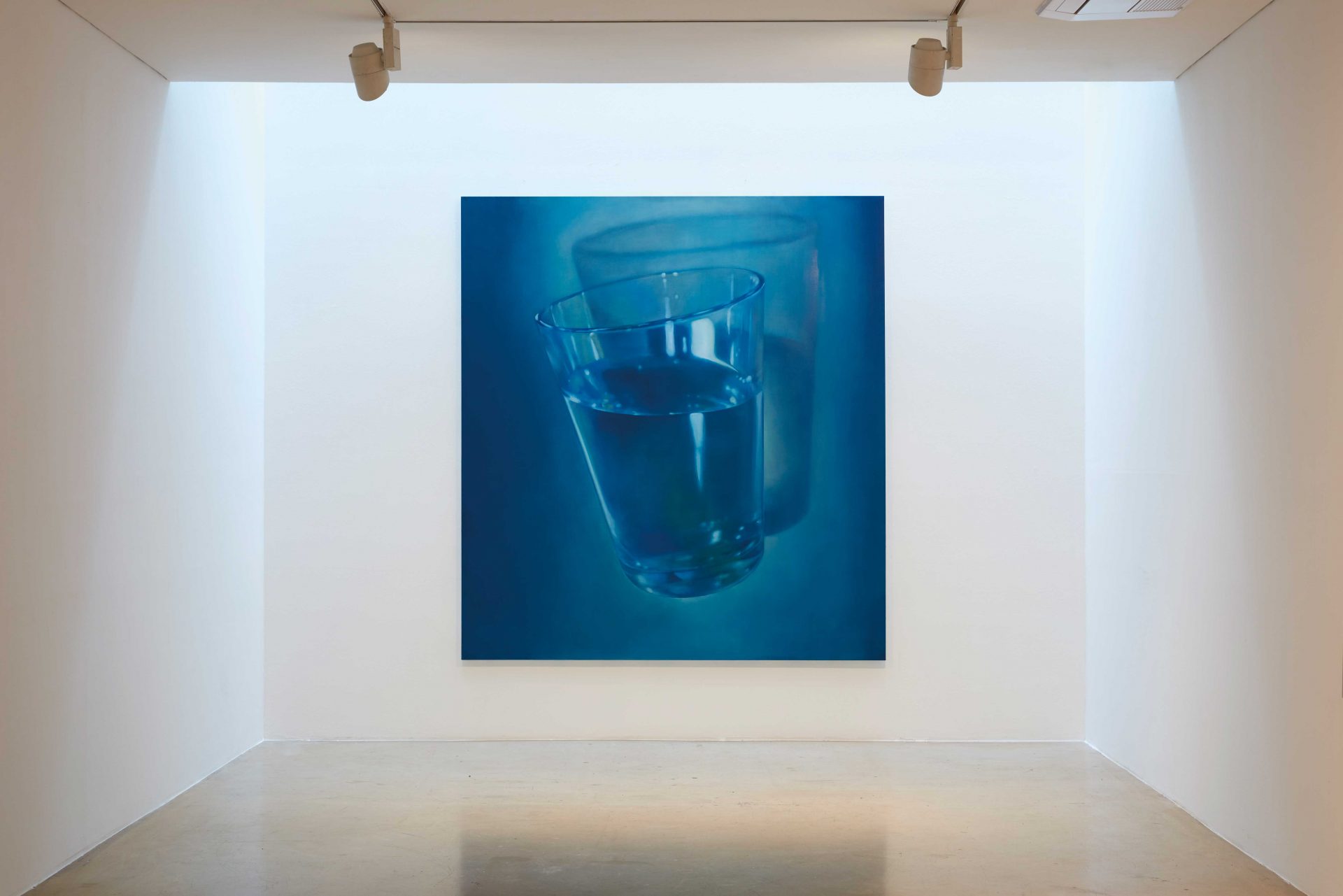
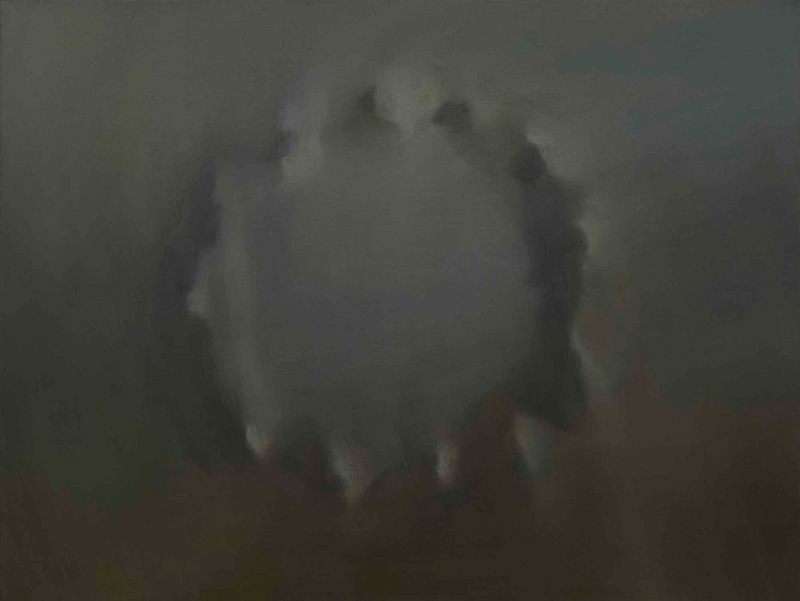
Installation view of 《Hole Way》 (5%, 2022) ©Chapter II

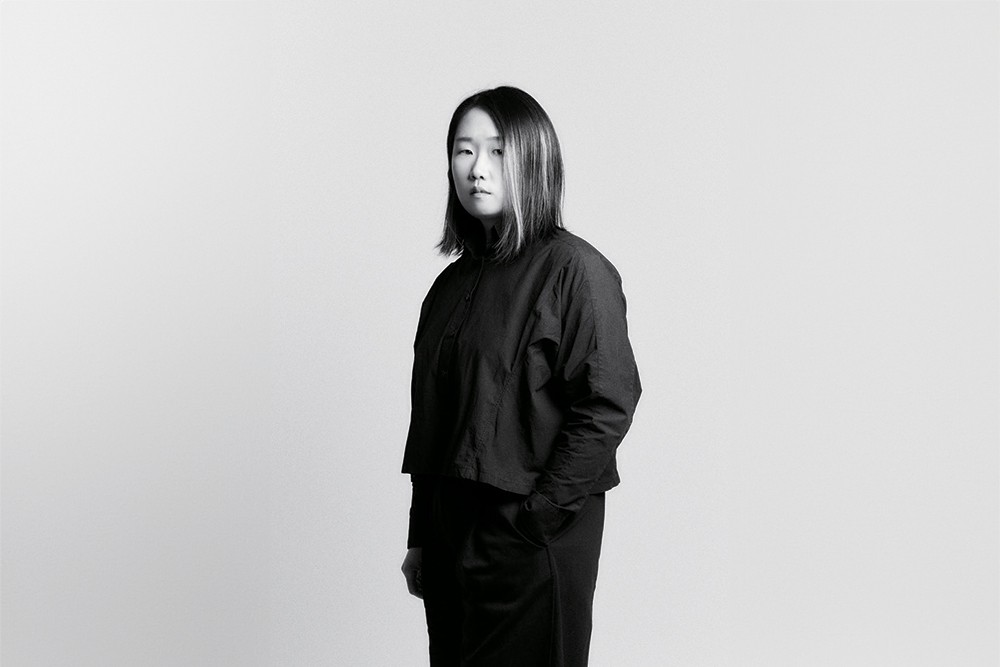
《Hole Way》, held at 5% in February 2022, captures the current state of Son Hyunseon. While the exhibition can be described as a presentation of the artist’s practice that revolves around painting and extends through performative elements, ultimately it serves as a means to trace the field where Son Hyunseon’s energy is exercised. Over the past three years, the artist and curator have been engaged in ongoing dialogue, observing each other's persistence and changes, and recognizing the inherent difficulty of defining Son’s work through fixed interpretations. They realized that the more time is spent on objectifying the work in language, the further it drifts from its essence and the more distorted it becomes. Consequently, they concluded that unfolding the artist’s trajectory in real-time would offer a more meaningful way to approach his practice. Revealing the path without omissions, they believed, would be the most accurate way to comprehend his artistic actions.

Thus, the exhibition begins as a preparatory space that encompasses the traces of Son’s trajectory. The three works—Future PerfectPart and Whole, and Always in the Present—do not refer to specific objects but to the artist’s performative actions themselves. These actions, in turn, are situated along the axis of time, as indicated by the tense-based titles of the works. The first work, Future Perfect, implies that the artwork will evolve throughout the duration of the exhibition, suggesting that the exhibition itself functions as an extension of the creative process.


Installation view of 《Hole Way》 (5%, 2022) ©Chapter II

《Hole Way》 serves as a platform where the artist's performance is conveyed and encountered by the audience, leaving behind traces of all energies that brush past it. What is Son Hyunseon facing, and what will he navigate through? At present, Son is deeply focused on the notion of ‘relationship.’ He particularly scrutinizes the contradictions that binary oppositions inherently possess—black and white, light and darkness, separated and remaining parts, filled and empty bottles. These opposing forces are distinct yet exist in a state of inseparable tension, unable to deny each other’s existence.

The frame that has long occupied Son Hyunseon’s painting practice embodies a similar binary yet connective quality. Though visually sliced into rectangular boundaries, the frame paradoxically opens the space beyond into an infinite realm of imagination. The dots, lines, and planes within the frame reflect this further. Marks, strokes, and color fields are not strictly intended to create boundaries or separations from their counterparts. Even when fixed onto the canvas as painterly elements, these forms intersect, diverge, or emancipate themselves. As a result, the viewer's gaze is constantly disturbed, redirected, and drawn into layers of secondary interpretations.

In fact, the concept of ‘relationship’ has consistently served as a central tenet throughout Son Hyunseon’s painting practice. His earlier works, which translated invisible kinetic energy into visible forms, explored the gaps between the movement of subjects and the artist’s performative actions. Though the physical movements were fixed onto the canvas, they conveyed a sense of movement visually. The key to this painterly illusion lay in fusing the movement of external objects with the artist's own body. Rather than merely capturing or reproducing reality, Son’s paintings establish psychological and physical relationships with the subject.

Thus, vibrations originating from external forms pass through the artist's body and settle temporarily on the canvas, only to be transmitted again to the viewer. This process functions as an experiment to momentarily contain the artist's energy within a flat surface, made possible only through his relational painting methodology. Of course, Son’s artistic exploration exceeds the boundaries of painting itself. His practice traverses beyond traditional notions of painting into other realms such as performance, expanding his identity beyond that of a conventional painter.

References