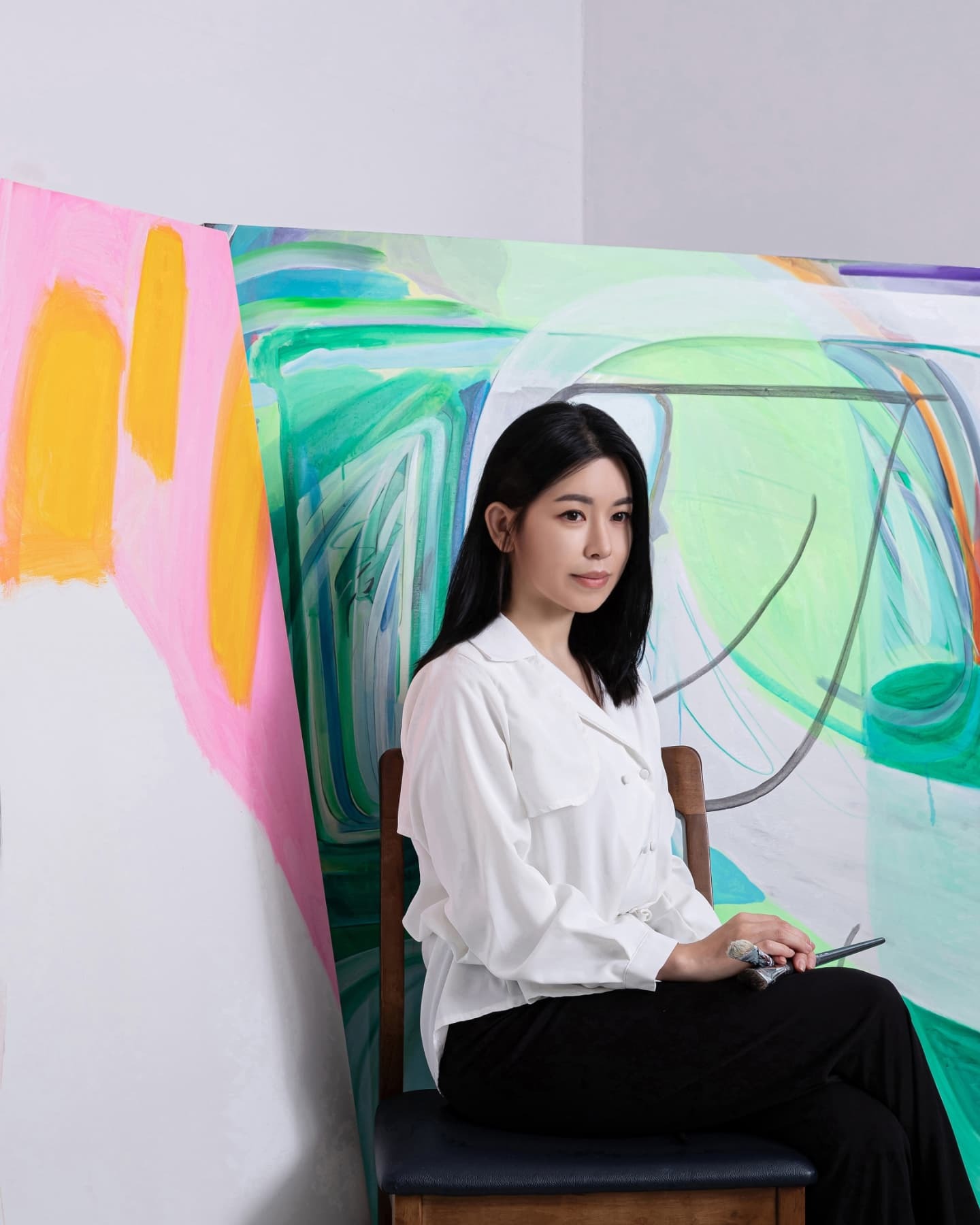
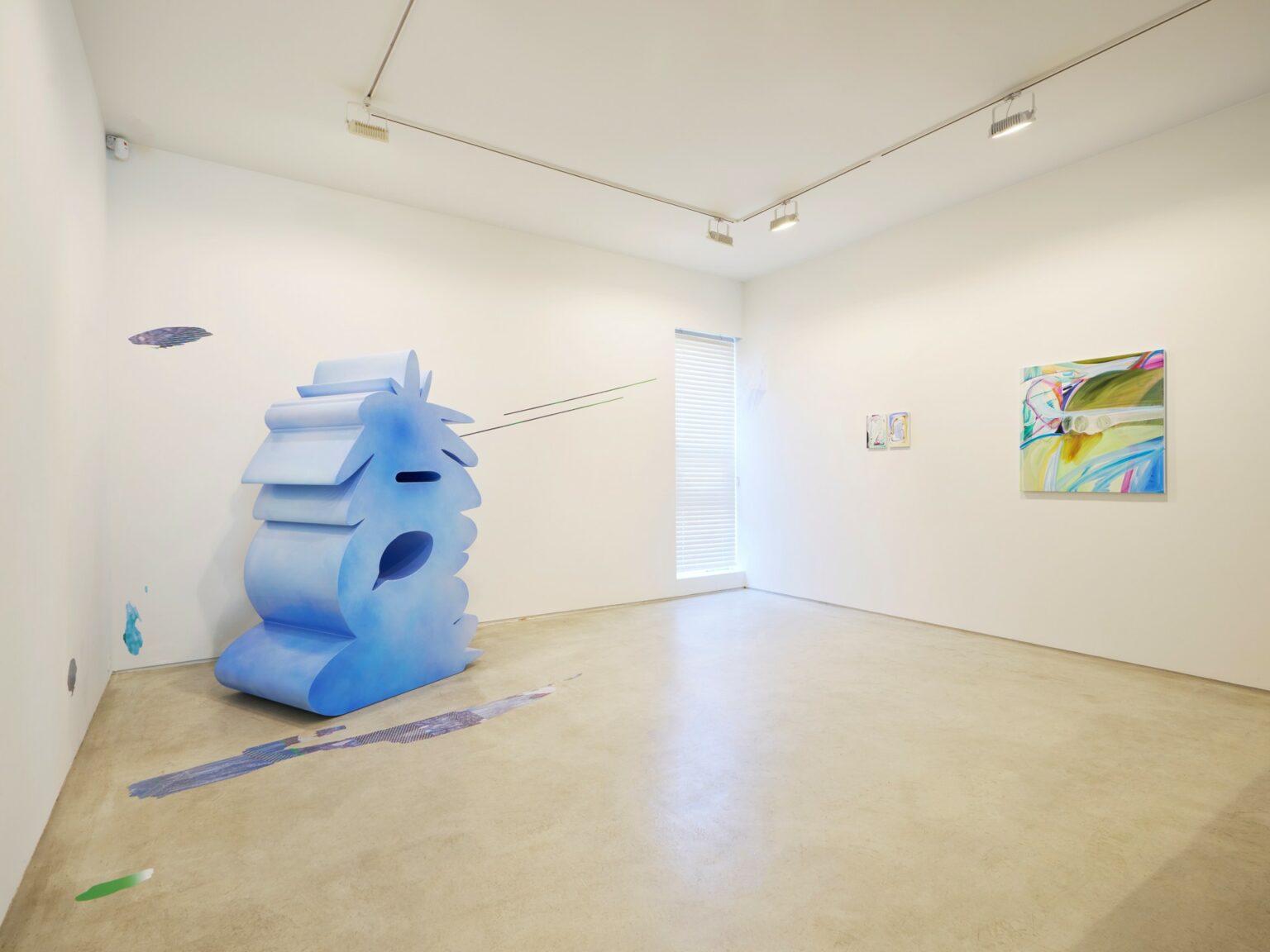
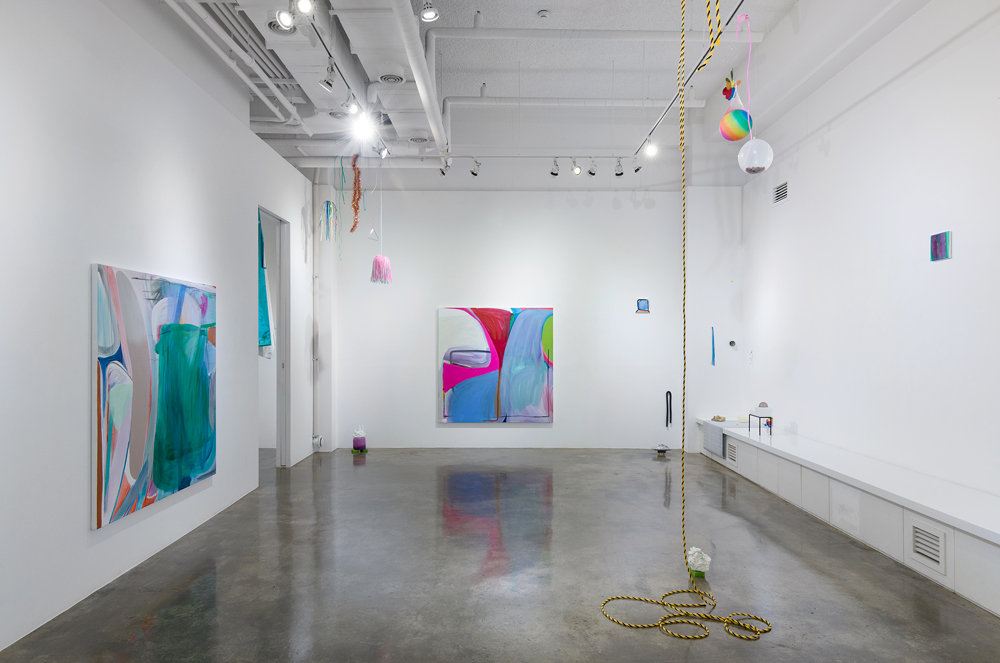
Jo Jae’s fifth solo exhibition, 《Translation》, can be seen as an extension of
her previous works, where she has consistently positioned herself as an
immediate conduit for translating urban sensations. As with her earlier works,
the audience must interpret fragments, glimpses, and isolated elements of the
urban landscape embedded within her work to understand its essence. However,
grasping a direct, concrete image of the city from her works is ultimately an
impossible endeavor, as Jo’s practice inherently absorbs and presents the
chaotic state of urban perception itself, unresolved and fragmented. Even after
processes of recombination, she intentionally remains in a state of
fragmentation—a natural consequence that reflects the broader intellectual
helplessness we face in forming a totalized depiction of the city.
Just as the ubiquitous, indiscriminate violence aimed at anonymous
masses in the post-neoliberal era cannot be traced back to identifiable
individuals or their psychological trajectories, so too Jo Jae’s works resist
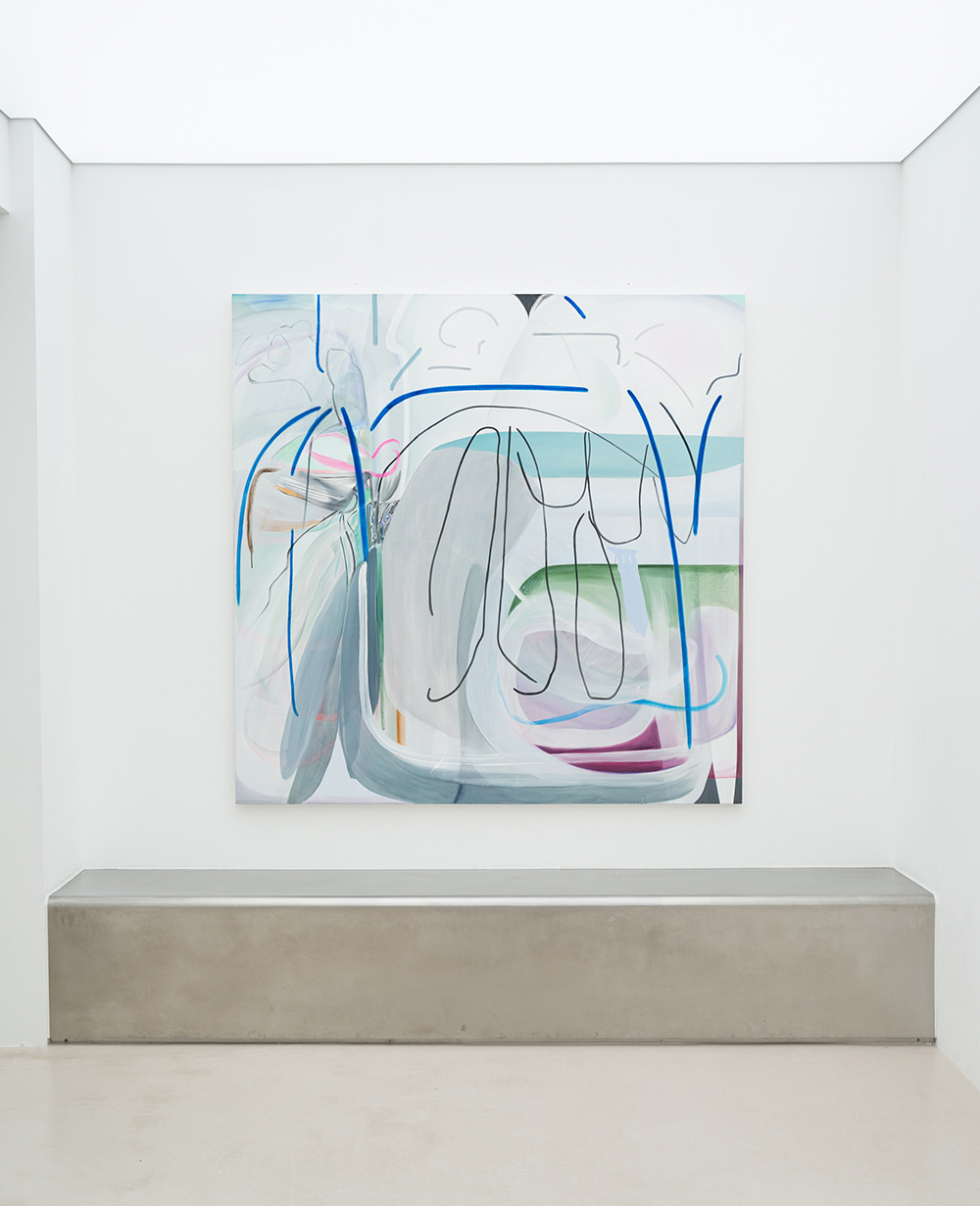
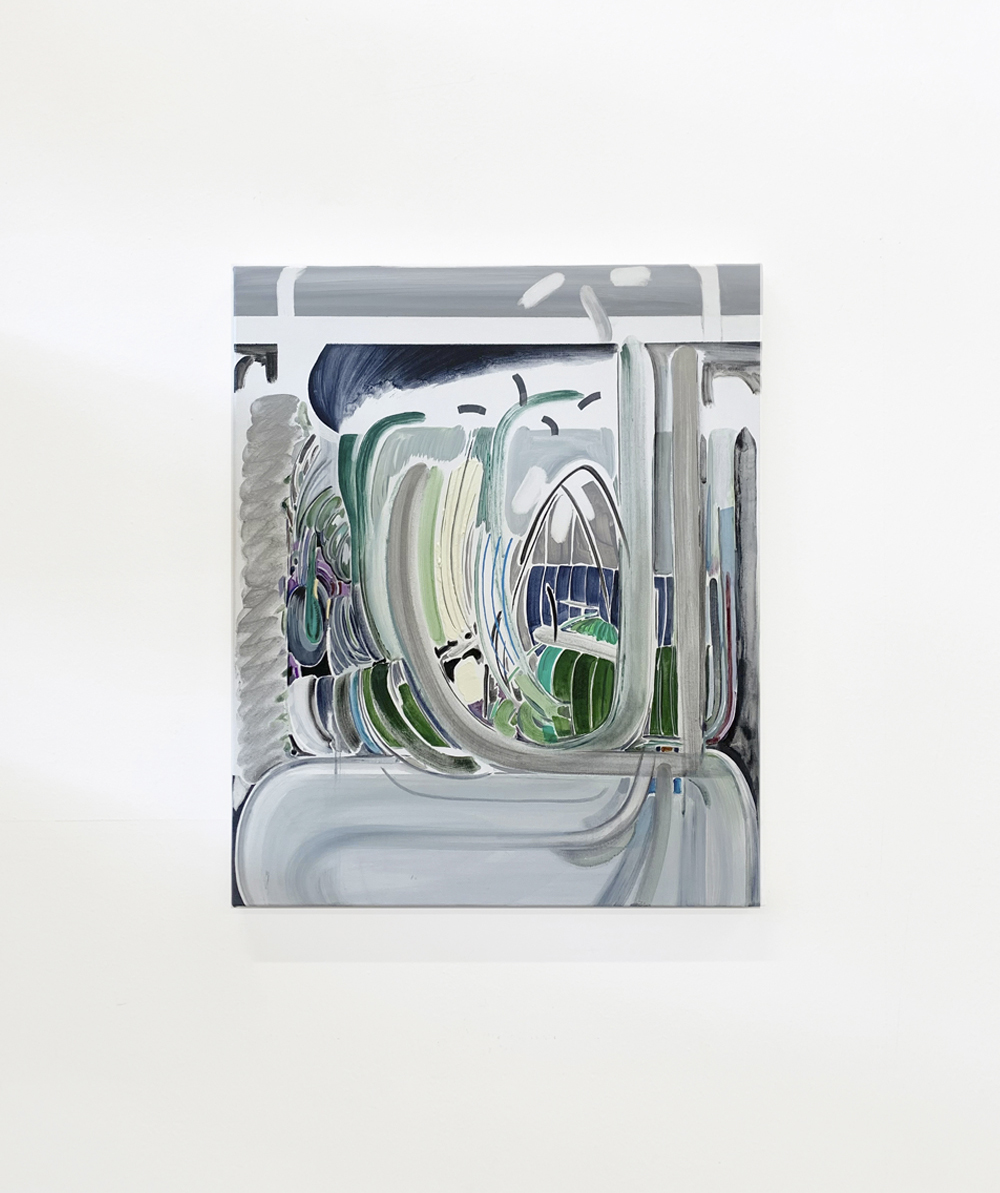
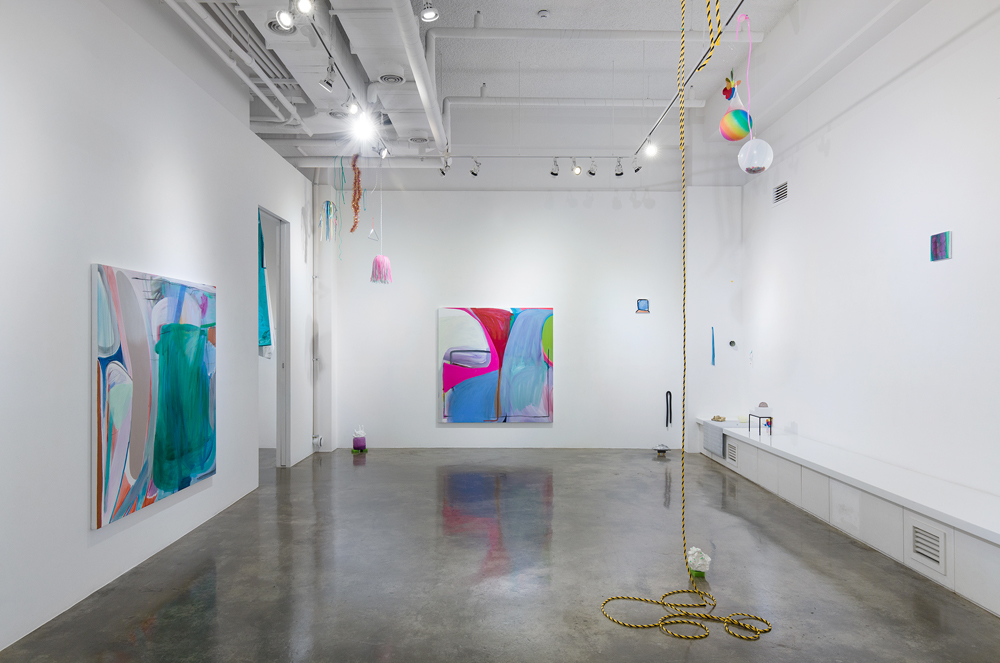
reductive interpretation. Her response to the overwhelming saturation of urban
sensory fields is to construct a small, whimsical world of her own. This
process is exemplified in her series, ‘Dismantling Mass’ and ‘Summing up
Flexibility’. As these titles suggest, Jo’s working method involves deconstructing
urban sensory aggregates and materials as a whole and attempting to “summarize”
the fluid, constantly shifting aspects of urban life. Yet, given the complexity
and indistinctness of her color fields, presented through a kind of
abstraction, such summarization inevitably fails. In this sense, her works
faithfully reveal the fragmented state of the contemporary world precisely by
embracing the impossibility of achieving wholeness. Her paintings visually
recall the chaotic, colorful afterimages lingering on the retina after walking
through neon-lit city streets, underscoring the impossibility of fundamentally
deconstructing and summarizing the urban “mass.”
The short sound clips filling the exhibition space similarly lead
viewers through fragmented sensory experiences. Through elements such as
electronic piano, electronic sound, castanets, narration, and djembe, these
sound fragments flash and fade without coherent context, obstructing any
attempt at totalizing interpretation. Yet these processes also function as a
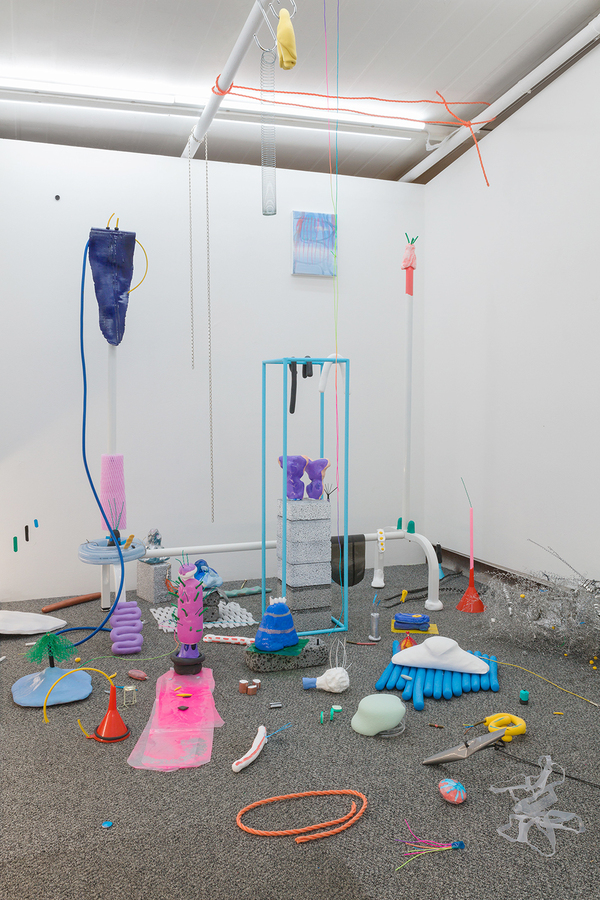
utopian coping mechanism for a subject confronting an unintelligible world, a
dynamic made evident in works like “Space151.” Here, materials such as clay,
wire, glass bottles, and balloons are stripped of their original purposes and
reassembled into parts of a space governed by an autonomous internal logic.
These industrial objects, while preserving traces of their urban origins,
simultaneously erase them, unveiling a multicolored world disconnected from the
city and hinting at alternative urban possibilities.
Meanwhile, works such as “Wide Circle,” “Elongated Mass,” and the
‘Line’ series present allegorical objects that metaphorically reconstruct the
urban icons generated by late modernist skyscrapers into forms more tolerable,
even seductive. For instance, “Wide Circle” evokes defunct lighting fixtures
that no longer affect the sensory system; “Elongated Mass” abstracts the
towering forms of reinforced concrete structures; and the ‘Line’ series
represents the vertical rows of signboards lining high-rise buildings. These
collected urban forms, simultaneously unendurable and alluring, are transformed
by Jo Jae into aesthetically appealing objects. Ultimately, what Jo presents to
us is the impossibility of referencing urban totality, the utopian impulse
revealed through the rearrangement of industrial materials, and the
reconstruction of form through sensory disconnection and selective collection.
All these narratives are but one among many possible stories born with the
beginning of the city and destined to vanish with its end.