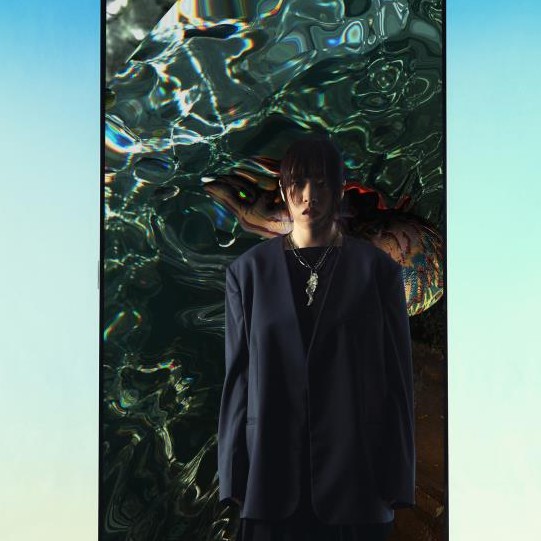
The 2018 F/W “Ready to Wear” fashion show by the Italian fashion
house Gucci generated much controversy on multiple fronts. The show was
overshadowed by a backlash surrounding a balaclava turtleneck sweater
resembling blackface—a symbol of anti-Black racism. Even Black rappers, who had
popularized “Gucci” as a synonym for stylish and cool, turned their backs on
the brand. While this instance of racial insensitivity from a high-end brand
drew public attention, less noted was the show's inspiration from Donna J.
Haraway’s A Cyborg Manifesto (1985), incorporating
genderless and posthuman approaches with icons from medieval mythology such as
dragons, demonic horns, and the eye of the Cyclops. Particularly striking was
the imagery of a model walking down the runway holding a replica of their own
head—a visual reminiscent of a cephalophore.
The cephalophore, meaning “one who carries their head,” is an
image with a long historical lineage. The headless horseman in The
Legend of Sleepy Hollow (1820) is a popular figure, whose origins can
be traced back to the Irish and Celtic myth of the Dullahan. In Christian
iconography, the cephalophore often appears in narratives of martyrdom and war.
Judith beheading Holofernes, David raising Goliath’s severed head, Medusa, and
the decapitated head of John the Baptist—these are all motifs frequently invoked
in moments of dramatic intensity. A key cephalophoric figure is Dionysius, also
known as Saint Denis, the patron saint of France. Around the 3rd century CE,
before Christianity was officially recognized, Dionysius was captured while
preaching in Paris and executed by beheading on Montmartre. According to
legend, after his execution, his decapitated body lifted his severed head with
both hands and walked approximately five kilometers before stopping—at which
point the Basilica of Saint-Denis was later built.
In Christian iconographic tradition, saints are often depicted
holding objects symbolizing their identity—keys to heaven, scriptures, or
instruments of their martyrdom. Bartholomew, flayed alive, is shown holding his
own skin; Saint Agatha, whose breasts were severed, carries them on a silver
tray. Dionysius, beheaded, holds his own head. Decapitation as a form of
execution was practiced in both the East and West; in Korea, during the
Byeongin persecution of 1866, Catholics were beheaded en masse on Yanghwajin,
later nicknamed the “Mountain of Severed Heads.” Yet this is not merely a
symbol of religious persecution. Searching “cephalophore” often reveals icons
with haloes in various positions—sometimes illuminating the severed head held
in the saint’s hands, sometimes radiating from the empty space left on the
neck. This suggests a range of interpretations regarding the relationship
between soul, body, and head.
Beyond religion and myth, the motif of the severed head has made
appearances in more recent times in Japanese animation, such as the cyborg
Count Brocken from the Mazinger series, and Zeong, a robot in Mobile
Suit Gundam, both of which emphasize decapitated forms.
The cephalophore iconography seems to have gained popularity for
its grotesque fascination and as a sign of saints overcoming death. However, if
we accept the condition of bodily separation, the head alone cannot function
independently. Is the head subordinate to the body, or the body to the head?
Since neither can function alone, the head must ultimately exist as an image—as
an icon. The first icon and image of God is considered to be the face of Jesus
imprinted on Saint Veronica’s veil. According to tradition, Saint Veronica
captured the face of Christ on her cloth, creating the first, most direct image
of the Son of God. Another example of the head existing as a complete form is
the cherubim—typically portrayed as a baby’s head with wings. Though grotesque,
it symbolizes a being close to the divine, complete in itself and not severed
from a body.
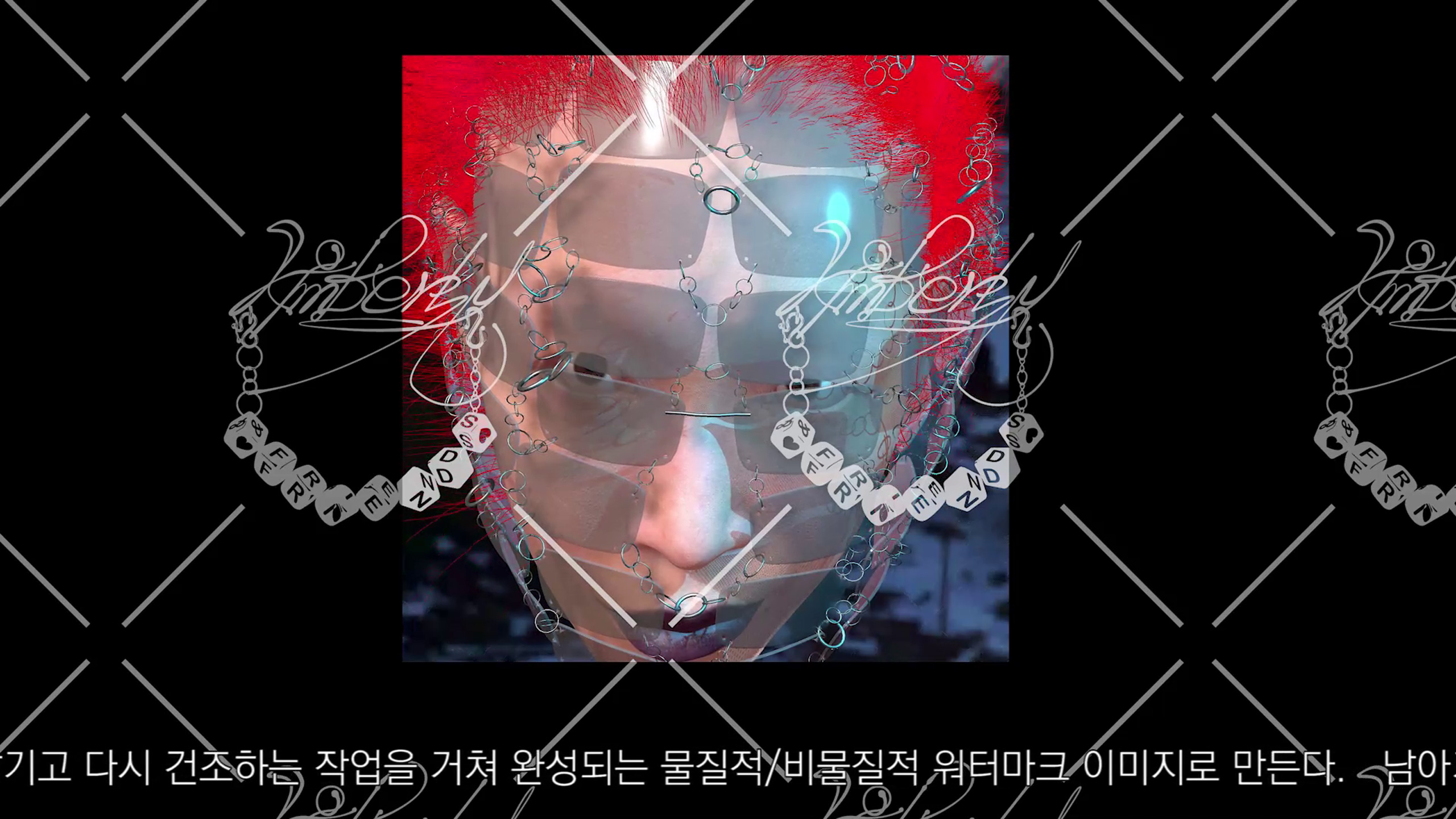
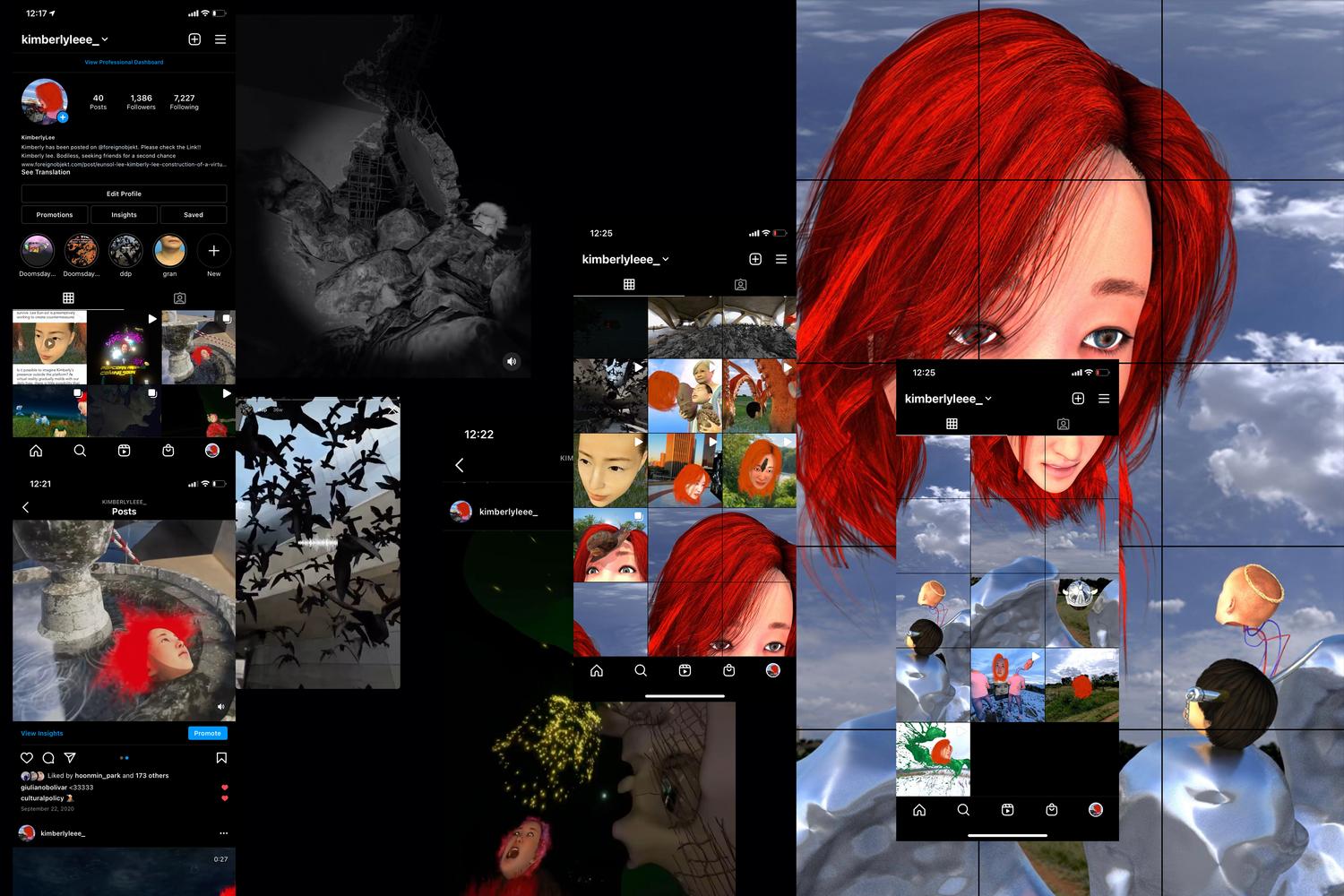
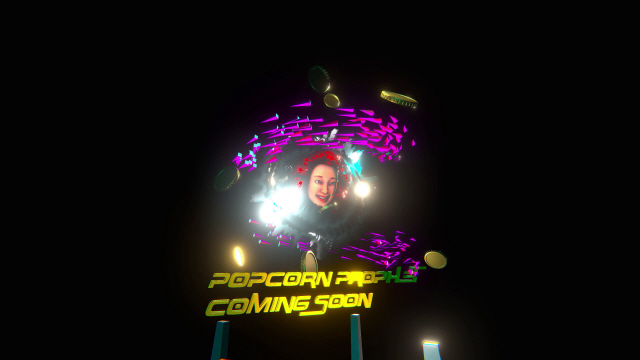
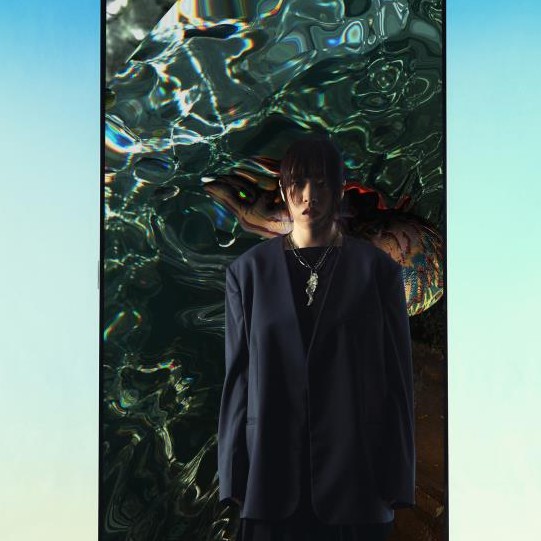
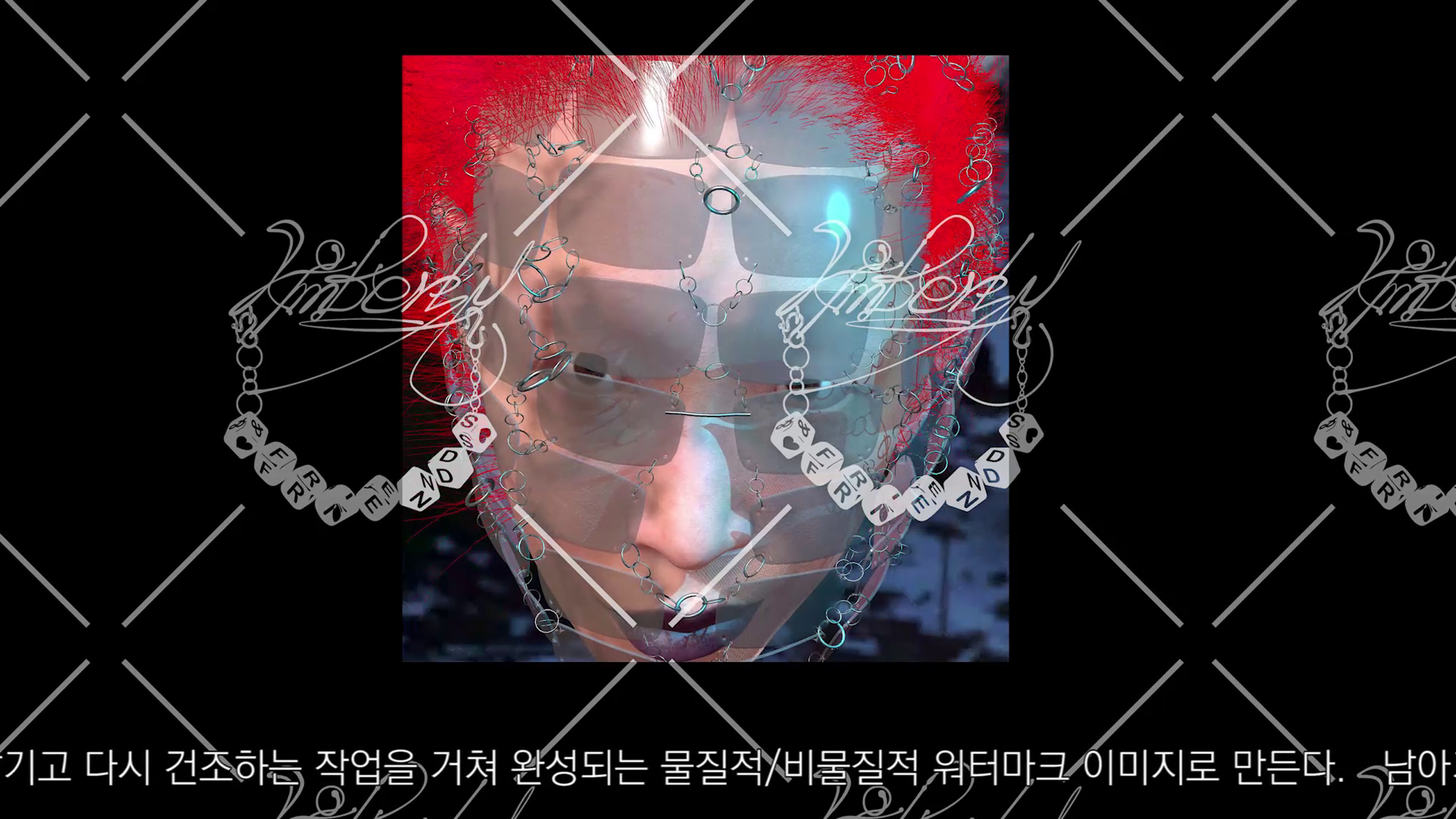
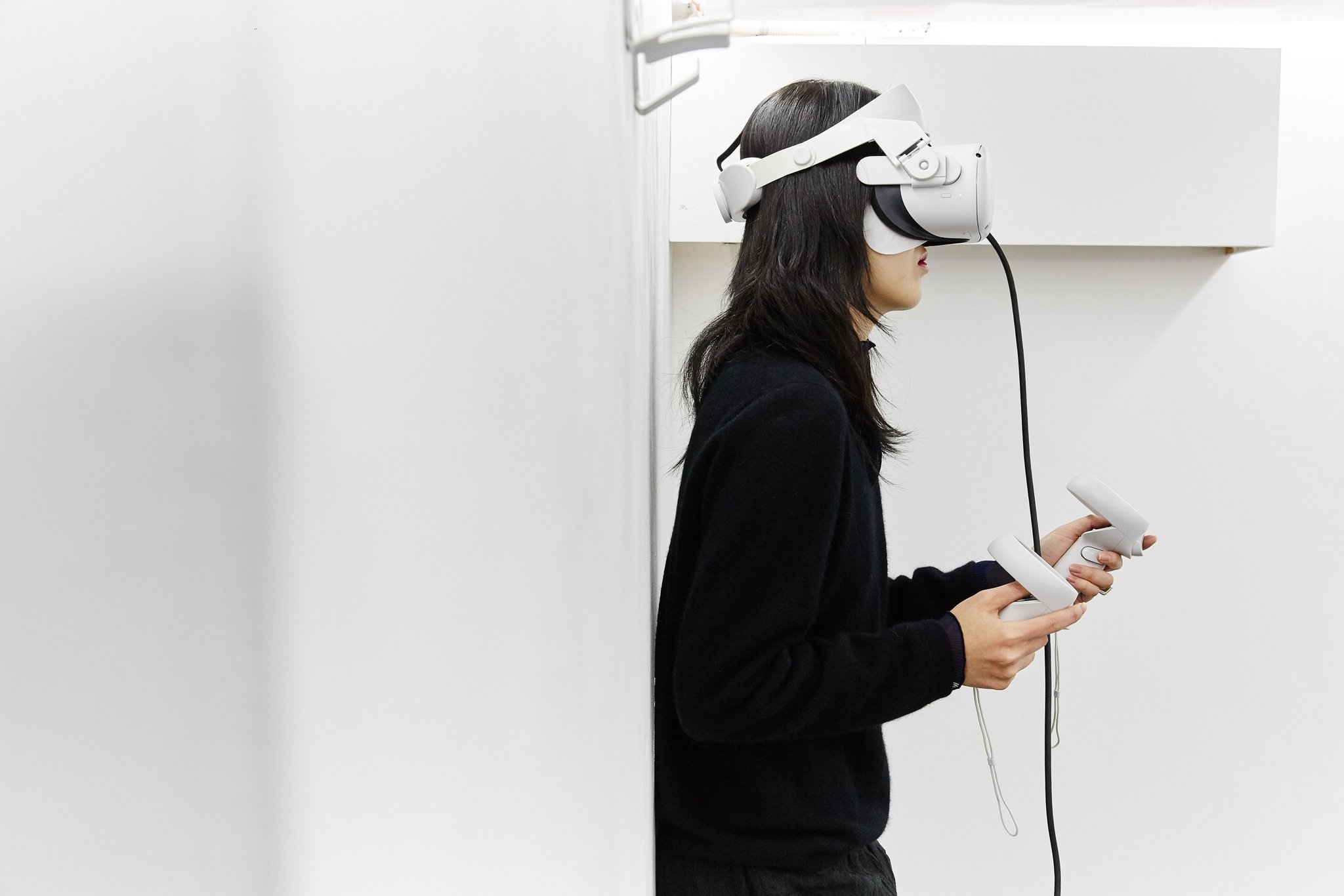
In the virtual space created by Eunsol Lee, Kimberly Lee exists
solely as a head, without a body. This floating being, defying gravity, spends
time in fountains and bathtubs, draws magic circles, or becomes embroiled in
mysterious events, thus forming a kind of multiverse. Within the designated
environment, Kimberly functions as an independent and complete entity. The
artist continues to develop a series of projects to sustain Kimberly’s
existence and imbue her with vitality. However, claiming Kimberly is complete
in herself is fundamentally contradictory. If we consider physical reality as
the body, and virtuality as the head, then Kimberly cannot function
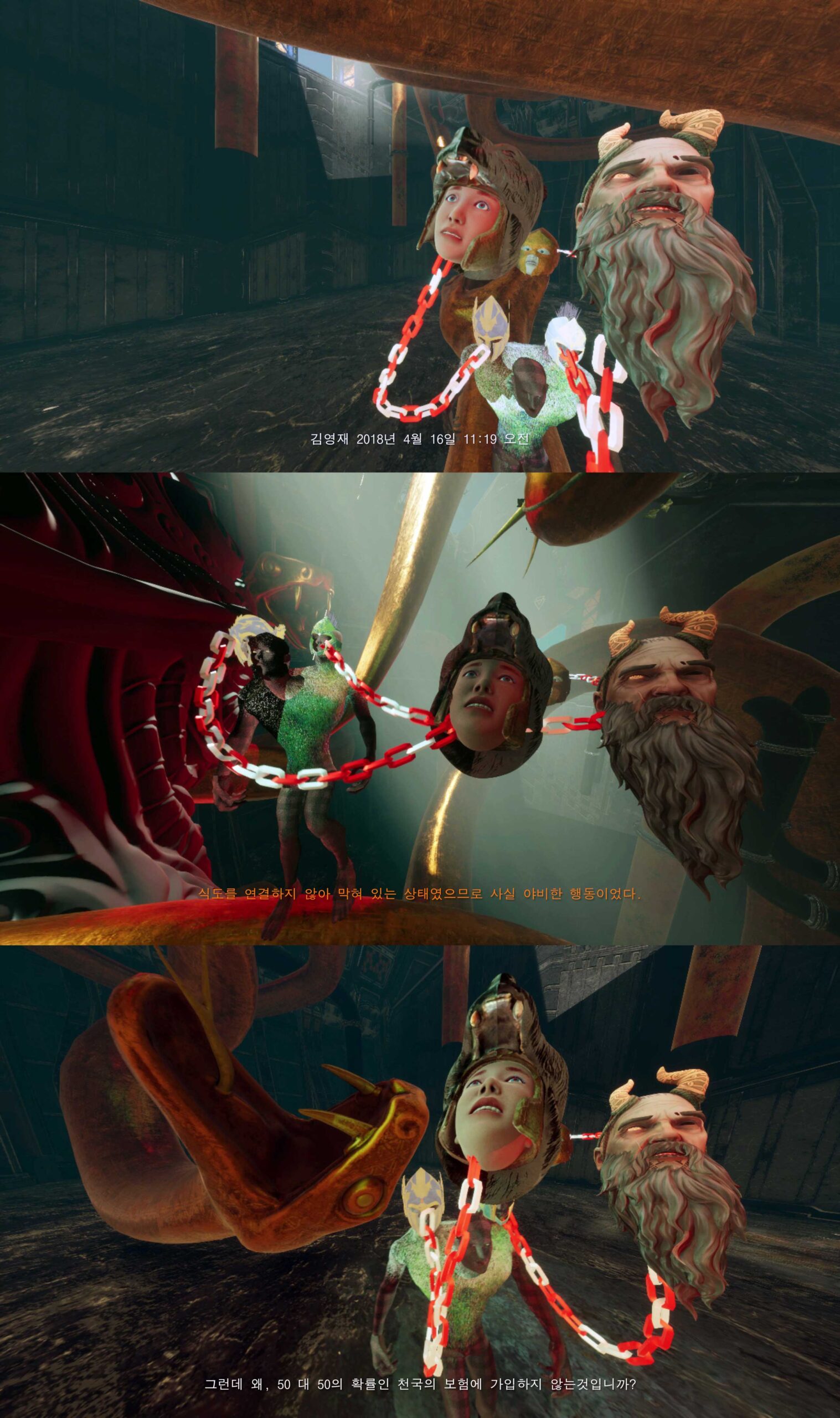
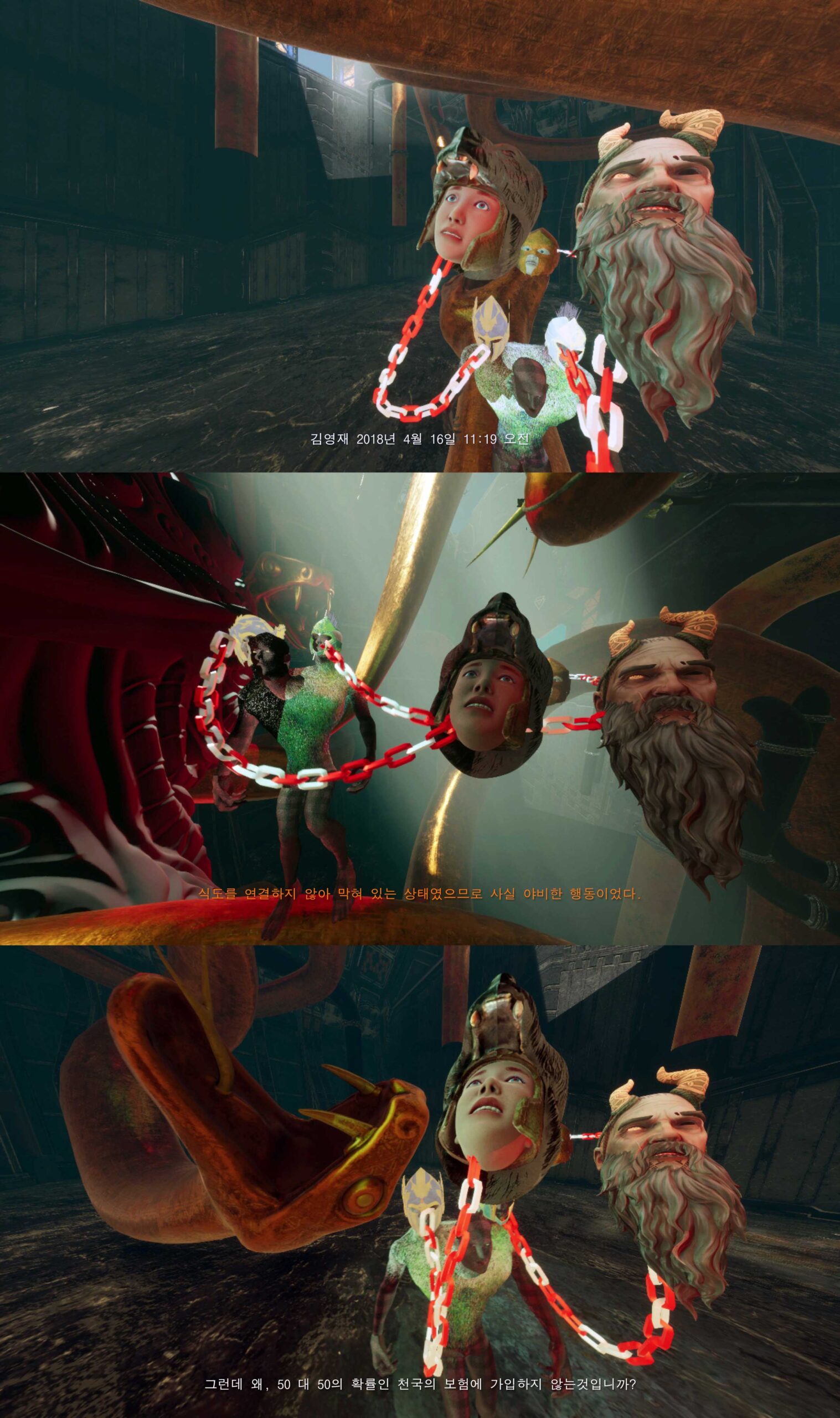
autonomously. In the video work I want to be a cephalopod (2021),
Eunsol Lee metaphorically explores Kimberly’s existence through a dialogue
between two head-only characters about soul and body. The video references
traditional soul theories and the controversial experiments of Robert Joseph
White, who conducted head transplants on monkeys, to discuss the relationship
between the head and the body.
Today, intangible assets such as Bitcoin and NFTs command high
value and influence real-world economies, while the metaverse allows people to
perceive physical and virtual infrastructures as equals. These phenomena are
not unlike many historical instances where unprovable entities were imbued with
sanctity and made real. Kimberly is now preparing to optimize herself for
survival and adaptability across diverse platforms. And I reflect on the
strange lightness of the weight of a single head.