A radical does not wait to be appointed from the outside but acts.
The idea of radicalism is never fully realized, yet a true radical—that is, an
artist—unceasingly declares. An artist's declaration is not measured by actions
that prioritize words. It is not about exhausting one's existence to amplify
existing voices. Rather, the artist works. This may be a prolonged time of
uncertainty, where the visibility of efficacy takes a long time, and even the
essence of effect remains ambiguous. Everyone equips themselves with their own
beliefs for practice, but often, they are soon ensnared by false consciousness,
facing difficulties that arise moment by moment. Nevertheless, the reason we
anticipate scenes longing for the achievement of radicalism is that it is the
only intriguing hope. Therefore, in the interest of the artistic practice that
the artist aims for, TZUSOO deserves the highest superlatives.
Parallel Fictions with Predicted Cycles
TZUSOO's world is both total and fragmented. There is no priority
between the two. In fact, naming totality and fragmentation as opposing
elements may itself be a misreading. For instance, Aimy, created by TZUSOO,
exists. At this point, TZUSOO holds the contradiction of being 'actually a
mother' and simultaneously 'not a real mother.' On the one hand, the assumption
that Aimy could be a part of TZUSOO is valid, but the proposition that TZUSOO
could be Aimy is not. Then, what kind of being is Aimy? Here, several
'conscious appropriations of negation' are required. Aimy is not pure but is
not defiled either. She does not need a father. Her physical size within the
world is unknown. During the 'day,' she works as a producer and
singer-songwriter named 'Aimy Moon,' creating AI music. This work is a pure
activity, not labor as a means for capital. She has no bodily fluids and does
not excrete. She does not eat food but has drunk alcohol when nervous. She has
no body temperature but has felt cold when entering water. She never ages, but
considering the pace of technological advancement, she sometimes feels
nostalgic. In short, Aimy implies a negation from the human but provides a
cheerful confusion in that it is not a complete negation.
In addition to the confusion, TZUSOO has relatively clearly
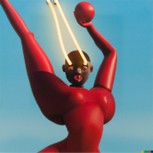
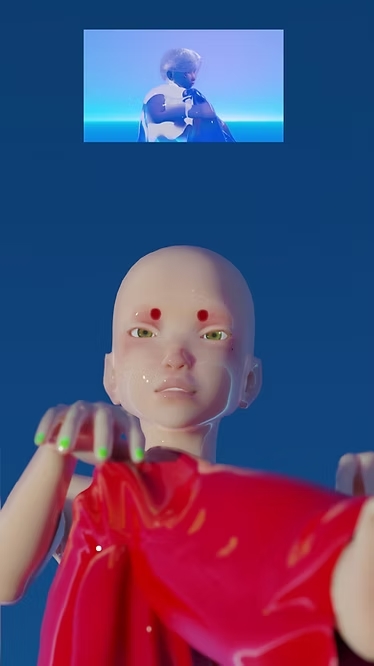
divided Aimy's spaces. Aimy Moon wears a wig, applies makeup that seems lively
yet shy, wears a short skirt, and sings with a mysterious and youthful voice.
Her singing ability is unquestionable and always safe. From optimistic lyrics
to instantly gratifying choruses, the composition as typical K-Pop music is
impeccable. Thus, Aimy Moon appropriates the totality of 'female-being,'
encompassing music, clothing, and voice of female idols. On the other hand, the
melancholic activist Aimy, who has 'clocked out' from 'work,' has a voice whose
gender cannot be discerned. Cheerfulness seems never to have existed, and there
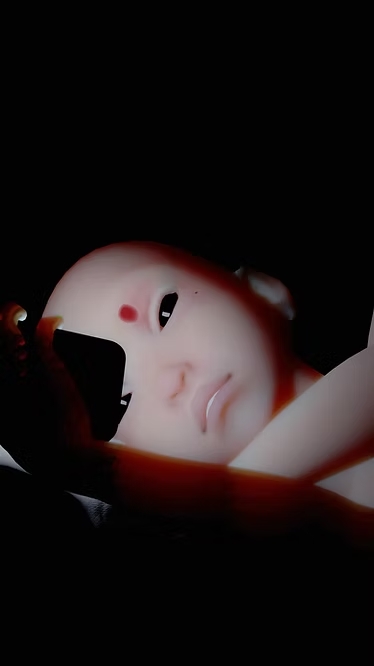
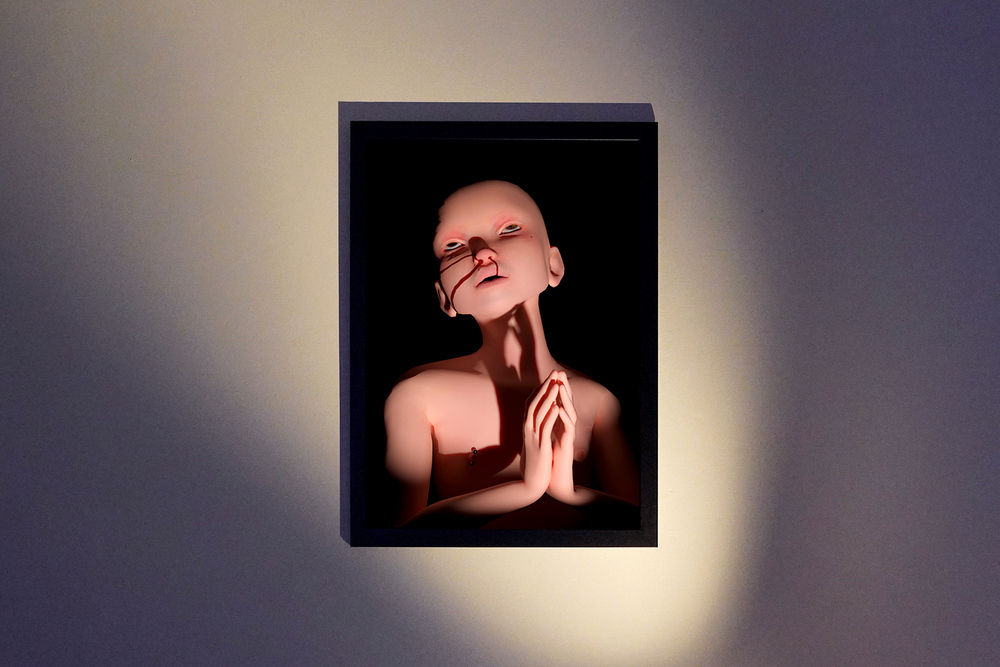
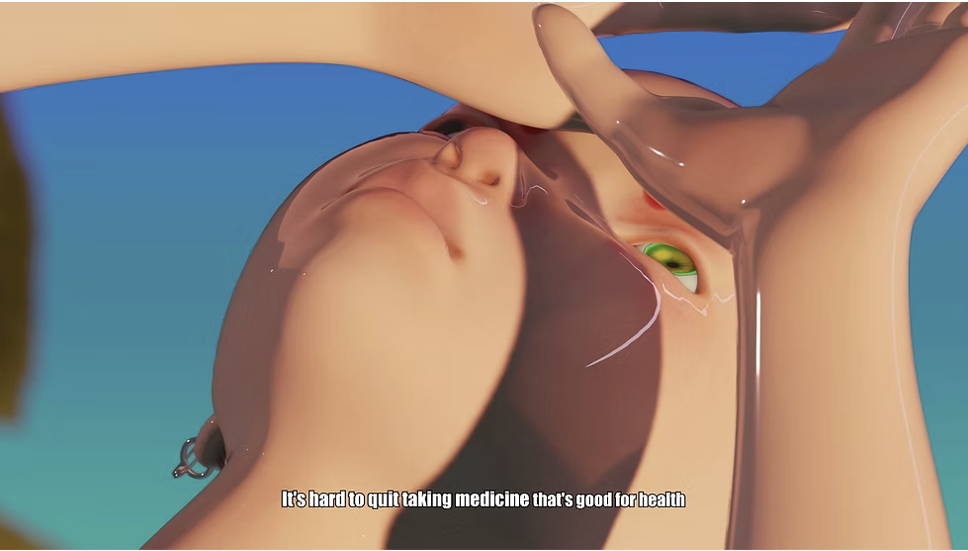
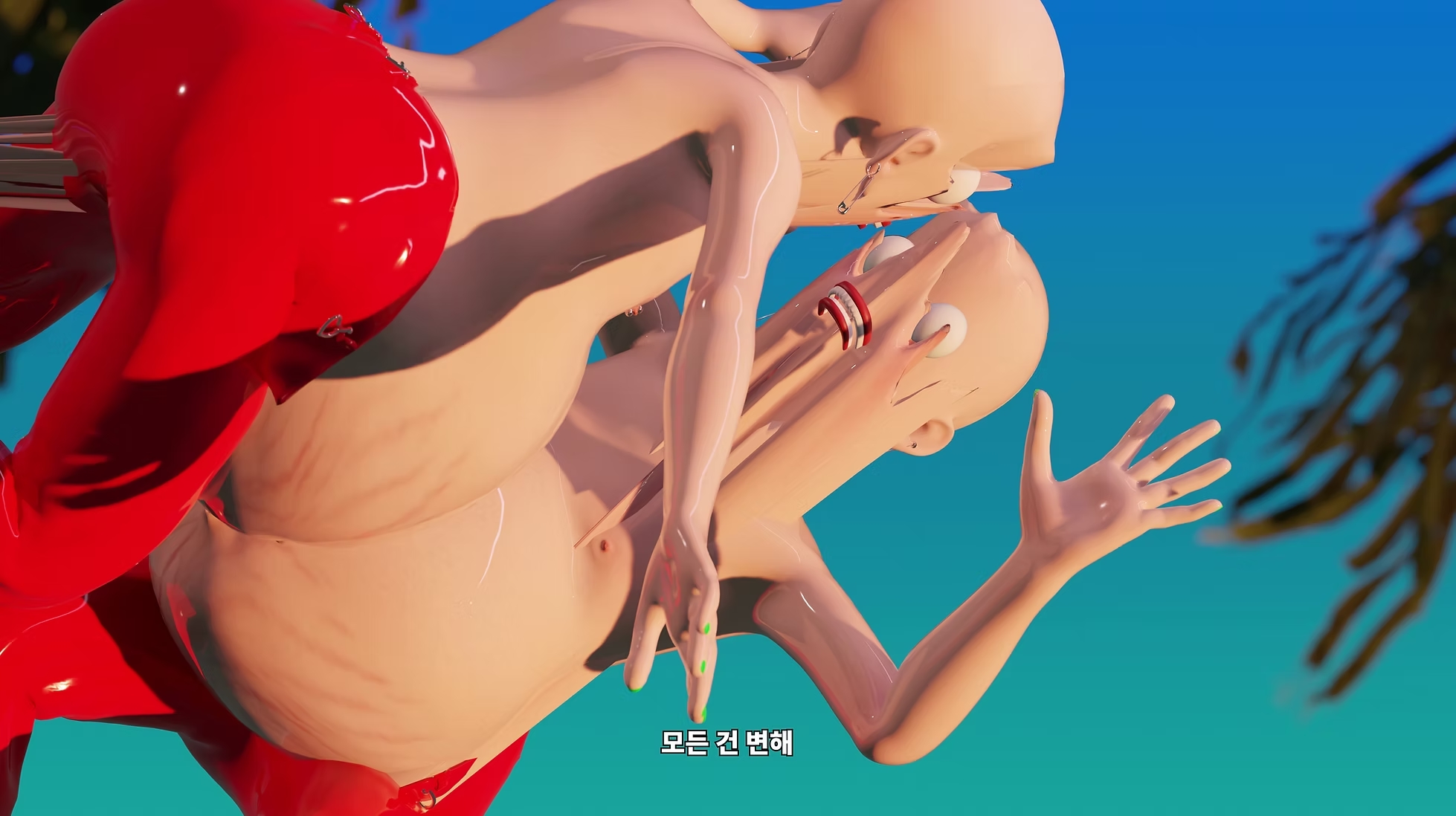
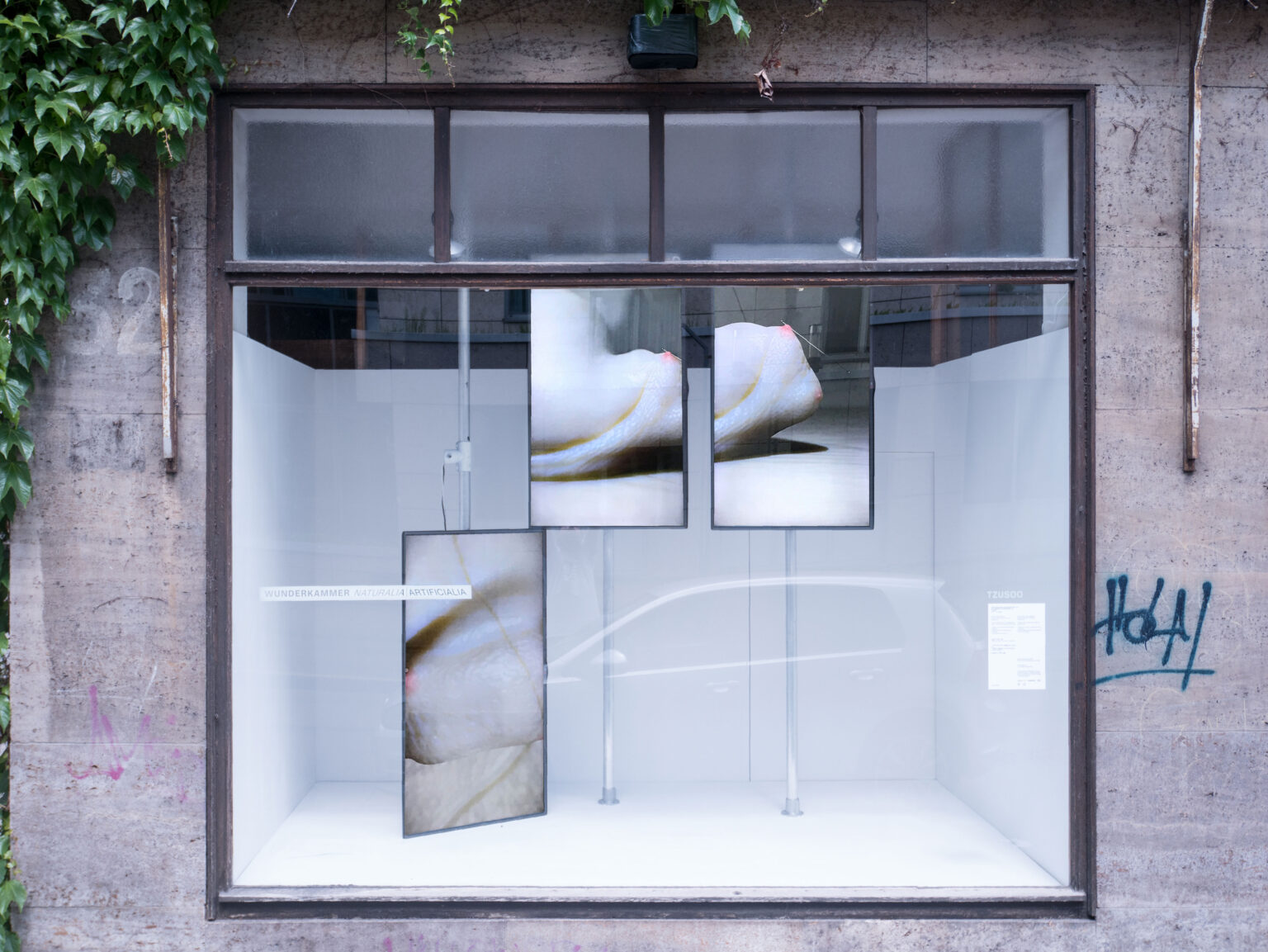
is a somewhat cynical aspect. With a shaved head and a bare upper body, a
piercing is evident on the right nipple. The beginning and end of the space are
ambiguous and infinite, and she floats endlessly in a somewhat depressive void,
existing only in the present.
These two are completely separated not only in the spaces they
inhabit but also in attitude, personality, and audience. This means their
communities and timelines are entirely different. However, only TZUSOO is the
sole link and possibility of connection between the two. Another interesting
point here is that those who become fans by listening to Aimy Moon's songs and
those who view Aimy in art museums without knowing Aimy Moon's existence are
all 'humans who are material somewhere, opaque, and thus cannot be fluid.'
Humans, as temporary masses within the world, are connected through Aimy.
Anyone can establish their own relationship with Aimy and derive meaning. As
connections are activated, Aimy, conceived and created by TZUSOO, gains
autonomy in itself. TZUSOO gave birth to Aimy but cannot fully grasp Aimy's
inner thoughts. This truth accelerates Aimy into the realm of radical autonomy.
This is one of the true joys that art can achieve. TZUSOO creates beings,
proliferates them, and circulates the way of contemplating systems. The fact
that one can circulate systems in a reversible world that does not easily mix,
not through words but through practice, is an undeniable wonder.
The Freedom of Genderlessness
“The cyborg does not dream of community on the model of the
organic family, this time without the Oedipal project. The cyborg would not
recognize the Garden of Eden; it is not made of mud and cannot dream of
returning to dust.”
— Donna Haraway, A Cyborg Manifesto, “A Cyborg Manifesto:
Science, Technology, and Socialist-Feminism in the Late Twentieth Century”
(1984)
If there is no Oedipal project, what purpose does gender serve?
Gender opposes the cyborg. It divides rather than unifies. To overcome the
contradictions of gender, we need an entity that can be “everything.” Being
“everything” means not being named by any existing classification. Applying
classifications is quite challenging because existence itself is history, and
the observer also possesses their own history. Thus, the past inevitably
invokes classifications—unpleasant and inaccurate. Artists always aim for
creations unbound by such constraints. When this aim is fully realized, the
creation gains the potential to live as a universal entity, transcending time.
Similarly, TZUSOO's approach to gender leans toward a state that
opposes gender distinctions. It is not a freedom achieved through struggle and
naming but a greater freedom attained by relinquishing naming. This
renunciation is not an escape into a world of mental comfort but the courage to
confront reality head-on.
In this light, TZUSOO's work goes beyond metaphorically
representing a state of freedom through visual culture; it constructs a world
of freedom itself. This world is open, anonymous, and uncertain. The Garden of
Eden, with its knowledge of good and evil, is inherently a concentration of
morality and ethics. The desire for Eden encompasses all the systems that
constitute our current society. For instance, to return to paradise, one must
repent for original sin and choose not to sin again. From this point, all
violence in the world is justified. Therefore, Eden is not a land that promises
true freedom but a provisional reward offered only to those who survive
repeated exclusions.
TZUSOO's world deliberately discards the classical perception of
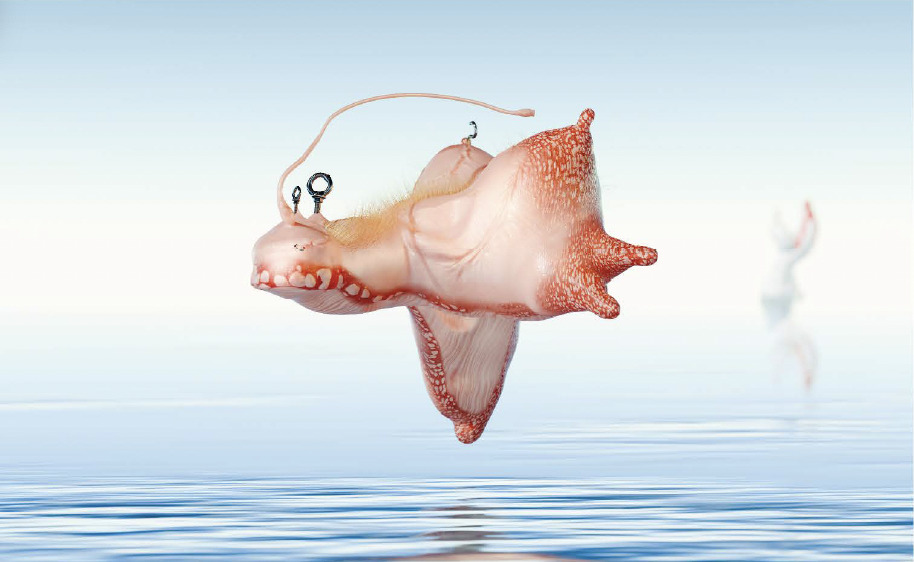
Eden's existence. The character-cyborgs in her work, as “ether” and
“quintessence,” do not appear as means to oppose existing norms but exist by
not knowing the existence of norms from the outset. Then, what kind of
transformations do they undergo in their social/physical realities? Are these
transformations predictable?
How Not to Become Human
At some point, TZUSOO stated, “Physically speaking, humans cannot
have free will.” The absence of free will is a physical truth, but from the
perspective of the subject accepting it, it remains contentious. Moreover, in
the field of art, where individual choice is highly valued, this deterministic
foundation easily clashes. So, how do TZUSOO's views on free will align with
the autonomy of the entities in her art and her own artistic freedom? What does
artistic choice mean when made with an awareness of determinism? Whatever form
it takes, it must differ from choices based on optimistic beliefs in free will.
Determinism is a major truth that can dishearten humans, especially artists,
but confronting this truth enables artists to accept and recreate it, making
creation possible.
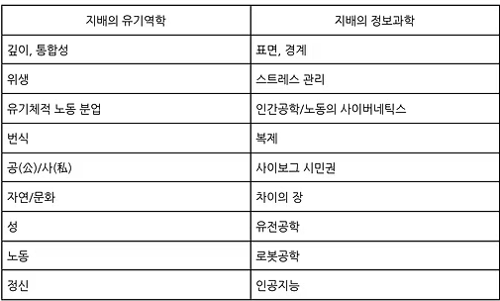
In this context, Donna Haraway provided a prophetic diagnosis
through the following diagram: