An Eroded Past, A Sedimented Future
Not long ago, I came across news that the seed vault located in the Arctic had
been flooded due to an unusual heatwave. Meanwhile, in the Alps, as the eternal
snow melts, debris long buried within is beginning to surface. While climate
change has made it possible to discover legacies of the past, from a
preservation standpoint, it also presents another kind of threat. When
something that has long been frozen in glacial ice is suddenly exposed to
sunlight at room temperature, it deteriorates rapidly. Such unexpected
phenomena made me ponder what should be buried and what should be excavated,
or, in the event that all of human civilization were to be reset, which point
we should choose as the basis for recovery. Given that my attempt to visit the
World Archives in 2020 was canceled due to border closures, this felt like a
symbolic moment for me, prompting me to explore how one might respond to such
signs of change.
Amid
crises such as disasters, pandemics, and conflicts between nations, this
project begins with the question: “Can an uncertain future truly be compatible
with the present?” To explore this, I looked into various preservation methods,
including visits to museum storage facilities and specimen rooms, and conducted
interviews with data managers, time capsule designers, and researchers of rare
book surrogates. From there, I identified three key preservation techniques
that reference existing forms and carried out procedures related to each.
The
first focuses on the boundary between an original and its duplicate created for
long-term storage, questioning the value of such surrogates. The second
involves observing how specimens or taxidermy works are prepared and stored,
presenting the surfaces in which the trajectories of objects are condensed. The
third examines the temporality of buried pasts and deferred futures, by
focusing on the procedures and forms encountered while observing time
capsule-related events. Perhaps, among these overlapping yet diverging backup
formats, we may be able to discover a valid clue to protect the records of the
present.
Where the World is Assembled, How We Leave Ourselves Behind
A cache refers to a temporary location or a hiding place where frequently used
data is copied. By storing data in a cache in advance, one can access it more
quickly without going through additional processes—thus avoiding the need to
recalculate values. Reflecting this functionality, selected objects were
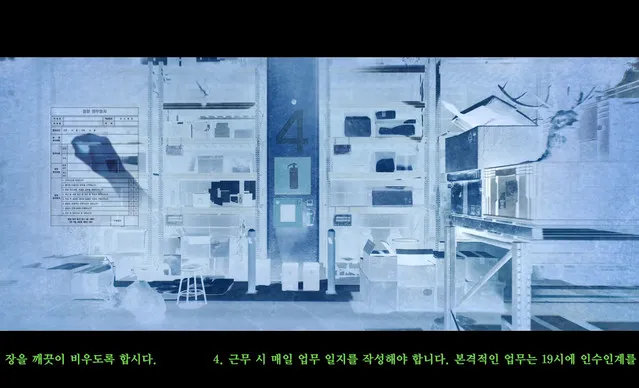
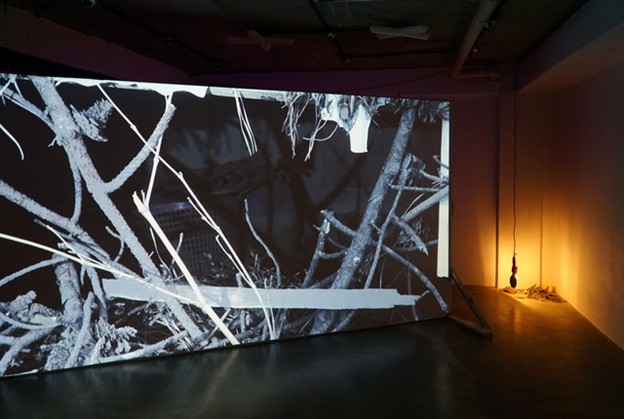
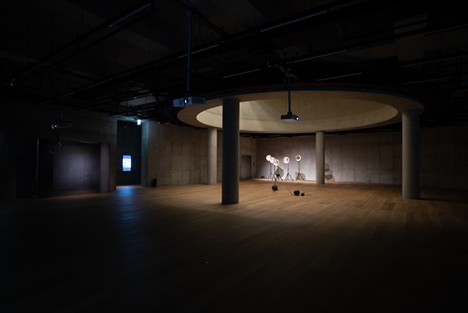
rearranged in a virtual space. The site, set up like a film set, is filled with
multiple cameras filming different corners, while the arrangement of sets,
lights, and props is exposed just as it is—raw and unfiltered. This is a
deliberate exposure of the system behind the process of constructing a scene,
rather than showing only the final outcome.
Thin,
layered temporary walls suggest the operational logic behind the backdrop,
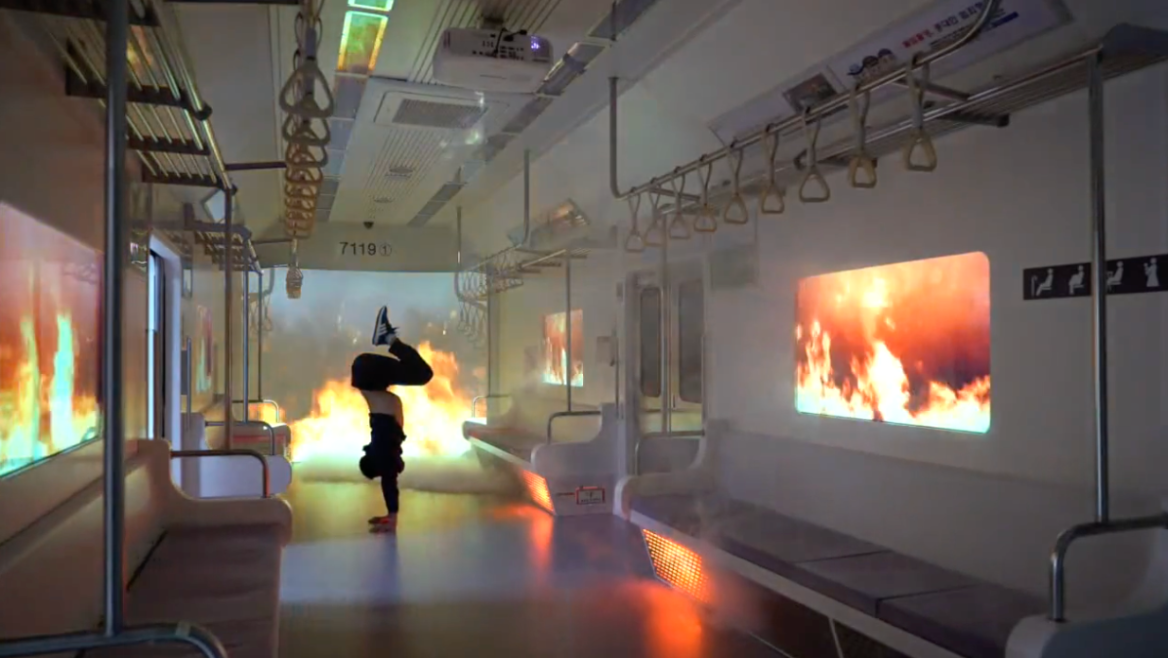
allowing for a vague inference. In this constructed archive-cum-film set, once
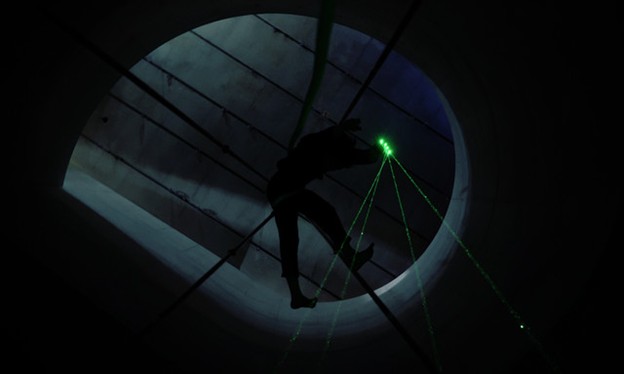
the cue is given, things that had remained still begin to vibrate. It re-enacts
a scripted scenario while revisiting relics that may one day be discovered and
prophecies that may one day be fulfilled. The elements casually arranged within
the space remain still, then move (as if alive), repeatedly switching between
states of pause and motion—tracing an invisible line somewhere between standby
and action.