Gazing Calmly at an Anxious and Precarious Life
 
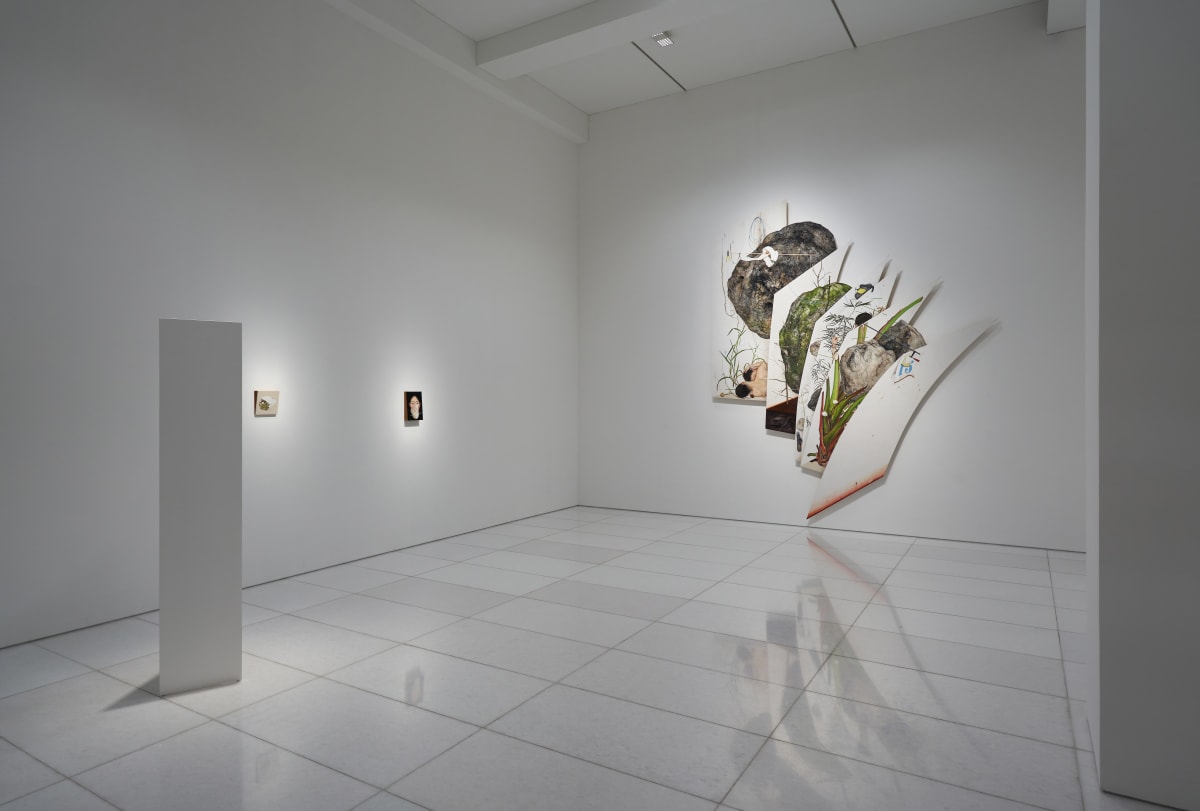
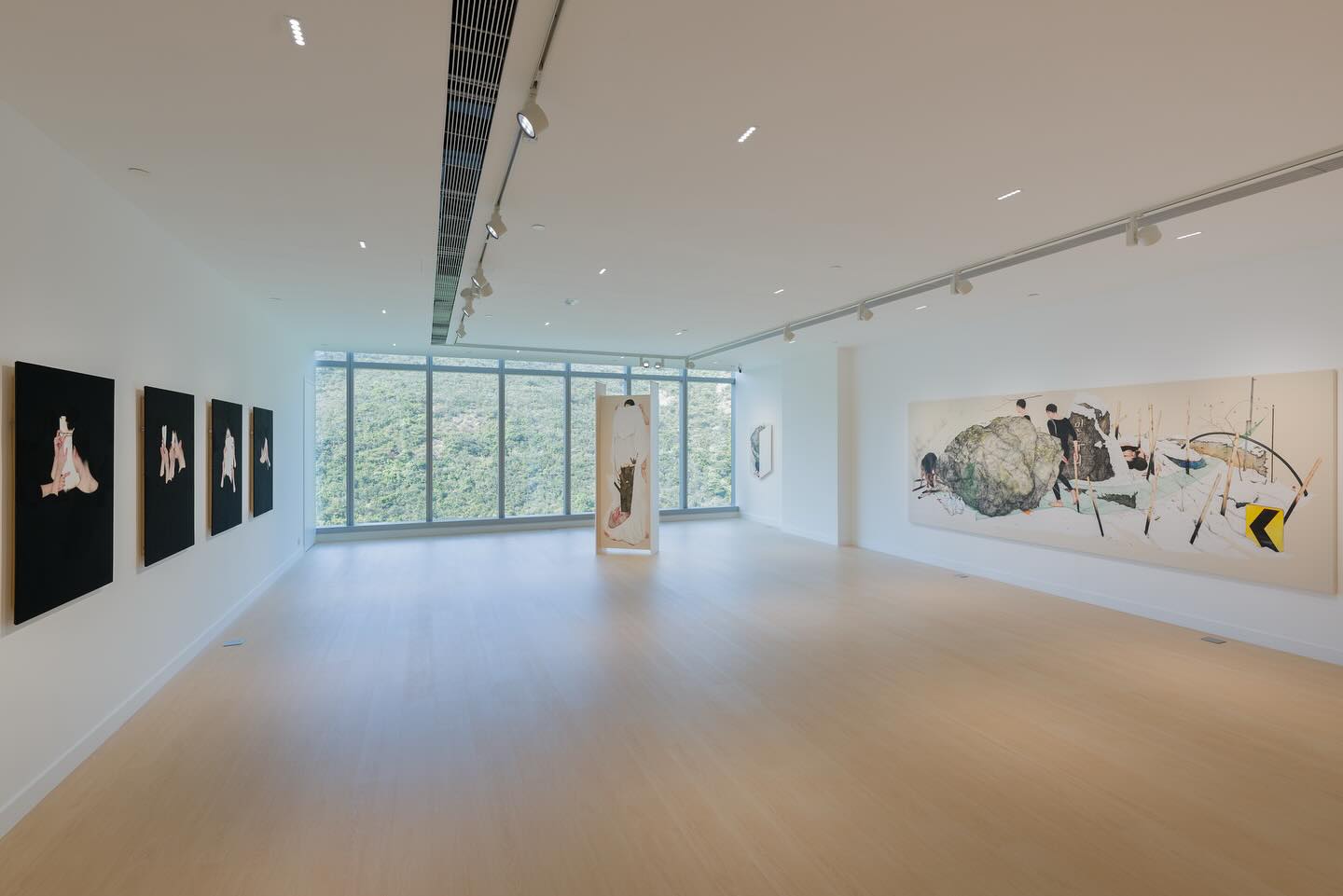
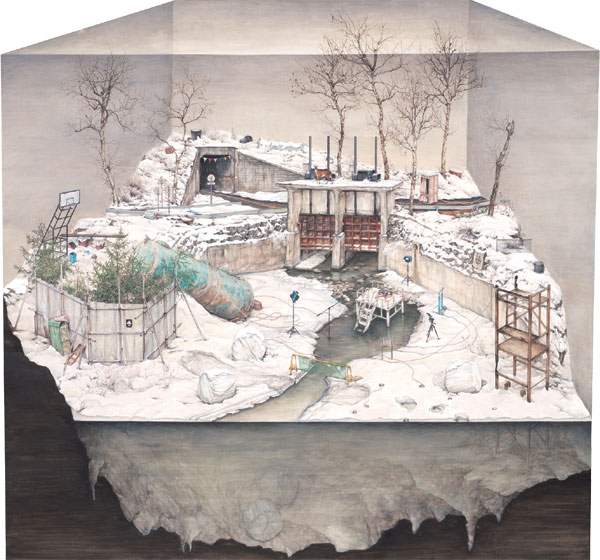
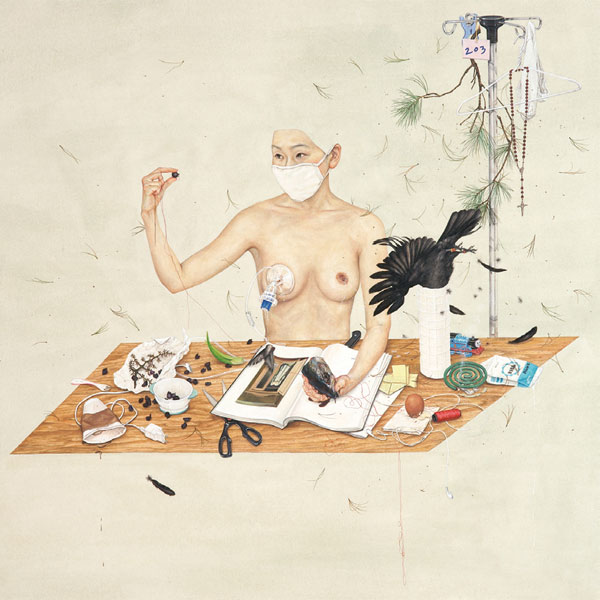
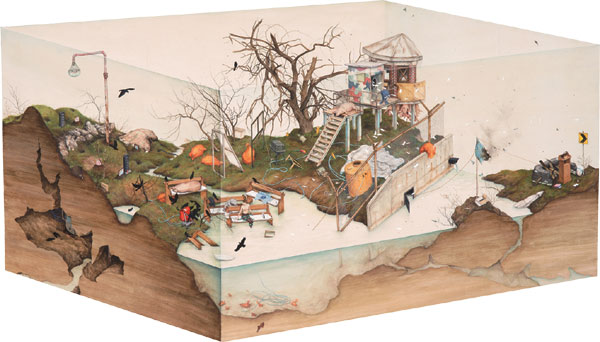
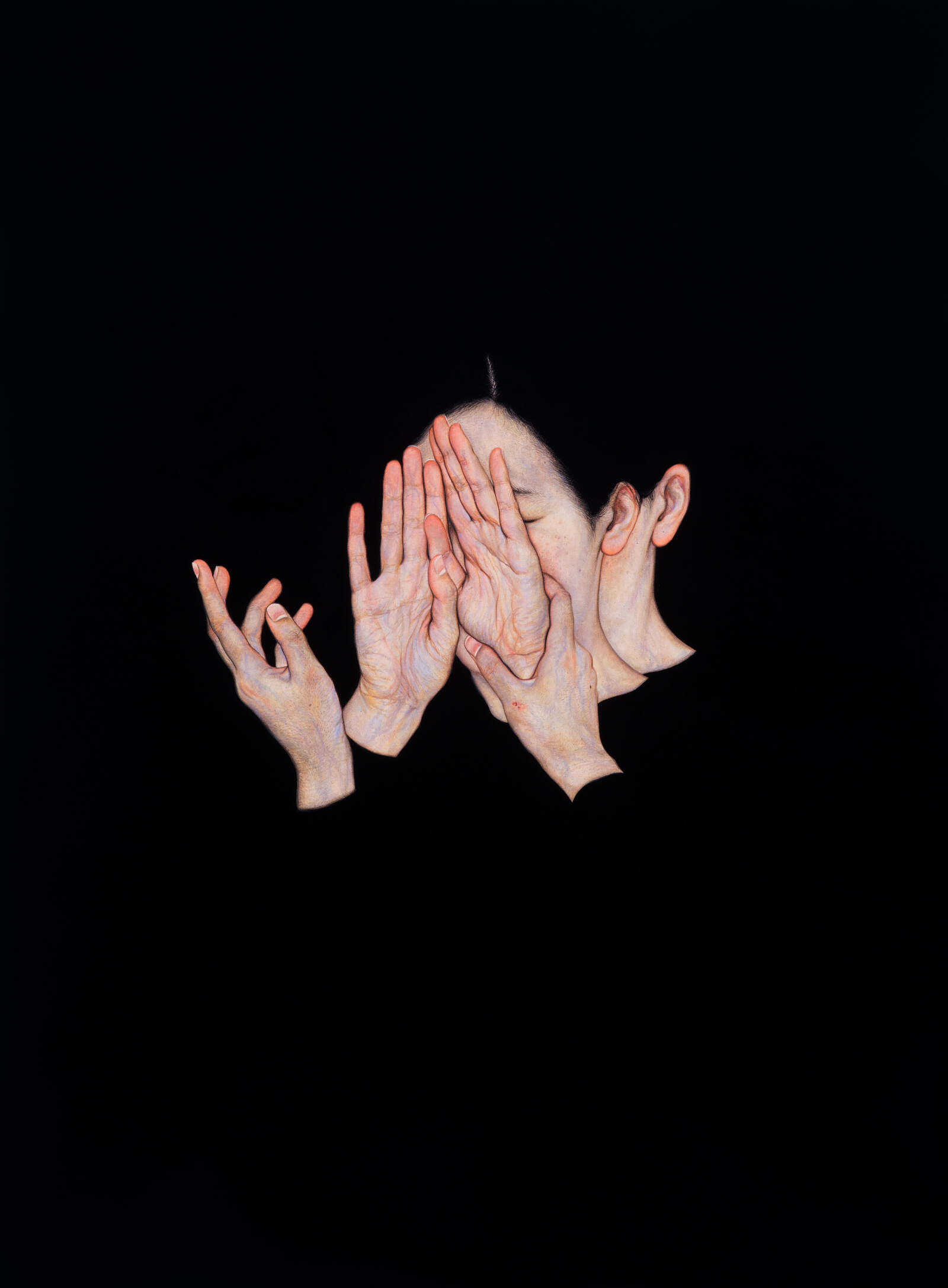
A woman with her chest exposed, wearing a mask, looks intently at a black fruit held in one hand. In her other hand lies a fish head, and attached to her chest is a breast pump. A black bird upside down and stuck into a vase, a book of René Magritte, a kitchen knife, scissors, and a mosquito coil—objects that seem unrelated are placed together in a riddle-like composition. In another painting, a construction site barrier surrounds the scene, and a woman stands on a scale with a plastic bag pulled over her head. One can also see an uprooted tree lying on its side, a trunk spilling its contents, and a stack of wooden chairs.


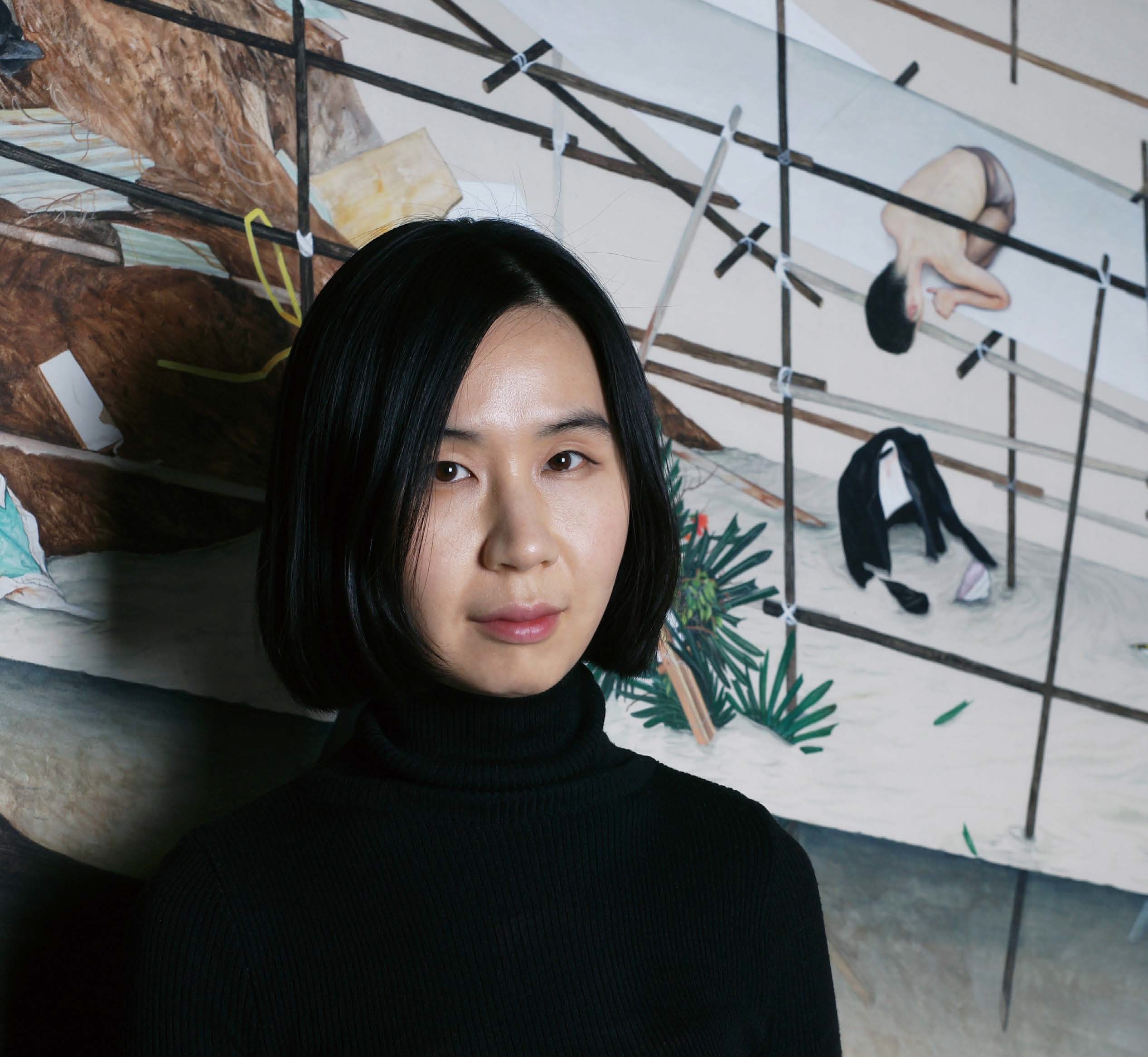
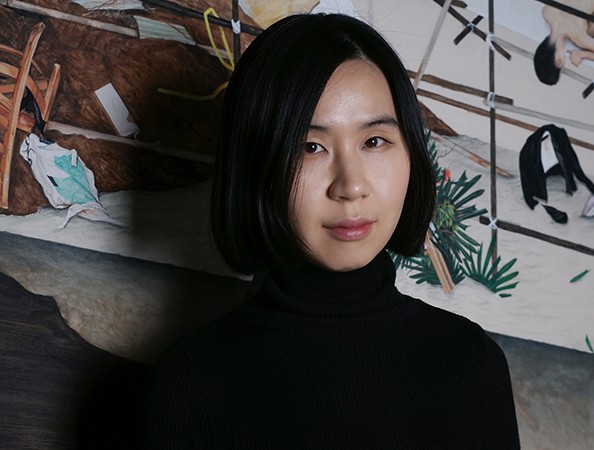
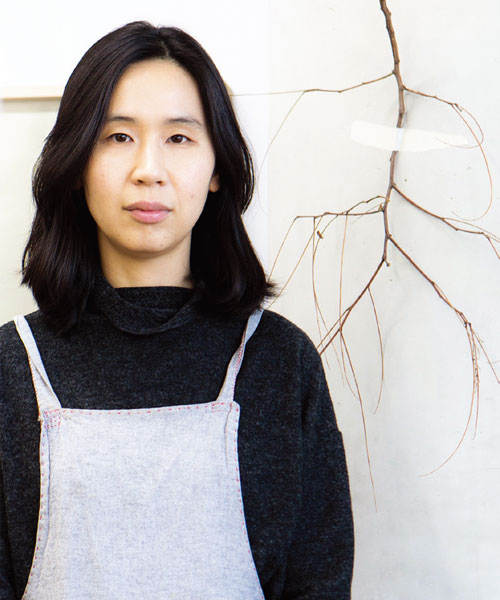
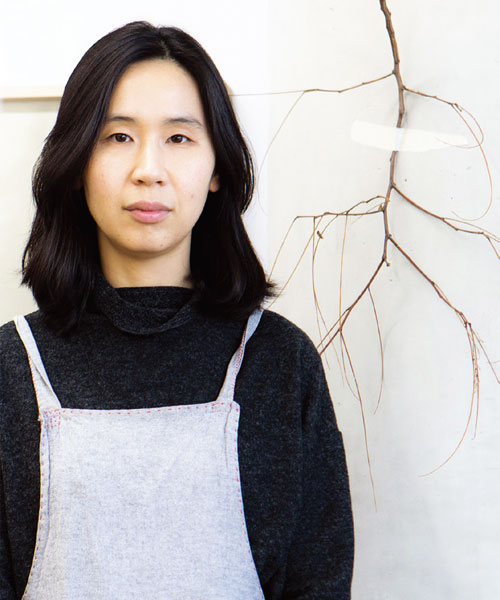
The Artist © Lee Jinju

Pouring Out the Inner Landscape
 
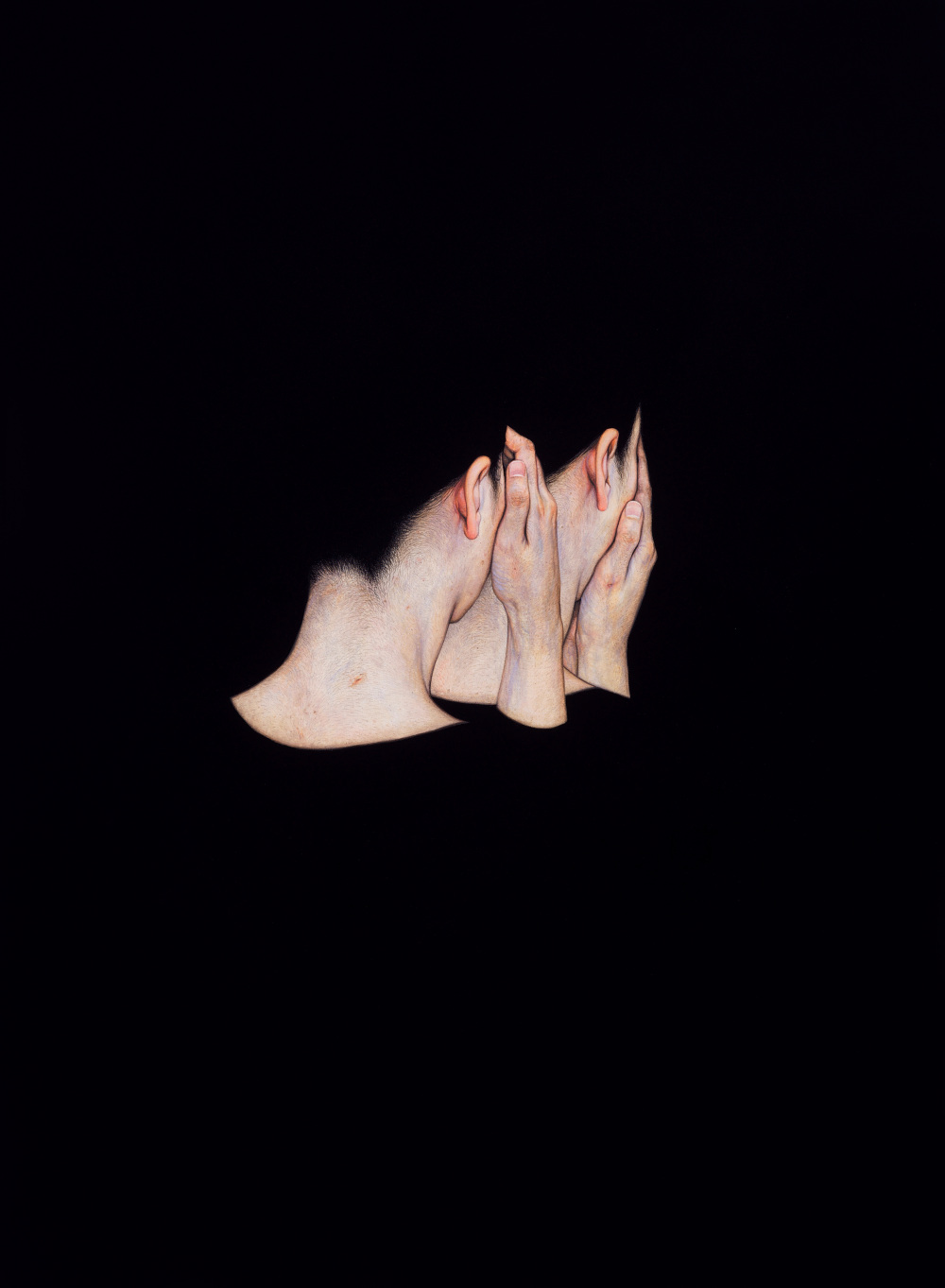
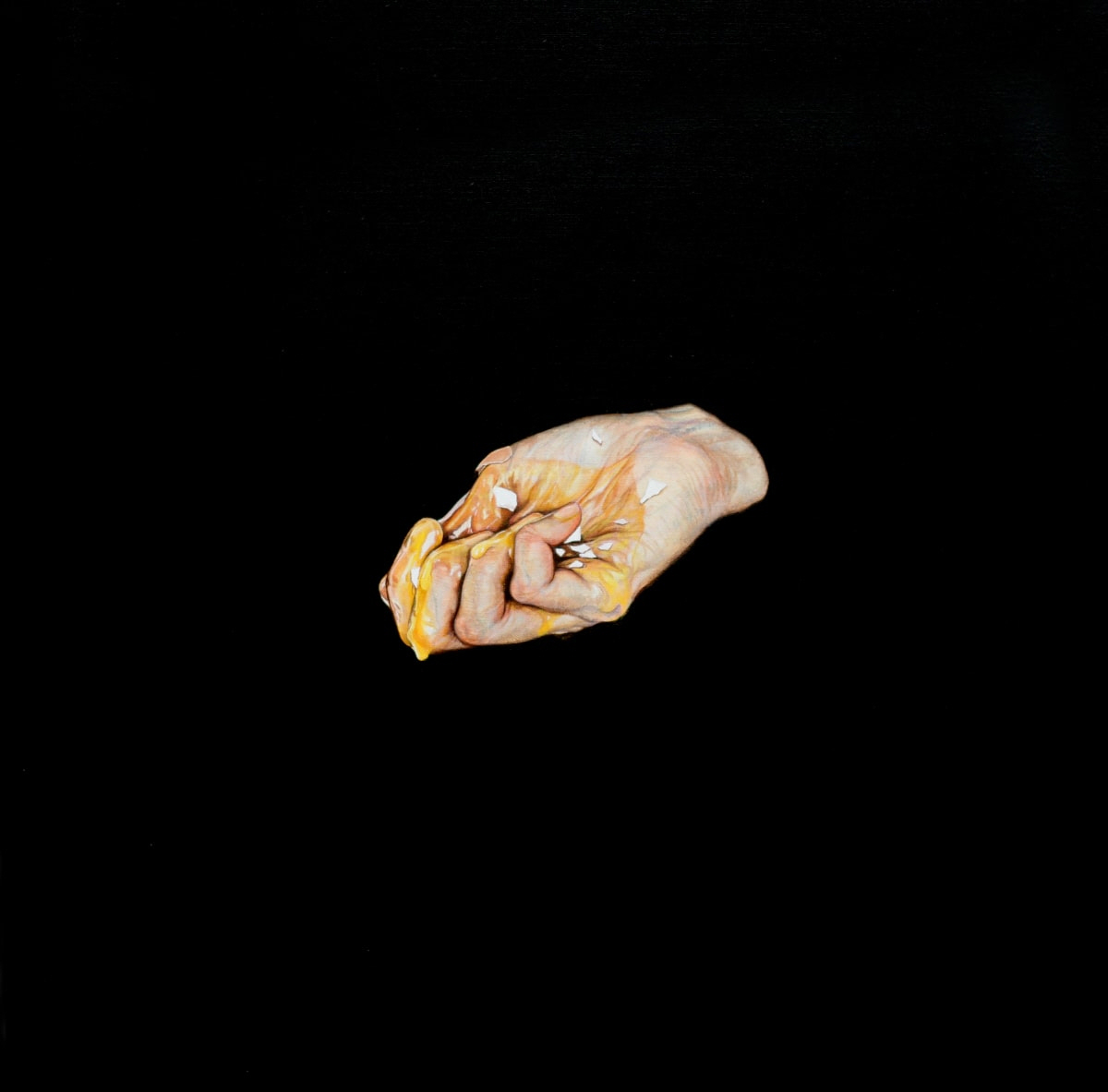
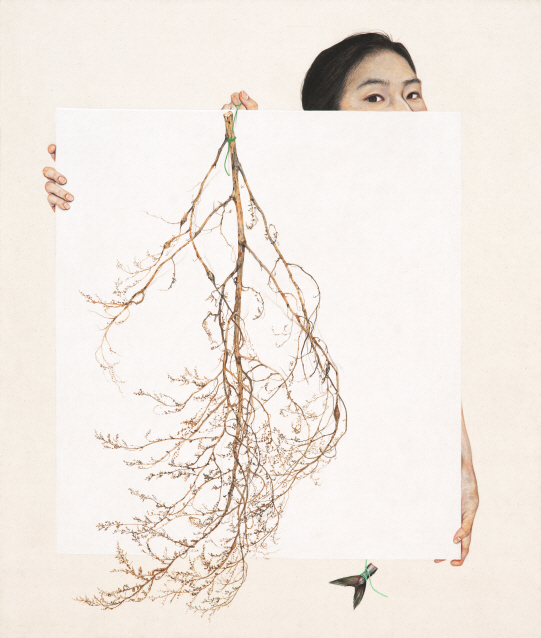
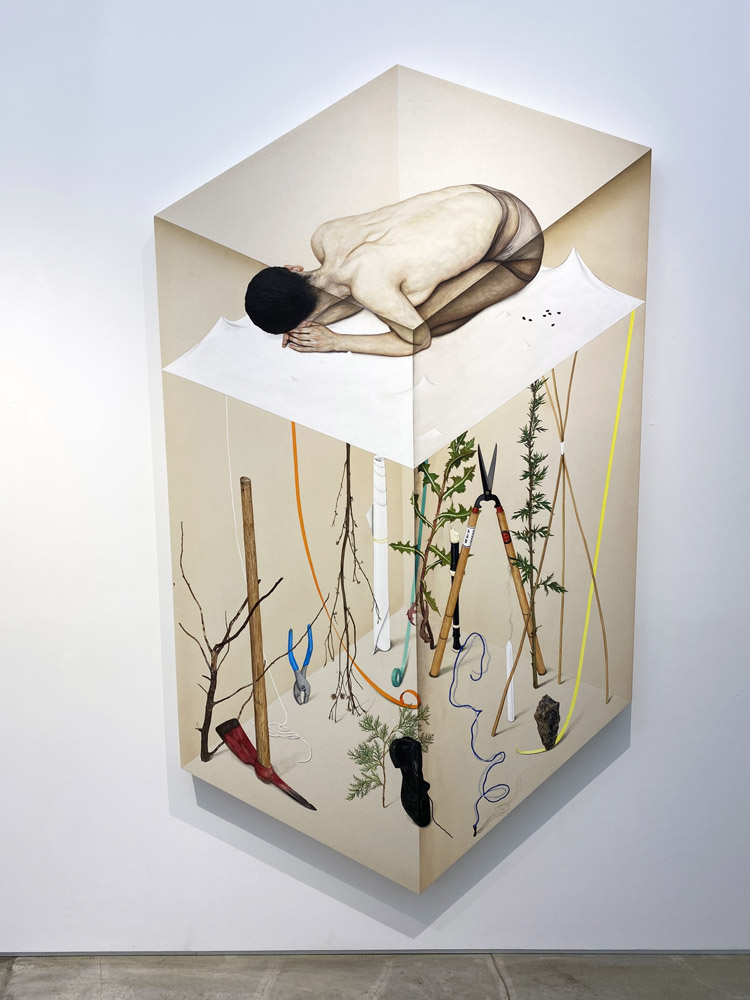
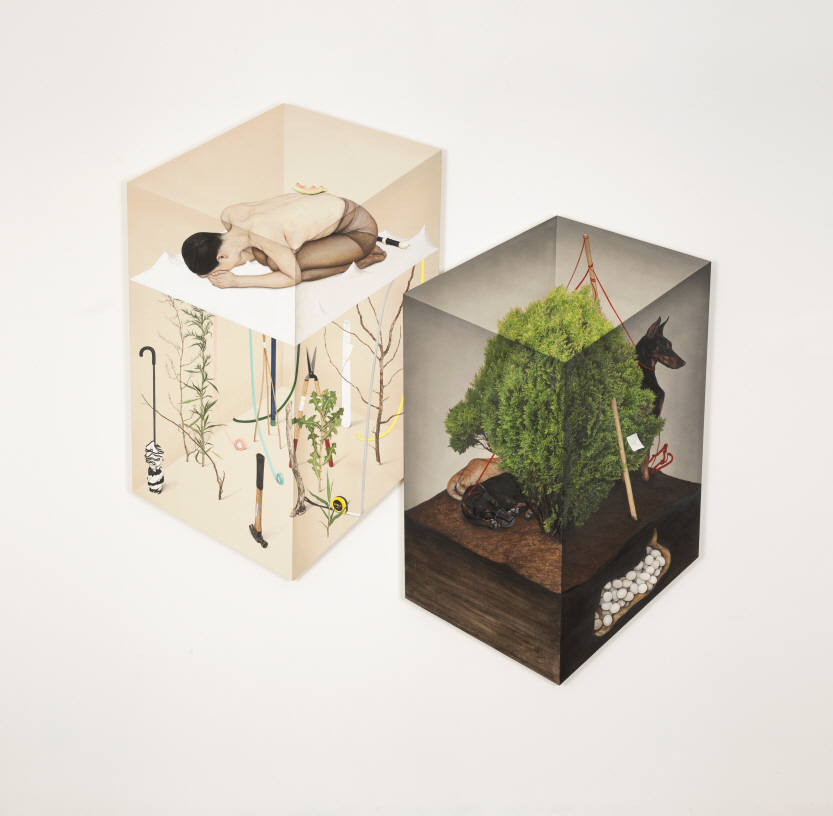
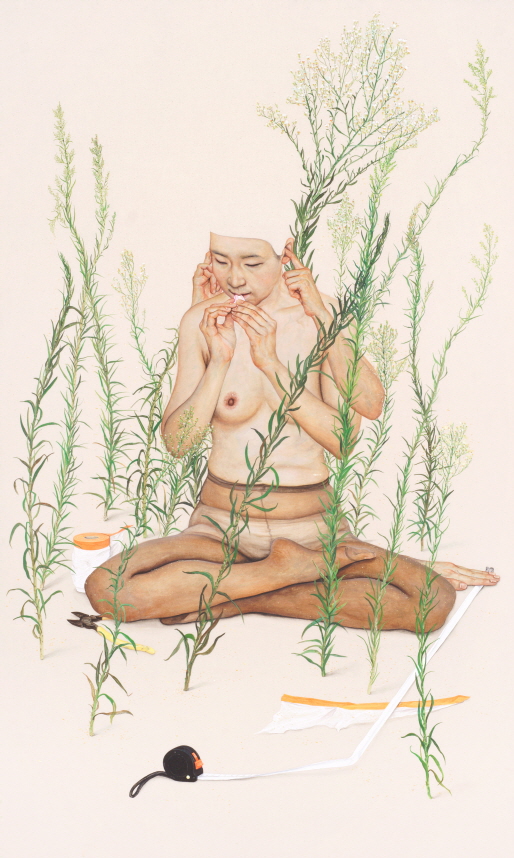
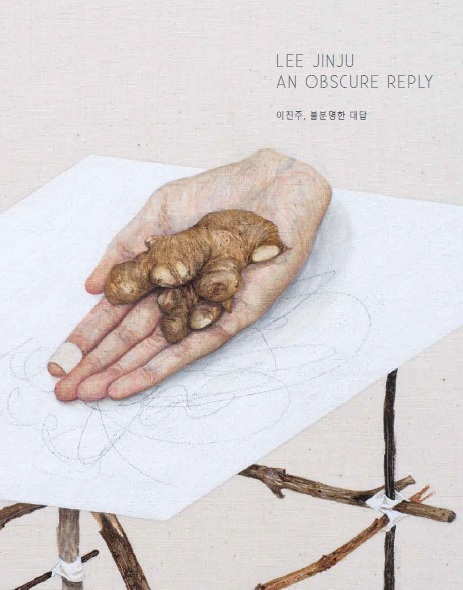
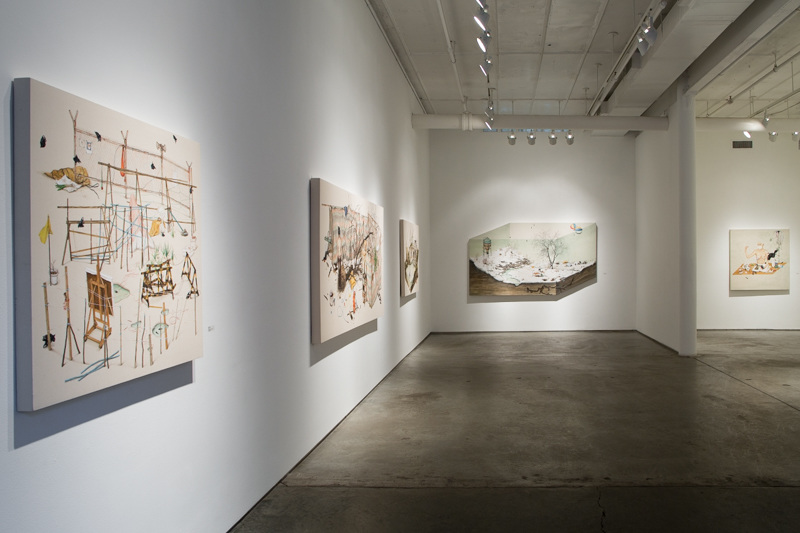
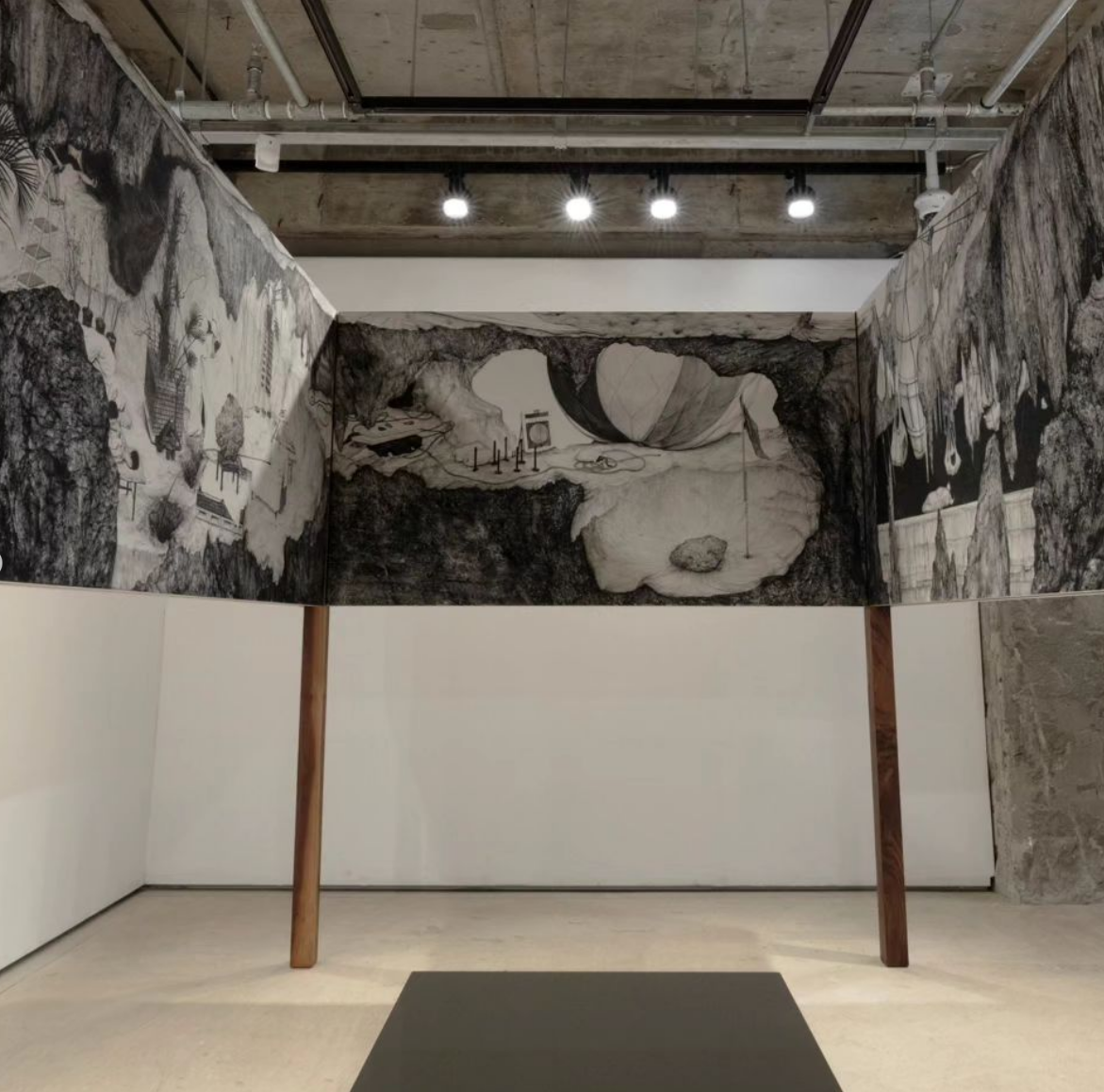
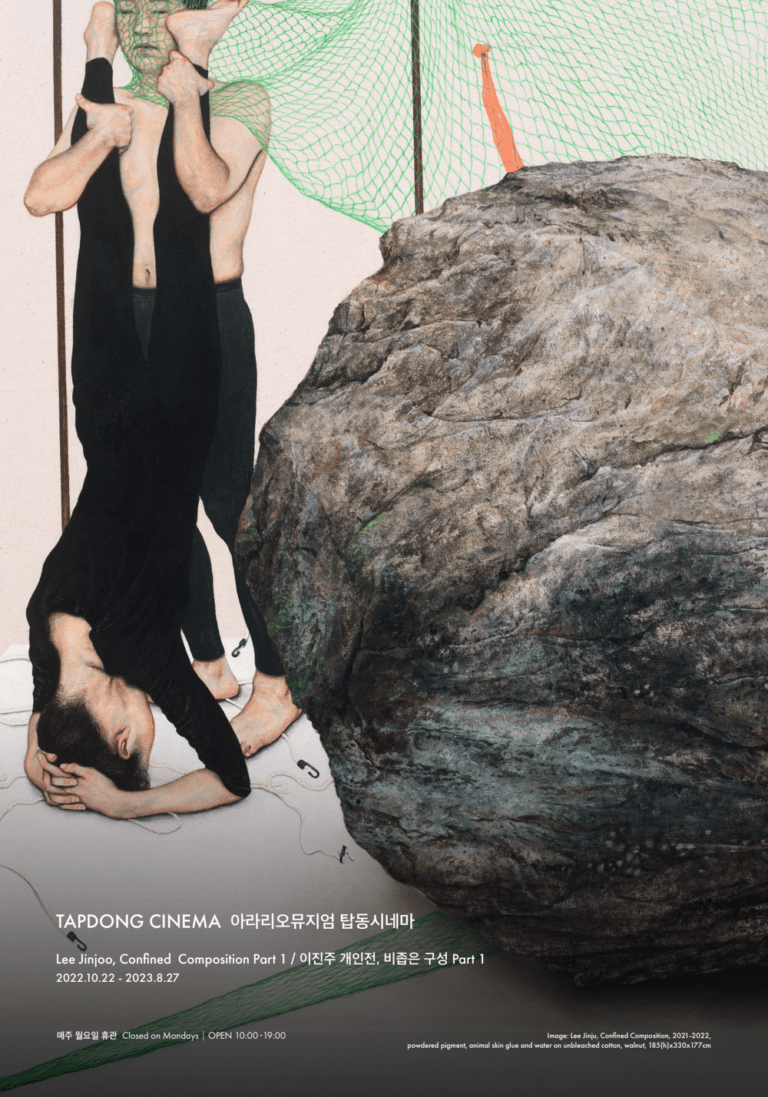
“What kind of story is this?” The paintings provoke curiosity and stimulate the viewer’s imagination. Although the subject matter can be unsettling, one is first captivated by the delicate and meticulous depiction when facing the work. Rendered with East Asian pigments and fine brushes in a clear and restrained manner, they even evoke a poetic elegance. While the meanings embedded in the paintings are multilayered, weighty, and probe deeply into the inner self, they nonetheless offer a peculiar sense of “visual pleasure.” One cannot help but think that if the same subject were painted with thick oil paint and vigorous brushstrokes, the impression would be entirely different.
 
I recently met painter Lee Jinju, who received the Excellence Prize at the SONGEUN Art Award, in Heyri Art Village in Paju. She has been working there since last spring as a resident artist at Studio White Block. Her children’s kindergarten and her home are also nearby. Around 4:30 p.m., the artist’s children, aged seven and five, entered the studio. How does she manage to balance her work—so persistently probing the inner self—with the daily life of caring for young children?
 
“As soon as my first child reached one hundred days, I moved into the Nanji Art Studio with a baby crib. I couldn’t have imagined doing it myself, but my husband, the artist Lee Jeongbae, encouraged me, saying, ‘Why do you assume you can’t? That’s exactly when you should seek out an environment where you can continue working.’ Breastfeeding, which I continued for over a year, was a special and fascinating experience for me. During that time, my body constantly felt drained and thirsty. It felt as though there was an organic circulation between me and my baby—water circulating, emotions circulating. When I was confined in a dark room for breastfeeding, it felt as though my entire body was tightly bound with wire. At that time, all kinds of images, emotions, and inspirations surged up, and I began drawing those fragmented images. As they accumulated, they condensed into narratives and began to form compositions. As the stories intertwined, the images became increasingly intricate and complex.”
 
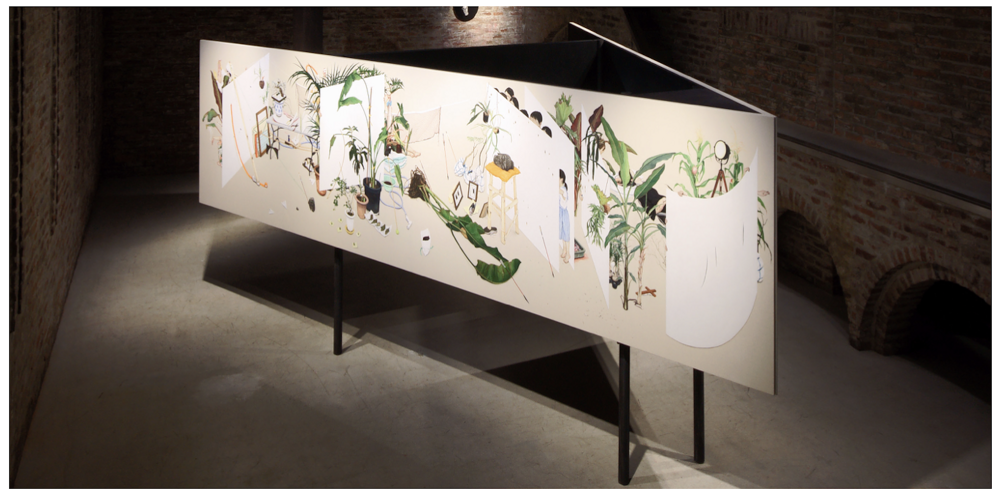
Her paintings feel unfamiliar and peculiar, with objects that seem unrelated scattered across grotesque landscapes.
 
Though rendered with precision, they do not depict scenes that could plausibly exist in reality, because they are landscapes of her mind. Many viewers ask what the paintings mean or what they symbolize.
 
“Each painting does have its own story. There are images that recur, like puddles, half-eaten apples, or overlapping red threads. I once tried to organize what each image signifies, like a kind of dictionary, but I quickly gave up. Rather than thinking about meaning while painting, I later realize, ‘Ah, perhaps it meant something like this.’ Trying to define and fix it to a single meaning felt stifling. It felt like, ‘This isn’t all there is.’ I want to avoid defining meanings as much as possible and instead allow each viewer to interpret the work as freely as they can.”


Lee Jinju, Layers of Daytime, 2014 © Lee Jinju

From her first solo exhibition in 2006, 《Patternholic》, to 《Patternholic》 in 2008, 《A Way to Remember》 in 2010, 《Evanescing, In-evanescing》 in 2011, and her New York exhibition in 2014, Lee Jinju’s solo exhibitions reveal, in their entirety, the trajectory of her psychological landscape. Entering the Department of Oriental Painting at Hongik University, she moved to Seoul from Busan and lived apart from her family; she recounts having experienced various incidents and accidents, both directly and indirectly, in her twenties.
 
“My university friends were suddenly killed in random attacks or encountered violent robberies, and there was even a time when someone tried to break into the small room where I lived, leaving me trembling in fear. But I couldn’t just give everything up and return home, so I had to endure and survive here somehow.”
 
In her first solo exhibition in 2006, she presented only the ornate patterns of women’s clothing.
 
“At the time, as I was going through various incidents and accidents, I felt that I could not endure unless I poured out my emotions and became completely immersed, so I painted with the sole determination to survive. Previously, I focused on figures, but then I concealed the physical form within patterns, wrapping it up. It felt like hiding within a shell and finding comfort there. It was similar to the psychology of carefully putting on makeup and choosing pretty clothes when one feels shabby and empty.”


Lee Jinju, Restraints-Boundaries, 2012 © Lee Jinju

In 2007, she moved her studio to Haengju-ro in Goyang, Gyeonggi Province, where she found herself repeatedly encountering old memories.
 
“Although it was only about a ten-minute drive from the area around Hongik University, it was a place with a strange atmosphere where pastoral scenery and incongruous temporary structures were mixed together. Perhaps because the environment was similar, memories of living in the countryside near the Nakdong River when I was very young kept coming back to me. When I was four, I followed my older brother to catch frogs, got lost, and was briefly abducted by a strange man. I vividly recalled the scene where he held out a black fruit mixed with large ants and told me to eat it.”
 
The memory from when she was four clung persistently to her.
 
“Freud referred to the phenomenon in which traumatic experiences from childhood, unable to be fully processed, are pushed into the unconscious and stored in a distorted form, only to resurface when one encounters a similar environment, as ‘deferred action.’ In my case, it wasn’t that I had completely forgotten it, but I didn’t want to remember it in detail. However, while living in Haengju, I began to want to explore that memory I had tried to avoid because it was uncomfortable. I studied psychology, neuroscience, and the circuits of memory, and read Bergson and Proust. When I am completely immersed in anxiety and trauma about the world, I cannot properly perceive the situation, but at that time, I think I was able to gain a certain distance. Only then was I able to confront it, explore it, and articulate it into a narrative. Of course, there are still emotions and memories that I cannot even put into words.”
 
In the work Shy Nightmare presented at her 2008 solo exhibition, a woman with her right hand severed is crying.
 
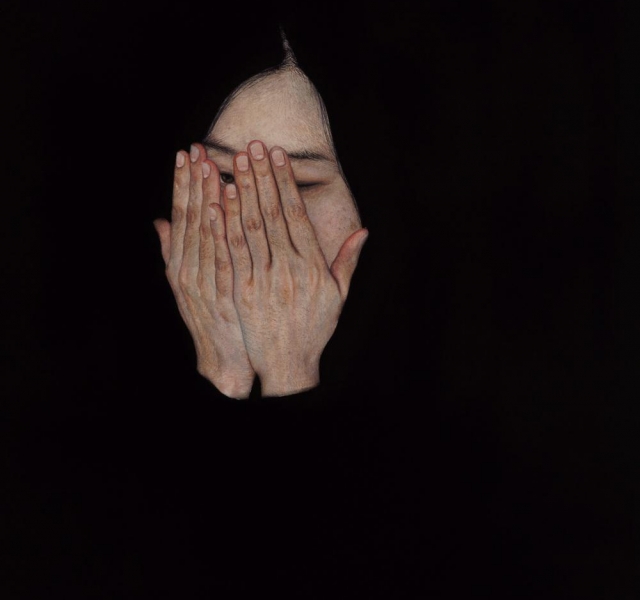
“After going through a series of incidents and accidents, I developed something like an obsession. Even while driving along the Jayuro, I would think, ‘What if I get into a car accident? Even if I become disabled elsewhere, I have to save my right arm so that I can continue painting and maintain the meaning of my life.’ I also once had a terrifying dream where I fell from a roller coaster—everything else was fine, but both of my hands were gone.”


Expressing the Inner Self Between Memory and Reality
 
After giving birth to her first child in 2009, she says that raising a child allowed her to understand and see the world anew.
 
“Although I became less free in terms of time and physically more constrained, it led me to calmly reflect on my inner desires and passions. Living in an era where we receive real-time news from around the world, we increasingly realize that the world is not a safe place, don’t we? After forming a family, my perspective expanded from just myself to the world we must live in together. Life is unstable and difficult, but precisely because of that, I resolved not to miss the moments that shine. Even if life is disappointing and painful, I think that by changing one’s perspective or attitude, one might find a driving force.”
 
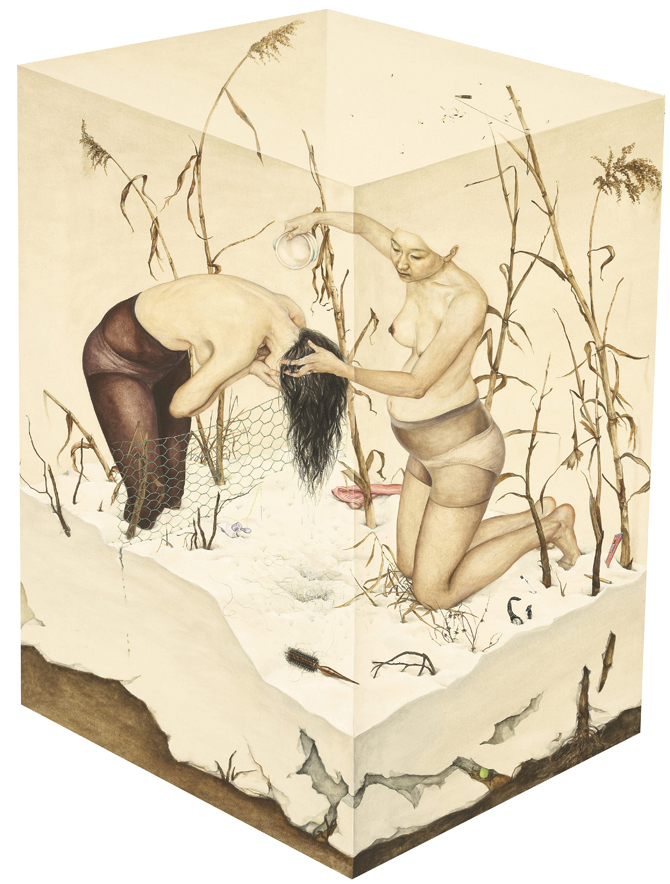
Her paintings, which seem to look down from above, illuminate all objects evenly while revealing almost no light or shadow. Parts deemed unnecessary are boldly omitted and left as empty space. Because of this, the viewer senses that the artist is not overwhelmed by anything, but instead carefully controls the images. Rather than using intense colors, she translates her inner imagery onto the canvas through calm and restrained tones.
 
“I make drawings as images come to mind, but I don’t transfer them directly onto the canvas. I allow them to mature in my own way and go through a process of internal filtering. The works are composed of the images and narratives that remain after this process of selection and refinement.”


Lee Jinju, Opening and Closing, 2014 © Lee Jinju

The women who appear in her works are half-naked, wearing only stockings, and have no hair.
 
“Clothing and hairstyles reveal too strongly the character’s impression, role, and situation. The figures in my paintings act as agents expressing the inner self, moving between memory and reality, so I thought it would not suit them to be confined to a specific time and space. That’s why the clothes are removed, the hair is removed, and even the landscape becomes ambiguous. The rest is left to the realm of the unconscious.”
 
I asked whether painting, for her, is also a process of healing.
 
“What is healing? Will there ever be a moment when recalling those memories feels comfortable and the wounds completely disappear? Won’t the stains of memory, the wounds, and the emotions remain somewhere? Rather than turning away from the incomprehensible nature of life and why such things happen, I think I have a desire to look at it calmly, slowly, and approach it.”
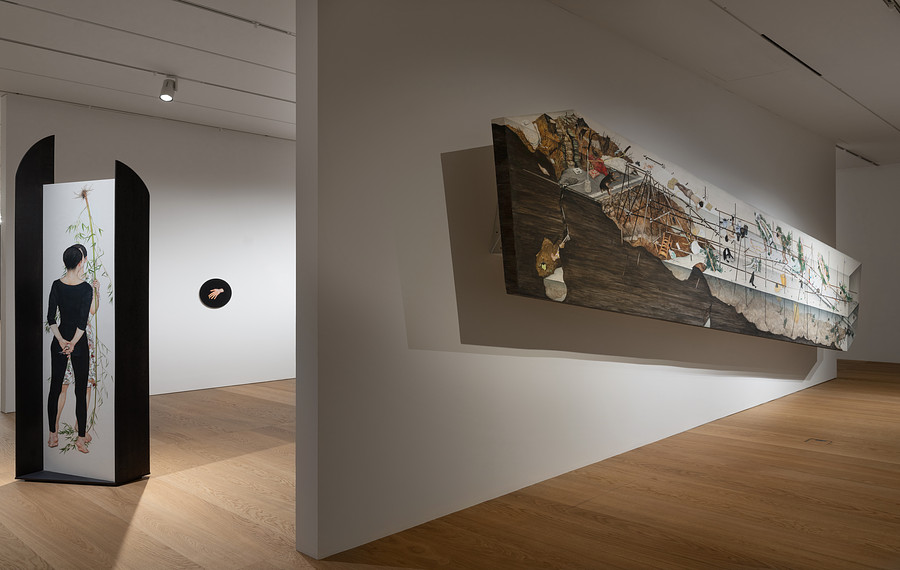
 
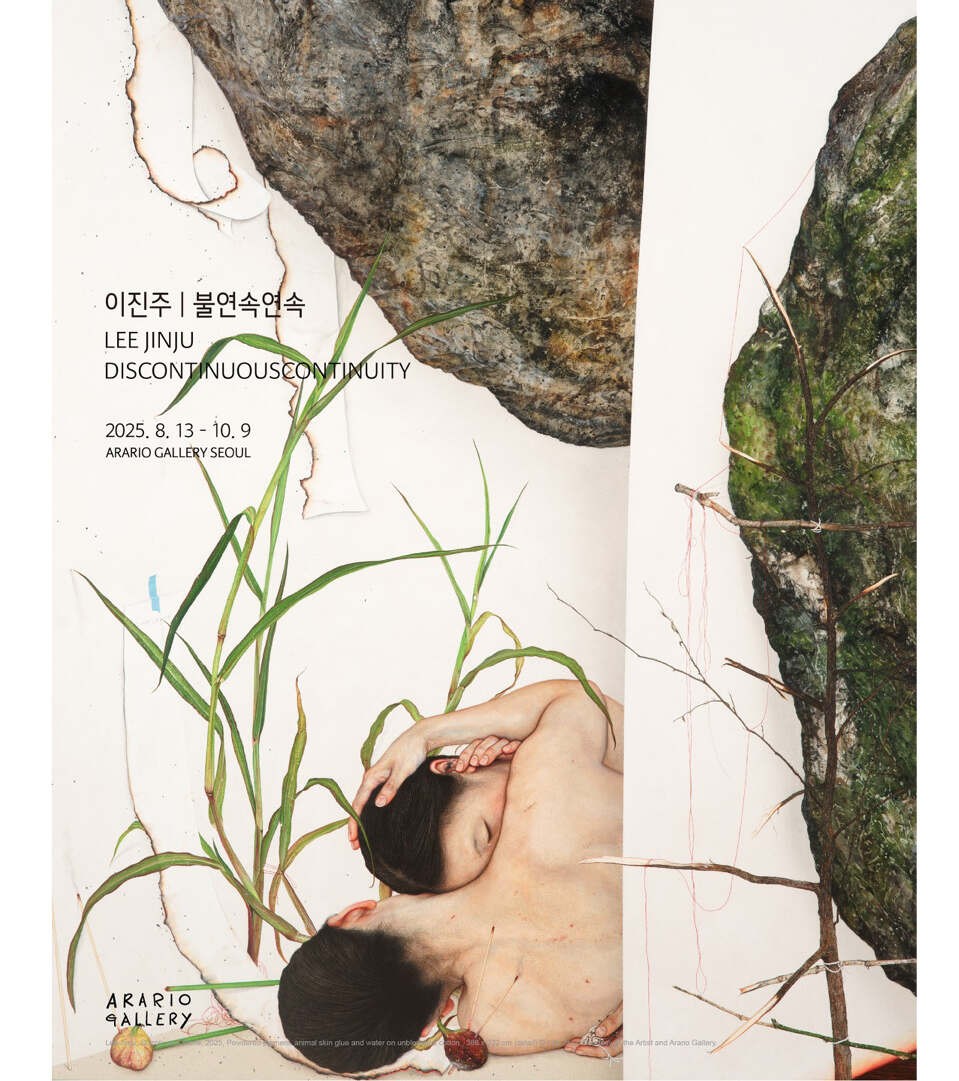
It occurred to me that the reason her paintings are so compelling may be that each viewer blends their own story into them, quietly confronting themselves in the process. Having become an artist represented by Arario Gallery last spring, she plans to participate in a group exhibition at White Block Art Center this year and to hold a solo exhibition at Arario Gallery next year.

References