Working as an independent
curator, she creates diverse exhibition programs and writes about art.
Additionally, she assists with public institutional agendas through corporate
and institutional consulting, outsourced research, and project planning.
Through her series of programs, she has maintained a consistent interest in
re-examining the formal characteristics and narrative methods that exhibition
media have preserved, as well as in altering/dismantling certain ingrained
aspects in the process of producing and arranging artworks. While supporting
artistic knowledge and aesthetic statements that resonate with the
specificities of contemporary art institutions, she maintains a slightly
critical mindset as she engages in dialogue with artists, examines the before
and after of exhibitions, and provides necessary responses and proposals.
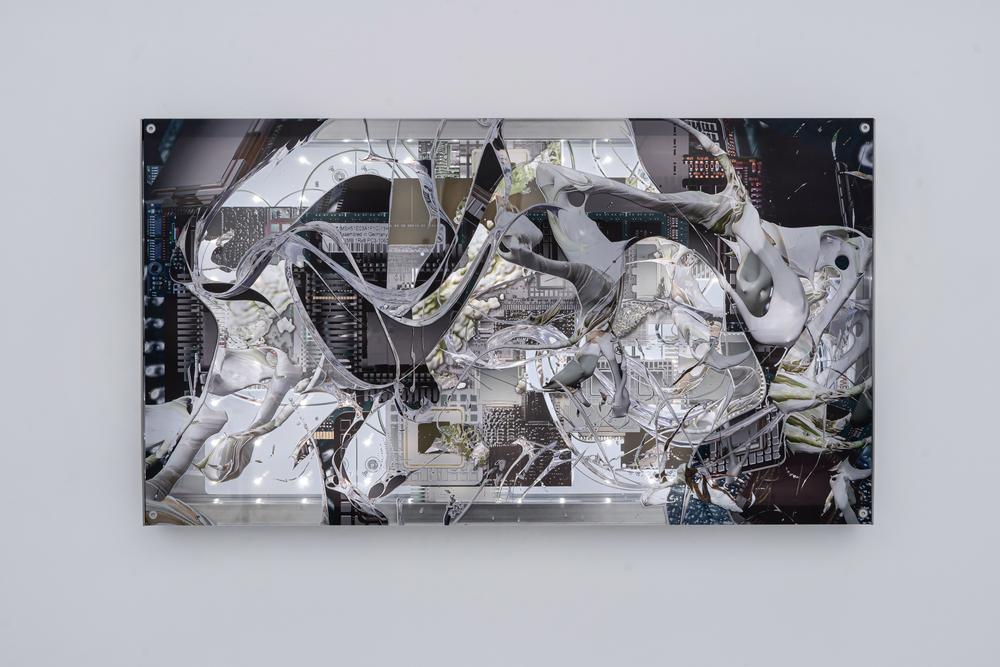
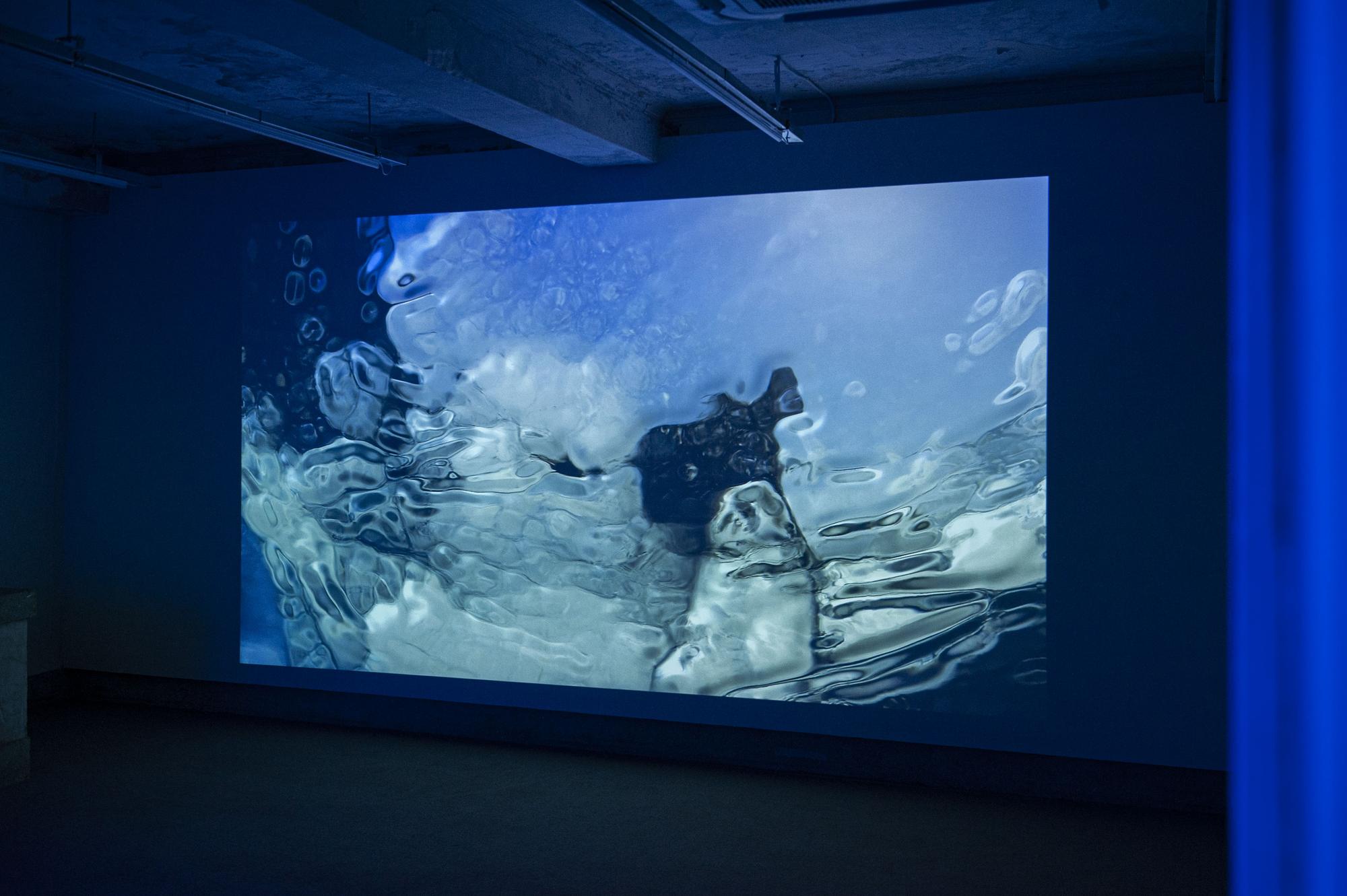
While Gijeong Goo employs the
universal approaches and special effects commonly used by today’s digital image
makers, it seems somewhat insensitive to discuss his work merely in terms of
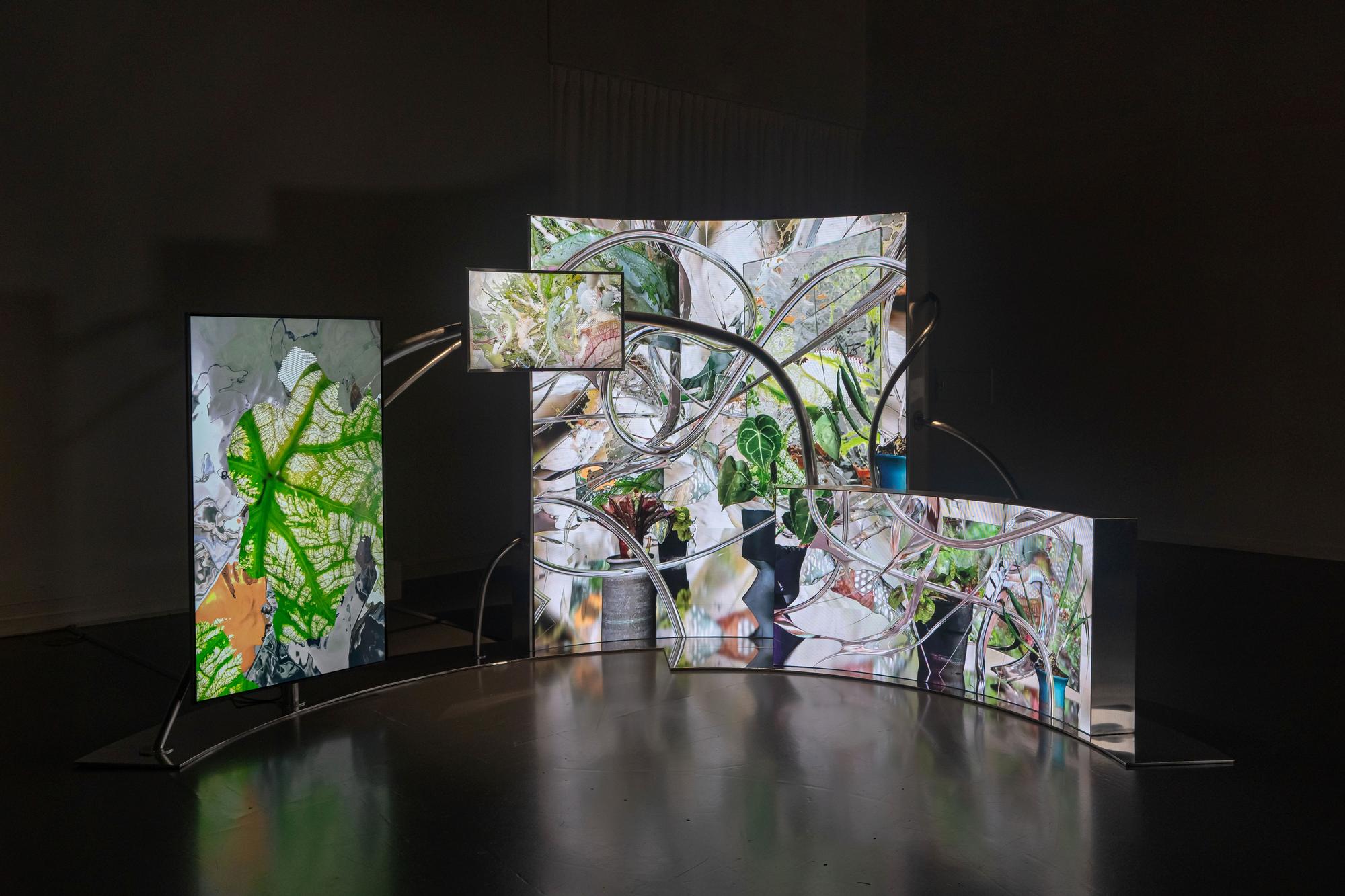
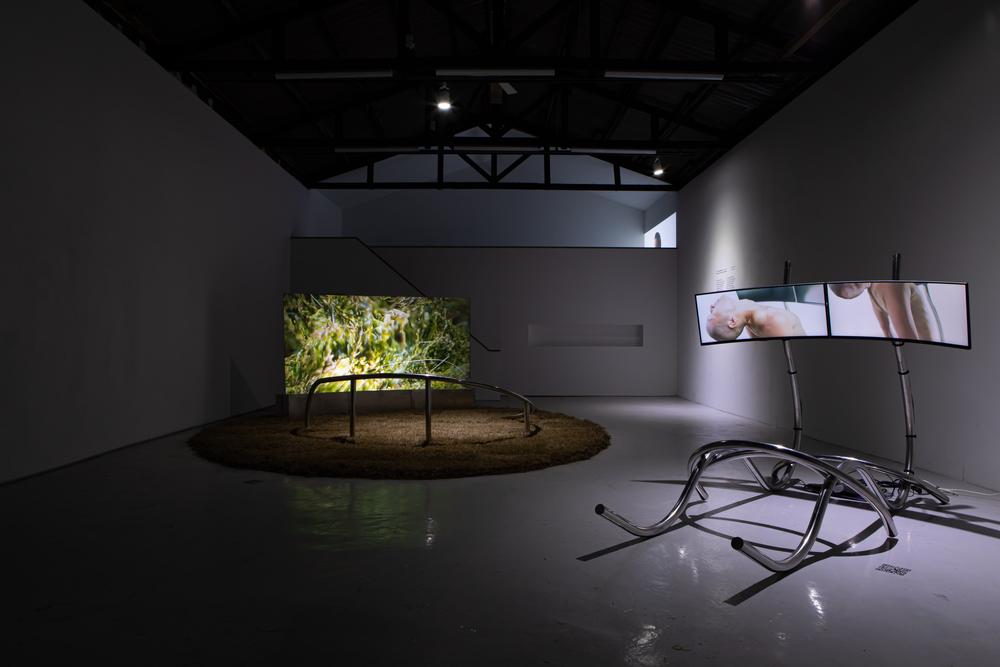
effects or to broadly label it as media art. Depending on how they are arranged
and juxtaposed, Goo’s works function simultaneously as complete visual planes,
lower-level digital sources for something else, material masses embedding light
and sound, and products of experience design that shape the viewing body’s
radius. Despite the clear and explicit intentionality and self-articulation in
his works produced in recent years, Goo’s practice generates various questions
and implications about the production and reception of images. Goo’s point of
consideration appears to lie in increasing the complexity of relational
dimensions between technologymediated images and the body and the physical
world that encompasses the ecological environment.
The digitally transformed images
based on original photographs neither aim for realistic representation nor
converge into unreadable fiction. Though it may be a hastily coined term, if we
can apply the rhetoric of post to Goo’s series of images without particular
doubt, it doesn’t necessarily refer only to the productive aspects of digital
images related to manipulation and transformation. It’s a concept that
considers aspects of discrimination, division, and integration possessed by the
subject who senses the image. In this respect, if there’s something to be
gleaned from Goo’s work, it lies not in the uniqueness of the image production
process, but in how they actively imagined and designed the way it would be
received and read. It’s also worth noting with interest that this process is
based on sophisticated digital labor. Instead of acquiring cheap images
floating on the internet or purchasing stock images, Goo’s production method of
using ultrahigh-resolution macro camera shots and rendering them with professional
skill feels rather like intentional craft. While directing the computer
program’s interpolation and augmentation functions to create illusions of vivid
texture and depth as images transform from flat to threedimensional, from still
to moving images, they simultaneously maintain the contradiction of controlling
these results to prevent them from becoming typical images. According to the
artist’s shrewd intention, a small and subtle sense of foreignness seems
sufficient to widen the narrow gap between what is shown and what is seen.
Before a convincing spectacle, our task is to find these subtle gaps and fake
seams. We can either view the fragmentarily constructed screen as a
sewn-together whole or train ourselves in a mechanical viewing angle that can
appreciate it as is. We just need to remember that rendered images can be more
dramatic than reality. If we remember that the artist’s job is to intervene in
the countless processes of contraction and expansion that occur in transferring
images before our eyes, we can agree that the act of viewing is neither
autonomous nor active.
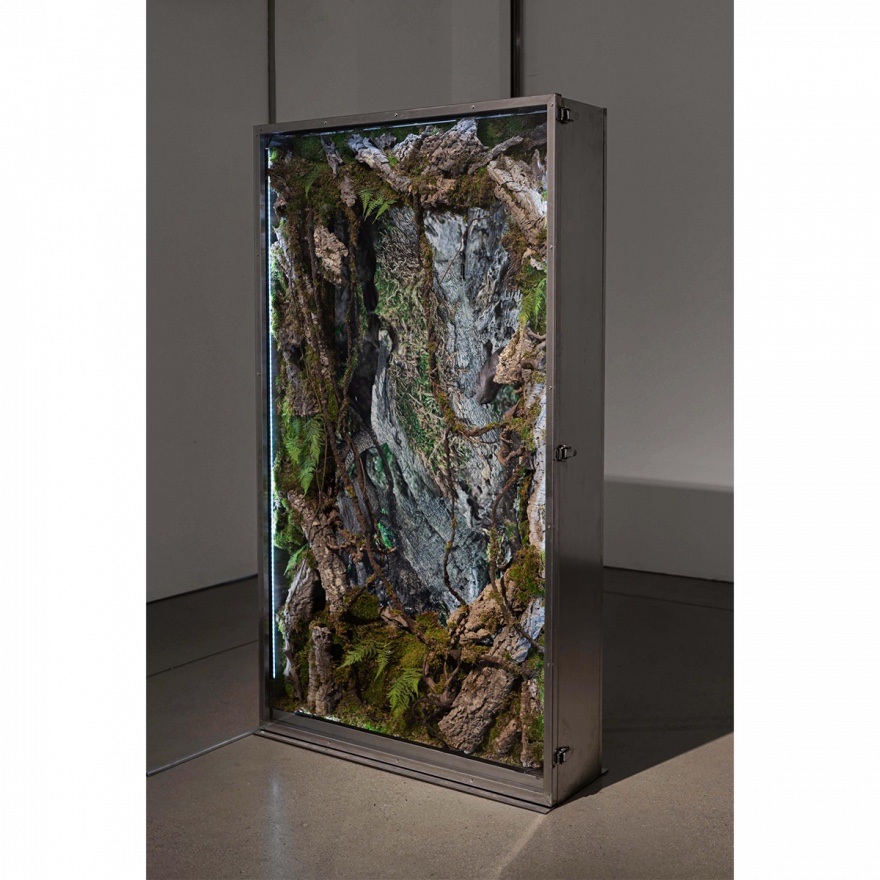
I gaze at the exposed
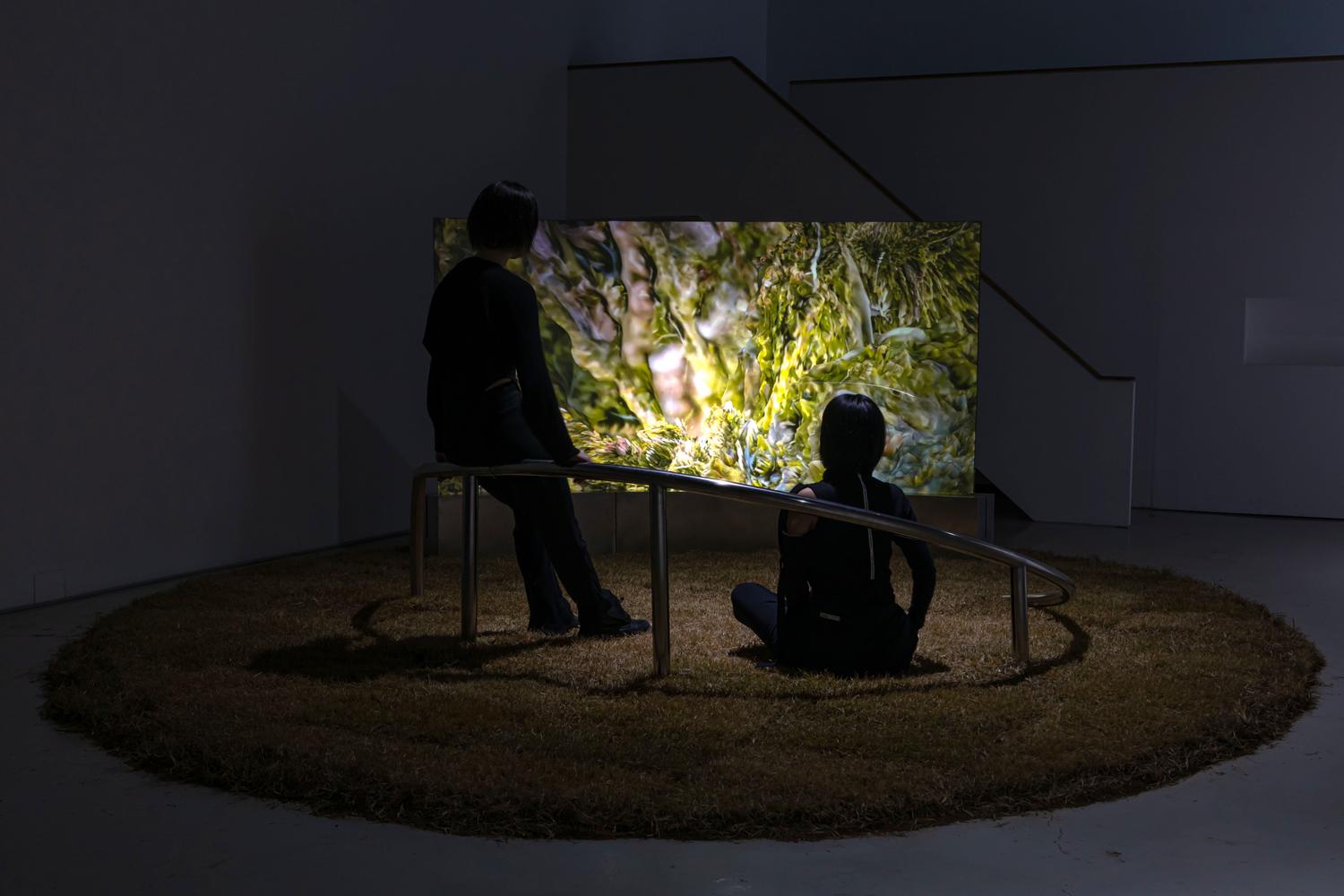
cross-section with multiple layers of vision. The series of landscapes created
by Goo appear natural and concrete while simultaneously being artificial and
ambiguous. Despite the remarkable verisimilitude that captures the retina, an
unsettling ambiguity remains about what one has just seen. The essence of this
feeling stems from slight crudeness nestled between seemingly smooth surfaces,
a discomfort emanating from nature that isn’t quite natural. If the artificial
sensibility that connects to nowhere in this world has been detected early on,
there must have been a subtle error in Goo’s calculations; if one felt nothing
strange until the end, they might be somewhat insensitive. Or else, we must
acknowledge the powerful fiction of images that have deeply permeated every
joint of the world we live in. In this regard, it’s necessary to examine the
various points of fiction and error surrounding the work from multiple angles.
This is not so much to cross-verify the arguments described through the work
thus far and the effects articulated through exhibitions, but because actively
discovering and intentionally integrating the minute gaps embedded in digital
images as a whole can enhance our resolution for viewing a world marked by the
entangled images.
Meanwhile, we can consider the
period around 2020 as the point when Goo’s work began to gain attention
domestically. Various experimental studies during his stay in Switzerland
appear to have expanded visibly in both quantity and scale during the COVID period.
Recalling how we encountered art and life in general through screens and
communicated through images during this time, we discover the advantages of
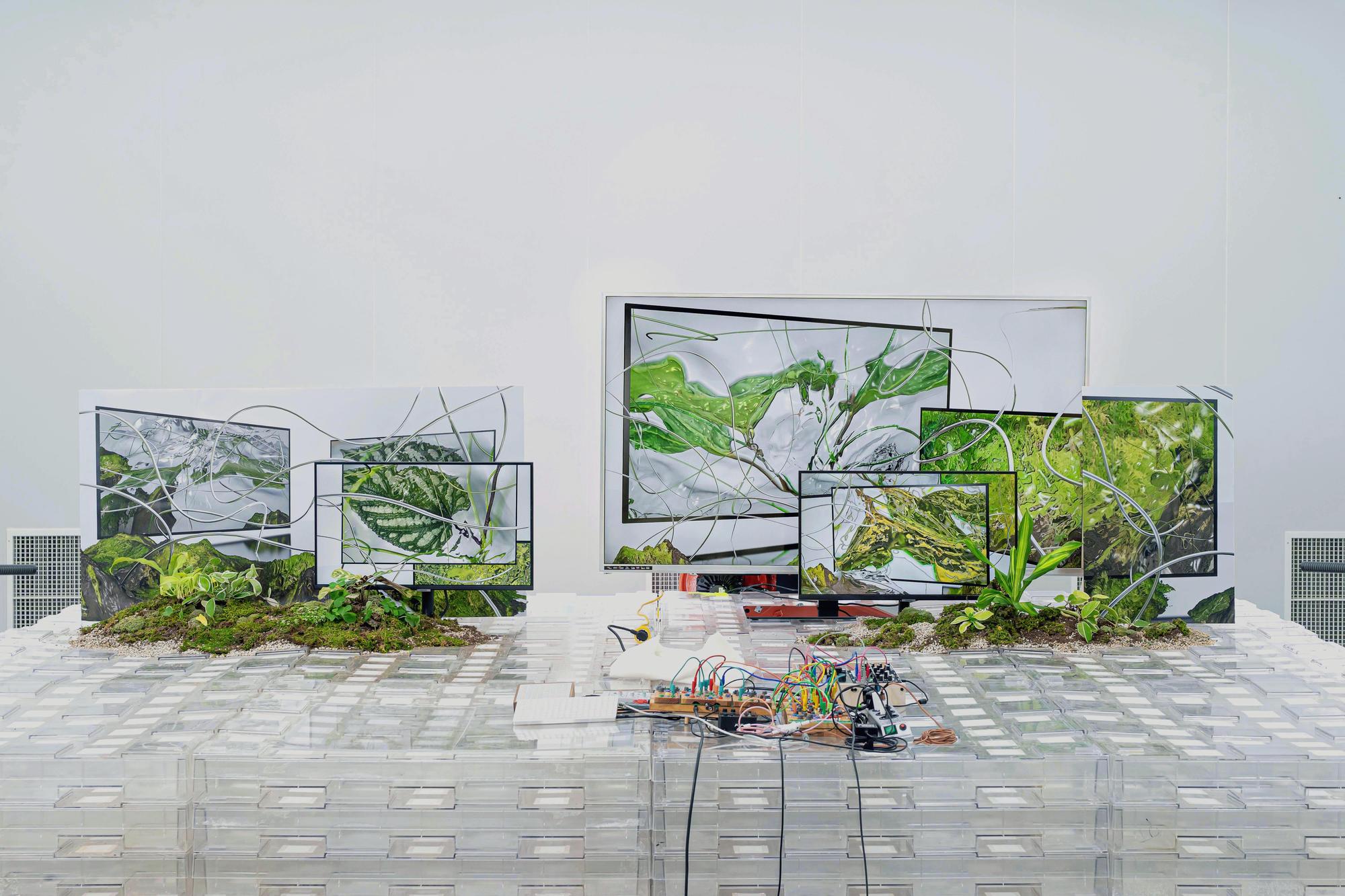
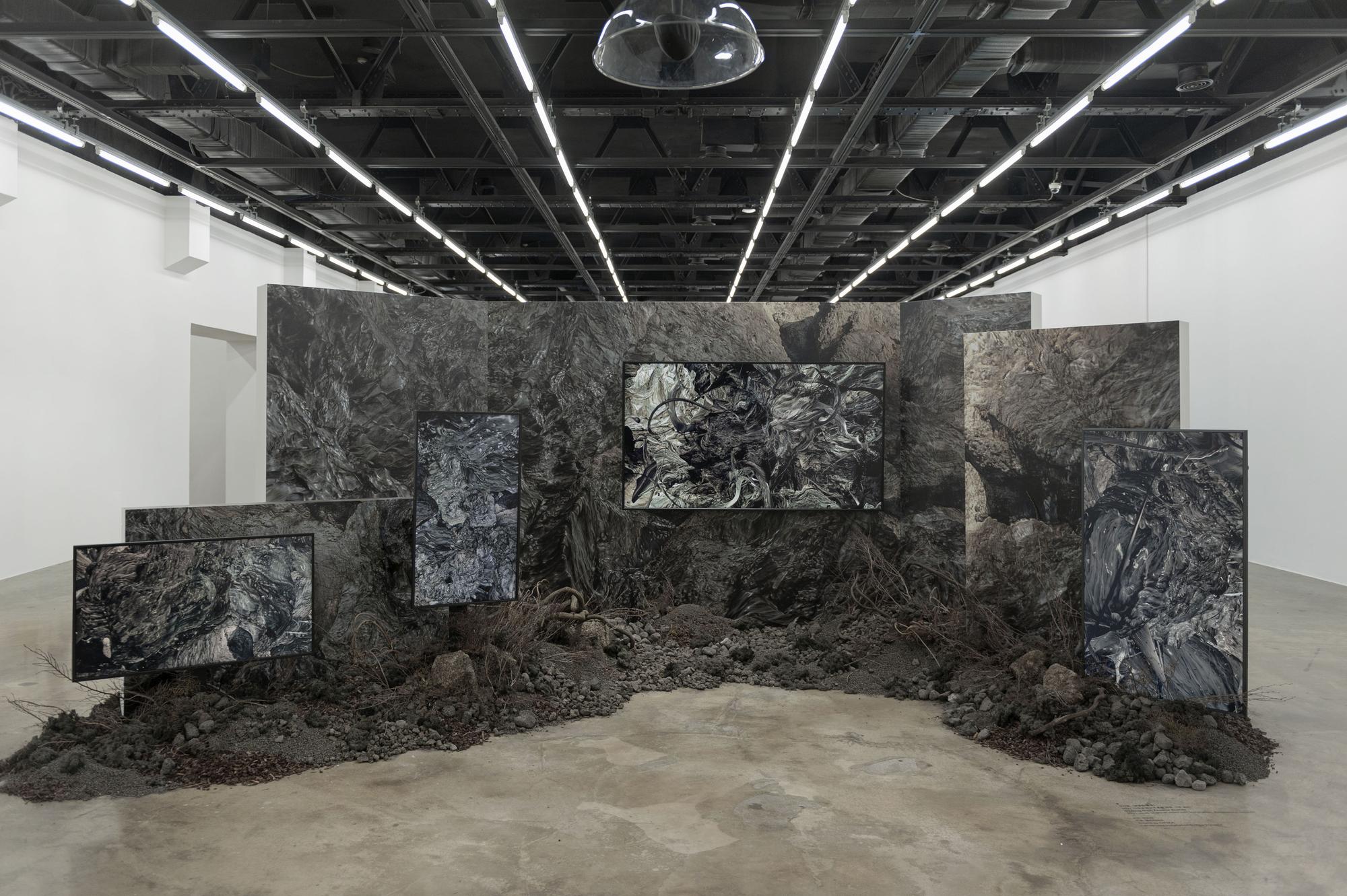
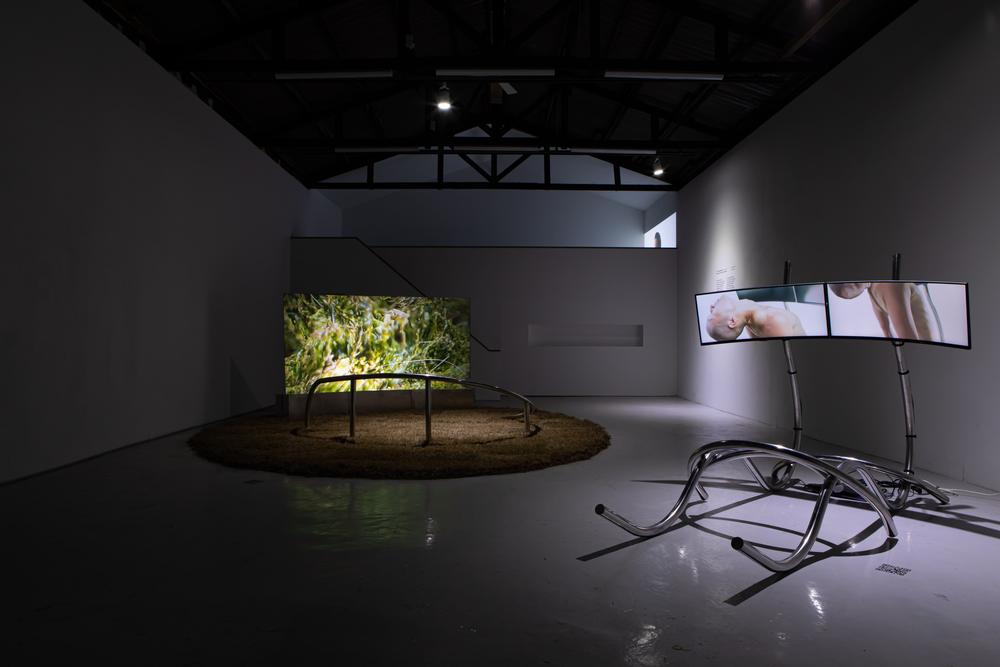
Goo’s working method. To simply understand his production method, he has been
creating variations by specially photographing existing natural landscapes,
digitally reconstructing and processing them, and presenting the results in
formats ranging from prints and videos to mixed installations. Looking at the
series of natural landscapes that has continued steadily each year from a
broader perspective, the individual works collectively form a world (Gye in
Korean) that repeatedly reveals the difference between our schematized visual
framework of the natural environment and reality. In modern society, where primitive
nature and civilized individual bodies coexist, it is digital augmentation
devices like cameras, prints, various projection equipment, and VR that most
intimately mediate this gap or, conversely, widen it. For Goo, who is
accustomed to working at a computer all day, the connectivity between his
working body and integrated devices, and conversely, the disconnection from the
environment, are conditions of daily life. As mentioned earlier, there was a
notable increase in image experiments and installation styles dealing with
nature and plants during the COVID period. This can be understood as an
auteurist trend of contemplating non-human existence through various natural
species and objects, naturally emerging based on interest in new materialism
alongside Anthropocene discourse. While it might be valid to some extent to
accept Goo’s work as an example corresponding to these contemporary trends, we
need to examine the issues in his work more pointedly. What’s important is not
so much the amazement at digital sensibilities deeply infiltrated into today’s
human body and sensory organs, but rather how we can operate to examine without
misinterpretation the image of the world that such sensibilities restructure,
interpolate blank points autonomously, and recognize integrated parts through
differentiation. It’s about being deceived by visual illusions, actively
accepting their obviousness at times, and partially filtering them.
The artist has consistently
posited scenes, landscape, realm, and nature as spatial modules in his work
titles, and by adding rhetoric such as Exceeded, Synthetic, and Macro before
them, he has directly reflected that these are both portraits of today’s nature
and the reality of matter. The notion that exceeded nature can only be depicted
through exceeded technology, and synthetic nature can only be shown through
synthesis, seems honest in one sense yet feels like a broken solution
somewhere. The cross-sections of soil and earth, the breathing holes of moss
and grass, and the vibrations of what appears to be microorganisms encountered
through the work converge into an unfriendliness due to excessive detail,
approaching as an excessive movement opposite to the vibrancy that life
emanates. And these aspects constitute Goo’s intended rendering method for how
they gaze at and wish to show the world.
However, countless artists have
dealt with the complex relata surrounding nature, humans, and technology
through various visual languages, and it remains one of the most crucial topics
in today’s socio-cultural discourse. Naturally, questions persist about where
Goo’s work stands in terms of its distinctiveness or uniqueness within this
context, and about the true nature of visuality that defines our lives today.
If there is an interim conclusion that the artist has reached through their
work by alternately connecting the axes of digital nature and digital (-ized)
body, analog nature and analog body, it seems to be stating that their
respective data and textures are interconnecting or overlapping somewhere in
reality; ultimately in an indistinguishable state. And reaching this
recognition has involved a kind of visual struggle. I’d like to call this
process a form of artistic rendering. Render, one of today’s readily accessible
terms, carries a comprehensive meaning of transforming something into another state.
For instance, it refers to a performer’s process of translating sheet music
into music, the technology of processing raw materials into different forms
(like solid to powder), and the process of integrating effects—shadows, colors,
textures, etc.—in editing files to create final video output. The world
rendered collectively by Goo, his camera, and his computer programs markedly
differs from reality, but let’s consider whether this is problematic—or perhaps
not—in today’s world where images are becoming increasingly more expansive than
reality. While directions of direction, depths of depth, and intensities of
intensity split and merge to create certain images within the artist’s
displayed screen, let’s remember that in the world outside the screen, objects
can be more distant than they appear, nature can be shallower than it sounds,
and people can be lighter than they feel. This is because the screen is not a
mirror image of the world. The final authority to disassemble and re-render the
unevenly rendered world’s layers can only be oneself. That will be each
person’s mirror and way of rendering to control the world.