Gijeong Goo's work encompasses experiments with multi-layered
media. His series of attempts to summon various media goes beyond mere
technological experimentation, incorporating reflections on the method of
unraveling the themes he explores. Goo's previous works, which utilize
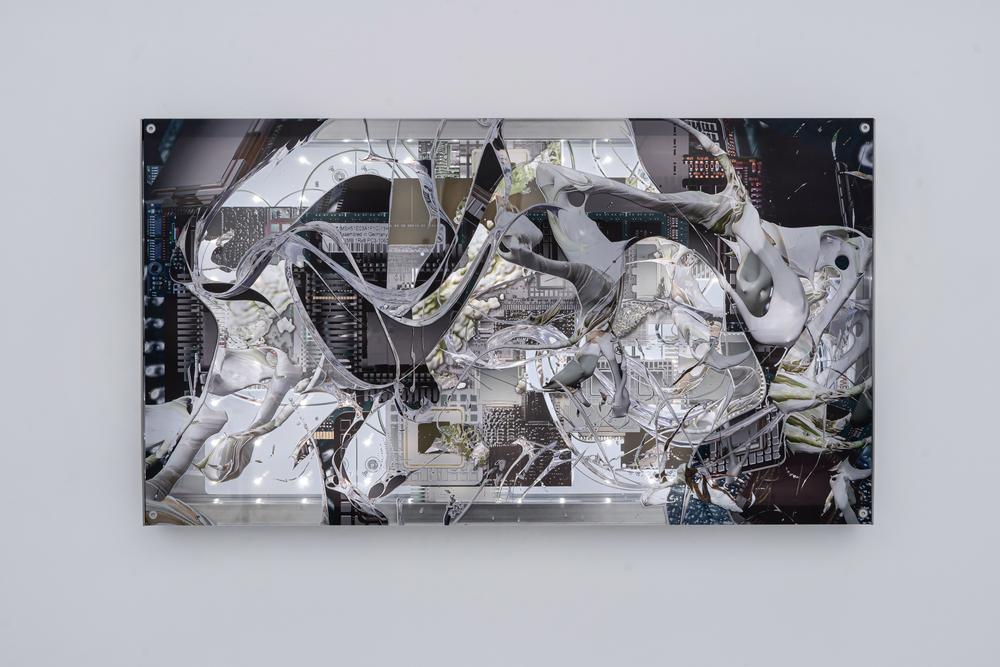
high-resolution cameras, special lenses, and 3D rendering-based images and
videos, reveal the potential of mixed realities made possible through
technological mediation.
One of the most discussed aspects of his previous works is the
image of "augmented nature." This theme has often positioned the use
of media as a primary layer in interpreting his works, leading to the
misconception of viewing his practice solely from a visual perspective.
However, the reason he continues to experiment with media is not merely to
produce images; rather, it is to contemplate the relational nature between
nature, humanity, and technology.
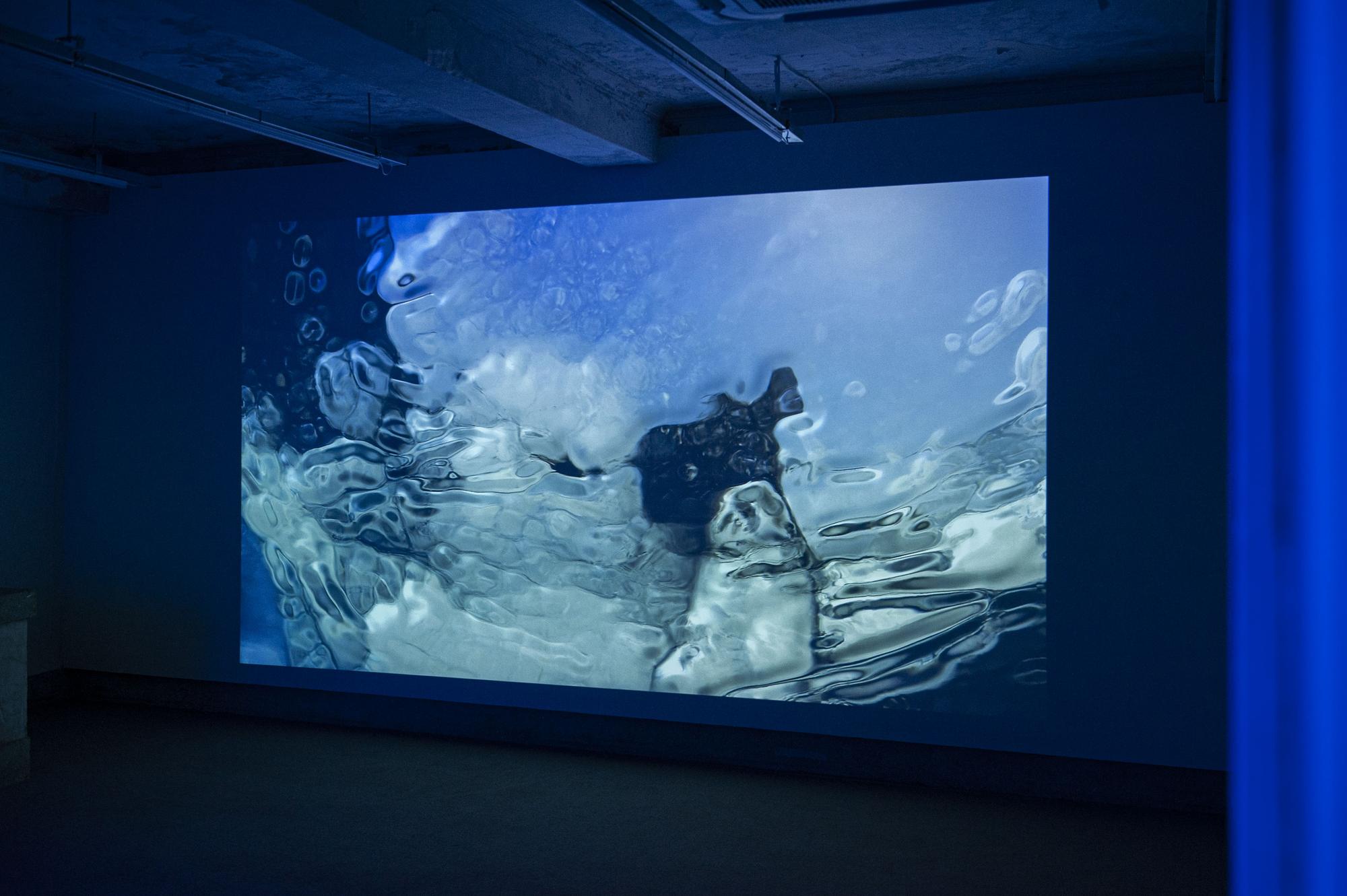
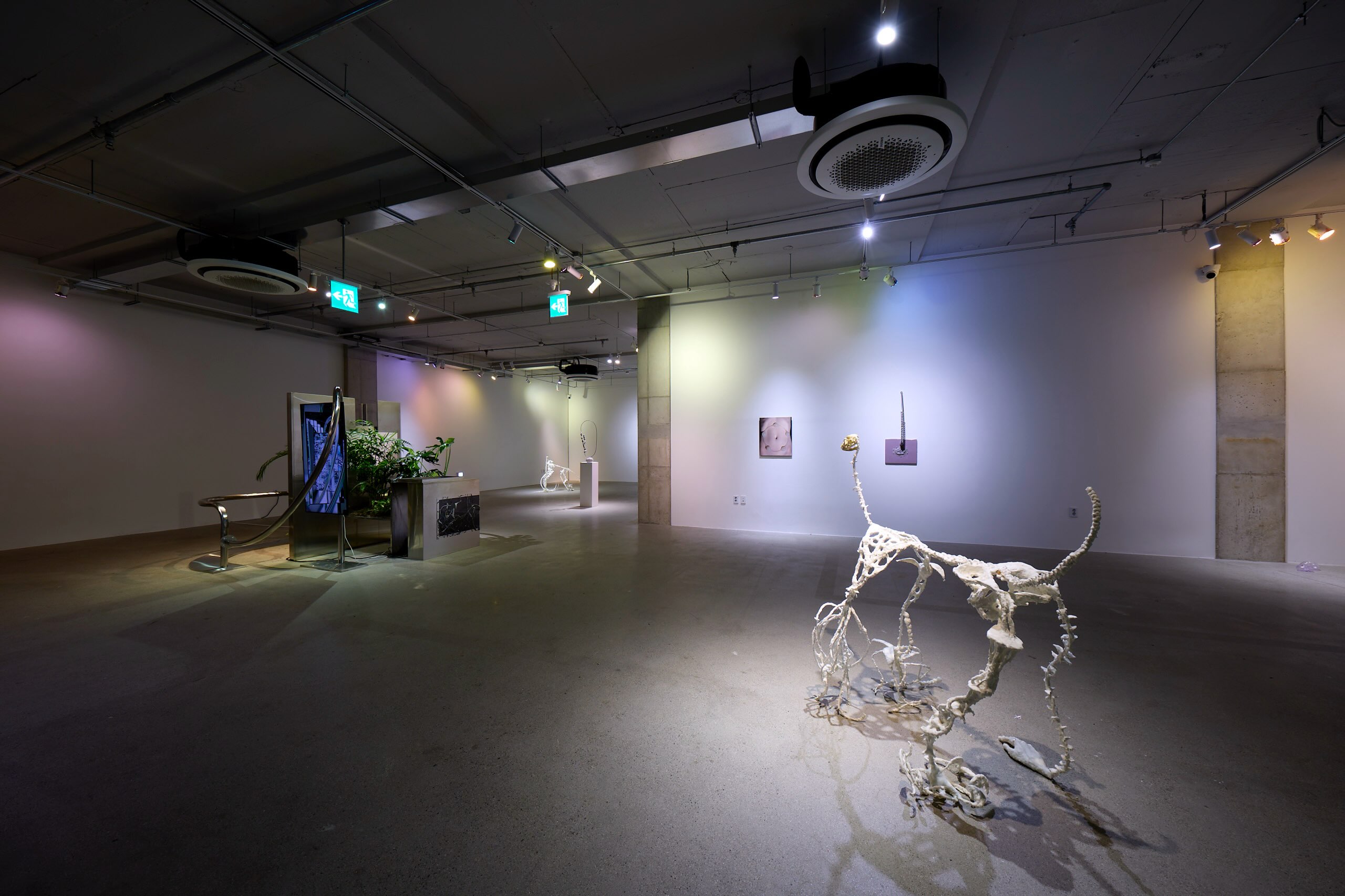
In his latest solo exhibition 《Contrology》, Goo presents three new works
utilizing video, installation, and performance. These works expand on his
previous themes, which dealt with the relational context between humans,
technology, and nature, by critically reflecting on the sensory perceptions of
modern urban dwellers. In a world inundated with digital devices, information
absorbed through media floods individuals like a torrent, rendering humans and
media inseparable. The artist draws from the doubts arising in such situations
and the unconscious bodily damage experienced by individuals, guiding them to
face reality based on their embodied sensory experiences.
The phenomena he absorbs do not solely apply to himself but extend
to everyone experiencing the contemporary era. Goo’s practice reflects on a
society saturated with media stimuli while simultaneously offering
interpretations of the specific "visual grammar" that has become
normalized through everyday media use.
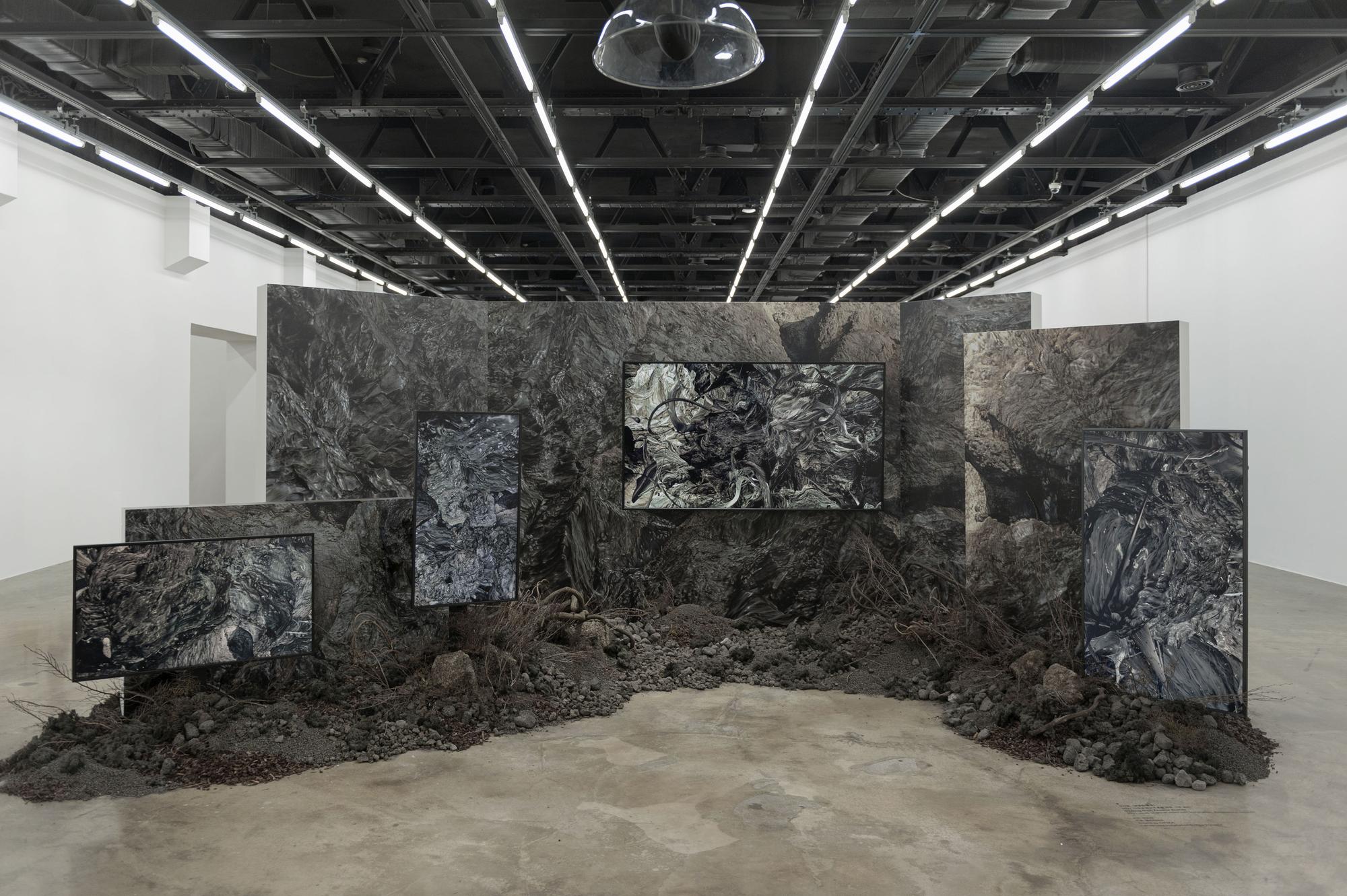
The overarching structure of the exhibition utilizes the media
grammar that allows the audience to experience each work as a
"time-based" phenomenon. The forms revealed through installations go
beyond the media methodology of moving images or the modified photographs he
used in previous exhibitions, transforming the entire exhibition space into a
field where a chain of experiences unfolds. Through this approach, Goo more
actively experiments with temporality.
The three works, Contrology (2022),
Coagulation (2022), and Whose order do your fingers
follow? (2022), are presented as performance, installation, and
video, respectively, guiding the audience to solve a series of quests. These
quests metaphorically embed the artist's critical questions within the
exhibition, including the following:
1. How does media transform the human body?
2. How has media altered the human visual cognition structure?
3. How does media make humanity universally accept technology?
The questions concerning human bodies, sensory cognition, and
common perspectives may reflect the artist’s intention for the audience to find
their own answers within a space filled with unresolved inquiries.
In exploring these themes, Goo actively embraces cutting-edge
technologies that encompass optical media, such as photography and video, as
well as artificial intelligence (AI). This effort positions the artist and technology
as collaborative partners in creating a completed artistic system, granting
agency to technology itself and demonstrating an "augmented" artistic
experiment. Such an approach does not merely signify media experimentation but
rather suggests that the subject of contemporary questions is no longer
confined to humans alone. Living in the era of media, can we truly say that we
actively and independently accept technology amidst the coexistence of humans
and machines?
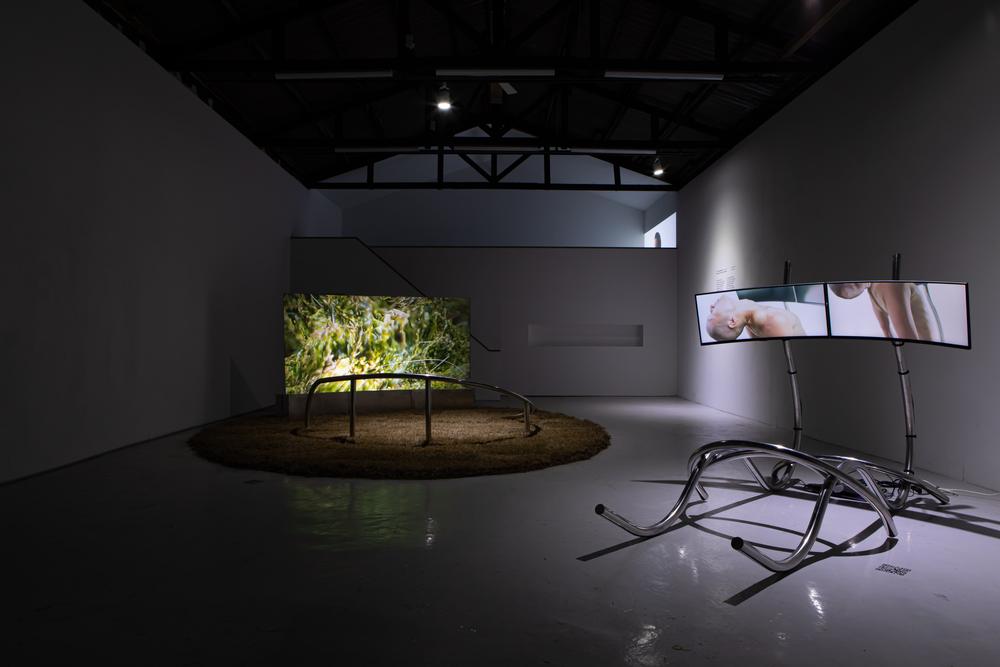
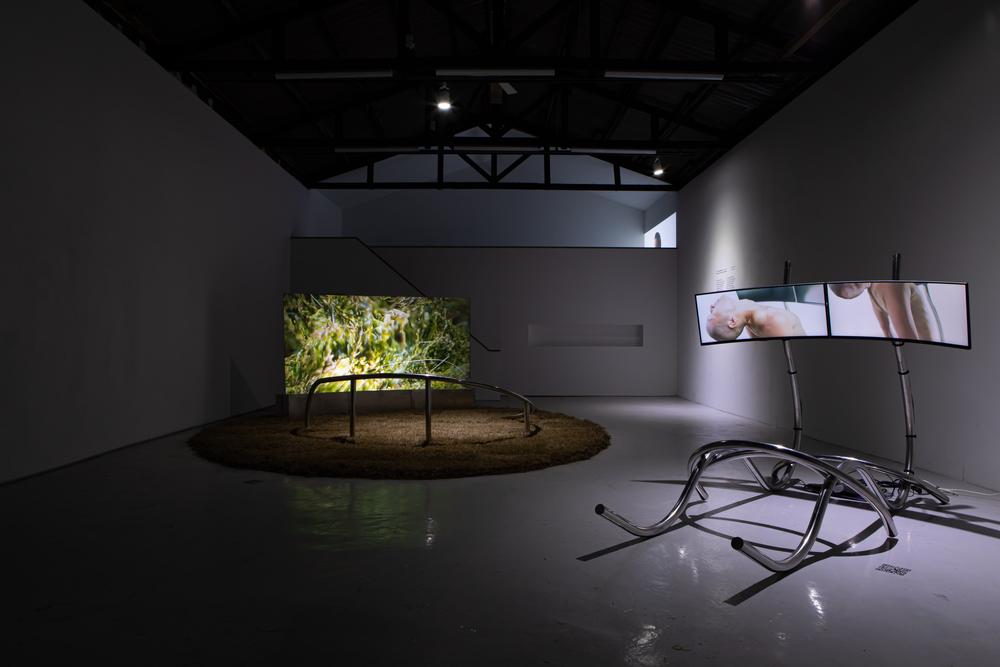
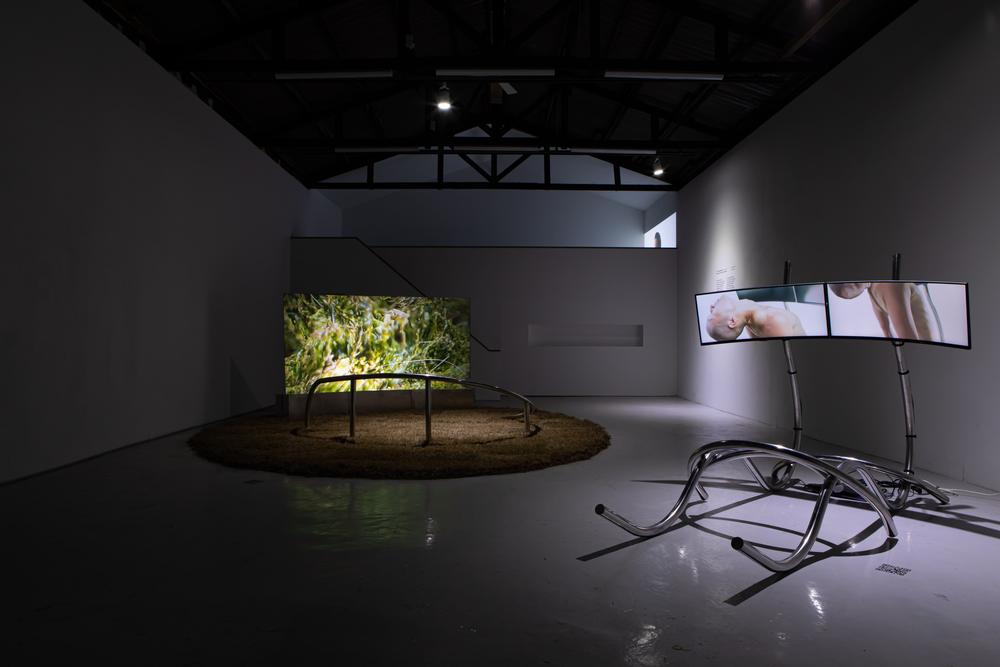
Contrology (2022) revolves around questions
about the image of the body injected into us by mass media and how humans
re-experience this image through their own bodies. The work critiques both the
stimulating bodily images promoted by media and the rigid, distorted human
bodies resulting from media-device-based experiences, embodying the imbalance
and gap between images through performance. The work not only provides
heightened visual stimuli but also encourages the audience to immerse their own
bodies within the depicted subjects, promoting physical movement as a form of
propaganda. The installation thus forms a series of devices that lead audiences
back to the question of how digital saturation influences human bodies,
prompting a comprehensive reflection on the relationship between digital
environments and human embodiment.
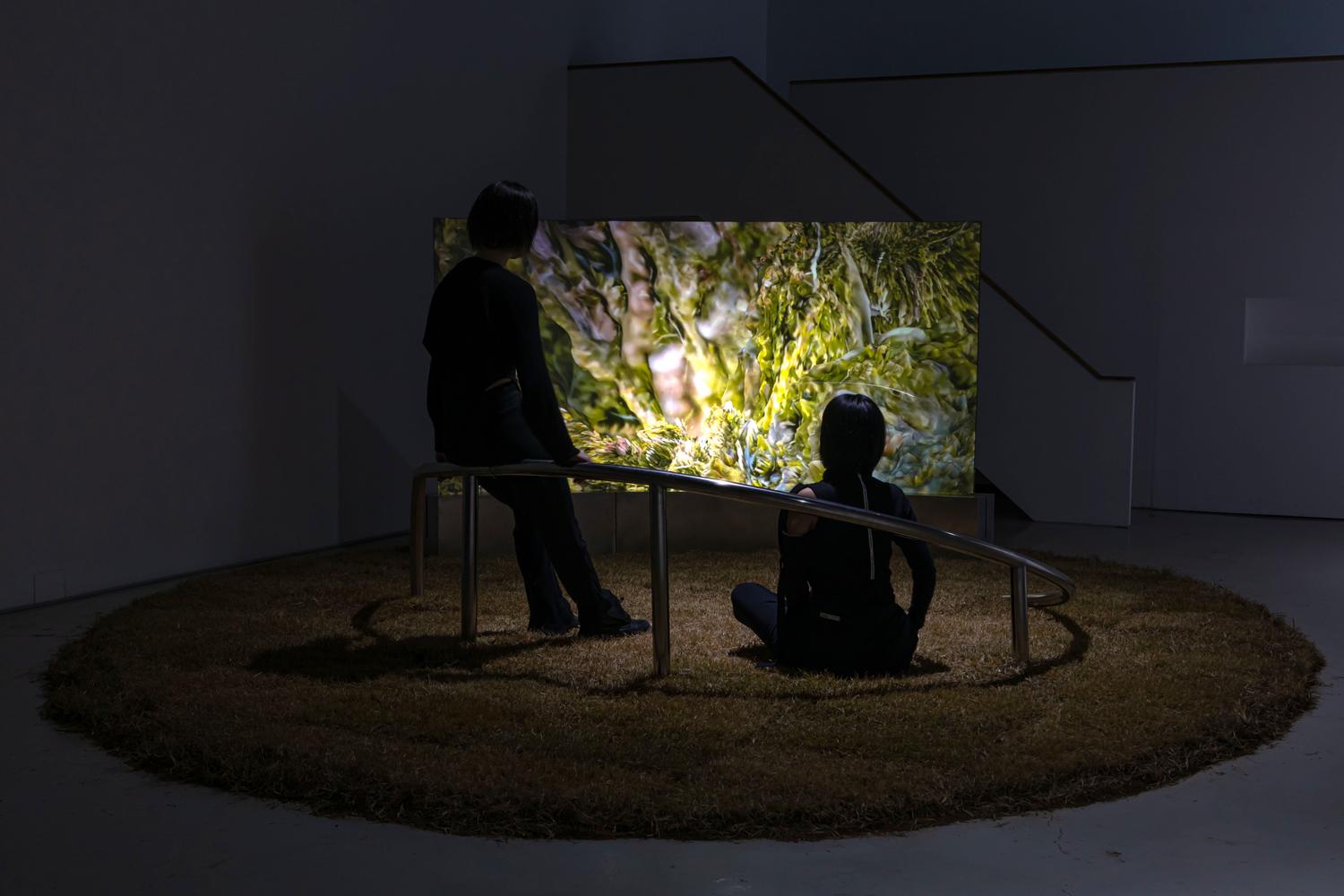
The second piece, Coagulation (2022),
metaphorically implying "solidification," reflects on the visual
cognition structure of contemporary individuals living within digital
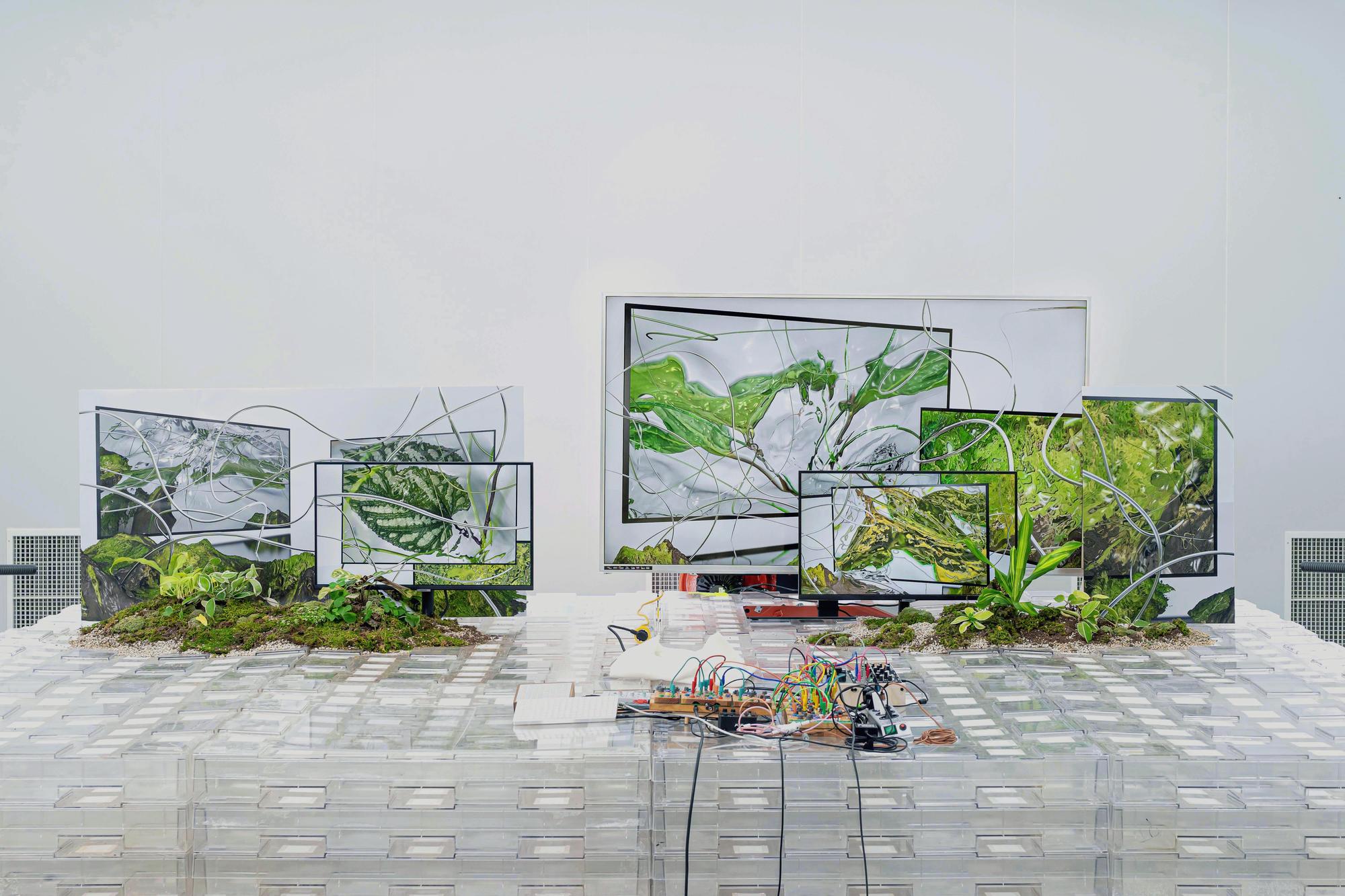
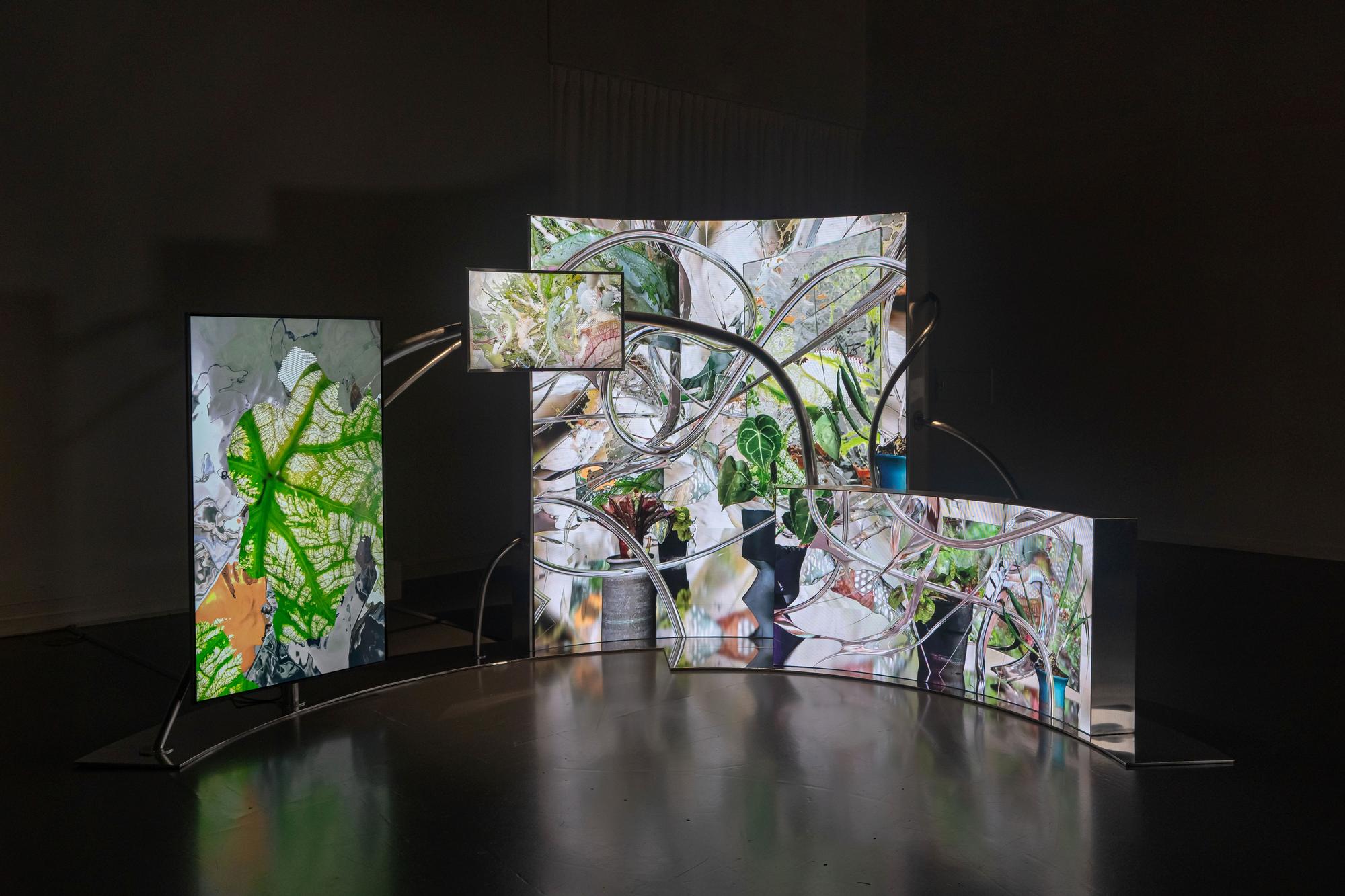
environments. The nature appearing in the video is augmented and
hyper-realistic, enhanced through high-resolution cameras, macro lenses, and 3D
technology. This visual representation invites the audience to experience a
moment of realization—acknowledging that the familiar natural images they
perceive have been mediated through media itself. As evidence of this, the
audience physically interacts with the exhibition by stepping on real grass
spread on the floor and experiencing the semi-circular fence through their own
bodies while appreciating the augmented visuals. This dual experience guides
the audience to confront their own bodies within the constructed immersive
environment, ultimately rethinking how the primary image stimulates perception
and how it affects visual experiences of nature in the contemporary age.
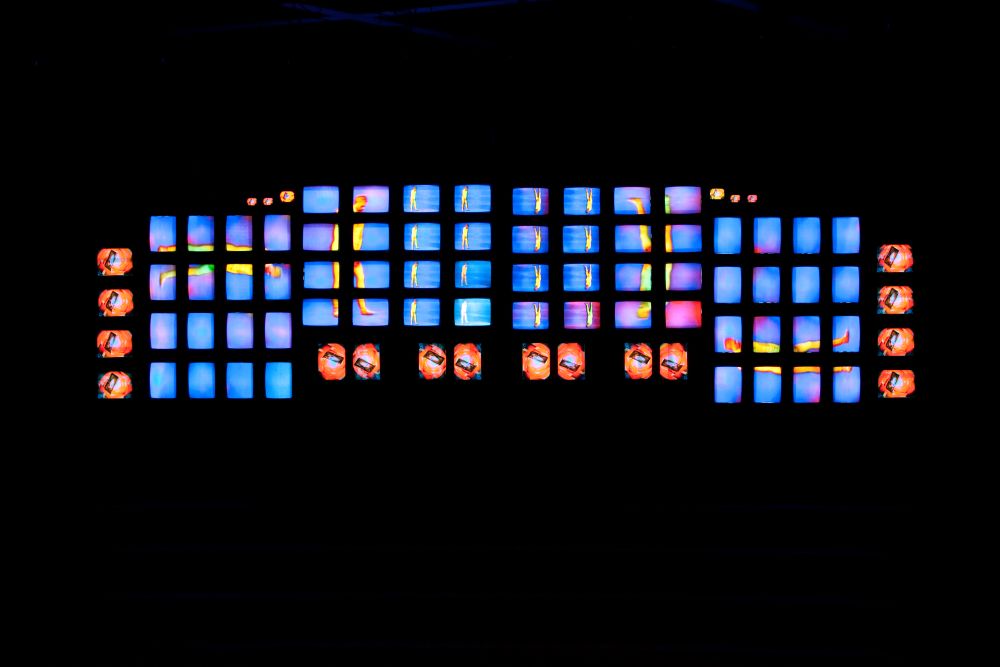
The work Whose order do your fingers follow?
(2022) introduces AI as an active participant in the artwork, making it the
narrator. The video appears as an interview with the artist, but in fact, the
responses are given by AI rather than Goo himself. The artist merely acts as an
intermediary, channeling the language of technology. The moment the audience
realizes that the voice is not the artist’s own, they experience an uncanny
sense of dissonance. The piece raises questions about how modern humans
perceive and accept technology, prompting contemplation about the appropriate
level of acceptance and the nature of human-technology relationships.
Through the sequence of these works, the exhibition forms a system
that guides the audience to confront screens, move their bodies, and reflect on
cognitive systems, creating a flow of vision-body-mind. The outcome of this
flow ultimately circles back to the fundamental question of who we have become
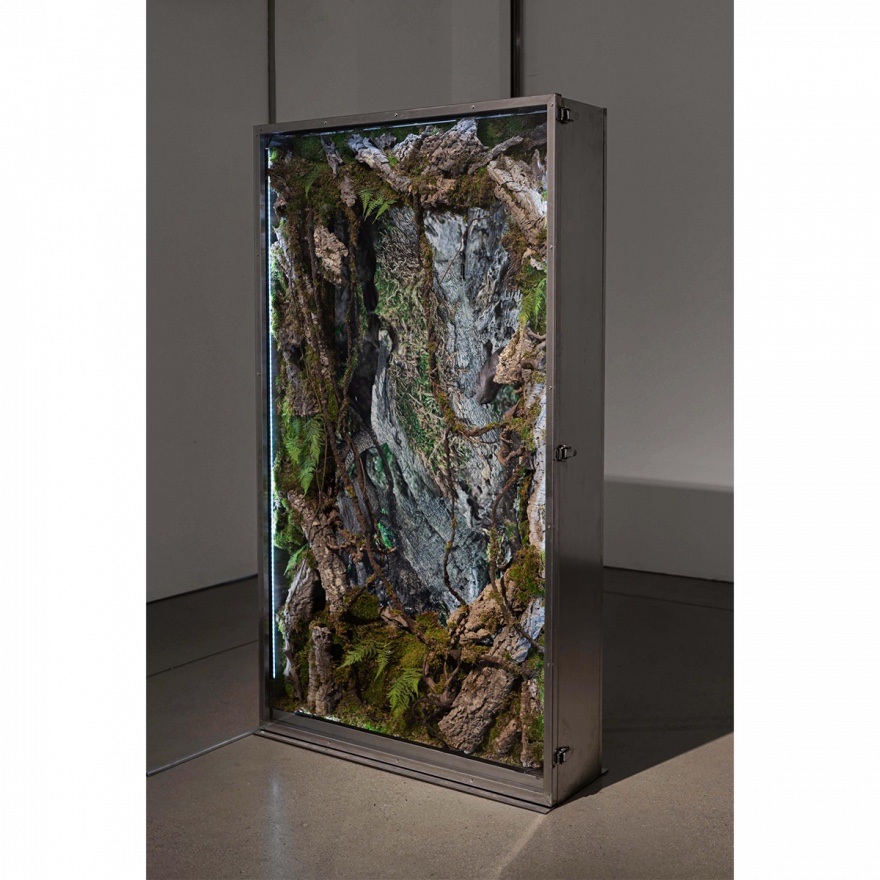
in the media era—humans with bent bodies and entangled minds. In this space
reminiscent of a natural cross-section, what emerges is not merely an image but
rather a "digital grammar" that has left its imprint on our visual
systems and physical forms.