1.
The exhibition title, Miniascape
Theory, also serves as a tool for viewing the world and encapsulates
the entirety of the show. In this exhibition, the artist navigates through the
concept of 'miniascape (縮景,
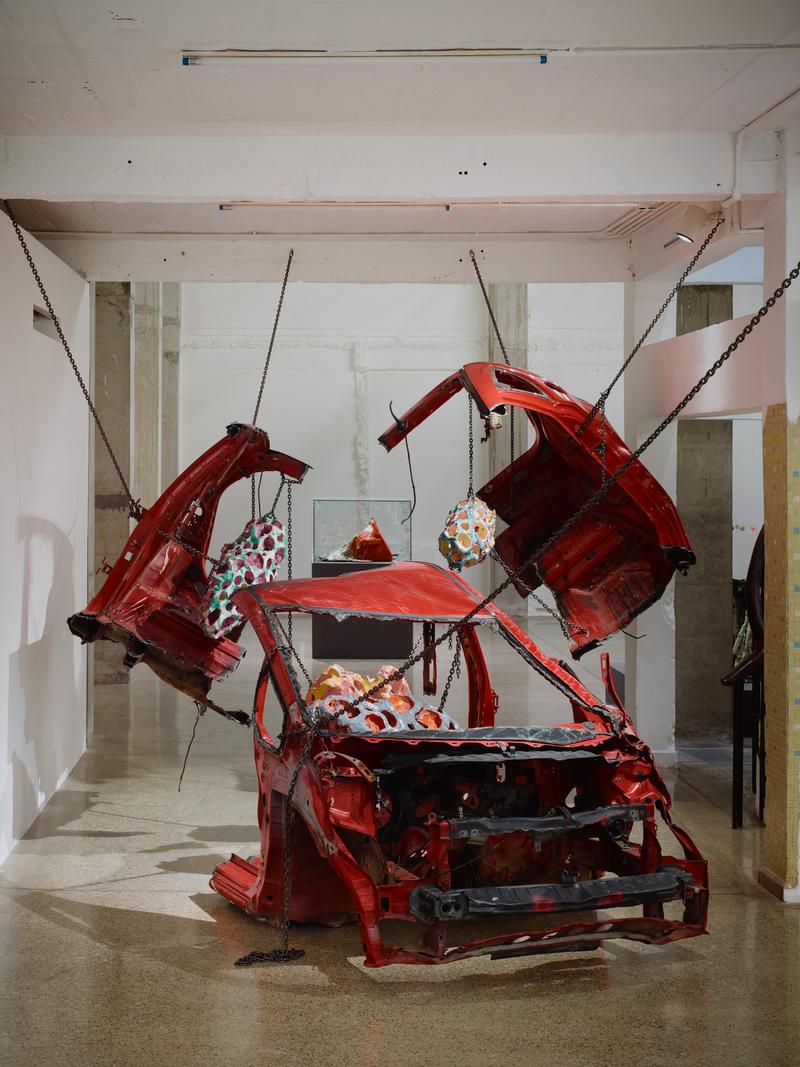
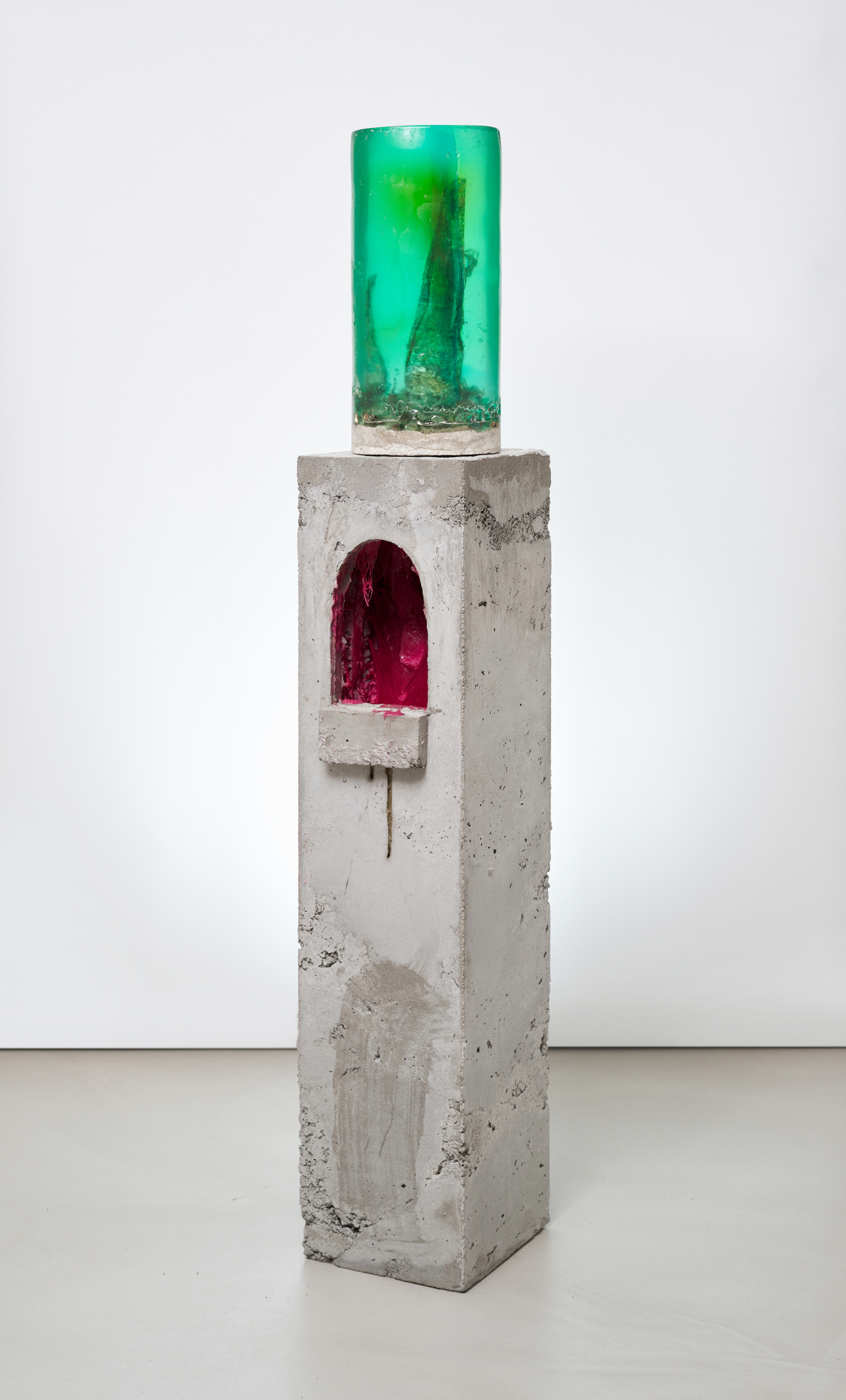
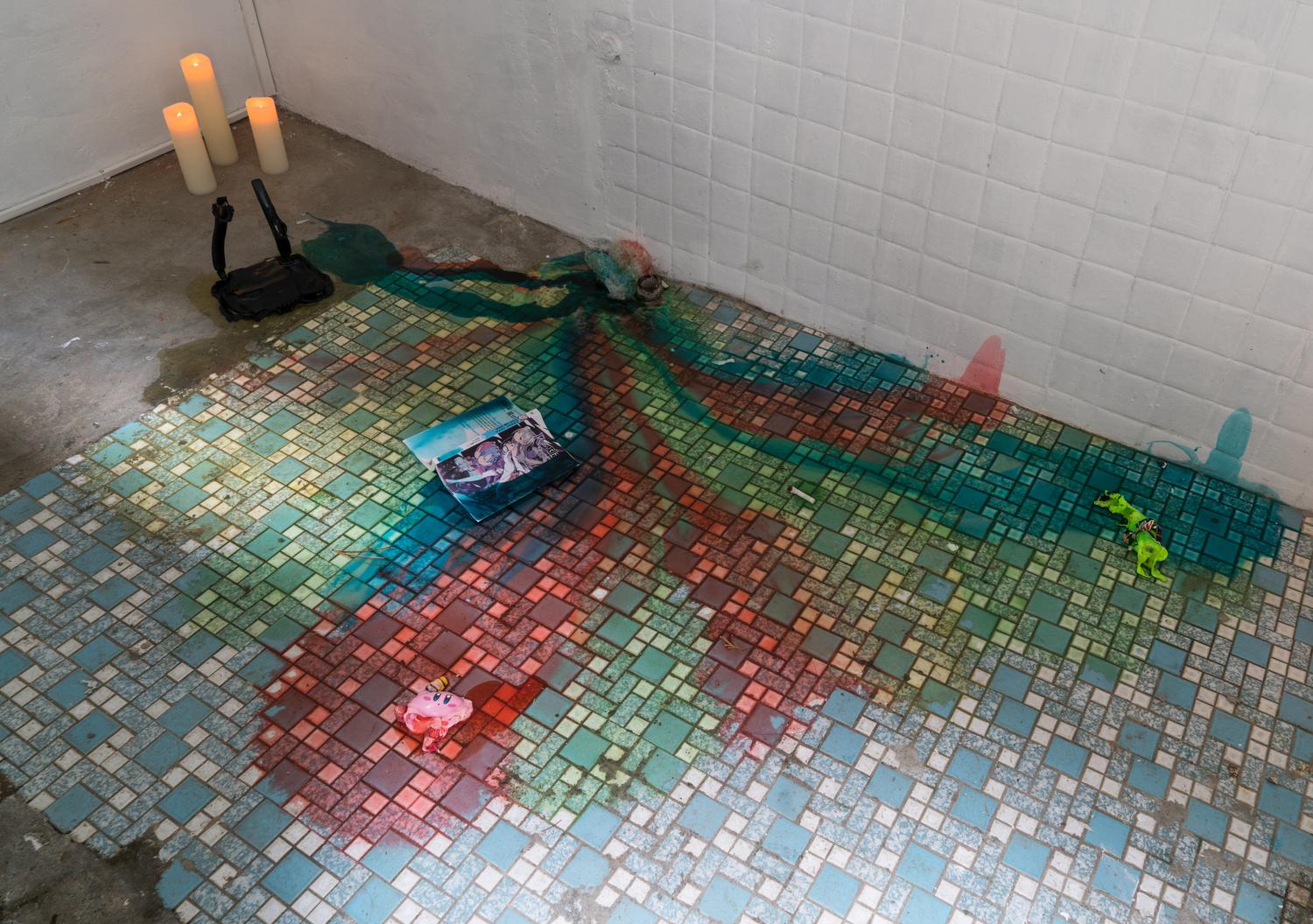
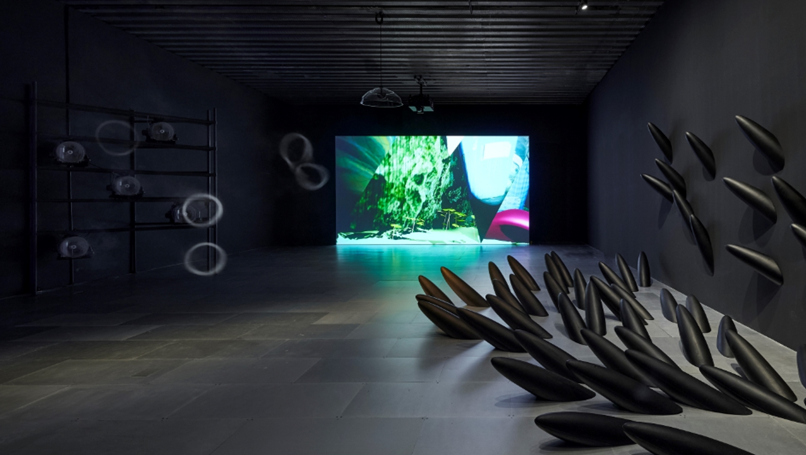
miniascape).'1) The works, implemented as "methods of excavation,
verticality, and the privilege of the miniature" (artist's note), are
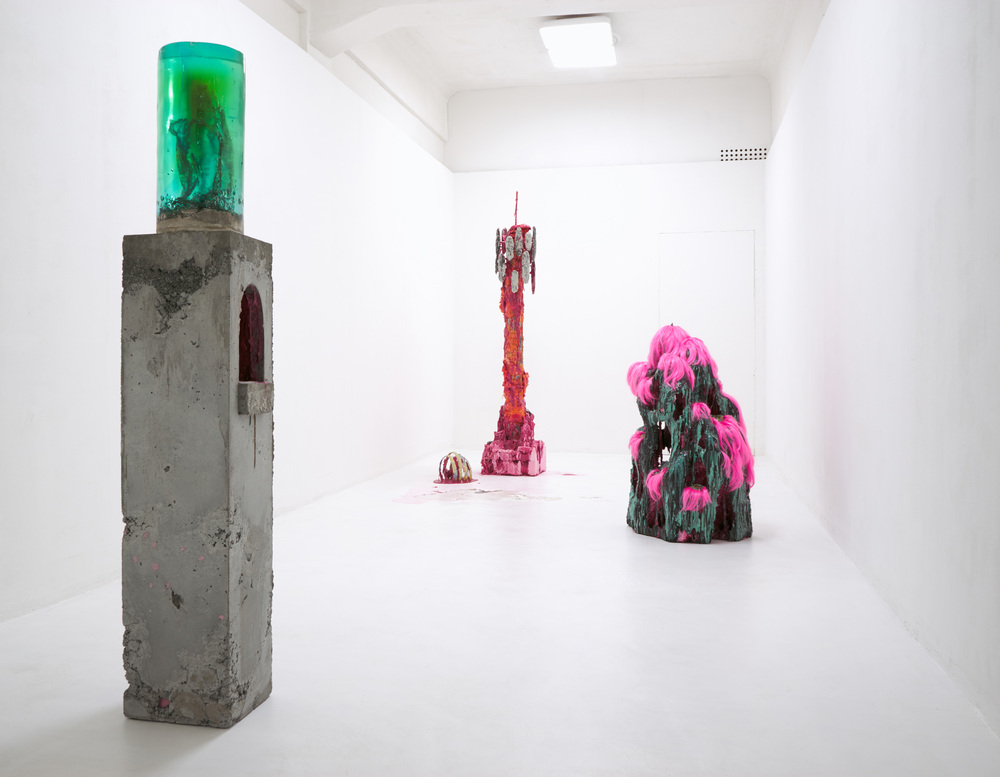
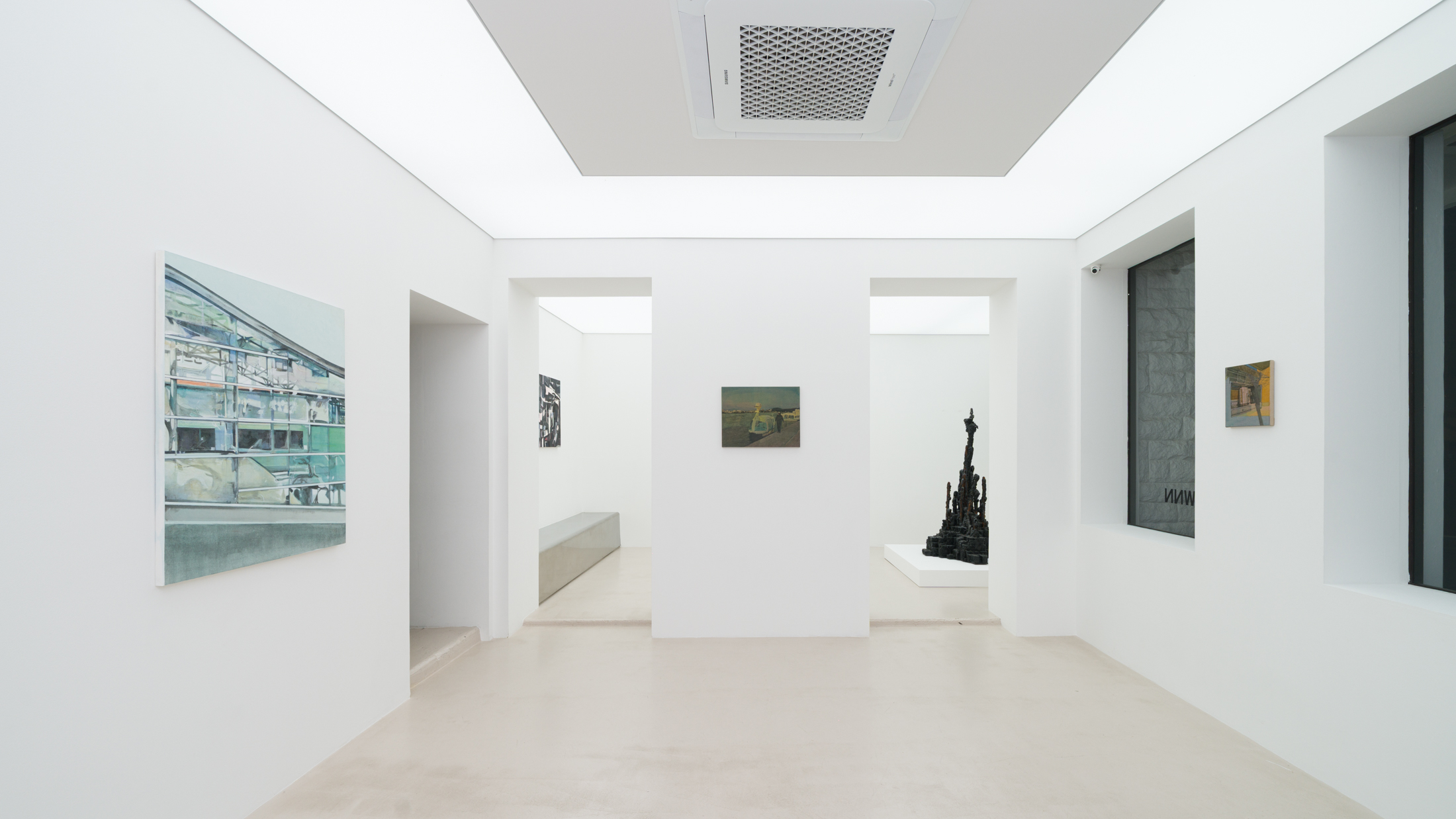
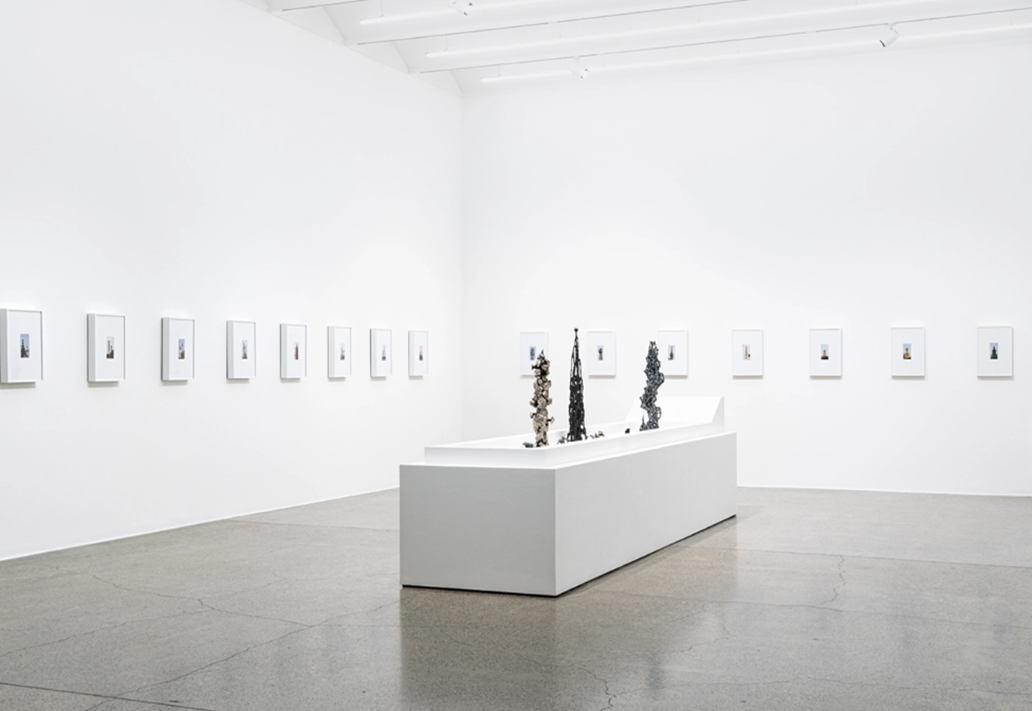
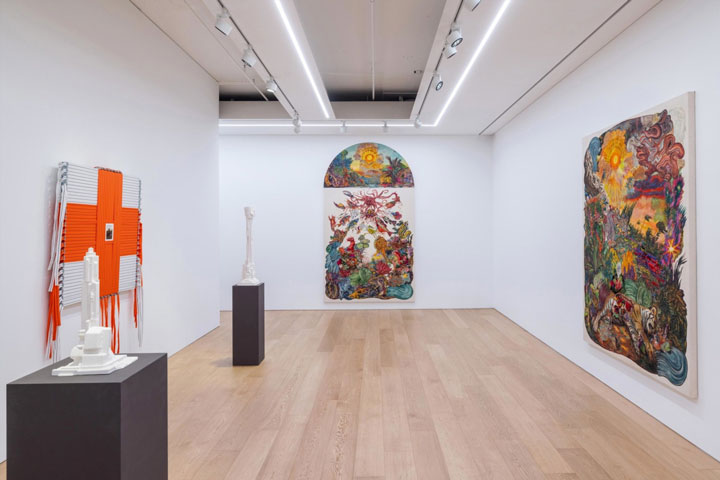
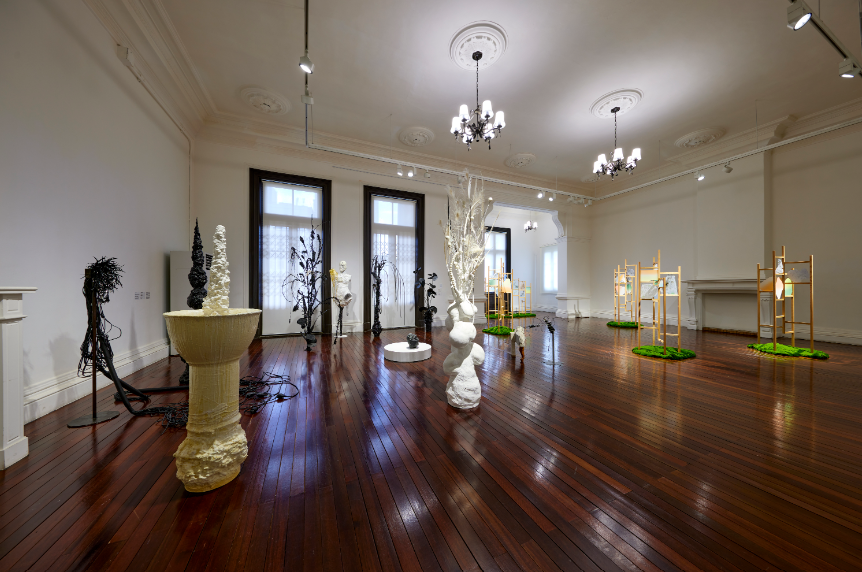
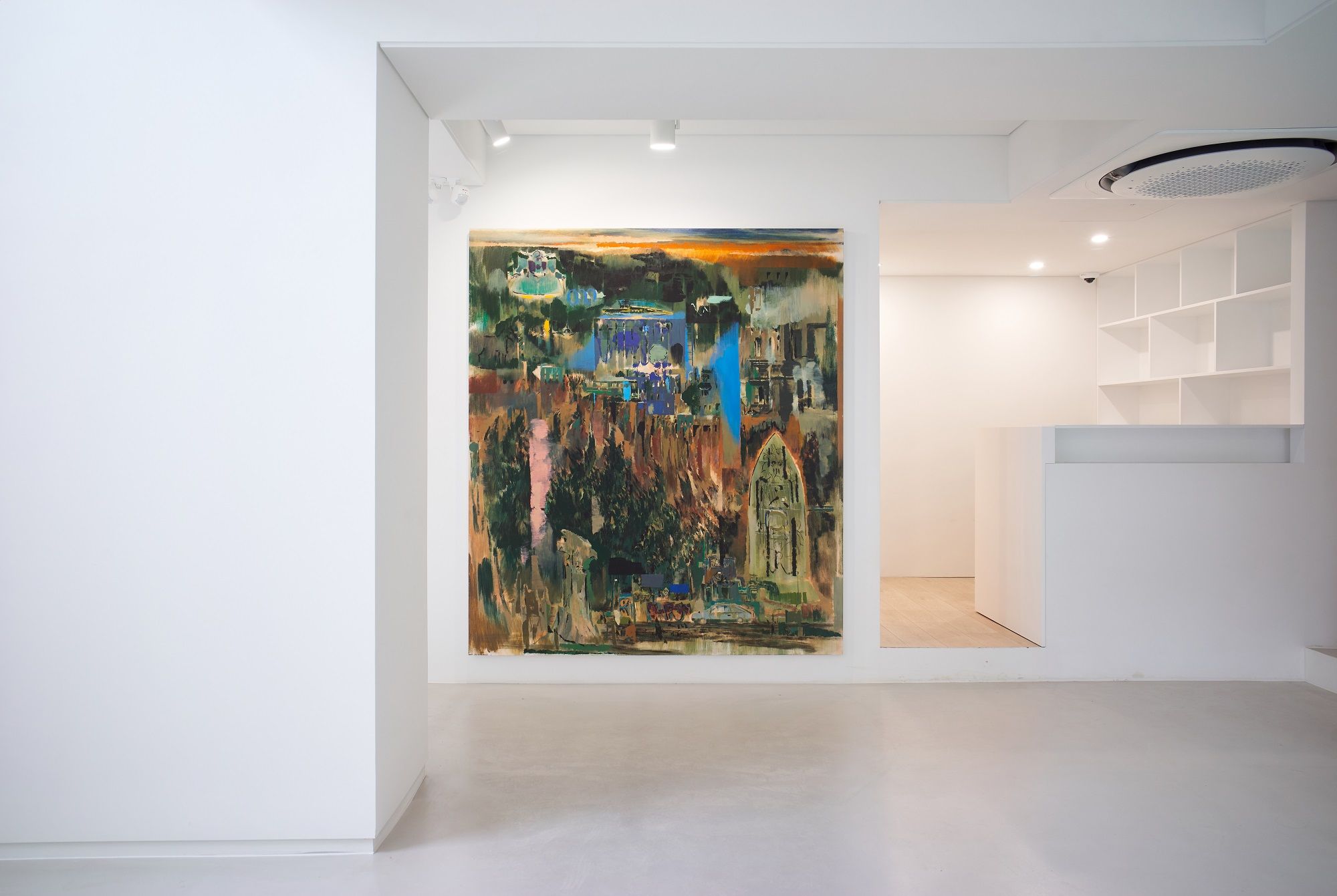
paired or discordant across two distinct physical spaces (Art Space HYEONG and
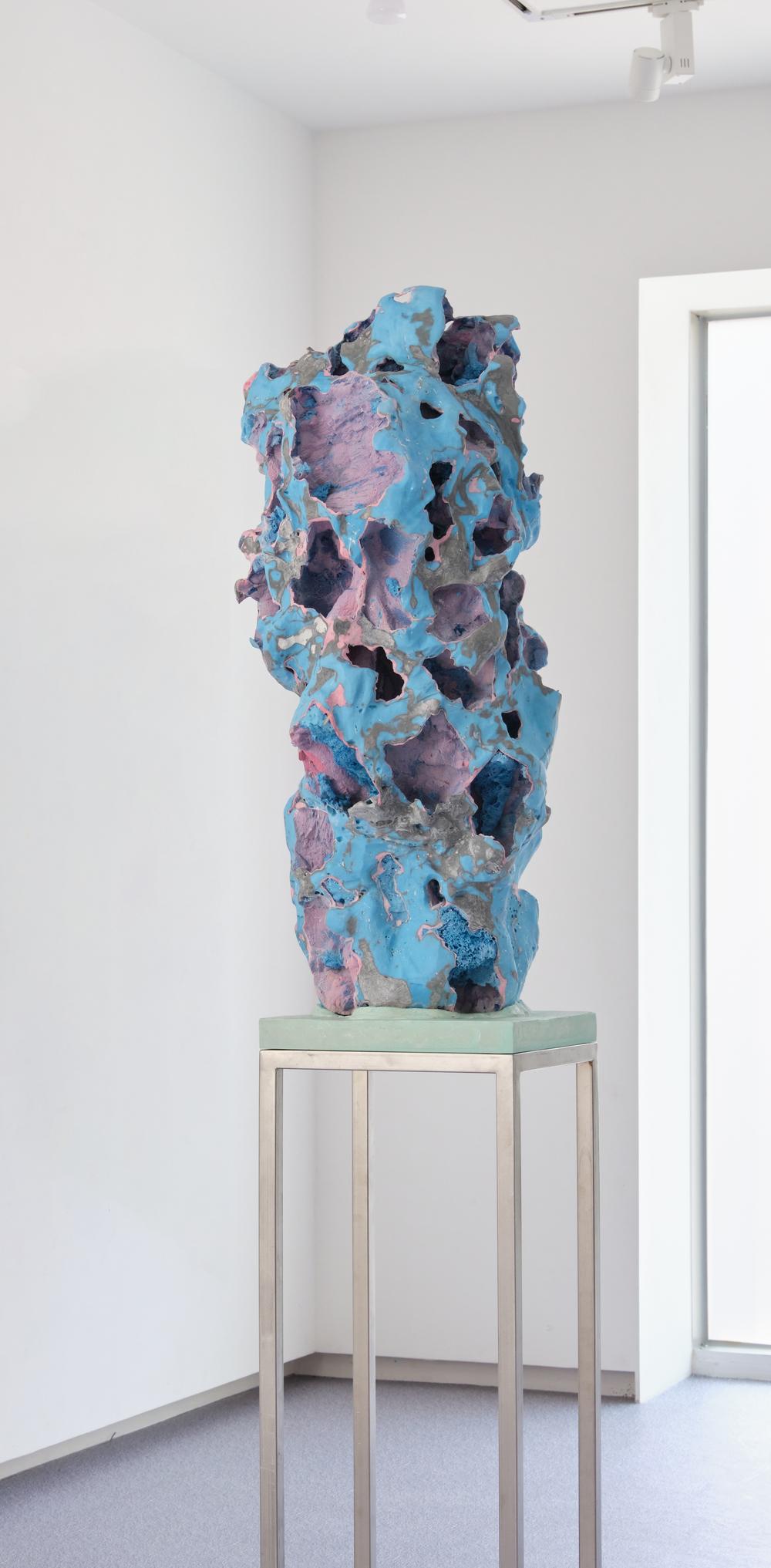
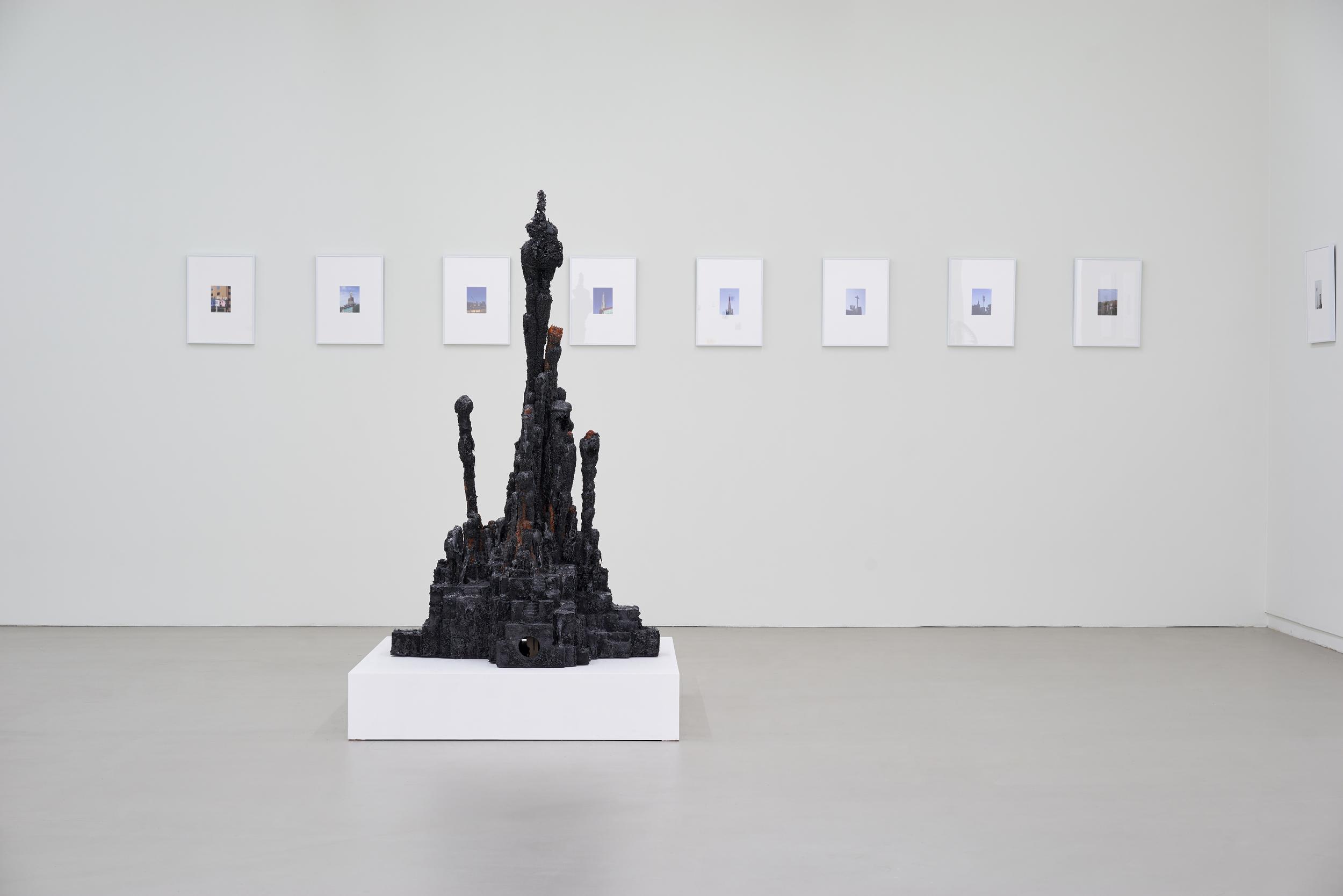
Shift) and are exposed to the viewer's perspective. These miniature-sized
pieces appear as stones, mountains, or fragmented landscapes of a fallen
nation, either autonomously or through the artist's intervention. His current
work nonchalantly enjoys the misinterpretations of theory and technique.
According to the artist,
"The term 'miniascape,' used in fields such as suiseki (壽石), bonsai (盆栽), and artificial rockeries (石假山), refers to the art of miniaturizing natural landscapes."
Rather than focusing on the actual mountains or rocks, the artist observes the
customs of accumulation, scaling, exhibition, and preservation. He seems to
recall the techniques and constructions of noise music and circuit
combinations, which have long been of interest to him. With an independent
definition and customs of 'miniascape' that still exist, Hyun Nahm evokes
stones and mountains that are impossible to misread or misinterpret.
Perhaps due to the term 'art,' I
had been referring to his title as 'Miniascape Art' instead of 'Miniascape
Theory' until just before completing this text. From opera glasses held by
theatergoers in the mid-19th century to smartphone screens today, these are
devices meant to better present moving or static subjects, appearing more as
techniques than theories to me. They felt like convenient strategies that, once
obsolete, should be discarded. However, Hyun Nahm's Miniascape Theory
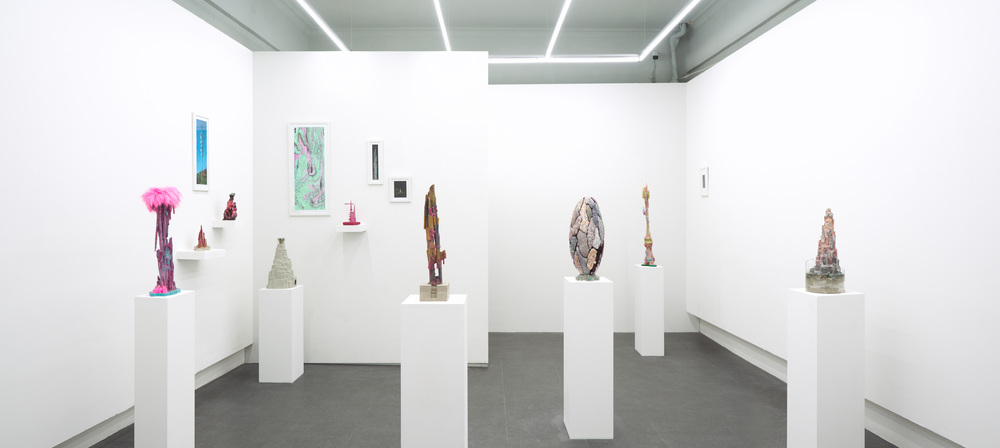
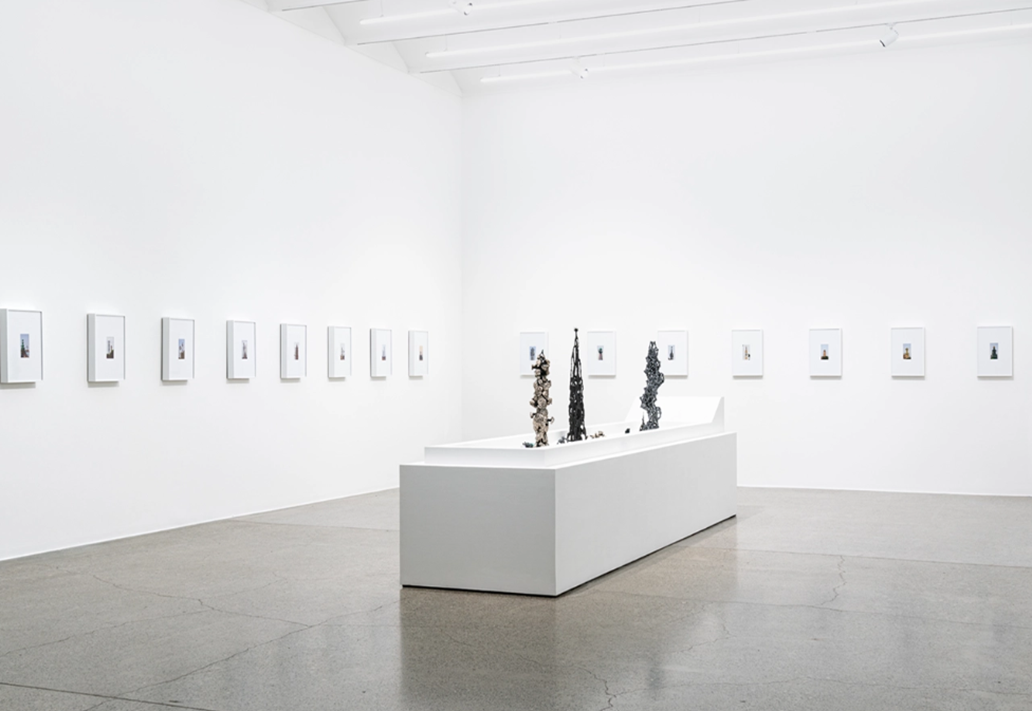
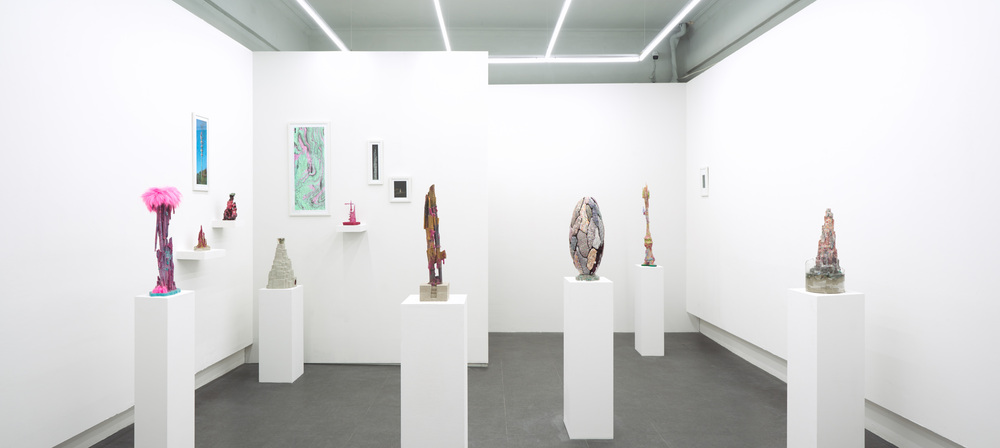
refers to the exhibition hall as a 'theory,' where individual sculptures are
placed on pedestals, forming a collective configuration.
2.
Let's attempt to attach a method
of temporary impossibility to the endlessly repeating and unsettled 'updates.'
He experiences the unknown processes of the 'whole,' which cannot be fully
grasped through techniques like chemical making, noise or errors caused by
electrical circuits. This becomes a sensation when viewing a crude scholar's
stone on a clumsy dish or an ancient weathered stone that has discarded time,
leaving only its body. Or it might explode. Perhaps it's a pedestal upon a
pedestal; through the artist's 'negative process of making,' it appears before
us not as a 'small fragment' but as a 'small whole.' Observing a reality filled
with the accumulation of peripheral by-products without an original, the artist
seeks to continue and mediate his repetitive actions by establishing a 'theory'
that reverses specific subjects A and B. In this exhibition, more important
than the manifesto of 'materializing landscapes' are the artist's questions and
hypotheses. They are presented as follows: "Why can a small stone resemble
a landscape like mountains and water, even without a consciously intended
subject of reproduction? This is because the principles that determine the form
of specific natural objects—the parts—are the same as those that create the
form of the landscape—the whole."
Therefore, Hyun Nahm's exhibition
Miniascape Theory encompasses both the tool and the entirety
of the exhibition, as well as the experiences prior to sculpture-making
contained in the folders 'stone exploration' and 'landscape recording.' His
'Miniascape Theory,' which 'excavated' the grand themes of stones and mountains
into 'exploration' and 'landscape,' remains in numerous photographic images of
grotesque stones in the Confucian Temple in Shanghai, massive black and rugged
stones glistening under rare light in Hangzhou's Lingyin Temple, and many
images of scholar's stones sitting in Kyoto's bonsai markets. The Miniascape
Theory exhibition is also Hyun Nahm's naming of projecting/throwing
'reproduction' into chemical reactions under the pretext of digesting the
continuation of crude beliefs in tombs, mountains, and stones.