Image and Sculpture: Sculpture as Societal Landscape
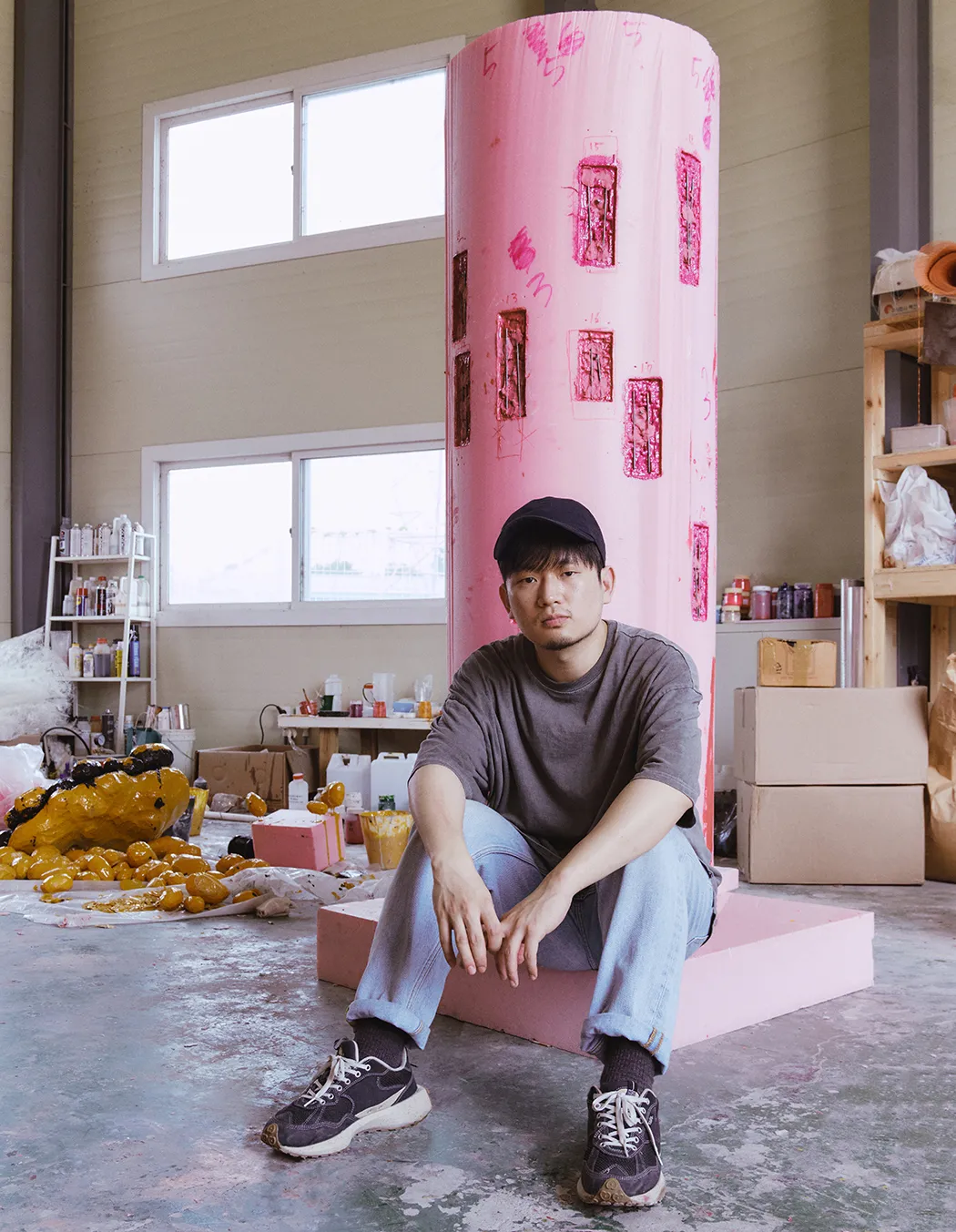
Last summer, as I began preparing to write this critical text about Kawah
Ojol, Hyun Nahm’s first solo exhibition in Indonesia, I visited the
artist’s studio at his invitation — and the scene I witnessed that day has
stayed with me ever since, crystal clear. The kind of desolate ruin one sees in
a nightmare; a continuous landscape like nothing so much as the set of a cheap
sci-fi movie staging some dystopian world. In this landscape, a chain of unidentifiable
warehouses, shipping centers, and garbage dumps, one after the other. It
occurred to me that here, indeed, might be a clue to why the artist is so
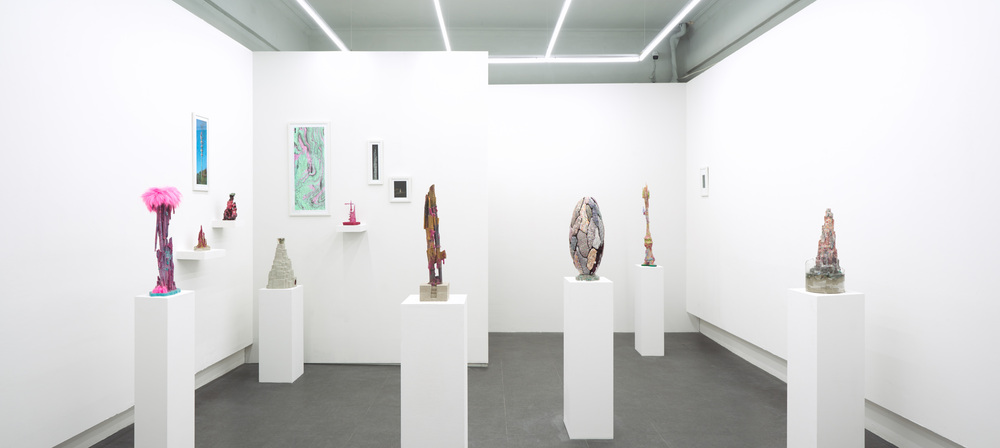
insistent about calling his sculptural works “landscapes.” Kawah
Ojol, too, moves in the direction of landscape. Kawah
Ojol is based on a wealth of information and observations
collected by the artist over the course of research trips all over Indonesia.
Like an anthropologist setting out to map the structures of daily life that
make up a society he has stumbled across, Nahm seeks to map — as landscape — a
society of which he himself is a part. Yet the result is a landscape that is
material in addition to being visual.
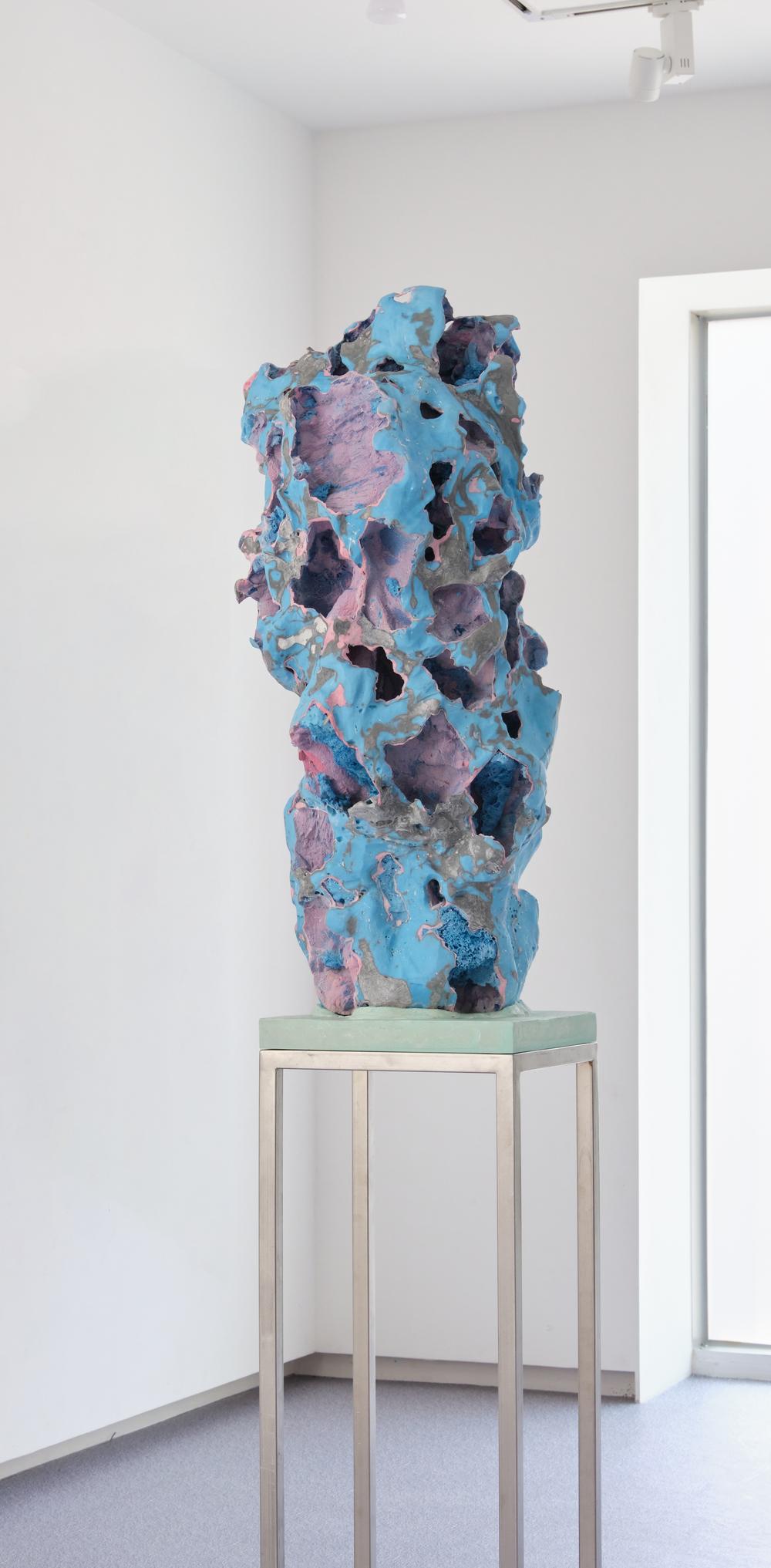
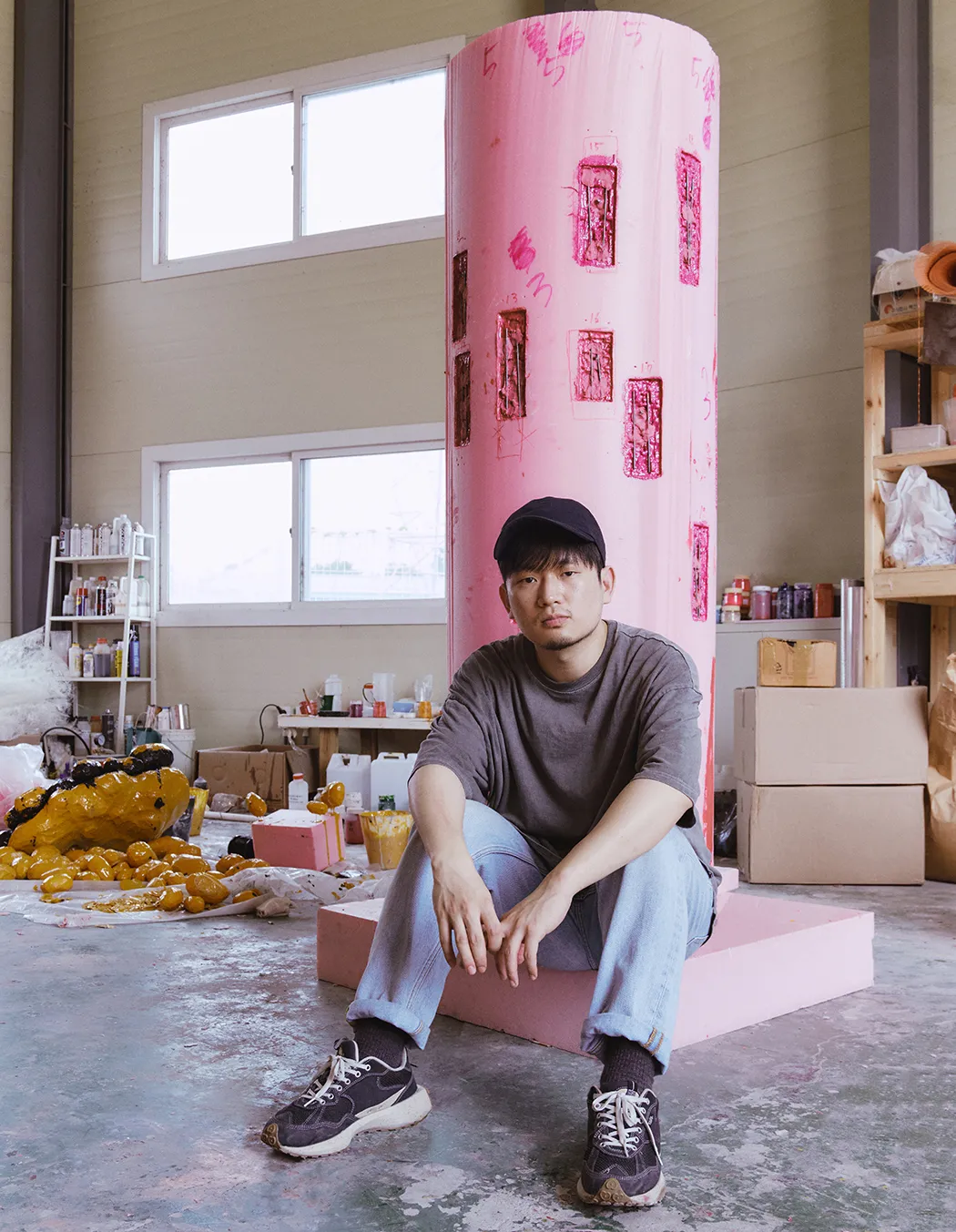
Describing his own artistic process, Hyun Nahm chooses the standalone word,
“mining.” This refers, among other things, to the way he constructs his visual
language by selecting from the spontaneous forms generated by the casting and
molding of different materials. For the artist, mining likely refers to a
series of formative practices in the studio, such as melting industrial
materials, pouring other materials into them, and hardening the result. In
puckishly attaching the word “mining” to the experience of contemplative play
and the projection of conceptual images surrounding nature onto stone, Hyun
Nahm was likely centering the fact that such minerals are both natural and
social. Indeed, for many decades now rare metals — which have become the raw
materials for new industrial products — have been the subject of frenzied mining.
And we are frequently told that rare earths, germanium, antimony, gallium,
cobalt, tantalum, and other unknowable minerals are the resources that will
shape the world of tomorrow. These minerals are mined, refined, developed,
transported, distributed, and sold. There is not a single speck of nature that
is not infused with some social component. So the use of the word mining, here,
is not just for show, chosen simply as an elegant way to designate an aesthetic
act. It encompasses a critical approach to the language of sculpture, attentive
to the sculptural material the artist works with, as well as its formal
potential.
A Specific Object?
The idea that the aesthetic experience promised by sculpture ought no longer be
that of “sculpture as image” directs us, we might say, to the single most
important shift surrounding the language of sculpture. And in this sense, the
insistence on producing sculpture as landscape — while also referencing
landscape as the most powerful of images — cannot help but be disconcerting. A
sculpture placed on a stylobate or plinth functions as symbol or icon. This is
because any such piece is an image that has taken on the form of a material
object. As such, it is imbued with meaning, and the viewer, in sensing or
perhaps even understanding said meaning, enjoys the aesthetic experience of the
thing. This is, at least, how sculpture was conceived of by art history before
the advent of minimalism. A sculpture is a material object (a block of stone,
for example, or a hunk of metal), but it conceals this characteristic, engaging
us as an aesthetic object with symbolic meaning. Therefore, what mattered in
sculpture was not its material, its socalled substance, but rather the form it
took on.
By the second half of the 20th century, however, such ideas of sculpture were
nowhere to be found. In the words of Donald Judd, a representative figure in
the world of minimalist sculpture, “specific objects” demanded that sculpture
be rid of any symbolism or metaphysical notions. And in order to completely
strip away any whiff of subjective meaning, they preferred to use mass-produced
industrial objects in place of handmade sculpture (which would inevitably
retain traces of authorship). Judd argued that both sculpture and painting
needed to be three-dimensional, and that as “specific objects,” they ought to
relate on an equal footing to the other three-dimensional objects around them
(whether walls, columns, or floors) in order to produce a phenomenological
experience of said objects.1) In this way, sculpture was now
transformed into what we would later come to call installation. Meanwhile, this
strong reaction against sculpture as signifier and symbol led to arguments that
emphasized materiality over form. This was perhaps best summarized by Robert
Morris in his essay “Anti-Form.” 2) Pointing out that
minimalist art, despite its insistence on the object, was actually indifferent
to material specificity, Morris rejected any art still bound to form. And with
that, minimalism once again turned to process art. In essence, Morris took
Judd’s argument a step further, calling for the symbols and allusions that
still remained in such objects to be washed away completely. When we recall the
standard art historical summary of this narrative around sculpture and its
subsequent development, Hyun Nahm’s insistence on sculpture’s return to the
image cannot help but fascinate.
Sublimation and Desublimation
The work presented in Hyun Nahm’s Kawah Ojol is
the kind that instantaneously connects two poles. These two poles refer to the
two ends of the supply chain of contemporary capitalism: mining, the initial
process, and what is often referred to in the industry as the “fulfillment
service” or the final delivery to the consumer. In between, of course, are
processes of production and distribution that remain completely opaque to us.
As such, it is these two practices — mining and shipping — that serve as key
indicators of the social processes that produce the myriad goods surrounding
us. Of course, it is only through the idea of global value chains that we
understand how these social processes of production and distribution are
monetized. In other words, when we hold a cell phone in our hands with a rare
mineral integrated into it, all we actually know about it is its brand, its
model, and how much it costs. We might call this “sublimation.” Every commodity
has a specific use. But there is only one reason for its production. It is
produced solely because it brings in more money; because it increases value,
usually marked by currency. As such, we can say that claiming a commodity is
produced solely for its inherent value is to abstract it away from its
materiality, its status as a material object. Therefore, for a given material
object to become a commodity, it must be abstracted into the realm of value. In
other words, it sublimates the material itself, transforming it into the abstract
object we call value.
Of course, the same could also be said when it comes to the principles of
sculpture. When Judd calls upon us to look at sculpture not as a symbolic
structure of meaning but as a “specific object,” we might call this gesture
“desublimation.” Breaking away from abstract values like “meaning” in favor of
experiencing the sensory world formed in union with other material objects —
this, to Judd, is the goal of sculpture; and the word that best suits it is
“desublimation.” And yet in reality, this so-called de-sculptural impulse, this
return to objectivity or materiality, does contain a certain amount of
hypocrisy. As Peter R. Kalb notes, Judd worked with ““Bernstein Brothers,
Tinsmiths; Allied Plastics; Rohn Haas Plexiglas; and Galvanox and Lavax
finishes.”3)
Judd worked with a variety of different “commodities.” And it can be said that
the process of his work was not, as he professed, a process of sublimation, a
process of making objecthood perceptible, but rather a re-sublimation of
commodity-as-social-production into “specific objects.” In other words, Judd
takes the industrial product as commodity and re-signifies it as a sculptural
object, stripping it of its materiality as commodity. He then imbues it with
meaning as material, an object with aesthetic value. Though Judd declares that
he is dealing with sculpture as a transparent object, a material reality,
separate from any subjectivity (that he is, in other words, desublimating it),
what he was actually doing was nothing more or less than re-sublimating a
commodity (a social material object) into an aesthetic object. Hyun Nahm
incorporates this process of sublimation and desublimation — or, to borrow a
term from political economy, the contradictory movement between material (content)
and value (form) — into the language of sculpture. To simply celebrate Hyun
Nahm as an artist who excels at exploring the materiality of sculpture would be
a misunderstanding of his sculptural project. Nahm is clearly cognizant of the
impossibility of any true separation between the material and the social.
Indeed, he often speaks of his work as material moving through a global network
of production and distribution, referred to as the global supply chain.
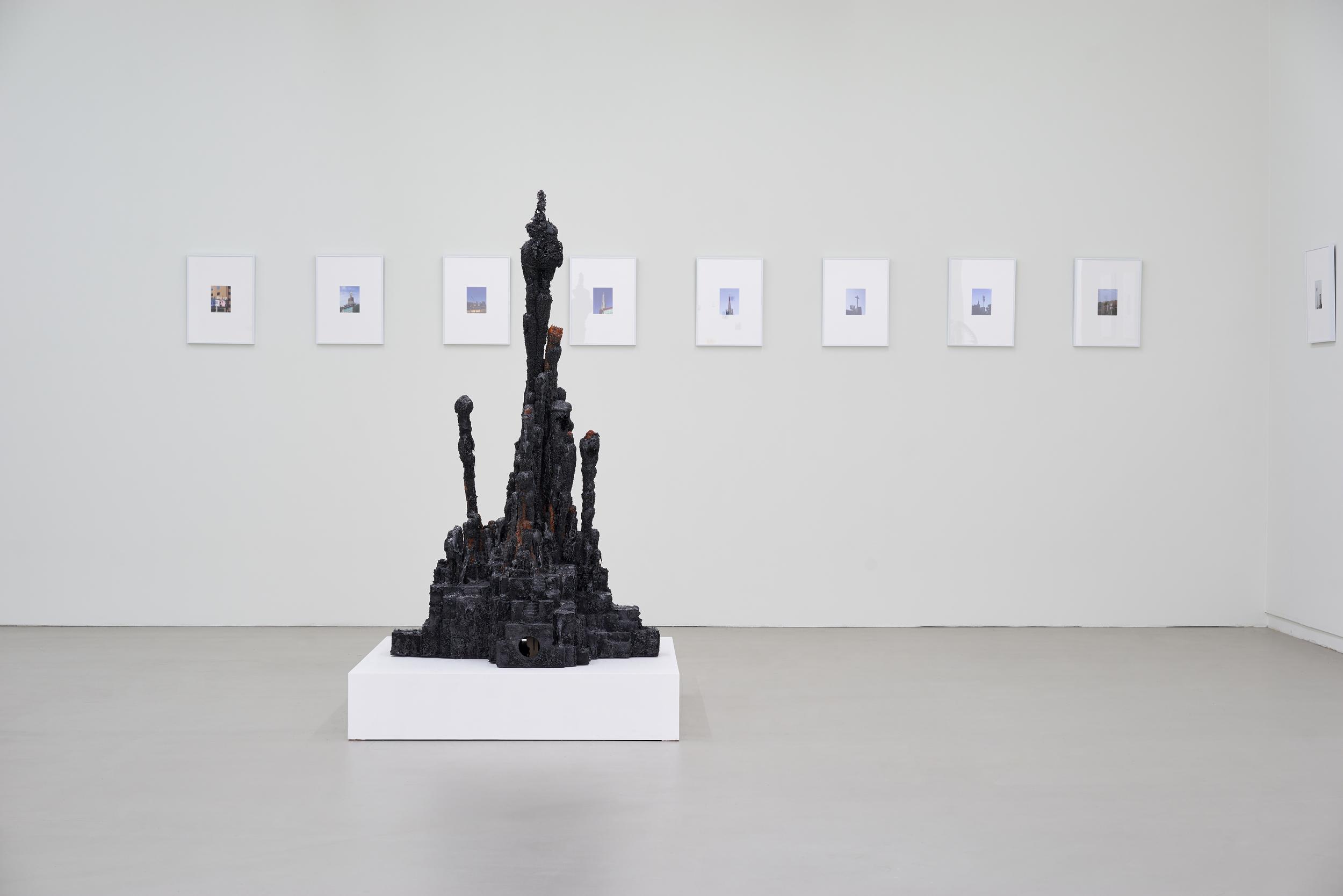
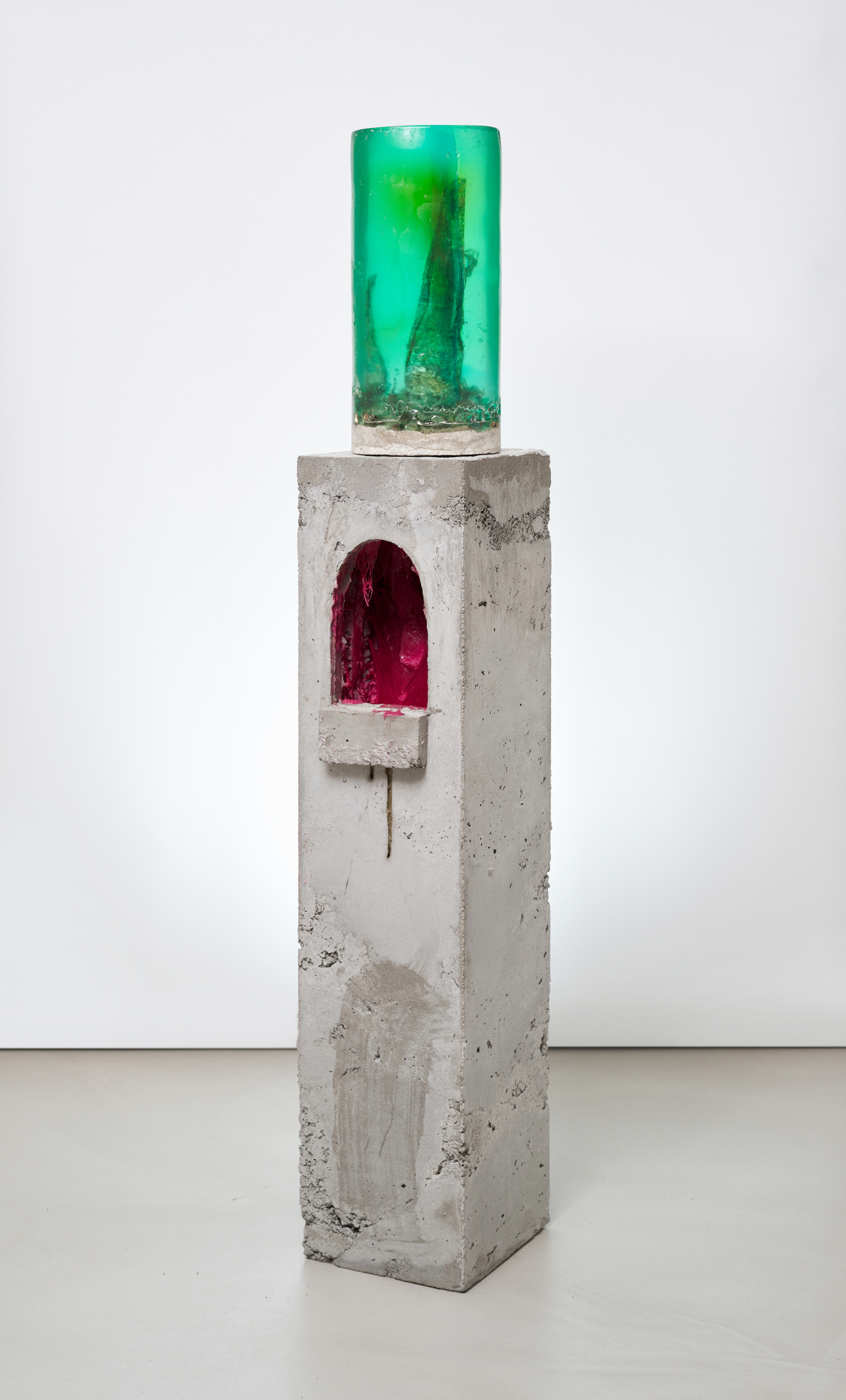
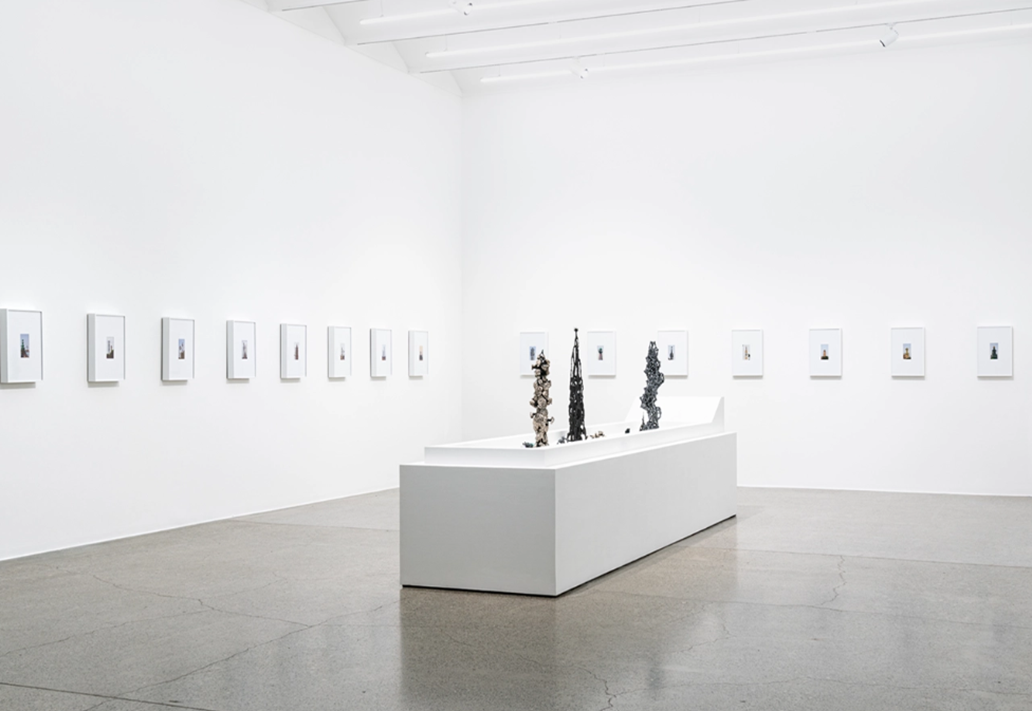
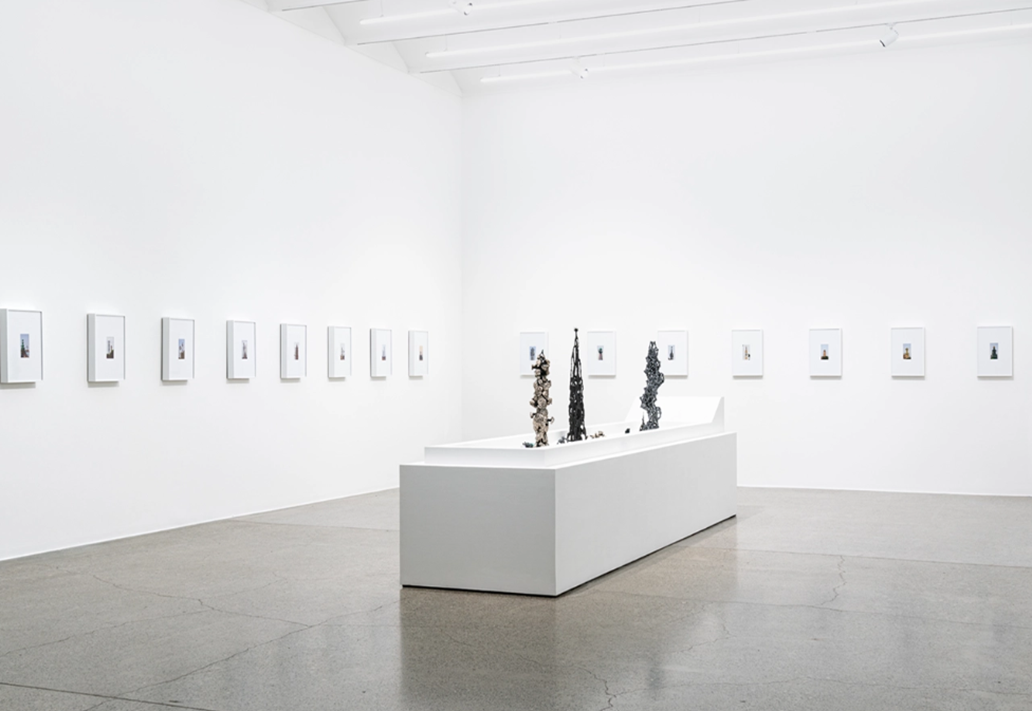
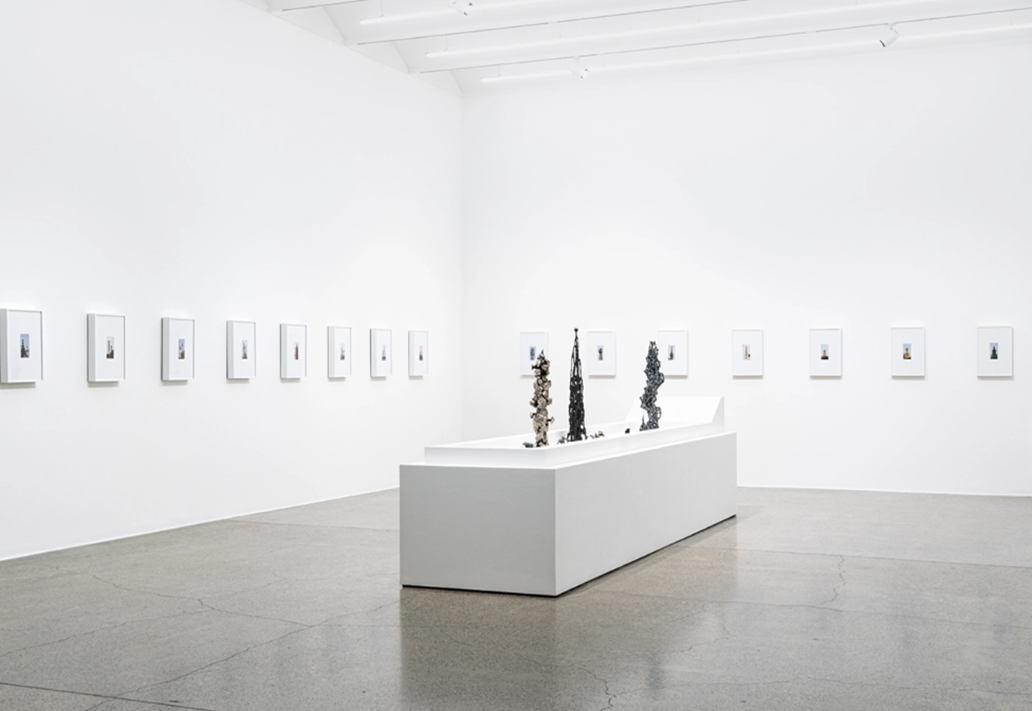
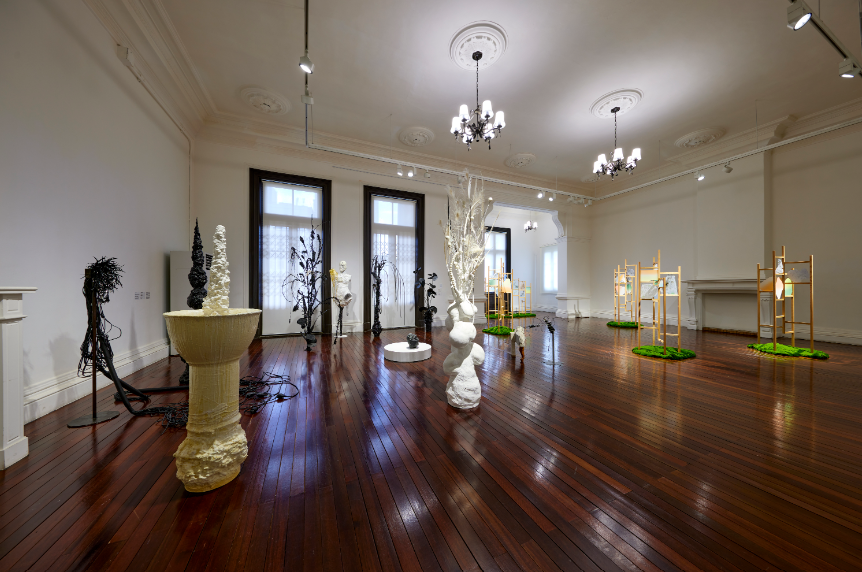
Iram and Adhan, a series of
cell tower sculptures and photographic installations that Nahm revisits
in Kawah Ojol, can be understood as both material
device and allegorical circuitry connecting the worlds of sulfur mining and
shipping labor that populate the exhibition. Serving as a kind of
infrastructure connecting the dizzying spatial and temporal differences that
span global supply chains, this series offers a sketch of the new landscape now
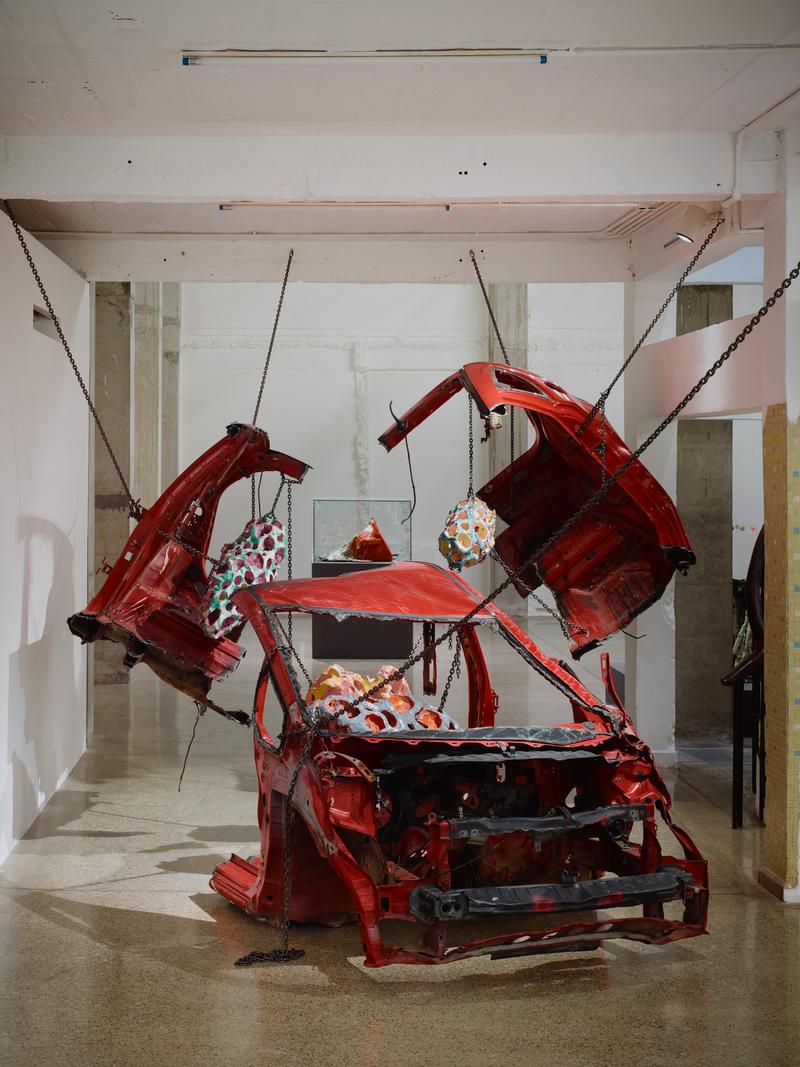
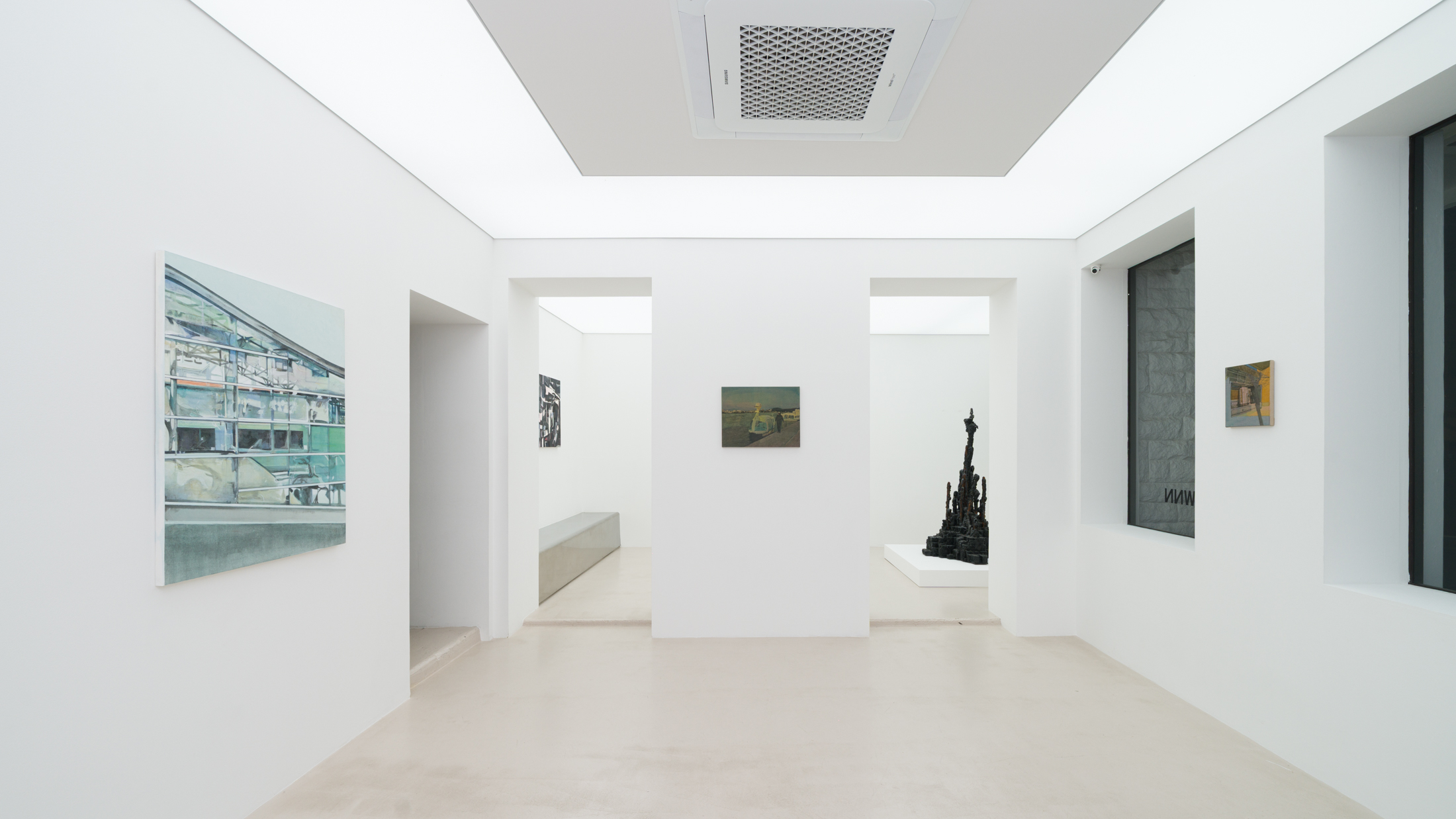
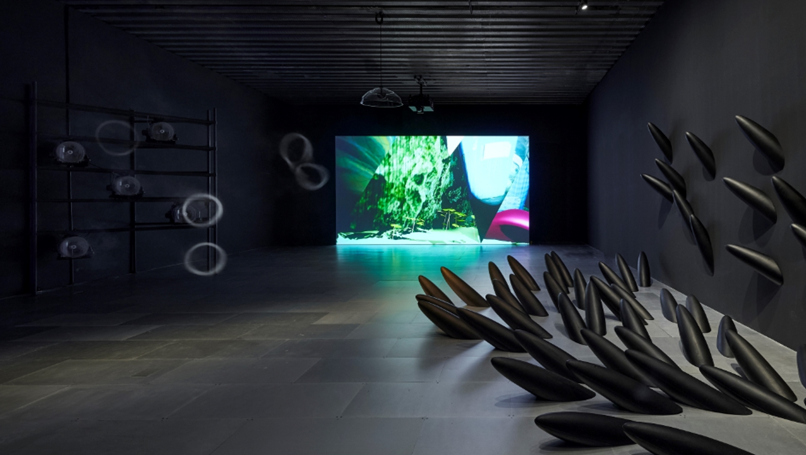
added to the urban landscape. Meanwhile, where Chain Link
Strategy — which builds on an installation piece that has become
the artist’s focus in recent years — directly alludes to the precarity of these
very supply chains, and Erupted presents scenes
that politically symbolize the social conflicts and confrontations entangled in
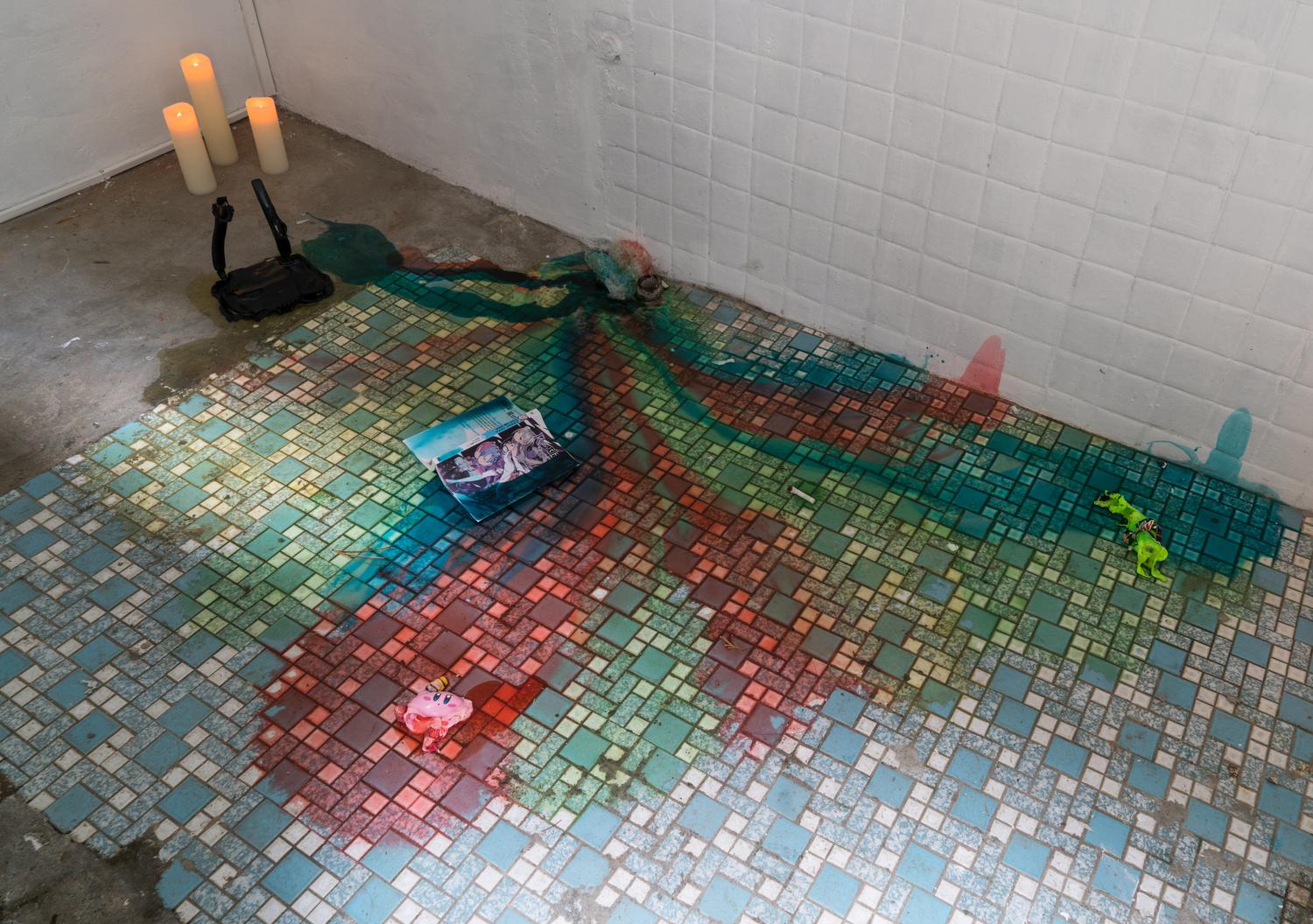
such supply chains, The Mine and Puppeteer(Archipelago)
produce a stark spatial counterpoint, contrasting the vastness
of the Indonesian archipelago as a site of mining with the figure of the ojek,
or platform laborer, and the microcosmic landscape of mining. In this way, he
reintroduces the very image that sculpture and installation sought to banish
and recalibrates the dialectic of matter and form in sculpture writ large. And
this, when all is said and done, is precisely why Hyun Nahm is one of the most
exciting artists working in contemporary sculptural practice today.
1) Donald Judd, Specific Objects, Donald Judd: Complete Writings 1959–1975,
2016, pp. 181-189.
2) Robert Morris, Anti-Form, Continuous Project Altered Daily: The Writings of
Robert Morris, Cambridge & London, The MIT Press, 1970.
3) Peter R. Kalb, Art Since 1980: Charting the Contemporary, Translated by
Hyejeong Bae, Mijinsa Publishing, 2020, p.27.