Exhibitions
《Burrowing at the Bottom of a Rainbow》, 2021.07.23 – 2021.10
July 20, 2021
Atelier Hermès
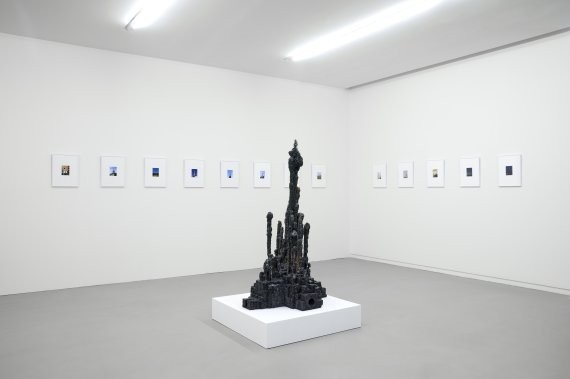
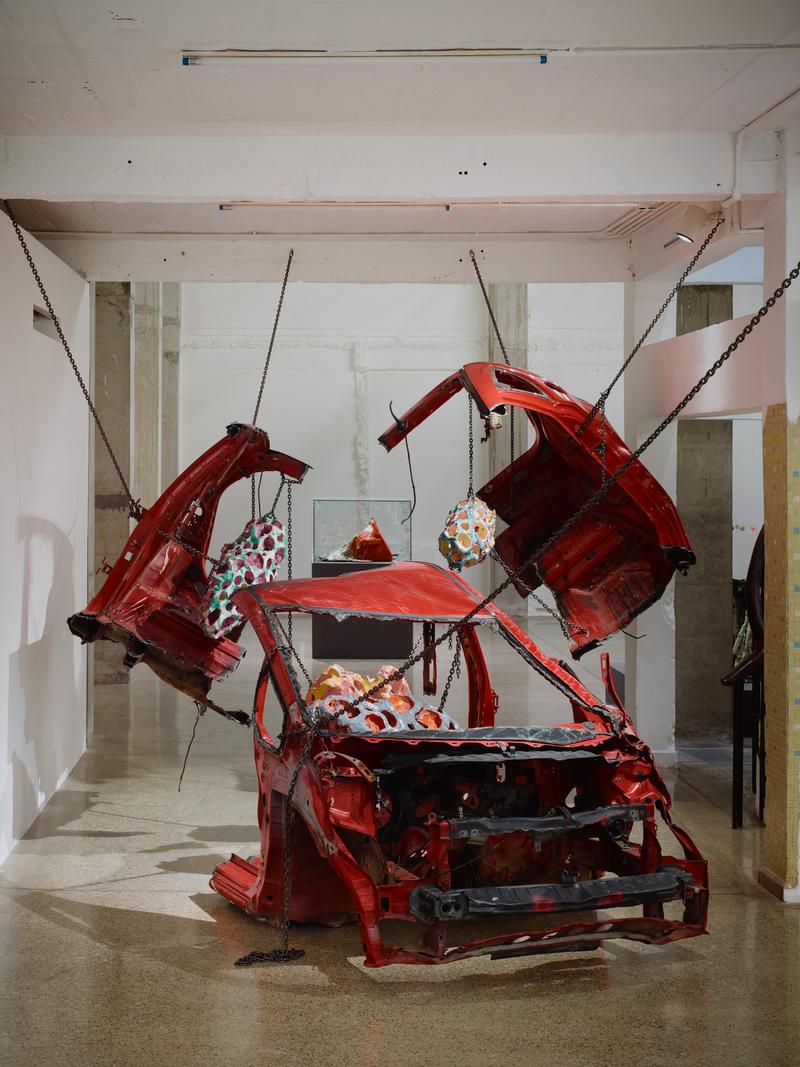
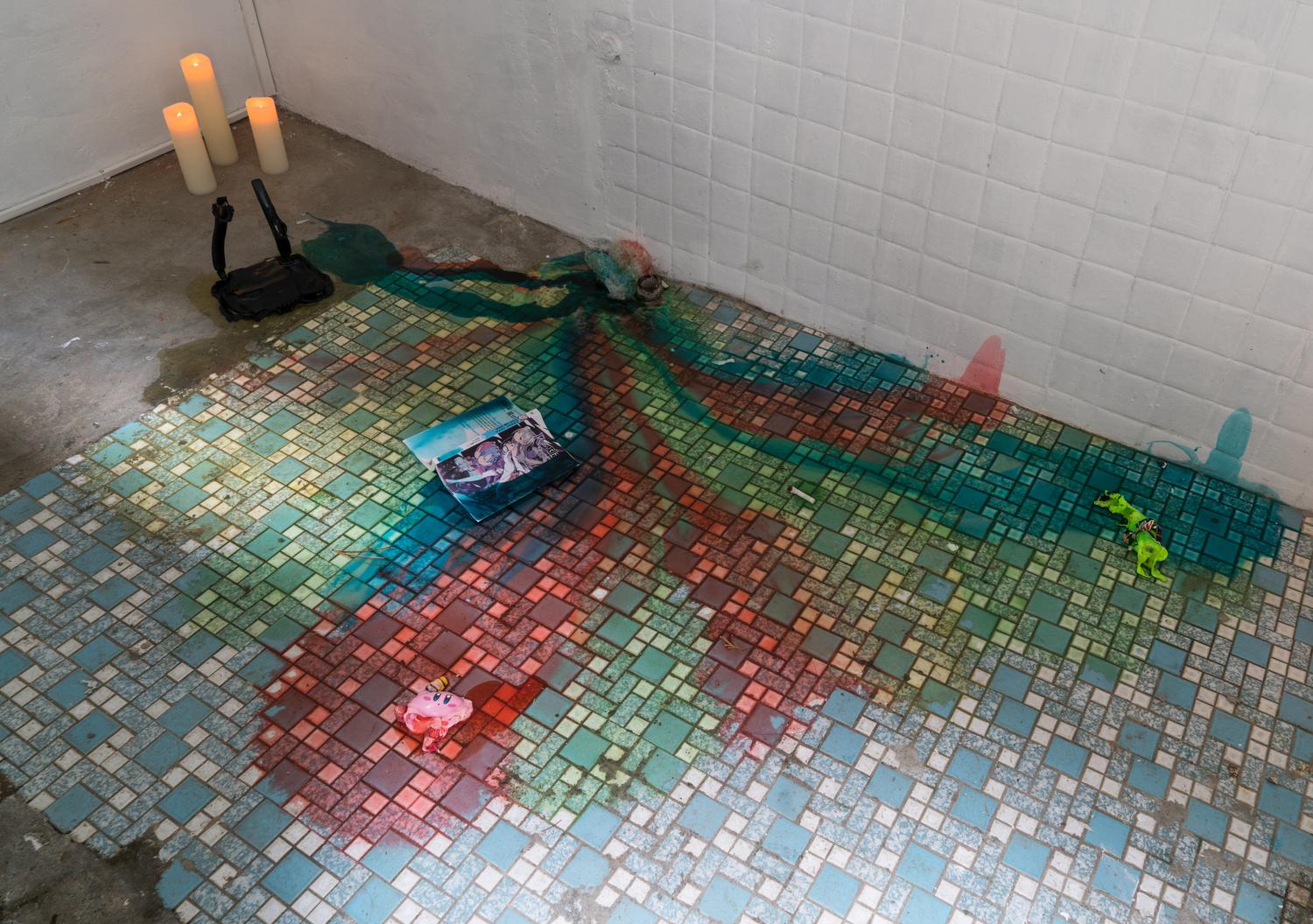
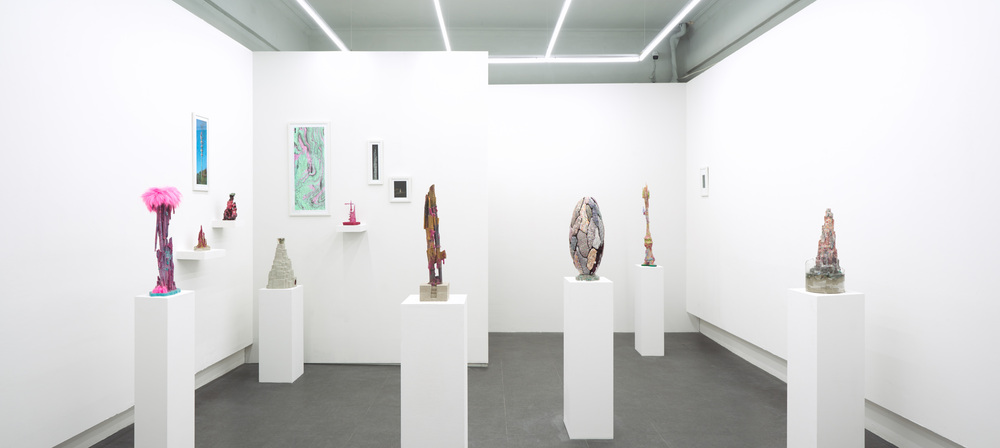
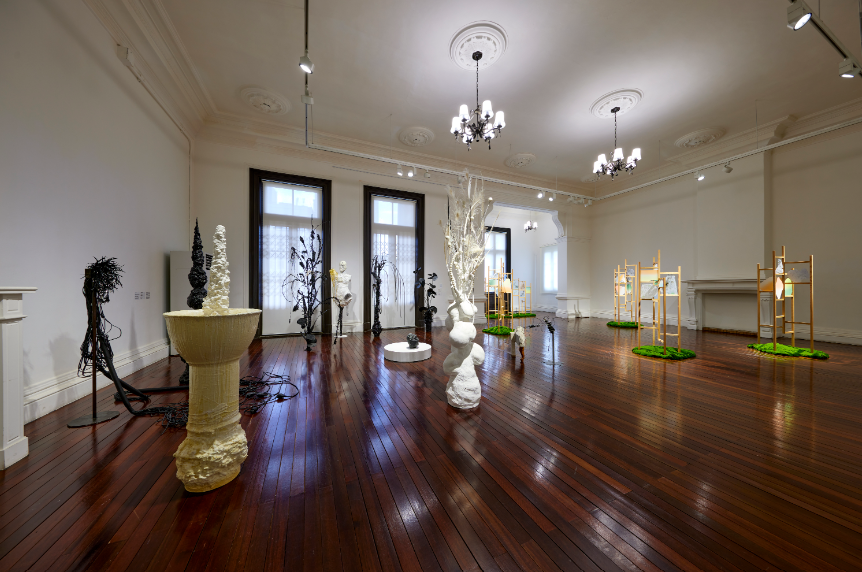
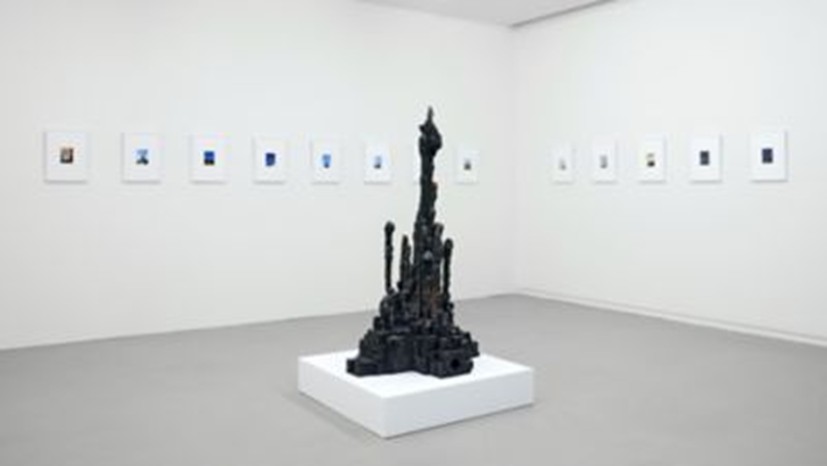
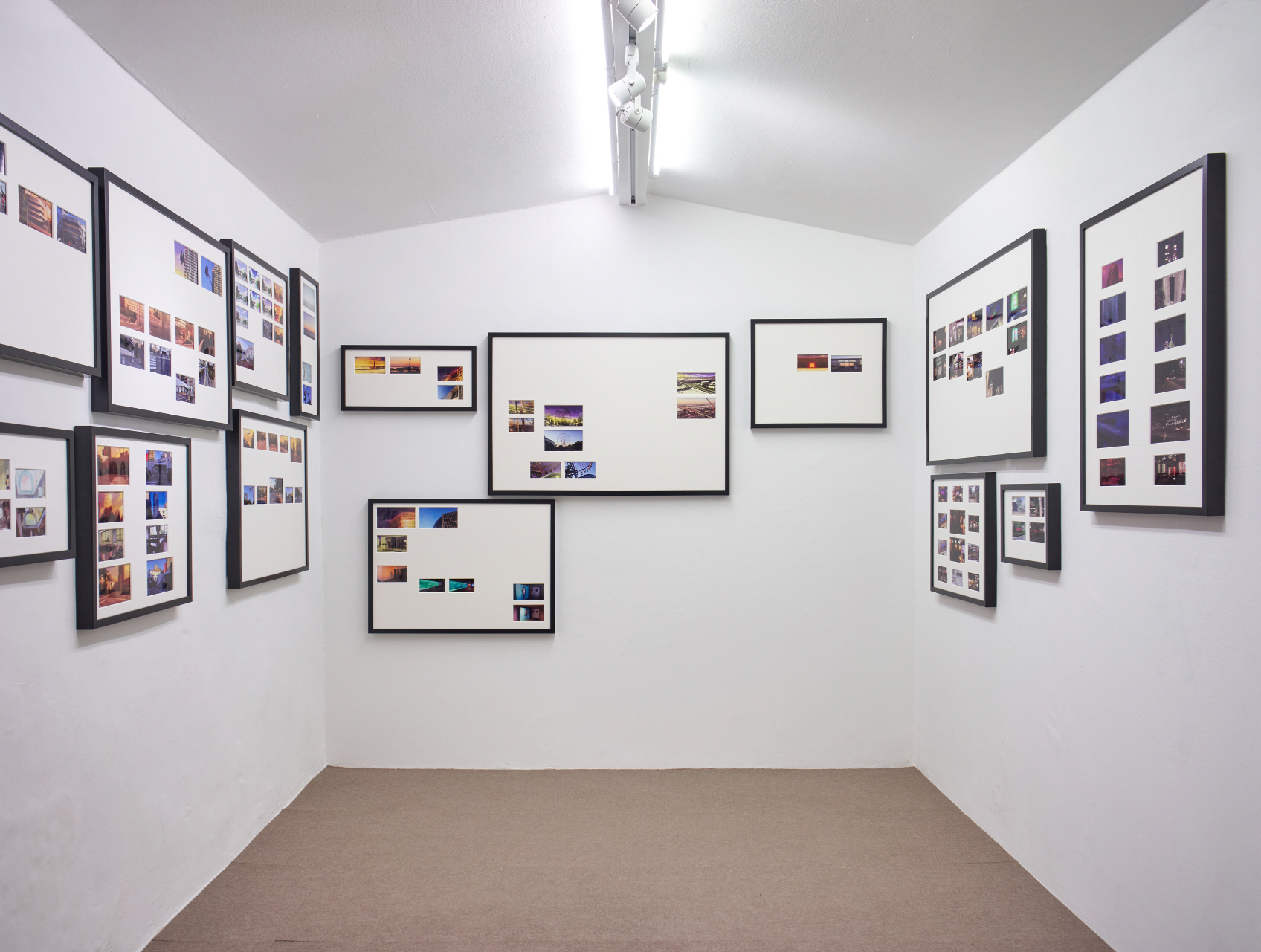
Installation view © Atelier Hermès
Atelier
Hermès presents 《Burrowing at
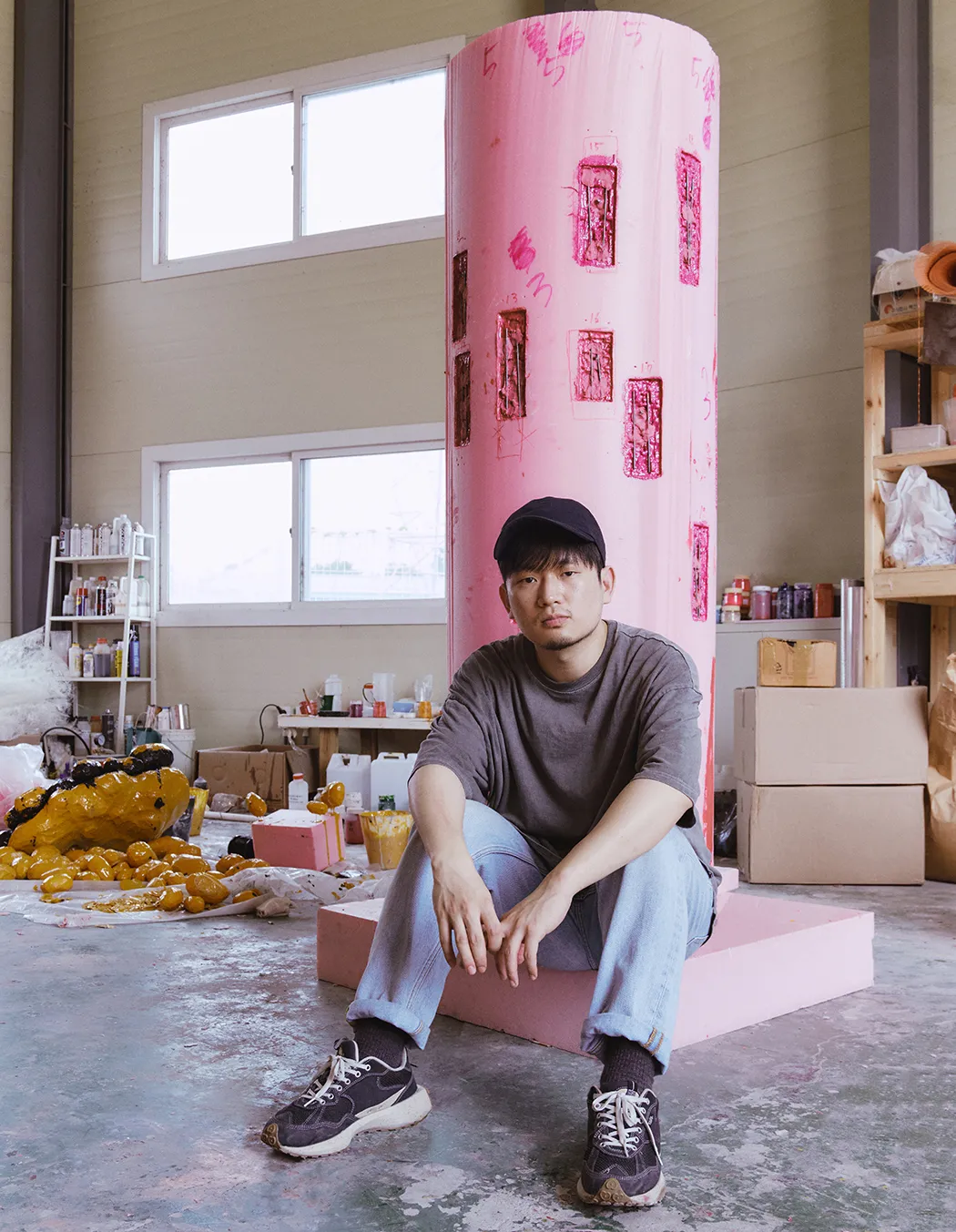
the Bottom of a Rainbow》, a solo exhibition by emerging
sculptor Hyun Nahm (b. 1990), on view from July 23 to October 3, 2021.
In an era
where new sculptural propositions are rare and their significance often
diluted, Nahm’s works resurrect the waning legacy of sculpture with
unprecedentedly unfamiliar forms and striking colors. His practice, which
captivates viewers with a distinct aesthetic, emerges from wandering through
and observing the “junkspaces” of contemporaneity—spaces left behind by
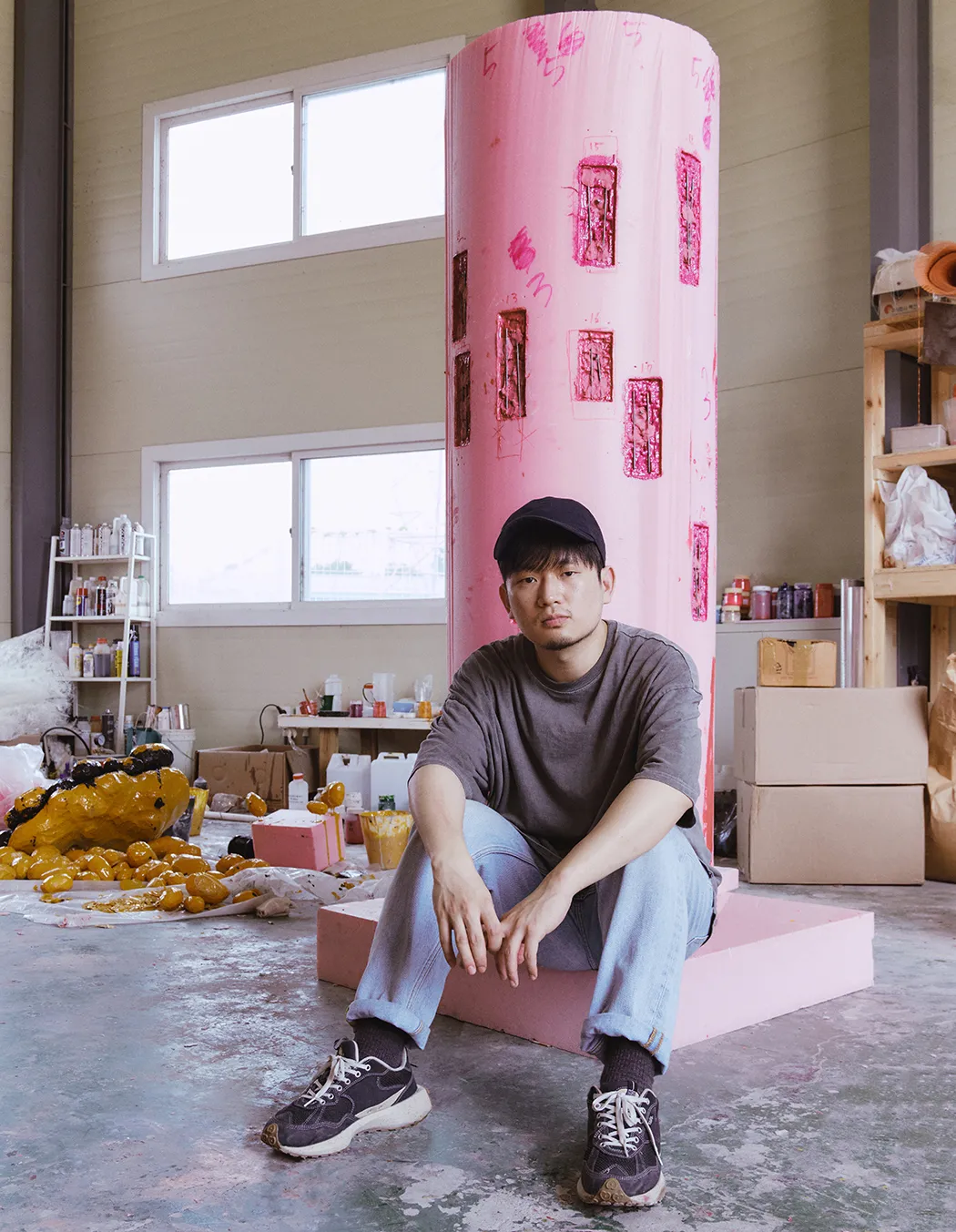
modernization—where he discovers a certain vitality within chaos. Employing
materials like polystyrene, cement, and epoxy—substances analogous to the skin
and substructure of urban architecture—Nahm constructs sculptural terrains that
reflect the present and future of the city.
By
simultaneously deconstructing and reorganizing the heritage of sculpture, Nahm
performs a kind of “excavation,” yielding new assets or outcomes. His process
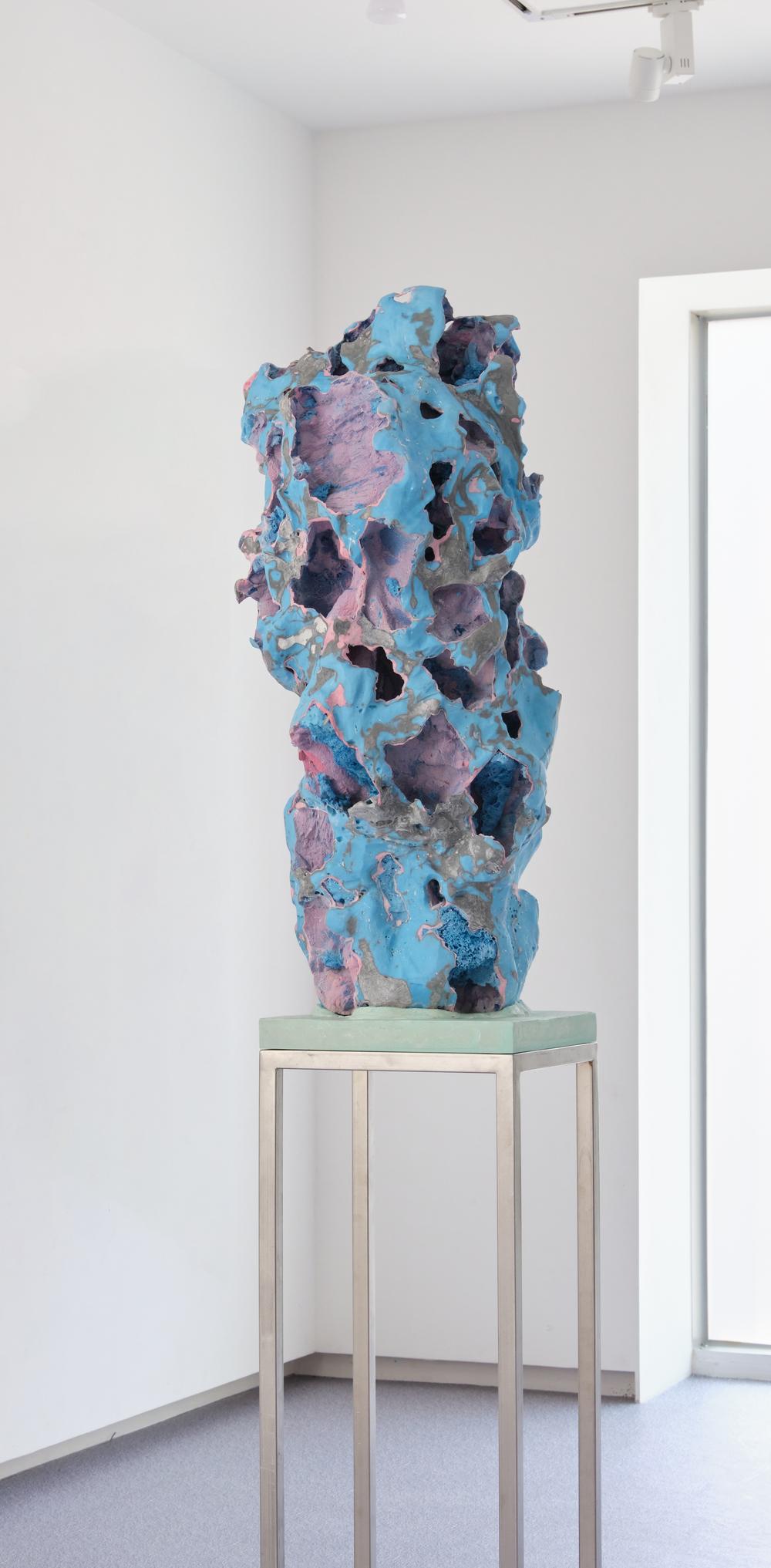
involves drilling cavities into polystyrene, pouring other materials into these
voids, allowing them to harden, and finally melting away the polystyrene mold.
The result is a negative casting of unpredictable internal spaces, a sculptural
method that also embraces the random deformations caused by chemical reactions.
These works are ultimately displayed upside-down, transforming gravity-pulled
forms into ascending vertical structures—spires and urban towers.
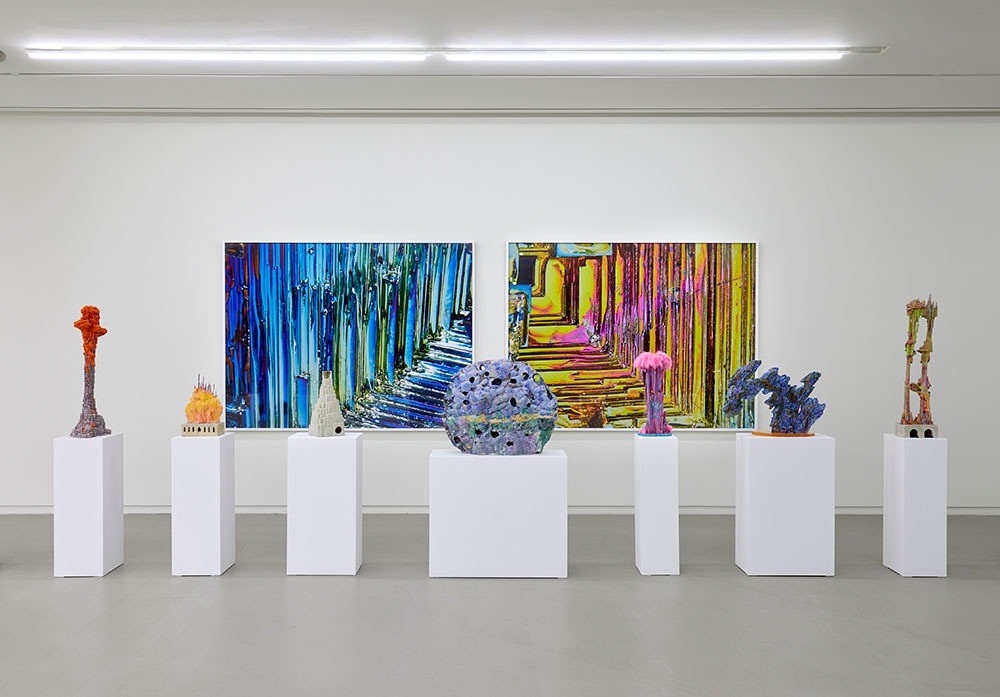
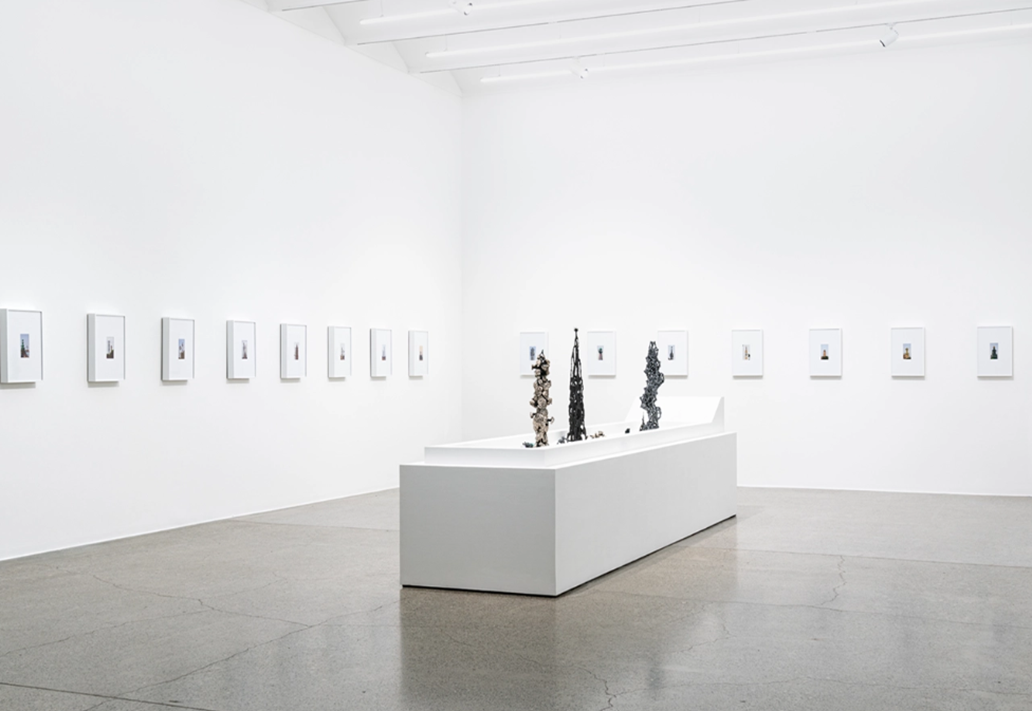
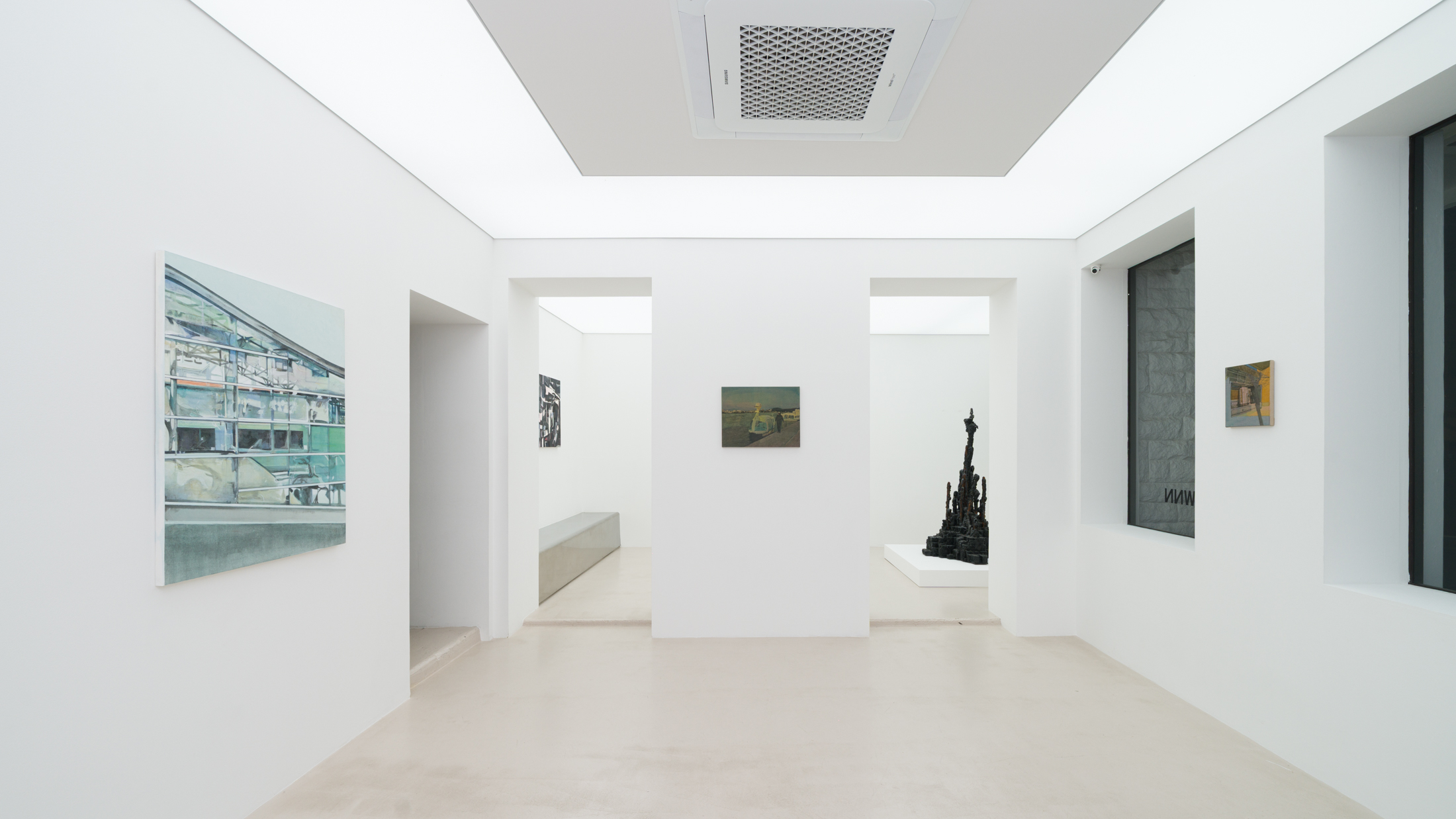
Installation view © Atelier Hermès
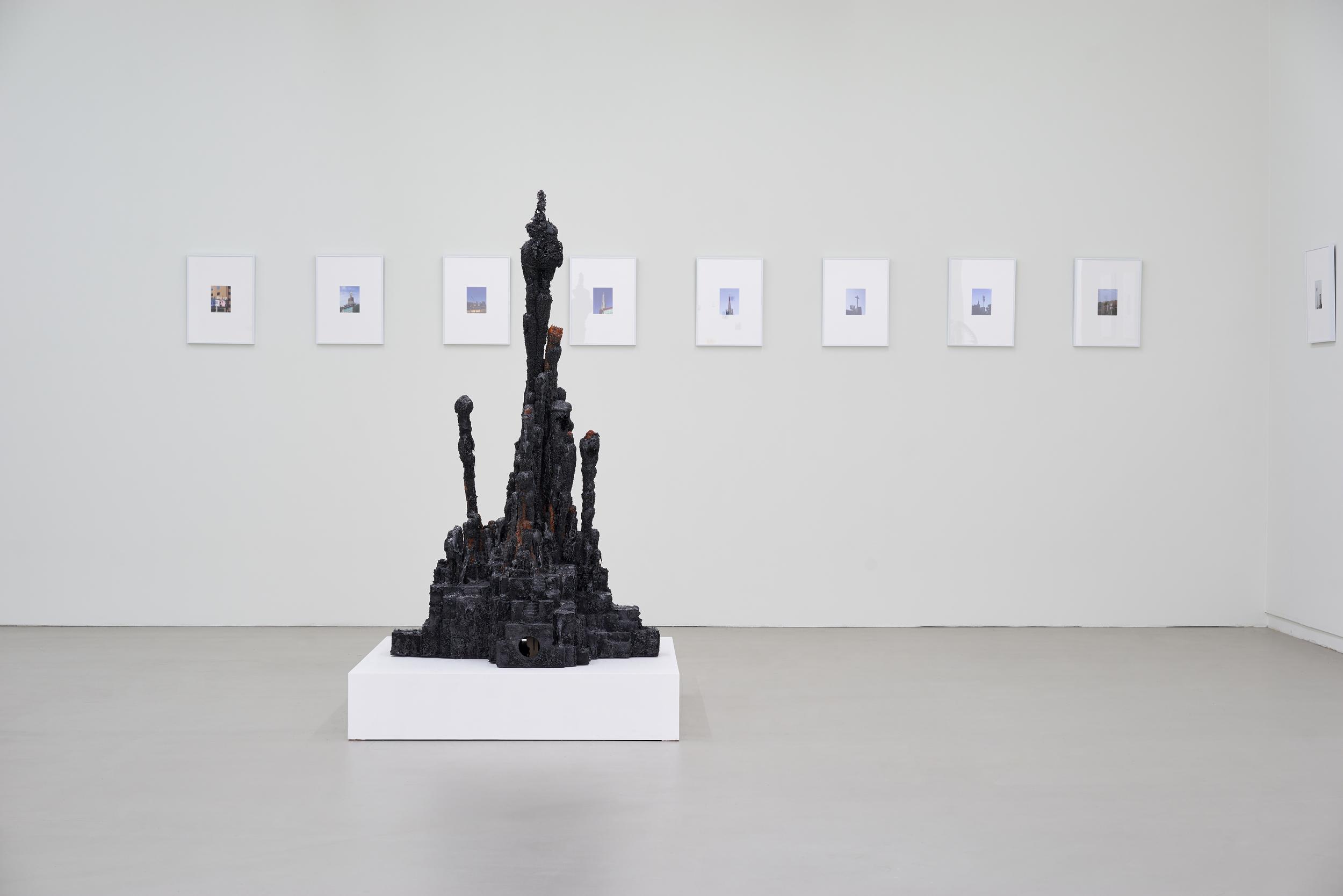
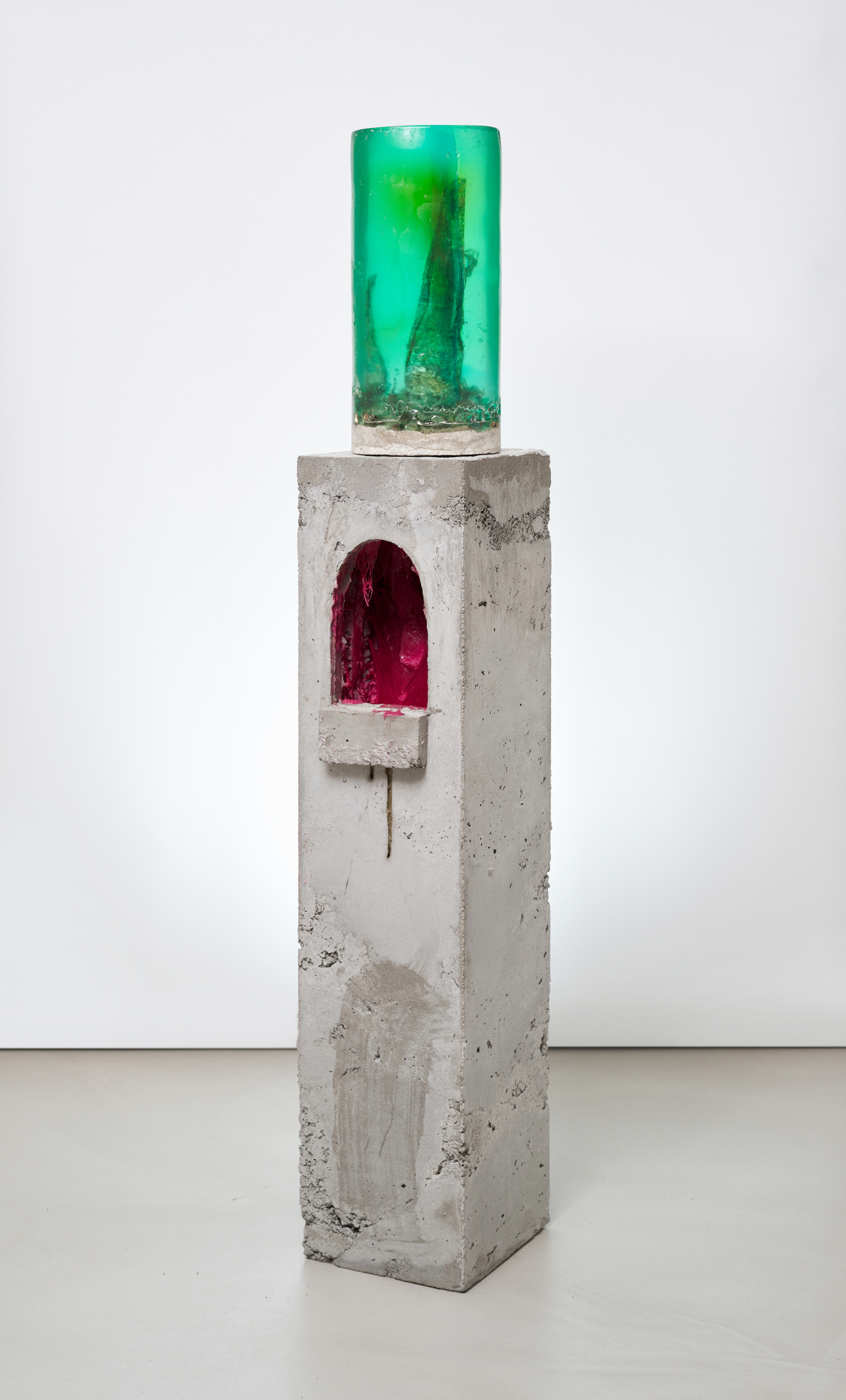
Nahm’s Atog
(2021), which alludes to Kazimir Malevich’s Architekton Gota
(1923), evokes a temporal inversion, as implied by the reversed spelling of
“Gota.” While referencing the cubic forms that symbolized futuristic
architecture in early Western modernism, Nahm contrasts this vision with that
of a darker future—far from the sleek, white abstraction imagined by Russian
Suprematists. His pieces, marked by rough textures left by escaping air bubbles
and glowing, fluorescent hues, resemble the ruins of vertical structures from a
dystopian sci-fi landscape.
The notion
of “excavation” extends beyond sculptural technique to conceptual acts of
roaming through reality, discovering vertical structures that visually resemble
sculptures. Nahm considers telecommunications base stations—ubiquitous yet
often overlooked—as contemporary spires. These grotesque forms, incompatible
with their high-tech function of wireless communication, highlight the
dissonance between form and function. Observing such structures becomes a way
to acknowledge the physical embodiment of the otherwise invisible internet, a
gesture that reverses the gaze of surveillance.
Nahm’s
commitment to sculpting landscapes suggests that even small objects placed on a
plinth can reveal the vast outer edges of the world. This spatial imagination
is not rooted in representation, but in discovery—a state achievable through
the traditional East Asian concept of chukgyeong (縮景), or “compressed scenery,” as seen in suiseki, bonsai, or miniature
rock gardens. Just as weathered fragments of nature can conjure grand vistas,
Nahm’s tangled sculptures—formed through the chemical bonding of diverse
materials—imply post-apocalyptic landscapes. For Nahm, who has also
participated in experimental sound performance using circuit-generated noise,
the interplay of matter, bricolage, chance, and new formations functions both
as a mode of perception and an artistic methodology.
Photography
by Sangtae Kim © Fondation d’entreprise Hermès