Eugene Jung is a person who likes
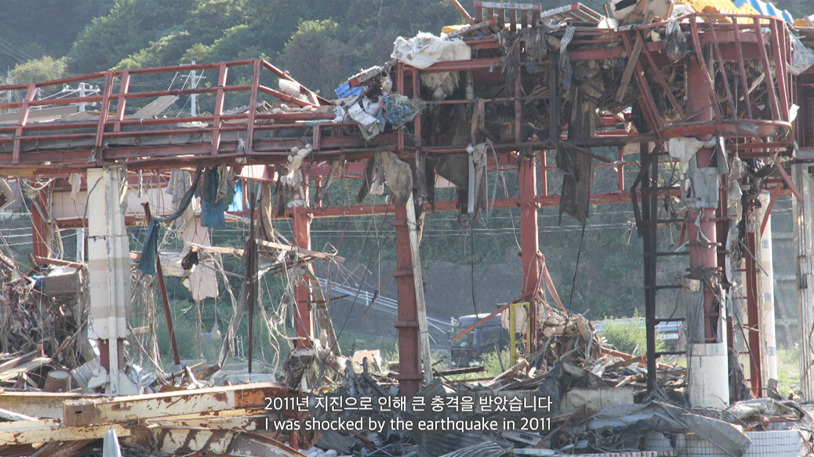
ruins. She repeatedly collects images of ruins and reproduces them with her own
hands. She even uses a sort of wit while creating the shape of hopelessness and
frustration. How can you explain the artist’s satisfaction while looking at the
devastated and collapsed place? In general, many kinds of urban development
produce, build on, and construct things that didn’t already exist. And some
people who oppose this for various reasons demolish and destroy what has been
built and erected. If she wanted to bring such a destroyed form into the
exhibition space, she might have been able to do so simply by bringing things
from construction sites or dumpsters into the space. However, instead of
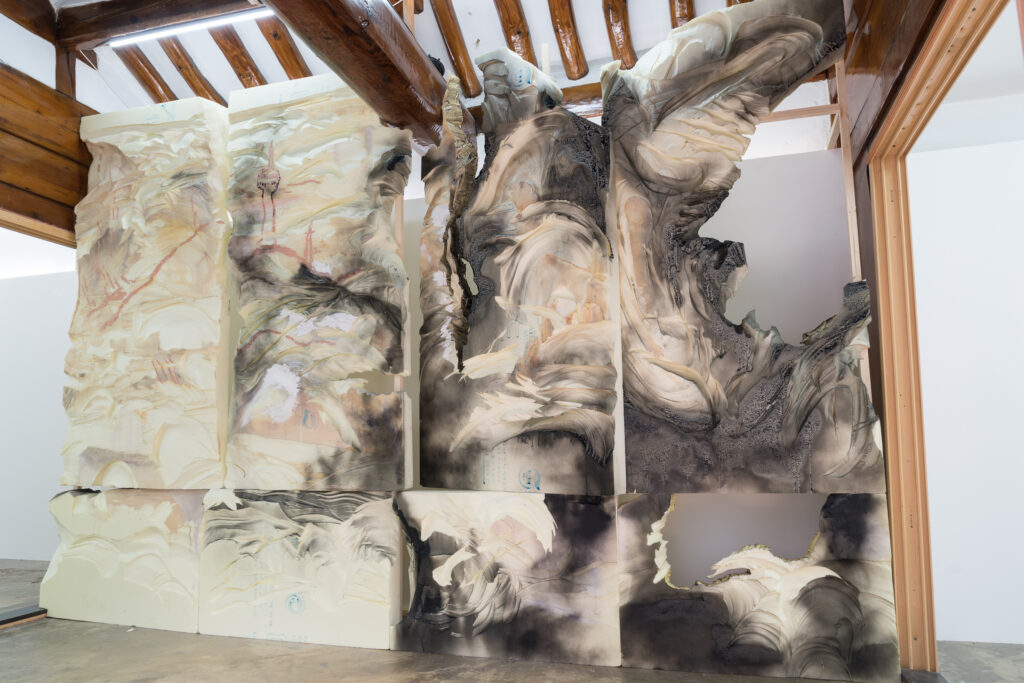
showing what was destroyed as it is, Eugene Jung re-builds the crumbled shape
and fabricates the collapsed form with her own hands.
In creating structures, Eugene
Jung focuses on developing the fantasy of ruins rather than being interested in
perfecting a sculpture. She drily brings only the necessary elements to achieve
the fantasy while economically using the elements. The artist often uses
cartoonish rhetoric. As in cartoons, a fragment of a long narrative is brought
rather than the shorter narratives unfolding in a longer breath, and the
objects are reproduced by using a cartoonish tone as a visual element as if
looking into a page of a cut cartoon. These are constructed in a variety of
ways.
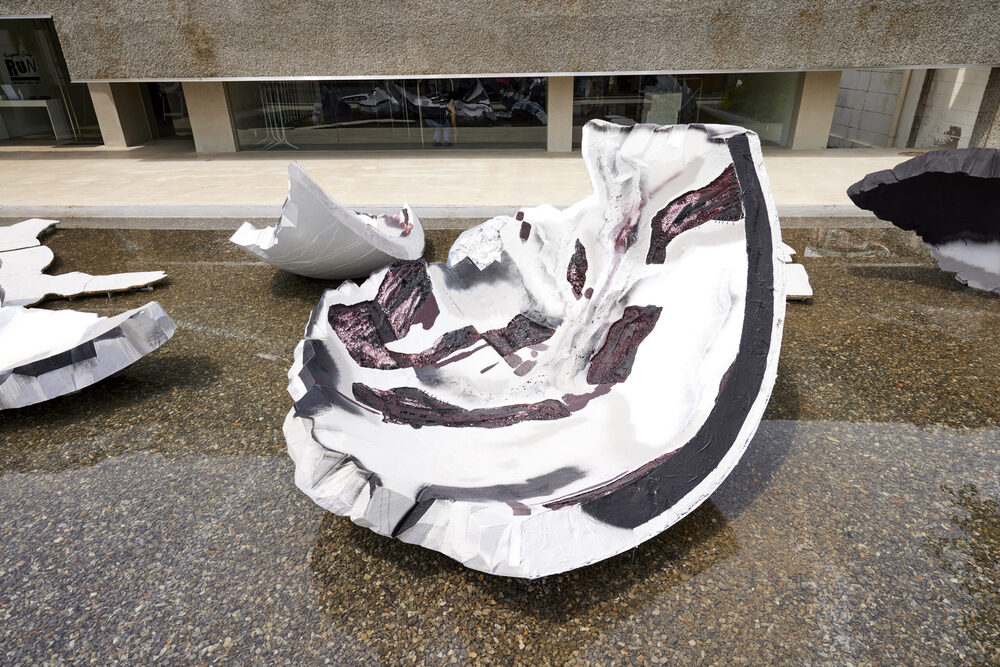
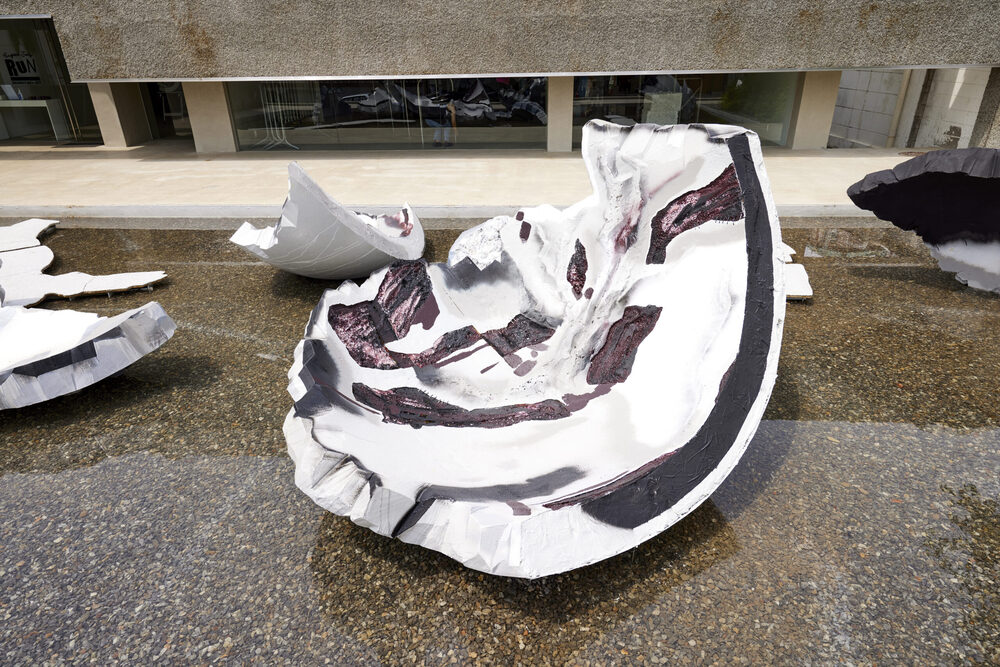
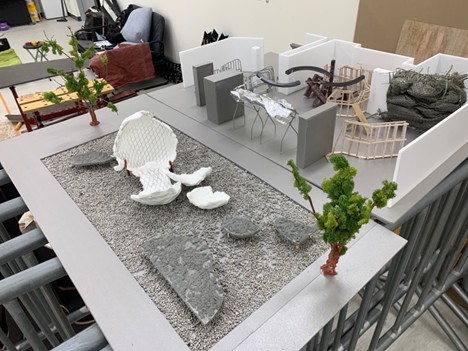
Shattered in front of the
museumhead building is a Styrofoam sculpture in the form of a broken globe.
Almost without exception, large spherical objects are erected at the entrances
of amusement parks. They use clean spherical objects to symbolize world peace
or utopia in a simple way. It is a representative symbol that helps amusement
park users to form a fantasy about the place from the entrance. At the entrance
of the exhibition space, Eugene Jung uses Styrofoam, a relatively non-hard
material, to create crushed shapes, and spreads these pieces as if tossing them
over the water. It is as if she shattered world peace into pieces and threw it
at once into the open sea in the narrative of ruins fantasy she created. This
is where the artist’s fantasy of ruins begins. In other words, it may mean
unraveling a fictional narrative about the ruins, but it also literally means
the artist’s fancy for the ruins.
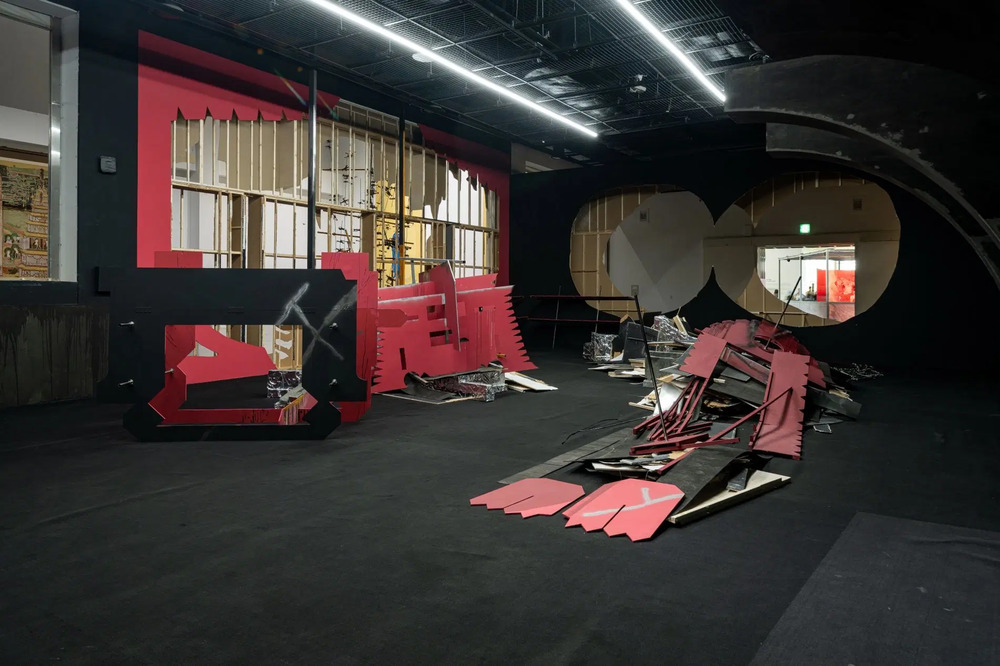
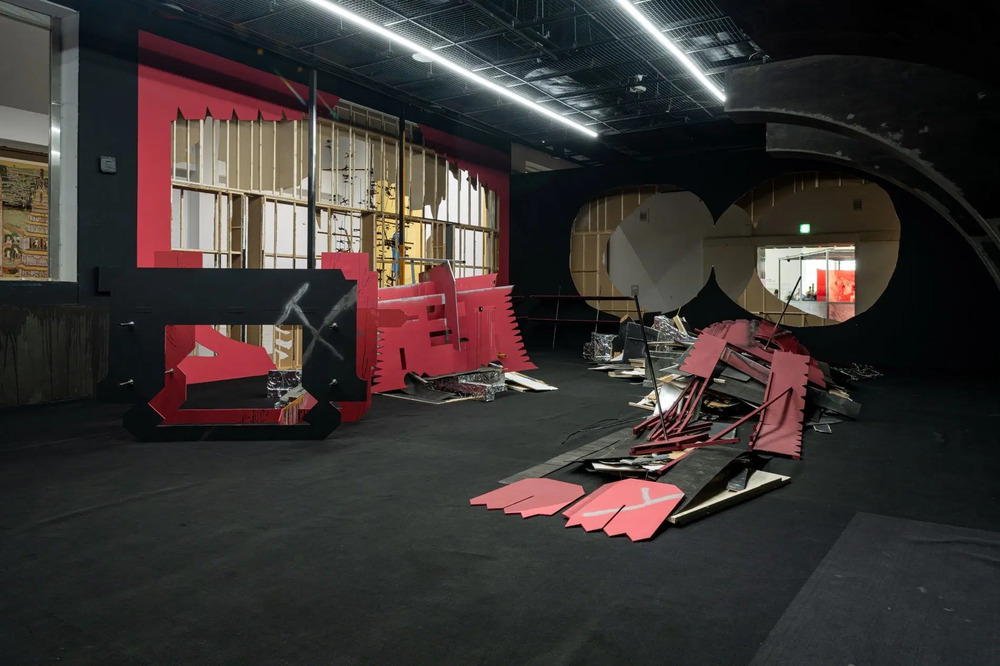
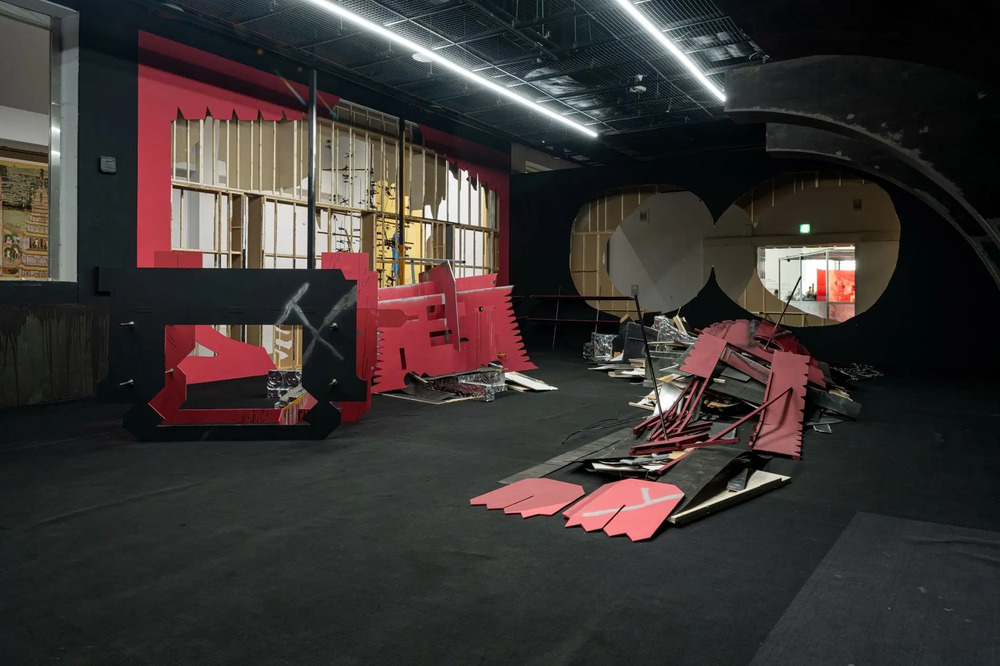
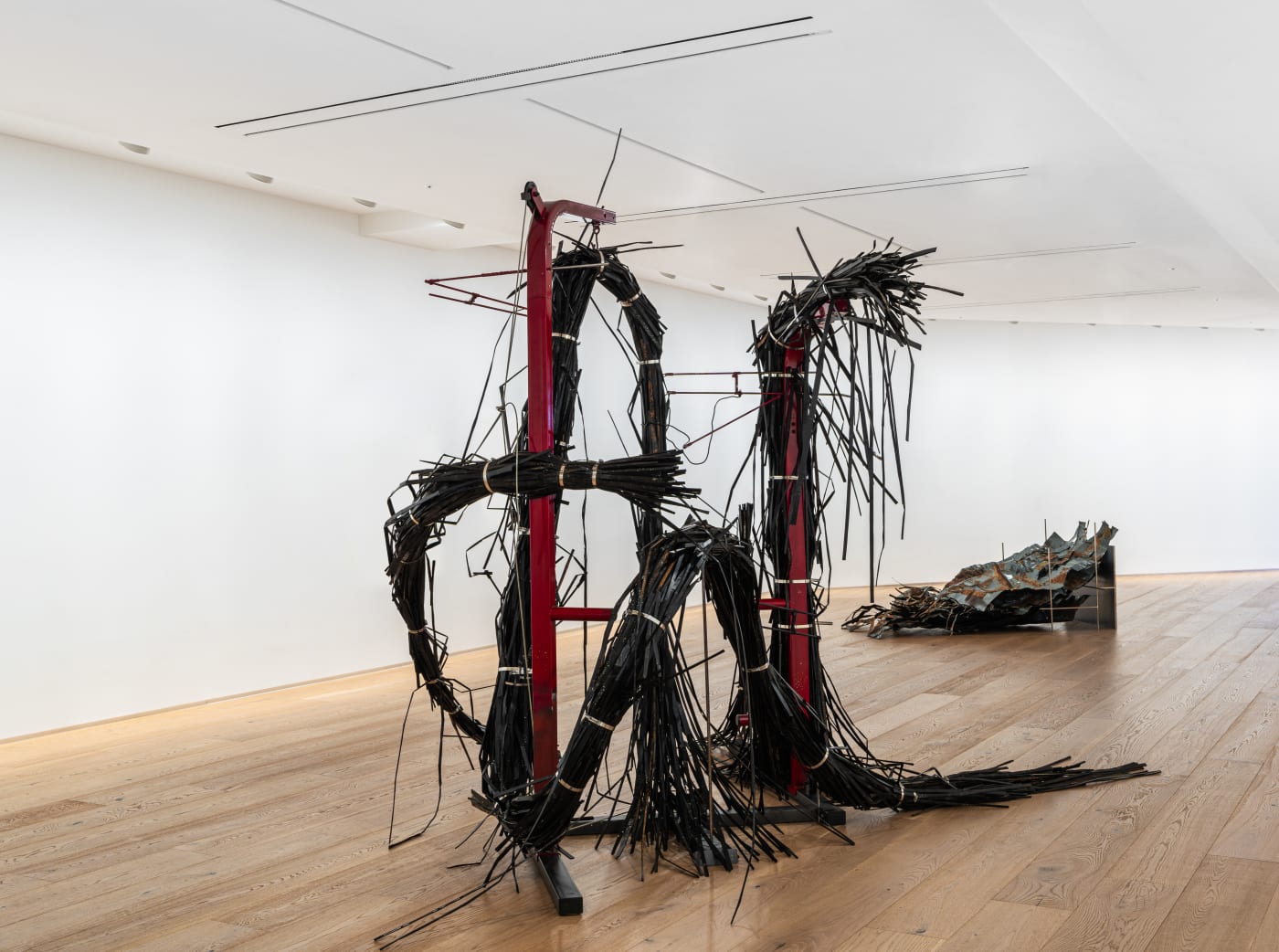
Pieces of H-beam, a material used
for steel structure when constructing a building, are placed in the exhibition
space in cut-off shapes. They are laid out as fragments of an H-beam that were
broken into pieces by rough force after a building was demolished. These
fragments are repeatedly shown in several places. They are made of paper and
have crumpled corners that should have been sharp and solid. Also they are
painted with rusty paint to express the texture, creating a shape that seemed
to have been neglected for a long time. The end of the structure is shredded
into several strands, so you can tell at a glance that the cross-section inside
the object is paper. Also, the abruptly chopped end while reproducing the iron
material reveals sufficient clues to show the artist’s cartoonish rhetoric.
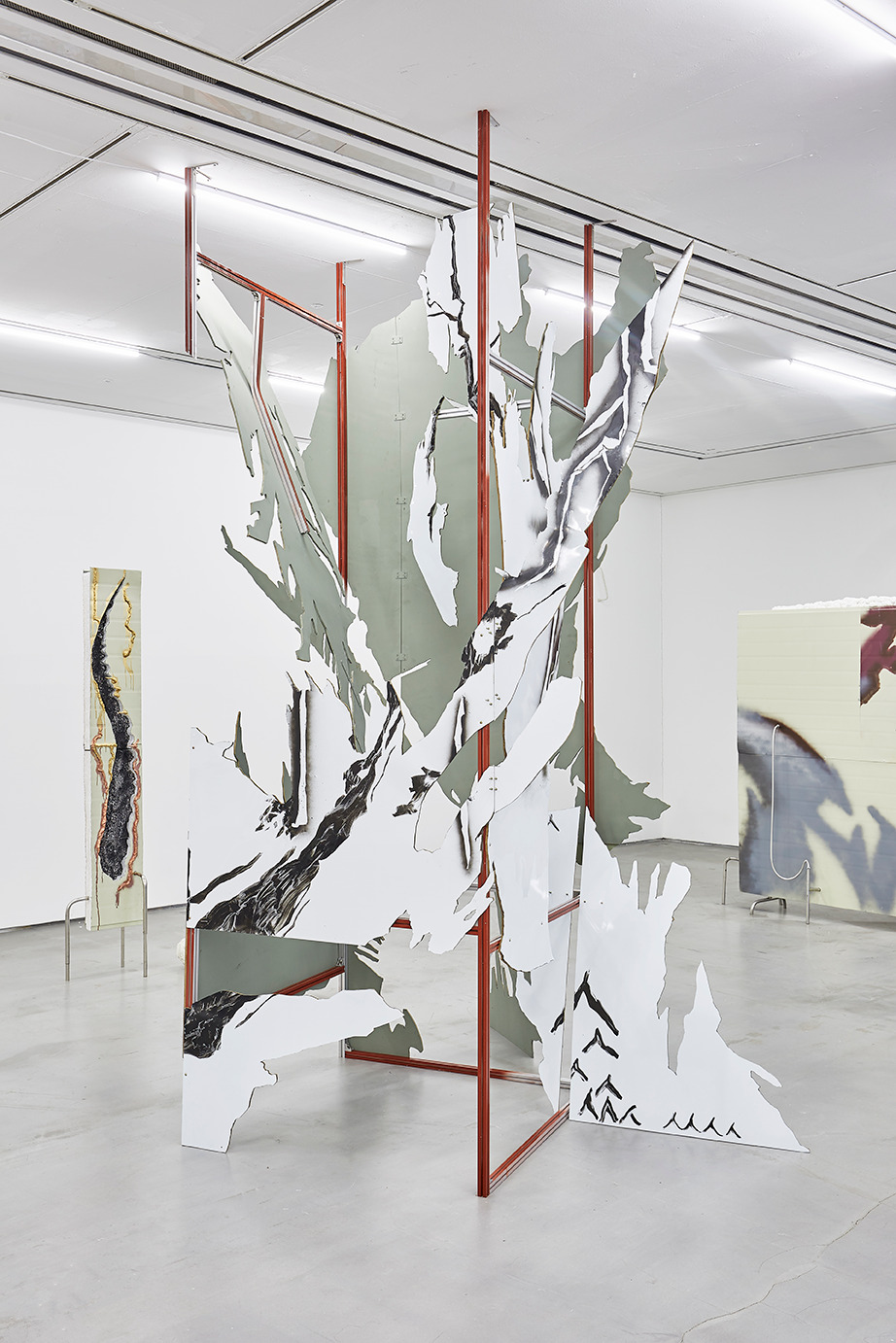
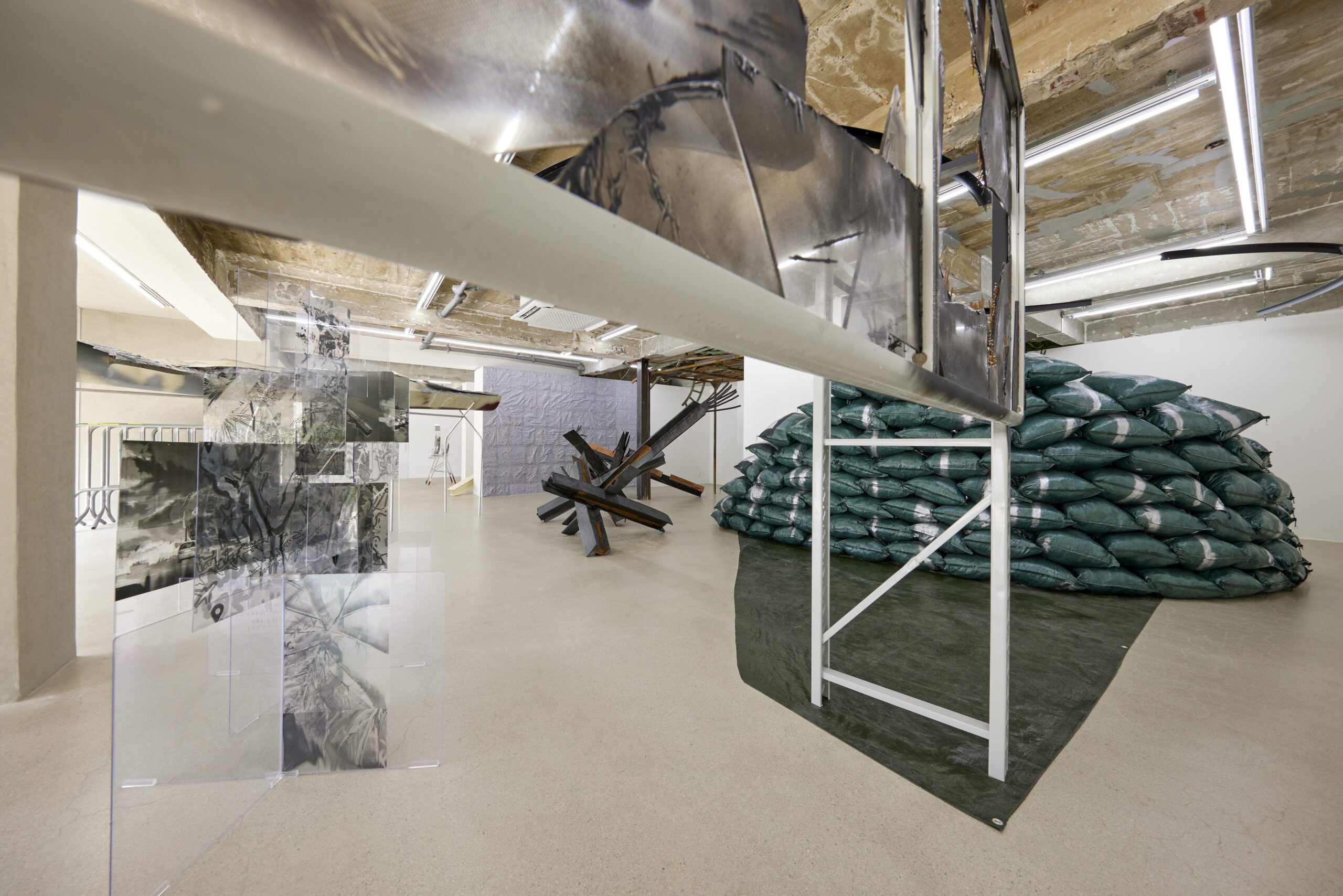
Two-panel Observatory(2022),
which makes you look through the broken windows, is a representation of a
structure made to view far ahead from a high elevation. The window is broken
due to an external attack or natural disaster, but the scorched edge of the
window frame looks like a burnt residue after a fire. Even if the artist
referred to a specific real situation to reproduce this, it seems to have
embodied the object in the artist’s fantasy of ruins, given the typical shape
of the bombed observatory. Located next to it, Sapporo Snow Box(2021)
represents the snow-covered boxes the artist witnessed in Sapporo. It is a
fragmentary collection of the moment the artist had observed. Although it
represents a specific situation, it does not create a panoramic view of the
location where the situation was captured or explain the circumstances before
and after the particular moment. The artist brings together disjointed objects
or parts of a structure that can be seen at a particular place in fragments.
As mentioned earlier, Eugene Jung
combines the evidence of the ruins that she has collected with various
representations. Then she constructs a fantasy of ruins using the landscape
created in this way. The simulacrum that Baudelillar spoke of was a projection
of the desire for a non-existent utopia of an amusement park fabricated around
a capitalist structure, but the fantasy weaved by Eugene Jung is more of a
gesture of defending negative values out of the blue. She even seems to
romanticize it in her own way, representing the ruins using the symbols she has
built up. One thing to point out is that Eugene Jung is conscious of the sense
of distance, assuming the limit of her empathy for any referred events. It is
difficult to react as an outsider to an event one has not experienced directly.
However, I would like to note that the person is in a state of staring at the
ruins more than anything else, rather than judging the depth of empathy the
person has for the object. This is not an emotional reaction, and it is perhaps
a decision that has nothing to do with being sincere.
In building the ruins that are a
symbol of failure, the artist makes decidedly efficient choices. This is
because her objects act like a sign indicating meanings without excessive
emotional and symbolic clutter. As can be seen from the exhibition title RUN,
although ‘Run’ is a word implying a certain urgency and desperation, in the
exhibition, the word serves as a mere symbol, like emoticons. Viewing the
exhibition, you do not feel the emotional agitation that you actually have to
run away. Each work introduced in the exhibition space exists as a combination
of signs, and when you walk out of the space, the words indicated by the visual
signs are interweaved.
What do we do after the ambition
to achieve the futility of the ruins fantasy reaches its goal? If the goal of
her artistic practice is towards the presentation of failure, what does the
success of that work mean? When all we are left with is ruins, staring at them
and reproducing them may be a natural reflex action for the artist. Perhaps it
is only when achieved the nothingness that one can properly gaze into the
existence of the agent. In a place where there is nothing left, wouldn’t it be
possible to find an answer to the question of how to exist even if you don’t
know the direction for the next step?