Boxing has a noir-like
prehistory. Recalling the story of how shady, underground betting fights grew
in popularity before eventually being legalized, boxing without an opponent,
boxing outside the ring, seems to have lost some of its original power. In old
movies, comics, and pop songs, boxing was always framed by the narrative of a
climactic fight. In contrast, boxing as a choreographed dance—punches thrown in
the air, arms flailing—becomes a series of repetitive movements. The
exhibition Boxing Sketch evokes this latter image
rather than the former. Through this exhibition, Eugene Jung reimagines boxing
as a gesture, embodying it in a sculptural (and theatrical) way.
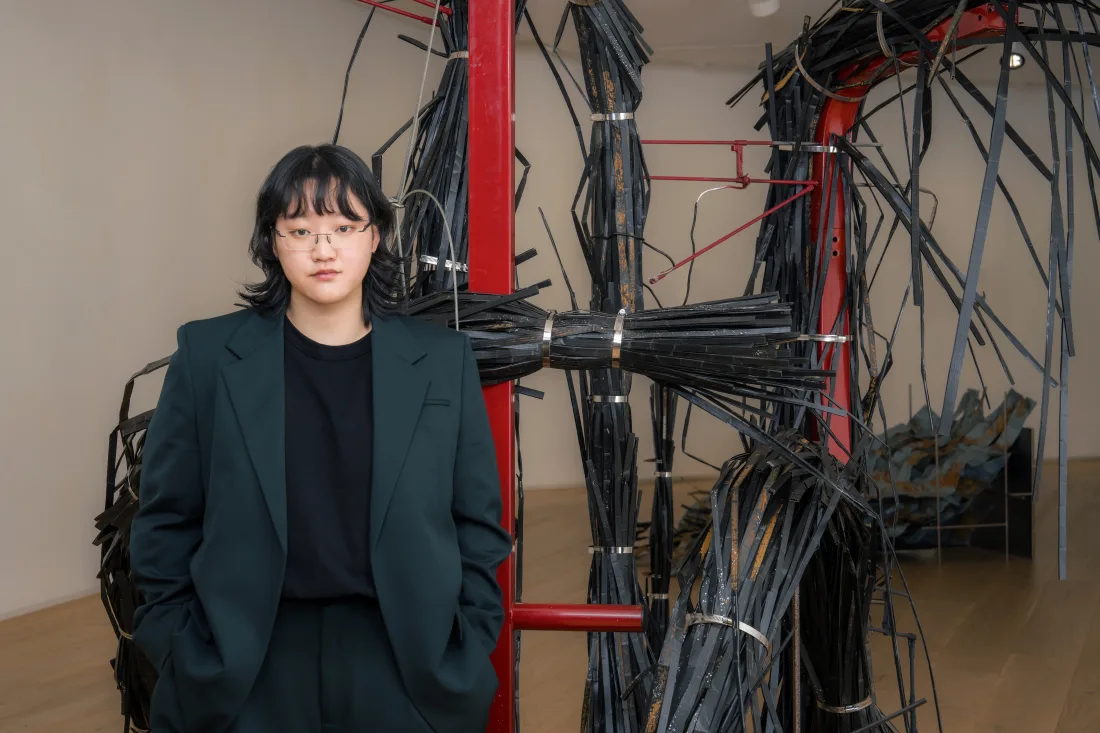
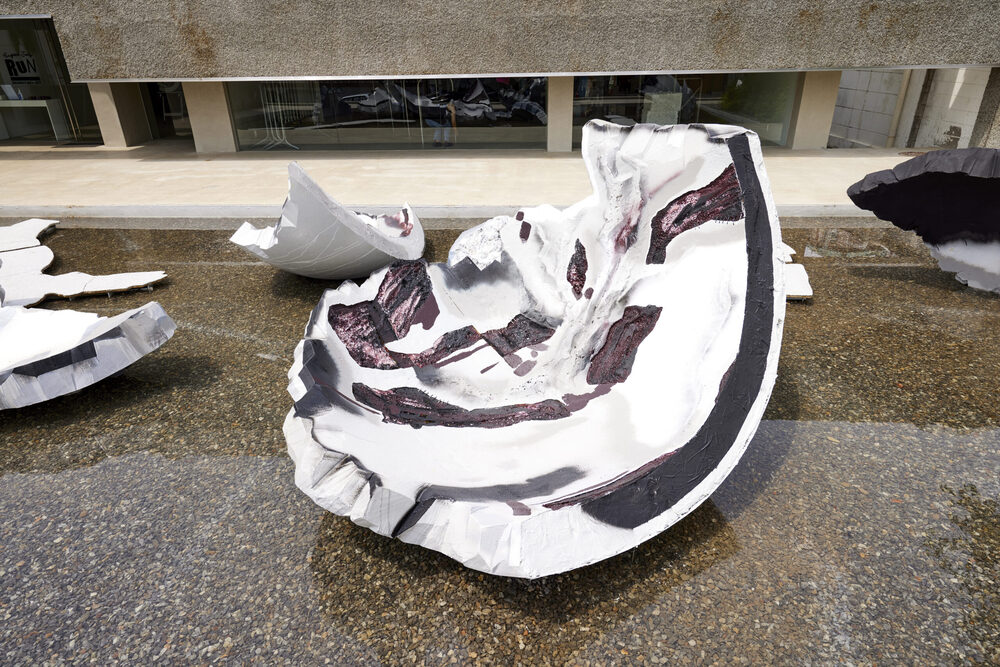
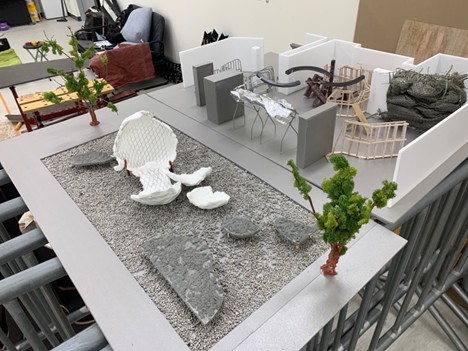
Jung has been preoccupied with
contemporary issues surrounding disaster and image. Her representations, which
have been described as “ruin fantasies” (Hyo Gyoung Jeon), do not echo Western
aesthetic traditions that romanticize ruins as picturesque landscapes. Rather
than indulging in the comforting, familiar fiction of fantasy and its
domesticated community of taste—which inevitably appeals to the aesthetic
senses—Jung critiques the distorted present, where the image exceeds
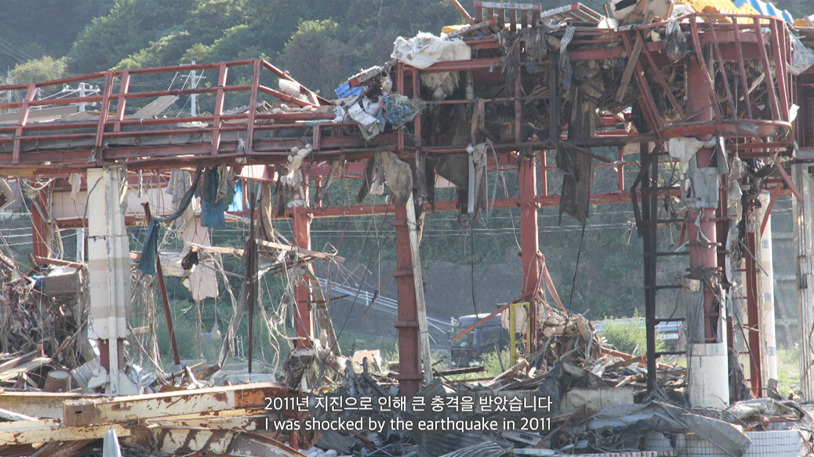
representation. By referencing disasters framed as “memories of an
indeterminate future” (Yoon Wonhwa)—such as Chernobyl, Fukushima, and
others—she shifts focus to the present as something perpetual, rather than
consuming the future that creates anxiety of “We don’t know when it will happen
to us” or the past which allows for empathy.
It’s easy to say that disasters
are recurring. Similarly, it is all too simple to claim that images of disaster
are being shown too frequently, too intensely. It is devastatingly easy to look
at a vast mountainous collection of images and think of the lives swept away by
a tsunami or the heaps of ash left in the wake of war. Amidst this, Eugene Jung
reflects on the relationship between disaster and image, shifting focus away
from merely proving(attesting) or recreating the reality of disasters and tragedies.
In her work, the image itself
resonates with the status of disaster today. In other words, she juxtaposes
this with the notion of the “pirate” as the title of her work suggests.
Publicly circulating “pirate” reproductions are (1) “real” in the sense that
they bypass authentication processes—the demand for pirate copies arises from
their realness, not their fakeness—and (2) inherently simultaneous, as they
circulate widely and pervasively. These images, as everyday objects, overwhelm
us before we have the chance to assess or determine their authenticity.
The “boxing” at the forefront of
this exhibition plausibly parallels the artist’s approach. The artist, who
trains in the boxing gym a few times a week, does not spar or hit punching bags
but instead focuses on learning the forms and repeating the movements. Rarely
does she engage in actual competition in the ring. In this sense, when Jung
shapes her body, whether as a physical body or as a sculpture, it is not viewed
as a preliminary step toward something else. Just as her boxing practice is not
about preparing for a future victory through punches, the disaster-image in her
work is not defined by its reference to a specific subject or reproduction. The
image’s manifestation itself becomes the central focus, where time is neither
suspended nor accelerated, and the image, as a present state of motion, is what
demands attention.
However, Boxing
Sketch should take a step further than merely continuing the
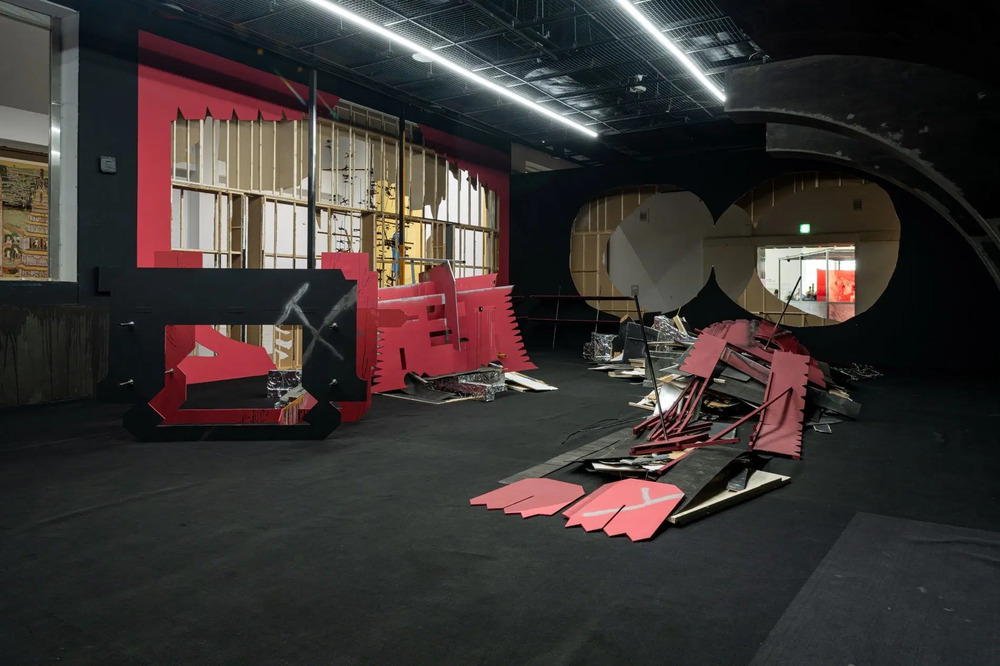
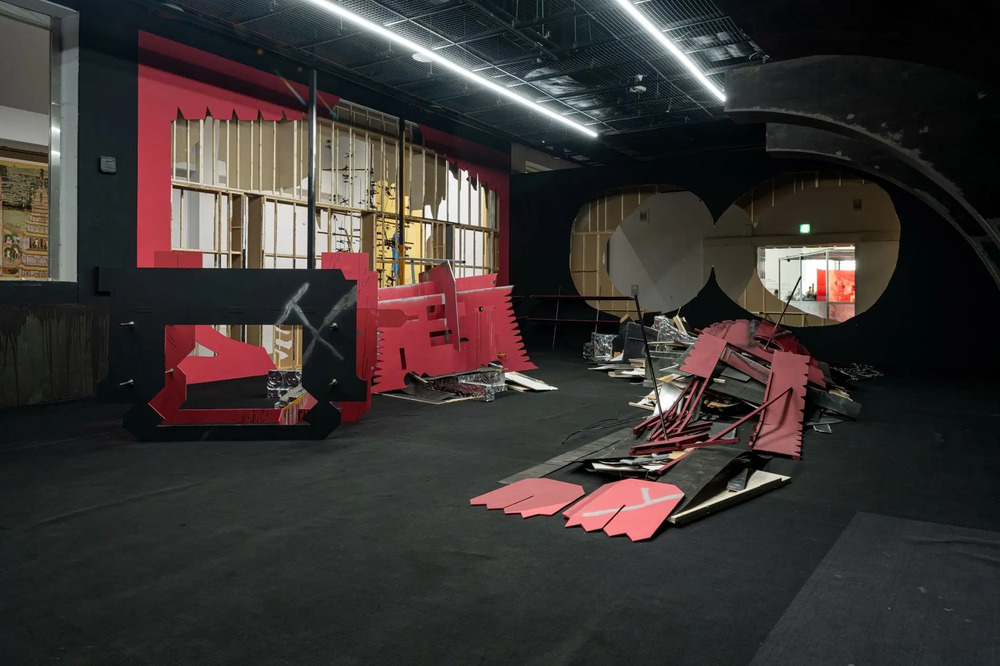
trajectory of works like RUN (2022, Museumhead,
Seoul), which explores the sense of running through a world without exit,
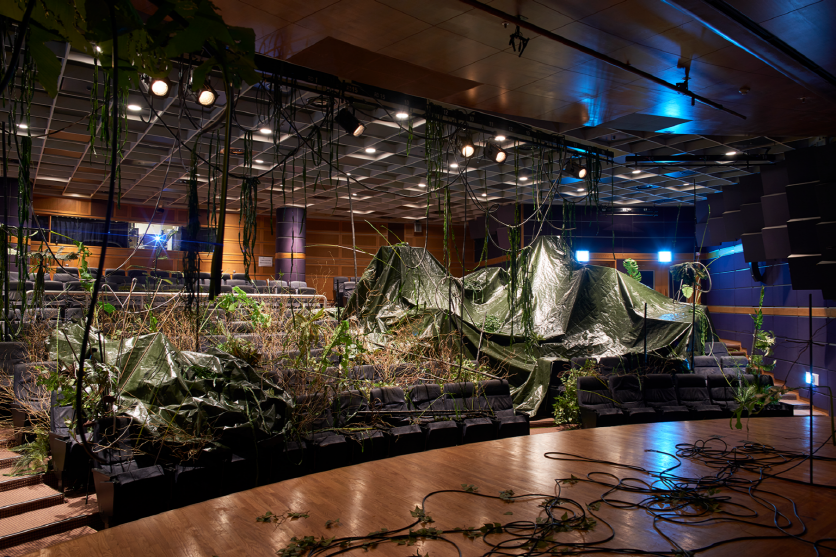
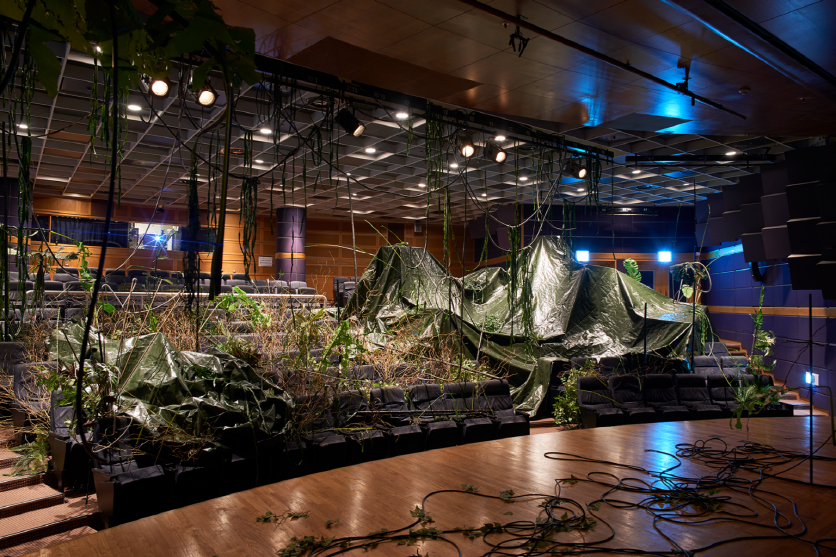
or Pirated Future + Doomsday Garden (2019, Art
Sonje Center, Seoul), which blends theater and reality in an inverted cinéma
total. In this new work, the artist confronts the question of what or which
image to rescue. Boxing Sketch imagines a new
image, one that shifts away from the disaster-image that have permeated Jung’s
previous works. It represents an experimental prelude to her broader inquiry:
Can the “disaster- image” which currently defines the fabric of reality, be
replaced?
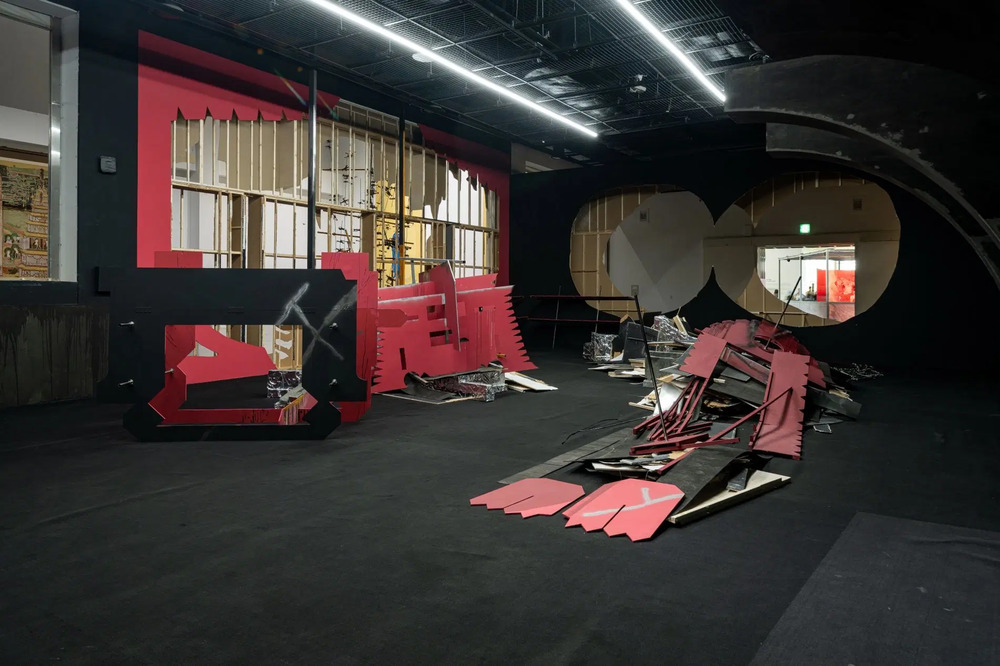
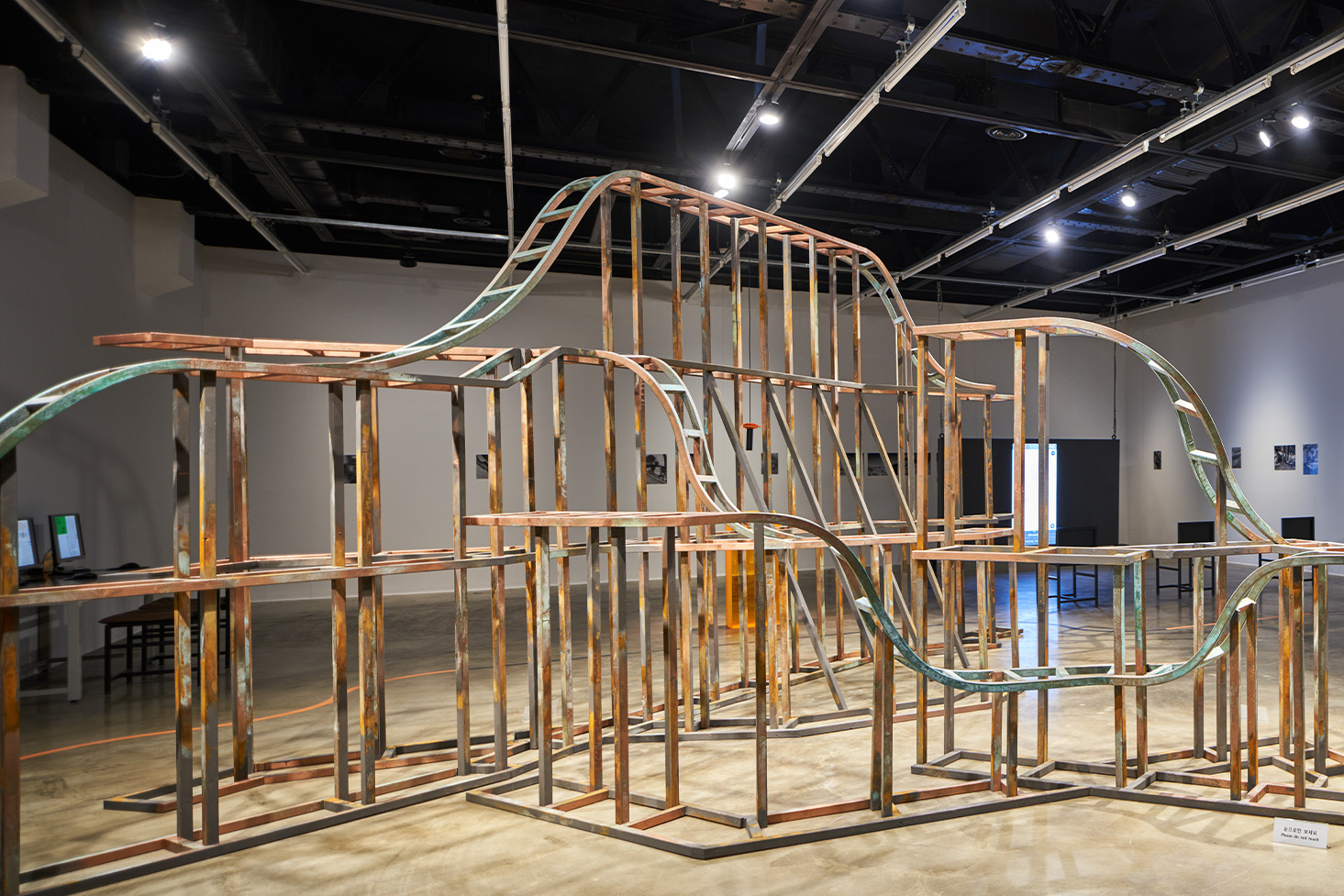
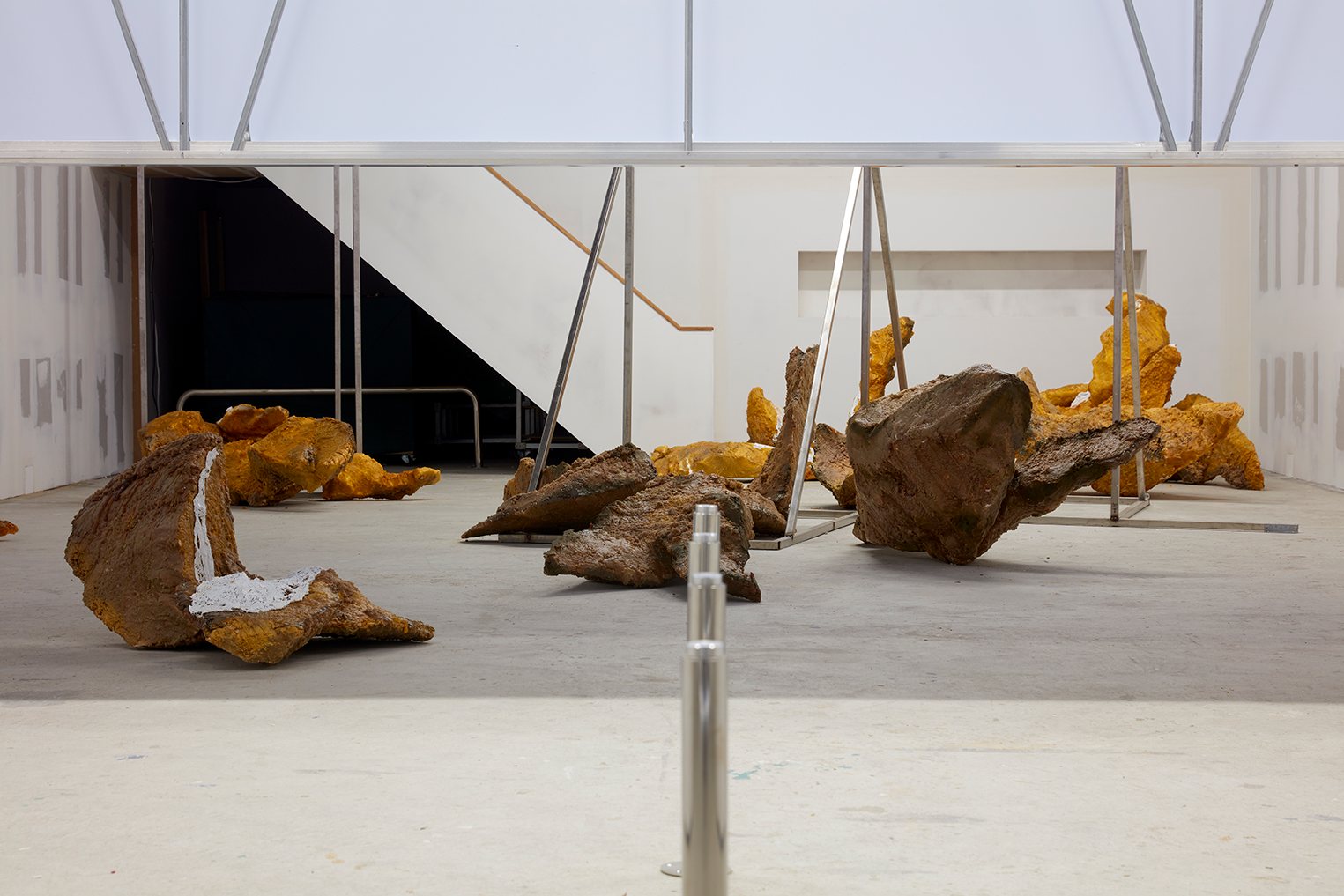
Boxing Sketch is,
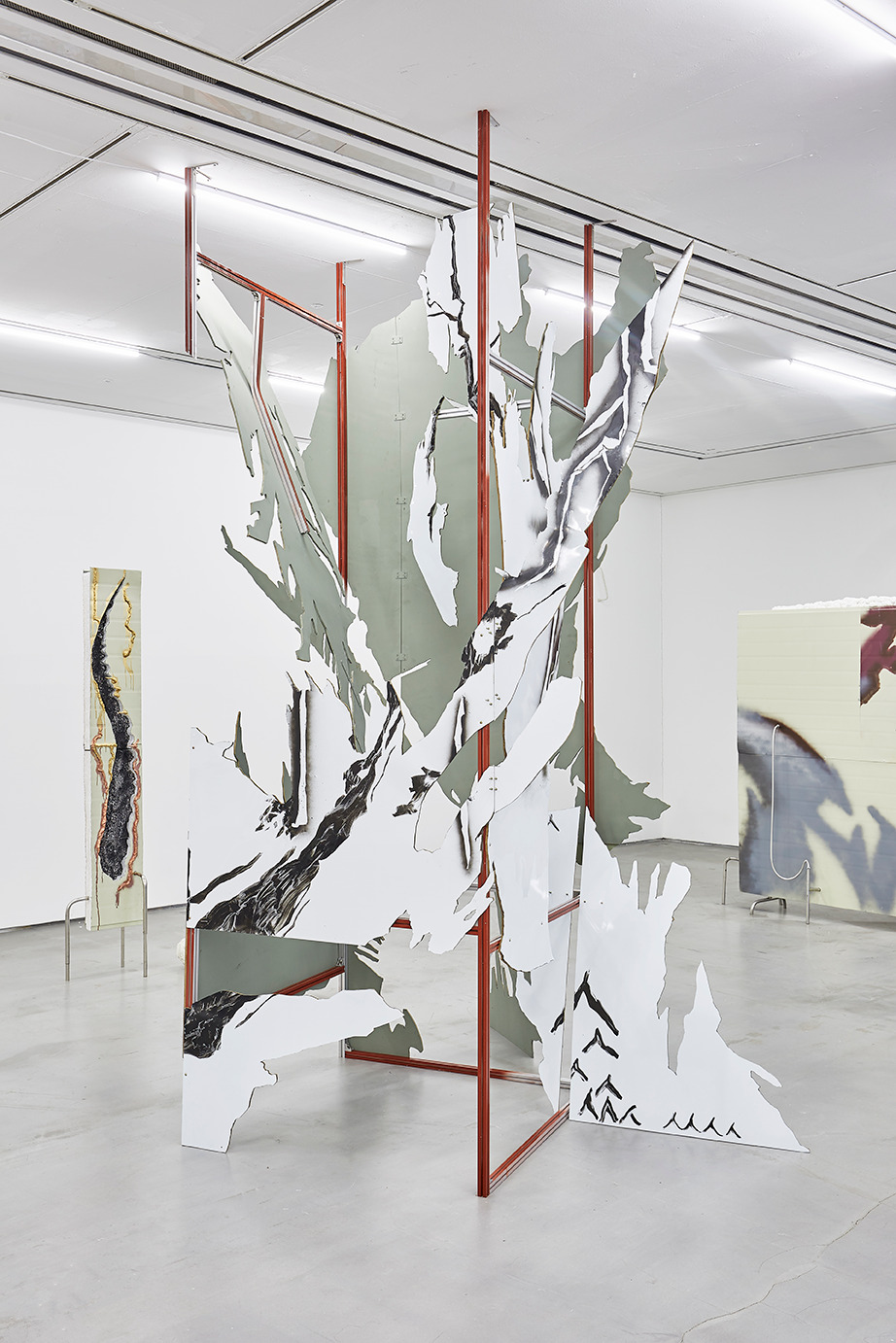
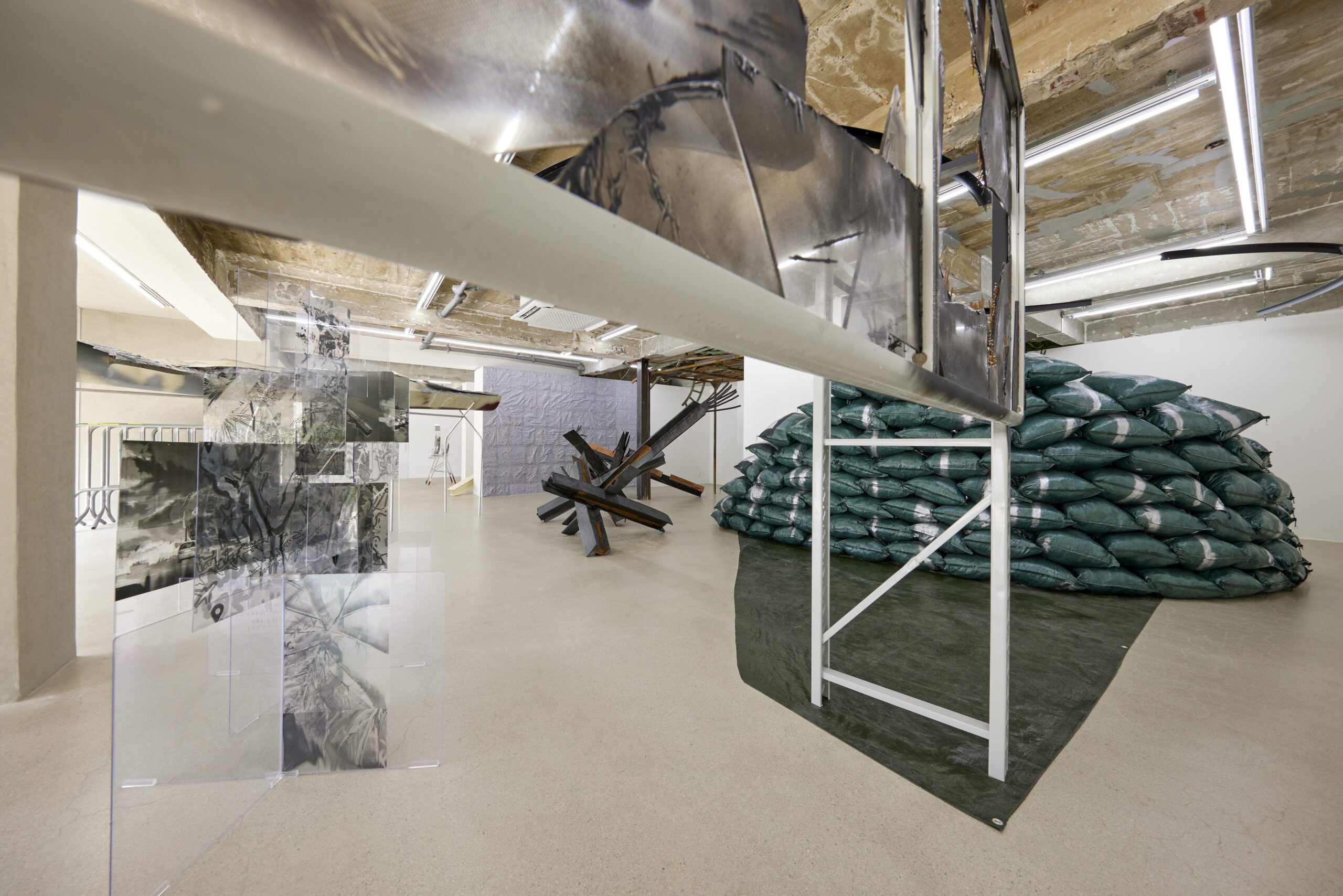
above all, an exploration of “sculpture.” (It’s worth noting that the
sculptural quality of Jung’s work has become increasingly prominent in a series
of new works such as Earthmovers (2024).) At the
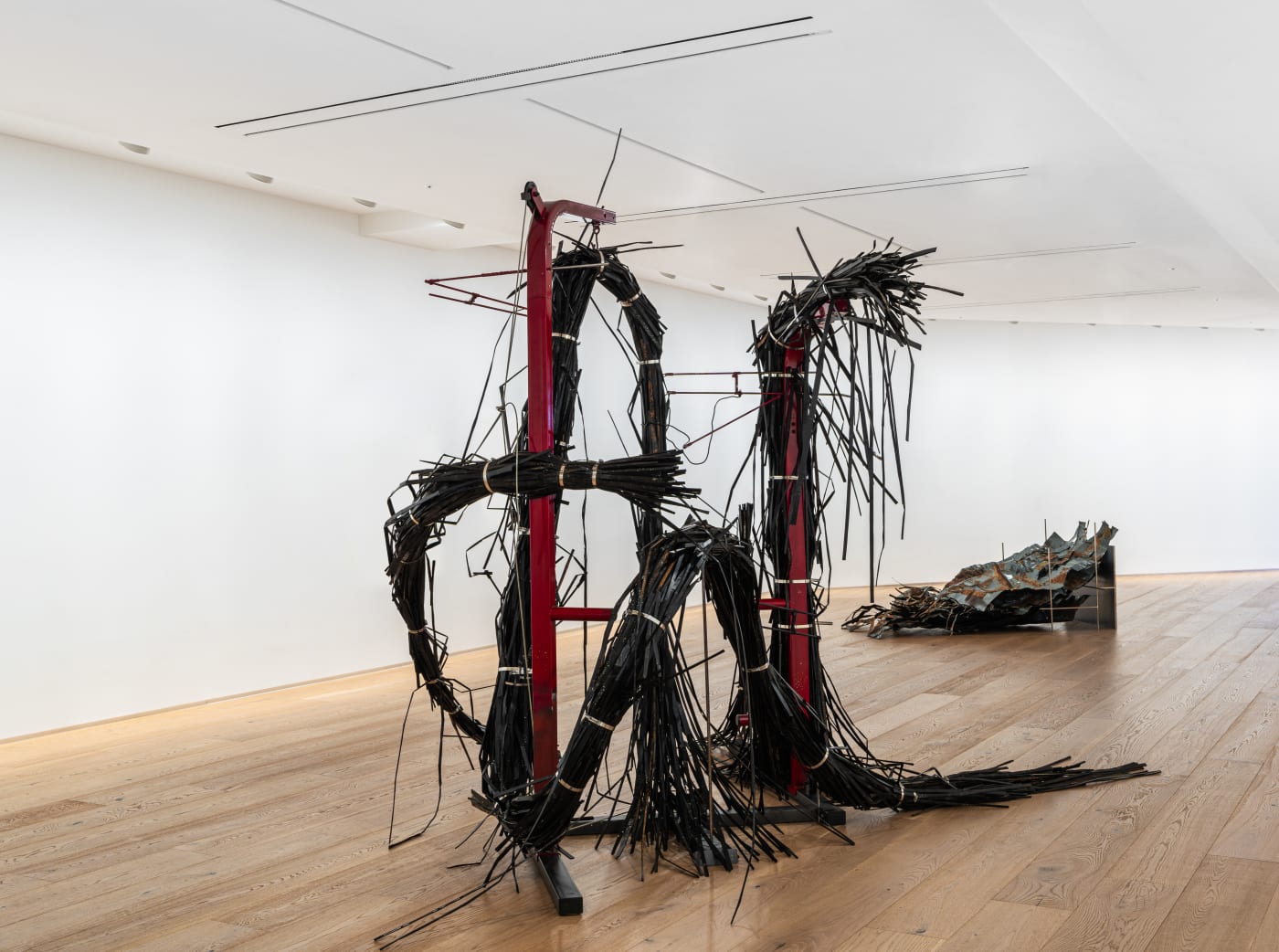
center of a boxing ring, Friends
(One-Two-Hook-Upper-Weaving-Long) (2024) presents a series of
sculptures made from ready-made objects and materials echoing the artist’s
earlier works. Each piece has a sculptural volume that references the human
body as a unit and is based on the movements of boxing: jab, cross, hook, and
uppercut. In essence, the objects in Friends embody the form of a person in
motion, performing a sequence of boxing movements. These “human sculptures”
function as independent sculptural units, even though they appear temporary and
hypothetical, with the artist deliberately giving the materials a worn, used
appearance.
If the viewer can effortlessly
imagine movements such as raising an arm from below to above or lifting and
extending the body, it is because the work traces the trajectory of movement
with a line. This is more clearly evident in Square Jungle (2024),
which unfolds a cartoonish scene of fists flying. The three subsequent pieces,
each featuring different drawings wrapped around punching bags (Cotton
Fist Punching Bag, Water Fist Punching Bag, Fire Fist Punching Bag (2024)),
also seem to create images using a similar methodology. Here, while each image
embodies the graphic flatness and linear sense of speed, it is important to
note that the sculptural volume of the works, approaching human scale,
emphasizes presence and spatiality.
In Boxing Sketch, the sculpture
evokes the space between the body and bodies, actively engaging the viewer in
that gap, taking on a theatrical quality. Through her two solo exhibitions in
Korea, as well as her other installations, Jung has been constructing certain
sceneries by positioning her works “in a potential and complex relation to the
‘act of exhibition'” (Hyukgue Kwon). Even setting aside the fact that she often
worked with relatively long-duration videos/films, the aspect of cultivating
the theatricality of the site and presence, rather than the internal
completeness of a single work and the resulting immersion in the present, can
be said to be a characteristic of Jung’s sculptures and the expanded nature of
her installations.
The exhibition drew both the
works and the audience into a highly specific environment: a boxing gym. In
this way, the theatricality of the sculpture, heightened by the setting,
naturally encourages the body of the viewer or gym-goer to engage with the work,
thereby activating the understanding of the entire scene. A viewer, who
approaches the exhibition and works both casually and aesthetically, must
interpret what is before them as a “collective body” (Hyukgue Kwon), while also
experiencing it as an intensely personal body.
The presence of theatricality,
which subverts presentness, offers a clue for transporting today’s
disaster/image to another (somewhat anachronistic) dimension. In a neighborhood
boxing ring, a training ground for daily life, the gestures of the artist and
amateur boxers—jumping, throwing punches—are incorporated into sculptures and
scenes. Without a narrative, can these images reclaim the sensory appeal it
inherently carries? What is needed is a sense of “recovery”—not in the sense of
restoring a past state or reviving the ruins, but in awakening to the presence
of the here and now. This perhaps foreshadows what comes after the
disaster-image.