Lead was once widely used in architecture, crafts,
cosmetics, decoration, and numerous other fields. It was valued for its
malleability and lustrous appearance, but today it is classified as a toxic
material that causes serious harm to both human health and the environment. The
phrase “Golden Lead” in the exhibition title refers to this contradictory
substance, which possesses both an alluring brilliance and lethal toxicity.
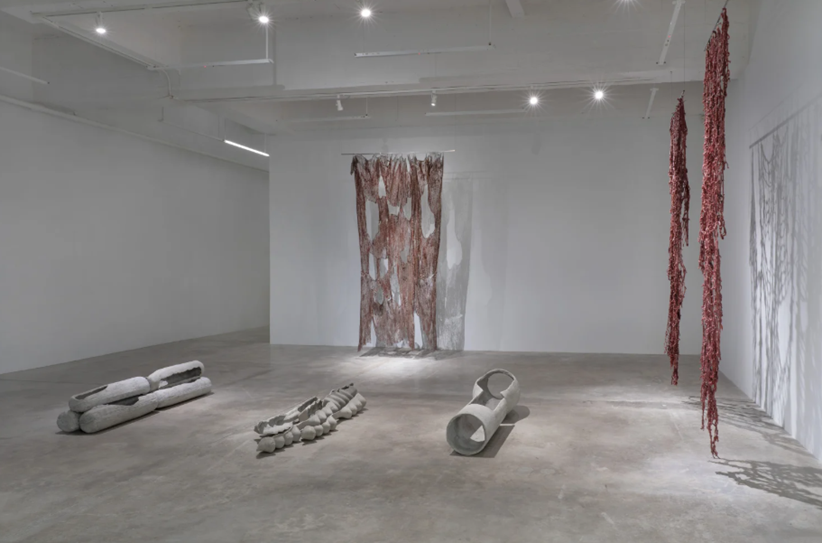
Lee presents the radiance of lead as a form of beauty
that can no longer be desired innocently. Rather than serving as a symbol of
splendor and glory, it appears as a melancholic residue left behind by past
desires and industrial civilization.
The exhibition reveals that beauty and danger, ornament
and contamination, cannot be separated from one another. In doing so, it
invites viewers to reconsider Secession’s historic decorative language through
the material and social conditions of the present.
From the Interior of the Body to the Structure
of Society
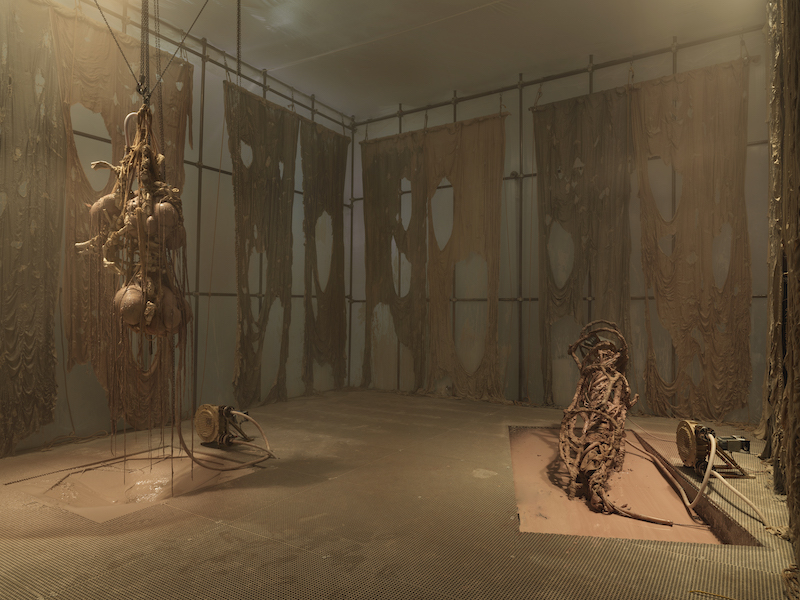
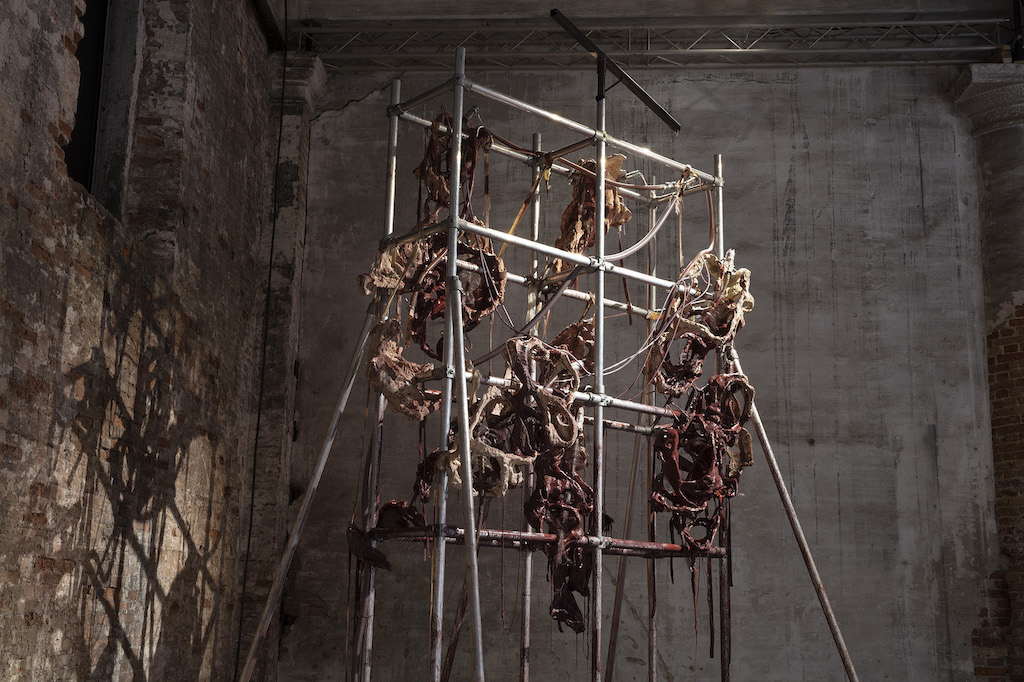
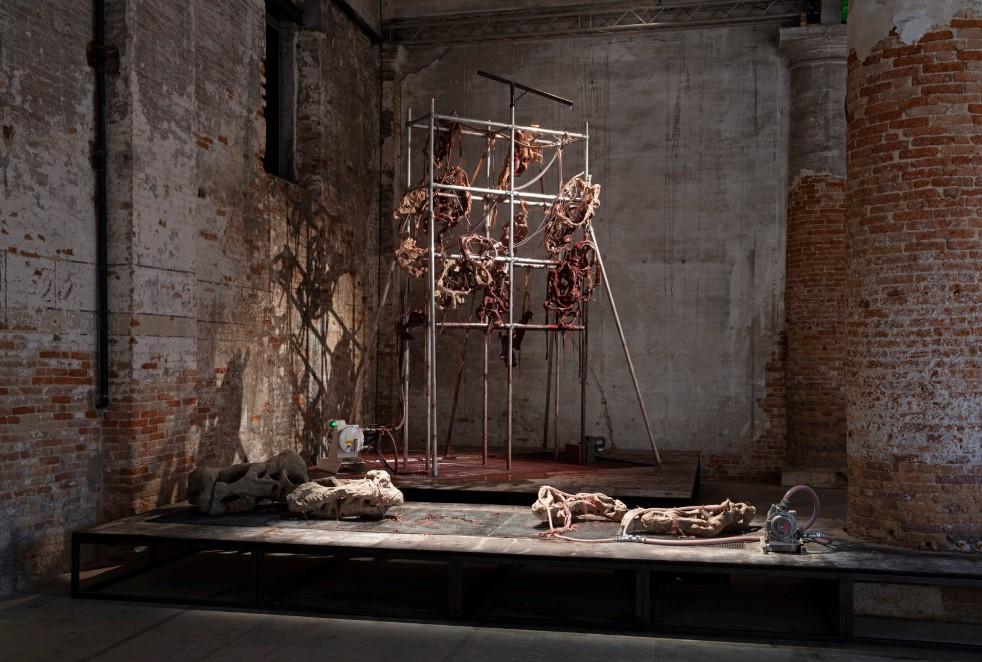
Rather than directly reproducing the external
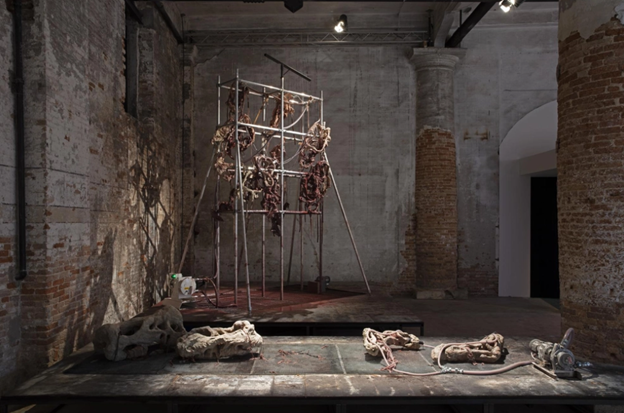
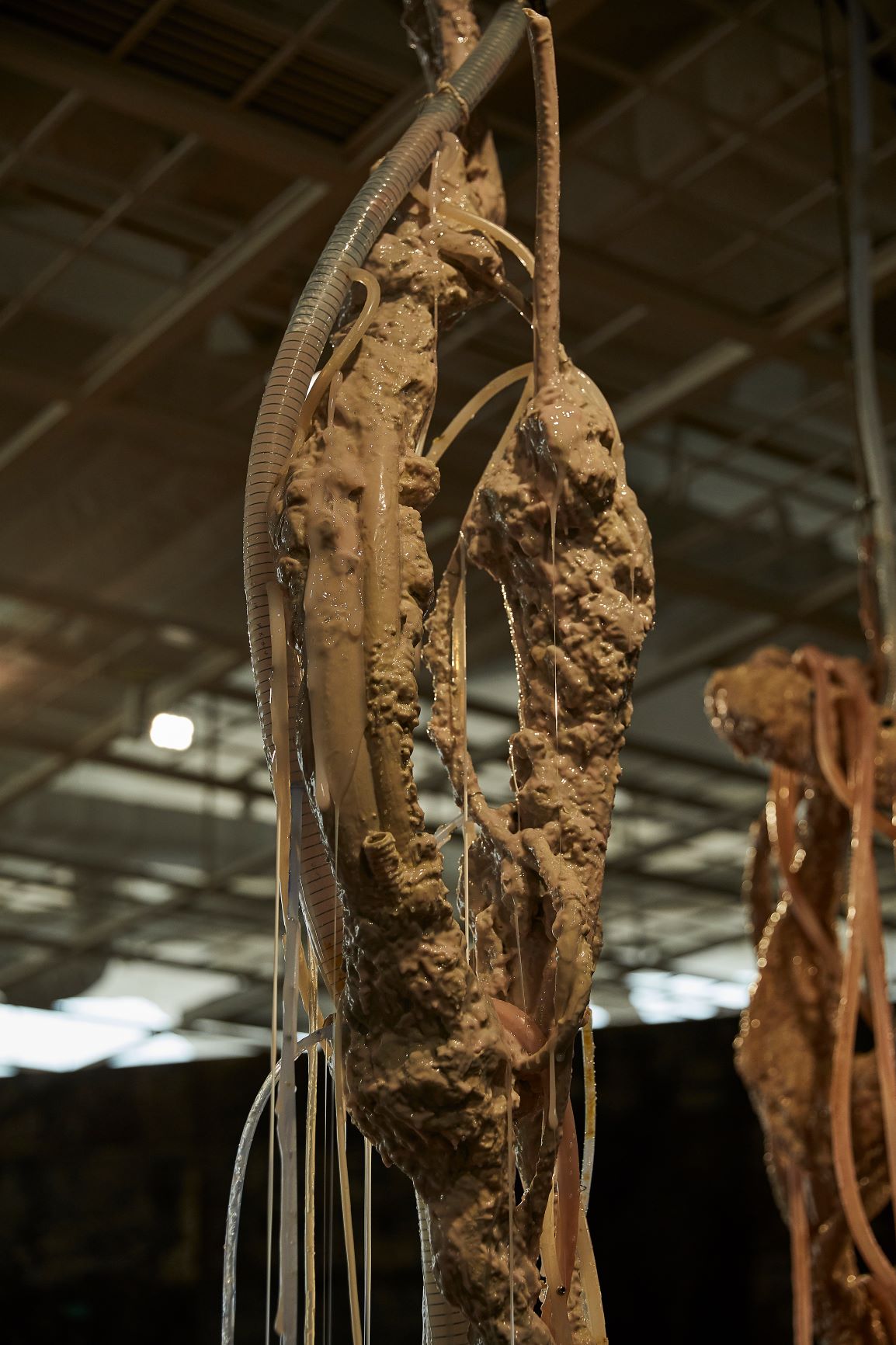
appearance of the human body, Lee translates the body’s internal mechanisms
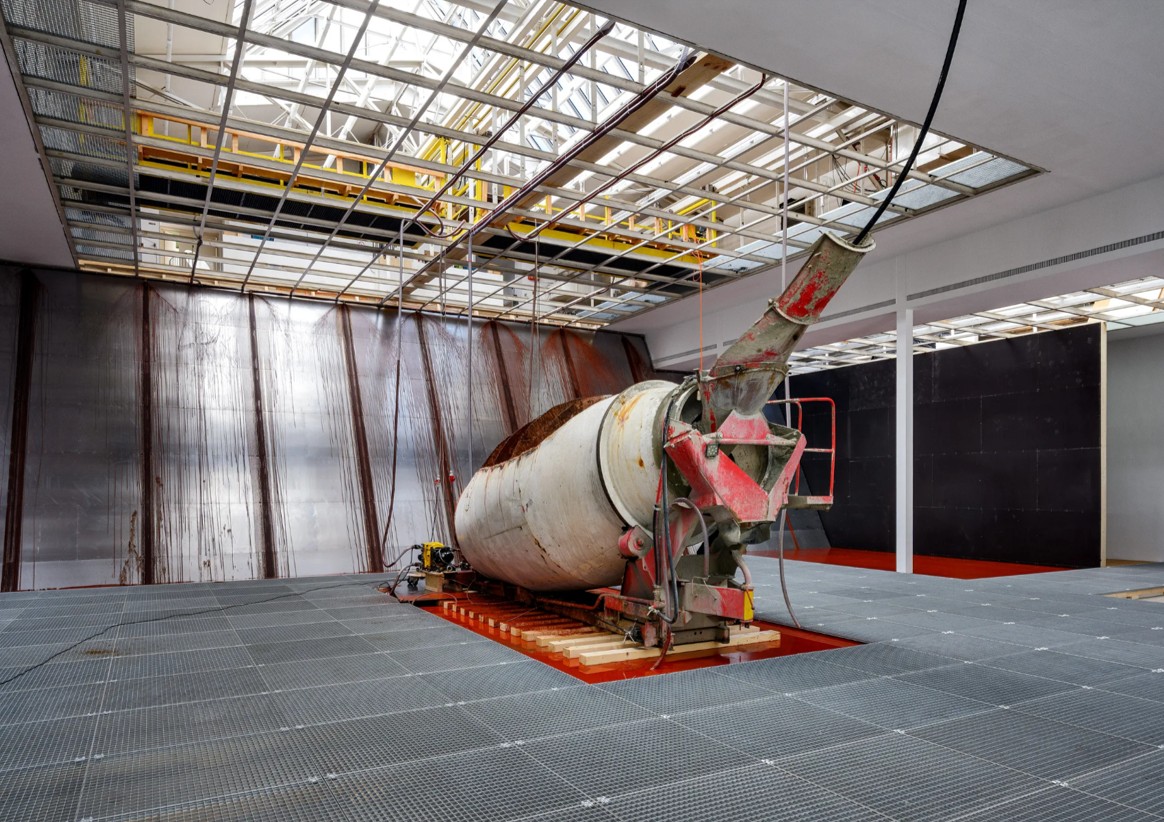
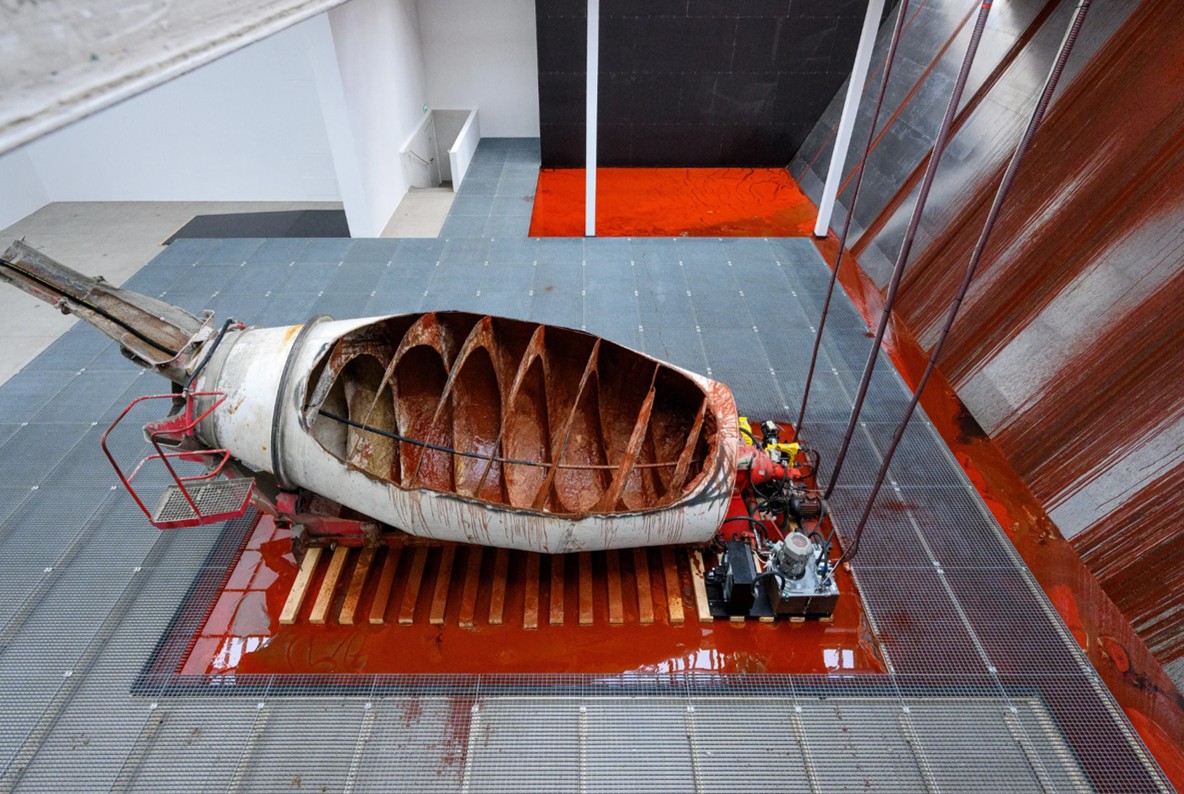
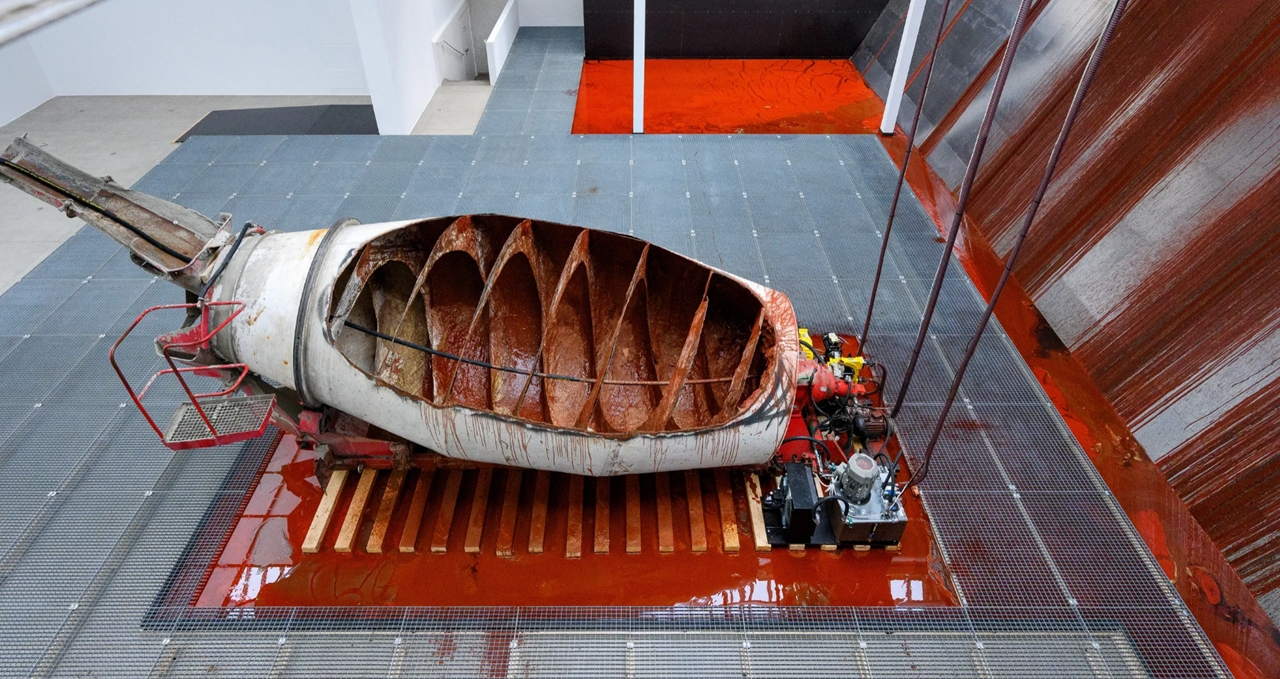
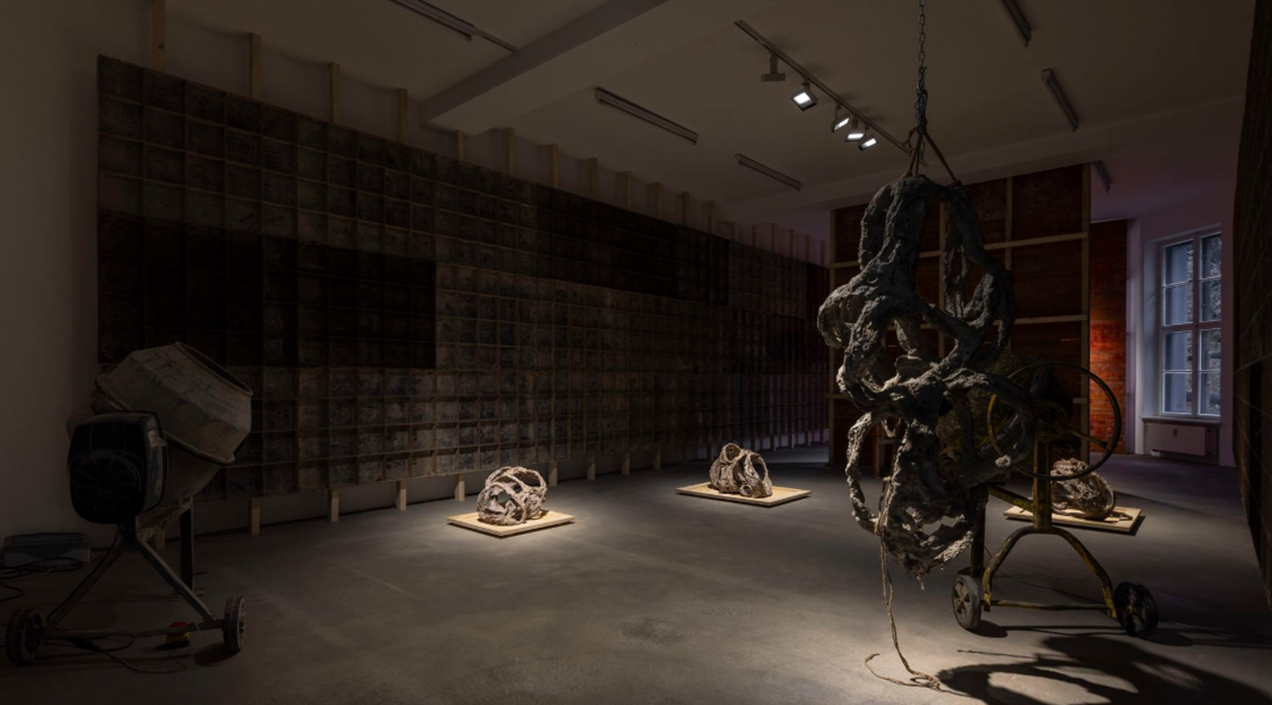
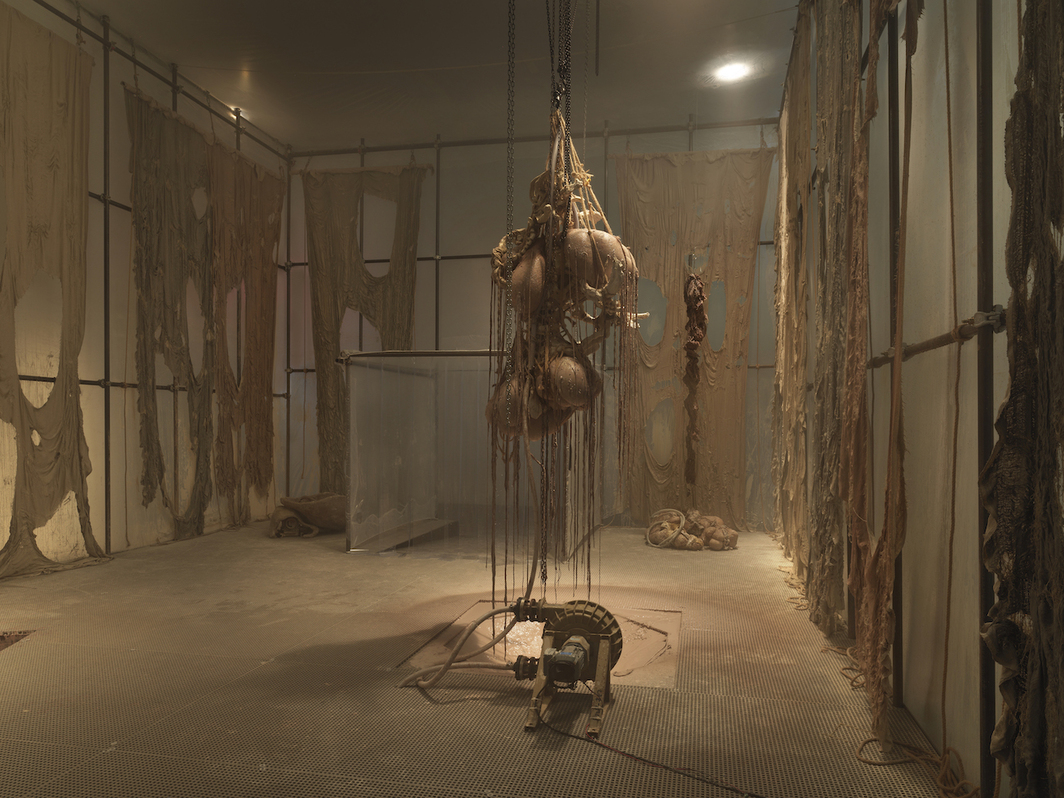
into mechanical structures. The pipes circulating liquid, the rotating mixer,
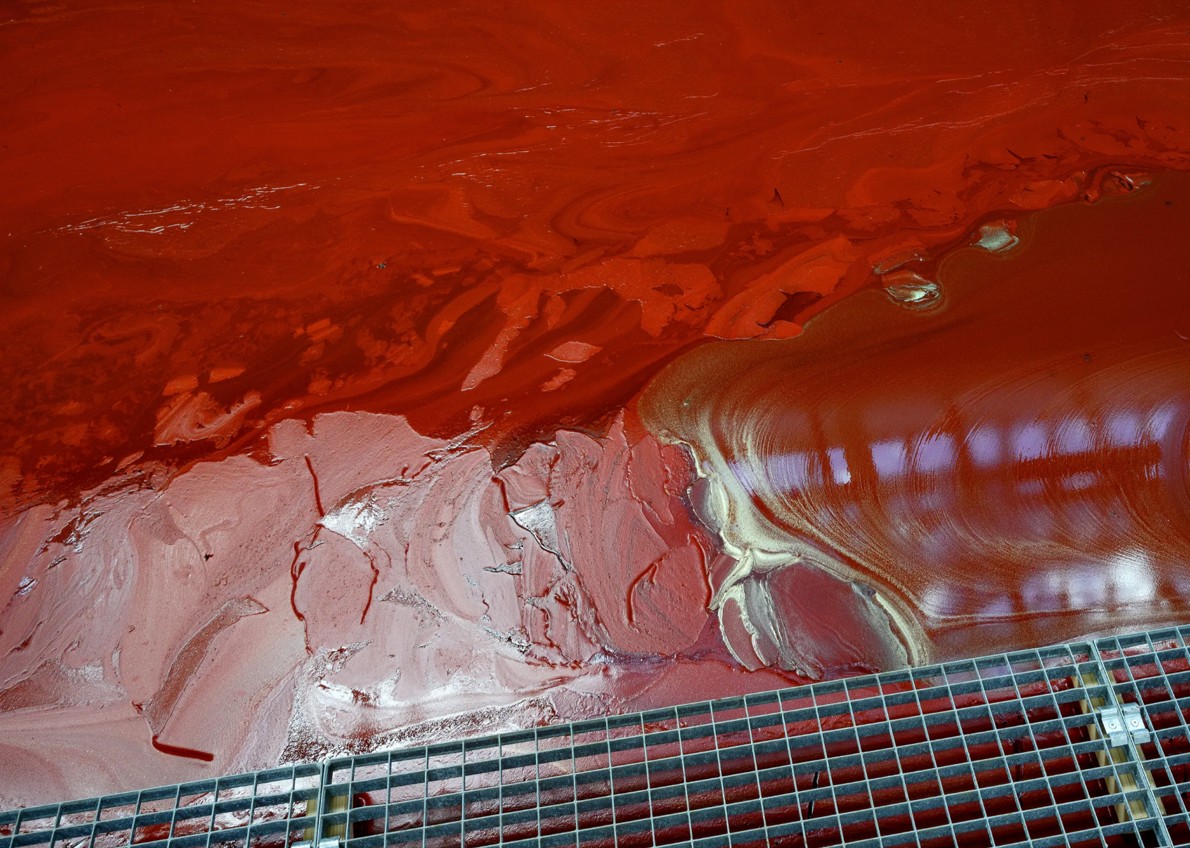
the exposed interior of the machine, and the sediment accumulating on its
surfaces evoke blood, organs, bodily fluids, and skin.
At the same time, the work can be read as a metaphor
for the structures of production and labor in contemporary society. The
machine, which rotates continuously without producing a clearly defined result,
appears like a being trapped in a cycle of repetitive labor and exhaustion. Its
repeated operation becomes both a sign of vitality and a movement anticipating
fatigue and collapse.
In this sense, Lee’s machines do more than simply blur
the boundaries between life and nonlife, or between human beings and
technology. The work demonstrates how human bodies and emotions, labor and
desire, are already deeply intertwined with technological systems.
The entire exhibition space operates like a vast
organism in which machine and body work, wear themselves down, and continually
transform together.
Mire Lee’s Sculpture Encounters the History of
Secession
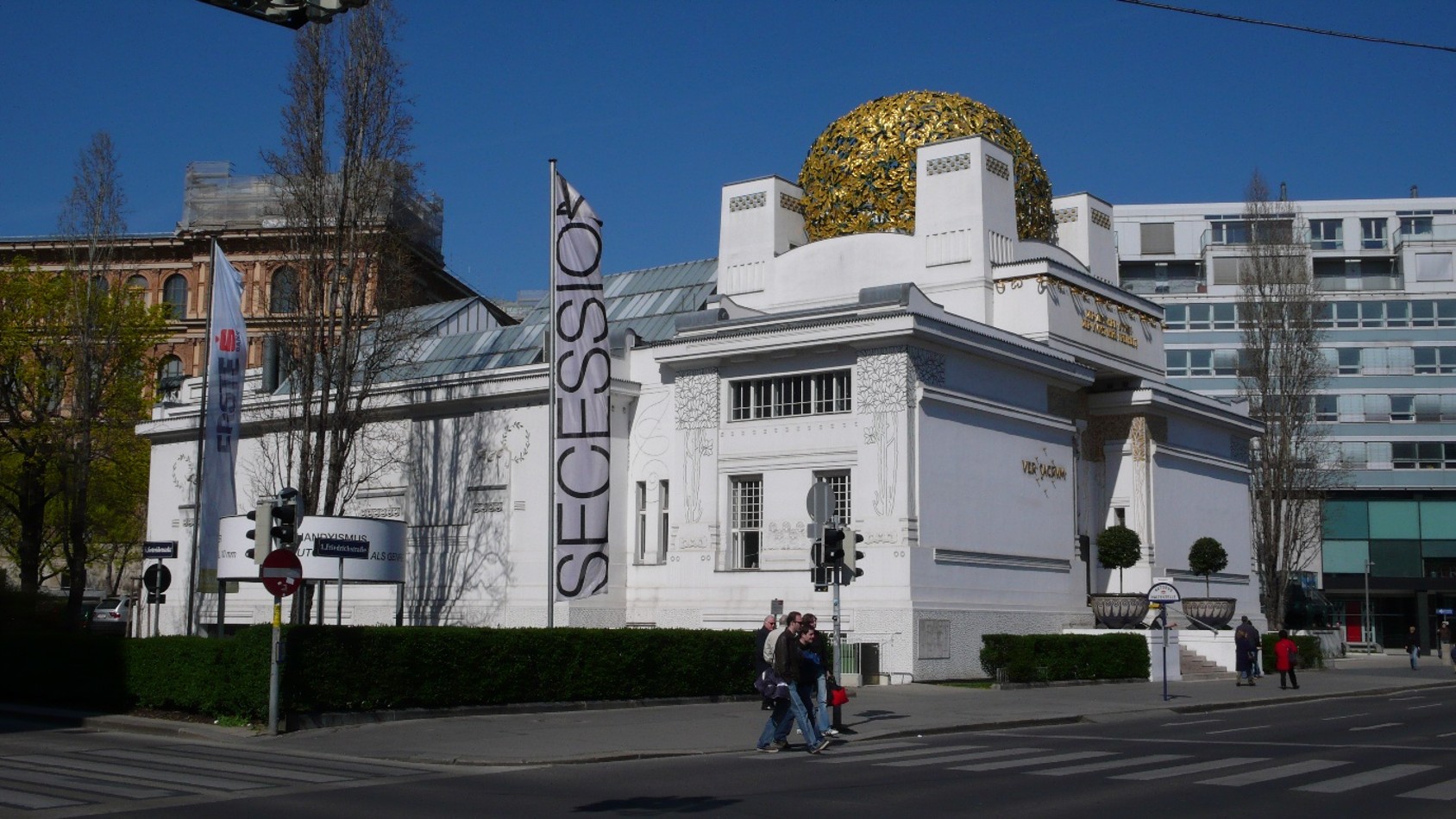
Secession is an independent, nonprofit, artist-led
exhibition institution founded in 1897 by artists of the Vienna Secession,
including Gustav Klimt, Josef Hoffmann, and Koloman Moser, who broke away from
the conservative art establishment.
The inscription on the building’s façade—“To every age
its art, to every art its freedom”—symbolizes Secession’s founding spirit of
pursuing new forms of art beyond the authority of established institutions.
Lee does not use Secession’s history and architecture
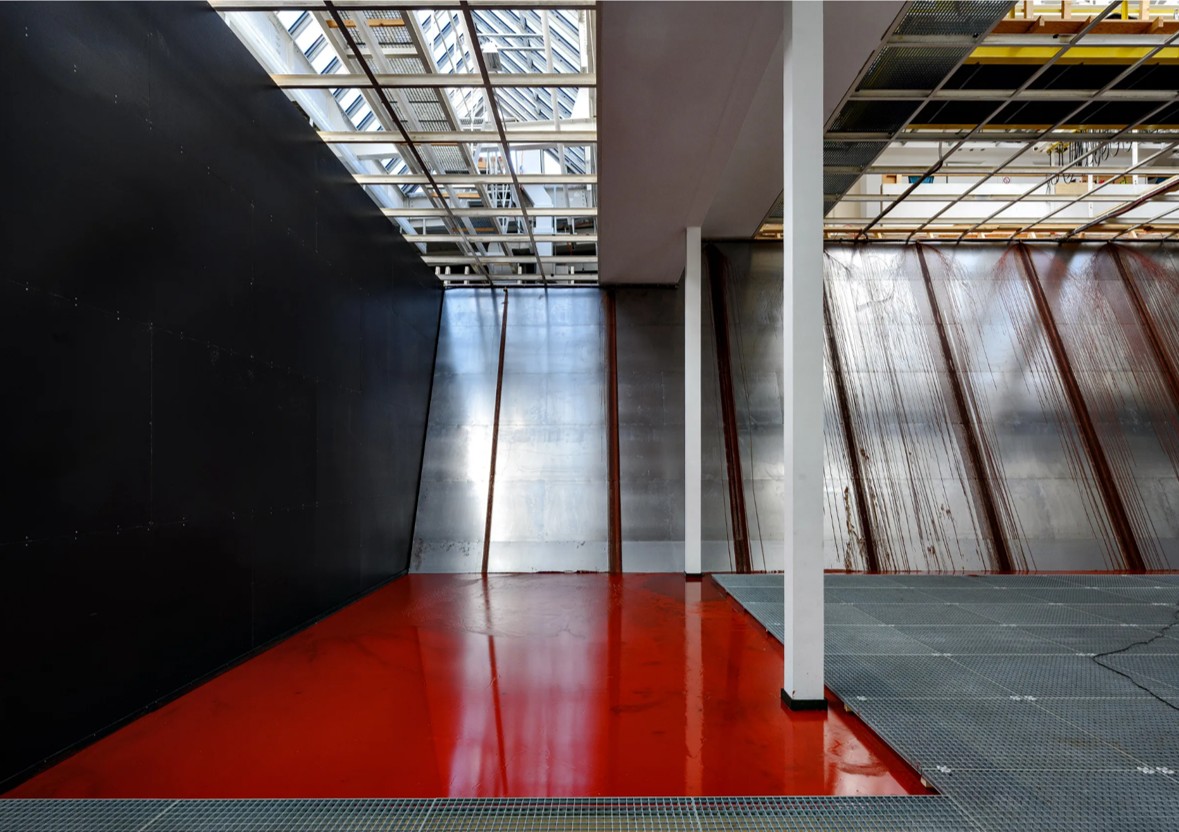
merely as a backdrop for the exhibition. Several glass panels in the ceiling
have been removed to allow natural light to enter the gallery, while a
monumental slanted wall divides the space and conceals the cement mixer behind
it.
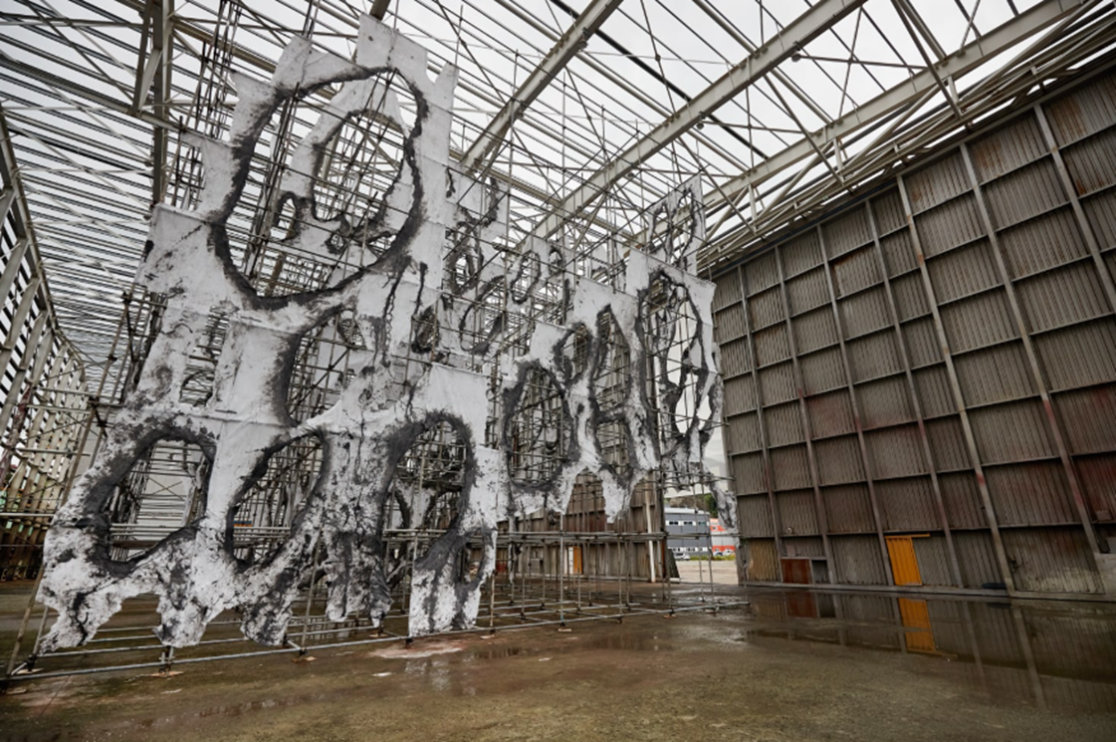
She also uses banners from previous Secession
exhibitions and the decorative forms of Klimt’s 《Beethoven
Frieze》 as both physical materials and
points of reference.
The exhibition reinterprets Secession’s historical
associations with artistic freedom and progress through contemporary conditions
of industrial contamination, exhaustion, and bodily vulnerability. At the point
where this symbolic space of European modern art encounters Lee’s imperfect and
contaminated machinery, technology and ornament—once symbols of progress—can no
longer remain pure ideals.
The exhibition demonstrates how Lee continues to
transform her sculptural language in response to the history and architecture
of a particular site, even after achieving significant international
recognition.
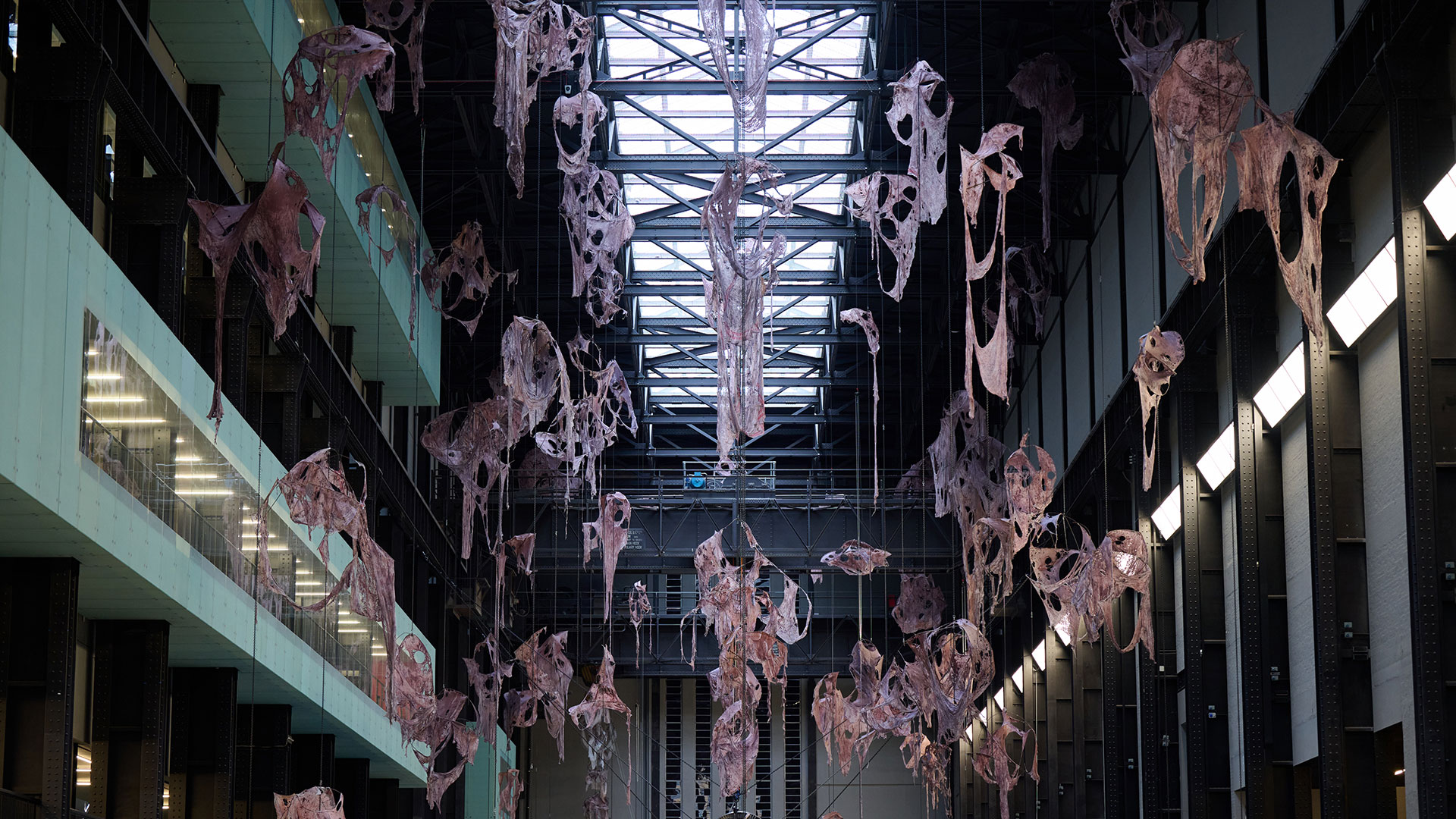
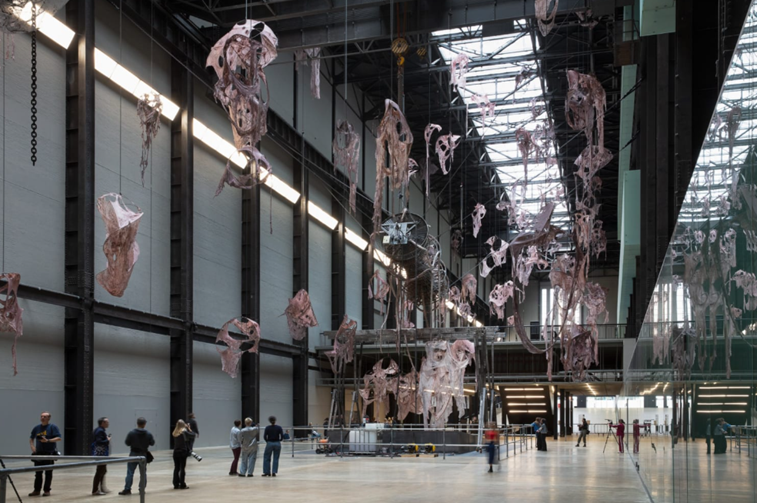
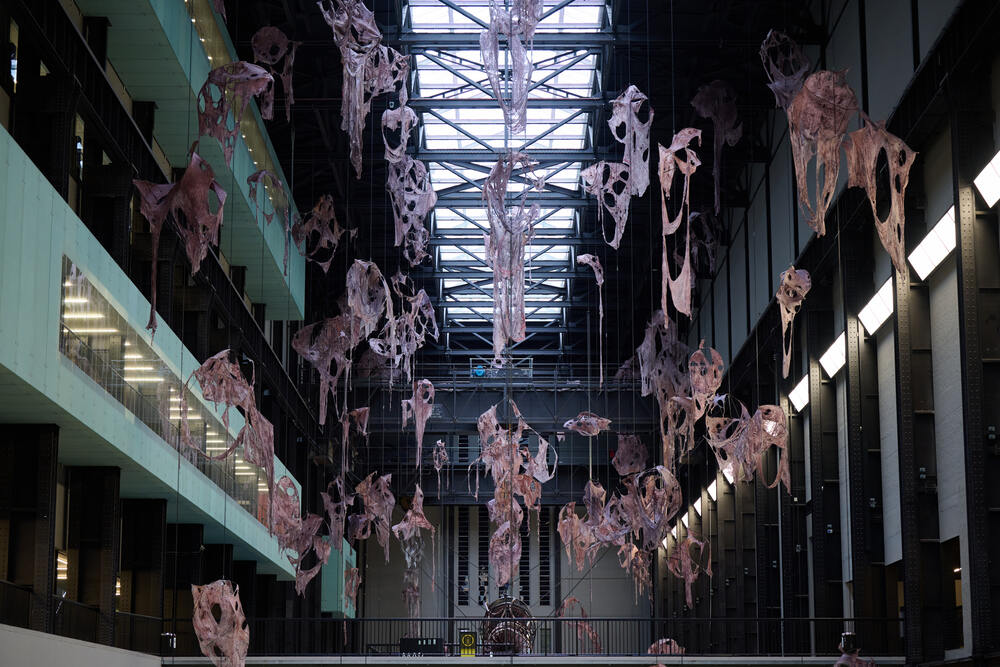
Following the 2024 Tate Modern Turbine Hall Commission 《Open Wound》, the exhibition demonstrates how
Lee’s use of large-scale machinery has expanded to encompass not only
architectural space but also the history of a site and the cultural meanings
embedded in materials.
From Vienna to Amsterdam
Two exhibitions of Mire Lee’s work are being presented
simultaneously at Secession and the Korean Cultural Center in Austria. At the
Korean Cultural Center, 《Women I loved》 presents a separate selection of the artist’s video
works.
By presenting the installation at Secession, centered
on machines and industrial materials, alongside her moving-image works, the two
exhibitions offer a broader perspective on the themes of the body, women,
desire, and memory embedded in Lee’s practice.
Elements from the Secession exhibition will be
incorporated into a new site-specific installation scheduled to open at Oude
Kerk in Amsterdam, the Netherlands, in November 2026.
Rather than being completed within a single exhibition,
the work is dismantled, relocated, and transformed as it encounters a different
architectural environment. In this respect, the fluid and cyclical character of
Lee’s sculpture continues into its next iteration.