“Carrier” refers to something that can hold or transport. It may
signify a pregnant woman, a vessel for transfer, a service worker, a
bloodstream, a container, or a mode of transportation. As a verb, “carry”
encompasses meanings such as “to be pregnant,” “to harbor disease,” “to conduct
liquid or electricity,” “to bear weight,” or “to attempt an idea.”
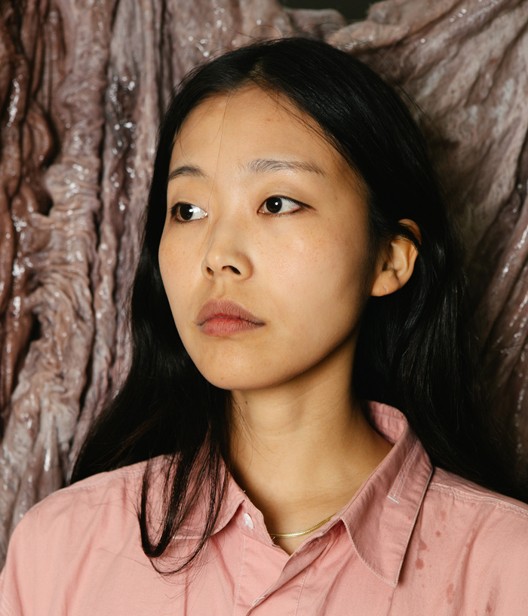
Mire Lee has been working with sculpture and installation using
simple mechanical systems and tactile materials. For Lee, whose sculptural
practice centers on the physical act of touching, the world is apprehended
through the most material clues. In this exhibition, she conceptualizes the
body itself as a “carrier”—a term that describes both the physical condition of
a human body and, perhaps, a larger conceptual framework that encompasses all
of her sculptures.
Lee’s “carriers” may be understood more concretely through the
concept of “vore,” a subcultural genre and shorthand for “vorarephilia”—a
fetishistic interest in devouring or being devoured whole. In a conceptual
sense, “vore” collapses the idea of distance by situating the subject inside
another body or drawing an external object inward. Taken to an extreme, this
fantasy conjures a return to the mother’s womb—a genderless, abstract state
evoking the primal conditions of human existence.
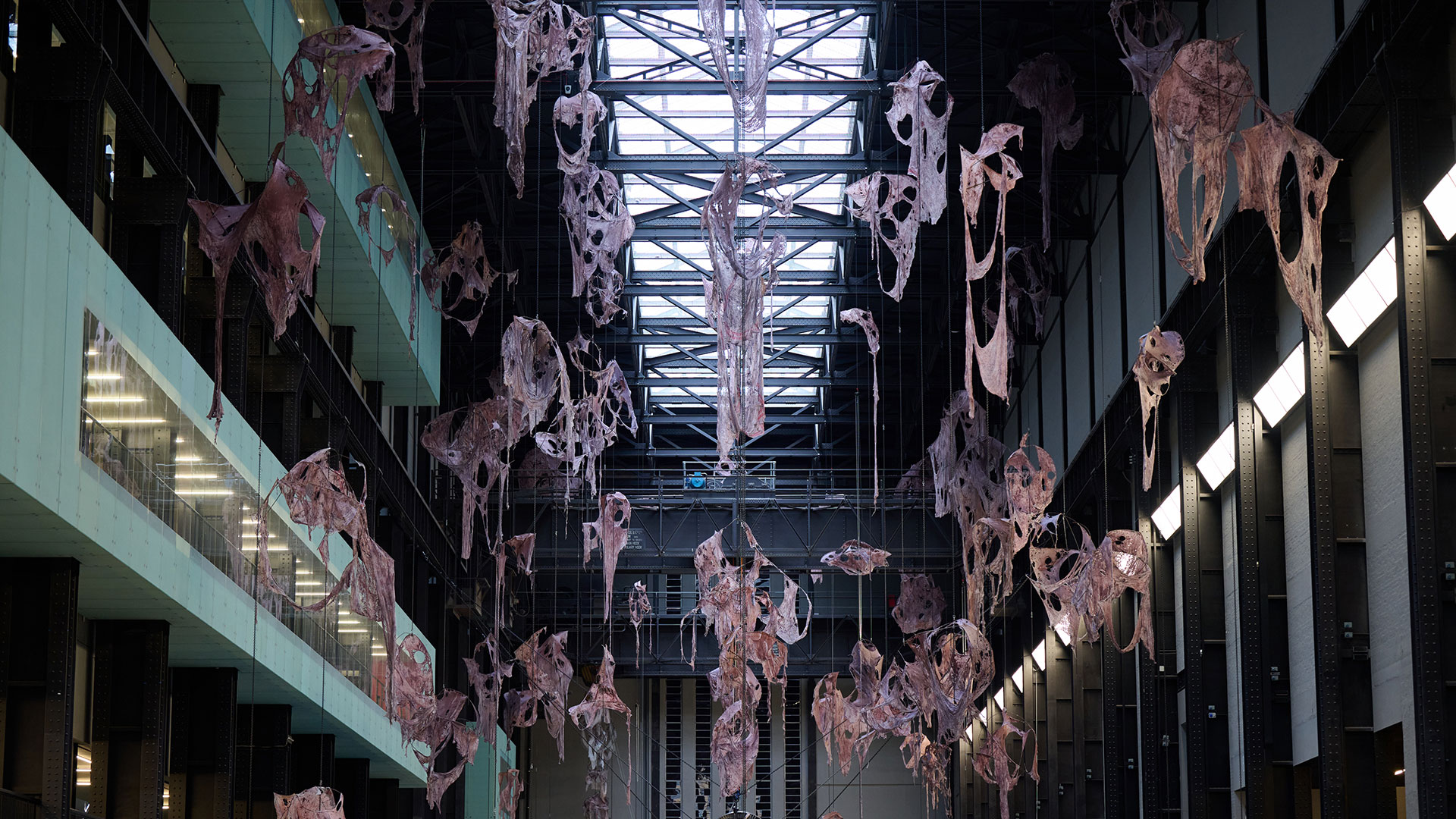
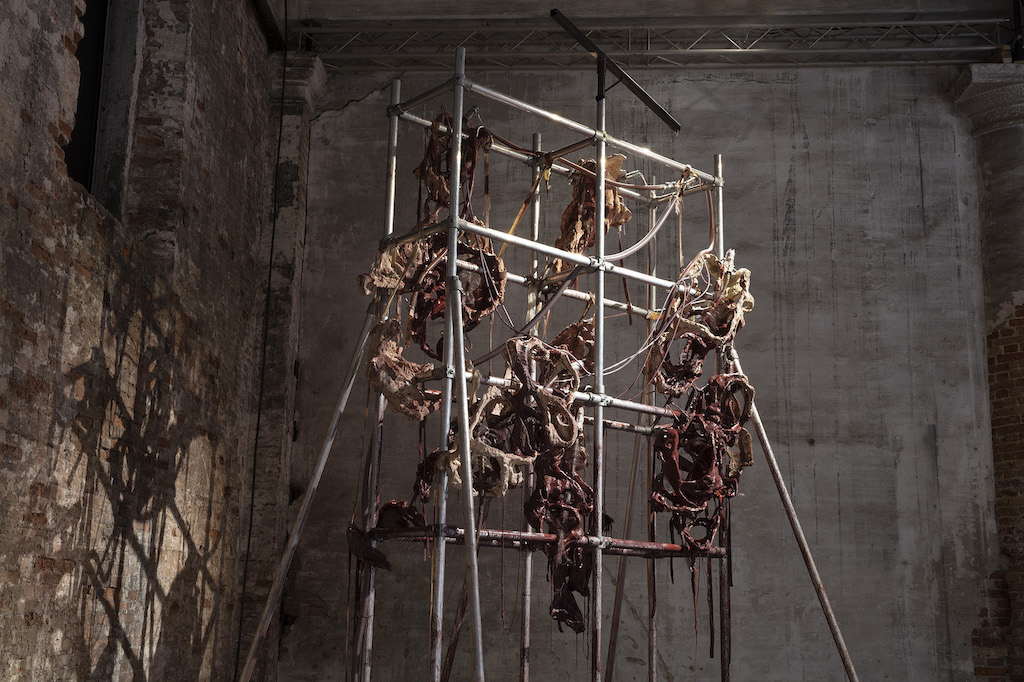
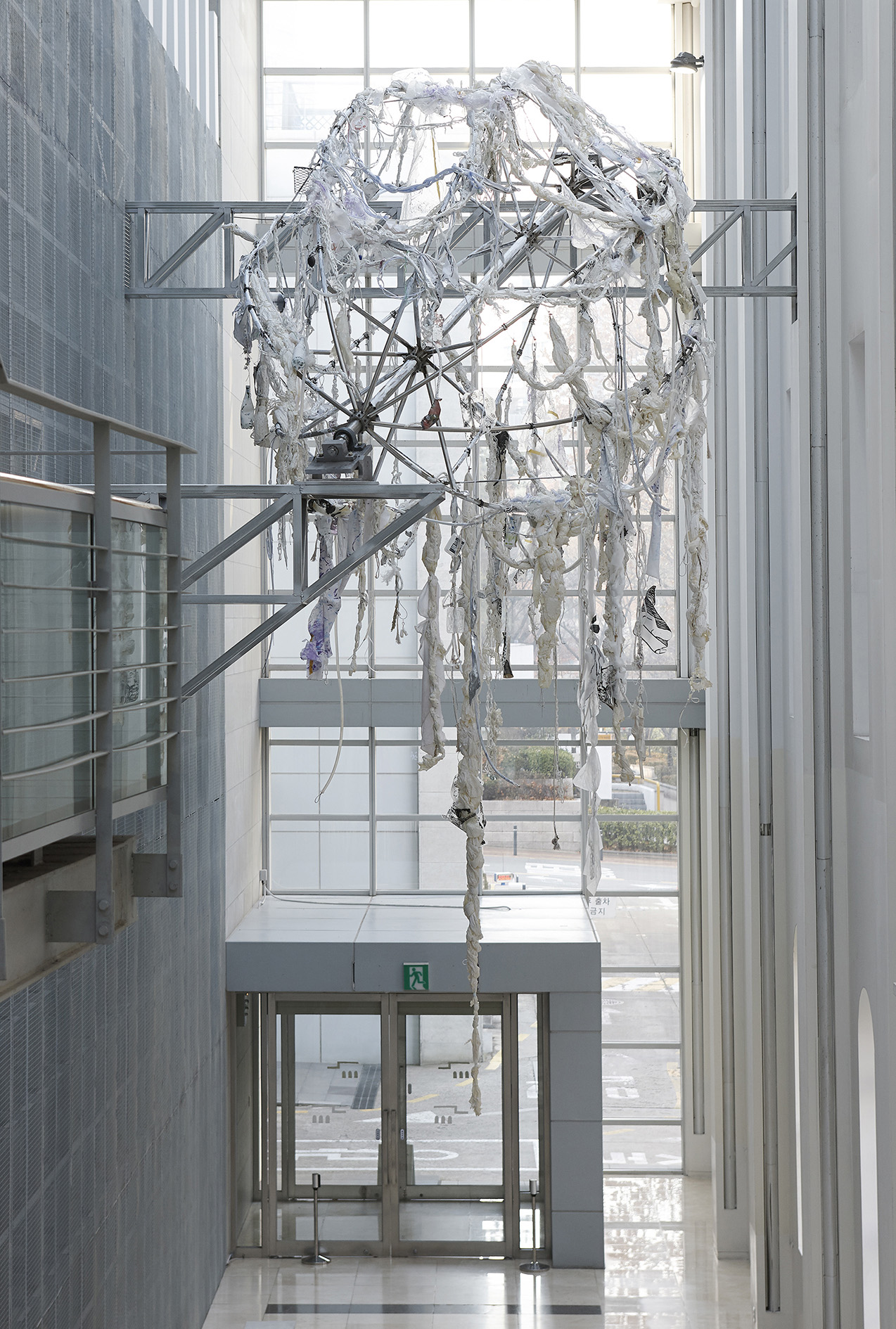
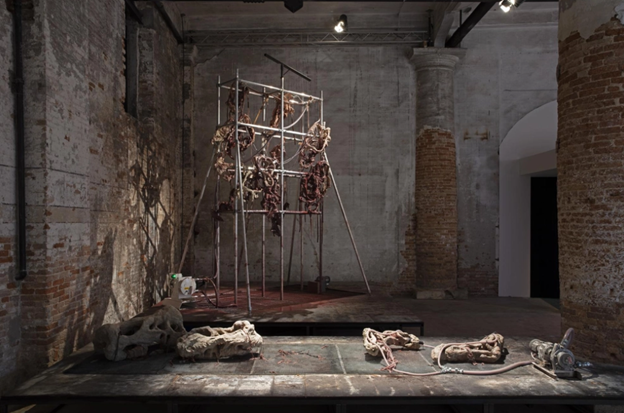
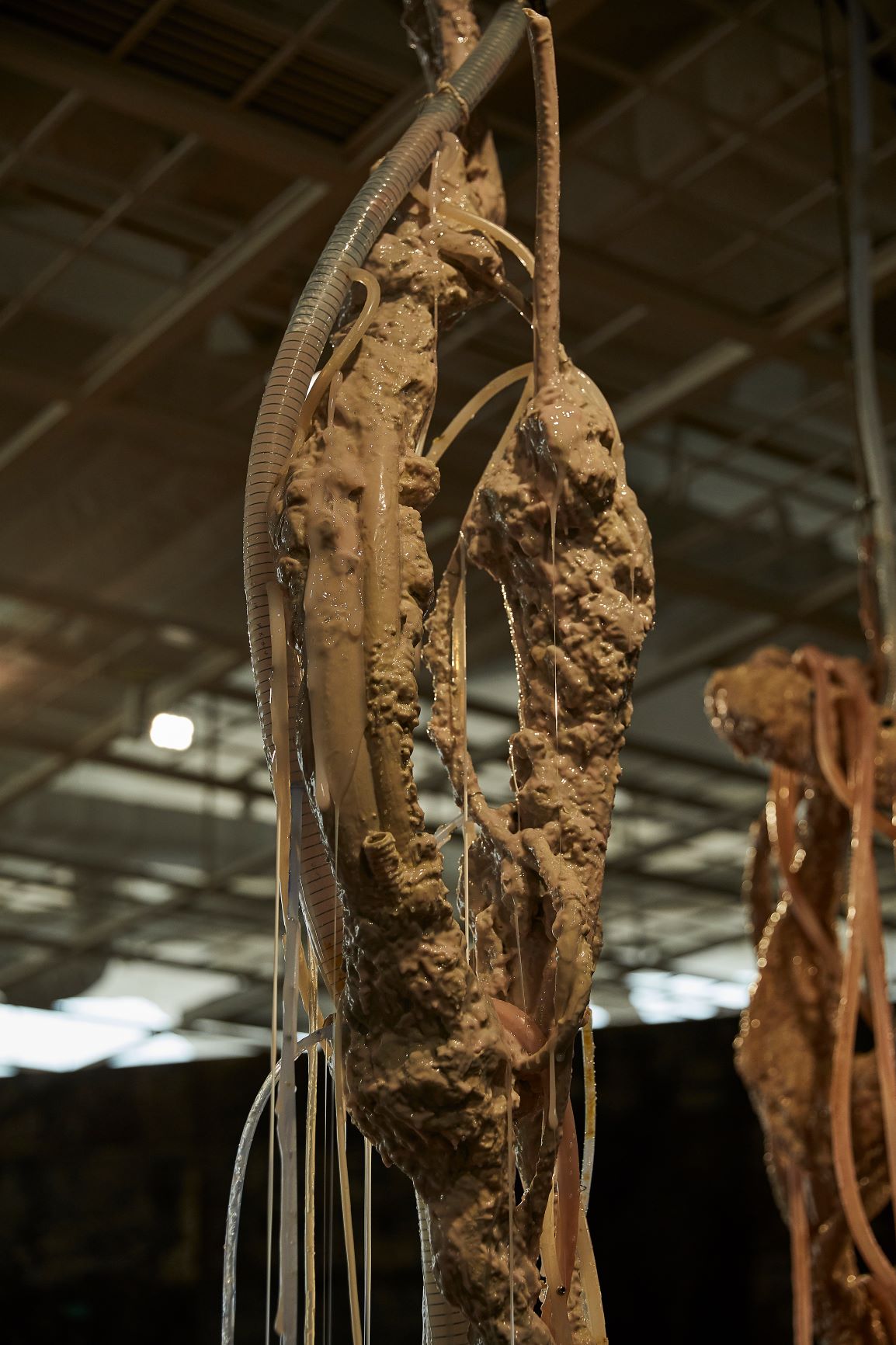
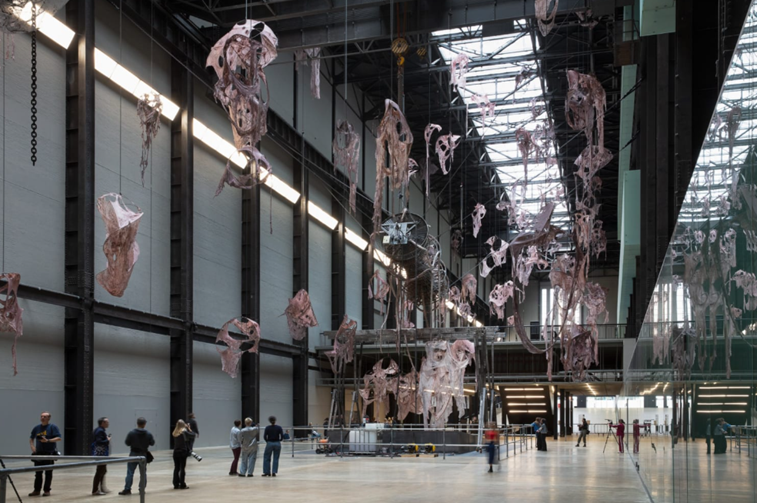
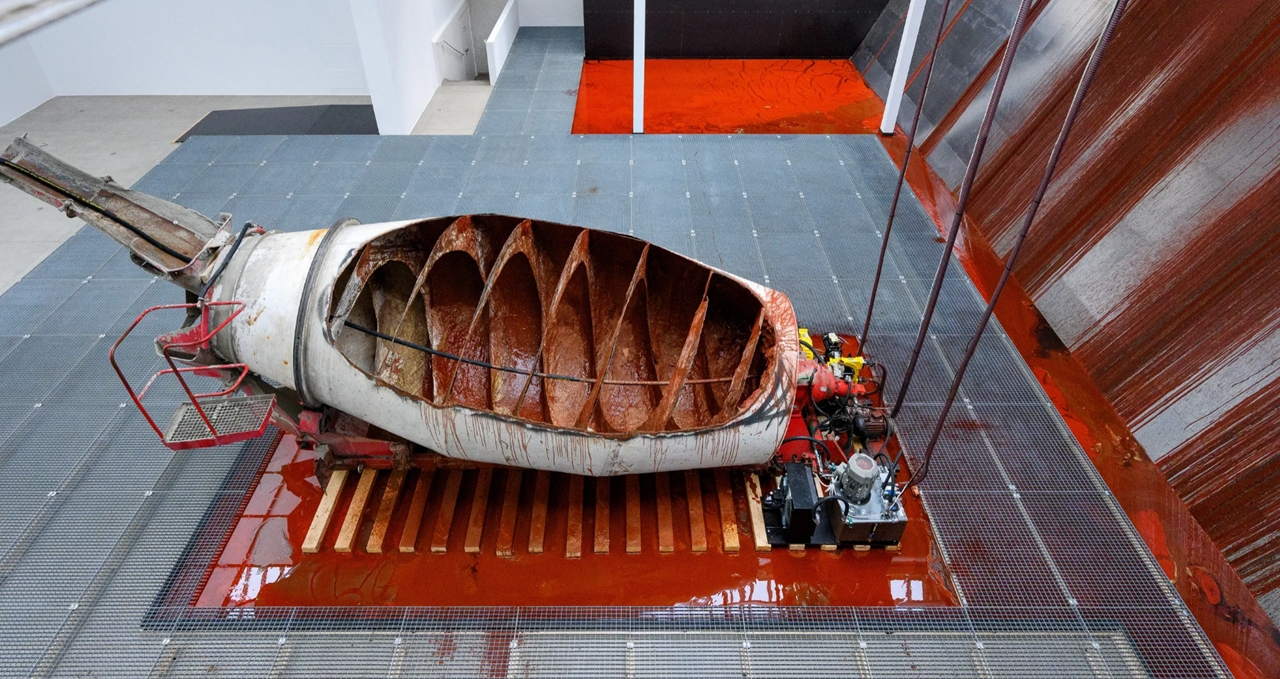
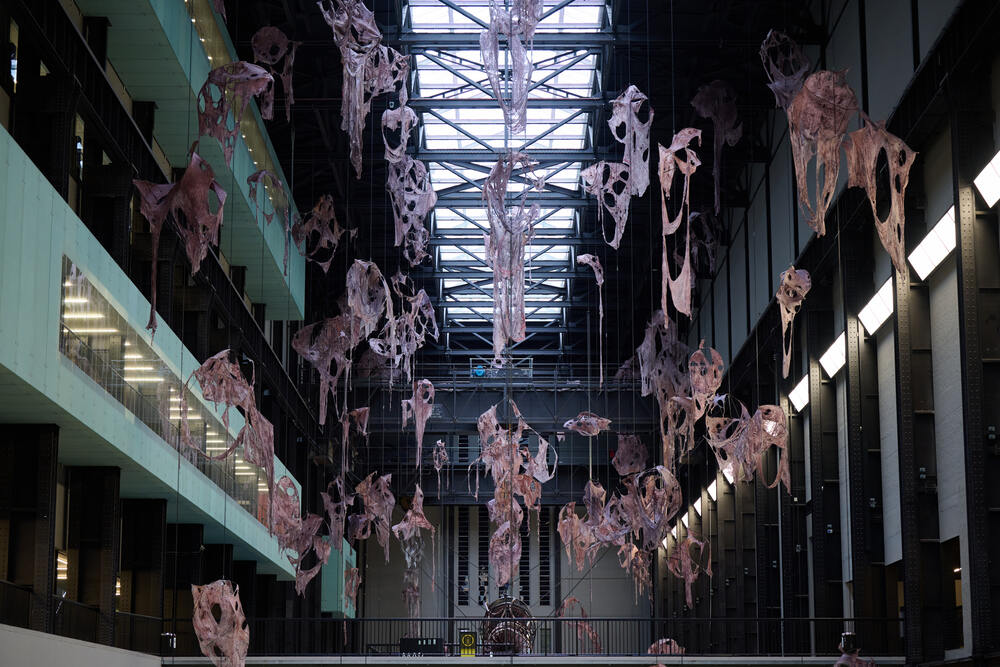
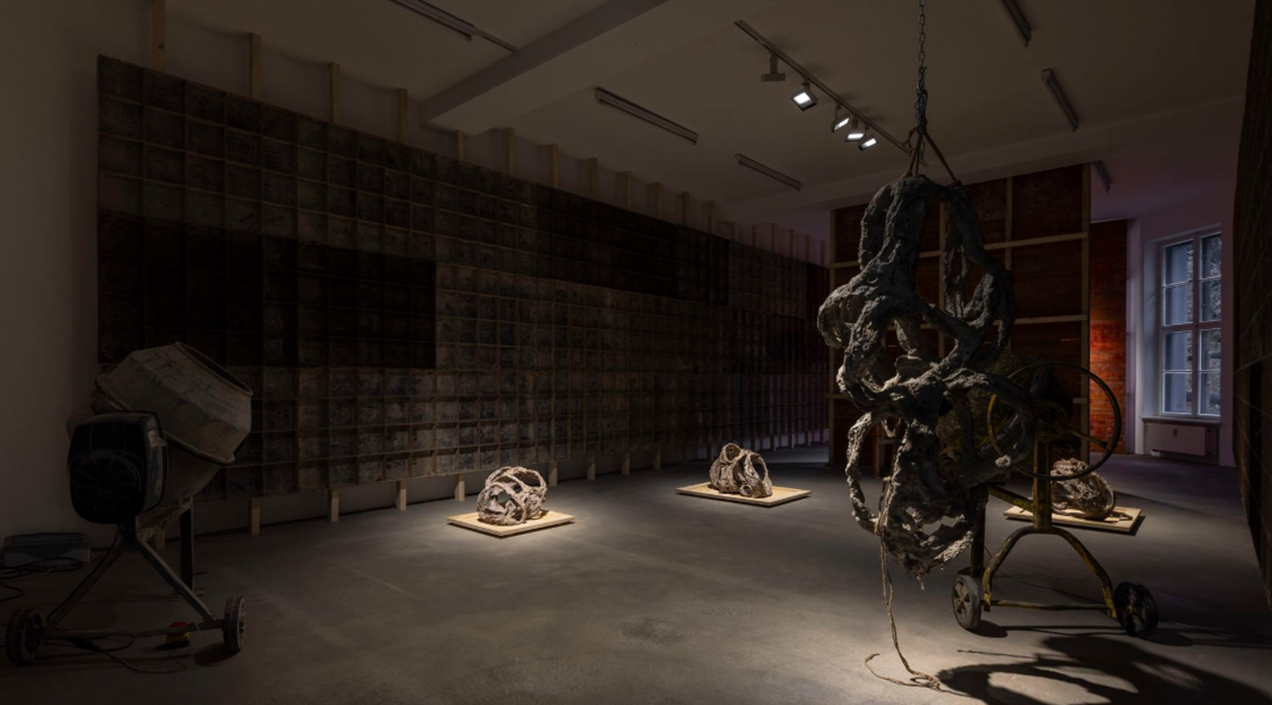
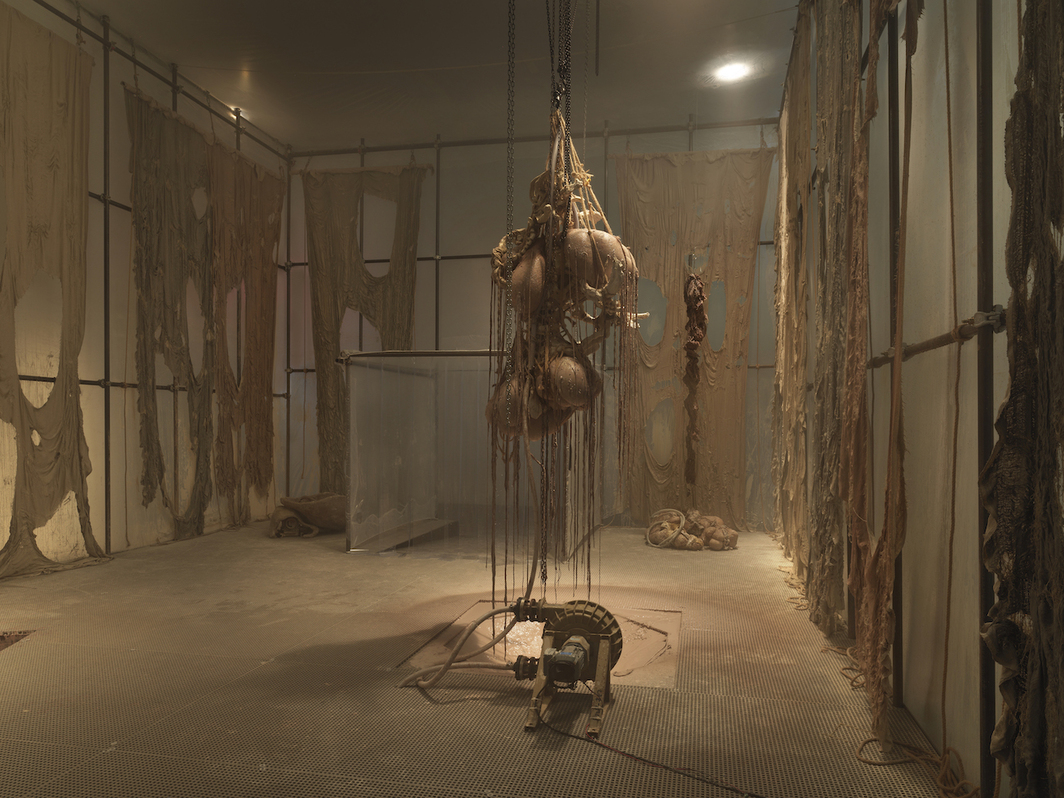
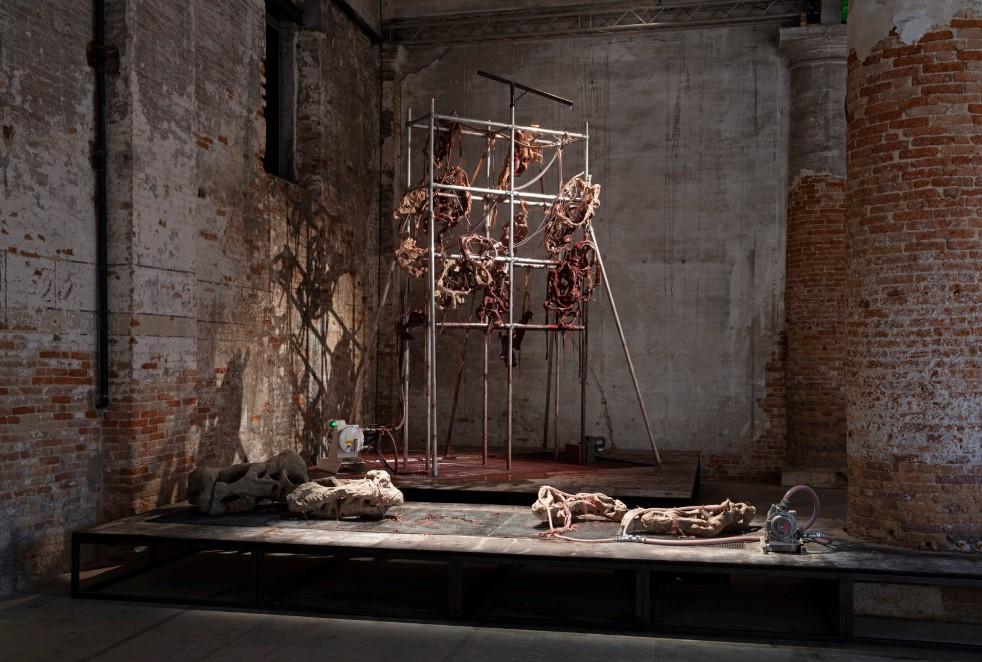
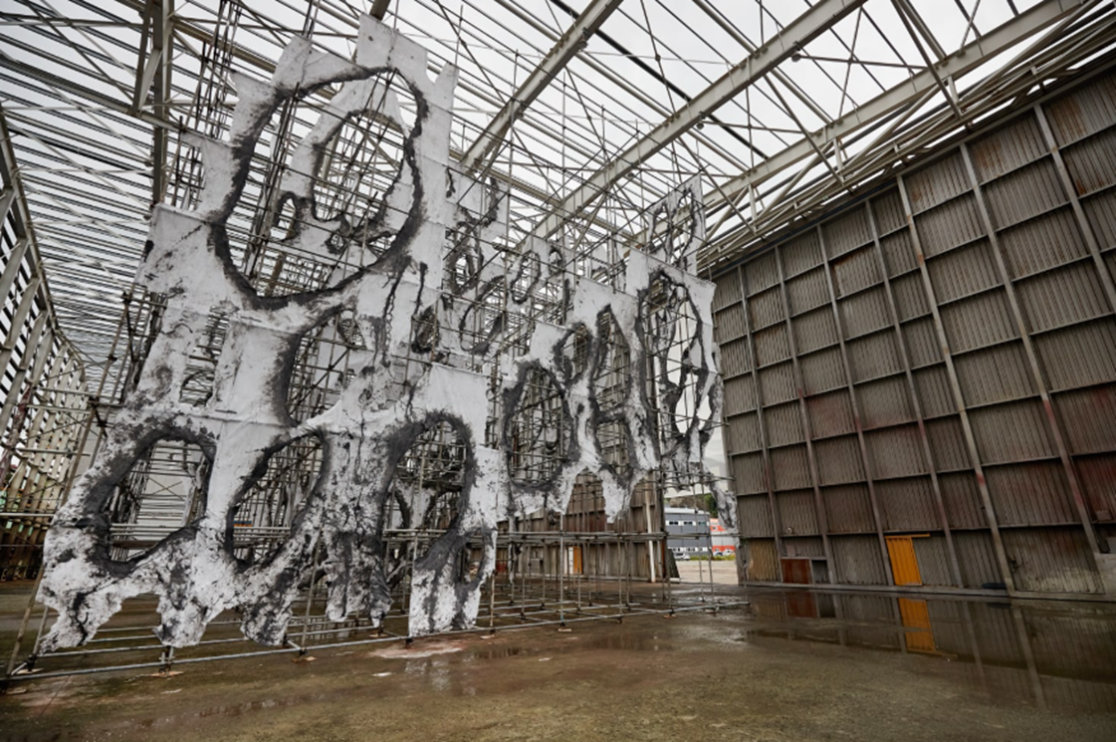
This notion is figuratively embodied in the titular installation
Carriers (2020), a new large-scale kinetic sculpture that
resembles an animal’s digestive system. Built with a hose pump mechanism, the
sculpture rhythmically sucks, transports, and expels mucous substances. The
viscous matter travels along the structure, accompanied by erratic sounds
generated by its movement—evoking the moment something living bursts through a
narrow cavity. For Lee, this energy is a sculptural extension of life itself.
Movement is not an accessory but essential; the machine is a motorized
extension of the material body she touches and activates.
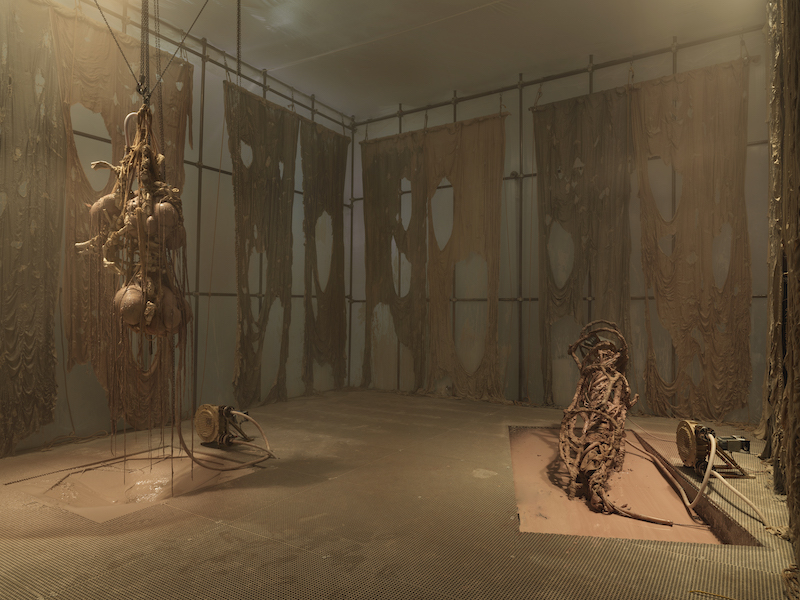
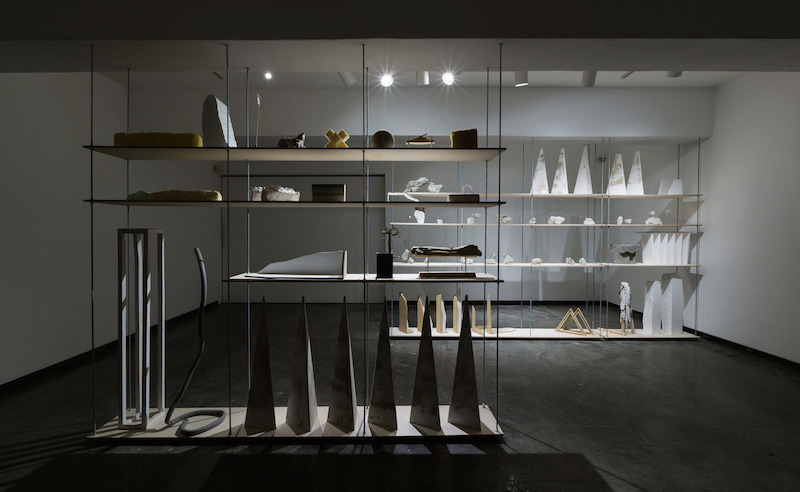
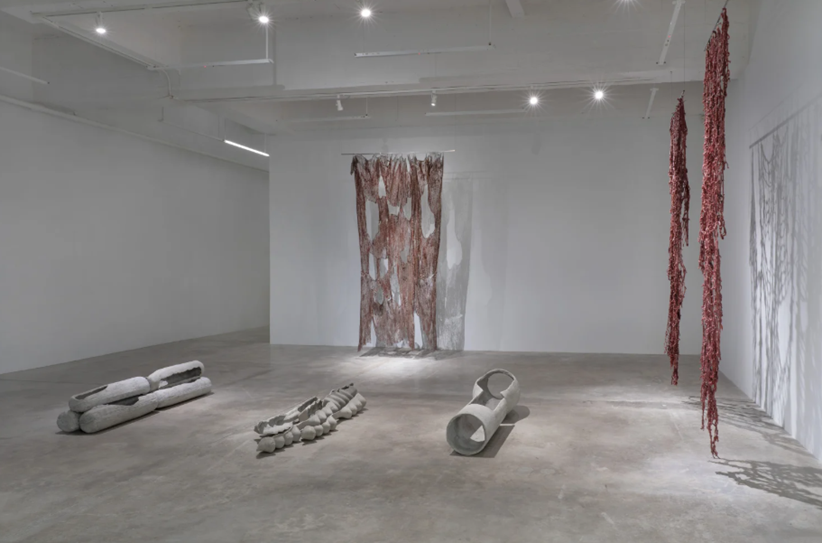
In contrast, other sculptures in the exhibition adopt a markedly
different stance. Concrete Bench for Carriers (2020), a
cast-concrete sculpture, invites viewers to sit and observe the exhibition.
Works like Lying Forms (2020), situated low on the floor,
appear inert and passive, mirroring the quiet presence of the projected video
Sleeping Mother (2020). Among various bodily positions,
“lying down” requires the least energy. It is a state that, unlike death,
presupposes life—an open-ended and vulnerable condition. Lee draws attention to
this ambiguity: to lie still is to be susceptible, yet fundamentally alive. Her
dialectical juxtaposition of kinetic and static forms articulates the
ambivalence of human existence.
In some indigenous rituals, it is said that a shaman’s skin is
removed to heighten sensitivity and mediate the emotions of others. Skin, as
both a barrier and a receptor, mediates our perception of the world. Removing
this membrane collapses distance and minimizes misalignment between the self
and external stimuli. Lee draws inspiration from this tale to explore a
subversive potential: her sculptures, like skinless shamans, act as heightened
sensory agents—carriers that perceive the world on our behalf.
For Lee, sculpture is less about intellectual interpretation than
about physical and intuitive encounter. 《Carriers》 metonymically evokes the primal
movement of substances inside the body—blood, embryos, viruses,
nutrients—offering an experience where one becomes fused with the world through
the most intimate and corporeal dimensions of perception.