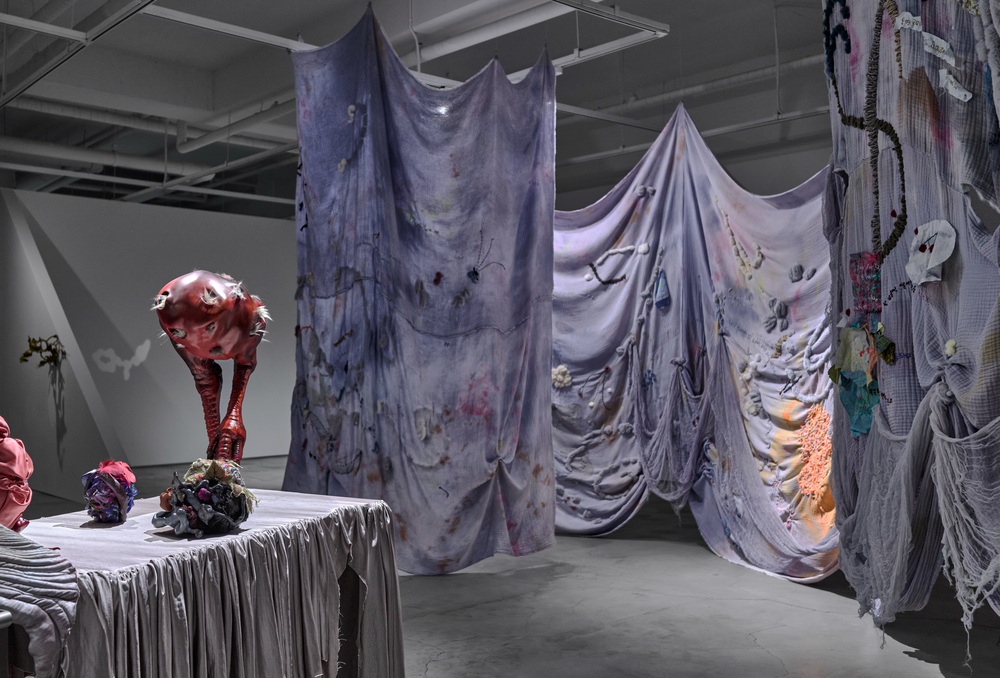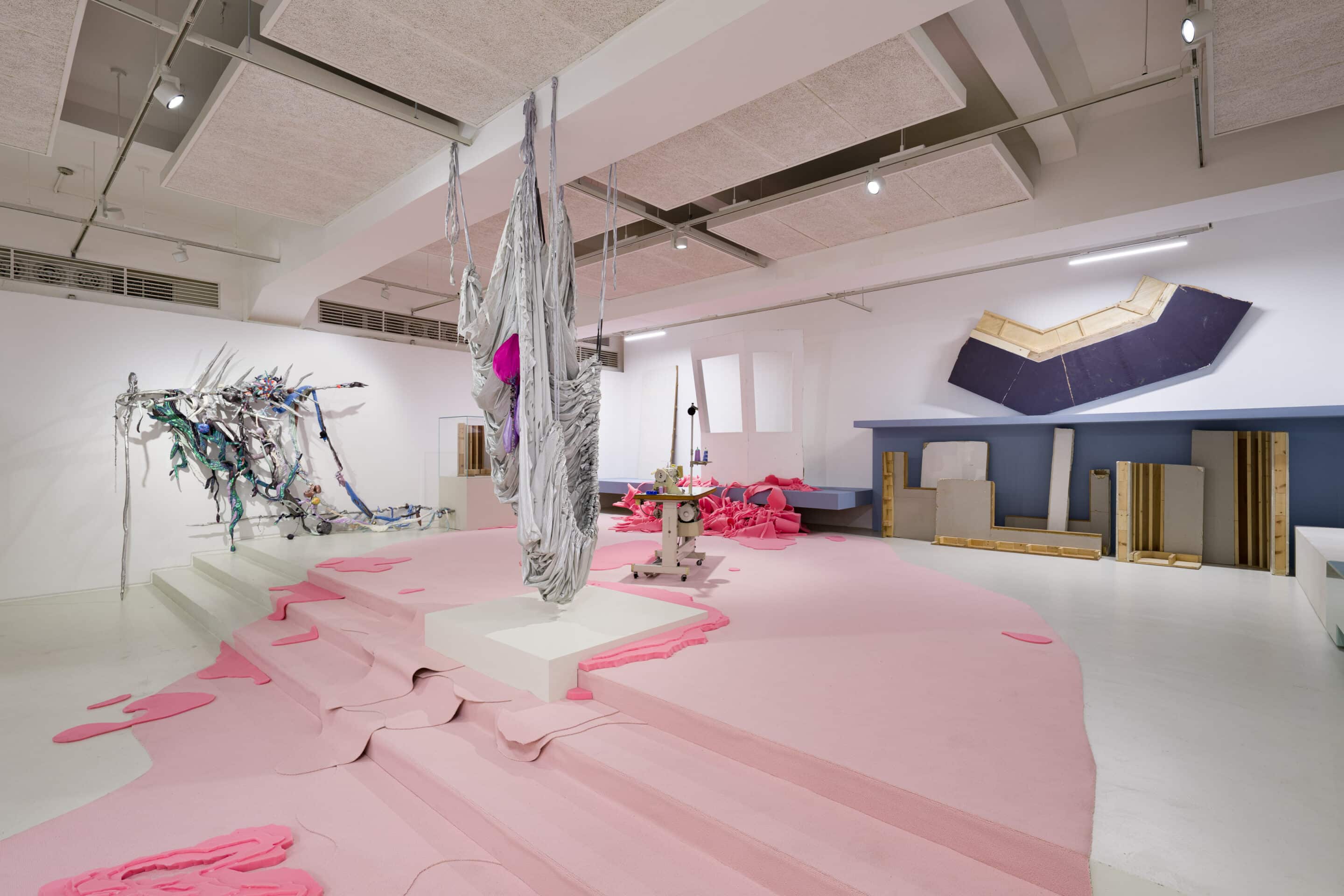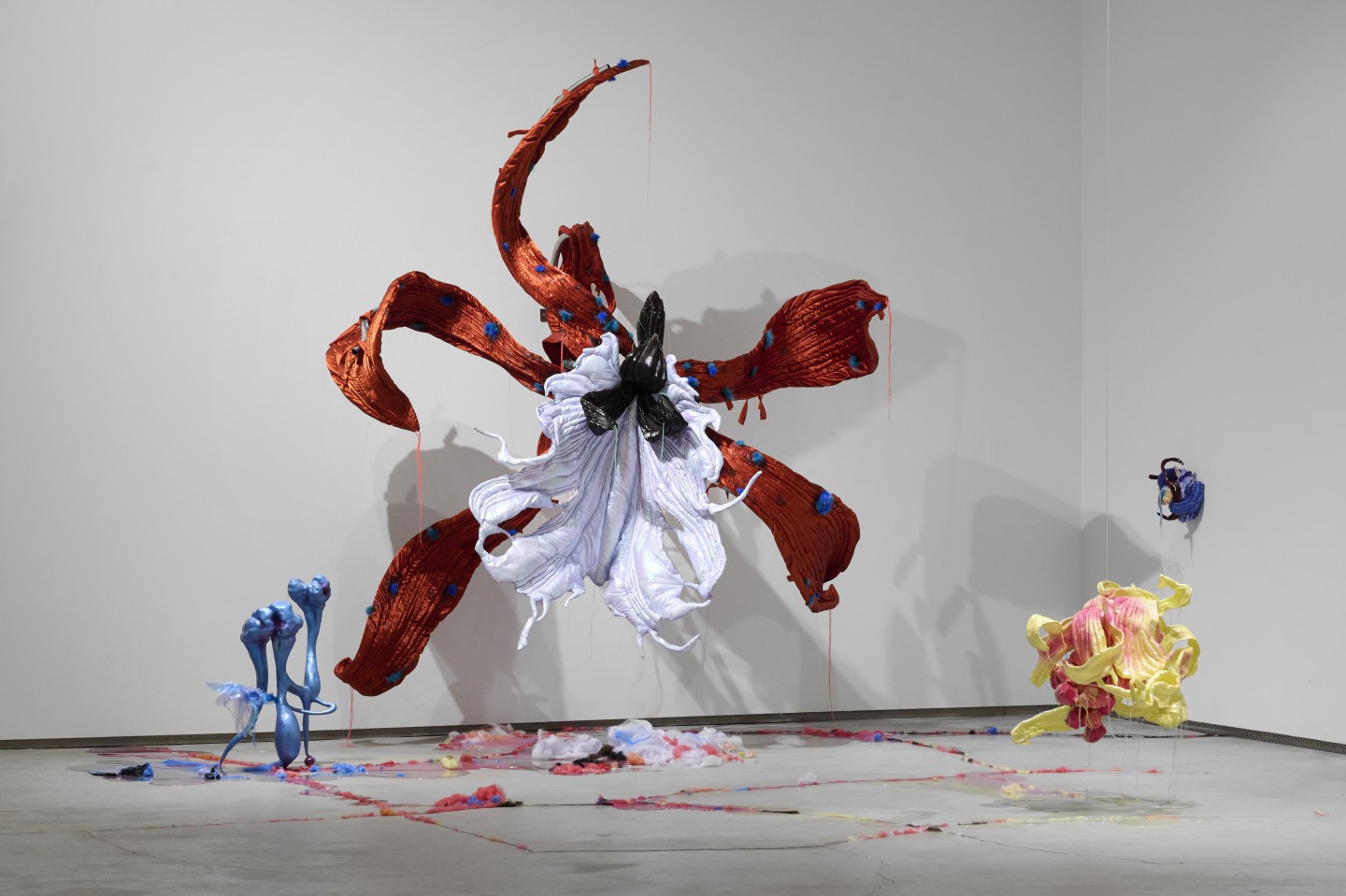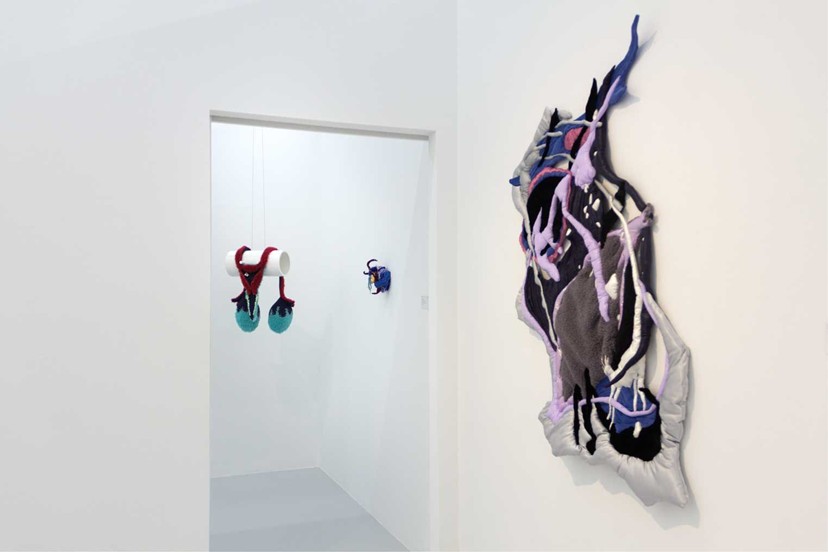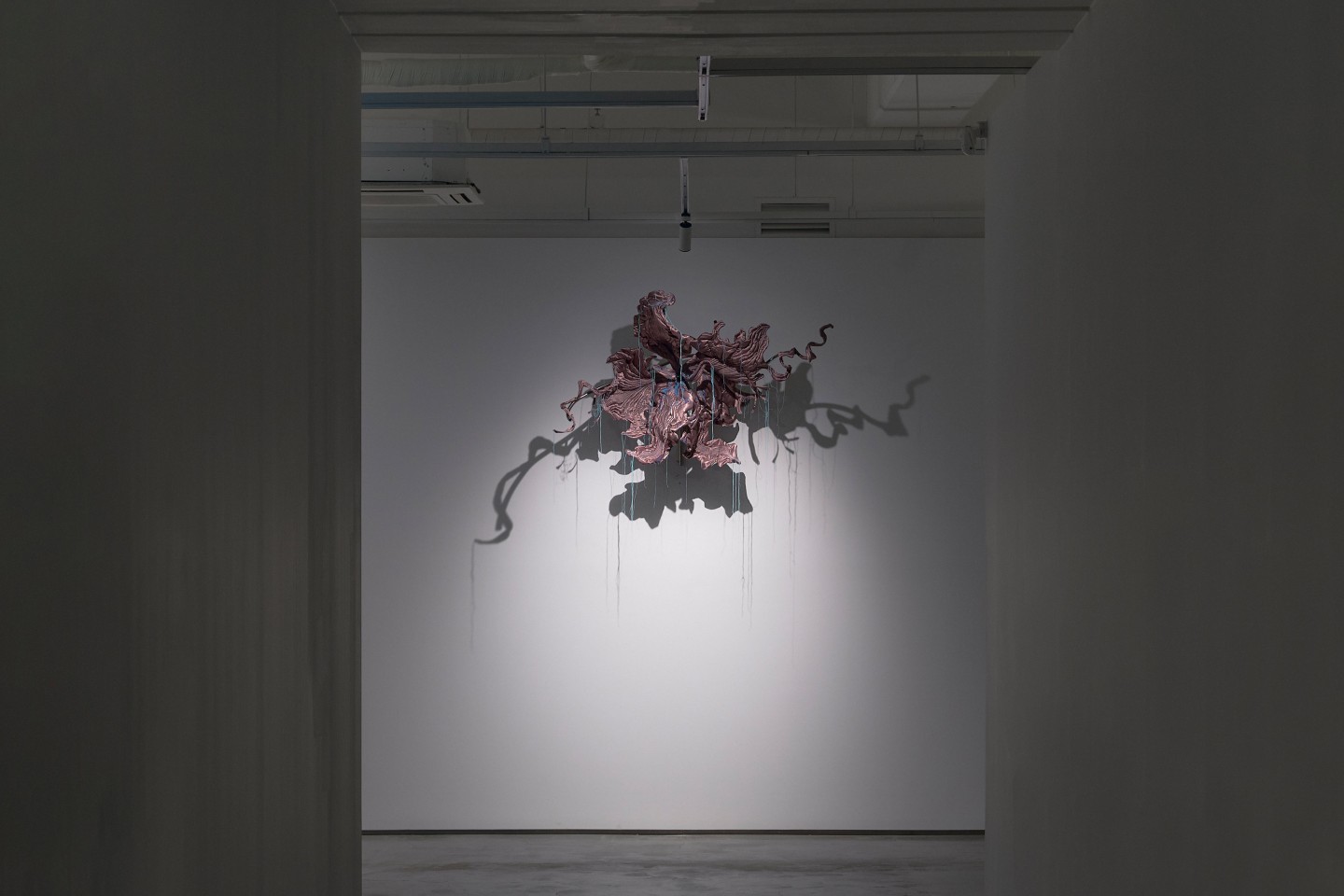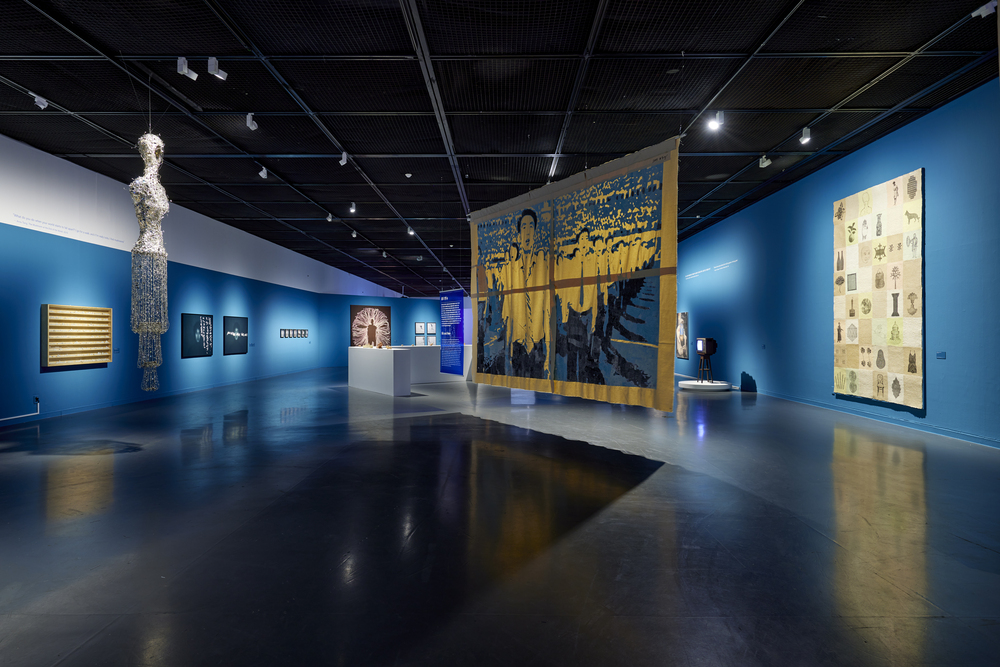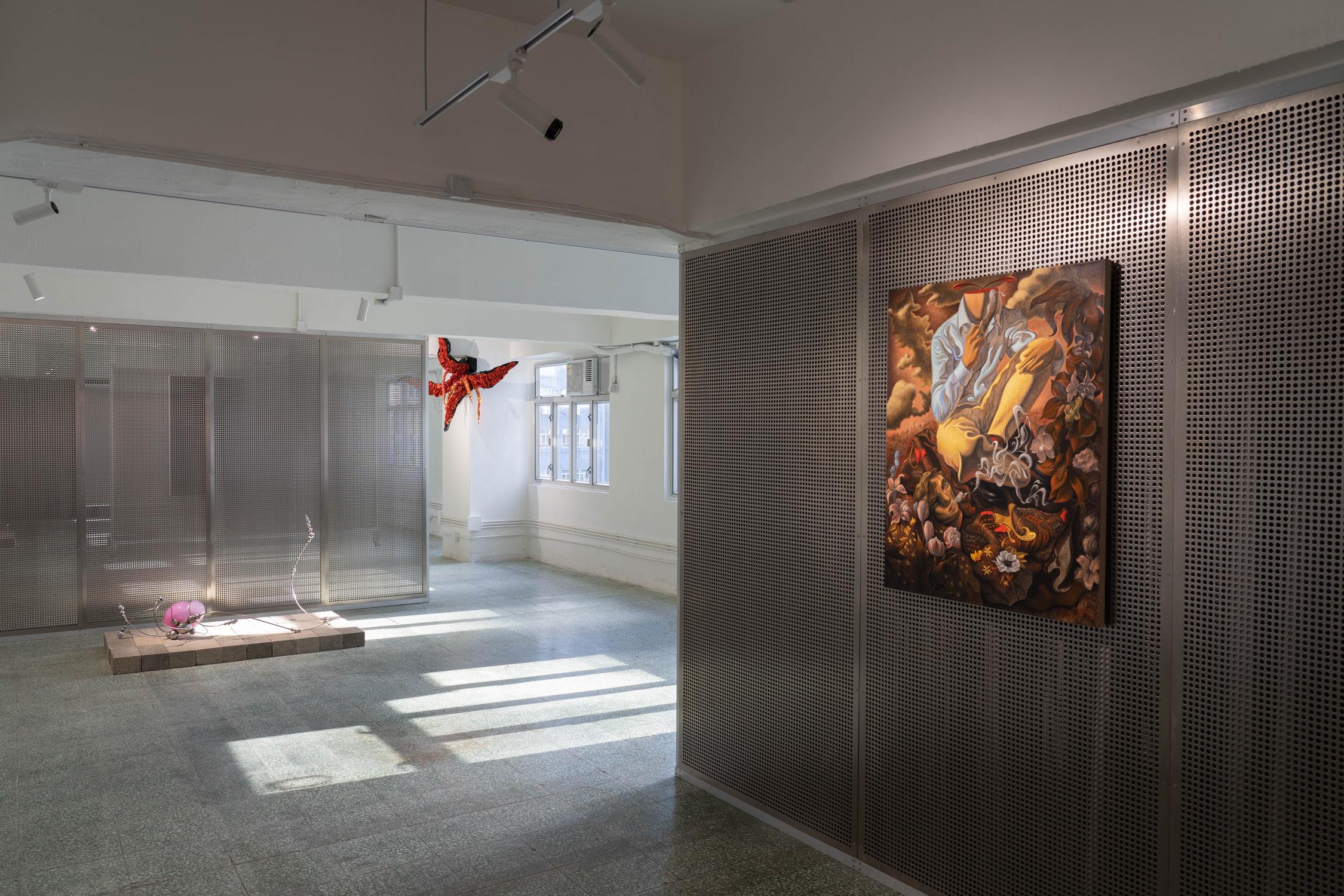


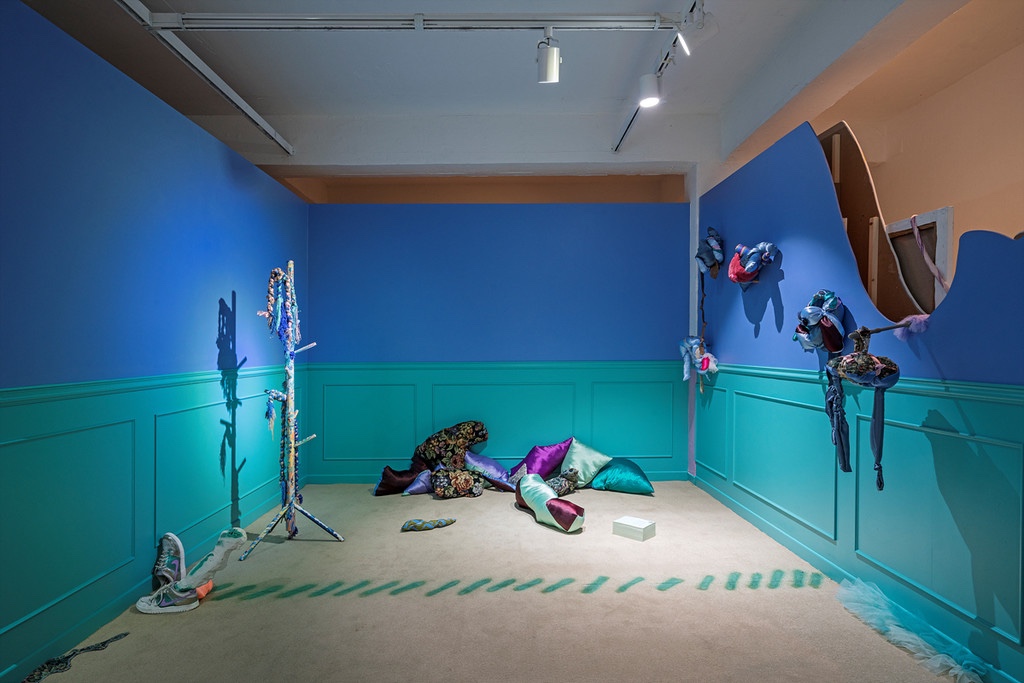
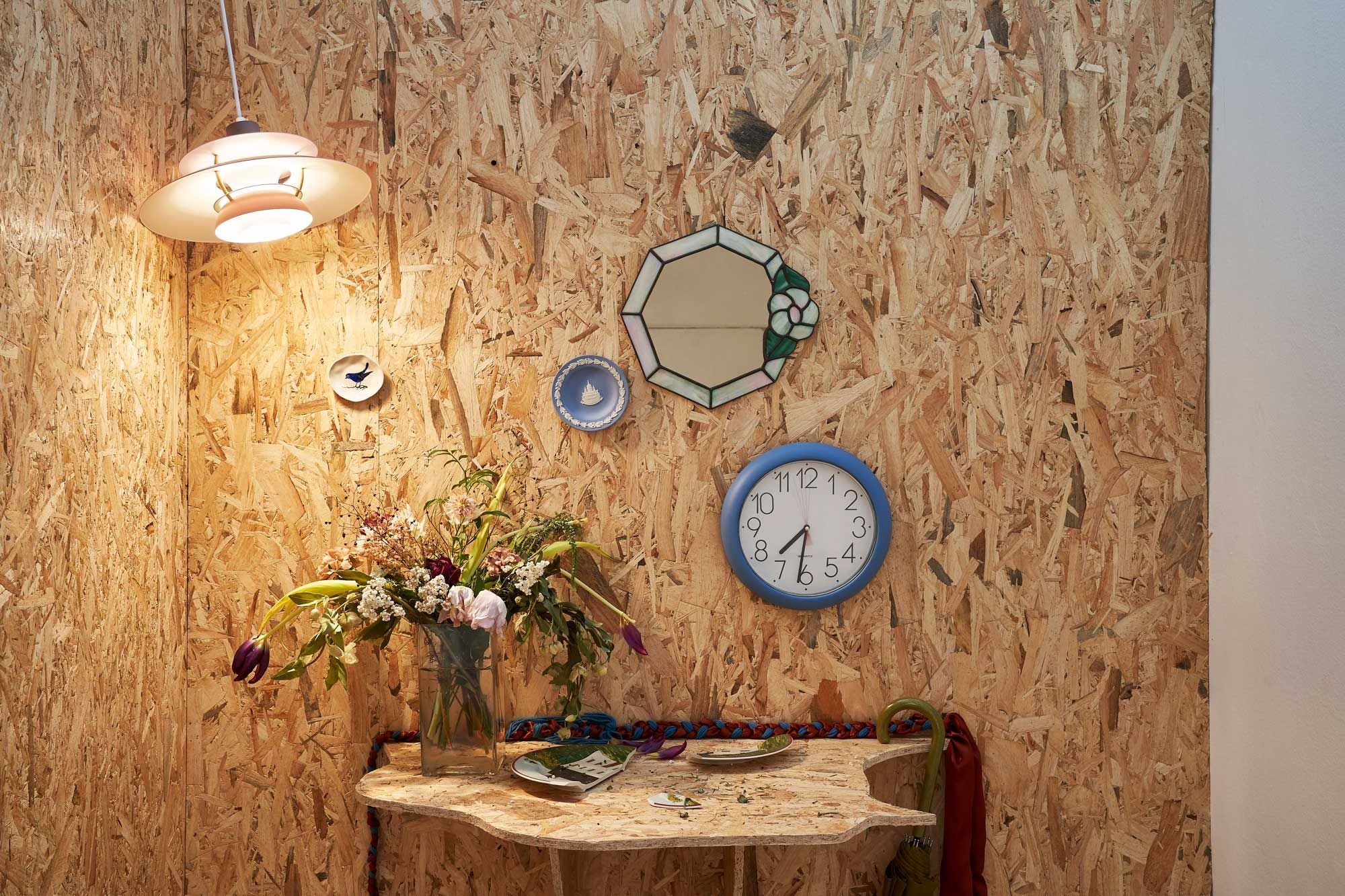
Installation view © G Gallery

She is the woman hanging from the 13th floor window. Her hands are pressed white against the concrete molding of the tenement building. She hangs from the 13th floor window in east Chicago, with a swirl of birds over her head. They could be a halo, or a storm of glass waiting to crush her.

She thinks she will be set free.


Joy Harjo “The Woman Hanging from the Thirteenth Floor Window”


When first written, the “hanging woman” referred to a middle-aged woman of Native American descent, whose despair and disempowerment the poem seemed to cry out for. Over time, the “woman hanging from the 13th floor window”¹ evolved, becoming a symbol for all tragic beings standing in an absent space.

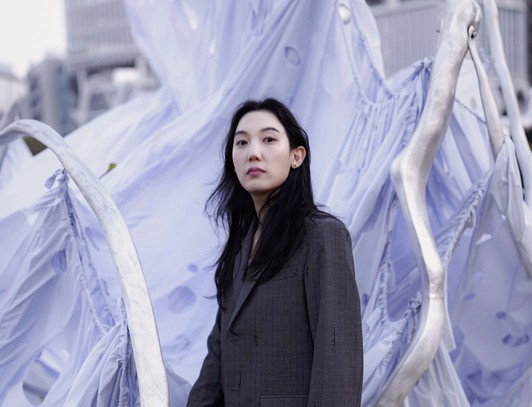
Now the ambiguity of this absent space, and the duality between tragedy and liberation in the figure hanging over the edge of the window sill, opens up another niche of possibility. Through the beautiful, colorful, yet eerily blunt attitudes and visual language of the female artists/team, DadBoyClub, Cindy Ji Hye Kim, and Woo Hannah, who stand within this gap, Two-side Love attempts to see beyond the ambivalent vines of love, perception, and value that exist within themselves and around them.


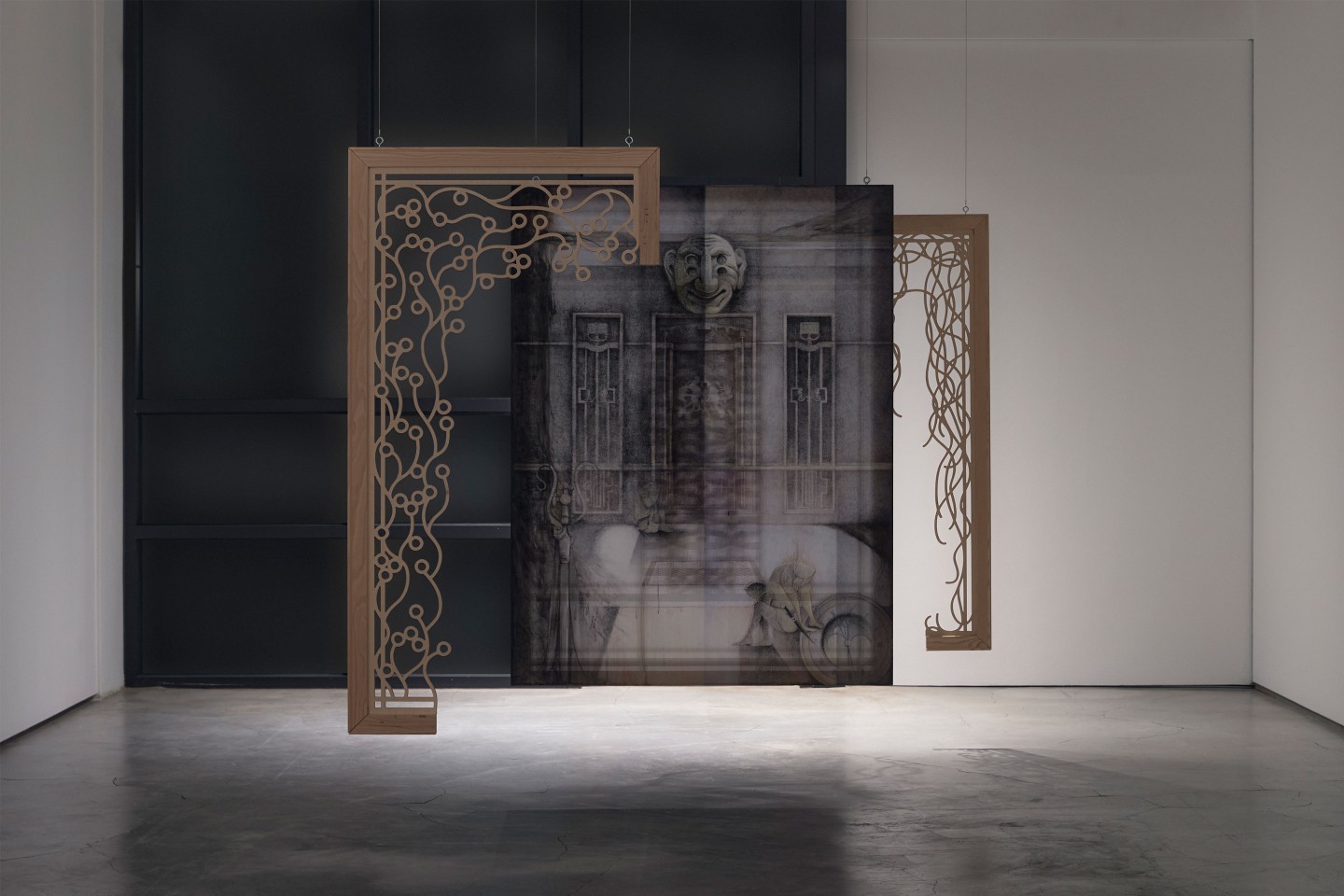
Cindy Ji-Hye Kim, Thousand-Eyed Monster, 2023, Watercolor, graphite, charcoal, pastel on silk with shaped birch stretcher bars, 172.5 x 132 cm © G Gallery

Overlaid with double-sided images and narratives, Cindy Ji Hye Kim's black-and-white paintings capture private memories and sensations that are imprinted or cascaded, oscillating between reality and fantasy. Emotions of longing and loss, affection and grief, stemming from her childhood experience as an immigrant, are linked to explorations of fear and curiosity surrounding the unconscious and the afterlife, shadow and substance, transparency and opacity, all of which are twisted and blurred to create a scene that is both dreamy and uncanny.

Suspended from the ceiling in juxtaposition with a vine-like arch of branches, Thousand-Eyed Monster (2023) compels consideration of what lies in between, as the numerous silhouettes delicately drawn on the translucent screen and the frame itself are viewed from both sides or through something else.

In particular, the mask situated in the center of the canvas depicts the Korean 'Bangsangsi Mask', which, in addition to the sense of mourning, functions as an iconography in which masks/disguises substitute for or conceal the real, inviting us to imagine and explore what exists beyond the physical surface and body.


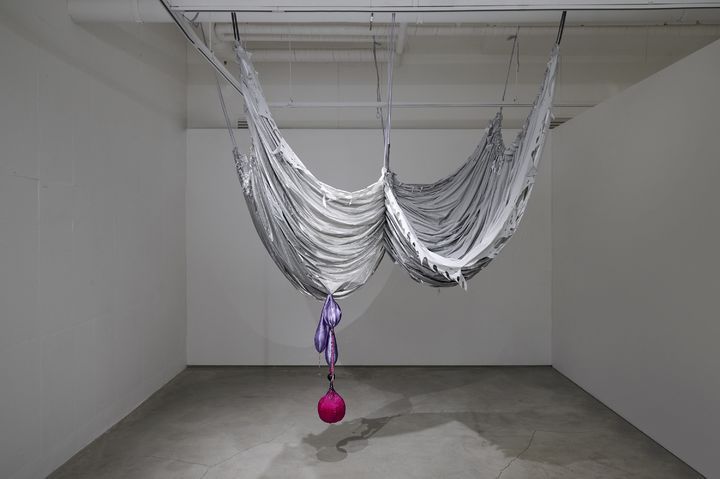
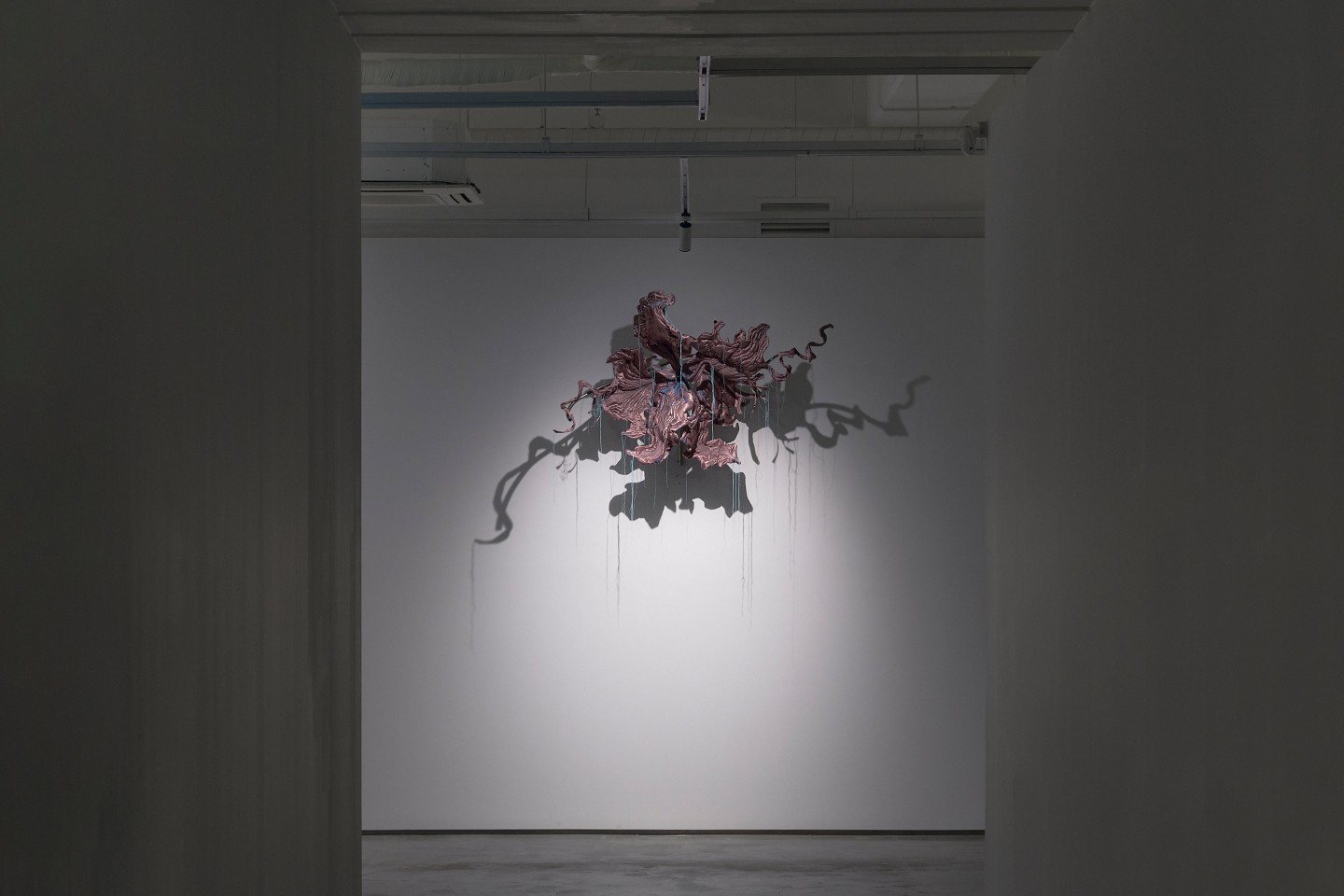
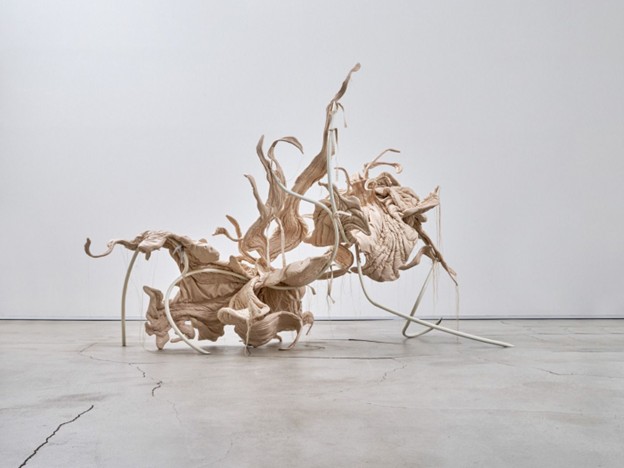
Woo Hannah, Bleeding_Cocoa, 2024, Fabric, thread, cotton, silicone, steel pipe, wire, 120 x 127 x 75 cm © G Gallery

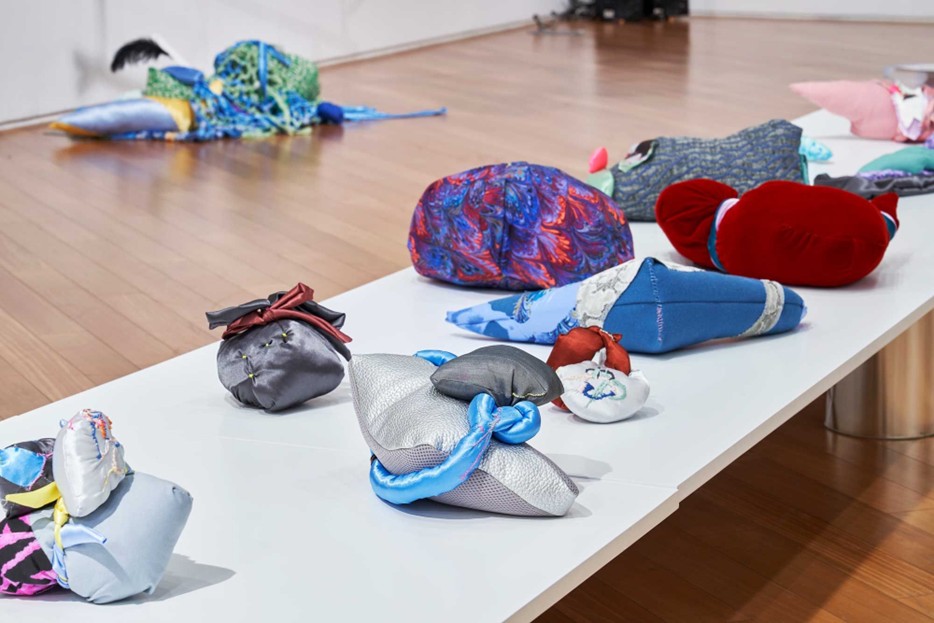
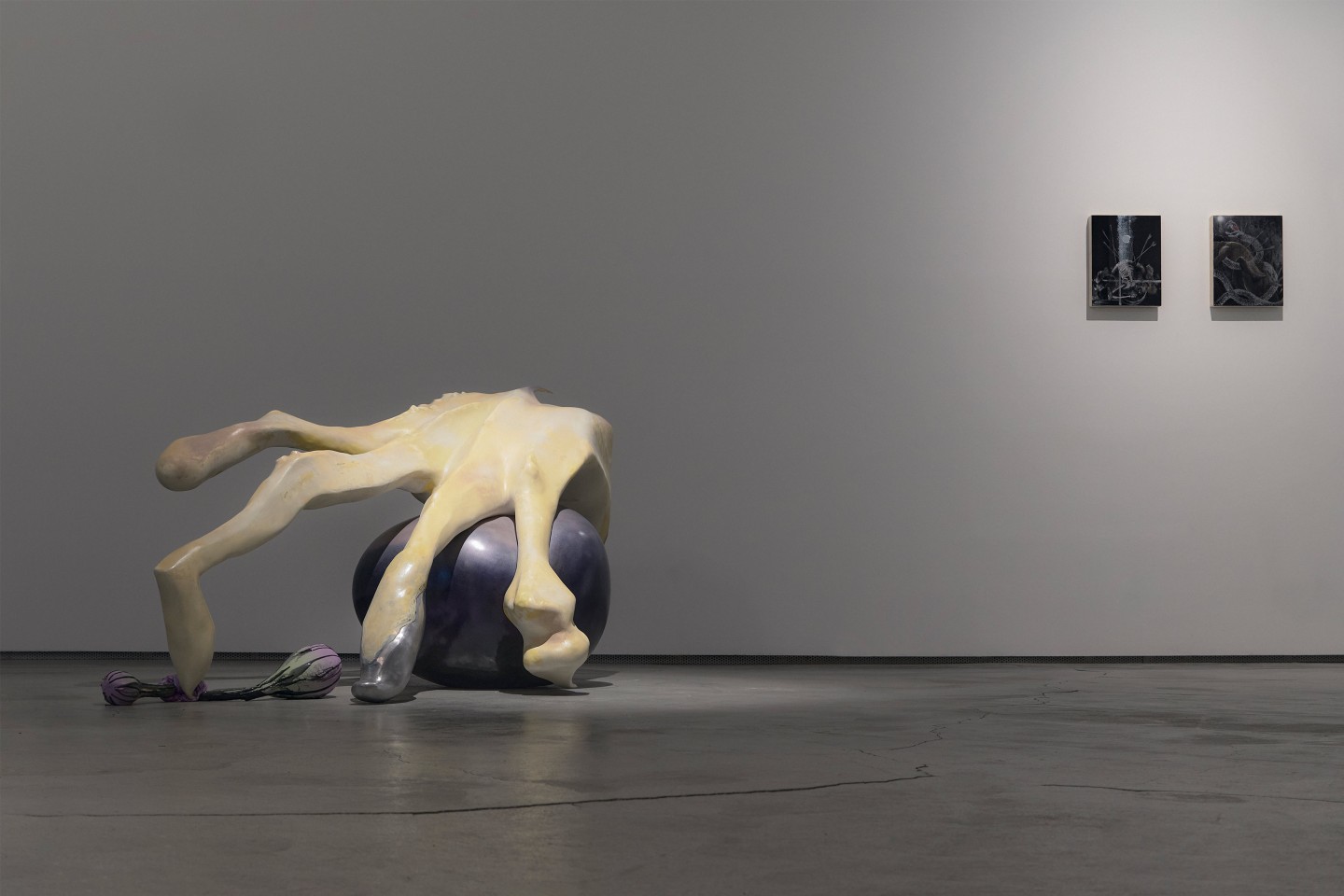
Woo Hannah's sculptures, which celebrate the beauties of femininity yet challenge society's rigid definition of it, engage with contrasting values such as fragility and strength, tenderness and harshness, feminine youth and aging, and birth and death. In her work Mama Piano (2024), a giant hand clutches a round egg.

The exaggerated skeleton and form of the hand, with its soft yet unsmooth surface suggesting it is amid transformation, does not reveal the identity of its bearer. The presence encased within the shell of the shadowy, elusive egg also cannot be detected. The relationship between the two remains indeterminate, teetering on the line between defacement and protection, suspicion and trust, love and hate.

Bleeding_Cocoa (2024), which is mounted in such a way that one is forced to look up to bring it into view, is a graceful, yet somehow chilling “flower” with the texture of a rustling, drying husk and a silhouette that resembles a sharp thorn or vine. Woo Hannah's flowers are not objects of mere admiration or sources of fragrance, but rather a strange beauty that provokes a moment's hesitation before gazing up.


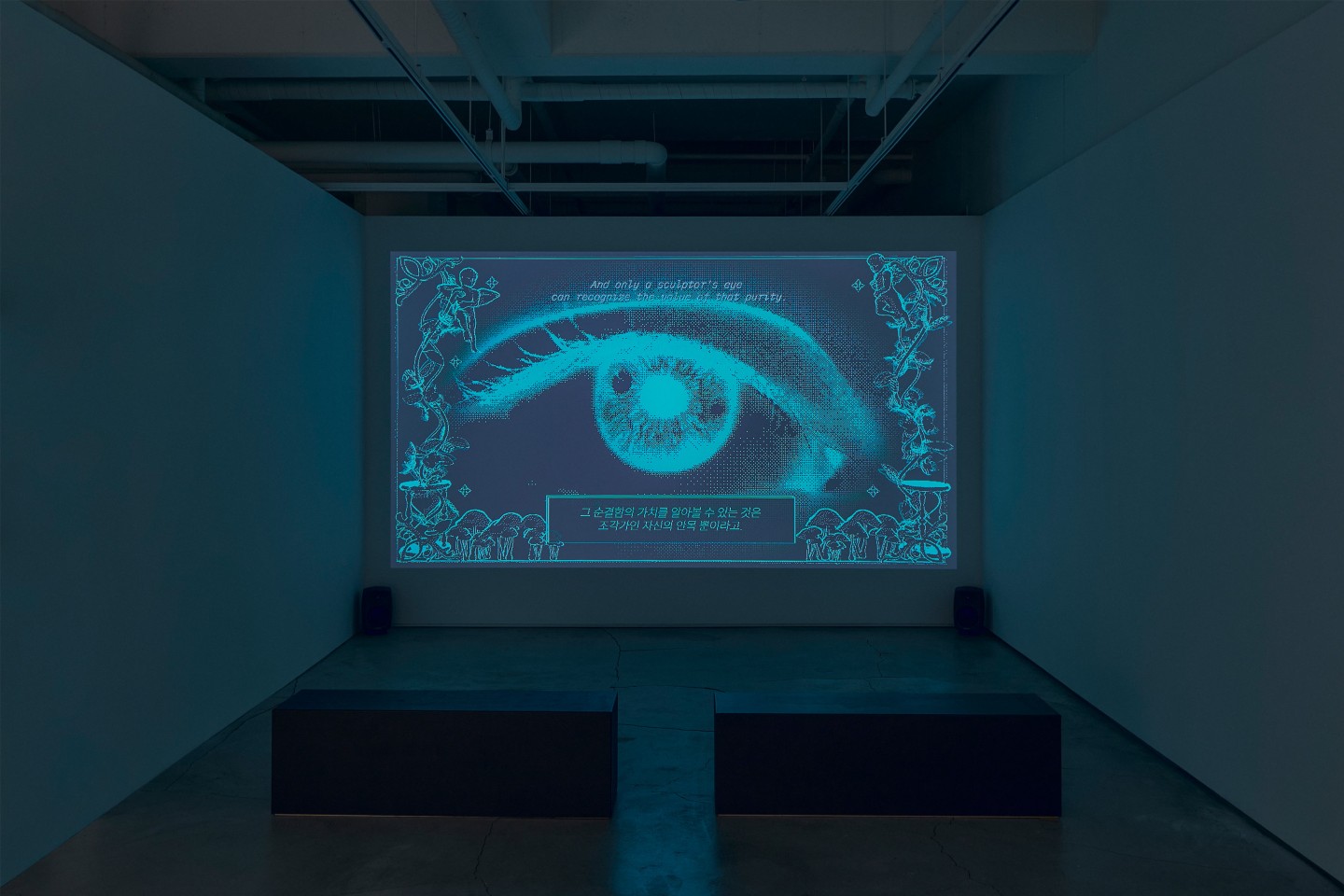
DadBoyClub, S/Z, 2023, Single channel video, 16:9, color, sound, 15 min 31 sec © G Gallery

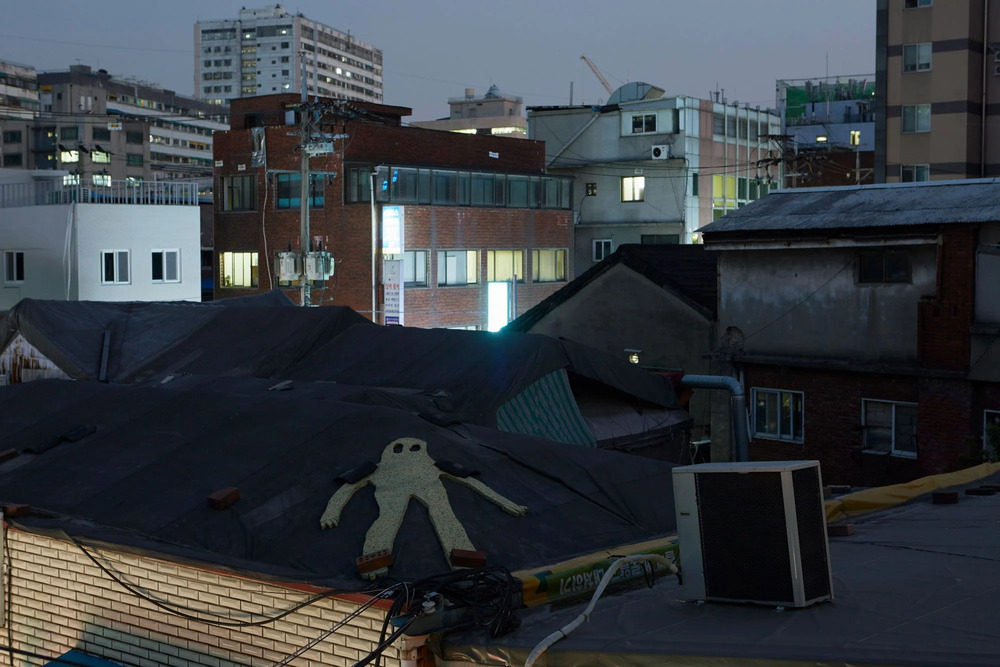
DadBoyClub examines the long and persistent history of prejudice, discrimination, and violence against women and femininity through a range of media, including video. Their questions involve pathways shared by the many and even the very ways in which (anonymous) communities can form, strategically adopting contemporary viral content or popular objects and designs, and materializing them as virtual objects.

DadBoyClub calls the resulting objects “weapons that reflect the fragments of pain from women's experiences,” and explicitly points out the realities they face as women. S/Z (2023), inspired by Honoré de Balzac's novella “Sarrasine” and Roland Barthes' semiotic analysis of it, explores the duality of oppression and fascination of the symbols that have constituted femininity.

The conversation between S and Z, who meet on an online platform, is not just a simple exchange of language, but a rebellion and trap against the constant misreadings and misunderstandings that result from entrenched fantasies and prejudices about women(femininity). It is a whirlwind of constantly shifting hierarchies, words and objects, drifting images, concrete and vague experiences and emotions, and a fierce love that both liberates and oppresses each other.


Hyejung Jang (Curator/Text)


1) Due to a Christian background, the number 13 is considered ominous in the United States and some European countries, resulting in what is known as Triskaidekaphobia. Particularly in the United States, it is not uncommon for plans for buildings or elevators to leave out the 13th floor, making the 14th floor immediately following the 12th, or to use other notations such as 12A, T, M, etc. instead of 13, often making the 13th floor an absent floor and the number 13 a symbol of something that has been removed.

References