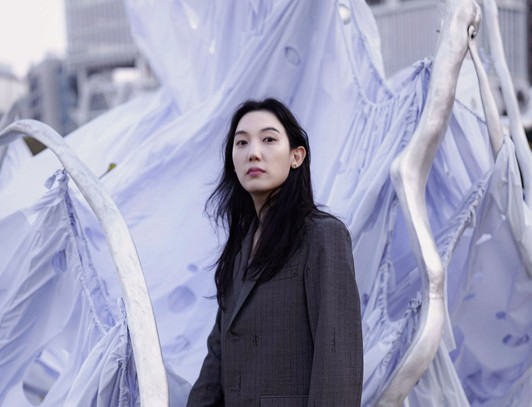
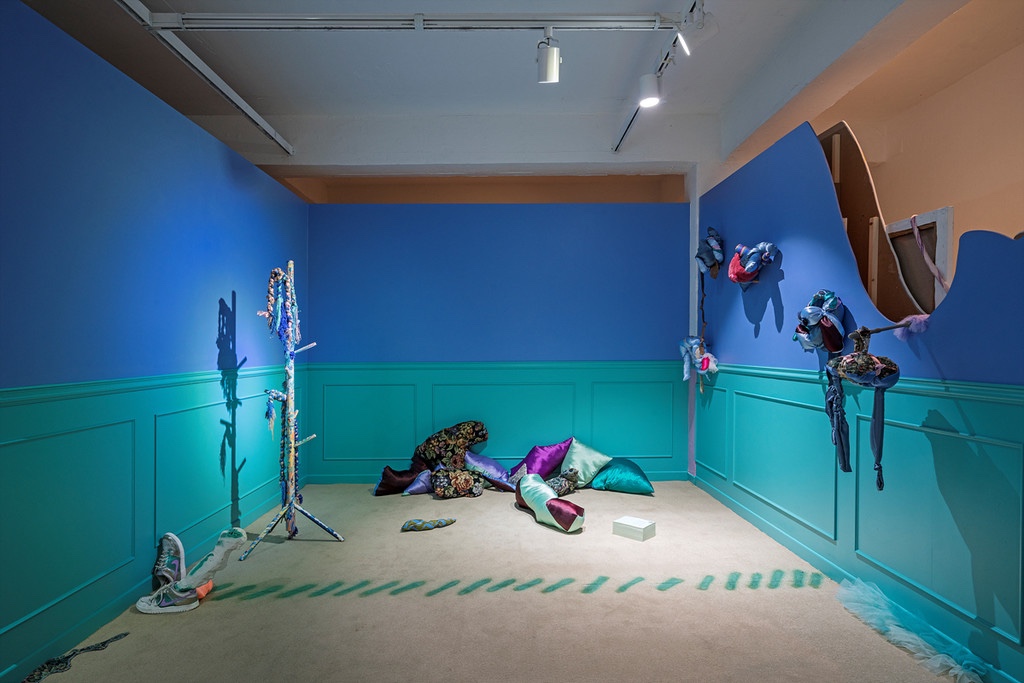
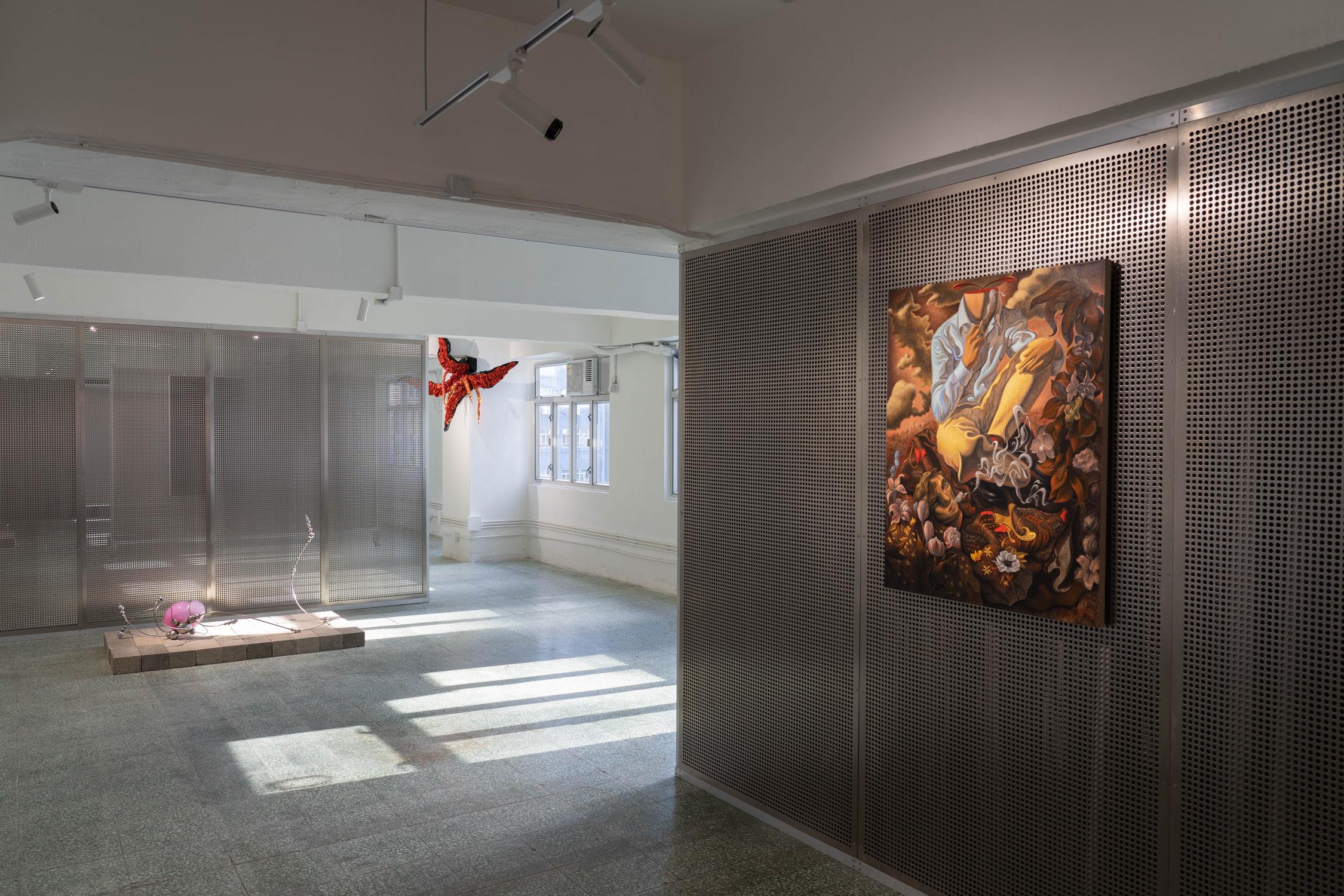
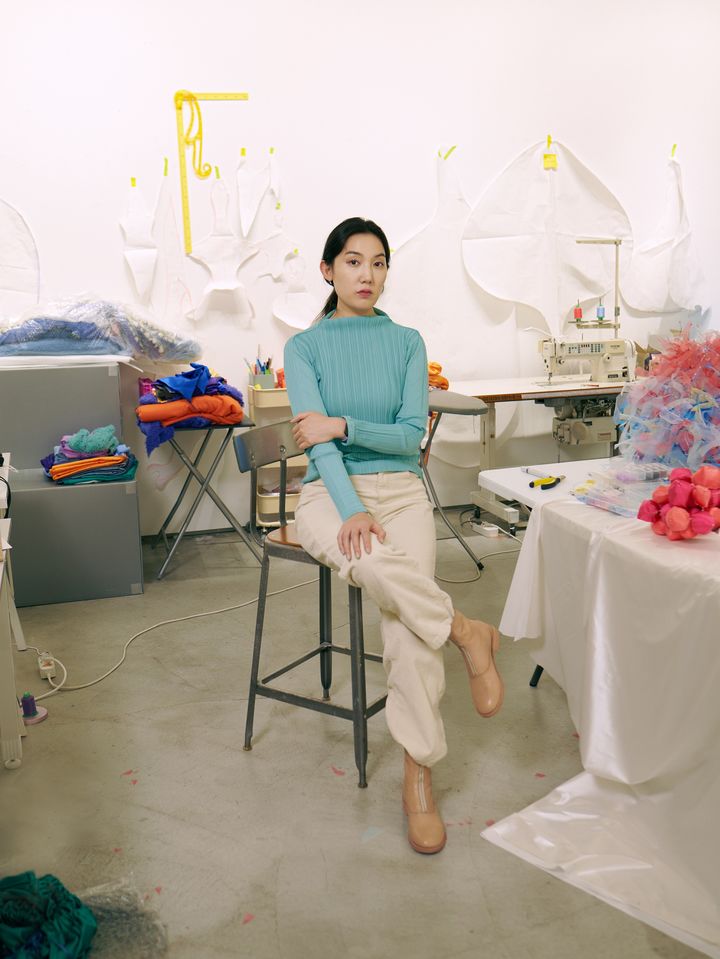
Hannah Woo has consistently
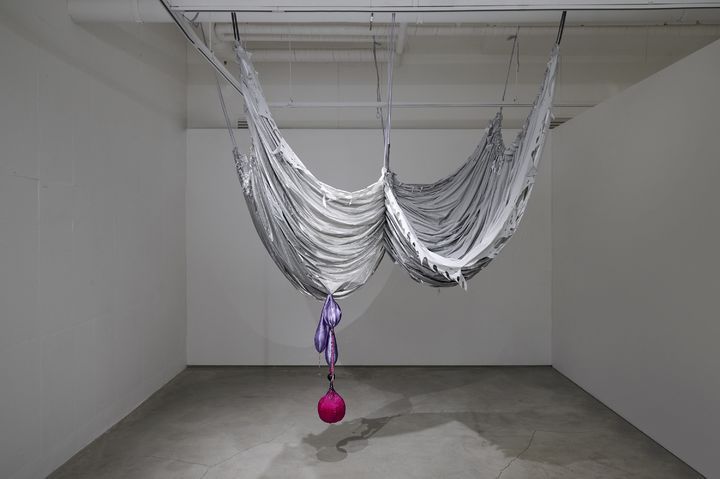
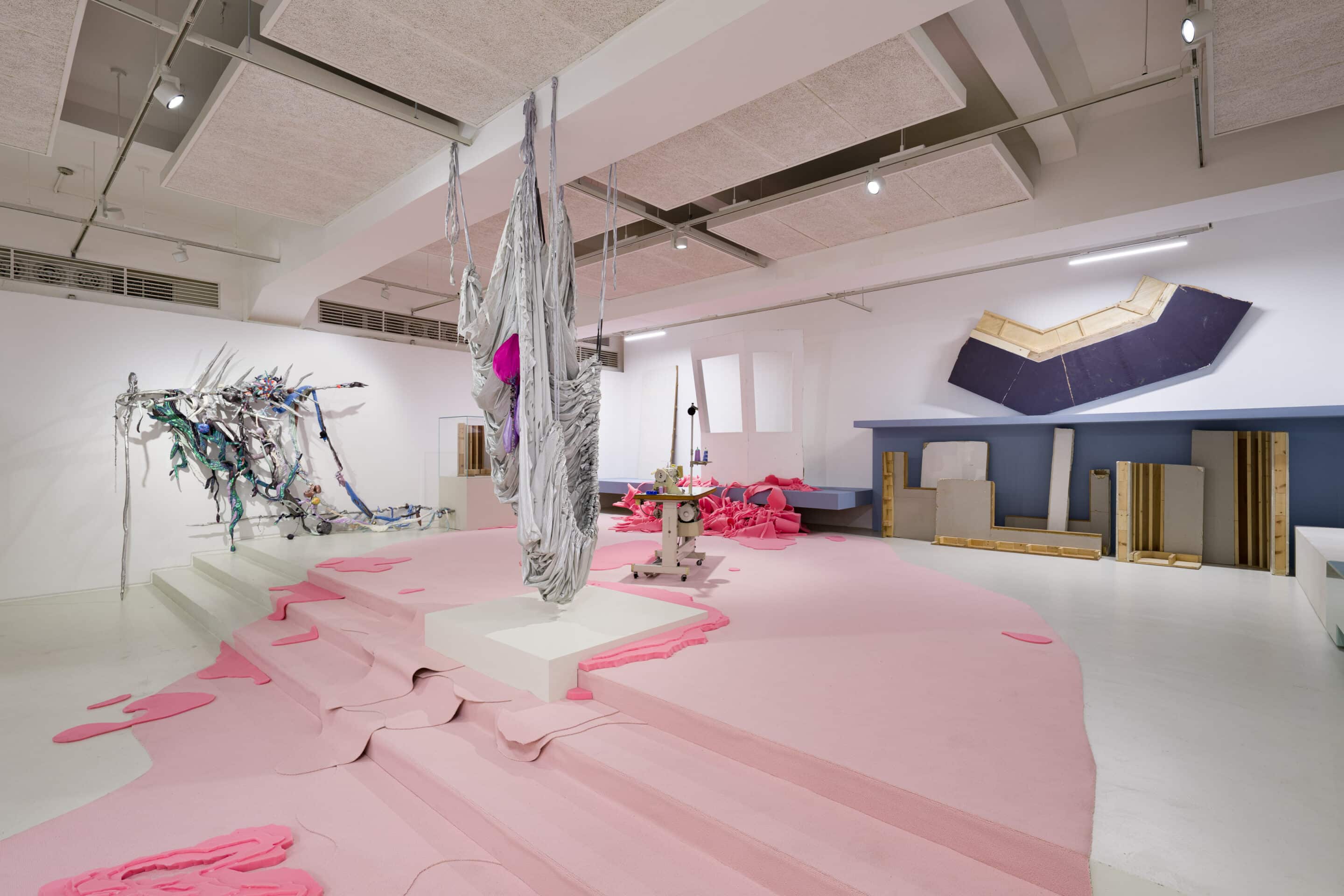
created installation works that construct narrative spaces using fabric as the
primary material. These include landscapes populated by clusters of rods of
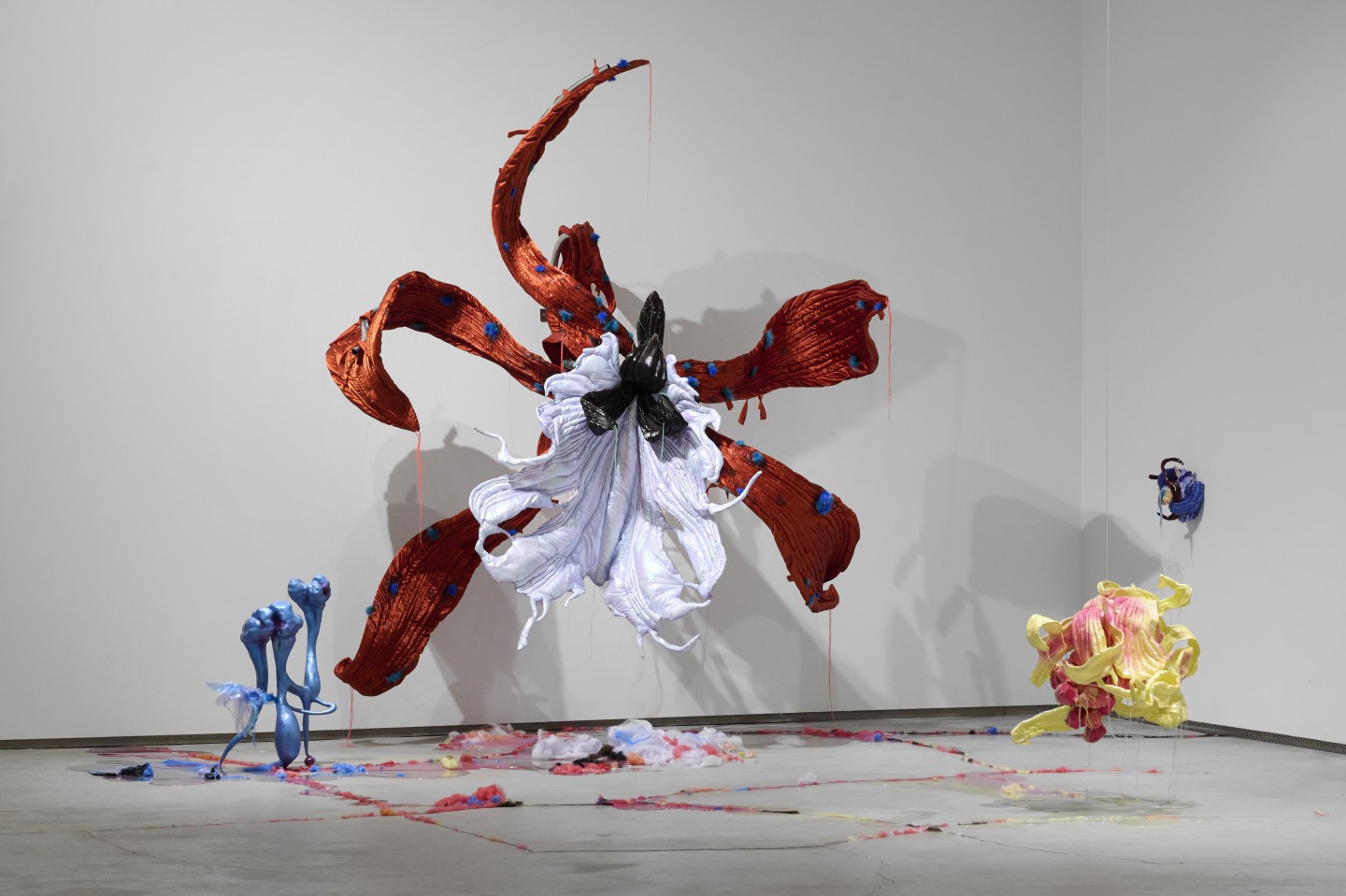
various shapes, as in 《SWINGING》 (Wangsan-ro 9-gil 24, 2018); spaces where the artworks exist as
living entities, as in 《Moulage Mélancolique》 (Project Space Sarubia, 2019); and unpredictable party venues for
adolescent girls, as in 《PAJAMA PARTY》 (Insa Art Space, 2020). Crafting landscapes where chaos and
disorder unfold beautifully is Woo’s forte. However, we may have often been so
overwhelmed by the allure of these scenes that we missed the beauty of the
small components that make them up. The exhibition 《Woo
Hannah: Ma Moitié》 shifts the perspective, inviting
viewers to focus on these small, beautiful elements that compose the space.
Delicate embroidery stitched one thread at a time, neatly woven nets with
aligned patterns, ribbons tied with careful consideration of color and
shape—these minute details take center stage in this exhibition.
My Other Half
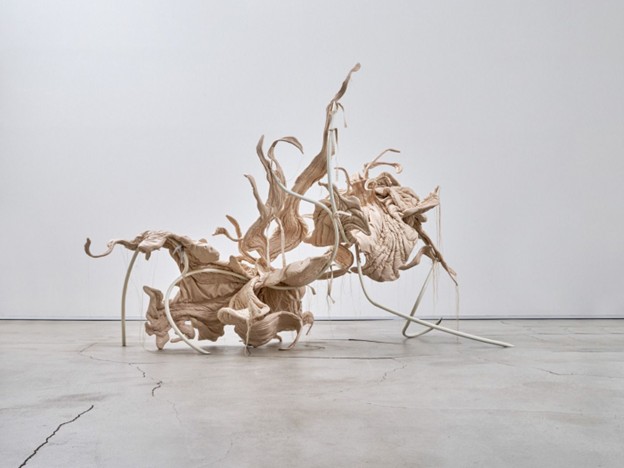
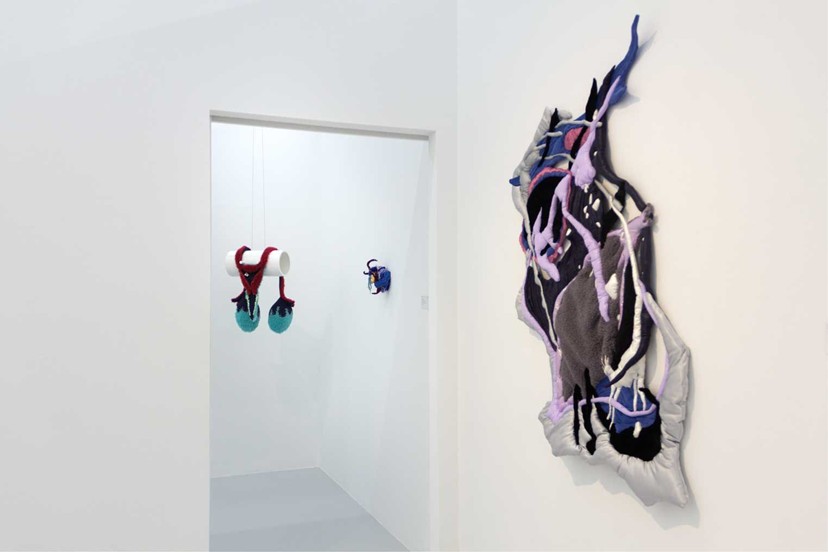
The works presented in this
exhibition are largely inspired by the forms of human organs. Woo has continued
to create works in the shapes of bodily organs, stemming from a personal
experience of discovering late that one of her kidneys had atrophied. Beginning
with the kidney, her practice has obsessively expanded to include the unique
forms of various organs such as the heart, small intestine, liver, penis,
ovaries, and semicircular canals. This intense focus on bodily organs resembles
an endless mourning for the lost kidney.
The exhibition’s subtitle, “Ma
Moitié” (French for “my other half”), signifies this sense of loss for an
absent entity. The term originates from Aristophanes' story in which men and
women, originally one body, were split apart by the gods’ punishment and
forever long for each other. This word resonates with Woo’s work in that it
embodies a primordial yearning for an absent other. In this sense, we are
alienated from our own bodies—our own organs, though they belong to us, remain
unseen and untouchable. This alienation brings with it an irreparable sense of
loss.
And this longing is reborn in
beautiful forms. Hannah Woo obsessively creates beauty. These amorphous
objects, while clearly resembling human organs, are incomparably more beautiful
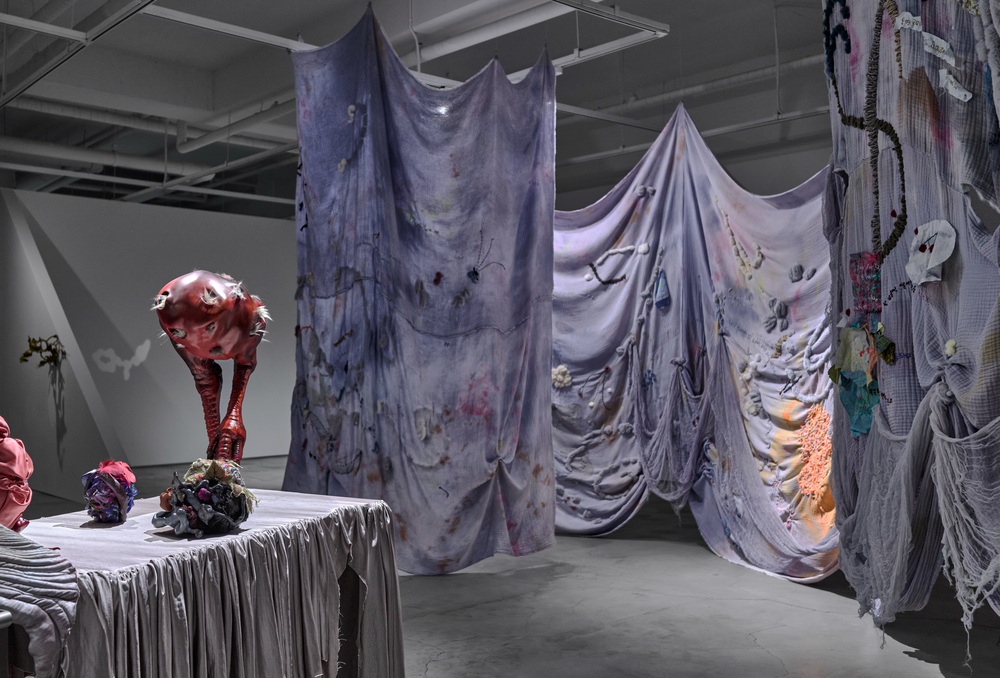
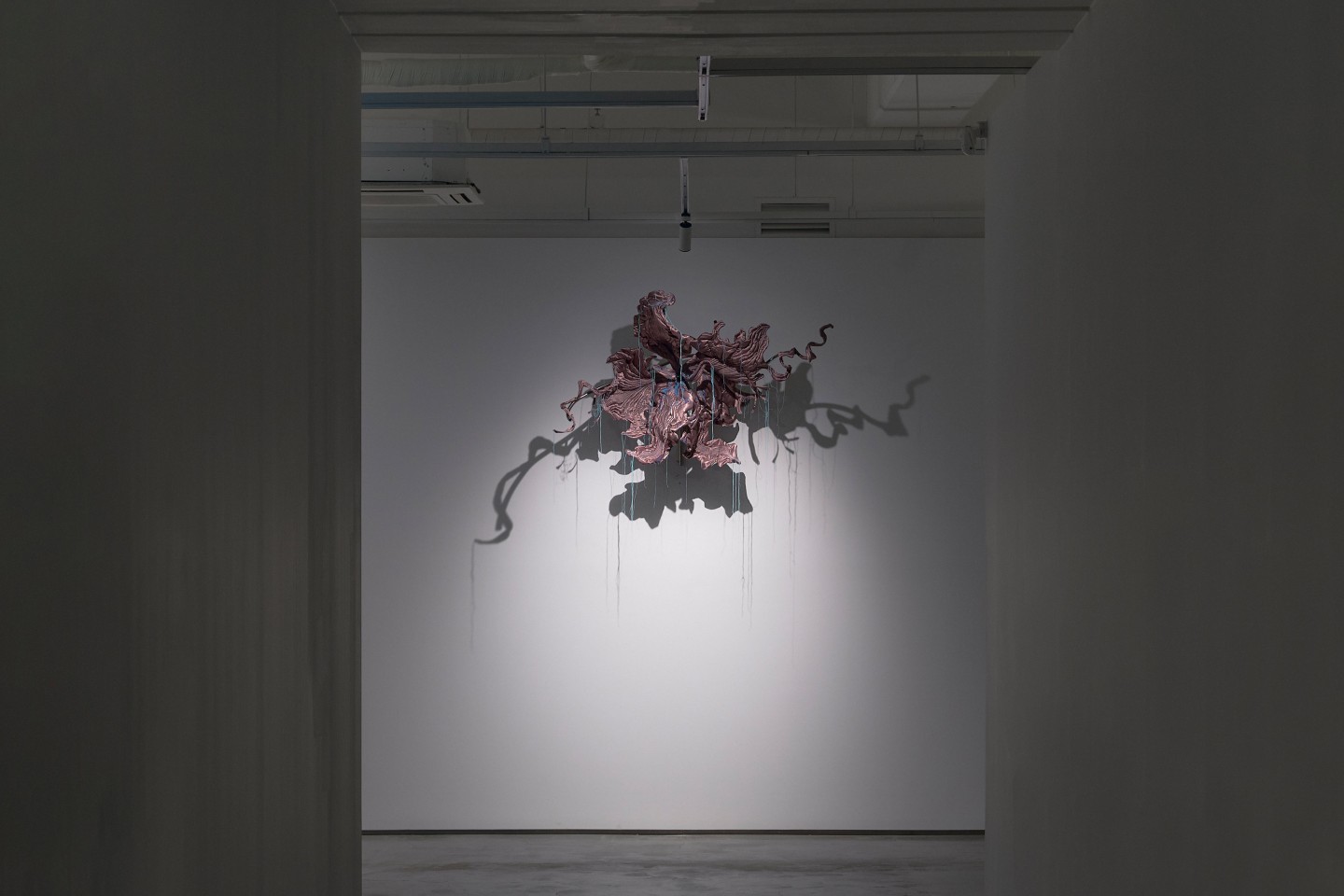
than their originals. The Abdomen series, which draws the
most attention in this exhibition due to its enormous scale and vivid color
combinations, remains difficult to identify until one reads its title. These
large objects, visible even from afar, are delicately arranged in soft pastel
tones. Upon closer inspection, it becomes apparent that the contents filling
these forms resemble abdominal fat, tumors, or even marine debris. Yet, reborn
in smooth mint-colored silk and soft floral-patterned fabric, this abdominal
fat remains beautiful.
This method of weaving beauty is
equally present in Woo’s paintings. Rather than systematically building a
theme, her paintings intuitively express visual balance and beauty through
irregular, amorphous shapes. The exhibition's central painting, Hollow,
conveys the sanctity of an empty, hollow space. This meaning is not delivered
through logic, but rather through the irregular yet balanced arrangement of
blue, green, and white shapes. In this way, her paintings exist in a state of
confusion and spontaneity—disordered yet beautiful. Perhaps this is simply
Woo’s way of constructing beauty within chaos and disorder, now organized
within a smaller world.
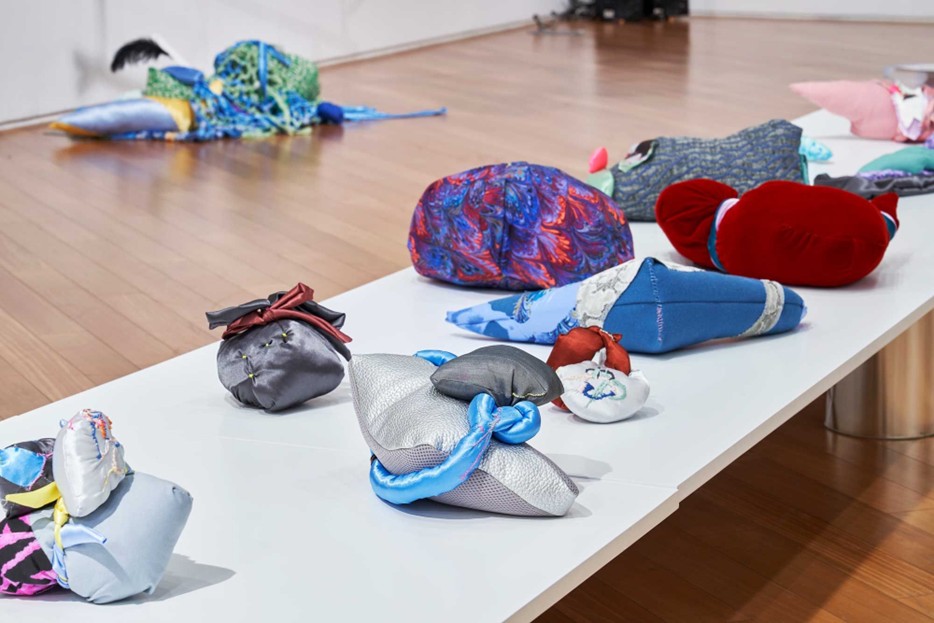
Designer Hannah Woo
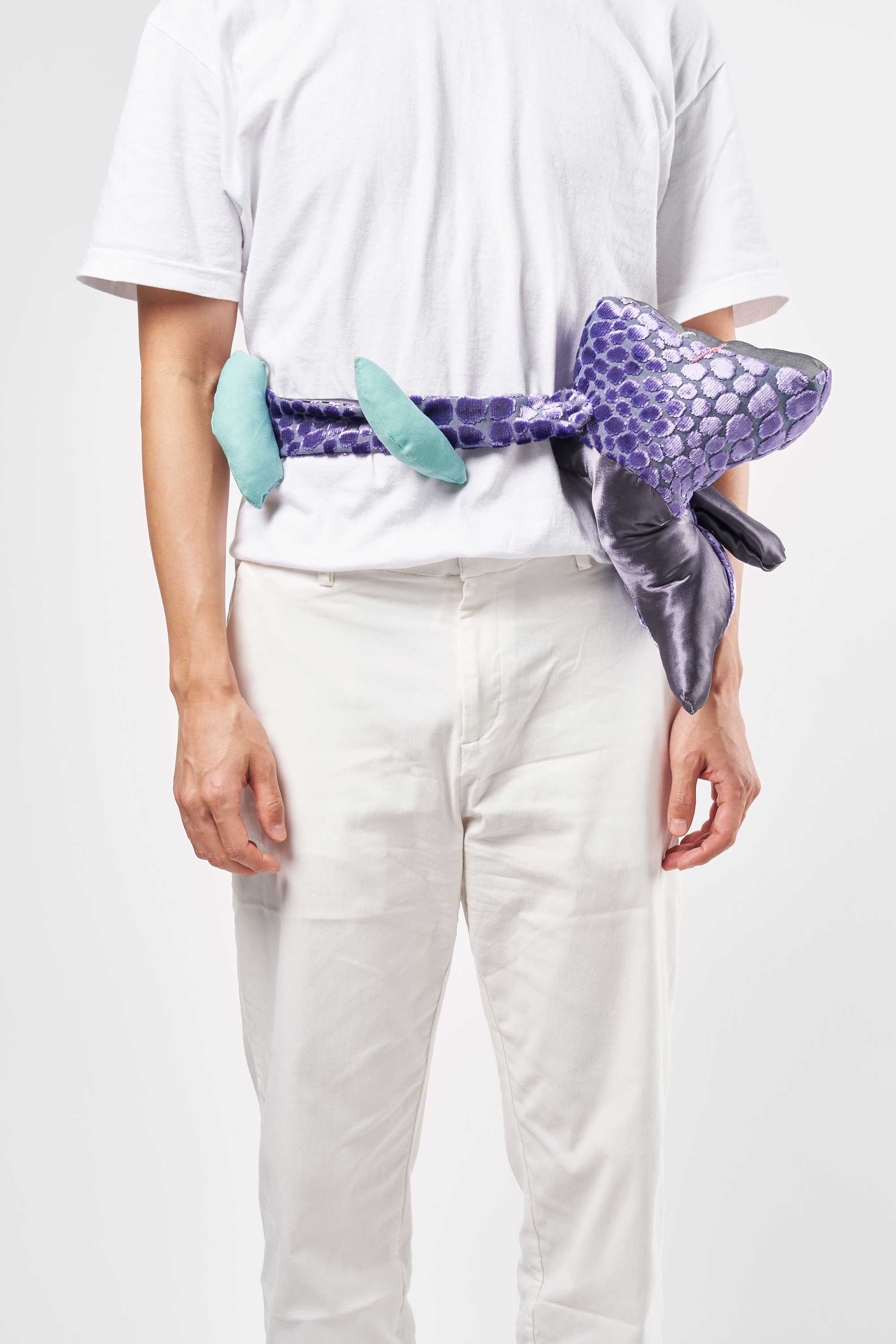
Now, let us pick up one of her
small, shimmering works and place it against a white background. Here, fabrics
with ornate patterns mix with glossy solid-color fabrics, delicately tied knots
are arranged, and stitches are sewn with care—these objects fulfill their role
as artworks, exuding their intricate beauty. They seem to declare, on their
own, just how exquisitely beautiful they are. And though they are initially
mere sculptures with no function, at any moment they might transform into a
handbag one can hold or an accessory to wrap around the waist. Refusing to
remain as passive objects of contemplation on a pedestal, they long to be
touched, to cling to some part of the body. Watching these beautiful things,
one gets the feeling that they wish to be placed somewhere finer than the
pedestal of a sculpture, somewhere even more radiant.
Someone might argue: if these are
“artworks,” aren’t they already in such a place? What could be more
distinguished than that? In theory, that is correct. Since the invention of the
concept of “art,” there has been no position more elevated or formal. Yet, from
our present perspective, does art really occupy such a position today? The
contemporary Korean art world is often likened to a “ruin.” One of the
implications of this metaphor is that there is no longer capital here.
Capital resides elsewhere. It is
in the sleek, dazzling wide-color billboards, in the fashion magazine spreads,
in the lavish displays of luxury brand stores—those captivating commodities
that instantly seize our gaze. Perfectly finished products, backed by abundant
capital, employ every possible means to stimulate our desires. These dizzyingly
glamorous and flawless spectacles occupy the high ground. It is not art, but
these commodities that may have inherited the place once held by masterpieces
in the hands of 17th-century aristocrats.
In this era, Hannah Woo’s
beautiful, shimmering objects keep speaking to us. They whisper that they
belong in that place. They keep sparkling, radiating light, insisting on being
heard. Though made from recycled fabrics, they ask if we have ever seen anything
more refined and polished than themselves. They declare that they can be
carried, worn, or placed decoratively like accessories. And they add that they
possess not only visually beautiful forms but also embody the most noble and
profound thought and philosophy.
I wish for these elegant,
beautiful, sparkling objects to receive the highest and most formal form of
love. I hope more people will adore them, and that they will be sold at higher
prices. And I hope that Hannah Woo, who stands behind these objects, will find
herself in a position worthy of them. The “Hannah Woo” in the title of this
exhibition is a designer who possesses wealth, fame, public adoration, and
critical acclaim. I wish for talented artists to become that, to enjoy more
attention and popularity.