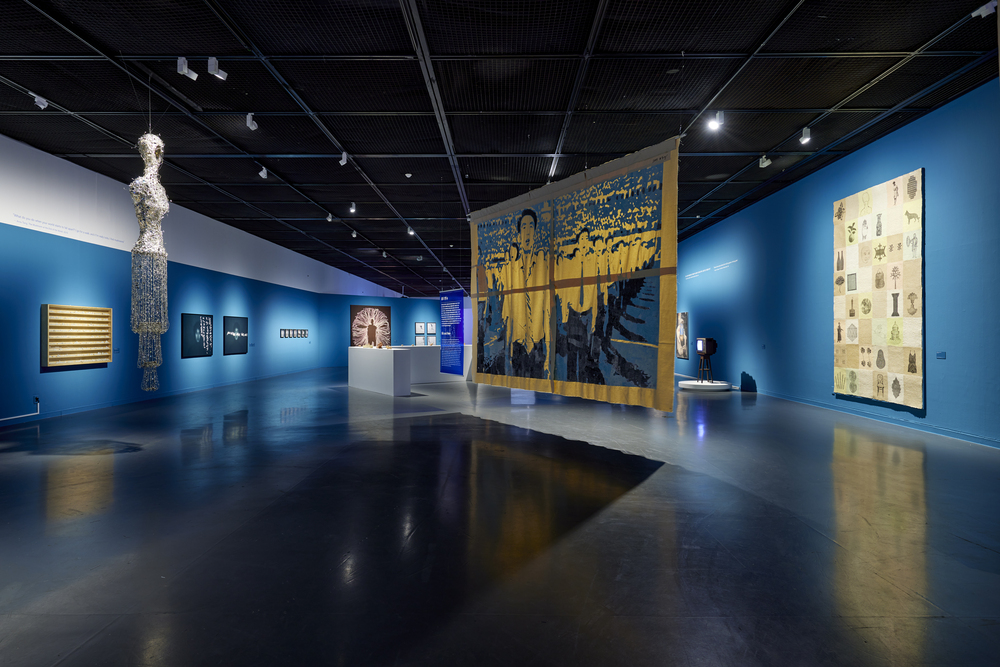
In this way, the so-called
“healing” nature of sewing can, on the other hand, be appropriated as the
terrifying act of “reanimation”—bringing the dead back to life. The English
word “reanimate,” formed by adding the prefix “re,” meaning repetition, to “animate,”
which derives from the Latin “anima” (meaning soul or life), naturally recalls
“animation,” a genre of visual media that makes still images appear to move.
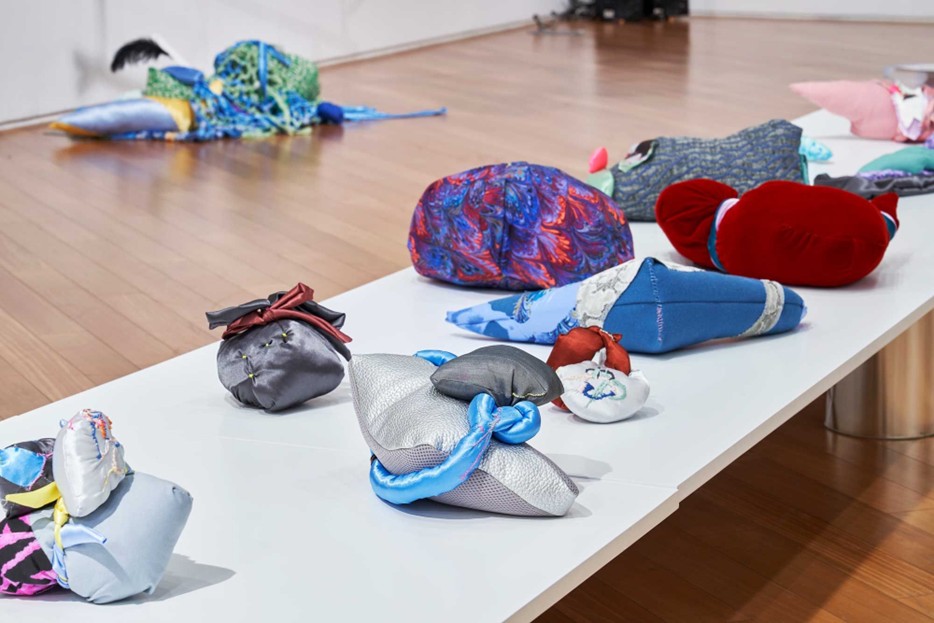
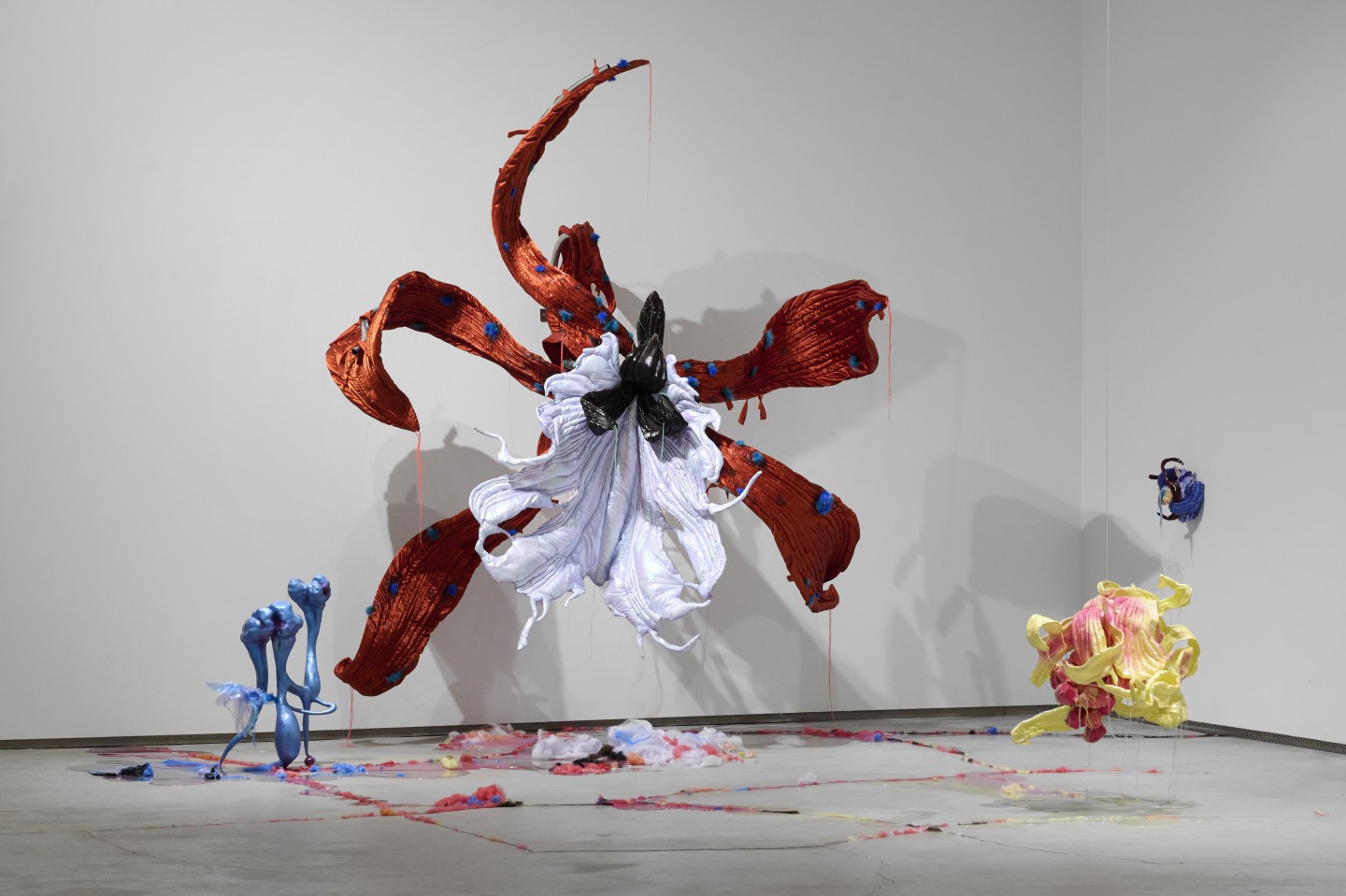
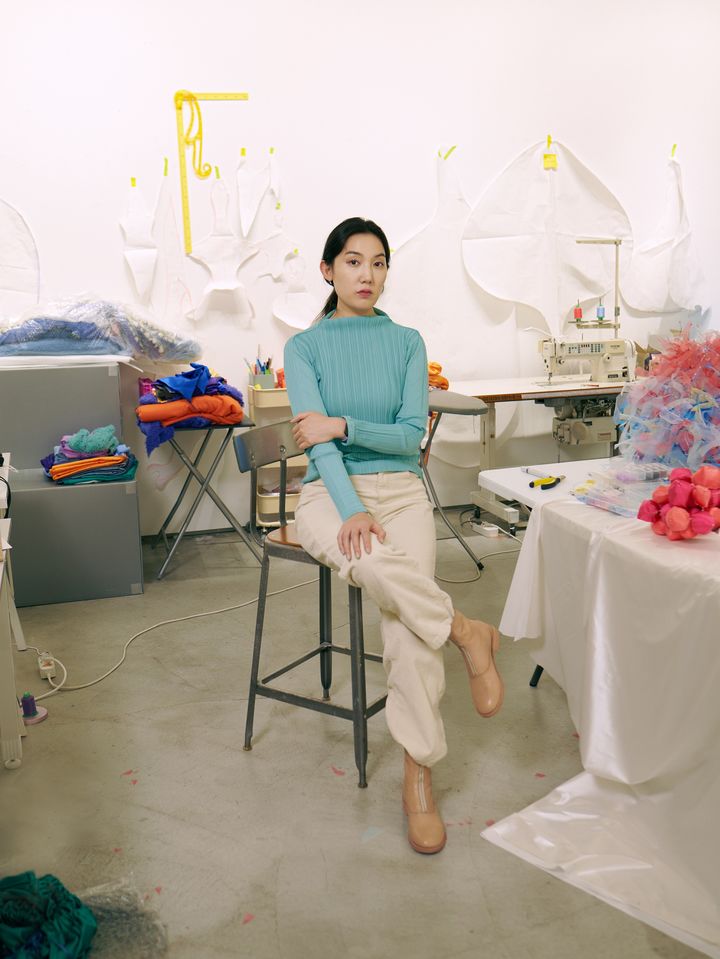
Within this context, it is not a stretch to view Hannah Woo—who, since her
undergraduate years in 2011, has been “reviving” characters from childhood
films and animations such as Thomas the Tank Engine, Dumbo, and Mary
Poppins through her exhibitions—as a kind of “re-animator” akin to
the figure in H.P. Lovecraft’s work. Like Herbert West, the mad scientist who
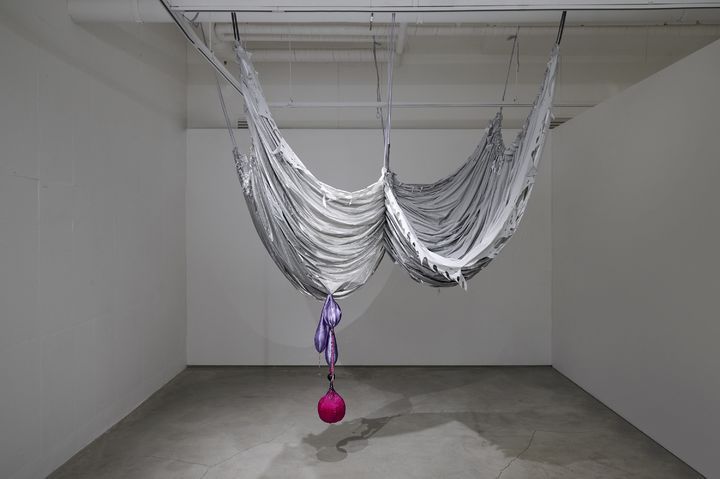
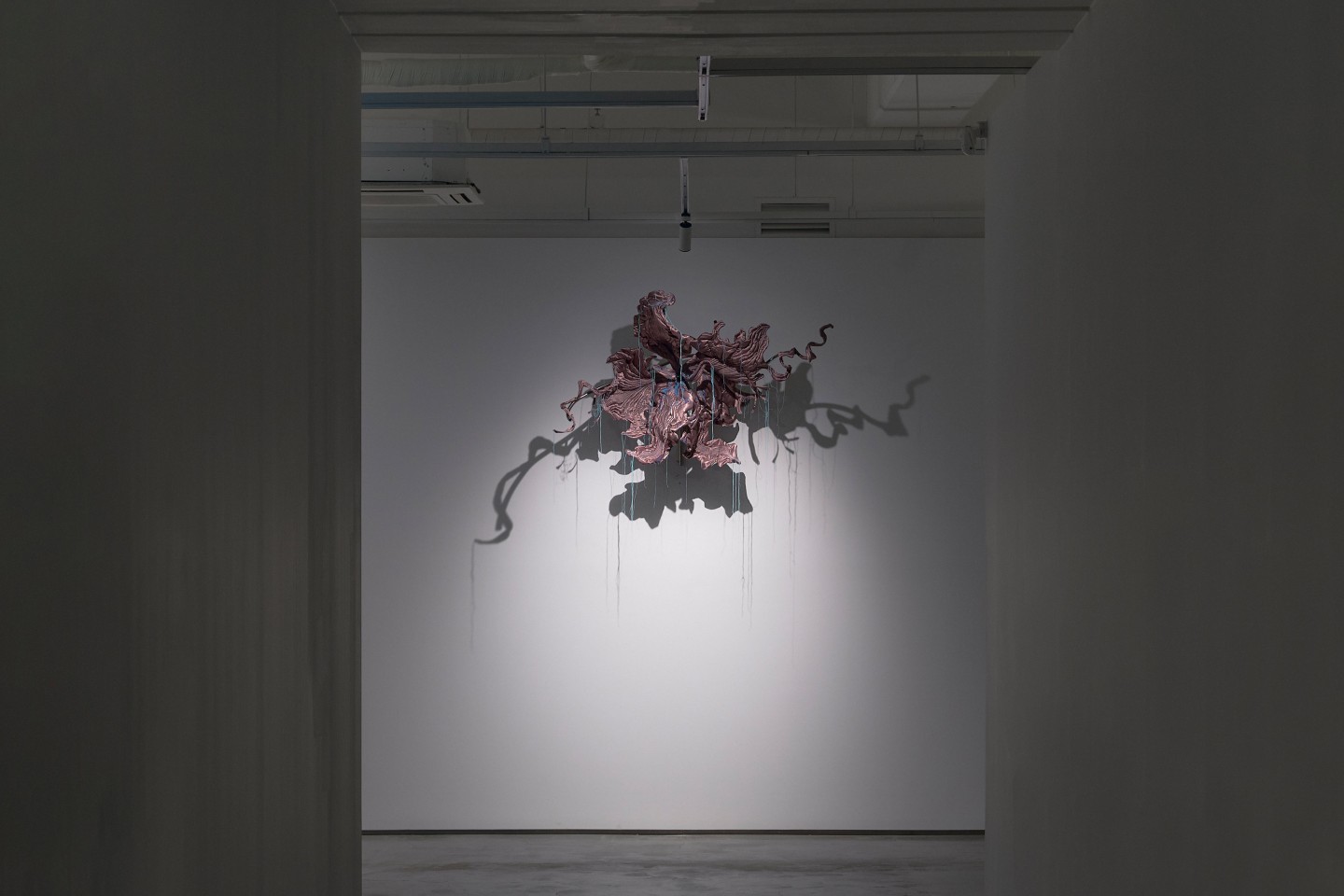
seeks to reanimate the dead, Woo enacts a form of witchcraft through her
fabric-sculptures, summoning beings that are no longer present into the
exhibition space.
(Incidentally,
Lovecraft’s Re-Animator directly references Mary Shelley’s Frankenstein,
perhaps indicating that the desire to “revive” the dead was originally
cultivated through the witchcraft and alchemical practices of women.)
Witchcraft, in this sense, is
another name for the radical imagination held by women surrealist artists who
sought to create worlds beyond the here and now. Much like how Remedios Varo
and Leonora Carrington reappropriated “housework”—synonymous with feminized
labor—as a revolutionary and creative laboratory through artistic “play” that
might be called “alchemy of the kitchen” (Shin Hyesung), Woo’s practice aligns
with this lineage. The collaboration between Varo and Carrington, who shared a
cosmology of dreams and composed absurd yet fantastical recipes together,
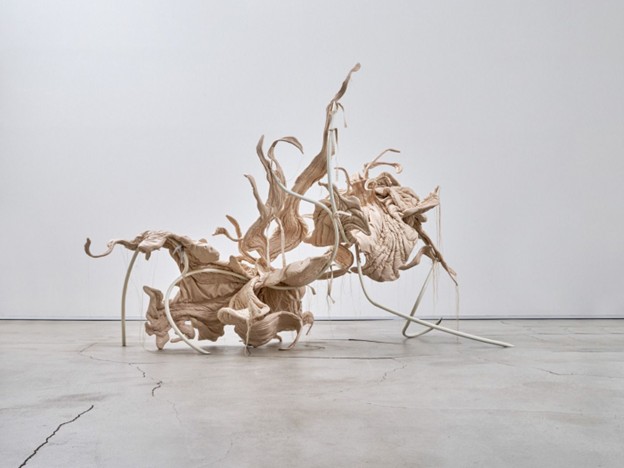
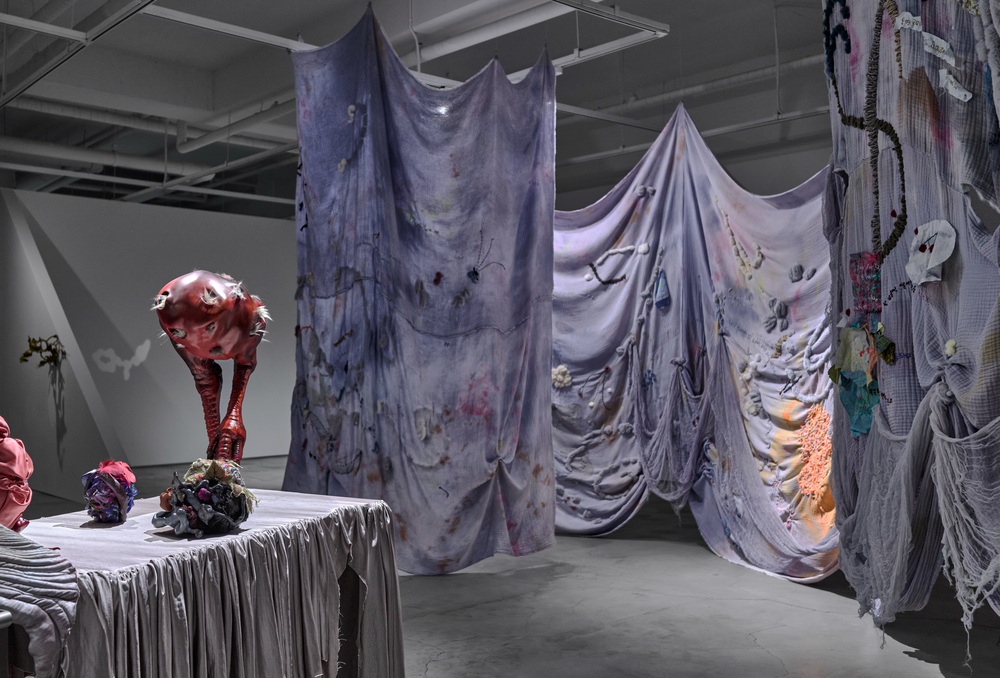
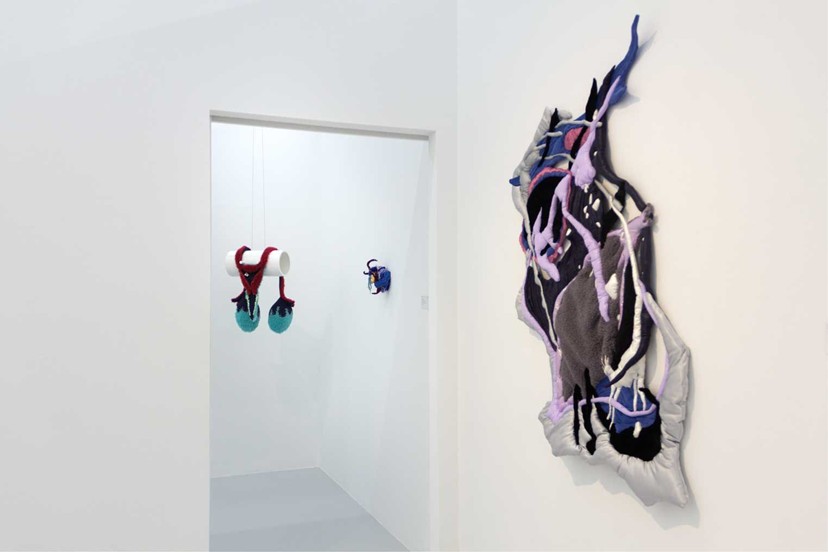
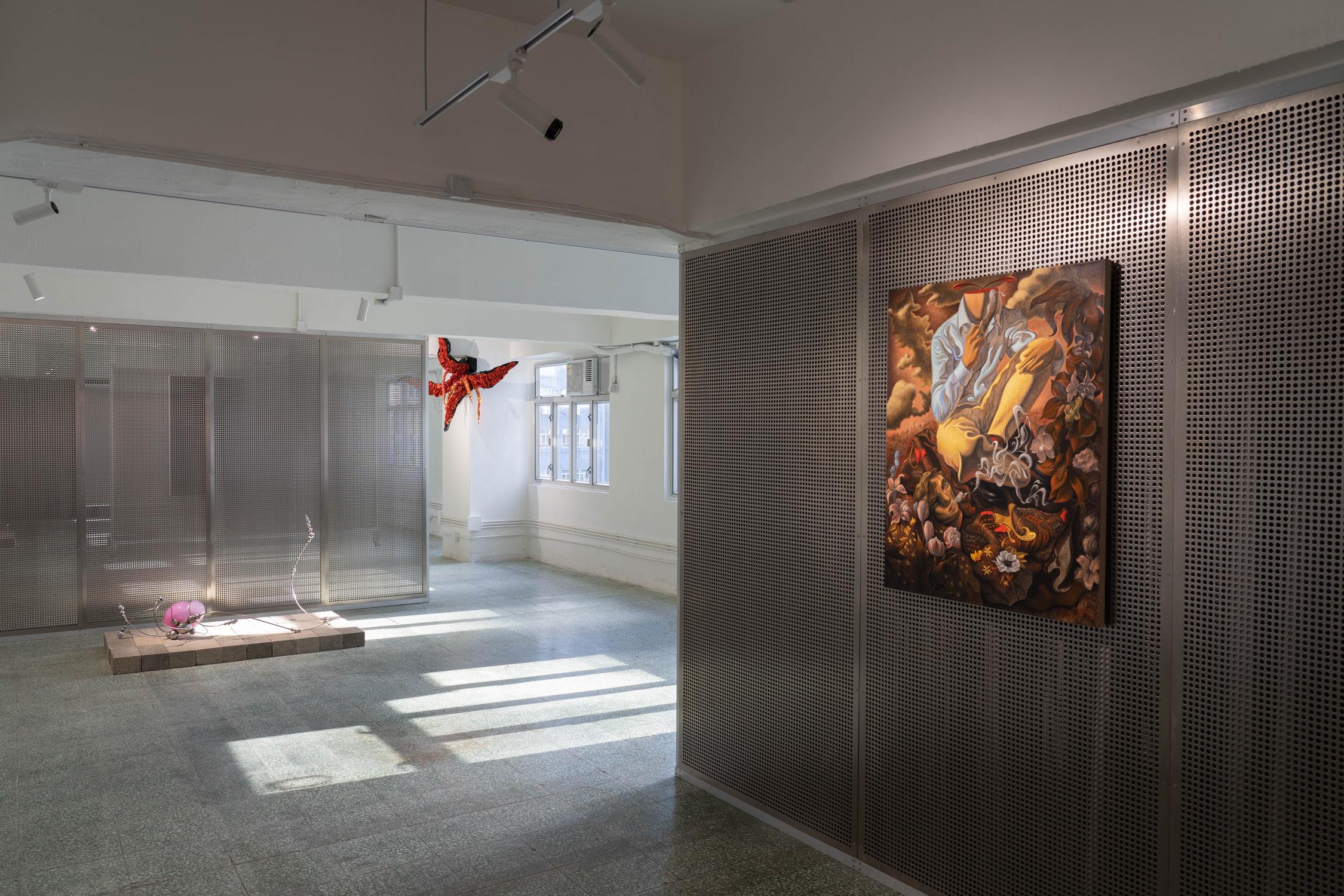
evokes Woo’s 2022 exhibition Feather (Cylinder) with artist Sujeong Jeong. Woo
and Jeong built an exhibition based on an imaginative creation myth of an
ancient female deity nurturing and guarding a mythical creature, a dragon. Woo,
assuming that such a “legendary” creature would inevitably have been slain,
crafted the dragon’s eyes and intestines from soft, pliable fabric-sculpture.
This could perhaps be seen as an offering on an altar—intended to comfort or
summon the creature once more.
The recursive motion of
“reanimation” and “return” is a recurring motif throughout Woo’s body of work.
According to Woo’s “official” career history, she began staging her
object-sculptures on the “stage” of the exhibition space in a kind of
theatrical or ritualistic form through installation art in her first solo
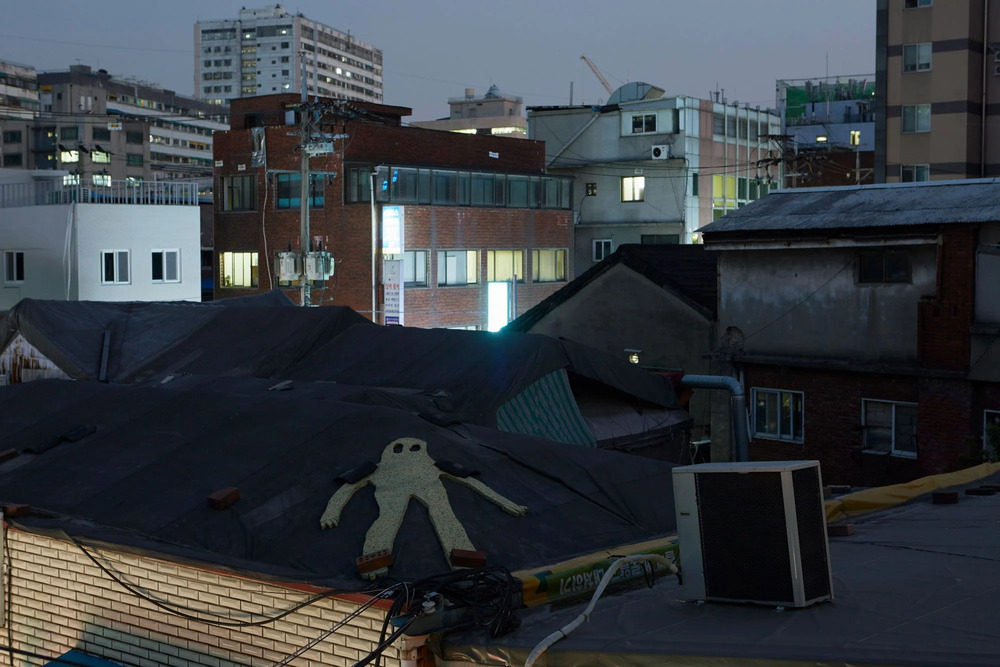
exhibition “City Units” (2016). In this exhibition, the anthropomorphized
object-sculptures seemed to glare out beyond the confines of the exhibition
space—beyond the white cube—toward the city at large, embodying the shabby and
pitiful emotions cast off from urban consumer lifestyles. As the material
conditions under which these ghostly feelings and objects emerge as a kind of
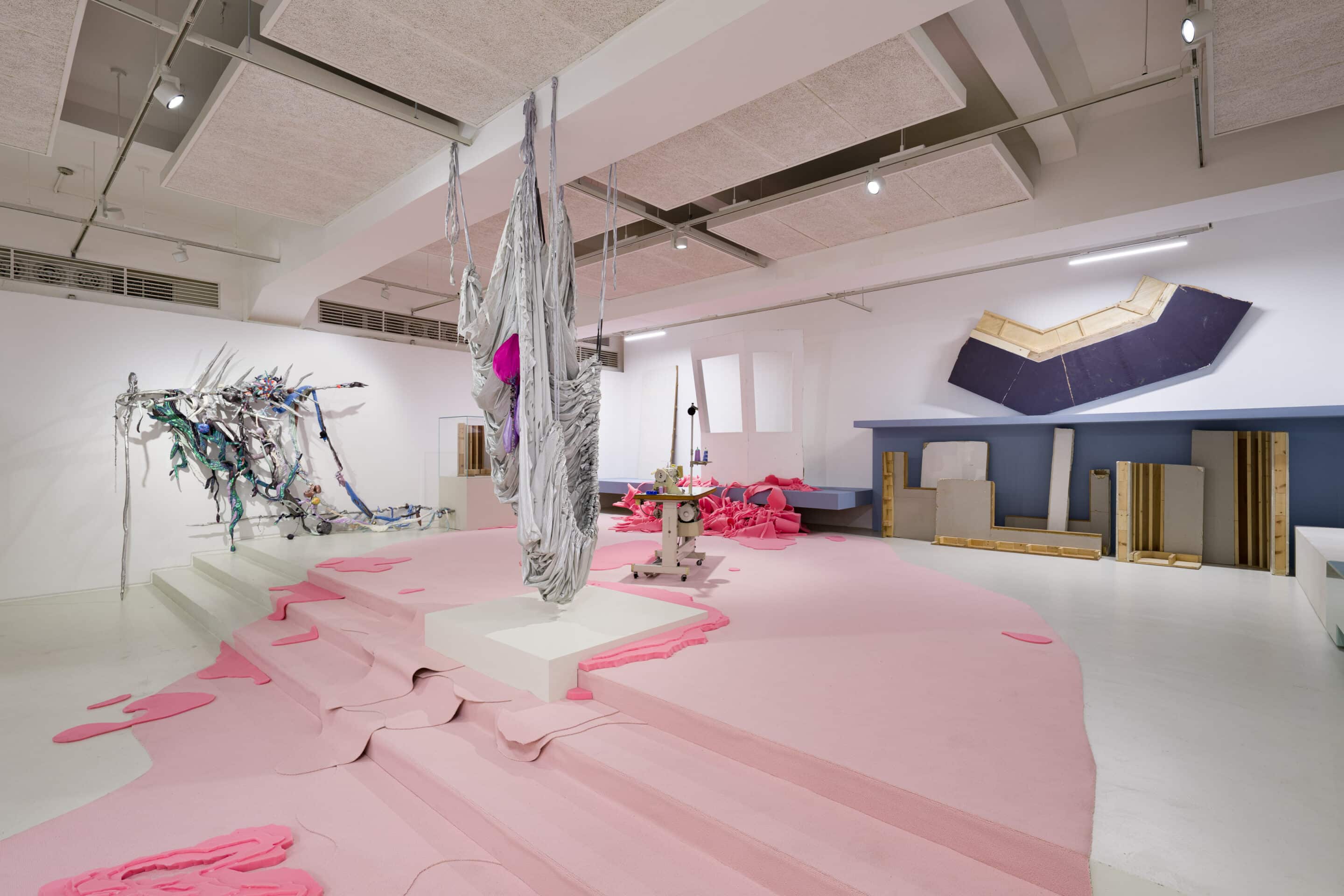
“return of the repressed,” the exhibition space is not merely a white cube. It
becomes a vacant house, a squatted territory, where the object-sculptures—after
the audience and even the “creator” artist have left—can finally begin their
own raucous “party.”
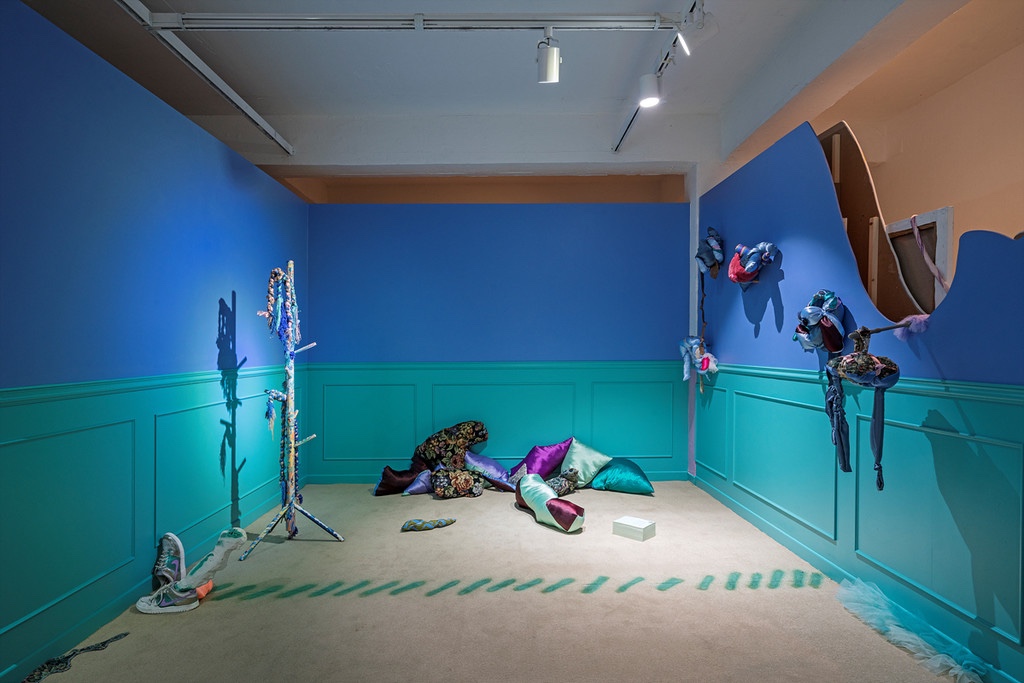
In other words, Woo’s 2020 work PAJAMA
PARTY (Superhero, Insa Art Space) was filled with
traces of girl gangs who danced wildly, rampaged, and wrecked the space
throughout the night. In this scene—where the exhibition space seems to be
tolerating the daytime intruders, as though waiting for the “true owners” who
will arrive only after the lights go out—the viewer becomes persistently aware
of an absent someone, a someone not here now but soon to return.
These girls, “anti-heroes” (as
opposed to male “heroes”), Dionysian “mad women” (Mainades), broom-wielding
protestors, scarecrow sentinels, spirits and fairies, Dumbo and Mary Poppins,
mythical beasts and goddesses, the (lost) body parts of someone—or perhaps Woo
herself—seem destined to return, clad in the temporary bodies of
object-sculptures. Already dead, never having existed, or existing only as
fakes, these beings might “borrow” the bodies of object-sculptures to awaken in
the darkened exhibition space and whisper conspiratorially. Within this
context, Woo’s work maintains a continuum with animistic beliefs in everyday
objects-turned-spirits or yokai, particularly the Japanese folklore of tsukumogami
(付喪神)—household objects that, after many years,
acquire a spirit or god within them.
According to Japanese folk
belief, tsukumogami are inanimate objects that, after a long life, gain
consciousness, sprouting limbs and chasing after their owners like living
beings. In this sense, behind every name there follows a being, as happens in
apostrophe—a rhetorical device where something absent is invoked, momentarily
“activating” (animate) it as though alive within discourse. Woo momentarily
activates the belief that these nonhuman, impersonal beings—exiled or rendered
invisible by the logic of the real world—are alive and present with the
audience in the exhibition space and will continue to exist even after the
exhibition ends.
But here arises a question: Why
does Hannah Woo wish to reanimate them? Why does she seek to introduce dreams,
or another world that cannot coexist with life, into our lives?
To answer this question, we must
journey back into the past—a past that always contains Hannah Woo’s present.
Woo’s undergraduate works, such as Amateur monster generation
BULMANTORO (2010) and The Ghost (2011), resemble
puppet plays in which gathered (small-sized fabric) objects perform specific
roles. Her 2011 work I see an elephant fly can be described as a ritual that
“reanimates” or “liberates” the main character, Dumbo the elephant, from
Disney’s Dumbo (1941). Similarly, Inventing Numinose from
the same year operates as a kind of summoning ceremony that provocatively tests
the audience’s “belief” in the “transcendent.”
On the surface, it seems that
since 2011 Woo has repeatedly re-staged the daydreams of a girl—not a woman,
but a “child”—through the form of visual art, much like a Freudian subject
fleeing into dreams to delay life itself. However, Woo’s desire is not to swap
the positions of dream and reality, nor to assert the primacy of one over the
other, but rather to make dream and reality exist “simultaneously.” This is an
impossible desire—and yet, it is also a stubbornly “just” desire. For as long
as dream and reality are entangled in an inseparable way, giving up one means
surrendering both.
Thus, in I see an
elephant fly, Woo burns Dumbo in order to “liberate” him from his
fate of endless falling during the climax of Dumbo. Once “liberated,” Dumbo
will no longer need to fall, nor narrowly escape death. The burning Dumbo (of
reality) becomes another possible world for the falling Dumbo (of dreams).
Reality is released from itself through dreams, and dreams are released from
themselves through reality. The two worlds encounter each other through the
burning Dumbo, and Dumbo is born again from his own death.
This activation of a special
time-space—or a “gap”—that brings forth both the visible and invisible worlds,
or the worlds of “reason” and “unreason” (to use Woo’s terms), simultaneously
as divided realms of “here” and “there”—this might be Woo’s beautiful yet
radical ambition as a “re-animator.”
References
Jang Hyejeong, “Having Only One,” 2020.
Shin Hyesung, “Mexican Women Surrealists: Remedios Varo and Leonora
Carrington,” Journal of Basic Design & Art, Korean Society of Basic Design
& Art, 2019.