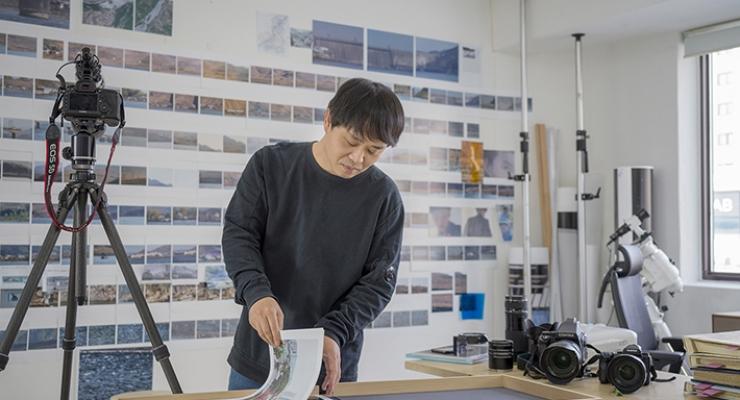
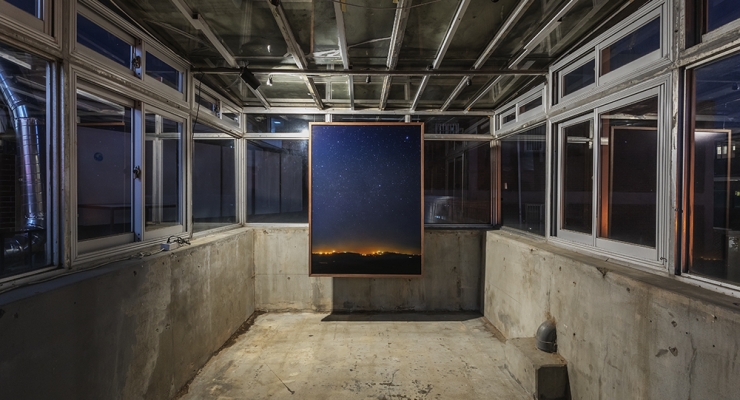
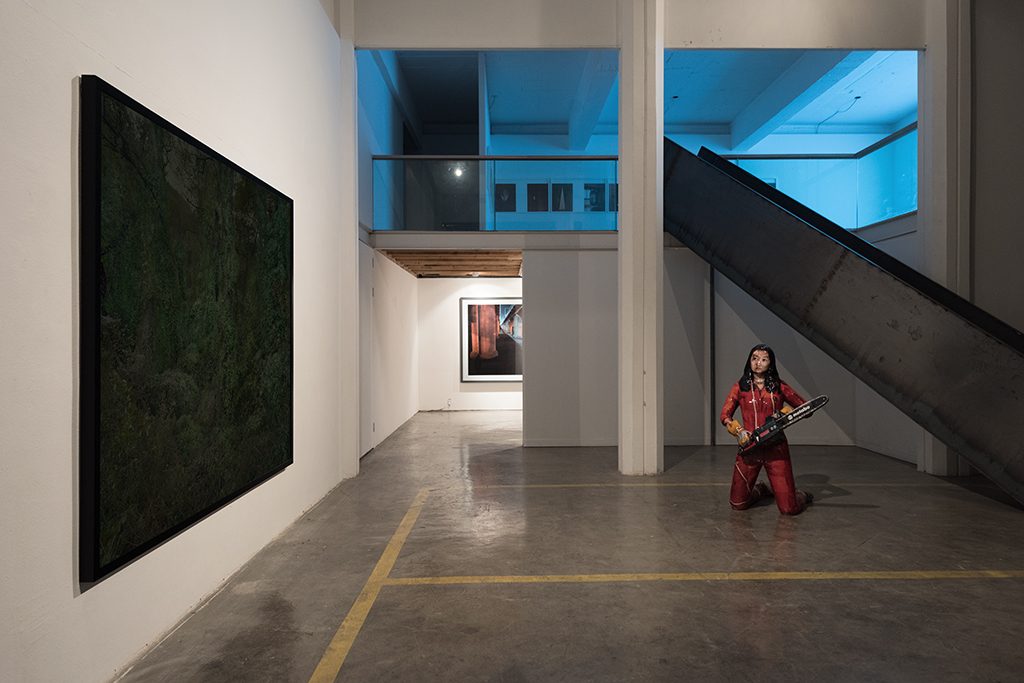
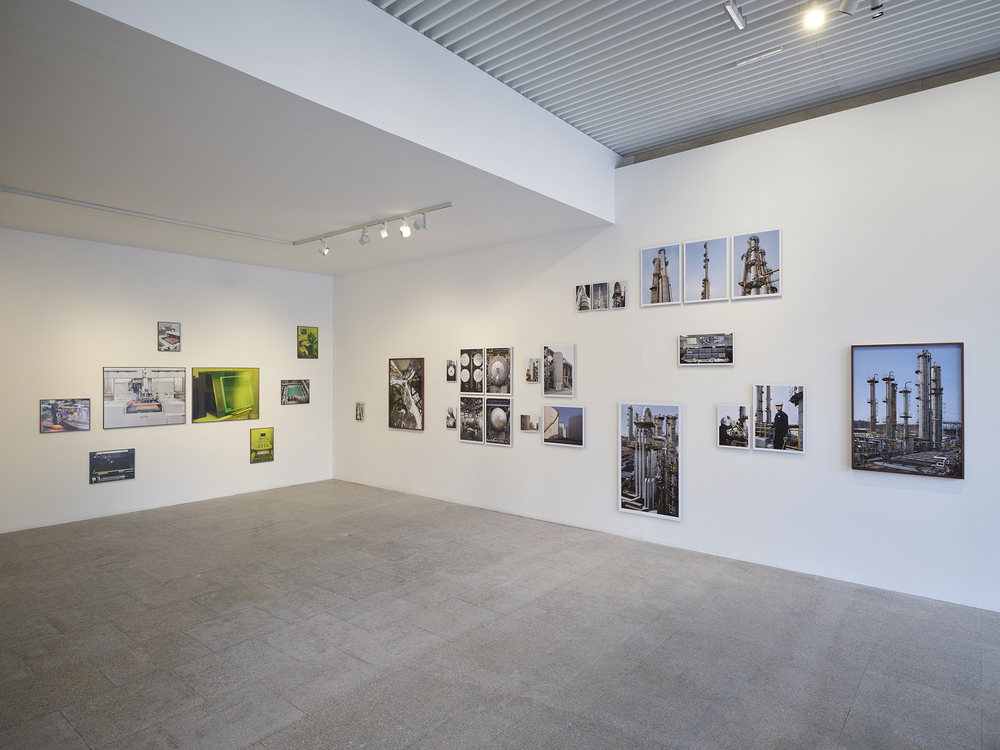
Kim Taedong's solo exhibition, 《Planetes》 is an exhibition selected for the 6th
Amado Photography Award.In this exhibition, the artist presents a series of
‘Rifling’ and new works of ‘Planetes’. Both series were inspired by the Real
DMZ project,which was launched in 2015. In these two series that seem to be
different but somehow connected, the artist captures the history which the war
has left behind, the place of daily life, and the light of the distant world
beyond it in a strange yet beautiful way.
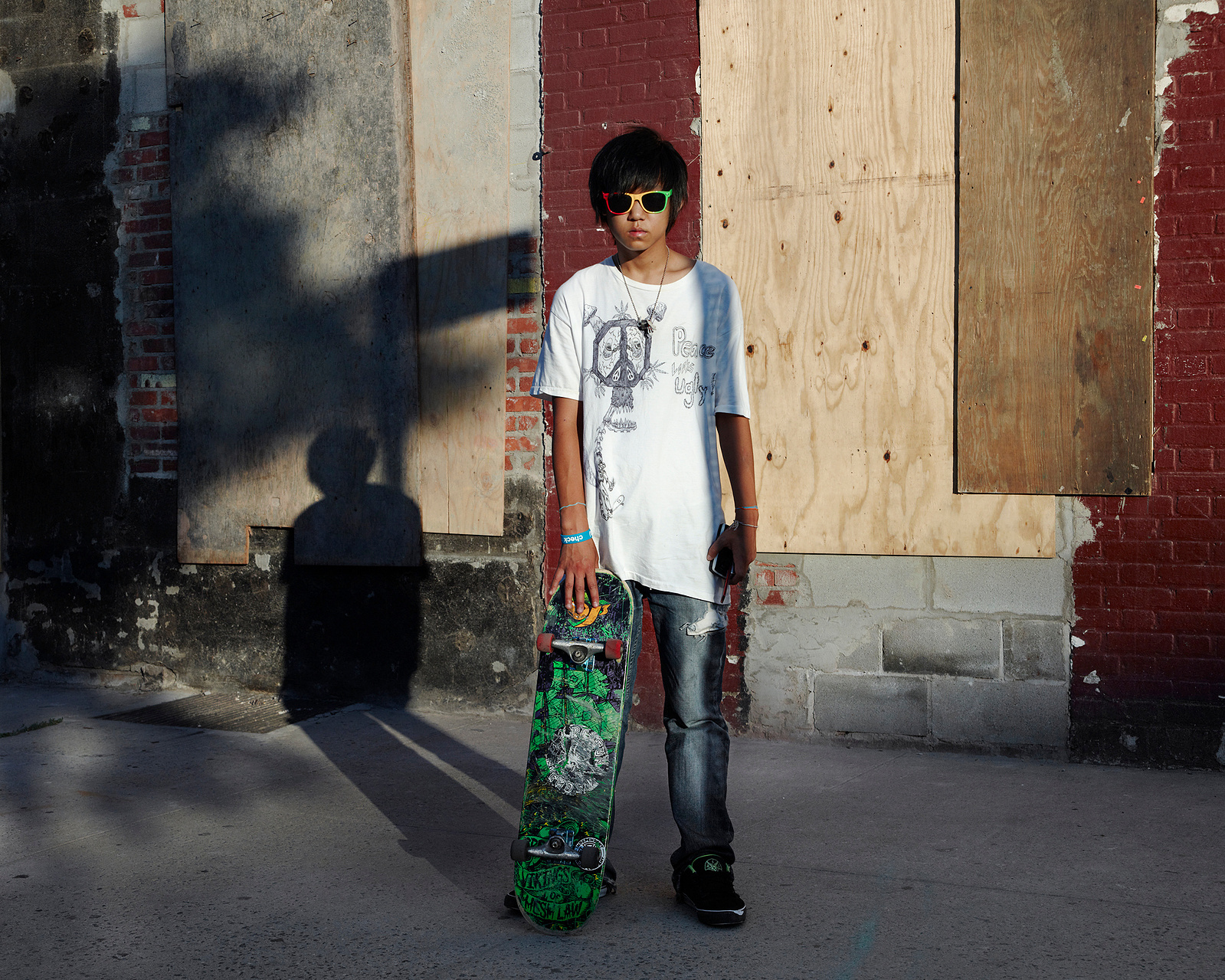
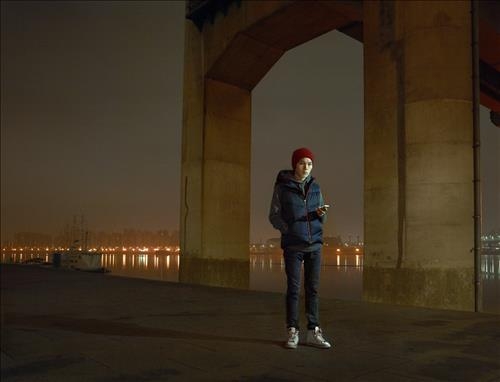
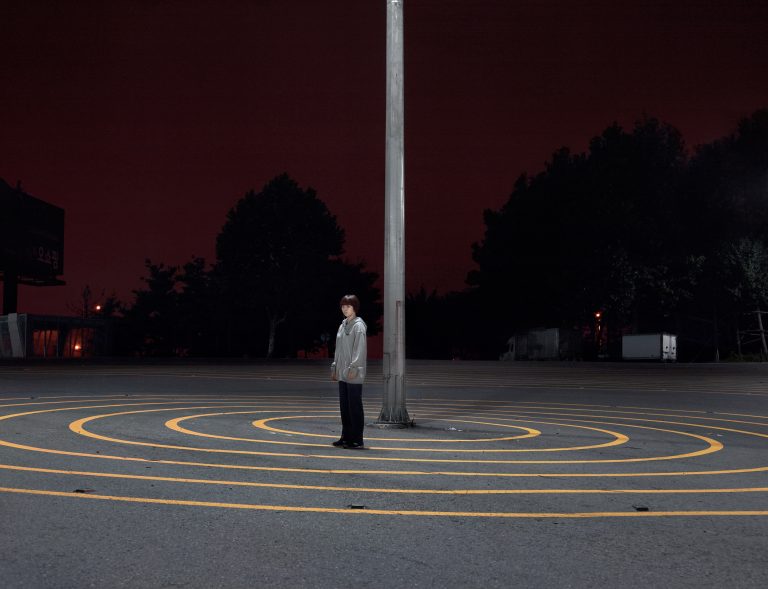
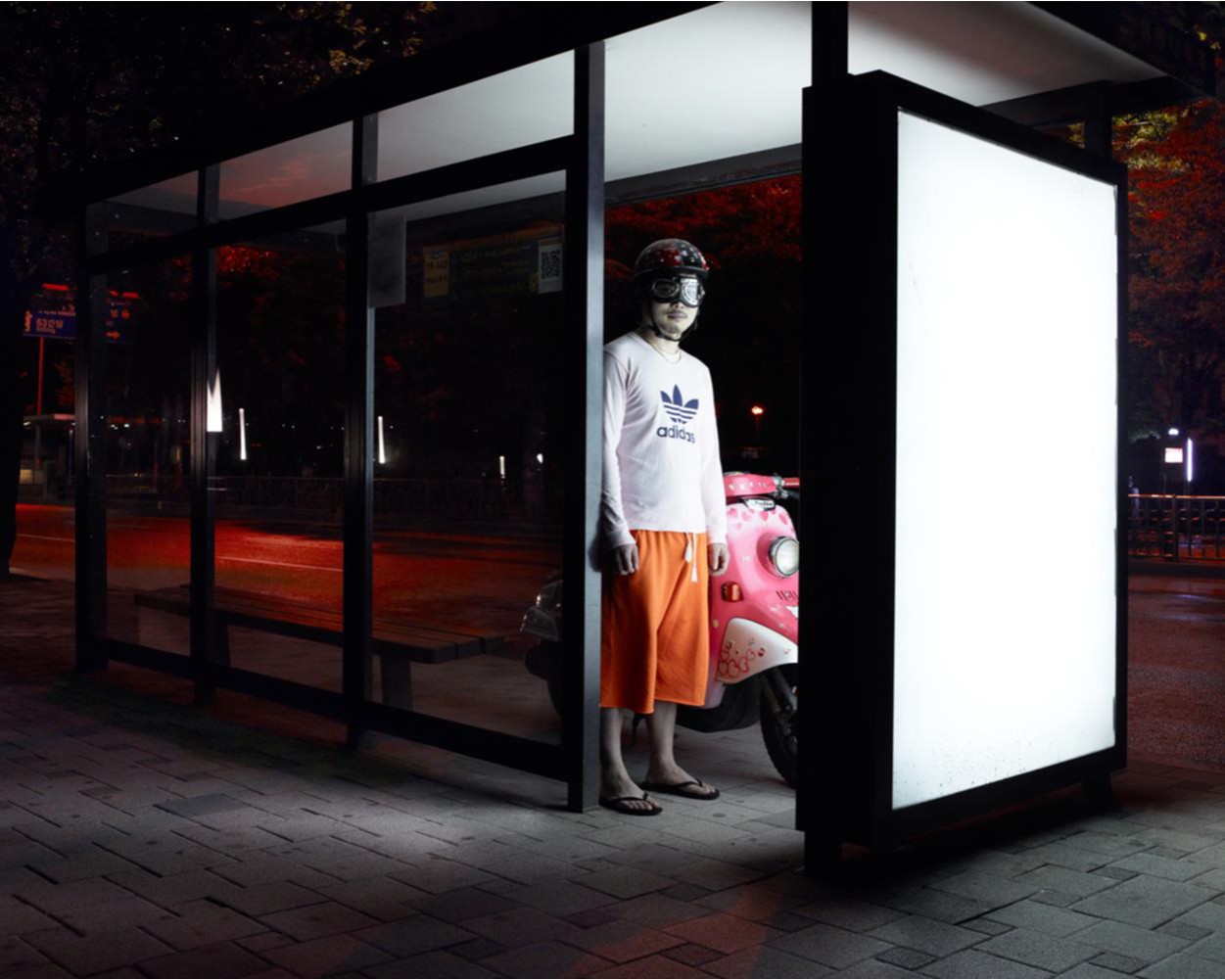
From the series of ‘Symmetrical’(2010~)
and ‘Break Day’(2013~), which reveals the characteristics of the places that
capture the city but away from the center and people who survives in there, to
the series of ‘Day Break’, which allows anonymous people to coexist with the
city's night-site, the artist continued to describe the cityscape he faced or
contemporary people.
The reason these works preserved some novelty or
unfamiliarity is that the artist intentionally paid attention to the
surroundings or unusual lifestyles. Since then, the artist has arrived in the
area where theKorean War and the division system have been preserved.
The
journey to the DMZ, a place where the division of the South and the North is
starkly divided, maybe natural for the artist, who wanted to capture some
conflict arising at the geopolitical position of the city surrounding or the
boundary, but on the other hand, it was a new challenge and adventure because
it has historical and military significance.
The artist goes through a series of the
study process,including searching for historical documents and photographic
materials to enter the sites. However, when capturing the sites with photos,
the artist avoids practical methods such as documentary photography. Therefore,
the use of night time as a stage for ‘Rifling’ series follows the way the
artist has been done before.
What the artist met on the Gyeongwon
Line(Dongducheon-Soyosan-Choshengli-HantangRiver-Jeongok-Yeoncheon-Shinkwangri-Sintan-Baekmago)
was not the intensity of the war, but the scenery of the rural village.
However, these areas were the exploitation paths during the Japanese colonial
and the places where bear the scars of the Korean War and some hope of the
unification which contains historicity.
The artist could not overlook the
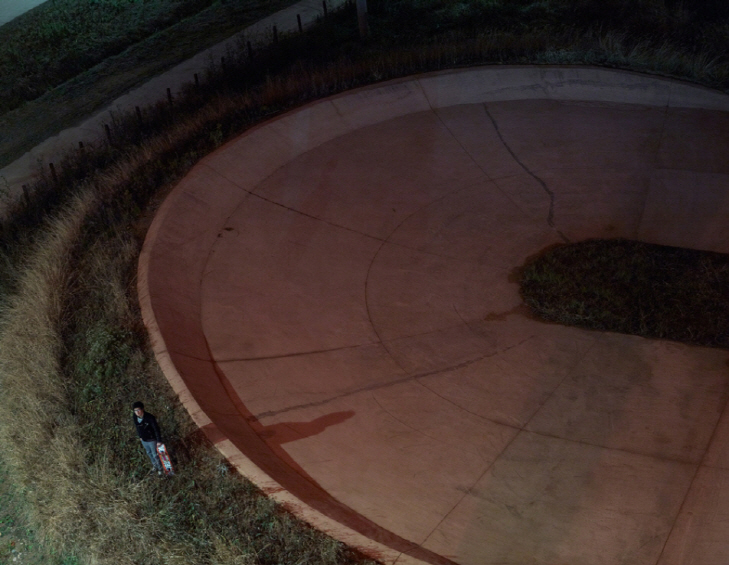
particularity of these places,so he captures the tension behind the everyday
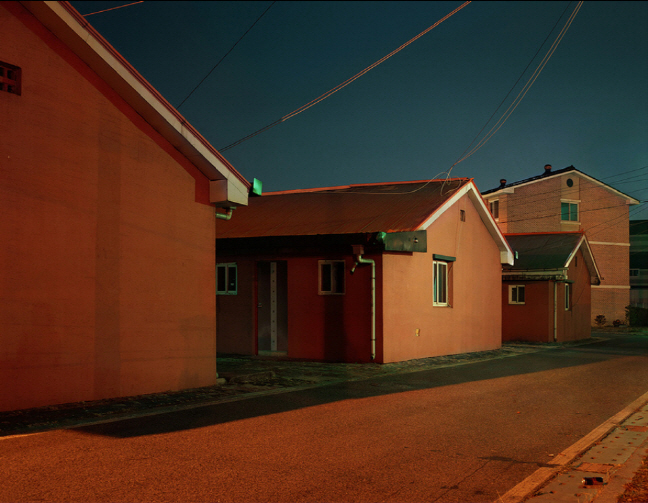
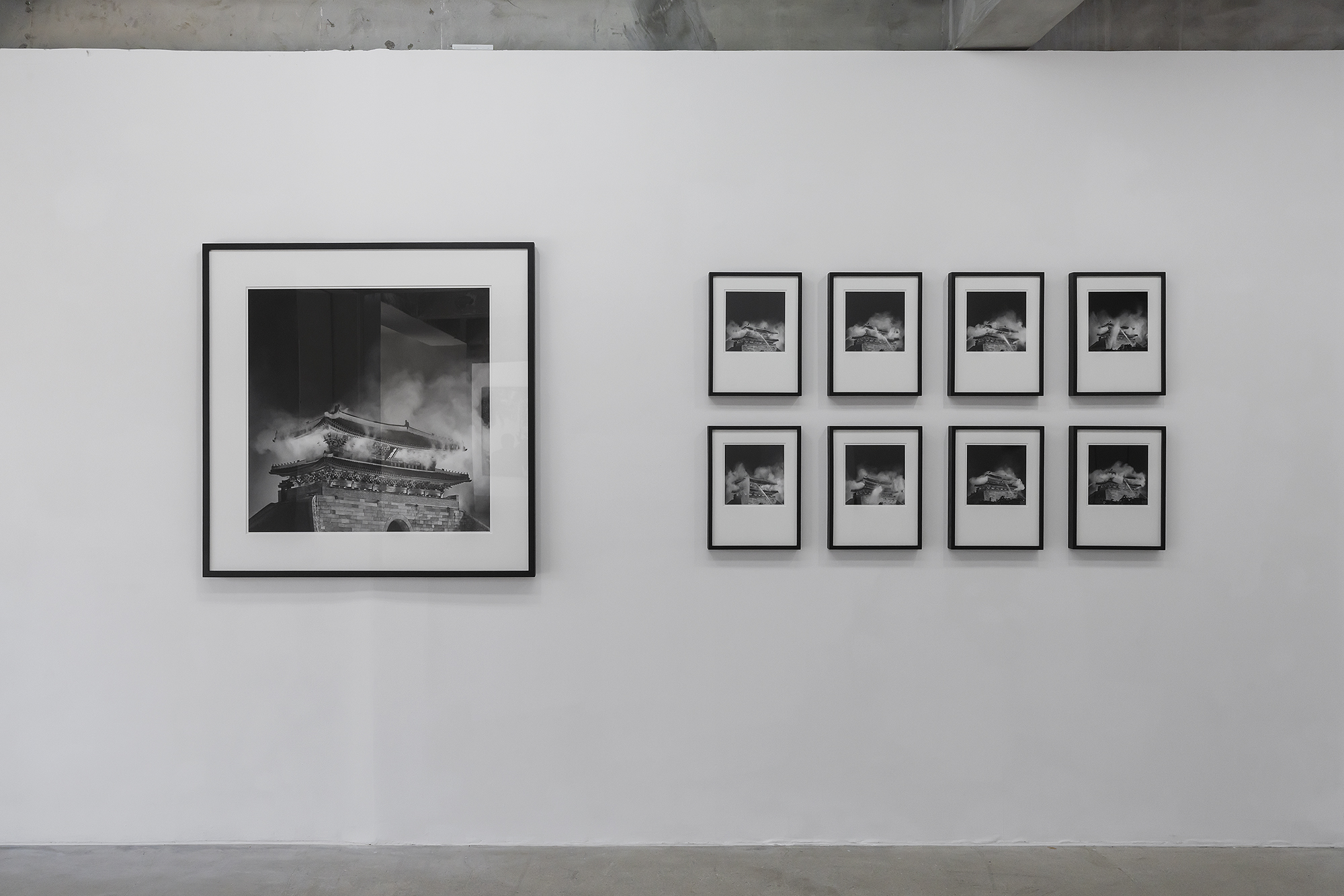
scenery with the silence of the night. Notably, the work ‘Rifling’, which did
not focus on the stars in the night sky, is a bit dramatic in the present,
where history and everyday life coexist. The ‘Rifling’ which features scenery
of a road created by dawning fog and red-lighted street lights, seems to guide
audiences to the unknown world, and the real-life scenes he met on the road,
such as military official residence(Rifling-017) and guard
post (Rifling-026), also capture some mysterious journeys.
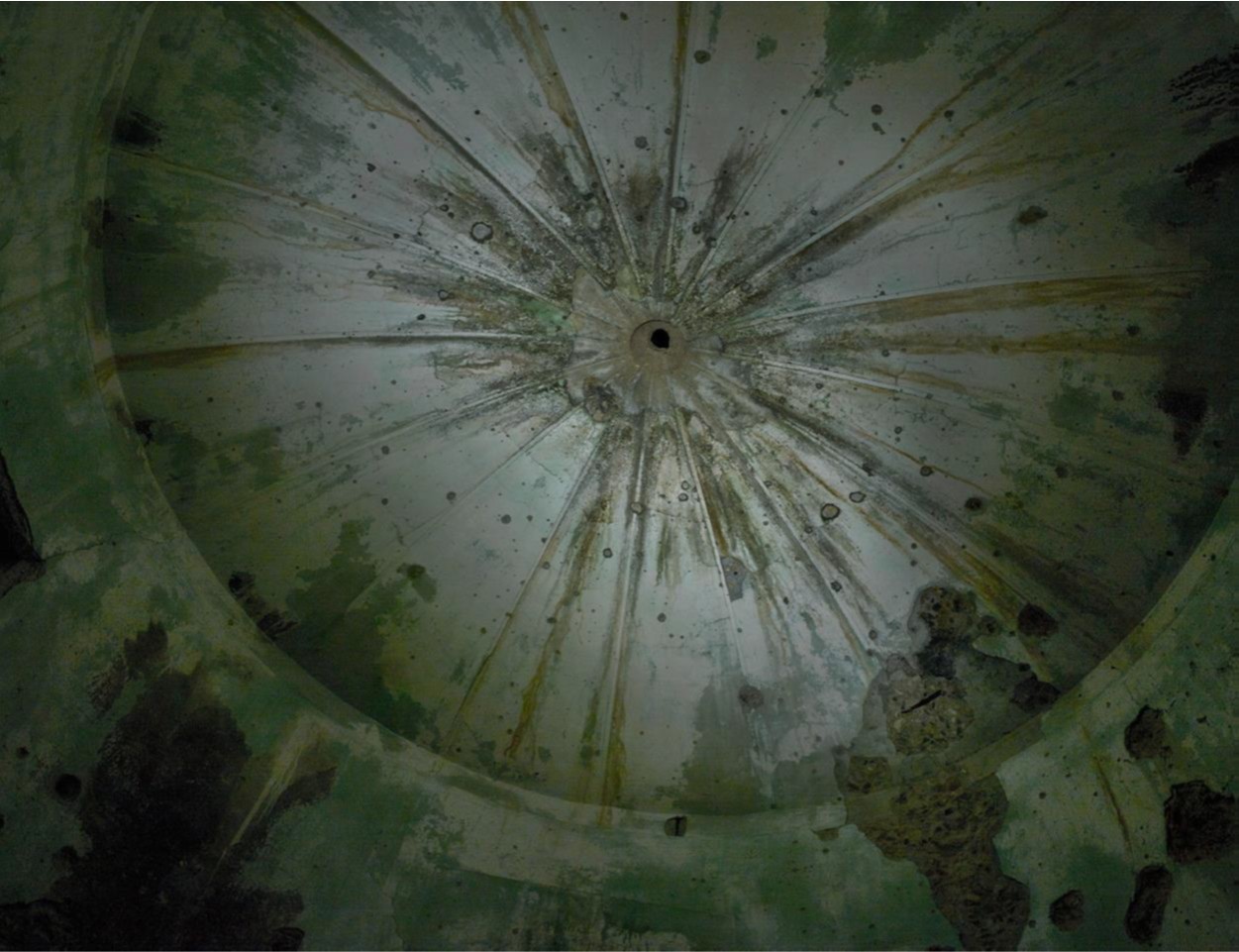
The bullet trace left on the ceiling of the historical site of the Waterworks
Bureau site(Rifling-005), the crumbling wall of Donducheon
old commercial building(Rifling-019), and the village man
who met in Shinmang-Ri (Rifling-039), they are the reality
but create unrealistic atmosphere. Rather than evoking forgotten history, the
artist brings up today's time in a strange way, as if to give mysterious powers
to those places.
The early works of the series,
Rifling-011, is the starting point where the artist has
become interested in the night sky stars.He became aware of the contradictory
beauty of the night sky stars, unlike the atmosphere of the wet and cold site
at the time. That is how the ‘ Planetes’ series began. Now there is a curious
encounter between the war site and the remaining monument and the night sky
stars.
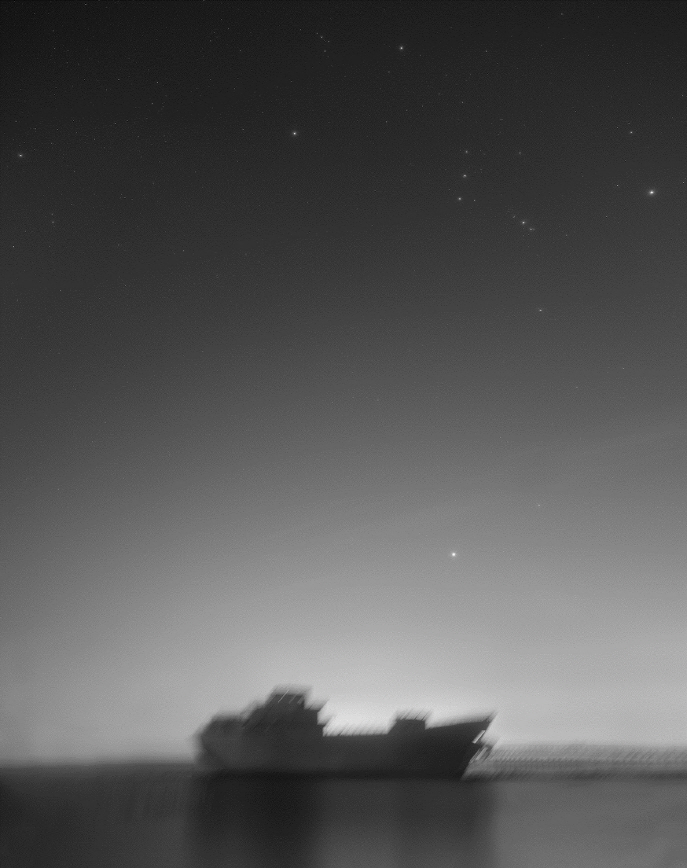
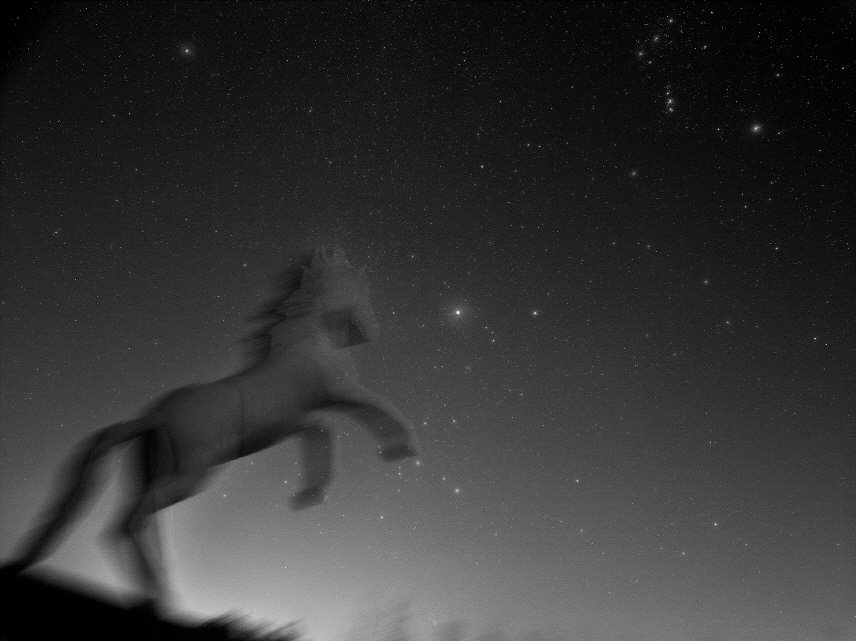
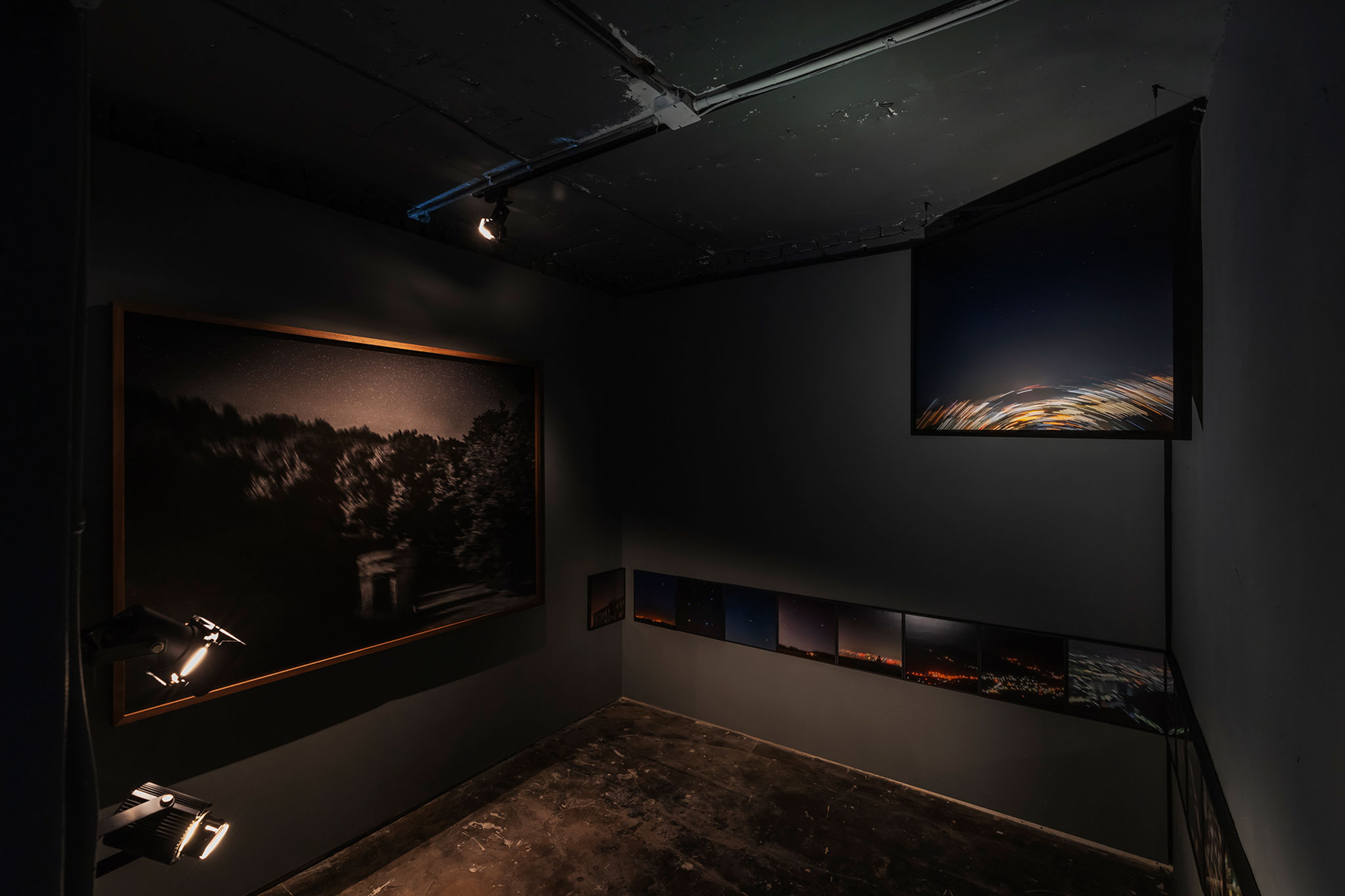
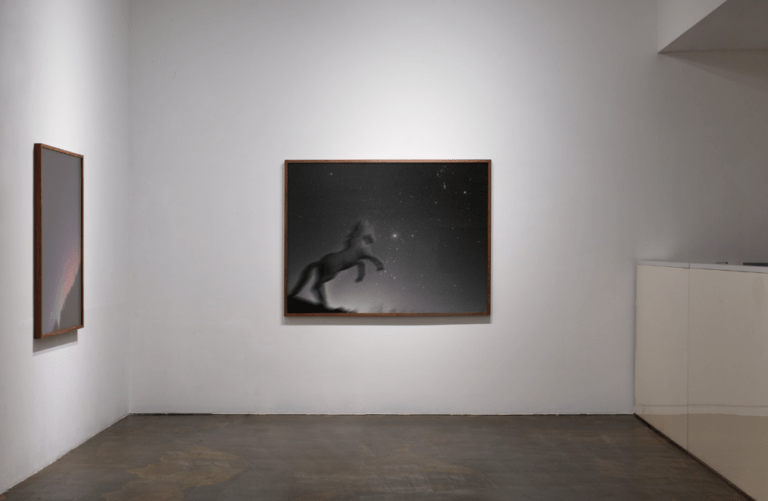
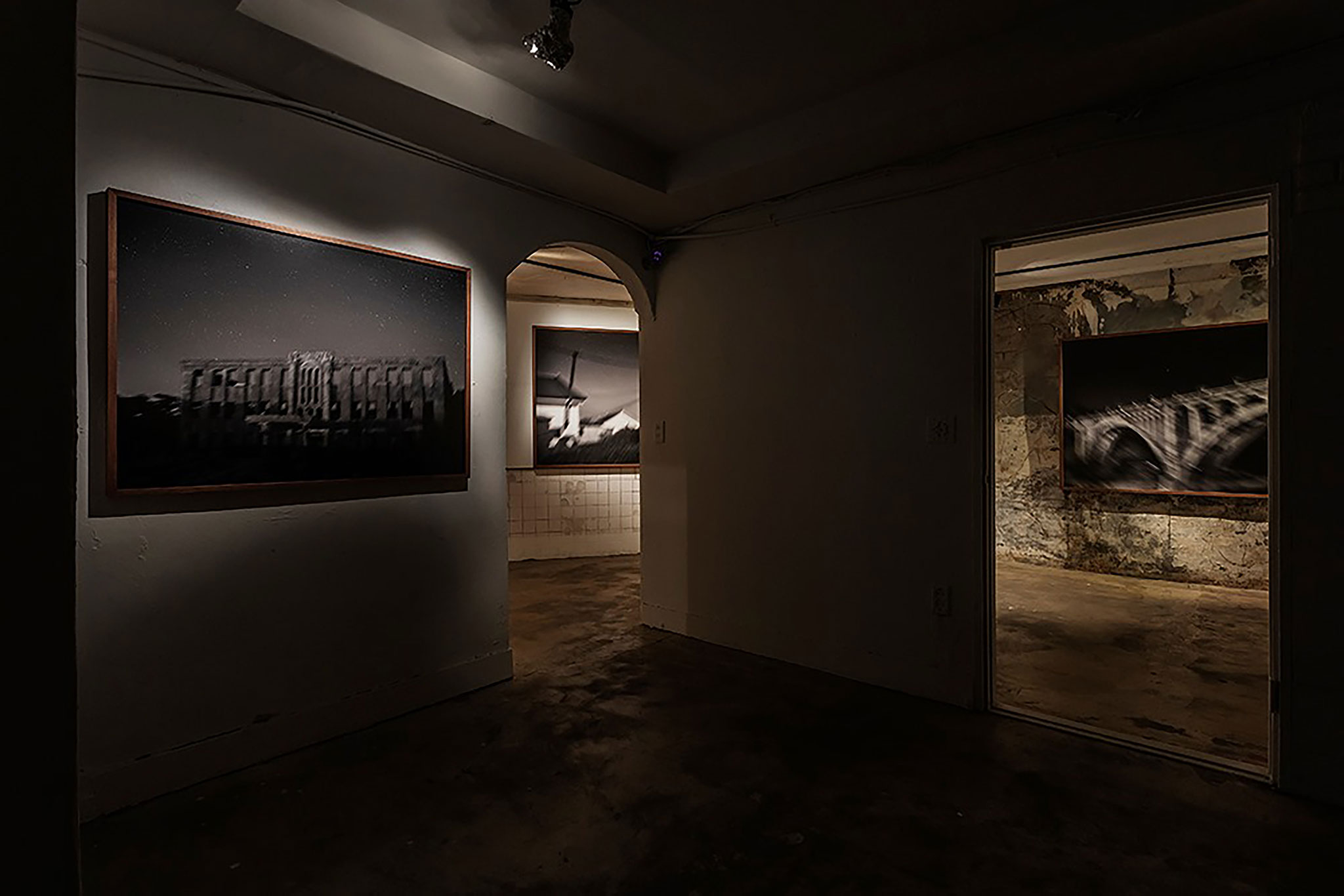
The camera's focus will be on the stars in the sky, and astronomical
photography will be studied to fix the stars. As a result, war-related places,
which were limited to the DMZ, will be expanded to various parts of the
country. Monument and veterans' weapons such as the Incheon Landing Operation
Memorial (Planetes-003), the Jangsa CoastGuard Memorial
(Planetes-018), the Dongducheon Peace Museum, the
GanghwadoIsland Korean War Veterans Memorial Park
(Planetes-030) will be the subject of the photos.
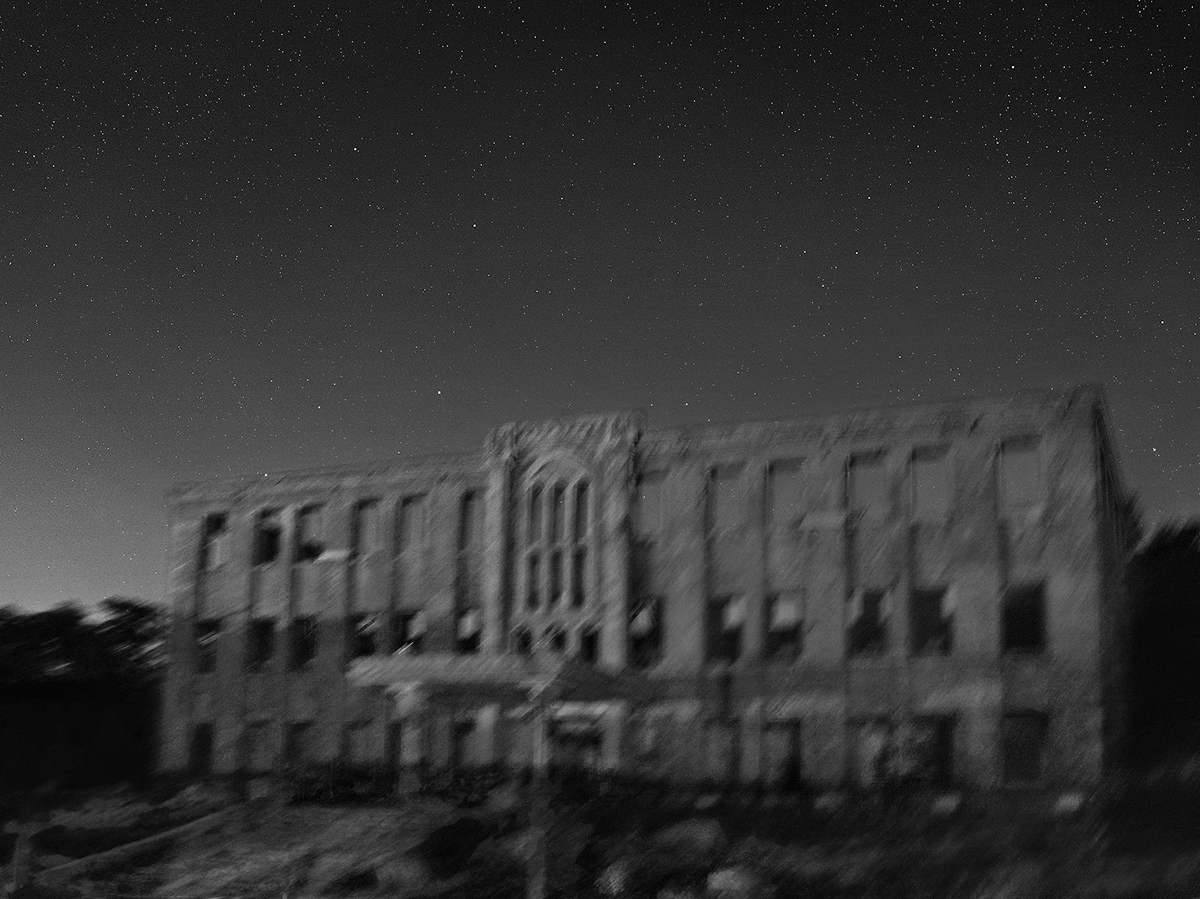
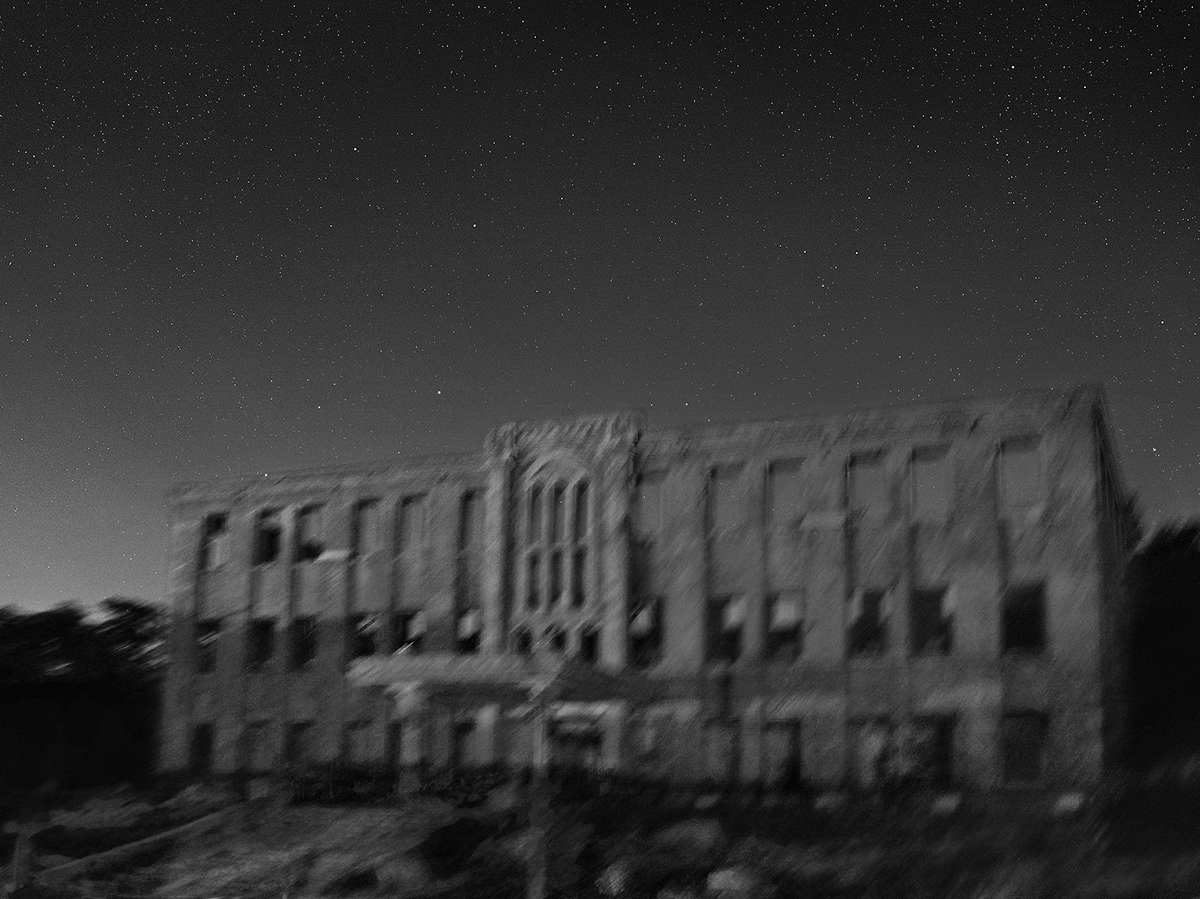
Furthermore, the ‘Planetes Project, AU’ which photographed Canberra, Sydney,
the Korean War Memorial, will be followed. After a long process, the more
stable the positions of the stars, the more blurred and shaky the building or
monument on the ground becomes. The Waterworks bureau
site(Planetes-001), Seungilgyo (Planetes-014),
the Workers' Party (Planetes-004), Daemari Minbuk Village
houses (Planetes-005), and various Monumentaries are also in
contrast to the bright and vivid stars of the night sky. They show signs of
shaking while maintaining some of their original statues, which sit under the
twinkling night sky as if they were trying to escape without discerning their
historical nature.
For the past five years, the artist has
visited historic sites related to the Korean War. How to look at the present of
those histories has been a question for a long period of time, and it has not
defined yet.Through this process, the artist undergoes an emotional change and
goes through a process of development. The history and daily lives of those
sites, which were the starting point, move to a different level by exposing a
staging scene beyond a documentary photograph and then being distracted by the
night sky star at one point.
Are the night sky stars and war sites inevitable?
Maybe it brings back the scars of the past to the aesthetic level. Despite
these concerns, the artist reminds us that the Earth is constantly fluctuating
by trying to catch the stars in the night sky. He might have seen the simple
fact that even a terrible war was created by those who lived in that era and
that our lives now continue on that scar. The world which the artist has been
captures may be so beautiful to tell the simple truth.
Therefore, even though the artist has been
visited the warsites, he did not abandon the attitude to capture the city and
the people which he has met. The artist neither wants to expose the scars or
wounds of history nor intends to reveal any value judgment on historical facts.
Instead, he intends to capture the unique scenery he saw at the place he met
not as an event or story, but as a strange or conflicting image in the medium
of photography, and meet the imagination of the viewer.