Exhibitions
《Shit and the Body of the City》, 2015.01.29 – 2015.02.11, Art Space O
January 27, 2015
Art Space O
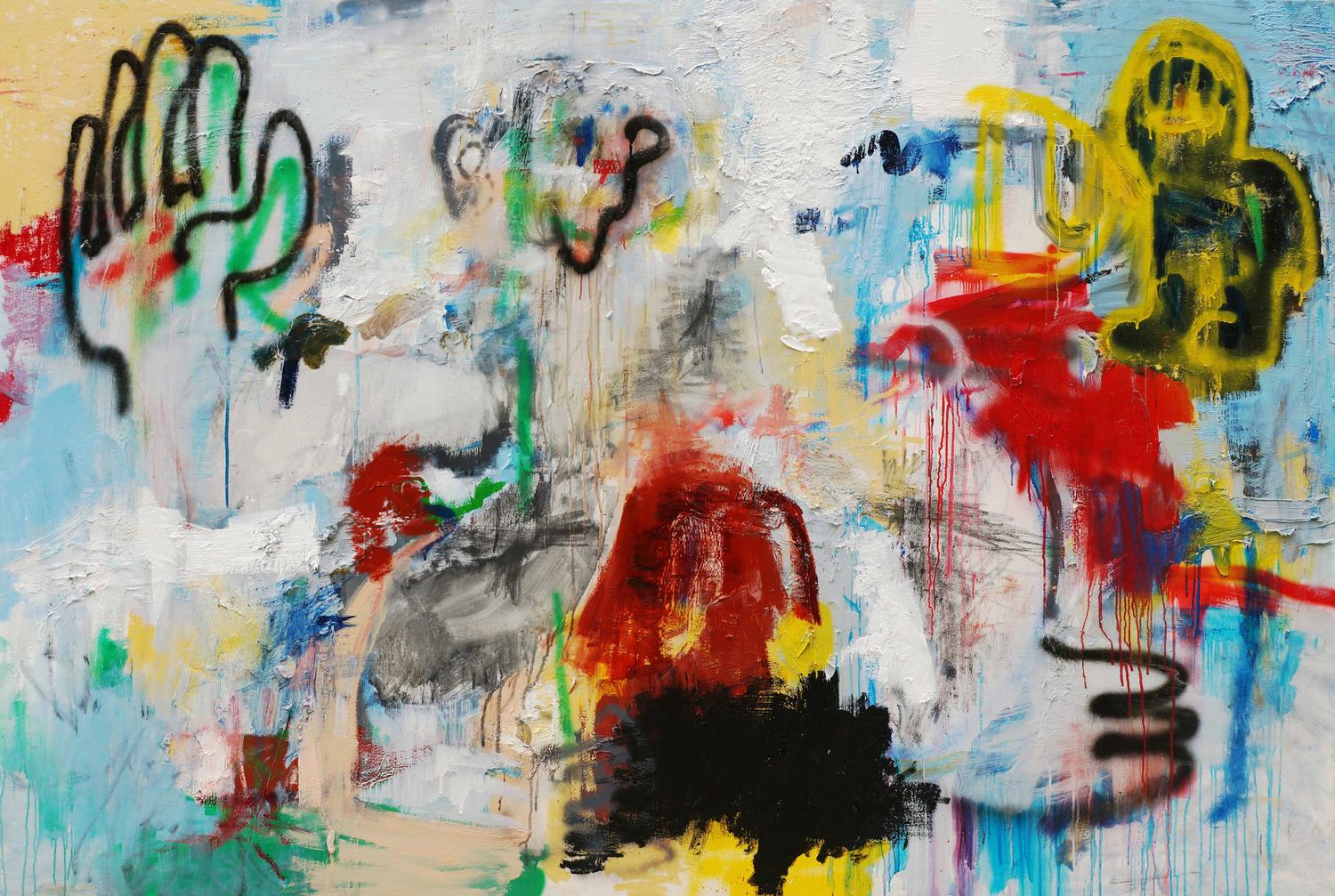 Seo Jaewoong, Residue, 2015, Oil, graphite, and
spray on canvas, 130.3 x 194 cm ©Seo Jaewoong
Seo Jaewoong, Residue, 2015, Oil, graphite, and
spray on canvas, 130.3 x 194 cm ©Seo Jaewoong
Artist’s Note
Society has become densely standardized, filled with countless
forms of information and the countless manuals that stem from them. Within this
over-ordered world of excessive information and instruction, there are bodies
and minds that have been left out—excluded and discarded. Though these exist as
part of “us,” they are treated as if they do not belong. As this exclusion
deepens, one's sense of essence becomes distorted, and relationships built upon
such distortions inevitably remain superficial. We begin to relate without
truly relating, creating a state of disconnection that ultimately leads to a
loss of reality.
Modern life is a virtual one. Our smartphones remain ever-ready,
even when we are not consciously awake. Encounters with others are increasingly
mediated by screens—via social media, messaging, and calls—while the time spent
face-to-face diminishes. Through television and computers, we undergo far more
experiences than we actually live. These experiences are rendered as images.
Long before real experience even occurs, our lives are already surrounded by
layers of images.
This lifestyle pattern concentrates primarily on the connection
between the eyes and the brain, pushing the rest of the body’s organs aside.
This visual-centric mode of living creates fragmented thinking that relies on
image-based sensations and image-based ideas. Fragmented thinking gives rise to
fragmented movement, and the body gradually loses its natural rhythm—trapped
instead within those image-based sensations and ideas. The modern body is
constrained. It is no longer the body as body, but a body caught within the
sensory and conceptual images of itself. Truly vital movements are blocked. A
stifling condition emerges—one that harms both body and mind. We must restore
the organic relationship between the body and the head.
Perhaps the first step is to give presence and form to the bodies
and minds that have been excluded and cast aside. Is it not possible to
cultivate thought that arises not from image-based perception or abstract
ideas, but from the body itself? And if such thought were to emerge, what kinds
of movements and encounters might it bring into being?