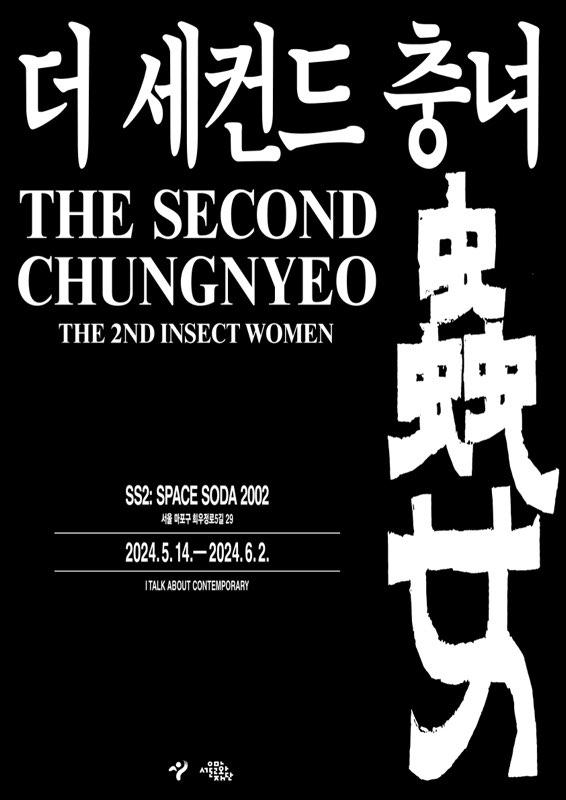
This exhibition stems from a continuation of the [No] series
presented at Gabeonkeugi at the end of last year. It began as a collaborative
process between artist Shin Min and a fellow woman curator, engaging in intense
conversations about both artistic production and exhibition-making, exchanging
energy as both comrades and creative partners. For Shin Min, making art is akin
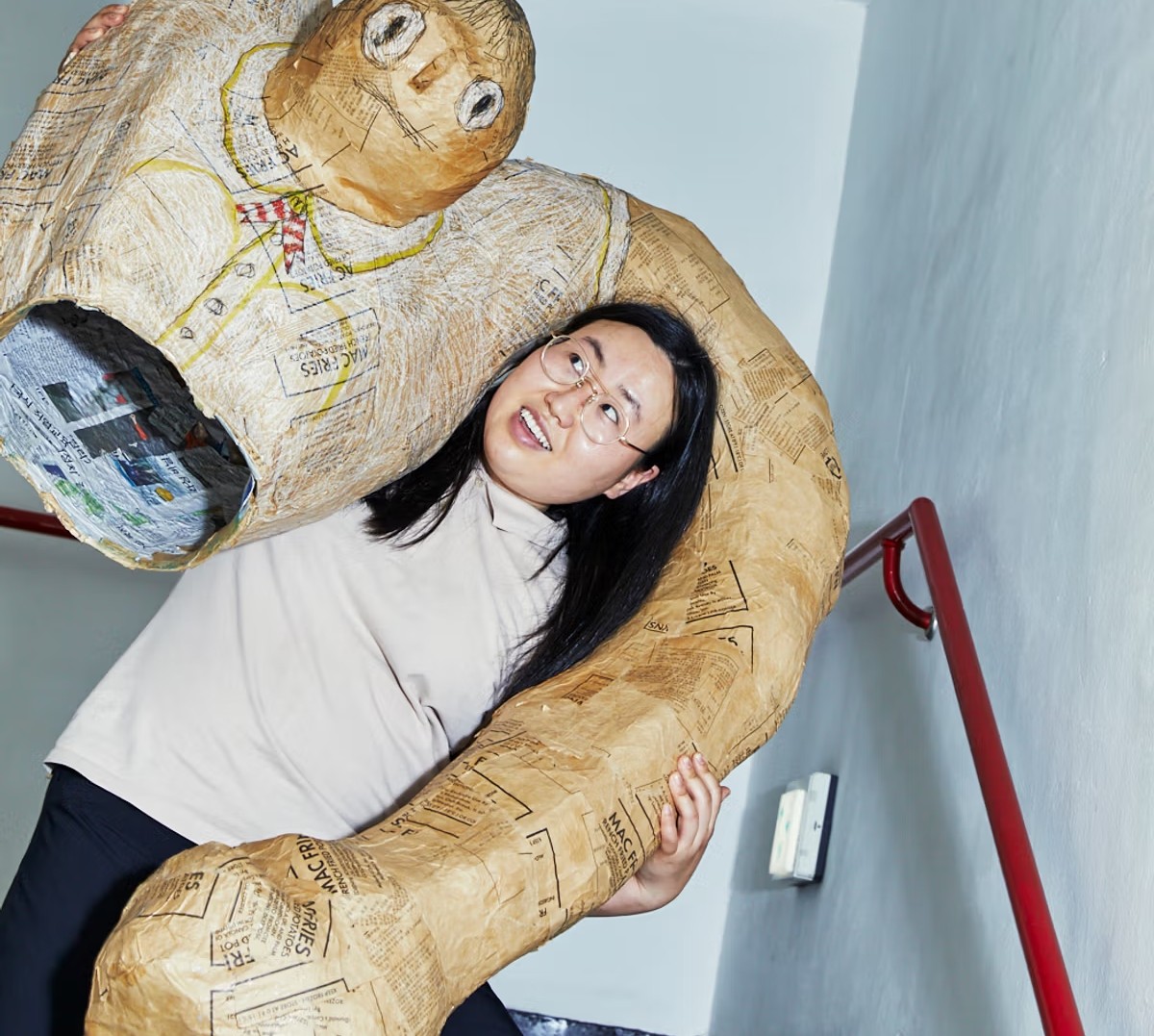
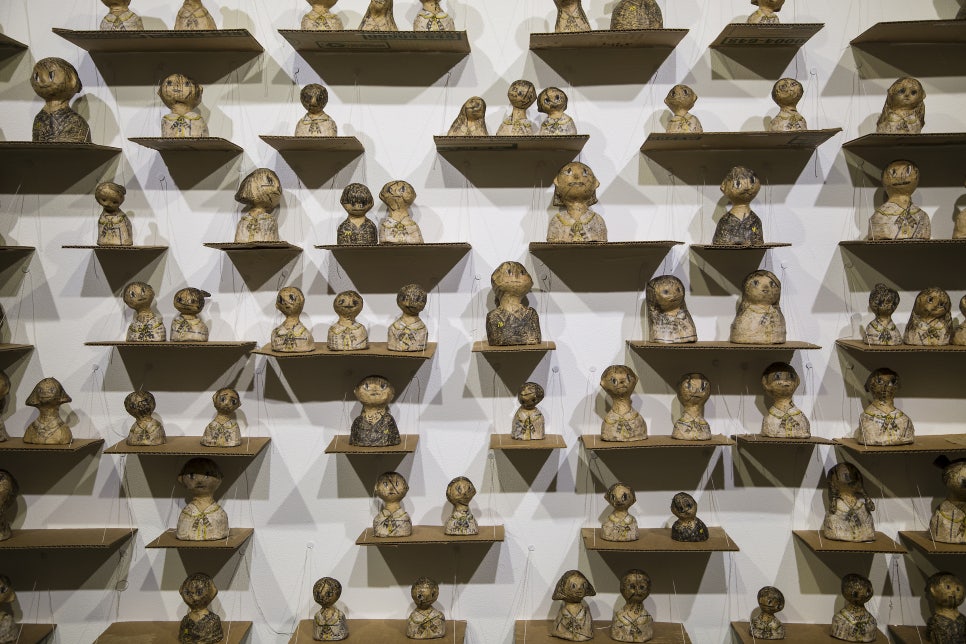
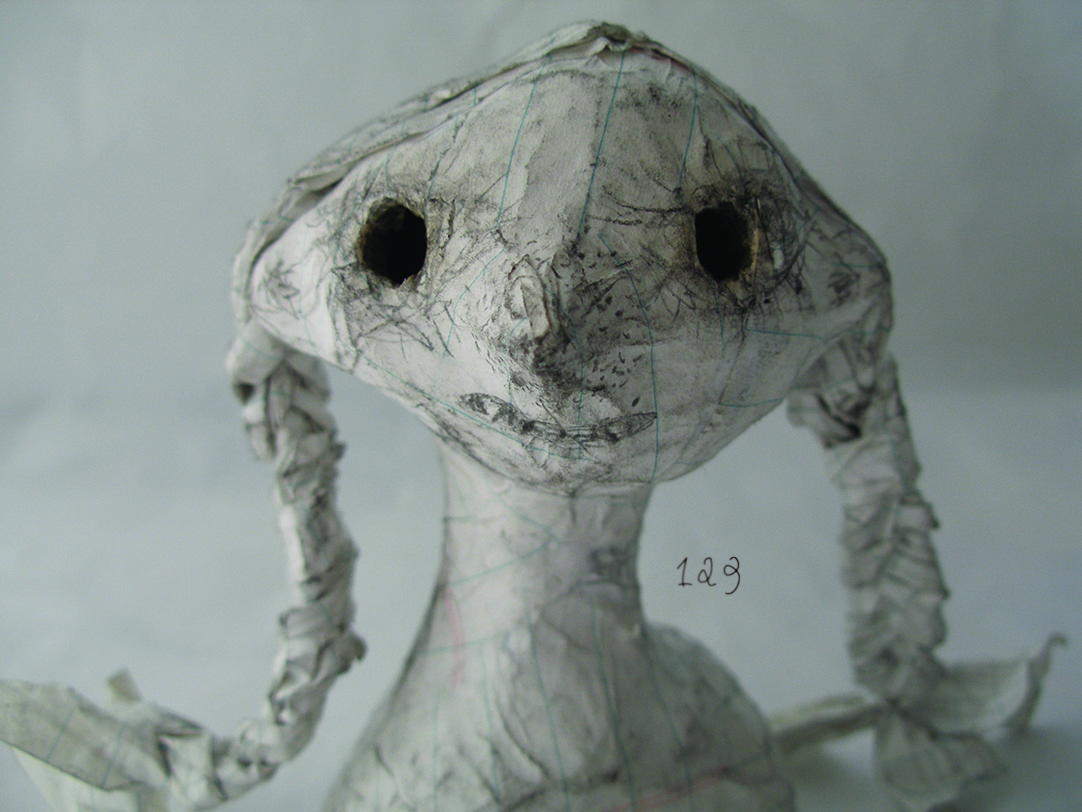
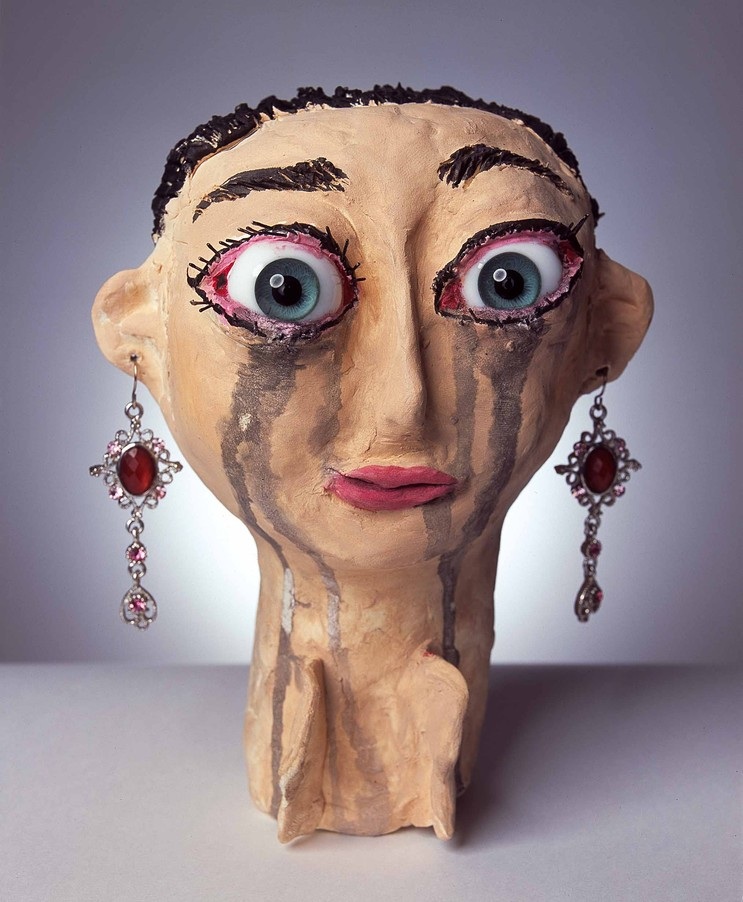
to creating pieces of herself. As her body of work grew, we began discussing
the very real issues of storing and selling these works. Beyond the simple fact
that she had to take on outside jobs to pay the ₩2.4 million annual fee for
storage, I suggested that perhaps the artworks needed to be set free from her.
This led to the [No] project, in which we took the fragile clay
prototypes used to make her sculptures and distributed them to viewers—a risky,
deliberate act of surrender. The current exhibition follows in that spirit: as
the title ‘Flyer’ suggests, it began with the idea of distributing paper
handouts created by the artist, hoping that once dispersed, the individual
sheets would take on new meanings. As with [No], countless exchanges of “no”
occurred—two women with wildly different temperaments and instincts energized
and exhausted each other in cycles.
At that time, society witnessed a series of injustices. While
investigations into cases where women were victims showed little progress,
sensational media attention focused only on cases where women were identified
as perpetrators—such as a hidden camera incident. Massive protests broke out in
Daehakro, and the shocking Ahn Hee-jung case resulted in a not guilty verdict.
Against this backdrop, Shin Min began asking: Is there anything more powerful
than attending a protest? Could an artwork truly carry more impact than the
real-time voices echoing through social media? Confronted with the overwhelming
weight of helplessness, we were compelled to ask why, despite everything, Shin
Min continued to blister her hands working just to pour everything back into her
art.
A ‘flyer’, by dictionary definition, is a piece of paper used for
propaganda, advertising, or agitation. Shin Min’s art, similarly, aims to
assert and persuade. Drawing on tiny sheets of paper or letters—often in the
form of doodles—and handing them out is her way of speaking to the world, of
starting conversations. In the gallery, she introduces these miniature versions
of herself, signs them, and meets people through her works. The exhilaration of
creating and handing out these intimate drawings gives her the courage to push
past her lingering insecurity about craft and dive back into art—an addictive
process akin to a drug.
‘Flyer’ is a performance-style exhibition, centered on
distributing small sheets of paper made from delicate materials like notebook
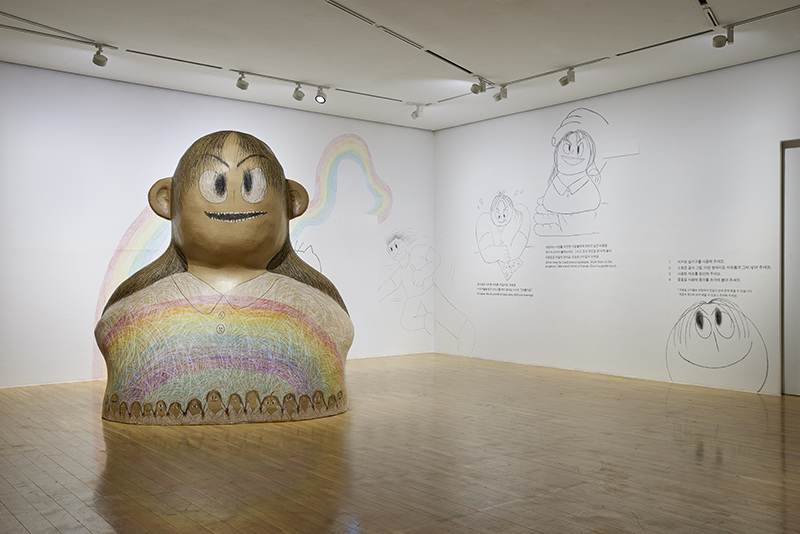
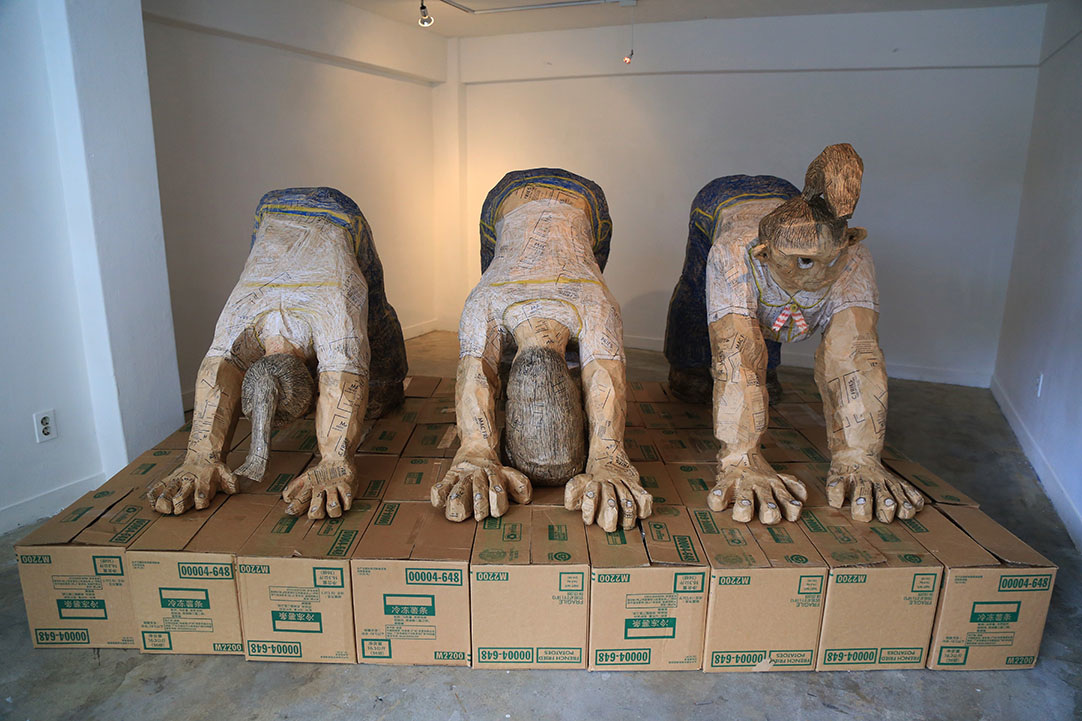
paper and pencil. In fact, nearly all of Shin Min’s sculptures, large or small,
contain some form of paper scrap. Like the childhood belief that writing a wish
on a piece of paper and stuffing it into an empty pen would make the wish come
true, these flyers represent both a form of communication and a site of comfort
for the artist—a starting point for her practice.
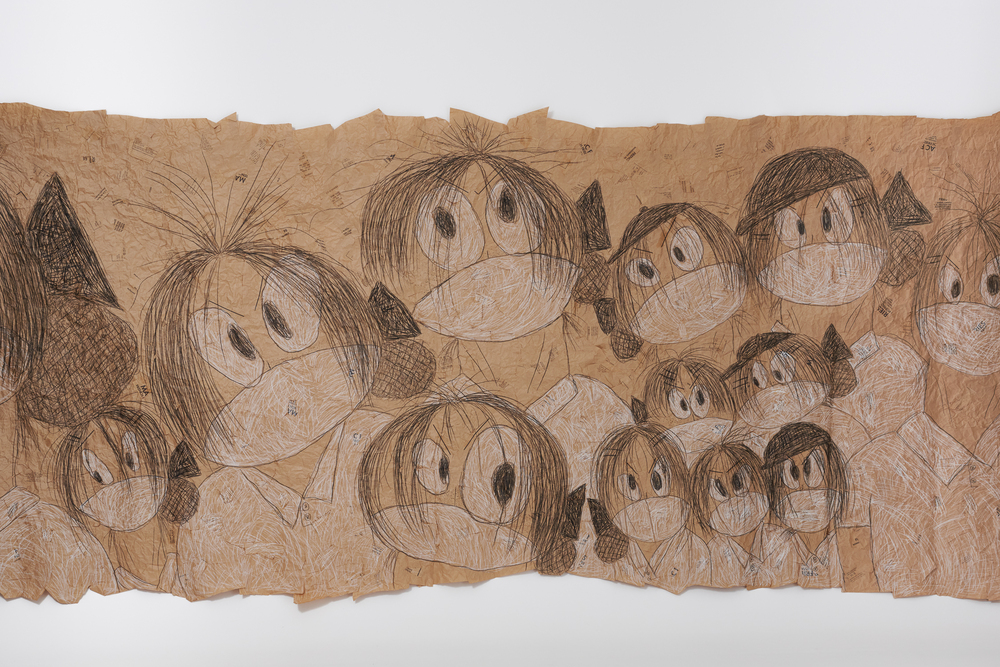
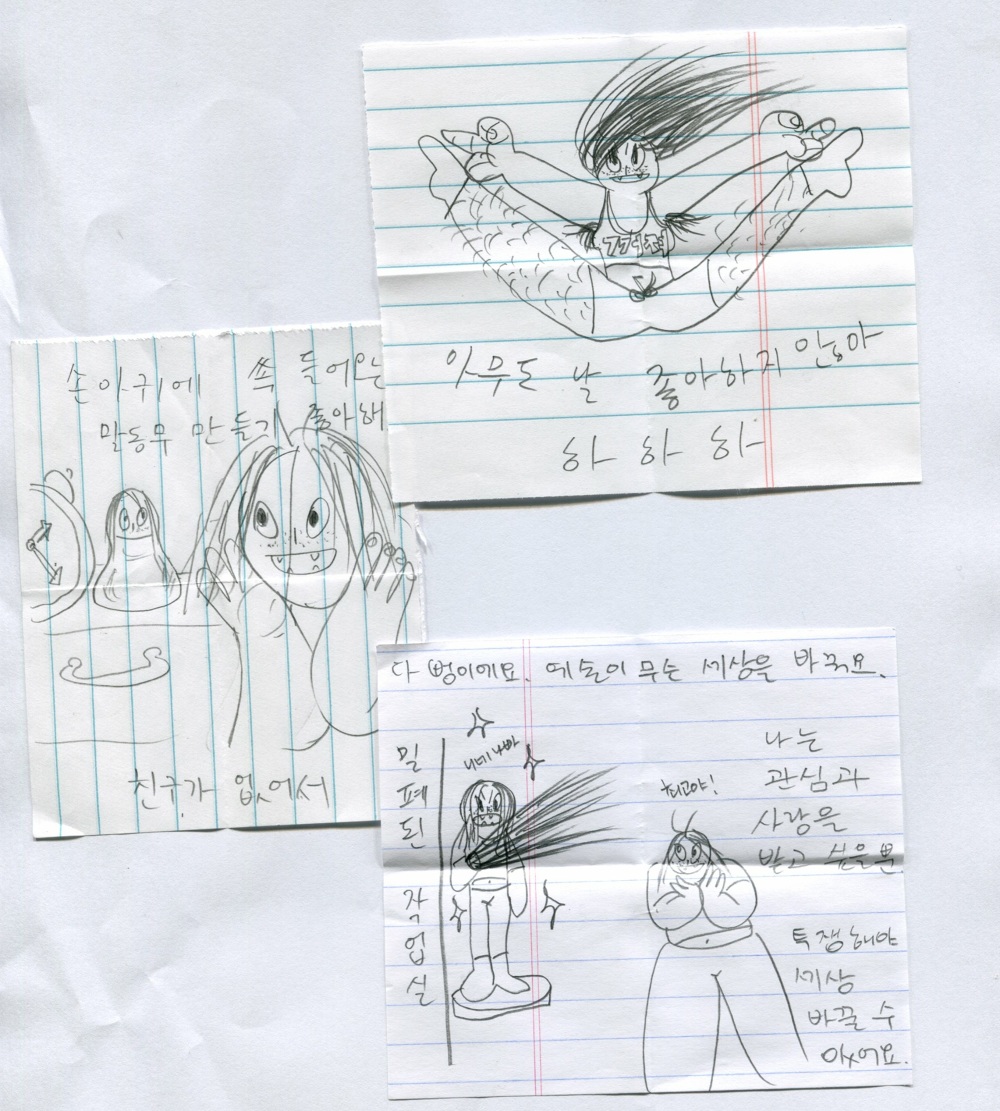
In this exhibition, Shin Min cuts up common ruled notebook paper
and draws on them one by one with pencil, offering each drawing to viewers.
These flyers, fragile and easily smudged, could fade or disappear at any
moment. She has tried redrawing them on sturdier paper, switching to pen for
stability, or even considering mass production through printing. But the
combination that felt most true to her was the pencil-drawn flyer on ruled
notebook paper. Shin Min did not attend art school and was never academically
trained in sculpture or drawing. Thus, the standards and boundaries of
contemporary art have often felt especially rigid and inaccessible to her,
giving rise to her own artistic insecurities. By embracing the raw, unfinished,
even rough qualities in her work—and rejecting the polished perfection often
demanded by the art world—Shin finds her own way of overcoming these
insecurities.
The thousands of flyers she created may appear crude or unrefined,
but they reveal her care and sensitivity. The women drawn on these sheets defy
socially mandated standards of beauty and grooming. Harsh standards around
female appearance—present not only in the labor force but also in daily
life—perpetuate the idea that unadorned appearances signal a lack of discipline
or even diminished competence. Against this backdrop, Shin’s drawings depict
women with freckles, uneven teeth, and soft bulging flesh. In stark contrast to
the flawless women shown in the media, her characters proudly reveal armpit and
leg hair, shouting: “I don’t shave! I’m fine as I am!” Their awkwardness,
rendered with humor and charm, makes their defiance easier to embrace.
The quirky characters and scrawled, punchy messages written
alongside them create a strong resonance when paired with her modest
materials—pencil and paper. Through this, we catch a glimpse of Shin Min’s
unique form of resistance to societal scrutiny and judgment.
The ‘Flyer’ series, a kind of self-duplication practice, is
scattered throughout the books displayed at the front of the exhibition space.
These books include patriarchal literary works, essays, and poems we were
taught to admire in school—works whose values we were never encouraged to
question. They also include novels Shin once loved but later found betrayed by
the male-centered perspective she eventually came to recognize.
The sources of Shin Min’s anger remain as urgent as ever. In a
world where victims of sexual violence still often find no legal protection,
and perpetrators walk away without consequences despite media attention, it’s
easy for her artistic outcry to feel powerless. And yet, for her, the simple
act of handing out fragile, easily discarded flyers—objects that blend
seamlessly into everyday life—has become the most honest and powerful form of
protest she can offer right now.
Written and curated by Choi Ji-hye
Design by Matggalson
Supported by Seoul Foundation for Arts and Culture