Possibilities
of Incompatibility Inscribed in Space
1.
Since Luigi Russolo first began addressing sound in modern art through the
Futurist manifesto The Art of Noise (1913), “sound” has
existed as another mode of expression through which artists respond to the
world—an extraordinary medium that produces reflection, absorption, and
vibration within three-dimensional space, generating new visual resonances.
Since
the Romantic movement of the nineteenth century, artists who have placed sound
at the axis of artistic practice have fundamentally sought to dismantle or
de-categorize music constructed by conventional scales. Their work has been
situated within a long and profound tunnel of interdisciplinary and inter-genre
hybridization that departs from artistic dogma. Moreover, the bold attempts
made from the early to mid-twentieth century onward—treating even naturally
occurring sounds as artistic materials or musical elements—have at times
touched upon states of auditory rapture and awakening.
Among
artists who cannot be overlooked when speaking of sound—or, more precisely,
“music”—is Yona Lee. Although markedly different from her current practice, the
origin of her work, particularly around the exhibition 《Composition》 held at Te Tuhi Centre for the Arts in Auckland in 2012, also lies in
music. In the artist’s early works—Lee once aspired to become a cellist—one can
detect a certain explicitness that guarantees musical appropriation.
However,
while many works connected with sound directly address the vibrations generated
when energy is applied to an object, Lee moves beyond considering how musical
elements as artistic tools are perceived. Instead, her practice approaches a
deeper integration with space. What emerges is the discovery of the other
through visual-perceptual reconstruction beyond audiovisual resonance, as well
as the reverberation of aesthetic values enriched by an imaginative engagement
with space itself.
For
example, the previously mentioned Composition summons the
origin of drawing through the object of the cello while translating the scale
and structural characteristics of a steel-built environment into the inherent
qualities of the exhibition space. The empty space produced by the solitary
ready-made object of the cello is multilayered. It may indicate the identity of
the artist, or function as a symbol representing a narrative or personal
history.
However,
the moment this object enters the space, it becomes visualized and
perceptualized, existing somewhere between “music that is observed,” “music of
seeing,” and “silence and verbosity connecting material and space.” In a sense,
it may also be understood as a prolonged act of looking in which a metaphor
originating in hearing comes into contact with the texture of vision. It also
recalls the notion—seen in the work of John Cage, who began with the body as
object and performance as spatial art—that art is inherently object-based.
2.
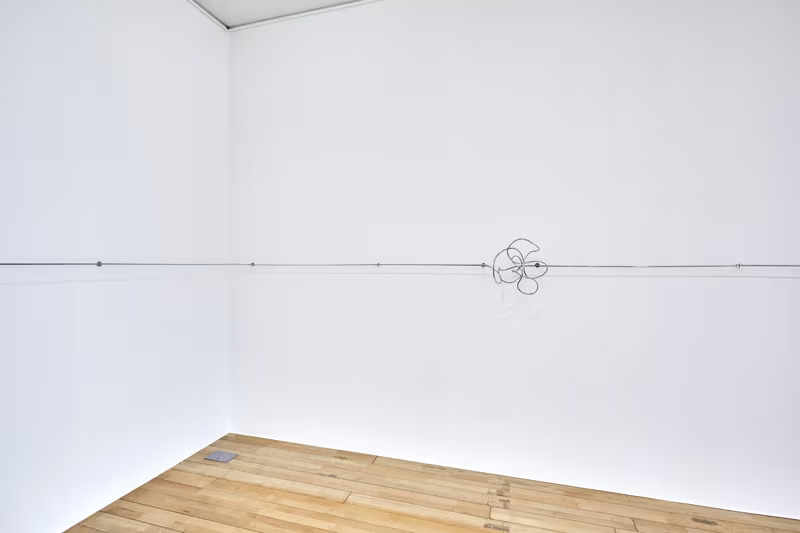
Although separated by little more than a year from
Composition, in which the cello appears, Yona Lee’s work
Tangential Structures (2013) reveals a shift in which the
role of the string is transferred into a device that segments space. Compared
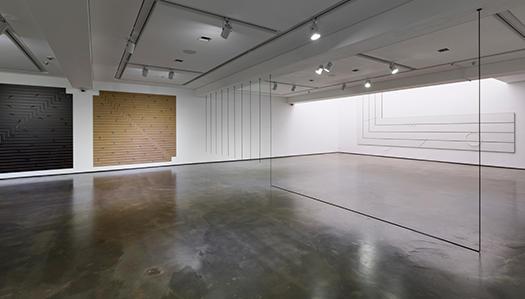
with works such as Line Works (2012) or Line on
Display (2016)—which are more active or dramatic in that they can be
performed and replayed (these works are characterized by indeterminate and
immediate divisions imposed upon a symbolic space)—Tangential
Structures draws attention for advancing the notion of sound within
space in a more evolved manner. In this work, a variety of everyday
objects—including magazines, flowerpots, hangers, bags, clothes, and tin
cans—are suspended from steel wires. Here, the string is actively employed as a
sculptural element while simultaneously raising the question of how space may
be organized—or composed.
Yet
what is most significant about Tangential Structures is that
responsive space is translated into a situation. Fundamentally, it narrates the
transposition of the auditory domain into an image. As inferred from
Line Works or Line on Display, it may
also be interpreted as a question of how the immateriality that binds time and
space in pursuit of form might encounter the physical surrounding environment.
The work also invites audience participation, allowing viewers to freely touch
the objects and even smell or taste them.
Beginning
from musical elements, Lee’s practice addresses the interaction between inner
consciousness—coiled deep within the mind—and communication with the external
world, as well as the reciprocity between subject and other generated through
the objects proposed by the artist. The deterritorialization that naturally
traverses time and space across environments that are both similar and
different—life and art, Korea and New Zealand—ultimately cultivates an artistic
language of “hearing that penetrates vision and images produced through
hearing,” while also questioning the condition of presence itself.
In this
sense, while musical or spatial-visual “composition” in Lee’s works has
unfolded by capturing everyday life as its stage, it is equally compelling that
it is summoned and performed again as visual art within daily life. Dividing
and segmenting time and space, generating processes of emergence,
disappearance, and recall within them—colliding and breathing between
reproduced sound and silence—these situations produce invisible waves within
space by twisting the distinct qualities of music and vision. In doing so, they
awaken a kind of sensory betrayal.
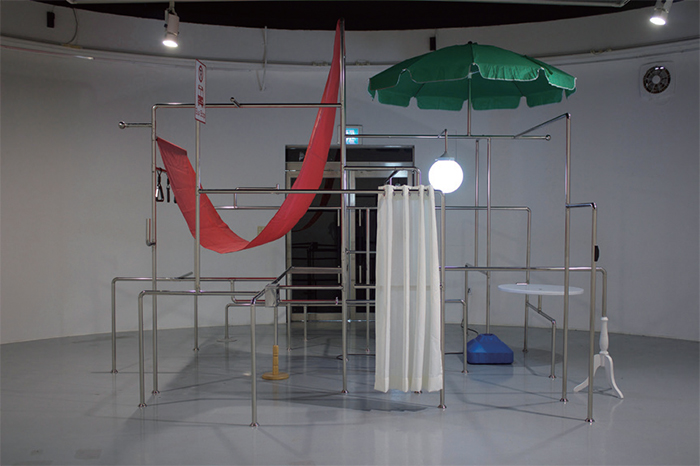
A
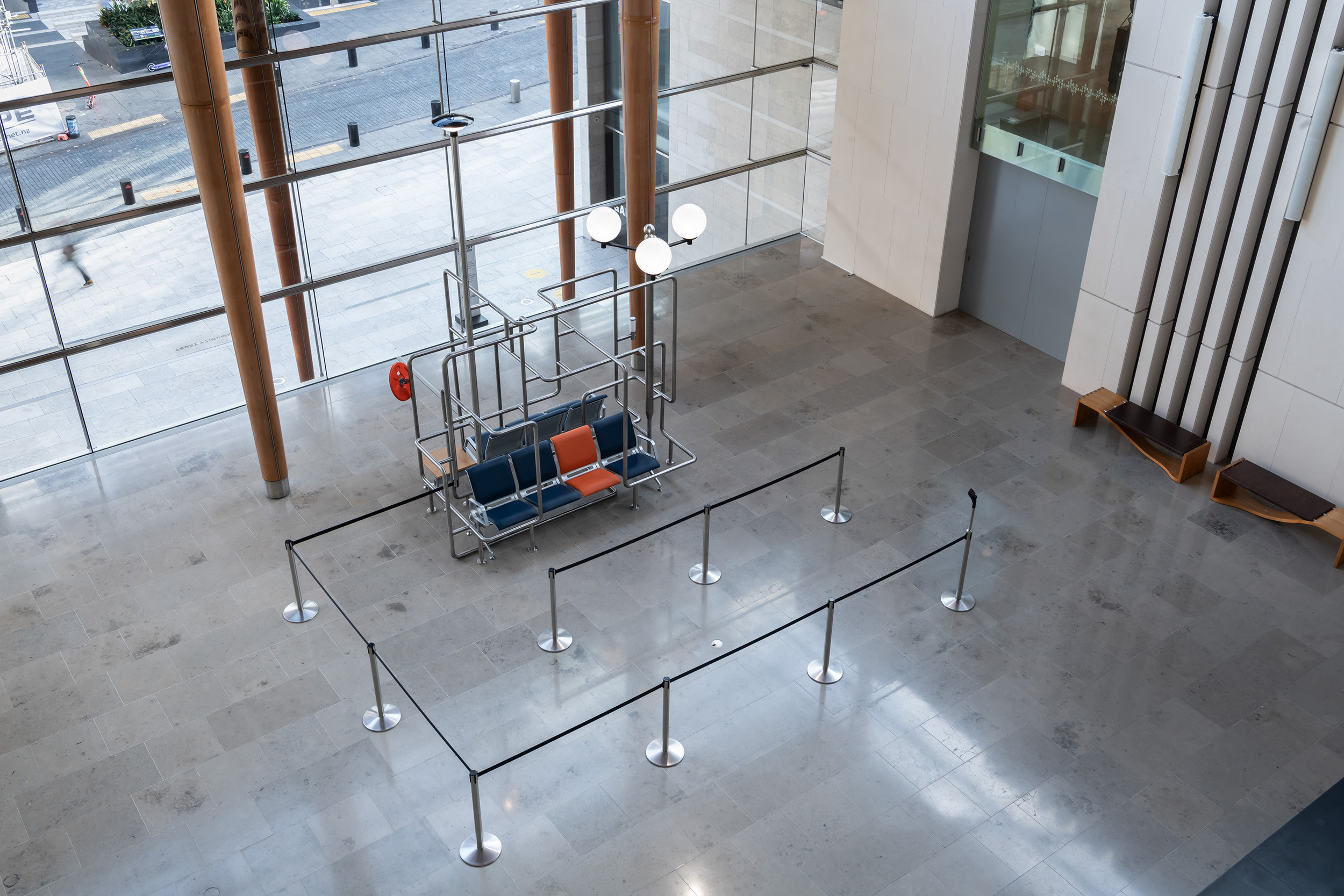
representative work in this regard is In Transit(Arrival)
(2017), recently presented at Te Tuhi Centre for the Arts in Auckland, New
Zealand. Extending works first introduced in 2016 at Alternative Space Loop and
the Nanji Residency Studio under the title In
Transit(Intro), this large-scale installation places viewers
immediately inside the work upon entering the exhibition hall. As a result,
visitors naturally become part of the work itself. In terms of reciprocity, it
resonates with Tangential Structures.
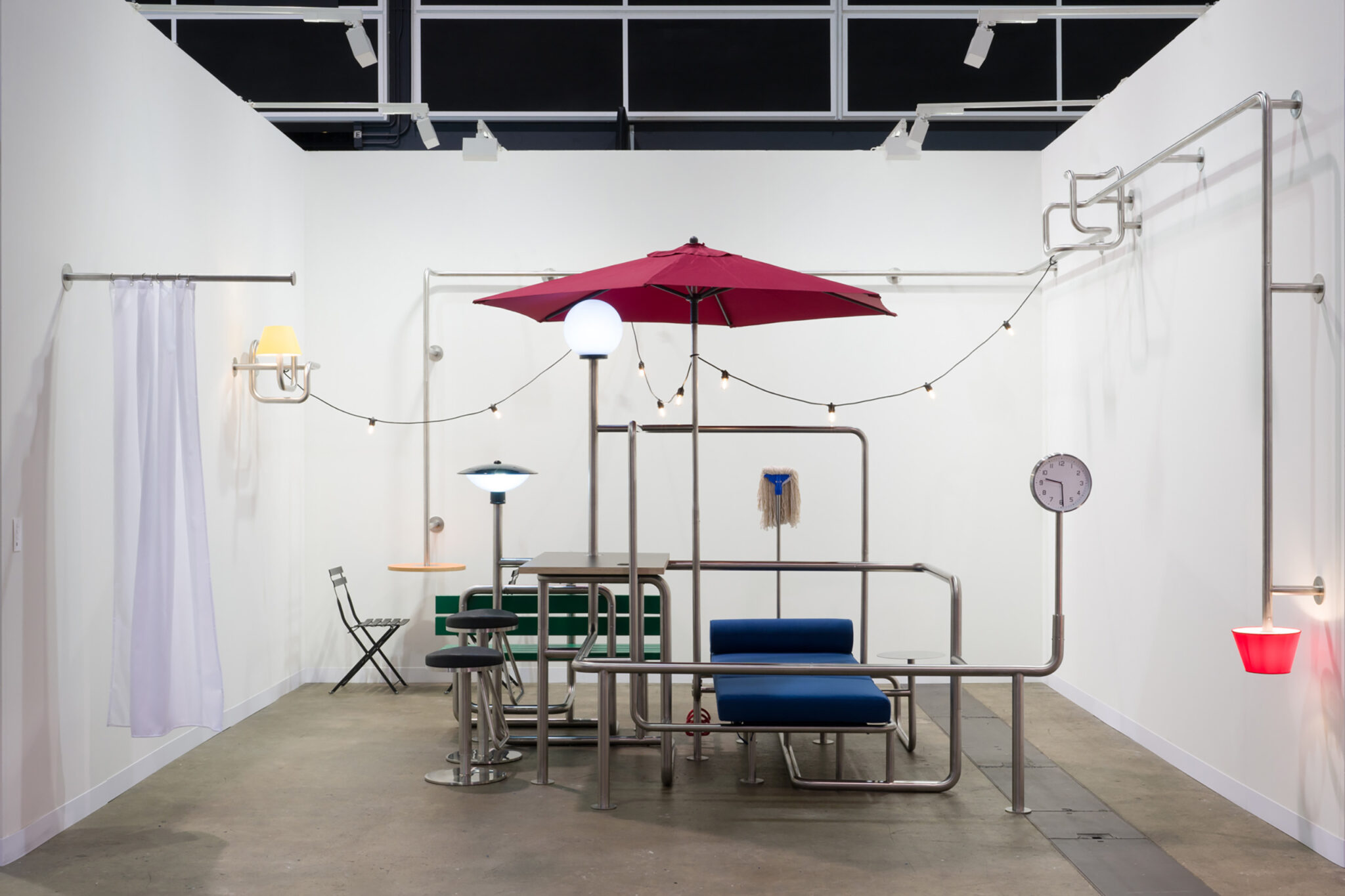
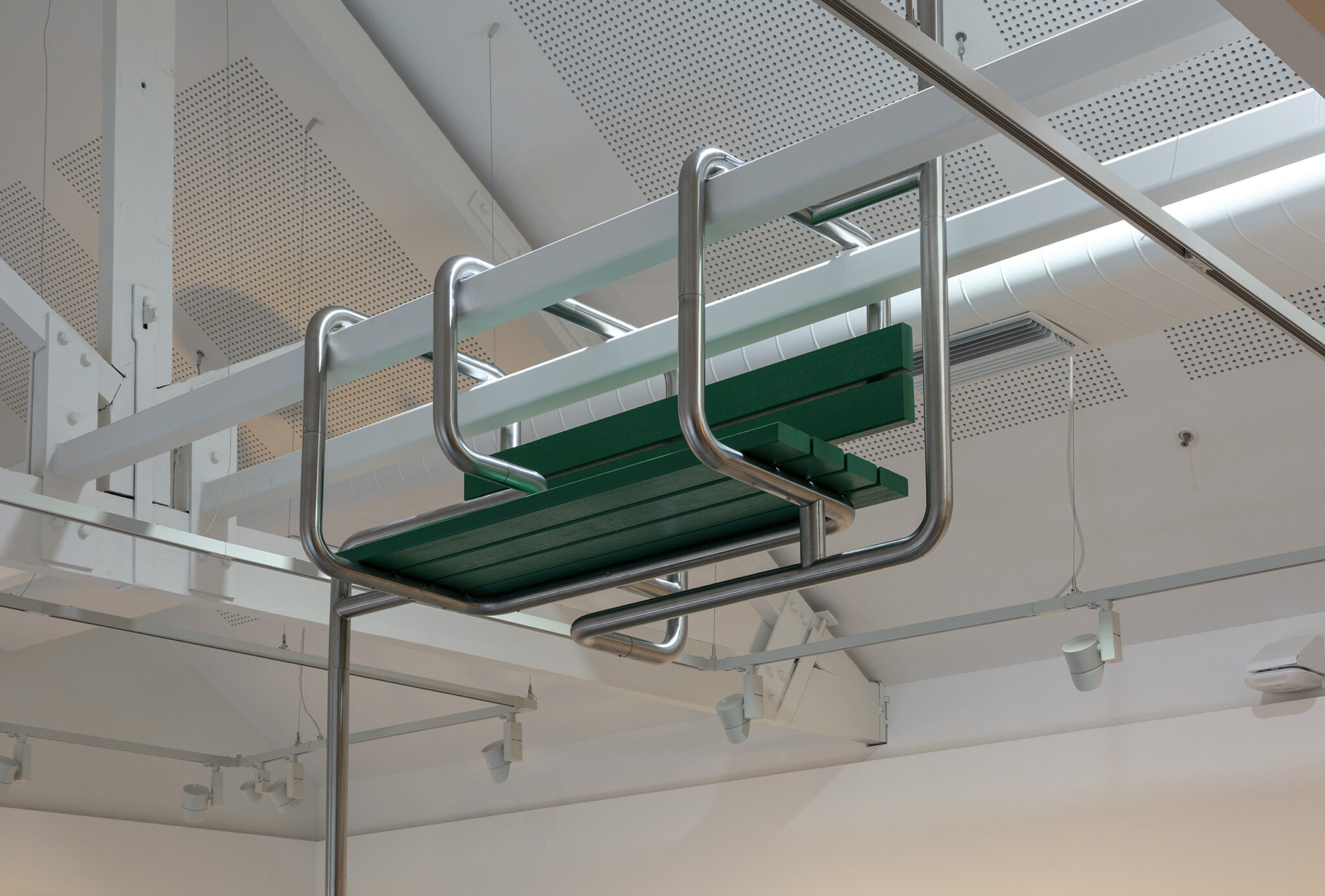
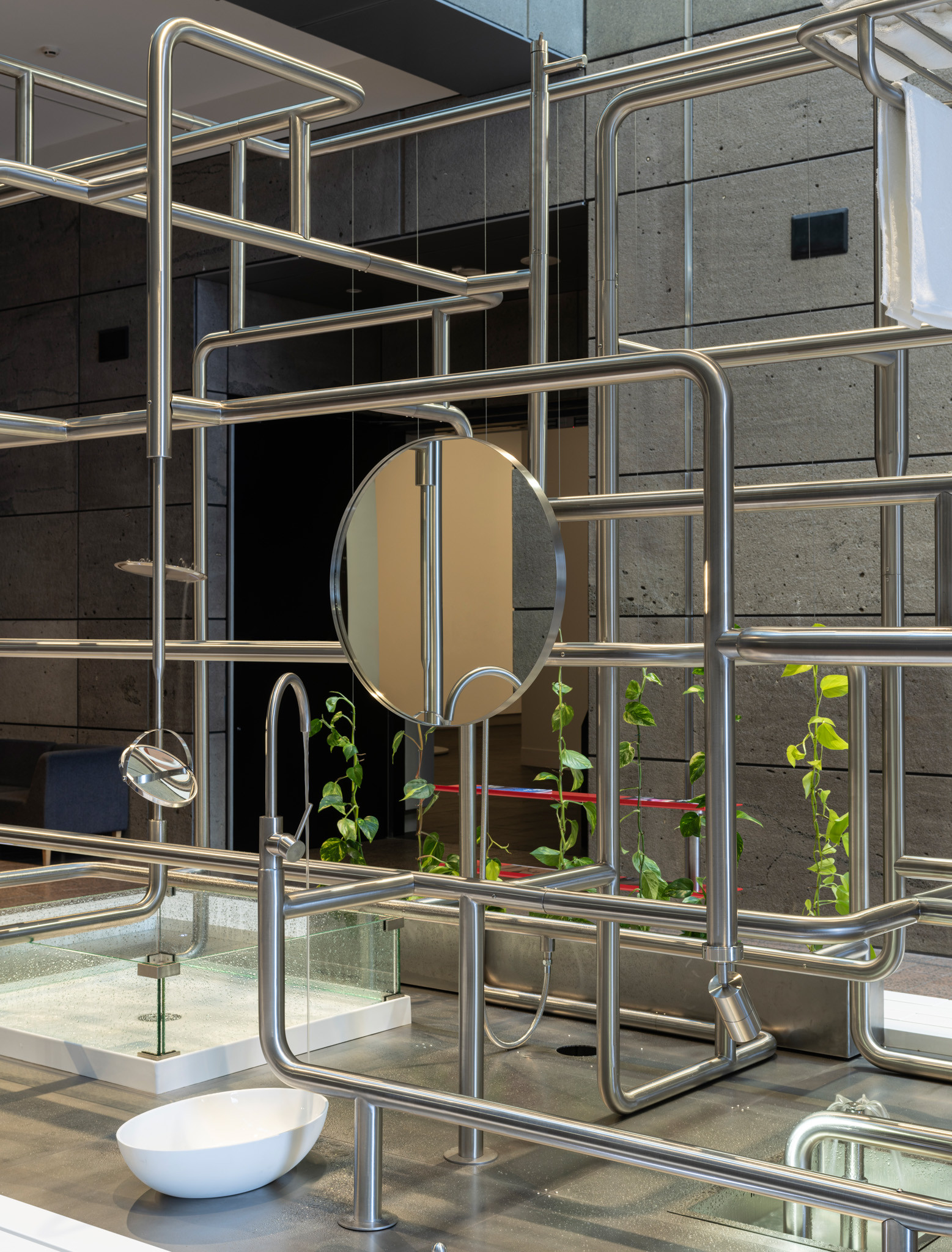
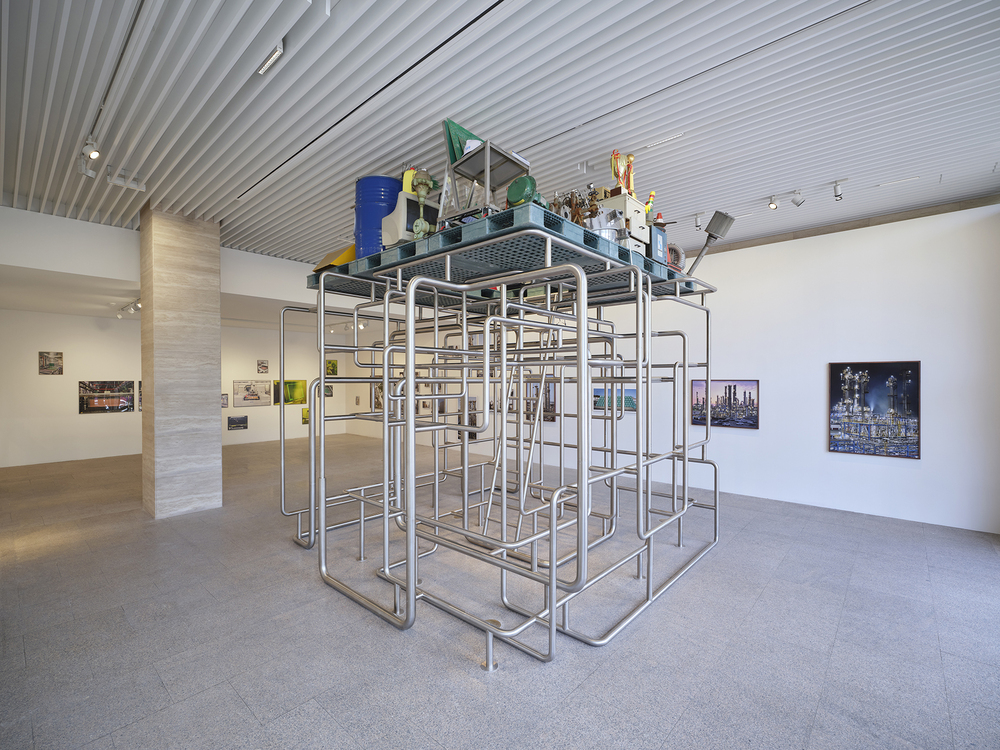
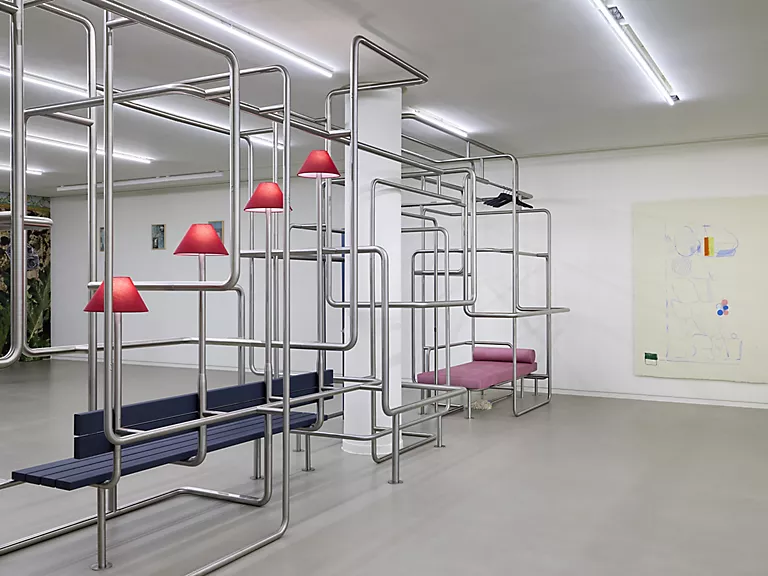
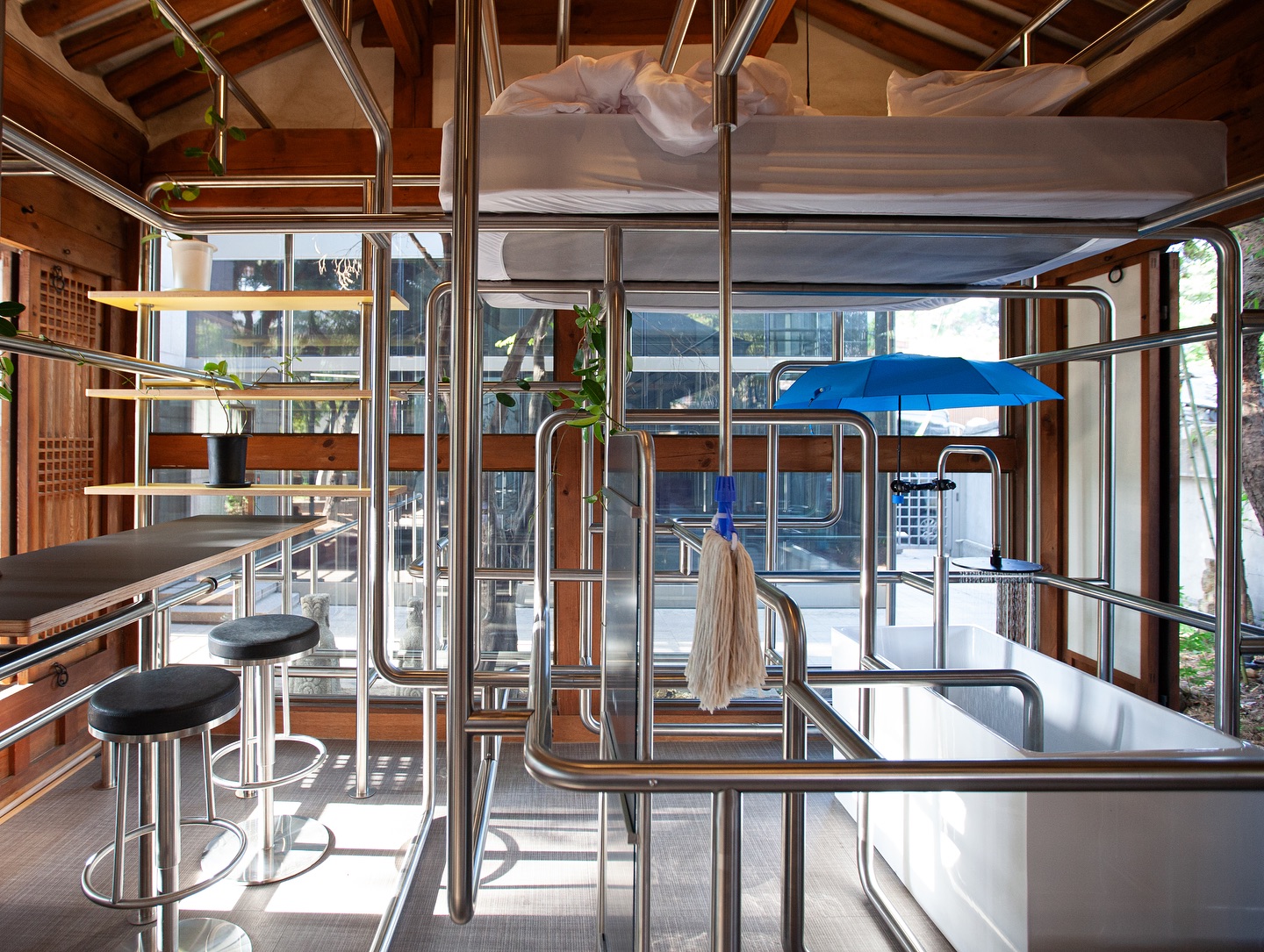
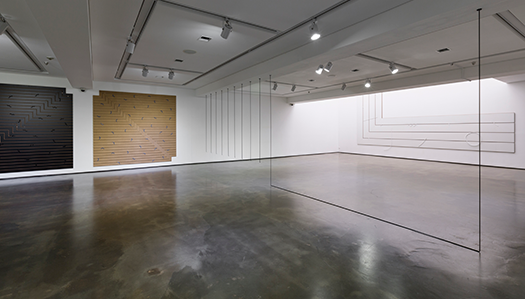
However,
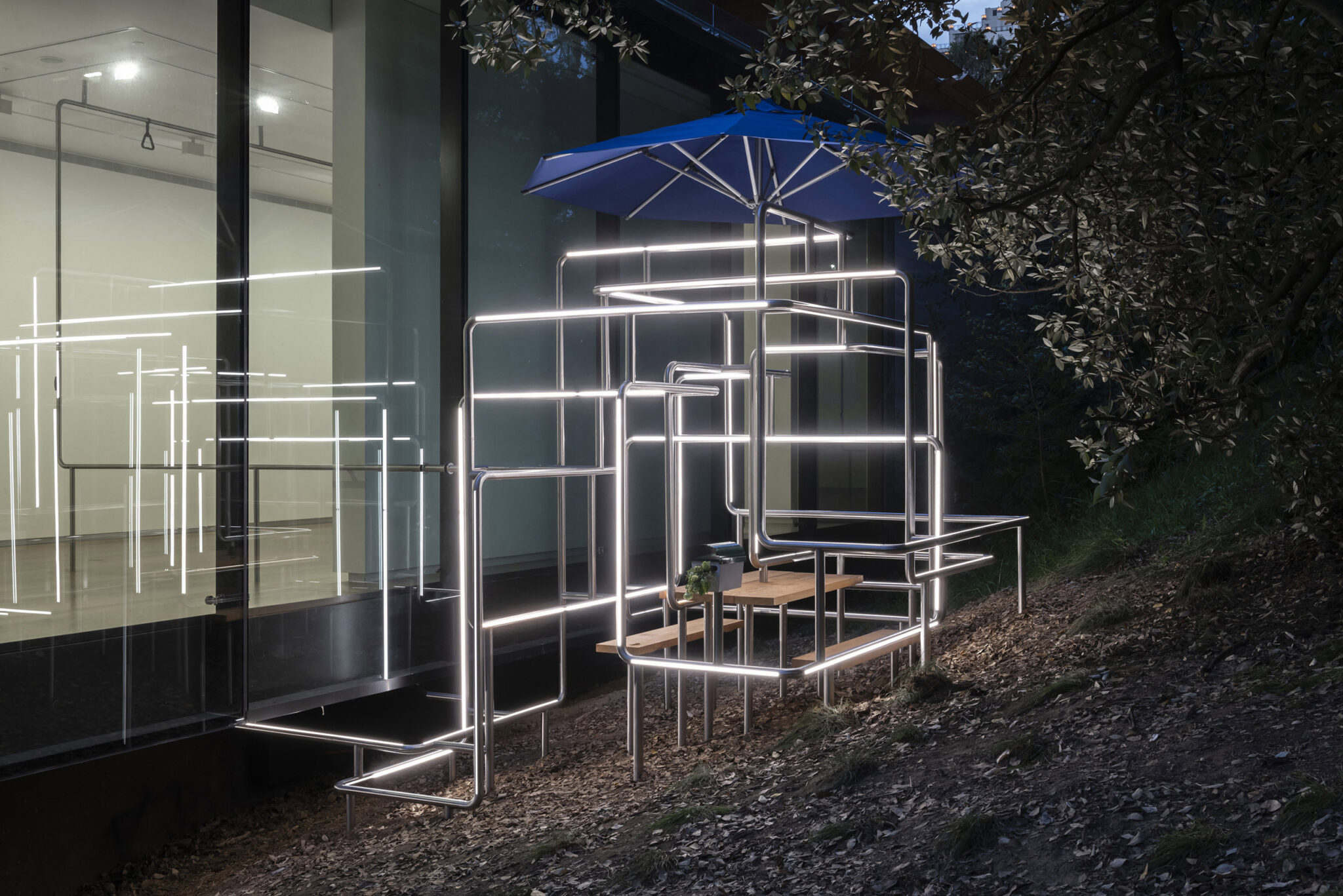
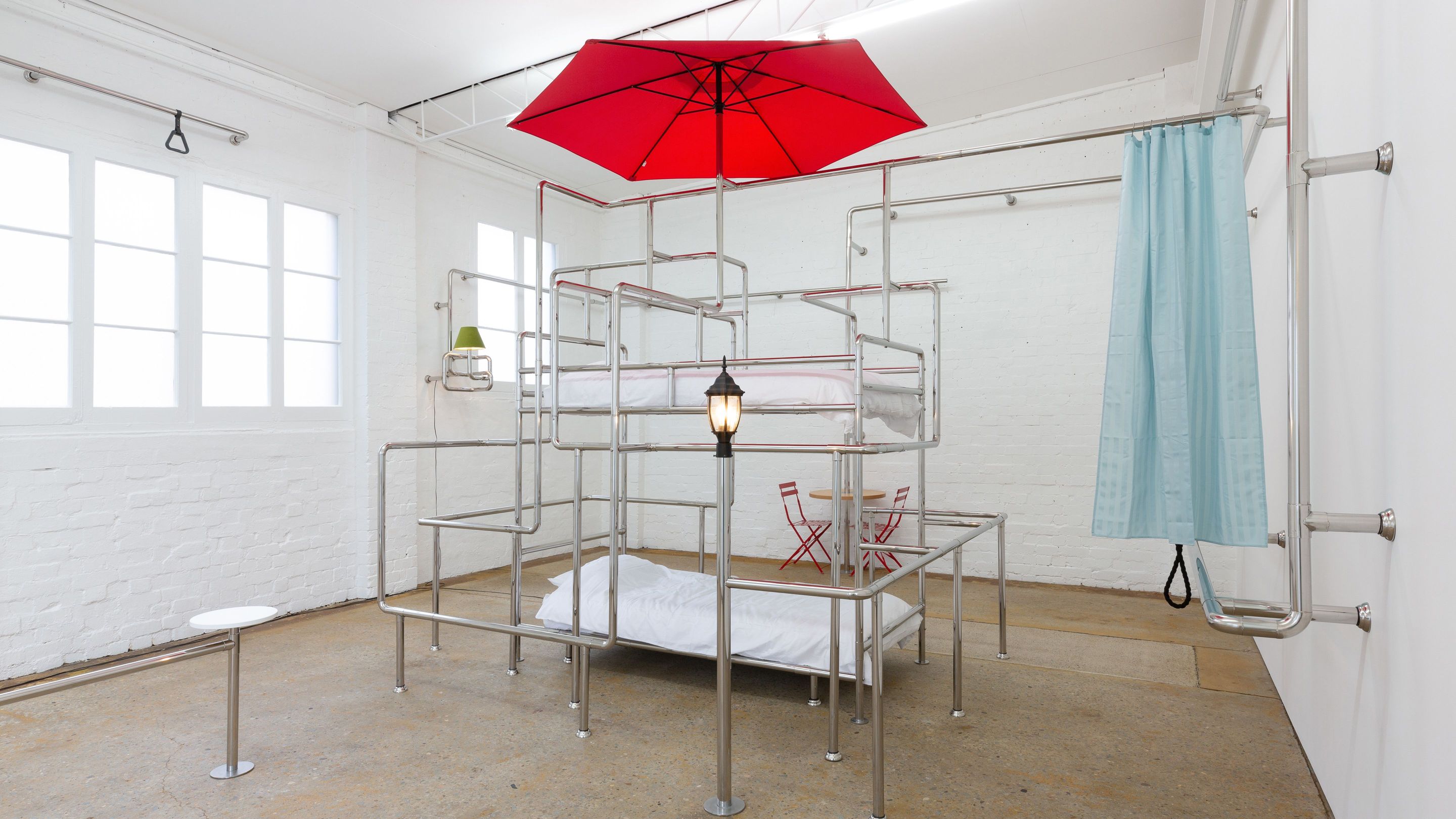
constructed from stainless steel, this structure is closer to an architectural
work than a simple installation. By focusing on the functional aspect of
stainless steel pipes, it raises questions about human habitation, movement—in
transit—and spaces waiting to be filled. Resembling the turnstiles encountered
when entering subway stations in Seoul or New York, the massive metal structure
is meticulously planned in consideration of the scale and form of the
exhibition space, as well as its vertical and horizontal axes. It binds one
space to another, summoning individual responses and situations onto a shared
stage.
Thus,
In Transit(Arrival) forms a space that appears familiar yet
unfamiliar, and in doing so strongly implies contemporaneity. Contemporaneity
refers to a historical transition toward a cultural condition that continuously
reveals new ways of living within a given era, whether collectively or
individually. Intertwined with globalization, it invests in and interferes with
one another while assuming distinct forms according to circumstance.
Moreover,
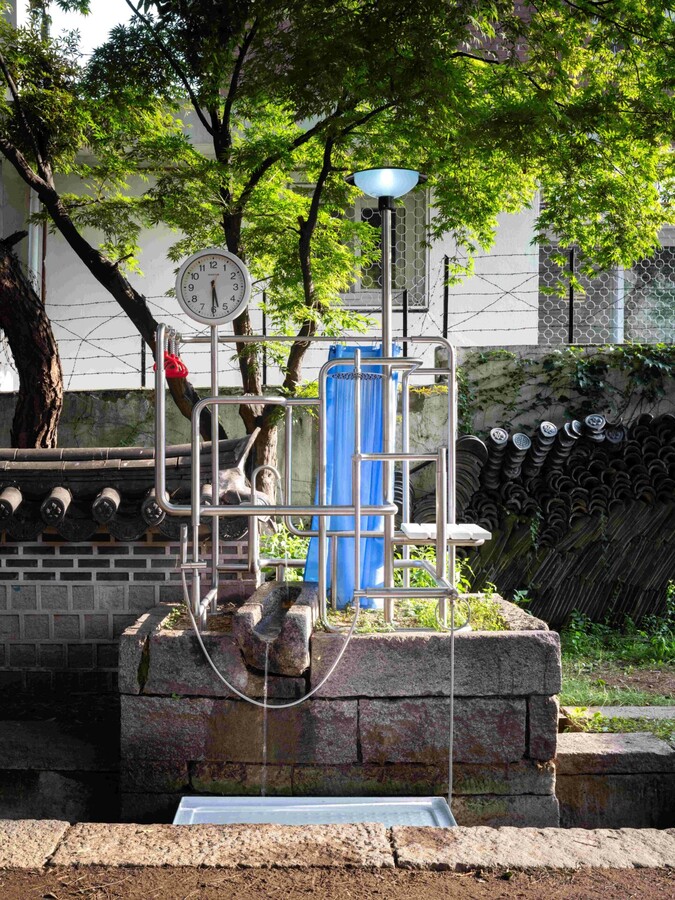
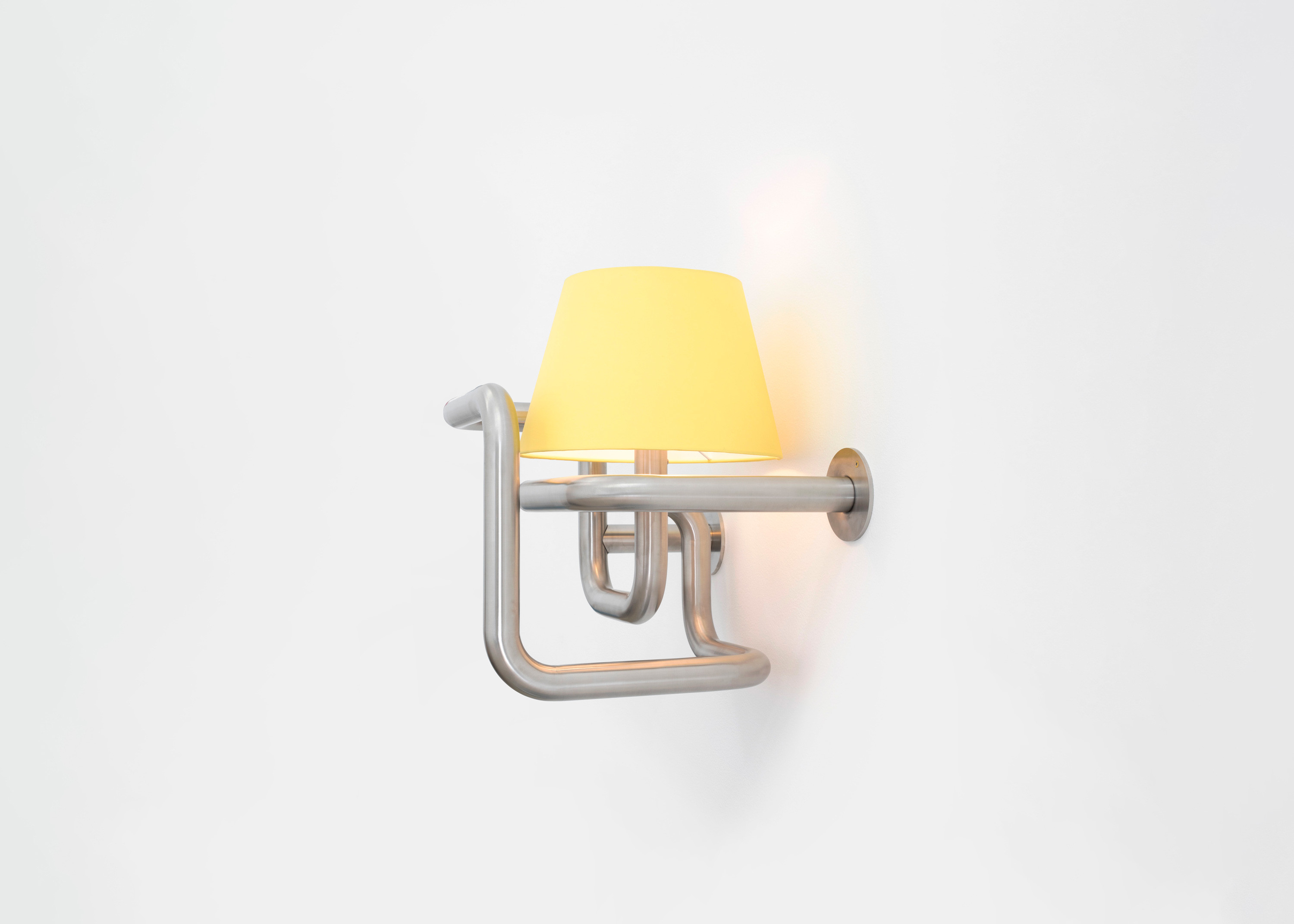
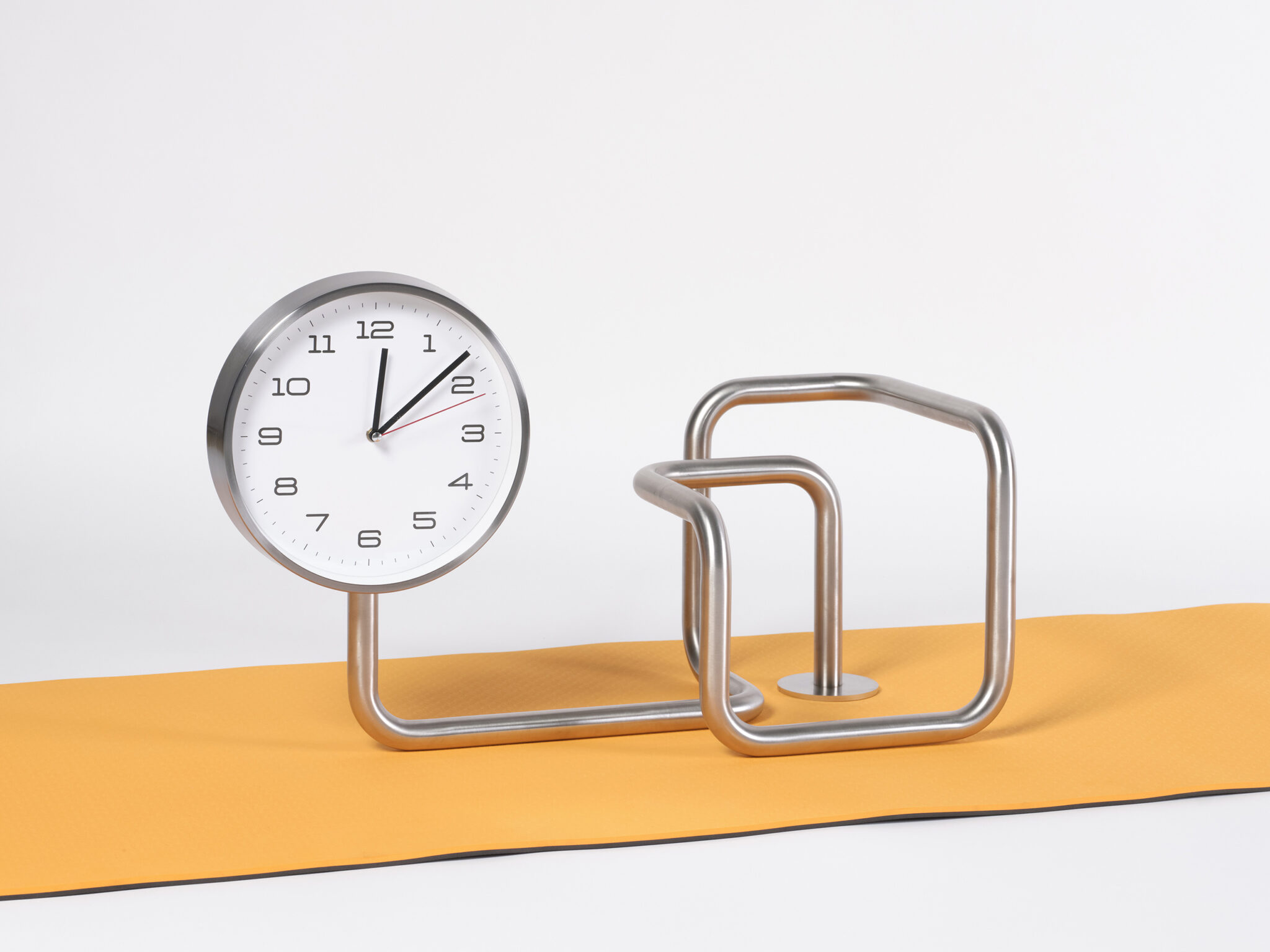
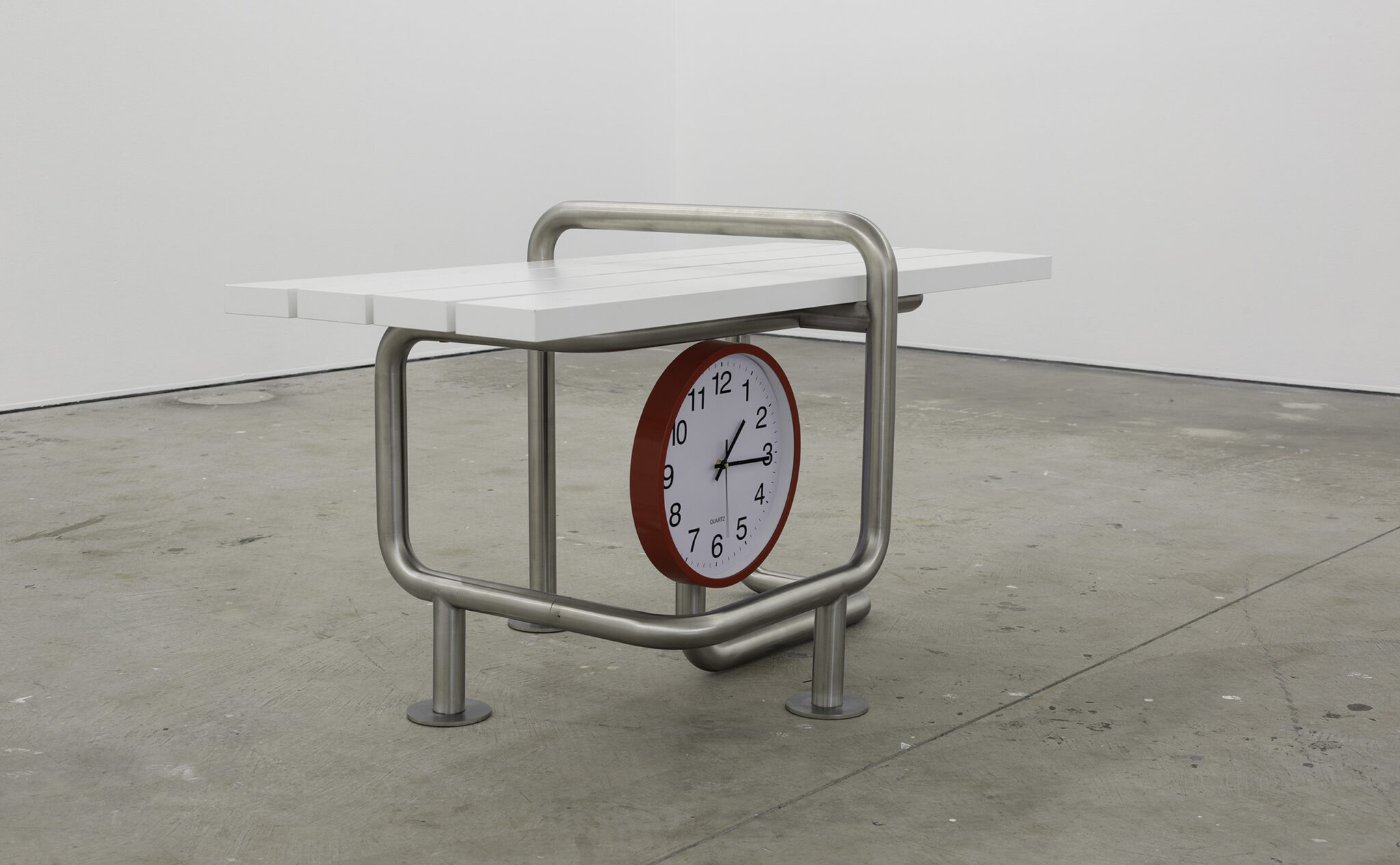
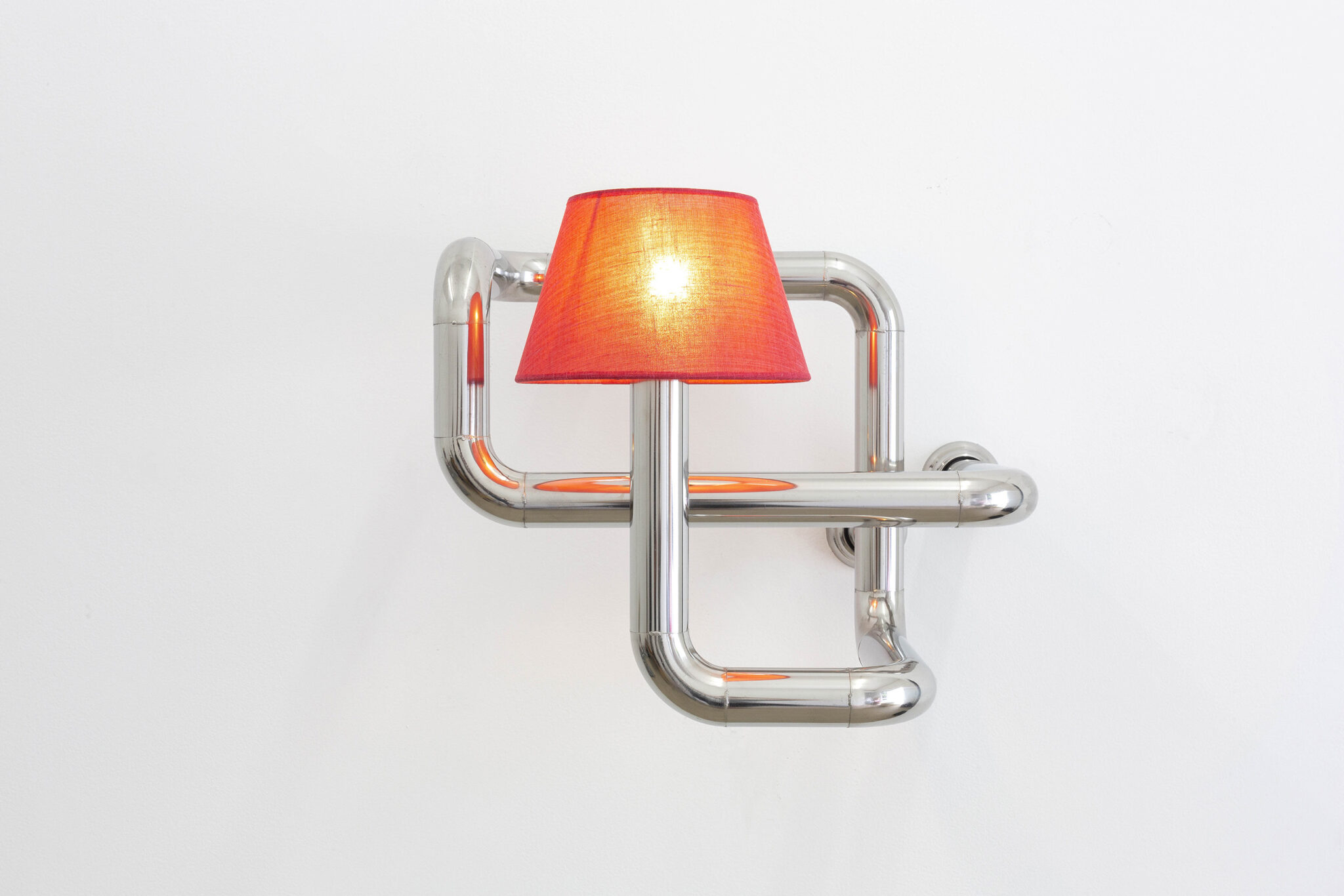
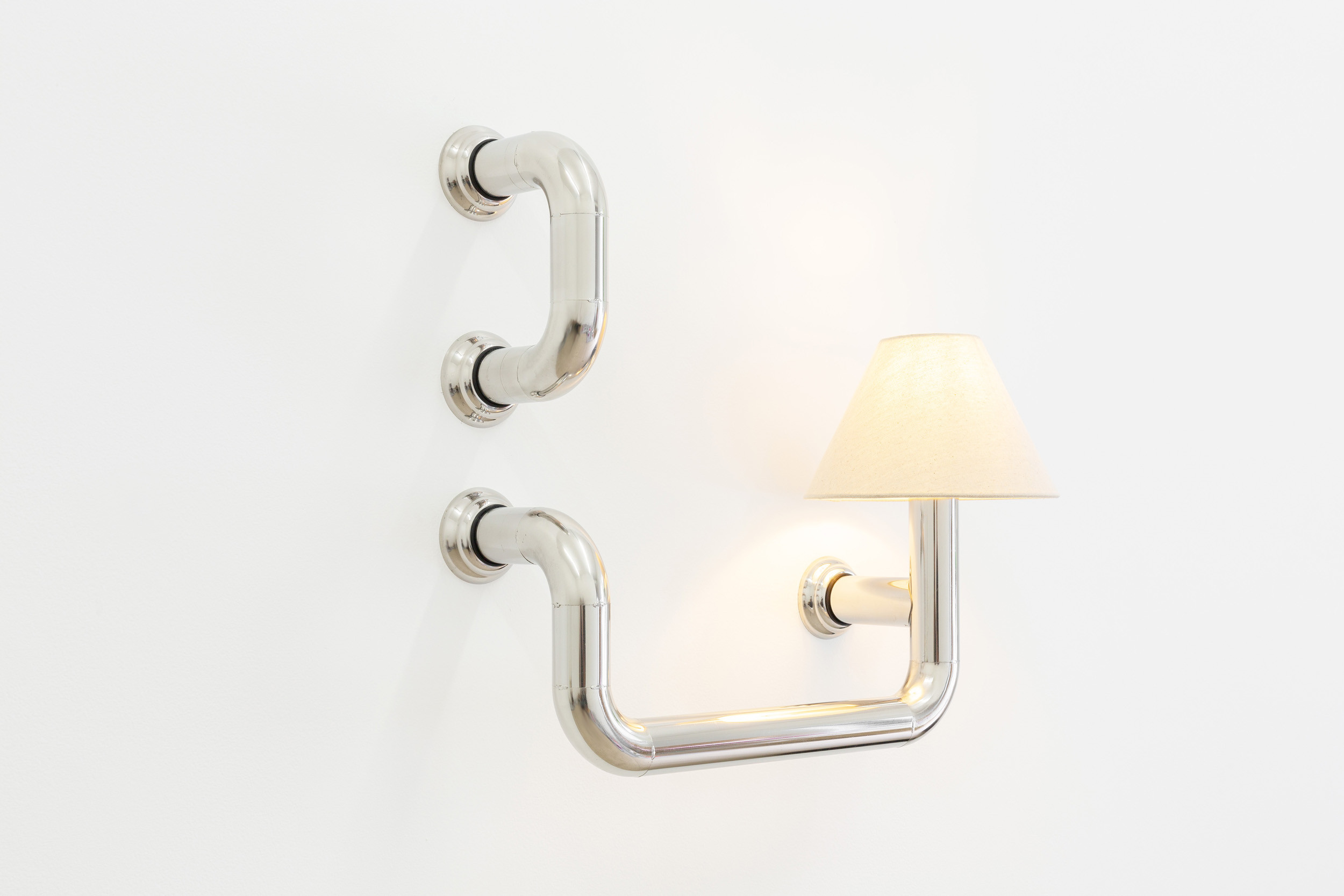
Lee’s recent works—including those to be presented at OCI Museum of Art—also
encompass the concept of the contemporary itself. This directness of difference
refers to the various ways of existing within time: ways that imply a shared
temporality with others while simultaneously living within one’s own distinct
temporality, coexisting with others within the present moment.
3. The
combinations of civilizational lives encountered in Lee’s recent works unfold
alongside spatiality and the aesthetic principle of emptiness, while also
engaging temporality. At the same time, they fragment into the present time in
which each existence lives according to its own temporality. (Space may broadly
be divided into physical space and symbolic space, and both share the common
attribute of being measurable through time.) What supports this fragmentation
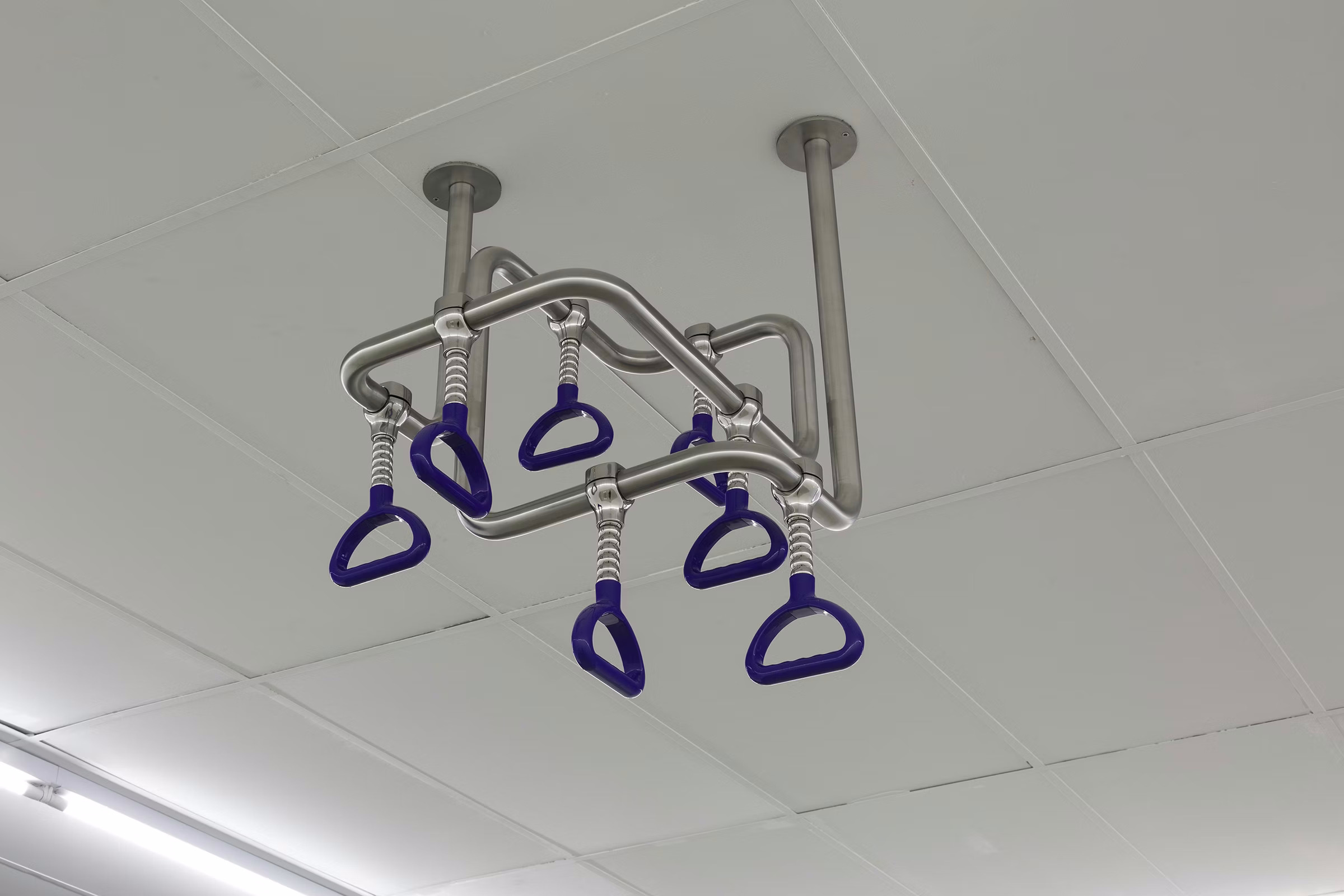
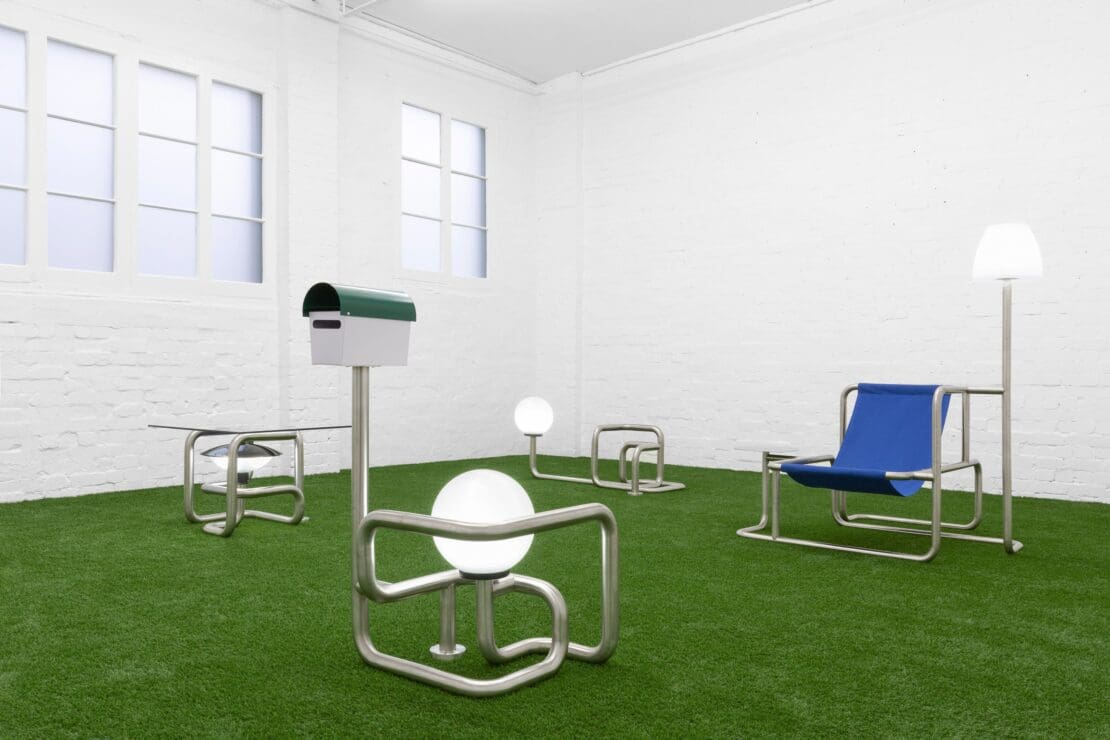
are the various objects selected by the artist—from hangers and light bulbs to
bus handles, street signs, chairs, toys, and umbrellas.
These
objects function as devices that replicate both space and everyday life, yet
they also contain a certain irony. Interwoven with variations of time and
space, they attempt to uncover a silent language—a chaotic language that can
never be heard amid the incessant chatter, noise, and casual talk that fill
daily life. In doing so, they condense into Lee’s own language, signifying the
everydayness of art that has permeated daily life much like the sounds—music—we
hear each day. Within this language, we encounter images reflecting the
characteristics of contemporary subjects who continuously move and resist
categorization.
Lee’s
works create synesthetic situations through “highly systematic yet
improvisational and provisional spaces” that connect music and visual art. They
explore the possibilities of touch centered on the body while investigating the
psychology of art within everyday life. Although these works may sometimes
create confusion in viewers’ perception, thought, and conceptual frameworks,
they deserve attention as attempts to awaken new aesthetic values.
While
they may not always be easily comprehensible to everyone, and while their
structures of assemblage are difficult to interpret through musical scales or
logic, as aesthetician Yoo Eunsun writes: “By incorporating physical and
psychological constraints directly into the work, Lee allows the everydayness
of life to naturally permeate art. Opposing conventional architectural designs
optimized for efficiency according to function and circulation, she designs
spaces in which one continuously loses one’s way and wanders. Through this
process, she disrupts the routines of daily life and offers viewers both
physical and psychological liberation. At the same time, Lee’s site-specific
installations possess an ambivalent quality: they reveal invisible or hidden spaces
while simultaneously partitioning existing open space.”
When
these elements are juxtaposed and layered within a single space, the existing
audiovisual system collapses and a new domain emerges. Within this process also
lies the meaning of division, restriction, and blockage that runs counter to
the conventional function of structural stability. As viewers trace the images
of the “possibility of incompatibility,” they dismantle the bodily and
conceptual frameworks through which they have previously situated themselves
within particular categories, while simultaneously encountering a new order. In
many ways, this resonates with a semantic system akin to hermaphroditic
coexistence—reflecting the contradictory, opposing, yet harmonious nature we
often encounter in life.
In
recent years, Lee’s practice has expanded considerably compared to her earlier
works. As can be seen in the works presented in this exhibition at OCI Museum
of Art, her approach may be said to move toward newly structuring space.
Traversing both New Zealand and Korea, her work encompasses internal narratives
while extending beyond cultural and physical communication, site-specificity,
and even intangible temporality. In this sense, it can be understood as a
narrative grounded in perceptual and cognitive experience as it passes through
multiple types of spaces containing time, space, and relationality.
Perhaps
for this reason, although I was unable to see the actual installation works
prior to the exhibition while preparing this essay, the various materials sent
by the artist—centered on the theme “Monochrome”—suggest that through Yona
Lee’s site-specific installations, transposed spaces, and architectural
installations, we will encounter unfamiliar experiences emerging from the
familiar spaces and objects of everyday life. In time, we may also come to
experience how these spaces, like cultivated fields, continuously transform
through countless situations and responses.